Military personnel encounter specific financial challenges due to frequent deployments related to their service. Military members generally receive a stable income and benefits such as housing allowances, retirement plans, and education plans. With disciplined planning, these resources can help build significant wealth over time. Creating strong strategies for building and maintaining wealth leads to financial stability and long-term success.
In this blog, we will discuss the military wealth management techniques tailored to manage their specific investment needs.
Financial Planning: The First Step to Wealth Management
A strong financial plan is essential for managing wealth. Military personnel generally receive stable salaries, allowances and pensions. To make the most of these resources, they should focus on the following points:
1. Analyse Your Financial Goals: Evaluate your financial goals by identifying short-term and long-term objectives, such as buying a home, supporting your children’s education, or planning for retirement.
2. Budget Effectively: Monitor your income and regular spending habits for effective budgeting. Allocate funds for essential expenses, savings and investments.
3. Building Emergency Fund: Create an emergency fund by saving three to six months’ worth of living expenses to prepare for unexpected situations.
Using Government Benefits and Schemes
Indian military personnel can access several government schemes that provide financial benefits.
1. Defence Salary Package (DSP): It is a special salary account available for Indian Army, Navy, and Air Force Personnel, as well as members of Assam Rifles, Rashtriya Rifles, and GREF. These accounts are offered by banks like SBI and ICICI, with features of zero balance, higher withdrawal limits, and extra insurance coverage.
2. Agnipath Scheme: This scheme is an initiative by the Government that affects new recruits in the military. It is important to learn how this scheme affects their earnings and financial planning for the future. Under this scheme, recruits, called Agniveers, will receive a fixed salary for a four-year service period, with the income increasing gradually throughout their tenure, but an important point to consider is that only 25% of the Agniveers will be retained in the armed forces after the initial four years significantly affecting their long-term financial planning as they will need to find new employment opportunities post-service and use the accumulated service fund to secure their financial future.
3. Pension Plans: These plans are important aspects of financial planning for the future, so it is necessary to make sure that as a military personnel, you are well equipped with various components such as pension entitlements, gratuities, and provident funds. Understanding these elements will help you explore the different options available and ensure that you are adequately prepared for the post-retirement income. By doing this, you can create a stable financial foundation for the years after you stop working.
4. Insurance: Look into affordable group insurance offered by the Armed Forces, as it usually provides better coverage at a lower cost than individual policies. These group plans provide service members and their families with essential health benefits, life insurance and financial protection. You can achieve peace of mind without overspending. It is a practical way to focus on your well-being and that of your loved ones while meeting your commitments.
Wise investing is essential for increasing wealth over time. Below are some strategies designed for military personnel in India:
Public Provident Fund: PPF is a government-backed, risk-free savings option that provides tax benefits and returns.
National Pensions Scheme: The NPS is a great way to plan your retirement, offering market-linked returns and extra tax benefits.
Mutual Funds: For those willing to take calculated risks, mutual funds provide diversification and possibly higher returns than traditional savings methods. The investment method can be SIP, lumpsum, or both, whichever best suits the individual.
Real Estate: You can also explore the opportunity to invest in properties located in areas poised for growth, particularly during periods of market stability.
Gold: Though it is a traditional asset, gold continues to be a dependable investment for protecting against inflation and increasing portfolio diversification.
Tax Planning: Effective tax planning is essential for maximising your income. Military personnel can lower their tax obligations by taking advantage of the various exemptions and deductions available to them.
Deductions under various Sections
Section 80(c) – Investments: Deduction up to INR 1,50,000 per year in PPF, NSC, ELSS, LIC premium, and principal repayment.
Section 80(d) – Health Insurance: Deduction up to INR 25,000 for health insurance premiums (INR 50,000 for senior citizens). Armed Forces personnel can deduct private insurance costs if they do not use military healthcare facilities.
Section 80(G) – Donations: Donations to approved charitable organisations like the Prime Minister’s Relief Fund are tax-deductible.
Section 24(B) – Home Loan Interest: Interest on home loans is deductible up to INR 2,00,000 for self-occupied properties.
Tax-Free Gratuity: Gratuity received on retirement or resignation is exempt under section 10(10) up to the prescribed limit.
Suggestions for Optimised Tax Planning
Invest in tax-saving instruments like ELSS early for maximum benefits.
Keep proof of expenses to claim allowances and exemptions accurately.
Consult a tax advisor who specialises in military tax-saving techniques.
Insurance
Insurance Planning is crucial for Indian military personnel because of the high risks they face and the specific financial needs of their families. Here is a detailed analysis of an effective insurance plan for military personnel.
1. Life Insurance: Life Insurance offers financial protection to a family in the event of an unexpected death. Military personnel should consider the following points.
Armed Forces Insurance Plans: Army Group Insurance Fund (AGIF), Navy Group Insurance Scheme (NGIS), and Air Force Group Insurance Scheme (AFGIS) are government-backed schemes with low premiums. Benefits include coverage during service, savings, and post-retirement support. Coverage ranges from INR 50 lakh to INR 75 lakh or more, depending on the plan.
Term Insurance: Many private insurers, including LIC and others, provide cost-effective term insurance policies. Select policies that extend throughout the service period and beyond.
2. Health Insurance: While the military offers healthcare at its hospitals, extra coverage can help, especially for family members or after retirement.
3. Armed Forces Coverage: ECHS (Ex-Servicemen Contributory Health Scheme) provides post-retirement health coverage for retired personnel and their dependents.
Retirement Planning
Retirement planning is crucial for military personnel in India because their early retirement requires long-term financial stability. Below is a detailed analysis of effective retirement planning specially designed for armed forces personnel;
1. Pension: Retired Military Personnel receive regular monthly pensions based on rank and years of service, including inflation-linked adjustments via Dearness Relief (DR). Additionally, the military person can receive a lump sum advance of up to 50% of his pension amount, which will be deducted from his monthly pension payments over the next 15 years.
2. Gratuity: Retirement Gratuity and Death-cum Retirement Gratuity are available for eligible military personnel. An officer receives a pension of one-fourth of their monthly salary for each completed six-month qualifying service up to a maximum of 16.5 times their monthly salary.
3. Provident Fund: DSOPF or Defence Service Officers Provident Fund contributions accumulated during service are paid on retirement, and withdrawals are tax-free.
Furthermore, numerous investment options are also available for Post-retirement Income, such as the Senior Citizens Savings Scheme (SCSS), Pradhan Mantri Vaya Vandana Yojana, FDs, etc.
Conclusion
Wealth management for military personnel involves strategic planning, disciplined investments, and active asset management, not just saving money. Armed forces members can secure their financial future by using government benefits, investing wisely, planning for taxes and retirement and obtaining insurance. Furthermore, a financial advisor should be consulted before making investment decisions.
Frequently Asked Questions (FAQs)
Is the stock market a good option for military personnel?
Yes, it is a good option, but start with diversified mutual funds or index funds if you are a beginner and ensure investments align with your risk tolerance.
How can military personnel protect their assets during deployments?
Establish power of attorney for trusted individuals to ensure proper nominations and review insurance policies.
Are military allowances taxable?
Some allowances, such as field area and high altitude allowances, are exempt from tax under Section 10.
How frequently should military personnel review their wealth management plan?
Military personnel should review their finances at least annually or after major life events such as transfers, promotions or retirement.
What budgeting tips are useful for military families?
Track income and expenses, focus on emergency funds, and allocate allowances effectively using methods like the 50/30/20 rule, i.e., 50% for needs, 30% for wants and 20% for savings and investments.
Republic Day marks the commemoration of the day that India adopted its Constitution in 1950 and established itself as a sovereign, democratic republic. This day not only symbolizes India’s democratic spirit but also reflects the nation’s strides toward self-reliance and progress, especially in the field of defense. The Indian Republic Day is celebrated on January 26 every year, and it features the country’s defense capabilities and cultural diversity.
In this blog, we will give you information about the Republic Day of India, the growth of the Indian defense sector, major achievements and the future of the Indian defense sector.
Why is Republic Day Special?
January 26 is an important date in Indian history because on this day in 1930, the Indian National Congress declared Purna Swaraj or total independence from British rule, at its Lahore session. Two decades later, this date was chosen to enforce the Constitution of India that marked the establishment of a republic nation.
Republic Day reminds people of the sacrifices made by numerous people who fought for freedom and worked hard to build a strong and united nation. It also features events showcasing India’s cultural diversity along with the recent developments in the Indian defense sector.
Growth of India’s Defense Sector
Post-independence, India has made enormous progress in the defense sector. With the initial dependency on imports for military equipment, the country has moved far ahead on the path of self-reliance.
The establishment of the Defense Research and Development Organization (DRDO) in 1958 can be considered the beginning of India’s defense sector growth story. Since then, DRDO has played a huge role in developing the latest technologies and weapons systems. Year by year, India has been expanding its manufacturing capacities and slowly but surely reducing its dependence on defense imports.
The “Make in India” initiative was also one of the reasons for the rapid development of the defense manufacturing ecosystem since local firms were given incentives and technological support to produce defense systems. This initiative allowed the private sector to contribute significantly to the Indian defense sector and the GDP.
The allocation of a huge amount of money to its military is a reflection of India’s dedication to its security. In 2024, the defense expenditure of India surpassed ₹6 lakh crore and is currently among the highest in the world. India’s significant achievements in the defense sector are:
Indigenous Weapons and Technologies
In recent years, India has been focussing on manufacturing indigenous defense equipment and technologies such as:
Tejas Light Combat Aircraft, a symbol of India’s engineering excellence, proves India’s increasing self-reliance in manufacturing superior aircraft.
BrahMos is a missile manufactured by India in collaboration with Russia. It is the world’s fastest cruise missile.
INS Vikrant, India’s first Indigenous aircraft carrier, was commissioned in 2022. 76% of the ship’s parts were sourced indigenously, and nearly 500 Indian firms collaborated on this project.
Defense Exports
India is fast becoming a significant exporter in global defense markets. It has been exporting artillery equipment, radars, armored vehicles, etc., to over 100 countries. India’s defense exports have increased from ₹686 crores to ₹21,083 crores between 2014 and 2024. This is a result of steps undertaken to promote local manufacturing.
Government’s Role in Strengthening the Defense Sector
The Indian government has played a key role in the transformation of the defense sector.
The Defense Production and Export Promotion Policy (DPEPP) was introduced by the Government of India in 2020 to develop R&D facilities to reduce dependence on imports and strengthen India’s defense sector.
In 2020, the Foreign Direct Investment (FDI) limit in the defense sector was increased from 49% to 74% through the automatic route and up to 100% through the Government route. This has attracted foreign investors to invest in India and encouraged global companies to partner with Indian firms.
The government has also implemented the concept of a “negative import list,” which lists defense equipment or parts that must be purchased locally, which has resulted in a direct increase in revenues for domestic firms.
Republic Day Parade and Military Power
The Republic Day parade is one of the most-awaited events in India as it showcases the country’s cultural diversity and military power. The Government of India also honors military personnel with gallantry awards, such as Param Vir Chakra, Ashoka Chakra, etc., on this day. The event takes place every year at Rajpath (now Kartavya Path) in New Delhi and consists of a mind-blowing display of India’s defense capabilities.
In the recent past, the Republic Day parade featured Arjun and T-90 Bhishma tanks, Agni and Akash missiles, Rafale and Sukhoi Su-30MKI aircraft, etc., symbolizing the defense strength of the nation. Tejas fighter jets and BrahMos missiles were also popular additions to the Republic Day parade.
The defense sector of India is set to experience substantial growth in the future due to the following reasons:
1. Developing New Technologies
India is making efforts to develop and use the latest technologies, such as artificial intelligence, in cybersecurity, data processing, drones, etc. A Defense Artificial Intelligence Council was established in 2022 to provide necessary guidance and structural support for developing AI’s military applications. The council has identified 70 defense-specific AI projects, out of which 40 have already been completed by the DPSUs.
2. Private Sector Companies and Startups
The private sector companies are leading the transformation of the defense sector in India. Bharat Forge, Larsen & Toubro, and Tata Advanced Systems are the big names involved in the Indian defense sector. Newspace Research and Technologies, Tonbo Imaging, and ideaForge are some of the prominent startups developing drones, robotics, and unmanned systems.
3. Collaborations and Partnerships
Good diplomatic relations with countries such as the United States, Israel, France, etc., result in substantial knowledge transfer and joint development of high-tech systems.
Republic Day Offer By Pocketful
To honour those who serve the nation, Pocketful is offering lifetime free brokerage across all segments for Army, Navy, and Air Force personnel, including ex-servicemen and women. Now, you can start investing and trading in equities and commodities, which have the potential to generate high returns in the long run. This is an initiative by the company’s founders to thank the military personnel for their services to the country.
Republic Day is not just a celebration of India’s democratic spirit; it also describes the transition of a nation dependent on imports to a self-sufficient one. The Republic Day 2025 celebrates the sacrifices made by the military personnel for the nation as well as the breakthroughs in the defense industry that would ensure India’s security.
The Indian defense firms and policies developed by the Indian government have a strong emphasis on innovation, collaboration and indigenization. The progress seen in the defense industry is one such effort that leads to the realization of the objective of a robust and self-reliant India.
Military personnel are Indian citizens who serve in the armed forces, ensuring our freedom and safety. We feel safe and sleep peacefully at night because we know that military personnel are awake at the country’s border to protect us from enemies. Military personnel spend a lot of time ensuring our safety, which may result in them not getting a chance to manage their finances properly.
For such military personnel, here is our blog. Today’s blog post will give you 10 essential tips for financial planning for military families.
Importance of Financial Planning for Military Personnel
Sound financial planning ensures financial freedom and a secure future for the armed forces members and their families. Having a financial plan will also provide you peace of mind. Financial planning is a process that involves various steps, such as setting, managing, and tracking your financial goals based on your income. Through a comprehensive financial plan, one can achieve their financial goals.
Financial Planning Tips for Military Members
Various financial planning tips that military personnel can follow to have a safe and secure future are given below:
1. Budgeting
The first step toward proper financial planning is to create a budget and manage all the expenses according to the income. One needs to identify all the sources of income, whether regular or irregular. Generally, an individual should aim to save at least 20% of their monthly income to fulfill their future needs and make provision for emergencies.
2. Optimising Military Benefits
Military personnel are accommodated in cantonment areas, and some are allowed a house rent allowance (HRA). In India, military personnel’s children are also granted scholarships and fee concessions for education. Hence, this will help them save on costs and invest the saved amount.
3. Emergency Fund
An emergency fund acts as a financial buffer and is essential during financial emergencies. Setting aside funds for emergencies provides peace of mind and reduces stress during economic uncertainty. It also helps you maintain your current lifestyle and allows military personnel to handle emergencies without depending on anyone.
4. Debt Management
Debt management is essential for keeping finances in line. For this, they must make a list of all the debt, including the amount owed, interest rates, due dates, etc. After considering all the outstanding debt, you can reduce unnecessary expenses and free up more money to pay off debt. Military personnel should also ensure timely repayment of debt to avoid any late fees.
5. Retirement Planning
In India, the retirement age for military personnel ranges from 52 to 60 years, depending on rank and other criteria. They can plan their retirement by investing in equities, which can give high returns over the long term. After retirement, they can also start their businesses. For retirement planning, equity investments can be the most suitable option for long–term growth. One can consult a financial planner or financial advisor for advice.
6. Enhancing Knowledge
In the world of finance, there are various assets, and one needs to consider the correct investment vehicle that suits one’s risk profile and investment goals and understand its associated risk. To do this, they need to continuously work on enhancing their knowledge through various financial workshops and attend training sessions online.
7. Managing Large Expenses
To prepare for large expenses, one needs to have a well-defined plan and make provision for such costs beforehand. For example, if military personnel wish to purchase a house, they must save and invest in the early stages of their career.
8. Risk Planning
Proper risk planning is essential for military personnel because of the risks they face during their services. They must opt for a comprehensive life insurance policy to protect the future of their family members.
9. Tax Management
Managing the tax is a key tool for successful financial planning, as there are various options through which military personnel can save tax on their income by reducing their taxable income. As we all know, two tax regimes are available in India, and one must consider the most suitable regime. They must also keep themselves updated about the changes in tax laws and regulations and can consult a tax expert for further information.
10. Will
A will is a key document in financial or estate planning. This statement states how a person’s asset will be transferred to their legal heir or family members in case of death. In the absence of a proper will, conflicts might arise in the family. Having a will gives you peace of mind that your financial assets will be transferred according to your wish, helping you ensure a secure future for your family members.
Financial Planning for Military Personnel with Pocketful
To honour those who serve the nation, Pocketful is offering lifetime free brokerage across all segments for Army, Navy, and Air Force personnel, including ex-servicemen and women. Now, you can start investing and trading in equities and commodities, which have the potential to generate high returns in the long run. This is an initiative by the company’s founders to thank the military personnel for their services to the country.
Conclusion
On a concluding note, military personnel spend their lives protecting us from our enemies, and it is our duty to help them in every possible way. They also need a proper financial plan to secure their family’s financial future, and the 10 tips mentioned in the blog will certainly help them. However, once the financial planning is done, it must be reviewed regularly and adjusted according to the changing circumstances. However, it is advised to consult a financial advisor before investing in the stock market.
Frequently Asked Questions (FAQs)
Can military personnel invest in stocks?
Yes, military personnel can invest in stocks. They can open a demat account with Pocketful as they are offering lifetime free brokerage to all those who have served and are currently serving in the Indian Armed Forces.
How much should military personnel keep as an emergency fund?
Military personnel should keep at least 6 months of their salary in the form of an emergency fund to meet any unexpected liabilities.
Is there any special fund for armed forces personnel?
The National Defence Fund was set up by the Government of India in 1962 for the welfare of the members of the armed forces and their dependents.
Is the defence pension tax-free in India?
Yes, pensions received by the Indian Armed Forces personnel or their families are fully tax-exempt.
As a taxpayer with a PAN card, if you are wondering about the latest release of PAN 2.0 by the Income Tax Department and are concerned about whether your current PAN will still be valid or if you’ll need to apply for a new one, then this blog is for you.
In this blog, we will address your questions about whether you need to apply for a new PAN Card and will understand the features and benefits of PAN 2.0.
What is PAN 2.0?
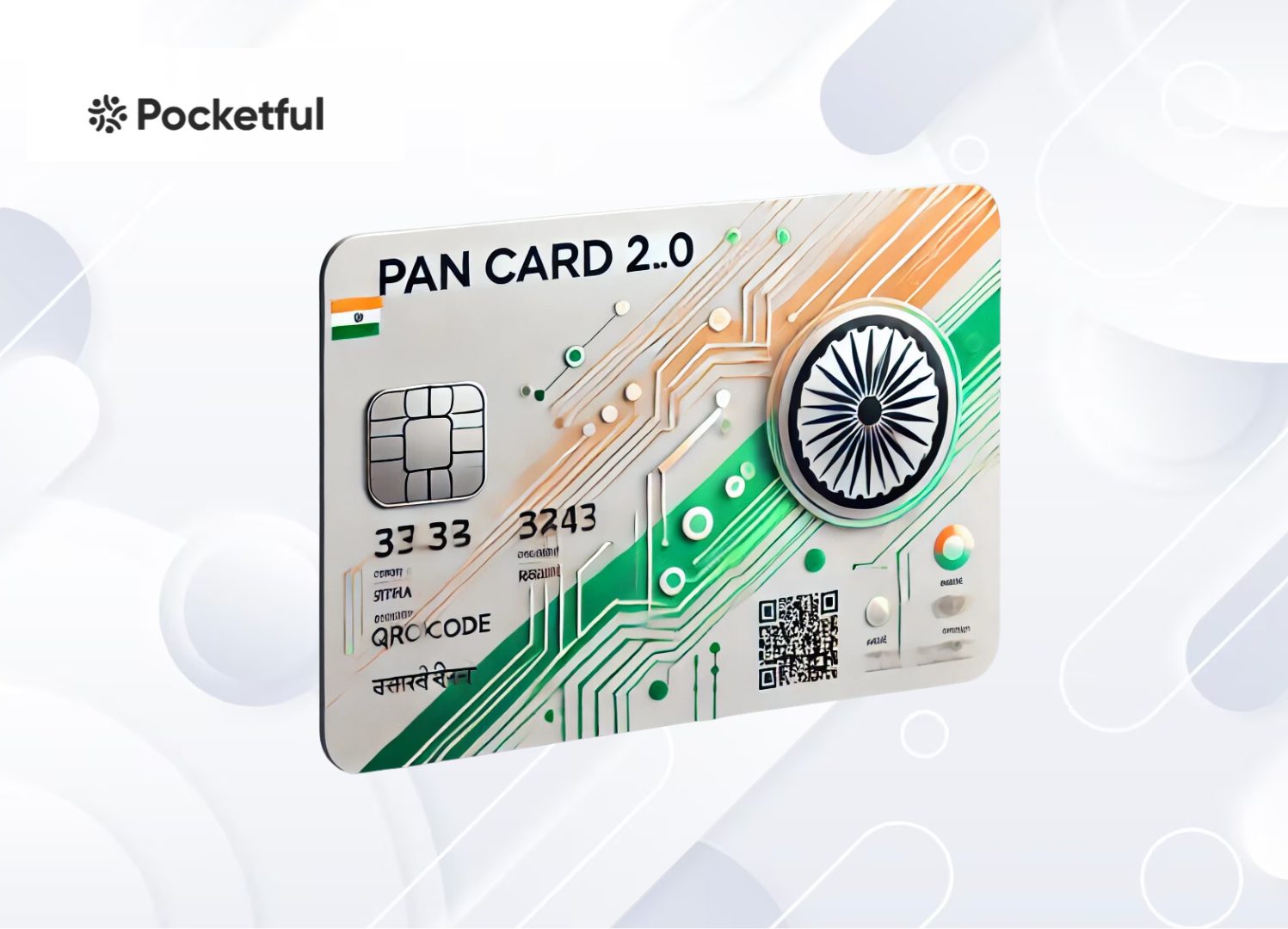
The Income Tax Department has recently introduced PAN 2.0, to improve the process of issuing and managing Permanent Account Numbers (PAN). Under this PAN 2.0 initiative, applicants receive e-PAN cards with secure QR code, delivered directly to their registered email IDs at no cost. A minimal fee applies for those who prefer a physical PAN card.The goal of the Income Tax Department for this initiative is to modernize and speed up the process of issuing and managing Permanent Account Numbers (PAN) and Tax Deduction and Collection Account Numbers (TAN). Through technological innovations, processing, and consolidation, this procedure will enhance the user experience and improve taxpayer registration services. The Income tax department will combine all PAN allocation, correction, and update procedures under a single system.
PAN 2.0 Key Features and Benefits
The main features of PAN 2.0 are as follows-
There will be one portal for all kinds of services related to PAN and TAN.
It is an eco-friendly process and will reduce the paperwork.
A QR code will be added to the PAN card, further enhancing its security. The QR code contains encrypted personal details like your name, date of birth, and PAN number, which can only be accessed using special scanning tools, making it very difficult for anyone to fake or tamper with the card.
Under the PAN 2.0 initiative, applying for, updating, or reissuing a PAN card is completely online. This eliminates paperwork and makes it easier for people to submit and track their applications.
A dedicated help desk and the call centre will be there, which will resolve the queries and issues of the user.
Eligibility for PAN 2.0
To apply for a new PAN card, individuals need to fulfil some eligibility criteria, whether they are a new applicant or an existing cardholder.
Existing PAN card holder: If you are an existing PAN card holder, you are automatically eligible for the PAN 2.0 upgrade. You can request the new QR-enabled PAN without reapplying.
New applicants: New applicants need to fulfil some eligibility criteria by providing the following documents:
Proof of Identity: Adhar card, voter ID, Passport, or Driving license.
Proof of Address: Utility bills, Bank statement, or Rent Agreement
Proof of Date of Birth: Birth Certificate, School Leaving Certificate, or Passport.
PAN Card 2.0 Application Process – Step-by-Step Process
To apply for a new PAN card or to upgrade the existing PAN card to a QR-enabled version, here are the steps mentioned below:
Steps to Apply for PAN 2.0 via NSDL?
Now, an applicant can easily apply through the NSDL (Protean) Portal through the mentioned steps-
If an applicant wishes to apply for a new PAN card, they must visit the NSDL website.
Then, you must select the type of application, whether it is for Indian citizens, foreign citizens, or you wish to upgrade your existing PAN.
Then, you must select the category such as individual, association of person, body of individual, etc.
Then, you will be asked for details such as name, date of birth, email address, mobile number, etc.
After continuing with your application, you will be redirected to a new page where you will submit your digital e-KYC.
You have to mention whether you want a physical PAN card or not, and then you are required to enter the last four-digit aadhaar number.
Then, you are required to enter your details and contact details in the next part of the form.
By entering your area code AO type, you can proceed to the last part of the form, document submission and declaration.
To upgrade your existing PAN card, you need to enter your PAN and personal information and then submit the application.
You can select the e-KYC option to verify using aadhaar OTP.
Then, you will be redirected to a payment page where you have to submit the fees. After the successful payment, click on the continue button.
Then you are required to tick the declaration, select the authentication option and click on continue with e-KYC.
Enter the OTP received on your aadhaar registered mobile number and click on continue with E-sign.
After applying successfully, an acknowledgement in the PDF form will be generated.
Steps to Apply for PAN 2.0 via UTIITSL?
An applicant is required to visit the UTIITSL website and click on the PAN card application page under the PAN service section.
Then click on Apply for a new PAN card (Form 49A).
Then, you are required to choose between the physical mode of application and the digital mode of application.
You are required to fill in your details.
After verifying all the details, click the submit button.
Once the verification is completed, you will be redirected to the payment page.
Once the payment is made successfully, you will receive a payment confirmation. You can either save this or take a printout of it.
Then, you are required to affix your two passport-size photos on the printed form and put your signature on the space provided in the form.
Then you have to submit the form to your nearest UTIITSL office along with the attached copy of your identity, address and date of birth proof documents.
How is PAN 2.0 different from Existing PAN?
The significant differences between the existing PAN and PAN 2.0 are as follows-
Particulars
Existing PAN
PAN 2.0
Platforms
Right now, the services related to the PAN are available on three different platforms: e-Filing, Protean e-Gov portal and UTIITSL.
Under PAN 2.0, services related to PAN/TAN will be available on a single portal of the Income Tax Department.
Paperless Process
There is a difference between online and offline processes.
The process is completely online.
Security
It has a basic security feature.
The PAN 2.0 has QR codes that enhance the security with dynamic data for real-time verification.
Grievance
The grievance is time-consuming and takes more time.
It has a centralized and faster response mechanism.
Verification Process
The verification can be done manually or online through a status check.
It has an automated verification process, which can be done through a QR code.
User-Friendly
The process is complex and takes a lot of time.
It has a simplified and user-friendly process.
Submission of Documents
Earlier physical copies and scanned documents are required to be submitted.
The process is entirely online and has a process which is document-free.
Validity of Existing PAN Card
Since current legitimate PAN cards have no expiration dates, the PAN card issued by the income tax authorities will always be valid. Due to the government’s launch of PAN 2.0, new PANs will be provided to new applicants; however, this does not imply that existing PANs will no longer be valid. As a result, current PAN card holders are exempt from applying for new PANs; their current PANs remain valid.
Is PAN 2.0 Mandatory for Everyone?
The Indian government has made it clear that you do not need to apply for PAN 2.0 if you currently have a PAN card. However, you can apply for a new PAN 2.0 if you deliberately choose to upgrade your PAN with improved security features like a QR code. Since the current PAN cards are valid for life, the government has achieved a smooth transition, and they do not want reapplications; it is not required.
Conclusion
In conclusion, the government recently unveiled PAN 2.0, which centralizes the application procedure for new PAN cards and improves the security features of PAN. However, if you already have a PAN, you won’t need to apply for a new one; your current PAN will remain valid.
Frequently Asked Questions (FAQs)
I have a PAN card. Should I get a new ePAN for PAN 2.0?
No, as your current PAN issued by the income tax authorities will still be valid, you are not obliged to obtain a new e-PAN or PAN 2.0.
Is it important to replace the old PAN card with a new PAN card under PAN 2.0?
No, replacing your old PAN with the new PAN card under PAN 2.0 is not required; however, you can do so if you desire more security features.
Do I need to change my PAN card under the PAN 2.0?
No, you are not required to change your PAN card under PAN 2.0.
Do I need an Aadhaar Card to generate PAN 2.0?
Yes, if you are applying for a PAN card through NSDL, you will be required to have an Aadhaar card.
Can I reprint my PAN Card?
Yes, you can reprint your PAN card if you have misplaced it by submitting online fees on the provided platforms.
How to get a PAN Card with a QR Code?
If you apply for a PAN card under PAN 2.0, then you will receive your PAN card with a QR code.
How to get PAN 2.0 Online?
You can get a PAN card by applying online through the NSDL or UTIITSL portal.
While trading or investing in the stock market, one common term that market participants come across is LTP (Last Traded Price). LTP is the price at which a stock or security was last traded. Unlike opening or closing prices of a day, LTP continuously changes during the trading session. This provides insight for short-term traders.
In this blog, we will discuss what LTP means and its full form, how it is calculated, and how it is used in trading. We will also be discussing how LTP stacks up against other price metrics.
What is LTP?
LTP stands for Last Traded Price. It denotes the price at which the most recent transaction or trade involving a stock was executed. It is dynamic and varies throughout the trading day due to continuous buying and selling activity.
How is LTP Calculated in the Share Market?
LTP is determined directly from the transaction data recorded by the stock exchange. Here is a simplified breakdown.
Whenever a security is bought or sold, the exchange meticulously documents the transaction.
Every transaction record captures the exact price at which the trade was executed, along with a precise timestamp, ensuring comprehensive details for every transaction.
LTP of an asset represents the price at which the most recent transaction involving the asset has been completed. Furthermore, it is updated in real time as new transactions occur. For example, if the last transaction for a particular stock was executed at INR 500 at 3:15 PM, then the LTP at that instant would be INR 500.
LTP vs Other Key Price Metrics
Knowing the differences between LTP and other price metrics can improve your investment decisions and trading styles. Some of the key price metrics are:
Open Price – It marks the price at which the first trade of the day takes place, offering valuable insights into the market’s initial sentiment.
High Price – This represents the highest price achieved during a trading day. It reveals the highest price paid for that security on that day.
Closing Price – It is the weighted average price of the last thirty minutes of the trading day.
Average Price – This represents the mean price of all transactions conducted within a designated time frame. It offers a broader perspective on price fluctuations during the trading session.
Volume – It refers to the total number of shares exchanged during a specific timeframe. The volume shows the interest and activity levels in the security.
Uses of LTP in Stock Trading
LTP can be used in stock trading in the following ways:
Trend Analysis – Traders closely monitor the Last Traded Price (LTP) to discern market trends, helping them determine whether a stock is experiencing an upward or downward trajectory.
Momentum Trading – Traders seize opportunities in stocks that exhibit consistently increasing or decreasing LTPs, signaling a strong momentum.
Support & Resistance –The LTP is instrumental in recognizing important levels from where the price generally reverses, i.e. support and resistance levels.
Intraday trading – For short-term traders, the LTP is an essential tool for making buy or sell decisions based on minute-by-minute fluctuations.
Scalping – It is a dynamic trading strategy that focuses on executing rapid buy and sell transactions to capitalize on minor price movements. Traders frequently rely on LTP as a key indicator in this approach.
The LTP serves as a key element in technical analysis. It offers real-time insights to analysts, which helps them spot trends, patterns, and possible future price changes. Let us have a quick overview of how LTP can be used in technical analysis.
The ability to read charts is a key skill in technical analysis. LTP is illustrated on price charts to provide a visual depiction of a security’s price history.
Analysts use LTP to spot uptrends, downtrends, and sideways trends. LTP data also helps in analyzing historical support or resistance levels for an asset.
Technical indicators like moving averages, RSI, and Stochastic Oscillator use LTP data to generate signals.
LTP, when analyzed alongside volume, empowers traders to gauge whether price fluctuations are backed by substantial trading activity.
Factors Affecting LTP
Various factors affect the LTP of a stock, some of which are listed below:
Economic Indicators
Economic Indicators such as GDP, inflation rates, and employment data play a crucial role in shaping overall market sentiment and consequently influencing the LTP.
Supply & Demand
Supply refers to the total quantity of shares that can be offered for sale in the market. An increase in the number of sellers leads to a higher supply of stock, which can lower the last traded price.
Demand refers to the quantity of shares that can be bought in the market. Increased buyer interest raises demand, which pushes the stock’s last traded price up.
So, LTP represents a point at which supply and demand converge, signifying the price at which the buyer and seller reached an agreement to complete a transaction.
Corporate Announcements
Earnings Reports, whether positive or negative, can lead to substantial price fluctuations. Company events like mergers, acquisitions, product launches, or legal issues can also affect LTP. The performance of the industry in which a company operates also impacts its stock price. Dividend announcements can also attract investors and raise the stock price.
Bid-Ask Spread
The bid-ask spread is the difference between the bid price and the ask price. The bid price is the highest price a buyer will pay, and the ask price is the lowest price a seller will accept. The LTP usually falls within this range and adjusts as trades occur between the bid and ask prices.
A narrow bid-ask spread shows high liquidity and reduced volatility, whereas a wide bid-ask spread shows low liquidity, resulting in greater fluctuations in the LTPs.
Understanding the concept of LTP is essential for anyone engaged in trading or investing in the stock market. It stands for the last traded price of an asset, which is necessary for quick decision-making, especially for day traders and short-term investors. LTP changes with each transaction and is affected by supply and demand, market sentiment, corporate performance, and global events. Including LTP in your trading strategy can keep you updated on market trends, help identify important buying or selling opportunities, and improve trading performance. Remember, LTP is only one aspect of analysis; it is also essential to consider metrics like opening price, closing price, volume, etc. It is advised to consult a financial advisor before investing or trading.
Frequently Asked Questions
Is LTP the same as the closing price?
No, LTP reflects the price at which the most recent transaction was completed, while the closing price is the weighted average price of transactions during the final moments of the trading day.
How often does LTP change?
LTP changes every time a new transaction happens, making it a real-time indicator of stock price movements.
Is LTP useful for long-term investors?
While it is more useful for short-term traders, long-term investors might use it alongside other metrics to identify major support and resistance levels.
Why does LTP fluctuate during market hours?
LTP fluctuates because of ongoing trading activity, influenced by market dynamics and investor sentiment.
Can LTP be manipulated?
In highly liquid markets, it is difficult to manipulate LTP. However, in low-volume stocks, large block deals can cause large price swings.
The stock market has always been a captivating subject, full of drama, suspense, and high stakes. Hollywood and streaming platforms have turned the thrill of trading, investing, and corporate battles into some of the most engaging movies and web series. Stock markets are a place with a lot of interesting stories, which the entertainment industry has depicted in creative ways over the years. The entertainment industry has done an excellent job of simplifying complex financial events so that anyone can understand them. However, most of them are based on real-life incidents that caused the stock markets to plummet.
In this blog, we will provide an overview of the best movies and web series about the share market that are worth watching.
Performance Table: Best Stock Market Movies and Web Series
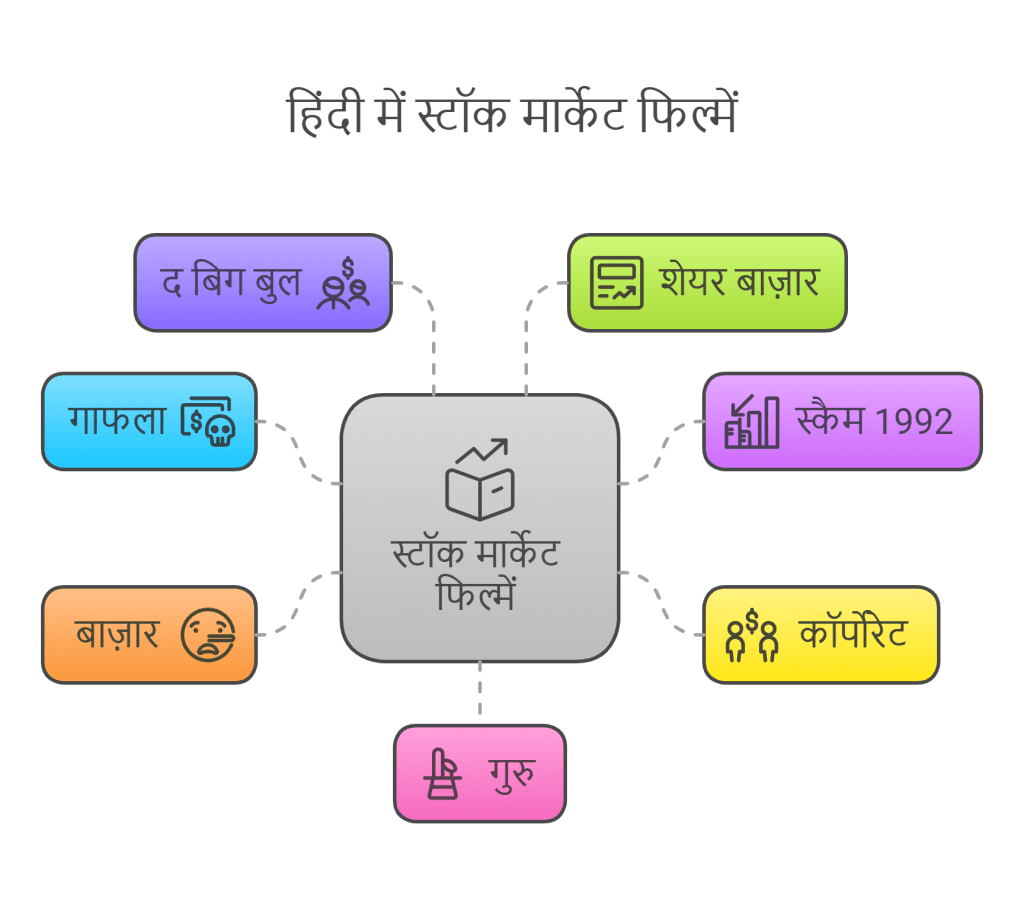
Here’s a table listing the best stock market-related movies in Hindi:
S.No.
Movie/Series
Year
Plot/Theme
Highlights
1
Gafla
2006
A young man enters the stock market and gets involved in scams.
Inspired by the Harshad Mehta scam.
2
Scam 1992: The Harshad Mehta Story
2020
Chronicles the rise and fall of Harshad Mehta in the stock market.
Realistic depiction of the stock market and its inner workings.
3
Corporate
2006
A drama about corporate rivalries and ethical dilemmas.
Explores power dynamics in business boardrooms.
4
Baazaar
2018
A young aspirant gets involved in the greed and deception of the financial world.
Slick portrayal of the stock market with standout performances.
5
The Big Bull
2021
A dramatized take on the Harshad Mehta-inspired stock market boom of the ’80s and ’90s.
Comparable to Scam 1992 but with a cinematic approach.
6
Share Bazaar
1997
Focuses on the ups and downs of the stock market.
One of the earliest Hindi films about the stock market.
7
Guru
2007
Loosely inspired by Dhirubhai Ambani’s life and rise as an industrial tycoon.
Explores ambition, business strategies, and financial risk-taking.
These movies and series provide a mix of drama, thrill, and education about the stock market and financial industries, making them engaging for audiences with an interest in this field.
Overview of the Best Share Market Movies and Web Series
The overview of the stock market movies and web series are:
1. The Wolf of Wall Street (2013)
The film, which was released in 2013, was based on the true story of Jordan Belfort, a stockbroker who operated a dishonest brokerage business. It is revealed in this film that Jordan co-founded Stratton Oakmont with a man by the name of Donnie and that the company participated in pump-and-dump stock price manipulation. As a result, Jordan has amassed an enormous fortune over time and subsequently becomes entangled in illicit operations, including drugs, women, and other things. Subsequently, they caught the interest of law authorities, notably the FBI. After an investigation, he lost all his wealth and faced serious repercussions. Leonardo DiCaprio portrayed Jordan in the film. The film was financially successful and made over $400 million.
Genre: Biography, Comedy, Crime
Director: Martin Scorsese
Starring: Leonardo DiCaprio, Jonah Hill, Margot Robbie
Key Takeaway: The dangers of unethical practices in the stock market.Language: English
Budget: ₹830 crore (approx.)
Earnings: ₹3,254 crore (approx.)
Available On: Netflix, Amazon Prime Video
2. Scam 1992: The Harshad Mehta Story (2020)
A book named “The Scam: Who Won, Who Lost, Who Got Away” was written by journalists Sucheta Dalal and Debashis Basu. The book’s contents served as the basis for the “Scam 1992: The Harshad Mehta Story”, which was released in 2020. The series narrates the tale of the largest financial fraud in India, which took place in the early 1990s. Pratik Gandhi played the role of Harshad Mehta. Mehta was well-known for his aggressive investment strategies and market manipulation methods. During his time, the Indian stock market soared to astronomical highs, due to which he was known as the “The Big Bull.” His prowess in manipulating the Indian Banking System and stock prices caught the attention of journalist Sucheta Dalal, portrayed by Shreya Dhanwanthary. She investigated the fraud and released her findings, which led to Harshad Mehta’s arrest, and ultimately, the Indian stock market crashed.
Key Takeaway: The importance of transparency and the potential consequences of exploiting financial loopholes.
Language: Hindi
Budget: Not publicly disclosed
Earnings: Not applicable (TV series)
Available On: SonyLIV
3. Margin Call (2011)
This American film narrates the actions performed by the employees at a large Wall Street investment bank for 24 hours during the financial crisis of 2007–2008. The movie’s title describes a scenario where an investor must increase the assets pledged as security for a loan after their value drops below a predetermined threshold. Eric Dale, the company’s head of risk management, developed a model that reveals a financial risk that could cause the firm to collapse. He alerted his bosses and other executives to the risk, but they initially ignored it. In an attempt to stay out of bankruptcy, companies strive to sell off their assets by the next day. This film illustrates how financial company mismanagement caused the global share market to crash.
Genre: Drama, Thriller
Director: J.C. Chandor
Starring: Kevin Spacey, Paul Bettany, Jeremy Irons
Key Takeaway: The risks involved in financial markets and how decisions made in crisis moments can impact the world.
Language: English
Budget: ₹29 crore (approx.)
Earnings: ₹161 crore (approx.)
Available On: Amazon Prime Video, Hulu, Peacock
4. Inside Job (2010)
The 2010 documentary Inside Job showcases the circumstances leading up to the financial crisis of 2007-2008. The documentary starts with an analysis of prevalent deregulations in the finance industry in the early 1980s. The dangerous aspects of these decisions are explained in the film, including mortgage-backed securities and credit default swaps. The film examines the economic bubble and how rising real estate prices encouraged banks to lend money without first determining the borrower’s creditworthiness. In 2007 and 2008, subprime loan defaults caused investment banks like Lehman Brothers and Bear Stearns to fail, while the government bailed out other institutions like AIG. The film illustrates how senior bank executives disregarded established guidelines, which caused the world stock market to collapse.
Genre: Documentary
Director: Charles Ferguson
Narrated by: Matt Damon
Key Takeaway: The far-reaching consequences of financial corruption and the need for transparency and regulation in the financial industry.
Language: English
Budget: ₹17 crore (approx.)
Earnings: ₹64 crore (approx.)
Available On: Netflix
5. Rogue Trader (1999)
Rogue Trader is a movie based on a true story about a reckless trader named Nick Leeson who made financial decisions that caused the UK-based Barings Bank to fail. The autobiography “Rogue Trader: How I Bought the Barings Bank and Shook the Financial World” served as the inspiration for the film. The film starts with the story of a young banker named Nick Lesson, portrayed by Ewan McGregor, who works for Barings Bank and is assigned to Singapore to oversee derivatives trading at the Singapore International Monetary Exchange. Through his aggressive trading, he generated significant profits right away. Afterwards, he started to lose money, but instead of disclosing it, he kept it hidden in a secret account and intended to use riskier wagers to win it back. After placing a large bet on the potential stability of the Japanese market, he lost a significant amount of money—roughly 827 million Euros—when the Japanese stock market experienced a correction in 1995 due to an earthquake in Japan. This event ultimately caused Barings Bank to fail.
Genre: Biography, Drama
Director: James Dearden
Starring: Ewan McGregor, Anna Friel
Key Takeaway: The dangers of unchecked power and the devastating impact one individual’s actions can have on the financial world.
Language: English
Budget: ₹105 crore (approx.)
Earnings: ₹13 crore (approx.)
Available On: Amazon Prime Video, Tubi
6. Wall Street
Wall Street is a film about the ins and outs of Wall Street and how people engage in insider trading. The film’s protagonist, Charlie Sheen, plays the role of Bud Fox, a young stockbroker with big goals in the financial world. Gordon Gekko is a smooth-talking, brash and ruthless corporate raider, portrayed by Michael Douglas. In search of success, Bud, a junior stockbroker, encountered Gordon Gekko, a wealthy and assertive stock market participant. Fox’s father, a maintenance worker’s union leader at an airline, provides him with some insider knowledge about a business, which Bud tells Gordon. For his performance in this film, actor Michael Douglas was awarded the Academy Award for Best Actor. The greed, power, ambition, and ethics of a person who is prepared to give up all for their achievement are all depicted in the film.
Genre: Drama
Director: Oliver Stone
Starring: Michael Douglas, Charlie Sheen
Key Takeaway: The consequences of corporate greed and ethical compromises.
Language: English
Budget: ₹124 crore (approx.)
Earnings: ₹362 crore (approx.)
Available On: Disney+, Amazon Prime Video
7. The Big Short
The Big Short, based on a non-fiction book by Michael Lewis, was released in 2015 and was regarded as a critically acclaimed film. Adam Mckay directed it. The events leading up to the 2008 financial crisis are explained in the movie. The film is about the people who foresaw the 2008 financial institution meltdown and placed bets against it, ultimately making substantial profits.
Christian Bale plays the role of Michael Burry, a hedge fund manager with a distinct perspective on the market. He studies the mortgage industry and concludes that the loans given out by financial institutions are risky and prone to fail. It draws attention to how subprime loans triggered the expansion and collapse of the US housing market. In addition to being a commercial success, this film won other accolades, including the Academy Award for Best Adapted Screenplay.
Genre: Biography, Comedy, Drama
Director: Adam McKay
Starring: Christian Bale, Steve Carell, Ryan Gosling
Key Takeaway: Understanding the risks and ethical implications of subprime mortgages.
Language: English
Budget: ₹231 crore (approx.)
Earnings: ₹1,102 crore (approx.)
Available On: Netflix, Amazon Prime Video
8. Boiler Room
The film Boiler Room, directed by Ben Younger, was released in 2000. The film is focused on the world of brokerage firms involved in questionable and frequently unlawful trading activities. Giovanni Ribisi played the role of Seth Davis, a young man who operates an unlicensed casino in his apartment after dropping out of college. He later worked for a brokerage company called J.T. Marlin, where he learned how to aggressively offer worthless penny stocks—to gullible customers and persuade them that they have a fantastic investment opportunity. He later learns about the negative aspects of JT Marlin’s company, including the pump and dump strategy, exploiting clients to make enormous profits. The film was made on a budget of $7 million and earned approximately $28 million at the box office.
Genre: Crime, Drama, Thriller
Director: Ben Younger
Starring: Giovanni Ribisi, Vin Diesel
Key Takeaway: The dangers of stock fraud and the impact of unethical trading.
Language: English
Budget: ₹58 crore (approx.)
Earnings: ₹232 crore (approx.)
Available On: Amazon Prime Video, Hulu
9. Too Big to Fail
The 2011 HBO film centers on the 2008 financial crisis and the responses of Federal Reserve Chairman Ben Bernake and Treasury Secretary Henry Paulson to the failure of Lehman Brothers. The film’s central theme is how the collapse of one organization might affect the collapse of the global financial system. Intense pressure and political scheming were also featured in the film as the Fed Chairman and New York Fed President attempted to stop the financial system from collapsing. Paul Giamatti played the role of Federal Reserve Chairman Ben Bernanke in the film, while James Woods portrayed Lehman Brothers CEO Dick Fuld. Critics praised the film for its narrative, directing, and acting, and it has been nominated for multiple awards, including the Screen Actors Guild and Golden Globes.
Genre: Drama
Director: Curtis Hanson
Starring: William Hurt, Paul Giamatti
Key Takeaway: The consequences of poor financial management and the efforts to prevent economic disaster.
Language: English
Budget: Not publicly disclosed
Earnings: Not applicable (TV film)
Available On: HBO Max
10. Enron: The Smartest Guys in the Room
The growth and fall of the Enron Corporation, one of the worst business scandals in the United States, is the subject of the 2005 documentary Enron, which Alex Gibney directed. Bethany Mclean and Peter Elkind’s book served as the basis for this documentary. Enron’s management committed a significant accounting scandal that ultimately caused the company to go bankrupt in 2001. The corporation manipulates accounting procedures and inflates its profits. Energy costs increase due to the company’s purposely induced power and energy constraints in California. In addition to receiving numerous honors and praise from critics, this documentary was nominated for an Academy Award for Best Documentary Feature.
Genre: Documentary
Director: Alex Gibney
Key Takeaway: The destructive effects of corporate fraud and the need for transparency.
Language: English
Budget: ₹5.8 crore (approx.)
Earnings: ₹39 crore (approx.)
Available On: Amazon Prime Video, Hulu
11. Billions
In 2016, this American television show made its debut. Personal rivalry, legal conflicts, and the fierce world of hedge funds were portrayed in the series. The show centers on two powerful individuals: Bobby Axelrod, played by Damian Lewis, who is the head of Axe Capital and a billionaire hedge fund manager, and Chuck Rhoades, played by Paul Giamatti, a US attorney who, despite his intelligence, has a vicious personality and is determined to bring Axelrod down. Later in the series, Mike Prince, a billionaire, appeared as Axe’s new rival. The script, directing, plot, acting, and other aspects of the Billions series have all won praise from critics.
Genre: Drama
Creator: Brian Koppelman, David Levien
Starring: Damian Lewis, Paul Giamatti
Key Takeaway: The personal and legal battles within the hedge fund industry.
Language: English
Budget: Not publicly disclosed
Earnings: Not applicable (TV series)
Available On: Showtime, Amazon Prime Video
12. Baazaar
Gauravv K. Chawla directed the 2018 Bollywood film Baazaar. Rohan Mehra portrayed the character of Rizwan Ahmad, an ambitious man from a tiny Indian town who wants to pursue a career in the stock market. Saif Ali Khan, a formidable and enigmatic businessman, portrayed Shakun Kothari. After meeting Shakun Kothari, Rizwan began managing his investments and used insider information to make profits. The negative aspects of the stock market are portrayed in this film. The film, which portrays greed, ambition, and moral compromise, draws inspiration from several Hollywood productions, including Wall Street and The Wolf of Wall Street.
Genre: Crime, Drama, ThrillerDirector: Gauravv K. Chawla
Starring: Saif Ali Khan, Rohan Mehra
Key Takeaway: The moral compromises people make to achieve financial success.
Language: Hindi
Budget: ₹34 crore (approx.)
Earnings: ₹40 crore (approx.)
Available On: Amazon Prime Video
13. Gafla
Gafla is a 2006 Bollywood film directed by Sameer Hanchate. The main focus of the film is to portray the details of Harshad Mehta’s stock market scam. The movie shows how a driven individual who aspires to succeed discovers loopholes in the Indian financial system and utilizes them to make huge profits. The story’s protagonist, Subhod Mehta, is a tiny businessman with an interest in the stock market. He quickly establishes his financial empire by using his high-risk trading methods to control stock prices, but he must finally confront the market’s negative aspects, too. He joined the stock market with huge ambitions but later turned to immoral behavior in an attempt to appease brokers and investors.
Genre: Drama, Thriller
Director: Sameer Hanchate
Starring: Vinod Sharawat
Key Takeaway: How ambition and manipulation can lead to massive consequences.
Language: Hindi
Budget: Not publicly disclosed
Earnings: Not widely released
Available On: YouTube
14. Black Monday
It’s a television show that ran from 2019 to 2021 and was produced by David Caspe alongside Jordan Cahan. The film is based on an event that occurred in 1987, when one of the biggest stock market crashes in history occurred on October 19. Don Cheadle plays the role of Maurice Monroe, the head of a successful brokerage firm named the Jammer Group. He was extremely ambitious yet ethically flexible. Andrew Rannells portrayed the character of Blair Pfaff, a crucial member of the firm and an unpredictable stockbroker. The show highlights the challenging situations protagonists face as Black Monday approaches.
Genre: Comedy, Drama
Creators: David Caspe, Jordan Cahan
Starring: Don Cheadle, Andrew Rannells
Key Takeaway: The impact of risky trades and unethical practices in volatile times.
Language: English
Budget: Not publicly disclosed
Earnings: Not applicable (TV series)
Available On: Showtime, Amazon Prime Video
15. Equity
The 2016 financial thriller Equity, directed by Meera Menon, centers on Naomi Bishop, a senior investment banker. The film covers the narrative of men’s domination in the finance industry and offers a distinctive viewpoint on the field. Anna Gunn, James Purefoy, and Alysia Renier were the film’s main actors. While working on an IPO for a tech company, Naomi encountered several challenges, including mistrust from their male coworkers and her complex relationship with a hedge fund manager. The film is notable because it depicts the realities faced by women in the finance industry.
Genre: Drama, Thriller
Director: Meera Menon
Starring: Anna Gunn, James Purefoy
Key Takeaway: The challenges and biases women face in finance.
Language: English
Budget: ₹29 crore (approx.)
Earnings: ₹13 crore (approx.)
Available On: Amazon Prime Video, Hulu
Here’s a list of some of the best stock market movies in Hindi or movies with a significant financial and stock market theme that may interest Bollywood enthusiasts:
Many films on the stock market have been made all over the world, but the majority of them are based on the financial crises that occurred in different nations. While some were based on the 2008 financial crisis, others were based on India’s 1992 stock market collapse or the 1995 Japanese market collapse. Every film imparts the wisdom that, despite possible short-term causes for market declines, investors should maintain faith in the stock market because, in the end, it will rise and surpass its prior peak.
S.NO.
Check Out These Interesting Posts You Might Enjoy!
Which is the best movie based on the stock market?
The stock market has been the subject of many films, such as Rogue Trader, Margin Call, The Wolf of Wall Street, etc.
Which Indian web series is based on the Indian Stock Market crash?
The 1992 Indian stock market crash is the subject of the web series Scam 1992, which is based on financial fraud committed by Harshad Mehta.
What was the reason for the stock market fall in the year 2008?
The collapse of US financial institutions like Lehman Brothers led to a decline in investor trust in banks, which in turn caused the 2008 stock market crisis.
Who played the role of Harshad Mehta in the Scam 1992 web series?
Pratik Gandhi played the role of Harshad Mehta in the Scam 1992 web series.
Who exposed the Scam of 1992?
The scam caused by Harshad Mehta was exposed by a journalist named Suchita Dalal.
On one fine day, sitting calmly in your chair, you hear the news regarding the due date for filing your income tax return, and the government may penalize you for not paying income tax by the due date. You must have thought about why you are paying a portion of your hard-earned money to the government. Is it necessary? How are you going to benefit from it?
In this blog, we are going to discuss how the government uses taxes for the benefit of the nation’s citizens. Moreover, we will give you some interesting, unpopular facts about the taxpayers in India. So, read on.
What is Tax?
Taxes are mandatory contributions made by corporations and individuals to the government. Governments use these funds to provide public services, such as police services and roads, to the public. The government also pays the salaries of civil servants. The public does not pay directly for these goods and services or for the time of public servants when they visit government offices; it pays indirectly through taxation. The government, therefore, regularly decides how much to spend, what to spend it on, and how to finance its expenditure.
There are different kinds of taxes levied on different assessees. However, these taxes are broadly classified into two major categories:
1. Direct Tax
Direct taxes are levied on individuals, corporations, and other entities. As the name suggests, direct taxes are the taxes that are paid by the taxpayers directly to the government. This tax is applicable to taxpayers earning income above some specific threshold, and it cannot be shifted to another taxpayer. That means not all individuals are liable to pay direct tax. Direct tax includes the following types of taxes:
Income Tax
Corporate Tax
Security Transaction Tax
Capital Gains Tax
Gift Tax
2. Indirect Tax
The indirect tax is not paid directly to the government but levied on the taxpayers at the time of purchase or consumption of goods and services, irrespective of the taxpayer’s income. The tax amount is included in the cost of goods or services, and the tax burden is passed on from the wholesalers to retailers, who pass it on to the customers. Examples of indirect tax are:
Goods and Services Tax
Custom Duty
Value Added Tax
How Does the Government Use Taxes?
Taxes are levied by the government and collected by tax authorities for the development of the nation. The tax collected by the government, which is the major source of revenue for the government, is used to fund various sectors in the country, such as:
Healthcare
Education
Infrastructure
Social Security
Defence
Environment Protection
International Relations
Emergency & Contingency Funds
Some Interesting Facts About Taxpayers in India
Here are some interesting facts about taxpayers in India:
A mere 5-6% of India’s population contributes to income tax, indicating a small number of taxpayers.
The new tax regime launched in FY 2020 features six slabs with rates from 0% to 30%, along with various exemptions under the previous regime.
As of 2023, 1.40 crore businesses are registered under the Goods and Services Tax (GST) system.
The largest group of individual tax filers falls within the ₹5-10 lakh annual income range.
Following demonetization, there was a 25% increase in income tax returns filed between FY 2016 and FY 2017.
Importance of Taxes in Making India a Developed Nation
Before we discuss how taxes are important in making India a developed nation, let’s talk about what makes a country developed. A country with a strong economy, a high quality of life, equal distribution of income among its citizens, low poverty and employment rates, access to quality health and education, and a diverse industrial sector is considered a developed nation. Below, we are listing a few key points of how taxes can help India achieve all those things and make it a developed economy:
The government uses taxes to build infrastructure, which is essential for any country’s economic growth.
The taxes received by the government are also used to fund social initiatives and welfare programs.
No country can become a developed country without education. Government-collected taxes are used to fund quality education in rural as well as urban areas, which includes school infrastructure, teacher’s salaries, etc.
The government bears the expenditure on health and medical R&D, hospital infrastructure, health insurance, and other services.
Taxes fund schemes to help people who are unemployed or have low levels of income.
Governments introduced progressive taxation in order to reduce income inequality by making people who earn more pay more taxes and build an equitable society.
For the government of any country, taxes are the primary source of revenue. The major categories of taxes are direct taxes and indirect taxes. This money is used to fund public infrastructure, public services, welfare programs, etc. Moreover, taxes are critical in making India a developed nation in the future. The tax rates and tax-related regulations are different for different taxpayers in India. By adopting a progressive tax system, the Indian Government is trying to make an equitable society.
S.NO.
Check Out These Interesting Posts You Might Enjoy!
Common types of taxes an Indian citizen pays include income tax, goods and services tax (GST), property tax, and excise duty, each contributing to government revenues.
What happens if people don’t pay taxes?
If tax revenue falls short, the government may struggle to provide basic services, resulting in poor-quality infrastructure and public amenities.
Why is it mandatory to pay taxes?
Tax laws require individuals to pay taxes, as these funds are essential for the government’s operations and contribute to the nation’s economic stability.
How do taxes help in reducing inequality?
Taxes fund welfare programs, subsidies, and public services that assist lower-income groups, helping to bridge the wealth gap.
Can paying taxes improve our creditworthiness?
Yes, having a good tax record can enhance creditworthiness, particularly for individuals looking to secure loans or financial assistance.
Profit After Tax is a key metric that shows the true profitability of a company. With the understanding of PAT, you can make better estimates about the financial health of a company, its investment potential, and its growth prospects.
In this blog, we’ll explain exactly what Profit After Tax means and why it’s such a big deal. We will present a simple step-by-step guide on how to calculate it, as well as the impact of DTL and DTA on PAT and key PAT ratios.
What is PAT?
PAT, or Profit After Tax, is also known as net profit and is the amount of income left over after deducting all operating expenses, interest, and taxes from the total revenues. PAT reflects the actual profitability of the business and provides an accurate picture of the profit left for the shareholders after fulfilling all kinds of obligations. It is considered one of the important financial health indicators and indicates the company’s efficiency in managing its expenses and taxes.
PAT is an important metric for investors and analysts when judging a company’s performance. A high PAT generally indicates a strong financial position, enabling the company to reinvest for growth, pay dividends, or reduce debt.
Calculation of PAT
The process of calculation of PAT involves the deduction of all the expenses from total revenue. Here’s a step-by-step process for calculating PAT:
Determine Total Revenue: Ascertain the total revenue or sales generated by the company during a certain period.
Subtract Cost of Goods Sold (COGS): Subtract the COGS, or the direct costs incurred to produce the goods or services. The resulting figure is known as Gross Profit.
Less Operating Expenses: Subtract all operating expenses like salaries, rent, utilities, administrative, depreciation, etc. to arrive at Operating Profit, known as EBIT.
Less Interest Expenses: Subtract interest expenses on loans or borrowings to get Earnings Before Tax (EBT).
Apply Tax Rate: Apply the appropriate tax rate on EBT and determine the amount of tax amount. Deduct the tax amount from EBT to arrive at Profit After Tax (PAT).
This process ensures that you eventually get the net profit or PAT, which reflects the company’s profitability in its true essence after deducting all expenses and taxes.
Formula: PAT = Total Revenue−COGS−Operating Expenses−Interest Expenses−Taxes
Importance of PAT
Profit After Tax (PAT) is an important metric due to the following reasons:
1. Indicator of True Profitability: PAT depicts the actual profit of a company after all expenses, which gives a proper view of its financial health.
2. Basis for Investment Decisions: Investors use PAT to evaluate the firm’s performance, judge its growth potential, and use this as a basis for their investment decisions.
3. Helps in Financial Planning: Companies always consider PAT before making any critical decision regarding reinvestment, expansion, debt reduction, or distribution of dividends.
4. Measure of Efficiency: PAT reflects the efficiency with which an organization controls its costs, expenses, and taxes.
5. Impacts Shareholder Value: A good PAT might increase dividends and appreciation in the market price of stocks, hence increasing shareholder value.
Impact of Deferred Tax Assets and Deferred Tax Liabilities on PAT
Impact of Deferred Tax Asset (DTA) on PAT
Impact of Deferred Tax Liability (DTL) on PAT
1. Increase in PAT in Future Periods:DTA can be utilized to reduce taxable incomes in future periods, thus increasing Profit After Tax.
1. Reduces Future PAT:DTL, in simple terms, basically accounts for the amount of taxes that are to be paid at some future date, which would reduce PAT.
2. Enhances Cash Flows:By reducing future tax liabilities, DTAs enhance the future cash flows of a company, with more funds available for reinvestment or distribution.
2. Decreases Future Cash Flows:As the DTLs become due, they result in a cash outflow that affects the liquidity of the company and may hamper reinvestments.
Key PAT Ratios and Metrics
Profit After Tax (PAT) can be used to calculate various ratios and metrics mentioned below:
1. Net Profit Margin Ratio:
Formula: Net Profit Margin = (Profit After Tax / Total Revenues) × 100
Use: This ratio represents the portion of revenues that a company retains as profit after taking into account all the expenses, including those related to taxes. A higher net profit margin would indicate better control over cost and more efficiency. This helps the analyst interpret the profitability of a firm in comparison with its peers.
2. Earnings Per Share (EPS):
Formula: EPS = (Profit After Tax – Dividends on Preferred Shares) / No of Outstanding Shares
Use: EPS reflects the profit earned by each outstanding share of the company. In other words, EPS is the net income a company has generated per share. A higher EPS relative to its peers shows the company is more profitable than its peers.
Use: ROE reflects the company’s efficiency in using shareholders’ investments to earn profits. A higher ROE compared to peers indicates more efficient management in generating profit. Therefore, it is a very important ratio for peer comparison.
4. Return on Assets (ROA):
Formula: ROA = (Profit After Tax / Total Assets) × 100
Use: ROA measures the profitability of a business in relation to its total assets. It helps the analyst or investor gauge how effectively the company has deployed its assets compared to other companies in the sector.
5. Dividend Payout Ratio:
Formula: Dividend Payout Ratio = (Dividends Paid / Profit After Tax) × 100
Use: The ratio indicates the percentage of earnings paid as dividends to its shareholders. This allows the investor to understand how well the company balances reinvesting for growth versus returning cash to shareholders.
An understanding of PAT and its related ratios is crucial to gauge the financial health of a company and make appropriate investment decisions. PAT shows not only the actual profitability of an enterprise but also acts as a key metric for other financial metrics that act as guidelines for investors and analysts. By being able to calculate and interpret PAT, you will be better equipped to grasp key details about the efficiency of the firm, its future growth potential, and overall performance and make well-informed investment decisions.
Frequently Asked Questions (FAQs)
How does PAT impact EPS?
PAT affects EPS directly as an increase in PAT increases the EPS and vice-versa if the number of outstanding shares remains constant.
What is the impact of DTL on PAT?
The PAT for future periods will be reduced as DTL increases taxes payable in the future.
What is the impact of DTA on PAT?
The PAT for future periods will increase as DTA decreases taxes payable in the future.
What is a good PAT margin?
A good PAT margin depends on various factors such as industry, company’s life cycle, etc., but generally speaking, the higher the PAT margin, the better profitability and cost management.
Why is PAT important to investors?
PAT helps the investor gauge the real profitability of a company, its financial health, and future growth potential.
The Mutual fund industry of India is currently valued at $0.66 trillion and is expected to grow to $1.61 trillion by 2029 in terms of assets under management (AUM). Investors are offered two modes of investment in mutual funds: Lumpsum and SIP. The calculation of taxes payable on lump sum investments is pretty straightforward, but what about SIP investments, which are a more popular way of investing among the general public?
In this blog, we will discuss the changes in STCG and LTCG tax introduced in the Budget 2024, process of calculating taxes on SIP and the impact of tax rate changes.
What is Capital Gains Tax?
It is a tax applicable to the profits earned from the sale of a capital asset. When you sell an asset at a price higher than initial buying price, you earn capital gains. In case of mutual funds, allotment is done based on the NAV.
For example – You bought one unit of a mutual fund having NAV of 100. Your total buying was 1*100 = INR 100. Now, after some time, you sold this one unit at 150. So, you earned 50*1= INR 50, i.e., capital gains.
It can be of two types based on the holding period of the asset:
Long term capital gains tax is the tax applicable to the profits earned upon selling the asset after a certain time period.
Short term capital gains tax is the tax applicable to the profits earned upon selling the asset before a certain period of time.
The time period for equity or equity oriented mutual funds is one year, which means STCG will apply if the holding period is less than a year and LTCG if the holding period exceeds one year. Keep in mind that the time period for distinction between long term and short term varies for different assets. However, in this blog we will only deal with equity mutual funds for easy understanding.
BUDGET 2024 Update
Currently, in LTCG in equity, there is no tax till the income of one lakh; post this limit, a 10% tax is applicable without indexation benefit. In the case of STCG, there is a flat 15% tax on gains without indexation benefit.
The budget introduced by the Government of India proposed the following changes:
LTCG for equity and equity-related instruments has been hiked from 10% to 12.5% and exemption limit has also been raised from INR 1,00,000 to INR 1,25,000
STCG for equity and equity-related instruments has been hiked from 15% to 20%
SIP or Systematic Investment Plan is a type of investment plan in which an investor invests small amounts periodically instead of a lump sum investment. Each installment of a SIP is considered as a separate investment for tax purposes due to which the holding period of each installment will be different from one another. Let’s understand how the SIPs will be taxed with the help of an example.
Suppose Rohan started a monthly SIP of INR 1,00,000 in an equity mutual fund for 2 years, starting from 1 Aug 2024 till 1 July 2026. On 1 Aug 2024, with an SIP amount of 1,00,000 he purchased 1,000 units with an NAV of 100 (1,00,000 INR /100 NAV = 1,000 units). With each SIP, he accumulated certain units of the mutual fund.
So, after 24 months, i.e. 1 July 2026, his total value of the portfolio is app. INR 30 lakhs (investment amount = 24 lakhs, profit = 6 lakhs). Now, on 2 July 2026, he wants to sell the entire mutual fund units with an NAV of 142.
Remember that, for calculation of capital gains, we use the First-in First-out (FIFO) method, i.e., the units which are purchased first assume to be sold first. As installments were invested at different points in time, we need to separate LTCG and STCG. The gains earned during the first 12 months will be termed as long term capital gains as one year is completed and gains earned in the last 12 months will be termed as short term capital gains because they are redeemed before completing one year.
Have a look at the table below:
Sl. No.
Date
SIP Amount
NAV
Units
Capital Gain
Holding Period (Months)
STCG
LTCG
1
01-Aug-24
1,00,000
100
1,000
42,000
23
–
42,000
2
01-Sep-24
1,00,000
105
952
35,238
22
–
35,238
3
01-Oct-24
1,00,000
98
1,020
44,898
21
–
44,898
4
01-Nov-24
1,00,000
106
943
33,962
20
–
33,962
5
01-Dec-24
1,00,000
103
971
37,864
19
–
37,864
6
01-Jan-25
1,00,000
105
952
35,238
18
–
35,238
7
01-Feb-25
1,00,000
109
917
30,275
17
–
30,275
8
01-Mar-25
1,00,000
107
935
32,710
16
–
32,710
9
01-Apr-25
1,00,000
111
901
27,928
15
–
27,928
10
01-May-25
1,00,000
104
962
36,538
14
–
36,538
11
01-Jun-25
1,00,000
112
893
26,786
13
–
26,786
12
01-Jul-25
1,00,000
107
935
32,710
12
–
32,710
13
01-Aug-25
1,00,000
99
1,010
43,434
11
43,434
–
14
01-Sep-25
1,00,000
108
928
31,725
10
31,725
–
15
01-Oct-25
1,00,000
118
847
20,339
9
20,339
–
16
01-Nov-25
1,00,000
119
840
19,328
8
19,328
–
17
01-Dec-25
1,00,000
121
826
17,355
7
17,355
–
18
01-Jan-26
1,00,000
124
806
14,516
6
14,516
–
19
01-Feb-26
1,00,000
134
746
5,970
5
5,970
–
20
01-Mar-26
1,00,000
132
758
7,576
4
7,576
–
21
01-Apr-26
1,00,000
127
787
11,811
3
11,811
–
22
01-May-26
1,00,000
135
741
5,185
2
5,185
–
23
01-Jun-26
1,00,000
135
741
5,185
1
5,185
–
24
01-Jul-26
1,00,000
140
714
1,426
0
1,426
–
Total
24,00,000
21,127
6,00,000
1,83,852
4,16,148
He sold the entire holding with an applicable NAV of 142 on 2 July 2026, which earned him INR 6 lakhs as capital gains. Here,
Short term capital gains = INR 1,83,852
Long term capital gains = INR 4,16,148
Tax Calculation
Now, we will calculate the tax on the capital gains made by him.
From the above example, it is clearly visible that Rohan incurs a greater income tax liability due to the hike in capital gains tax rate introduced in Budget 2024.
Many new investors prefer starting their mutual fund journey through a Systematic Investment Plan (SIP) as it is the most popular investment method in equity mutual funds. However, understanding the taxation of returns earned is crucial.
The Budget 2024 has introduced changes to capital gains tax rates, resulting in higher tax liabilities for investors. It is important to understand the impact of the recent hike in Short term capital gains (STCG) and Long term capital gains (LTCG) rates. It is recommended to get in touch with your tax advisor for more detailed insights and calculations.
Frequently Asked Questions (FAQs)
What are the changes introduced in Budget 2024 in relation to capital gains tax?
In Budget 2024, the LTCG tax has been hiked from 10% to 12.5% and STCG tax increased from 15% to 20%.
What are the two types of capital gains?
Long term capital gains (LTCG) and short term capital gains (STCG) are the two types of capital gains.
How much capital gains are tax-free?
As per the Budget 2024, in the case of LTCG in equity, there is no tax till the income of 1.25 lakhs; post this limit, a 12.5% tax is applicable without indexation benefit.
Is the amount of tax automatically deducted from the profit?
The tax is not automatically deducted, investors must compute their gain and pay tax at the time of filing income tax return.
How can an investor invest in mutual funds?
Investors can invest in mutual funds either through SIP route or lump sum investment.
Futures & Options (F&O) trading is no walk in the park—it can take years to become profitable. And with various charges and taxes eating into your profits, it’s a bit of a negative sum game. Now, the Indian government has hiked the Securities Transaction Tax (STT) in the Union budget of 2024-25. But what exactly is STT, and what is the motive behind this increase?
In this blog, we will discuss the changes introduced in the Budget 2024-25 regarding the Securities & Transaction Taxes and explore what it means for traders.
What is Securities Transaction Tax (STT)?
Securities Transaction Tax (STT) is a form of direct tax charged on the buying and selling of securities listed on the stock exchanges, i.e. NSE and BSE in India. It increases the transaction cost for the market participants and reduces overall returns. It was introduced in 2004 by P. Chidambaram, former finance minister. It has the following features:
STT is calculated as a percentage of the transaction value.
The rate is different for different assets.
STT is a source of revenue for the government.
STT is collected by stock exchanges, i.e., NSE and BSE and then subsequently paid to the central government.
Did you know?
In 2013, brokers and trading members protested against the STT, and the government was forced to lower the taxation rate of STT.
Impact of STT
The STT significantly affects investors and traders in the following ways:
Transaction Cost – The imposed STT rate elevates the cost of trading, which ultimately reduces net profit, particularly for active traders who trade frequently.
Liquidity – As the STT increases trading costs and lowers profits, some traders might avoid the market and seek alternative investment options, affecting the overall market volume.
Investment Strategies – Taxes such as STT may influence investment strategies, prompting market participants to favor long-term investments over short-term trades.
Important updates from Budget 2024-25
The Budget 2024 introduced changes in Securities & Transaction Tax rates applicable to the F&O segment. Experts believe that the STT hike aims to discourage retail traders from engaging in speculative activity in the F&O segment. The changes introduced are:
STT applicable on the futures increased from 0.0125% to 0.02%
STT applicable on the options premium increased from 0.0625% to 0.1%
Impact of STT hike on F&O Traders
Let’s understand the impact of change in STT rates on Futures & Options (F&O) trading.
Impact on Futures
Let’s suppose a trader buys 5 lots (1 lot = 25 qty.) of Nifty futures at INR 24,000 and sells it for INR 24,050; then the calculation of STT will be:
As per previous STT rate: The previous STT rate for futures was 0.0125%, which was applicable on the sell side of the transaction. In the above example, the 5 lots of Nifty futures were sold for 24,050, and the STT for this transaction would be:
STT = 0.0125% * 24,050 * 25 * 5 = INR 375.78
As per revised STT rate: The new STT rate for futures is hiked from 0.0125% to 0.02%. Based on the changes introduced in Budget 2024-25, the STT on the transaction would be:
STT = 0.02% * 24,050 * 25 * 5 = INR 601.25
So, the increase in the STT rate has increased the tax liability and decreased the net profit.
Impact on Options
Suppose Nifty is trading at 24,000, and the trader sells 10 lots of call options with a strike price of 24,200 for a premium of INR 60.
– 1 Lot size of Nifty = 25
– Total premium received = 25*10*60 = INR 15,000
For Options, the STT will be calculated as a percentage of the option premium shorted by the trader or the intrinsic value of long options that are exercised. In our example, the trader has initiated a short position, so the calculation of STT is as follows:
As per previous STT rate: The previous STT rate for options was 0.0625%, applicable to the option premium received from the short positions.
STT = 0.0625% * 15,000 = INR 9.375
As per revised STT rate: The new STT rate for options is hiked from 0.0625% to 0.1%. Based on the changes introduced in Budget 2024, the STT would be:
STT = 0.1% * 15,000 = INR 15
From the above case, we can conclude that due to an increase in the STT rate, the trader is liable to pay more in taxes, and thus, returns are reduced.
The Securities and Exchange Board of India regulates the financial markets in India and aims to protect the interests of market participants, i.e. the investors and traders. In recent years, there has been a sharp rise in the participation of retailers in the F&O trading. In Q1 2024, 84% of all equity options traded globally were on Indian exchanges, i.e., the NSE and BSE, up from just 15% a decade ago.
According to a study conducted by the SEBI in 2023, 9 out of 10 retail traders lose money in the F&O trading of equity segment with an average loss of INR 50,000. The worst part is the majority of these losses are incurred by those who cannot afford to lose. Now, the SEBI is worried about this and is looking to curb the speculation activity happening in the F&O segment.
In order to protect retail traders, the SEBI formed an expert panel led by G Padmanabhan, former Reserve Bank of India Executive Director. Some of the measures suggested are:
Proposal to increase the minimum lot size from INR 5 lakh to INR 25 lakh.
Increase in upfront margin requirements.
Increased monitoring of intraday position limits.
Decreasing the number of strike prices for option contracts.
Limiting weekly options to one expiry per exchange per week.
The expert panel has presented the above measures, and the SEBI is quite serious regarding this and may come up with a consultation paper in the coming months.
Securities Transaction Tax (STT) is one of the taxes imposed based on the transaction value of securities. It reduces the net return for the market participants, i.e., Traders and Investors.
In Budget 2024-25, the STT rates for the F&O segment have been increased from 0.0125% to 0.02% for futures and from 0.0625% to 0.1% for options premium. This hike is anticipated to affect market behaviour significantly. Experts suggest that the aim of this increase is to curb speculative trading in the F&O segment.
Frequently Asked Questions (FAQs)
What is STT?
The Securities Transaction Tax (STT) is a form of direct tax charged on the buying and selling of securities. It is levied as a percentage of the transaction value.
What are the changes introduced in Budget 2024-25 related to STT?
The STT was hiked for both futures and options segment. For futures, the STT has been increased from 0.0125% to 0.02%, and for the options premium, the STT has been increased from 0.0625% to 0.1%.
When was STT introduced in India?
In India, the Securities Transaction Tax (STT) was introduced in 2004 by Finance Minister P. Chidambaram.
Why is SEBI worried about rise of retail participation in the F&O segment?
According to a study conducted by the SEBI in 2023, 9 out of 10 individual traders lose money in equity F&O trading, and the concerning part is most of the losses occur by those who can’t afford to lose. This is why the SEBI aims to reduce retail participation in the F&O segment.
Who regulates financial markets in India?
The Securities and Exchange Board of India (SEBI) regulates the financial markets in India.
Open Free Demat Account
Join Pocketful Now
You have successfully subscribed to the newsletter
There was an error while trying to send your request. Please try again.