Blog

  • Tata Steel Case Study: Business Model, Financial Analysis & SWOT Analysis

    Tata Steel Case Study: Business Model, Financial Analysis & SWOT Analysis

    Tata Steel, a company that literally built modern India. Considered to be the backbone of everything around us in the modern world. From the shiny spoon you use to eat to the Biggest infrastructure project of india, steel is quite literally everywhere. If the global infrastructure world had a favorite child, it would definitely be steel. 

    In today’s case study, We will provide a complete Tata steel overview to help you understand how this massive operation actually works. 

    Company Overview

    The story of Tata Steel Limited is practically the industrial history of India. The legendary businessman Mr Jamsetji Tata first conceived the dream of an Indian steel company, but sadly passed away in 1904 before seeing it become reality. His son Dorabji Tata carried forward this vision and formally incorporated Tata Iron and Steel Company Limited in 1907.  By 1912, the first factory in Jamshedpur successfully started producing steel.

    It was a very proud moment as it was the first fully integrated steel plant in all of Asia. Over the decades, the company grew beyond imagination. It proudly supplied vital materials to the defense sector during the Second World War.

    Later, it expanded globally by buying NatSteel Holdings in Singapore in 2004. It also acquired Corus in Europe in 2007, making massive global headlines. More recently, the company bought Bhushan Steel Limited in 2018 to grow its power within India.

    Before you dive into a detailed swot analysis of tata steel, it is important to know who led this giant ship. Strong leaders guided the company through world wars and economic crashes. A proper tata steel swot analysis will easily show that this steady leadership is a major internal strength.

    Let us take a quick look at the historical list of Chairmen since its origin.

    List of Prominent Chairmen over the Years:

    S.No.Name of the chairmanPeriod
    1.Jamsetji Nusserwanji Tata1868 to 1904.
    2.Dorabji Tata1904 to 1932
    3.Nowroji Saklatwala1932 to 1938
    4.JRD Tata1938 to 1991
    5.Ratan Tata1991 to 2012
    6.Cyrus Mistry2012 to 2016
    7.Natarajan Chandrasekaran2017 to Present

    Business Model of TATA steel

    You might wonder how a huge steel company actually makes its money. The business model of this company is beautifully designed to be strong and self sufficient. It covers the entire journey of steel from the raw earth to the final shiny product.

    They had a massive manufacturing plants in places like Jamshedpur, Kalinganagar, and Meramandali. Here, they melt the raw iron ore and turn it into crude steel. But they do not stop there. they process this crude steel further to create thin sheets, durable wires, and metal tubes. By adding this extra touch, they can easily sell the products at higher prices to consumers. To make sure their logistics are solid, they recently bought a larger 74 percent stake in TM International Logistics.

    They also have a very strong global network with large plants in Europe and Thailand. This helps them reach customers all over the world very easily. It also ensures multiple steady streams of revenue for the business.

    Product portfolio of TATA steel

    The company does not just make simple heavy blocks of metal. They have a huge variety of specialized products built for different industries. Let us look at the main categories they serve today.

    1. Automotive Sector

    Car makers need steel that is very light but incredibly strong. This makes cars safe and highly fuel efficient.

    • Hot Rolled and Cold Rolled Coils: Used to shape the main outer body of cars.
    • Tata Steelium: A premium brand of cold rolled steel known for a perfectly smooth finish.
    • Tyre Bead Wires: Special strong wires hidden inside rubber tires to keep them firm on the road.

    2. Construction and Infrastructure

    Whenever you see a new house or a bridge being built, you will likely see their products. They provide the core structural skeleton for modern buildings.

    • Tata Tiscon: Their most trusted brand for iron rebars used inside heavy concrete pillars.
    • Tiscon Superlinks: Ready made steel rings that help construction workers tie rebars together fast.
    • Structural Steel: Large steel angles and thick channels used in factories and massive bridges.

    3. Industrial and Consumer Goods

    They also make steel for everyday household items that we use without even noticing.

    • LPG Cylinder Steel: Specially designed strong steel to make secure cooking gas cylinders.
    • Welding Wires: Durable wire rods used by professional welders in different factories.
    • Agrico Tools: They even make basic farming tools like strong spades under the Agrico brand.

    Read Also: SAIL Vs Tata Steel: Which is Better?

    Market Data of TATA Steel limited

    To understand a company fully, we must look at how the stock market treats it. The market data gives us a very clear picture of its overall size and value. We have gathered the latest data from Moneycontrol for you.

    Market IndicatorValue
    Current Market PriceINR 203.15
    Market CapitalizationINR 2,53,615 Crores
    52 Week HighINR 224.40
    52 Week LowINR 149.80
    Price to Earnings Ratio23.88
    Book Value per ShareINR 78.16
    Dividend Yield1.97%
    (data as of 11 June, 2026)

    As you can see from the table, this is a massive large cap company. A market cap of over 2.5 lakh crores shows that it is extremely stable and widely trusted. The stock price has seen a nice jump from its 52 week low of INR 149.80 to a high of INR 224.40.

    They also offer a nice dividend yield of 1.97 percent. This is a great bonus for loyal shareholders who like receiving regular cash payouts.

    Financial statement of TATA steel

    Reading financial statements can seem very boring to most people. But they act like the ultimate report card of the company. We will keep it very simple and easy for you. Let us look at their consolidated performance for the full financial year 2025 to 2026.

    Balance Sheet 

    ParticularsFY 2023-2024FY 2024-2025FY 2025-2026
    Current Liabilities98,40386,09396,917
    Total Liabilities2,73,4232,79,3943,01,254
    Current Assets75,52068,39170,548
    Total Assets2,73,4232,79,3943,01,254
    (The figures mentioned above are in INR crore unless mentioned otherwise)

    Income Statement

    Financial MetricFY 2024-2025FY 2025-2026
    Total RevenueINR 2,18,542 INR 2,32,140
    Total ExpenditureINR 2,04,520INR 2,10,774
    Net Profit After TaxINR 2,982 INR 10,517 
    (The figures mentioned above are in INR crore unless mentioned otherwise)

    The company had a truly brilliant financial year. Their total revenue grew nicely to over 2.3 lakh crores. This was mostly driven by very strong consumer demand within the Indian market.

    The most exciting part is their net profit. It jumped massively from INR 2,982 crores to a huge INR 10,517 crores. They managed this big jump by controlling their daily costs smartly and selling higher value products to their customers.

    Cash Flow Statement

    ParticularsFY 2023-2024FY 2024-2025FY 2025-2026
    Net cash flow from Operating Activities20,30023,51135,064
    Net cash flow from Investing Activities-14,251-14,172-14,905
    Net cash flow from Financing Activities-11,096-7,002-21,387
    (The figures mentioned above are in INR crore unless mentioned otherwise)

    Key performance indicators

    Key Performance Indicators or KPIs are special financial numbers that help smart investors. They show the actual internal health of the company very quickly. Here are the major KPIs based on recent Moneycontrol data.

    Key Performance IndicatorValue
    Gross Profit Ratio15.40%
    Return on Equity10.56%
    Return on Capital Employed11.64%
    Earnings Per ShareINR 8.65
    Debt to Equity Ratio0.83
    (The figures mentioned above are in INR crore unless mentioned otherwise)

    The Gross profit ratio of around 15 percent is very good for the heavy metals sector. It shows they are running their large factories very efficiently. The Return on Capital Employed is nearly 11 percent. This proves they use their money and bank loans wisely to generate solid returns.

    Their Earnings Per Share stands at INR 8.65. This number tells you exactly how much profit is attached to a single share you own. Also, their Debt to Equity ratio is 0.83 which is a safe sign. It means they are not drowning in heavy bank loans.

    SWOT analysis of TATA Steel

    A SWOT analysis breaks down the internal and external realities of any business..

    Strengths

    • Captive Raw Materials: They own massive iron ore and coal mines directly in India. This keeps their production costs very low and protects them from sudden global price shocks.
    • Huge Brand Trust: The company name carries immense trust across the country. Brands like Tata Tiscon are the absolute first choice for people building their homes.
    • Massive Scale: They produce steel in huge quantities across India, Europe, and Thailand. This large scale helps them keep their fixed operating costs very manageable.

    Weaknesses

    • Heavy Debt Burden: They took large bank loans to buy companies like Corus and Bhushan Steel. Paying heavy interest on these loans reduces their final cash profits every single year.
    • European Struggles: Their plants located in the UK and Netherlands face very high operating costs. Strict business rules in Europe sometimes drag down the overall profits of the entire group.
    • High Maintenance Costs: Running a heavy steel factory requires continuous and expensive repairs. Fixing giant blast furnaces costs a lot of money and leaves less free cash for the investors.

    Opportunities

    • India Infrastructure Boom: The Indian government is building new roads, bridges, and railways very rapidly. This creates a huge guaranteed demand for structural steel in the coming years.
    • Green Steel Shift: The entire world is moving towards zero pollution. The company is actively building Electric Arc Furnaces in the UK to produce eco friendly steel. Making green steel early will easily attract new environmentally conscious buyers.
    • Automobile Growth: Car sales and electric vehicle demand are rising fast in India. Since they provide very high quality auto steel, this new trend will directly boost their revenue.

    Threats

    • Cheap Global Imports: Sometimes countries like China produce way too much steel. They sell it globally at very cheap prices. This forces local Indian companies to lower their prices and lose profit margins.
    • Volatile Coal Prices: Even with their own mines, their overseas plants still buy raw materials from the open global market. Sudden jumps in global coal prices can easily hurt their European profits.
    • Strict Climate Laws: Governments everywhere are passing harsh laws against carbon emissions. The company might have to spend billions on new pollution control tech just to follow these strict rules.

    Read Also: Tata Steel vs. JSW Steel: A Comparative Analysis Of Two Steel Giants

    Conclusion

    Looking closely at this giant company reveals a lot of very smart planning. They have successfully mixed a century of traditional wisdom with modern business tactics. Surviving in the heavy metals industry is tough but they make it look remarkably easy. Invest in Stocks With Ease Through Pocketful. Investors are advised to conduct their own research and consult a financial advisor before investing. 

    S.NO.Check Out These Interesting Posts You Might Enjoy!
    1HDFC Bank Case Study: Business Model, Financial Highlights, and SWOT Analysis
    2Vedanta Case Study: Business Model, Financial Statement, SWOT Analysis
    3Nestle India Case Study: Business Model, Financial Statement, SWOT Analysis
    4BPCL Case Study: Business Model, Product Portfolio and SWOT Analysis
    5Apollo Hospitals Case Study : Business Model, Financial Statements, And SWOT Analysis

    Frequently Asked Questions (FAQs)

    1. Who is the CEO of Tata Steel?

      T.V. Narendran is global chief executive and managing directors of tata steel Limited.

    2. What is the Meaning of Key Performance Indicators here?

      KPIs are special financial ratios like EBITDA Margin or Return on Equity. They neatly compress massive balance sheets into tiny numbers.

    3. How to Use the SWOT Analysis for investing decisions?

      You use the SWOT analysis to safely view both sides of the coin. You look at strengths to know exactly why the company is solid. Then you closely check weaknesses and threats to understand the risks before spending your money.

    4. What are the Benefits of analyzing their Financial Statements?

      The main benefit is seeing the actual health of the company without guessing. It protects you from rumors and gives you hard facts about their revenue and debts.

    5. Where is the TATA steel headquarter located?

      TATA steel headquarter is located in Bombay House, 24, Homi Mody Street, Fort, Mumbai, Maharashtra 400001, India 

    6. Where are Tata Steel’s major plants located in India?

      Tata Steel’s major plants are located in Jamshedpur and Kalinganagar.

  • List Of Best Healthcare Stocks in India 2026

    List Of Best Healthcare Stocks in India 2026

    With its emphasis on disease prevention, illness diagnosis, treatment, and injury management, healthcare plays an important role in human civilization. The objective of healthcare is to improve the health and well-being of individuals. India’s healthcare sector is rapidly growing, driven by factors such as increasing disposable income, rising healthcare expenses, and a growing elderly population. This surge has made the healthcare industry a fascinating investment option.

    Today’s blog explores the best health care stocks in India that an investor can watch out for, their recent returns, and how the healthcare industry is poised for growth in the future.

    Overview of the Healthcare Industry in India

    The healthcare industry has emerged as one of the biggest contributors to India’s economy in terms of income and job creation. The Healthcare industry was valued at $372 billion in 2023 and employs around 7.5 million individuals. The Indian Government has introduced comprehensive changes to fortify the healthcare industry and launched favorable policies to attract Foreign Direct Investment (FDI). The Aatmanirbhar Bharat Abhiyaan initiatives include several immediate and long-term strategies for the healthcare sector, like PLI programs aimed at enhancing the production of pharmaceuticals and medical equipment domestically. The healthcare sector in India is witnessing interest from investors worldwide and within the country. Furthermore, the COVID-19 pandemic has highlighted the challenges facing the healthcare industry, and the companies are investing huge amounts to tackle them. 

    Top Healthcare Stocks in India Based on Market Capitalization

    List of Top Healthcare stocks based on the Market Capitalisation

    S.no.Healthcare Stocks
    1Apollo Hospitals Enterprise Ltd.
    2Max Healthcare Institute Ltd.
    3Fortis Healthcare Ltd.
    4Global Health Ltd.
    5Krishna Institute of Medical Sciences Ltd.

    The healthcare stocks have been listed in descending order based on their market capitalization in the table below:

    CompanyMarket CapCurrent Market Price52-week High52-Week Low
    Apollo Hospitals Enterprise Ltd.97,426 6,7768,100 6,001
    Max Healthcare Institute Ltd.95,150 9781,314 940
    Fortis Healthcare Ltd.63,228 8381,105 521
    Global Health Ltd.27,454 1,0211,456 1,001
    Krishna Institute of Medical Sciences Ltd.24,228 606798 474
     (As of 27 January 2026)

    Read Also: List Of Best Pharma Stocks in India

    Best Healthcare Stocks in India Based on Market Capitalization – An Overview

    The best healthcare stocks in India are given below, along with a brief overview:

    1. Apollo Hospitals Enterprise Limited

    Apollo Hospitals Enterprise Limited is India’s largest private healthcare provider and a global leader in integrated healthcare services. Dr. Prathap C. Reddy founded it in 1983, and it has led India’s healthcare revolution. The group provides a comprehensive range of services through a network of 73 hospitals across India and abroad, Apollo Pharmacy chains, primary care and diagnostic clinics, remote healthcare consultations, etc.

    They introduced several groundbreaking medical procedures in India, such as coronary artery bypass surgery, organ transplantation, and telemedicine.

    1Y Return (%)3Y Return (%)5Y Return (%)
    0.99%60.04%150.76%
     (As of 27 January 2026)

    2. Max Healthcare Institute Limited

    Max Healthcare Institute Limited is a major private healthcare organization in India. It runs hospitals, diagnostic centers, and home healthcare services in several Indian states. The company is recognized for its emphasis on quality care, medical innovation, and patient-centered approach. It was started as a small medical center in Panchsheel Park, South Delhi, in 2000 and since then the organization’s growth trajectory has been remarkable.

    Max offers a wide range of services, including medicine delivery, diagnostic centers, home healthcare, etc. The company is a leader in medical advancements and always focuses on improving its services.

    1Y Return (%)3Y Return (%)5Y Return (%)
    38.27%201.15%384.79%
     (As of 27 January 2026)

    3. Fortis Healthcare Limited

    Fortis Healthcare Limited is one of the top healthcare services providers in India. It has many hospitals, clinics, and diagnostic centers in the country and abroad. The company is well-known for its wide range of medical services, advanced technology and commitment to patient care. It was established in 1996 with the opening of the first Fortis Hospital in Mohali, Punjab. The acquisition of the healthcare division of the Escorts Group was a pivotal moment in Fortis’s growth. This move expanded its presence and strengthened its position in the healthcare market in India. The healthcare brand also has a presence in countries like UAE, Nepal, and Sri Lanka. Fortis offers various medical services like cardiology, oncology, orthopedics, neurosciences etc.

    1Y Return (%)3Y Return (%)5Y Return (%)
    1.71%123.17%154.84%
     (As of 27 January 2026)

    4. Global Health Limited (Medanta)

    Global Health Limited is a leading tertiary and quaternary healthcare provider focused on dealing with complicated cases. It operates four hospitals under the “Medanta” brand name.

    It was founded in 2009. Over the years, the company has continuously evolved and enhanced its healthcare software solutions to meet the evolving needs of the industry. Its focus on under-served areas with dense populations helps it achieve strong operational and financial performance.

    1Y Return (%)3Y Return (%)5Y Return (%)
    -1.71%123.17%154.84%
     (As of 27 January 2026)

    5. Krishna Institute of Medical Sciences Ltd.

    Krishna Institute of Medical Sciences Ltd., or KIMS Hospital Group, is a well-known healthcare provider in Telangana. Founded by Dr. Bhaskar Rao Bollineni, a well-known cardiac surgeon, KIMS has established a healthcare empire, providing an extensive array of medical services across various specialities. It has grown rapidly through both organic growth and strategic acquisitions. It has achieved a major milestone by building a main hospital in Secunderabad, Telangana. The group provides affordable and integrated healthcare services focused on tertiary and quaternary healthcare in more than 40 fields.

    1Y Return (%)3Y Return (%)5Y Return (%)
    -0.01%107.60%200.40%
     (As of 27 January 2026)

    Top Healthcare Stocks Based on 1-year Return

    The top healthcare stocks in India are:

    S.no.Healthcare Stocks
    1Sharma East India Hospitals and Medical Research Ltd.
    2Indraprastha Medical Corporation Ltd.
    3Artemis Medicare Services Ltd.
    4Global Health Ltd.

    The healthcare stocks have been listed in descending order based on their 1-Year return in the table below:

    Company1-Year Return
    Sharma East India Hospitals and Medical Research Ltd.-23.60%
    Indraprastha Medical Corporation Ltd.-23.21%
    Artemis Medicare Services Ltd.-24.45%
    Global Health Ltd.-1.71%
     (As of 27 January 2026)

    Read Also: List of Best Cosmetics Stocks in India 

    Best Healthcare Stocks Based on 1-year Return – An Overview

    The best healthcare stocks according to 1-year return are given below, along with a brief overview:

    1. Sharma East India Hospitals and Medical Research Limited

    Sharma East India Hospitals and Medical Research Limited is a publicly listed company dedicated to providing medical and healthcare services. Its main project is the Jaipur Hospital, located in Rajasthan. The hospital has focused on providing healthcare services to the people of Rajasthan since it started in 1989. The Jaipur Hospital’s primary quality has been providing multi-speciality medical care and health facilities to the local community.

    1Y Return (%)3Y Return (%)5Y Return (%)
    -23.60%346.67%346.67%
     (As of 27 January 2026)

    2. Indraprastha Medical Corporation Limited

    Indraprastha Medical Corporation (IMC) is a public limited company that was established in 1988 as a Public Private Partnership (PPP) project. It is a joint venture between the Delhi government and Apollo Hospitals Group. The company mainly offers top-notch healthcare services through its main hospital, Indraprastha Apollo Hospitals, in Sarita Vihar, New Delhi. The hospital has become one of India’s top healthcare institutions, providing various advanced medical treatments. It is the first in India to do successful pediatric and adult liver transplants and is accredited by the Joint Commission International, indicating high standards of healthcare quality.

    1Y Return (%)3Y Return (%)5Y Return (%)
    -23.21%297.03%538.53%
     (As of 27 January 2026)

    3. Artemis Medicare Services Limited

    Artemis Medicare Services Limited (ASML), commonly known as Artemis Hospitals, is a prominent private healthcare provider in India, widely recognized for its flagship hospital in Gurgaon, Haryana. The hospital is well-known for its modern facilities, advanced medical technology, and skilled medical staff. Founded in 2007 by the visionaries of the Apollo Tyres Group, Artemis Hospital swiftly emerged as a leading healthcare hub in India. In 2013, it was the first hospital in Gurgaon to be accredited by the Joint Commission International. AMSL specializes in orthopedics, oncology, cardiovascular, neurosciences, and bariatric & minimally invasive Surgery. AMSL has also diversified its presence through Artemis Daffodil, Artemis Lite, Artemis Cardiac Care and Artemis Solace models.

    An overview of Global Health Ltd. has been given above.

    1Y Return (%)3Y Return (%)5Y Return (%)
    -24.45%216.49%969.29%
     (As of 27 January 2026)

    Key Performance Indicators (KPIs)

    CompanyROE (%)ROCE (%)Debt-to-EquityP/E (x)P/B (x)
    Apollo Hospitals Enterprise Ltd.17.6015.320.6465.7911.60
    Max Healthcare Institute Ltd.11.4612.270.2799.0911.37
    Fortis Healthcare Ltd.8.6810.500.2568.0752.99
    Global Health Ltd.13.1918.010.0469.759.20
    Krishna Institute of Medical Sciences Ltd.13.9714.670.3384.4911.80
    Sharma East India Hospitals and Medical Research Ltd.9.9715.350.1819.652.48
    Indraprastha Medical Corporation Ltd.26.9833.07021.995.93
    Artemis Medicare Services Ltd.10.7412.330.3250.924.92
    (all the above data is of year ended March 2025) 

    Benefits of Investing in Healthcare Stocks

    Healthcare stocks can be a valuable addition to the portfolio due to the following benefits:

    • High Growth Potential – The global population is aging, causing an increased demand for healthcare services and products. The rising prevalence of chronic diseases creates an opportunity for healthcare companies.
    • Diversification – Healthcare stocks help the investor achieve portfolio diversification.
    • Social Impact – Investing in healthcare can align with personal values of contributing to global health.
    • Defensive Characteristics – Healthcare is considered a defensive sector as people need healthcare regardless of economic conditions.

    Factors to Consider before investing in Healthcare stocks

    Investors must consider the following factors before investing in healthcare stocks:

    • Regulatory Environment – Changes in healthcare regulations can significantly impact the industry.
    • Clinical Trials Results – Successful clinical trials can boost a company’s stock price, while failures can have a negative impact.

    Future of the Healthcare Industry

    Future of the Healthcare Industry

    The healthcare industry is experiencing a swift transformation driven by technological advancements and changing population demographics. Artificial Intelligence is revolutionizing drug discovery, medical imaging and patient diagnosis. Remote healthcare delivery is becoming increasingly common, thereby improving access to healthcare. Furthermore, there will be a focus on managing chronic conditions like diabetes and heart disease. Overall, the healthcare industry offers great opportunities for innovation and growth in the coming years.

    Read Also: List Of Best FMCG Stocks In India

    Conclusion

    To sum it up, we have explored several healthcare companies in India. These organizations have been crucial in shaping the Indian healthcare landscape. India’s healthcare sector has grown, with more private companies entering the market. Public-private partnerships have been very important in improving healthcare access and quality. Healthcare stocks can potentially deliver phenomenal returns in the future, and investors need to keep track of them. However, it is advised to consult a financial advisor before investing.

    S.NO.Check Out These Interesting Posts You Might Enjoy!
    1Best Logistics Stocks in India
    2List of Aviation Stocks in India
    3Best Midcap IT Stocks List
    4Best Shipping Stocks in India
    5Top 10 Most Expensive Stocks in India
    6List of Best Chemical Stocks in India
    7List of Best Cement Stocks in India
    810 Best Agro Chemicals Sector Stocks
    9List of Best Railway Stocks in India
    10List Of Best Footwear Stocks in India

    Frequently Asked Questions (FAQs).

    1. What are the benefits of investing in healthcare stocks?

      The benefits of investing in healthcare stocks are high growth potential, diversification, and resilience during economic downturns.

    2. Are healthcare stocks a good option for long-term investment?

      Yes, because of the increasing global population and rising healthcare needs, the healthcare sector is becoming an attractive investment option among investors.

    3. What is the role of technology in healthcare investing?

      Technological advancements result in better medical equipment, which helps in better diagnostics and improving the efficiency of healthcare services. 

    4. How can I reduce risk while investing in healthcare stocks?

      You can diversify your portfolio by investing in different stocks in the healthcare sector.

    5. How can I keep myself updated on healthcare industry trends?

      An investor can follow the latest developments in the healthcare industry by reading medical research reports and following news related to the companies involved in the healthcare sector.

    Selection Methodology and Important Disclaimer

    The stocks included in this list are selected primarily on the basis of their market capitalisation, which represents the total market value of a company’s outstanding shares. The companies are arranged in descending order of market capitalisation, with larger companies appearing first, followed by relatively smaller companies. This methodology is intended to provide a structured approach for identifying companies based on their market size and overall presence within a sector.

    However, market capitalisation should not be considered the sole factor while evaluating investment opportunities, as it does not guarantee future performance, profitability, or returns. Investors should also assess other important factors such as financial health, business fundamentals, management quality, valuation metrics, industry outlook, and market conditions before making investment decisions.

    The information provided is for educational and informational purposes only and should not be construed as investment advice, recommendation, solicitation, or an offer to buy or sell any securities by Pocketful Fintech Capital Private Limited.
  • Bandhan Bank Case Study: Business Model, Financial Statement, SWOT Analysis

    Bandhan Bank Case Study: Business Model, Financial Statement, SWOT Analysis

    In a country where achieving financial inclusion remains a challenge, Bandhan Bank has brought hope to millions. From its humble beginnings as a microfinance initiative, it has grown into a fully-fledged universal bank, catering to the unbanked sections of India with great dedication.

    Today’s blog presents a case study on Bandhan Bank from its grassroots beginnings, business model, and SWOT analysis to understand the factors driving its growth.

    Company Overview and History

    Company Overview and History

    Bandhan Bank stands as a prominent Indian universal bank, recognized for its significant emphasis on financial inclusion and catering to markets with limited banking presence, particularly in semi-urban and rural settings. Its origins date back to 2001, starting as a non-profit organization focused on advancing financial inclusion and empowering women in rural Bengal. Later, Bandhan broadened its scope by acquiring an NBFC in 2006, which aided in expanding its microfinance operations. By 2010, it had grown to become India’s largest microfinance entity. In a landmark shift, Bandhan obtained a banking license from the Reserve Bank of India in 2015, allowing it to evolve into a universal bank offering comprehensive financial solutions. Presently, Bandhan Bank manages an extensive network of locations throughout India, serving varied clientele through retail, MSME, corporate, and digital banking channels, all while upholding its dedication to inclusive finance and increasing financial accessibility in previously unreached areas.

    Read Also: Bandhan Long Duration Fund NFO: Objective, Benefits, Risks, and Suitability Explained

    Business Model of Bandhan Bank

    As of 2026, Bandhan Bank continues to widen its footprint across India, steadily adding new customers and deepening existing relationships. Based on the bank’s latest reported data up to December 31, 2025 (FY 2025–26), it now serves a customer base of more than 3.25 crore individuals.

    Product Portfolio of Bandhan Bank

    The bank provides numerous services, which include the following:

    • Digital banking – The bank offers feature-rich internet banking services to customers to help them meet their everyday banking needs.
    • Housing Finance – The Bank offers individuals home and property loans, including loans for the purchase, construction, repair, renovation, or extension of dwelling units. It also provides Loan Against Property (LAP) on self-occupied residential property and loans against rent receivables on commercial property.
    • Retail Liabilities & Retail Assets – This segment offers gold loans, personal loans, auto loans, etc.
    • Agri-Business Loan – Under this segment, the bank offers a wide range of credit for agricultural activities to all consumers involved in the agri value-chain system.
    • MSME Lending – It offers an array of loan products at competitive interest rates to cater to the needs of micro, small, and medium enterprises (MSMEs).
    • Commercial LAP – Catering to various entities such as proprietorships, partnerships, private limited and non‑listed public limited companies, and individual borrowers for loans against property (LAP).
    • Third-Party Products – This segment covers insurance products, mutual funds, etc.

    Market Data of Bandhan Bank 

    Current Market PriceINR 155
    Market Capitalization INR 24,479 crores
    52 Week HighINR 192
    52 Week LowINR 128
    (As of 30 January 2025) 

    Financial Statements of Bandhan Bank

    Income Statement

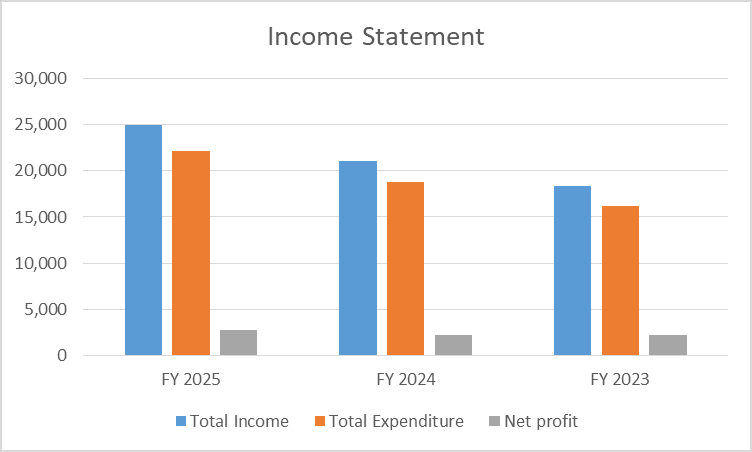
    Key MetricsFY 2025FY 2024FY 2023
    Total Income24,91521,03418,373
    Total Expenditure22,16918,80416,178
    Net profit 2,7452,2302,195
    (The figures mentioned above are in INR crores unless mentioned otherwise)
    Income Statement of bandhan bank

    Balance Sheet

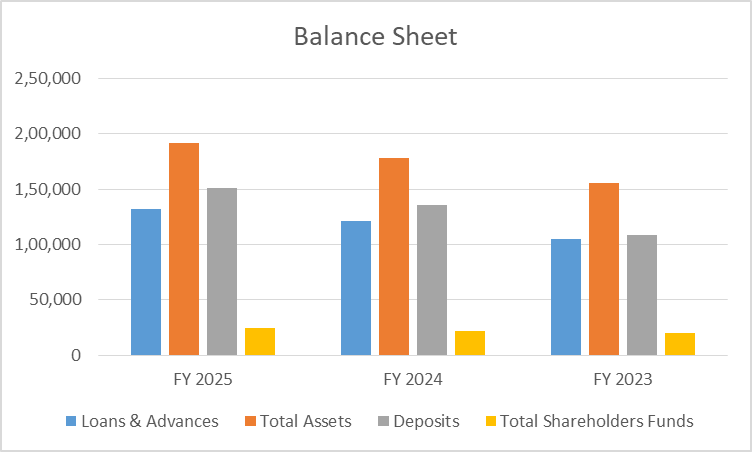
    Key MetricsFY 2025FY 2024FY 2023
    Loans & Advances1,31,9871,21,1361,04,756
    Total Assets1,91,4761,77,8411,55,769
    Deposits1,51,2121,35,2011,08,069
    Total Shareholders Funds24,60521,60919,584
    (The figures mentioned above are in INR crores unless mentioned otherwise)
    balance sheet of bandhan bank
    balance sheet of bandhan bank

    Cash Flow Statement

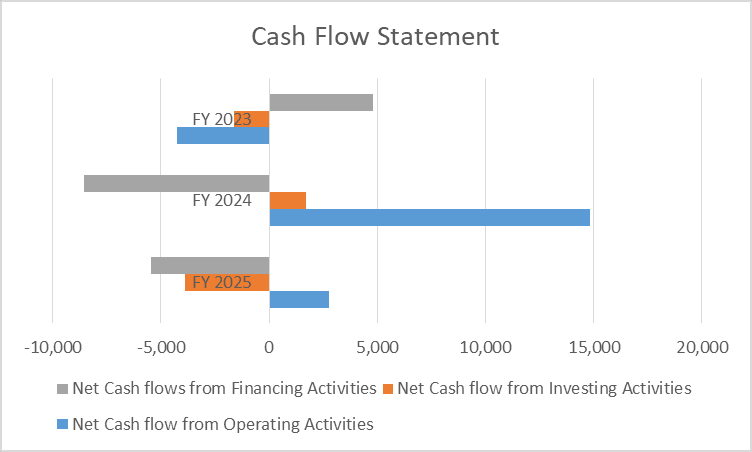
    Key MetricsFY 2025FY 2024FY 2023
    Net Cash flow from Operating Activities2,75214,808-4,244
    Net Cash flow from Investing Activities-3,8781,690-1,617
    Net Cash flows from Financing Activities-5,474-8,5784,791
    (The figures mentioned above are in INR crores unless mentioned otherwise)
    Cash Flow Statement of Bandhan bank
    Cash Flow Statement of Bandhan bank

    Key Performance Indicators (KPIs)

    Key MetricsFY 2024-25FY 2023-24FY 2022-23
    ROCE (%)3.953.834.65
    Net Interest Margin (%)6.005.805.94
    Net NPA (in %)1.281.111.17

    SWOT Analysis of Bandhan Bank

    The Bandhan Bank SWOT Analysis highlights its strengths, weaknesses, opportunities, and threats, showcasing its market position and growth potential.

    Strengths

    1. The bank keeps growing. Total income jumped from ₹18,373 crore in FY23 to ₹24,915 crore in FY25. Net profit moved up too, hitting ₹2,745 crore. That’s a clear sign their operations are running better than before.
    2. Deposits look strong – they climbed to ₹1.51 lakh crore. Loans and advances hit ₹1.32 lakh crore in FY25. All this pushed their balance sheet to a healthier place.
    3. Net Interest Margin tells the same story. It improved to 6.0% in FY25. That shows they’re lending well and getting good returns on their assets.
    4. Shareholder funds are up as well. Equity rose to ₹24,605 crore, so the bank’s capital position and overall stability just got a boost.

    Weaknesses

    1. ROCE slipped to 3.95% in FY25, still falling short of what’s ideal for a bank.
    2. Asset quality took a hit too—net NPA climbed to 1.28% in FY25, a sign the loan book’s feeling some strain.
    3. Operating cash flow swung down hard this year. The drop from FY24 to FY25 shows earnings aren’t reliably turning into cash.
    4. Expenses shot up right along with income, so margins barely budged.

    Opportunities

    1. Profitability’s got room to grow. If the company uses assets more efficiently and keeps a closer eye on costs, shareholders see the benefit – plain and simple.
    2. There’s real opportunity in credit growth, too. Growing the loan book, especially in retail and MSME areas, pushes income higher.
    3. Margins look solid right now, with a 6% NIM. Finding ways to lower funding costs will help keep earnings headed in the right direction.
    4. And then there’s valuation. Trading at ₹155, well under last year’s high of ₹192, there’s upside here if the numbers keep moving the right way.

    Threats

    1. Asset quality risks: If NPAs keep rising, profits and capital buffers take a hit.
    2. Interest rate swings: Shifts in rates change margins and bump up borrowing costs.
    3. Liquidity pressure: With negative financing cash flows lately, things get tight fast if funding dries up.
    4. Competition: Bigger private banks and NBFCs push hard, making it tougher to grow and keep pricing power.

    Conclusion

    Bandhan Bank has made great progress in the Indian banking industry, especially in terms of financial inclusion. Its focus on microfinance and its move into universal banking makes it a major player in the market. However, challenges such as asset quality and technological adoption need to be addressed to ensure sustained growth. Bandhan Bank must focus on its strengths and address its weaknesses to succeed in the competitive banking industry. The bank can further fortify its market position by capitalizing on opportunities such as digital banking and geographical expansion.

    S.NO.Check Out These Interesting Posts You Might Enjoy!
    1Yes Bank Case Study: Business Model, Financial Statement, SWOT Analysis
    2Asian Paints Case Study: Business Segments, KPIs, Financials, and SWOT Analysis
    3Bikaji Foods Case Study – Product Portfolio, Financial Statements, & Swot Analysis
    4Bajaj Housing Finance IPO Case Study: Products, Financials, And SWOT Analysis
    5Voltas Case Study: Business Model And Key Insights

    Frequently Asked Questions (FAQs)

    1. When was Bandhan Bank founded?

      Bandhan Bank’s roots trace back to 2001, when it started as a non-profit microfinance organization. It received its banking license and commenced operations as a bank in 2015.

    2. Is Bandhan Bank listed on the Indian stock exchanges?

      Yes, it is listed on the NSE and BSE.

    3. What is Bandhan Bank’s current market price and market capitalization?

      The market price of the Bandhan Bank stands at INR 212, and the market capitalization is INR 34,201 crores on 2 August 2024.

    4. How has Bandhan Bank performed financially?

      Bandhan Bank has shown decent growth in recent years, expanding its branch network and customer base.

    5. Is Bandhan Bank a good investment option?

      Investing in banks needs a long-term outlook because of market fluctuations and economic cycles. Like any other bank, Bandhan Bank carries inherent risks, and investors should analyze their risk appetite before investing. 

  • List Of Best IT Stocks in India 2026

    List Of Best IT Stocks in India 2026

    Do you know what makes it possible for everything to be at your fingertips in today’s society, including ordering groceries or your favorite food from the comfort of your home? New and inventive technology developed by the IT companies is the reason behind all this.

    In this blog, we will discuss the Indian IT industry and the top 5 stocks based on market capitalization and one-year performance.

    Overview of the IT Industry in India

    India grew at a rate of 8.2% in the last quarter of FY 2024, which makes it one of the fastest-growing economies in the world. One of the major reasons behind the expansion of the economy is attributed to the IT industry. Technological advancements and a skilled workforce are making India a major player in the IT sector globally. Companies in this industry offer a wide range of services, such as BPO, system integration, software development and maintenance, and more. 

    Top IT Stocks Based on Market Capitalization

    The Top IT Stocks in 2026 are:

    S.No.IT Stocks
    1Tata Consultancy Services Ltd.
    2Infosys Ltd.
    3HCL Technologies Ltd.
    4Wipro Ltd.
    5LTIMindtree Ltd.

    The IT Stocks have been listed in descending order based on their market capitalization in the table below:

    CompanyMarket Capitalisation (in INR crore)Current Market Price (INR)52-Week High52-Week Low
    Tata Consultancy Services Ltd.15,88,3404,3904,4313,311
    Infosys Ltd.7,76,5121,8701,9031,348
    HCL Technologies Ltd.4,44,1321,6371,6971,115
    Wipro Ltd.2,73,005522580375
    LTIMindtree Ltd.1,68,8435,7016,4434,514
    (As of 31 July 2024)

    Read Also: List of Best Monopoly Stocks in India

    Best IT Stocks in India Based on Market Capitalization – An Overview

    A brief overview of the best IT stocks in India is given below:

    1. Tata Consultancy Services (TCS)

    In 1968, Tata Sons Limited established the business to supply punch card services to Tata Steel, a sibling firm. TCS established India’s first software research and development center in Pune in 1981. The company went public on the Indian Stock Exchange in 2004. The company’s Mumbai headquarters are located there. The corporation offers services in cloud computing, artificial intelligence, etc. 

    1Y Return (%)3Y Return (%)5Y Return (%)
    -4.68%3.93%79.11%
     (As of 16 February 2025)

    2. Infosys

    Mr. N.R. Narayana Murthy established Infosys in 1981. Bengaluru became the nation’s IT hub after the corporation relocated its headquarters there. In 1993, the company decided to go public and got listed on the Indian stock market. Infosys was the first Indian company to debut on the NASDAQ Stock Exchange in 1999. The business serves more than 500 clients, some of which are included in the Fortune 500. 

    1Y Return (%)3Y Return (%)5Y Return (%)
    10.70%9.26%134.90%
     (As of 16 February 2025)

    3. HCL Technologies Ltd.

    In 1976, Shiv Nadar and a handful of other engineers formed HCL Tech. The company started by making and selling personal computers before expanding its operations into software development in 1986. In 1991, the business established HCL Technologies Ltd. as a distinct legal entity. The firm was listed on the Indian Stock markets in 1999. The company’s main office is in Noida, Uttar Pradesh. 

    1Y Return (%)3Y Return (%)5Y Return (%)
    1.98%48.35%174.68%
     (As of 16 February 2025)

    4. Wipro

    M.H. Hasham Premji established Western India Vegetable Products Limited in 1945 with the primary goal of producing cooking oil initially. Following the demise of Hasham Premji, his son Azim Premji assumed responsibility for the family business. In 1980, he decided to enter the IT industry and is now one of the leading Indian tech companies that offers services in cloud computing, artificial intelligence, robotics, etc.

    1Y Return (%)3Y Return (%)5Y Return (%)
    19.20%12.94%153.68%
     (As of 16 February 2025)

    5. LTIMindtree

    L&T Infotech merged with Mindtree to form LTIMindtree in 2022. In 2016, L&T Infotech, a subsidiary of Larsen and Toubro, was listed on the Indian stock market. On the other hand, ten IT specialists founded Mindtree in 1999. The goal of the merger was to boost efficiency, and it was completed in 2022. The company has a workforce of 81,650 employees, and its headquarters is located in Mumbai.

    1Y Return (%)3Y Return (%)5Y Return (%)
    -1.15%-7.76%171.51%
     (As of 16 February 2025)

    Read Also: List Of Best PSU Stocks in India 

    Top IT Stocks Based on 1-Year Return

    The Top IT Stocks based on 1-year returns are:

    S.No.IT Stocks
    1Persistent Systems Ltd.
    2HCL Technologies Ltd.
    3Infosys Ltd.
    4Coforge
    5Tech Mahindra

    The IT Stocks have been listed in descending order based on their market capitalization in the table below:

    Company1-Year Return
    Persistent Systems Ltd.107.28%
    HCL Technologies Ltd.46.73%
    Tech Mahindra Ltd.39.11%
    Infosys Ltd.37.89%
    Coforge Ltd.35%
    (As of 30 July 2024) 

    Best IT Stocks in India Based on 1-Year Return – An Overview

    The best IT Stocks according to 1-year return are given below, along with a brief overview of the services they provide:

    Persistent Systems

    The company was founded in 1990 by Dr. Anand Deshpande. Initially, the company was focused on software development. The company offers services in cloud computing, internet of things, big data analytics, etc. Intel Capital bought a 3.5% stake in the company for $1 million in 2000. The business generates over $1.2 billion in sales annually and employs more than 23,000 employees. The company’s headquarters is located in Pune.

    1Y Return (%)3Y Return (%)5Y Return (%)
    28.47%179.53%1,502.74%
     (As of 16 February 2025)

    Tech Mahindra

    Tech Mahindra was formed in 1986 as a consequence of a joint venture between two distinct entities, Mahindra and Mahindra, and British Telecom, a British telecom company. In 2006, the company was listed on the stock exchange. It expanded its services and clientele after acquiring a significant stake in Satyam Computer Services, another Indian IT firm that collapsed due to a corporate scandal. The company has formed strategic partnerships with several foreign companies, such as Microsoft and AWS, to offer innovative IT solutions. The company’s headquarters are located in Pune. 

    1Y Return (%)3Y Return (%)5Y Return (%)
    27.16%18.17%98.47%
     (As of 16 February 2025)

    Coforge

    Rajendra S. Pawar and Vijay K. Thandai created NIIT Technologies Ltd. in 1992. In 1999, the corporation established its operational units in the United States, Europe, and other Asia Pacific areas. The company primarily offers IT solutions for financial services, insurance companies, and banks. In 2020, the business rebranded itself as Coforge Limited. The business is also working on machine learning, AI solutions, etc. Its main office is located in Noida, Uttar Pradesh. 

    1Y Return (%)3Y Return (%)5Y Return (%)
    18.26%77.53%322.07%
     (As of 16 February 2025)

    An overview of the remaining companies is mentioned above.

    Key Performance Indicators (KPIs) 

    CompanyROE (%)ROCE (%)Debt to EquityP/E P/B
    Tata Consultancy Services Ltd.50.7363.51033.917.57
    Infosys Ltd.29.7736.81029.098.80
    HCL Technologies Ltd.2327.920.0327.056.51
    Wipro Ltd.14.8117.860.1924.363.66
    LTIMindtree Ltd.22.8928.73036.778.38
    Persistent Systems Ltd.22.0528.790.0464.2115.17
    Tech Mahindra Ltd.8.8411.700.0660.175.67
    Coforge Ltd.22.2725.320.1254.0211.64
    (All the above data is of the year ended March 2024) 

    The Benefit of Investing in IT Stocks

    IT stocks can be a valuable addition to your portfolio due to the reasons mentioned below:

    • Futuristic Approach – These businesses are mostly involved in developing cutting-edge technologies like cloud computing and artificial intelligence.
    • Diversified Portfolio – IT companies typically offer services to a variety of industries, such as healthcare, finance, and pharmaceuticals, protecting them against any downturns in specific industries. 
    • Revenue Model – The typical revenue strategy in this sector is subscription-based, giving them a reliable and consistent stream of income.
    • Global Exposure – IT companies usually operate globally and have clients in many countries. 

    Factors to be Considered Before Investing in IT Stocks

    There are multiple factors one should consider before investing in IT stocks:

    • Innovations – Investors should consider organizations that make significant investments in the research and development of new products and services, as these will be the ones that stay ahead of the competition and continue to innovate in the technology space. 
    • Financial Performance – Analyzing the company’s financial reports will assist you in making an informed investment decision. 
    • Clients – Investors should consider companies with a diversified source of revenues so that it doesn’t depend on a few big clients.
    • Global Economic Conditions – Due to the global operations, the profitability of the company can be impacted by any global event. Currency exchange rates also impact the IT business.  

    Future of IT Sector in India

    In the Indian economy, the IT sector forms a significant part of the GDP. In 2020, this sector made up about 7.7% of the nation’s GDP; by 2025, this contribution is expected to reach 10%. According to a recent NASSCOM analysis, this industry is predicted to generate $250 billion in sales in FY 2024. As a result, this industry has a bright future in India, and the businesses operating in the IT sector are playing a crucial part in the nation’s digital transformation.  

    Read Also: List of Best Media and Entertainment Stocks in India

    Conclusion

    In summary, the Indian IT sector plays a major role in the growth of the country’s gross domestic product. This industry has a lot of growth potential, but it also has considerable risks. Due to the constant evolution of the technology industry, businesses operating in this field must continue to innovate and achieve strong performance. However, it is advised to always consult a financial advisor before investing. 

    Frequently Asked Questions (FAQs)

    1. Should I invest in IT Stocks?

      Investing in stocks from the IT sector can provide significant returns because this industry provides a wide range of services globally. As people become increasingly dependent on technology, the industry will grow. 

    2. How can I identify the best IT stock to invest in?

      An investor should analyze a company’s financial statements and other factors impacting the performance of the stock. 

    3. Name the top 5 IT Stocks in India.

      Based on market capitalization, TCS, Infosys, Wipro, HCL Tech, and LTI Mindtree are the top IT stocks in India.  

    4. What are the major risks associated with investing in the IT Sector?

      The main risks of investing in the IT sector are increased competition, a slowing economy, fluctuations in currency exchange rates, etc.  

    5. Can I invest in IT stock for the short term?

      Yes, you can think about investing in IT stocks for the short term if your investment strategy is focused on technical analysis. On the other hand, you must conduct a fundamental analysis before making a longer-term investment in IT companies.

    Selection Methodology and Important Disclaimer

    The stocks included in this list are selected primarily on the basis of their market capitalisation, which represents the total market value of a company’s outstanding shares. The companies are arranged in descending order of market capitalisation, with larger companies appearing first, followed by relatively smaller companies. This methodology is intended to provide a structured approach for identifying companies based on their market size and overall presence within a sector.

    However, market capitalisation should not be considered the sole factor while evaluating investment opportunities, as it does not guarantee future performance, profitability, or returns. Investors should also assess other important factors such as financial health, business fundamentals, management quality, valuation metrics, industry outlook, and market conditions before making investment decisions.

    The information provided is for educational and informational purposes only and should not be construed as investment advice, recommendation, solicitation, or an offer to buy or sell any securities by Pocketful Fintech Capital Private Limited.
  • Budget 2024: Explainer On Changes In SIP Taxation

    Budget 2024: Explainer On Changes In SIP Taxation

    The Mutual fund industry of India is currently valued at $0.66 trillion and is expected to grow to $1.61 trillion by 2029 in terms of assets under management (AUM). Investors are offered two modes of investment in mutual funds: Lumpsum and SIP. The calculation of taxes payable on lump sum investments is pretty straightforward, but what about SIP investments, which are a more popular way of investing among the general public?

    In this blog, we will discuss the changes in STCG and LTCG tax introduced in the Budget 2024, process of calculating taxes on SIP and the impact of tax rate changes.

    What is Capital Gains Tax?

    It is a tax applicable to the profits earned from the sale of a capital asset. When you sell an asset at a price higher than initial buying price, you earn capital gains. In case of mutual funds, allotment is done based on the NAV.

    For example – You bought one unit of a mutual fund having NAV of 100. Your total buying was 1*100 = INR 100. Now, after some time, you sold this one unit at 150. So, you earned 50*1= INR 50, i.e., capital gains. 

    Capital Gains Tax

    It can be of two types based on the holding period of the asset:

    • Long term capital gains tax is the tax applicable to the profits earned upon selling the asset after a certain time period. 
    • Short term capital gains tax is the tax applicable to the profits earned upon selling the asset before a certain period of time. 

    The time period for equity or equity oriented mutual funds is one year, which means STCG will apply if the holding period is less than a year and LTCG if the holding period exceeds one year. Keep in mind that the time period for distinction between long term and short term varies for different assets. However, in this blog we will only deal with equity mutual funds for easy understanding.

    BUDGET 2024 Update 

    Currently, in LTCG in equity, there is no tax till the income of one lakh; post this limit, a 10% tax is applicable without indexation benefit. In the case of STCG, there is a flat 15% tax on gains without indexation benefit. 

    The budget introduced by the Government of India proposed the following changes:

    • LTCG for equity and equity-related instruments has been hiked from 10% to 12.5% and exemption limit has also been raised from INR 1,00,000 to INR 1,25,000
    • STCG for equity and equity-related instruments has been hiked from 15% to 20%

    Read Also: Unveiling the Budget 2024: Key Takeaways

    How Will the SIPs Be Taxed? 

    SIP or Systematic Investment Plan is a type of investment plan in which an investor invests small amounts periodically instead of a lump sum investment. Each installment of a SIP is considered as a separate investment for tax purposes due to which the holding period of each installment will be different from one another. Let’s understand how the SIPs will be taxed with the help of an example.

    Suppose Rohan started a monthly SIP of INR 1,00,000 in an equity mutual fund for 2 years, starting from 1 Aug 2024 till 1 July 2026. On 1 Aug 2024, with an SIP amount of 1,00,000 he purchased 1,000 units with an NAV of 100 (1,00,000 INR /100 NAV = 1,000 units). With each SIP, he accumulated certain units of the mutual fund.

    So, after 24 months, i.e. 1 July 2026, his total value of the portfolio is app. INR 30 lakhs (investment amount = 24 lakhs, profit = 6 lakhs). Now, on 2 July 2026, he wants to sell the entire mutual fund units with an NAV of 142.

    Remember that, for calculation of capital gains, we use the First-in First-out (FIFO) method, i.e., the units which are purchased first assume to be sold first. As installments were invested at different points in time, we need to separate LTCG and STCG. The gains earned during the first 12 months will be termed as long term capital gains as one year is completed and gains earned in the last 12 months will be termed as short term capital gains because they are redeemed before completing one year. 

    Have a look at the table below:

    Sl. No.DateSIP AmountNAVUnitsCapital GainHolding Period (Months)STCGLTCG
    101-Aug-241,00,0001001,00042,0002342,000
    201-Sep-241,00,00010595235,2382235,238
    301-Oct-241,00,000981,02044,8982144,898
    401-Nov-241,00,00010694333,9622033,962
    501-Dec-241,00,00010397137,8641937,864
    601-Jan-251,00,00010595235,2381835,238
    701-Feb-251,00,00010991730,2751730,275
    801-Mar-251,00,00010793532,7101632,710
    901-Apr-251,00,00011190127,9281527,928
    1001-May-251,00,00010496236,5381436,538
    1101-Jun-251,00,00011289326,7861326,786
    1201-Jul-251,00,00010793532,7101232,710
    1301-Aug-251,00,000991,01043,4341143,434
    1401-Sep-251,00,00010892831,7251031,725
    1501-Oct-251,00,00011884720,339920,339
    1601-Nov-251,00,00011984019,328819,328
    1701-Dec-251,00,00012182617,355717,355
    1801-Jan-261,00,00012480614,516614,516
    1901-Feb-261,00,0001347465,97055,970
    2001-Mar-261,00,0001327587,57647,576
    2101-Apr-261,00,00012778711,811311,811
    2201-May-261,00,0001357415,18525,185
    2301-Jun-261,00,0001357415,18515,185
    2401-Jul-261,00,0001407141,42601,426
    Total24,00,00021,1276,00,0001,83,8524,16,148

    He sold the entire holding with an applicable NAV of 142 on 2 July 2026, which earned him INR 6 lakhs as capital gains. Here, 

    • Short term capital gains = INR 1,83,852
    • Long term capital gains = INR 4,16,148

    Tax Calculation 

    Tax Calculation 

    Now, we will calculate the tax on the capital gains made by him. 

    Based on tax rates before Budget 2024:

    LTCG after deduction = INR 4,16,148 – INR 1,00,000 = INR 3,16,148

    LTCG tax rate = 10%

    LTCG taxes = 10% * 3,16,148 = INR 31,615

    STCG tax rate = 15%

    STCG taxes = 15% of 1,83,852 = INR 27,578

    Total taxes payable = INR 31,615 + INR 27,578 = INR 59,193

    Based on tax rates proposed in Budget 2024:

    LTCG after deduction = INR 4,16,148 – INR 1,25,000 = INR 2,91,148

    LTCG tax rate = 12.5%

    LTCG taxes = 12.5% * 2,91,148 = INR 36,394.

    STCG tax rate = 20%

    STCG taxes = 20% of 1,83,852 = INR 36,770.

    Total taxes payable = INR 36,394 + INR 36,770 = INR 73,164

    ParticularsTax payable as per earlier rates Tax payable as per new ratesDifference
    STCG Tax27,57836,7709,192
    LTCG Tax31,61536,3944,779
    Total Tax Liability59,91373,16413,251

    From the above example, it is clearly visible that Rohan incurs a greater income tax liability due to the hike in capital gains tax rate introduced in Budget 2024.

    Read Also: Budget 2024-25: How Will New Tax Slabs Benefit The Middle Class?

    Conclusion

    Many new investors prefer starting their mutual fund journey through a Systematic Investment Plan (SIP) as it is the most popular investment method in equity mutual funds. However, understanding the taxation of returns earned is crucial. 

    The Budget 2024 has introduced changes to capital gains tax rates, resulting in higher tax liabilities for investors. It is important to understand the impact of the recent hike in Short term capital gains (STCG) and Long term capital gains (LTCG) rates. It is recommended to get in touch with your tax advisor for more detailed insights and calculations.

    Frequently Asked Questions (FAQs)

    1. What are the changes introduced in Budget 2024 in relation to capital gains tax?

      In Budget 2024, the LTCG tax has been hiked from 10% to 12.5% and STCG tax increased from 15% to 20%.

    2. What are the two types of capital gains?

      Long term capital gains (LTCG) and short term capital gains (STCG) are the two types of capital gains.

    3. How much capital gains are tax-free?

      As per the Budget 2024, in the case of LTCG in equity, there is no tax till the income of 1.25 lakhs; post this limit, a 12.5% tax is applicable without indexation benefit.

    4. Is the amount of tax automatically deducted from the profit?

      The tax is not automatically deducted, investors must compute their gain and pay tax at the time of filing income tax return.

    5. How can an investor invest in mutual funds?

      Investors can invest in mutual funds either through SIP route or lump sum investment.

  • List Of Best Defense Stocks in India

    List Of Best Defense Stocks in India

    The defense industry in India is emerging as a significant sector, both in terms of economic contribution and strategic importance. With one of the largest military forces in the world, India’s defense sector has witnessed substantial growth over the past few years. It is mainly driven by modernization efforts, technological advancements, and increased government spending.

    In this blog, we will explore the best defense stocks of India based on their market capitalization.

    Overview of the Defense Industry In India

    Defense Industry In India

    India spends approximately $75 billion, approximately 13.04% of the total budget, on increasing its defense capabilities each year. India is ranked fourth in the world in terms of spending on defense. Currently, India relies heavily on imports for defense equipment. In the next 5 years, the Government of India aims to achieve $5 billion worth of export opportunities in the defense sector. India’s defense industry has transformed, especially with the government’s “Make in India” initiative to enhance domestic manufacturing capabilities. This initiative has attracted public and private players to invest in defense production.

    Top Defense Stocks Based on Market Capitalisation

    The top defense stocks in India are:

    S.No.Defence Stocks
    1Hindustan Aeronautics Ltd.
    2Bharat Dynamics Ltd.
    3Zen Technologies Ltd.
    4Astra Microwave Products Ltd.
    5Paras Defence and Space Technologies Ltd.

    The defense stocks have been listed in descending order based on their market capitalization in the table below:

    Name of the CompanyMarket Cap (in INR Cr.)Share Price (in INR) 52 Week High Price (in INR)52 Week Low Price (in INR)
    Hindustan Aeronautics Ltd.3,22,761 4,8265,166 3,046
    Bharat Dynamics Ltd.59,548 1,6242,097 890
    Zen Technologies Ltd.14,464 1,6022,628 945
    Astra Microwave Products Ltd.10,556 1,1121,196 584
    Paras Defence and Space Technologies Ltd.5,891 731972 401

    Read Also: List Of Best PSU Stocks in India

    Best Defense Stocks in India Based on Market Capitalization – An Overview

    The best defense stocks in India are given below, along with a brief overview:

    1. Hindustan Aeronautics Ltd.

    Hindustan Aeronautics Limited (HAL), headquartered in Bangalore, is a leading Indian aerospace and defense company. Founded on 23 December 1940, HAL is one of the world’s oldest and largest aerospace and defense manufacturers. HAL operates 11 dedicated R&D centers and 21 manufacturing divisions across four production units in India. It is managed by a board of directors appointed by the President of India through the Ministry of Defence. 

    The company designs and manufactures fighter jets, helicopters, jet engines, marine gas turbine engines, avionics, and software. HAL also provides spares and upgrades for Indian military aircraft. 

    2. Bharat Dynamics Ltd.

    Bharat Dynamics Limited (BDL) is a leading manufacturer of ammunition and missile systems in India. BDL was established in 1970 in Hyderabad to create a manufacturing base for guided weapon systems. The company initially produced the French SS11B1, a first-generation anti-tank guided missile. 

    Over time, BDL has developed strong in-house R&D capabilities, focusing on design and engineering. They operate three manufacturing units in Kanchanbagh, Hyderabad; Bhanur, Medak district; and Visakhapatnam, Andhra Pradesh.

    3. Zen Technologies Ltd.

    Zen Technologies Limited, established in 1996, specializes in designing, developing, and manufacturing combat training solutions and counter-drone systems for defense and security forces. The company focuses on technologies that benefit the Indian armed forces, state police, and paramilitary forces. The company’s headquarters is located in Hyderabad.

    4. Astra Microwave Products Ltd.

    Astra Microwave Products Limited (AMPL), established in 1991, was founded by a team of experienced scientists specializing in RF, microwave, and digital electronics. The founders recognized the need for a technically strong private company to design, develop, and produce advanced RF and microwave subsystems and systems for strategic applications. These systems have applications in defense, space, meteorology, and telecommunication.

    5. Paras Defence and Space Technologies Ltd.

    Paras Defence and Space Technologies Ltd. is a company that specializes in the design, development, manufacturing, testing, and commissioning of products and systems for defense and space applications. 

    With a state-of-the-art manufacturing facility and a highly skilled workforce, they ensure high-quality output. Paras Defence has a robust supply chain and can manage turnkey projects of all sizes, demonstrating the resource scalability needed to handle mega projects.

    Performance of Defense Stocks

    Company6 Month Return1 Year Return
    Hindustan Aeronautics Ltd.64.03%148.39%
    Bharat Dynamics Ltd.71.29%138.20%
    Zen Technologies Ltd.102.40%175.40%
    Astra Microwave Products Ltd.55%139.03%
    Paras Defence and Space Technologies Ltd.61.50%92.26%
    (As of 31 July 2024) 

    Key Performance Indicators

    Name of the CompanyROE (%)ROCE (%)Debt to Equity RatioP/E Ratio
    Hindustan Aeronautics Ltd.26.1524.49043.2
    Bharat Dynamics Ltd.16.8411.33087.33
    Zen Technologies Ltd.17.7022.120.02112.03
    Astra Microwave Products Ltd.12.5317.140.2570.13
    Paras Defence and Space Technologies Ltd.7.6610.280.08146.67
    (All the above data is of the year ended March 2024) 

    Benefits of Investing in the Defense Sector in India

    The benefits of investing in defense stocks are:

    • The government’s emphasis on “Make in India” supports local defense manufacturing and helps them achieve growth.
    • Defense stocks will diversify your investment portfolio, balancing risk with consistent returns.
    • Defense companies benefit from long-term government contracts, providing reliable revenue streams.

    Read Also; Top Defence Stocks to Watch After Operation Sindoor

    Factors to Consider Before Investing in Defence Stocks in India

     Investing in Defence Stocks in India

    An investor must consider the following factors before investing in defense stocks:

    • Financial Performance: Analyze the financial health of the company, including revenue growth and profitability.
    • Business contracts: Assess the company’s current contracts and the contracts the company might be able to secure in the future.
    • Global Events: Understand how regional and global tensions may impact defense spending.
    • Diversification Potential: Consider how defense stocks fit into your overall investment strategy for risk management.

    Future of Defense Stocks in India 

    The future of defense stocks in India appears promising due to several key factors. The Indian government is increasing its defense budget, prioritizing modernizing its armed forces and reducing dependence on imports.  India’s geopolitical landscape and the need for enhanced national security drive demand for advanced defense systems, including drones, surveillance, and cybersecurity solutions. This growing demand will benefit companies involved in these areas and, thus, the investors.

    Read Also: List of Best Monopoly Stocks in India

    Conclusion 

    The defense industry is crucial for the growth of any country, as strong defense systems result in the smooth functioning of the economy. India is among the biggest spenders on the defense sector and now wishes to develop domestic manufacturing facilities. Companies such as HAL, Bharat Dynamics Ltd., etc., would play a key role in making India self-reliant in the defense sector. The revenues of defense companies are expected to grow, which makes this an exciting sector to watch out for. However, it is advised to always consult a financial advisor before investing.

    S.NO.Check Out These Interesting Posts You Might Enjoy!
    1List Of Best Logistics Stocks in India
    2Best Small Cap Defence Stocks in India
    3List Of Best Textile Stocks in India
    410 Best Consumption Stocks in India
    510 Most Undervalued Stocks in India

    Frequently Asked Questions (FAQs)

    1. How does government policy affect defense stocks?

      Government policies, such as increased defense budgets and the “Make in India” initiative, boost domestic production and can positively impact defense stocks by providing more opportunities for local companies.

    2. What should investors look for in a defense company’s financials?

      Investors should focus on revenue growth, profitability, and the size of the order book. Strong financial health and a robust order pipeline indicate a company’s ability to sustain and grow its business.

    3. How do export opportunities influence defense stocks? 

      Export opportunities can significantly boost a defense company’s revenue. Companies that meet international standards and secure export contracts will likely achieve higher growth.

    4. What is the impact of technology advancements on defense stocks?

      Technological advancements, such as AI, drones, and cybersecurity, can drive growth for defense companies. Firms that invest in cutting-edge technology are better positioned to win new contracts and expand their market share.

    5. What is the significance of a company’s order book in the defense sector?

      A strong order book indicates a healthy backlog of work and future revenue. It provides clarity regarding the company’s financial stability and growth potential.

    Selection Methodology and Important Disclaimer

    The stocks included in this list are selected primarily on the basis of their market capitalisation, which represents the total market value of a company’s outstanding shares. The companies are arranged in descending order of market capitalisation, with larger companies appearing first, followed by relatively smaller companies. This methodology is intended to provide a structured approach for identifying companies based on their market size and overall presence within a sector.

    However, market capitalisation should not be considered the sole factor while evaluating investment opportunities, as it does not guarantee future performance, profitability, or returns. Investors should also assess other important factors such as financial health, business fundamentals, management quality, valuation metrics, industry outlook, and market conditions before making investment decisions.

    The information provided is for educational and informational purposes only and should not be construed as investment advice, recommendation, solicitation, or an offer to buy or sell any securities by Pocketful Fintech Capital Private Limited.
  • List Of Best Textile Stocks in India 2026

    List Of Best Textile Stocks in India 2026

    The Indian textile sector has been stitching growth and weaving wealth for the past few years. This sector has a rich heritage of traditional craftsmanship. It is one of the oldest industries in India and has grown significantly with the introduction of modern machinery and technology. It accounts for a significant portion of GDP and generates employment. It is one of the largest sectors of the country and has diverse segments like cotton, silk, woolen, textiles and readymade garments.

    In this blog, let’s look at the best textile stocks in India based on market capitalization and the reasons for investing in them.

    Overview of the Textile Sector 

    Overview of the Textile Sector 

    The Indian textile sector is one of the largest in the world and has a diverse range of segments, such as cotton, silk, wool, jute, and handloom textiles. The industry contributes around 2.3% to GDP and 12% of the country’s export earnings. Its key segments include: 

    • Cotton Textiles: India is the largest cotton producer and has a robust cotton textile industry.
    • Silk and Jute Textiles: India is also one of the largest producers of silk and jute.
    • Synthetic Textiles: The country has a well-established synthetic fiber and yarn industry.
    • Handlooms and Handicrafts: India has a rich tradition of handlooms and handicrafts, known for their uniqueness and quality.

    Top Textile Stocks in India Based on Market Capitalization

    The top textile stocks in India are:

    S.No.Textile Stocks
    1Page Industries Ltd.
    2KPR Mill Ltd.
    3Swan Corp Ltd
    4Trident Ltd.
    5Welspun Living Ltd.
    6Vardhman Textiles Ltd.
    7Raymond Ltd.
    8Garware Technical Fibres Ltd.
    9Jindal Worldwide Ltd.
    10Siyaram Silk Mills Ltd.

    The textile stocks have been listed in descending order based on their market capitalization in the table below:

    CompanyMarket Cap (₹ Cr.)CMP (₹)52-Week High (₹)52-Week Low (₹)
    Page Industries Ltd.37,63733,76450,59031,740
    KPR Mill Ltd.30,6718981,395756
    Swan Corp Ltd13,101418527362
    Trident Ltd.13,56526.634.623.1
    Welspun Living Ltd.13,699143155105
    Vardhman Textiles Ltd.13,965482546361
    Raymond Ltd.2,681402784361
    Garware Technical Fibres Ltd.6,960703986588
    Jindal Worldwide Ltd.2,71227.082.723.0
    Siyaram Silk Mills Ltd.2,617576850494
    (Data as of 12 Feb 2026)

    Read Also: List Of Best Logistics Stocks in India 

    Best Textile Stocks in India Based on Market Capitalization – An Overview

    The best textile stocks in India are given below, along with a brief overview:

    1. Page Industries Ltd.

    Page Industries is the exclusive licensee of Jockey International in India, Sri Lanka, Bangladesh, Nepal, etc. It also holds the license for Speedo in India. Page Industries operates in the innerwear and leisurewear segments. It leverages a strong brand image, extensive distribution networks, and innovation in product design to maintain its market leadership. The company focuses on premium quality products and effective marketing strategies to drive sales.

    Know the Returns:

    1Y Return (%)3Y Return (%)5Y Return (%)
    -21.09%-18.25%9.80%
    (Data as of 12 Feb 2026)

    2. KPR Mill Ltd.

    KPR Mill is a vertically integrated textile manufacturer that produces yarn, fabrics, and garments and is also engaged in sugar production. KPR Mill operates across the textile value chain, ensuring cost efficiency and quality control. The company invests in expanding its production capacity for international markets. KPR Mill integrates sustainability practices into its operations.

    Know the Returns:

    1Y Return (%)3Y Return (%)5Y Return (%)
    -1.82%64.21%388.19%
    (Data as of 12 Feb 2026)

    3. Swan Corp Ltd.

    Swan Corp Ltd is a diversified company with operations in textiles, real estate, and energy. Its textile division is involved in fabric production. Swan Corp Ltd textile segment focuses on high-quality fabric production for both domestic and international markets. The company leverages integrated production facilities to maintain efficiency and competitiveness.

    Know the Returns:

    1Y Return (%)3Y Return (%)5Y Return (%)
    -6.24%11.96%-8.20%
    (Data as of 12 Feb 2026)

    4. Trident Ltd.

    Trident Limited is one of India’s leading manufacturers of textiles and is part of the diversified Trident Group. Trident’s textile business encompasses yarn, terry towels, and bed linen. The company emphasizes vertical integration, operational efficiency, and a strong export orientation. Trident invests in advanced technology and sustainable practices to enhance productivity and to be environmentally responsible.

    Know the Returns:

    1Y Return (%)3Y Return (%)5Y Return (%)
    -6.48%23.30%89.36%
    (Data as of 12 Feb 2026)

    5. Welspun India Ltd.

    Welspun India is one of the world’s leading home textile manufacturers, supplying its products to top retailers globally. Welspun’s business model focuses on innovation, quality, and sustainability. The company specializes in home textiles such as towels, bed sheets, and rugs, with a significant portion of its products exported. Welspun invests in technology and sustainable practices to enhance product offerings.

    Know the Returns:

    1Y Return (%)3Y Return (%)5Y Return (%)
    13.34%65.84%110.83%
    (Data as of 12 Feb 2026)

    5. Vardhman Textiles Ltd.

    Vardhman Textiles is one of India’s largest textile manufacturers, producing yarn, fabric, sewing thread, and garments. Vardhman operates India’s largest vertically integrated facility, controlling the entire textile value chain from spinning to garment manufacturing. The company focuses on high-quality products, innovation, and catering to domestic and international markets. It maintains a robust supply chain and invests in technology to improve efficiency.

    Know the Returns:

    1Y Return (%)3Y Return (%)5Y Return (%)
    -16.04%29.50%88.73%
    (Data as of 12 Feb 2026)

    7. Raymond Ltd.

    Raymond is a leading Indian textile and apparel company renowned for suiting fabrics. It also has a significant presence in branded apparel. Raymond operates across textiles, apparel, retail, and FMCG segments. The company focuses on premium product offerings, brand equity, and an extensive retail network. It integrates design, manufacturing, and retail operations to ensure quality and responsiveness to market trends.

    Know the Returns:

    1Y Return (%)3Y Return (%)5Y Return (%)
    -75.77%-75.66%20.45%
    (Data as of 12 Feb 2026)

    8. Garware Technical Fibres Ltd.

    Garware Technical Fibres is a leader in technical textiles and synthetic cordage, serving various industries, including fisheries, shipping, and agriculture. The company specializes in high-performance textiles and synthetic fibers, focusing on product innovation, quality, and customized solutions for different industrial applications. Garware invests in R&D to develop advanced textile products.

    Know the Returns:

    1Y Return (%)3Y Return (%)5Y Return (%)
    -7.94%3.04%56.25%
    (Data as of 12 Feb 2026)

    9. Jindal Worldwide Ltd.

    Jindal Worldwide is a leading textile company specializing in the manufacture of denim and other fabrics. Jindal Worldwide operates a vertically integrated textile manufacturing process, from spinning to fabric production. The company focuses on innovation, sustainability, and catering to global fashion brands. Jindal invests in advanced manufacturing technology to enhance quality and efficiency.

    Know the Returns:

    1Y Return (%)3Y Return (%)5Y Return (%)
    -64.29%-71.48%127.16%
    (Data as of 12 Feb 2026)

    10. Siyaram Silk Mills Ltd.

    Siyaram is India’s leading manufacturer of blended fabrics, garments, and home textiles. Siyaram’s business model involves manufacturing and marketing a wide range of fabrics and readymade garments. The company emphasizes brand development, quality, and a broad retail distribution network. Siyaram invests in marketing and distribution to expand its market presence.

    Know the Returns:

    1Y Return (%)3Y Return (%)5Y Return (%)
    -16.27%-3.94%198.93%
    (Data as of 12 Feb 2026)

    Read Also: List Of Best Footwear Stocks in India

    Key Performance Indicators 

    CompanyROEROCEDebt to EquityP/E (X)P/B (X)
    Page Industries Ltd.51.2162.78065.3133.90
    KPR Mill Ltd.16.2921.450.0938.016.20
    Swan Corp Ltd10.2815.190.3814.921.84
    Trident Ltd.810.230.3433.252.68
    Welspun Living Ltd.13.2515.270.5120.172.69
    Vardhman Textiles Ltd.8.9210.820.1312.731.13
    Raymond Ltd.94.022.260.10-707.200.67
    Garware Technical Fibers Ltd.18.6425.160.0537.086.90
    Jindal Worldwide Ltd.9.6016.991.0193.919.06
    Siyaram Silk Mills Ltd.15.3620.650.1815.102.31
    (All the above data is of the year ended March 2025)

    Benefits of Investing in Textile Stocks 

    Investing in Textile Stocks 

    The benefits of investing in textile stocks are:

    • Rising Income & Domestic Consumption: Increasing disposable incomes and a growing middle class are boosting demand for textiles.
    • Export Advantage: India exports textiles to the US, EU, and Middle Eastern countries. Multiple streams of revenue result in stable profitability.
    • Innovation and Technology: Technological advancements in textile machinery and digitalization improve productivity and quality.

    Factors that affect the Indian Textile stocks

    An investor must consider the following factors before investing in textile stocks:

    • Raw Material Prices: Volatility in the prices of key raw materials like cotton can affect profitability.
    • Global Competition: Indian textile companies face stiff competition from other Asian countries like China, Bangladesh, and Vietnam.
    • Compliance and Sustainability: Meeting global environmental and social compliance standards is becoming increasingly important.
    • Government policies: Any recent or upcoming policy changes affect the sector.
    • Economic indicators: Overall economic conditions and their impact on demand for textile products affect the sector.

    Future of Textile Industry

    The future of the textile industry looks bright due to the following factors:

    • Good growth potential: Rising income, changing lifestyle, and a large middle-class population drive the demand for textile products.
    • Export Opportunities: India is one of the largest exporters of apparel and textiles globally. It has a strong demand for its products in the US, Europe and even the Middle East.
    • Government support: The government supports this sector by introducing incentives that can increase the demand for textile products.
    • Competitive Advantage: India has abundant raw materials and skilled workers for the textile industry.
    • Technical Advancement: Indian textile companies are increasingly adopting modern technologies to improve efficiency and product quality.
    • Booming Fashion Industry: The growth of the fashion industry and the increasing popularity of Indian designers contribute to higher demand for textiles.

    Read Also: List of Best Travel Stocks in India

    Conclusion

    The Indian textile sector is a significant sector of the Indian economy, marked by its diverse segments, including cotton, silk, woolen textiles, handlooms, and readymade garments. This sector is well positioned for sustained growth due to strategic investments and growing export opportunities. It presents vast opportunities and continues to weave a promising future. However, it is advised to consult a financial advisor before investing.

    S.NO.Check Out These Interesting Posts You Might Enjoy!
    1Best Low-Risk Stocks in India
    2List of Best Monopoly Stocks in India
    3Top 10 Best Summer Stocks in India
    4Best Cyclical Stocks in India 
    5Best 10 Sleeper Low-Beta Stocks
    6Best Copper Stocks in India
    7Best Jewelry Stocks in India
    8Best Metal Stocks in India
    9Best Semiconductor Stocks in India
    10Best Chemical Stocks in India
    11Best Battery Energy Storage System (BESS) Stocks
    12Top 10 Wind Energy Stocks in India

    Frequently Asked Questions (FAQs)

    1. What should an investor consider before investing in a Textile stock?

      An investor should consider the company’s overall market position with respect to its competitors, its financial health, growth prospects, competitive advantages, management quality, sustainability practices, etc.

    2. Are there any specific regulations that affect the Indian textile industry?

      Yes, this industry is subject to various stringent regulations related to labor laws, export policies, environmental standards and agreements.

    3. How do technological advancements affect the textile industry?

      Technological advancements reduce costs, increase efficiency and enable innovation in product offerings to stay competitive.

    4. What government initiatives support the Indian textile industry?

      Key initiatives include the Technology Upgradation Fund Scheme (TUFS), the Scheme for Integrated Textile Parks, the Make in India campaign, etc.

    5. What is the contribution of the textile industry to Indian GDP?

      The textile industry contributes 2.3% to the Indian GDP.

    Selection Methodology and Important Disclaimer

    The stocks included in this list are selected primarily on the basis of their market capitalisation, which represents the total market value of a company’s outstanding shares. The companies are arranged in descending order of market capitalisation, with larger companies appearing first, followed by relatively smaller companies. This methodology is intended to provide a structured approach for identifying companies based on their market size and overall presence within a sector.

    However, market capitalisation should not be considered the sole factor while evaluating investment opportunities, as it does not guarantee future performance, profitability, or returns. Investors should also assess other important factors such as financial health, business fundamentals, management quality, valuation metrics, industry outlook, and market conditions before making investment decisions.

    The information provided is for educational and informational purposes only and should not be construed as investment advice, recommendation, solicitation, or an offer to buy or sell any securities by Pocketful Fintech Capital Private Limited.
  • List Of Best Paint Stocks in India 2026

    List Of Best Paint Stocks in India 2026

    The Indian paint industry is witnessing strong growth, supported by a booming construction sector, rapid urbanisation, and increasing consumer preference for modern interiors and customised home décor. Rising disposable incomes, housing renovations, and infrastructure development are further driving demand across decorative and industrial paint segments. As a result, the paint sector offers attractive long-term investment potential for investors seeking exposure to consumption-led growth.

    For those looking to diversify their portfolios, paint stocks provide an opportunity to invest in companies benefiting from strong brand recall, expanding distribution networks, and improving margins driven by scale and innovation.

    In this blog, we explore the best paint stocks in India for 2026, analyse their recent performance, and discuss key industry trends shaping future growth. The objective is to help investors better understand the paint sector and identify companies that are well positioned to benefit from India’s evolving housing and infrastructure landscape.

    Overview of the Paint Industry in India

    The Indian paint and coatings industry is a steadily growing sector driven by housing demand, infrastructure development, and rising consumer spending on home improvement. The market is currently valued at around USD 9.5–10 billion and is projected to reach nearly USD 15 billion by 2029, growing at a CAGR of about 9–10%. Decorative paints dominate the industry, accounting for roughly 65–70% of total demand, supported by residential construction and repainting activities. The remaining 30–35% comes from industrial paints, driven by sectors such as automobiles, infrastructure, and manufacturing. With increasing urbanisation and premiumisation, the industry offers strong long-term growth potential.

    Paint Industry in India

    Many infrastructure projects were delayed due to COVID-19, which also had a negative impact on the paint industry. Their revenues decreased, and paint stocks struggled to deliver returns during the lockdown phase. However, due to widespread vaccination campaigns, the economy recovered, and the demand for paints increased, which makes this an exciting sector to look out for in the future.

    Top Paint Stocks Based on Market Capitalisation

    List of Top Paint stocks based on the Market Capitalisation:

    1. Asian Paints Ltd.
    2. Berger Paints India Ltd.
    3. Kansai Nerolac Paints Ltd.
    4. Akzo Nobel India Ltd.
    5. Indigo Paints Ltd.
    6. Sirca Paint India Ltd.

    The paint stocks have been listed in descending order based on their market capitalization in the table below:

    CompanyCurrent Market Price (INR)Market Capitalisation (in INR crore)52-Week High52-Week Low
    Asian Paints Ltd24162,40,84029852125
    Berger Paints India Ltd463.5055,800`605457.65
    Kansai Nerolac Paints Ltd.22518,269271.18218.20
    Akzo Nobel India Ltd.278712,87039152747
    Indigo Paints Ltd.10365,0501345910
    Sirca Paint India Ltd.465.752,730539231
    (As on 29th January, 2026)

    Read Also: Top Biotech Companies Stocks in India

    Best Paint Stocks in India Based on Market Capitalization 

    The best paint stocks in India are given below, along with a brief overview:

    1. Asian Paints Ltd.

    In 1992, four friends named Champaklal Choksey, Chimanlal Choksi, Suryakant Dani, and Arvind Vakil started Asian Paints in a garage in Mumbai. During World War 2, paint imports were limited, and they recognized the chance to meet the increasing demand for paint in India. By 1967, Asian Paints had already positioned itself as the undisputed leader in the paint manufacturing industry in India. Currently, the company operates in more than 60 countries, with manufacturing sites in 15 countries.

    The company’s core business activities include producing a diverse range of paints, coatings, and allied products. A large distribution network makes sure that products are available in many places, such as stores, wholesalers, and directly to consumers. The main revenue is from selling decorative and industrial paints. Additional revenue of the company comes from selling home décor items, bath fittings, and other related products. The company also offers color consultation services and painting solutions.

    Know the Returns:

    1Y Returns3Y Returns5Y Returns
    7.79%-11.40%-1.77%
    (As on 29th January, 2026)

    2. Berger Paints India Ltd.

    Berger Paints had its origins in 1760 when Louis Berger, a chemist from Germany, established a business in England that produced dyes and pigments. The company started operations in India in 1923 with a small paint business in Kolkata. Today, Berger Paints holds a strong presence in India and has manufacturing units in Nepal, Bangladesh, Poland, and Russia. The company has many manufacturing facilities in India that produce a variety of paints, coatings, and related products. It also invests in research and development to create new products, enhance current formulas, and meet changing customer needs. The primary revenue comes from the sale of decorative and industrial paints.

    Know the Returns:

    1Y Returns3Y Returns5Y Returns
    -1.85%2.69%-24.75%
    (As on 29th January, 2026)

    3. Kansai Nerolac Paints Ltd.

    The company was originally called Goodlass Nerolac Paints and was established in 1920. In 1976, it became a part of the Tata Forbes Group. A major event occurred in 1983 when a top Japanese paint company, Kansai Paint, partnered with Goodlass Nerolac. In 1999, the entire stake of Tata Forbes Group was bought by Kansai Paint Co. Ltd., and then after a few years, the company was rebranded as Kansai Nerolac Paints.

    The company produces a diverse range of paints and coatings for both industrial and decorative segments, making them a popular choice for residential and commercial projects.

    Know the Returns:

    1Y Returns3Y Returns5Y Returns
    -3.13%-16.21%-43.29%
    (As on 29th January, 2026)

    4. Akzo Nobel Ltd.

    Akzo Nobel is a well-known Dutch company that specializes in paints and coatings. With its extensive global presence, the company serves the needs of both industrial and commercial markets. Akzo Nobel was founded in 1994 when Akzo acquired Nobel Industries. It currently operates in 150 countries and owns several popular paint brands like Dulux, Sikkens, etc.

    The company manufactures and sells paint and coatings for industrial and consumer markets worldwide. The main source of revenue is from selling decorative and industrial paints, along with performance coatings.

    Know the Returns:

    1Y Returns3Y Returns5Y Returns
    -22.81%23.84%20.60%
    (As on 29th January, 2026)

    5. Indigo Paints Ltd.

    Indigo Paints has swiftly emerged as a key player in India’s paint industry, propelled by its dynamic growth strategy and commitment to customer satisfaction. The company was founded in 2000 by Hemant Jalan as a cement paint manufacturer. Despite facing numerous challenges, Indigo Paints demonstrated continuous determination and expanded its product range. It now offers an impressive array of decorative paints, enamels, wood, coatings, primers, distempers, putties, and waterproofing solutions. The company is mainly focused on developing a strong distribution network, especially in Tier 2 and Tier 3 cities. The primary revenue comes from the sale of decorative paints and other allied products.

    Know the Returns:

    1Y Returns3Y Returns5Y Returns
    -13.82%-15..28%-60.24%
    (As on 29th January, 2026)

    6. Sirca Paint India Ltd.

    Sirca Paints India Limited, incorporated in 2006, is a premium wood coatings and decorative paints company with a strong presence in the Indian market, especially North India. The company manufactures and markets high-quality wood coatings, wall paints, and niche home-improvement products under owned and licensed brands such as Sirca, Unico, San Marco, and DuranteVivan. With multiple state-of-the-art manufacturing facilities, a wide distribution network across India, and a focus on innovation in water-based and resin products, Sirca has positioned itself as a leading player in the premium wood coatings segment.

    Know the Returns:

    1Y Returns3Y Returns5Y Returns
    54.75%49.70%161.91%
    (As on 29th January, 2026)

    Key Performance Indicators (KPIs)

    CompanyDebt to EquityROE (%)ROCE (%)Operating Profit Margin (%)Net Profit Margin (%)
    Asian Paints Ltd0.0418.9024.9716.3710.52
    Berger Paints India Ltd0.0219.1823.6413.839.94
    Kansai Nerolac Paints Ltd.0.0217.791311.2414.18
    Akzo Nobel India Ltd.0.0032.3139.8814.1610.49
    Indigo Paints Ltd.0.0013.7317.9315.2811.27
    Sirca Paint India Ltd.0.0014.0316.7317.5513.11
    (As on March 2025)

    Benefits of Investing in Paint Stocks

    The benefits of investing in paint stocks include several long-term structural drivers:

    • Urbanization – Urbanization in India and other developing countries leads to higher demand for paints in construction and renovation projects.
    • Infrastructure Development – Government initiatives to build infrastructure increase the demand for paints.
    • Rising Housing Renovation – Increasing repainting cycles, premiumisation, and home improvement spending support steady demand growth.
    • Brand Loyalty and Pricing Power – Leading paint companies enjoy strong brand recall, enabling better pricing power and margin stability.
    • Low Per-Capita Paint Consumption – India’s paint consumption per capita remains lower than global averages, offering long-term volume growth potential.
    • Expanding Distribution Networks – Wider dealer networks and rural penetration help paint companies scale efficiently and sustain growth.

    Read Also: Best Pharma Stocks in India

    Factors to consider before investing in Paint Stocks

    Before investing in paint stocks, investors should evaluate several key factors that influence business performance and returns:

    • Raw Material Costs – The profitability of a paint company can be affected by fluctuations in the prices of essential raw materials such as crude oil, titanium dioxide, and resins.
    • Competitive Landscape – The paint industry is dominated by a few big companies. It is important to understand which companies are market leaders and their market share.
    • Analysis of the Related Sector – Real estate and construction companies directly impact the demand for paint.
    • Interest Rates – Interest rates affect the housing market, which can affect the demand for paint.
    • Brand Strength and Distribution – Strong brand recall and an extensive dealer network provide stability and long-term growth advantages.
    • Margin and Cost Management – Efficient cost control and the ability to pass on input cost changes are key differentiators in the paint industry.

    Future Outlook of the Paint Industry

    The future of the Indian paint industry looks promising, driven by rapid urbanisation and increasing construction of residential and commercial properties. As cities expand and infrastructure development accelerates, demand for decorative and industrial paints is expected to rise steadily. In addition, ageing buildings are creating a consistent need for renovation and repainting, which provides recurring demand and stability to the industry.

    Government initiatives focused on affordable housing, smart cities, and infrastructure development are likely to further support growth. At the same time, rising rural incomes and improved supply chains are enabling paint companies to expand their presence in semi-urban and rural markets. Growing preference for premium, eco-friendly, and water-based paints is also shaping the industry’s long-term growth trajectory.

    Read Also: List Of Best Healthcare Stocks in India

    Conclusion

    To summarize, the Indian paint industry is a strong and promising sector with good growth opportunities. Companies like Asian Paints and Berger Paints are leading the way through consistent performance and strategic expansion. Before investing, it is important to research market trends, financial performance, and industry dynamics and consult a financial advisor.

    You can start investing in the listed pharma stocks using Pocketful, where free demat accounts, zero AMC, and zero brokerage on delivery trades make investing cost-efficient.

    S.NO.Check Out These Interesting Posts You Might Enjoy!
    1Best Specialty Chemicals Stocks in India
    2List of Aviation Stocks in India
    3Top Hospital Stocks to Buy in India
    4Best Shipping Stocks in India
    5Top 10 Most Expensive Stocks in India
    6List of Best Chemical Stocks in India
    7List of Best Cement Stocks in India
    810 Best Agro Chemicals Sector Stocks
    9List of Best Railway Stocks in India
    10List Of Best PSU Stocks in India

    Frequently Asked Questions (FAQs)

    1. Why should I consider investing in paint stocks?

      Paint companies have strong financials and consistent demand for their products. Some of the top companies in this sector have robust market positions and are well-positioned for growth, which makes them a good investment opportunity.

    2. Which is the best paint stock to buy in India?

      An investor can identify the best paint stock based on market conditions, financial performance, etc. It is important to conduct thorough research before you start your investment journey.

    3. What is the current valuation of the Indian paint industry?

      The Indian paint industry is valued at $9.56 billion in 2024.

    4. What are the risks of investing in paint stocks?

      Risks involve fluctuations in raw material prices, intense competition, and economic downturns.

    5. Should I invest in paint stocks for the long term or the short term?

      An investment in paint stocks with a long-term horizon can be beneficial due to the industry’s growth potential. However, the answer entirely depends on the individual’s investment horizon and goal.

    Selection Methodology and Important Disclaimer

    The stocks included in this list are selected primarily on the basis of their market capitalisation, which represents the total market value of a company’s outstanding shares. The companies are arranged in descending order of market capitalisation, with larger companies appearing first, followed by relatively smaller companies. This methodology is intended to provide a structured approach for identifying companies based on their market size and overall presence within a sector.

    However, market capitalisation should not be considered the sole factor while evaluating investment opportunities, as it does not guarantee future performance, profitability, or returns. Investors should also assess other important factors such as financial health, business fundamentals, management quality, valuation metrics, industry outlook, and market conditions before making investment decisions.

    The information provided is for educational and informational purposes only and should not be construed as investment advice, recommendation, solicitation, or an offer to buy or sell any securities by Pocketful Fintech Capital Private Limited.
  • Best Pharma Stocks in India 2026

    Best Pharma Stocks in India 2026

    Have you ever considered investing in the pharmaceutical companies behind the medicines you rely on during illness? Beyond the pharmacy counter lies a complex industry shaped by research, manufacturing, regulations, and global demand. Pharmaceutical companies operate under strict regulatory oversight while striving to balance innovation, affordability, and profitability.

    For investors seeking portfolio diversification, India’s pharmaceutical sector offers long-term growth potential driven by strong domestic demand and global exports. In this blog, we explore the outlook of the Indian pharma industry and highlight the top 10 pharma stocks in India for 2026, helping investors understand where opportunities may lie.

    Overview of the Pharma Industry in India

    The pharmaceutical industry is one of the most strategically important sectors for India, playing a critical role in healthcare delivery both domestically and globally. The industry spans drug discovery, manufacturing, formulation, and distribution of medicines and healthcare products. India is widely known as the “pharmacy of the world,” particularly for its strength in generic drugs, supplying affordable medicines to over 200 countries.

    As of the mid-2020s, the Indian pharmaceutical industry is valued at around USD 50–55 billion. Driven by rising healthcare demand, export growth, increasing chronic diseases, and strong manufacturing capabilities, the sector is expected to reach USD 120–130 billion by 2030. This implies a healthy compound annual growth rate (CAGR) of approximately 10–11% over the decade.

    With leadership in generics, vaccines, and contract manufacturing, supported by government initiatives and cost advantages, the Indian pharma industry offers a long-term structural growth opportunity for investors and global healthcare partners alike.

    Top 10 pharma stocks in india

    Here are top 10 Stocks that operate in Pharmaceutical Industries:

    1. Sun Pharmaceutical Industries Ltd
    2. Divi’s Laboratories Ltd
    3. Torrent Pharmaceuticals Ltd
    4. Cipla Ltd
    5. Dr. Reddy’s Laboratories Ltd
    6. Lupin Ltd
    7. Zydus Lifesciences Ltd
    8. Mankind Pharma Ltd
    9. Alkem Laboratories Ltd
    10. Aurobindo Pharma Ltd

    Top Pharma Stocks Based on Market Capitalisation

    CompanyCurrent Market Price (INR)Market Capitalisation (in INR crore)52-Week High52-Week Low
    Sun Pharmaceutical Industries15803,86,30018501550
    Divi’s Laboratories61001,64,50070704955
    Torrent Pharmaceutical39301,33,90041072886
    Cipla13151,07,30016731281
    Dr. Reddy Laboratories 12061,02,00013801020
    Lupin 212196,95022261795
    Zydus Lifesciences88790,2001059795
    Mankind Pharma209687,30027162060
    Alkem Laboratories567068,43059334491
    Aurobindo Pharma 114066,22012781010
    (As on 29th January, 2026)

    Best Pharma Stocks in India 2026 Based on Market Capitalization – An Overview

    The best pharma stocks in India are given below, along with a brief overview:

    1. Sun Pharmaceuticals Industries Ltd.

    Sun Pharmaceuticals Industries Ltd. was Founded in Gujrat in 1983, the company was first run by Dilip Shanghvi with just two employees and five psychiatry items. The business made calculated acquisitions between 1995 and 2010 to broaden its line of products and expand into new markets. After acquiring Ranbaxy Laboratories in 2014, the business grew to become the biggest pharmaceutical company in India. The company’s headquarters is located in Mumbai. 

    Know the Returns:

    1Y Returns3Y Returns5Y Returns
    -6.69%52.94%180.16%
    (As on 29th January, 2026)

    2. Divis Laboratories Ltd.

    Dr. Murali Divi established Divi’s Laboratories Ltd. in 1990. Originally called Neuland Laboratories, the business focused on creating APIs (Active Pharmaceutical Ingredients) and intermediates. In 1995, the company opened its first manufacturing facility in Hyderabad, and in 1997, it opened its second in Visakhapatnam. In 2002, the company went public on a stock exchange. With a robust distribution network, Divi’s Lab exports its goods to more than 100 countries. The company’s headquarters is located in Hyderabad. 

    Know the Returns:

    1Y Returns3Y Returns5Y Returns
    13.69%77.97%75.39%
    (As on 29th January, 2026)

    3. Torrent Pharmaceuticals Limited

    Torrent Pharmaceuticals Limited, founded in 1959 by Late Shri U. N. Mehta, is a leading Indian pharmaceutical company focused on chronic and sub-chronic therapies. It holds strong leadership positions in cardiovascular, central nervous system, diabetes, gastro-intestinal, and vitamins and nutrients segments in India. Torrent has built a robust global footprint across regulated and emerging markets, including the US, Europe, Germany, and Brazil, supported by manufacturing, R&D, and marketing capabilities. Through consistent acquisitions, product launches, and innovation, Torrent has evolved into a patient-centric, research-driven pharma company with a growing presence in complex generics and specialty therapies.

    Know the Returns:

    1Y Returns3Y Returns5Y Returns
    17.87%153%192.67%
    (As on 29th January, 2026)

    4. Cipla Limited

    Khwaja Abdul Hamied established Cipla in 1935; at first, it was known as “Chemical, Industrial & Pharmaceutical Laboratories.” In 1952, it created its first section dedicated to research and development. The business changed its name to Cipla in 1984. Their contribution during the COVID-19 pandemic was significant as they supplied the antiviral medication Favipiravir. The corporation operates in more than 80 countries worldwide and offers more than 1500 products. The company’s headquarters is located in Mumbai. 

    Know the Returns:

    1Y Returns3Y Returns5Y Returns
    -8.40%24.73%55.53%
    (As on 29th January, 2026)

    5. Dr Reddy’s Lab Limited

    Dr Reddy’s Lab Limited is an Kallam Anji Reddy established the business in 1984, and its primary activities were the development and production of active pharmaceutical ingredients (APIs). The company itself was listed on the India Stock Exchange in 1994 and the New York Stock Exchange in 2001. The company collaborated with the Russian Direct Investment Fund (RDIF) to conduct clinical trials of the Sputnik V COVID-19 vaccine during the COVID-19 pandemic. The corporation employs more than 24,000 people worldwide, with its headquarters located in Hyderabad.  

    Know the Returns:

    1Y Returns3Y Returns5Y Returns
    1.39%39.37%23.27%
    (As on 29th January, 2026)

    6. Lupin Limited

    Lupin Limited is an innovation-led transnational pharmaceutical company with a strong presence across branded and generic formulations, APIs, and biotechnology products. Incorporated in 1983, Lupin has built leadership positions in cardiovascular, diabetes, respiratory, CNS, pediatric, gastro-intestinal, anti-infective, and NSAID therapies, and is a global leader in Anti-TB and cephalosporins. With manufacturing, R&D, and commercial operations spanning India, the US, Europe, Japan, Australia, and emerging markets, Lupin has expanded through focused acquisitions, complex generics, inhalation products, biosimilars, and digital health initiatives, positioning itself as a diversified global pharma player.

    Know the Returns:

    1Y Returns3Y Returns5Y Returns
    5.70%187.65%100.45%
    (As on 29th January, 2026)

    7. Zydus Life Sciences Limited

    Indravadan Modi and Ramanbhai Patel established the business in 1952, which was then known as Cadila Laboratories. The business was split into Cadila Pharmaceuticals Ltd. and Cadila Healthcare between the two founders in 1995. Cadila Healthcare Ltd. was later renamed Zydus Lifesciences Limited. The first company to introduce anti-anxiety medication in India was Zydus Life Sciences Limited. With production facilities in Brazil, the US, and India, the corporation is active in 25 nations. The company’s main office is located in Ahmedabad, Gujarat. The organization is giving jobs to more than 25,000 people.  

    Know the Returns:

    1Y Returns3Y Returns5Y Returns
    -2.40%105.12%92.15%
    (As on 29th January, 2026)

    8. Mankind Pharmaceutical Limited

    Mankind Pharma Limited, incorporated in 1991, is one of India’s leading pharmaceutical companies with a strong presence across acute and chronic therapies as well as consumer healthcare. The company operates in key segments such as anti-infectives, cardiovascular, diabetes, gastrointestinal, CNS, respiratory, vitamins, and women’s health. Over the years, Mankind has expanded through robust brand building, wide manufacturing capabilities across India, and strategic acquisitions. With a large domestic footprint, growing specialty presence, and a successful IPO in 2023, Mankind Pharma has evolved into a diversified, innovation-driven healthcare company.

    Know the Returns:

    1Y Returns3Y Returns5Y Returns
    -14.64%61.85%
    (As on 29th January, 2026)

    9. Alkem Laboratories Limited

    Alkem Laboratories Limited is a leading Indian pharmaceutical company headquartered in Mumbai, with a strong presence in branded generics, generics, APIs, nutraceuticals, and biosimilars. Incorporated in 1973, Alkem has built a robust domestic franchise led by marquee brands such as Taxim and Clavam, alongside a growing global footprint in the US, Australia, and emerging markets. The company has steadily expanded through investments in R&D, ANDA filings, biosimilars via Enzene Biosciences, and digital health initiatives. Listed in 2015, Alkem continues to strengthen its position across chronic, acute, respiratory, and specialty therapies.

    Know the Returns:

    1Y Returns3Y Returns5Y Returns
    14.99%88.46%85.22%
    (As on 29th January, 2026)

    10. Auobindo Pharma Limited

    Aurobindo Pharma Limited, incorporated in 1986, is a leading global pharmaceutical company and among the world’s top manufacturers of semi-synthetic penicillins. The company develops, manufactures, and markets a wide range of APIs, intermediates, and generic formulations across key therapies such as antibiotics, anti-retrovirals, cardiovascular, CNS, and gastroenterology. With a strong presence in regulated markets like the US and Europe and operations spanning over 150 countries, Aurobindo has built scale through extensive DMF/ANDA filings, global manufacturing capabilities, and strategic acquisitions, positioning itself as a major integrated generics and API player worldwide.

    Know the Returns:

    1Y Returns3Y Returns5Y Returns
    -0.04%172.58%19.62%
    (As on 29th January, 2026)

    Read Also: Top Biotech Companies Stocks in India

    Key Performance Indicators (KPIs)

    CompanyDebt to EquityROE (%)ROCE (%)Operating Profit Margin (%)Net Profit Margin (%)
    Sun Pharmaceutical Industries0.0315.1319.8327.8820.88
    Divi’s Laboratories0.0014.6318.8531.1723.40
    Torrent Pharmaceutical0.4025.1728.7125.6116.59
    Cipla0.0016.9021.5724.9819..20
    Dr. Reddy Laboratories 0.1216.8521.8124.3229.54
    Lupin 0.0016.3619.8929.4623.41
    Zydus Lifesciences0.1318.8922.7727.5819.85
    Mankind Pharma0.5013.2813.5628.1920.48
    Alkem Laboratories0.0918.0619.2920.4317.09
    Aurobindo Pharma 0.2410.6715.8217.5111.08
    (As on March 2025)

    The Benefit of Investing in Pharma Stocks

    There are numerous benefits of investing in Pharma Stocks, a few of which are mentioned below:

    • Stability – The growing need for medical supplies and equipment has made the pharmaceutical industry a defensive industry. Consequently, making investments in this industry generates consistent returns. 
    • Global Exposure – Because the businesses in this industry sell their goods all over the world, these companies have multiple sources of revenue. 
    • Profit Margins – Pharma businesses typically have larger profit margins due to their heavy investment in R&D and patents. 
    • Diversification – You will get diversification and lower overall market risk if you allocate a portion of your portfolio to the pharmaceutical industry. 

    Factors to be Considered Before Investing in Pharma Stocks

    There are various factors one should consider before investing in pharma stocks. Some of them are:

    • Regulations – The government has established several strict guidelines about the approval of medications. In addition, the US FDA continuously inspects Indian pharmaceutical products. 
    • Competition – The increased level of competition may have an impact on the company’s profit margins and pricing.
    • Patents – The company’s revenue may be impacted if its patents expire. Therefore, one should take the company’s patents into account before investing. 
    • Product Portfolio – The number of products in the company’s portfolio also has a significant impact on the company’s performance. 

    Read Also: List Of Best Healthcare Stocks in India

    Future of Pharma Industry in India

    The future of the pharmaceutical industry in India appears structurally strong and globally significant. Rising life expectancy, increasing prevalence of chronic diseases, greater health awareness, and improved access to healthcare are steadily driving demand for medicines and healthcare products. India currently ranks third in the world by volume of pharmaceutical production and around tenth by value, highlighting its strength as a low-cost, high-quality manufacturing hub. The country accounts for roughly 5–6% of the global pharmaceutical market, with a dominant position in generic drugs and vaccines.

    Looking ahead, growth will be supported by expanding domestic consumption, strong exports to regulated and emerging markets, government initiatives such as Production Linked Incentives (PLI), and rising investments in complex generics, biosimilars, and specialty drugs. Increasing focus on R&D, digital health, and contract manufacturing further enhances long-term prospects. As a result, the Indian pharmaceutical industry is projected to grow steadily and reach USD 120–130 billion by 2030, reinforcing its role as a critical pillar of global healthcare supply chains.

    You can invest in these pharma stocks through Pocketful, which offers free account opening, zero annual maintenance charges, and zero brokerage on delivery trades, making long-term investing simple and cost-effective.

    Conclusion

    Companies in the healthcare industry play a vital role by focusing on drug development, research, and innovation, helping improve health outcomes and quality of life. The sector operates in a dynamic environment, constantly evolving with medical advancements and shifting patient needs. Alongside growth opportunities, healthcare companies face operational challenges and strict oversight from multiple regulatory authorities, including the US FDA, which can impact timelines and costs.

    Despite these challenges, the industry remains financially resilient with strong long-term growth prospects driven by rising healthcare demand and innovation. Investors, however, should carefully assess risks and consult a qualified financial advisor before making any investment decisions.

    S.NO.Check Out These Interesting Posts You Might Enjoy!
    1Best Pharma Mutual Funds in India
    2Best Specialty Chemicals Stocks in India
    3List of Aviation Stocks in India
    4Top Hospital Stocks to Buy in India
    5Best Shipping Stocks in India
    6Top 10 Most Expensive Stocks in India
    7List of Best Chemical Stocks in India
    8Best Cloud Computing Stocks in India
    9Best Data Center Stocks in India
    10Best Bike Stocks in India

    Frequently Asked Questions (FAQs)

    1. How to identify the best stocks in the Pharma Industry?

      An investor must evaluate each company’s revenues, profit, cash flows, debt level, and other factors to identify the best stocks in the pharma industry. 

    2. Is it worth diversifying your portfolio in the Pharma sector?

      Because there is a constant need for medical supplies and equipment, the pharmaceutical industry is regarded as a defensive sector. Diversification across different industries helps you lower the risk in your portfolio. 

    3. Name the top 5 pharma companies in India.

      According to market capitalization, Sun Pharma, Cipla, Divis Lab, Zydus Life Sciences, and Dr Reddy Laboratories are the top 5 pharmaceutical firms in India. 

    4. How much is the Indian Pharmaceutical industry expected to grow?

      The Indian pharmaceuticals industry is currently valued at $65 billion and is projected to reach a $130 billion valuation by 2030, achieving a CAGR of 10.7%. 

    5. What are the risks associated with investing in pharma stocks?

      Because the pharmaceutical industry is highly regulated, any changes to the regulations could affect the performance of stocks in this sector. Additionally, the pharma businesses face the risk of expiration of patents.

    Selection Methodology and Important Disclaimer

    The stocks included in this list are selected primarily on the basis of their market capitalisation, which represents the total market value of a company’s outstanding shares. The companies are arranged in descending order of market capitalisation, with larger companies appearing first, followed by relatively smaller companies. This methodology is intended to provide a structured approach for identifying companies based on their market size and overall presence within a sector.

    However, market capitalisation should not be considered the sole factor while evaluating investment opportunities, as it does not guarantee future performance, profitability, or returns. Investors should also assess other important factors such as financial health, business fundamentals, management quality, valuation metrics, industry outlook, and market conditions before making investment decisions.

    The information provided is for educational and informational purposes only and should not be construed as investment advice, recommendation, solicitation, or an offer to buy or sell any securities by Pocketful Fintech Capital Private Limited.
  • List Of Best Oil and Gas Stocks in India 2026

    List Of Best Oil and Gas Stocks in India 2026

    Have you ever thought about how you get gasoline? This is because of the companies involved in the extraction, refining, and marketing of petroleum and natural gas products. The oil and gas industry is vital to meet the constantly rising demand for energy. Investing in the best oil & gas stocks in India can provide significant opportunities for growth and portfolio diversification.

    In this blog, we will discuss the companies involved in the oil and gas industry, the benefits of investing in their stocks, key factors to consider before investing, and the industry’s future outlook.

    Overview of the Oil and Gas Industry

    Overview of the Oil and Gas Industry

    A key factor in the growth of the Indian economy is the oil and gas sector. India is one of the biggest energy consumers in the world. The businesses in this industry contribute significantly to meeting the nation’s energy needs and employ a large workforce. The businesses in this industry work on oil and gas exploration, production, refining, and distribution.

    India consumed approximately 40.3 million metric tons (MMT) of petroleum products in the first quarter of FY 2024-25. According to some estimates, India’s energy demand is likely to double by 2050, which presents a growth opportunity for companies in the oil and gas sector.

    Top 10 Oil and Gas Stocks Based on Market Capitalization

    The Oil and Gas stocks have been listed in descending order based on their market capitalization in the table below:

    CompanyMarket Capitalization (In Crores)Share Prices (In INR)52-Week Low Price52 Week High Price
    Reliance Industries Limited19,50,370143511151612
    Oil & Natural Gas Corporation Limited3,32,850275205280
    Indian Oil Corporation Limited2,52,347175111182
    Bharat Petroleum Corporation Limited1,65,2000370234391
    Hindustan Petroleum97,300440287508
    Oil India73,700475325524
    Adani Total Gas Limited58400520507798
    Petronet LNG45,600303263326
    Mangalore Refinery & Petrochemicals33,30019598.92198.50
    Gujarat Gas28,200408360509
    (As of 19 February 2026)

    Best Oil and Gas Stocks in India 2026 Based on Market Capitalization – An Overview

    The best oil and gas stocks in India are given below, along with a brief overview:

    1. Reliance Industries Limited

    Mr. Dhirubhai Ambani launched Reliance Textile Industries in 1957, and it went public through an initial public offering (IPO) in 1977. It started growing its operations in the petrochemical industry in 1980.  Following his death, the firm was divided between Dhirubhai Ambani’s two sons, Anil Ambani and Mukesh Ambani. The corporation reached new heights under Mukesh Ambani’s direction by diversifying into several industries, such as retail and telecommunications. The business is also making enormous investments in the field of renewable energy. The company’s headquarters are located in Mumbai. 

    Know the Returns:

    1Y Return (%)3Y Return (%)5Y Return (%)
    15.8815.6637.43
    (As of 19th February 2026)

    2. Oil and Natural Gas Corporation Limited

    The Government of India founded ONGC in 1956 to explore and refine oil and natural resource reserves. At Cambay, the company found the first oil field in 1959. ONGC established ONGC Videsh Limited as its overseas arm and operates in 15 countries. The company’s main office is in New Delhi. 

    Know the Returns:

    1Y Return (%)3Y Return (%)5Y Return (%)
    16.7275.48149.28
    (As of 19th February 2026)

    3. Indian Oil Corporation Limited

    Indian Oil Company Limited and Indian Refineries Limited merged to form Indian Oil Corporation Limited in 1964. They established refineries in Gujarat, Barauni, Guwahati, etc., to grow their business and refine 31.44% of the total oil refined in India. The corporation will begin building infrastructure for electric vehicles and hydrogen fuel in 2023. Its main office is located in New Delhi. 

    Know the Returns:

    1Y Return (%)3Y Return (%)5Y Return (%)
    48.62117.35165.22
    (As of 19th February 2026)

    4. Bharat Petroleum Corporation Limited

    Bharat Petroleum Corporation Limited was established on 24 January 1976 after Bharat Refineries Limited acquired Burmah Shell. Petroleum and petroleum-related products are explored, refined, distributed, marketed, and retailed by the corporation. It is run by the Indian government’s Ministry of Petroleum and Natural Gas. The company’s headquarters is located in Mumbai.  

    Know the Returns:

    1Y Return (%)3Y Return (%)5Y Return (%)
    47.33122.1769.13
    (As of 19th February 2026)

    5. Hindustan Petroleum

    Hindustan Petroleum Corporation Limited (HPCL) is a major public sector oil and gas company in India, engaged in refining, marketing, and distribution of petroleum products. It operates large refineries in Mumbai and Visakhapatnam and has an extensive nationwide fuel retail network. The company supplies petrol, diesel, LPG, aviation fuel, and lubricants, playing a vital role in India’s energy infrastructure and supporting industrial as well as domestic energy demand.

    Know the Returns:

    1Y Return (%)3Y Return (%)5Y Return (%)
    37.80180.25165.98
    (As of 19th February 2026)

    6. Oil India

    Oil India Limited is a leading public sector enterprise engaged in the exploration, development, and production of crude oil and natural gas. Headquartered in Duliajan, Assam, the company plays a key role in strengthening India’s energy security. With operations across India and overseas assets, Oil India focuses on expanding reserves, improving production efficiency, and supporting the country’s growing energy demand through sustainable practices.

    Know the Returns:

    1Y Return (%)3Y Return (%)5Y Return (%)
    22.37172.65476.72
    (As of 19th February 2026)

    7. Adani Total Gas Limited

    Adani Total Gas Limited was formed as a result of a joint venture between Adani Group and TotalEnergies in 2005. The company’s main goal is to build a private city gas distribution network in India. Having begun operations in Gujarat, the company eventually expanded its operations into Uttar Pradesh and Haryana in 2013. The company’s headquarters is located in Ahmedabad.  

    Know the Returns:

    1Y Return (%)3Y Return (%)5Y Return (%)
    -7.36-43.032.50
    (As of 19th February 2026)

    8. Petronet LNG

    Petronet LNG Limited is one of India’s largest liquefied natural gas (LNG) importers and infrastructure companies. It operates major LNG terminals at Dahej and Kochi, facilitating natural gas supply to power, fertilizer, and industrial sectors. By securing long-term LNG contracts and expanding regasification capacity, Petronet LNG plays a critical role in strengthening India’s gas-based economy and supporting the transition toward cleaner energy sources.

    Know the Returns:

    1Y Return (%)3Y Return (%)5Y Return (%)
    5.0138.1322.28
    (As of 19th February 2026)

    9. Mangalore Refinery & Petroleum

    Mangalore Refinery and Petrochemicals Limited (MRPL) is a major public sector refinery and a subsidiary of ONGC. Located in Mangaluru, Karnataka, the company operates a high-complexity refinery producing a wide range of petroleum products including diesel, petrol, aviation fuel, and petrochemical feedstocks. MRPL exports to multiple countries and plays a significant role in India’s downstream oil sector and refining capacity expansion.

    Know the Returns:

    1Y Return (%)3Y Return (%)5Y Return (%)
    78.42260.17399.95
    (As of 19th February 2026)

    10. Gujarat Gas

    Gujarat Gas Limited is one of India’s largest city gas distribution companies, supplying natural gas to industrial, commercial, and residential consumers. The company provides piped natural gas (PNG) and compressed natural gas (CNG) across multiple districts in Gujarat and other states. With a strong distribution network and growing customer base, Gujarat Gas plays a key role in promoting cleaner energy adoption and supporting India’s transition toward a gas-based economy.

    Know the Returns:

    1Y Return (%)3Y Return (%)5Y Return (%)
    4.82-15.06-15.49
    (As of 19th February 2026)

    Key Performance Indicator

    CompanyROE (%)ROCE (%)Operating Profit Margin (%)Net Profit Margin (%)
    Reliance Industries Limited8.258.7013.508.37
    Oil & Natural Gas Corporation Limited10.5411.1510.796.09
    Indian Oil Corporation Limited7.298.222.991.58
    Bharat Petroleum Corporation Limited16.3816.304.732.72
    Hindustan Petroleum13.1612.672.871.57
    Oil India13.1611.8332.4921.83
    Adani Total Gas Limited15.5515.6719.2012.78
    Petronet LNG19.9823.6310.777.61
    Mangalore Refinery & Petrochemicals0.434.951.160.02
    Gujarat Gas13.5216.289.566.93
    (All above data is of the year ended March 2025)

    Read Also: List Of Best PSU Stocks in India

    Benefit of Investing in Oil and Gas Stocks

    The following are some advantages of investing in oil and gas stocks:

    • Diversification: Investors can diversify their portfolios by investing in oil and gas stocks and reduce the impact of market fluctuations. 
    • Strong Cash Flows: Oil and gas companies often generate robust operating cash flows, especially during periods of high crude prices, supporting dividends and debt reduction.
    • Dividend Income: Many large energy firms offer attractive and stable dividend yields, making them suitable for income-focused investors.
    • Inflation Hedge: Energy prices tend to rise during inflationary periods, which can help protect portfolio value.
    • Global Demand Stability: Despite renewable growth, oil and gas remain critical for transportation, manufacturing, petrochemicals, and power generation.
    • Geopolitical Leverage: Energy is strategic. Policy decisions, supply cuts, and global trade shifts can create strong price cycles, offering potential upside opportunities.

    Factors to be considered before investing in Oil and Gas Stocks

    Factors to be considered before investing in Oil and Gas Stocks

    When investing in oil and gas stocks, a few factors listed below must be considered:

    • Crude Oil & Gas Price Volatility: Revenues are highly sensitive to global benchmark prices (like Brent and WTI). Small price shifts can significantly impact profits.
    • Geopolitical Risks: Wars, sanctions, OPEC decisions, and trade tensions can disrupt supply chains and cause sudden price swings.
    • Regulatory & Environmental Policies: Stricter climate policies, carbon taxes, and ESG pressures can affect long-term growth and capital allocation.
    • Company Financial Health: Debt levels, production costs (lifting cost), reserve life, and cash flow stability matter more than headline revenue.
    • Energy Transition Risk: The global shift toward renewables and electric vehicles may gradually reduce long-term fossil fuel demand.

    Future of Oil and Gas Sector in India

    India’s oil and gas sector is entering a decade of structural expansion, driven by rising energy demand, infrastructure investment, and long-term policy support:

    1. Gas-based economy pushes & infrastructure growth: Natural gas currently forms around 6–7% of India’s energy mix, but the government aims to increase this to 15% by 2030. This shift is supported by expanding LNG terminals, city gas distribution networks, and pipeline infrastructure. With gas demand projected to grow nearly 60% by 2030, investment opportunities across upstream, midstream, and downstream segments remain strong.
    2. Rising demand, higher imports & refining expansion: India’s oil demand is expected to rise from about 5.7 million barrels per day in 2025 to nearly 6.6 million b/d by 2030, making it a key driver of global demand growth. To meet this surge, the country continues to rely heavily on crude and LNG imports. At the same time, the government plans to expand refining capacity to 450 MMTPA by 2030, strengthening India’s position as a major refining hub.

    Read Also: List Of Best Textile Stocks in India 

    Conclusion

    In summary, investing in the oil and gas industry can present a significant opportunity for portfolio diversification and strong growth potential. However, there are also dangers associated with investing in this industry, including shifts toward renewable energy, price volatility, and regulatory changes. Therefore, you must speak with your financial advisor before making investing decisions.

    S.NO.Check Out These Interesting Posts You Might Enjoy!
    1List of Best Tata Group Small Cap Stocks
    2List of Aviation Stocks in India
    3Best Midcap IT Stocks List
    4List of Best Monopoly Stocks in India
    5Top 10 Most Expensive Stocks in India
    6List of Best Chemical Stocks in India
    7List of Best Cement Stocks in India
    810 Best Agro Chemicals Sector Stocks
    9List of Best Railway Stocks in India
    10List Of Best Footwear Stocks in India

    Frequently Asked Questions (FAQs)

    1. Which companies operate in the Oil and Gas sector in India?

      Reliance Industries, ONGC, IOCL, GAIL, BPCL, etc., operate in the oil and gas sector.

    2. Which factors affect the oil and gas stocks?

      Several factors, including supply and demand, commodity prices, regulatory changes, and economic conditions, directly impact oil and gas stocks. 

    3. Should I invest in oil and gas sector stocks?

      It’s true that if you’re a long-term investor, you can diversify your portfolio by investing in this industry, but only after talking to your financial advisor and considering your risk tolerance. 

    4. What do you mean by OPEC countries?

      The Organisation of the Petroleum Exporting Countries is known as OPEC. At the moment, OPEC has twelve countries as its members. 

    5. What are the factors that influence the price of oil?

      The two main variables affecting the price of oil are supply and demand.

    Selection Methodology and Important Disclaimer

    The stocks included in this list are selected primarily on the basis of their market capitalisation, which represents the total market value of a company’s outstanding shares. The companies are arranged in descending order of market capitalisation, with larger companies appearing first, followed by relatively smaller companies. This methodology is intended to provide a structured approach for identifying companies based on their market size and overall presence within a sector.

    However, market capitalisation should not be considered the sole factor while evaluating investment opportunities, as it does not guarantee future performance, profitability, or returns. Investors should also assess other important factors such as financial health, business fundamentals, management quality, valuation metrics, industry outlook, and market conditions before making investment decisions.

    The information provided is for educational and informational purposes only and should not be construed as investment advice, recommendation, solicitation, or an offer to buy or sell any securities by Pocketful Fintech Capital Private Limited.


  • Open Free Demat Account

    Join Pocketful Now

    You have successfully subscribed to the newsletter

    There was an error while trying to send your request. Please try again.

    Pocketful blog will use the information you provide on this form to be in touch with you and to provide updates and marketing.