If you have been following the stock market, you’ve probably seen the excitement that surrounds a big IPO. The thrill, the anticipation, and the race to get an allotment are almost like the stock market’s version of a blockbuster movie release. Over the years, India has witnessed some incredible IPO. Some issues were so oversubscribed that the demand went through the roof. These record-breaking IPOs on the BSE and NSE showed just how eager people were to own a part of the company being listed.
In this blog, we will take a look at the 10 most subscribed IPOs in India and explore what made them so popular. So, let’s rewind a bit to some of the biggest IPOs the Indian market has ever seen!
What is IPO Subscription & Why Does it Matter?
When a company decides to go public, it offers its shares to investors through an Initial Public Offering (IPO). The moment the IPO opens, from large institutional investors to retail buyers, everyone starts placing bids for those shares. The total number of bids compared to the number of shares available is called the IPO subscription.
An IPO subscription shows how much demand there is for a company’s shares before they get listed on the stock market. For example, if an IPO is subscribed to 50 times, it means investors have applied for 50 times more shares than what is available, a sign that the issue is in high demand!
IPO subscriptions are usually divided into three groups:
QIB (Qualified Institutional Buyers): Big players like mutual funds, insurance companies, and foreign investors.
NII/HNI (Non-Institutional or High-Net-Worth Investors): Rich individuals who apply with larger amounts.
Retail Investors: Small investors applying for smaller lots, usually up to ₹2 lakh.
So, why does this matter? Because subscription levels tell a story, they reflect investor confidence, market sentiment, and the overall excitement around an IPO.
It hints at listing gains – Heavily subscribed IPOs often list at a premium (though not always guaranteed).
It reveals hype and demand – You can easily see which companies are getting everyone’s attention.
That said, do not get carried away by subscription numbers alone. A company’s fundamentals matter much more for long-term success. Some IPOs soar on the day they list, while they may lose steam soon after if the business does not live up to expectations.
IPOs are always exciting; it is like getting a front-row ticket to a company’s growth story. Some IPOs grab headlines not just for the business itself but for the insane rush of investors. That said, remember this: a high subscription or a big listing day gain does not automatically mean long-term profits. Smart investing always comes down to looking at the company’s fundamentals and the bigger market picture.
S.NO.
Check Out These Interesting Posts You Might Enjoy!
What does it mean when an IPO is “oversubscribed”?
It just means more people want shares than are available.
Does a high subscription guarantee profits?
No. High subscription usually shows strong demand and can mean a good listing, but it doesn’t promise long-term gains.
What is the difference between mainboard and SME IPOs?
Mainboard IPOs are from big, established companies listed on NSE/BSE. SME IPOs are for smaller companies on the SME platform
How are IPO listing gains calculated?
It is the percentage difference between the IPO price and the stock’s listing price. Sometimes people look at the opening price; sometimes the closing price on the first day.
Can retail investors apply for all IPOs?
Yes! Most IPOs have a retail quota, usually up to ₹2 lakh. Bigger investors like institutions and HNIs have their own separate quotas.
When investing in the stock market, it’s important to understand how a company distributes its profits. A portion is distributed to shareholders as dividends, while the remainder is invested in business growth. This is known as the type of dividend policy in financial management. Different dividend policy types reflect a company’s thinking and strategy. In this blog, we’ll explore these policies and why they’re important to investors.
Understanding Dividend Policy in Financial Management
Dividend policy is the policy by which a company determines how much of its profits will be distributed to shareholders as dividends and how much will be reinvested for future needs or expansion plans. This decision is directly linked to the company’s financial management and reflects its long-term credibility and growth strategy.
Why it’s Important
Impact on Capital Structure and Cash Flow: After paying dividends, the company’s remaining funds are used to repay debt, expand, or pursue research.
Investor Confidence: A consistent and stable dividend policy makes investors believe the company is strong and reliable.
Impact on Valuation
Dividend policy also impacts a company’s market value. Paying regular dividends or declaring special dividends sends a message to the market that the company has a positive future. Many large Indian companies follow this strategy.
Key Theories
Modigliani–Miller Hypothesis: This theory holds that if the market is completely fair and tax-free, dividend policy will have no impact on a company’s value.
Residual Dividend Theory: According to this model, a company first completes necessary investments and the remaining profits are distributed as dividends.
Sharing profits after meeting investment requirements
Balanced Investor
Hybrid/Compromise Dividend Policy
Minimum dividend + bonus in good years
Those seeking both stability and growth
Special Dividend Policy
Lump sum or occasional dividends
Those seeking short-term returns
1. Regular Dividend Policy
A regular dividend policy is a policy in which a company pays its shareholders a fixed dividend each year or quarter. Its purpose is simply one: to assure investors that their investment will provide consistent and stable income.
Example : ITC Ltd. in India is a good example of this policy. ITC has been consistently paying dividends for several years, making it a favorite among investors seeking regular income from stocks.
Advantages and Disadvantages:
The advantage is that investors receive a steady cash flow each year, maintaining their confidence in the company.
The disadvantage is that if profits decline in a particular year, the company may be forced to make a payout, which puts pressure on cash flow and may lead to a shortage of funds for growth projects.
2. Stable Dividend Policy
Under this policy, a company pays a roughly consistent dividend regardless of profit fluctuations. This gives investors the assurance that they will receive a stable return every year.
Example : Large IT companies like Infosys and TCS operate on this model. Whether profits fluctuate or increase, these companies typically pay a stable dividend to their shareholders.
Advantages and Disadvantages :
The advantage is that long-term investors receive a steady income and have confidence in the company’s financial position.
The disadvantage is that the company sometimes has to invest less in growth projects or research because it needs to maintain payouts.
3. Irregular Dividend Policy
This policy has no fixed dividend payment pattern. The company’s payout depends entirely on its profits. If the year is good, dividends will be paid; otherwise, the company can withhold payouts.
Example : Vedanta Ltd. in India can be used as an example. The earnings of companies in the metal and mining sectors are highly dependent on market prices, so dividends can sometimes be high, sometimes low, or even nonexistent.
Advantages and Disadvantages:
The advantage is that the company is free from pressure and can use the cash as needed.
The disadvantage is that investors lack stability and it becomes difficult to predict whether they will receive a dividend next time.
4. No Dividend Policy
Under this policy, the company reinvests all profits into business growth and new projects. Investors do not receive cash returns, but instead benefit from the company’s future value appreciation.
Example : Zomato in India is a perfect example. This company does not yet pay dividends and invests all profits in expansion, technology, and marketing to increase the company’s value over the long term.
Advantages and Disadvantages:
The advantage is that the company can grow rapidly, and shareholders can realize capital gains as its value increases in the future.
The disadvantage is that investors who require regular income are disappointed because they do not receive dividends.
5. Residual Dividend Policy
In this policy, the company first determines how much it needs to invest in its business. After spending on essential projects, research, or expansion, any remaining profits are distributed to shareholders in the form of dividends. Dividends are the “residual portion.”
Example : Larsen & Toubro (L&T) in India is a good example of this model. Being an infrastructure and project-based business, L&T declares dividends only after meeting its investment needs.
Advantages and Disadvantages:
The advantage is that the company can invest without compromising its growth projects.
The disadvantage is that dividends are not stable, which doesn’t guarantee investors regular income.
6. Hybrid (Compromise) Dividend Policy
In this policy, the company balances both approaches. This means it pays investors a minimum, stable dividend and, if the year is good, adds a bonus or additional dividend. This can be called a compromise or balanced approach.
Example : Reliance Industries is a perfect example. The company maintains a minimum payout and occasionally pays a special dividend in good years, providing investors with stability and bonus returns.
Advantages and Disadvantages:
The advantage is that investors receive stability, while the company also has the flexibility to offer additional rewards in good years.
The disadvantage is that this model can sometimes confuse investors about the company’s long-term strategy.
7. Special Dividend Policy
Under a special dividend policy, a company occasionally pays a lump sum or additional dividend in addition to its regular dividend. This typically occurs when the company has accumulated excess cash or receives cash inflow from a major transaction, asset sale, or government directive. It is not considered part of regular income but rather serves as a bonus for investors.
Example : Coal India and several other PSU companies in India periodically pay special dividends. Recently, due to the government’s divestment policy and high cash reserves, these companies paid substantial special dividends to their shareholders.
Advantages and Disadvantages
The advantage is that investors receive unexpected additional income, which further increases their confidence in the company.
The disadvantage is that it is not stable, so it cannot be relied upon for long periods of time.
Challenges in Implementing Dividend Policy
Different Perceptions of Investors and Management : Investors often expect a good dividend every year, while management often prefers to reinvest profits back into the business. Striking a balance between these two is difficult.
Profits and Market Uncertainty : A company’s profits are not consistent year after year. If earnings decline or the market fluctuates, maintaining a stable dividend becomes a significant challenge.
Pressure from Large Investors : Institutional investors, such as mutual funds or insurance companies, often demand higher payouts. Companies must strike a balance between their long-term strategy and their expectations.
Tax and Regulatory Rules : In India, starting in 2020, dividend taxes are directly borne by shareholders. This reduces their net income and reduces the attractiveness of dividends. Furthermore, regulatory restrictions apply to certain sectors.
Cash and Debt Situation : If a company has high debt or tight cash flow, it becomes difficult to pay dividends. In such circumstances, management must first focus on repaying debt and running the business.
Types of dividend policy in financial management
Companies adopt different dividend policies in financial management. Their purpose is not only to distribute profits, but also to reassure investors and balance business growth. Let’s understand the main types:
1. Stable Dividend Policy
This is the most popular method. In this, the company continues to pay a roughly equal dividend regardless of profit fluctuations. This assures investors that they will receive something every year.
2. Constant Dividend Policy
In this model, the payout is always linked to a percentage of profit. This means that if earnings increase, the dividend will also increase, and if earnings decrease, the payout will also decrease.
3. Residual Dividend Policy
Here, the company first spends on essential projects or expansion. Only the remaining amount is distributed to shareholders as dividends. This policy is mostly adopted with long-term growth in mind.
4. No Dividend Policy
Many growth-focused companies reinvest all profits back into the business and do not pay dividends. Their goal is to increase the company’s value in the future and benefit investors through rising share prices.
5. Hybrid Dividend Policy
This is a hybrid. The company pays a minimum dividend, but if the year is good, it can also declare a bonus dividend on top of that.
6. Irregular Dividend Policy
This policy has no fixed pattern. The payout depends entirely on profits and cash flow. Sometimes the payout is good, sometimes very low or even nonexistent.
How a company decides its dividend depends on several factors. First, its earnings and cash flow are crucial. If profits are consistent, it’s easier for shareholders to receive dividends. However, companies with fluctuating earnings tend to reinvest most of the money back into the business.
Another important factor is growth opportunities. Companies that have the opportunity to invest in new projects or technology tend to focus more on expansion by paying lower dividends. This is why startups and IT companies often have lower payouts.
Taxes and investor preferences also play a role. Some expect regular income, while others are more attracted to long-term value growth. Furthermore, if a company has significant debt, it may prioritize paying it down first.
Finally, each industry has its own trends. FMCG companies like ITC and HUL are known for stable dividends, while companies in the real estate or infrastructure sectors reinvest most of their profits.
Conclusion
A dividend policy isn’t just a way to distribute profits, it’s also an indicator of a company’s mindset and financial health. Whether a company chooses a stable or residual policy, each model works according to its investors and growth plans. A wise investor is one who understands a company’s dividend policy and aligns it with their financial goals. Ultimately, the right policy is one that strikes a balance for both the company and investors.
S.NO.
Check Out These Interesting Posts You Might Enjoy!
Investment in the stock market includes numerous costs ranging from brokerage charges to statutory taxes. But with the rise of discount brokers, this brokerage cost has been reduced significantly, as it helps various investors to participate in the capital market.
In today’s blog post, we will give you an overview of the top 10 discount broker, along with their key features.
What is a Discount Broker?
A discount broker is a brokerage firm that offers investors and traders to buy and sell different securities, such as shares, bonds, ETFs, etc, on the stock exchange. They charge comparatively lower fees than a full-service broker. Their primary focus is on providing execution only platforms.
Top 10 Discount Brokers in India
Zerodha
Groww
Pocketful
Angel One
Fyers
5Paisa
Shoonya by Finvasia
Upstox
m.Stock
Dhan
Overview of the Top 10 Best Discount Brokers in India
1. Zerodha
Zerodha, a major Indian brokerage firm, has made big changes to the country’s online stock trading and investing platform. Nithin and Nikhil Kamath started Zerodha in 2010. In 2019, it became India’s biggest retail stockbroker, with more active clients than any other company. Account maintenance fees, brokerage fees on trades (intraday, F&O), and other services are Zerodha’s primary sources of income.
Key Features:
Advance Trading Platform: Zerodha offers a robust trading platform for its traders that is equipped with advanced trading tools.
Low Brokerage: It offers flat fee and discounted brokerage which helps them grow their business rapidly.
Educational Content: There are various educational content offered by Zerodha to help beginners learn trading.
Why choose Zerodha?
Zerodha is the best broker for thousands of Indian investors because it has an economical brokerage model and cutting-edge technology. It is a great choice for both new and experienced traders.
2. Groww
Groww is an Indian fintech company that makes online stock, mutual fund, and other financial product investing easy and affordable. Groww is a significant player in the discount brokerage industry since it has developed into a full-fledged brokerage service. More experienced traders can benefit from Groww’s features, which include real-time market data, advanced charting with numerous technical indicators, and a portfolio analysis tool to monitor their allocation and performance.
Key Features:
Centralised Platform: Groww provides IPOs, ETFs, digital gold, US stocks, direct mutual funds, stocks, futures & options (F&O), and more from a single app.
Paperless Account Opening: Groww offers a digital onboarding process. One can easily open their account online.
Calculators: Groww offers numerous tools for financial calculation, including SIP, lump sum, etc., calculators.
Why choose Groww?
Groww trading platform is a great option for today’s investors because of its affordability, along with a simple application. It reduces the entry barrier, especially for new investors, with paperless account opening and no fees for opening a Demat and trading account.
3. Pocketful
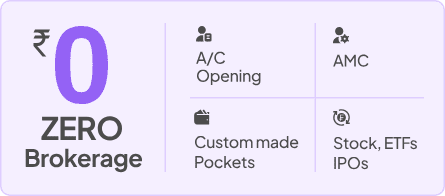
Pocketful is an emerging discount broking platform launched by brothers Sarvam and Rishabh Goel under Pace Stock Broking. Backed by more than three decades of industry expertise, it is quickly positioning itself as a growing player in the stockbroking space. The platform offers a wide range of services, including stock and commodity broking, along with zero delivery charges, free account opening, and no annual maintenance fees, making it highly attractive for cost-conscious investors.
Pocketful is a modern, low-cost stock trading platform which is helpful to both new and experienced traders. It doesn’t charge any fees to open an account, an AMC for Demat accounts, and offers free equity delivery trades, which makes it extremely affordable.
4. Angel One
As a key player in the Indian discount broking industry, Angel One has transformed from a full-service broker to a tech-driven discount broker that provides a range of value-added services in addition to the benefits of a discount brokerage. The Angel One platform’s extensive range of products allows users to diversify their portfolios.
Key Features:
1. Advisory: A rule-based advisory tool is provided by Angel One, which provides research-based recommendations.
2. Advance Charts: It provides intra-day charts, historical data, and a variety of indicators for advanced charting.
3. Multiple Assets: Along with the equity, it also offers investment in mutual funds, commodities, etc.
Why choose Angel?
Angel One is a great option for both novice and experienced investors due to its attractive combination of affordability, scope, and smart advisory tools. Their advisor tool provides a customized investment recommendation based on the investor’s needs.
5. Fyers
Fyers is a discount brokerage that started in 2016. The name of the company means “Focus Your Energy and Reform the Self.” Fyers is an Indian discount stockbroker that is known for its strong platforms that focus on technology. Fyers has teamed up with TradingView, which is one of the most well-known charting platforms. This gives users access to advanced charting tools, technical indicators, and drawing tools right in the app.
Key Features:
Low Cost: The services offered by Fyers are very low compared to other full-time brokers.
Learning: It also offers learning for the investor through its “School of Stock” course on the stock market.
Why choose Fyers?
Traders and investors who want a tech-savvy, low-cost broker should definitely consider FYERS. The platform was made in-house and has a lot of features, like advanced charting tools (more than 100 indicators), the ability to change orders on a chart or by dragging and dropping them, and access to historical and intraday data.
6. 5Paisa
One of India’s first flat-fee brokers, 5paisa Capital Limited, was established in 2016, and its headquarters are located in Mumbai. It was supported by the IIFL (India Infoline Group) and offers a range of online financial services. In 2017, 5paisa went public on the BSE and NSE following its separation from its parent company, IIFL. As a complete investment platform, it has expanded over time to encompass mutual funds, insurance, digital gold, loans, and robo-advisory in addition to stock trading.
Key Features:
Low Brokerage: 5Paisa offers low and flat fee brokerage to its clients, along with other additional benefits.
Wide Range of Products: It offers a diverse range of products, including mutual funds, ETFs, and insurance.
Research: Along with the discount broking services, it also offers comprehensive research reports on various stocks and commodities.
Why choose 5Paisa
The platform is an all-inclusive platform for investments. It allows you to buy stocks, bonds, mutual funds, insurance, gold, US stocks, and more.
Portfolio analytics tools (like Portfolio Analyser), research support and a quick, paperless account opening process are also helpful for users.
7. Shoonya by Finvasia
Sarvjeet Singh Virk and Tajinder Virk started the Finvasia group in 2009. Shoonya is the group’s discount broking division. In 2016, the group started the first trading platform with no fees. The company offers users a lot of services for no cost, like trading, clearing fees, technology fees, and more.
Key Features:
Advance Trading Tools: Finvasia allows its investors to use advanced trading tools through their mobile application.
Mutual Funds: One can easily invest in mutual funds through Finvasia.
Zero Account Opening: There are no account opening charges for opening a demat account with Finvasia.
Why choose Finvasia?
Finvasia’s Shoonya platform stands out because it offers zero brokerage on equity delivery trades, while futures and options and currency trades are charged at ₹5 per trade or 0.03% of the trade value, whichever is lower, which makes trading much cheaper for investors. Shoonya is one of the few brokers that lets traders use algo-trading or APIs for free or with limited restrictions.
8. Upstox
Most people know Upstox as RKSV Securities India Private Limited. It is one of the best trading platforms in India. Ravi Kumar, Raghu Kumar, and Shrini Vishwanath started it in 2009. In 2016, the company changed its name to Upstox to better reflect modern technology. In 2019, CDSL rewarded the company to open 100,000 demat accounts in a month.
Key Features:
Advance Order: Through the mobile application provided by Upstox, one can execute an advance order, such as GTD, AMO, etc.
Integration of Tools: Upstox offers integration of an advanced trading API.
Transparency: They also provide a brokerage calculator tool, which helps in calculating the brokerage which one needs to pay while executing a trade.
Why choose Upstox?
Upstox is an excellent choice for both new and experienced investors because it has low prices, cutting-edge technology, and access to a wide range of securities. All of these things make Upstox a great choice for people who want a low-cost, tech-savvy, and flexible brokerage without giving up tools or options.
9. m.Stock
m.Stock is a part of Mirae Asset Capital Market, which allows you to buy and sell stocks at a lower price. This platform was launched in 2022. Mirae Asset Capital Market is a division of the South Korean financial firm Mirae Asset Financial Group. It has a wide range of products, including stocks, futures, options, ETFs, and more.
Key Features:
Margin Trading: m.Stock allows its consumers to use a margin trading facility, through which they can fund their investment.
Comprehensive Product: m.Stock offers their investment a comprehensive range of investment products.
Advance Trading Platform: They offer an advanced trading platform which offers voice-based search.
Why choose m.Stock
For investors who want to keep trading costs minimal without giving up advanced features, Mirae Asset’s m.Stock is a good choice. Traders have a better trading experience when they use platforms that have advanced charting, option chain analysis, basket orders, voice search, and real-time market data.
10. Dhan
Dhan is a discount broking platform that uses technology and was started in 2021. The company gives traders a margin. The company also has many advanced trading tools available. Through its app, you can also invest directly in a mutual fund. Dhan does not charge any fees to open a demat account.
Key Features:
Zero Brokerage on Delivery: No charges on equity delivery trades.
Low-Cost Intraday & MTF: Just ₹20 or 0.03% per order (whichever is lower) for intraday and MTF trades.
Advanced Trading Tools: Access TradingView & ChartIQ charts, option chain analysis, basket orders, and scanners for smarter trading.
Why Choose Dhan?
Dhan combines zero-cost delivery investing with flat, low brokerage for intraday and margin trades. Along with powerful features like real-time charts, option analytics, and algo-trading via webhooks, it offers a seamless platform suited for both long-term investors and active traders.
Advantages of a Discount Broker
The key advantages of a discount broker are as follows:
Economical: The low cost is the most important benefit. The majority of discount brokers don’t charge a fee for equity delivery trades and instead charge a flat fee.
Advance Trading Application: Discount brokers offer platforms like mobile apps and web terminals, which are fast, reliable, and come with advanced charting tools and real-time data.
Multiple Assets: The discount broking firm offers an application through which one can invest in multiple asset classes, such as commodities, etc.
Limitations of Discount Broking
The key disadvantages of a discount broker are as follows:
No Recommendations: Discount brokers generally do not give advice or recommendations on any stock. They tend to offer only a trading platform.
No Offline Support: Discount brokers do not have any local presence, hence are not able to provide offline support.
Lack of Wealth Management: They do not offer services like wealth management, tax planning, etc.
The following types of traders can opt for a discount broker:
Economical Investor: Discount brokers are great for those who want to save money on brokerage fees and don’t need high-end advisory services.
Tech-Savvy Investor: Investors who are comfortable using mobile apps, web platforms, and advanced charting tools can benefit from using discount broking services.
DIY Investor: Investors who do not need any advisor services can consider opening a demat account with a discount broker.
Conclusion
On a concluding note, picking the right discount broker can make a big difference in your trading journey, especially when it comes to saving money and getting access to technology-driven platforms. Each broker has its own strengths, such as lifetime zero brokerage, powerful margin facilities, or cutting-edge trading platforms. However, some discount brokers do not offer advisory and research reports. Hence, before choosing a suitable broker, one should consult their investment advisor.
S.NO.
Check Out These Interesting Posts You Might Enjoy!
Intraday trading requires decisions to be made in minutes and seconds. That’s why having a platform like the best charting software India that displays data instantly is essential. When market movements are fast, a lack of real-time data, unclear charts, and a slow refresh rate can cause significant losses. Monitoring technical indicators, changing price patterns, and live volume changes can help you make the right entry and exit decisions. In this blog, we’ll explore the charting software and trading software in India that are reliable, quick, and feature-rich for intraday traders.
What is Charting Software?
Charting software is a specialized trading tool that presents price and volume data for a financial instrument (like a stock, index, commodity, or currency) in graphical form.
Its purpose is to help traders understand the full price movement rather than simply looking at numbers. It offers different chart types (eg. candlestick, line, and bar charts) and dozens of technical indicators (eg. moving averages, RSI, and MACD) that help identify market direction, trends, and potential reversals.
Role in Intraday Trading
Time is crucial in intraday trading. Charting software addresses this need by providing traders with features such as real-time data, alerts, and multi-timeframe analysis. With the right charting tools, traders can make their entry and exit decisions data-driven and better manage risk.
Difference between Charting Software and Trading Platform
Charting Software: Focuses primarily on analysis and visualization.
Trading Platform: Includes features such s order execution, brokerage, portfolio management, and settlement.
Nowadays, Indian brokers like Pocketful and Upstox also offer advanced charting tools within their trading platforms.
Best Charting Software in India for Intraday Trading
Software
Real-time ticks
Order from the chart
Best for
TradingView
Yes live/real-time (depending on plan)
Yes through supported brokers
For charting, alerts, and community-scripts
GoCharting
Yes tick/order-flow support
Yes Advanced Order Types
Suitable for order-flow and tick-traders
InvestarIndia
Yes NSE/BSE support
Mainly analysis
For India-focused screening and desktop users
AmiBroker
Yes Powerful with real-time analytics
Depends on third-party API/broker setup
For algo developers and in-depth backtesting
Chartink
Near-real-time scans for Premium version
Focus scanner/alerts
For faster scans and custom screeners
Pocketful
Yes Depends on broker’s feed
Yes in-app trading support
For India-focused analytics + execution
Investing.com
Basic Live; delay on some instruments
No data/chart focus
For global charts, news and economic calendar
Zerodha (Kite)
Yes NSE /BSE Live Feed
Yes Trade-from-Chart (ChartIQ/TV)
Broking + fast execution
Upstox Pro
Yes TBT / Tick-by-Tick support
Yes – trading from charts
Broker – for charting and execution
Dhan
Yes TBT / Tick-by-Tick support
Yes – trading from charts
Broker – for charting and execution
1. TradingView
TradingView is the most popular charting platform among traders worldwide. It offers a fast web interface,works on web, desktop and mobile, and a large library of tools shared by traders. Pine Script makes it easy to write custom indicators and strategies. The platform also offers strategy tester (bar replay) and brokerage integration making it useful not only for charting but also for idea testing.
Key Features
High-resolution live charts and multiple market data feeds.
Pine Script: A language for writing custom indicators and strategies.
Strategy Tester & Bar Replay: Backtesting possible by replaying historical moves.
User-friendly UI and cross-device sync the same experience across web, desktop, and mobile.
Large public script/indicator library (community).
Bar replay and strategy tester allow for real-time backtesting.
Cons
Actual NSE depth and some real-time feeds may require a paid subscription.
More advanced automation (continuous live ordering) requires brokerage APIs/third-party tools.
2. GoCharting
GoCharting is an India-based advanced charting and trading platform designed specifically for order flow and market depth analysis. It’s been gaining popularity since 2019 because it offers pro-level features like tick-by-tick data, orderbook visualization, and footprint charts. Its web-based interface means you don’t need to install any software, just log in from your browser and use it.
Key features
Advanced charts ranging from candlesticks to footprint and orderflow.
Live DOM and orderbook visualization.
Multi-timeframe charts and paper trading/replay options.
Direct trading integration with select brokers.
Pros
The first web-based orderflow platform in India.
No installation required, runs directly from the browser.
In-depth and orderflow tools are very useful for advanced traders.
Cons
The interface may seem complicated to new traders.
Free version limited; full features require a paid plan.
Broker integration currently limited to selected partners.
3. InvestarIndia
InvestarIndia is an India-focused charting and analysis software designed specifically for equity and F&O traders. Available on both desktop and mobile, it offers features like real-time NSE/BSE data, a built-in scanner, and backtesting. Its interface is easy to use for beginners and mid-level users.
Key Features
Indicator support for chart types like candlestick, bar, and line.
Live price and volume data for NSE/BSE.
Both mobile app and desktop versions are available.
Pros
India-centric local data and market tools are well integrated.
Simple and easy-to-use UI for beginners.
Screener and backtesting available in one place.
Cons
Lack of advanced custom scripting (like Pine/AFL).
Limited features without a paid subscription.
Not as flexible for professional algo traders.
4. AmiBroker
AmiBroker is considered one of the fastest and most powerful desktop-based charting and backtesting software in the world. It is used by most professionals and algo traders in India because it offers complete functionality for creating custom indicators, strategies, and automation using AFL (AmiBroker Formula Language). Its biggest strengths are speed and the ability to backtest in-depth.
Key Features
High-performance chart engine and customizable layouts.
AFL scripting language allows for writing custom indicators and strategies.
Ultra-fast backtesting and optimization (tick-by-tick data support).
Direct trading execution via Broker/API integration (at some brokers).
Pros
Industry-leading backtesting and optimization speed.
Excellent for algo trading and strategy development.
Full control and customization due to desktop software.
Cons
The learning curve is steep and not easy for beginners.
Real-time market data requires the purchase of a separate data feed.
Works only on desktops; no web/mobile versions are available.
5. Chartink
Chartink is one of the most popular stock screeners and charting tools in India. It is used by most traders to find intraday and swing setups. It features ready-made and custom screeners that allow you to instantly filter stocks based on price action, volume, indicators, and candlestick patterns.
Key Features
Powerful stock screener with hundreds of predefined filters.
Ability to create custom screener rules (such as RSI > 70 and Volume Breakout).
Basic charting options candles, indicators, and multiple timeframes.
Near-real-time data and auto-refresh scans in the Premium plan.
Watchlist and alerts system.
Pros
India-focused powerful screener, especially for intraday and swing traders.
Easy-to-use interface and no installation required.
Easy to test your own strategies by creating custom queries.
Cons
Advanced charting (such as bar replay, deep backtesting) is not available.
The free version has a data refresh delay; real-time is available only to premium users.
Direct trade execution is not an option.
6. Pocketful
Pocketful is an India-focused trading and investment platform that operates on both web and mobile. It offers multi-asset (equity, F&O, commodities, ETFs, gold, etc.) access and brokerage-related features, including a SEBI-compliant broking service. The platform’s web tools, in-app trading and AI insight services are available on the website. This means you can place trades simply by viewing charts on the site/web-trading interface, making it a modern, India-centric option for junior and mid-level traders.
Key features
India-focused data and brokerage integration (in-app trading).
AI assistant: portfolio insights and natural language support.
Quick order placement and basic analytics via the mobile app.
Pros
Easy mobile and web UX for new and mid-level traders in India.
In-app execution + AI-assisted idea generation and order placement experience simultaneously.
The offer/pricing model is often brokerage-connected, making it cost-effective (client-model).
Cons
Being a new platform, large-scale trust reviews and independent third-party benchmarks are limited.
7. Investing.com
Investing.com is a global market data and charting platform that covers stocks, indices, commodities, forex, and crypto, not just in India but globally. Available on both web and mobile, it offers free-of-cost charts, news, and an economic calendar for traders. While it lacks execution brokerage integration, it’s quite useful for analysis and global coverage.
Key Features
Free interactive charts (candlestick, bar, line, etc.).
Multiple technical indicators and drawing tools.
Global coverage: Equities, Indices, Forex, Commodities, and Crypto.
Economic calendar, market news, and fundamental data.
Portfolio tracking and watchlist creation.
Pros
Global and India coverage available in one place.
Free charts and indicators are a good choice for beginners and casual traders.
Economic calendar and news integration further strengthen analysis.
Cons
Real-time NSE/BSE data may be delayed.
Direct order execution is not available.
Features like advanced backtesting or custom scripting are not available.
8. Zerodha (Kite)
Zerodha is an Indian discount broker, and its trading platform, Kite, is one of the most widely used charting tools in the country. Kite is available on both web and mobile and features integration with ChartIQ and TradingView. This gives you access to advanced charting, real-time data, and the ability to place orders directly from charts, all in one place.
Key Features
ChartIQ and TradingView integration both available.
Option to save charts (with cloud sync).
Indicators and multiple drawing tools.
Direct trade-from-chart feature (bracket and cover orders).
Watchlists and cross-platform sync (web + mobile).
Pros
Free charting for Zerodha clients with no extra charges.
Execution and analysis are easy from one place.
The interface is clean and responsive, suitable for both beginners and pros.
Cons
Custom scripting (such as Pine or AFL) is not directly available on Kite.
Advanced backtesting is not available; external tools may be required.
Limited to Zerodha clients, external users cannot use it.
9. Upstox Pro
Upstox is a leading discount broker in India, and its trading platform, Upstox Pro, is available on both web and mobile. It integrates with TradingView and ChartIQ, providing users with a smooth charting experience and real-time data access. Its fast execution, low brokerage, and user-friendly interface make it popular among intraday traders.
Key Features
TradingView and ChartIQ integration high-quality charting.
Indicators and multiple chart types (candlestick, bar, Heikin Ashi, etc.).
Direct trade-from-chart feature market, limit, cover, and bracket orders.
Tick-by-tick (TBT) data support for accuracy.
Multiple watchlists and cross-device sync (mobile + web).
Pros
Powerful charting tools available free with a broker account.
Fast order execution and a seamless mobile experience.
Easy platform for both beginners and active intraday traders.
Cons
Custom scripting and deep backtesting are not supported.
Some advanced chart layouts are only available with paid plans or in limited form.
10. Dhan
Dhan is a new but rapidly growing discount broker, particularly known for its modern trading platform and advanced charting tools. Dhan has offered direct integration with TradingView and ChartIQ since its inception, and its most distinctive feature is its seamless “Trade-From-Chart” experience. It’s accessible across web, mobile, and desktop platforms, and execution is lightning fast.
Why Intraday Traders Need the Best Charting Software in India
The biggest challenge in intraday trading is making quick and accurate decisions. Market movements change so rapidly that without good charting tools, you can’t accurately capture entry and exit. This is why every trader needs reliable charting software in India.
Real-time data: Even a few seconds’ delay in intraday trading can turn profits into losses. Good charting software instantly updates price and volume, improving timing.
Understanding trends and patterns: Market breakouts or support-resistance levels are only detectable when charts are clear and indicators are reliable. This is the edge quality software provides.
Placing orders directly from the chart: Platforms like Pocketful allow you to place orders directly from the chart. This ensures fast execution and prevents missed opportunities.
Alerts and notifications: It’s not always possible to be glued to your screen. Custom alerts and mobile notifications help you keep track of every movement.
Risk Control: Features like backtesting and stop-loss make your trades safer and allow you to learn from mistakes.
Key Features to Look for in the Best Trading Software in India
Real-Time Data and Accuracy : Seconds matter intraday. A good charting tool should display price and volume immediately, delays can lead to missed opportunities. Therefore, live, accurate data is essential.
Technical Indicators and Drawing Tools : Simply looking at lines on a chart isn’t enough. Indicators like Moving Averages, RSI, MACD, and drawing tools like trendlines and Fibonacci should be present to clearly see trends and reversals.
Multi-Timeframe Analysis : It’s important to view the same stock in both 1-minute and 15-minute timeframes; the shorter timeframe indicates entry, the longer timeframe indicates direction. Good software should display both to ensure balanced decisions.
Customizable Templates and Layouts : Every trader has different habits, some maintain three charts simultaneously, others vary indicators. Maintaining a custom watchlist and saved layouts saves work.
Brokerage Integration and Fast Order Execution : Having the option to place orders by viewing the chart reduces latency platforms like Zerodha Kite and Fyers offer this advantage. The faster the execution, the better.
Mobile and Web Accessibility : It’s not always possible to stay on screen. Therefore, you need a smooth experience on both mobile and browser, so you can track the market from anywhere.
Alerts and Notifications : You can’t stay on screen all the time. It’s important to receive price-level alerts so you don’t miss any moves.
Pricing and Affordability : Everyone’s budget is different. Start with a basic free tool, and upgrade to a Pro or paid plan when you see the benefits look at ROI, not just features.
Charts act as your eyes in intraday trading. Good charting software provides clear data, accurate indicators, and fast updates. Every trader’s needs are different, so the best tool is the one that suits your style and comfort. The right software makes decisions easier and trading more disciplined.
S.NO.
Check Out These Interesting Posts You Might Enjoy!
Not all investors are patient enough to hold on to stocks for years. For those who prefer quick decisions and instant results, intraday trading offers an exciting alternative. You can think of it as a day trip in the market: you get in, ride the highs and lows, and then get out before the day is over. If you do it right, it can be fun, rewarding, and full of opportunities. But it is not enough to just be fast; you will also need to be focused, disciplined, and have a plan.
In this blog, we’ll focus on the key benefits of intraday trading and why it appeals to many active traders.
What is Intraday Trading
Intraday trading refers to the practice of buying and selling financial instruments such as stocks, derivatives or ETFs within the same trading day, ensuring that all open positions are squared off before the market closes. The idea is simple: you initiate the trade in the morning (or any time during market hours) and close it before the market closes.
You identify a stock likely to rise, buy it, and sell it the same day to profit from short-term price movements. The profit (or loss) is only from that day’s movement. Intraday trading is all about taking advantage of short-term price changes.
Important Benefits of Intraday Trading
Some of the benefits of intraday trading are given below:
1. Fast Profits
Profits (or losses) are booked within hours or even minutes in intraday trading, meaning there is no need to wait months or years. Gains can be locked in the same day if you execute the right move.
2. No Overnight Stress
You stay away from the impact of unexpected overnight news, world events, or market gaps that could harm your trading positions while you sleep because everything will be settled before the market closes.
3. Additional Buying Power
For intraday trades, brokers frequently offer margins, allowing you to take on larger positions than your actual cash. However, it can increase both profits and losses.
4. Simple Entry and Exit
Buying and selling is easy for intraday traders because they usually only trade highly liquid stocks.
5. Capitalising on Changes in the Market
Throughout the day, markets fluctuate a lot, sometimes due to sentiment, company earnings, or any other news. You can profit quickly by riding those swings with intraday trading.
Intraday trading is not for everyone because it requires fast decision making and is a little risky. It works best for people who:
Have time during market hours – You need to keep an eye on prices movements all day, not just once in a while.
People who stay disciplined – The best intraday traders stick to their plan, use stop-losses, and do not allow their feelings to affect their trading decisions.
Have Technical Expertise- If you enjoy studying charts, trends, and patterns, intraday trading offers plenty of opportunities to apply your technical analysis skills.
Risks Involved of Intraday Trading
1. Prices that fluctuate a lot
Stocks can go up or down in value in just a few minutes. This movement that makes intraday trading tempting can also make you lose money quickly.
2. Leverage means greater risk.
It sounds great to trade with borrowed money when things are going well, but if the market goes against you, your losses get bigger too.
3. Stress and Pressure
Intraday is unpredictable, and making decisions all the time can be stressful. Traders often make mistakes because of feelings like greed, fear, or panic.
4. Consistent Attention Needed
You cannot leave your screen. You could lose money if you miss a price change, even for a short time.
5. No Guaranteed Outcomes
Even if you do research, look at charts, and make plans, the market can still surprise you. News or other unexpected events can turn a winning trade into a losing one.
6. Hidden Costs
More trades mean more taxes and fees for the broker. These small fees can slowly eat your profits if you are not careful.
Conclusion
Intraday trading is the fast lane of the stock market, with lots of action, quick profits, and just as many risks. It is rewarding, but you have to make quick decisions and stay relaxed when prices change. If you like a challenge and can stick to your trading strategy, then intraday trading might be for you. Ultimately, it comes down to understanding your preferences, leveraging your strengths, and making well-planned trading decisions. It is advised to consult a financial advisor before trading.
S.NO.
Check Out These Interesting Posts You Might Enjoy!
Yes, but it can be risky. It is advised to consult a financial advisor and start with a small amount.
How much money do I need to start?
There is no fixed amount for intraday trading. You can begin with any amount, but it is important to trade only with money you can afford to lose.
What time is best for intraday trading?
The first and last hours of the market are usually the most active.
What tools do intraday traders use?
Intraday traders use various tools such as real-time charts, technical indicators, stock screeners, market news feeds, and trading platforms to analyze price movements and make quick decisions.
How much profit can I expect from intraday trading?
There is no fixed profit in intraday trading. Returns depend on market conditions, your strategy, and discipline. While gains can be quick, losses can be equally fast.
The number of people investing in mutual funds in India is growing rapidly. By June 2025, the country’s total Assets Under Management (AUM) had reached approximately ₹74.41 lakh crore, reflecting the increasing confidence of investors. However, many people still choose funds based solely on returns. The truly smart approach is to compare each fund based on its performance, risk, and expenses. In this blog, we will learn how to properly compare mutual funds to make your investments better and safer.
Step 1–Define Your Investment Objective and Time Horizon
Choosing a mutual fund starts here. Often, we jump straight to “Which fund is performing well?”, but the real question is what are your investment goals and what is your investment horizon?
The right fund for you depends on these two factors:
Short-term goals (1 to 3 years) : If you are preparing for a major expense in the next few years such as a wedding, a trip, or building an emergency fund then Debt or Liquid Funds are generally better. These funds are not significantly affected by market fluctuations and provide stable returns.
Medium-term goals (3 to 5 years) : For investors who want to invest for 3-5 years, Hybrid or Balanced Advantage Funds are considered good options. They contain both equity and debt, which helps control risk while providing decent returns.
Long-term goals (5 years or more) : If your objective is long-term such as retirement planning, children’s education, or wealth creation then Equity Funds, Index Funds, or Flexi Cap Funds are good choices.
Step 2 – Compare Funds Within the Same Category
Whenever you compare mutual funds, the first thing to check is the category to which the fund belongs. Every fund has its own investment strategy: some invest in the stock market, some in bonds, and some in a mix of both. If you compare them all together, the results can be misleading.
Understanding SEBI’s Fund Categories
SEBI has categorized mutual funds into several main categories for the convenience of investors:
Equity Funds: These invest in the shares of companies and aim for long-term growth.
Debt Funds: These invest in government bonds, corporate debentures, and fixed-income securities.
Hybrid Funds: These invest in both equity and debt to try and provide balanced returns.
Solution-Oriented or Index Funds: These track a specific goal (such as retirement or child education) or an index (such as the Nifty 50).
Other Schemes: This category includes funds that don’t fit into the main equity, debt, or hybrid categories, often offering unique investment opportunities. Examples: Index Funds/ETFs, Fund of Funds (FoFs).
Commodity Funds:These funds invest in commodities like gold, silver, or other natural resources, often through ETFs. They provide a hedge against inflation and diversification beyond traditional asset classes. Examples:Gold ETF, Silver ETF, Multi-Commodity Fund.
International or Overseas Funds: These invest in foreign markets, giving Indian investors access to global companies and economies. They can be a good diversification tool but carry currency and geopolitical risks. Examples: Global Equity Fund, US-focused Fund, Emerging Market Fund.
There are also several types within Equity Funds
Equity funds are further categorized based on their size and strategy
Large Cap Funds: These invest in large companies like Reliance, HDFC Bank, Infosys, etc.
Mid Cap Funds: These invest in medium-sized companies, where the potential for growth is higher.
Small Cap Funds: These invest in small companies that can offer high returns, but also carry higher risk.
Sectoral/Thematic Funds: These focus on a single sector such as FMCG, Pharma, or IT.
The Right Way to Compare :
When you compare a fund, always compare it with funds from the same category.
For example, Axis Bluechip Fund can be compared with ICICI Prudential Bluechip Fund because both fall under the Large Cap category. But comparing Axis Bluechip Fund with HDFC Small Cap Fund would be an incorrect comparison because both have different investment strategies and risk levels.
Why is this step important ?
Each category has a different objective and risk profile.The objective of Equity Funds is to grow capital over the long term, while the goal of Debt Funds is to provide stable and secure returns. Comparing the two makes no sense. Therefore, always follow the rule of “compare within the same category.” This will allow you to accurately understand the fund’s true performance, stability, and value.
When comparing mutual funds, most investors initially look at returns, but making a decision based on last year’s performance isn’t the right approach. True wisdom lies in understanding a fund’s ability to perform consistently, not just its performance at a single point in time.
Focus on 3, 5, and 10-Year Returns : The true picture of any fund emerges when you look at its average returns (CAGR) over different periods such as 3 years, 5 years, and 10 years. This shows you how the fund has performed over the long term and whether it has maintained stability through market fluctuations.
Consider Rolling Returns : Point-to-point returns can sometimes be misleading, as they only show results based on a fixed date. Instead, look at rolling returns—these indicate how a fund has performed on average over various time periods. This metric is more reliable because it includes both good and bad market cycles.
Don’t Fall for the Short-Term Performance Trap : Sometimes a fund may deliver very good returns in one or two years, but its long-term performance is weak. Investing in such funds can be risky.
Step 4 – Evaluate Risk Metrics
When choosing a mutual fund, it’s just as important to consider its risk level along with its returns. A fund’s performance only truly matters if it’s consistent and balanced. Below are some important parameters that indicate the fund’s actual performance:
Standard Deviation : This indicates how volatile the fund’s returns are. A lower standard deviation means the fund is more stable.
Sharpe Ratio : This measures how much return the fund has generated relative to the risk taken. The higher the ratio, the better.
Beta : This shows how much the fund’s returns fluctuate with market movements. If the Beta is greater than 1, the fund is more volatile than the market, and if it’s less than 1, it’s less volatile.
Alpha : This indicates how much better or worse the fund has performed compared to its benchmark. Funds with a positive Alpha are considered better.
Expense Ratio : This is the small annual fee that the fund charges for managing your money. In equity funds, it’s typically around 0.5 to 2%, and lower in debt funds. The lower the expense ratio, the higher your net return will be.
Direct vs. Regular Plan : In a Direct Plan, you invest directly, so there is no commission and the expenses are lower. In a Regular Plan, investing through an agent adds a commission, which slightly reduces your return.
Exit Load : If you withdraw money from the fund before the stipulated time, you have to pay a fee of approximately 0.5%-1%. This is to discourage short-term withdrawals from the fund.
Step 6 – Check Portfolio Holdings and Diversification
Before investing in any fund, it’s crucial to see which companies and sectors it’s investing in. If a fund is heavily reliant on just one sector, the risk increases.
A good fund always diversifies its investments across different sectors such as banking, IT, FMCG, and pharmaceuticals. This is called diversification. In this way, the fund remains stable even if one sector declines, and the returns are more reliable.
Step 7 – Fund Manager’s Experience and Strategy
The performance of every fund depends on who is managing it. Therefore, it’s crucial to examine the fund manager’s experience and track record. A good manager makes the right decisions at the right time and knows how to manage the portfolio in changing market conditions. If a manager has consistently delivered good results over a long period, they are considered trustworthy.
AUM, or Assets Under Management, indicates the total amount of money invested in a fund. A large AUM generally suggests strong investor confidence and easier liquidity within the fund.
However, a very large AUM isn’t always advantageous. Especially in mid-cap and small-cap funds, a large AUM can make it difficult for the fund manager to invest effectively in smaller companies.
Step 9 – Benchmark and Peer Comparison
To understand a fund’s performance, it’s essential to compare it to its benchmark and other funds in the same category (peers). If a fund consistently delivers better returns than its benchmark, such as the Nifty 50 or Sensex, it indicates a strong strategy.
Peer comparison is equally important. By comparing your fund to other funds in the same category, you can understand how well your fund is truly performing.
Step 10 – Qualitative Factors & AMC Reputation
When choosing a mutual fund, you should consider not only the returns but also the reputation of the Asset Management Company (AMC) that manages the fund. A trustworthy AMC always acts in the best interests of investors and maintains consistency in its investment strategy. Companies with strong governance, transparent reporting, and a clear investment philosophy are the ones that consistently deliver good performance over the long term.
Choosing a mutual fund isn’t a race to see who’s offering the highest returns. The real question is which fund best suits your goals and risk tolerance. When you carefully understand and compare funds looking at their costs, performance, and stability the decision becomes much clearer. A proper comparison is key to making safe and smart investment choices.
S.NO.
Check Out These Interesting Posts You Might Enjoy!
The Indian Energy Sector is undergoing a rapid transformation and is shifting towards digitalization. The companies engaged in the manufacturing of Smart Meters play a key role in making the Indian Energy Sector innovative.
In today’s blog post, we will give you an overview of the top Smart Meter Stocks, along with the key benefits of investing in them.
What are Smart Meter Stocks?
Smart meter stocks are the shares of companies that are primarily engaged in the manufacturing and supply of smart meters, which are used to electronically monitor the consumption of electricity by a consumer on a real-time basis.
The overview of the top smart Meter stocks in India is as follows:
1. Genus Power Infrastructure Limited
Genus Power Infrastructure Limited was initially incorporated in 1992 and was initially known as Genus Overseas Electronics Limited. Genus Power Infrastructures Limited, which initially began as Genus Overseas Electronics Limited in 1992, is now one of the top companies in India for power meters and infrastructure. The company has transformed over time from making simple thick-film microcircuits and electronic meters to offering a wide range of solutions, including smart meters. It changed its name to Genus Power Infrastructures Limited in March 2007. Its headquarters are situated in Noida.
2. HPL Electric and Power Limited
The company was incorporated in 1992 and was initially known as HPL Socomec Private Limited. In 2015-16, the company converted itself into a public limited company and launched its IPO. The company has various manufacturing units in Himachal Pradesh, Haryana, etc. It offers metering solutions, switchgear, LED lights, and more. HPL Electric also exports its products to more than 40 countries. It has its headquarters in New Delhi.
3. Adani Energy Solutions Limited
The company was incorporated in 2013 and was initially named Adani Transmission Limited. Later in July 2023, the company changed its name to Adani Energy Solutions Limited. The company is primarily engaged in power generation, distribution and providing smart metering solutions. It provides end-to-end energy solutions. The company’s headquarters is situated in Ahmedabad.
4. GMR Power and Urban Infra Limited
GMR Power and Urban Infra Limited (GPUIL) is one of the biggest infrastructure companies in India. It primarily focuses on developing, operating, and maintaining power generation projects and urban infrastructure. The GMR Group, founded by Grandhi Mallikarjuna Rao in 1978, is a major player in the energy, airport, transportation, and urban infrastructure sectors. As part of a corporate restructuring in 2021, GMR Infrastructure Limited was demerged into two companies. The company’s headquarters is situated in New Delhi.
5. Tata Power Company Limited
Tata Power Company Limited company was established in 1919 and was initially known as the Tata Hydroelectric Power Supply Company. It was the first company in India to generate hydroelectric power when it opened its first plant in Khopoli, Maharashtra. The company operates in several different areas, such as traditional and renewable energy, and serves millions of customers across the country. The company’s headquarters is situated in Mumbai.
6. Power Grid Corporation Limited
The company was established in 1989 and was initially named National Power Transmission Corporation Limited. Later in 1992, it changed its name to Power Grid Corporation Limited. The company is very important for making sure that India has a secure and effective power supply by establishing and keeping up a strong national grid network. The company has its headquarters in Gurugram, Haryana, and works under the Ministry of Power of the Government of India.
7. Shivalik Bimetal Controls Limited
The company was founded on June 18, 1984, and started producing products for sale in October 1986. It was the first company outside of Japan to build a plant in Asia to make advanced Thermostatic Bimetal Strips. Shivalik Bimetal Controls Limited is a company that specialises in process and product engineering. It makes important parts that are used in many sectors, such as electrical, electronics, automotive (including electric vehicles), and smart metering. The headquarters of the company is in New Delhi, India, and its primary manufacturing plant is in Solan, Himachal Pradesh.
8. RMC Switchgears Limited
The company was founded on August 23, 1994, in Rajasthan, India, and was initially named “RFH Metal Castings Private Limited.” It started its operations in 1995 by producing meter boxes for Original Equipment Manufacturers (OEMs). After becoming a public limited company and changing its name several times, it finally adopted the name RMC Switchgears Limited in 2016. Since then, it has added turnkey Engineering, Procurement, and Construction (EPC) contracts for power transmission projects to its list of products and services. The company’s headquarters is in Jaipur.
9. Permanent Magnets Limited
The company was founded in 1960 and was one of the first in India to make magnets. It has grown with technology to serve both the Indian and international markets. PML has added soft magnetic parts, current transformers, and high-performance magnetic solutions for modern uses to its product line over the years. Permanent Magnets Limited is based in Mumbai, Maharashtra, India, and is becoming a more important player in the fields of magnetic materials and precision engineering.
10. Schneider Electric Infrastructure Limited
Schneider Electric Infrastructure Limited company was established in 2011 when Areva T&D India Limited separated off its distribution business. After that, it joined the global Schneider Electric Group, a French multinational which specialises in energy management and automation. Schneider Electric Infrastructure’s primary objective is to provide smart grid solutions, medium-voltage switchgear, transformers, and substation automation systems that help with the efficient and long-lasting distribution of energy. The headquarters is in Gurugram, Haryana, India.
The key benefits of investing in Smart Meter Stocks are as follows:
Growth: The Government is spending heavily on improving the distribution of electricity to rural areas, which can increase the demand for Smart Meter Companies.
Digitalisation of Energy Sector: Smart Meter is at the core of the digital revolution in the power sector, giving investors access to the newest energy technologies.
Infrastructure: Smart Meter companies have more business opportunities as more people want smart grids and real-time data monitoring.
Factors to Consider Before Investing in Smart Meter Stocks
There are various factors which one should consider before investing in Smart Meter Stocks, a few of which are as follows:
Companies’ Financials: One must check the company’s financial report, including its profit margins, etc.
Competition: Knowing the competitive advantage of both established and new companies in the industry helps in identifying possible leaders.
Raw Material Cost: Any increase in production cost due to an increase in prices of raw material and disruption in the supply chain can negatively impact the company’s profitability.
Future of Smart Meter Stocks
The future of Smart Meter Companies is very promising as the country is shifting towards an energy-efficient power system. Smart Meters allow remote and real-time monitoring of data. Over the years, it has increased the transparency in the consumption of electricity. And according to the National Smart Meter Programme, the government is planning to install more than 25 crores of Smart Meters across the country.
On a concluding note, investment in stocks of companies engaged in the manufacturing of Smart Meters provides an opportunity to participate in the revolution of energy’s digital transformation. The companies having a strong order book will have a consistent source of revenue over a period of time. However, investment in Smart Meter manufacturing companies also carries a few risks; therefore, one should check the company’s fundamentals before making any investment decision. Also, it is advisable to consult your investment advisor before making any investment.
S.NO.
Check Out These Interesting Posts You Might Enjoy!
The names of a few Smart Metering Stocks are Power Grid Corporation Limited, Adani Energy Solutions Limited, GMR Power and Urban Infra Limited, Tata Power Company Limited, etc.
Are Smart Metering stocks a safer investment option?
Yes, Smart Metering stocks are a safer investment option as this sector has strong growth potential in the long run. Along with this, it will benefit from the government contracts, and with the rise of demand for increased efficiency in the energy sector, Smart Metering Stocks can be considered as a safer investment option.
What are the risks involved while investing in Smart Metering Stocks?
As the performance of this sector primarily depends on the government policies hence any change in government policies could negatively impact the performance of this sector. Also, dependency on electronic components supply is a key factor to consider before investing in Smart Metering Stocks.
What are Smart Meters?
It is an electronic device which records the consumption of electricity on a real-time basis and allows remote monitoring of consumer consumption of electricity.
Selection Methodology and Important Disclaimer
The stocks included in this list are selected primarily on the basis of their market capitalisation, which represents the total market value of a company’s outstanding shares. The companies are arranged in descending order of market capitalisation, with larger companies appearing first, followed by relatively smaller companies. This methodology is intended to provide a structured approach for identifying companies based on their market size and overall presence within a sector.
However, market capitalisation should not be considered the sole factor while evaluating investment opportunities, as it does not guarantee future performance, profitability, or returns. Investors should also assess other important factors such as financial health, business fundamentals, management quality, valuation metrics, industry outlook, and market conditions before making investment decisions.
The information provided is for educational and informational purposes only and should not be construed as investment advice, recommendation, solicitation, or an offer to buy or sell any securities by Pocketful Fintech Capital Private Limited.
Lenskart Solutions Ltd., India’s leading omni-channel eyewear manufacturer-retailer, is launching an initial public offering that aims to raise up to ₹7,278.02 crore. The issue opens for subscription on October 31 2025 and will close on November 4 2025, with a price band fixed at ₹382 to ₹402 per share. The IPO comprises a fresh share issuance of approximately ₹2,150 crore and an offer-for-sale (OFS) of about ₹5,128.02 crore by existing shareholders. Shares are proposed to be listed on both the Bombay Stock Exchange and the National Stock Exchange of India on November 10 2025, subject to allotment and regulatory processes.
Lenskart Solutions IPO Day 3 Subscription Status
On Day 3, Lenskart Solutions Ltd. IPO witnessed a strong investor turnout, closing with an overall subscription of 28.26 times. The Qualified Institutional Buyers (QIB) category led the demand with a robust 40.36 times subscription, indicating solid institutional participation. Among Non-Institutional Investors (NII), the bNII (above ₹10 lakh) portion was subscribed 21.81 times, while the sNII (less than ₹10 lakh) segment saw 11.06 times subscription, resulting in an overall NII subscription of 18.23 times. The Retail Individual Investors (RII) category was subscribed 7.54 times, reflecting healthy retail interest. The employee quota also received a positive response, being subscribed 4.95 times. Overall, the issue garnered 32,47,394 applications, with total bids amounting to approximately ₹1,13,319.83 crore, showcasing strong confidence across investor categories in the company’s growth potential.
Investor Category
Subscription (x)
Qualified Institutional Buyers (QIB)
40.36
Non-Institutional Investors (NII)
18.23
bNII (above ₹10 lakh)
21.81
sNII (less than ₹10 lakh)
11.06
Retail Individual Investors (RII)
7.54
Employees
4.95
Total Subscriptions
28.27
Total Applications: 32,56,295
Total Bid Amount (₹ Crores): 1,13,338
How to Check Lenskart Solutions IPO Allotment Status
Lenskart Solutions IPO allotment can be easily checked online in two ways: from the Registrar’s website and from the BSE or NSE website. This IPO will be listed on both the exchanges – BSE and NSE, so the allotment status will be available to all investors on both platforms.
Method 1: Registrar’s website (MUFG Intime India Pvt. Ltd.)
The most reliable way is to check allotment from MUFG Intime India Private Limited’s website.
How to do:
Visit MUFG Intime India Pvt. Ltd.’s official website
Select “Lenskart Solutions” from the IPO list
Enter your details PAN number, Application number, or DP/Client ID
Click on Submit
You will see the allotment status on the screen.
Method 2: Check from BSE or NSE’s website
If there is more traffic on the registrar’s website, allotment status can also be checked from BSE or NSE.
Lenskart Solutions Ltd. plans to utilize the net proceeds from the fresh issue for the following purposes. The proceeds from the Offer for Sale (OFS) will be received by the selling shareholders and not by the company :
Use of IPO Proceeds
Amount (₹ Cr)
Capital expenditure towards set-up of new CoCo stores in India
272.62
Expenditure for lease/rent/license agreements related payments for our CoCo stores operated by the Company, in India
591.44
Investing in technology and cloud infrastructure
213.38
Brand marketing and business promotion expenses for enhancing brand awareness
320.06
Unidentified inorganic acquisitions and general corporate purposes
–
Lenskart Solutions IPO GMP – Day 3 Update
The grey market premium (GMP) of the Lenskart Solutions IPO stands at ₹53 as of November 04, 2025 (Day 3). Considering the upper end of the price band at ₹402 per share, the estimated listing price is around ₹455, reflecting a potential gain of approximately 13.18% per share in the grey market.
Date
GMP
Est. Listing Price
Gain
04-11-2025 (Day 3)
₹53
₹455
13.18%
Disclaimer: The above GMP (Grey Market Premium) is just unofficial market information, which is not officially confirmed. These figures are shared for informational purposes only and investment decisions based on these should be based on the investor’s own research and discretion. We do not conduct, recommend or support any kind of transaction in the grey market.
Lenskart Solutions IPO – Key Details
Particulars
Details
IPO Opening Date
October 31, 2025
IPO Closing Date
November 04, 2025
Issue Price Band
₹382 to ₹402 per share
Total Issue Size
18,10,45,160 shares(aggregating up to ₹7,278.02 Cr)
Important Dates for Lenskart Solutions IPO Allotment
Event
Date
Tentative Allotment
November 06, 2025
Refunds Initiation
November 07, 2025
Credit of Shares to Demat
November 07, 2025
Listing Date
November 10, 2025
Lenskart Solutions Overview
Lenskart Solutions Ltd. is a technology-driven, omni-channel eyewear company engaged in designing, manufacturing, branding, and retailing of a wide range of eyewear products, including prescription eyeglasses, sunglasses, contact lenses, and accessories. With a mission to provide affordable and quality “Eyewear for All,” Lenskart integrates advanced technology, cloud infrastructure, and a centralized supply chain to deliver precision-made eyewear at scale. India is its largest market, where it operates over 2,100 stores, while its international presence spans Japan, Southeast Asia, and the Middle East through the Lenskart and Owndays brands. The company owns vertically integrated manufacturing facilities in Bhiwadi (Rajasthan) and Gurugram (Haryana), supported by regional hubs in Singapore and the UAE, enabling rapid fulfillment and next-day delivery in select locations. Leveraging AI-driven design, automation, and remote optometry solutions, Lenskart provides accessible eye testing and customized eyewear to millions of customers globally. According to the Redseer Report, it is India’s largest and Asia’s second-largest organized retailer of prescription eyeglasses by sales volume in FY2025.
Frequently Asked Questions (FAQs)
What is the opening and closing date of Lenskart Solutions IPO?
Lenskart Solutions IPO is open on 31 October 2025 and will close on 04 November 2025.
What is the price band of the Lenskart Solutions IPO?
Its price band is fixed from ₹382 to ₹402 per share.
What is the GMP (Grey Market Premium) of Lenskart Solutions IPO today?
The GMP on 04 November 2025 is ₹53, which leads to a possible listing price of ₹455.
What is the total issue size of Lenskart Solutions IPO?
The total issue size of the Lenskart Solutions IPO is ₹455.49 crore, entirely as an “Fresh Capital-cum-Offer for Sale.”
What is the expected listing date of Lenskart Solutions?
This IPO is expected to be listed on BSE and NSE on 10 November 2025.
The aerospace and defence market in India is flying high. As the government drives towards Atmanirbhar Bharat, the aviation industry is expanding both in terms of technology and financially. Aerospace stocks can be an addition to the portfolio of any investor seeking to make long-term growth investments with solid fundamentals. We shall consider what factors are driving this industry and which companies in India are leading aerospace sector.
What are Aerospace Stocks?
Consider aerospace stocks as the stocks of companies that help the world fly in the sky. These are the companies that construct aeroplanes, helicopters, fighter jets, missiles, satellites and even rockets which fly into space. When you purchase aerospace stocks, you are also investing in the manufacturers of modern aviation and space travel.
Indian Aerospace Industry – An Overview
India’s aerospace and defence sector is growing. On one side, the demand for passenger aircraft is soaring as more people take to the skies. On the other hand, defence spending is climbing steadily, all of which is helping the country’s aerospace ecosystem expand faster than ever. Experts estimate that India’s aerospace and defence market could touch US$70 billion by 2030, because of growing airline fleets, better infrastructure, and a strong government push for local manufacturing. Rising passenger traffic also means more aircraft maintenance, repair, and overhaul (MRO) opportunities, an area where Indian companies are quickly stepping up.
The Indian government has been a big part of this transformation. Several key policies are shaping the sector’s future:
Increased FDI cap to 74% to open the door to more foreigners and technology partners.
The iDEX (Innovations for Defence Excellence) initiative helps startups, MSMEs, and innovators to develop innovative defence and aerospace technologies.
Defence Production and Export Promotion Policy 2020 seeks to promote exports and attain close to 70% self-reliance in defence production by 2027.
Hindustan Aeronautics Limited, also known as HAL, has been the symbol of the Indian aerospace story since 1940. The organisation supports many aircraft that have made up the operational expansion of the Indian Air Force, including the Tejas fighter jet and the Dhruv helicopter. Through the decades, HAL has turned India into a country that no longer only buys aircraft but also produces them. As the company develops one project after another, it gradually moves the nation to the next stage of self-sufficiency in aviation and defence technology.
2. Bharat Electronics
Bharat Electronics Limited, or BEL, was established in 1954 and quickly became India’s important name in defence electronics. From radar systems to night vision gear and missile control units, BEL builds the brains that power India’s defence systems. It is one of those rare companies that quietly does big things, constantly innovating, supporting the armed forces, and helping modernise India’s defence infrastructure.
3. Bharat Dynamics
When Bharat Dynamics Limited was established in 1970, its sole objective was to provide India with advanced missile systems. Now, the company is well-known for manufacturing guided weapons, such as the Akash and Nag missiles, which form the core of India’s strategic defence. India has developed revolutionary missile technology that competes well with some of the best in the world because of BDL’s close partnership with DRDO.
4. Garden Reach Shipbuilders
GRSE Garden Reach Shipbuilders & Engineers was established in 1884, long before India gained its independence. It is based in Kolkata and started as a small-scale ship-repair workshop and has, over the years, since then, been one of the main manufacturers of warships that the Indian Navy uses. GRSE manufactures a large variety of vessels, including patrol boats, advanced frigates and hence plays an important role in the improvement of the maritime facilities of India.
5. Data Patterns (India)
Data Patterns is one of those emerging defence and aerospace companies that evolved by way of nothing but innovation. It was founded in the 1998 and makes advanced electronic systems for missiles, radars, and avionics. All of these systems are made in India. The company has an outstanding record for doing all operations in-house, from design to testing, and works closely with DRDO and ISRO. It is a great example of India’s evolving technology sector.
6. Zen Technologies
Zen Technologies shows that not all new ideas in defence come from labs; some come from simulators. Zen, which started in 1993, makes advanced training systems that let soldiers practice real-life combat situations without exposing them to danger. Their simulators use virtual reality and artificial intelligence to demonstrate to officers and soldiers how to carry out tactical operations. This relatively small yet useful company is transforming the approach by which the next generation of soldiers gets ready for battle.
7. Astra Microwave Products
Established in Hyderabad in 1991, Astra Microwave has grown to be an established company in the space and defence electronics. It manufactures the microwave and radio frequency parts for communication systems, satellites, and radars. Projects for the Indian Armed Forces, ISRO, and DRDO are powered by its technology.
8. Apollo Micro Systems
Established in 1997, Apollo Micro Systems creates crucial electronic systems for space, defence, and even railroads. The Hyderabad-based company creates embedded software and sensors for use in extremely complicated systems. What differentiates Apollo is its focus on indigenous technology, building locally instead of depending on imports. Despite being a small company, it has a lot of potential as India enhances its “Make in India” campaign.
9. Mishra Dhatu Nigam Limited
Although Mishra Dhatu Nigam, or MIDHANI, does not produce expensive jets or missiles, it manufactures the materials required for them. MIDHANI was founded in 1973 and manufactures special metals, alloys, and superalloys for use in nuclear systems, rockets, and aeroplanes. MIDHANI’s steel, nickel, and titanium alloys are used in everything from DRDO’s missiles to ISRO’s rockets. It is, in fact, a hidden powerhouse that maintains India’s space and defence initiatives.
10. Mtar Technologies
One of India’s best-known precision engineering companies is MTAR Technologies, which was founded in 1970. It makes complex components for nuclear reactors, rockets, and missile systems, working closely with ISRO, DRDO, and NPCIL. MTAR’s particularity manufactures parts that require absolute accuracy.
Despite its potential, India’s aerospace sector still faces a few bumps on the runway:
Technology gap: Indian companies still lack access to advanced aerospace technology. Strict FDI rules mean foreign firms hesitate to share their latest innovations.
Dependence on imported materials: Critical inputs like titanium, aluminum, and composites are often sourced from abroad.
Limited private R&D: Most of the research is done by government agencies like HAL, DRDO, and ISRO; the research by the private sector has not caught up yet.
Skill shortages: India needs more engineers and technicians trained to global aerospace standards.
Although India’s aerospace industry is still in its emerging phase, it is already shaping up to be one of the most compelling growth stories of this decade. As the government increases its defence budget, expanding the Make in India initiative and opening the sector for private businesses, the nation is gradually developing a powerful and autonomous aerospace industry. Surely, there are still some roadblocks on the way, but India is going up the value chain. Aerospace stocks may also be a good suggestion for a long-term investor who is patient and does not mind waiting until India becomes a global powerhouse in aviation and space technology.
S.NO.
Check Out These Interesting Posts You Might Enjoy!
Yes, the stocks sort of overlap, but they are not completely the same. Aerospace focuses on aircraft and space systems, while defence includes weapons, radars, and other military technology.
Is it safe to invest in these stocks?
They are generally considered stable for the long term, especially PSUs like HAL, BEL, etc. But, similar to any other investment, it is suggested to research before investing.
Can private companies compete with government-owned aerospace firms?
Yes, private companies are also gaining popularity and gradually becoming famous with innovation and global partnerships.
How can I invest in aerospace stocks?
You can buy shares directly through your broker or invest with the help of thematic funds or ETFs.
What is the future outlook of this industry?
India aims to become a global aerospace hub by 2030, supported by policy reforms, technology upgrades, and private participation.
Selection Methodology and Important Disclaimer
The stocks included in this list are selected primarily on the basis of their market capitalisation, which represents the total market value of a company’s outstanding shares. The companies are arranged in descending order of market capitalisation, with larger companies appearing first, followed by relatively smaller companies. This methodology is intended to provide a structured approach for identifying companies based on their market size and overall presence within a sector.
However, market capitalisation should not be considered the sole factor while evaluating investment opportunities, as it does not guarantee future performance, profitability, or returns. Investors should also assess other important factors such as financial health, business fundamentals, management quality, valuation metrics, industry outlook, and market conditions before making investment decisions.
The information provided is for educational and informational purposes only and should not be construed as investment advice, recommendation, solicitation, or an offer to buy or sell any securities by Pocketful Fintech Capital Private Limited.
Freelancers and startups are always concerned about the expenses related to office spaces. They generally are not able to afford setting up offices with high amenities such as high-speed internet, meeting rooms, etc. Then, various companies found it as an opportunity and started renting shared Coworking Spaces with all modern facilities.
In today’s blog post, we will give you an overview of the top Coworking Space Stocks, along with the benefits of investing in them.
What is Coworking Space?
A Coworking Space is a common or shared office space where individuals from different companies work in a common workspace. They use the office premises based on a monthly or yearly subscription. Coworking Spaces are equipped with all modern facilities such as high-speed internet, cafeteria, conference room, etc. They are generally used by freelancers, startups, etc.
AWFIS Space Solutions Limited company was founded in 2015 by Amit Ramani. The company has changed the concept of sharing workspace by offering affordability with convenience. The company offers spaces across various cities of India, including Delhi, Pune, Hyderabad, Mumbai and Bengaluru. The company has its headquarters in Delhi.
2. DEV Accelerators Limited
Dev Accelerators Limited was established in the year 2017, and initially it was established as a Limited Liability Partnership. Later in 2020, it converted into a private limited company and in 2024, it finally converted into a public limited company. The company aims to fill the gap between entrepreneurs and investors. Its headquarters are situated in Ahmedabad, Gujarat.
3. EFC Limited
The company was initially incorporated in 1984 and was known as Amani Trading and Exports Limited. Later, the promoters of the company changed and renamed the company as EFC Limited in 2022. It provides managed office space and offers property management. The company’s headquarters is situated in Pune, Maharashtra.
4. Indiqube Spaces Limited
Indiqube Spaces Limited company was founded by Meghna Agarwal and Rishi Das in 2015. It was a startup to provide office space to cater for the needs of startups’ office space requirements. It allows companies to focus on their businesses instead of worrying about the real estate or office spaces. The company’s headquarters is situated in Bengaluru.
5. Kontor Space Limited
Kontor Space Limited company was established in 2018 and offers tech-enabled office spaces. Their offerings include various workspaces, including private offices, meeting rooms, etc. The company primarily offers workspaces in Mumbai. Also, its headquarters are situated in Maharashtra. Their office spaces are very affordable and are preferred by startups.
6. Smart Coworking Spaces Limited
The company started its journey in 2015 and was initially known as Smart Work Business Centre Private Limited. In 2018, it changed its name to Smartworks Coworking Spaces Private Limited. The company converted into a publicly listed company through its IPO in 2024. The company is primarily focusing on leasing entire properties into a tech-enabled campus equipped with modern facilities such as a cafeteria, gyms, etc. The company’s headquarters is situated in New Delhi.
7. WeWork India Management Limited
The company was established in 2016 and began its operation in 2017. The entity is backed by Embassy Group and holds a 72% stake in it. The company has expanded its business rapidly and provides modern tech-enabled Grade-A managed office spaces. The company’s headquarters is situated in Bengaluru.
The key benefits of investing in Coworking Space Stocks are as follows:
Increasing Demand: With the increase in startups, the demand for affordable coworking spaces has increased over time, and if the trend continues in the future, the coworking companies will benefit from it.
High Rental Yields: The coworking spaces utilise the underutilised real estate properties. This provides them with high rental yields.
Limited Competitions: There are very few players in this sector, which provides an early investment opportunity for long-term growth.
Factors to Consider Before Investing in Coworking Space Stocks
There are various factors which one should consider before investing in Coworking Space Stocks, a few of which are as follows:
Companies’ Financials: Before investing in Coworking Space Stocks, one should analyse the companies fundamentally and check their financial performance.
Operational Efficiency: The company’s efficiency in utilising the workspace and managing is the key factor which one should consider before investing in any Coworking Space Stocks.
Lease Agreement: Before investing in Coworking Space Stocks, one must check the company’s long-term lease agreement, along with the other terms and conditions.
Future of Coworking Space Stocks
The Coworking Space in India is growing at an annualised rate of 15% to 20%. The expansion will take this industry to reach 40 billion dollars by 2030. The companies engaged in this sector have high profit margins, but are capital-intensive in nature. The rising cost of real estate in India will support them in increasing their profits, as start-ups prefer to use Coworking spaces for their work.
On a concluding note, the Coworking Space is one of the emerging sectors in India. With the rise of flexible working and cost-efficient space solutions, this sector is expected to grow at an exponential rate. It offers smart office solutions at an affordable price. However, there are certain risks involved while investing in these stocks, such as operational efficiency, occupancy rate, etc. Therefore, it is advisable to consult your investment advisor before investing in Coworking Space Stocks.
S.NO.
Check Out These Interesting Posts You Might Enjoy!
A Coworking Space is an office environment which is shared by different individuals or companies based on a monthly or yearly subscription. Such offices are equipped with modern facilities such as internet, coffee and meeting areas, etc.
Name some Coworking Space Stocks?
The popular coworking space stocks include AWFIS Space Solutions Limited, DEV Accelerators Limited, and Smart Coworking Spaces Limited, among others.
What are the risks involved while investing in Coworking Space Stocks?
There are various risks that one should consider before investing in Coworking Space Stocks, such as changes in real estate rates, dependency on occupancy, competition, and the location of the property, among others.
What makes shared office space different from traditional offices?
Unlike traditional offices, which require long-term leases and setup costs, shared office spaces come with all amenities and are available for a flexible rent with zero setup costs.
Are Coworking Spaces only used by startups and freelancers?
No, with the popularity of coworking spaces, various companies are using it to expand their geographical area, setting up a hybrid team across many cities.
Selection Methodology and Important Disclaimer
The stocks included in this list are selected primarily on the basis of their market capitalisation, which represents the total market value of a company’s outstanding shares. The companies are arranged in descending order of market capitalisation, with larger companies appearing first, followed by relatively smaller companies. This methodology is intended to provide a structured approach for identifying companies based on their market size and overall presence within a sector.
However, market capitalisation should not be considered the sole factor while evaluating investment opportunities, as it does not guarantee future performance, profitability, or returns. Investors should also assess other important factors such as financial health, business fundamentals, management quality, valuation metrics, industry outlook, and market conditions before making investment decisions.
The information provided is for educational and informational purposes only and should not be construed as investment advice, recommendation, solicitation, or an offer to buy or sell any securities by Pocketful Fintech Capital Private Limited.
Open Free Demat Account
Join Pocketful Now
You have successfully subscribed to the newsletter
There was an error while trying to send your request. Please try again.