In trading and investing, most people obsess over returns. Professionals obsess over survival.
Risk management is not about eliminating losses that is impossible. It is about staying in the markets long enough for skill, discipline, and patience to work in your favour. Every major blow-up in financial history, from hedge funds to individual traders, has one thing in common: risk was misunderstood, ignored, or underestimated.The books below do not just teach formulas. They train your thinking. Together, they help you understand where risk actually comes from and how it behaves under stress.
In this blog, we will explore the books and principles that reshape how professionals think about risk, survival, and long-term success in the markets.
What is Risk Management?
The habit of thinking ahead about what can go wrong and deciding how much damage you are willing to live with if it does is called risk management.
In markets, losses are not a sign of failure. They are inevitable. Risk management exists to make sure a single bad decision, a sudden market shock, or an emotional mistake does not reset years of your progress.
For investors, risk management shows up through diversification, sensible asset allocation, and avoiding temptation. For traders, it is position sizing, stop-losses, and understanding how leverage magnifies losses far faster than gains
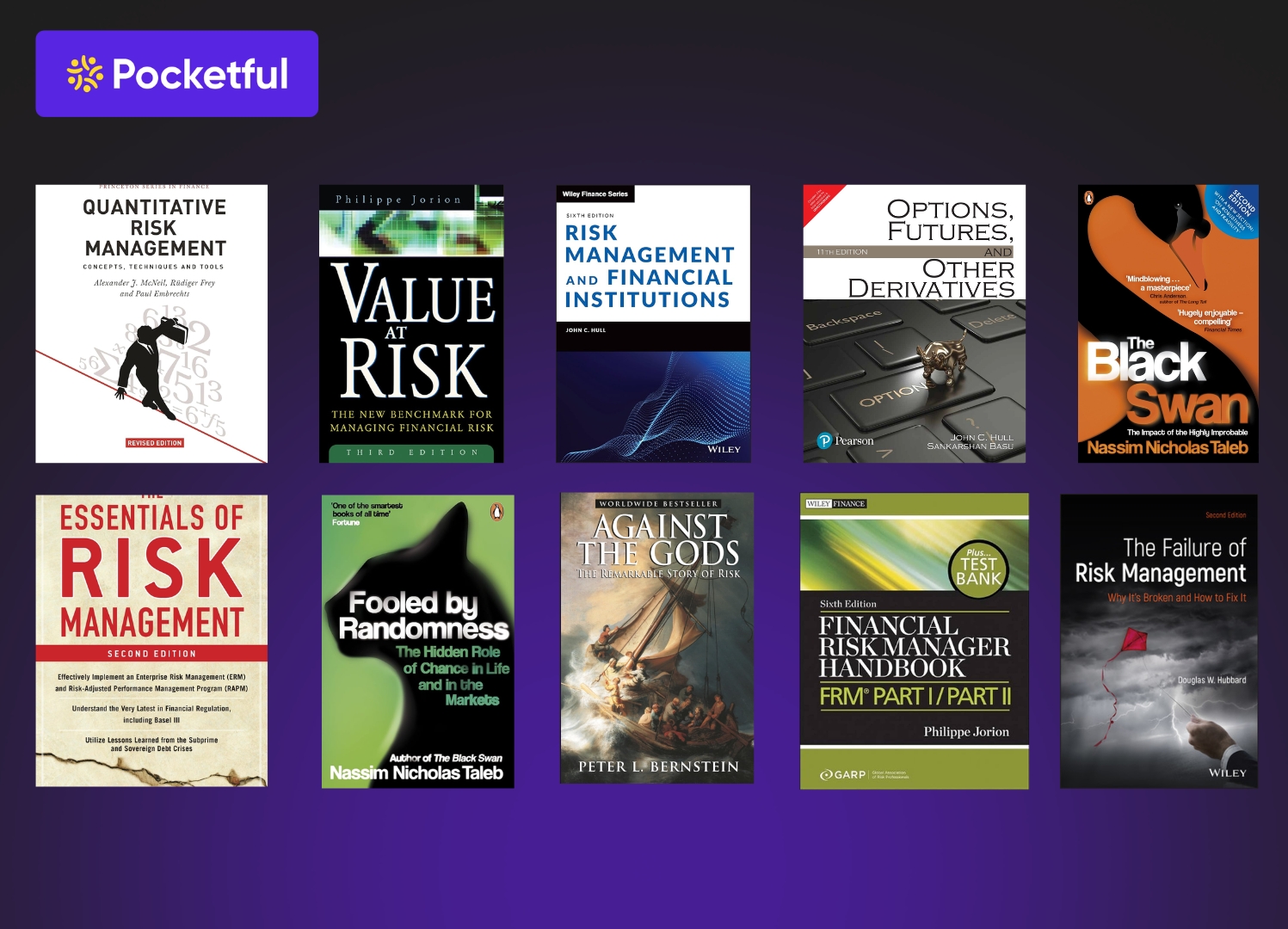
List of 10 books on Risk Management
| S. No. | Book Name | Year | Name of the Author | Rating (Goodreads) |
|---|---|---|---|---|
| 1 | Quantitative Risk Management | 2005 | Paul Embrechts, Alexander McNeil, Rüdiger Frey | 4.22 |
| 2 | Value at Risk | 2001 | Philippe Jorion | 4.07 |
| 3 | Risk Management and Financial Institutions | 2015 | John C. Hull | 4.18 |
| 4 | Options, Futures and Other Derivatives | 1989 | John C. Hull | 4.25 |
| 5 | The Black Swan | 2007 | Nassim Nicholas Taleb | 4.05 |
| 6 | Fooled by Randomness | 2001 | Nassim Nicholas Taleb | 4.13 |
| 7 | The Essentials of Risk Management | 2006 | Michel Crouhy, Dan Galai, Robert Mark | 3.98 |
| 8 | Against the Gods | 1996 | Peter L. Bernstein | 4.2 |
| 9 | Financial Risk Manager Handbook | 2016 | GARP | 4.1 |
| 10 | The Failure of Risk Management | 2009 | Douglas W. Hubbard | 3.9 |
Overview
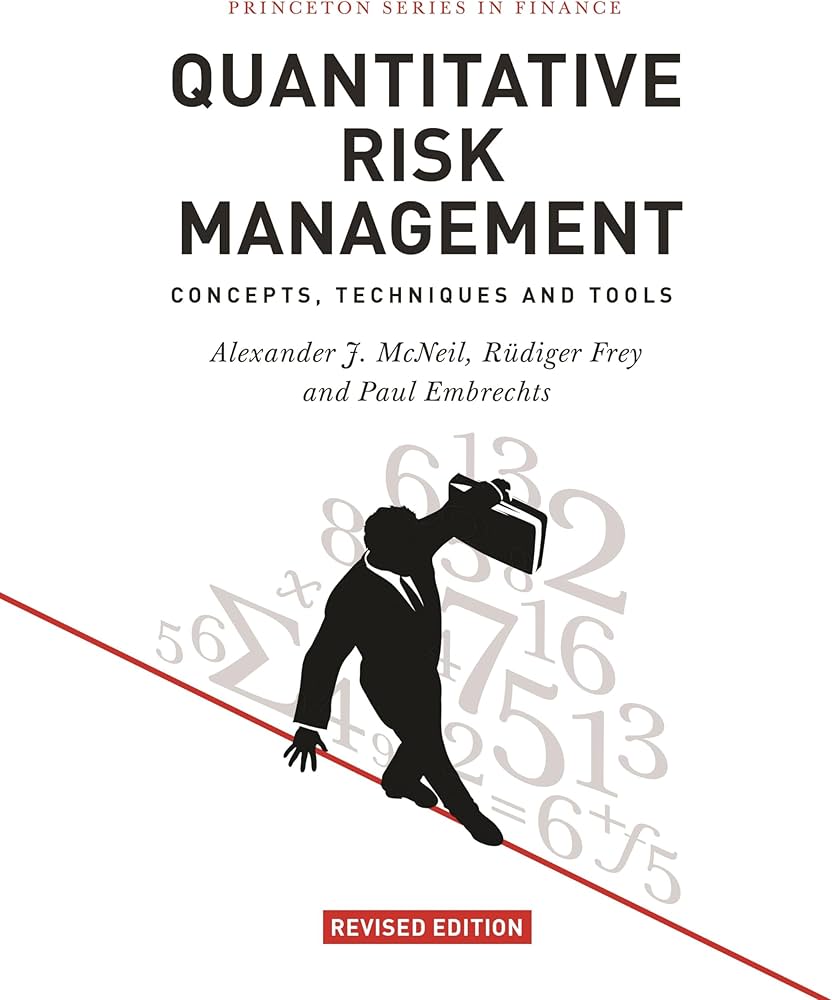
1. Quantitative Risk Management by Author – McNeil, Frey & Embrechts
This book explores how financial risk behaves when markets stop acting “normally.” Most investors assume prices move in predictable patterns, but this book explains why extreme losses are far more common than we expect and why diversification often fails during market crashes.
It uses advanced statistical tools to study risk, dependence between assets, and extreme events. From a reader’s perspective, the biggest value is understanding why portfolios that look safe on paper can suddenly fall apart during crises like 2008 or COVID.
2. Value at Risk by Author – Philippe Jorion
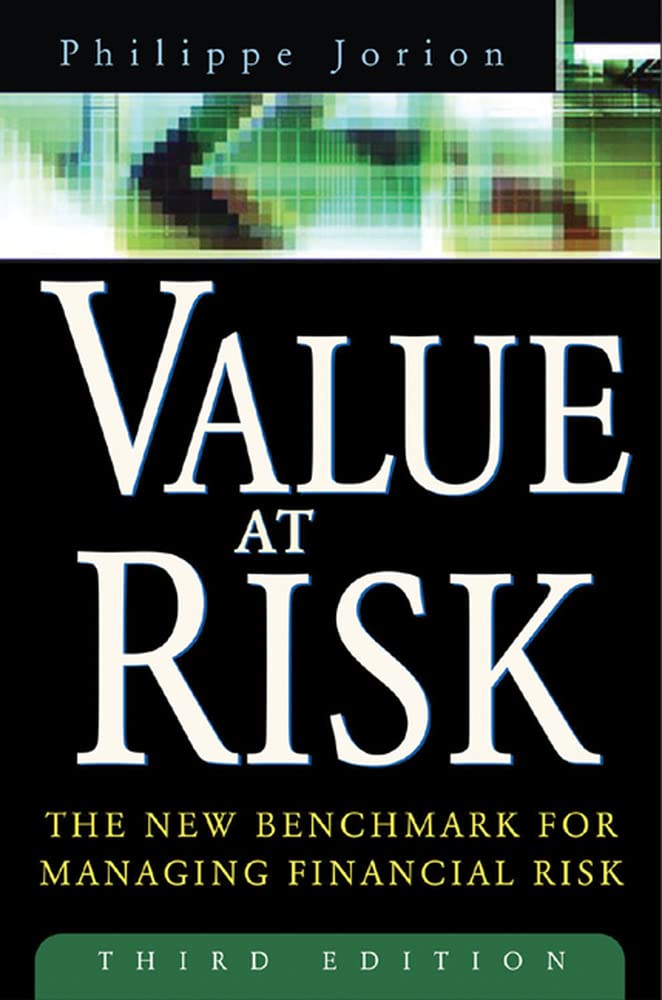
This book explains Value at Risk (VaR) in a practical way. VaR answers a simple question: “How much could I lose on a bad day?” But Jorion goes further and shows why VaR must be handled carefully.
For example, a daily VaR of ₹5 lakh does not mean losses cannot exceed that number; it only means they usually should not. The book is especially useful for readers who want to understand how banks and funds measure risk, while also learning why relying only on VaR can be dangerous during sudden volatility.
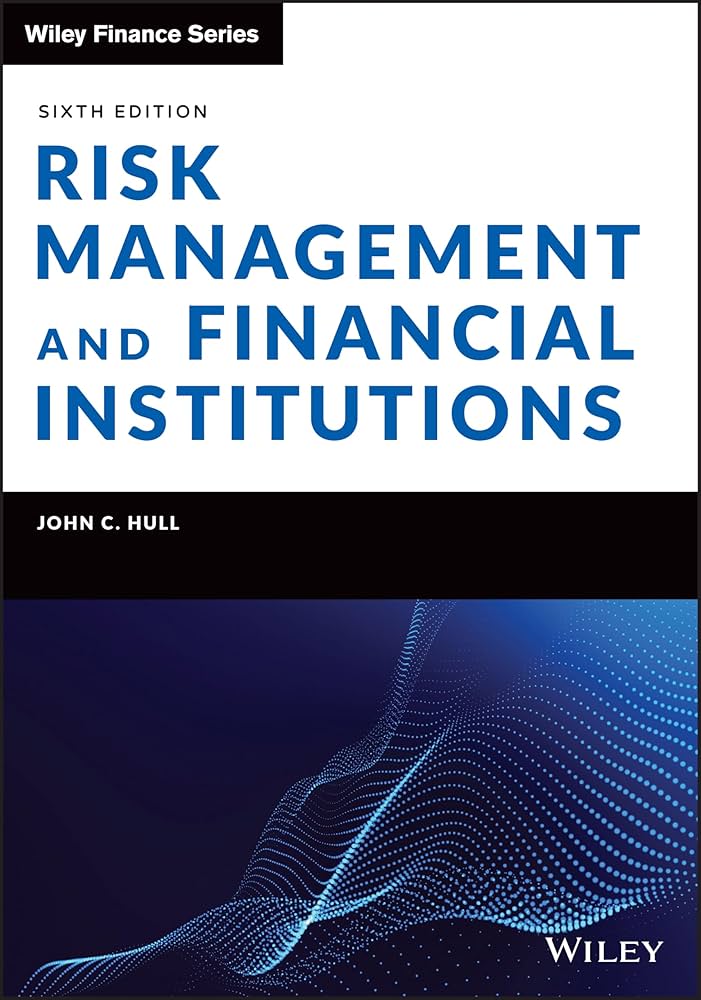
3. Risk Management and Financial Institutions by Author – John C. Hull
This is one of the most accessible introductions to professional risk management. Hull explains how banks think about market, credit, liquidity, and operational risk.
What makes the book valuable is how it connects theory with real institutional behaviour, such as why capital buffers matter or why liquidity dries up exactly when it’s needed most. From a reader’s point of view, it helps explain why retail investors often feel surprised during crises while institutions plan for stress scenarios in advance.
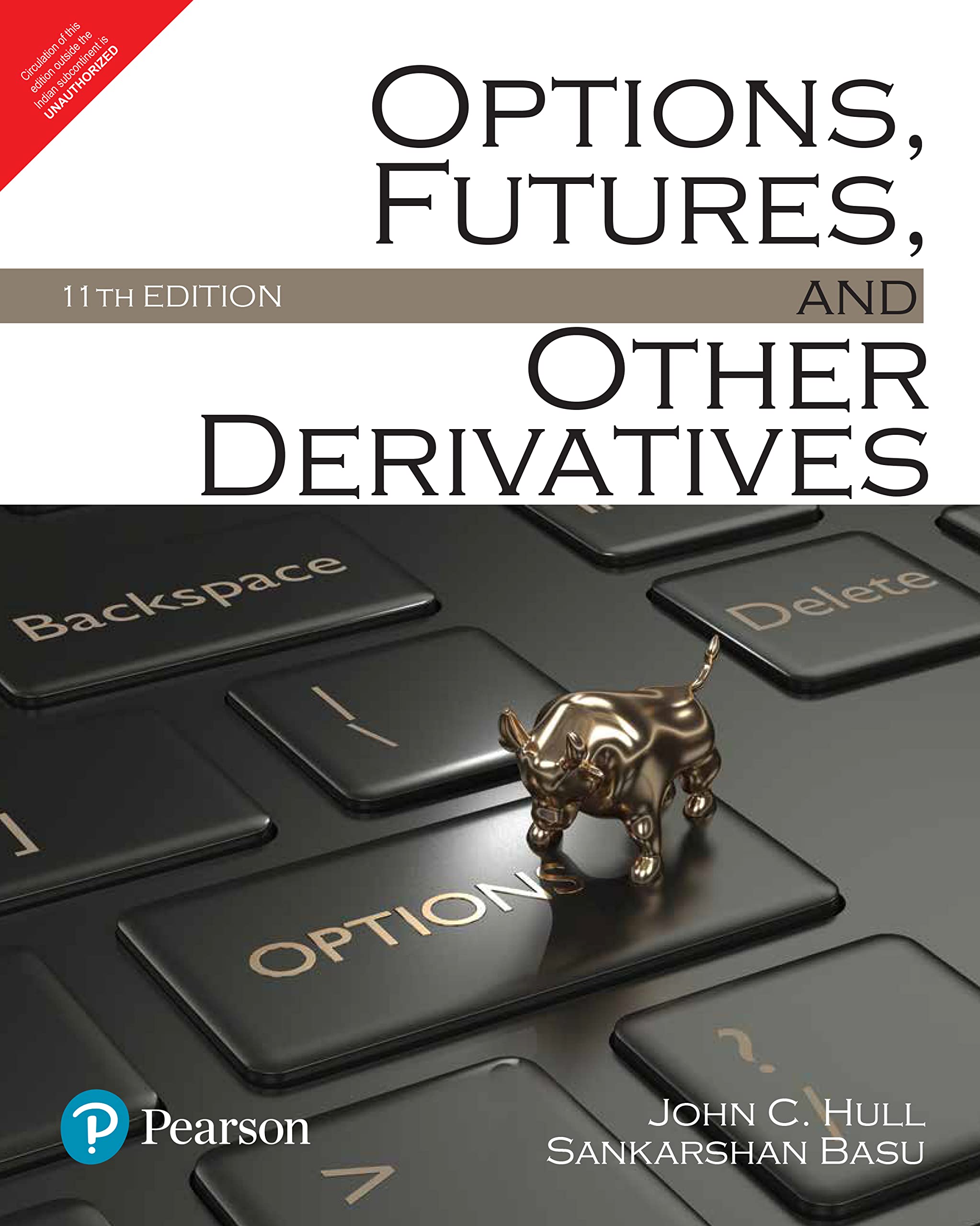
4. Options, Futures, and Other Derivatives by Author – John C. Hull
Although this book focuses on derivatives, it is deeply relevant to risk management because derivatives are usually designed to reshape risk. It explains how options, futures, and swaps behave under changing market conditions and why hedging is never a “set and forget” exercise.
For instance, a position may be delta-neutral today but become risky tomorrow when volatility spikes. Readers come away with a clearer understanding of why hedged trades can still lose money.
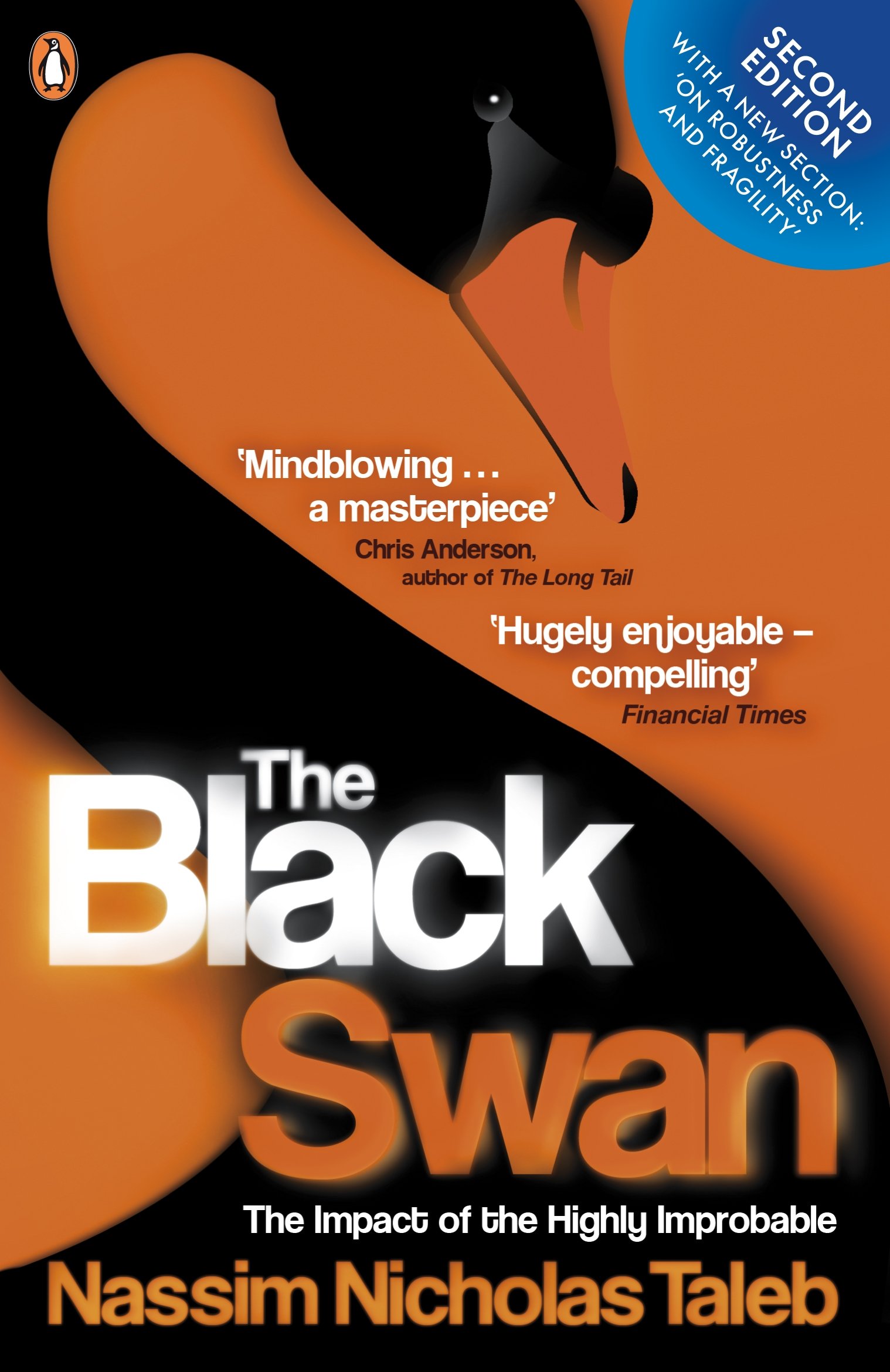
5. The Black Swan by Author – Nassim Nicholas Taleb
This book challenges the belief that the future can be predicted using past data alone. Taleb focuses on rare, high-impact events that markets fail to price in until it is too late.
Written in simple, engaging language, it explains why financial systems break not on ordinary days, but during extreme ones. For readers, the key lesson is to build portfolios that can survive surprise rather than rely on confident forecasts.
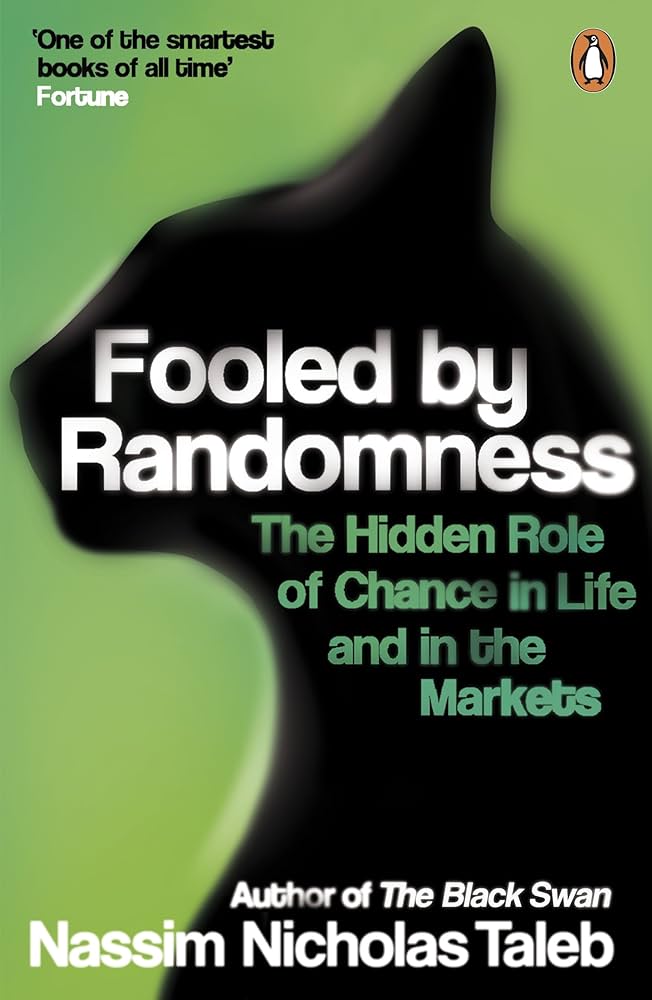
6. Fooled by Randomness by Author – Nassim Nicholas Taleb
This book explores how easily humans confuse luck with skill, especially in markets. A trader may experience a winning streak and assume brilliance when randomness plays a large role.
Taleb uses relatable examples to show how overconfidence builds quietly before a major loss. From a reader’s perspective, this book is especially useful during bull markets, where poor risk management often goes unnoticed.
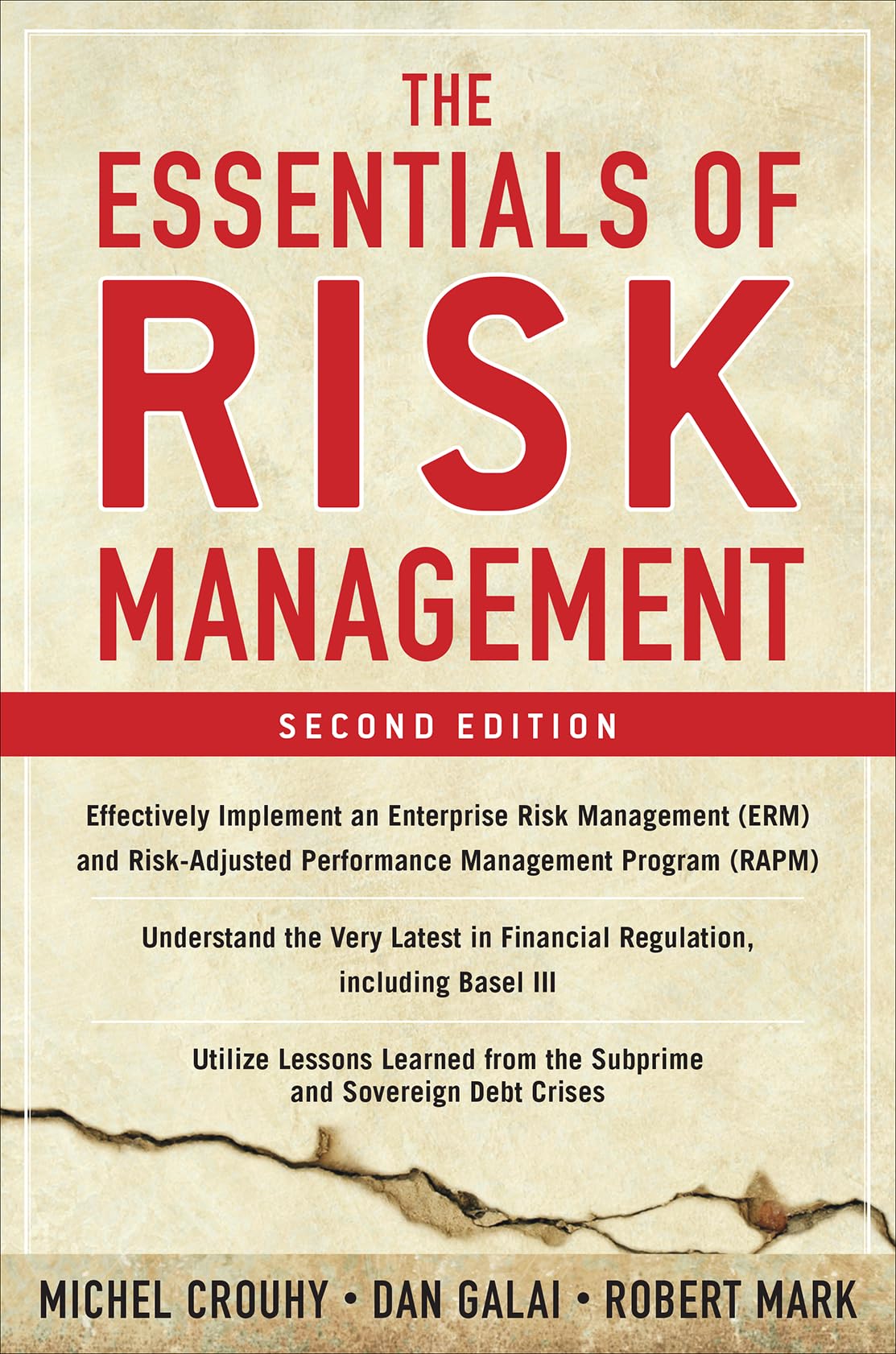
7. The Essentials of Risk Management by Author – Crouhy, Galai & Mark
It explains how organizations identify risk, set limits, define risk appetite, and build reporting structures. Many financial disasters do not happen because risks were unknown, but because warnings were ignored or incentives were misaligned.
For readers, this book highlights the truth that discipline and governance matter as much as analytics.
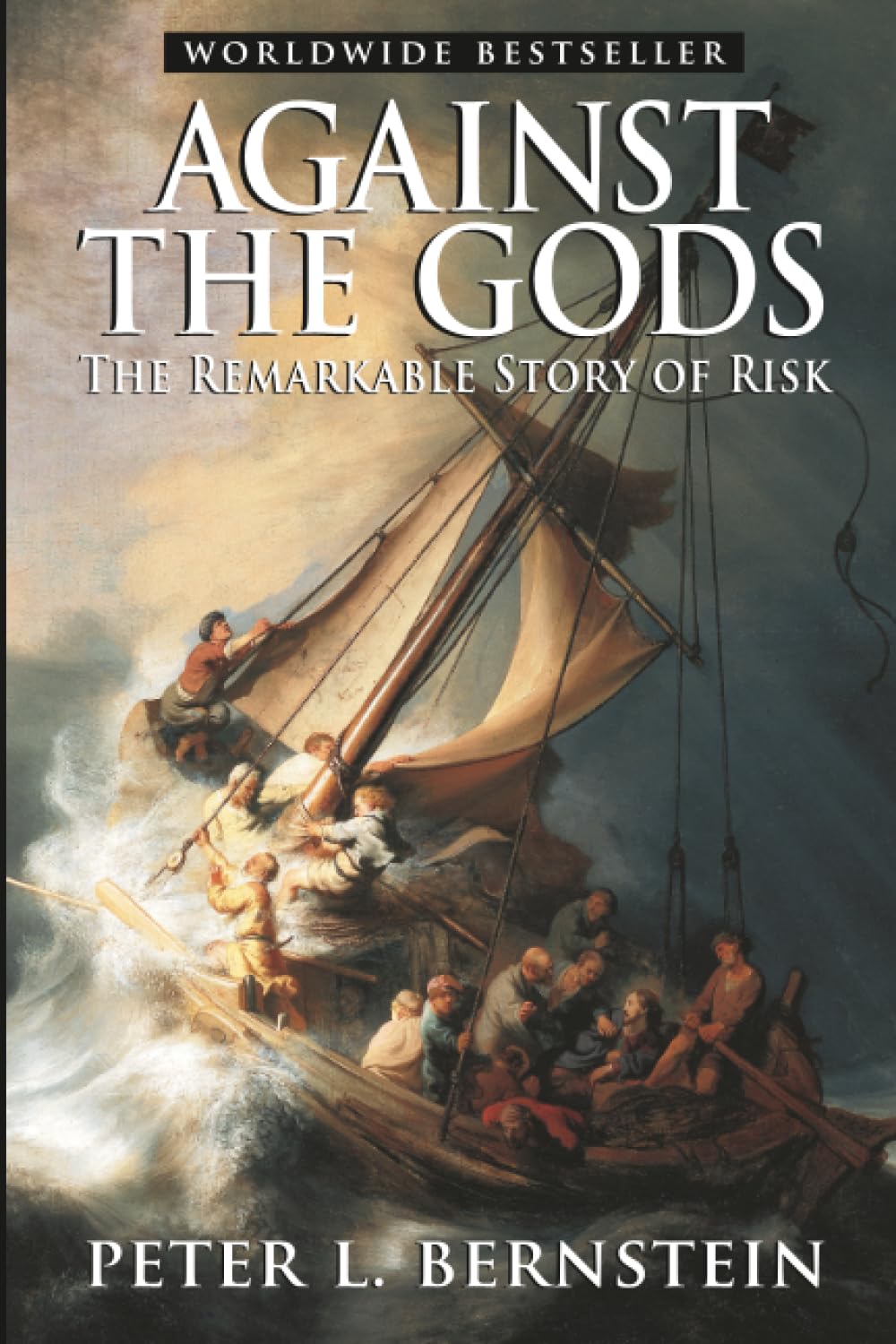
8. Against the Gods by Author – Peter L. Bernstein
This book tells the story of how humans learned to understand uncertainty, from early probability theory to modern finance. Written as a narrative rather than a textbook, it helps readers appreciate that risk management exists because the future is inherently uncertain.
It is especially refreshing for readers who want intuition and perspective rather than formulas, and it builds humility, an underrated skill in investing.
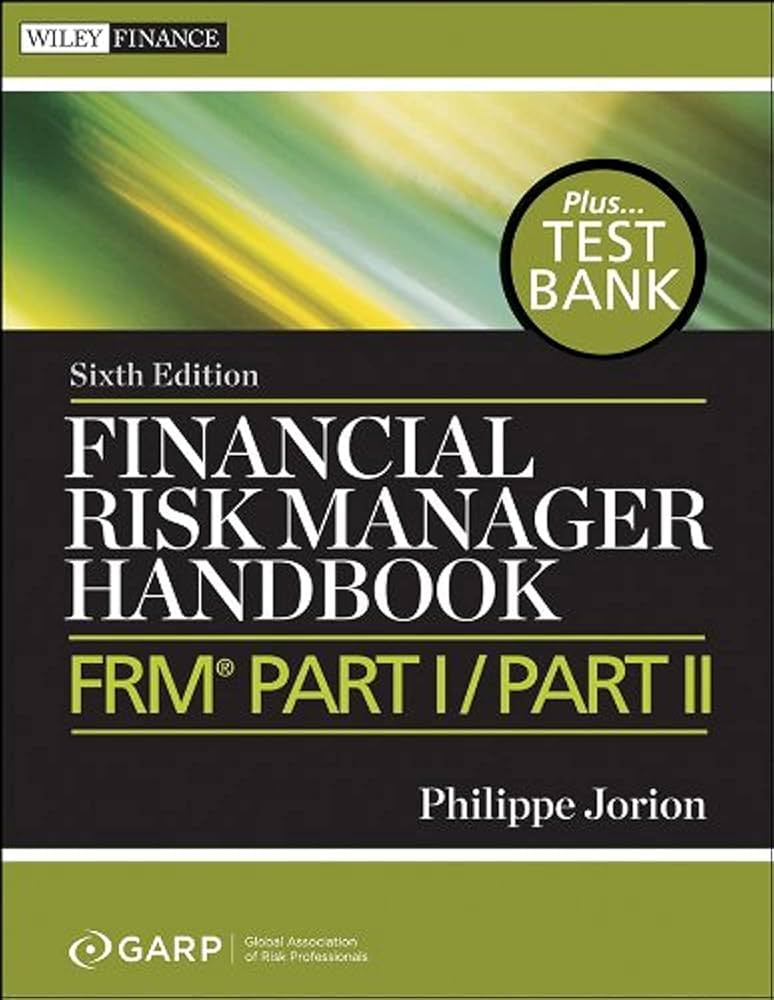
9. Financial Risk Manager Handbook by Author – GARP
This handbook is a structured reference covering all major areas of financial risk management, including market, credit, operational risk, and regulation. It is designed for FRM candidates but works equally well as a practical guide for professionals. From a reader’s point of view, it’s not meant to be read like a story; rather, it is the book you return to when you need clarity, definitions, or quick validation of concepts.
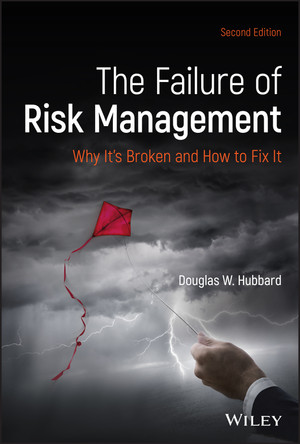
10. The Failure of Risk Management by Author – Douglas W. Hubbard
This book questions why risk management often fails despite sophisticated tools. Hubbard argues that many risks can be measured more effectively than people assume and that vague labels like “high” or “low” risk aren’t actionable. For readers, the key takeaway is learning to think in probabilities and ranges rather than absolutes. It’s particularly useful for professionals who want to improve decision-making rather than just comply with frameworks.
Conclusion
Most people enter markets chasing returns. The ones who last learn to respect risk.
The books in this list approach risk management from different directions, such as statistics, institutional frameworks, behavioural psychology, history, etc. Together, they teach a powerful lesson that risk is not a side topic in finance. It is finance.
You do not need to master every model or read all ten books at a go. Even adopting one or two ideas can significantly improve long-term outcomes. Markets will surprise you. They always do, but risk management will help you survive them with your confidence. Apply your theoretical knowledge through real market execution with Pocketful. Begin your investing and trading journey on a low-brokerage, intuitive platform designed for practical decision-making.
Frequently Asked Questions (FAQs)
How does psychology affect risk management?
Fear and greed often cause people to not follow rules when sticking to those rules matters most.
Is risk management about predicting crashes?
No. It is about assuming uncertainty and preparing for outcomes you did not predict.
Is diversification enough on its own?
Diversification helps, but during market stress, asset classes can fall together. It works best when combined with proper asset allocation
Does risk management mean lower returns?
It may limit extreme upside in the short term, but it often improves results over time.
What’s the most common risk investors underestimate?
Overconfidence, especially after a strong run of returns.