What Does SEBI Data Say About F&O Losses?
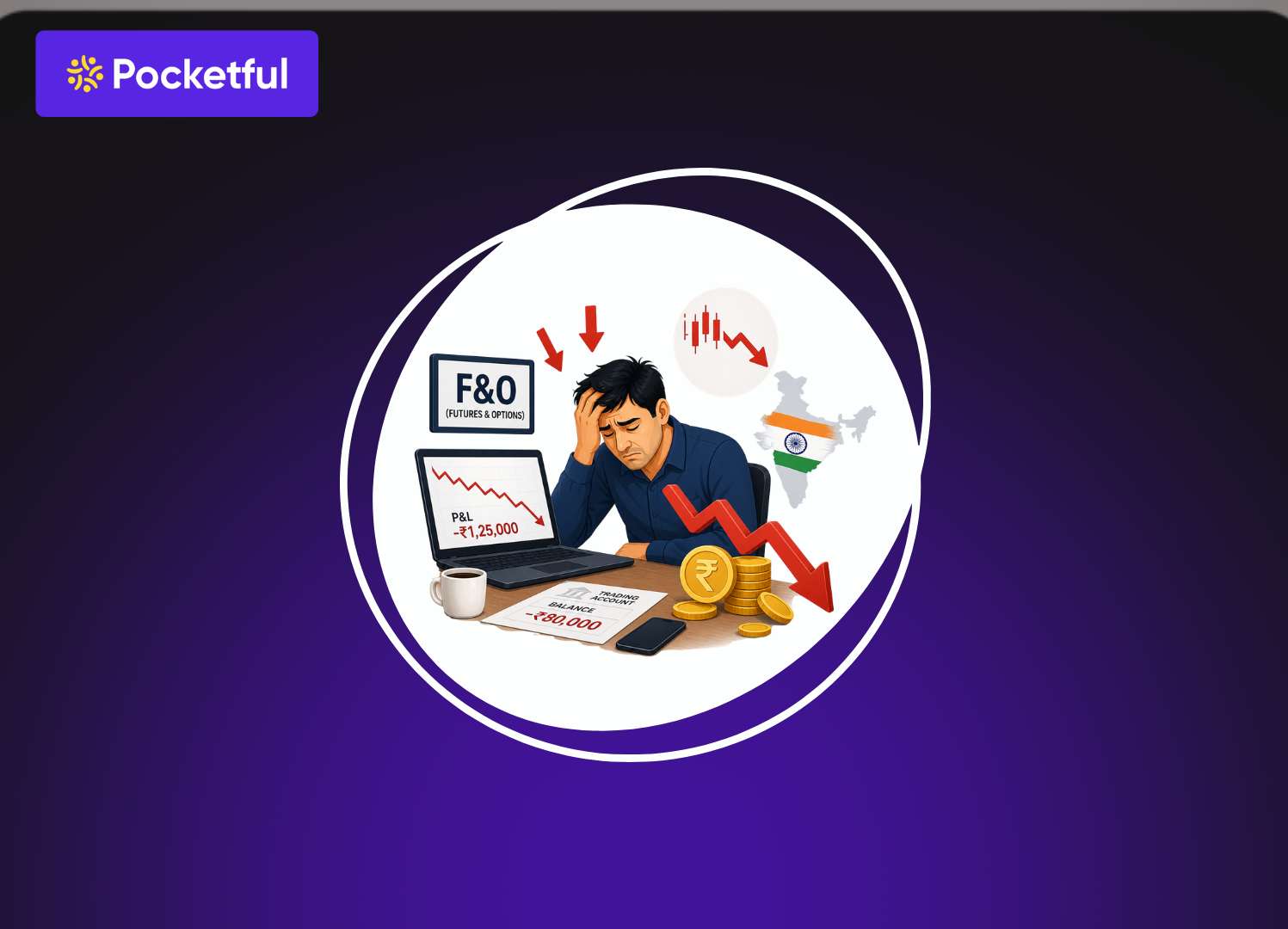
The SEBI report is an eye-opener for every small trader. It looked at the trading data of over 1 crore people between 2022 and 2024. The findings are quite scary. About 90 percent of these individual traders lost money.In just three years, these traders lost a total of Rs.1.81 lakh crore.
On average, a single trader lost about Rs.2 lakh, including all costs. Only a very small group of people, which is about 7 percent, made any profit. Even in that small group, only 1 percent of traders managed to earn more than Rs.1 lakh after paying all their fees. This means the chance of making big money is very low.
The Growth of Retail Participation in F&O
In the last few years, more and more people have started trading in F&O. This trend became very popular after the COVID-19 pandemic. Earlier, trading was mostly for experts, but now everyone wants to try it.
Surge in New Traders Post-COVID
Before 2020, there were not many retail traders in this segment. But since then, the number of individual traders has grown by over 120 percent. Today, there are more than 1 crore active participants. What is more surprising is that 72 percent of these traders are from small towns and cities.
Easy Access and the Quick Money Mindset
Modern trading apps have made it very easy to buy and sell options. Investing can be easily started with just a few taps on your smartphones. At the same time, social media influencers often show “easy profits,” which makes young people want to join in. Data shows that 43 percent of traders are now below the age of 30. Most of them have a “quick money” mindset and do not realize the risks involved.
Understanding Why 90% of Traders Lose Money
There are many reasons why small traders fail while big companies make a profit. It is not just about luck. The market is built in a way that gives a huge advantage to professionals.
Structural Disadvantages in the Market
Small traders are competing against large institutions and foreign funds. These big players have much better tools and more money.
- Institutions vs. Retail Traders: Large firms have teams of experts who study the market all day. They have access to information that you might not see until it is too late.
- Algorithmic Trading: In this big investors use different computer programs known as “algos” to trade. In the trading system about 97% of the foreign investor profits are generated using these automated systems.
- Speed and Execution Gap: Professionals use very fast servers placed right inside the exchange. They can place trades in microseconds. Your mobile app or home internet is much slower, which means you often get a worse price.
The Impact of Leverage
Leverage means you can trade with more money than you actually have. This looks like a great opportunity to make profits but there are severe risks attached to it.
Leverage can amplify your losses even more than what you have invested. If the market goes in a different direction as per the plan, even a small movement can wipe out your entire capital. Many traders take positions that are too large for their small accounts. When they make a small mistake, it leads to a big loss that they cannot recover from.
Transaction Costs and Hidden Charges
Trading is not free. Every time you buy or sell, you pay various fees. These costs eat into your capital even if you are not making a profit.
- Brokerage: This is the fee you pay to your broker for every order.
- STT (Securities Transaction Tax): This is a government tax on every trade.
- Exchange Fees and GST: Extra charges from the stock exchange and taxes on your fees.
Over three years, small traders collectively paid Rs.50,000 crore just in these costs. On average, a trader spends about Rs.26,000 every year just on fees. For many, these costs are more than their actual trading profit.
Read Also: How to Show F&O Loss in ITR (Income Tax Return)
Psychological Reasons Behind Trader Losses
Our minds are not naturally built for trading. Emotions often make us take the wrong steps at the wrong time.
Overtrading and Addiction
The speed of F&O trading can feel like a game. Many people start trading too many times in a day. This is called overtrading. It leads to more stress and higher transaction costs. Some traders even treat it like an addiction and cannot stop even after losing money.
Fear and Greed Cycle
Greed makes you stay in a trade for too long, hoping for more profit. Fear makes you panic and sell when the market drops slightly. Retail traders often keep their losing trades for a long time, hoping the price will come back. But they sell their winning trades very quickly because they are afraid of losing the small profit.
Revenge Trading
When traders lose money, they often get angry. They try to “win back” their money immediately by taking even bigger risks. This is called revenge trading. Usually, this leads to even bigger losses because the trader is making decisions based on anger, not a plan.
Risk Management in F&O Trades
- No Stop-Loss Discipline: A stop loss can help you save your hard earned money as by using it you can set a price limit and the moment the price hit is reached you are automatically exited from the trade. Most of the people use it when they start losing but it is something that needs to be done priorly.
- Poor Position Sizing: Putting all your money in a single trade can wipe out your entire invested money as if the trade fails everything is lost in one go.
- Ignoring Risk-Reward Ratio: You should plan and organize your trades according to the potential profit giving stocks rather than investing all your capital just to earn a small piece. As a little mistake can lead to uncontrolled losses.
Government’s Stricter Stance on F&O Trading
The jump in retail activity in derivatives has brought a clear issue into focus most individual traders are still losing money. Figures from the Securities and Exchange Board of India have led the government to adopt a more measured, structured stance. The priority now is to curb excessive speculation and help traders engage with stronger awareness and tighter risk management.
Key Measures Taken:
- High Margin Requirements: Higher initial margin to avoid overleveraging and ensure that investors put enough money at stake.
- Position Limitation: Limits on risk positions to minimize trading and mitigate potential losses.
- Risk Disclosure: Compulsory disclosure of loss statistics to enhance awareness among investors.
- Rationalized Expiry Structure: Adjustments in weekly contracts to curb short-term speculative trading activity.
- Improved Market Surveillance: Closer monitoring of trading patterns to detect irregularities and maintain discipline.
- Focus on Investor Education: Initiatives to help traders understand the complexity and risks involved in F&O trading.
Who Actually Makes Money in F&O?
If 90% of individuals are losing, who is winning? The F&O market is like a balance; if one side loses, the other side wins.
Proprietary traders and foreign institutions are the ones making most of the money. In just one year (FY24), these big players made about Rs.61,000 crore in profits. These are reliable as high speed technology is used along with strict rules. They do not let emotions like fear or greed affect their decisions. The system is designed to favor these professionals who have more resources and better tech.
Read Also: Trading Journal F&O India: Step-by-Step Guide
Can You Be in the Profitable 10%?
It is very hard to be in the winning group, but it is not impossible. You must stop acting like a gambler and start acting like a professional.
What Successful Traders Do Differently
Those who make money consistently have very good habits. They do not trade every day. They only enter the market when they see a high-quality opportunity. They also keep a trading journal to learn from their mistakes and they stick to their rules no matter what.
Practical Tips to Avoid Losses
- Protect Your Capital: Your first job is to make sure you do not lose all your money. If you stay in the game, you will have more chances to learn.
- Leverage According to Risk: In trading one must only use the money they can lose as it is a risky place. A small amount of money shall be used in the start to understand and test your knowledge.
- Build a System: Be always prepared and have clear rules with when to buy or when to sell. Rules shall not be changed in the middle of the trade.
- Learn the Basics: Always learn theoretically first and then go for practical application in options trading.
Conclusion
The data from SEBI is very clear. F&O trading is extremely risky for individual retail participants. Most people are losing their savings because of high costs, lack of discipline, and the speed gap with institutions. However, the market is also a place for learning. Generally most of the investors do long-term investing as it helps in real wealth building. But before you start your trade you should always get proper knowledge and strict risk mitigation techniques.
For more market news and insights, download Pocketful – offering users zero brokerage on delivery trades and an easy to use platform designed for both beginners and experienced investors.
| S.NO. | Check Out These Interesting Posts You Might Enjoy! |
|---|---|
| 1 | SEBI F&O New Rules 2026: Key Changes, Impact & Guide |
| 2 | Difference Between Options and Futures |
| 3 | Physical Settlement in Futures and Options |
| 4 | What Is Leverage in the Stock Market? |
| 5 | Benefits of Online Trading |
Frequently Asked Questions (FAQs)
Why do 90% of traders lose money?
The main reasons are high transaction costs, misuse of leverage, and emotional decision-making. Also, retail traders compete with big institutions that have much faster technology and better data.
What is SEBI’s new rule for 2024?
The minimum contract size has been increased by SEBI to Rs.15-20 Lakhs. The exchanges are also limited to only one weekly expiry so that there is less speculation.
How can I stay profitable in F&O?
Investors need to be disciplined, risk mitigation shall be top priority, stop-loss shall be used within time and you should never risk more than 1-2% of your capital in a single trade.
Are there any hidden costs in F&O trading?
Brokerage is paid to the broker, Securities Transaction Tax (STT) is levied, exchange transaction charges, GST, and SEBI fees are some of the additional charges applied.
Is F&O safe for beginners?
F&O is very complex and high-risk. Beginners should first learn about the cash market and long-term investing. It is recommended to spend a lot of time learning and practicing before putting real money into derivatives.