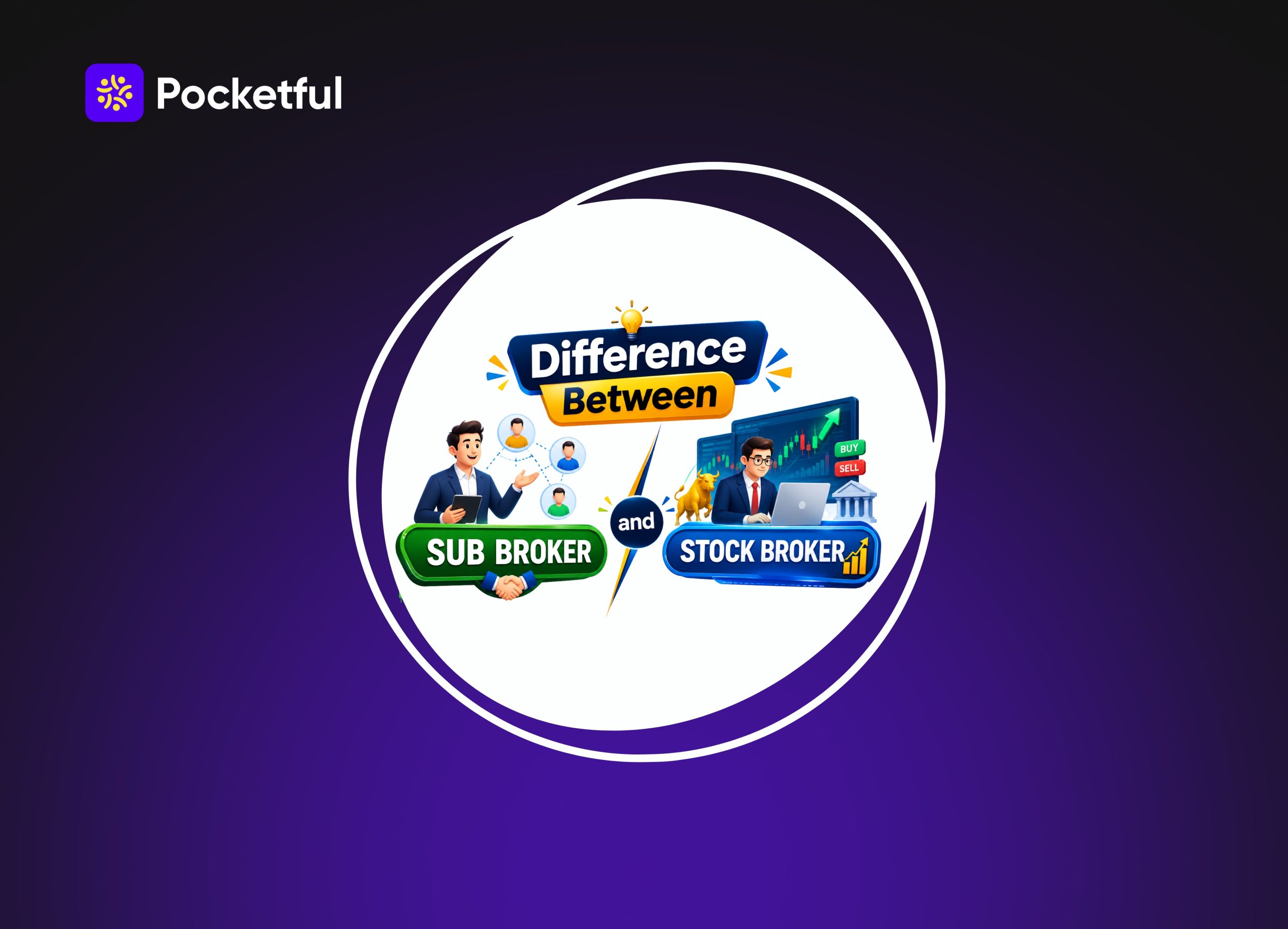
Stepping into the financial markets requires proper guidance and simple tools to explore various assets. Every investor relies on a trusted system to connect with the dynamic trading floors. Selecting a reliable path to buy and sell shares is crucial for a smooth financial journey. Market participants often hear multiple names for the professionals who handle these trades. Understanding these distinct roles helps individuals make informed decisions. This clarity ensures a secure and efficient investment experience for everyone.
What Is the Meaning of a Stock Broker
A stock broker is a registered corporate member of a recognized stock exchange. These institutions act as the main gateway between retail investors and the financial markets. The Securities and Exchange Board of India firmly regulates their daily operations to maintain market integrity.
A stock broker provides the actual digital trading platform where individuals can buy and sell shares. Pocketful is a prime example of a modern and reliable SEBI registered stock broker. It offers a seamless trading application designed for all types of market participants.
What Is the Meaning of a Sub-Broker
Sub Broker, also an authorised person is an individual or a firm appointed by a main stock broker. They work as an agent to help the broker reach more clients across different geographical locations. Historically, these individuals were widely known in the financial market as sub brokers.
The financial regulator SEBI issued a major circular in 2018 to discontinue the sub broker category. SEBI noticed there was no real difference in the daily work of a sub broker and an authorised person. Therefore, SEBI directed all existing sub brokers to migrate to the authorised person model to simplify the rules.
Today, the term sub broker has no legal standing in the Indian stock market. The term authorised person is the official replacement used by the regulator and the stock exchanges. Authorised persons do not need direct registration with SEBI to run their business.
Difference Between Stock Broker And Sub-Broker
Understanding the variations between these two roles helps investors choose the right contact point. The table below highlights the core differences simply and clearly.
| Feature | Stock Broker | Sub-Broker / Authorised Person |
|---|---|---|
| Meaning | A registered member of the stock exchange who executes trades. | An agent appointed by the stock broker to expand business and assist clients. |
| Registration | Requires direct registration with SEBI and the stock exchanges. | Requires approval from the stock exchange through the stock broker. |
| Capital Requirement | Needs a very high amount of capital to set up the brokerage firm. | Needs a low initial investment to start the agency business. |
| Client Funds | Directly collects and holds funds and securities of the clients. | Cannot accept client funds or securities in their own name. |
| Brokerage Generation | Charges brokerage fees directly from the investors for trade execution. | Earns a percentage of the brokerage fee as a commission from the broker. |
Importance of Stock Broker
Stock brokers act as the foundational pillars of the financial markets. They bring massive value to the investing ecosystem in several distinct ways.
- Direct Market Access: A stock broker provides the essential link to the stock exchanges. Individuals cannot buy or sell shares without this direct access to the trading floor. The broker systems connect retail orders to the main exchange servers in milliseconds.
- Secure Trading Environment: SEBI registered brokers create a highly safe space for investing. They follow strict rules to prevent fraud and protect financial assets. The regulator regularly audits these brokers to maintain complete transparency.
- Advanced Technology: Brokers build sophisticated trading platforms for smooth trade execution. Pocketful provides advanced charts, option chains, and fast execution speeds for active traders. This technology allows users to track their portfolios from anywhere.
- Fund Safety: A broker ensures that the funds of clients remain totally secure. They completely separate their own corporate money from the money of the investors. This means the broker cannot use client money for their own business expenses.
Importance of Sub-Broker
An authorised person brings a localized and personal touch to the stock market. They add immense value for both the main broker and the retail investor.
- Local Assistance: Authorised persons offer physical support in regional areas and smaller towns. This helps beginners who feel hesitant about purely online trading platforms. Having a local office builds comfort for people making their first investment.
- Business Expansion: They act as the extended physical arm of the stock broker. This model helps brokers reach smaller cities without opening costly physical branches. The broker grows their network while the agent builds a profitable business.
- Market Education: These agents educate local clients about various financial products. They explain the basics of shares, mutual funds, and derivative options. This basic education helps clients make better choices with their savings.
- Quick Query Resolution: Clients can contact their local authorised person instantly for help. This provides a faster resolution for simple queries than calling a central customer care line. It creates a much smoother experience for active market participants.
Features of Stock Broker
The stock broker comes with a very distinct set of operational features. These features define their immense scale and ultimate market authority.
- SEBI Registration: A stock broker must hold a direct license from the market regulator SEBI. This legal registration is mandatory to offer any trading or investment services in India. Operating without this license is strictly illegal.
- Exchange Membership: They hold official membership with major national stock exchanges. This includes direct memberships with the National Stock Exchange and the Bombay Stock Exchange. This membership gives them the authority to place orders on the exchange.
- Technology Ownership: Brokers develop or lease heavy trading infrastructure for their users. Applications like Pocketful are built by the brokers to handle high volumes of trades daily. They spend heavily on server speed and data security.
- Ultimate Liability: The broker is ultimately responsible for the actions of its authorised persons. SEBI rules clearly make the broker liable for any misconduct by their appointed agents. This gives investors a strong sense of safety.
- Direct Fee Collection: Brokers have the exclusive authority to charge brokerage directly. They deduct this fee automatically from the trading account of the client. They are responsible for calculating all taxes and exchange charges accurately.
- Document Generation: Only the registered broker can issue official contract notes. They also generate margin statements, tax reports, and annual statements. The authorised person relies entirely on the broker for these documents.
Read Also: How to Start a Sub Broker Business
Features of Sub-Broker
The features of an authorised person revolve around client service and business networking. They act as a helpful bridge without holding direct financial control.
- Exchange Approval: They do not need direct SEBI registration to start working. However, they must obtain approval from the stock exchange through their parent broker. This ensures they meet the basic background checks.
- Agent Status: An authorised person works strictly as an agent for the broker. They cannot operate independently outside the umbrella of their registered stock broker. They also cannot work with multiple brokers in the same segment.
- Commission Income: Their primary source of revenue is a transparent revenue sharing model. Brokers like Pocketful offer excellent revenue sharing payouts based on the trading volume of clients. As their clients trade more, the agent earns more.
- No Fund Handling: They are strictly prohibited from receiving client money directly. Investors must transfer funds only to the official bank accounts of the stock broker. This is a critical feature that prevents local financial scams.
Stock Broker vs Sub-Broker: Which Should You Choose?
| Factor | Stock Broker | Sub-Broker / Authorised Person |
|---|---|---|
| Best for | Independent investors and traders who prefer managing their own trades | Investors who prefer personalised assistance and support |
| Account Opening | Open and manage the account directly with the broker | The Authorised Person can assist with account-opening processes |
| Technology | Direct access to trading platforms, charts, screeners and advanced tools | Helps clients understand and use the broker’s trading platform |
| Trading Style | Self-directed trading through online platforms | Trading with guidance and support from a local representative |
| Support | Primarily digital or customer-service-based support | More personalised, often including one-to-one assistance |
| Cost | Brokerage and other charges depend on the broker and plan selected | Costs may depend on the broker’s pricing structure and applicable arrangements |
Conclusion
Both stock brokers and authorised persons serve vital roles in the financial ecosystem. The stock broker builds the core technology and regulatory framework required for secure market access. The authorised person creates local awareness and offers personalised support to regional investors.
They work together as a seamless team to simplify wealth creation for everyone. With transparent systems and dedicated assistance, individuals can navigate the markets securely.
| S.NO. | Check Out These Interesting Posts You Might Enjoy! |
|---|---|
| 1 | How to Become a Sub Broker in India |
| 2 | SEBI Rules for Authorised Person Registration |
| 3 | What Happens If a Stockbroker Shuts Down? |
| 4 | Can an Authorised Person Trade for Himself? Rules Explained |
| 5 | Remisier vs Authorized Person (AP): Key Differences |
Frequently Asked Questions (FAQs)
What is the meaning of a stock broker?
A stock broker is a registered member of a recognized stock exchange. They provide the digital platform required to buy and sell shares safely.
What is the meaning of a sub broker?
A sub broker was an agent who helped stock brokers find local clients. SEBI officially changed this title to authorised person in the year 2018.
What are the main benefits of a stock broker?
Brokers provide direct market access and highly secure trading platforms. They also ensure strict safety rules are followed for investor funds.
What are the main benefits of an authorised person?
They offer physical support and guide beginners through complex financial concepts. They simplify the digital account opening process for local clients.
How to use these financial services easily?
Investors can open a free demat account online with a broker like Pocketful. They can also approach a local authorised person for basic physical assistance
