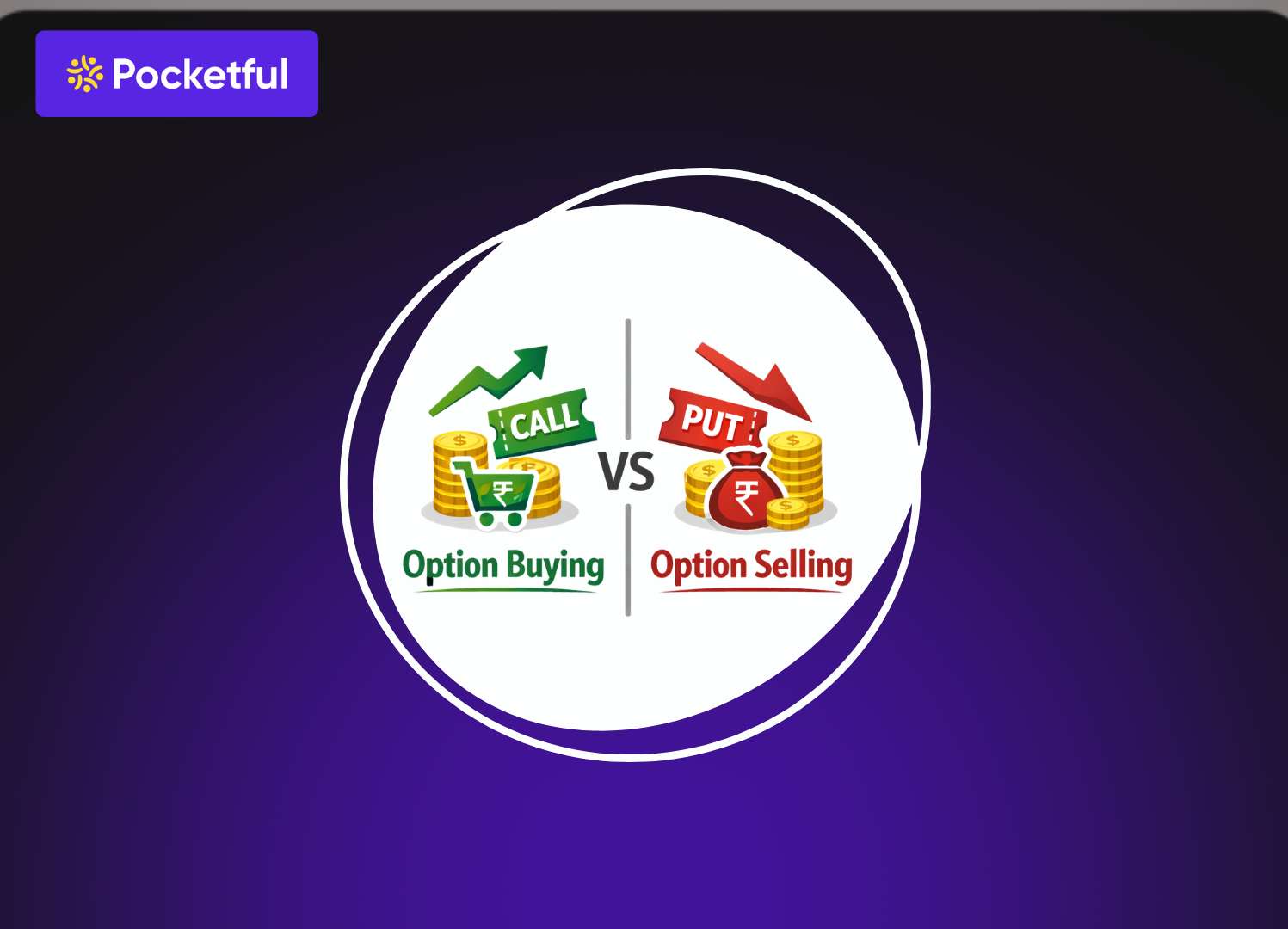
When it comes to investing in options, you will normally face a lot of questions. This is mainly because of the confusion and risks involved. One such debate is the option buying vs option selling.
Many traders think that they can learn derivatives in no time. But when investing, many investors face issues with making the difference. Especially when both approaches are used widely, understanding is a must.
Knowing the difference between option buying and option selling is key here. These two differ in terms of risk exposure, capital requirements, and return consistency. So, once you understand the difference, you will be better positioned to make the call. So, let us understand the same here.
What Is Option Buying?
Option buying in India refers to purchasing a call or put option. You do this by paying a premium in the derivatives market. Traders usually buy options on indices like Nifty 50 and Bank Nifty or on individual stocks.
A call option is bought when you expect prices to rise. At the same time, a put option is used when you expect a fall. The buyer has the right to exercise the contract. There is no obligation.
In these cases, the maximum loss is limited to the premium paid. But when you make the profits, it depends on how strongly the market moves before expiry.
Key Features of Option Buying
- Requires lower capital compared to option selling.
- Offers the potential for high returns if the market moves sharply in your favour.
- Loss is limited to the premium paid.
- Highly dependent on timing and volatility.
- Time decay works against the buyer, reducing option value over time.
Advantages of Option Buying
- Requires relatively low capital to start trading.
- Offers high return potential if the market moves strongly.
- Maximum loss is limited to the premium paid.
- Best if you are looking for directional opportunities.
- Can deliver quick gains in short time frames.
Disadvantages of Option Buying
- Time decay reduces the option value daily.
- Requires precise market timing to be profitable.
- Frequent and small losses are common.
- Impact on prices due to volatility is high.
- Consistency is difficult for beginners to maintain.
Read Also: Commodity Futures vs Options in India: Key Differences
What Is Option Selling?
Option selling in India involves writing or selling a call or put option. In return for this, you get the premium upfront. This strategy is commonly used in indices like Nifty 50 and Bank Nifty as well as in stock options.
The seller takes on the obligation to fulfil the contract if the buyer exercises it. Profit is earned when the option loses value or expires worthless. Since the seller carries a higher risk, this strategy requires margin and a strong understanding of market movements.
Key Features of Option Selling
- Requires higher capital and margin compared to option buying.
- Profit is limited to the premium received.
- Time decay works in favour of the seller.
- Higher probability of consistent, smaller profits.
- Risk can be significant if the market moves sharply.
Advantages of Option Selling
- Higher probability of winning trades.
- Time decay supports consistent income generation.
- Suitable for sideways or moderately trending markets.
- Can be structured with strategies to manage risk.
- Helps in building regular trading income over time.
Disadvantages of Option Selling
- Requires higher capital and margin.
- Losses can be large or theoretically unlimited.
- Needs strong risk management and discipline.
- Sudden market moves can lead to significant losses.
- Not ideal for beginners without a proper understanding.
Option Buying vs Option Selling – Key Differences
While both these choices are great, knowing the difference will help you make the right call.
| Basis | Option Buying | Option Selling |
|---|---|---|
| Meaning | Buying call or put options by paying a premium. | Selling call or put options and receiving a premium. |
| Capital Requirement | Low capital required. | High margin and capital required. |
| Risk | Limited to premium paid. | High or potentially unlimited loss. |
| Profit Potential | Unlimited profit potential. | Limited to the premium received. |
| Probability of Profit | Lower probability of success. | Higher probability of consistent returns. |
| Time Decay Impact | Works against the buyer. | Works in favour of the seller. |
| Market Suitability | Best for strong directional moves. | Best for sideways or stable markets. |
| Skill Requirement | Easier to start but hard to master. | Requires experience and strong risk management. |
| Consistency | Less consistent returns. | More consistent but smaller gains. |
Read Also: Difference Between Options and Futures
Option Buying vs Option Selling – Which Is Better for Whom?
Choosing between option buying and option selling is based on various factors. This includes your capital, risk appetite, and trading experience. Both strategies can be useful, but they suit different types of traders.
Option Buying Is Better For
- Beginners who are just starting with options trading.
- Traders with limited capital.
- Those looking for high-return opportunities in short time frames.
- Traders who can track markets actively and time entries well.
- Individuals are comfortable with frequent small losses and occasional big gains.
Option Selling Is Better For
- Experienced traders with a clear understanding of risk.
- Traders with higher capital and margin availability.
- Those looking for a consistent income rather than large one-time gains.
- Traders who prefer probability-based strategies.
- Individuals who can manage risk with discipline and hedging strategies.
Read Also: Commodity vs Forex Trading: Key Differences, Pros & Cons
Conclusion
Option buying vs option selling comes down to how you approach the market. For investors looking for limited risk, option buying is a great choice. And those who are comfortable with managing risk, option selling is a better choice.
The key is to choose a strategy that aligns with your goals. For this, you will need a proper understanding of the market, sufficient capital, and the ability to handle market fluctuations over time.
So, if you are planning to start investing in these, start with analysis. For this, you must consider a reliable platform like Pocketful, which can simplify the process. You can open your Demat account, explore F&O trading, and build your strategy with better clarity and ease.
Frequently Asked Questions (FAQs)
Is option buying safer than option selling?
Option buying is generally considered safer because the maximum loss is limited to the premium paid. In contrast, option selling carries higher risk, especially if the market moves sharply against your position.
Which strategy is better for beginners in options trading?
Option buying is usually more suitable for beginners as it requires lower capital and has defined risk. Option selling needs a better understanding of margin and risk management.
Can option selling give a regular income?
Yes, option selling can provide more consistent returns due to time decay. However, it requires discipline and proper risk management to avoid large losses.
How much capital is needed for option buying and selling?
Option buying can start with a relatively small amount. Option selling requires higher capital because of the margin requirements set by the exchange.
Is option trading profitable in India?
Option trading can be profitable in India if done with the right strategy and risk control. Both option buying and option selling have profit potential, depending on market conditions and execution.