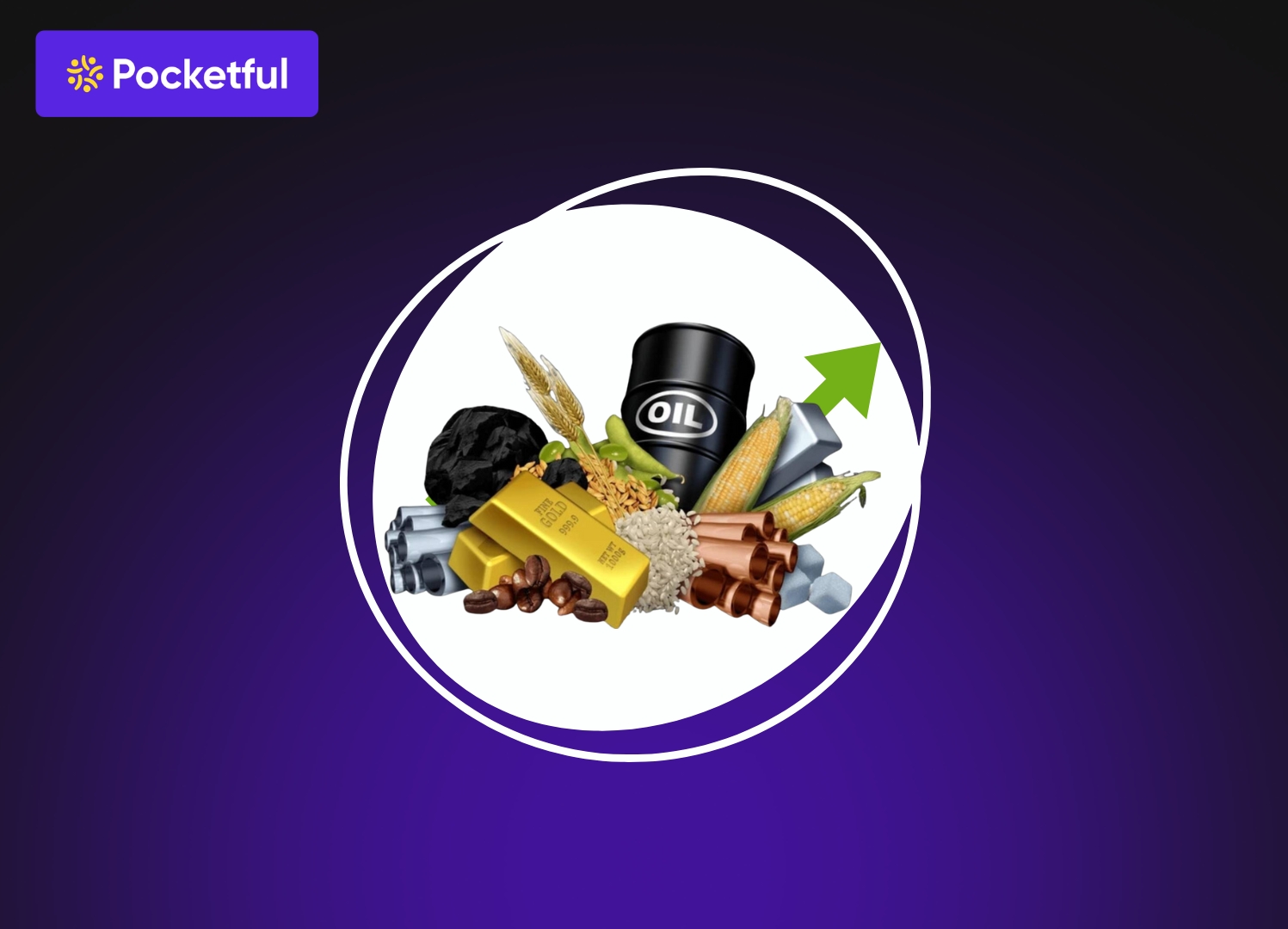
The commodity markets of India have transformed into one of the most traded markets by retail traders. Commodities are no longer dominated by hedgers and institutional investors but by traders seeking volatility, diversification and more than equities.
You already know the reason behind commodities feeling different because you have ever observed how crude oil can swing in every direction within one day or how gold can respond immediately to news around the world. They are faster, sensitive to real-world events and reward preparation.
Here, we shall discuss the 10 best commodities to trade in India in 2026 and why they are important.
What is the Commodity Market?
Commodities can be defined as physical goods like metals, energy resources, or agricultural products that are traded via futures contracts. In India, this trading primarily happens on exchanges such as Multi Commodity Exchange of India and the National Commodity & Derivatives Exchange. Instead of buying physical gold or barrels of oil, traders speculate on price movements using standardised contracts. This allows traders to profit from both rising and falling markets, provided they manage risk well.
List of Commodities to Trade in India
1. Gold
Whenever inflation rises, currencies weaken, or geopolitical uncertainty increases, gold quietly attracts demand. Central bank buying and the cultural importance of gold in India add another layer of long-term support. For traders, gold offers high liquidity and predictable reactions to macro news. Many traders consider gold as a ‘safe haven’, something they fall back on when markets feel unstable.
2. Crude Oil
Crude oil is a naturally occurring fossil fuel found deep beneath the Earth’s surface, locked inside underground reservoirs that formed over millions of years. Once it is extracted, it is refined into the fuels we use every day: petrol that powers your car, diesel that keeps trucks moving, aviation fuel for flights, and petrochemicals that end up in plastics, cosmetics, medicines, and countless household products.
What makes crude oil especially interesting is how quickly prices react. A geopolitical headline from the Middle East, an unexpected OPEC announcement, a change in US inventory data, or even a tweet from a global leader can move prices within minutes. For example, a single news update about supply disruptions can cause oil prices to spike before markets even fully digest the details.
From a trading perspective, crude oil is best suited for those who are comfortable with sharp price swings.
3. Natural Gas
It is widely considered one of the safest fossil fuels, with significantly lower carbon emissions. Natural gas became a preferred fuel in manufacturing units and processing plants and played a key role in electricity generation through gas-fired boilers and power stations. Today, whether it is cooking a meal at home or powering a factory, natural gas remains an important source of energy consumption.
Demand spikes during extreme weather, while supply data and global LNG trends add to volatility. This makes it attractive to traders who enjoy sharp momentum plays. However, natural gas is not considered beginner-friendly.
4. Silver
Today, just over half of the world’s silver production comes from Mexico, Peru, China, and Australia. In everyday life, silver quietly powers much of modern technology, from smartphones and laptops to renewable energy systems. Because of its unique combination of properties, there is no substitute for silver. It has two demand drivers: investment demand (like gold) and industrial demand (electronics, solar, EVs). This nature makes silver more volatile, but also more rewarding for traders who can time the entries well.
5. Copper
In terms of global metal consumption, copper ranks third. Copper is also the best non-precious metal conductor of electricity. Its strength, flexibility, and resistance to corrosion allow it to be safely used in electrical wiring for homes, offices, and large infrastructure projects. Copper is currently produced in more than 25 countries.
When economies slow, copper usually predicts it early. For traders who prefer trend-following strategies, copper offers smooth directional moves and strong correlation with global growth cycles.
6. Aluminium
Aluminium is one of the most used metals in the world and the most common non-ferrous metal. In its pure form, aluminium is silvery white, lightweight, and highly ductile, which makes it easy to shape without losing strength. It makes up about 8% of the Earth’s solid surface. According to global estimates, the average person has around 80 kg of aluminium in use, embedded in cars, buildings, appliances, and electronic devices.
Aluminium supports major industries, such as automobiles, packaging, construction, and aviation. Its price movements are generally less volatile compared to other metals, making it a stable choice for traders who prefer steadier trends over wild swings.
7. Zinc
Zinc is one of the most widely used metals in the world. In its natural state, zinc is hard and brittle, but when heated to around 100-150 degrees Celsius, it becomes easy to shape. It also conducts heat and electricity well.
It occurs naturally in the Earth’s crust, making it a reliable industrial metal. It is used in automobiles, batteries, petroleum processing, paints, fungicides, rubber manufacturing, and a range of chemical applications, and plays a crucial role in galvanising steel and protecting infrastructure from corrosion. For traders who study sector-specific demand, zinc can offer predictable medium-term opportunities.
8. Cotton
Cotton has been part of human civilization for thousands of years, woven into everyday life in ways we often take for granted. At its heart, cotton is grown for its soft, natural fibre, still one of the most widely used textile fibres in the world. From the clothes we wear daily to bedsheets, towels, and uniforms, cotton remains a staple in global consumption.
Once the fibres are separated, the leftover seeds are put to work too. These seeds are crushed to produce cottonseed cake, a commonly used ingredient in livestock feed, and cottonseed oil, which is among the most widely consumed edible oils worldwide. In other words, very little of the cotton plant goes to waste.
Prices are influenced by monsoon patterns and crop yields, domestic consumption and exports. One unexpected weather event can shift the entire supply outlook. Many agri-commodity traders track weather reports as closely as price charts.
9. Soybean
Soybean (Glycine max), often referred to as the “Golden Bean,” is one of the world’s most important oilseed crops. After processing, soybeans become the largest source of protein-rich animal feed and the second-largest source of vegetable oil.
Its prices react to rainfall, the area of land data, global edible oil demand, and export trends. Soybeans work well for traders who are comfortable holding seasonal positions rather than day-trading every move.
10. Mentha Oil
Mentha, popularly known in India as Japanese pudina, is an aromatic herb valued for its strong, cooling fragrance. When the dried leaves of Mentha arvensis are processed through steam distillation and filtration, they produce mentha oil, a raw material that is further refined into menthol and other derivatives.
These derivatives are everywhere around us. From toothpaste and cough syrups to perfumes, mouth fresheners, and food flavourings.
Its prices are heavily influenced by crop yields, export demand, and local production trends because the market is smaller, moves can be sharp, rewarding traders who specialise and stay informed.
Read Also: List of Best Commodity ETFs in India
10 Best Commodities – Current Price
| Commodity | Price | Unit |
|---|---|---|
| Gold | ₹139,940 | per 10 g |
| Silver | ₹240,935 | per kg |
| Crude Oil | ₹5,216 | per barrel |
| Natural Gas | ₹306 | per unit |
| Copper | ₹1,317 | per kg |
| Aluminium | ₹324 | per kg |
| Zinc | ₹317 | per kg |
| Mentha Oil | ₹976.8 | per kg |
| Cotton | ₹26,535.60 | 29 mm |
| Soybean | ₹5,198 | per quintal |
5 Simple Steps to Invest in Commodities in India (2026) – via Pocketful
1. Open & Activate Your Trading Account
Start by opening a trading account with Pocketful. Make sure to activate the commodity trading option so you can trade on MCX. Complete your KYC and connect your bank account to begin.
2. Pick the Right Commodity
Choose what you want to trade – it could be Gold, Silver, Crude Oil, Natural Gas, or metals like Copper or Zinc. Go for something that matches how much risk you’re comfortable with and what you expect from the market.
3. Study the Market
Take some time to understand what’s happening in the market. Check supply and demand, global trends, and use charts or indicators to spot when to enter or exit a trade.
4. Place Your Trade
Decide if you’re trading just for the day (intraday) or planning to hold longer. Pick the contract month and place your buy or sell order based on your plan.
5. Manage Your Risk
Always use stop-loss orders to protect your money. Keep an eye on your margins, price changes, and exit the trade before it expires – this helps you avoid physical delivery.
Read Also: What is Commodity Market in India?
Conclusion
The trading of commodities in India is not only speculative, but it is also about learning how the real world influences the prices. Whether it is the stability of gold or the turmoil of crude oil and the dependence of cotton on rainfall, every commodity has a story to tell. The more familiar you are with that story, the more you are likely to trade it nicely.
When you approach commodities with discipline and preparation, it can be one of the most rewarding parts of your trading career.
| S.NO. | Check Out These Interesting Posts You Might Enjoy! |
|---|---|
| 1 | Understanding Commodity Market Analysis |
| 2 | What is the Timing for Commodity Market Trading? |
| 3 | Risks in Commodity Trading and How to Manage Them |
| 4 | 5 Tips for Successful Commodity Trading |
| 5 | Stock Market vs Commodity Market |
Frequently Asked Questions (FAQs)
On which exchanges are commodities traded in India?
Commodities in India are mainly traded on exchanges like MCX for metals and energy, and NCDEX for agricultural products.
Which commodity is best for beginners?
Gold is usually considered beginner-friendly because of its high liquidity and relatively stable price movements.
Is commodity trading risky?
Yes, commodities can be volatile. Prices usually react quickly to global news, weather, and supply disruptions, so risk management is essential.
What is the difference between commodity and stock trading?
Stocks represent ownership in companies, while commodities represent physical goods whose prices depend on supply.
Are commodities good for long-term investment?
Some commodities, like gold, can work well for diversification in the long-term, while others are better suited for short-term trading.