Category: Commodities

  • Silver Hallmark India Purity: How to Check, Meaning & Investment Guide (2026)

    Silver Hallmark India Purity: How to Check, Meaning & Investment Guide (2026)

    Silver hallmark India purity is one of the key checks that you need to perform while buying. This is more relevant when you are buying physical silver like coins, jewellery, or utensils. These signs ensure that the product you are buying is true to its terms and quality.

    But many people think that there is one sign of purity which needs to be checked. But in reality, when you plan to buy silver, you would need to check multiple points to ensure that you are buying authentic quality only. 

    This trusted certification is needed for physical silver but if you go for online silver like ETFs or mutual funds that use silver as a commodity, then you might not need to check these signs. So, read this guide to know all the details and also explore how you can buy silver in India.

    What Is Silver Hallmarking In India

    Silver hallmarking in India is a certification process. It is used to verify the purity of silver items. It ensures that what you are buying matches the purity level mentioned on the product. This system is regulated by the Bureau of Indian Standards. It sets quality benchmarks and approves testing centres.

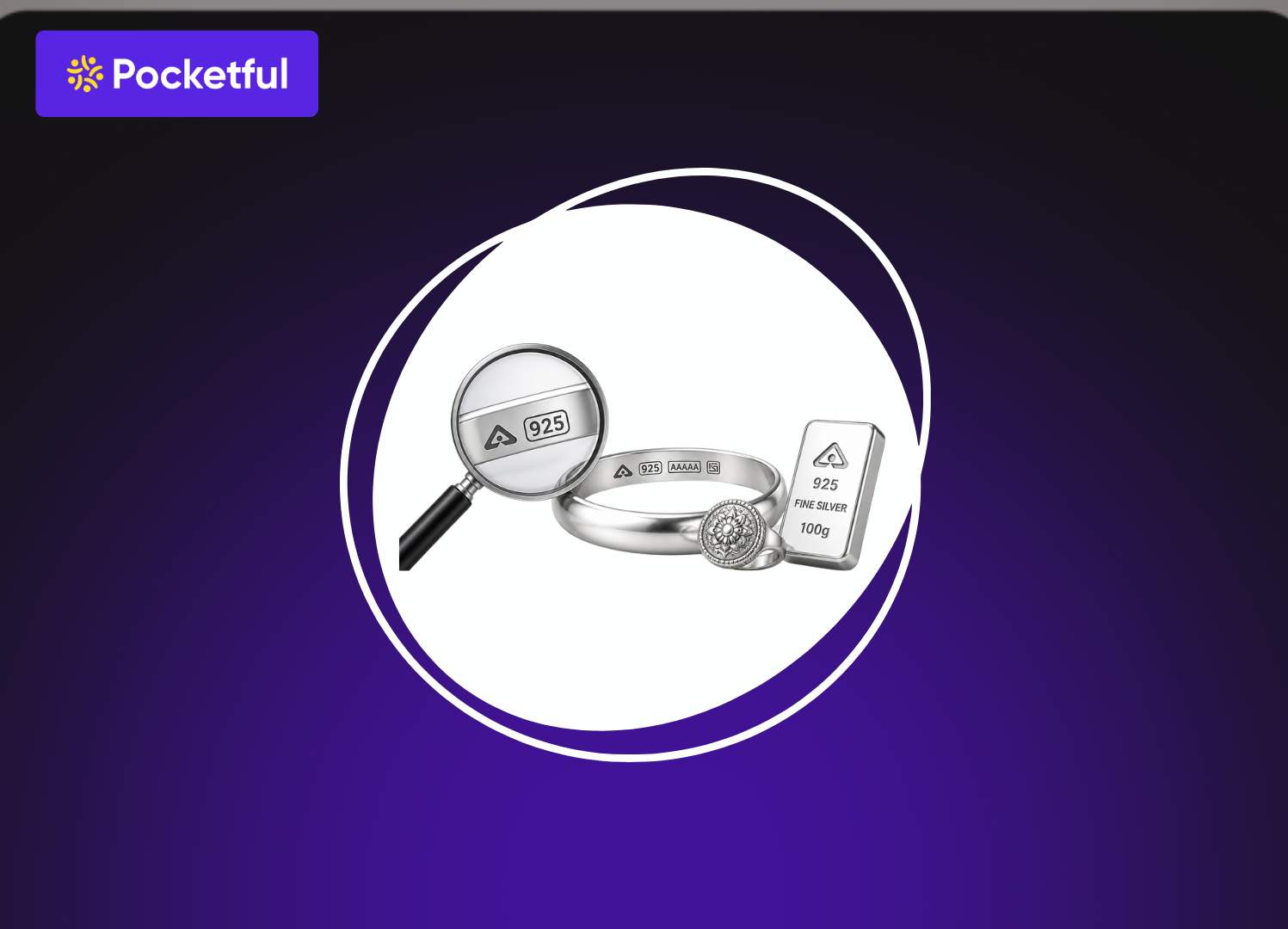
    A standard silver hallmark includes the following details:

    • BIS logo.
    • Purity grade such as 999, 925, or 800.
    • Assaying and hallmarking centre mark.
    • Jeweller’s identification mark.
    • Year of marking code.

    These markings help you verify authenticity. By checking these you can ensure that the buying decision you are making is right and the seller’s claims are true. 

    Silver Purity Levels In India

    Silver is available in different purities. Each grade indicates the percentage of pure silver in the item. Knowing these grades can ensure that the silver you are buying is as per your needs. This will also help you to sync your budget well.

    Purity GradeSilver ContentCommon UseKey Feature
    99999.9%Coins, bars, investmentHighest purity, very soft
    97097%High-end artefacts, specialty items Very pure, slightly more durable than 999 
    95895.8%Premium jewellery (Britannia silver) High purity with better strength 
    92592.5%Jewellery, utensilsDurable and widely used
    90090%Traditional itemsModerate strength and purity
    83583.5%Decorative items, antique silverware More durable, less expensive 
    80080%Utility items, ornamentsStrong but lower investment value

    Each purity level is clearly marked in hallmarking, making it easier for you to identify the quality before buying.

    Read Also: Best Silver ETFs in India

    How To Check Silver Hallmark India Purity

    Checking silver hallmark India purity becomes easier when each step is understood clearly. Instead of rushing through marks, focus on reading and verifying each detail properly to avoid mistakes while buying.

    1. Check BIS Hallmark: Look for the BIS mark. It is issued by the Bureau of Indian Standards on the silver item. This mark confirms that the product has been tested under official standards and meets the required purity levels set for silver articles in India.
    2. Read The Purity Mark: Check the number stamped on the item such as 999 or 925. This number directly shows the percentage of silver present. Higher numbers indicate higher purity, which is usually preferred for investment, while slightly lower purity is used for durable items.
    3. Verify Assay Centre Mark: Find the mark of the assaying and hallmarking centre on the item. If you have this sign, then it ensures that you have the silver which is authentic. Also, it shows that the silver is properly tested.
    4. Identify Jeweller Mark: Look for the jeweller’s identification mark on the product. This helps trace the seller and ensures accountability. If there is any issue later, this mark allows you to identify the source and raise concerns if required.
    5. Match With Invoice: Always check that the purity, weight, and pricing mentioned on the bill match the details on the item. A proper invoice acts as proof of purchase and becomes useful for resale, exchange, or any dispute related to purity.
    Important Note: Home Tests Are Not Reliable For Purity ConfirmationBasic checks like magnet or scratch tests may give a rough indication, but are no signs of confirmation. Avoid relying on such tests as this can impact your buying decisions negatively.

    Silver Price Trend In India

    Silver prices in India have shown sharp movement over the past few months. These fluctuations are influenced by global demand, currency changes, and industrial usage. The below table shows the rates in the past 6 months.

    MonthLow (INR/kg)High (INR/kg)End-of-Month (INR/kg)% Change
    Oct 2025161,000207,000165,000+21.11%
    Nov 2025150,500185,000185,000+3.28%
    Dec 2025187,000191,000240,000+0.53%
    Jan 2026238,000248,000350,000+4.20%
    Feb 2026275,000350,000295,000+3.50%
    Mar 2026230,000315,000250,000-5.08%
    Apr 2026 (to date)250,000260,000255,000-1.96%

    Note: These rates are taken from online data and are just for educational needs.

    This trend shows that silver has seen both strong upward movement and short-term corrections. Tracking this is important for buyers to make an informed call.

    Read Also: Is Silver a Good Investment in 2026?

    Ways To Invest In Silver In India

    There are various ways through which you can invest in silver in India. The most common ones are as follows:

    1. Physical Silver: You can buy silver in the form of coins, bars, or jewellery. This gives you direct ownership. It is suitable for long-term holding, but storage and making charges should be considered.
    2. Silver ETFs: This allows you to invest in silver without holding it physically. These are traded on stock exchanges and track silver prices. They offer liquidity, transparency, and eliminate storage concerns.
    3. Silver Mutual Funds: Silver mutual funds invest in silver ETFs or related assets. This option is useful if you prefer a managed investment route. You can start with small amounts through SIPs and build exposure gradually.
    4. Digital Silver: Digital silver lets you buy silver online in small quantities. The purchased silver is stored securely by the provider. It offers convenience and flexibility, but it is important to choose a trusted platform.
    5. Silver Futures And Commodities: You can trade silver through commodity markets like MCX. This is better suited to experienced investors. It involves price speculation, higher margin requirements, and greater risk than other options.

    How To Invest In Silver Online

    Investing in silver online has become simple and accessible. You do not need to visit a store or handle physical storage. With the right platform, you can track prices, invest anytime, and manage everything digitally.

    1. Open A Demat And Trading Account: Start by opening a Demat and trading account on a platform like Pocketful. This gives you access to market-linked silver investment options such as ETFs and mutual funds.
    2. Complete KYC Verification: Submit your PAN, Aadhaar, and bank details to complete KYC. This is a one-time process and ensures your account is fully activated for secure online transactions.
    3. Choose The Investment Option: Select how you want to invest in silver. You can go for Silver ETFs for direct price tracking or silver mutual funds for managed exposure based on your investment preference.
    4. Add Funds To Your Account: Transfer money to your trading account using net banking or UPI. Once the funds are available, you can start investing immediately without any delay.
    5. Place Your Order: Search for the silver ETF or fund on the platform, enter the quantity, and place your order. The units will be credited to your Demat account after execution.
    6. Track And Manage Investment: Use the Pocketful dashboard to monitor prices, track returns, and manage your holdings. This helps you make informed decisions based on market movement.

    Read Also: How to Invest in Silver in India?

    Conclusion

    By knowing silver hallmark India purity points, you can make better decisions regarding where to invest and how. This also allows you to keep a check on the type of silver you buy and ensure its quality. Start your silver investment journey with Pocketful. Open your demat and trading account and start investing with the right insights today.

    Frequently Asked Questions (FAQs)

    1. How can you check silver hallmark India purity at home?

      You can start by checking the BIS hallmark and purity number on the item. If you’re still confused, you can connect with an authentic jeweller near you to have your physical silver checked.

    2. What does 925 mean in silver hallmarking?

      The number 925 means the silver is 92.5% pure. The remaining portion consists of other metals added to improve strength and durability. This makes it suitable for jewellery and regular use items.

    3. Is BIS hallmark mandatory for silver in India?

      BIS hallmarking for silver is not mandatory across all categories yet. But it is strongly recommended. 

    4. Which is better, physical silver or silver ETFs?

      Physical silver offers direct ownership but involves storage and transaction fees. Silver ETFs offer convenience, liquidity, and no storage concerns. The choice depends on whether you prefer holding or easy trading.

    5. Can you invest in silver online safely?

      Yes, you can invest in silver online through trusted platforms like Pocketful. These platforms make it easy to track and manage transactions. Also, this is a better choice as storage needs are reduced and quality is assured.

Gold Rate in Top Cities of IndiaSilver Rate in Top Cities of India
Gold rate in AhmedabadSilver rate in Ahmedabad
Gold rate in AyodhyaSilver rate in Ayodhya
Gold rate in BangaloreSilver rate in Bangalore
Gold rate in BhubaneswarSilver rate in Bhubaneswar
Gold rate in ChandigarhSilver rate in Chandigarh
Gold rate in ChennaiSilver rate in Chennai
Gold rate in CoimbatoreSilver rate in Coimbatore
Gold rate in DelhiSilver rate in Delhi
Gold rate in HyderabadSilver rate in Hyderabad
Gold rate in JaipurSilver rate in Jaipur

  • How to Buy Silver Coins & Bars in India

    How to Buy Silver Coins & Bars in India

    Silver has always been a big part of Indian homes. We buy it for festivals, we buy it for weddings, and we buy it to keep our savings safe. Today, many beginners want to know the best way to invest in this shiny metal. If you want to buy silver coins in India, or if you prefer to buy silver bars in India, this simple guide is made just for you. We will look at the differences between coins and bars and explain everything in a simple way. 

    Types of Silver You Can Buy in India

    When you decide to put your money into silver, the first step is choosing the type. There are a few common types of physical silver. 

    Silver Coins

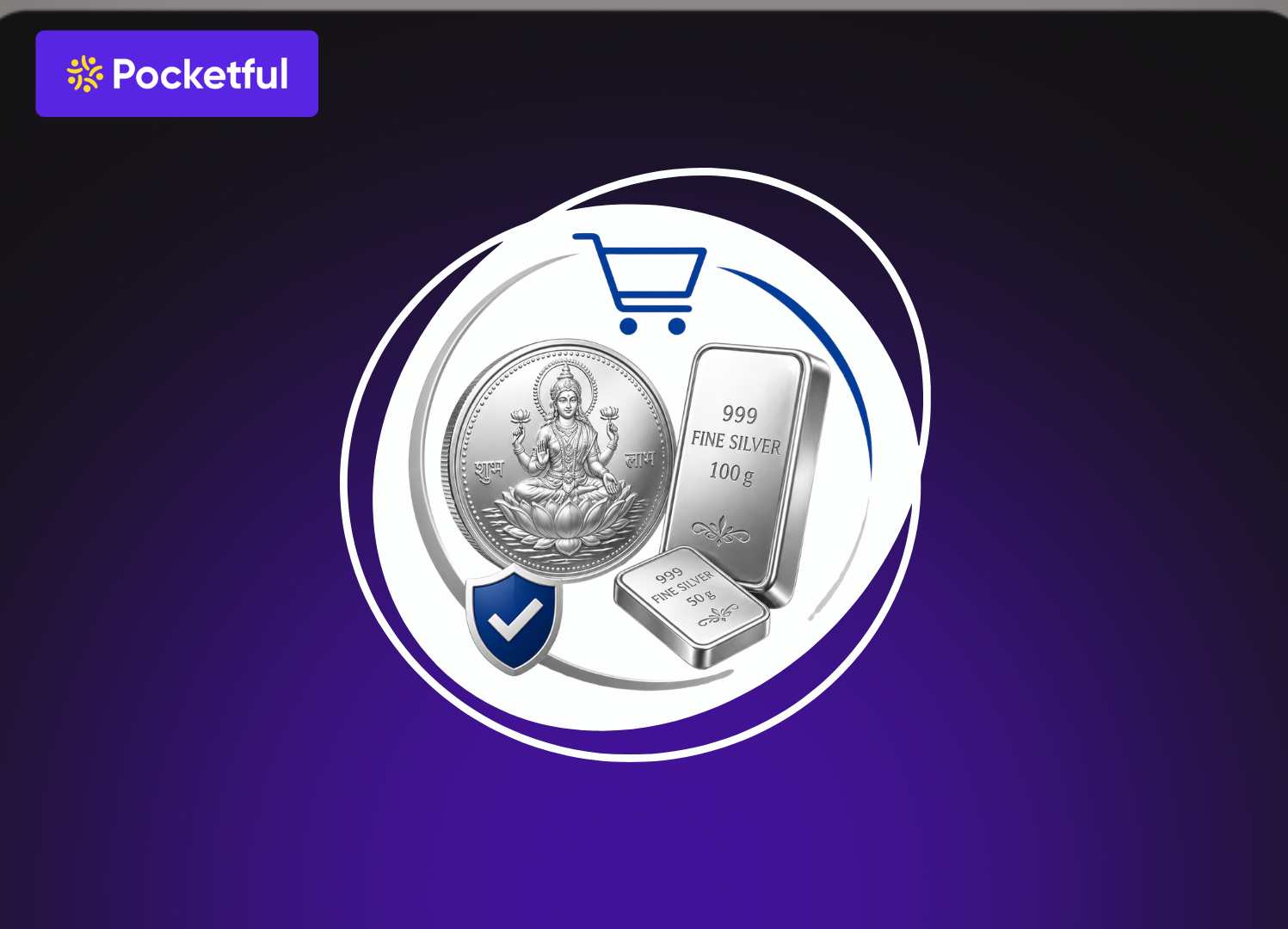
    These are round coins made up of pure silver with an attractive design stamped on them. Generally they are sold with pictures of gods and goddesses. Due to which these coins are very popular during the festive seasons.  

    These coins start from 10 grams and reach up till 50 grams. Due to their small proportion they are perfect fit for your budget. 

    Silver Bars

    Bars are ideal for bulk investment because they help you save money on extra shop fees. The common sizes for bars range from 100 grams to 500 grams, and even up to 1 kilogram. When you buy a larger bar, the shop’s making charge is spread over a larger amount of metal. 

    FeatureSilver CoinsSilver Bars
    Common Sizes 10gm, 20gm, 50gm100gm, 500gm, 1kg 
    Best used for Gifting, small investmentsBulk buying, wealth building
    Making ChargesSlightly higher per gramLower per gram
    Storage Very easy can be kept at homeRequires secure vault or locker

    Silver Jewelry vs Investment Silver

    You might think buying a silver chain or ring counts as an investment. But no jewelry comes with added costs like making charges and GST. Making charges can be around 15% to 20% of the total cost. If you plan to sell that jewelry later than the buyer will be paying only for the weight of silver and not for the making charges. 

    Read Also: Silver Trading on MCX: Lot Size, Margin, Price Limits & Strategies Explained

    Understanding Purity and Hallmarking

    You should always buy pure silver, but how can you be sure if the silver is pure or not? Let’s look at the purity aspect. 

    What is 999, 925, etc. Purity

    Purity defines how much silver is there in the item. The purest silver is known as 999 silver, meaning it has 99.9% silver. Eg: Coins and bars. 

    You might also see the number 925, this is known as sterling silver. This means that the item has 92.5% silver in  it. This is used by jewelers as pure silver is soft and can bend easily. 

    BIS Hallmark for Silver in India

    This tiny stamp is issued by the government and is triangular in shape meaning the silver is pure and is a 999 silver. Along with this there is a unique code called HUID which tells that the silver is tested and approved by government approved labs. 

    How to Check Authenticity

    Checking if your silver is real is very easy now.

    • First, you can download the BIS Care app on your smartphone.
    • Open the app and tap on the “Verify HUID” option.
    • Type in the unique code stamped on your silver item.
    • The app instantly shows you the purity and name of the seller.

    Where to Buy Silver in India

    Local Jewelers

    Going to a local jewelry shop is the old and trusted way to buy silver. You can physically see and check the hallmark right in front of the shopkeeper. Although you might be charged a little higher due to sellers expenses or making charges. 

    Online Platforms

    Today, many trusted brands sell silver online. You can buy from websites like Amazon or directly from brand websites. Online stores usually have lower prices because they do not have big showrooms. You can also easily compare prices from different websites with just a few clicks. But always be aware about fake sellers or plated items. 

    Banks & Authorized Dealers

    Banks also sell silver buying from a bank gives you total peace of mind. You know for sure the silver is 100% genuine and certified. However, banks usually charge a very high extra fee for this trust and you cannot sell the silver back to the bank.

    Read Also: Is Silver a Good Investment in 2026?

    Step-by-Step Guide to Buying Silver

    For buying silver you can use the following steps as this will make it easier for you. 

    • Decide Budget: You should decide your budget and look how much you can spend. Don’t use money needed for personal expenses. 
    • Choose coins or bars: For small investors you can invest in coins and if you are planning to invest more and save on the making charges you can prefer silver bars of 100gm to 250 gms.
    • Check purity (999 recommended): Always buy 999 pure silver for your investments and 925 sterling silver can be used for gifting or festive purposes.
    • Compare prices across sellers: Always compare the prices at different shops or online platforms as this could help in saving you some money.
    • Verify seller credibility: Only buy from trusted and famous stores or websites. Check customer reviews and make sure they have a good buy back policy. 
    • Make the purchase: Once the price suits you you can proceed with your investment. If you are paying a large amount in cash, remember that you might need to show your PAN card.
    • Collect invoice and certification: Always take a proper GST bill and check for weight, purity and HUID code for the silver. As all this is very necessary when you will sell your silver. 

    Tips for Beginners

    Investing in metals can feel hard for the beginners. Here are some friendly tips to help you start easily.

    • Start small: Buy a small 10 gram coin just to see how it works. Once you feel comfortable, you can start buying more over time.
    • Track market trends: Silver prices change every single day. By watching the prices for a few weeks, you will learn when the price is low and when it is high.
    • Avoid emotional buying: Try to buy your silver on normal days when the demand is decent because during festivals, demand is very high and shopkeepers increase their making charges. 
    • Think long-term: Silver prices can jump up and down in the short term. Do not panic if the price drops a little bit after you buy. Treat your silver as a long term savings plan for the next five to ten years. 

    How to Check Silver Prices

    Many beginners get confused when they see a low silver price on TV and then see a much higher price at the jewelry shop. Let us explain how this works in simple words.

    • How silver prices are determined: The base price of silver is decided by the global market. This is called the international spot price. Because global prices are in US Dollars, the value of the Indian Rupee changes the price here. If the Rupee becomes weak against the Dollar, silver becomes more expensive in India. 
    • Difference between spot price and retail price: The spot price you see on the news is only for big wholesale trades between giant banks. You cannot buy silver at the spot price. When you buy a coin or a bar, you pay the retail price. The retail price includes the cost of melting the silver, shaping it into a coin, printing the design, and shipping it to the store. 
    • Making charges and premiums explained: When you look at your final bill, it is made of three main parts. First is the cost of the raw silver metal itself. Second is the making charge and finally, the government adds a 3% GST on the total amount. 

    Read Also: Why Are Silver Prices Rising in India?

    Conclusion

    Buying silver is a wonderful way to start saving money for your future. It is a real asset that you can hold in your own hands. Whether you choose a shiny coin for your child or a heavy bar for your savings, you are taking a smart step toward financial safety. Just remember to check the purity, ask for the GST bill, and keep your purchase in a safe place.

    For more market news and insights, download Pocketful – offering users zero brokerage on delivery trades and an easy to use platform designed for both beginners and experienced investors.

    Frequently Asked Questions (FAQs)

    1. Is it safe to buy silver coins online in India? 

      Yes, it is very safe if you buy from trusted and famous brands. Always make sure the website provides a BIS hallmarked product and a proper certificate of authenticity.

    2. Should I buy a silver coin or a silver bar for investment? 

      If you have a small budget or want to give a gift, silver coins are great. If you have more money and want to buy in bulk, silver bars are much better. 

    3. What does 999 purity mean on silver? 

      999 purity means the coin or bar is 99.9% pure silver. This is the highest level of purity available for normal buyers. 

    4. How can I verify the BIS hallmark on my silver? 

      You can easily verify it using your smartphone. Just download the official BIS Care app, tap on the “Verify HUID” button, and type in the unique code printed on your silver item. 

    5. Why is the shop price higher than the silver price shown on the news? 

      The price on the news is the international wholesale spot price. The price at the shop is the retail price. The retail price includes import taxes, making charges for shaping the silver, and a 3% GST.

    Gold Rate in Top Cities of IndiaSilver Rate in Top Cities of India
    Gold rate in AhmedabadSilver rate in Ahmedabad
    Gold rate in AyodhyaSilver rate in Ayodhya
    Gold rate in BangaloreSilver rate in Bangalore
    Gold rate in BhubaneswarSilver rate in Bhubaneswar
    Gold rate in ChandigarhSilver rate in Chandigarh
    Gold rate in ChennaiSilver rate in Chennai
    Gold rate in CoimbatoreSilver rate in Coimbatore
    Gold rate in DelhiSilver rate in Delhi
    Gold rate in HyderabadSilver rate in Hyderabad
    Gold rate in JaipurSilver rate in Jaipur
    Gold rate in KeralaSilver rate in Kerala
    Gold rate in KolkataSilver rate in Kolkata
    Gold rate in LucknowSilver rate in Lucknow
    Gold rate in MaduraiSilver rate in Madurai
    Gold rate in MangaloreSilver rate in Mangalore
    Gold rate in MumbaiSilver rate in Mumbai
    Gold rate in MysoreSilver rate in Mysore
    Gold rate in NagpurSilver rate in Nagpur
    Gold rate in NashikSilver rate in Nashik
    Gold rate in PatnaSilver rate in Patna
    Gold rate in PuneSilver rate in Pune
  • How Much Gold & Silver Should You Hold in Your Portfolio?

    How Much Gold & Silver Should You Hold in Your Portfolio?

    In today’s market, ups and downs are very common. Sometimes stocks do well, and sometimes they fall sharply. Also, inflation and global events can impact your investments, and because of this, many investors look for ways to protect their portfolio from sudden losses.

    This is where gold and silver can help. They are often seen as safe options, especially when markets are uncertain. When other investments struggle, these metals can bring some balance and stability to your portfolio.

    But the important question is not just whether you should invest in gold and silver, it is about how much you should invest.

    In this blog, we will understand how gold and silver fit into your portfolio, how they can help during market downturns, and what the ideal allocation could be based on your investment goals.

    Importance of Gold & Silver in a Portfolio

    • Adds a layer of protection during market ups and downs: When stock markets fall, gold often stays stable or even goes up. This helps reduce overall losses and gives your portfolio some balance.
    • Adds diversification: These metals do not always move in the same direction as stocks. So, adding them to your portfolio helps spread risk, diversifies your portfolio, and makes returns more stable.
    • Protects against inflation: As the prices of goods and services rise, the value of money falls. Gold and silver usually do well in such times, helping protect your purchasing power.

    Gold vs Silver – Differences to Keep in Mind 

    S. NoFactorGoldSilver
    1Purpose in PortfolioMainly for stability and wealth protectionMix of safety and growth potential
    2VolatilityMore stable, fewer sharp price swingsMore volatile, prices can move quickly
    3What Drives DemandInvestment demand, central banksInvestment as well as strong industrial demand (electronics, solar, etc.)
    4Performance in EconomyPerforms well during uncertainty and crisesPerforms well during economic growth due to industrial usage
    5Role in PortfolioUsually, a higher allocation due to stabilityLower allocation due to higher risk and volatility

    Ideal Allocation of Gold & Silver in a Portfolio

    1. Start with a simple rule: A good starting point is to keep around 5% to 15% of your total portfolio in gold and silver. This gives you some safety without affecting your overall growth too much.
    2. If you are a Conservative investor: You can keep around 5-10% in these metals. It helps protect your portfolio when markets fall.
    3. If you are a moderate investor: A10-15% allocation works well. It gives you both stability and decent growth from your other investments.
    4. If you are an aggressive investor: Even then, it’s better not to go beyond 15-20%. Putting too much in gold and silver can reduce your long-term returns.
    5. Adjust based on market conditions: You can increase your allocation a little when markets are uncertain or inflation is high. When markets are doing well, you can reduce it.
    6. Do not forget to rebalance: Over time, prices change, and your allocation can go off track. Checking once a year and adjusting it back helps keep your portfolio balanced.

    Read Also: Is Silver a Good Investment in 2026?

    In a Nutshell;

    Investor Type Gold Allocation Silver Allocation Total Allocation
    Conservative 3%-7%2%-3%5%-10%
    Moderate7%-10%3%-5%10%-15%
    Aggressive10%-15%5%-5%15%-20%

    Factors Affecting an Investor’s Allocation

    1. Your investment goals: It depends on what you want from your investments. If your focus is on protecting your money, you may keep a higher allocation in gold and silver. If you are aiming for growth, you may keep it lower.
    2. Your risk level: If you do not like too much risk, gold and silver can make your portfolio more stable. But if you have no problem with market ups and downs, you do not need a large allocation.
    3. Your investment period: If you are investing for the long term, most of your money may go into equities, so gold and silver can be a smaller part. For shorter time periods, a slightly higher allocation can help reduce risk.
    4. Market situation: When markets are uncertain or inflation is high, many investors increase their allocation to gold and silver. When markets are doing well, they may reduce it.
    5. Inflation and interest rates: The yellow metal usually does well when inflation is high. But when interest rates rise, it may not perform as strongly. These factors can affect how much you should invest.

    Best Ways to Invest in Gold & Silver

    1. Physical Gold & Silver

    This is the most common way people invest. You can buy gold or silver in physical form (Coins, Bars, Jewellery) and keep it with you. It feels safe to own, but you have to think about storage, safety, and extra charges. 

    2. Gold ETFs/Gold Funds

    Gold ETFs let you invest in gold without actually holding it. You can buy and sell them on the stock exchange, just like shares. It’s simple and hassle-free.

    Also, you can invest in gold mutual funds, which, unlike ETFs, are not traded on exchanges but invest in gold ETFs and gold-related assets. You can even invest through SIPs, which makes it easier to stay consistent.

    3. Silver ETFs / Silver Funds

    These work the same way as gold ETFs and gold funds. 

    4. Sovereign Gold Bonds (SGBs)

    These were earlier issued by the Reserve Bank of India. You not only benefit from gold price movement but also earn a fixed interest every year. They are a good option for long-term investors.

    Note: The new issues of SGBs were discontinued in the 2025 Union Budget. However, you can still buy them from the secondary market. 

    5. Digital Gold

    You can buy gold online in small amounts through apps and platforms. It is convenient and flexible, but it is important to choose a trusted platform.

    Understanding Drawdowns, Rising Metals & What it means for your Portfolio 

    A drawdown is simply the fall in your portfolio value from its peak. For example, if your portfolio drops from Rs. 10 lakh to Rs. 8 Lakh, that 20% fall is your drawdown.

    Why Does it Matter?

    Big losses can significantly affect your long-term returns. The deeper the fall, the harder it becomes to recover, and this is why managing drawdowns is very important. 

    Read Also: Difference Between Gold ETF and Silver ETF

    How do Gold & Silver Help during these Drawdowns?

    • Balance losses from equities: Suppose your equity investments are down during a market crash. If gold and silver prices are rising at the same time, they can offset part of those losses and cushion the impact. 
    • Reduces overall portfolio volatility: Since gold and silver do not always move in the same direction as stocks, they help your portfolio bounce back faster when markets improve. 
    • Helps you stay invested: Smaller drawdowns mean less panic. When your portfolio does not fall too much, it becomes easier to stay invested and avoid emotional decisions like selling at the wrong time.

    To sum it up, a portfolio with some allocation to gold and silver usually falls less compared to a portfolio that is entirely invested in equities during market downturns. 

    Conclusion 

    Gold and silver play a small but important role in a well-balanced portfolio. They may not deliver high growth like equities, but they help protect your investments during uncertain times. The key is to maintain the right allocation. Instead of over-investing, focus on using them for stability and diversification. Gold and silver are not meant to make you rich quickly, but they help you stay invested and protect your wealth when markets get unpredictable. Invest in Gold & Silver with Pocketful – enjoy zero brokerage on delivery, advanced trading tools & charts, and a seamless, easy-to-use platform.

    Frequently Asked Questions (FAQs)

    1. How much gold and silver should I have in my portfolio?

      Around 5-15% of your total portfolio is generally considered a good allocation. 

    2. Is gold better than silver for investment 

      Gold is more stable, while silver is slightly volatile but offers higher growth. 

    3. Do gold and silver always go up when markets fall?

      Not always, but they often perform better during uncertain times.

    4. Should I rebalance my gold and silver investments?

      Yes, reviewing and rebalancing once a year is a good practice. 

    5. Can I invest in gold through SIP?

      Yes, you can invest in a gold mutual fund or ETFs through SIPs 

    Gold Rate in Top Cities of IndiaSilver Rate in Top Cities of India
    Gold rate in AhmedabadSilver rate in Ahmedabad
    Gold rate in AyodhyaSilver rate in Ayodhya
    Gold rate in BangaloreSilver rate in Bangalore
    Gold rate in BhubaneswarSilver rate in Bhubaneswar
    Gold rate in ChandigarhSilver rate in Chandigarh
    Gold rate in ChennaiSilver rate in Chennai
    Gold rate in CoimbatoreSilver rate in Coimbatore
    Gold rate in DelhiSilver rate in Delhi
    Gold rate in HyderabadSilver rate in Hyderabad
    Gold rate in JaipurSilver rate in Jaipur

  • Silver Price Last 10 Years in India

    Silver Price Last 10 Years in India

    Over the past 10 years, India has witnessed dramatic fluctuations in silver prices soaring from approximately ₹36,000/kg in 2016 to roughly ₹2.5 – 3 lakh/kg in 2026. Notably, there has been a sharp surge since 2020, which has successfully captured the attention of investors. In this blog, we will analyze silver prices in India over the last 10 years, examine the 10-year chart and 20-year trends, identify the factors influencing prices, and explore the future outlook. Additionally, you will learn how to invest in silver effectively.

    Silver Price Last 10 Years in India

    Year-wise Silver Price (₹ per kg)

    YearSilver Price (Rs. /kg)
    201636,990
    201737,825
    201841,400
    201940,600
    202063,435
    202162,572
    202255,100
    202378,600
    202495,700
    20252,62,000
    20262,50,000 – 3,30,000

    Note : These prices are averages and may vary slightly depending on the city, taxes (GST), and market demand. A sharp surge and volatility have been observed in silver during 2025–2026.

    Silver Price Chart (10 Years) – Trend Analysis

    Over the past 10 years, silver has moved through distinct phases, periods where prices remained stable, and others where they experienced sudden surges. Each of these phases is explained simply below.

    • 2016-2019 (Sideways Market) : During this period, silver remained confined within the range of ₹36,000 to ₹41,000 per kg. As there was no major breakout for 3-4 years, this is considered a “flat phase.”
    • 2020-2021 (Covid Rally) : In 2020, prices surged rapidly, reaching ₹63,000 per kg. Demand increased during the Covid period, and silver demonstrated a strong upward move for the first time.
    • 2022 (Correction Phase) : In 2022, prices declined to approximately ₹55,000 per kg. This decline was attributed to normal profit-booking following the preceding rally.
    • 2023-2024 (Recovery & Demand Growth) : Silver reached ₹78,000 per kg in 2023 and approximately ₹95,000 per kg in 2024. During this period, it received steady support from industrial demand, particularly from the solar sector.
    • 2025 (Sharp Breakout) : In 2025, prices suddenly skyrocketed to between ₹2.5 and ₹2.6 lakh per kg. This sharp rally was driven by surging demand coupled with limited supply.
    • 2026 (High & Volatile Phase) : At the beginning of 2026, silver touched ₹4,00,000 per kg its highest level to date. Subsequently, prices have been fluctuating within the range of ₹2.3 to ₹3 lakh per kg, clearly indicating a phase of high volatility.

    Read Also: Silver Rate Prediction for the Next 5 Years in India

    What Drives Silver Prices in India?

    Silver prices in India depend on several factors, among which global trends, demand, and currency movements are the most significant. The combined impact of all these factors is reflected in the price.

    • Industrial Demand : In India, the primary demand for silver now stems more from industries particularly the solar panel and EV sectors than from jewelry. As these sectors continue to grow, they exert upward pressure on silver prices.
    • Global Market Movements : Silver pricing in India is not determined locally; rather, it tracks global market trends. A rally in the international market has a direct and immediate impact on domestic Indian rates.
    • Rupee vs. Dollar Impact : Since silver is imported into India, a depreciation of the Rupee tends to drive up prices. When the INR weakens, a larger amount of money is required to purchase the same quantity of silver.
    • Supply-Demand Imbalance : Over the past few years, demand has surged rapidly, while supply has failed to keep pace. This imbalance serves as a major catalyst, driving prices sharply upward.
    • The Impact of Inflation : When inflation rises, investors gravitate toward assets capable of preserving their value. Silver is one such asset, and the resulting influx of interest boosts its overall demand.
    • Investment Demand : Investment in silver is no longer limited to physical holdings; it has expanded significantly through instruments such as ETFs and mutual funds. This generates additional buying pressure in the market, thereby providing support to prices.

    How to Invest in Silver in India ?

    There are various ways to invest in silver in India, each suited to different needs and risk profiles. Choosing the right option depends on your investment goals and experience.

    1. Silver Investment Options

    Investment MethodHow It WorksWho is it right for?
    Physical SilverBuying coins, bars, or jewelryLong-term holders
    Silver ETFBuying ETFs on the stock marketTraders & investors
    Silver Mutual Fund (FoF)Indirect Investment in ETFsBeginners / SIP
    Digital SilverOnline Shopping via AppsSmall Investment
    Silver FuturesTrading in Commodity market (MCX)Experienced traders

    2. Physical Silver (Coins / Bars)

    If you wish to hold silver directly, you can purchase coins or bars. While this method is simple, it requires you to account for storage and making charges; therefore, bars are generally considered the superior option for investment purposes.

    3. Silver ETF (Exchange Traded Fund)

    A Silver ETF is traded on a stock exchange, and its price is directly linked to the price of silver. You can easily buy and sell these units through a Demat account, and this method eliminates any concerns regarding storage.

    Popular options:

    • Nippon India Silver ETF
    • ICICI Prudential Silver ETF
    • HDFC Silver ETF

    4. Silver Mutual Fund (FoF)

    These funds do not purchase physical silver directly; instead, they invest in Silver ETFs. If you prefer to invest gradually through a Systematic Investment Plan (SIP), this method is both simple and beginner-friendly.

    5. Digital Silver

    Nowadays, numerous apps allow you to purchase silver with amounts as low as ₹100-₹500. While this is a suitable option for small-scale investments, Silver ETFs are generally considered a more reliable choice for long-term investment horizons.

    6. Silver Futures (MCX Trading)

    If you are involved in trading, you can invest in silver futures on the MCX exchange. This avenue offers leverage; however, it also carries significantly higher risk, making it unsuitable for beginners.

    Read Also: Is Silver a Good Investment in 2026?

    How to Invest in Silver ETF using Pocketful

    Investing in Silver ETFs through Pocketful is quite easy, and the entire process is completed online. If you follow the correct steps, you can start investing in just a few minutes.

    • Account Login / Sign Up : If you already have an account on Pocketful, simply log in. If not, create a new account by entering your email ID and mobile number, and fill in your basic details.
    • Complete KYC : Once your account is created, completing your KYC is mandatory. To do this, you must submit your PAN card, Aadhaar, and bank details; this process activates your Demat account.
    • Add Funds : After logging in, navigate to the “Add Funds” option to deposit money from your bank account. It is essential to have a balance in your wallet before you begin investing.
    • Search for Silver ETFs : Type “Silver ETF” into the app’s search bar. Here, you will find multiple options such as Nippon, ICICI, or HDFC Silver ETFs – which you can compare.
    • Select & Analyze : Select a specific ETF to review its price, past performance, and liquidity. Once done, decide on your investment amount.
    • Place Buy Order : Now, click on “Buy,” enter the desired quantity, and confirm your order. The ETF will be added to your Demat account, just like shares.

    Silver Price Forecast (2026-2030 Outlook)

    The overall trend for silver appears positive in the coming years, although intermittent fluctuations may persist. Demand remains strong, and consequently, market confidence regarding the long-term outlook remains intact.

    • 2026-2027: A Strong Yet Volatile Phase : In 2026, silver touched significant levels of ₹3–4 lakh per kg; according to experts, prices are projected to range between ₹3.2–4.6 lakh per kg by the end of the year. However, following such a rapid surge, the market may also experience volatility and corrections in the short term.
    • 2027–2028: Growth Driven by Demand : Demand for silver is consistently rising, particularly within the solar and EV sectors. EV-related demand alone grew by approximately 20% in 2025, and this trend is expected to persist moving forward. Consequently, the market is likely to maintain a trend of steady price growth.
    • 2028–2030 A Long-Term Bullish Outlook : In the long term, the silver market has been operating in a persistent deficit meaning demand currently outstrips supply. If this trend continues, silver prices could either sustain their high levels or climb even higher by 2030.
    • Key Growth Drivers (2026-2030) : Industrial demand has emerged as silver’s greatest strength; specifically, demand from the solar sector is expected to nearly double by 2030. Additionally, the electronics industry, AI infrastructure, and data centers are also contributing to and supporting this demand.
    • Risk Factors : If prices rise excessively, industries may opt to reduce their usage of silver or begin adopting alternative materials (such as copper). Furthermore, factors such as interest rates and a global economic slowdown could exert downward pressure on prices in the short term.

    Conclusion

    Over the past few years, silver has proven itself to be not merely a precious metal, but also a robust investment option. While it offers promising opportunities, it is equally subject to volatility; therefore, it is advisable to invest prudently and with a long-term perspective.

    Frequently Asked Questions (FAQs)

    1. What is the silver price trend in India over the last 10 years?

      Over the last 10 years, silver has shown a gradual upward trend, but the surge has been more pronounced since 2020.

    2. Why are silver prices rising in India?

      The primary reasons for this are industrial demand, global prices, and the depreciation of the Rupee.

    3. Is silver a good investment option?

      Yes, it is suitable for the long term, though it is subject to price fluctuations.

    4. How can I invest in silver?

      You can invest through ETFs, mutual funds, or physical silver.

    5. Which is better: silver ETF or physical silver?

      ETFs are convenient and secure, which is why most people prefer them.

    Gold Rate in Top Cities of IndiaSilver Rate in Top Cities of India
    Gold rate in AhmedabadSilver rate in Ahmedabad
    Gold rate in AyodhyaSilver rate in Ayodhya
    Gold rate in BangaloreSilver rate in Bangalore
    Gold rate in BhubaneswarSilver rate in Bhubaneswar
    Gold rate in ChandigarhSilver rate in Chandigarh
    Gold rate in ChennaiSilver rate in Chennai
    Gold rate in CoimbatoreSilver rate in Coimbatore
    Gold rate in DelhiSilver rate in Delhi
    Gold rate in HyderabadSilver rate in Hyderabad
    Gold rate in JaipurSilver rate in Jaipur
    Gold rate in KeralaSilver rate in Kerala
    Gold rate in KolkataSilver rate in Kolkata
    Gold rate in LucknowSilver rate in Lucknow
    Gold rate in MaduraiSilver rate in Madurai
    Gold rate in MangaloreSilver rate in Mangalore
    Gold rate in MumbaiSilver rate in Mumbai
    Gold rate in MysoreSilver rate in Mysore
    Gold rate in NagpurSilver rate in Nagpur
    Gold rate in NashikSilver rate in Nashik
    Gold rate in PatnaSilver rate in Patna
    Gold rate in PuneSilver rate in Pune
    Gold rate in RajkotSilver rate in Rajkot
    Gold rate in SalemSilver rate in Salem
    Gold rate in SuratSilver rate in Surat
    Gold rate in TrichySilver rate in Trichy
    Gold rate in VadodaraSilver rate in Vadodara
    Gold rate in VijayawadaSilver rate in Vijayawada
    Gold rate in VisakhapatnamSilver rate in Visakhapatnam
  • Gold to Silver Ratio in India: Meaning, Formula & Investment Strategy (2026)

    Gold to Silver Ratio in India: Meaning, Formula & Investment Strategy (2026)

    While it comes to investing in precious metals, gold and silver are the two most common investment tools available for investors. But they often get confused about which would be the right choice to invest in; this confusion arises because they are not aware of the gold-to-silver ratio. 

    In today’s blog post, we will give you an overview of the gold-to-silver ratio in India and its importance, along with the factors affecting it.

    What is the Gold Silver Ratio?

    The gold-silver ratio is a number that indicates how the market prices one metal against the other. It measures the relative cost of two precious metals, gold and silver. It reflects how many ounces of silver is required to buy a single ounce of Gold. This ratio is generally used to check whether the gold is overpriced relative to silve

    How is the Gold Silver Ratio calculated?

    The gold-silver ratio is calculated in the following manner:

    The formula to calculate the Gold Silver Ratio is 

    Gold – Silver Ratio = Price of Gold / Price of Silver

    The calculation is mentioned below:

    1. Consider the current price of gold for 10 grams.
    2. Take the current price of silver for 10 grams.
    3. Divide the gold price by the silver price.

    However, one should use the same unit for both gold and silver. 

    Historical Data of Gold and Silver Ratio

    The historical data of the Gold and Silver ratio is as follows:

    YearGold Silver RatioKey Reasons
    198015:1The government has regulated the prices of gold, hence it was not very expensive.
    1991100:1Due to weak demand for silver, the gold prices were high.
    201135:1The prices of silver increase because of strong industrial demand.
    2020125:1During he Covid period, the panic buying of Gold has increased, which has pushed the prices of gold very high.
    202670:1The prices of silver are again increasing due to its strong industrial usage.

    What is the Current Gold and Silver Ratio

    Based on the recent data, the current gold and silver ratio is around 60-70.

    As Gold prices are hovering around 15,500 INR per gram, whereas silver prices are near 260 INR per gram. And if we divide the gold price by the silver price.

    15500/260 = 60

    Hence, we can say that the current gold and silver ratio is 60:1, and this level is considered a broader market range. It also indicates that the gold is neither cheap nor expensive because silver has caught up with gold in momentum. 

    The current level is considered fairly valued, and if the gold and silver ratio falls below 50, gold may be cheap, and if it is above 80, it can be considered that silver may be cheap. 

    Read Also: Is Silver a Good Investment in 2026?

    Importance of the Gold and Silver Ratio

    The key importance of the Gold and Silver ratio is as follows:

    1. Asset Allocation: The ratio helps an investor in deciding the ideal allocation between gold and silver. If the ratio is high, they will increase their allocation in silver, whereas if the ratio is low, they will increase their allocation in gold.
    2. Market Indicator: The gold and silver ratio also helps in identifying the market trend. If the ratio is high, it will indicate economic uncertainties and stress, etc., and vice versa.
    3. Risk Management: Depending only on gold can limit the overall portfolio return. Hence, one can add based on the gold and silver ratio. 

    Factors affecting the Gold and Silver Ratio

    The key factors that affect the gold and silver ratio are as follows:

    1. Demand and Supply: This is one of the key factors that decides the price of gold and silver. Increased demand from the industries will directly affect the silver prices positively.
    2. Safe Haven: Gold is always considered a haven by investors. They are considered the most preferred avenue during economic uncertainties, inflation, and geopolitical tensions.
    3. Currency Movement: The prices of gold and silver are measured in USD globally. Therefore, if the INR weaken against the USD, it will push the prices higher, leading to a high gold and silver ratio. 

    Read Also: How to Invest in Silver in India?

    Conclusion

    In conclusion, the gold-to-silver ratio is a useful tool for an investor to understand where the better opportunity lies between gold and silver. It establishes the relation between the two precious metals, gold and silver. Indian investors prefer gold as a default investment choice, but this ratio helps them identify opportunities beyond gold. However, investment based only on the gold and silver ratio does not guarantee profit; it is also advisable to look for other factors such as demand, global economic conditions, etc. And it is also advisable to consult your investment advisor before making any investment. 

    Frequently Asked Questions (FAQs)

    1. What is the meaning of the Gold-to-Silver ratio?

      The gold-to-silver ratio is the number of units of silver required to purchase a unit of gold, comparing the relative value of both metals.

    2. What does a high gold-to-silver ratio indicate?

      A high gold-to-silver ratio indicates that the gold is becoming expensive when compared to silver. This means investors are required to have more units of silver to purchase gold.

    3. How to calculate the gold-to-silver ratio?

      The formula to calculate the gold-to-silver ratio is as follows:Gold-to-silver ratio = Price of Gold/Price of Silver

    4. Is the gold-to-silver ratio the same across all countries?

      Yes, generally, the gold-to-silver ratio is the same across all countries because prices of gold and silver are calculated in the international market.

    5. When should one check the gold-to-silver ratio?

      One should check the gold-to-silver ratio regularly. The frequency can be monthly or quarterly for long-term investors.

    Gold Rate in Top Cities of IndiaSilver Rate in Top Cities of India
    Gold rate in AhmedabadSilver rate in Ahmedabad
    Gold rate in AyodhyaSilver rate in Ayodhya
    Gold rate in BangaloreSilver rate in Bangalore
    Gold rate in BhubaneswarSilver rate in Bhubaneswar
    Gold rate in ChandigarhSilver rate in Chandigarh
    Gold rate in ChennaiSilver rate in Chennai
    Gold rate in CoimbatoreSilver rate in Coimbatore
    Gold rate in DelhiSilver rate in Delhi
    Gold rate in HyderabadSilver rate in Hyderabad
    Gold rate in JaipurSilver rate in Jaipur

  • Is Silver a Good Investment in 2026?

    Is Silver a Good Investment in 2026?

    You might have been following the news these days and witnessing high fluctuations in the commodity markets. Silver has recently crossed the Rs.3,30,000 per kg mark in India, this is a major price fluctuation. This sudden rise has made every investor interested in silver and everybody is thinking is this the right time to invest.

    While gold is our traditional favorite, silver is making much louder moves today. If you are wondering, is silver a good investment in 2026, you are definitely not alone. Many investors and young earners are looking at these fast price changes.

    With all these high prices, is buying silver a good investment for your future? In this blog, we will break down the pros and risks of investing in silver. 

    What Makes Silver an Attractive Investment?

    In today’s market silver is not just a shiny metal for making jewelry. Silver has a very special place in the global market.

    Dual Demand: Precious Metal and Industrial Use

    Silver gives you a double benefit as it is demanded by both the precious metal stores and also it is used in the industries.On one side, regular people buy it to keep their money safe. On the other side, big factories desperately require it as a raw material to make things.

    It is heavily used in mobile phones, computers, and medical tools. This double demand keeps the prices strong. Even if people stop buying silver coins, factories will still need it regularly. 

    Affordable Alternative to Gold

    Gold is one of the most expensive precious metals in the market. A small 10 gram gold coin can cost around Rs.1,55,000 today. Silver on the other hand offers a much cheaper way to invest and grow your capital. 

    Investment in silver can be started with a very small capital. This can be a great way for the beginners and investors to add silver to their portfolio. And with the rising demand and prices, everyone gets a fair chance to grow their wealth.

    Hedge Against Inflation and Currency Weakness

    Inflation acts like a secret tax which can take away a part of your profit without even making you really aware about it. Opting silver for your investments can create a strong shield against these rising daily costs.

    Also, silver protects you when the Indian Rupee loses its value. If the Rupee becomes weak against the Dollar, domestic silver prices automatically go up. This keeps your savings safe.

    Growing Demand from Green Technologies

    The whole world is trying to use clean energy to save the planet. Solar panels and electric cars need a huge amount of silver to work. Silver is the best metal for carrying electricity.

    India wants to build a massive amount of solar power by 2030. Every new solar panel pushes the demand for silver higher. This creates a very bright future for silver prices.

    Read Also: Why Are Silver Prices Rising in India?

    Silver has been on a crazy ride over the last few years. If we look at the past data, the price growth is truly shocking. Let us see what exactly happened.

    Price Changes in the Last 5 Years

    Back in 2021, silver was trading around Rs.62,572 per kg. Prices stayed quite flat for a while. They even dropped a little in 2022.

    But then the market changed completely. By 2025, it gave over 160% returns and reached Rs.2,62,000. Today in 2026, it has crossed the huge Rs.3,30,000 mark.

    Year Average Silver Price (Rs.Kg)
    2021Rs.62,572
    2022Rs.55,100
    2023Rs.78,600
    2024Rs.95,700
    2025Rs.2,62,000
    2026Rs.3,30,000

    Key Factors Driving Silver Prices

    A few big global events are pushing the prices up right now. Let us understand them simply.

    • Inflation and interest rates: Banks around the world are changing their interest rates. When bank savings give less money, people buy silver to get better profits.
    • Industrial demand: Factories are using silver much faster than we can pull it from the ground. We have actually faced a global silver shortage for six years. This shortage naturally pushes prices up.
    • Geopolitical tensions: Fights and trade wars between big countries make investors very nervous. When the world is not peaceful, people buy safe metals like silver to protect their cash.

    Advantages of Investing in Silver

    If you want to put your money into silver, there are some really great benefits. Here is a simple list of the main advantages.

    • Very Pocket Friendly: You do not need lakhs of rupees to start. It is highly affordable for everyone in India.
    • Fast Growth: When metal prices go up, silver usually runs much faster than gold. It gave massive returns in 2025.
    • Always Needed: Unlike gold, silver gets used up inside electronics and cars. This means factories will always come back to buy more.
    • Easy to Buy Online: You can easily buy digital silver or Silver ETFs from your phone. You do not need to worry about theft or pureness.
    • A Good Safety Net: Silver helps balance your money. If your stock market investments fall, silver can help protect your total savings.

    Read Also: Will the Silver Rate Decrease in the Coming Days in India?

    Risks of Investing in Silver

    No investment is completely perfect. Silver has its own set of problems that you should definitely know about.

    • Prices Jump Around: Silver prices can drop just as fast as they go up. It is like a roller coaster compared to gold.
    • Hard to Store: Buying physical silver means you have to hide it safely at home. You also have to pay making charges at the shop.
    • No Monthly Income: Silver will not pay you interest like a bank fixed deposit. You only make money if the price goes up before you sell.
    • Depends on Factories: If the world stops making as many cars and phones, the demand for silver will fall. This can pull the prices down fast.
    • Tax Rules: If you sell your silver after a year, you have to pay a 12.5% tax on your profit. Buying physical silver also asks for a 3% GST.

    Who Should Invest in Silver?

    Silver is not for every single person. Let us see who benefits the most from buying it.

    • Conservative Investors: It is suitable for investors that are looking for a safe investment that has a good potential to give good profits in the future. 
    • Inflation Adjustments: Silver acts against the rising prices & inflation. As it protects investors from diminishing money value and things getting expensive every year.
    • Beginners with Limited Budget: It is best suitable for students or beginners of the commodity market. Investment can be started using a very small capital. 
    • Smart Planners: If you invest only in the stock market, adding silver to the portfolio can be beneficial when the stock market starts to perform badly. 

    Who Should Avoid Silver?

    Some people should completely stay away from this metal. Here is who should look for other options.

    • Short Term Savers: If you need your money next month for college fees, do not buy silver. The price could drop right when you need the cash.
    • High Risk Stock Lovers: If you only want crazy fast compounding over twenty years, stick to the stock market.
    • People Needing Monthly Cash: If you are retired and need money to pay bills every month, silver will not help you. Stick to bank deposits.

    Different Ways to Invest in Silver

    Here are the most common ways you can start your silver investment journey today.

    • Physical Silver (Coins, Bars, and Jewelry): This is the most common way where you can buy silver coins and bars from the jewelry stores. But physical possession of silver can be risky at times and while buying the total cost adds up the GST of 3%. 
    • Silver ETFs (Exchange Traded Funds): If you are planning to invest in silver using the online method then this can be the best way. Here you can buy silver just like a share on the stock market. You do not need a locker, and it perfectly tracks the real silver price.
    • Silver Mining Stocks: In the stock market there are various companies listed that directly deal in silver and its mining like Hindustan Zinc or Vedanta. Their stock prices often go up when silver prices rise.
    • Digital Silver Platforms: These days there are multiple mobile apps that let you invest in silver with just a few rupees. Here these companies store real metal on your behalf. 

    Read Also: Silver Rate Prediction for the Next 5 Years in India

    Conclusion

    To wrap things up, silver is an amazing asset with a very bright future. It has great support from the green energy world and fights off inflation perfectly.

    However, you must be ready for its roller coaster price changes. It requires patience and a cool mind.

    We think keeping about 5% to 10% of your total savings in silver is a very smart move. It gives you the chance to grow your money without taking foolish risks.

    For more market news and insights, download Pocketful – offering users zero brokerage on delivery trades and an easy to use platform designed for both beginners and experienced investors.

    Frequently Asked Questions (FAQs)

    1. Is silver a good investment in 2026? 

      Yes, silver is a very strong choice in 2026. The world needs it for solar panels and electric cars, which keeps the demand very high.

    2. What are the main pros and risks of buying silver? 

      The biggest pro is that it is cheap and heavily used by factories. The biggest risk is that its price goes up and down very wildly.

    3. Who should buy silver?

      Silver is wonderful for beginners with small budgets. It is also great for people who want to protect their money from rising inflation.

    4. How is silver taxed in India in 2026? 

      Profits on silver are taxed at 12.5% if you keep it for more than a year. You also have to pay a 3% GST when buying physical silver from a shop.

    5. Should I buy physical silver or Silver ETFs? 

      For most people, online Silver ETFs are much better. They are easy to buy from your phone and you never have to worry about theft or hidden shop charges.

    Gold Rate in Top Cities of IndiaSilver Rate in Top Cities of India
    Gold rate in AhmedabadSilver rate in Ahmedabad
    Gold rate in AyodhyaSilver rate in Ayodhya
    Gold rate in BangaloreSilver rate in Bangalore
    Gold rate in BhubaneswarSilver rate in Bhubaneswar
    Gold rate in ChandigarhSilver rate in Chandigarh
    Gold rate in ChennaiSilver rate in Chennai
    Gold rate in CoimbatoreSilver rate in Coimbatore
    Gold rate in DelhiSilver rate in Delhi
    Gold rate in HyderabadSilver rate in Hyderabad
    Gold rate in JaipurSilver rate in Jaipur
  • What is Kasu Gold?

    What is Kasu Gold?

    Gold always has a special place in Indian households; it’s not just an investment option, it also has traditional and cultural value. And one day you went to purchase Gold at a local jewellery shop, and the shopkeeper asked How many Kasu do you want? Now, you get a little confused, as you have heard that gold is always purchased in grams.

    In today’s blog post, we will give you an overview of Kasu gold, along with the key benefits of investing in it and the method to calculate it.

    What is Kasu Gold?

    Kasu refers to the unit of measurement used generally by the people of South India. And the term Kasu originates from a Tamil word, which often means coin. Kasu is a standard unit of gold that is used by South Indian gold traders, local jewellers, and gold merchants. In modern usage, 1 Kasu is generally considered equivalent to approximately 0.4 grams of gold, making it a practical reference for small gold measurements.

    Price of 1 Kasu (22K Gold) = ₹5,660

    Price of 1 Kasu (24K Gold) = ₹6,177

    Features of Kasu Gold

    The key features of Kasu Gold are as follows:

    1. Convenience: Kasu Gold offers investors the opportunity to buy gold online in small quantities. This allows gold investing to be accessible for investors with limited capital.
    2. Liquidity: As an investment in Kasu Gold offers high liquidity, therefore, an investor can easily buy and sell it with a few clicks.
    3. No Storage Hassle: The storage of Kasu Gold is typically handled by the custodians. Hence, investors do need to worry about storage hassle.
    4. Purity: Purchasing Kasu Gold ensures that the gold purchased by the investor has 24K purity.

    How to Calculate 1 Kasu Gold in Grams?

    The calculation of 1 Kasu Gold in Grams is mentioned below:

    1 Kasu = 0.4 grams of Gold.

    So, if you want to calculate the total weight of Gold in grams, the formula to calculate is mentioned below:

    Number of Kasu * 0.4

    For example:

    10 Kasu = 10 * 0.4 = 4 grams

    50 Kasu = 50 * 0.4 = 20 grams

    Price of 1 Kasu Gold

    Advantages of Investing in Kasu Gold

    The key advantages of investing in Kasu Gold are as follows:

    1. Portfolio Diversification: Adding Kasu gold in your portfolio protects it from volatility. In case of an equity market downturn, gold will provide stability in your portfolio.
    2. Hedge Against Inflation: Investment in Kasu gold protects your wealth from inflation, as due to inflation, purchasing power will fall, gold tends to maintain its value and act as a hedge against inflation.
    3. Flexible Investment Option: As investment in gold requires a large amount, Kasu Gold allows you to start your investment with a small amount.
    4. Digital Storage: Kasu gold can be held in digital form, eliminating the risk of storage or theft. Providing an investor with the flexibility to hold it freely.

    Risks of Investing in Kasu Gold

    The key risks of investing in Kasu Gold are as follows:

    1. Lack of Regular Income: Investment in stocks and bonds provides regular dividends and interest income, while, on the other hand, gold does not offer any regular income.
    2. Currency Movement: India is an importer of Gold and its prices are also influenced by the global rates. And in case the value of the rupee depreciates against the USD, it can make the gold expensive.
    3. Opportunity Cost: When an investor invests money in Kasu Gold, they might miss out on other opportunities that could earn higher returns, such as equity.
    4. Making Charges: If the Kasu gold is not purchased in digital form, and it is purchased in the form of jewellery, it involves certain charges, such as making charges, GST, etc.

    Who should invest in KASU Gold?

    Investment in Kasu gold is suitable for a certain kind of investor which are mentioned below:

    1. Traditional Investor: Investors who prefer to invest in traditional investment options, such as Gold can consider investing in Kasu Gold.
    2. Portfolio Diversification: Those investors who have already invested in equity, debt, etc. and are looking for options for portfolio diversification can opt for Kasu Gold as an investment option.
    3. Emotional Investors: Most of the investors do not want purely financial assets, they also want something they can use to invest in Kasu Gold.

    Conclusion

    On a concluding note, Kasu is a traditional unit of gold often used by the people of South India as a measure of Gold. Kasu is generally measured in grams, which makes it easy to buy and track. This bridges the gap between the traditional unit of measurement and standard units such as grams. Investment in Kasu is not about the culture; it also offers simplicity, flexibility, and accessibility. Invest in government-backed options like Gold Funds & ETFs – simple, secure, and seamless with Pocketful. However, before making any investment in Kasu Gold, one must consult their investment advisor.

    Frequently Asked Questions (FAQs)

    1. How many grams are in 1 Kasu Gold?

      1 Kasu Gold generally have 0.4 to 0.5 grams of gold. But the exact weight depends on the type of jewellery and its design.

    2. Is Kasu Gold a coin or it is a unit of measurement?

      Earlier, Kasu Gold was often used as a Gold coin; however, over time, it was used as a unit of measurement in Southern regions.

    3. How to check the purity of Kasu Gold?

      The purity of Kasu Gold is often measured through the BIS hallmark stamp. This reflects the purity of Kasu Gold.

    4. Is Kasu Gold jewellery cheaper than regular Gold jewellery?

      No, both Kasu Gold and regular Gold jewellery are equal in price depending upon their purity. However, the different making charges charged by the sellers can impact the price.

    5. How is the weight of Kasu Gold calculated in grams?

      The weight of Kasu Gold is calculated by multiplying the weight of one Kasu by the number of Kasu units. For example, if you have 5 Kasu and the weight of one Kasu is generally 0.4 grams, then you have 4 grams of Gold.

    Gold Rate in Top Cities of IndiaSilver Rate in Top Cities of India
    Gold rate in AhmedabadSilver rate in Ahmedabad
    Gold rate in AyodhyaSilver rate in Ayodhya
    Gold rate in BangaloreSilver rate in Bangalore
    Gold rate in BhubaneswarSilver rate in Bhubaneswar
    Gold rate in ChandigarhSilver rate in Chandigarh
    Gold rate in ChennaiSilver rate in Chennai
    Gold rate in CoimbatoreSilver rate in Coimbatore
    Gold rate in DelhiSilver rate in Delhi
    Gold rate in HyderabadSilver rate in Hyderabad
    Gold rate in JaipurSilver rate in Jaipur
    Gold rate in KeralaSilver rate in Kerala
    Gold rate in KolkataSilver rate in Kolkata
    Gold rate in LucknowSilver rate in Lucknow
    Gold rate in MaduraiSilver rate in Madurai
    Gold rate in MangaloreSilver rate in Mangalore
    Gold rate in MumbaiSilver rate in Mumbai
    Gold rate in MysoreSilver rate in Mysore
    Gold rate in NagpurSilver rate in Nagpur
    Gold rate in NashikSilver rate in Nashik
    Gold rate in PatnaSilver rate in Patna

  • Which City Has the Highest Gold Price in India?

    Which City Has the Highest Gold Price in India?

    Gold prices in India might seem similar across the country. But in reality, the gold princess keeps on changing for cities as well. This raises a common question: which city has the highest gold price in India?

    The answer is quite simple. There is no fixed city where you can always find consistently high prices. This keeps changing, as shared previously as well. But for those who are planning to invest in the same, it is important that you know these places and the prices that you will find here.

    So, read this guide to know the cities with the highest gold prices. Also, understand the reason behind such high prices to ensure you make the right call. 

    List of the Cities with the Highest Gold Price in India

    When planning to invest in gold, knowing the prices is important. This starts with understanding the market and tracking changes. So, the cities with the highest gold prices are as follows:

    City18K22K24K
    Lakshadweep₹1,13,205₹1,38,361.7₹1,50,940
    Gangtok₹1,12,695₹1,37,738.3₹1,50,260
    Agartala₹1,12,635₹1,37,665₹1,50,180
    Kohima₹1,12,605₹1,37,628.3₹1,50,140
    Imphal₹1,12,575₹1,37,591.7₹1,50,100
    Puducherry₹1,12,507.5₹1,37,509.2₹1,50,010
    Kerala₹1,12,447.5₹1,37,435.8₹1,49,930
    Chennai₹1,12,432.5₹1,37,417.5₹1,49,910
    Aizawl₹1,12,545₹1,37,555₹1,50,060
    Guwahati₹1,12,342.5₹1,37,307.5₹1,49,790
    NOTE: The prices are as of 03 April 2026.

    Why Do Gold Prices Change Frequently?

    Gold prices never stay the same in the long run. They keep on changing. While demand and supply are the key reasons, there are other factors too. The ones that you should know when you are planning to invest in gold are as follows:

    1. Global Market Trends: Gold is traded internationally. Thai means if there is any change in the global policies, you will see that there is a change in the gold price as well. Also, any kind of political situation, policy change, and other factors will impact gold prices. 
    2. Currency Fluctuations: In India, gold is imported and priced in US dollars. Any change in the currency value will impact the amount to be paid for the purchase of gold. This will directly impact the retail prices.
    3. Demand and Supply: The demand for gold is not always the same. When there is a festive season, you will see a sudden spike in the demand for gold. Also, if there is a wedding season, gold prices tend to be impacted. This rise in demand, if not matched with supply, will cause prices to increase.
    4. Inflation and Interest Rates: Gold is often seen as a safe investment during inflation. So, when there is uncertainty in the market, more people start buying gold. This is where the price for the gold starts to rise as well. 
    5. Government Policies and Duties: The gold prices are also impacted by taxes and policies. If the GST increases or the policy changes are such that they do not favor gold purchase, the prices will increase. 
    6. Local Market Factors: The transport cost for the gold is also one of the reasons that you need to consider. If the cost of transport is high, you would need to pay more for the gold. 

    Read Also: Best Cities to Buy Gold in India

    Best Time to Buy Gold in India

    Timing plays an important role when it comes to gold buying. Buying during the festivals or when there is less demand but a good supply can help you get lower prices. Some of the potential aspects that you must know are as follows:

    1. During Price Corrections: Gold prices often rise in phases and then correct slightly. Buying during these dips can help you get a better rate compared to peak levels.
    2. Off-Season Periods: Demand usually increases during weddings and festivals like Diwali or Akshaya Tritiya. Buying during non-peak months may give you slightly better deals and lower making charges.
    3. When the Rupee Strengthens: When you see that there is stability in the rupee against the US dollars, you will also see that the gold prices are comparatively stable. 
    4. When Inflation Is Stable: Gold prices rise during high inflation. But when the inflation starts to stabilise, you will see that the gold prices start to fall.
    5. Long-Term Investment Approach: Gold is a good choice for long-term investing. When you keep this in mind, you will start investing in a manner that focuses on a long-term perspective. This is a key benefit of buying gold with long-term planning. 

    So, you must know the market and ensure that you follow the trend as well to have the right price of gold. 

    Smarter Way to Invest in Gold

    While many people still prefer buying physical gold, there is a clear shift towards more practical and cost-efficient options. Storage concerns, making charges, and price differences across cities often make digital alternatives a better choice.

    You can now invest in gold online through trusted platforms like Pocketful. These options are not only convenient but also more transparent in terms of pricing and returns.

    Here are some of the most commonly used investment options:

    • Gold ETFs, which track real-time gold prices, can be bought and sold like stocks.
    • Gold Mutual Funds that invest in Gold ETFs and offer SIP-based investing.
    • Sovereign Gold Bonds, which are backed by the government and also offer interest income.

    These investment routes give you flexibility, better price tracking, and eliminate the risks linked to physical storage.

    Read Also: Why Are Gold Prices Rising in India?

    Conclusion

    Gold prices never stay the same. They keep on changing. But various factors affect gold prices over time. So, it is important that you keep an eye on the trends and global news as well. And if you are looking for a platform from where you can get all the insights well, you can start with Pocketful. It is a simple platform where you can find all the details and even the tools that can help you invest better.

    Frequently Asked Questions (FAQs)

    1. Which city has the highest gold price in India?

      There is no fixed city with the highest gold price. You will see that rates keep changing across cities due to various factors. So, investing in online gold is a better choice.

    2. Why do gold prices differ across cities in India?

      Gold prices vary due to a number of reasons. Some of the common ones are taxes, policies, logistics, and transport costs. Demand and supply conditions also impact the prices.

    3. Are gold prices higher in metro cities?

      Not always. Metro cities usually have competitive pricing due to higher demand and competition, while smaller cities may sometimes show slightly higher rates.

    4. Do gold prices change every day?

      Yes, gold prices change daily. This is because the prices are impacted by various factors, and so keeping a track of them is important.

    5. Is it better to buy gold in a specific city?

      Instead of focusing on a specific city, it is better to compare daily rates and buy when prices are favourable. Timing matters more than location.

    Gold Rate in Top Cities of IndiaSilver Rate in Top Cities of India
    Gold rate in AhmedabadSilver rate in Ahmedabad
    Gold rate in AyodhyaSilver rate in Ayodhya
    Gold rate in BangaloreSilver rate in Bangalore
    Gold rate in BhubaneswarSilver rate in Bhubaneswar
    Gold rate in ChandigarhSilver rate in Chandigarh
    Gold rate in ChennaiSilver rate in Chennai
    Gold rate in CoimbatoreSilver rate in Coimbatore
    Gold rate in DelhiSilver rate in Delhi
    Gold rate in HyderabadSilver rate in Hyderabad
    Gold rate in JaipurSilver rate in Jaipur
    Gold rate in KeralaSilver rate in Kerala
    Gold rate in KolkataSilver rate in Kolkata
    Gold rate in LucknowSilver rate in Lucknow
    Gold rate in MaduraiSilver rate in Madurai
    Gold rate in MangaloreSilver rate in Mangalore
    Gold rate in MumbaiSilver rate in Mumbai
    Gold rate in MysoreSilver rate in Mysore
    Gold rate in NagpurSilver rate in Nagpur
    Gold rate in NashikSilver rate in Nashik
    Gold rate in PatnaSilver rate in Patna

  • Which City Has the Lowest Gold Price in India?

    Which City Has the Lowest Gold Price in India?

    Gold prices in India can vary slightly across cities. You may find some countries with a comparatively higher price, and others might be with lower. But when it comes to investing, it is important to know the cities with the lowest gold price in India.

    But the important thing to learn here is that there is no single city with low gold rates. This means that you may find multiple cities with the same rates, and at times these may belong to the same region. 

    If you are wondering which state has lowest gold rate in India, understanding these variations can help you make a more informed and cost-effective buying decision.

    List of the Cities with the Lowest Gold Price in India

    If you are planning to buy gold, then it is important to know the gold prices in various cities of India. Here are the cities with the lowest prices that you must know:

    City18K (₹ for 10 gms)22K (₹ for 10 gms)24K (₹ for 10 gms)
    Delhi1,11,907.51,36,775.81,49,210
    Kolkata1,11,952.51,36,830.81,49,270
    Patna1,12,042.51,36,940.81,49,390
    Raipur1,12,057.51,36,959.21,49,410
    Gurgaon1,12,072.51,36,977.51,49,430
    Jaipur1,12,087.51,36,995.81,49,450
    Mumbai1,12,102.51,37,014.21,49,470
    Bangalore1,12,192.51,37,124.21,49,590
    Ahmedabad1,12,252.51,37,197.51,49,670
    Hyderabad1,12,282.51,37,234.21,49,710
    NOTE: The prices are as of 3 April 2026.

    Why Gold Prices Vary Across Cities in India

    Knowing the answer to which state the gold rate is low is just the start. But while investing, you must check the factors that impact the gold prices to avoid uncertain situations. Some of the key reasons behind the lowest gold price in India are as follows:

    1. Import Duties and Tariffs: India imports most of its gold, so prices are directly impacted by import duties. Changes in customs duty or tariffs increase the base cost of gold across the country. Institutions and banks involved in imports pass these costs into local markets, affecting city-wise prices.
    2. Local Taxes and GST: Gold attracts a 3% GST across India, along with customs duty. While GST is uniform, slight differences in local operational costs and charges create small variations in city prices. These differences may seem minor but can impact overall pricing.
    3. Bullion Associations and Price Setting: Each major city has bullion associations that update gold prices daily. Bodies like the India Bullion and Jewellers Association track global rates, currency movements, and demand. Based on these, cities may have slightly different gold rates.
    4. Demand and Consumption Patterns: Gold demand varies widely across regions. In general, the gold rates are seen to be lower in South India. But there is a spike in the demand for gold across the country during weddings and festivals. But in general, you will find that gold prices rise during high-demand periods. 
    5. Accessibility and Logistics: Cities closer to ports, such as Mumbai or Kochi, may have lower transportation costs. In contrast, landlocked cities include additional logistics expenses, which can increase the final gold price slightly.
    6. Jeweller Margins and Making Charges: Jewellers add margins and making charges, which differ across cities. In highly competitive markets, margins are usually lower, which can make gold slightly cheaper compared to cities with less competition.

    Read Also: Best Cities to Buy Gold in India

    What Should You Check Before Buying Gold?

    Before you decide based on the lowest gold price in India, it is important to look beyond just the rate. The final amount you pay depends on multiple factors that many buyers often overlook.

    • Purity of Gold: Always check the purity level, such as 18K, 22K, or 24K. When you invest in gold with higher levels of purity, the rates will be high, and the returns will be higher when you sell it.
    • BIS Hallmark Certification: You must check that the gold is hallmarked by the Bureau of Indian Standards. This guarantees authenticity. It also protects you from buying impure gold.
    • Making Charges: Making charges vary widely across jewellers. Even if you find the cheapest gold price in India, high making charges can increase your total cost.
    • Weight and Pricing Transparency: Check the exact weight and how the price is calculated. Ensure there are no hidden charges added to the bill.
    • Buyback and Exchange Policy: Always ask about resale or exchange terms. Some jewellers offer better buyback value, which helps in future liquidity.
    • Current Market Rate: Compare live gold prices across cities before buying. This helps you understand if you are actually getting fair consideration.

    How Online Investing Helps You Get Better Gold Prices

    Buying gold online offers you with multiple benefits which includes:

    • No making charges, which reduces your total purchase cost.
    • No city-based price differences, as rates are market-linked.
    • Ability to invest at live prices and buy during dips.
    • Lower starting investment compared to physical gold.
    • No storage, safety, or insurance costs involved.

    If you are considering these benefits, here are the main options you can explore:

    1. Gold ETFs and Mutual Funds

    Gold ETFs and Gold Mutual Funds are among the most structured ways to invest in gold. These instruments track gold prices and allow you to invest without handling physical gold. Platforms like Pocketful can help you easily invest in Gold Mutual Funds & ETFs, giving you a simple, digital way to build exposure to gold without the hassle of physical ownership.

    • Gold ETFs are traded on stock exchanges and reflect real-time prices.
    • Gold Mutual Funds invest in ETFs and allow SIP-based investing.

    2. Digital Gold

    Digital gold allows you to buy and sell 24K gold online without worrying about storage or location-based pricing differences. You can start with as little as ₹1, which makes it highly accessible. The gold is stored securely in insured vaults on your behalf. It offers high liquidity, transparent pricing, and the option to convert into physical gold if required.

    3. Sovereign Gold Bonds (SGBs)

    Sovereign Gold Bonds are issued by the government and are directly linked to gold prices. You can invest starting from 1 gram, which is roughly around ₹8,000. Along with price appreciation, these bonds offer a fixed 2.5% annual interest. They also provide tax-free maturity if held for the full 8-year tenure, making them suitable for long-term investors.

    4. Paperless Gold Bars

    Paperless gold bars represent physical gold stored securely in certified vaults while you hold ownership digitally. You can start investing as little as 1 gram. This removes the need for personal storage and reduces the risks associated with handling physical gold, while still giving you exposure to gold-backed value.

    5. Gold Savings Plans

    Gold savings plans allow you to invest in gold gradually through small, regular contributions starting from around ₹10. This works similar to a disciplined investment approach where your purchase cost gets averaged over time. Many platforms offer this feature, making it easier to build gold exposure without worrying about market timing.

    Read Also: Gold Rate Prediction for Next 5 Years in India (2026–2030)

    Conclusion

    Gold prices in India may vary slightly across cities. But at the same time, it is important to note that the gold prices will change quickly. So, when you are planning to buy, keeping track of trends and news will be quite important. This will ensure that you invest in the gold at the right price and at the right time.

    If you want to track gold prices, explore smarter investment options, or diversify beyond physical gold, platforms like Pocketful can help you get started with a more structured approach.

    Frequently Asked Questions (FAQs)

    1. Which city usually has the lowest gold price in India?

      You cannot say that there is one fixed city with lower rates. But in general, you will find the rates low in South India. 

    2. Which state has the lowest gold rate in India?

      Most of the states have similar average gold rates. But South India is one with comparatively lower rates due to port connectivity and high demand.

    3. Why does gold cost more in some cities than others?

      There are various reasons why rates are high in some cities. It can be due to the logistics and the demand situations. 

    4. Should I travel to another city to buy cheaper gold?

      Usually, no. But if you are planning to travel and are willing to make invest in the near future, you may consider buying. But make sure you check all conditions before buying.

    5. What is the simplest way to get a better deal on gold?

      Check the daily rate, compare a few jewellers, and pay attention to making charges. These small steps often matter more than the city you choose to buy from.

    Gold Rate in Top Cities of IndiaSilver Rate in Top Cities of India
    Gold rate in AhmedabadSilver rate in Ahmedabad
    Gold rate in AyodhyaSilver rate in Ayodhya
    Gold rate in BangaloreSilver rate in Bangalore
    Gold rate in BhubaneswarSilver rate in Bhubaneswar
    Gold rate in ChandigarhSilver rate in Chandigarh
    Gold rate in ChennaiSilver rate in Chennai
    Gold rate in CoimbatoreSilver rate in Coimbatore
    Gold rate in DelhiSilver rate in Delhi
    Gold rate in HyderabadSilver rate in Hyderabad
    Gold rate in JaipurSilver rate in Jaipur

  • AI in Commodity Trading: Benefits, Risks & Future Trends

    AI in Commodity Trading: Benefits, Risks & Future Trends

    The story of trading has always been about information. Many years ago, traders used to wait for letters to arrive by ship to know the price of tea or cotton. Later, we used telephones and then basic computers. By 2026, we have reached a new stage called tech-driven trading. In this stage, the computer does not just follow orders. It actually learns how to find the best deals.

    AI commodity trading uses smart computer programs to look at everything happening in the world at once. These programs can see things that humans might miss. They help traders make better choices and avoid big mistakes.

    Data is now the most important thing in the commodities market. In 2026, the firms that make the most money are the ones that have the best data and the best AI to read it.   In this blog, we will learn about these smart tools which are making a stable place and giving traders more confidence. 

    What is AI in Commodity Trading?

    AI trading means using a computerized computer system that can analyse and give real time information, but much faster than humans. The main part of the AI is machine learning where AI compares years old market data and gives patterns accordingly. It can give you a glimpse about a certain event and its aftermath.

    Some of the key technologies used by the AI are: 

    • Machine Learning (ML): In this the program predicts the price for you based on data.
    • Natural Language Processing (NLP): In this the technology goes through the news and global events for you and gives you the result. 
    • Predictive Analytics: In this data and math is used by AI to predict what will happen next based on past data. 

    Key Applications of AI in Commodity Markets

    The best part of AI is that you get AI’s predictive price forecasting. Where smart models are used to analyse weather, stock levels, and even the global politics for guessing the future prices. This helps in making decisions when to buy or sell your commodities. You get real time data instead of guesswork for investing. 

    Algorithmic and High-Frequency Trading (HFT) use AI to trade in tiny fractions of a second. These systems look for very small changes in price that happen so fast a human could never see them. By making thousands of these fast trades, they can build up profits over time.

    Sentiment analysis is another powerful tool. The AI reads millions of posts on social media and news sites. It can tell if the mood of the market is positive or negative. 

    Finally, AI is also used for risk management and fraud detection. By using AI, firms have reduced false alarms by 60%, allowing them to focus on real problems.

    Read Also: What is AI Trading?

    AI in Demand and Supply Forecasting

    Knowing how much of a product is available and how much people want is the secret to good trading. AI has changed how we do this. For example, in 2026, we use hybrid AI systems for weather prediction. These are much more accurate than old models. They can tell a wheat trader about a drought weeks before it happens.

    Satellite data is also a big help for agricultural commodities. We have satellites that look at farms from space. They can see how green the crops are and how much water is in the soil. This helps us know exactly how much food will be produced before the harvest even begins.

    For metals and energy, AI looks at industrial demand. It tracks how many new electric cars are being made or how much electricity data centers are using. Because AI needs so much power and copper, the AI itself is creating more demand for these metals. Traders use AI to balance these complex numbers.

    Role of Big Data in AI-Driven Trading

    Big data is the fuel that makes AI work. In trading, we use two types of data:

    1. Structured Data: This is like a neat list of numbers. It includes things like daily price lists and interest rates. It is easy for a computer to read becau.se it fits into rows and columns.
    2. Unstructured Data: This is more messy. It includes emails, news stories, videos, and social media posts. This kind of data is growing three times faster than structured data.

    AI is special because it can read this messy data and find useful facts in real time. Real-time analytics means the computer processes this data the very moment it is created. This is important because a news story from ten minutes ago might already be too old.

    Impact of AI on Trading Strategies

    We are seeing a big shift from discretionary trading to data-driven trading. Discretionary trading means a person makes a choice based on their gut feeling. Data-driven trading means the choice is based on hard facts and numbers. By 2026, most big trading companies have moved almost entirely to data-driven methods.

    Personalized trading strategies are also becoming a preference for the investors. It analyses your money, the risk you can handle, and the goal you want to achieve. 

    Backtesting is a way where the new plans are tested based on the available data and millions of tests can be run within minutes. Using this traders can find the best strategy according to their goals.  

    Read Also: Benefits of AI in the Stock Market

    Benefits of AI in Commodity Trading

    • Fewer mistakes: In just a fraction of minutes you can get accurate information from trusted market sources. AI can help you trade within microseconds locking the exact price before it starts to move. 
    • Emotion-free trading: You can get tense because of sudden price fluctuations and sell too early. Or you might get greedy and buy at a higher price. Using AI will help you to only make decisions based on data and not on emotions. This helps you to make better choices and decisions.  
    • Portfolio diversification: This means spreading your money across many different things like gold, oil, and sugar. AI can find hidden links between these items. It helps you balance your investments so that one bad move does not ruin everything.

    Challenges and Limitations of AI

    • Data Quality: If the data fed into the computer is wrong, the AI will make wrong choices. This is known as “garbage in, garbage out”. 
    • High costs: Building a good AI system needs a lot of money and very smart people. This can be hard for small traders. However, in 2026, many brokers are now offering these tools for free or at a low cost to their users.
    • Over-reliance: Believing only on a specific model can also be dangerous. If everyone uses the same AI, they might all try to buy or sell at the same time. This can cause the market to crash suddenly. 
    • Past Data: AI is based on the past, if something completely new happens, the AI might not know what to do.

    AI and Regulatory Landscape in 2026

    Increased Government interventions are making the AI market a safe place for the investors. The European Union has also introduced a new AI Act, which says that if AI is used for high-stakes trading, the company must be able to explain how it works. This helps prevent companies from using systems that no one understands.

    Compliance is one of the biggest for brokers as they have to explain to the government that AI is not cheating or treating customers differently. They have to prove to the government that their AI is not cheating or treating customers unfairly. A detailed record of every decision needs to be explained. This helps protect regular investors like us.

    In the year 2026, Model Certification was introduced which tells that AI used by brokers is safe and honest. And it gives clear explanations and non biased results, as the government wanted it to be a safe place for traders.  

    Read Also: Risks of Artificial Intelligence Trading

    Risks Traders Should Be Aware

    Model failure is one of the biggest risks. This happens when AI math just does not work in a new market situation. If the market becomes very crazy, the AI might make many bad trades very quickly.

    Black-box decision risks are also real. This is when the AI makes a choice, but we do not know why. If we do not know why the robot is buying, we might not know when it is time to stop. This is why human oversight is still very important in 2026. We must always keep an eye on what the computer is doing.

    Cybersecurity threats are another worry. Hackers might try to break into the AI system to steal money or change the data. If the AI is hacked, it could make thousands of wrong trades in a second. Traders must use apps that have very strong security to stay safe.

    How Brokers Are Leveraging AI

    In India, brokers are using AI to help their users in many ways. Platforms like Zerodha and Upstox have added AI tools to their apps. These tools can scan thousands of stocks and commodities to find the best opportunities for you. They make the charts easy to read and understand.

    Pocketful goes a step further with Pocketful GPT, which analyzes markets in real time and provides data on commodities, indices, and stocks to support smarter trading strategies while also enabling automatic order execution with your permission.

    Smart advisory and robo-advisory services are now very popular. You tell it your goals, and it automatically manages your money. In 2026, these advisors can even help you with taxes and retirement planning. 

    Client personalization means your broker’s app will get to know you. It will learn your trading style and send you news that actually matters to you. If you want to trade in copper, AI can help you with regular updates regarding the global and domestic alerts.  

    Read Also: How AI and Machine Learning Are Transforming Trading Strategies?

    Conclusion

    AI is transforming commodity marketing rapidly. It does not help you with guessing rather to know the real data and facts. With the help of satellites, smart math, and high-speed computers, trading has become more accurate and less scary. You can start small, learn, and grow your wealth over time. 

    For more market news and insights, download Pocketful – offering users zero brokerage on delivery trades and an easy to use platform designed for both beginners and experienced investors.

    S.NO.Check Out These Interesting Posts You Might Enjoy!
    1Scope of AI in Investing: Usage, Benefits, and Challenges
    2How to Use AI for Smarter Investing in India
    3What is AI Washing? Definition, Tips, Evolutions & Impact
    4Use Cases of AI in the Stock Market
    5Top AI Trading Apps in India
    6How AI is Transforming Stock Market Predictions
    7How to Use AI for Stock Trading?
    8Can AI Predict the Stock Market?
    9Best AI-Based Trading Strategies Explained
    10Top 10 AI Tools for Stock Market Analysis

    Frequently Asked Questions (FAQs)

    1. Is AI commodity trading better than traditional trading?

      AI is often better because it can process much more data and works without human emotions like fear or greed. However, it still needs human supervision to handle unexpected events.

    2. Can I use AI trading tools on my mobile phone?

      Yes, most top Indian brokers now offer AI features like robo-advisory and real-time alerts directly inside their mobile apps.

    3. Do I need a lot of money to start AI-driven commodity trading?

      No, you can start with a small amount. Many robo-advisors in India allow you to begin investing with as little as Rs.500.

    4. What is “Explainable AI” in trading?

      Explainable AI (XAI) is a system that can show the reasons behind its trades. This is required by new laws in 2026 to make trading fairer and more transparent.

    5. How does AI help in predicting the price of food items?

      AI uses satellite data to watch crops grow and hybrid weather models to predict droughts. This helps it know if the supply of food will be high or low in the future.

  • Open Free Demat Account

    Join Pocketful Now

    You have successfully subscribed to the newsletter

    There was an error while trying to send your request. Please try again.

    Pocketful blog will use the information you provide on this form to be in touch with you and to provide updates and marketing.