Category: Investing

  • Fixed Income Arbitrage Explained: Strategies, Risks & Examples

    Fixed Income Arbitrage Explained: Strategies, Risks & Examples

    Have you ever bought vegetables from a shop vendor besides your home and in the local wholesale mandi. You have always noticed the price difference between the vendors as all the shop vendors buy the vegetables from these mandis where they buy in bulk which is cheap and sell it at a high price. This small price difference is their profit.

    This simple idea of profiting from price differences is the strategy that we can also witness in the financial world as well, where you get fixed interest rates just like a company’s bond. In a nutshell, we will learn about fixed income arbitrage. In this blog, we will explore and look at some common fixed income arbitrage strategies, and walk through a fixed income arbitrage example.

    How Does Fixed Income Arbitrage Work?

    Fixed income arbitrage is a strategy that exploits small, temporary price differences between similar fixed-income securities like bonds. Investors buy the cheaper bond and sell the more expensive one simultaneously, expecting the market to correct the mispricing. Profit comes from the price gap closing over time.

    For this to work, the two bonds must be nearly identical, such as from similar issuers with matching maturity dates. This similarity reduces risk by ensuring the price difference is temporary, not due to fundamental value changes. The strategy relies on exploiting market inefficiencies before prices realign.

    Liquidity is crucial, as the securities must be easy to trade quickly before the price gap disappears. This strategy is market-neutral, meaning profits come from price convergence, independent of overall market movements. Traders do not rely on market direction but focus solely on relative price changes.

    Fixed Income Arbitrage Strategies

    Generally this type of investment is mainly done by  institutions like hedge funds, not individuals, because it requires a lot of money and powerful computers. Let’s look at some common strategies.

    1. Convertible Bond Arbitrage

    A convertible bond is a special bond which can be changed for company shares. If the bond’s price doesn’t quite match the stock’s price, traders see an opportunity. They might buy the ‘cheap’ bond and sell the company’s stock at the same time (called “shorting”). This is a classic fixed income arbitrage example where the trader profits from this temporary mismatch.   

    2. Yield Curve Arbitrage

    In this type the interest rate on a 10-year government bond should have a sensible relationship with a 5-year bond. If a trader feels this relationship is out of order, let’s say the gap in interest rates is too big and they can bet that it will return to normal. They might sell the 10-year bond and buy the 5-year bond, waiting for that gap to close.   

    3. Swap-Spread Arbitrage

    This is the most complicated one as it involves profiting from the difference between the interest rate on a government bond and this rate is used in another financial contract called an interest rate swap. It’s a highly technical trade used almost exclusively by large financial institutions.   

    Read Also: Arbitrage Trading in India – How Does it Work and Strategies

    Risks Associated with Fixed Income Arbitrage

    •  Leverage Risk: As profits based on each trade are tiny, traders borrow huge sums of money (leverage) to make it worthwhile. But just as leverage increases profits, it can even increase your losses even more.   
    • Convergence Risk: The whole strategy revolves around the closing price gap. But what if it doesn’t go as planned and there is a panic in the market, that small gap could become huge leading to big losses.   
    • Execution Risk: If a trader isn’t quick enough to place both the buy and sell orders instantly, the opportunity is gone as these price gaps can vanish in a flash.   
    • Model Risk: Traders rely on fancy computer models to spot these “mispriced” securities. But models are just pre designed models, sometimes they can be wrong, especially when something unexpected happens in the market.   

    Advantages and Disadvantages of Fixed Income Arbitrage

    Advantages

    1. Lower Market Risk: As investors are buying one thing and selling a similar one, they really don’t bet on the whole market going up or down. This offers some protection from big market swings.   
    2. Stable Returns: The aim is to make small, steady profits from the market’s little imperfections, which can lead to more consistent returns.   
    3. Works Well in Volatile Markets: When markets are volatile and prices fluctuate wildly, more pricing mistakes occur, creating extra opportunities for traders.

    Disadvantages

    1. Capital Intensive: The profits on each trade are wafer-thin and to make real money, you need to invest a massive amount of capital. This is why it is generally done by big institutions, limiting individual investors. 
    2. Complex Nature: This isn’t a simple buy-and-hold approach as it demands powerful computers, complex math, and a team of experts to pull it off.   
    3. The “Steamroller” Risk: The heavy use of leverage money means that one bad trade can lead to a catastrophic loss that wipes out all the small gains you made before.   

    Read Also: Reverse Cash and Carry Arbitrage Explained

    Conclusion

    Fixed income arbitrage looks fascinating from outside but is also complex in nature, also it is reserved for the financial giants. The mix of high complexity, huge capital needs, and the ever-present risk of the “steamroller” makes it a difficult investment for most of us. Understanding the concept is great to know about how the markets work.

    S.NO.Check Out These Interesting Posts You Might Enjoy!
    1Arbitrage Mutual Funds – What are Arbitrage Funds India | Basics, Taxation & Benefits
    2Best Places To Park Your Short Term Money
    350 Passive Income Ideas in India You Can Start
    4What is Range Bound Market?
    5What is Volatility Arbitrage?
    6Bandhan Long Duration Fund NFO: Objective, Benefits, Risks, and Suitability Explained
    7Understanding Futures Pricing Formula
    8What is Swaps Derivatives?
    9Best Thematic Mutual Funds in India
    10Long-Term Capital Gain (LTCG) Tax on Mutual Funds

    Frequently Asked Questions (FAQs)

    1. Are all fixed-income arbitrage risk-free? 

      Absolutely not, they are generally termed as ‘low-risk’, but it doesn’t denote that they are completely risk free. Sometimes these strategies can fail if prices don’t move as predicted, and the use of borrowed money means a small loss can quickly become a huge one.   

    2. Why should individual investors not prefer this strategy? 

      It is due to massive amounts of money, the ability to borrow even more (leverage), and the super-fast trading technology to spot and act on these opportunities in seconds. Most individuals don’t have access to these.   

    3. What is the best time these strategies work, is it during rising or falling markets? 

      These are designed to be “market-neutral,” so rising and falling really don’t affect it, though it often finds more opportunities when the market is very volatile (when prices are jumping around a lot), as this creates more temporary pricing mistakes.   

    4. What do “long” and “short” positions mean? 

      “Long” is just buying something, hoping its price might go up and by going “short” it is the opposite as here you sell something you’ve borrowed, hoping its price will fall so you can buy it back cheaper, return it, and keep the difference.

    5. Is it different from a government bond? 

      Buying and holding a bond is a simple investment where you collect interest over time. Fixed-income arbitrage is an active, high-stakes trading strategy which is about simultaneously buying and selling different things to profit from tiny, fleeting price gaps, not holding on for interest payments.

  • Best Liquid ETFs in India 2026

    Best Liquid ETFs in India 2026

    We have all been there where you have extra cash sitting in your bank account. It is not a fortune, but enough that you know it should not just lie around earning 3% interest. You do not want to lock it into an FD either, because what if you need it next week? So, where do you park that money safely and make it work a little harder for you? This is where Liquid ETFs come in, the middle ground between “doing nothing” and “taking too much risk.”  

    In this blog, we will explore how Liquid ETFs work, why investors are increasingly using them for short-term parking, and which ones are currently the best options in India.

    So, if you have ever wondered how to make your idle money a little more productive without losing sleep over it, this is for you.

    What are Liquid ETFs?

    • Liquid ETFs are one of the easiest and most convenient ways to park your short-term money while earning a decent return. 
    • These ETFs invest in ultra-short-term instruments such as Treasury Bills, Commercial Papers, and Certificates of Deposit, all of which are considered very safe. Since the investments mature within 91 days, the risk of losing money is extremely low. 
    • You can buy or sell Liquid ETFs anytime during market hours through your demat and trading account. There is no lock-in period, and you get your money almost instantly when you sell.
    • Since Liquid ETFs track the Nifty 1D Rate Index, their returns are usually in line with short-term interest rates, which is generally better than what a savings account offers.
    • They also come with low expense ratios and no exit load, making them a good option for investors looking for safety, liquidity, and a little extra return on idle cash.

    List of Liquid ETFs

    S. NoFundsExpense Ratio (%)Launch DateNet Assets (Cr)1 Wk Ret (%)1 Mth Ret (%)3 Mth Ret (%)6 Mth Ret (%)1 Yr Ret (%)
    1ICICI Prudential BSE Liquid Rate ETF – Growth0.252025-03-137690.080.411.32.61
    2Mirae Asset Nifty 1D Rate Liquid ETF – Growth0.152024-11-072850.080.411.312.64
    3Nippon India Nifty 1D Rate Liquid ETF – Growth0.492025-07-2311,4740.10.421.242.39
    4SBI NIFTY 1D Rate Liquid ETF – Growth0.22025-08-08290.080.40.37
    5Kotak Nifty 1D Rate Liquid ETF0.082023-01-241,2300.10.411.332.645.81
    6Zerodha Nifty 1D Rate Liquid ETF0.272024-01-175,4310.080.411.42.625.74
    7DSP BSE Liquid Rate ETF0.32024-03-273810.070.271.092.625.71
    8Bajaj Finserv Nifty 1D Rate Liquid ETF – Growth0.192024-05-286450.080.401.270.585.61
    9Groww Nifty 1D Rate Liquid ETF0.292024-09-241000.080.401.122.866.76
    10Shriram Nifty 1D Rate Liquid ETF0.422024-07-05390.080.401.252.525.56

    Read Also: List of Best Commodity ETFs in India

    Benefits of Investing in Liquid ETFs 

    If you are looking for a safe place to park your money for a short while, maybe between trades, or just until you decide on your next investment move, Liquid ETFs can be a great option. Some of the benefits of these ETFs are mentioned below. 

    1. Easy Access to Your Money

    The biggest perk of Liquid ETFs lies in the name, liquid. You can buy or sell them anytime during market hours, just like any other stock. No waiting for redemption or settlement delays, your money is available whenever you need it.

    2. Get Better Returns Than a Savings Account

    Liquid ETFs usually offer returns that are a bit higher than what you would get from a savings account. They invest in short-term, low-risk instruments like Treasury Bills and Certificates of Deposit, so your money is put to work, even while it is “resting.”

    3. Low Costs, No Extra Fees

    These ETFs come with very low expense ratios and no entry or exit loads. 

    4. Transparent and Flexible

    Because they are traded on the stock exchange, you can always see their price and portfolio in real time. You are in complete control, buy, sell, or hold whenever you like.

    5. Safe and Steady Option

    Liquid ETFs stick to high-quality, short-term debt instruments, which makes them one of the safest options out there. They do not swing wildly with the market, so they are perfect for conservative investors who want peace of mind.

    Who Should Invest in Liquid ETFs? 

    Below is who can benefit the most from a liquid ETF:

    1. Salaried Professionals and Young Investors

    If you are someone who wants to park your salary surplus or emergency savings without locking it away, Liquid ETFs are a great choice. You get more than a savings account, and your money stays just as accessible.

    2. Traders and Short-Term Investors

    Traders often keep extra funds ready to grab market opportunities. Instead of letting it sit idle, they use Liquid ETFs to get small but steady returns between trades and move it back into equities whenever they find a good deal.

    3. Corporations and Business Owners

    Companies or business owners who need to manage temporary cash flows can use Liquid ETFs for short-term parking. They are safe, flexible, and can be redeemed quickly when funds are needed for operations.

    5. Anyone Looking for a Better Alternative to Savings Accounts

    If your money is just sitting in a low-interest savings account, you could shift a portion into Liquid ETFs. You will have easy access to it, but with better returns and no long-term commitment.

    Risks Involved

    Liquid ETFs are not completely risk-free. The risks are small, but you still should know what you are investing in.

    1. Low Trading Volumes at Times

    Even though they are called Liquid ETFs, some of them do not trade very actively on the stock exchange. This can lead to a small difference between the buy and sell price (called a price spread), especially if you are trying to trade larger amounts.

    2. You will need a Demat Account

    Unlike a liquid mutual fund, you cannot invest directly from your bank account. You will need a demat and trading account to buy or sell Liquid ETFs. It is not complex, but it adds an extra step if you are new to investing.

    3. You Can Trade Only During Market Hours

    Liquid ETFs can be sold only when the stock market is open. So if you need cash urgently at night or on a Sunday, you will have to wait until trading hours resume.

    Read Also: List of Best Gold ETFs in India

    Conclusion 

    Liquid ETFs are a simple way to make your idle money earn a little extra while keeping it completely safe and accessible. They bring together the best of two: the stability of a liquid mutual fund and the flexibility of stock trading. If you have cash in your savings account or you want a place to park your money for a short while before investing it elsewhere, Liquid ETFs are an ideal option, low-cost, transparent, and easy to buy or sell whenever you need.

    However, remember to go for well-known options with good trading volumes so you do not face liquidity issues.

    S.NO.Check Out These Interesting Posts You Might Enjoy!
    1Mutual Fund vs ETF. Are They Same Or Different?
    2What are ETFs? Are ETFs good for beginner investors?
    3ETF vs Index Fund: Key Differences You Must Know
    4How to Invest in ETFs in India – A Beginner’s Guide
    5What is Nifty BeES ETF? Features, Benefits & How to Invest?
    6What is Gold ETF? Meaning & How to Invest Guide
    7Types of ETFs in India: Find the Best for Your Investment
    8ETF vs Stock – Which One is the Better Investment Option?
    9Top Gold Mutual Funds in India
    10Digital Gold vs Gold ETF: Which is Better?
    11Small-Cap ETFs to Invest in India
    12Best ETFs in India to Invest
    13SBI Gold ETF vs HDFC Gold ETF: Where To Invest?
    14Gold BeES vs Gold ETF: Meaning, How It Works, Taxation
    15Sovereign Gold Bonds vs. Gold ETF: Which is a Better Investment?
    16List of Best Commodity ETFs in India

    Frequently Asked Questions (FAQs)

    1. How are they different from Liquid Mutual Funds?

      Liquid ETFs trade on the stock exchange, while liquid mutual funds are bought directly from fund houses. ETFs are usually cheaper and have no exit loads.

    2. Do I need a demat account to invest?

      Yes, you will need a demat and trading account to buy or sell Liquid ETFs.

    3. Are there any extra charges or exit loads?

      No, Liquid ETFs do not have entry or exit loads; you just pay regular brokerage charges.

    4. How are Liquid ETFs taxed?

      They are taxed like debt funds, and any gains are added to your income and taxed according to your income tax slab.

    5. Can I sell them anytime?

      Yes, you can sell them anytime during market hours and get your money back within a day.

  • What is Convertible Debentures?

    What is Convertible Debentures?

    When a company needs money to grow, it usually has two main options, either they take a loan (which is called debt) or sell a small part of its ownership (which is called equity or shares). But what if there was an investment that could be both.

    Yes you’ve heard it right Convertible debentures are one such financial tool that creates a mix of both debt and equity. Convertible Debentures first starts as a loan to the company, but it holds a secret power for investors to transform loan into ownership. This unique feature makes Convertible Debentures one of the most interesting financial instruments in the financial market. 

    What is Convertible Debenture?

    Debentures are a formal IOU from a company to the investor. When you invest in debentures, you’re lending the company money. In return, they promise to pay you regular interest and give your original money back after a set time period. But you should know this, debentures are usually unsecured meaning it is based purely on companies reputation and ability to make money, which adds a bit of risk.   

    Convertible Debentures gives investors the power to switch from being a lender to a part-owner or a shareholder. Investors can choose if they want to convert or just get their initial investment back when the loan period ends. This option is what makes a debenture so much more attractive, balancing risk with the potential for a much bigger reward.   

    • Loan: When you invest you get a fixed interest payment, it acts just like a fixed deposit. If the company’s stock does not perform well, you can just hold the debenture and get your principal investment back at the end, protecting your initial investment.   
    • Ownership: If the company’s stock performs well and its stock price starts to go up, you can convert your debentures into shares and you can earn in the company’s growth which can be much more than just the interest.

    Read Also: What is Non Convertible Debentures?

    Why are convertible debentures offered?

    Companies also have multiple reasons to issue convertible debentures.

    • Lower Interest Payments: As the company offers an attractive option to convert it from debentures to shares, companies can get away with paying a lower interest rate compared to a normal loan hence saving money.   
    • Putting Off Dilution: When a company issues new shares, the ownership of existing shareholders gets smaller, or “diluted.” With convertibles, this dilution is pushed into the future and might not happen at all if investors don’t convert.   
    • Tax Savings: The interest paid by the company falls as debt, accounted as business expense, which reduces their taxable profit. This makes raising money with debentures more tax-efficient than paying dividends to shareholders.   

    When a company issues convertible debentures, it also sends a strong, positive signal among the investors as it portrays they are confident their stock price will rise, making it a great deal for everyone.   

    Types of Convertible Debentures

    • Fully Convertible Debentures (FCDs): With these, investors’ entire loan should be converted into shares but you don’t get any cash back. This is common for new, high-growing companies that want their lenders to become long-term partners.   
    • Partially Convertible Debentures (PCDs): This acts as a mix for the investors where a part of your debenture converts to shares, and the rest remains as loan which gets paid back to you in cash. This is often used by established companies.   
    • Optionally Convertible Debentures (OCDs): Here the power is in the hands of investors, you can choose to convert to shares or just take your initial investment back at the end. This is the most flexible type for investors.   
    • Compulsorily Convertible Debentures (CCDs): It can be understood by its name as in this conversion is mandatory. There is no option, debentures must be turned into shares at the maturity date. This is for investors who are ready to take on the full risk of the stock’s future.   

    Read Also: Debentures: Meaning, Features, Types, Benefits and Risks

    Fully vs. Partially Convertible Debentures

    ParameterFully Convertible (FCD)Partially Convertible (PCD)
    What Converts?The entire amount becomes shares.A part becomes shares, the rest remains a loan.
    Who Issues It?Usually newer companies with high growth potential.Usually established companies with a track record.
    What happens at the end?You become a full shareholder.You become a shareholder and get some money back.
    Risk LevelHigher risk, higher potential reward.Balanced risk, as part of your money is safe as a loan.

    Key Features of Convertible Debentures 

    When you invest, there’s always a rulebook. Here are the key terms to look for:

    • Conversion Price: This is the set price per share for when you convert. If the conversion price is ₹100 but the stock is trading at ₹150, converting is a profitable move.   
    • Conversion Ratio: This tells you how many shares you get for each debenture unit. A 10:1 ratio means you get 10 shares for one debenture unit.   
    • Coupon Rate: This is the annual interest you earn as long as it’s a loan. It’s usually lower than a normal debenture because investors enjoy the right to convert.   
    • Maturity Date: This is the end date of the loan. If you have an OCD and don’t convert, the company must pay you back your principal on this date.   
    AdvantagesDisadvantages
    You get regular interest payments, giving you a fixed income. The interest is less than what a normal bond would pay. 
    You can profit if the company’s stock price goes up. The company could fail and not be able to pay you back.
    If the stock falls, you can just take your money back (with OCDs). If you convert and the stock price then drops, you could lose money.
    If the company goes bankrupt, you get paid before stockholders.It’s not a simple product, you need to pay attention to make the right choice.

    Read Also: What Is Foreign Currency Convertible Bonds (FCCB)?

    Conclusion

    Convertible debentures are not for everyone in the market. They do not act as FD in terms of safety and not even risky as buying shares from the financial markets. They give investors a middle ground where it gives both safety of debt as well as growth potential of equities owned. 

    Investors who have a moderate appetite for risk can invest in the convertible debentures. If you believe in a company’s long-term growth story but want some protection in case things don’t go as planned, a convertible debenture could be a very interesting tool to have in your investment portfolio.

    S.NO.Check Out These Interesting Posts You Might Enjoy!
    1Electoral Bonds Explained: What Are They and Why Did Supreme Court Ban It?
    2CAT Bonds: An Easy Explainer
    3Explainer on Green Bonds: History, Process, Pros, Cons, and Future Outlook
    4What Is Bowie Bond (Music Bonds) : History, Features, Advantages & Disadvantages
    6Secured and Unsecured Bonds: Understand the Difference
    7Detailed Guide on Bond Investing: Characteristics, Types, and Factors Explained
    8What is Coupon Bond?
    9Tax-Free Bonds: Their Features, Benefits, and How to Invest
    10What are Bond Yields?
    11Stocks vs Bonds: Difference Between Bonds and Stocks

    Frequently Asked Questions (FAQs)

    1. Are convertible debentures advantageous for new investors? 

      Yes! Convertible debentures give you the best of both worlds. You get regular, fixed interest payments like a normal bond, which provides steady income. At the same time, you have the option to convert your debentures into company shares, giving you a chance to benefit if the stock price goes up. 

    2. What are the main risks attached to convertible debentures? 

      There are two main risks:Default risk: Most convertible debentures are unsecured, so if the company runs into trouble, it might not be able to return your money.Conversion risk: If you convert your debentures into shares and the stock price drops, you could lose money on your investment.

    3. How can I make money from a convertible debenture? 

      There are two ways to earn:Interest payments: You get periodic coupon payments as long as you hold the debenture.Conversion into shares: If the company’s stock does well, you can convert your debentures into shares at a fixed price (usually lower than the market price) and sell them for a profit.

    4. What happens if the invested company goes bankrupt?

      If the company goes bankrupt, debenture holders are paid before shareholders. This means the company must pay back its debenture holders from any remaining assets before giving anything to shareholders.

    5. Can debentures be converted into shares forcefully by the company?  

      It depends:Optionally Convertible Debentures (OCDs): The choice is yours—you decide if and when to convert.Compulsorily Convertible Debentures (CCDs): Conversion is mandatory at maturity, so you don’t get to stay a lender.

  • Types of Dividend Policy Explained

    Types of Dividend Policy Explained

    When investing in the stock market, it’s important to understand how a company distributes its profits. A portion is distributed to shareholders as dividends, while the remainder is invested in business growth. This is known as the type of dividend policy in financial management. Different dividend policy types reflect a company’s thinking and strategy. In this blog, we’ll explore these policies and why they’re important to investors.

    Understanding Dividend Policy in Financial Management 

    Dividend policy is the policy by which a company determines how much of its profits will be distributed to shareholders as dividends and how much will be reinvested for future needs or expansion plans. This decision is directly linked to the company’s financial management and reflects its long-term credibility and growth strategy.

    Why it’s Important

    • Impact on Capital Structure and Cash Flow: After paying dividends, the company’s remaining funds are used to repay debt, expand, or pursue research.
    • Investor Confidence: A consistent and stable dividend policy makes investors believe the company is strong and reliable.

    Impact on Valuation

    Dividend policy also impacts a company’s market value. Paying regular dividends or declaring special dividends sends a message to the market that the company has a positive future. Many large Indian companies follow this strategy.

    Key Theories

    • Modigliani–Miller Hypothesis: This theory holds that if the market is completely fair and tax-free, dividend policy will have no impact on a company’s value.
    • Residual Dividend Theory: According to this model, a company first completes necessary investments and the remaining profits are distributed as dividends.

    Read Also: What Is Dividend Yield? Definition, Formula, and Investment Insights

    Types of Dividend Policies 

    Dividend Policy TypeDescriptionBetter for whom
    Regular Dividend PolicyPaying fixed dividends at regular intervalsInvestors seeking stable income
    Stable Dividend PolicyStable dividends despite fluctuating profitsLong-term investors
    Irregular/Unstable Dividend PolicyPayout depends only on profitsHigh-risk investors
    No Dividend PolicyReinvest all profits back into the businessGrowth-Focused Investors
    Residual Dividend PolicySharing profits after meeting investment requirementsBalanced Investor
    Hybrid/Compromise Dividend PolicyMinimum dividend + bonus in good yearsThose seeking both stability and growth
    Special Dividend PolicyLump sum or occasional dividendsThose seeking short-term returns

    1. Regular Dividend Policy

    A regular dividend policy is a policy in which a company pays its shareholders a fixed dividend each year or quarter. Its purpose is simply one: to assure investors that their investment will provide consistent and stable income.

    Example : ITC Ltd. in India is a good example of this policy. ITC has been consistently paying dividends for several years, making it a favorite among investors seeking regular income from stocks.

    Advantages and Disadvantages:

    • The advantage is that investors receive a steady cash flow each year, maintaining their confidence in the company.
    • The disadvantage is that if profits decline in a particular year, the company may be forced to make a payout, which puts pressure on cash flow and may lead to a shortage of funds for growth projects.

    2. Stable Dividend Policy

    Under this policy, a company pays a roughly consistent dividend regardless of profit fluctuations. This gives investors the assurance that they will receive a stable return every year.

    Example : Large IT companies like Infosys and TCS operate on this model. Whether profits fluctuate or increase, these companies typically pay a stable dividend to their shareholders.

    Advantages and Disadvantages :

    • The advantage is that long-term investors receive a steady income and have confidence in the company’s financial position.
    • The disadvantage is that the company sometimes has to invest less in growth projects or research because it needs to maintain payouts.

    3. Irregular Dividend Policy

    This policy has no fixed dividend payment pattern. The company’s payout depends entirely on its profits. If the year is good, dividends will be paid; otherwise, the company can withhold payouts.

    Example : Vedanta Ltd. in India can be used as an example. The earnings of companies in the metal and mining sectors are highly dependent on market prices, so dividends can sometimes be high, sometimes low, or even nonexistent.

    Advantages and Disadvantages:

    • The advantage is that the company is free from pressure and can use the cash as needed.
    • The disadvantage is that investors lack stability and it becomes difficult to predict whether they will receive a dividend next time.

    4. No Dividend Policy

    Under this policy, the company reinvests all profits into business growth and new projects. Investors do not receive cash returns, but instead benefit from the company’s future value appreciation.

    Example : Zomato in India is a perfect example. This company does not yet pay dividends and invests all profits in expansion, technology, and marketing to increase the company’s value over the long term.

    Advantages and Disadvantages:

    • The advantage is that the company can grow rapidly, and shareholders can realize capital gains as its value increases in the future.
    • The disadvantage is that investors who require regular income are disappointed because they do not receive dividends.

    5. Residual Dividend Policy

    In this policy, the company first determines how much it needs to invest in its business. After spending on essential projects, research, or expansion, any remaining profits are distributed to shareholders in the form of dividends. Dividends are the “residual portion.”

    Example : Larsen & Toubro (L&T) in India is a good example of this model. Being an infrastructure and project-based business, L&T declares dividends only after meeting its investment needs.

    Advantages and Disadvantages:

    • The advantage is that the company can invest without compromising its growth projects.
    • The disadvantage is that dividends are not stable, which doesn’t guarantee investors regular income.

    6. Hybrid (Compromise) Dividend Policy

    In this policy, the company balances both approaches. This means it pays investors a minimum, stable dividend and, if the year is good, adds a bonus or additional dividend. This can be called a compromise or balanced approach.

    Example : Reliance Industries is a perfect example. The company maintains a minimum payout and occasionally pays a special dividend in good years, providing investors with stability and bonus returns.

    Advantages and Disadvantages:

    • The advantage is that investors receive stability, while the company also has the flexibility to offer additional rewards in good years.
    • The disadvantage is that this model can sometimes confuse investors about the company’s long-term strategy.

    7. Special Dividend Policy

    Under a special dividend policy, a company occasionally pays a lump sum or additional dividend in addition to its regular dividend. This typically occurs when the company has accumulated excess cash or receives cash inflow from a major transaction, asset sale, or government directive. It is not considered part of regular income but rather serves as a bonus for investors.

    Example : Coal India and several other PSU companies in India periodically pay special dividends. Recently, due to the government’s divestment policy and high cash reserves, these companies paid substantial special dividends to their shareholders.

    Advantages and Disadvantages 

    • The advantage is that investors receive unexpected additional income, which further increases their confidence in the company.
    • The disadvantage is that it is not stable, so it cannot be relied upon for long periods of time.

    Challenges in Implementing Dividend Policy 

    1. Different Perceptions of Investors and Management : Investors often expect a good dividend every year, while management often prefers to reinvest profits back into the business. Striking a balance between these two is difficult.
    2. Profits and Market Uncertainty : A company’s profits are not consistent year after year. If earnings decline or the market fluctuates, maintaining a stable dividend becomes a significant challenge.
    3. Pressure from Large Investors : Institutional investors, such as mutual funds or insurance companies, often demand higher payouts. Companies must strike a balance between their long-term strategy and their expectations.
    4. Tax and Regulatory Rules : In India, starting in 2020, dividend taxes are directly borne by shareholders. This reduces their net income and reduces the attractiveness of dividends. Furthermore, regulatory restrictions apply to certain sectors.
    5. Cash and Debt Situation : If a company has high debt or tight cash flow, it becomes difficult to pay dividends. In such circumstances, management must first focus on repaying debt and running the business.

    Types of dividend policy in financial management

    Companies adopt different dividend policies in financial management. Their purpose is not only to distribute profits, but also to reassure investors and balance business growth. Let’s understand the main types:

    1. Stable Dividend Policy

    This is the most popular method. In this, the company continues to pay a roughly equal dividend regardless of profit fluctuations. This assures investors that they will receive something every year.

    2. Constant Dividend Policy

    In this model, the payout is always linked to a percentage of profit. This means that if earnings increase, the dividend will also increase, and if earnings decrease, the payout will also decrease.

    3. Residual Dividend Policy

    Here, the company first spends on essential projects or expansion. Only the remaining amount is distributed to shareholders as dividends. This policy is mostly adopted with long-term growth in mind.

    4. No Dividend Policy

    Many growth-focused companies reinvest all profits back into the business and do not pay dividends. Their goal is to increase the company’s value in the future and benefit investors through rising share prices.

    5. Hybrid Dividend Policy

    This is a hybrid. The company pays a minimum dividend, but if the year is good, it can also declare a bonus dividend on top of that.

    6. Irregular Dividend Policy

    This policy has no fixed pattern. The payout depends entirely on profits and cash flow. Sometimes the payout is good, sometimes very low or even nonexistent.

    Read Also: What is Dividend ETF?

    Factors Influencing Dividend Policy

    How a company decides its dividend depends on several factors. First, its earnings and cash flow are crucial. If profits are consistent, it’s easier for shareholders to receive dividends. However, companies with fluctuating earnings tend to reinvest most of the money back into the business.

    Another important factor is growth opportunities. Companies that have the opportunity to invest in new projects or technology tend to focus more on expansion by paying lower dividends. This is why startups and IT companies often have lower payouts.

    Taxes and investor preferences also play a role. Some expect regular income, while others are more attracted to long-term value growth. Furthermore, if a company has significant debt, it may prioritize paying it down first.

    Finally, each industry has its own trends. FMCG companies like ITC and HUL are known for stable dividends, while companies in the real estate or infrastructure sectors reinvest most of their profits.

    Conclusion

    A dividend policy isn’t just a way to distribute profits, it’s also an indicator of a company’s mindset and financial health. Whether a company chooses a stable or residual policy, each model works according to its investors and growth plans. A wise investor is one who understands a company’s dividend policy and aligns it with their financial goals. Ultimately, the right policy is one that strikes a balance for both the company and investors.

    S.NO.Check Out These Interesting Posts You Might Enjoy!
    1What Is Dividend Yield? Definition, Formula, and Investment Insights
    2How to invest in dividend stocks in India?
    3Top 10 Highest Dividend Paying Penny Stocks in India
    4Top 5 Highest Dividend Paying Stocks in India
    5How to Invest in ETFs in India – A Beginner’s Guide

    Frequently Asked Questions (FAQs)

    1. What is a dividend policy?

      It determines whether profits will be distributed or reinvested.

    2. How many types of dividend policy are there?

      There are approximately 6–7 main types.

    3. Which dividend policy is best for investors?

      It depends on the investor’s needs.

    4. Why do some companies not pay dividends?

      They invest all profits in growth.

    5. Does dividend policy affect share price?

      Yes, it affects both trust and price.

  • Top Smart Meter Stocks in India

    Top Smart Meter Stocks in India

    The Indian Energy Sector is undergoing a rapid transformation and is shifting towards digitalization. The companies engaged in the manufacturing of Smart Meters play a key role in making the Indian Energy Sector innovative. 

    In today’s blog post, we will give you an overview of the top Smart Meter Stocks, along with the key benefits of investing in them.

    What are Smart Meter Stocks?

    Smart meter stocks are the shares of companies that are primarily engaged in the manufacturing and supply of smart meters, which are used to electronically monitor the consumption of electricity by a consumer on a real-time basis.

    Top Smart Meter Stocks:

    1. Genus Power Infrastructure Limited
    2. HPL Electric and Power Limited
    3. Adani Energy Solutions Limited
    4. GMR Power and Urban Infra Limited
    5. Tata Power Company Limited
    6. Power Grid Corporation Limited
    7. Shivalik Bimetal Controls Limited
    8. RMC Switchgears Limited
    9. Permanent Magnets Limited
    10. Schneider Electric Infrastructure Limited
    CompanyCurrent Market Price (INR)Market Capitalisation (in INR crore)52-Week High52-Week Low
    Genus Power Infrastructure Limited2818,549 430 237
    HPL Electric and Power Limited3522,263 640339
    Adani Energy Solutions Limited9181,10,326 1,068 639
    GMR Power and Urban Infra Limited1087,684 14189.4
    Tata Power Company Limited3701,18,084 417 326
    Power Grid Corporation Limited2602,42,002 322 247
    Shivalik Bimetal Controls Limited4432,551 605 342
    RMC Switchgears Limited387408 1,023 300
    Permanent Magnets Limited854735 1230600
    Schneider Electric Infrastructure Limited62514,937 1055517
    (Data as of 16 January 2026)

    Read Also: Best Semiconductor Stocks in India

    Overview of Top Smart Meter Stocks in India

    The overview of the top smart Meter stocks in India is as follows:

    1. Genus Power Infrastructure Limited

    Genus Power Infrastructure Limited was initially incorporated in 1992 and was initially known as Genus Overseas Electronics Limited. Genus Power Infrastructures Limited, which initially began as Genus Overseas Electronics Limited in 1992, is now one of the top companies in India for power meters and infrastructure. The company has transformed over time from making simple thick-film microcircuits and electronic meters to offering a wide range of solutions, including smart meters. It changed its name to Genus Power Infrastructures Limited in March 2007. Its headquarters are situated in Noida.

    2. HPL Electric and Power Limited

    The company was incorporated in 1992 and was initially known as HPL Socomec Private Limited. In 2015-16, the company converted itself into a public limited company and launched its IPO. The company has various manufacturing units in Himachal Pradesh, Haryana, etc. It offers metering solutions, switchgear, LED lights, and more. HPL Electric also exports its products to more than 40 countries. It has its headquarters in New Delhi.

    3. Adani Energy Solutions Limited

    The company was incorporated in 2013 and was initially named Adani Transmission Limited. Later in July 2023, the company changed its name to Adani Energy Solutions Limited. The company is primarily engaged in power generation, distribution and providing smart metering solutions. It provides end-to-end energy solutions. The company’s headquarters is situated in Ahmedabad.

    4. GMR Power and Urban Infra Limited

    GMR Power and Urban Infra Limited (GPUIL) is one of the biggest infrastructure companies in India. It primarily focuses on developing, operating, and maintaining power generation projects and urban infrastructure. The GMR Group, founded by Grandhi Mallikarjuna Rao in 1978, is a major player in the energy, airport, transportation, and urban infrastructure sectors. As part of a corporate restructuring in 2021, GMR Infrastructure Limited was demerged into two companies. The company’s headquarters is situated in New Delhi.

    5. Tata Power Company Limited

    Tata Power Company Limited company was established in 1919 and was initially known as the Tata Hydroelectric Power Supply Company. It was the first company in India to generate hydroelectric power when it opened its first plant in Khopoli, Maharashtra. The company operates in several different areas, such as traditional and renewable energy, and serves millions of customers across the country. The company’s headquarters is situated in Mumbai.

    6. Power Grid Corporation Limited

    The company was established in 1989 and was initially named National Power Transmission Corporation Limited. Later in 1992, it changed its name to Power Grid Corporation Limited. The company is very important for making sure that India has a secure and effective power supply by establishing and keeping up a strong national grid network. The company has its headquarters in Gurugram, Haryana, and works under the Ministry of Power of the Government of India.

    7. Shivalik Bimetal Controls Limited

    The company was founded on June 18, 1984, and started producing products for sale in October 1986. It was the first company outside of Japan to build a plant in Asia to make advanced Thermostatic Bimetal Strips. Shivalik Bimetal Controls Limited is a company that specialises in process and product engineering. It makes important parts that are used in many sectors, such as electrical, electronics, automotive (including electric vehicles), and smart metering. The headquarters of the company is in New Delhi, India, and its primary manufacturing plant is in Solan, Himachal Pradesh.

    8. RMC Switchgears Limited

    The company was founded on August 23, 1994, in Rajasthan, India, and was initially named “RFH Metal Castings Private Limited.” It started its operations in 1995 by producing meter boxes for Original Equipment Manufacturers (OEMs). After becoming a public limited company and changing its name several times, it finally adopted the name RMC Switchgears Limited in 2016. Since then, it has added turnkey Engineering, Procurement, and Construction (EPC) contracts for power transmission projects to its list of products and services. The company’s headquarters is in Jaipur.

    9. Permanent Magnets Limited

    The company was founded in 1960 and was one of the first in India to make magnets. It has grown with technology to serve both the Indian and international markets. PML has added soft magnetic parts, current transformers, and high-performance magnetic solutions for modern uses to its product line over the years. Permanent Magnets Limited is based in Mumbai, Maharashtra, India, and is becoming a more important player in the fields of magnetic materials and precision engineering.

    10. Schneider Electric Infrastructure Limited

    Schneider Electric Infrastructure Limited company was established in 2011 when Areva T&D India Limited separated off its distribution business. After that, it joined the global Schneider Electric Group, a French multinational which specialises in energy management and automation. Schneider Electric Infrastructure’s primary objective is to provide smart grid solutions, medium-voltage switchgear, transformers, and substation automation systems that help with the efficient and long-lasting distribution of energy. The headquarters is in Gurugram, Haryana, India.

    Read Also: Best Multibagger PSU Stocks in India

    Key Performance Indicators (KPIs)

    CompanyDebt to EquityROE (%)ROCE (%)Operating Profit Margin (%)Net Profit Margin (%)
    Genus Power Infrastructure Limited0.7316.6719.9521.1912.28
    HPL Electric and Power Limited0.6910.2422.4712.785.52
    Adani Energy Solutions Limited1.824.8011.2230.213.87
    GMR Power and Urban Infra Limited17.44241.5214.7824.9226.57
    Tata Power Company Limited1.6211.0710.1817.296.08
    Power Grid Corporation Limited1.4116.7512.3260.7734.13
    Shivalik Bimetal Controls Limited0.0818.9924.6020.6114.82
    RMC Switchgears Limited0.5529.3640.6816.229.92
    Permanent Magnets Limited0.0810.9314.3511.307.68
    Schneider Electric Infrastructure Limited0.5156.1133.9014.4810.16
    (As of March 2025)

    Read Also: Best Metaverse Stocks in India

    Benefits of Investing in Smart Meter Stocks

    The key benefits of investing in Smart Meter Stocks are as follows:

    1. Growth: The Government is spending heavily on improving the distribution of electricity to rural areas, which can increase the demand for Smart Meter Companies.
    2. Digitalisation of Energy Sector: Smart Meter is at the core of the digital revolution in the power sector, giving investors access to the newest energy technologies.
    3. Infrastructure: Smart Meter companies have more business opportunities as more people want smart grids and real-time data monitoring.

    Factors to Consider Before Investing in Smart Meter Stocks

    There are various factors which one should consider before investing in Smart Meter Stocks, a few of which are as follows:

    1. Companies’ Financials: One must check the company’s financial report, including its profit margins, etc. 
    2. Competition: Knowing the competitive advantage of both established and new companies in the industry helps in identifying possible leaders.
    3. Raw Material Cost: Any increase in production cost due to an increase in prices of raw material and disruption in the supply chain can negatively impact the company’s profitability.

    Future of Smart Meter Stocks

    The future of Smart Meter Companies is very promising as the country is shifting towards an energy-efficient power system. Smart Meters allow remote and real-time monitoring of data. Over the years, it has increased the transparency in the consumption of electricity. And according to the National Smart Meter Programme, the government is planning to install more than 25 crores of Smart Meters across the country.

    Read Also: Best Material Stocks in India

    Conclusion

    On a concluding note, investment in stocks of companies engaged in the manufacturing of Smart Meters provides an opportunity to participate in the revolution of energy’s digital transformation. The companies having a strong order book will have a consistent source of revenue over a period of time. However, investment in Smart Meter manufacturing companies also carries a few risks; therefore, one should check the company’s fundamentals before making any investment decision. Also, it is advisable to consult your investment advisor before making any investment.

    S.NO.Check Out These Interesting Posts You Might Enjoy!
    1List Of Best Healthcare Stocks in India
    2List of Best Telecom Stocks in India
    3List Of Best Footwear Stocks in India
    4List Of Best Logistics Stocks in India
    5List of Best Liquor Stocks in India
    6Best Copper Stocks in India
    7List Of Best Textile Stocks in India 
    8Top 10 Most Expensive Stocks in India
    9Best Drone Stocks in India
    10List Of Best PSU Stocks in India
    11Top Aluminium Stocks in India
    12Best Monopoly Stocks in India
    13Best Defense Stocks in India
    14Best Consumption Stocks in India
    15Best Stock Broking Stocks in India
    16Best Small Cap Defence Stocks in India
    17Best Recycling Stocks in India
    18Best Railway Stocks in India
    19Best Data Center Stocks in India
    20Best Gold Stocks in India

    Frequently Asked Questions (FAQs)

    1. Name some Smart Metering Stocks?

      The names of a few Smart Metering Stocks are Power Grid Corporation Limited, Adani Energy Solutions Limited, GMR Power and Urban Infra Limited, Tata Power Company Limited, etc.

    2. Are Smart Metering stocks a safer investment option?

      Yes, Smart Metering stocks are a safer investment option as this sector has strong growth potential in the long run. Along with this, it will benefit from the government contracts, and with the rise of demand for increased efficiency in the energy sector, Smart Metering Stocks can be considered as a safer investment option.

    3. What are the risks involved while investing in Smart Metering Stocks?

      As the performance of this sector primarily depends on the government policies hence any change in government policies could negatively impact the performance of this sector. Also, dependency on electronic components supply is a key factor to consider before investing in Smart Metering Stocks.

    4. What are Smart Meters?

      It is an electronic device which records the consumption of electricity on a real-time basis and allows remote monitoring of consumer consumption of electricity. 

  • Top Aerospace Stocks in India 2026

    Top Aerospace Stocks in India 2026

    The aerospace and defence market in India is flying high. As the government drives towards Atmanirbhar Bharat, the aviation industry is expanding both in terms of technology and financially. Aerospace stocks can be an addition to the portfolio of any investor seeking to make long-term growth investments with solid fundamentals. We shall consider what factors are driving this industry and which companies in India are leading aerospace sector.

    What are Aerospace Stocks?

    Consider aerospace stocks as the stocks of companies that help the world fly in the sky. These are the companies that construct aeroplanes, helicopters, fighter jets, missiles, satellites and even rockets which fly into space. When you purchase aerospace stocks, you are also investing in the manufacturers of modern aviation and space travel. 

    Indian Aerospace Industry – An Overview 

    India’s aerospace and defence sector is growing. On one side, the demand for passenger aircraft is soaring as more people take to the skies. On the other hand, defence spending is climbing steadily, all of which is helping the country’s aerospace ecosystem expand faster than ever. Experts estimate that India’s aerospace and defence market could touch US$70 billion by 2030, because of growing airline fleets, better infrastructure, and a strong government push for local manufacturing. Rising passenger traffic also means more aircraft maintenance, repair, and overhaul (MRO) opportunities, an area where Indian companies are quickly stepping up.

    The Indian government has been a big part of this transformation. Several key policies are shaping the sector’s future:

    • Increased FDI cap to 74% to open the door to more foreigners and technology partners.
    • The iDEX (Innovations for Defence Excellence) initiative helps startups, MSMEs, and innovators to develop innovative defence and aerospace technologies.
    • Defence Production and Export Promotion Policy 2020 seeks to promote exports and attain close to 70% self-reliance in defence production by 2027.

    List of Best Aerospace Stocks based on Market Cap 

    S. NoCompany NameMarket Cap (in crores)CMP (in ₹)52-W High52-W LowPE Ratio (x)ROCE (in %)ROE (in %)
    1HAL2,78,468 4,1645,166 3,04639.1717.4123.91
    2Bharat Electronics3,19,145 437462 24056.1033.7226.64
    3Bharat Dynamics47,545 1,2972,097 907101.3010.1813.70
    4Garden Reach Shipbuilders28,896 2,5223,538 1,18054.2332.3625.36
    5Data Pattern15,974 2,8533,269 1,35074.2019.6714.70
    6Zen Technologies11,936 1,3222,268 94548.5123.0716.47
    7Astra Microwave8,678 9141,196 58463.6020.8413.97
    8Apollo Micro Systems8,736 244355101148.1316.169.29
    9Mishra Dhatu Nigam6,876 36746921760.158.327.83
    10Mtar Technologies11,034 3,5873,599 1,152115.3711.247.36
    (Data as of 10 February 2026)

    Read Also: Best Small Cap Defence Stocks in India

    1. HAL

    Hindustan Aeronautics Limited, also known as HAL, has been the symbol of the Indian aerospace story since 1940. The organisation supports many aircraft that have made up the operational expansion of the Indian Air Force, including the Tejas fighter jet and the Dhruv helicopter. Through the decades, HAL has turned India into a country that no longer only buys aircraft but also produces them. As the company develops one project after another, it gradually moves the nation to the next stage of self-sufficiency in aviation and defence technology.

    2. Bharat Electronics 

    Bharat Electronics Limited, or BEL, was established in 1954 and quickly became India’s important name in defence electronics. From radar systems to night vision gear and missile control units, BEL builds the brains that power India’s defence systems. It is one of those rare companies that quietly does big things, constantly innovating, supporting the armed forces, and helping modernise India’s defence infrastructure.

    3. Bharat Dynamics 

    When Bharat Dynamics Limited was established in 1970, its sole objective was to provide India with advanced missile systems. Now, the company is well-known for manufacturing guided weapons, such as the Akash and Nag missiles, which form the core of India’s strategic defence. India has developed revolutionary missile technology that competes well with some of the best in the world because of BDL’s close partnership with DRDO.

    4. Garden Reach Shipbuilders

    GRSE Garden Reach Shipbuilders & Engineers was established in 1884, long before India gained its independence. It is based in Kolkata and started as a small-scale ship-repair workshop and has, over the years, since then, been one of the main manufacturers of warships that the Indian Navy uses. GRSE manufactures a large variety of vessels, including patrol boats, advanced frigates and hence plays an important role in the improvement of the maritime facilities of India. 

    5. Data Patterns (India)

    Data Patterns is one of those emerging defence and aerospace companies that evolved by way of nothing but innovation. It was founded in the 1998 and makes advanced electronic systems for missiles, radars, and avionics. All of these systems are made in India. The company has an outstanding record for doing all operations in-house, from design to testing, and works closely with DRDO and ISRO. It is a great example of India’s evolving technology sector.

    6. Zen Technologies 

    Zen Technologies shows that not all new ideas in defence come from labs; some come from simulators. Zen, which started in 1993, makes advanced training systems that let soldiers practice real-life combat situations without exposing them to danger. Their simulators use virtual reality and artificial intelligence to demonstrate to officers and soldiers how to carry out tactical operations. This relatively small yet useful company is transforming the approach by which the next generation of soldiers gets ready for battle.

    7. Astra Microwave Products 

    Established in Hyderabad in 1991, Astra Microwave has grown to be an established company in the space and defence electronics. It manufactures the microwave and radio frequency parts for communication systems, satellites, and radars. Projects for the Indian Armed Forces, ISRO, and DRDO are powered by its technology.

    8. Apollo Micro Systems 

    Established in 1997, Apollo Micro Systems creates crucial electronic systems for space, defence, and even railroads. The Hyderabad-based company creates embedded software and sensors for use in extremely complicated systems. What differentiates Apollo is its focus on indigenous technology, building locally instead of depending on imports. Despite being a small company, it has a lot of potential as India enhances its “Make in India” campaign.

    9. Mishra Dhatu Nigam Limited 

    Although Mishra Dhatu Nigam, or MIDHANI, does not produce expensive jets or missiles, it manufactures the materials required for them. MIDHANI was founded in 1973 and manufactures special metals, alloys, and superalloys for use in nuclear systems, rockets, and aeroplanes. MIDHANI’s steel, nickel, and titanium alloys are used in everything from DRDO’s missiles to ISRO’s rockets. It is, in fact, a hidden powerhouse that maintains India’s space and defence initiatives.

    10. Mtar Technologies 

    One of India’s best-known precision engineering companies is MTAR Technologies, which was founded in 1970. It makes complex components for nuclear reactors, rockets, and missile systems, working closely with ISRO, DRDO, and NPCIL. MTAR’s particularity manufactures parts that require absolute accuracy.

    Read Also: List Of Best Defense Stocks in India

    Challenges of Aerospace Stocks

    Despite its potential, India’s aerospace sector still faces a few bumps on the runway:

    1. Technology gap: Indian companies still lack access to advanced aerospace technology. Strict FDI rules mean foreign firms hesitate to share their latest innovations.
    2. Dependence on imported materials: Critical inputs like titanium, aluminum, and composites are often sourced from abroad.
    3. Limited private R&D: Most of the research is done by government agencies like HAL, DRDO, and ISRO; the research by the private sector has not caught up yet.
    4. Skill shortages: India needs more engineers and technicians trained to global aerospace standards.

    Read Also: Best Material Stocks in India

    Conclusion 

    Although India’s aerospace industry is still in its emerging phase, it is already shaping up to be one of the most compelling growth stories of this decade. As the government increases its defence budget, expanding the Make in India initiative and opening the sector for private businesses, the nation is gradually developing a powerful and autonomous aerospace industry. Surely, there are still some roadblocks on the way, but India is going up the value chain. Aerospace stocks may also be a good suggestion for a long-term investor who is patient and does not mind waiting until India becomes a global powerhouse in aviation and space technology.

    S.NO.Check Out These Interesting Posts You Might Enjoy!
    1List Of Best Healthcare Stocks in India
    2List of Best Telecom Stocks in India
    3List Of Best Footwear Stocks in India
    4List Of Best Logistics Stocks in India
    5List of Best Liquor Stocks in India
    6Best Copper Stocks in India
    7List Of Best Textile Stocks in India 
    8Top 10 Most Expensive Stocks in India
    9Best Drone Stocks in India
    10List Of Best PSU Stocks in India
    11Top Aluminium Stocks in India
    12Best Monopoly Stocks in India
    13Best Semiconductor Stocks in India
    14Best Consumption Stocks in India
    15Best Stock Broking Stocks in India
    16Best Gold mutual Fund in India
    17Best Recycling Stocks in India
    18Best Railway Stocks in India
    19Best Metaverse Stocks in India
    20Best Gold Stocks in India

    Frequently Asked Questions (FAQs)

    1. Are aerospace stocks and defence stocks the same?

      Yes, the stocks sort of overlap, but they are not completely the same. Aerospace focuses on aircraft and space systems, while defence includes weapons, radars, and other military technology. 

    2. Is it safe to invest in these stocks? 

      They are generally considered stable for the long term, especially PSUs like HAL, BEL, etc. But, similar to any other investment, it is suggested to research before investing.

    3. Can private companies compete with government-owned aerospace firms? 

      Yes, private companies are also gaining popularity and gradually becoming famous with innovation and global partnerships. 

    4. How can I invest in aerospace stocks? 

      You can buy shares directly through your broker or invest with the help of thematic funds or ETFs. 

    5. What is the future outlook of this industry?

      India aims to become a global aerospace hub by 2030, supported by policy reforms, technology upgrades, and private participation.

  • List of Coworking Space Stocks in India 2026

    List of Coworking Space Stocks in India 2026

    Freelancers and startups are always concerned about the expenses related to office spaces. They generally are not able to afford setting up offices with high amenities such as high-speed internet, meeting rooms, etc. Then, various companies found it as an opportunity and started renting shared Coworking Spaces with all modern facilities.

    In today’s blog post, we will give you an overview of the top Coworking Space Stocks, along with the benefits of investing in them.

    What is Coworking Space?

    A Coworking Space is a common or shared office space where individuals from different companies work in a common workspace. They use the office premises based on a monthly or yearly subscription. Coworking Spaces are equipped with all modern facilities such as high-speed internet, cafeteria, conference room, etc. They are generally used by freelancers, startups, etc.

    Top Coworking Space Stocks

    1. AWFIS Space Solutions Limited
    2. DEV Accelerators Limited
    3. EFC Limited
    4. Indiqube Spaces Limited
    5. Kontor Space Limited
    6. Smart Coworking Spaces Limited
    7. WeWork India Management Limited
    CompanyCurrent Market Price (INR)Market Capitalisation (in INR crore)52-Week High52-Week Low
    AWFIS Space Solutions Limited4102,933 719 398
    DEV Accelerators Limited35.3318 64.4 34.0
    EFC Limited2273,114 374 171
    Indiqube Spaces Limited1894,010 244 181
    Kontor Space Limited58.135.9 108 58.0
    Smart Coworking Spaces Limited4344,965 619 393
    WeWork India Management Limited5587,484 664 556
    (Data as of 27th January 2026)

    Read Also: Best Data Center Stocks in India

    Overview of Top Coworking Space Stocks in India

    1. AWFIS Space Solutions Limited

    AWFIS Space Solutions Limited company was founded in 2015 by Amit Ramani. The company has changed the concept of sharing workspace by offering affordability with convenience. The company offers spaces across various cities of India, including Delhi, Pune, Hyderabad, Mumbai and Bengaluru. The company has its headquarters in Delhi.

    2. DEV Accelerators Limited

    Dev Accelerators Limited was established in the year 2017, and initially it was established as a Limited Liability Partnership. Later in 2020, it converted into a private limited company and in 2024, it finally converted into a public limited company. The company aims to fill the gap between entrepreneurs and investors. Its headquarters are situated in Ahmedabad, Gujarat.

    3. EFC Limited

    The company was initially incorporated in 1984 and was known as Amani Trading and Exports Limited. Later, the promoters of the company changed and renamed the company as EFC Limited in 2022. It provides managed office space and offers property management. The company’s headquarters is situated in Pune, Maharashtra.

    4. Indiqube Spaces Limited

    Indiqube Spaces Limited company was founded by Meghna Agarwal and Rishi Das in 2015. It was a startup to provide office space to cater for the needs of startups’ office space requirements. It allows companies to focus on their businesses instead of worrying about the real estate or office spaces. The company’s headquarters is situated in Bengaluru.

    5. Kontor Space Limited

    Kontor Space Limited company was established in 2018 and offers tech-enabled office spaces. Their offerings include various workspaces, including private offices, meeting rooms, etc. The company primarily offers workspaces in Mumbai. Also, its headquarters are situated in Maharashtra. Their office spaces are very affordable and are preferred by startups.

    6. Smart Coworking Spaces Limited

    The company started its journey in 2015 and was initially known as Smart Work Business Centre Private Limited. In 2018, it changed its name to Smartworks Coworking Spaces Private Limited. The company converted into a publicly listed company through its IPO in 2024. The company is primarily focusing on leasing entire properties into a tech-enabled campus equipped with modern facilities such as a cafeteria, gyms, etc. The company’s headquarters is situated in New Delhi.

    7. WeWork India Management Limited

    The company was established in 2016 and began its operation in 2017. The entity is backed by Embassy Group and holds a 72% stake in it. The company has expanded its business rapidly and provides modern tech-enabled Grade-A managed office spaces. The company’s headquarters is situated in Bengaluru.

    Read Also: List of Quick Commerce Company Stocks

    Key Performance Indicators (KPIs)

    CompanyDebt to EquityROE (%)ROCE (%)Operating Profit Margin (%)Net Profit Margin (%)
    AWFIS Space Solutions Limited0.0514.7710.0914.885.62
    DEV Accelerators Limited2.502.9211.7435.711.16
    EFC Limited0.4320.7717.8837.3821.43
    Indiqube Spaces Limited(33.46)04.4616.33(13.18)
    Kontor Space Limited0.1615.7615.2823.5320.88
    Smart Coworking Spaces Limited3.51(54.46)7.4619.13(4.60)
    WeWork India Management Limited1.5563.7912.2225.086.67

    Benefits of Investing in Coworking Space Stocks

    The key benefits of investing in Coworking Space Stocks are as follows:

    1. Increasing Demand: With the increase in startups, the demand for affordable coworking spaces has increased over time, and if the trend continues in the future, the coworking companies will benefit from it.
    2. High Rental Yields: The coworking spaces utilise the underutilised real estate properties. This provides them with high rental yields. 
    3. Limited Competitions: There are very few players in this sector, which provides an early investment opportunity for long-term growth.

    Read Also: Best Metaverse Stocks in India

    Factors to Consider Before Investing in Coworking Space Stocks

    There are various factors which one should consider before investing in Coworking Space Stocks, a few of which are as follows:

    1. Companies’ Financials: Before investing in Coworking Space Stocks, one should analyse the companies fundamentally and check their financial performance.
    2. Operational Efficiency: The company’s efficiency in utilising the workspace and managing is the key factor which one should consider before investing in any Coworking Space Stocks.
    3. Lease Agreement: Before investing in Coworking Space Stocks, one must check the company’s long-term lease agreement, along with the other terms and conditions.

    Future of Coworking Space Stocks

    The Coworking Space in India is growing at an annualised rate of 15% to 20%. The expansion will take this industry to reach 40 billion dollars by 2030. The companies engaged in this sector have high profit margins, but are capital-intensive in nature. The rising cost of real estate in India will support them in increasing their profits, as start-ups prefer to use Coworking spaces for their work.

    Read Also: Best Cloud Computing Stocks in India

    Conclusion

    On a concluding note, the Coworking Space is one of the emerging sectors in India. With the rise of flexible working and cost-efficient space solutions, this sector is expected to grow at an exponential rate. It offers smart office solutions at an affordable price. However, there are certain risks involved while investing in these stocks, such as operational efficiency, occupancy rate, etc. Therefore, it is advisable to consult your investment advisor before investing in Coworking Space Stocks. 

    S.NO.Check Out These Interesting Posts You Might Enjoy!
    1Best Specialty Chemicals Stocks in India
    2List of Aviation Stocks in India
    3Top Hospital Stocks to Buy in India
    4Best Shipping Stocks in India
    5Top 10 Most Expensive Stocks in India
    6List of Best Chemical Stocks in India
    7List of Best Cement Stocks in India
    810 Best Agro Chemicals Sector Stocks
    9List of Best Railway Stocks in India
    10List Of Best PSU Stocks in India
    11Best Multibagger PSU Stocks in India
    12Best Waste Management Stocks in India
    13Top Nuclear Energy Stocks in India
    14Best Bike Stocks in India
    15Best Diamond Stocks in India
    16Best 5G Stocks in India
    17List Of Best IT Stocks in India
    18Best Small Cap Defence Stocks in India
    19List Of Best Battery Stocks in India
    20Best Electric Vehicle Stocks in India
    21Best Material Stocks in India

    Frequently Asked Questions (FAQs)

    1. What is a Coworking Space?

      A Coworking Space is an office environment which is shared by different individuals or companies based on a monthly or yearly subscription. Such offices are equipped with modern facilities such as internet, coffee and meeting areas, etc.

    2. Name some Coworking Space Stocks?

      The popular coworking space stocks include AWFIS Space Solutions Limited, DEV Accelerators Limited, and Smart Coworking Spaces Limited, among others.

    3. What are the risks involved while investing in Coworking Space Stocks?

      There are various risks that one should consider before investing in Coworking Space Stocks, such as changes in real estate rates, dependency on occupancy, competition, and the location of the property, among others.

    4. What makes shared office space different from traditional offices?

      Unlike traditional offices, which require long-term leases and setup costs, shared office spaces come with all amenities and are available for a flexible rent with zero setup costs.

    5. Are Coworking Spaces only used by startups and freelancers?

      No, with the popularity of coworking spaces, various companies are using it to expand their geographical area, setting up a hybrid team across many cities.

  • Top Pre-Engineered Building (PEB) Stocks in India

    Top Pre-Engineered Building (PEB) Stocks in India

    The pace of infrastructure and industrial development in India is faster than ever. Pre-Engineered Buildings (PEBs), or pre-fabricated steel structures, are transforming the construction sector. These buildings are manufactured in factories and can be quickly assembled on-site, saving both time and cost. The PEB industry is expected to grow rapidly in the coming years due to the government’s increasing infrastructure investment and private sector demand. Investing in PEB stocks is considered a wise move today, as this sector is laying the foundation for India’s future growth.

    What Are Pre-Engineered Buildings (PEBs)?

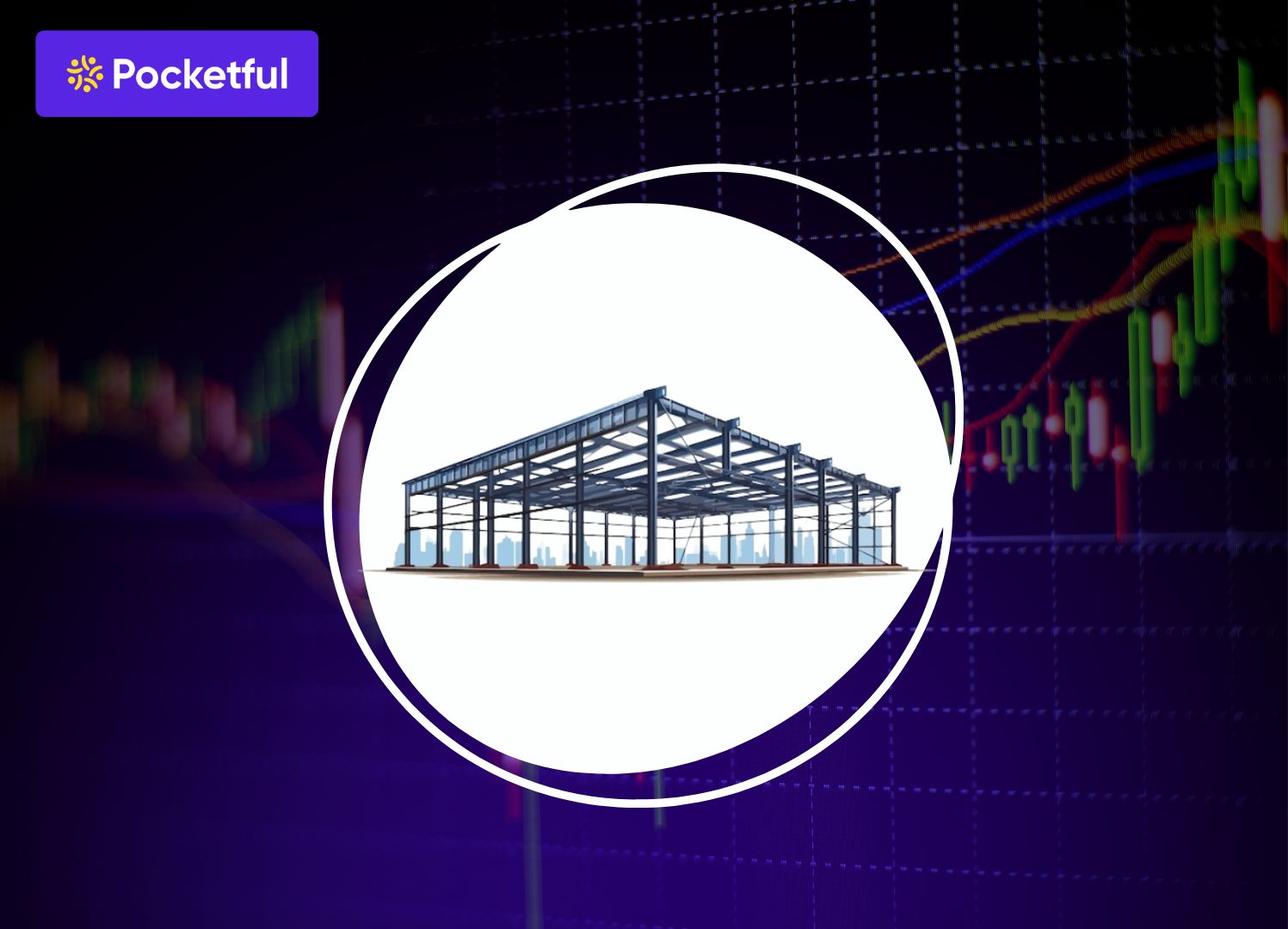
    Pre-Engineered Buildings (PEBs) are steel structures that are completely fabricated in a factory and then assembled on-site. This not only saves time but also makes the entire building stronger and more durable. Large companies, warehouses, and industrial units are adopting this technology to speed up construction.

    How is it different from traditional construction?

    In the traditional method, brick, cement, and concrete are completely manufactured on-site, which increases time, labor, and costs.On the other hand, PEB structures are pre-fabricated and simply need to be assembled. This means that despite rain or weather disruptions, work will not be halted, and the project will be completed on time.

    Key Benefits

    1. Faster construction: PEB buildings are completed in approximately half the time.
    2. Less cost and easier maintenance: Steel is rust-resistant and eliminates the need for frequent repairs.
    3. Environmentally friendly: Less waste and most of the material is recyclable.
    4. Flexible design: The structure can be easily expanded if future expansion is required.

    Where is it used?

    PEB is now used not only in factories but also in warehouses, cold storage, data centers, shopping complexes, and logistics hubs.

    Read Also: Best Material Stocks in India

    Top Pre-Engineered Buildings (PEB) Stocks in India 

    S.No.CompanyCurrent Market Price (INR)Market Capitalisation (in INR crore)52-Week High52-Week Low
    1Larsen & Toubro Ltd₹ 3,888₹ 5,34,833 ₹ 4,195 ₹ 2,965
    2Jindal Steel Ltd₹ 1,010₹ 1,02,998 ₹ 1,098 ₹ 723
    3Tata Steel BSL Ltd(Merged)₹ 85.4₹ 9,333 
    4Interarch Building Solutions Ltd₹ 2,075₹ 3,480 ₹ 2,763 ₹ 1,264
    5Pennar Industries Ltd₹ 189₹ 2,552 ₹ 280 ₹ 136
    6Bajaj Steel Industries Ltd₹ 453₹ 942 ₹ 870 ₹ 449
    7Everest Industries Ltd₹ 441₹ 699 ₹ 750 ₹ 420
    8India Homes Ltd₹ 13.0₹ 519 ₹ 14.6₹ 3.81
    9Beardsell Ltd₹ 29.5₹ 116 ₹ 43.2 ₹ 23.0
    10Alliance Integrated Metaliks Ltd₹ 1.72₹ 67.9 ₹ 7.65 ₹ 1.64
    (Data as of 13 January 2026)

    A brief overview of the best PEB Stocks in India is given below :

    1. Larsen & Toubro Ltd (L&T)

    Larsen & Toubro, better known as L&T, is one of the few companies in India that has built its reputation on decades of trust. Founded in Mumbai in 1938 by two European engineers, it was a small machinery supply company at the time, but gradually transformed itself into a major engineering and construction company. Today, L&T is present everywhere India’s development is visible be it metro projects, bridges, or industrial sites. The company’s hallmark is its quality and timely delivery, which has made it a true construction powerhouse in the country.

    Know the Returns: 

    1Y Return (%)3Y Return (%)5Y Return (%)
    10.97%79.93%187.30%
    (Data as of 13 January 2026)

    2. Jindal Steel Ltd

    If we talk about India’s steel sector without mentioning Jindal Steel, it would be incomplete. This company was started by O.P. Jindal from a small unit, without any significant resources or support. Over time, through hard work, the company has built a position where it is now considered a major name in the industry. Jindal Steel doesn’t just manufacture steel, but builds the foundation on which India’s infrastructure rests be it bridges, railway lines, or factory buildings. Simply put, this company has truly contributed, brick by brick, to India’s industrial development.

    Know the Returns: 

    1Y Return (%)3Y Return (%)5Y Return (%)
    10.73%67.14%240.06%
    (Data as of 13 January 2026)

    3. Tata Steel BSL Ltd (Merged)

    Tata Steel BSL began as Bhushan Steel. Times were different then the company had already established itself in steel manufacturing. But circumstances changed, and Tata Steel merged with it. This single move gave the company a new identity. Now, it operates with the experience and trust of the Tata Group. Today, its products are used in major projects whether industrial buildings or metal infrastructure. Simply put, Tata Steel BSL has seen difficult times, but those days are behind it. Today, the company has regained its footing and has become synonymous with trust.

    Know the Returns: 

    1Y Return (%)3Y Return (%)5Y Return (%)
    93.33%93.33%93.33%
    (Data as of 13 January 2026)

    4. Interarch Building Solutions Ltd

    The name Interarch Building Solutions brings to mind one thing: robust steel buildings that are quick to build and long-lasting. The company was founded in 1983, when such technology was still unknown in India. Initially, it focused on small projects involving metal ceilings and structures, but gradually carved out its own path. Today, Interarch is one of the few companies in India that handles the entire process, from design to site installation. It is known not just for its work, but for its trustworthiness.

    Know the Returns: 

    1Y Return (%)3Y Return (%)5Y Return (%)
    30.16%60.1260.12
    (Data as of 13 January 2026)

    5. Pennar Industries Ltd

    Pennar Industries was founded in 1988 and has since gradually established itself. Initially, it focused on manufacturing steel products, but over time, it branched out into engineering and structural design. Today, Pennar is known for the precision and robust design of its projects. The company works on projects such as industrial structures, warehouses, and factory buildings, where speed and quality are essential. Pennar’s greatest strength is its “end-to-end” approach handling everything from design to construction. This is perhaps why clients trust and choose the company time and again.

    Know the Returns: 

    1Y Return (%)3Y Return (%)5Y Return (%)
    6.84%210.74%664.23%
    (Data as of 13 January 2026)

    6. Bajaj Steel Industries Ltd

    Bajaj Steel Industries was founded in Nagpur in 1961. At that time, the company simply manufactured cotton ginning machines, but it later transformed itself completely. Gradually, Bajaj Steel realized that to survive, it would have to expand its operations with the times. Today, it not only manufactures machines but also provides industrial solutions from material handling to steel structures. The company’s unique quality is its down-to-earth approach to its work. Trust is emphasized over showmanship. Through years of hard work and continuous learning, Bajaj Steel has established itself at a level where its name has become synonymous with trust.

    Know the Returns: 

    1Y Return (%)3Y Return (%)5Y Return (%)
    -42.65%111.54%528.07%
    (Data as of 13 January 2026)

    7. Everest Industries Ltd

    Everest Industries was founded in 1934, at a time when modern construction was just beginning in India. Initially, the company manufactured only roofing sheets, but over time, it expanded its scope and introduced new materials and designs. Today, Everest is among those companies that seamlessly integrate tradition and modernity. The company’s unique ability to adapt to changing times is remarkable. Its name was associated with trust in past projects, and even today, when one thinks of sustainable and lightweight construction, Everest is the first thing that comes to mind. This is its true identity.

    Know the Returns: 

    1Y Return (%)3Y Return (%)5Y Return (%)
    -33.88%-42.00%39.55%
    (Data as of 13 January 2026)

    8. India Homes Ltd

    India Homes Ltd is a new-generation real estate company, founded in 2008. At that time, the real estate sector was rapidly changing, and so were people’s needs. From the very beginning, the company set out to do its business differently focusing on transparency, accurate information, and timely delivery. India Homes considered it not just about selling homes, but also about finding the right property for its customers. Gradually, it ventured into commercial and industrial projects, where it gained considerable recognition. The company’s goal has always been to provide every client with a reliable experience, one that is demonstrated not by words but by actions.

    Know the Returns: 

    1Y Return (%)3Y Return (%)5Y Return (%)
    171.31%527.40%1,350.00%
    (Data as of 13 January 2026)

    9. Beardsell Ltd

    Beardsell Ltd was founded in 1936, when industrial manufacturing was just taking shape in India. Initially, the company manufactured thermal insulation and packaging materials, but gradually expanded its scope. Over time, Beardsell adopted new technologies and is now known for manufacturing insulated panels and lightweight structures. The company’s most distinctive feature is its simplicity and honesty. Beardsell has always strived to ensure that whatever it produces is durable and reliable. Perhaps this is why, even after so many years, its name is respected in the industry with no pretense, just a symbol of honest work and trust.

    Know the Returns: 

    1Y Return (%)3Y Return (%)5Y Return (%)
    -24.20%17.29%226.18%
    (Data as of 13 January 2026)

    10. Alliance Integrated Metaliks Ltd

    Alliance Integrated Metaliks Ltd. isn’t a very old company, but its work has captured everyone’s attention. Launched in 2012, the company initially focused on small projects, but gradually expanded its scope. Now, it’s also making its presence felt in large infrastructure and manufacturing projects. The best part about this company is that it places more emphasis on performance than promises. Its projects clearly demonstrate simplicity, accuracy, and time-honored performance. Alliance has proven that even a new player can carve a niche in the market if work is done with integrity.

    Know the Returns: 

    1Y Return (%)3Y Return (%)5Y Return (%)
    -79.57%-85.40%234.84%
    (Data as of 13 January 2026)

    Key Performance Indicators (KPIs)

    The key performance metrics of semiconductor Stocks in India are mentioned below:

    CompanyOperating Margin (%)Net Profit Margin (%)ROE (%)ROCE (%)Debt to Equity
    Larsen & Toubro Ltd10.337.6215.3918.580.31
    Jindal Steel Ltd13.887.417.2711.140.14
    Tata Steel BSL Ltd(Merged)7.511.363.758.4956.29
    Interarch Building Solutions Ltd9.987.4114.3519.0521.73
    Pennar Industries Ltd8.633.7111.9421.8221.24
    Bajaj Steel Industries Ltd15.3214.4221.7621.2717.56
    Everest Industries Ltd0.32-0.20-0.600.69-191.23
    India Homes Ltd-50.78
    Beardsell Ltd6.073.6612.1117.959.89
    Alliance Integrated Metaliks Ltd-7.49-80.930.003.24-0.95
    (Data as of 16 Oct 2025)

    Read Also: Best Manufacturing Stocks in India

    Factors to Consider Before Investing in PEB Stocks

    Before investing in the PEB sector, it’s important to understand some basics. While this industry is growing, each company’s strengths and operating methods vary. Below are some important factors to consider:

    1. Company Health : Check whether the company is consistently profitable and how stable its business is.
    2. Order Book : Companies with long-term projects are considered to have a more secure future.
    3. Raw Material Costs :  Steel prices directly impact the profitability of PEB companies.
    4. Cash Flow :  Timely payments and a strong cash cycle demonstrate a company’s credibility.

    Risks & Challenges in Investing in PEB Stocks

    1. Dependence on Raw Material Prices : The biggest weakness of this industry is that its entire structure is based on steel. If steel prices suddenly rise, it directly impacts companies’ profits.
    2. Volatility of Demand : The PEB sector’s demand is entirely dependent on infrastructure and industrial investment. When the economy slows down or projects are postponed, new orders also decrease.
    3. Lack of Financial Transparency : Many large PEB companies in India are not yet listed on the stock exchange. This prevents investors from getting a true picture of their actual business data and growth.
    4. Payment Delays and Project Risk : Large projects often face payment delays or unexpected disruptions. This disrupts a company’s cash flow and increases operational pressure.
    5. Increasing Competition : As the PEB market grows, new players are also emerging. In the race to reduce prices, many companies reduce their profit margins, which can impact growth in the long run.

    Read Also: Best Textile Stocks in India

    Conclusion 

    India’s PEB sector has gradually evolved from a “niche market” to becoming part of the mainstream infrastructure industry. Once considered limited to factories and warehouses, the same technology is now being adopted in large commercial and industrial projects. The biggest drivers behind this shift are faster construction, lower costs, and sustainability. Government capex policies and private investment will propel this sector forward in the future. For investors, this sector is similar to what green energy was a few years ago, less visible, but with great future potential. For those with a long-term perspective, PEB stocks could become a quiet but strong story for the coming decade.

    S.NO.Check Out These Interesting Posts You Might Enjoy!
    110 Most Undervalued Stocks in India
    2List of Best Monopoly Stocks in India
    3Top 10 Best Summer Stocks in India
    4List of Top 10 Blue Chip Stocks in India with Price
    5List Of Best Logistics Stocks in India
    6Best Copper Stocks in India
    7Best Jewelry Stocks in India
    8Best Metal Stocks in India
    9Best Semiconductor Stocks in India
    10Best Chemical Stocks in India
    11Best Plastic Stocks in India
    12Best Waste Management Stocks in India
    13Best Fertilizer Stocks in India
    14Best Pharma Stocks in India 
    15Best Silver Stocks in India
    16Best Air Purifier Stocks in India

    Frequently Asked Questions (FAQs)

    1. What are PEB stocks?

      These companies manufacture pre-engineered buildings and structures made of steel.

    2. Is investing in PEB stocks good?

      Yes, this sector is a good option for the long term, linked to growth and infrastructure demand.

    3. Which are the top PEB companies in India?

      L&T, Interarch, Pennar Industries, Everest Industries, and Bajaj Steel are the major names.

    4. What is driving PEB industry growth?

      Government infrastructure plans and increasing demand for e-commerce.

    5. Is the PEB sector sustainable?

      Yes, because this technology is fast, economical, and environmentally friendly.

  • Top Green Building Material Stocks in India

    Top Green Building Material Stocks in India

    Construction​‍​‌‍​‍‌​‍​‌‍​‍‌ industry is evolving. It is not only about the luxuriously tall buildings but also about the intelligent construction. Presently, enterprises are focusing on the development of materials that are capable of fabricating robust and long-lasting structures without causing harm to the earth. That’s the reason why green construction companies and green building materials companies have become a fresh topic of investor conversation in 2025. These businesses are contributing to the planet through the lowered carbon emissions, proper energy usage, and eco-friendly technologies. This will, indeed, be the real essence of “smart and sustainable development” in the following ​‍​‌‍​‍‌​‍​‌‍​‍‌years.

    What Are Green Building Materials Stocks?

    Green​‍​‌‍​‍‌​‍​‌‍​‍‌ building materials stocks refer to the shares of those companies that manufacture construction materials that are less polluting and environmentally friendly measures, conserving the nature. Such companies come up with products that are more durable, energy-efficient, and have less carbon emissions as compared to traditional construction materials. As a matter of fact, when all the sectors are going toward sustainability, green construction companies and green building materials are becoming a hot spot for investors to put their money in.

    Whether it is low-carbon cement, recycled steel, or AAC blocks, all these are getting popular and being preferred by governments and consumers who prioritize projects that are able to deliver growth without harming the ​‍​‌‍​‍‌​‍​‌‍​‍‌earth.

    Green Building Materials Stocks in 2026

    S.NoCompanyCurrent Market Price (INR)Market Capitalisation (in INR crore)52-Week High52-Week Low
    1UltraTech Cement Ltd₹ 12,158₹ 3,58,271₹ 13,097₹ 10,048
    2Ambuja Cements Ltd₹ 563₹ 1,39,176₹ 625₹ 453
    3Berger Paints India Ltd₹ 540₹ 62,970₹ 605₹ 438
    4Greenply Industries Ltd₹ 302₹ 3,766₹ 392₹ 245
    5Ramco Industries Ltd₹ 338₹ 2,938₹ 398₹ 215
    6Dalmia Bharat Ltd₹ 2,135₹ 40,045₹ 2,496₹ 1,601
    7Greenlam Industries Ltd₹ 260₹ 6,647₹ 325₹ 197
    8BirlaNu Ltd₹ 1,924₹ 1,451₹ 2,815₹ 1,605
    9Astral Ltd₹ 1,455₹ 39,086₹ 1,870₹ 1,232
    10Asian Granito India Ltd₹ 64.2₹ 1,490₹ 79.0₹ 39.2
    (Data as of 24 Oct 2025)

    Read Also: Best Material Stocks in India

    A brief overview of the best Green Building Material Stocks in India is given below :

    1. UltraTech Cement Ltd

    One of the biggest and most reputable cement manufacturers in India is UltraTech Cement Ltd. UltraTech was founded in 1983 and is a member of the Aditya Birla Group. UltraTech is renowned for its innovative technology, sustainable production methods, and premium cement. Over time, the business has grown to be well-known in practically every region of the nation. In addition to building, UltraTech wants to promote sustainable construction methods and green building materials. The company is a leading green construction company because it is always coming up with new ideas in the field of environmentally friendly construction.

    Know the Returns: 

    1Y Return (%)3Y Return (%)5Y Return (%)
    8.89%86.70%166.95%
    (Data as of 24 Oct 2025)

    2. Ambuja Cements Ltd

    Founded in 1983, Ambuja Cements Ltd. is currently one of the top cement producers in India. The business is well known for its inventiveness, quality, and ecologically friendly building methods. Ambuja Cements is known for its low-carbon manufacturing technology and energy-efficient production process. The business has now made a name for itself as a provider of green building materials and an advocate for environmentally friendly infrastructure. Ambuja’s emphasis on the “resource less, build more” strategy has improved its standing in both Indian and foreign markets.

    Know the Returns: 

    1Y Return (%)3Y Return (%)5Y Return (%)
    0.33%8.25%126.66%
    (Data as of 24 Oct 2025)

    3. Berger Paints India Ltd

    Established in 1923, Berger Paints India Ltd has grown into a well-known brand in every corner of the country. Initially, a small company, Berger gradually grew across India. It doesn’t simply sell paint; it re-vitalizes homes and buildings. Berger has become more environmentally responsible, with a focus on eco-friendly paints and low VOC products that reduce harmful airborne contaminates. Berger continues to perform research and develop products to advance-green technology in the paint industry, making it a household name among green construction companies.

    Know the Returns: 

    1Y Return (%)3Y Return (%)5Y Return (%)
    -0.73%12.74%6.33%
    (Data as of 24 Oct 2025)

    4. Greenply Industries Ltd

    Since its founding in 1984, Greenply Industries Ltd. has established itself as a mainstay in the interior and furnishings industry in India. In addition to bringing wood’s beauty into people’s homes, this company has made environmental preservation a top priority. Greenply has consistently prioritized the production of low-pollution, long-lasting plywood. Utilizing technologies such as “E-Zero emission plywood,” the company produces environmentally friendly and health-promoting materials. Greenply is a philosophy as well as a brand that holds that environmentally friendly building practices are essential to good construction. For this reason, it is currently among the top manufacturers of green building materials in India.

    Know the Returns: 

    5Y Return (%)3Y Return (%)5Y Return (%)
    -18.72%70.90%246.95%
    (Data as of 24 Oct 2025)

    5. Ramco Industries Ltd

    The Ramco Industries Ltd story started in 1965. The company then started producing construction material on a small scale, but now it is a robust force in India’s building solutions industry. Being part of the Ramco Group, the company has always laid emphasis on reliability, quality, and durability. It produces materials like fiber cement sheets and environment-friendly boards that serve the needs of new-age construction. Ramco’s slogan is to construct robust and benevolent construction that is kind to the earth. It is for this reason it has become one of India’s top-rated green building material players.

    Know the Returns: 

    1Y Return (%)3Y Return (%)5Y Return (%)
    53.22%96.73%92.47%
    (Data as of 24 Oct 2025)

    6. Dalmia Bharat Ltd

    Since its founding in 1939, Dalmia Bharat Ltd. has maintained its reputation as a reliable brand in the Indian cement sector. Quality and environmental responsibility have always been top priorities for the company. Dalmia reduces pollution during production by using modern technology, alternative fuels, and clean energy in its plants. Its objective is to support sustainable development in addition to producing high-quality cement. One of India’s most innovative green construction firms, Dalmia Bharat, has committed to becoming carbon-negative in the upcoming years.

    Know the Returns: 

    1Y Return (%)3Y Return (%)5Y Return (%)
    15.91%37.58%147.84%
    (Data as of 24 Oct 2025)

    7. Greenlam Industries Ltd

    Greenlam Industries started in 1993, with the commissioning of a laminate plant in Behror, Rajasthan under Greenply Industries. Over the next two decades, the brand grew in stature to be a leader in decorative laminates, veneers, and engineered wood products used in residential and commercial applications. In 2013, the decorative business was demerged, and Greenlam Industries Limited was independently formed to carry on the legacy of innovation, quality, and environmental consciousness in a portfolio accumulated over 30 years. Today, Greenlam is one of the top 3 laminate manufacturers in the world, with a broad range of sustainably manufactured products and design.

    Know the Returns: 

    1Y Return (%)3Y Return (%)5Y Return (%)
    2.87%63.52%253.20%
    (Data as of 24 Oct 2025)

    8. BirlaNu Ltd

    The story of BirlaNu Ltd started many years ago when it was called HIL Limited. Since then, the company has changed both its products and its vision. Today, BirlaNu makes building materials that strengthen homes and are good for the environment. The company’s AAC blocks, roofing sheets, and pipes are now used in projects all over the country. BirlaNu has always focused on safe and durable construction that will last for years. This company proves that even with a long history, a new approach can shape the future.

    Know the Returns: 

    1Y Return (%)3Y Return (%)5Y Return (%)
    2.67%
    (Data as of 24 Oct 2025)

    9. Astral Ltd

    Astral​‍​‌‍​‍‌​‍​‌‍​‍‌ Ltd came into existence in 1996 in Ahmedabad. The company was not backed by a vast array of resources at that time, but still, the foresight was very evident: to revolutionize the water piping industry in India in a safe and eco-friendly manner. Astral changed the entire quality standard of the pipe that is used in the houses. Later it also launched new products like adhesives and construction materials. Now the name “Astral” is not only linked to pipes but also to the concepts of trust and quality. This is a brand that demonstrated the power of a real vision, thus leading small beginnings to a great ​‍​‌‍​‍‌​‍​‌‍​‍‌saga.

    Know the Returns: 

    1Y Return (%)3Y Return (%)5Y Return (%)
    -18.79%1.09%125.79%
    (Data as of 24 Oct 2025)

    10. Asian Granito India Ltd

    In 2000, Asian Granito India Ltd. was established. The company started off making tiles on a small scale, but eventually gained market share because to its design and commitment. The business gradually branched out into goods including marble, wall tiles, and flooring. These days, you may find its tiles in hotels, workplaces, and residences all around the nation. Asian Granito’s work has given “Indian design” a new identity in addition to decorating people’s houses. This business is a perfect example of how trust, hard effort, and creativity go hand in hand.

    Know the Returns: 

    1Y Return (%)3Y Return (%)5Y Return (%)
    -6.26%15.38%-64.06%
    (Data as of 24 Oct 2025)

    Read Also: Best ESG Stocks in India

    Key Performance Indicators (KPIs)

    The key performance metrics of semiconductor Stocks in India are mentioned below:

    CompanyOperating Margin (%)Net Profit Margin (%)ROE (%)ROCE (%)Debt to Equity
    UltraTech Cement Ltd12.227.968.549.160.33
    Ambuja Cements Ltd17.5314.687.799.160.00
    Berger Paints India Ltd13.839.9419.1823.640.02
    Greenply Industries Ltd7.795.0511.3316.050.60
    Ramco Industries Ltd9.525.614.273.630.06
    Dalmia Bharat Ltd9.505.003.935.310.30
    Greenlam Industries Ltd6.682.666.188.690.95
    BirlaNu Ltd-1.54-0.88-2.71-3.130.59
    Astral Ltd12.758.8914.4819.000.04
    Asian Granito India Ltd2.191.322.012.330.19
    (Data as of 24 Oct 2025)

    Why 2026 Is a Breakthrough Year for Green Construction?

    The year 2025 is considered a turning point for the construction industry. Companies are no longer just constructing buildings but are also creating sustainable and energy-efficient infrastructure.

    1. Government policies are driving momentum : The Indian government’s National Green Hydrogen Mission and Renewable Energy Policy have encouraged the adoption of sustainable materials in the construction sector. This is reducing energy dependence and encouraging companies to work in a “green” direction.
    2. Global regulations have increased their impact : The European Union’s Carbon Border Adjustment Mechanism (CBAM) will come into effect in 2026. This has increased pressure on companies that export; they will now be required to reduce the carbon intensity of their products.
    3. ESG reporting has become mandatory : Under SEBI’s BRSR Core Framework, companies are now required to publicly disclose information about their environmental impact. This has increased transparency and investor confidence.
    4. Cost reductions and increased efficiency : Materials like low-carbon cement, recycled metal, and thermal insulation have made construction cheaper, faster, and more sustainable. This is why investors are increasingly prioritizing these companies.
    5. Investors Focus on Green Stocks : ESG and infrastructure funds are now investing in projects that promote sustainable development. This is providing green building material companies with better funding and growth opportunities.

    Factors to Consider Before Investing in Green Building Material Stocks

    1. Company’s Environmental Policy : First, determine whether the company truly operates in sustainable ways. Companies that focus on renewable energy, waste recycling, and low-carbon production perform better in the long run.
    2. Product Quality and Innovation : How unique and useful a company’s products are matters. Companies that adopt new and sustainable technologies will thrive in the future.
    3. Compliance with Regulations : See whether the company is complying with government and ESG standards. Companies that report transparently are easier to trust.
    4. Future Planning : Be sure to consider the company’s goals for the coming years. A clear vision demonstrates that the company is preparing not just for today, but for tomorrow as well.
    5. Trustworthy Leadership : Good management is the backbone of any company. Companies with honest and experienced leadership stand strong even in difficult times.

    Read Also: Best Chemical Stocks in India

    Risks and Challenges in Green Construction Investing

    1. Policy Delays : Government schemes and environmental policies sometimes take time to be implemented. Delays in implementing a tax or subsidy scheme can impact company growth.
    2. Raw Material Shortage : Green materials require fly ash, scrap metal, or recycled materials to produce them. Sometimes, the lack of these resources can make production more expensive or slower.
    3. High Technology Costs : Adopting green technology requires significant initial investment. These costs can sometimes become a burden for small and medium-sized companies.
    4. Greenwashing Risk : Many companies promote their projects as “green,” but in reality, their impact is limited. Therefore, be sure to check the company’s actual sustainability report before investing.
    5. Lack of Reporting and Transparency : Not every company shares its ESG data accurately. Therefore, it is important to verify a company’s credibility through SEBI BRSR Core or independent reports.

    Read Also: Best Infrastructure Stocks in India

    Conclusion

    Things aren’t the same anymore. Folks want smart homes these days, not just strong ones. This shift is why green building stuff is getting popular. Companies that are serious about doing things the right way and being sustainable will really matter in the future. If you’re thinking about putting money into this area, keep in mind that making money is great, but the best returns are the ones that help future generations. That’s what true green investing is all about – money and doing what’s right.

    S.NO.Check Out These Interesting Posts You Might Enjoy!
    110 Most Undervalued Stocks in India
    2List of Best Monopoly Stocks in India
    3Top 10 Best Summer Stocks in India
    4List of Top 10 Blue Chip Stocks in India with Price
    5List Of Best Logistics Stocks in India
    6Best Copper Stocks in India
    7Best Jewelry Stocks in India
    8Best Metal Stocks in India
    9Best Semiconductor Stocks in India
    10Best Silver Stocks in India
    11Best Plastic Stocks in India
    12Best Waste Management Stocks in India
    13Best Fertilizer Stocks in India
    14Best Pharma Stocks in India 

    Frequently Asked Questions (FAQs)

    1. What are Green Building Material Stocks?

      These are stocks of companies that produce environmentally friendly and sustainable construction materials.

    2. Why are green construction companies popular in 2025?

      Because governments and investors are now paying more attention to sustainable construction.

    3. Are green stocks good for long-term investment?

      Yes, strong and responsible companies can deliver good returns in the long run.

    4. Which sectors lead in green construction?

      Cement, steel, insulation, and tiles are the major sectors.

    5. What should investors check before investing?

      Be sure to look at the company’s sustainability, innovation, and long-term vision.

  • Top Global Capability Centre Stocks in India

    Top Global Capability Centre Stocks in India

    As an investor, everyone is looking to invest in sectors which have strong growth potential in the long run. Over the past few years, Global Capability Centre has emerged as one of the key sectors to watch for. This sector has strong growth potential, characterised by higher profit margins. 

    In today’s blog post, we will give you an overview of the best Global Capability Centres Stocks in India, along with the benefits of investing in them.

    Meaning of Global Capability Centres Stocks 

    A Global Capability Centre is a branch that is established by the multinational companies specifically to take care of the business functions, technology, research, and analytical processes in an offshore location that has low costs. 

    Such centres, or in other words, captive centres, allow the global companies to take advantage of the huge number of skilled people in a country and the low-cost operation. At the beginning, their focus was solely on back-office assistance, but now GCCs have transformed into strategic centres where different sectors exchange innovation, R&D, and high-value functions.

    Top Global Capability Centres Stocks

    1. Tata Consultancy Services Limited
    2. Quess Corp Limited
    3. L&T Technology Services Limited
    4. eClerx Limited
    5. HCL Technology Limited
    CompanyCurrent Market Price (INR)Market Capitalisation (in INR crore)52-Week High52-Week Low
    Tata Consultancy Services Limited3,12311,30,055 4,161 2867
    Quess Corp Limited2073,088 379191
    L&T Technology Services Limited3,71939,420 5,647 3,715
    eClerx Limited4,63122,066 4,986 2116
    HCL Technology Limited1,6974,60,523 1,752 1303
    (Data as of 30 January 2026)

    Read Also: Best Data Center Stocks in India

    Overview of Top Global Capability Centres Stocks in India

    1. Tata Consultancy Services Limited

    Tata Consultancy Services Limited company was incorporated in 1968 under the brand Tata Sons. Initially, the company was engaged in providing punched card services to Tata Steel Limited. Later, the company started developing software for IT consultancy firms. And since 1980, the company has been exporting their software. In 2004, the company went public and launched its IPO. Currently, the company is providing their services in more than 150 countries. The company operates a vast network of Global Delivery Centres worldwide to serve its clients. The company has its headquarters in Mumbai.

    2. Quess Corp Limited

    The company was founded in 2007 by Ajit Isaac. The company is engaged in providing services to multiple verticals of the service sector. Quess Corp Limited became a publicly listed company in 2016. Over time, it has become the largest private sector employer in India and has its operations spread across North America, the Middle East, and Southeast Asia. It helps other companies set up and operate GCCs, and it has entered into strategic partnerships with various international firms. The company’s head office is situated in Bengaluru. 

    3. L&T Technology Services Limited

    The company was incorporated in 2006 as a separate entity of the L&T Group to focus on engineering and research-related activities. The company got itself listed on the Indian Stock Exchange in 2016. The company has made a remarkable presence in the IT service industry by offering digital engineering, Internet of Things, Artificial Intelligence, etc. The company has expanded its global footprint across North America and Europe. Its headquarters are situated in Maharashtra.

    4. eClerx Limited

    eClerx was founded in 2000 by P.D. Mundhra and Anjan Malik. The company provides data management solutions to various financial institutions. In 2007, the company entered the public market by launching its IPO and became a publicly listed entity. The company currently serves clients of major countries such as the USA, UK, Italy, Germany, etc. Its headquarters are situated in Maharashtra.

    5. HCL Technology Limited

    The company is a part of HCL Group, which was founded in 1976 by Shiv Nadar. Initially, the company was engaged in developing microprocessors and later entered into providing software services. In 1999, HCL Technologies Limited was incorporated as a separate entity for IT-related services, and in the same year, it became a publicly listed company. Its headquarters are situated in New Delhi.

    Key Performance Indicators (KPIs)

    CompanyDebt to EquityROE (%)ROCE (%)Operating Profit Margin (%)Net Profit Margin (%)
    Tata Consultancy Services Limited051.2462.0125.8919.11
    Quess Corp Limited0.014.2217.461.630.30
    L&T Technology Services Limited020.8327.0116.8411.84
    eClerx Limited023.4627.8522.3816.08
    HCL Technology Limited0.0324.9630.8420.4214.86
    (as on 31st March, 2025)

    Read Also: Best Semiconductor Stocks in India

    Benefits of Investing in Global Capability Centres Stocks

    The key benefits of investing in Global Capability Centres Stocks are as follows:

    1. Consistent Demand: Due to a rise in demand for cost-efficient capabilities centers the revenue stream of these companies will remain stable.
    2. Higher Margins: Companies operating as Global Capabilities Centres generally have higher profit margins, because of low operating profit.
    3. Government Support: As the Indian Government pushes for digital transformation, the growth of companies engaged in Global Capability Centres will be boosted.

    Factors to Consider Before Investing in Global Capability Centres Stocks

    There are various factors which one should consider before investing in Global Centres Stocks, a few of which are as follows:

    1. Client Concentration: Numerous companies engaged in Global Capability Centres depend on a very few global clients; if any of their clients end their contract with the companies, it might lead to a reduction in revenue.
    2. Financial Performance: The company’s key financial metrics, such as operating profit, profit margins, etc., must be checked before making any investment decision. 
    3. Compliances: Global Capabilities Centres store huge amounts of sensitive data. Hence, one must check whether they follow all the regulating guidelines defined by data protection agencies, cybersecurity laws, etc.

    Future of Global Capability Centres Stocks

    The Global Capability Centres sector has grown at a rate of 10-12% CAGR. Along with this, the industry is expected to reach 100 billion dollars by 2030. Because of a talented workforce and improving technology infrastructure, this sector tends to do exceptionally well in the near future. The Global Capabilities Centres are also shifting from tier 1 to tier 2 and 3 cities to increase the chance of companies in this sector.  

    Read Also: Top 10 Most Expensive Stocks in India

    Conclusion

    On a concluding note, in the Global business landscape, India is establishing itself as a prominent player, and Global Capabilities Centres with a skilled workforce help in making its position strong. Companies engaged in GCC offer an opportunity to participate in this growth; however, there are certain risks related to investing in the stocks of these companies. Therefore, one should consult their investment advisor before making any investment decision.

    S.NO.Check Out These Interesting Posts You Might Enjoy!
    1List Of Best Healthcare Stocks in India
    2List of Best Telecom Stocks in India
    3List Of Best Footwear Stocks in India
    4List Of Best Logistics Stocks in India
    5List of Best Liquor Stocks in India
    6Best Copper Stocks in India
    7List Of Best Textile Stocks in India
    8List of Top 10 Blue Chip Stocks in India with Price
    9Top Hospital Stocks to Buy in India
    10List of Best Education Stocks in India
    1110 Fastest Growing Penny Stocks in India
    12Top 10 Sectors in the Indian Stock Market
    13Best 5G Stocks in India to Invest
    14Best Midcap IT Stocks
    15List of 10 Top Smallcap Stocks in India on NSE

    Frequently Asked Questions (FAQs)

    1. What is the Global Capability Centre?

      GCCs are units set up by multinational companies to manage business operations, technological support from distant locations such as India.

    2. Which companies are engaged in providing services related to the Global Capability Centre?

      There are various IT companies like L&T Technology Services Limited, eClerx Limited, HCL Technology Limited, Quess Corp Limited, TCS, etc.

    3. What are the major risks related to investment in stocks of the Global Capability Centre?

      The risk related to investment in stocks of Global Capability Centre includes increasing cost of employees, dependency on clients, global economic slowdown, etc.

    4. What is the future of companies engaged in the Global Capability Centre?

      The future of Global Capability Centre companies is very promising as the industry is expected to increase at an annualised rate of 10-11%, which helps them in creating wealth for investors over the long run.

    5. How to invest in companies engaged in providing a Global Capability Centre?

      One can easily invest in companies of the Global Capability Centre by opening a lifetime free demat account with Pocketful. And once the account is opened, you can use their mobile application and purchase the Global Capability Centre stocks during market hours.

  • Open Free Demat Account

    Join Pocketful Now

    You have successfully subscribed to the newsletter

    There was an error while trying to send your request. Please try again.

    Pocketful blog will use the information you provide on this form to be in touch with you and to provide updates and marketing.