Category: Investing

  • What are Bond Yields?

    What are Bond Yields?

    People often ask how investing in bonds works and what the term “bond yield” means. If you are looking to invest into fixed-income securities such as bonds, understanding bond yields is fundamental. In essence, bond yield is the return that an investor would receive from a bond over a period of time.

    In this blog, we are going to explain the meaning of bond yield in detail and its importance. Moreover, we will walk you through the different types of bond yield.

    What are Bonds?

    Bonds are fixed-income investment instruments that corporations or governments issue to collect money from investors. These institutions borrow the funds at a fixed interest rate for a defined period to finance their projects and activities. 

    What is Bond Yield?

    A bond yield is the return an investor earns from a bond investment, typically expressed as a percentage. It includes income from coupon payments and any capital gain or loss due to changes in the bond’s market price. Bond yields help the investors to compare the returns or risk associated with different bonds.

    Buying a bond means you are lending money to the issuer in exchange for coupon payments based on a set interest rate. The return from price increase or decrease depends whether the bond has been bought at a discount or a premium as the bond price moves towards face value as it matures. The yield is inversely proportional to the bond’s market price as when prices of bond rises the yield decreases and vice versa.

    Types of Bond Yield
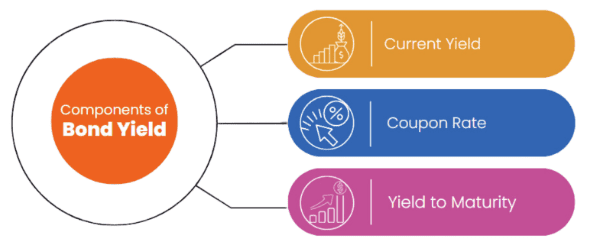
    3 Significant Components of Bond Yield

    Various types of bond yields are:

    • Coupon Yield: It is the annual interest received by the bondholder from the issuer and is expressed as a percentage of the bond’s face value. 
    • Current Yield: It is calculated as annual interest received divided by current market price of the bond. 
    • Yield to Maturity (YTM): It is the total return expected if a bond is held to maturity.

    Overview of Different Types of Bond Yield

    Based on these explanations, let us see the fundamental types of bond yield which helps us in comparing different bonds. Every type reveals a different story regarding how much you may anticipate earning from a bond investment. Let’s look at them more closely.  

    1. Coupon Yield 

    Of all the yields, coupon yield is the simplest. It has a fixed rate that the bond issuer must pay during the lifespan of the bond.

    Coupon Yield = (Annual coupon payment / Face Value) * 100

    Suppose you purchase a bond with a face value of ₹1000 and it pays an annual interest of ₹100. The coupon yield becomes: 100/1000* 100 = 10% 

    The coupon yield remains static for the entire duration of the bond. Regardless of the price movement of the bonds, which could be upwards or downwards, coupon yield will always remain stagnant and is always positive.  

    2. Current Yield 

    Current Yield is the yearly interest (coupon) payments received from the bond divided by the bond’s current market price.  

    Current Yield = (Annual Coupon Payment / Current Market Price) X 100

    Consider that a bond with a ₹1,000 face value and a ₹100 coupon that is currently selling for ₹900.

    Current Yield = (₹100 / ₹900) x 100 = 11.1%

    Current Yield tells us about the actual interest return the investors will get based on today’s market price. This metric can be either greater or lesser than the coupon yield and changes as bond market price changes. 

    3. Yield to Maturity (YTM) 

    Yield to Maturity or YTM calculates the total return that a bondholder can expect to earn if the bond is held till maturity, it is regarded as the best way to measure your returns as it is based on the following: 

    • The market price of the bond at current price, 
    • Coupon payments, 
    • The remaining time until the bond matures, 

    YTM = [ Annual Coupon payment + (FV – PV) ÷ T ] ÷ [(FV + PV)÷ 2]

    Where,

    FV = Face value 

    PV = Present value

    T = Years to Maturity

    For instance: If you purchase a bond today for ₹950, it has a face value of ₹1,000 with a ₹100 annual coupon and it will mature in 5 years, then the YTM is 11.37%.  

    Why Does It Matter?

    • YTM allows a more accurate assessment of your returns as it takes into account future price changes, the time to maturity, and reinvestments as well.  
    • It is considered best for long term investors that intend to hold onto the bonds until they mature.  

    Read Also: Detailed Guide on Bond Investing: Characteristics, Types, and Factors Explained

    Real-world Implications of Bond Yield

    Increasing Interest Rates = Decreasing Bond Price = Increasing Yield

    • When the market’s interest rate goes up, the existing bonds are sold at lower prices hence their yield increases as they will be trading at a discount to face value and increase in value with time. 

    Decreasing Interest Rate = Increasing Bond Price = Decreasing Yield

    • Older bonds with higher coupons payment become more attractive and therefore their price increases.

    Things To Consider Before Investing in Bonds in India

    You should consider the following points before investing in Bonds in India:

    1. Consider The Coupon Rate: Look for reputed companies offering bonds with higher coupon rates. Moreover, investors must purchase bonds with coupon payments that align with their passive income targets.

    2. The Credit Rating of the Issuer: Bonds with a higher rating are less prone to default, although they typically have lower yields. Junk bonds or lower-rated bonds carry greater risk, but they also have higher yields.  

    3. Inflation: If inflation exceeds the bond yield, the real return is negative. Always measure the yields against expected inflation before investing.  

    4. Maturity Period: Bonds with longer durations typically offer higher yields but are more vulnerable to interest rate fluctuations.  

    5. Liquidity: Some bonds are more liquid than others, which makes them easier to sell and buy. Therefore, they are more desirable and less risky. Less liquidity may translate to higher yields due to liquidity premium.  

    6. Reinvestment Risk: It is relevant in situations where coupon payments received may have to be reinvested at a lower rate, thus reducing overall yield.  

    7. Taxation: Different bonds incur different tax obligations. Tax-free bonds, for example, may have lower yields, but provide better returns than taxable bonds after tax is applied.  

    8. Market Sentiment: Bond prices and consequently yields can be affected by economic news, geopolitical issues, and the activities of other investors.  

    9. Type of Bond: Government-issued bonds such as debentures, corporate bonds, and municipal bonds come with different levels of risk and return.  

    The Advantages and Disadvantages of Bond 

    Advantages

    • Predictable Income: Bonds provide coupon payments at regular intervals, which benefits the income-dependent investors.  
    • Risk Diversification: When bonds are combined with equities in an investment portfolio, volatility is significantly reduced.
    • Variety: Investors have the freedom to select from a broad spectrum of bond issuers, based on their financial goals and risk tolerance.  
    • Market Indicator: Yields indicate the average investor’s perception regarding interest rates and inflation.  

    Disadvantages:  

    • Interest Rate Risk: When the interest rates increase, it directly affects the bond’s prices negatively.  
    • Credit Risk: There is always a possibility that the bond issuer may default.  
    • Inflation Risk: The nominal returns may be greatly reduced in the event of extremely high inflation.  
    • Complexity: For novice investors, distinguishing different types of yields (YTM, YTC, etc.) can present a steep learning curve.  

    The Importance of Bond Yields for Indian Investors

    There are people who seek low-risk investments in bonds and must carefully analyze bond yield metric as.

    • Government securities or G-Secs provide low returns but maximum security.
    •  Corporate bonds provide high risk and better returns.  

    For instance, in early 2025, a 10 year Indian Government Bond had a yield of approximately 7.15% and AAA rated corporate bonds yield between 7.8%-8.5%.

    Who Should Invest in Bonds Based on Yield?

    • Elderly people in retirement seeking constant cash flow.
    • Risk-averse investors 
    • Investing in bonds can diversify the investment portfolios.

    Read Also: What Is Bowie Bond (Music Bonds) : History, Features, Advantages & Disadvantages

    Due to a decrease in repo rate and stability in Indian equity markets, bond yields have decreased since the beginning of 2025. Other factors like the dollar index and economic indicators also play a huge role.

    Investors are now looking closely at:  

    – Shorter-term G-Sec bonds (6.8-7.2% returns)

    – Long-term corporate bonds (up to 8.5% returns)  

    Conclusion

    So, what is bond yield really about? In simple words, bond yield is simply the annualized income you gain from a bond investment. Understanding the bond yield and rating helps you determine if investing in a particular bond is beneficial or not compared to other investment options available. 

    Some of the factors affecting bond yields include interest rates, credit rating of the issuer and inflation. Understanding and comparing yields will grant you the opportunity to make more strategic investment decisions. It is advised to consult a financial advisor before investing.

    Frequently Asked Questions (FAQs)

    1. What factors determine the yield on government bonds in India?

      The yield on government bonds in India is determined by market demand and supply, interest rates set by the Reserve Bank of India (RBI), and the overall economic conditions.

    2. What is the difference between bond yield and interest rate?

      Bond yield is the expected return on investment considering both the coupon payments and any change in bond prices. On the other hand, interest rate refers to the cost of borrowing the money that the issuer pays to bondholders.

    3. How does bond yield change over time?

      Market demand, interest rates, and credit ratings heavily influence bond yield.

    4. Is higher bond yield always better?

      Not always as higher yields could mean higher risk. Always consider the issuer’s credit rating.

    5. Can bond yields go negative?

      Rarely, but in scenarios of deflation or extreme demand, it’s possible.

    6. In what ways can I invest in bonds in India?

      You can invest in bonds through online platforms, debt mutual funds, etc.

    7. Why do government bond yields act as a benchmark for other interest rates in India?

      Government bond yields are considered risk-free and reflect the government’s borrowing cost. They serve as a benchmark for setting interest rates on other loans and securities in the market.

    8. How do I invest in Bonds?

      Government bonds in India can be purchased directly from the RBI Retail Website. Corporate bond investments can be made through a financial institution or trusted broker. ETFs and other mutual funds are also a good option for investing in bonds in India.

    9. What is the significance of the yield curve in the Indian financial market?

      The yield curve represents the yields of bonds of different maturities. A normal upward-sloping yield curve indicates healthy economic growth, while an inverted curve may signal a potential recession.

    10. What are the risks involved in investing in G-Sec bonds?

      G-sec are generally referred to as risk-free instruments, as sovereigns rarely default on their payments. However, market, liquidity, and reinvestment risks exist even in G-sec bonds.


  • Debentures: Meaning, Features, Types, Benefits and Risks

    Debentures: Meaning, Features, Types, Benefits and Risks

    A business may require loans to expand or carry out new projects. These loans can be taken from investors who wish to earn higher interest rates than ordinary fixed deposits. Such loans are called Debentures and are taken from investors in exchange for a pledge to repay their loan with interest. 

    In this blog, we will explore the meaning of debentures, its types, benefits, risks, and suitability.

    What Is Debentures

    Debentures are long-term financial instruments issued by a company, generally without any collateral, in order to borrow money from the public. It is an arrangement between the issuer and the holder. Instead of issuing new stock, businesses often use them to obtain medium to long-term capital without diluting ownership. When a company or a government issues debentures, investors receive interest payments at predetermined intervals until their maturity date, when the principal amount is repaid.

    Types of Debentures

    There are various classifications of debentures in the market. They are mentioned below: 

    1. Convertible (CDs) and Non-convertible debentures (NCDs): CDs are the debentures that can be converted into a specified number of equity shares after a predetermined period and NCDs are the securities that can not be converted into equity shares.

    2. Redeemable and Irredeemable (Perpetual) debentures: Debentures that are issued with a fixed date on which the principal amount will be repaid are Redeemable debentures while debentures that have no fixed maturity date and carry on forever are Irredeemable debentures. In irredeemable securities, the issuer makes interest payment perpetually.

    3. Callable and Puttable Debentures: Debentures where the issuer has the right to redeem the debentures are Callable Debentures and debentures where the holder has the right to sell their debentures back to the issuer before maturity are Puttable Debentures. 

    4. Zero coupon Debentures:  These debentures are issued at a discount and redeemed at face value. The twist is that these debenture holders do not receive any interest payments.

      Features of Debentures

      Both issuers and investors find debentures appealing due to several important characteristics.

      1. Fixed Interest Rates: Debentures have a fixed interest rate, which gives investors a steady source of income, typically semi-annually or annually.
      2. Principal Repayment: Debentures generally have set maturity dates, which means issuers repay the principal amount to the debenture holder at the end of the maturity period, which could be anything from a few years to decades.
      3. Credit Rating: Rating agencies often evaluate the creditworthiness of debentures to assist investors in determining the level of risk.
      4. Liquidity: Debentures can be traded in the secondary market, allowing investors to liquidate their debentures.
      5. No ownership dilution: Issuing debentures does not dilute the ownership of existing shareholders as they are debt instruments.
      Features of Debentures

      Read Also: Non-Convertible Debenture (NCD) vs Fixed Deposit (FD): Meaning, Features, and Differences Explained

      Benefits of Debentures

      Debentures are issued because they offer a lot of advantages, some of them are mentioned below: 

      1. Regular Income: The interest payments made by debentures provide investors with a steady income stream.
      2. Low Risk: As compared to equity investments, debentures are generally less hazardous as they offer fixed return and priority in case of liquidation.
      3. Security: Debentures are regarded as more secure investments because of their stable reputation, which helps to protect the principal amount over time.
      4. Capital Preservation: Debentures help in capital preservation as the principal amount is repaid at maturity.  
      5. No Dilution: Debentures do not cause any dilution in the company’s shareholding equity, thus preventing any major backlash from shareholders of the company.

      Risks of Debentures

      While debentures are a great way for the company to raise capital while preventing dilution, they do come with their set of risks. Some of the risks are mentioned below:   

      1. Credit Risk: There is always a chance that the issuer may stop making interest payments or won’t pay back the principal.
      2. Lack of Control: Debenture holders usually lack voting rights, which reduces their ability to influence corporate choices.
      3. Liquidity Risk: Some debentures lack liquidity, making it difficult to trade them in the secondary market.
      4. Interest Rate Risks: Rising interest rates decrease the market value of existing debentures making them less appealing.
      Risks of Debentures

      Suitability of Debentures

      Debentures are an attractive investment choice for a wide range of investors. They offer a means of earning consistent returns with comparatively reduced risk for cautious investors. Due to their extra security, risk-averse investors tend to gravitate towards debentures. 

      Debentures are especially tempting to those seeking consistent income because they provide a steady income stream via fixed-interest payments. Investors aiming to support their financial objectives with steady cash flow can find this a reliable investment vehicle.

      In summary, secured or highly rated debentures are desirable for investors who prioritize capital preservation above risk. These investors value stability and safety above bigger returns, making debentures a better option for achieving their investing goals.

      Debentures are flexible investment instruments that can be tailored to meet a variety of risk profiles and financial objectives, thereby meeting investors’ diverse demands and preferences.

      Conclusion

      To summarize, debentures are an important financial tool that allows businesses to raise money and provide investors with a reliable source of income. By having a thorough understanding of these products’ kinds, features, rewards, and risks, investors can make wise selections that are in line with their financial objectives and risk tolerance. Debentures can be an essential addition to your portfolio in order to attain financial stability.

      Read Also: Momentum Investing: Meaning, History, Types & Advantages

      Frequently Asked Questions (FAQs)

      1. How are debentures different from bonds?

        While both are debt instruments, debentures are typically unsecured, while bonds are often secured by collateral or specific assets. Additionally, companies generally issue debentures, whereas the government and companies can issue bonds.

      2. How can I buy Debentures?

        When a company issues new debentures, you can purchase them through your broker. Debentures can also be bought in the secondary market as they are traded amongst investors.

      3. What is the maturity date of a debenture?

        The maturity date is when the issuer repays the principal amount to the debenture holder. The maturity date of a debenture can range from a few years to several decades. 

      4. How can I assess the risk of a debenture?

        The risk of a debenture can be assessed by checking the credit rating, evaluating market conditions, considering the interest rate environment, and reading the terms and conditions of the debenture.

      5. Can debentures trade on the secondary market?

        Yes, Debenture can trade on a stock exchange or over-the-counter markets, providing liquidity to investors.

    1. What is a Bonus Issue? Meaning, Process, Key Dates, and Impact Explained

      What is a Bonus Issue? Meaning, Process, Key Dates, and Impact Explained

      Companies have multiple ways to reward their shareholders and manage their capital structure. One such method is through a bonus issue, a term that often leaves investors interested.

      This blog delves deeper into what a bonus issue is, its purpose, and its implications for shareholders.

      Meaning Of Bonus Issue

      A bonus issue is a corporate action where a company issues additional shares to its existing shareholders free of cost, based on the number of shares they already hold. Essentially, it is a way for a company to distribute accumulated profits or reserves without paying out cash.

      How Does a Bonus Issue Work?

      When a company decides to issue bonus shares, it converts part of its reserves into equity capital. For instance, if a company declares a bonus issue of 1:2, it means that for every two shares a shareholder owns, they will receive one additional share for free. This does not change the overall value of the investment but increases the number of shares held by the investor.

      Purpose of Bonus Issues

      Purpose of Bonus Issues
      • Rewarding Shareholders: One of the primary reasons for issuing bonus shares is to reward shareholders without parting with cash. By providing them with additional shares, companies aim to acknowledge the loyalty and trust of their investors. 
      • Improving Stock Liquidity: A bonus issue can improve the liquidity of a company’s shares. By increasing the number of shares in circulation, trading activity is expected to rise, which can increase the liquidity of the stock.
      • Making Shares Affordable: If the share price of a share is high, issuing bonus shares can reduce the price per share, making it more affordable for small-scale investors. This action thus attracts a wider base of shareholders.
      • Signaling Strong Financial Health: A bonus issue often signals that a company is confident about its future prospects and has reserves. This can boost investor confidence and enhance the company’s reputation in the market.

      Read Also: What is Options Trading?

      Process of Issuing Bonus Shares

      Process of Issuing Bonus Shares

      The process of issuing bonus shares involves several steps and requires compliance with regulatory guidelines set by the Securities and Exchange Board of India (SEBI).

      • Board Approval: The process begins with the company’s board of directors passing a resolution to issue bonus shares. This resolution determines the ratio of the bonus issue and the record date, which is the date on which shareholders eligible to receive the bonus shares are determined.
      • Shareholder Approval: Following board approval, the proposal must be approved by the shareholders in a general meeting. This step ensures that the interests of all shareholders are considered and that they have a say in the decision.
      • Regulatory Filings: Then, the company files the necessary documents with SEBI and the stock exchanges. The documents include providing details of the bonus issue and ensuring compliance with all regulatory requirements.
      • Distribution of Bonus Shares: Once all approvals are received, the company distributes the bonus shares to eligible shareholders. The shares are credited to the shareholders’ demat accounts, and they are informed about the credit through their respective depository participants.

      Implications for Shareholders

      1. No Financial Gain: One important aspect of a bonus issue is that it does not provide any direct financial gain to shareholders. Even though they receive additional shares, the overall value of their holdings remains the same because the market adjusts the share price downward to reflect the increased number of shares.
      2. Tax Implications: In India, bonus shares are not taxable at the time of issue. However, when the shareholder sells these shares, capital gains tax is applicable like any other security sale. 
      3. No Change in Shareholding: Though a bonus issue results in an increased number of shares, the shareholding pattern remains consistent because every shareholder receives the bonus share.

      Key Dates

      Key Dates of bonus Shares

      Announcement Date – It is the date on which the Board announces the Bonus issue. It is also known as the Declaration Date.

      Record Date – It is the date on which a company that is going to give bonus shares decides the eligible shareholders to receive the bonus shares.

      Ex-Date – This is the date by which you need to purchase the shares to be eligible to receive the bonus shares. Generally, it is two days prior to the record date as settlement takes two days in most of the markets. 

      Impact on the Stock Market

      Impact on the Stock Market
      1. Share Price Adjustment: Following a bonus issue, the share price adjusts to reflect the increased number of shares in circulation. For example, if a company issues bonus shares in a 1:1 ratio, the share price is likely to halve because the number of shares has doubled.
      2. Market Perception: A bonus issue is often perceived positively by the market as it indicates the company’s robust financial health. It can lead to increased investor interest and potentially drive up the share price in the long run, despite the initial adjustment.
      3. Liquidity and Trading Volume: The increased number of shares can lead to higher trading volumes, enhancing liquidity. This can make the stock more attractive to both retail and institutional investors, contributing to a more dynamic market environment.

      Indian Case Studies of Bonus Issues

      Reliance Industries Limited (RIL):

      Reliance Industries Limited is one of the most renowned companies in India. In 2017, RIL announced a bonus issue in the ratio of 1:1. This move was well-received by the market players, leading to a surge in trading volumes and positive investor sentiment. 

      Tata Consultancy Services (TCS):

      TCS is one of the biggest tech companies in India. In 2018, Tata Consultancy Services (TCS) declared a bonus issue at a 1:1 ratio. This was the result of one of the company’s efforts to reward its shareholders and increase the affordability of its shares. The bonus issue was perceived positively and contributed to a boost in the company’s market capitalization.

      How can I track Bonus Issues?

      How can I track Bonus Issues?

      Generally, listed companies publish all the corporate announcements at stock exchanges first, i.e., NSE and BSE in India. However, it will be cumbersome for you to monitor updates from each company individually.

      To simplify this process, we’ve created a dedicated corporate action page where you can effortlessly track all the latest corporate announcements, including but not limited to dividends, rights, splits, and bonus issues.

      You can access the corporate actions page to get the detailed list.

      But that’s not all. In addition to our corporate actions page, we recently launched our new WhatsApp service. Now, you can effortlessly stay informed about all corporate actions, including dividends, bonuses, splits, and more, delivered straight to your phone every morning by 9 A.M. for just INR 11!

      Sign up now and never miss any corporate announcement.

      Read Also: What are Stock Splits? Meaning, Reason, Types, and Impact Explained

      Conclusion

      Bonus issues are a significant corporate action that reflects a company’s confidence in its financial health and future prospects. However, for shareholders, there is no immediate financial gain. But the long-term benefits of this action can be substantial if the company continues to perform well. 

      Bonus issues also enhance stock liquidity and make shares more affordable. However, it is crucial for investors to understand the implications of bonus issues and consider them while making an investment decision. 

      Frequently Asked Questions (FAQs)

      1. Why do companies issue bonus shares?

        Companies issue bonus shares to reward shareholders, improve stock liquidity, and make shares more affordable. It’s a way to convert accumulated reserves into equity capital while maintaining investor confidence.

      2. How does a bonus issue affect the share price?

        After a bonus issue, the share price adjusts downward to reflect the increased number of shares in circulation. For instance, if a company issues bonus shares in a 1:1 ratio, the share price is likely to halve as the number of shares has doubled, keeping the overall value of the market capitalization the same.

      3. Are bonus shares taxable in India?

        Bonus shares are not taxable at the time of issue. However, when shareholders sell these shares, capital gains tax is applicable.

      4. How does a bonus issue impact a company’s reserves?

        A bonus issue reduces a company’s reserves as a part of the reserves is converted into equity capital. This process does not affect the company’s cash balance but modifies the structure of its equity and reserves on the balance sheet.

      5. Can a bonus issue improve a company’s market perception?

        A bonus issue can signal that a company is financially strong. This can enhance investor confidence and increase market interest in the stock.

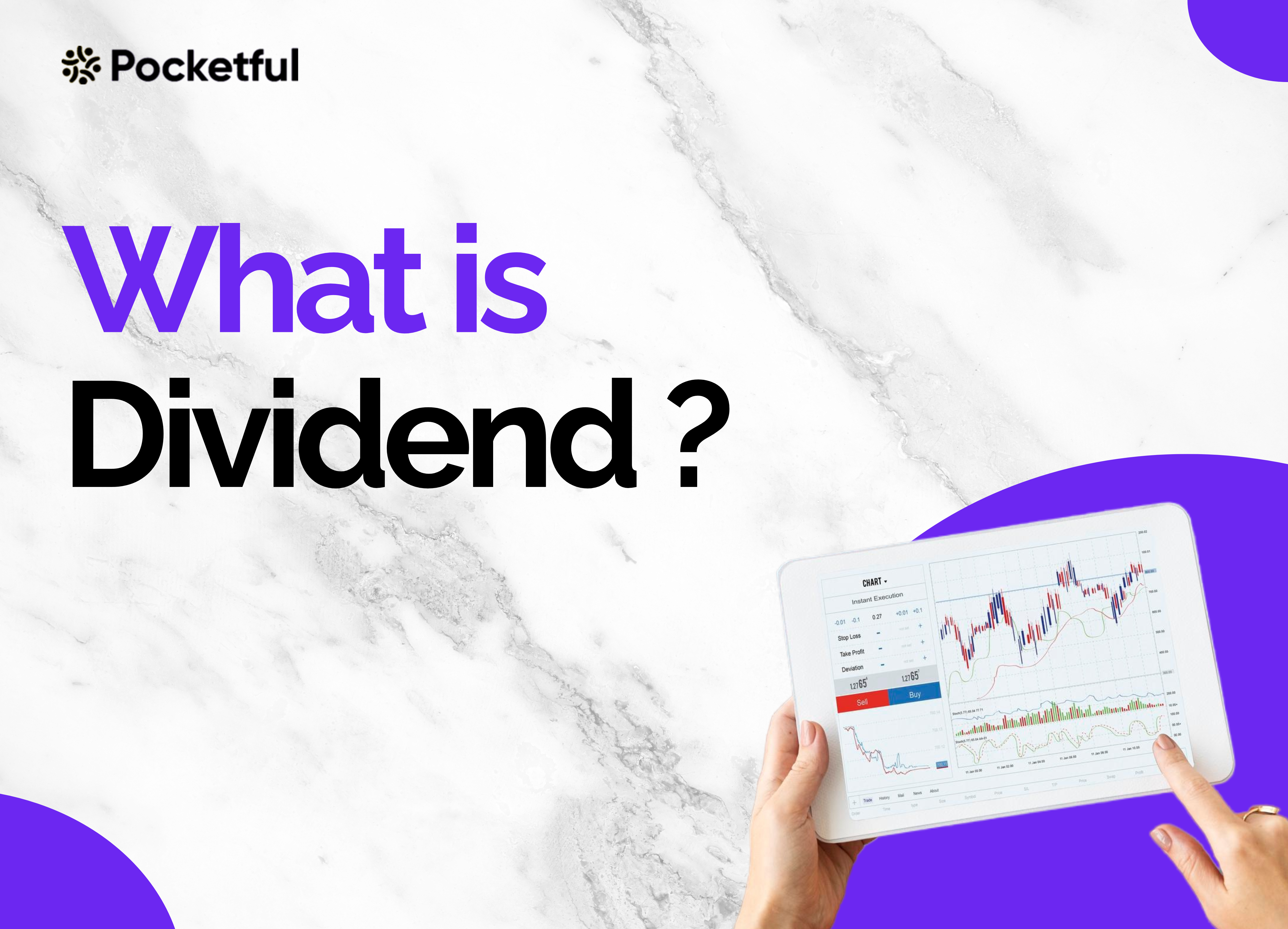
    2. What is a Dividend? Meaning, Key Dates, and Types Explained

      What is a Dividend? Meaning, Key Dates, and Types Explained

      We know that one should invest a portion of their income in the securities market. But did you know that there’s a way to earn money while being invested? 

      Today, we’re going to walk you through a unique way to earn passively. We’ll cover what a dividend is, the most important dates you’ll need to know as an investor and the types of dividends that a company can pay.

      Meaning Of Dividend

      In simple terms, a dividend is a payment by a corporation to its shareholders, which is commonly realized through the company’s profits. When a company earns a profit, it can choose to either reinvest the money back into the business (retained earnings) or distribute a portion of it to shareholders in the form of a dividend. Dividends are a way for companies to reward shareholders for their investment and provide a steady stream of income.

      Therefore, dividends are seen as a sign of a company’s financial health and stability. Companies that consistently pay dividends, especially those that increase their dividend payout ratios over time, are often viewed as financially sound and stable. This can make dividend-paying stocks particularly attractive to income-focused investors, such as retirees, who rely on the steady income that dividends provide.

      Dividends

      Dividend Key Dates

      To fully understand the dividend process, it’s important to know the key dates involved:

      Declaration Date

      It is the date when the board of directors of the company declares the dividend to be paid out. It usually states how much money is to be given out and dates set for the record date and payment date. The declaration date is the first signal to investors that a dividend will be paid.

      Ex-Dividend Date

      This is the cutoff date established by the stock exchange. If you purchase a stock on or after this date, you will not be eligible to receive the declared dividend. For one to qualify to be paid the dividend, the person should own the share before the ex-dividend date. 

      Record Date

      This is the date when the company reviews its records to determine which shareholders are eligible to receive the dividend. The record date is usually one business day after the ex-dividend date. It’s the official date on which you must be on the company’s books as a shareholder to receive the dividend.

      Payment Date

      This is the date when the dividend is actually paid out to shareholders. In other words, it is the date when money is released and transferred to shareholders in their brokerage accounts.

      Key Dates of Dividends

      Read Also: What is Dividend Yield?

      Example of Dividends

      Let’s say Company XYZ declares a dividend on January 1st of $2 per share:

      – Declaration Date: January 1st, when the company announces it will pay a dividend of $2 per share.

      – Ex-Dividend Date: January 15th. To be eligible for the dividend, you need to purchase the stock by January 14th.

      – Record Date: January 16th, when the company checks its records to see who is eligible.

      – Payment Date: January 31st, when eligible shareholders receive their dividends.

      If you own 100 shares, you will receive a total of $200 in dividends (100 shares * $2 per share) on January 31st.

      Calculate Dividend YieldDividend Yield Calculator

      Types of Dividends

      Companies can issue several types of dividends, each with its own characteristics and implications for shareholders:

      Cash Dividends

      This is the most common type and pays the holder in cash, either to their brokerage account or with a physical check. This is the form of the dividend that most people think about and refer to when they use the term dividend.

      Cash Dividends

      Stock Dividends

      Instead of cash, shareholders receive additional shares of the company’s stock. In other words, this exercise allows more share ownership without giving out cash. Stock dividends are popular because they allow the holder’s interest in the business to widen without the holder spending money to earn new share rights. Thus, the company can safeguard its cash while satisfying the shareholders. 

      Property Dividends

      These dividends are paid out in the form of assets other than cash, such as products or physical assets owned by the company. Property dividends are rare and can include items like real estate, inventory, or other physical assets.

      Special Dividends

      These are one-time payments that a company issues, usually when it has accumulated substantial profits or has excess cash reserves. Special dividends are not recurring and are often larger than regular dividends, reflecting a particularly strong performance period for the company.

      Preferred Dividends 

      These dividends are paid to holders of preferred stock and are typically fixed amounts paid on a regular schedule, often quarterly. Preferred dividends have priority over common dividends, meaning they are paid out first. Thus making preferred shares a more predictable income source.

      Read Also: How to invest in dividend stocks?

      How can I track Dividends?

      Generally, listed companies publish all the corporate announcements at stock exchanges first, i.e., NSE and BSE in India. However, it will be cumbersome for you to monitor updates from each company individually.

      To simplify this process, we’ve created a dedicated corporate action page where you can effortlessly track all the latest corporate announcements, including but not limited to dividends, rights, splits, and bonus issues.

      You can access the corporate actions page to get the detailed list.

      But that’s not all. In addition to our corporate actions page, we recently launched our new WhatsApp service. Now, you can effortlessly stay informed about all corporate actions, including dividends, bonuses, splits, and more, delivered straight to your phone every morning by 9 A.M. for just INR 11!

      Sign up now and never miss any corporate announcement.

      Conclusion

      Understanding dividends and their associated dates is essential for any investor seeking to benefit from this form of income. By keeping track of declarations, ex-dividends, records, and payment dates, investors can ensure they are positioned to receive dividends. 

      Hence, whether you’re an amateur investor or a seasoned pro, dividends can play a valuable role in building a growing portfolio. However, you must perform your analysis before investing in any stock.

      Read Also: Highest Dividend Paying Penny Stocks in India

      Frequently Asked Questions (FAQs)

      1. What are Dividends?

        Dividends are the distribution of the company’s earnings to the shareholders.

      2. Is it mandatory for companies to continue paying dividends?

        No, a company can stop paying regular dividends if its financial situation does not allow it to part ways with cash. However, most companies continue paying dividends once they have started. 

      3. Why Are Dividends Important to Investors?

        Dividends provide a regular income stream, which is particularly important for income-focused investors such as retirees. Dividends also act as a sign of a company’s financial health. 

      4. Would I receive a dividend if I purchased the share after the ex-dividend date?

        No, the ex-dividend date determines who qualifies to receive the dividend. If you purchased the stock on or after the ex-dividend date, you will not be eligible for the declared dividend.

      5. How are dividends taxed?

        Dividends are not taxed upto INR 5000 in India. Any dividend income you receive beyond this limit will be taxed according to the applicable tax rates.

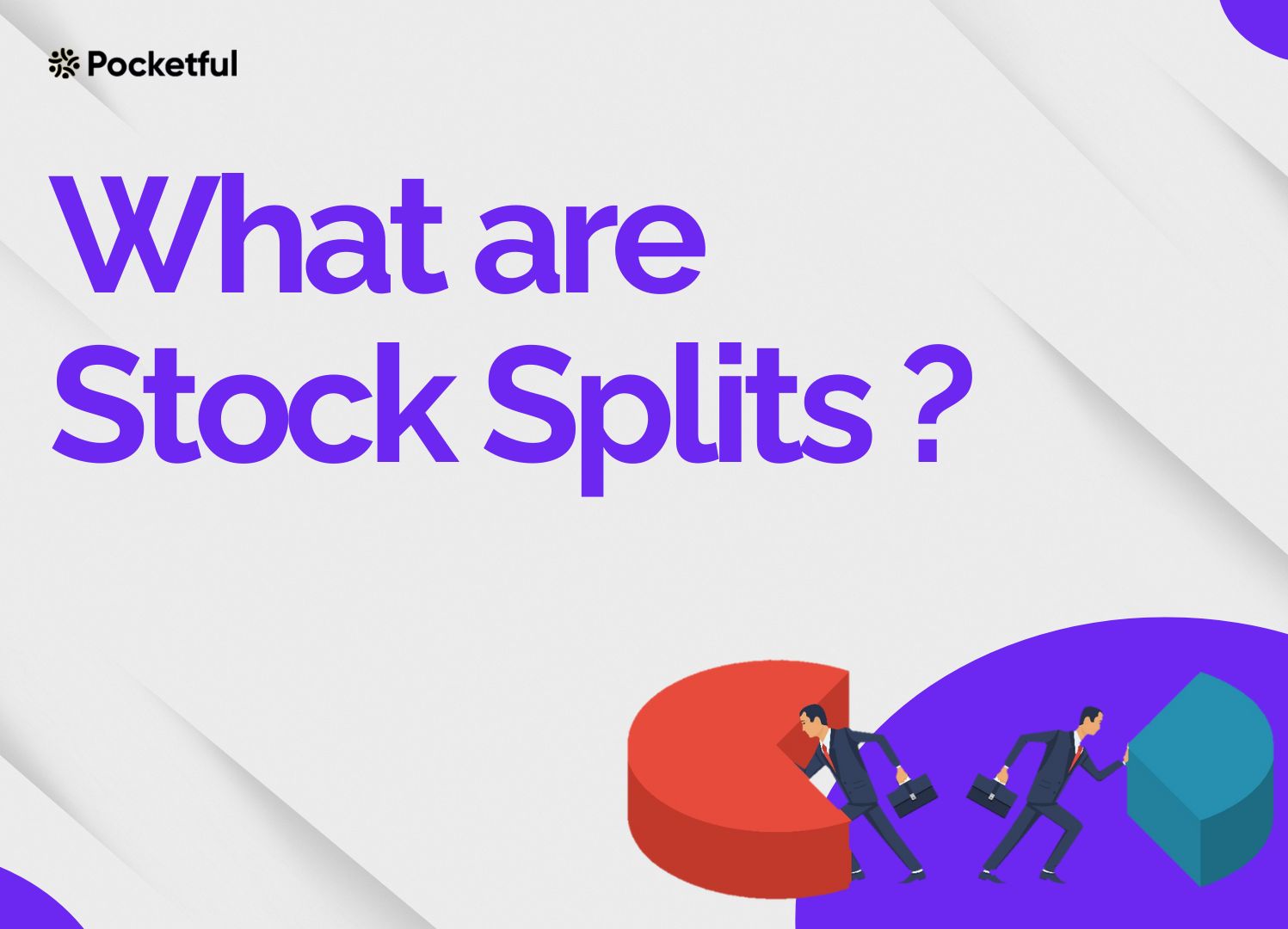
    3. What are Stock Splits? Meaning, Reason, Types, and Impact Explained

      What are Stock Splits? Meaning, Reason, Types, and Impact Explained

      Stock split is a unique corporate action in which the shareholder’s shares get divided into multiple shares. While the overall value of the shares remains the same, the shares increase in number.

      But what exactly is a stock split, and why does it matter to investors in India? This blog will answer all your questions regarding stock split. 

      Stock Splits Meaning

      Meaning of Stock Split

      A stock split is when a company divides its existing shares into multiple shares. However, the total market value of the company doesn’t change, even though the number of shares increases. 

      You can imagine cutting a piece of pie into smaller portions — while the number of pieces increases, the total amount of pie remains the same. This move is generally done to make individual shares more affordable and attract a wider range of investors who were unable to enter due to the high price point.

      Reason for Stock Splits

      Companies make use of stock splits to make their shares more appealing and accessible to investors. When a company’s share price shoots up drastically, it can discourage small scale investors from buying. Therefore, by splitting the stock, companies lower the price per share, making it more affordable and thus increasing liquidity.

      For example, imagine a company’s share price has increased to ₹10,000. Many retail investors might find it too expensive to invest. However, if the company announces a 10-for-1 stock split, each share’s price would drop to ₹1,000, making it more attainable for a larger audience.

      Types of Stock Splits

      Types of Stock Splits

      There are broadly two types of stock splits. They are explained below:

      1. Forward Stock Split – This is the most common type of split, where the number of shares increases and the price per share decreases. For instance, in a 2-for-1 split, each existing share splits into two, doubling the number of shares and cutting the price per share in half.
      2. Reverse Stock Split – This type is relatively less common, it involves reducing the number of shares, which in turn increases the price per share. For example, in a 1-for-5 reverse split, five shares are consolidated into one, making the price of each share five times higher.

      Psychological Impact of Stock Split

      Stock splits can have a significant psychological impact on investors. When a company announces a stock split, it creates a perception of growth and confidence in the company’s future. This perception is largely based on the idea that the company seeks the trust of retail investors. 

      This positive sentiment can drive up demand for the stock, sometimes leading to an increase in the stock price post-split, even though the overall market value of the company remains unchanged.

      Calculations of a Stock Split

      Calculation of a Stock Split

      Let’s break down the calculation with an example. Suppose you own 100 shares of a company, XYZ Limited, with each share priced at ₹500. Your total investment is ₹50,000 (100 shares x ₹500). 

      XYZ Limited then announces a 2-for-1 stock split. After the split, you will own 200 shares, but the price per share will be halved to ₹250. Thus, your total investment remains the same at ₹50,000 (200 shares x ₹250).

      Similarly, if XYZ Limited opted for a 3-for-1 stock split, you would end up with 300 shares priced at approximately ₹166.67 each, maintaining the total value of your investment.

      The market value of the company remains the same after the stock split, thus reducing the value of each share. 

      Pros and Cons of Stock Splits

      Pros

      • Increased Liquidity – More shares at a lower price can increase trading volume and liquidity.
      • Enhanced Affordability – Lower-priced shares are more accessible to small investors, widening the shareholder base.
      • Positive Market Perception – A stock split can signal that the company is performing well and expects future growth.

      Cons

      1. No Fundamental Change – A stock split doesn’t change the company’s fundamentals. It’s more of a cosmetic change without affecting the company’s market capitalization or intrinsic value.
      2. Possible Volatility – Post-split, stocks can experience higher volatility as new investors start investing. This increase in demand can make the stock appear more valuable than it actually is.

      Read Also: What is a Bonus Issue? Meaning, Process, Key Dates, and Impact Explained

      How can I track Stock Splits?

      Generally, listed companies publish all the corporate announcements at stock exchanges first, i.e., NSE and BSE in India. However, it will be cumbersome for you to monitor updates from each company individually.

      To simplify this process, we’ve created a dedicated corporate action page where you can effortlessly track all the latest corporate announcements, including but not limited to dividends, rights, splits, and bonus issues.

      You can access the corporate actions page to get the detailed list.

      But that’s not all. In addition to our corporate actions page, we recently launched our new WhatsApp service. Now, you can effortlessly stay informed about all corporate actions, including dividends, bonuses, splits, and more, delivered straight to your phone every morning by 9 A.M. for just INR 11!

      Sign up now and never miss any corporate announcement.

      Conclusion

      Stock splits play a crucial role in making shares more accessible and enhancing market liquidity. Although they don’t alter a company’s fundamental value, they can significantly influence investor perception and market dynamics. 

      Understanding stock splits is extremely important for investors, as it equips them with the knowledge to navigate the market more effectively.

      Frequently Asked Questions (FAQs)

      1. Is it mandatory for the listed companies to declare a stock split or reverse stock split once the share price reaches a certain point?

        No, it is entirely optional for companies. For example, MRF Ltd. has never done a stock split, and its shares are currently among the most expensive shares to purchase in the Indian share market.

      2. What is the key difference between Forward Stock Split and Reverse Stock Split?

        The key difference between the two is that a forward stock split increases the number of outstanding shares, and a reverse stock split decreases the number of outstanding shares. The total market value of the organization remains the same in both cases.

      3. Is there any impact on liquidity by stock split?

        Yes, the liquidity of the stock is increased after a stock split as it increases the number of outstanding shares of the company and decreases the price per share, making it affordable to potential investors.

      4. Who announces the stock split?

        The company’s Board of Directors have the authority to announce a stock split.

      5. Is there any impact of a stock split on the company’s fundamentals?

        No, there is no impact of a stock split on the company’s fundamentals.

    4. What is Right Issue of Shares: Meaning, Examples, Features

      What is Right Issue of Shares: Meaning, Examples, Features

      Have you ever asked yourself how some firms get additional capital without going to the banks and/or financial backers? This brings us to the rights issue — a powerful technique that enables organizations to give current shareholders a chance to purchase more of the same stock at a lesser price. 

      This blog will dig deeper into the world of capital structure and explain how rights issues work, its advantages, and drawbacks.

      Meaning of Right Issue of Shares

      Meaning of Right Issue of Shares

      A rights issue is a process through which businesses offer existing shareholders an opportunity to buy more shares at a lower price in their efforts to source capital in the market. This approach enables companies to look for capital for expansion, to redeem debts, or for any other purposes without causing major changes in the percentage ownership of the shareholders. 

      Features Of Right Issue of Shares

      • Companies exercise a rights issue when they need cash flow for various objectives. The process may allow the company to raise money without incurring underwriting fees. However, few rights may be underwritten if the company wants to secure the amount of capital raised.
      • These rights are usually distributed as dividends, and the number of additional shares the shareholders can purchase is generally proportional to their existing shareholding. The holder may entirely or partially exercise rights.
      • A rights issue gives privileged treatment to existing shareholders, who are given the right to buy shares at a lower price on or before a particular day.
      • Existing shareholders also have the advantage of the right to trade with other concerned market participants until the new shares can be purchased. The rights are sold in a similar way as average equity shares.
      • Existing shareholders can also disregard the rights; however, their existing shareholding will be diluted post-issue of additional shares if they do not purchase additional shares

      Read Also: What are Shares – Definition, Example, and Benefits

      Example of Right Issue of Shares

      Example of Right Issue of shares

      Suppose an investor owns 100 shares of XYZ Ltd., trading at INR 20 per share. The company set forth a rights issue in the ratio of 2 for 5, i.e., all investors holding 5 shares will be eligible to buy 2 more new shares. The company declared a discounted price, say, INR 15 per share. That means, for every 5 shares (at INR 20 each) held by a pre-existing shareholder, the company will offer 2 new shares at a discounted price of INR 15.

      • Investor’s Portfolio Value (before rights issue) = 100 shares x INR 20 = INR 2,000
      • Number of additional shares to be received = (100 x 2/5) = 40
      • Amount paid to buy rights shares = 40 shares x INR 15 = INR 600
      • Total no. of shares after exercising rights issue = 100 + 40 = 140
      • Increased value of the portfolio after exercising rights issue = 140 Shares x 20 = INR 2,800

      Key Dates of Right Issue of Shares

      Key Dates of Right Issue

      Announcement Date – It is the date on which the Board announces the Rights Issue. It is also known as the Declaration Date.

      Record Date – It is the date on which a company that has offered Rights issue decides the eligible shareholders to receive the right to buy additional shares.

      Ex-Rights Date – This is the date before which you need to purchase the shares to be eligible to receive the right. Generally, it is two days prior to the record date as settlement takes two days in most of the markets, which means shares purchased today will be credited to your demat account after T+2 days (Trading day + 2 days). As of December 2023, we have a T+1 settlement in India, so the Ex-Right Date is one day before the record date.

      Read Also: Equity Shares: Definition, Advantages, and Disadvantages

      How can I track Rights Issues?

      Generally, listed companies publish all the corporate announcements at stock exchanges first, i.e., NSE and BSE in India. However, it will be cumbersome for you to monitor updates from each company individually.

      To simplify this process, we’ve created a dedicated corporate action page where you can effortlessly track all the latest corporate announcements, including but not limited to dividends, rights, splits, and bonus issues.

      You can access the corporate actions page to get the detailed list.

      But that’s not all. In addition to our corporate actions page, we recently launched our new WhatsApp service. Now, you can effortlessly stay informed about all corporate actions, including dividends, bonuses, splits, and more, delivered straight to your phone every morning by 9 A.M. for just INR 11!

      Sign up now and never miss any corporate announcement.

      Conclusion

      Rights issue is one way a listed company can raise capital without incurring high costs by offering to purchase new shares to existing shareholders at a fixed price. This process is entirely voluntary and does not require the existing shareholders to participate.

      Although this corporate action garners a lot of attention from shareholders due to its enticing features, it is extremely important to perform your analysis before participating in the issue. 

      Frequently Asked Questions (FAQs)

      1. How is the price of the rights issue determined?

        The price of the rights issue is determined by the company based on multiple factors like current market conditions, the company’s financial position, and the discount offered to shareholders.

      2. What are the risks of investing in a rights issue?

        The issue in itself does not have any major risk outside of the risk of oversubscription, where shareholders may not be able to acquire their desired number of additional shares. However, there exists a possibility of the company not performing well financially, leading to a decline in share value.

      3. What happens if a shareholder doesn’t participate in a rights issue?

        If a shareholder chooses not to participate in a rights issue, their ownership in the company will be diluted as other shareholders will purchase additional shares. However, they can still retain their existing shares.

      4. How are shareholders notified about a rights issue?

        Shareholders are notified about a rights issue through official announcements by the company, which include information on the issue size, subscription price, and the timeline.

      5. Why do companies choose to raise money through rights issues?

        Companies choose the option of rights issues in order to raise additional capital for various purposes such as funding expansion projects, reducing debt, or strengthening their financial position.

    5. Best Places To Park Your Short Term Money

      Best Places To Park Your Short Term Money

      We put in a lot of effort at work to earn money, and thus, it’s only natural to be able to access that money at a moment’s notice. 

      We make long-term investments to achieve long-term goals, but what about your immediate financial needs? This blog will explore the best ways of investing your extra cash so that you can earn some extra money! 

      Liquid Investments – Overview

      Liquid investments are financial assets that can be quickly and readily converted into cash. They are integral to financial independence as they allow you to respond to unforeseen events without damaging your long-term financial investments. 

      A popular rule of thumb is that an individual should have a contingency reserve in the form of liquid money equal to six times their monthly expenses. This reserve allows the individual to be secure during financial emergencies and helps mitigate financial risks. 

      Investment Avenues

      In the universe of finance, there are various options where you can park your liquid money and earn some return on it. Some of them are mentioned below.

      Banks Savings Account 

      It is regarded as the easiest and safest place to park your short-term funds. Investing money into this vehicle can yield upto 4-5% annual nominal return (dependent on bank rates). It is appropriate for investors who prioritize liquidity as it is considered equivalent to hard cash. 

      Savings accounts are also extremely safe due to the DICGC (Deposit Insurance and Credit Guarantee Corporation) insurance of upto 5 lakhs. New investors with unstable incomes are drawn to this investment opportunity due to its high liquidity and safety. 

      Bank NameInterest Rate
      HDFC Bank Savings AccountUp to 3.5%
      Axis Bank Savings AccountUp to 3.5%
      Kotak Mahindra Bank Savings AccountUp to 4%
      State Bank of India Savings AccountUp to 2.7%
      Punjab National Bank Savings AccountUp to 3%
      (As of 29th May 2024)
      Savings account

      Bank Fixed Deposits 

      If you allow a lock-in period, bank-fixed deposits are a good alternative to savings accounts. Bank FDs often yield returns 2-3% higher than bank savings accounts. This higher interest rate comes at the cost of a lock-in period. A prepayment penalty can be enforced if you withdraw the funds from this investment during the tenure of the FD. 

      The interest rates offered depend on the length of the investment. Generally, the longer the term, the higher the rate. 

      Did you know?

      Smaller and newer banks offer higher rates for fixed deposits than larger banks to increase their market size.

      Bank NameInterest Rate
      HDFC Bank Savings Account3% – 7%
      Axis Bank Savings Account3% – 7.4%
      Kotak Mahindra Bank Savings Account2.75% – 7.4%
      State Bank of India Savings Account3.5% – 6.25%
      Punjab National Bank Savings Account3.5% – 6.25%
      (As of 29th May 2024)

      Short-Term Debt Funds 

      A “Debt Fund” is a mutual fund based on the debt asset class. Typically, your money is invested in fixed-income instruments like short-term bonds, money market securities, and debentures. Mutual funds in the debt category typically give better returns than FDs. They are appropriate for investors who want to invest their money for a period of six months to one year. However, since they are traded on the market, debt funds experience significant volatility, but the risk is lower than a corresponding equity fund.

      Scheme Name2020202120222023
      ICICI Pru Short-Term Gr10.65%3.88%4.66%7.40%
      HDFC Short-Term Debt Gr10.96%3.86%3.53%7.14%
      UTI Short Duration Fund Dir Gr10.97%9.04%4.41%7.59%
      Nippon India Short-Term Gr9.48%4.42%3.20%6.82%
      ABSL Short Term Gr Reg11.06%3.84%4.19%6.90%
      short term debt funds

      Arbitrage Funds 

      Arbitrage funds are a type of hybrid mutual fund that uses futures, a form of derivative investment, to generate returns similar to debt funds. This is how it works: the fund manager buys shares using your money and sells them later. The difference in prices (known as the spread) between the stock and its future contract creates a return. On average, these funds are able to generate returns between 4% and 8% annually.

      Scheme Name2020202120222023
      Kotak Equity Arbitrage Gr4.33%3.96%3.42%7.38%
      Edelweiss Arbitrage Gr5.25%4.58%5.11%7.89%
      Axis Arbitrage Gr4.91%4.61%4.95%7.68%
      HDFC Arbitrage Gr4.30%4.17%4.73%7.78%
      Invesco India Arbitrage Gr5.02%4.15%5.85%8.07%

      Liquid Mutual Fund 

      Liquid mutual funds invest in treasury bills, corporate papers, and other money market instruments. These assets are called money market securities since they have zero to low risk and a maximum maturity of one year. With a return of 4% to 7%, the liquid fund provides a marginally better yield than a bank savings account. Since liquid funds are linked to market risk, investors may experience portfolio volatility during unusual circumstances; hence, returns on these products cannot be guaranteed.

      Scheme Name2020202120222023
      Axis Liquid Gr4.33%3.36%4.95%7.13%
      ABSL Liquid Retail Gr4.40%3.38%4.95%7.19%
      ICICI Pru Liquid Gr4.39%3.35%4.85%7.08%
      HDFC Liquid Gr4.11%3.21%4.77%6.95%
      Edelweiss Liquid Reg Gr4.12%3.23%4.66%6.85%

      Read Also: How to find and identify undervalued stocks

      Conclusion

      Investing your liquid money is extremely important. However, many factors need to be considered before choosing one investment vehicle. Therefore, it is advisable to consult a financial advisor before making such decisions. 

      Frequently Asked Questions (FAQs)

      1. Are Liquid funds better than Bank Fixed deposits?

        Investment in liquid funds offers higher returns than bank fixed deposits but also carries market risk.

      2. What is the meaning of Liquid investments?

        Liquid investments can be converted into cash immediately without a significant loss in value.

      3. Why is a Liquid fund better than a Savings account?

        Generally, liquid funds offer a slightly better return than a savings bank account because a liquid fund invests your capital in money market instruments, which typically yields better returns.

      4. How does an Arbitrage fund work?

        Arbitrage funds profit from the price difference between the derivative and cash segments of the market by simultaneously buying and selling securities in both markets.

      5. What is the taxation on an Arbitrage fund?

        Arbitrage funds attract equity taxation; if the holdings are sold within one year, they are taxed as short-term capital gain, attracting a 15% tax on profit. However, if sold after one year, they are considered long-term capital gain, attracting a tax rate of 10% over and above one lakh of profit.

    6. What is Front-Running : Definition, Legality and Front-Running vs Insider Trading

      What is Front-Running : Definition, Legality and Front-Running vs Insider Trading

      Have you ever thought about whether your broker is getting the best deals for you or themselves? The shocking truth is that some brokers engage in a deceptive practice called front-running, using your trade details to line their pockets.

      In this blog, we will expose the world of front-running, explain how it works, and tell you how to protect yourself from becoming a victim.

      Overview of Front-Running

      Overview of front running

      Front-running is a deceitful practice in the financial markets. It generally involves a broker or an advisor using their advanced knowledge of upcoming trades to make personal profits. This is considered a form of market manipulation and illegal with non-public information.

      For instance, a broker gets wind of a client’s order to buy a massive block of shares in Company X. Knowing this will likely drive the price of Company X’s stock up; the broker quickly buys some shares for themselves beforehand. The price jumps once the client’s large order executes, and the broker sells their shares at a profit.

      Front Running is unethical because it gives the abuser an unfair advantage. They are essentially exploiting their access to privileged information unavailable to the general public. This creates an uneven playing field and undermines trust in the markets.

      Is Front Running Legal?

      Front-running’s legality depends on the type of information used.

      When done with non-public information, where a broker uses knowledge of a client’s upcoming trade or firm’s internal plan to earn profits. This violates insider trading laws and can lead to serious legal consequences.

      Front-running is not necessarily illegal when based on public information. For instance, if there is an announcement of a change in an index at the time of rebalancing (which stock will be removed or entered), traders can try to front-run the trade by buying or selling those stocks beforehand. The index rebalancing will likely affect the stock price.

      Front-running is illegal when it exploits confidential information for personal gain. Its legality becomes less clear-cut when it relies on publicly available knowledge.

      Index Front Running

      Index front-running is a strategy that exploits the predictable changes in index composition.

      Financial indices like the S&P 500 or NIFTY 50 are calculated based on free-float market capitalization method and periodically rebalance their holdings. This means they add or remove companies from the index to maintain a particular market representation.

      Index funds passively track these indexes, and when the index composition changes, the index fund managers are obligated to buy or sell the affected securities to mirror the index.

      Traders watch for signals indicating upcoming index rebalancing. This information is usually public and available through announcements or index methodology analysis.

      Before the index rebalances, these traders buy stocks likely to be added to the index (anticipating a price increase) or sell stocks expected to be removed (anticipating a price decrease).

      When the index fund initiates buy or sell activity to rebalance, it can cause the stock prices to move in the direction that the front-runner anticipated.

      Difference between Front Running and Insider Trading

      Front Running and Insider Trading are both unethical practices in the financial world, but they differ in the critical source of information used for gaining an unfair advantage.

      Front-running abuses advance knowledge of client orders or anticipated market movements. This information may not be confidential, but it is not publicly available either.

      On the other hand, Insider Trading relies on material, non-public information about a company that has yet to be disclosed. This could be upcoming mergers, acquisitions, earnings reports, or product launches. Insiders, like company executives or board members, are privy to this information.

      The brokers front-running the client’s order owes them a fiduciary duty. Brokers and advisors are required to work in the best interests of the clients.

      Front-running is like a cashier at a store who sees someone with a lot of groceries and quickly buys milk before the price increases because of high demand.

      Insider Trading is like a factory worker who knows a new, superior product is about to be released and buys company shares before the public announcement.

      How to Protect Yourself?

      • Keep up-to-date on the latest trends and discussions about front-running in the financial markets. Understanding how it works is the first step to mitigate it.
      • Consider using platforms or tools that obscure your transaction details before they are broadcast publicly. This can help reduce the window for front-runners to act. However, this option might only be available on some platforms.
      • Front-running is easier during periods of high trading volume. Try placing your trades when there is less activity or in tranches, which reduces the chance of front running.
      • Look for centralised exchanges with anti-front-running solid measures. Such exchanges employ mechanisms like transaction batching or order book shuffling to make it harder to predict specific trades.

      Read Also: Business Cycles of a Company

      Conclusion

      Front-running raises questions about the balance of information in the market and erodes trust. It harms investors by giving an unfair advantage to those with advanced knowledge. Regulatory bodies like the Securities & Exchange Board of India (SEBI) consistently work to prevent front-running through stricter rules and fines for offenders.

      By working together to combat front-running, we can create a fairer and more transparent financial environment for everyone.

      Frequently Asked Questions (FAQs)

      1. How can I tell if a broker is front-running my trades?

        It can be challenging for individual investors to detect front-running definitively. However, some red flags might exist, such as huge price movements after placing an order and orders taking an unexpectedly long time to execute.

      2. Is front-running legal?

        It completely depends. Using material non-public information is illegal.

      3. Who can front-run?

        Brokers, traders with access to order flow data, or anyone who learns about the large trade beforehand.

      4. What are the consequences of front-running?

        Fines, legal trouble and reputational damage for the perpetrator.

      5. How is Front Running different from Insider Trading?

        Front running might misuse non-public client information, while insider trading uses confidential, non-public information which is not available to the general public.

    7. What is a Stock Broker? Meaning, Features, Types, and Commissions Explained

      What is a Stock Broker? Meaning, Features, Types, and Commissions Explained

      Stock Brokers have become the new talk of the town, but very few know about its importance and relevance in the ever-changing world of finance. They play a crucial role in helping achieve your investment goals while maintaining security and efficiency. 

      In this blog, we’ll explore the ins and outs of what brokers do, the different types, and why they’re essential for your financial success.

      Meaning of Stock Broker

      Meaning of Stock Broker

      Think of stock brokers as financial matchmakers, linking buyers and sellers in stock markets. They connect traders and investors and facilitate transactions in seconds. Stock brokers are authorized members of the stock exchange (NSE and BSE) and thus charge a commission or brokerage for providing their services. 

      Read Also: Is It Better To Buy Stocks When The Market Is Up Or Down?

      Features of Stock Broker

      1. Brokers act as an intermediary between investors and the securities market.
      2. Some brokers are authorized to provide investment advice to their clients.
      3. Brokers execute buy and sell orders on behalf of their clients.
      4. Brokers provide customer support to assist clients with managing their accounts, technical issues, and general inquiries.
      5. Brokers educate their clients regularly through webinars, training, etc. 

      Types of Stock Broker

      Types of Stock Brokers

      There are generally two types of brokers:

      1. Full-Service Broker – Also known as traditional brokers, they provide other financial services such as retirement planning, investment advice, portfolio management, tax planning, etc, along with facilitating trading in the securities market. The charges levied by them are generally high, and they are considered the most expensive type of brokers. Their offices are situated in different cities in order to provide clients with physical support as quickly as possible. Examples of full-service brokers are Motilal Oswal, Kotak Securities, and Sharekhan.
      2. Discount Broker – Discount brokers provide only a platform for executing trades and offer the cheapest brokerage. They do not provide any major type of support beyond trades to their customers; thus, investors are required to execute transactions by themselves. Examples of discount brokers are Zerodha, Upstox, Groww, etc.

      Types of Participants in Securities Market

      1. Traders – They are considered intraday traders who buy and sell shares daily; they bet on stocks for short-term profit and exit the positions daily. They are generally uninterested in the company’s fundamentals as they execute their trades based on technical parameters.
      2. Investors – Investors are generally focused a lot more on a company’s fundamentals; they tend to do comprehensive research regarding the company’s finances, management, etc. before making any investment decision. They invest for a longer period and are not interested in the short-term movement of the stock prices.

      How to Identify the Right Stock Broker?

      How to Identify the Right Stock Broker?
      1. The selection of a broker depends on your investment style. If you are an active trader, you must look for a broker who will offer you the lowest brokerage to minimize transaction costs. On the other hand, long-term investors tend to prefer brokers who offer educational training, research reports, etc., along with execution services.
      2. You must check the broker’s registration with the regulating authorities and its past record of default and fines, if any.
      3. The broker’s trading platforms must be user-friendly, have proper research tools, and have sections that allow traders to make robust decisions in their trading applications while safeguarding their data.
      4. You must also evaluate the broker’s customer support services and grievance redressal mechanism.

      How does a broker Earn Money?

      The major sources of revenue for a stock broker are as follows-

      1.  Commission/Brokerage – The brokers charge a commission/brokerage as a fee for executing trade through their platform.
      2. Account Maintenance Fees – Brokers charge their customers an annual maintenance fee in exchange for continuing to provide online services.
      3. Margin Interest – Brokers lend money to their clients and charge interest on it. 
      4. Subscription Services – Some full-time brokers charge subscription fees to their customers for the research reports they provide.

      Impact on the Stock Market without a Stock Broker

      Impact on Stock Market without Broker

      Stock brokers play a significant role in the securities exchange, and without their existence, the stock market would face catastrophic effects. A few of them are mentioned below:

      1.  Reduced Liquidity – The stock brokers provide immense liquidity to the markets with their ability to match orders from buyers and sellers in an instant. Without stock brokers, finding buyers and sellers would be nearly impossible. 
      2. Increased Volatility – Brokers stabilise the market by providing liquidity to traders. They manage large volumes of trades quickly, thus leading to reduced volatility. In their absence, the markets would face erratic price movements, therefore further increasing the bid-ask spread. 
      3.  Limited Access for Retail Investors –  Stock brokers make it easy for newbies and retail investors (with limited capital) to invest in the market. The broker’s absence would make it exceptionally difficult for retail investors to enter the stock market.  
      4.  Higher Costs – The stock brokers work on low margins while keeping the bid-ask spread narrow. Their absence would lead to increased costs due to the widening of the bid-ask spreads. 

      Read Also: What Happens When a Stock Share is Delisted?

      Conclusion

      Stock brokers play an important role in the functioning of the stock market. They allow investors to easily access the investment opportunities available in the security market. 

      However, retail investors need to choose the right broker that aligns with their investing style. Regardless of the broker you choose, you must invest your time in educating yourself about the securities market and its investment strategies.

      Frequently Asked Questions (FAQs)

      1. Do I need a stock broker to invest in the securities market?

        It is possible to open a Demat account without a broker but to invest in the stock market; you must have a broker who facilitates the transactions.

      2. What is the difference between a full-service broker and a discount broker?

        A full-service broker will provide you with additional services along with buying and selling of securities such as PMS, research, etc., while discount brokers will only provide you with a trading platform.

      3. How can I deposit funds with my broker?

        Brokers allow you to deposit and withdraw funds digitally through your demat account which is linked with your bank account.

      4. Can I open my demat account with multiple brokers?

        Yes, you can open multiple demat accounts with different brokers. However, only one account with a broker is permitted.

      5. Can I buy or sell shares online through my mobile phone?

        Yes, most brokers offer a mobile application through which you can buy and sell shares.

    8. Explainer On Geopolitical Tensions

      Explainer On Geopolitical Tensions

      You enjoyed a delicious dinner last night and woke up this morning to the news of one nation launching an airstrike against another. Your first thought might be about how these geopolitical tensions will impact the stock markets and your portfolio.

      In this blog, we will give answer to all such questions; keep reading to find out.

      Geopolitics refers to the political interactions between countries and regions. Now, geopolitical tension, as the term suggests, relates to conflicts or political concerns between two or more countries.

      What is happening around?

      Geopolitical tensions are not new. They occur frequently, whether through major events or smaller incidents around the world. Things can get messy when we struggle to understand how these situations impact the global markets or, say our Indian stock market.

      If we take the recent case, Iran’s consulate in Damascus, Syria, was destroyed by Israel in the early hours of April 1, 2024, killing eight Iranian officers, including a senior member of the Iranian Islamic Revolutionary Guards.

      Following the assault, Iran directly attacked Israel with about 300 drones and missiles in retaliation. Subsequently, Iran intercepted a container ship near the coast of the United Arab Emirates, alleging it had ties to the Zionist dictatorship in the Gulf.

      This prompted a military intervention by the United States, the United Kingdom, and France to intercept some Iranian missiles, a move that signals an escalation of hostilities between Iran and Israel, as well as a reaction from the G7 and UN Security Council.

      Because of this, the global markets fell around 2% in a single day.

      Impact of the Geopolitical Tensions

      Impact of the Geo Political Tension

      Crude Oil Prices

      The price of oil will be directly impacted in case of geopolitical tensions. Crude oil prices can exacerbate market uncertainties.

      Investors can closely watch the oil prices. The Middle East countries—Iran, Saudi Arabia, and Iraq, for example—produce over 36% of the world’s oil and hold roughly 52% of its reserves.

      Did you know

      Israel and Iran combined produce around 4.1% of global production of oil, roughly around 3.8 million barrels per day.

      Supply Chain Disruption

      War scenarios significantly influence imports and exports. Maritime chokepoints like the Red Sea and the Strait of Hormuz pose significant risks to international trade and economic stability if the situation worsens. The commerce routes could be negatively impacted by any disruption to these channels.

      Inflationary Conditions

      Increased oil prices would cause inflationary conditions to grow, and the government might implement harsh measures to manage those conditions. Furthermore, if the central banks take a cautious stance in reaction to unstable market conditions, the possibility of interest rate reductions may be further postponed.

      Indian trade with Israel and Iran

      India’s import and export of goods to Israel totalled approximately 2.3 billion USD in FY 23 and 8.4 billion USD in FY 24. The country’s top exports to Israel were diesel (worth 5.5 billion USD) and polished and cut diamonds, which were estimated to be worth 220 million USD.

      India mostly imports petroleum ($85 million) and methanol ($176 million) whereas its main exports to Iran are rice ($1.03 billion) and organic chemicals ($113 million).

      What should Investors do?

      What should investors do?

      In Geopolitical tensions, there are a number of scenarios that could occur, such as correction in equity markets, rise in inflation, trade delays, import-export misbalance, etc. A protracted conflict situation would negatively affect the global economy and could cause each country’s GDP to drop by 1% to 2%. In such a scenario, the market may correct sharply, perhaps by more than 10%.

      Any investor with a longer investment horizon needs to view such circumstances as a chance to build wealth over time. Further, it would help if you build your portfolio based on your risk tolerance. For example, when it comes to the equity asset class, small and mid-cap stocks will be the most volatile during any correction. If you want to be extra cautious, you can move toward large-cap stocks, which are thought to be more defensive during market downturns.

      On the other hand, as the conflict intensifies, inflation will rise, which can raise interest rate risk in fixed-income instruments.

      Every market correction should see the gradual deployment of fresh money, with some tactical calls also being taken into account.

      Read Also: Explainer on Portfolio Management Services (PMS)

      Conclusion

      In summation, geopolitical tensions are nothing new; they occur regularly around the world. One can keep an eye on events involving the USA as there’s a great saying, ‘When America sneezes, the world catches a cold”.

      Regarding the Israel and Iran case, the Indian stock market may have a knee-jerk reaction in response to the increasing tension between Israel and Iran, as this could result in an increase in crude oil prices and ultimately widen India’s trade deficit.

      Investors should view corrections as a chance to build wealth by investing extra capital in such times, rather than panicking and liquidating their holdings. Further, it is wise to get in touch with your financial advisor before making any investment decision.

      Frequently Asked Questions

      1. What happened between Iran and Israel on 1 April 2024?

        Israel launched an airstrike on Iran on 1 April 2024, killing 8 Iranian officers in the process. Iran responded by attacking Israel with more than 300 airstrikes, which exacerbated the situation and brought on a state of war.

      2. What are the major sectors that will be impacted by the Iran and Israel war situation?

        The primary industries that will be impacted by the conflict between Iran and Israel are oil, gas, and energy

      3. How could India play a role in mediating or de-escalating the tension situation between Israel and Iran?

        India has the ability to defuse the situation by supporting diplomatic efforts and peaceful conversations, as well as by offering relief and support to those in need.

      4. Could a disruption in the shipping route in the Gulf region will affect India?

        Yes, a disruption in the shipping route will impact the Indian economy, as the Persian Gulf is an essential route for India’s oil imports. A significant portion of crude comes from this route, and any disruption will affect India’s energy sector.

      5. Does Israel have nuclear weapons?

        As per intel agencies, Israel has nuclear weapons, but officially, the country is denying that it does not possess nuclear weapons.

    9. Open Free Demat Account

      Join Pocketful Now

      You have successfully subscribed to the newsletter

      There was an error while trying to send your request. Please try again.

      Pocketful blog will use the information you provide on this form to be in touch with you and to provide updates and marketing.