Imagine you are on a family vacation and notice a beach littered with garbage. You will undoubtedly consider how this will negatively affect the ecosystem and destroy wildlife. However, there are some businesses in India that recycle that waste and turn it into valuable items.
In this blog, we’ll provide an overview of the Indian recycling sector and its top companies based on market capitalization.
Overview of the Recycling Industry in India
Recycling companies mainly deal with the conversion of waste materials into useful products. India is the most populous country in the world and thus generates a substantial amount of waste each year, which has drastic effects on the environment as a significant portion of the waste generated is not biodegradable. According to some studies, it is estimated that India recycles around 20% of its waste, which is not enough. Moreover, the majority of the recycling takes place in the informal sector.
The Government of India is aware of the waste management issues and has thus launched the Swachh Bharat Abhiyan and Atal Mission for Rejuvenation and Urban Transformation (AMRUT) to develop recycling and waste management infrastructure in the country. The recycling industry has expanded rapidly in recent years due to rising environmental awareness among the public and environmental issues in the nation. As a result, there is a great chance for this sector to grow shortly because government policies and incentive programs support it.
Top Recycling Stocks In India Based on Market Capitalization
Best Recycling Stocks in India Based on Market Capitalization – An Overview
A brief overview of the best recycling stocks in India is given below:
1. Gravita India Ltd.
Mr. Rajat Agarwal established the company in 1992 to recycle lead. Later, the company expanded its operations into aluminum processing, plastic recycling, etc. The company established its first recycling plant in Jaipur. The company has a presence in 38 countries around the globe and has Reliance Industries Ltd., Asian Paints, Tata, Amara Raja, etc., as its major supply chain partners. The company launched an initial public offering (IPO) in 2010 and was listed on the Indian stock exchange. Its headquarters are located in Jaipur.
Know the Returns:
1Y Return (%)
3Y Return (%)
5Y Return (%)
-20.33%
268.05%
1,972.11%
(As of 14 January 2026)
2. Ganesha Ecosphere Ltd.
In 1987, Shyam Sunder Sharma established the business to manufacture dyed and doubled yarn. Later, the company became a leading rPET fiber manufacturer in India. The company manufactures rPET fiber and rPET yarn from PET bottle scrap. These recycled products are used in the textile industry and can also be used to fill toys, pillows, etc. The company has a network of scrap dealers across the nation and processes 350 tons of PET waste daily. The company’s main office is in Kanpur, Uttar Pradesh.
Know the Returns:
1Y Return (%)
3Y Return (%)
5Y Return (%)
-54.19%
15.85%
16.51%
(As of 14 January 2026)
3. Eco Recycling Ltd.
Mr. B.K. Soni founded the business in 1994 to provide recycling services for electronic waste in India. It was the first company in India to establish an electronic waste processing facility. Subsequently, the business began providing secure e-waste disposal services, including data destruction and recycling of electronic material. The company also provides services like Reverse Logistics, Lamp recycling, etc. The company’s headquarters is in Mumbai.
Know the Returns:
1Y Return (%)
3Y Return (%)
5Y Return (%)
-44.99%
201.48%
978.22%
(As of 14 January 2026)
4. A2Z Infra Engineering Ltd.
The company was established in 2002 by Mr. Amit Mittal. The company offered EPC services in the power sector, including distribution lines and substations. The company launched an initial public offering (IPO) in 2010 and became listed on the Indian Stock Exchange. The business also provides Municipal solid waste management services and uses the waste to generate energy. The company installed Asia’s largest Integrated Resource Recovery Facility (IRRF) in Kanpur. The company’s headquarters is in Gurgaon.
Know the Returns:
1Y Return (%)
3Y Return (%)
5Y Return (%)
-28.78%
51.98%
184.14%
(As of 14 January 2026)
5. Baheti Recycling Industries Ltd.
Mr Dilip Baheti founded the business in 1994, and its primary objective is to recycle aluminum waste scraps and turn them into aluminum alloys in the form of ingots. The company’s clientele spans several industries, such as the automobile, electrical, and construction sectors. The business is implementing cutting-edge technologies to enhance metal extraction from waste. The company’s main office is located in Ahmedabad.
Know the Returns:
1Y Return (%)
3Y Return (%)
5Y Return (%)
56.23%
361.52%
384.21%
(As of 14 January 2026)
Performance of Recycling Stocks
The recycling stocks have generated substantial gains in the recent past, as seen in the table below:
Company
6-Month Return
1-Year Return
Gravita India Ltd.
-11.18%
-38.30%
Ganesha Ecosphere Ltd.
-24.64%
-36.15%
Eco Recycling Ltd.
-11.74%
-34.12%
A2Z Infra Engineering Ltd.
23.10%
-5.19%
Baheti Recycling Industries Ltd.
-2.35%
33.71%
(As of 29 September 2025)
Benefits of Investing in Recycling Stocks
There are various benefits of investing in recycling stocks, some of which are mentioned below:
Environmental Conservation– An investor can help with environmental conservation by purchasing stocks in the recycling sector.
Government Support – By offering a variety of incentives, the government supports the recycling sector, which eventually improves the performance of these businesses in the long run.
Less Volatile – Because recycling stocks are generally uncorrelated with the economy, their share prices are less volatile than those of other sectors.
Factors to Be Considered Before Investing in Recycling Stocks
There are various factors one should take into account before investing in any recycling stocks:
Competition – Besides well-known businesses, there are several local firms in the recycling sector, making the recycling industry increasingly competitive. As a result, the company’s profit margins and market shares may be affected.
Innovative Techniques – The recycling sector uses advanced technology to produce recycled products. The more advanced technologies a business employs, the bigger its profit margin will be.
Regulatory – The recycling sector is heavily regulated and depends on numerous government-sponsored incentive programs. Any changes to these rules will affect business performance.
Future of the Recycling Sector in India
The amount of waste generated in India will rise as the country’s population grows, and businesses are working to handle this waste and find new applications for recycled products. India recycled 9.9 million tons of plastic in 2023, and at a compound annual growth rate (CAGR) of 9.86%, it is projected to reach 23.7 million tons by 2032. Favorable government policies will also play a key role in developing India’s recycling sector.
In conclusion, given the enormous development potential in this industry, investment in the recycling sector can be profitable. Investing in stocks that recycle waste will diversify your portfolio and lower risk. Before making any investments, you should assess the firm’s financial data, such as its revenue and profit margins. Moreover, you should also speak with an investment advisor before investing.
S.NO.
Check Out These Interesting Posts You Might Enjoy!
What are the best recycling stocks to invest in India?
The best recycling stocks in India are Gravita India Ltd., Eco Recycling Ltd., A2Z Infra Engineering Ltd., Baheti Recycling Industries Ltd., and Ganesha Ecosphere Ltd.
Is it a good time to invest in recycling stocks?
Yes, an individual can invest in recycling stocks due to the rise in environmental concerns and increasing efforts of the government to promote recycling. The growing demand for recycled services and products will increase revenues and profits for recycling companies.
What are the types of products that are recycled in India?
In India, companies recycle various types of products, such as metal, plastic, paper, and electronic waste.
What are the factors to be considered before investing in recycling companies?
There are various factors to be considered by an investor before investing in any recycling company, such as their financial performance, demand for recycling products, technological advancements, etc.
Is it safe to invest in recycling stocks?
Investing in a recycling stock can be highly risky, and it is advised to consult a financial advisor before investing.
Selection Methodology and Important Disclaimer
The stocks included in this list are selected primarily on the basis of their market capitalisation, which represents the total market value of a company’s outstanding shares. The companies are arranged in descending order of market capitalisation, with larger companies appearing first, followed by relatively smaller companies. This methodology is intended to provide a structured approach for identifying companies based on their market size and overall presence within a sector.
However, market capitalisation should not be considered the sole factor while evaluating investment opportunities, as it does not guarantee future performance, profitability, or returns. Investors should also assess other important factors such as financial health, business fundamentals, management quality, valuation metrics, industry outlook, and market conditions before making investment decisions.
The information provided is for educational and informational purposes only and should not be construed as investment advice, recommendation, solicitation, or an offer to buy or sell any securities by Pocketful Fintech Capital Private Limited.
Every new investor entering the market has two questions, one related to the cheapest stocks to invest in and the other one about which companies have the most expensive stock in India. Some companies in India have such a high market price that may surprise you. Interested in knowing about these companies? Read on.
In this blog, we will discuss the top 10 most expensive stocks in India.
Overview of the Top 10 Most Expensive Stocks in India
The overview of India’s top 10 most expensive stocks is mentioned below-
1. Elcid Investments Ltd
Elcid Investments is a holding company registered with the Reserve Bank of India (RBI) under the category of Investment Company. The company is promoted by the Vakil Family. Arvind Vakil, head of the family, was one of the 4 partners who started Asian Paints in 1942.It also has 2 wholly owned subsidiaries viz. Murahar Investments & Trading Co Ltd and Suptaswar Investments & Trading Co Ltd which holds 0.60% and 0.68% in Asian Paints respectively.It holds ~4.2% stake in the company which has a total value of ~9,996cr crores as on December 2022.
2. MRF Ltd.
K.M. Mammen Mappillai established the Madras Rubber Factory (MRF) in 1946. Before manufacturing tyres, the company began its journey as a toy balloon manufacturing unit. The company ventured into tread rubber manufacturing in 1952 and became a market leader in just four years. In 1961, the business partnered with USA’s Mansfield Tire & Rubber Company and opened its first manufacturing facility in Chennai. The company went public on the Indian Stock Exchange in 1961. The company manufactures a wide range of products, including tyres for two-wheelers, cars, trucks, and even airplanes. The company’s headquarters is in Chennai.
3. Honeywell Automation India Ltd.
Honeywell Automation India Ltd. was established in 1984 as a joint venture between the Tata Group and Honeywell International. The business was initially known as Tata Process Control Pvt. Ltd. In 1988, the company was listed on the Indian stock exchange and was renamed Tata Honeywell Ltd. In 2004, the company was again renamed Honeywell Automation India Ltd. when Honeywell International Asia Pacific Inc. purchased the stake of the Tata Group. The company operates in many sectors, such as aerospace, energy, healthcare, IT, life sciences, utilities, etc., and provides automation and control systems for commercial, residential, and industrial use. The company’s headquarters is in Pune.
4. Page Industries Ltd.
Sunder Genomal and his family established the business in 1994. The business signed an exclusive agreement with Jockey International Incorporation for the manufacture, distribution, and sale of Jockey goods in India, Sri Lanka, Bangladesh, Nepal, UAE, Oman, and Qatar. In 2005, the company went public on the Indian Stock Exchange. The business has increased its product range by obtaining an exclusive license from Speedo International Ltd. to manufacture, market, and distribute its products in India. The company’s headquarters is in Bangalore.
5. 3M India Ltd.
In 1987, 3M India Limited was established as a subsidiary of 3M Company, an American multinational corporation. The company provides specialist products for automotive, electrical, healthcare, and other sectors. The company was publicly listed in 1991. 3M India owns popular brands such as Scotch Brite, Nexcare, and Littman. With several production facilities dispersed throughout the nation, it efficiently meets the needs of both B2B and B2C markets. The organization’s headquarters is in Bangalore.
6. Bosch Ltd.
The company was established in 1886 by Robert Bosch in Germany. By 1897, the company became a market leader in ignition systems and became a major supplier to the automotive industry. The company set up a sales office in India in 1922 and operated only through imports for the next 30 years. Motor Industries Company Limited was founded in 1951, and Bosch instantly bought 49% of its stock. Both fuel injectors and spark plugs were produced there. The business opened its first manufacturing facility in Bengaluru, and over time, it established R&D facilities in Pune, Hyderabad, and Coimbatore, as well as another manufacturing facility in Nashik. In 1993, the company was listed on the Indian Stock Exchange. In 2008, MICO was renamed as Bosch Limited. In 2014, the company launched an eye-care solution in India and has since developed equipment for affordable eye care. The company’s headquarters is in Bangalore.
7. Abbott India Ltd.
Abbott India was established in 1910 and started operations as a marketing affiliate. It was founded as a subsidiary of Abbott Laboratories. The business provides more than 400 branded generic medicines in India, and its products are available at approximately 5,00,000 pharmacies nationwide. The company also provides diagnostic solutions, medical devices, and other nutritional products. The business purchased Piramal Healthcare Solutions in 2010 to strengthen its market position in the Indian pharmaceutical sector. The company’s headquarters is in Mumbai.
8. Shree Cement Ltd.
Shree Cements Ltd. was established by Benu Gopal Bangur in 1979. The company’s first manufacturing facility was set up in Rajasthan. To meet the needs of the Indian infrastructure sector, the company increased its cement manufacturing capacity and is currently India’s third-largest cement producer. In 2012, the company established a thermal power plant with a capacity of 300 MegaWatt. The company acquired Union Cement in 2018 to further expand its manufacturing capacity. Its main office is in Kolkata.
9. Procter & Gamble Hygiene and Healthcare Ltd.
The business was established in 1964 to manufacture and market Vicks range of products in India. The company was initially known as Richardson Hindustan Limited. The company began diversifying its product line in the 1980s and introduced Whisper and other feminine hygiene products. Ariel detergent was also launched in 1991 and is a well-known brand today. The organization’s headquarters is in Mumbai.
10. LMW Ltd.
Dr. G.K. Devarajulu established the business in 1962, and its primary business was manufacturing textile machinery. Subsequently, the business installed a state-of-the-art facility to generate superior castings for both domestic and international clients. In 2010, the company established an Advanced Technology Centre (ATC) to manufacture components for the aerospace and defense sector. The company’s headquarters is in Coimbatore.
In conclusion, the majority of India’s most expensive stocks have solid fundamentals. These firms’ stock prices are so high because the majority of them have not declared a stock split or bonus share. Because these equities typically have smaller volumes than other stocks, as an investor, make sure you speak with your investment advisor before investing in such a stock.
S.NO.
Check Out These Interesting Posts You Might Enjoy!
Elcid Investments ltd is the most expensive stock in India.
What are the top 5 expensive stocks in India?
Elcid Investments ,MRF, Honeywell Automation Limited, Page Industries Limited and 3M India Limited are the top 5 most expensive stocks in India.
What is the full form of MRF Limited?
The full form of MRF is Madras Rubber Factory.
Why is the stock price of MRF so expensive?
The stock price of MRF is high because the corporation has never declared a stock split, and a bonus issue was declared way back in 1975.
Is it safe to invest in expensive stocks?
Because most expensive stocks have good fundamentals, including financial performance, they are regarded as secure investment options. However, because expensive stocks often have low liquidity, it is advisable to consult a financial advisor before investing.
Selection Methodology and Important Disclaimer
The stocks included in this list are selected primarily on the basis of their market capitalisation, which represents the total market value of a company’s outstanding shares. The companies are arranged in descending order of market capitalisation, with larger companies appearing first, followed by relatively smaller companies. This methodology is intended to provide a structured approach for identifying companies based on their market size and overall presence within a sector.
However, market capitalisation should not be considered the sole factor while evaluating investment opportunities, as it does not guarantee future performance, profitability, or returns. Investors should also assess other important factors such as financial health, business fundamentals, management quality, valuation metrics, industry outlook, and market conditions before making investment decisions.
The information provided is for educational and informational purposes only and should not be construed as investment advice, recommendation, solicitation, or an offer to buy or sell any securities by Pocketful Fintech Capital Private Limited.
Miniratna companies are a group of public sector enterprises in India that are considered relatively small but still important in terms of their operations and contributions to the economy. The Government of India categorizes these companies under the “Miniratna” status to recognize their performance and to provide them with certain financial and operational autonomy.
In this blog, we will discuss the significance of “Miniratna” status, the criteria for earning it, and an overview of the top Miniratna companies.
Overview of Miniratna Companies
The Indian government grants Miniratna status to a group of public sector companies based on their historical revenue and profit figures. These businesses are given the ability to make decisions by the government, which helps them operate more effectively in their respective industries. These enterprises work under the jurisdiction of the Government of India yet enjoy a great degree of decision-making power in terms of everyday operations, which includes investments, joint ventures, and other commercial decisions.
The Miniratna companies are divided into two different categories based on the financial position of the companies –
Miniratna Category I
The company must satisfy the following conditions to earn a Miniratna Category-I status:
A company must have continuously made a profit for the last three years.
A pre-tax profit of at least 30 crores in one of the previous three years.
The company must have a positive net worth.
Miniratna Category II
The company must satisfy the following conditions to earn a Miniratna Category-II status:
A company must have continuously made a profit for the last three years.
The company must have a positive net worth.
Moreover, to become a Miniratna company, the company should not have defaulted in the repayment of loans or interest payments and shall not depend upon budgetary support or Government guarantees.
Top Miniratna Companies in India Based on Market Capitalization
A brief overview of Miniratna companies is given below:
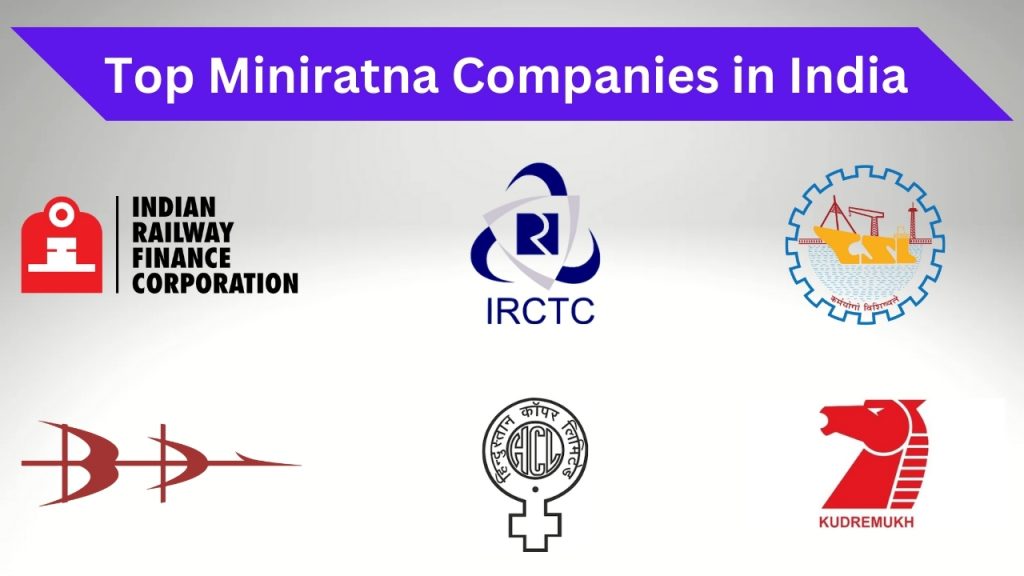
1. Indian Railway Finance Corporation Ltd.
Indian Railway Finance Corporation Ltd. was established in 1986 as the financial arm of the Indian Railway. The IRFC is governed by the Ministry of Railways. The company’s main goal is to raise capital through various means, such as issuing bonds, etc. The international capital market is another source of funding for the company. In 2021, the company launched its initial public offering (IPO) and was listed on the Indian stock exchanges. The company’s main office is located in New Delhi.
2. Indian Railways Catering and Tourism Corporation Ltd.
The Ministry of Railways formed the Indian Railway Catering and Tourism Corporation of India (IRCTC), a public sector organization. To modernize Indian Railways’ tourist and online ticketing operations, IRCTC was founded in 1999.
In 2002, they introduced irctc.co.in, an online ticketing platform. With this website, customers may make online reservations for tickets. Subsequently, they began providing more services, such as catering services for Indian Railways. The IRCTC mobile application was introduced in response to the growth in smartphone usage and technical advancements. It provides users with a quick way to order tickets, check train schedules, and access other services.
3. Cochin Shipyard Ltd.
Cochin Shipyard was established by the Indian government in 1972, and the company’s shipyard is located in Kochi, Kerala. The business delivered the MV Rani Padmini, a bulk carrier, as its maiden vessel in 1981. The business constructed the INS Vikrant, India’s first aircraft carrier. The company went public in 2017 to raise funds to modernize its infrastructure. Its main office is located in Kochi, Kerala.
4. Bharat Dynamics Ltd.
The Indian government formed Bharat Dynamics Ltd. in 1970 as a public-sector undertaking under the Ministry of Defence. The business was founded with the primary goal of producing guided weaponry. The company has created the Prithvi, Akash, and Nag Missiles in partnership with the Defence Research and Development Organization (DRDO). 2018 saw the company’s listing on the Indian Stock Exchange. The company’s headquarters is in Hyderabad.
5. Hindustan Copper Ltd.
Hindustan Copper was established by the Indian government in 1967 as a central public sector undertaking under the Ministry of Mines. The company’s primary goal is to explore the nation’s copper mining potential. The business took over the mines from NMDC Limited in 1967. The corporation is currently engaged in exploring new mines to boost production. The company’s main office is located in Kolkata.
6. KIOCL Ltd.
The Indian government established KIOCL, formerly known as Kudremukh Iron Ore Company Limited, in 1976. It is a department of the Ministry of Steel. According to a Supreme Court ruling, the company’s mines were shut down in 2005. Following this, the company began importing iron ore from various suppliers, including Brazil. The company is searching for a new mining lease to guarantee a steady supply of iron ore. The organization’s headquarters is in Bangalore.
Performance of the Miniratna Companies
Company
1-Year Return
3-Year Return
5-Year Return
Indian Railway Finance Corporation Ltd.
-24.52%
439.11%
363.98%
Indian Railway Catering & Tourism Corporation Ltd.
-30.29%
-14.29%
81.54%
Cochin Shipyard Ltd.
45.39%
776.17%
628.70%
Bharat Dynamics Ltd.
2.14%
360.40%
575.58%
Hindustan Copper Ltd.
-19.44%
80.48%
529.77%
KIOCL Ltd.
-52.28%
11.45%
126.62%
(As of 28th February 2025)
Key Performance Indicators (KPIs)
Company
ROE (in %)
ROCE(in %)
Debt to Equity (x)
P/E
P/B
Indian Railway Finance Corporation Ltd.
13.03
53.32
8.38
36.50
4.79
Indian Railway Catering & Tourism Corporation Ltd.
34.40
45.47
0
62.24
22.87
Cochin Shipyard Ltd.
15.65
19.98
0
59.87
10.28
Bharat Dynamics Ltd.
16.84
11.33
0
82.35
14.12
Hindustan Copper Ltd.
12.92
15.74
0.10
87.86
13.91
KIOCL Ltd.
-4.34
-2.31
0.03
-326.56
12.93
(All the above data is of the year ended March 2024)
In conclusion, Miniratna Companies of India significantly contribute to the nation’s economic growth. These businesses demonstrate consistent financial performance, effective operational efficiency, and the ability to strike a balance between profitability and social welfare. These businesses are regarded as excellent investment options, but before making investment decisions, it’s wise to consider your risk tolerance and speak with an investing professional.
S.NO.
Check Out These Interesting Posts You Might Enjoy!
There are 76 Miniratna companies in India, of which 64 are under Category I, and 12 are under Category II.
How many Miniratna companies are there in Category 1?
There are 64 Miniratna companies in Category-I as of 2024. These companies have demonstrated consistent profitability and operational efficiency.
How many Miniratna companies are there in Category 1?
There are 12 Miniratna companies in Category-II as of 2024. These companies have met basic profitability and financial stability criteria.
Which department gives Miniratna status to the companies?
The Department of Public Enterprises gives the Miniratna status to eligible companies.
Is it compulsory for Miniratna companies to get listed on the Indian Stock Exchange?
Miniratna companies are not required to list on the Indian Stock Exchange.
What is the full form of CPSE?
CPSE stands for Central Public Sector Enterprises.
Can a Miniratna company be upgraded to Maharatna status?
If a Miniratna company satisfies the requirements to be a Maharatna status, it can be granted a Maharatna status.
Where can I find the list of Miniratna companies?
The official and updated list of Miniratna companies is usually published on government websites, such as the Department of Public Enterprises (DPE) or other reliable sources like financial news platforms.
Navratna Companies are a group of government-owned enterprises whose legacy of excellence and contribution to the Indian economy is widely recognized and appreciated. These companies play a crucial role in driving India’s economic growth and development across various sectors.
In today’s blog, we will explore the key features of Navratna companies, how they have evolved, and their past financial track record.
What is a Navratna company?
Navratna Companies are a special group of public sector undertakings (PSUs) in India. These PSUs are the top performers, enjoying enhanced financial autonomy and operational flexibility granted by the government. The term ‘Navratna’ means nine gems in Sanskrit.
Key Characteristics of Navratna Companies
They can invest up to INR 1,000 crores without government approval.
They have more freedom to make decisions and can compete better in the market.
The Navratna status brings increased recognition and credibility.
Additionally, these companies play an important role in the Indian economy and are widely regarded as industry leaders.
Eligibility Criteria for Becoming a Navratna Company
A company must satisfy the following criteria to become a Maharatna company:
Miniratna Category 1 Status – For a PSU to qualify for ‘Navratna status’, it must have held ‘Miniratna’ Category 1 status for at least three years.
Profits – The company must have consistently generated profits over the past three years.
Net Worth – To ensure financial stability, the company needs to maintain a positive net worth consistently over the past three years.
Corporate Governance – The PSU must have a track record of exemplary performance and demonstrate sound corporate governance practices.
Global Presence – the company must establish a substantial global presence and engage in international operations.
Furthermore, Miniratna Category 1 and Schedule ‘A’ CPSEs, which have achieved an ‘excellent’ or ‘very good’ rating under the Memorandum of Understanding system in at least three out of the past five years and have a composite score of 60 or higher in the six specifically chose parameters viz.,
Net profit to net worth,
Manpower cost to total cost of production/services,
Profit before depreciation, interest, and taxes to capital employed,
Profit before interest and taxes to turnover,
Earnings per share
Inter-sectoral performance
All Navratna Companies List Based on Market Capitalization
The top Navratna stocks in 2026 are:
S.No.
Navratna Stocks
1
Bharat Electronics Ltd.
2
Rail Vikas Nigam Ltd.
3
Mazagon Dock Shipbuilders Ltd.
4
Indian Renewable Energy Development Agency Ltd.
5
NMDC Ltd.
6
Container Corporation of India Ltd.
7
Engineers India Ltd.
8
Mahanagar Telephone Nigam Ltd.
9
National Aluminium Company Ltd.
10
National Buildings Construction Corporation Ltd.
11
Neyveli Lignite Corporation Ltd.
12
Rashtriya Ispat Nigam Ltd.
13
Shipping Corporation of India Ltd.
14
Indian Railway Catering & Tourism Corporation Ltd.
A brief overview of Navratna companies is given below:
1. Hindustan Aeronautics Ltd.
Hindustan Aeronautics Ltd.(HAL) is India’s biggest aerospace company and plays a major role in the country’s defense industry. Founded in 1940, HAL has a rich history of designing, manufacturing, and maintaining aircraft, helicopters, etc. In the 1970s and 1980s, India made significant strides in developing indigenous aircraft, such as the HF-24 Marut and the HAL Cheetah Helicopter. HAL is a versatile aerospace company involved in a wide range of activities, which includes the design, development, and production of fighter jets, trainers, and transport aircraft, the production of military and civilian helicopters, and overhauling and repairing aircraft for both domestic and international customers.
2. Bharat Electronics Ltd.
Established in 1954, the company manufactures a wide range of advanced electronic products for Indian defense forces. This forms the major part of their revenue. It plays an important role in India’s defense sector by providing several crucial electronic equipments to the Indian Armed Forces. Bharat Electronics Ltd. (BEL) is a Navratna Public Sector Undertaking (PSU) under India’s Ministry of Defence. Products include communication equipment, electronic warfare systems, avionics, and night vision devices. The company also ventured into the civilian market and is trying to capture new growth opportunities. Their non-defense products include homeland security solutions, telecom & broadcast systems, medical electronics, etc.
3. Rail Vikas Nigam Ltd.
Rail Vikas Nigam Ltd. (RVNL) is a public sector undertaking under the Ministry of Railways, Government of India. It was established in 2003 with the main goal of quickly carrying out railway infrastructure projects. It is involved in the development and implementation of railway infrastructure projects in India. RVNL plays an important role in enhancing the efficiency and capacity of the Indian railway network. The company is responsible for the planning, designing, constructing, and maintaining various railway infra projects, which include new railway lines, doubling of existing lines, gauge conversion, electrification of railway lines, railway bridges, and tunnels. It offers complete project management services to ensure projects are completed on time and meet quality standards. RVNL actively participates in PPP projects with private companies to finance and execute railway infra projects.
4. Mazagon Dock Shipbuilders Ltd.
Mazagon Dock Shipbuilders Ltd. is a leading shipbuilding and repair yard in India. Established in 1849, the company has a rich history of constructing and repairing naval vessels, commercial ships, and offshore structures. In 1849, it was established as the Bombay Dockyard. During the 1990s and 2000s, the company started building commercial ships such as tankers, bulk carriers, and offshore platforms. The 2010s were marked by a sustained dedication to both naval and commercial shipbuilding, placing a strong emphasis on advanced technologies and high-quality standards. The company is an advanced shipbuilding facility for naval shipbuilding, commercial shipbuilding, ship repair, etc.
5. Indian Renewable Energy Development Agency Ltd.
Indian Renewable Energy Development Agency Ltd. (IREDA) is a financial institution that operates under the Ministry of New and Renewable Energy, which is part of the Government of India. Created in 1987, IREDA aims to support and fund renewable energy projects in India. It provides financial assistance to various renewable energy projects, including solar power, wind power, biomass power, small hydropower, and geothermal power. It plays an important role in promoting sustainable energy development in India. IREDA supports policies that encourage the development of renewable energy in India.
6. National Mineral Development Corporation Ltd.
National Mineral Development Corporation Ltd. (NMDC) is the biggest iron ore producer in India, playing a significant role in the country’s steel industry. It was founded in 1958 as the National Mineral Development Corporation and has played a leading role in India’s mining industry. The company is the primary supplier of iron ore to India’s steel industry, ensuring a steady supply of raw materials. It has played an important role in developing infrastructure in mining regions, including roads, railways, and power plants. NMDC operates numerous iron ore mines in India, such as Bailadila in Chhattisgarh, Donimalai in Karnataka, and Kumaram Bheem in Telangana. It is also looking for new mining opportunities and expanding its operations.
6. Container Corporation of India Ltd
Container Corporation of India Ltd. (CONCOR), founded in 1988 under the Ministry of Railways, is India’s largest container logistics and supply chain company. It provides end-to-end multimodal transport services combining rail, road, and port logistics. CONCOR plays a vital role in facilitating EXIM trade and strengthening India’s freight infrastructure network.
7. Engineers India Ltd. (EIL)
Engineers India Ltd. (EIL), incorporated in 1965, is a premier public sector engineering consultancy and EPC firm under the Ministry of Petroleum and Natural Gas. It provides design, project management, and turnkey solutions for refineries, petrochemicals, pipelines, and infrastructure. EIL has delivered landmark industrial and energy projects across India and abroad.
8. Mahanagar Telephone Nigam Ltd. (MTNL)
Mahanagar Telephone Nigam Ltd. (MTNL), established in 1986, provides telecom services in Delhi and Mumbai. Once a dominant player in India’s telecom market, MTNL now focuses on broadband, mobile, and enterprise connectivity. The company is working closely with BSNL toward network modernization and integration to enhance nationwide telecom infrastructure.
9. National Aluminium Company Ltd. (NALCO)
National Aluminium Company Ltd. (NALCO), founded in 1981, is one of Asia’s largest integrated aluminium producers, operating across mining, refining, smelting, and power generation. Headquartered in Bhubaneswar, NALCO exports aluminium and alumina to global markets. The company focuses on energy efficiency, sustainable mining, and expansion into renewable energy projects.
10. National Buildings Construction Corporation Ltd. (NBCC)
National Buildings Construction Corporation Ltd. (NBCC), incorporated in 1960, is a Navratna PSU under the Ministry of Housing and Urban Affairs. It provides project management consultancy, real estate development, and EPC contracting. NBCC has executed key government projects, including redevelopment of Delhi’s Central Vista and other major urban infrastructure works.
11. Neyveli Lignite Corporation Ltd. (NLC India Ltd.)
NLC India Ltd., established in 1956 under the Ministry of Coal, is a leading lignite mining and power generation company. Operating in Tamil Nadu and other states, it produces thermal and renewable energy. NLC is expanding into solar and wind energy projects, reinforcing India’s push toward cleaner power generation.
12. Rashtriya Ispat Nigam Ltd. (RINL)
Rashtriya Ispat Nigam Ltd. (RINL), known as Vizag Steel, was incorporated in 1982 and operates the Visakhapatnam Steel Plant. It specializes in long steel products for construction and infrastructure industries. As one of India’s leading steel producers, RINL contributes to national development through efficient operations, exports, and modernization initiatives.
13. Shipping Corporation of India Ltd. (SCI)
Shipping Corporation of India Ltd. (SCI), founded in 1961, is India’s largest shipping company offering maritime transport for crude oil, coal, fertilizers, and bulk cargo. It operates tankers, bulk carriers, passenger ships, and offshore vessels. SCI plays a crucial role in facilitating India’s seaborne trade and energy logistics network.
14. Indian Railway Catering & Tourism Corporation Ltd. (IRCTC)
Indian Railway Catering & Tourism Corporation Ltd. (IRCTC), established in 1999, manages online railway ticketing, catering, and tourism for Indian Railways. It operates India’s largest e-ticketing platform, serves millions daily, and manages premium trains like the Maharajas’ Express. IRCTC is expanding into hospitality, packaged drinking water, and tourism services.
15. Rashtriya Chemicals & Fertilisers Ltd. (RCF)
Rashtriya Chemicals & Fertilisers Ltd. (RCF), formed in 1978, is a leading producer of fertilizers and industrial chemicals. It manufactures urea, complex fertilizers, and chemicals like methanol and ammonium nitrate. RCF supports Indian agriculture with efficient fertilizer supply chains and sustainability-focused initiatives aimed at improving soil health and productivity.
16. IRCON International Ltd.
IRCON International Ltd., incorporated in 1976, is a public sector construction company under the Ministry of Railways. It executes railway, highway, and bridge infrastructure projects across India and internationally. Known for technical excellence and timely delivery, IRCON has built major infrastructure in difficult terrains and several foreign countries.
17. RITES Ltd.
RITES Ltd., founded in 1974, is a leading transport infrastructure consultancy and engineering company under the Ministry of Railways. It offers project management, turnkey solutions, and export of rolling stock. RITES operates in over 55 countries and is a key contributor to India’s railway modernization and international infrastructure presence.
18. National Fertilisers Ltd. (NFL)
National Fertilisers Ltd. (NFL), incorporated in 1974, is India’s second-largest urea producer and a major supplier of nitrogenous fertilizers. It operates five gas-based plants and provides agrochemicals, seeds, and soil health solutions. NFL plays a key role in supporting Indian agriculture through efficient production and farmer engagement programs.
19. ONGC Videsh Ltd. (OVL)
ONGC Videsh Ltd. (OVL) is the international arm of ONGC, engaged in oil and gas exploration and production overseas. Operating in over 30 countries, OVL contributes to India’s energy security by acquiring hydrocarbon assets abroad. Its global portfolio spans Asia, Africa, and Latin America across multiple upstream projects.
20. Housing & Urban Development Corporation Ltd. (HUDCO)
Housing & Urban Development Corporation Ltd. (HUDCO), founded in 1970, provides long-term finance for housing and infrastructure projects. It supports affordable housing, water supply, roads, and sanitation initiatives. HUDCO plays a critical role in India’s urban development mission and promotes inclusive growth through sustainable financing solutions.
21. RailTel Corporation of India Ltd.
RailTel Corporation of India Ltd., established in 2000, is a telecom infrastructure provider under Indian Railways. It manages an extensive nationwide optic fiber network and offers broadband, data center, and cloud services. RailTel also supports the government’s Digital India mission by enabling connectivity in rural and remote areas.
22. Indian Railway Finance Corporation Ltd. (IRFC)
Indian Railway Finance Corporation Ltd. (IRFC), founded in 1986, is the dedicated financial arm of Indian Railways. It mobilizes funds from domestic and international markets to support railway expansion, electrification, and modernization projects. IRFC plays a pivotal role in funding India’s growing transportation and logistics infrastructure.
23. NHPC Ltd.
NHPC Ltd., formerly National Hydroelectric Power Corporation, was established in 1975. It is India’s leading hydropower company engaged in the design, construction, and operation of hydroelectric projects. NHPC is expanding into solar and wind power, supporting India’s renewable energy goals and sustainable development agenda.
24. SJVN Ltd.
SJVN Ltd., earlier Satluj Jal Vidyut Nigam Ltd., was incorporated in 1988 as a joint venture between the Government of India and Himachal Pradesh. It operates in hydro, solar, and wind energy sectors. SJVN’s flagship project, the Nathpa Jhakri Power Station, is India’s largest hydroelectric plant.
25. Bharat Sanchar Nigam Ltd. (BSNL)
Bharat Sanchar Nigam Ltd. (BSNL), founded in 2000, is India’s largest government-owned telecom company. It provides mobile, broadband, and enterprise communication services across urban and rural India. BSNL plays a crucial role in digital connectivity and is expanding its 4G and 5G infrastructure under the government’s telecom revival plan.
Performance of the Navratna Companies
Company
1-Year Returns
3-Year Returns
5-Year Returns
Bharat Electronics Ltd.
46.79%
282.84%
1,307.69%
Rail Vikas Nigam Ltd.
-26.84%
608.90%
1,703.59%
Mazagon Dock Shipbuilders Ltd.
34.03%
591.09%
3,154.52%
Indian Renewable Energy Development Agency Ltd.
-26.13%
–
–
NMDC Ltd.
-1.56%
99.62%
161.23%
Container Corporation of India Ltd
-19.07%
-14.78%
70.47%
Engineers India Ltd
2.57%
172.37%
208.40%
Mahanagar Telephone Nigam Ltd.
-12.15%
97.65%
360.77%
National Aluminium Company Ltd.
0.51%
216.29%
664.42%
National Buildings Construction Corporation Ltd.
16.86%
405.75%
663.53%
Neyveli Lignite Corporation Ltd.
2.99%
235.68%
440.21%
Shipping Corporation of India Ltd.
17.83%
80.79%
403.10%
Indian Railway Catering & Tourism Corporation Ltd.
-12.01%
-5.31%
176.11%
Rashtriya Chemicals & Fertilisers Ltd.
-3.69%
49.91%
251.98%
IRCON International Ltd.
-19.97%
246.06%
346.24%
RITES Ltd.
-19.97%
246.06%
346.24%
National Fertilisers Ltd.
-12.95%
84.94%
201.08%
Housing & Urban Development Corporation Ltd.
5.77%
485.86%
656.10%
RailTel Corporation of India Ltd.
-10.17%
194.18%
–
Indian Railway Finance Corporation Ltd.
-20.20%
415.95%
390.92%
NHPC Ltd
0.84%
91.78%
315.84%
SJVN Ltd
-21.57%
142.05%
295.38%
(As of 03 November 2025)
Key Performance Indicators
Company
ROE (in %)
ROCE (in %)
Debt-to-Equity
P/E (x)
P/B (x)
Bharat Electronics Ltd.
24.4
30.13
0
51.67
13.42
Rail Vikas Nigam Ltd.
18
16.74
0.68
82.8
13.78
Mazagon Dock Shipbuilders Ltd.
31.02
35.65
0
39.22
15.68
Indian Renewable Energy Development Agency Ltd.
14.62
42.69
5.80
50.93
7.98
NMDC Ltd.
21.71
30.49
0.13
11.26
2.59
Container Corporation of India Ltd
10.40
13.49
0
26.1
3.4
Engineers India Ltd
21.7
23.4
0
15.5
3.3
Mahanagar Telephone Nigam Ltd.
0
14.88
-1.20
-0.8
-0.10
National Aluminium Company Ltd.
-21.5
-15.6
0.93
-22
4.79
National Buildings Construction Corporation Ltd.
21.82
29.96
0
40.95
8.92
Neyveli Lignite Corporation Ltd.
14.00
9.92
1.20
12.5
1.81
Shipping Corporation of India Ltd.
10.14
10
0.23
9.13
0.93
Indian Railway Catering & Tourism Corporation Ltd.
35.88
43.18
0
44.28
15.88
Rashtriya Chemicals & Fertilisers Ltd.
5.10
9.21
0.58
28.59
1.46
IRCON International Ltd.
11.49
8.93
0.67
20.24
2.32
RITES Ltd.
14.57
19.06
0
27.89
4.07
National Fertilisers Ltd.
6.77
7.49
0.73
21.43
1.45
Housing & Urban Development Corporation Ltd.
15.07
52.29
5.97
14.74
2.22
RailTel Corporation of India Ltd.
14.99
19.20
0
32.39
4.86
Indian Railway Finance Corporation Ltd.
12.34
49.98
7.83
24.98
3.09
NHPC Ltd
7.57
6.21
0.99
30.22
2.08
SJVN Ltd
5.78
4.45
1.90
44.03
2.54
(All the above data is for the year ended March 2025)
To summarize, Navratna companies are a valuable asset to India’s economy. These companies generate revenue and create job opportunities, making them instrumental in driving India’s growth. Their performance and contributions have made them leading players in their respective sectors. These companies have exhibited a remarkable track record of innovation and resilience, which will serve as a strong foundation for their future endeavors. With their extensive resources, talented workforce, and commitment to excellence, the Navratna companies are well-positioned to drive their growth and contribute to the overall development of the nation.
S.NO.
Check Out These Interesting Posts You Might Enjoy!
With its robust regulatory framework and growing investor confidence, India’s capital market offers exciting prospects for domestic and international investors. These exchanges are essential platforms for trading securities, and their presence contributes to the overall liquidity and efficiency of the market.
In this blog, we will provide a brief overview of some of India’s recognised stock exchanges and the role and significance an exchange holds in the economy.
What is a Stock Exchange?
A stock exchange is a marketplace where individuals and institutions engage in the buying and selling of securities, such as stocks, bonds, commodities, currencies, ETFs etc. It serves as a hub of opportunity, facilitating the transactions that drive the global economy and empowering investors to make better decisions. Stock exchanges operate on the principles of supply and demand, with price fluctuations depending on the market conditions. Stock exchanges are subject to strict regulations aimed at safeguarding investors and ensuring the integrity of the market.
List of Top 7 Stock Exchanges in India
An overview of stock exchanges in India is given below:
1. BSE Ltd.
BSE is a stock exchange located in Mumbai, India. It is the oldest stock exchange in Asia and the tenth oldest in the world, established in 1875. It is one of India’s leading exchange groups and is known as the ‘Dalal Street’, often regarded as the Wall Street of India. The story starts under a banyan tree near Mumbai Town Hall, where a handful of stockbrokers would gather to trade cotton in the 1850s. Premchand Roychand, a cotton merchant, is credited with formalising these informal gatherings by establishing the ‘Native Share and Stock Brokers Association in 1875. This is the official founding year of the BSE. The trading venue relocated multiple times within Mumbai before eventually establishing its permanent residence on Dalal Street, owing to the proliferation of brokers. The Indian government officially recognised it as the country’s first stock exchange in 1957, granting it official trading rights. Since then, BSE has continuously evolved to keep pace with the times.
2. National Stock Exchange of India Ltd.
The NSE is one of the two leading stock exchanges in India. It was established in 1992 and is located in Mumbai. It is known for its electronic trading platform and is considered the largest stock exchange in India in terms of daily trading volume. It lists a wide range of financial instruments, including equities, derivatives, exchange-traded funds (ETFs), and more. Also, NSE was the first exchange in India to implement electronic or screen-based trading, starting its operations in 1994. NSE has ensured the reliability and performance of its systems through a culture of innovation and substantial investment in technology. NSE has led the way in technological advancements in the Indian capital market by introducing innovative trading systems and products.
3. Metropolitan Stock Exchange of India Ltd.
The Metropolitan Stock Exchange of India (MSEI) was founded in 2008. It is based in Mumbai and aims to provide a platform for trading a variety of securities, including equities, derivatives and debt instruments. The MSEI is approved by the SEBI under the Securities Contracts (Regulation) Act, 1956. The Ministry of Corporate Affairs, Government of India, also designated the MSE as a ‘recognised stock exchange’ in 2012. The Metropolitan Stock Exchange has two subsidiaries.
Metropolitan Clearing Corporation of India Limited (MCCIL) – MSEI owns 86.94% of MCCIL, which deals in various asset classes on the MSEI. MCCIL also has an agreement with ICEX to provide clearing and settlement services for trades in ICEX’s commodities and derivatives segments.
MCX SX KYC Registration Agency Limited (MRAL) – Maintains a comprehensive database for exchange participants and other relevant individuals following the guidelines outlined by the KYC regulations.
4. Multi Commodity Exchange of India Ltd.
With headquarters in Bombay, MCX offers trading in various commodities such as metals, energy, agriculture, and bullion. Its robust trading platform and extensive network make it a preferred choice for investors and traders alike. Established in 2003, it has become a prominent platform for trading various commodities. Some commodities traded on MCX include gold, silver, crude oil, natural gas, etc. With its advanced trading technology and robust risk management systems. Over the years, the MCX has achieved significant growth, drawing in a large number of participants, including traders, brokers, and institutional investors.
5. National Commodity & Derivatives Exchange Ltd
NCDEX was established in 2003 and is regulated by the SEBI. It offers futures trading in agricultural commodities, metals and energy products. The main objective of NCDEX is to function as a highly efficient platform for price discovery and risk management. This commitment has been consistently proven over the last two decades. NCDEX prices are widely recognised as benchmarks in both domestic and international commodities markets. NCDEX and its subsidiaries offer a complete market infrastructure that includes Clearing & Settlement services, Repository services and an e-auction Platform. The exchange is dedicated to uplifting and developing farmers and the agricultural sector.
6. Indian Commodity Exchange Limited
ICEX is a new commodity exchange in India that was established in 2017. Its goal is to offer a competitive and transparent platform for trading a wide range of commodities. It is regulated by the SEBI. Prominent shareholders of the company include MMTC Ltd. Central Warehousing Corporation, Indian Potash Limited, KRIBHCO, Punjab National Bank, IDFC Bank Ltd., Gujarat Agro Industries Corporation, Reliance Exchangenext Limited, Bajaj Holdings & Investment Limited, Gujarat State Agricultural Marketing Board, NAFED, and Indiabulls Housing Finance Limited. The exchange mission is to become the most preferred platform for price discovery and hedging.
7. Calcutta Stock Exchange Ltd.
The Calcutta Stock Exchange Limited (CSE) is not only one of the oldest stock exchanges in India but also a true pioneer, having been established in 1908. It has played an important role in India’s financial landscape for many years, but its prominence declined in recent decades, and it was finally shut down. The NSE terminated its trading agreement with the CSE on July 18, 2023. However, on November 17, 2023, a division bench lifted the stay. The CSE was instructed to close all open transactions by November 28, 2024. In the late 20th century, the CSE faced growing competition from other stock exchanges like BSE and NSE. The CSE’s market share and trading volume declined as a consequence of this competition. Today, it mainly serves the eastern region of India, with a focus on Kolkata and its surrounding areas.
A stock exchange performs the following functions:
Primary Market Function – Stock exchanges enable companies to raise capital by issuing shares to the public through an Initial Public Offering (IPO). The capital raised can be used for further business expansion and general corporate purposes.
Price Discovery – The stock market allows people to buy and sell stocks, making it easy for investors to turn their investments into cash. This helps ensure that securities are priced fairly based on market conditions. Buyers and sellers interact to determine the price of a company that reflects its perceived value.
Economic Indicator – The stock market’s performance often acts as a key indicator of the overall economic health, and this is impossible without an efficient stock exchange. A rising market shows confidence and growth, while a falling market may showcase economic uncertainty.
Corporate Governance – Publicly traded companies must follow strict disclosure requirements, which enhances corporate governance and accountability.
Promotion of Savings and Investments – The stock exchange helps people save and invest by offering a way to earn money from their investments.
Conclusion
The stock exchanges in India have played a pivotal role in the country’s economic growth and development. From the historic Bombay Stock Exchange to the more recent National Commodity & Derivatives Exchange, these exchanges have provided a platform for capital formation, price discovery, and efficient trading. As the Indian economy expands, it is anticipated that the stock exchanges will assume an increasingly substantial role in the upcoming years. Their ability to facilitate investment, promote transparency, and support economic growth will be imperative for India’s ongoing prosperity.
You can invest in the Indian stock market through a registered broker. They can help you open a demat account through which you can execute your buy and sell orders.
What are some popular indices in India?
Some popular indices in India include the Nifty 50 and the Sensex.
Are foreign investors allowed to invest in the Indian stock market?
Foreign investors can invest in the Indian stock market through the Foreign Portfolio Investment (FPI) route.
How are stock exchanges regulated in India?
The Securities and Exchange Board of India (SEBI) is the regulatory body for the Indian securities market, overseeing stock exchanges and their operations.
What is the listing process for a company on the stock exchange in India?
Companies that want to get listed must meet specific criteria related to corporate governance practices and other regulations. They also need to submit documentation to the stock exchange and go through a review process.
The cement industry has always been a crucial sector in the global economy, producing a key material for building infrastructure. It is one of the largest sectors in India, contributing significantly to the economy. As of 2024, India is the second-largest cement producer, with an annual production capacity of over 550 million tonnes.
In today’s blog, we will discuss the best Cement stocks in India based on market capitalization and 1-year returns.
Overview of the Cement Industry In India
The cement industry in India is also a major employer as it provides jobs to over a million people directly and indirectly. Domestic demand is the main factor driving the sector’s growth. The cement exports to neighboring countries make India a key player in the global cement market. The Indian cement industry is poised for significant growth as new investments and capacity expansions are planned to meet future demand. The sector is expected to grow at a CAGR of 6-7%, driven by urbanization, infrastructure projects, and government initiatives like affordable housing.
Best Cement Stocks in India Based on Market Capitalization – An Overview
The best cement stocks in India are given below, along with a brief overview:
1. UltraTech Cement Ltd.
UltraTech Cement Limited, based in Mumbai, is an Indian multinational cement company. It is now India’s largest manufacturer of grey cement, ready-mix concrete (RMC), and white cement. Globally, it ranks as the fifth-largest, with its installed capacity of 152.70 million tonnes per annum and a sales volume of 119 million tonnes per annum. UltraTech Cement is a key player in the construction industry because of its extensive product range and significant market presence.
2. Ambuja Cements Ltd.
Ambuja Cements Limited is one of India’s leading cement companies and a part of the Adani Group. The company is known for its sustainable development projects and environment-friendly practices and has been providing reliable home-building solutions. The company’s innovative products meet customer needs and help reduce carbon footprints. Ambuja Cements actively contributes to societal well-being, which makes it one of the most trusted brands in the Indian cement industry.
3. Shree Cement Ltd.
Shree Cement Ltd was founded in 1979 in Beawar, Rajasthan and is India’s third-largest cement producer. It has an installed capacity of 46.9 million tonnes in India and 50.9 million tonnes, including overseas. The company has expanded significantly since 2006 by increasing plant capacities and entering new regions. In 2024, the company announced ‘Bangur’ as its master brand. The company’s headquarters is in Kolkata.
4. ACC Ltd.
ACC Limited, formerly known as The Associated Cement Companies Limited, is an Indian cement producer headquartered in Mumbai. It is a subsidiary of Ambuja Cements and part of the Adani Group. The company was established when eleven cement companies merged to form the “The Associated Cement Companies” on 1 August 1936. It has 18 cement manufacturing units and 82+ ready-mix concrete plants across the nation. On 1 September 2006, it officially changed its name to ACC Limited. The company‘s headquarters is in Mumbai.
5. Dalmia Bharat Ltd.
Dalmia Bharat Limited is an Indian cement manufacturing company primarily engaged in producing and selling cement and related products. The company was established in 1939 and has an installed capacity of 46.6 million tonnes. The company offers a wide range of cements, including Ordinary Portland Cement (OPC), Portland Slag Cement (PSC), Portland Pozzolana Cement (PPC), and Portland Composite Cement (PCC). It also produces speciality cement like sulfate-resisting Portland cement, railway sleeper cement, oil well cement, and cement for airstrips and nuclear power plants. The company’s headquarters is in New Delhi.
Top Cement Stocks Based on 1-Year Return
The cement stocks have been listed in descending order based on their 1-year returns in the table below:
Best Cement Stocks in India Based on 1-Year Return – An Overview
The best cement stocks according to 1-Year return are given below, along with a brief overview:
1. Mangalam Cement Ltd.
Mangalam Cement Limited, part of the B.K. Birla Group started commercial operations in 1981. The company manufactures cement in plants based in Rajasthan and Uttar Pradesh and sells its products under the Birla Uttam brand name. The company has a production capacity of 44 lakh MTPA and primarily serves markets in Uttar Pradesh and Rajasthan. It has a strong distribution network and focuses on sustainability, aiming to increase the production of fly ash-blended cement. The company’s headquarters is in Kolkata.
2. Kesoram Industries Ltd.
Kesoram Industries Limited, a B.K. Birla Group company was established in 1919. The company manufactures cement, tyres and rayon. The company produces cement under the “Birla Shakti” cement brand, with plants in Karnataka and Andhra Pradesh and a packing unit in Maharashtra. It recently refinanced its debt to reduce interest costs. The company has a total installed capacity of 10.75 million tons per annum. The company’s headquarters is in Bangalore.
3. Hemadri Cements Ltd.
Hemadri Cements Ltd was established in 1981. It manufactures and sells cement with a focus on quality and durability. Its products include Hemadri 43 Grade and Hemadri Gold 53 Grade. Cement is manufactured exclusively from Vedadri Lime Stone, which results in high compressive strength and consistency. The company’s headquarters is in Chennai.
4. KCP LTD.
KCP Ltd operates in multiple sectors, including cement, sugar, heavy engineering, power generation, and hospitality. The company runs two cement plants in Andhra Pradesh with a combined capacity of 4.3 MTPA and a packaging plant in Tamil Nadu.
The company has been associated with ISRO for three decades, supplying crucial components for rocket vehicles. KCP plans to expand its facilities to support ISRO’s future programs, including the development of larger rocket motor cases and precision machine shops. The company’s headquarters is in Chennai.
The future of cement stocks in India looks promising. The government’s focus on infrastructure projects, urbanization, and affordable housing is creating demand for cement. Companies are expanding their capacities and adopting sustainable practices, which bodes well for long-term growth. As India continues to develop, the cement industry will benefit from increased construction activities. You can anticipate steady returns from this sector due to consistent demand and ongoing development initiatives. However, it is advised to consult a financial advisor before investing.
S.NO.
Check Out These Interesting Posts You Might Enjoy!
What are the key factors driving the growth of cement companies in India?
Some of the key factors driving the growth of cement companies are increased government infrastructure spending, urbanization, housing demand, and real estate revival.
How do raw material costs impact cement companies in India?
Fluctuations in raw material costs affect production expenses and profitability.
What role does technological innovation play in the cement industry?
It improves efficiency, reduces costs, and minimizes environmental impact.
Are there any risks associated with investing in cement companies in India?
Cement companies face risks related to regulatory changes, raw material price fluctuations, economic downturns, and competition.
How do export opportunities impact Indian cement companies?
Exports provide additional revenue and help mitigate domestic market fluctuations.
Selection Methodology and Important Disclaimer
The stocks included in this list are selected primarily on the basis of their market capitalisation, which represents the total market value of a company’s outstanding shares. The companies are arranged in descending order of market capitalisation, with larger companies appearing first, followed by relatively smaller companies. This methodology is intended to provide a structured approach for identifying companies based on their market size and overall presence within a sector.
However, market capitalisation should not be considered the sole factor while evaluating investment opportunities, as it does not guarantee future performance, profitability, or returns. Investors should also assess other important factors such as financial health, business fundamentals, management quality, valuation metrics, industry outlook, and market conditions before making investment decisions.
The information provided is for educational and informational purposes only and should not be construed as investment advice, recommendation, solicitation, or an offer to buy or sell any securities by Pocketful Fintech Capital Private Limited.
Any nation’s ability to develop depends on its workforce, which can be achieved through education and training. Previously, the only learning options were offline, but as internet services have become more widely available, online learning has taken over the education sector.
In this blog post, we’ll give you an overview of the Indian education industry and its top companies.
Overview of the Education Industry
Any nation’s ability to maintain a skilled labor force largely depends on its educational system, and India’s education system is designed to meet the changing demands of the industry. The businesses in this industry benefit from the growing demand for high-quality education delivered through various channels, including online and offline. The companies provide infrastructure for education, online learning platforms, tutorial services, etc. The Indian education industry is estimated to be valued at USD 225 billion by 2025 and USD 313 billion by 2030.
Top Education Stocks Based on Market Capitalization
Best Education Stocks in India Based on Market Capitalization – An Overview
A brief overview of the best education stocks in India is given below:
1. Veranda Learning Solutions Limited
Kalpathi S. Suresh founded Andromeda Edutech Private Limited in 2018. The business rebranded itself as Veranda Learning Solutions Private Limited in 2020. The company’s primary goal is to offer an educational platform that can meet the demands of students from all backgrounds. The company used to coach students offline, but because of COVID-19, it has changed its focus to online learning. In 2022, the corporation was listed on the Indian Stock Exchange after realizing it needed funds to expand. Classes are available for competitive exams like UPSC, SSC, Banking, etc. The company’s headquarters is in Chennai.
2. NIIT Limited
In 1981, Rajendra S. Pawar and Vijay K. Thadani established the company. When the company first started, computer-based education was offered before computers were widely used in India. Later, in 2000, the company started providing training services to large companies to optimize their training budget. The company has many training centers spread across the country. It has its headquarters in Gurgaon.
3. Aptech Limited
The company was started in 1986 as an IT education company. Later, in 1990, the company expanded its offering to multimedia and animation by establishing a new brand named Arena Animation. In 2003, the business became the first company in India to be certified ISO 9001:2000 in the education and support services sector. It has its headquarters in Mumbai.
4. Career Point Edutech Ltd
The business was founded in 1993 by IIT Delhi alumnus Pramod Maheshwari as a little coaching facility in Kota. Its goal is to assist pupils in passing entrance tests. The business became well-known as a top coaching institute in the 1990s and 2000s by opening numerous coaching centers nationwide. In 2010, the company went public on the Indian Stock Exchange. Its main office is located in Kota, Rajasthan.
5. Drone Destination Limited
The company was established in 2019 to provide drone services and training in India. The DGCA has permitted them to offer drone pilot certification and skill development courses. In addition, they provide drone services to various industries, such as logistics, infrastructure, and agriculture. In October 2022, it partnered with the National Skill Development Corporation (NSDC) as its first Drone Training partner. The company’s main office is located in New Delhi.
Best Education Stocks in India Based on 1-Year Return – An Overview
The best Education stocks according to 1-Year return are given below, along with a brief overview of the services they provide:
LCC Infotech Ltd.
The company was founded in 1980 when computer education became popular in India. The company offers a computer training program for those who want to learn computers and gain IT abilities. In 1990, it emerged as a competitor for firms like NIIT and Aptech. The company’s priorities have changed to include new commercial endeavors in the past few years. Its main office is located in Kolkata.
Zee Learn Ltd.
The business was founded in 2010 and is a part of the ESSEL Group. They began their enterprise by opening Kidzee, their first school, which flourished because of its online curriculum. Following this, the business established Mount Litera Zee School, a K–12 school, as a franchisee in several other states. The company’s headquarters is in Mumbai.
Usha Martin Education and Solutions Ltd.
When the business was first established in 1997, it was known as Telecable Industries Limited. In 2000, the business rebranded itself as Usha Martin Infotech Limited. The company entered the education industry in 2008 and changed its name to Usha Martin Education and Solution Limited in 2009. The firm opened several K–12 institutions across the nation. The company’s main office is located in Kolkata.
Overviews of the remaining companies have been given above.
Key Performance Indicators
Company
ROE (%)
ROCE (%)
Debt to Equity (x)
P/E
P/B
Veranda Learning Solutions Ltd.
-21.14
-0.28
1.20
-15.50
3.27
NIIT Ltd.
3.71
4.53
0
53.03
2.25
Aptech Ltd.
11.17
18.12
0
54.19
5.42
Career Point Edutech Ltd
10.73
12.66
0.07
15.89
1.82
Drone Destination Ltd.
11.49
15.36
0.06
100.21
11.61
LCC Infotech Ltd.
-2161.42
-19.35
1.19
-1.91
44.43
Zee Learn Limited
89.09
16.31
1.80
1.92
1.67
Usha Martin Education and Solutions Limited
1.05
3.21
0.12
126.33
1.41
(All the above data is of the year ended March 2024)
There are various benefits of investing in education stocks, a few of which are mentioned below-
Growth Potential – The country’s growing population is driving up demand for education and skill development, which can only be met by businesses that offer educational services.
Stability – Due to its resilience during an economic downturn, this industry is regarded as one of the most stable in the whole economy.
Periodic Cash flows – The education sector generates steady cash flows through tuition fees, government grants, and other sources.
Factors to Be Considered Before Investing in Education Stocks
Before making any investment in the education sector, there are various factors to be taken into consideration-
Technology – The enterprises in this sector must incorporate new technologies in their teaching methodology and curriculum.
Competitions – In India, this industry is very fragmented, and some regional competitors may impact the earnings of these businesses.
Company’s Financials – One should carefully review the company’s financial reports, including the income statement, balance sheet, and cash flow statements, before purchasing any educational stock to determine whether the business is undervalued.
Future of the Education Sector in India
Globally, there is a growing need for a trained workforce. For a nation to progress, its population must possess a certain level of skill, which is why educational institutions are essential. The internet and globalization have allowed people to receive education across borders, opening up new business opportunities for these companies.
Finally, the country’s growing population presents enormous growth possibilities for the Indian education sector. Both online and offline learning environments are accessible in India. You can take part in this intellectual revolution by investing in the stocks of this industry, but before making any financial decisions, one must carefully weigh all the risk aspects or consult a financial advisor before investing.
S.NO.
Check Out These Interesting Posts You Might Enjoy!
Are there any stocks listed in India related to the education sector?
Veranda Learning Solutions Limited, NIIT Limited, Aptech Limited, Career Point Edutech Ltd, and Drone Destination Limited are India’s top 5 education firms ranked by market capitalization.
How can I identify the best education stocks to invest in?
Examining the company’s financial statements and other economic data is necessary to determine which education stocks present the best investment opportunity.
Is it worth investing in the education sector?
Yes, one can invest in the Indian education sector, given its good growth prospects and government incentives to support it, but only after considering their risk tolerance.
Which education stock in India has the highest market capitalization?
Veranda Learning Solutions Limited has the highest market capitalization among the education stocks.
What are the major risks associated with investing in education sector companies?
The two main risks facing education businesses are competition from local coaching centers and the ease with which sessions can be accessed online.
Selection Methodology and Important Disclaimer
The stocks included in this list are selected primarily on the basis of their market capitalisation, which represents the total market value of a company’s outstanding shares. The companies are arranged in descending order of market capitalisation, with larger companies appearing first, followed by relatively smaller companies. This methodology is intended to provide a structured approach for identifying companies based on their market size and overall presence within a sector.
However, market capitalisation should not be considered the sole factor while evaluating investment opportunities, as it does not guarantee future performance, profitability, or returns. Investors should also assess other important factors such as financial health, business fundamentals, management quality, valuation metrics, industry outlook, and market conditions before making investment decisions.
The information provided is for educational and informational purposes only and should not be construed as investment advice, recommendation, solicitation, or an offer to buy or sell any securities by Pocketful Fintech Capital Private Limited.
Are you looking to invest in the Indian financial sector? It may be worth putting your money in small finance banks. Such banks operating in untapped areas have identified excellent growth opportunities. They are at the forefront of financial inclusion in the year 2024.
This blog revolves around identifying the best small finance banks in India so that one can understand why these might be a value addition to your portfolio. It is time to look at what they are yet to offer and the extent of their development.
Overview Of the Small Finance Bank (SFB) Industry in India
India’s small finance banks are quickly taking action by catering to the underserved parts of the economy, including small businesses, low-income households, and micro-entrepreneurs. Since their inception, SFBs have been an essential part of the financial ecosystem, propelled by the government’s financial inclusion initiative. By 2024, these banks had grown aggressively with a CAGR of over 25%, increasing their presence in both urban and rural areas.
Major players like AU Small Finance Bank, Equitas Small Finance Bank, and Ujjivan Small Finance Bank have displayed their strength and agility in serving the niche market by offering a bouquet of uniquely designed financial products. Although SFBs face some challenges related to asset quality risks and regulatory pressures, they still represent a significant growth opportunity.
Small Finance Bank Share Based on Market Capitalization
Best Small Finance Bank Stocks in India Based on Market Capitalization – An Overview
A brief overview of the best small finance bank stocks in India is given below:
1. AU Small Finance Bank Ltd.
AU Small Finance Bank was established as a NBFC named AU Financiers in 1996 and became a small finance bank in 2017. It is headquartered in Jaipur. It primarily serves the unserved and underserved sections of society. The bank offers various products such as savings and current accounts, fixed deposits, personal and business loans, and insurance. By March 2024, AU Small Finance Bank had over 800 branches across pan-India, serving over 8 million customers, predominantly in critical segments such as MSMEs and rural areas.
Know the Returns:
1Y Return (%)
3Y Return (%)
5Y Return (%)
63.78%
59.48%
120.82%
(As of 29 January 2026)
2. Equitas Small Finance Bank Ltd.
Equitas Small Finance Bank was incorporated in 1993 and headquartered in Chennai, India. Started as Equitas Micro Finance Ltd., Equitas became a bank in 2016. It is focused on providing financial services to the unserved and underserved segments of the economy, including micro, small, and medium-sized enterprises (MSMEs) and low-income groups at the household level. The major products of the bank are a variety of deposit schemes, personal loans, vehicle loans, business loans, and insurance. Equitas has grown to have over 850 branches and over 4 million customers as of March 2024.
Know the Returns:
1Y Return (%)
3Y Return (%)
5Y Return (%)
6.36%
26.74%
68.78%
(As of 29 January 2026)
3. Ujjivan Small Finance Bank Ltd.
Ujjivan Small Finance Bank was incorporated in 2017 when Ujjivan Financial Services, a microfinance institution set up in 2005, received an in-principle approval from the RBI to set up a small finance bank. This Bengaluru-based bank has been operating with a focus on low-income groups. The bank offers a plethora of products, including savings accounts, fixed deposits, and loans, including microloans, home loans, and SME loans. Ujjivan SFB has over 600 branches across India, serving around 6 million customers, and has assets under management of around ₹18,000 crores as of 2024.
Know the Returns:
1Y Return (%)
3Y Return (%)
5Y Return (%)
89.80%
122.82%
66.06%
(As of 29 January 2026)
4. Jana Small Finance Bank Ltd.
Janalakshmi Financial Services, one of the largest microfinance companies, began its journey in 2006. The company was granted the license to establish a small finance bank, and Jana Small Finance Bank commenced its operation in 2018. The bank focuses on financial inclusion through various products like savings accounts, fixed deposits, etc. It also provides multiple loans, including home loans, business loans, and microloans. Currently, Jana Small Finance Bank enjoys a significant presence with over 500 branches across India and a customer base of over 8 million. It manages assets worth over ₹12,000 crores as of 2024.
Know the Returns:
1Y Return (%)
3Y Return (%)
5Y Return (%)
-14.56%
-3.83%
-3.83%
(As of 29 January 2026)
5. Utkarsh Small Finance Bank Ltd.
Utkarsh Small Finance Bank was set up in 2017 by Utkarsh Micro Finance, an organization established in 2009. The bank, based in Varanasi, resolves the issue of financial inclusion. It particularly serves the unserved and underserved sections in rural and semi-urban areas. Their products include savings accounts, fixed deposits, and lending. With more than 600 banking outlets and 4 million served customers, the bank manages assets worth about ₹10,000 crores as of 2024, emphasizing sustainable growth.
Know the Returns:
1Y Return (%)
3Y Return (%)
5Y Return (%)
-28.22%
-41.94%
-42.02%
(As of 29 January 2026)
6. ESAF Small Finance Bank Ltd.
ESAF Small Finance Bank came into existence in 2017. Initially, it was an entity named ESAF Microfinance, which was founded in 1992. Headquartered in Thrissur, Kerala, ESAF Small Finance Bank’s core objective is to deliver appropriate, relevant, and readily available financial services to the underserved sections. With more than 600 branches across the country, ESAF provides several financial products, such as savings accounts, fixed deposit products, microloans, and SME loans. As of 2024, ESAF manages ₹16,000 crores of assets with more than 4 million customers and places high regard on financial inclusion and social responsibility.
Know the Returns:
1Y Return (%)
3Y Return (%)
5Y Return (%)
-22.85%
-60.77%
-60.77%
(As of 29 January 2026)
7. Suryoday Small Finance Bank Ltd.
Suryoday Small Finance Bank was established in 2017, and its headquarters are in Navi Mumbai. The company focuses on financial inclusion. The products range from savings accounts and fixed deposits to microloans, housing loans, MSME loans, and others. As of 2024, the bank has 550 banking outlets that serve nearly 2 million customers and manage assets worth ₹4,500 crores.
Know the Returns:
1Y Return (%)
3Y Return (%)
5Y Return (%)
13.07%
23.71%
-54.41%
(As of 29 January 2026)
8. Capital Small Finance Bank Ltd.
Formed in 2000, Capital Small Finance Bank was the first small finance bank to be converted from a local area bank. Based in Punjab, it runs more than 160 branches. The bank’s main business focus is retail deposits, microfinance, and MSME loans, and it is eyeing servicing the unserved segments of society. Capital Small Finance Bank provides savings accounts, term deposits, home loans, business loans, customer service, and financial inclusion. It manages over ₹ 6,000 crores of assets as of 2024.
Know the Returns:
1Y Return (%)
3Y Return (%)
5Y Return (%)
-12.94%
-42.43%
-42.43%
(As of 29 January 2026)
Key Performance Indicators
Company
Net Interest Margin (%)
ROE (%)
Capital Adequacy Ratio (%)
TTM P/E (x)
P/B (x)
AU Small Finance Bank Ltd.
5.07
12.26
20.10
18.88
2.32
Equitas Small Finance Bank Ltd.
6.15
2.42
20.60
42.62
1.03
Ujjivan Small Finance Bank Ltd.
7.62
11.93
23.10
9.18
1.09
Jana Small Finance Bank Ltd.
6.22
12.17
20.68
8.50
1.04
Utkarsh Small Finance Bank Ltd.
7.19
0.79
20.93
100.14
0.82
ESAF Small Finance Bank Ltd.
7.54
-26.75
21.84
-2.43
0.65
Suryoday Small Finance Bank Ltd.
7.08
5.96
25.83
9.27
0.55
Capital Small Finance Bank Ltd.
4.05
9.82
25.39
8.89
0.87
(As of 31st March 2025, except P/E and P/B ratio)
Benefits of Investing in the Small Finance Bank Stocks
There are various benefits of investing in small finance bank stocks, a few of which are mentioned below-
High Growth Potential: Small finance banks are targeting the underserved segments of society, which can result in high growth in assets and number of customers, giving them ample growth opportunities.
Financial Inclusion: Financial inclusion is one of the core constituents of any government program, and small finance banks are in a perfect position to grow.
Tailored Financial Products: SFBs offer customized financial products to their customers, which makes them popular.
Factors to Consider Before Investing in Small Finance Bank Stocks
Before making any investment in small finance bank stocks, there are various factors to be taken into consideration-
Asset Quality: Analyze the NPAs and the risk management practices of the SFBs because they will lend more to higher-risk segments, affecting the quality of assets.
Regulatory Environment: Investors must be aware of the rules and regulations to check whether the bank adheres to the RBI norms. Illegal activities will have a negative effect on the income and the business of the company.
Growth and Profitability: Analyze the bank’s ability to maintain high growth in the face of existing competition and the changing economic environment.
Management and Governance: Therefore, other things being equal, good governance supported by effective management is crucial in surmounting challenges in this segment. Management quality and the bank’s corporate governance system determine its future performance.
Market Competition: Investors must evaluate competitor SFBs and microfinancing institutions to understand the bank’s market position and growth potential.
The Future of the Small Finance Bank Industry
Good future prospects are unfolding for the Small Finance Banks (SFB) industry in India, which is estimated to grow at nearly 18-20% CAGR over the next five years. Finance inclusion is expected to increase as SFBs focus on low-density areas such as Micro, Small, and Medium Enterprises and the rural population. SFBs may hold 5% of the overall banking assets in India by 2028.
This digital transformation would help small finance banks grow further, enabling them to offer a pleasant customer experience and operational efficiency. However, issues such as asset quality management, competition from other firms, and changing macroeconomic conditions will threaten profitability.
The small finance banks offer a big investment opportunity in India due to the huge population not being served by the formal banking sector. Key leading performers in the sector, AU Small Finance Bank and Equitas Small Finance Bank, have been performing well, while other indicators point to sustainable growth. However, factors like asset quality, the regulatory environment, management quality, and experience need close inspection before investing. However, it is advisable to consult a financial advisor before investing.
S.NO.
Check Out These Interesting Posts You Might Enjoy!
Small finance banks are financial institutions that provide banking services, especially to underserved and unbanked segments like small businesses, low-income groups, and rural areas.
What are the risks associated with investing in SFB stocks?
Key risks include asset quality concerns, regulatory challenges, and competition from larger banks and fintech companies.
How do SFBs differ from traditional banks?
SFBs primarily target niche markets such as MSMEs and rural customers, while traditional banks serve a broader customer base.
What role does digital banking play in the growth of SFBs?
Digital banking enhances customer experience and operational efficiency, enabling SFBs to scale and compete effectively.
How do you identify the best small finance bank stocks in India?
Investors can analyze the regulatory environment, market competition, and financial statements of the banks to identify the best small finance bank stocks in India.
Selection Methodology and Important Disclaimer
The stocks included in this list are selected primarily on the basis of their market capitalisation, which represents the total market value of a company’s outstanding shares. The companies are arranged in descending order of market capitalisation, with larger companies appearing first, followed by relatively smaller companies. This methodology is intended to provide a structured approach for identifying companies based on their market size and overall presence within a sector.
However, market capitalisation should not be considered the sole factor while evaluating investment opportunities, as it does not guarantee future performance, profitability, or returns. Investors should also assess other important factors such as financial health, business fundamentals, management quality, valuation metrics, industry outlook, and market conditions before making investment decisions.
The information provided is for educational and informational purposes only and should not be construed as investment advice, recommendation, solicitation, or an offer to buy or sell any securities by Pocketful Fintech Capital Private Limited.
Do you know there is a group that owns and operates more than 100 companies and has been playing a key role in the nation’s development for more than 140 years? Yes, you guessed it right, we’re talking about none other than the Tata group. It is extremely hard to imagine a sector that doesn’t feature a Tata company as one of its major players. Tata Sons Pvt. Ltd. is the parent company of Tata Group and is a major shareholder in the Tata Group of companies.
In this blog, we will discuss the stocks of Tata Group based on the market capitalization and 1-year returns.
Top Tata Companies Share Based on Market Capitalization
An overview of the companies owned by Tata Group has been given below:
1. Tata Consultancy Services Ltd.
TCS was established in 1968, when Mr Fakir Chand Kohli, known as the Father of India’s IT industry, brought together a young team of IT professionals to provide punched card services to its sister company, TISCO (now Tata Steel). TCS also developed an Inter-Branch Reconciliation System for the Central Bank of India. To expand its operation in the IT sector, the company developed the electronic depository and trading system named SECOM for Swiss company SIS SegaInterSettle in 1975. Furthermore, TCS completed the task of automating the Johannesburg Stock Exchange. TCS has expanded its operations beyond India and has a significant presence in countries across America, Europe, Asia Pacific, the Middle East, and Africa, recognizing the growth opportunities in the global market. The company’s headquarters is in Mumbai.
2. Tata Motors Ltd.
Tata Motors was established in 1945 to manufacture locomotives. The company got the opportunity to enter the commercial vehicle sector by entering into a joint venture with Daimler-Benz in 1954 and setting up a manufacturing facility for Daimler lorries. Today, Tata Motors is a leading global automobile manufacturer. The company manufactures sports utility vehicles, trucks, buses, and defense vehicles. It has operations in India, the UK, South Korea, South Africa, China, Brazil, Austria, and Slovakia through a strong global network of subsidiaries, associate companies and Joint Ventures (JVs). Its subsidiaries include Jaguar Land Rover in the UK and Tata Daewoo in South Korea. The company’s headquarters is in Mumbai.
3. Titan Company Ltd.
Titan was established in 1984 as Titan Watches Limited. The company set up a manufacturing facility in Tamil Nadu to manufacture quartz analog electronic watches. The company entered the digital watch segment when it signed an MoU with Casio in 1986 to manufacture 2 million digital watches annually. Today, Titan has a significant presence in the watches, jewelry, eyewear, and perfume segment. It entered the jewelry segment by launching Tanishq and then launched Titan Eyeplus, an eyewear brand. The company’s headquarters is in Bangalore.
4. Trent Ltd.
The company’s history dates back to 1952 when it was originally established as Lakme Limited. The company was initially involved in the cosmetics business. However, in 1998, the company sold the cosmetic business to Hindustan Unilever and created Trent to venture into the fashion and lifestyle segment. The company acquired Littlewoods International (India) Limited to begin selling readymade garments and related merchandise. Today, Trent owns popular brands such as Westside, Zudio, Utsa, etc. The company’s headquarters is in Mumbai.
5. Tata Steel Ltd.
Mr Jamsetji Tata established Tata Iron and Steel Company Limited (TISCO) in 1907 and was later renamed Tata Steel Ltd. in 2005. The firm established its first facility and began producing steel in 1912. It also provided steel to the defense sector during the Second World War. Today, it is one of the few companies in the steel sector with fully integrated steel operations, ranging from mining to marketing finished products. Tata Steel acquired Singapore-based NatSteel Holdings in 2004 to broaden its global presence. The company has since completed several domestic and foreign acquisitions. The most recent occurred when it bought Bhushan Steel Limited in 2018. The company’s headquarters are in Mumbai.
Top Tata Stocks Based on 1-year Returns
Company
1-year returns
Trent Ltd.
245.08%
Tata Investment Corporation Ltd.
153.99%
Voltas Ltd.
104.85%
Tata Motors Ltd.
88.18%
Tata Power Company Ltd.
70.32%
(As of 26 August 2024)
Overview of Tata Stocks Based on 1-year Returns
An overview of the companies owned by Tata Group has been given below:
Tata Investment Corporation Ltd.
Tata Investment Corporation Ltd. was established in 1937 and was then known as The Investment Corporation of India Ltd. The company is a non-banking financial corporation that invests in debt, equity, etc. The company was incorporated to help small and medium-sized enterprises and entrepreneurs. Some major companies TICL invested in are SKF Bearings (India) Ltd., Ceat Tyres Ltd., etc. The company was listed on the stock market in 1959. The company generates its income through dividends and profit from the sale of investments. The company’s headquarters is in Mumbai.
Voltas Ltd.
Voltas was established in 1954 and is a key player in the home appliances industry. The company started as a collaboration between Tata Sons and Volkart Brothers. Today, the company offers a wide range of products, including air conditioners, air coolers, refrigerators, washing machines, etc. It is the largest air conditioning company in India by market share. Voltas partnered with Ardutch to launch appliances under the brand name “Voltas Beko.” The company has operations in over 100 countries and has undertaken many international projects, including the air conditioning of Burj Khalifa. The company’s headquarters is in Mumbai.
Tata Power Company Ltd.
The company was founded as Tata Hydro-Electric Power Supply Company in 1910. In 1915, the company established the Khopoli plant, which was India’s first clean energy station. The company uses conventional and renewable sources for energy generation and can produce 14,707 MW of energy annually, out of which 40% is from renewable sources. The company aims to achieve carbon neutrality by 2045. The company operates in India, Singapore, South Africa, Mauritius, etc. The company’s headquarters is in Mumbai.
Overviews of the remaining companies have been given above.
Key Performance Indicators
Company
Net Profit Margin (%)
ROCE (%)
Debt to Equity
P/E
P/B
Tata Consultancy Services Ltd.
19.13
63.51
0
34.78
18.02
Tata Motors Ltd.
7.10
19.39
1.16
10.74
4.28
Titan Company Ltd.
6.84
34.89
1.40
93.40
34.53
Trent Ltd.
10.94
27.40
0.12
145.14
60.89
Tata Steel Ltd.
-2.11
8.13
0.89
-47.02
2.11
Tata Investment Corporation Ltd.
83.60
1.07
0
84.04
1.04
Voltas Ltd.
3.09
10.83
0.12
124.40
9.77
Tata Power Company Ltd.
5.04
9.03
1.53
36.23
4.14
(All the above data is of the year ended March 2024)
Tata Group is a collection of India’s value-based corporations prioritizing core values over profits. It all began in 1868 when Jamsetji Tata established a trading firm, and today, companies of the Tata Group have a key presence in almost every crucial sector of India’s economy. Tata Trusts holds a 66% equity stake in Tata Sons, and the dividend income from the companies is utilized exclusively to support philanthropic activities. Tata Group employs more than 1 million people and plays a key role in developing the nation.
Frequently Asked Questions (FAQs)
Who is the Chairman Emeritus of Tata Sons?
Ratan Naval Tata is the Chairman Emeritus of Tata Sons.
Who is the chairman of Tata Group and Tata Sons?
Natarajan Chandrasekaran is the chairman of Tata Sons and Tata Group.
What is Titan’s main business?
Titan Company Ltd. generates revenues by offering watches, jewelry, eyewear, and perfumes to its customers.
What was Tata Steel previously known as?
Tata Steel was previously known as Tata Iron and Steel Company Limited (TISCO).
Who is the founder of the Tata Group?
Jamsetji Nusserwanji Tata is the founder of the Tata Group.
Selection Methodology and Important Disclaimer
The stocks included in this list are selected primarily on the basis of their market capitalisation, which represents the total market value of a company’s outstanding shares. The companies are arranged in descending order of market capitalisation, with larger companies appearing first, followed by relatively smaller companies. This methodology is intended to provide a structured approach for identifying companies based on their market size and overall presence within a sector.
However, market capitalisation should not be considered the sole factor while evaluating investment opportunities, as it does not guarantee future performance, profitability, or returns. Investors should also assess other important factors such as financial health, business fundamentals, management quality, valuation metrics, industry outlook, and market conditions before making investment decisions.
The information provided is for educational and informational purposes only and should not be construed as investment advice, recommendation, solicitation, or an offer to buy or sell any securities by Pocketful Fintech Capital Private Limited.
Central public sector enterprises are crucial to the development of the nation’s economy as they operate in various sectors of strategic importance. The main aim of these companies is to achieve a balance between public welfare and industrial progress. But do you know some companies are granted a special status known as the “Maharatna”?
In this blog, we will discuss the significance of “Maharatna” status, the criteria for earning a Maharatna status, and an overview of the top Maharatna companies.
What is a Maharatna Company?
Central public sector enterprises (CPSEs) are those companies in which the direct holding of the Government of India or other CPSEs is 51% or more. Some CPSEs are of such strategic importance that the government of India started granting them Maharatna status, which gives these companies more autonomy and authority than the other CPSEs. These companies have more freedom to select projects for investment and can invest up to 15% of their net worth in any project without the government’s permission. The meaning of Maharatna is a ‘great jewel,’ and, indeed, these companies are shining jewels among the Indian CPSEs.
A company must satisfy the following criteria to become a Maharatna company:
The company should have a Navratna status.
The company should be listed on the Indian stock exchange with minimum prescribed public shareholding under the SEBI regulations.
An average annual turnover of more than INR 25,000 crores during the last three years.
An average annual net worth of more than INR 15,000 crores during the last three years.
An average annual net profit after tax of more than INR 5,000 crores during the last three years.
The company should have a significant global presence and international operations.
There are 13 Maharatna companies in India, and in this blog, we will discuss the top 7 Maharatna companies based on market capitalization.
Top Maharatna Companies in India Based on Market Capitalization
A brief overview of Maharatna companies is given below:
1. Oil & Natural Gas Corporation Ltd.
Oil & Natural Gas Corporation Ltd. (ONGC) was established in 1956 and is the largest government-owned oil and gas explorer. It accounts for 70% of the domestic crude oil production and 84% of the domestic natural gas production. The company operates in 26 sedimentary basins and a network of pipelines that runs 11,000 kilometers. It has a subsidiary named ONGC Videsh, which has projects in 15 countries. In 2010, ONGC was granted the Maharatna status by the Government of India. The company’s headquarters is in New Delhi.
2. Coal India Ltd.
Coal India is the largest government-owned coal producer in the world. Coal India was established in 1975 and is under the Ministry of Coal, The Government of India. The company accounts for 82% of the total domestic coal production. CIL is a major player in the nation’s energy sector. It operates 313 mines and produced 773.65 million tonnes of coal during 2023-24. It has seven wholly owned subsidiaries in India and a foreign subsidiary named Coal India Africana Limitada (CIAL) in Mozambique. The company received the status of a Maharatna company in 2011. The company’s headquarters is in Kolkata.
3. Power Grid Corporation of India Ltd.
Power Grid Corporation of India is under the Ministry of Power, Government of India. The company was established in 1989 and is responsible for the transmission of bulk power across the country. The company was formerly known as the “National Power Transmission Corporation Ltd.” and is responsible for operating and maintaining 90% of the country’s power transmission systems. The company took over assets from NTPC, NHPC, NEEPCO, NLC, and others to start operations in 1993. The company was granted Mini-Ratna status in 1998, Navratna status in 2008, and Maharatna status in 2019. The company’s headquarters is in Gurugram.
4. Indian Oil Corporation Ltd.
The business was established in 1959 as Indian Oil Company Ltd. Indian Oil Corporation Ltd. was established due to a merger between Indian Oil Company Limited and Indian Refineries Limited in 1964. They established refineries in Gujarat, Barauni, Guwahati, etc., to grow their business and refine 31.44% of the total oil refined in India. Indian Oil’s LPG brand, “Indane,” is crucial in supplying LPG cylinders to more than 150 million households. The company has been aware of its carbon footprint and has launched a number of initiatives such as hydrogen Mobility, Electric Mobility, Solar Cooktop, etc. Its main office is located in New Delhi.
5. Power Finance Corporation Ltd.
The Power Finance Corporation Limited was established in 1986 and is under the administrative control of the Ministry of Power. The company gives financial support not only to projects related to power generation but also to transmission and distribution projects. The company is of strategic importance in India’s power infrastructure development. The company has launched the Green Bond Framework to develop financial instruments to finance green projects. In 2021, the company received the Maharatna status. The company’s headquarters is in New Delhi.
6. GAIL (India) Ltd.
Gas Authority of India Limited, or GAIL, was established in 1984 as a central public sector undertaking under the Ministry of Petroleum and Natural Gas. The company’s first project was the construction, operation, and maintenance of the Hazira-Vijaipur-Jagdishpur (HVJ) pipeline. It is primarily involved in the production and distribution of natural gas and operates 13,722 km of natural gas pipeline network. The company also has operations in the production of solar and wind power. The company was awarded the Maharatna status in 2013. Its headquarters is located in New Delhi.
7. Bharat Petroleum Corporation Limited
Under the Ministry of Petroleum and Natural Gas, Bharat Petroleum Corporation Limited (BPCL), a prominent government-owned integrated oil and gas firm, was established on November 3, 1952. BPCL, which has its headquarters in Mumbai, Maharashtra, is involved in upstream exploration and production as well as the refining, marketing, and distribution of petroleum products. With a combined refining capacity of over 35.3 million metric tonnes per annum (MMTPA), the business runs significant refineries in Mumbai, Kochi, and Bina. With more than 23,600 fuel stations spread throughout India, it offers a wide marketing network to cater to both commercial and retail clients. In 2017, the Indian government recognised BPCL’s strategic significance in the country’s energy industry and its good financial performance by awarding it Maharatna status.
8. Oil India Limited
Oil India Limited (OIL) was established in 1959 and is the second-largest national oil and gas company in India after ONGC. It operates under the Ministry of Petroleum and Natural Gas and plays a vital role in exploration, development, and production of crude oil, natural gas, and LPG. The company also undertakes pipeline transportation, renewable energy projects, and consultancy services in India and abroad. OIL operates extensive exploration and production blocks across Assam, Arunachal Pradesh, Rajasthan, and offshore areas, along with international assets in countries like Russia, Mozambique, and the USA. It owns one of Asia’s longest crude oil pipelines, stretching from Assam to Barauni. Headquartered in Duliajan, Assam, the company was granted Maharatna status in August 2023 by the Government of India, recognizing its outstanding performance and strategic importance in the nation’s energy security.
9. Hindustan Aeronautics Limited
HAL, incorporated on 23 December 1940, is a leading aerospace and defense company under the Ministry of Defence, Government of India. Based in Bengaluru, Karnataka, HAL designs, develops, manufactures, repairs, overhauls, and upgrades aircraft, helicopters, aero-engines, avionics, and related systems. The company is important to India’s defense manufacturing sector and has received Maharatna status, which gives it more financial and operational freedom. HAL has several production divisions and R&D centers across India, supporting homegrown defense programs like the Tejas Light Combat Aircraft, Dhruv helicopter, and Light Combat Helicopter (LCH).
10. Bharat Heavy Electricals Limited
After independence in 1947, India under Prime Minister Jawaharlal Nehru focused on creating a strong industrial base and power infrastructure. To achieve this, Heavy Electricals (India) Limited (HE(I)L) was established in 1956 at Bhopal in collaboration with AEI, UK — marking the birth of India’s heavy electrical equipment industry. Headquartered in Bhopal, the company produced turbines, generators, transformers, and switchgear, supporting major power and industrial projects across the nation and laying the foundation for future plants and growth. Bharat Heavy Electricals Limited (BHEL) was granted Maharatna status by the Government of India in February 2013, recognizing its exceptional performance.
11. Hindustan Petroleum Corporation Limited
HPCL was established in 1974 and is one of India’s leading government-owned oil refining and marketing companies. It operates under the Ministry of Petroleum and Natural Gas and owns two major refineries – in Mumbai and Visakhapatnam – with a combined capacity of over 17 million metric tonnes per annum. HPCL markets a wide range of petroleum products through an extensive retail network across the country. Headquartered in Mumbai, the company was granted Maharatna status in October 2019 by the Government of India.
12. Steel Authority Of India Limited
Steel Authority of India Limited (SAIL) was established in 1973 and is one of India’s largest state-owned steel-making companies. It operates under the Ministry of Steel and manages five integrated steel plants located at Bhilai, Rourkela, Durgapur, Bokaro, and Burnpur, along with three special steel plants. SAIL produces a wide range of steel products used in construction, railways, defense, and infrastructure. Headquartered in New Delhi, the company was granted Maharatna status by the Government of India in May 2010 for its outstanding contribution to the nation’s industrial growth.
13. Rural Electrification Corporation Limited
REC Limited (formerly Rural Electrification Corporation Limited) was established in 1969 and is a leading public sector enterprise under the Ministry of Power, Government of India. The company plays a crucial role in financing and promoting power sector projects across generation, transmission, distribution, and renewable energy. REC provides financial assistance to state electricity boards, power utilities, and private developers. Headquartered in Gurugram, Haryana, REC supports India’s goal of universal electricity access. It was granted Maharatna status by the Government of India in September 2022, recognizing its strong performance and strategic importance.
Performance of the Maharatna Companies
Company
1-Year Returns
3-Year Returns
5-Year Returns
Oil & Natural Gas Corporation Ltd.
-5.25%
91.99%
269.51%
NTPC Ltd.
-17.55%
103.41%
293.74%
Coal India Ltd.
-17.43%
63.85%
234.79%
Power Grid Corporation of India Ltd.
-9.60%
75.76%
201.43%
Indian Oil Corporation Ltd.
-1.89%
120.97%
188.23%
Power Finance Corporation Ltd.
-13.13%
363.06%
446.67%
GAIL (India) Ltd.
-14.40%
109.39%
211.03%
Bharat Petroleum Corporation Limited
2.80%
119.74%
87.99%
Hindustan Aeronautics Limited
14.70%
298.70%
1241.08%
Bharat Heavy Electricals Limited
8.76%
223.51%
695.41%
Hindustan Petroleum Corporation Limited
21.16%
222.79%
291.70%
Steel Authority Of India Limited
16.57%
57.42%
281.09%
Rural Electrification Corporation Limited
-27.33%
282.54%
381.60%
Oil India Limited
-13.11%
237.82%
617.54%
(As of 27 October 2025)
Key Performance Indicators
Company
Net Profit Margin (in %)
ROCE (in %)
Debt to Equity Ratio
P/E Ratio
P/B Ratio
Oil & Natural Gas Corporation Ltd.
6.09
11.15
0.45
8.55
0.90
NTPC Ltd.
11.55
9.40
1.34
17.58
1.88
Coal India Ltd.
24.30
24.24
0.09
6.94
2.48
Power Grid Corporation of India Ltd.
34.13
12.32
1.41
17.40
2.96
Indian Oil Corporation Ltd.
1.58
8.22
0.76
12.94
0.94
Power Finance Corporation Ltd.
28.65
65.86
8.25
5.95
1.16
GAIL (India) Ltd.
7.72
11.52
0.19
9.67
1.41
Bharat Petroleum Corporation Limited
2.72
16.30
0.63
8.92
1.46
Hindustan Aeronautics Limited
26.86
17.41
0.00
33.40
7.98
Bharat Heavy Electricals Limited
21.83
11.83
0.60
9.60
1.26
Hindustan Petroleum Corporation Limited
1.57
12.67
1.30
11.38
1.50
Steel Authority Of India Limited
1.83
6.50
0.51
20.07
0.81
Rural Electrification Corporation Limited
28.18
68.85
6.38
7.13
1.45
Oil India Limited
21.83
11.83
0.60
9.60
1.26
(All the above data is for the year ended March 2025)
Maharatna companies in India are vital to economic growth and provide employment to a huge workforce. These companies operate in various sectors ranging from energy, infrastructure, finance, etc. These companies have earned the Maharatna status by meeting all the criteria related to consistent profitability, annual turnover, annual net worth, etc. Meeting these parameters makes these companies a good investment opportunity for an investor. However, it is advised to consult a financial advisor before investing.
S.NO.
Check Out These Interesting Posts You Might Enjoy!
There are a total of 13 Maharatna companies in India. The list includes ONGC, NTPC, Coal India Ltd., Power Grid Corporation of India Ltd., IOCL, etc.
What are the benefits of being a Maharatna company?
A Maharatna company has more autonomy and authority in selecting projects for investment and can invest up to 15% of its net worth without the government’s approval.
Should a company be listed on the stock exchange to become a Maharatna company?
Yes, a company must be listed on the Indian stock exchange and must have a minimum prescribed public shareholding under the SEBI regulations.
Which company was the first to earn a Maharatna status?
Oil and Natural Gas Corporation Ltd. (ONGC) was the first company to get a Maharatna status on 24 December 2010.
What is a central public sector enterprise (CPSE)?
Central public sector enterprises (CPSEs) are those companies in which the direct holding of the Government of India or other CPSEs is 51% or more.
Open Free Demat Account
Join Pocketful Now
You have successfully subscribed to the newsletter
There was an error while trying to send your request. Please try again.