Category: Personal Finance

  • How to find and identify undervalued stocks

    How to find and identify undervalued stocks

    Undervalued stocks are stocks that are trading at a lower price than their actual fair price. At times the stock price does not fairly represent the true worth of the company. Sometimes small companies get ignored by analysts who are experiencing increased sales and better profit margins and have undervalued share prices. Investors look forward to investing in undervalued stocks because the possibilities are very high that the price of these stocks will increase in future. But, the question that arises here is how to identify these undervalued stocks.

    10 parameters that one should consider to decide whether the stock is fairly priced or not –

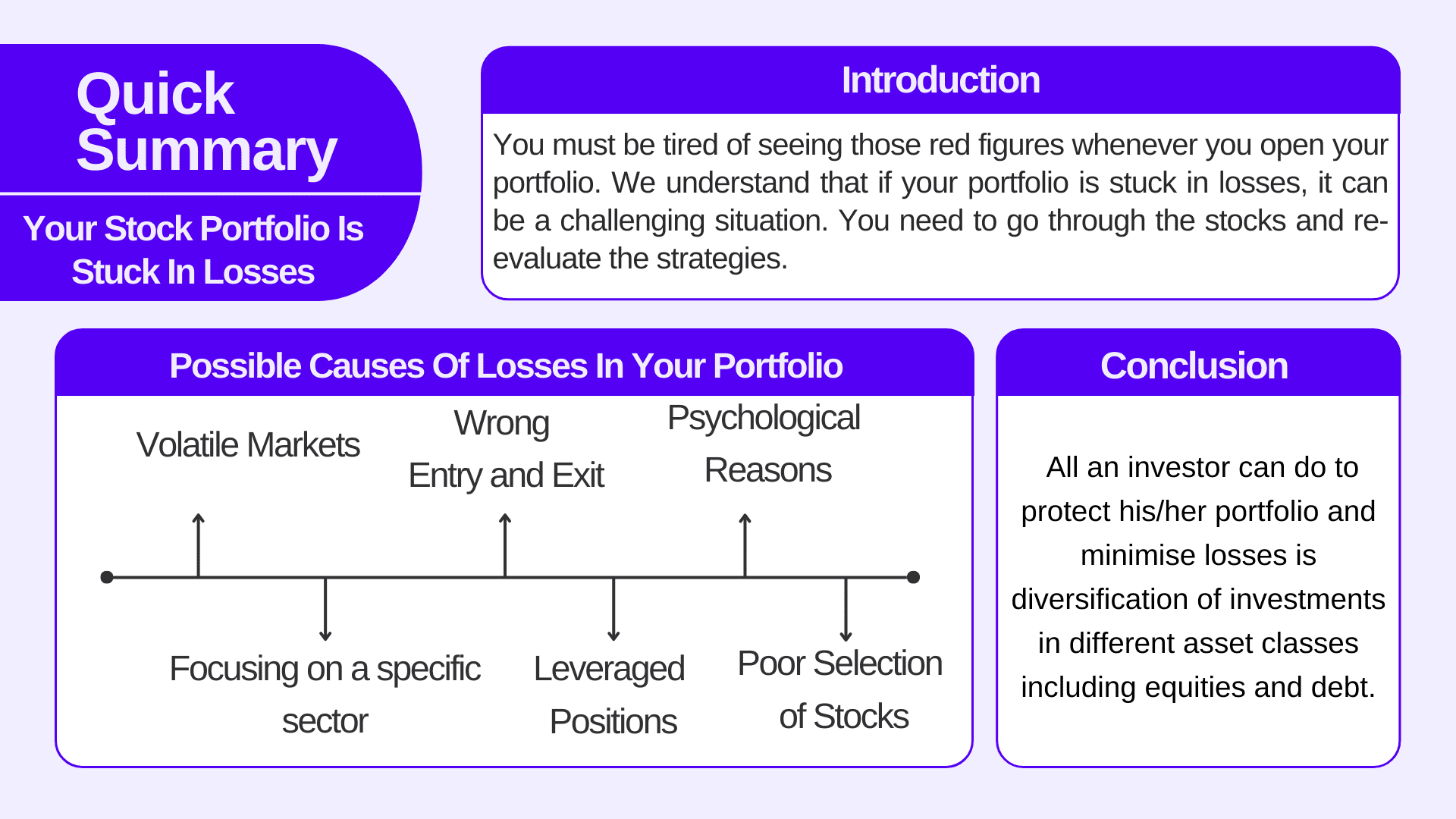
    quick summary of 10 paramters that one should consider to decide whether the stock is fairly priced or not

    Read Also: Semiconductor Industry in India

    1. P/E ratio

    The P/E ratio shows the relation between the stock price and the company’s earnings. It is calculated by dividing the current market price of the stock by the earnings per share.

    The ratio can be used to determine whether the stock is undervalued, overvalued or fairly valued.

    • If the stock P/E is more than the industry P/E we can say that the stock is overvalued.
    • If the stock P/E is less than the industry P/E we can say that the stock is undervalued.

    And lastly, if the stock P/E is nearly equal to the industry P/E then the stock is fairly priced. The P/E ratio is important when determining the true worth of the company.

    2. P/B ratio

    The P/B ratio shows the relationship between the current stock price and its book value.

    There are 3 main steps for computing the P/B ratio of any company.

    • Step 1- Calculate the book value(company assets minus liabilities ) = assets – liability = book value.
    • Step 2- Calculate the book value per share = book value. of outstanding shares.
    • Step 3- Calculate the P/B ratio = current market of the share book value per share.

    Any value below 1 is considered desirable by value investors indicating that the stock is undervalued. And a value above 3 is considered that the share is overvalued.

    3. P/S Ratio

    The P/S ratio or price-to-sales ratio is a financial ratio that shows the relationship between the price of the share and the sales of the company.

    P/S ratio = market capitalisationnet annual sales

    • An ideal P/S ratio can vary from industry to industry or sector to sector. But still, a P/S ratio between 1-2 is considered a good ratio for value investors.
    • A high P/S ratio may indicate the inefficiency of the management in using the shareholder’s funds to drive more revenue.

    Whereas a lower P/S ratio as compared to the industry standards may indicate that the stock is undervalued.

    4. Debt-to-equity ratio

    The debt-to-equity ratio is a financial ratio that is used to assess how much proportion of debt to equity a company is using to finance its assets. Debt is the creditor or debt holders’ money that is invested in the company against which they receive a payment in the form of interest regularly. Whereas equity funds are the money of the shareholders that is invested in the business.

    Having a high debt-to-equity ratio can be a big red flag for any company if the free cash flow of the company is not good. Because then the company will not be able to meet its short debt financing obligations which is not good. This does not mean that having a high debt-to-equity ratio is a bad thing. It generally depends from sector to sector. A sector that requires heavy fixed assets (like automobile or construction) might have a high debt-to-equity ratio as compared to a company that does not require so many fixed assets (like the IT sector).

    5. The PEG ratio

    The PEG ratio is a financial ratio that shows the relationship between the price and the earnings to the growth of the company. It can be defined as an advanced version of the P/E ratio. Since the P/E ratio does not tell about the price of the stock being fairly valued taking into account only the current earnings of the company and not the forecasted future earnings.

    That’s where the PEG ratio comes to the rescue it tells whether the share is being fairly valued or not at the stock exchange taking into consideration the growth rate of the company.

    PEG ratio = price/EPS growth

    • A PEG ratio of more than 1 is considered that the stock may be overvalued and not considered for investing by value investors.
    • A PEG ratio of less than 1 indicates that the stock is undervalued than its true worth and might be a good option to invest in by value investors.

    6. Free cash flow 

    Free cash flow is the cash left with the company after paying for its operating expenses and capital expenditures. The formula for finding the free cash flow for any company is given below.

    Free cash flow cash flow from operations – (operating expenses + capital expenditure).

    Having a positive FCF is a major green flag for the company because a positive FCF indicates that earnings are expected to increase in future. Which is a good sign for any value investor. Showing that either the company is experiencing sales growth or better net profit margins and that the company is effectively using their resources.

    7. Dividend yield

    The dividend yield is a financial ratio that shows what percentage of the share price the company is giving out as dividends to its shareholders.

    Dividend yield =annual dividend paid/market price

    If a company is giving out high dividends it is a green flag for any value investor and might indicate that the company is undervalued. Because generally in a company with a high dividend payout the shareholders are not only benefited from the capital appreciation but also the dividend payments give them a good annual return on their investment.

    8. ROE

    Return on equity is a financial ratio expressed in percentage terms indicating a relationship between the company’s net earnings and the shareholder’s equity.

    ROE=(Net earnings/ shareholders equity)*100

    • A 15-20% ROE is considered very good for any company as it shows how effectively the company is using the shareholder’s funds to make more money. 
    • An ROE higher than 20% might indicate that the management is taking a high risk on shareholders’ money to get more business. 

    9. Intrinsic value 

    Intrinsic value is the anticipated value of any stock. Based on certain parameters the IV of any stock is calculated. Taking into consideration both tangible and intangible factors. 

    Intrinsic value = Future cash flows(1+ discount rate)^no. of periods

    It is very complicated to calculate the intrinsic value of any stock manually, and individuals can use the stock screeners available online to get the correct IV for any stock.

    • If IV>current market price then the share is considered to be undervalued.
    • If IV<current market price then the share is considered to be overvalued.
    • If IV is almost equal to the market price then we can say that the stock is fairly valued.

    10. Pitroski score

    Pitroski f- score is a no. between 0-9 which is used to assess the strength of the company’s financials. It is taken into account to decide whether the stock is suitable for investing or not with 9 being the best and 0 being the worst.

    The calculation of the Pitroski score is quite complicated if done by hand, there are many stock screeners available online that automatically calculate the Pitroski score for you.

    • A Pitroski score below 3 is not considered good.
    • A score between 3-6 is considered good.
    • And a score above 6 is excellent for investing.

    Conclusion

    Thus we can conclude that identifying undervalued stocks is not even that hard. You just need to keep a few points in mind before starting your research. 

    Investing in stocks that you can hold for the long term is a good way to build a strong portfolio. Also, it is important to regularly churn your portfolio on a regular basis so that you can maximize the returns and minimise the risk in your overall portfolio.

    S.NO.Check Out These Interesting Posts You Might Enjoy!
    1LTP in Stock Market: Meaning, Full Form, Strategy and Calculation
    2How to find and identify undervalued stocks
    3Types of ITR: Which One Should You Choose?
    4What is FIRE in Finance? Full Form, Features, Types, and Formula Explained
    5Best Places To Park Your Short Term Money

    FAQs (Frequently Asked Questions)

    1. What are undervalued stocks?

      Stocks are trading at a lower price in the stock exchanges as compared to their actual fair price. There are various accounting financial ratios that you can use to assess the true value of the stock.

    2. How to find undervalued stocks?

      There are different financial ratios you can consider to decide whether the stock is undervalued, overvalued or fairly valued.

    3. Fundamentally strong stocks that are undervalued in 2022 India.

      You can check out any stock screener to find the top fundamentally strong stocks that are undervalued in 2022 India.
  • How to achieve financial freedom before retirement

    How to achieve financial freedom before retirement

    As financial guru Warren Buffett once said, “Do not save what is left after spending, but spend what is left after saving”.Have you ever wondered how some people retire early at a young age? Because they have achieved financial freedom before retirement.

    So let us understand what is financial freedom. Financial freedom can be defined as a state where your monthly income from passive sources exceeds your monthly expenditure. Also, you do have an emergency fund for any type of contingent liability that may arise in future. Okay, let’s try to understand the few technical terms that were used above in the definition of financial freedom.

    quick summary of  financial freedom before retirement
    • Passive income- Passive income is the source of income where you are not actively working but your money is working for you. E.g. rental income, dividend income, interest from debt fund investments, etc.
    • Emergency fund– A fixed amount of money set aside in liquid form for unforeseen future circumstances.
    • Contingent liability– A contingent liability is a potential obligation that may arise from an event that has not yet occurred. 

    Now that we have understood what financial freedom is, the question arises how to achieve it?

    Read Also: 10 Essential Financial Planning Tips for Military Members

    Here are 10 easy rules that you could opt for to achieve financial freedom before retirement :

    financial freedom

    1. Understand where you are at present- 

    The first and foremost step in the journey of financial freedom is understanding your present financial situation. Your expenses, income, assets, liabilities, debt and savings. 
    Sat down take a pen and paper and write down your expenses, income, assets, liabilities, debt and savings. So that you have your financial statement. 

    2. Frame your future goals-

    Clearly define your future goals. It could be buying your dream car, clearing up your education loan, saving up children’s marriage and anything else. Write down your 1, 5, 10, and 20-year financial goals or whatever you want you want to achieve in your life in the following years. But make sure, that your goals are specific, measurable, realistic and time-bound. 

    3. Budget like a boss-

    Make a budget and have a record so that you know where your money is going. Try to cut unnecessary expenses from your budget. Distinguish between your needs and wants. A need is something necessary to live and function. A want is something that can improve your quality of life. Using these criteria, a need includes food, clothing, shelter and medical care, while wants include everything else.
    It’s not like you have completely ignored your needs but the motive is to spend your money in such a way that you can maximize the satisfaction derived from it so that your future is also not compromised. 

    4. Pay yourself first-

    The financial rule of paying yourself first simply means that you put a certain amount aside for your savings or investment before paying for any of your bills. 
    This helps you to build a cushion, for your future on which you can rely in uncertain times. 
    This rule enables you to prioritize your savings and investments, even if that means compromising on your wants today. PYF rule helps you to achieve financial freedom early and also to accumulate wealth.

    5. Invest early- 

    ‘The earlier you start the more you earn’ is a saying that goes by. Starting your investing journey early gives you a competitive edge over others to achieve financial freedom. The earlier you start the more benefit you could get from compounding because it takes time to grow your money. 
    The compounding effect is the gathering of big rewards from a series of small and intelligent choices. Small, seemingly insignificant steps completed with discipline over a longer period can show exceptional results. An interesting fact is that Warren Buffet’s net worth graph closely resembles the graph of a compounding series. 
    To experience the power of the compounding effect yourself is to start investing early. Today with so much technological advancement anyone can start their investing journey with as little as 500 rupees per month. 

    6. Never put all your eggs in one basket-

    When we say never put all your eggs in one basket it means nerve depends on one or two sources of income. Or never put all your savings in one type of investment rather diversify your portfolio.
    During covid-19 we have seen how blue collar job people had to give up their jobs because of the situation at that time. Similarly recent mass layoffs by big companies forced us to realise the need of having multiple sources of income in such uncertain times to provide for the safety of our loved ones.
    It is very important to diversify your risk and accordingly allocate your resources and efforts over different assets so that you can create multiple passive sources of income. 

    7. Understand how taxes work

    It is very important to understand how the tax system works if you want to save your money. Rich don’t pay taxes or the CEO of XYZ company takes 0 salaries. We are sure you must have heard all those things. 

    There are so many legal ways in which rich people avoid paying taxes few are mentioned below:

    • Income shifting-
      Shifting your income from one person or entity to another to reduce taxes.
    • Charitable giving-
      Donating large sums of money to charitable organisations to reduce your gross taxable income.
    • Capital gain taxes-
      The tax rate on capital gains is less than the tax rate on personal income, so many times rich people invest their money in different asset classes.
    • Tax heavens-
      Tax heavens are those countries where taxes are low or not at all. So many rich people just transfer their wealth to such countries.

    8. Crush your debt-

    It means that first arrange your debt in descending order i.e. first try to pay off the debt with the highest interest rate following the ones with lower interest rates. This way you will pay less for the interest and more for the principal amount itself.
    Try to make extra payments when possible. Instead of paying 12 EMIs the whole month, you can simply start paying 13 EMIs a year. This year you will, be able to close your loan on time without taking extra financial burden. 

    9. Automate your savings-

    There are so many ways in which you can automate your savings. One is setting up a direct deposit, wherein you simply give instructions to your bank to transfer a certain amount every month to another account or SIP account.
    Apart from this, you could you budgeting apps that track all your daily expenditures and automatically invest the change amount to your desired asset classes. 

    10. Educate yourself-

    This is by far the most important point that you should swear by in your financial journey. The journey to achieve financial freedom is full of ups and downs. And the only way to tackle them is by educating yourself and being updated on your surroundings. 
    Understanding money, finance and investing is a long-term journey that takes time, patience and discipline to complete. 

    Read Also: What is FIRE in Finance? Full Form, Features, Types, and Formula Explained

    Conclusion

    Hope that now you will have a clear understanding of how you can achieve financial freedom before retirement by just following these simple steps. Having financial freedom is not only about having enough money in your bank account to sustain you for your golden years. But also having peace of mind and understanding that having enough money for the future is not the ultimate goal.
    But diversifying, allocating and churning your investments in such a way that it can sail you through the thick and thin market trends.

    FAQs (Frequently Asked Questions)

    1. What is financial freedom?

      Financial freedom can be defined as the state where you have enough monthly income from passive sources to cover your monthly expenditures without working. Financial freedom is not about being rich or wealthy but about having enough resources to pay your bills.

    2. How to achieve financial freedom?

      It takes discipline and patience to achieve financial freedom. Achieving financial freedom is a long-term thing that takes time. First, you have to know about your monthly income and expenditure and then accordingly create passive sources of income.

    3. How to plan early retirement in India?

      In the above article, 10 simple yet very important steps are mentioned that if you follow you can achieve early retirement as compared to others.

  • Open Free Demat Account

    Join Pocketful Now

    You have successfully subscribed to the newsletter

    There was an error while trying to send your request. Please try again.

    Pocketful blog will use the information you provide on this form to be in touch with you and to provide updates and marketing.