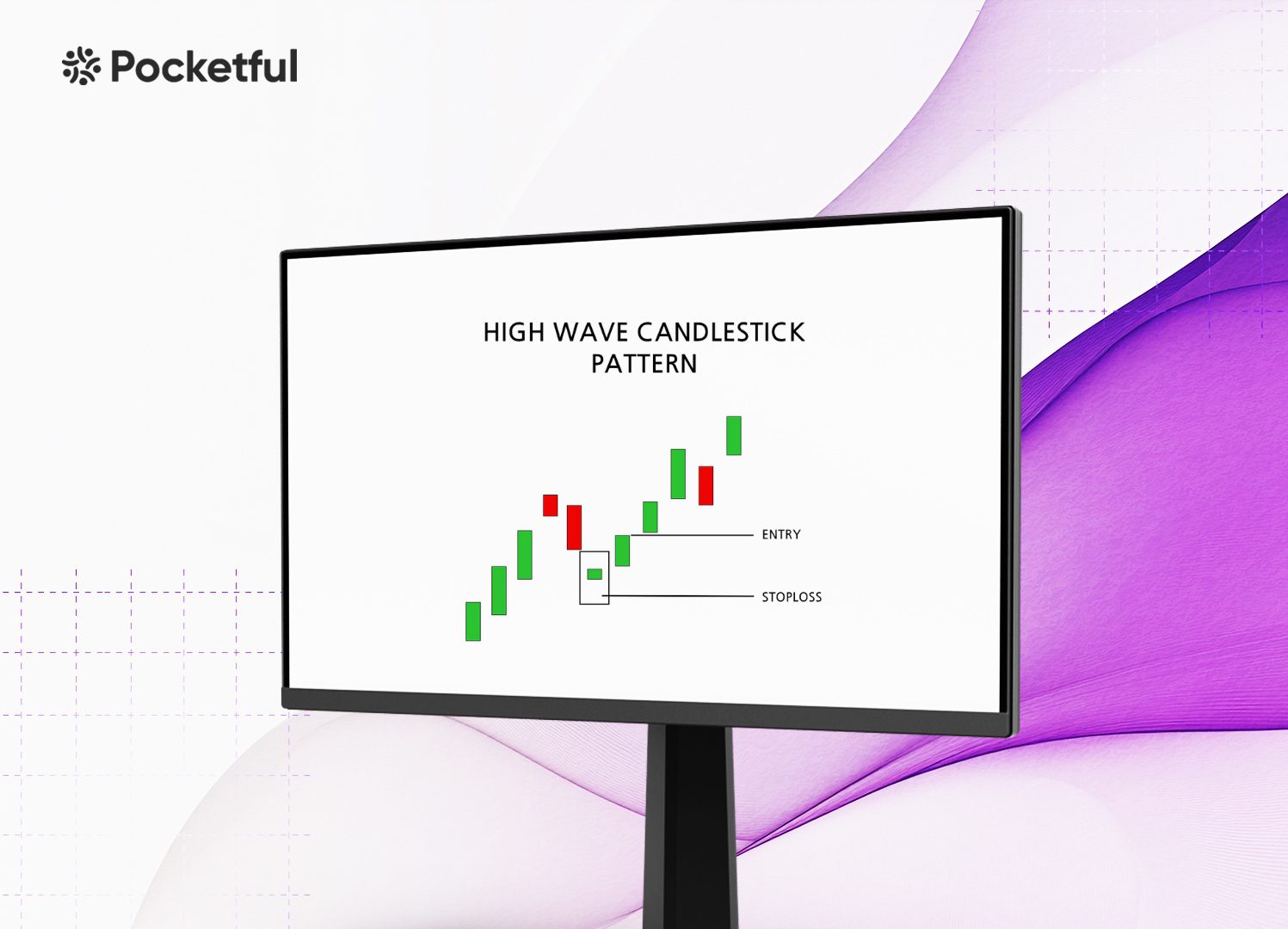
Category: Trading

  • What is Hammer Candlestick Pattern? 

    What is Hammer Candlestick Pattern? 

    Several chart patterns available to traders can be used to determine a stock’s trend. Let’s take an example where you are searching for a trading opportunity, and you come across a stock that is consistently declining. You then notice a pattern that suggests the stock’s price may be about to reverse. One such pattern is the Hammer Candlestick pattern.

    In today’s blog post, we’ll explore more about the Hammer Candlestick pattern, how to use it, and its limitations. 

    What is a Hammer Candlestick Pattern? 

    This candlestick pattern is a bullish reversal single candle pattern, which indicates a downtrend reversal in a stock price. Candlestick generally forms at the bottom of a downtrend, suggesting that sellers are losing control and buyers are about to push prices upwards. This pattern is a powerful technical tool and is used by traders frequently.

    Read Also: Introduction to Bearish Candlesticks Patterns: Implications and Price Movement Prediction

    Types of Hammer Candlestick Patterns

    There are generally two types of candlestick patterns-

    1. Classic Hammer: This is the standard form of hammer pattern and generally appears at the bottom of a downtrend. After this, a potential uptrend in the stock price can be seen. This pattern has a small body and a long lower shadow, which is generally twice the size of the body. It suggests a strong rejection of lower prices and allows buyers to enter the rally.
    Classic Hammer
    1. Inverted Hammer: This candlestick pattern is almost similar to the regular hammer and is flipped upside down. It also appears at the end of a downtrend and has a long upper shadow instead of a lower shadow. It also suggests a potential reversal, although considered less reliable than the classic hammer. It indicates that buyers attempted to take the price high during the session but failed because of resistance.
    Inverted Hammer

    Features of Hammer Candlestick Pattern

    Hammer candlestick pattern has the following features:

    1. 3The candle can be either bullish or bearish.
    2. The lower shadow of the candle should be at least twice the length of the body.
    3. There should be no or little upper shadow, which indicates that the closing price is near the highest price of the session.

    Interpretation of Hammer Candlestick Pattern

    Interpretation of Hammer Candlestick Pattern

    This reversal pattern generally forms at the bottom of a downtrend and indicates a reversal. The lower shadow suggests that the seller has taken the prices down during the trading session, but due to strong buying pressure, the prices are pushed upwards near the end of the session. The sentiment is turning bullish, indicating that there might be a reversal in price after a downtrend. The importance of a hammer candlestick can be seen in the length of the shadow; the longer the shadow, the higher the chances of reversal. 

    Advantages of Hammer Candlestick Pattern

    Hammer candlestick pattern has the following advantages:

    1. It acts as a leading indicator, suggesting a shift in momentum.
    2. A trader can use the shadow’s low for setting a stop-loss, which helps them minimize losses.

    Limitations of Hammer Candlestick Pattern

    Hammer candlestick pattern has the following limitations:

    1. Traders consider a hammer candlestick as a potential reversal signal without waiting for proper confirmation.
    2. These patterns are less effective in volatile market conditions.
    3. The hammer candlestick pattern does not provide any upside target. Therefore, a trader is required to use other tools to determine potential entry and exit points.
    4. For a trader, it is sometimes difficult to identify the exact hammer candlestick, as the length of shadow varies, or the candle’s body does not resemble the exact hammer pattern.

    Strategy Based on Hammer Candlestick Pattern

    Strategy based on Hammer Candlestick Pattern

    Entry Point: A trade can take a long position in stock upon confirming the hammer pattern. But one should take entry once the next candle after the hammer closes above the hammer’s high.

    Stop Loss: Typically, a stop-loss should be placed below the low of the hammer candlestick to minimize the risk.

    Target: The target is generally set near the next resistance point or as per the trader’s risk-taking capacity.

    Difference Between Doji and Hammer Candlestick Pattern

    Generally, the Doji and hammer candlestick patterns are considered similar. Still, these two have a few basic differences, as the Doji appears as a small body with long lower and upper shadows. In contrast, the hammer has only a long lower shadow and a long upper shadow in the case of an inverted hammer. While the hammer indicates a bullish reversal pattern, the Doji indicates price reversal or trend continuation.

    Read Also: Introduction to Bullish Candlestick Patterns: Implications and Price Movement Prediction

    Conclusion

    The hammer candlestick pattern is very popular among traders, as it helps them identify the reversal point in a downtrend. However, a trader should wait for a confirmation of the bullish candle following the hammer pattern. It is suggested that a stop loss be placed below the low of the hammer candlestick as it helps them minimize their losses in case of market volatility.

    Frequently Asked Questions (FAQs)

    1. Is the hammer candlestick a bullish or bearish pattern?

      The hammer is a bullish reversal candlestick pattern.

    2. How do you identify a hammer candlestick pattern on a chart?

      To identify this pattern, a trader must look for a candlestick with a small body at the upper range of the trading session. It should also have a long lower shadow at least twice the length of the body, with little or no upper shadow.

    3. Is it possible that the hammer pattern provides a false signal?

      Yes, there is a possibility that hammer patterns can produce false signals. Therefore, a trader should use stop loss while executing a trade.

    4. Where can you put stop loss while trading a Hammer Candlestick pattern?

      Generally, a stop loss should be placed below the low of the Hammer Candlestick.

  • What is a Covered Put Strategy?

    What is a Covered Put Strategy?

    Covered Put strategy could help you earn some extra income in a range-bound market with a slightly bearish outlook; let’s find out how.

    As an investor, you use this technique when you think the price of a stock or index will stay in a narrow range, fall slightly, or volatility will fall. The Covered Put approach is used to benefit from a neutral to bearish outlook of the markets. In the Covered Put writing strategy, investors sell a stock or short the index and also sell a put on the stock or index. In today’s blog, we will further explore its payoff scenarios with an example and its advantages and disadvantages.

    What is the Covered Put Strategy?

    The Covered Put is a neutral to bearish market view and expects the price of the underlying to remain in a range or go down slightly. The investor simultaneously sells a put and the stock. When the option is out-the-money, the investor keeps the premium. As the investor shorted the stock in the first place, the investor is protected from downside movements. The investor keeps the premium if the stock price does not change. In a neutral market, he can use this method to generate income. The risk is unlimited (if the security’s price increases significantly), while the reward is limited in this strategy.

    The Put that is sold is usually an out-of-the-money put. Shorting a stock indicates that the investor is bearish on it, but is willing to purchase it back once the price reaches a target price. This is the price at which the investor sells the Put  (Put strike price). If a put is sold, it means that if it is exercised, the stock will be purchased at the strike price. 

    When to use Covered Put?

    The Covered Put works well when the market is moderately Bearish. Employ this strategy when you are expecting a moderate drop in the price and volatility of the underlying.

    Covered Put Strategy Payoff Scenarios

    Covered Put Strategy Payoff Scenarios

    Covered Put strategy has the following payoff scenarios:

    Break Even Point = Sale Price of stock + Premium Received 

    Maximum Profit = Sale Price of stock – Strike Price + Premium Received 

    (The maximum profit is limited to the premiums received and downward movement until the strike price of the put. The position remains profitable unless the short position in security doesn’t exceed the premium received.)

    Maximum Loss = Unlimited

    (The maximum loss is Unlimited as the price of the underlying can theoretically go up to any extent.)

    Example

    Example of Covered Put Strategy

    Let’s take a simple example of a stock called Coal India trading at Rs 460 (spot price) in June. The option contracts for this stock are available at the premium of:

    July 450 Put : Rs 20        

    Lot size : 100 shares in 1 lot    

    Sell 100 Shares : 100*460 = Rs 46000 Received

    Sell July 450 Put : 100*20 = Rs 2000 Received

    Now, let’s discuss the possible scenarios:

    Scenario 1: Stock price remains unchanged at Rs 460

    Buy 100 Shares : 100*460 = Rs 46000 (no profit or loss)

    Short July 450 Put : Expires worthless

    Net Credit was Rs 48000 initially received to take the position.

    Total Profit : 48000 – 46000 = Rs 2000.

    The total profit of Rs 2000 is also the maximum profit in this strategy. This is the amount you received as a premium at the time you entered the trade.

    Scenario 2: Stock price goes to Rs 550

    Buy 100 Shares at Rs 550, sold initially at 460 : (460*100) – (550*100) = –  Rs 9000

    Short July 450 Put : Expires worthless

    Total Loss = – 9000 + 2000 (Premium Received) = – Rs 7000

    In this scenario, Rs 9000 is the loss made from shares shorted. The net loss made in this transaction is Rs 7000.

    Scenario 3: Stock price goes down to Rs 400

    Buy 100 Shares at Rs 400, sold initially at Rs 460: (460*100) – (400*100) = Rs 6000

    Short July 450 Put : Expires in-the-money (400-450)*100= – Rs 5000

    Total Profit = 6000 – 5000 + 2000 (Premium Received) = Rs 3000

    In this scenario, Rs 6000 is the profit earned from shares shorted. At the same time, we lost Rs 5000 in July 450 Put. The net profit earned is a Rs 2000 premium received at the beginning and Rs 1000 from the short position.

    Read Also: What is Covered Call?

    Advantages of Covered Put

    • Benefits from decreasing volatility : Covered Put works best when volatility decreases.
    • Time decay benefits in Covered Put : Covered Put benefits from the passage of time.
    • Income-generating strategy in a sideways market : A covered put strategy is used if an investor is moderately bearish and plans to hold a short position for an extended length of time. The covered put will help generate income during the holding period. 
    • Use it as a hedge : It is used to hedge a short position. If an investor holds a short position, they can use a covered put strategy to limit their downside risk. By selling a put option, they can offset some of the potential losses from their short position in the security.

    Disadvantages of Covered Put

    • Limited Profit Potential : Covered Puts have defined maximum profits.
    • Undefined Risk Strategy : In this strategy, maximum loss is unlimited.  
    • Require a higher margin : To short an option higher margin is required.
    • Assignment risk : It exists when an investor writes an option. An early assignment occurs when a trader is forced to buy or sell stock when the short option is exercised by the long option holder. In Short put assignment the option seller must buy shares of the underlying stock at the strike price much before the time period strategy requires to become profitable.
    • Expiration risk exists in a covered put strategy : A big rise in the stock price, not only near expiration, is always a threat to this strategy.
    • Futures should be used for shorting as there are limitations on shorting stocks.

    Conclusion

    Covered Put is used when you are mildly bearish on the market. This strategy involves selling an OTM Put Option along with selling the underlying. Ideally, this strategy is well executed using stock futures due to limitation of shorting stocks by exchanges. Only intraday shorting of shares is allowed. As you are moderately bearish, you won’t mind buying back the underlying (obligation to buy under Put Option) if the price goes down to the strike price. At the same time, you will make gains on your short position on the underlying as the price goes down and also on the amount of premium received on a Put Option. When using a covered put strategy, maximum loss is unlimited as stock prices can rise significantly and maximum gains are limited. Covered Puts have pros and cons, an investor should understand every aspect of it before deciding to take a position.

    Frequently Asked Questions (FAQs)

    1.  What is a Covered Put trading strategy?

      Short stock + Sell OTM stock Put Options

    2. Is Covered Put Safe?

      Though it is a basic option strategy, the maximum loss is unlimited in it, so it’s not for beginners as some knowledge and experience are required in it.

    3. Is Risk involved in this strategy?

      Yes, unlimited risk is involved in this derivative strategy.

    4. Is the Covered Put different from the Protective Put?

      Yes, the Protective put strategy has a long position in stock and a long position in put to protect from any downside. An investor buys puts, so the loss is limited to just the premium, while profit is unlimited on the bullish side due to a long position in the stock.

    5. When to write a Covered Put?

      When the trader is neutral or slightly bearish in the market.

  • What Is Head And Shoulders Pattern In Stock Trading?

    What Is Head And Shoulders Pattern In Stock Trading?

    The Head & Shoulders pattern is one of the best patterns in technical analysis, which gives higher statistical accuracy. A higher accuracy results in consistent profitability. Want to master the Head & Shoulders Pattern? Let’s dig deeper.

    The Head & Shoulders pattern appears on a chart as three peaks. One peak in the middle is slightly higher than the two peaks on either side. These three peaks form a “Head” and two “Shoulders”, one on the left and one on the right. The Inverse Head & Shoulders pattern features one big trough in the middle, slightly lower than the two troughs on either side. These chart patterns can be useful indicators of a major trend reversal but are among the easiest to misread.

    The pattern can also have more than one left or right shoulder or head, known as a Multiple Head and Shoulders pattern. One type of complex pattern is called a Wyckoff distribution, which usually has a head with two left shoulders and a weaker right shoulder. 

    How to Identify Head and Shoulder Pattern?

    To detect a head and shoulders pattern, first understand how they’re created:

    • The left shoulder forms when there is temporary buying momentum.
    • The head forms when enthusiasm peaks and then declines to a point near the stock’s previous low.
    • The right shoulder forms as the stock price rallies again but fails to reach its previous high before falling again.
    • The neckline is formed by drawing a line underneath the points established before and after the head. When the stock’s price dips below the neckline, it’s usually a strong indication that the pattern has been broken, and it may be time to sell a position or create a short position.

    Read Also: Falling Wedge Pattern: Meaning & Trading Features

    Types of Head & Shoulders Pattern

    There are two types of Head & Shoulders patterns. The first one is classic, where if the neckline is broken, we can get a sell target, and the second one is Inverse Head & Shoulders, which confirms the downtrend is over and the starting of an uptrend when a breakout above the neckline occurs.

    1. Head & Shoulders Pattern: This happens when prices cannot surpass the previous swing high (the head) and form a lower high (the right shoulder). Once the neckline is broken, a sell signal is triggered with a target similar to the height of the head.
    Head & Shoulders Pattern
    1. Inverse Head & Shoulders Pattern: This happens when prices cannot surpass the previous swing low (the head) and form the higher low (the right shoulder) instead. Once the neckline is broken, a buy signal is triggered with a target similar to the height of the head.
    Inverse Head & Shoulders Pattern

    Confirmation Metric for Head & Shoulders Pattern

    Even when the stock price breaches the neckline, the trader needs confirmation of the trend. Two factors must be considered to confirm the trend:

    1. Volume: With a Head & Shoulders pattern, you’ll typically see trading volume drop as the price moves toward the head and then again when it rebounds to form the right shoulder, indicating declining investor enthusiasm. A spike in volume when the price moves below the neckline suggests selling pressure will continue to build. If neither of these volume signals is in play, the decline may be short-lived, though there are no guarantees.
    2. Time frame: The uptrend heading into the pattern should be at least twice as long as the distance between the shoulders. This confirms that any trend reversal will be significant enough to trade.

    Stop Loss & Target 

    Stop Loss: Stop loss should be just above the right shoulder.

    Target: The target should be calculated following the below steps:

    1. Measure the vertical between the head and the neckline.
    2. Identify the breakout point where the price first breaks the neckline after the right shoulder formation and add that distance to the breakout price.

    Advantages of Head and Shoulders Pattern

    • Easy to understand.
    • It works in any market, e.g., equity, currency, or commodity markets.
    • It works in any time frame; a bigger time frame means a strong trend reversal is expected.
    • This pattern provides a complete setup for stop loss and target.
    • Various studies show this pattern gives an 80-85% accuracy.

    Disadvantages of Head and Shoulders Pattern

    • Identification of patterns can be subjective, and sometimes complex patterns with multiple tops or bottoms appear, which are far from the ideal pattern.
    • The shape of the pattern could be different from the bookish ideal pattern.

    Example: 1

    Head & Shoulders example of Bajaj Finance Ltd. 

    Head & Shoulders example of Bajaj Finance Ltd. 

    The above image features a daily chart of Bajaj Finance Ltd. It made a peak of the left shoulder on the daily chart on 23 September 2021 and completed the Head & Shoulders pattern on 18 November 2021. It fell below the neckline on 22 November 2021 and started trending downwards.

    Example: 2

    Inverse Head & Shoulders example of Antony Waste HDG Cell Ltd :

    Inverse Head & Shoulders example of Antony Waste HDG Cell Ltd

    The above image features a daily chart of Antony Waste; the stock was in a downturn for some time, and then an Inverse Head & Shoulders pattern was made. The stock bounced back and broke the neckline. In this pattern, the target zone is marked as the length of the head. Stop loss should be just below the right shoulder bottom. 

    Read Also: Measured Move – Bullish Chart Pattern

    Conclusion

    Technical analysts use the Head and Shoulders pattern due to their reliability. The Head & Shoulders pattern appears with three peaks; the outside two are similar in height, and the middle is the highest peak. The Inverse Head & Shoulders pattern appears with three troughs; the outside two are similar in height, and the middle is the lowest through. The peaks or troughs on each end are called the left and right shoulders and the one in the middle is called the head. It is a trend reversal pattern, and if identified on time, it can give a great success rate.

    Frequently Asked Questions (FAQs)

    1. In which market does this pattern work?

      It works in any market on any timeframe.

    2. What is the success rate of a Head and Shoulders pattern?

      The Head and Shoulders pattern is quite accurate, with a success rate of 80-85%.

    3. Is the Inverse Head and Shoulders bullish signal?

      It appears in the downturn and generates a bullish signal once the price goes above the neckline.

    4. Is it easy to identify the Head and Shoulders pattern?

      Yes, it is easy to identify as there are three peaks, and a line connecting them is called a neckline; once the neckline is broken, it is a sign to initiate a short position.

  • Backtesting Meaning, Types,  Working, Advantages and Disadvantages

    Backtesting Meaning, Types, Working, Advantages and Disadvantages

    Imagine a time machine for your trading strategies, allowing you to see how they might have performed in the real market based on historical data. Sounds intriguing? Let’s jump in.

    In today’s blog, we will discuss the basics of backtesting and explore its advantages and limitations.

    What is Backtesting?

    Backtesting is a method that helps investors and analysts to use past data to make better decisions. It is a way to analyze how a trading strategy or model would have performed in the past using historical data. This process helps traders recognize an approach’s strengths, weaknesses, and risks before implementing it.

    Backtesting allows you to assess how a strategy would have performed using historical data without risking real money. Enter your strategy parameters and historical data, like prices and volumes, into a reliable backtesting tool, and the tool simulates the buy and sell decisions of your trading strategy based on the data.

    The results will showcase your strategy’s performance by giving a detailed overview of your profits, losses, and other key metrics. Backtesting results help you gauge the strategy’s usefulness and identify the areas of improvement.

    How Backtesting Works?

    How Backtesting Works?

    Firstly, you should define your strategy. A clearly defined strategy is the blueprint for your trades and can involve fundamental analysis, technical indicators, or a combination of both. Decide the entry and exit points for the trades based on your selected strategy.

    Secondly, collect the historical data. You will likely need the opening & closing price, highs & lows, and volume data of the asset you are interested in.

    It is necessary to ensure that the data collected is correct, up-to-date, and covers various market variables. Reliable data can be sourced from online brokers and financial websites.

    Many backtesting tools are available, from spreadsheets with code to advanced software platforms. Input the data into a backtesting tool, and it then simulates how your strategy would have made buy and sell decisions depending on the data point.

    The backtesting tool will create performance reports for your trading strategy, including metrics like total profit & loss, risk-adjusted returns, win rate, drawdown, etc.

    Need of Backtesting a Strategy

    Need of Backtesting a Strategy

    There are numerous compelling reasons to backtest a trading strategy before using real money, such as:

    Risk Reduction: The financial markets can be unforgiving. Backtesting offers a secure opportunity for practice and improvement, giving the trader an idea of its potential risks and rewards before putting hard-earned money on the line.

    Increased Confidence: Positive results can boost your confidence in your strategy. It gives you a sense of validation and helps you trade with a clearer mind and a more focused approach.

    Performance Optimization: Backtesting lets you try out different parameters in your strategy. You can test multiple entry and exit points, explore different timeframes, and adjust indicators. Analyzing the results allows you to optimize your trading strategy for better performance.

    Types of Backtesting 

    Types of Backtesting 
    • Historical Backtesting: It is the most common type of backtesting where a trading strategy is tested using historical market data to observe how it would have performed in the past.
    • Out-of-Sample Backtesting: In out-of-sample backtesting, you split the data into two parts: training and testing data. The strategy is first tested on the training data, and then its performance is evaluated on the testing data. This form of backtesting provides a more accurate picture of how the strategy might perform in different market scenarios.
    • Walk Forward Analysis: Walk Forward Analysis is the more advanced form of backtesting, where the historical data is divided into multiple segments. Strategy parameters are optimized for every segment, and strategy is then evaluated for the next segment. This process is repeated in a rolling manner. This process helps reduce the overfitting issue and gives you an insight into how the strategy will adapt to changing market dynamics.
    • Monte Carlo Simulation: This technique needs testing the strategy with several random market setups. It helps to evaluate how the strategy might function in different market conditions and unexpected events.

    Advantages

    • Backtesting uses real data to prove if the strategy works. It helps the traders recognize strategies that do not perform well. Backtesting saves time that otherwise would have been wasted on unprofitable approaches.
    • It shows how a strategy performs in market conditions like bull, bear, and sideways markets.
    • The technique allows you to experiment with several settings in your strategy. You can tweak parameters and test various timeframes to find the best fit for your strategy.

    Disadvantages

    • Just because a strategy worked well in the past does not mean it will continue to do so. Markets are dynamic; what worked yesterday might not work in the coming days.
    • The accuracy of data depends heavily on the quality of your historical data. Ensure that the data is reliable and covers relevant timeframes. Any errors or gaps in data can twist the results and cause misleading conclusions.
    • Backtesting does not consider transaction costs such as commissions, spreads, and slippage. These costs can affect the trader’s profit when trading in real life.

    Read Also: What is Quantitative Trading?

    Conclusion

    Backtesting can be a fruitful method for any investor or trader since it helps them to test the waters of a strategy before putting in the real capital, identify its strengths and weaknesses, and refine their approach for better performance. However, remember that backtesting provides a glimpse into the past and does not guarantee the future.

    Frequently Asked Questions (FAQs)

    1. Why do we need to backtest our strategies?

      Backtesting helps reduce risk by testing strategy using historical data and judging its profitability before risking real capital.

    2. How can I avoid backtesting pitfalls?

      Use high-quality data, consider transaction costs, and remember that it does not account for emotions.

    3. Which tools can be used for backtesting?

      Beginners can use spreadsheets (using formulas and historical data). Online brokers also offer basic backtesting features within their platforms. Intermediate and advanced traders can use platforms like TradingView, Algo Test, Trading Blox, etc.

    4. Is backtesting a guarantee for success?

      No, but it can help you refine your trading strategies.

    5. What are the key metrics to consider in a backtest report?

      A good backtest report provides total net profit, average win/loss, maximum drawdown, Sharpe ratio, win rate, etc.

  • What is Dow Theory? Meaning, Principles, and Examples

    What is Dow Theory? Meaning, Principles, and Examples

    Dow Theory, a 100-year-old theory, is still valid in today’s volatile and technology-driven markets. Sounds interesting? Let’s find out.

    Charles H. Dow is one of the pioneers in technical analysis and finance. Dow was the founder and first editor of The Wall Street Journal, co-founder of Dow Jones & Company, and a journalist. He used to record the highs and lows of the Dow Jones Industrial Average for daily, weekly, and monthly time frames to correlate the patterns. He tried to explain the historical events based on those patterns. He never published the complete theory before he died in 1902, but several followers and associates refined his work, including:

    • William P. Hamilton published “The Stock Market Barometer” in 1922.
    • Robert Rhea published “The Dow Theory” in 1932.
    • E. George Schaefer published “How I Helped More Than 10,000 Investors to Profit in Stocks” in 1960.
    • Richard Russell published “The Dow Theory Today” in 1961.

    Even though Charles Dow is credited with developing the Dow Theory, S.A. Nelson and William Hamilton refined it into what it is today.

    Dow Theory Explained

    Dow theory supported the common belief that an asset price and its resulting movements already have all the necessary information reflected in it to make accurate predictions.

    Based on his theory, Charles Dow created the Dow Jones Industrial Index and the Dow Jones Rail Index (now known as the Transportation Index), originally developed for the Wall Street Journal. Charles Dow created these stock indices​​ as he believed they would accurately reflect the economic and financial conditions of companies in two major economic sectors: the industrial and the railway (transportation) sectors.

    Principles of Dow Theory

    Dow Theory is based on six principles, which are as follows:

    1. Market discounts everything:  Dow believed that the prices of all the stocks and indices reflected all available information.
    2. Three-trend market:  Three market trends are active at any given time that may be in opposite directions. Three trends are Primary, Secondary, and Minor. The primary trend is the largest trend that lasts for one year or more; it tells whether the market is bullish (going up) or bearish (going down). The secondary trend is often in the opposite direction of the primary trend; e.g., in a bull market, the secondary trend will give correction, and in a bear market, it will give a rally. The secondary trend lasts for a few weeks to a few months. Finally, there is a minor trend, which features short-term fluctuations and is unpredictable. 
    3. Phases in Primary trend:   There are three phases in the primary trend-
      • Accumulation/Distribution phase: In the bull market, the accumulation phase witnesses an increase in price with an increase in volume. In bear markets, news of decline flows through the investors.
      • Public participation phase: It witnesses the largest price movement because average and retail investors participate.
      • Excess/Panic phase: In a bull market, it is called the excess phase (euphoria period) towards the end of the bull market, and experienced investors exit while the majority are buying. Similarly, investors continue selling aggressively in the panic phase at the end of the bear market.
    4. Volume must confirm the Primary trend: Volume should increase in the direction of the trend to confirm the primary trend. If the volume doesn’t increase in the direction of the trend, then it may signal weakness in the trend.
    5. Primary trends must confirm each other across other market indices: A trend in one index must be confirmed by a similar trend in other market indices. For example, Nifty and Banknifty cannot go in different directions for a longer timeframe or their primary trend. 
    6. Primary trend remains in place until a clear reversal happens: This theory gives importance to a clear reversal of the primary trend, which may take several months. Hence, this theory may miss the early signs of reversals. 

    Example

    Dow’s theory trading strategy is based on a trend-following strategy​​ and can be either bullish or bearish. Remember, the trend is your friend, as per this theory.

    Dow theory buy signal

    This sequence should be followed for the buy signal :

    • Once the low point of a downtrend is established, a secondary uptrend bounce will occur.
    • A pullback in index or stock must exceed 3%, and it should not break prior lows; ideally, it should hold above the prior lows.
    • A breakout above the previous rally high would generate a buy signal for the bull market.
    Dow theroy buy signal

    From the above chart of Tata Motors, we see it bottomed out with huge volumes on the monthly chart in May 2020, and then it started moving up in a primary trend. It gave a breakout in June 2023, broke a 2015 high of Rs.600, and went up to Rs.1050.

    Dow Theory Sell Signal

    This sequence should be followed for the sell signal :

    • Index or stock tries to make tops and give pullbacks.
    • Index or stock falls around 3% and doesn’t reach previous highs.
    • A sell signal is triggered once it breaks the recent lows.
    Dow Theory Sell Signal

    From the above chart of Yes Bank, we see monthly highs were around Rs. 400, and there were pullbacks. A sharp decline was seen, and the stock failed to reach previous highs. The stock broke the previous low alongside a volume rise, generating a sell signal. The stock currently trades around Rs. 24.

    Read Also: How to use technical analysis on charts

    Conclusion

    Dow Theory is a 100-year-old theory, but its basic elements are still valid today. Charles Dow developed it, but William Hamilton and Robert Rhea further refined it. Dow Theory is a Bible for technical analysis and price action and explains the market philosophy. Many people think the market is different from when it started, but Robert Rhea’s book attests that the stock market behaves the same as it did 100 years ago. So, the basic philosophy covered in Dow Theory is still relevant.

    Frequently Asked Questions (FAQs)

    1. What is Dow Theory?

      Dow Theory is about identifying trends and using certain parameters to confirm them.

    2. Is it a theory?

      Though it is popular, there were no academic papers related to it.

    3. What is the goal of Dow Theory?

      The goal is to identify the primary trend and then follow the trend to catch big moves.

    4. What is one of the assumptions of Dow Theory?

      The assumption is that the market discounts everything, which means the market reflects all available information.

    5. Can it be used in Algorithmic Trading?

      Yes, traders can program Dow’s Principles into algorithms; these algorithms can scan the market and look for patterns.

  • What is Covered Call?

    What is Covered Call?

    Want to hear about a strategy that helps you earn from the capital already invested in the assets? Covered Call strategy could help you earn some extra income from the stock you own; let’s find out how?

    What Is Covered Call?

    A covered call is an options trading strategy where an investor sells call options on a stock they already own.  A covered call is an income-generating options strategy. You cover the options position by owning the underlying stock. The owned asset/share acts as a cover because you can deliver the shares if the call option buyer chooses to exercise it.

    Covered Call Strategy 

    Covered Call Strategy

    In the covered call, you sell a call option on a stock you already own. Since you own the stock, you’re protected if the buyer exercises the option. The buyer exercises the option and buys the stock from the writer at the strike price when the option is in the money or expires above its strike price. The writer keeps the premium but misses out on the stock’s upside price movement. When the option is out-of-the-money, the option expires worthless, and the writer keeps both the premium and the stock.

    When to Use Covered Call

    Use covered call when you have a neutral view on the underlying with little likelihood of large gains or large losses or less volatility. It means it’s a good strategy for sideways movement in security; use it when you have a mildly Bullish market view and you expect the price of your holdings to rise moderately in the future.

    Covered calls are not an optimal strategy if the underlying security has a high chance of large price swings. If the price rises higher than expected, the call writer would miss out on any profits above the strike price. If the price falls, the options writer could stand to lose the entire price of the security minus the initial premium.

    Read Also: Option Chain Analysis: A Detail Guide for Beginners

    Covered Call Strategy Payoffs

    Covered Call Strategy Payoffs
    • Covered Call Maximum Gain Formula
      Maximum Profit = (Strike Price – Initial Stock Price) + Option Premium Received
    • Covered Call Maximum Loss Formula
      Maximum Loss Per Share = Initial Stock Price – Option Premium Received
    • Break Even Point= Purchase Price of Underlying- Premium Received

    Example of Covered Call Option

    For example, an investor owns 100 shares of Tata Motors. Investor likes its long-term prospects, but still they feel the stock will likely trade relatively flat in the shorter term, its current price is of Rs1000.

    If they sell a call option on Tata Motors with a strike price of Rs 1050, they earn the premium from the option sale but cap their upside on the stock to Rs 1050. Assume the premium they receive for writing a call option is Rs 20 (Rs. 20 per contract or 100 shares i.e Rs 20*100= 2000). 

    One of two scenarios will play out:

    1. Tata Motors shares trade below or equal to Rs 1050 strike price: The option will expire worthless and the investor will keep the premium from the option. In this case, they have successfully outperformed the stock by using the covered call strategy. They still own the stock but have an extra Rs 2000 in their pocket.
    2. Tata Motors shares rise above Rs 1050: The option is exercised, and the upside in the stock is capped at Rs 1050. If the price goes above Rs 1070 (strike price plus premium), the call seller starts to lose out on upside potential. However, if they planned to sell at 1050, writing the call option gives them an extra Rs 20 per share.

    Advantages of Covered Call

    Advantages of Covered Call
    • Immediate Income: As you short a call you receive a premium which is an income without having to sell your stock.
    • Price Locked In:  In a covered call your view is of a moderate appreciation in stock price, so a covered call ensures you sell if your target price is reached. This may be like a limit order, a type of instruction you can give your brokerage that requires an asset to be sold if a certain price is reached. But in the case of a covered call, you also get a premium.
    • Create Profit: This strategy creates profit in the sideways market.
    • Get downside protection: By holding the securities until a certain price is reached, it’s possible your security’s price could drop in value while you wait. The premium you receive from the covered call can help offset the drop in the security price.
    • Relatively low-risk strategy: Covered call is a relatively low-risk strategy as the seller owns the underlying, in case the buyer wants to exercise the option. Comparatively, naked call writers have unlimited loss potential if the underlying price rises significantly.

    Disadvantages of Covered Call

    • Sensitivity: Covered calls are sensitive to earnings announcements as sudden price movements can happen.
    • Limited profit: The covered call limits the investor’s potential upside profit.
    • Opportunity loss: Writing covered calls limits the maximum profit for the stock position in exchange for a small premium. If the stock price increases significantly, the investor could miss out on a lot of potential profit.
    • Obligation to sell shares: The investor has an obligation to sell their shares at the strike price if the purchaser of the option decides to exercise it.
    • Limited protection: The covered call may not offer much protection if the stock price drops. However, if the stock price drops, the premium received from selling the call option can offset some of the loss. If the stock price drops more than the premium amount, the covered call strategy will start to make losses. 

    Read Also: Margin Call: – Definition and Formula

    Conclusion

    A covered call is an options trading strategy that allows an investor to profit from small price fluctuations. A covered call strategy involves writing call options against a stock the investor owns to generate income and/or hedge risk. Sellers of covered call options are obligated to deliver shares to the purchaser if they decide to exercise the option. Avoid writing covered calls over a period of earnings announcements because sudden price changes can occur. When using a covered call strategy, there is a possibility of limited gain and huge loss if the underlying price drops significantly. Covered calls have pros and cons, and an investor should understand every aspect of them before deciding to take a position.

    Frequently Asked Questions (FAQs)

    1. Is the covered call a day trading strategy?

      It’s not a day-trading strategy. It requires bigger time frames such as daily, weekly or monthly.

    2. Is it for professional traders?

      Though it is a basic option strategy, loss can be significant, so it’s not for beginners as some knowledge and experience are required.

    3. Is risk involved in this strategy?

      Yes, risk is involved in any derivative strategy.

    4. Can covered calls make you rich quickly?

      No, as there is small, limited upside potential in exchange for the significant downside. With covered calls, you can earn a relatively small amount of income. At the same time, you also have to bear the risk of any downside from that stock.

    5. How do you find good covered call candidates?

      A common practice is comparing implied volatility (IV), a proxy for market sentiment with historical volatility (HV). When IV generally outpaces HV over a given term, covered calls should be profitable over that term.

  • What is Quantitative Trading?

    What is Quantitative Trading?

    The financial market can seem complex and unpredictable. But what if you could use math and science to gain an edge? Quantitative trading is a revolutionary approach that uses data and algorithms to make trading decisions.

    In today’s blog, we will learn about the core concepts, benefits, and risks of quantitative trading.

    Quantitative Trading Meaning

    Quantitative Trading is a market trading approach that heavily relies on mathematical models and quantitative analysis to make informed and accurate trading decisions.

    Quantitative analysts use collected data to create mathematical models for finding trading opportunities. These models utilize statistical algorithms, machine learning techniques, or simple rules-based systems.

    After creating a model, it is tested with historical data to evaluate its past performance. This helps evaluate how well the model works and find any possible weaknesses. If the back-testing results are good, we can use the model for live trading. The model continuously analyses market data and generates trading signals, which are then executed automatically by a trading platform.  

    Benefits of Quantitative Trading

    Benefits of Quantitative Trading
    • Removes Emotions: Quantitative trading removes human emotions from decision-making, unlike traditional trading, which can be influenced by emotions like fear and greed. It helps to trade in a more disciplined and consistent way.
    • Speed and Efficiency: Quantitative models analyze large amounts of data and can identify trading opportunities faster than humans. This enables quantitative analysts to benefit from short-term market inefficiencies.
    • Backtesting & Improvement: These models can be tested and improved using historical data. This lets analysts improve their models constantly and adjust to market changes.

    Read Also: Risk Management In Trading: Meaning, Uses, and Strategies

    Risks Of Quantitative Trading

    Risks Of Quantitative Trading
    • Heavy Reliance on Old Data
      Models might rely too much on old patterns that may not apply in the future. This could cause losses if the market conditions change.
    • Inability to Predict Unexpected Events
      Quantitative models find it difficult to predict unexpected events such as economic crises or natural disasters that can greatly change how the market behaves.
    • Increase Chances of Market Crash
      Algo trading can magnify market movements and if multiple algorithms respond similarly to a decline in prices, it can lead to a chain reaction that results in a more significant market crash.
    • Possibility of Unintended Trades
      Problems with the trading code or technical issues can cause unintended and harmful trades. Technical issues can stop models from working well, putting traders at risk from market fluctuations.
    • Increasing Oversight from Regulators
      Regulators are monitoring the rise of quantitative trading. This may lead to increased restrictions on such strategies.

    Many firms practice quantitative trading to achieve high returns. Below is a list of some prominent firms known for their quantitative trading practices.

    • Two Sigma: This company uses data science, machine learning, and advanced technology to create trading strategies and handle investments.
    • Citadel: A major hedge fund and market maker that uses computerized trading strategies for different types of assets.
    • D.E. Shaw & Co.: The company is known for using advanced algorithms and models in trading.
    • AQR Capital Management: This firm combines traditional and alternative investment strategies, with a strong focus on quantitative methods.
    • Jane Street: The firm specializes in ETF trading using quantitative models to make informed decisions.

    Read Also: Low latency broker in india

    Who is Jim Simons, the Pioneer of Quant Trading?

    In 1978, Jim Simons started Renaissance Technologies, a hedge fund that later became known for its unparalleled success.

    He obtained a Ph.D. in mathematics from the University of California, Berkeley. Trained as a mathematician, Simons introduced a data-driven approach to finance. He believed that markets had predictable patterns that could be discovered and used to make profits using complex models.

    His knowledge of Math and pattern recognition was crucial for creating his trading strategies.

    Jim Simons’ Strategies

    The team uses mathematical models to find hidden patterns in market data. These models use mathematical techniques based on statistics and probabilities from different areas of mathematics.

    The intricacies of these models are highly classified, positioning Renaissance Technologies as one of the most enigmatic hedge funds. They collect large amounts of data from different sources such as financial markets, weather patterns, and satellite images, to discover hidden connections.

    Jim’s strategy focuses on short-term market inefficiencies, making numerous trades throughout the day. They use a multi-asset strategy, trading across different types of investments like stocks, futures, commodities and even cryptocurrency. Algorithms are used to execute trades by taking advantage of identified patterns.

    Renaissance Technology’s top fund, Medallion, is famous for its outstanding profits. The fund is only available to its employees and a few select outsiders, which adds to its mystery.

    Read Also: Trading For Beginners: 5 Things Every Trader Should Know

    Conclusion

    Quantitative trading has changed finance by using data and algorithms to make precise and fast trading decisions. The technique has evolved from simple rules to complex models, showing significant progress from its beginnings. The future of quant trading depends on efficient use of AI and complex data, while also managing risks and ensuring responsible use of these tools. Furthermore, successful firms in this arena not only modify the market strategies but also lead the way in innovation and excellence in the financial industry.

    S.NO.Check Out These Interesting Posts You Might Enjoy!
    1What is Insider Trading?
    2What is Options Trading?
    3What Is Day Trading and How to Start With It?
    4How to Trade in the Commodity Market?
    5What is Price Action Trading & Price Action Strategy?
    6What Is Colour Trading

    Frequently Asked Questions (FAQs)

    1. What is quantitative trading?

      Quantitative trading involves using mathematical models and algorithms to make trading quick and effective decisions.

    2. How do quantitative trading firms make money?

      These firms make money by recognising and exploiting market inefficiencies, using different algorithms to execute trades rapidly and at high volumes.

    3. What role does technology play in quantitative trading?

      Technology is important for analysing data, creating algorithms, and carrying out trades quickly.

    4. Can individual investors use quantitative trading strategies?

      Individual investors can also use algorithmic trading platforms and tools to apply quantitative strategies, although this is more common among institutional investors.

    5. What is the future of quantitative trading?

      Advancements in machine learning and AI are set to enhance quantitative trading strategies.

  • What are Option Greeks?

    What are Option Greeks?

    You are anticipating that Indian markets will go up in the coming days and bought a call option of Nifty 50 Call Option. But, do you know what the key factors are that will affect the price of the option you bought?

    Well, in this blog, we will discuss Option Greeks and how they work.

    Option Greeks Definition

    Option Greeks are the key factors that influence the option prices. They are denoted in Greek letters and define different risk measures. There are five primary Greeks which indicate how sensitive an option is to different risks:

    • Delta: It measures how much an option’s premium may change if the underlying price changes by one rupee.
    • Gamma: It measures the delta’s rate of change over time, and the rate of change in the underlying asset because of that.
    • Theta: It measures time decay in the value of an option or its premium.
    • Vega: It measures the risk of change in implied volatility.
    • Rho: It is the change in option price because of a change in risk-free rate.

    The values for each of the Greeks are derived from mathematical models, like the Black-Scholes option pricing model. The derived values are then used to calculate the theoretical price of an option, which can then be compared to the actual price to see if the option is overpriced or underpriced.

    Option Greeks Calculation

    Calculation of Option Greeks

    Let’s understand how Greeks are calculated mathematically. Nowadays, there are plenty of option calculators available online; we just need to feed the values, and the job of finding the value for each option would be performed by the option calculator. The input values generally for any option pricing model are more or less the same, here are the variables used in the Black Scholes model:

    • Underlying Price (e.g. Current Stock Price)
    • Strike Price
    • Time to Expiration
    • Volatility
    • Interest rate or risk-free rate
    • Dividend, if applicable

    Only one variable from the abovementioned 6 variables, i.e., the Strike Price, remains constant, and the other variables fluctuate, which means the option price changes over the life of the option. Hence, the input of fluctuating variables should be correct, or else the output value will be flawed.

    Black-Scholes Assumptions

    Black-Scholes Assumptions

    To calculate the price of an option, there are certain assumptions of the Black-Scholes Model:

    • No dividends are paid out during the life of the option.
    • Markets are random (i.e., market movements cannot be predicted).
    • There are no transaction costs in buying the option.
    • The risk-free rate and volatility of the underlying asset are known and are constant.
    • The returns of the underlying asset are normally distributed.
    • The option is European and can only be exercised at expiration. (In contrast, American options could be exercised before the expiration date).

    There are many models available today for pricing options. However, even today, the Black Scholes model remains popular. The Black Scholes model was introduced in the year 1973. At that time, it was only utilized for pricing European options, and that too was used for the stocks that did not pay dividends. However, following several modifications, it can now be utilized for a broader range of assets, including dividend paying stocks.

    Read Also: Option Chain Analysis: A Detail Guide for Beginners

    Types of Option Greeks

    Option Greeks

    Let’s understand the Greeks further one by one:

    1. Option Greek Delta

    The symbol for Delta is Δ. It is the change in the option’s price relative to the change in the underlying price or stock price. If the price of the underlying asset increases, the price of the option would Increase with a certain amount because of Delta. For example, a call option with a Delta of 50 is expected to increase by 50 paise if the underlying price increases by one rupee. So, Delta is the speed at which the option price changes for every one-point change in underlying. Delta values range from -1 to +1, with 0 representing the situation where the premium barely moves relative to price changes in the underlying stock. 

    2. Option Greek Gamma

    Gamma is a measure of the change in Delta relative to the changes in the price of the underlying asset. If the price of the asset increases, the options delta would also change in the Gamma amount. For example, if the ITC share price is 300, and the call option of 320 strike price has a delta of 30 and a gamma of 2. If the share price of ITC increases to 301, the delta is now 32. The objective of Gamma is to understand changes in delta, forecast price movements, and manage risk and option positions.

    Gamma can be positive if an option is long on a call or put, and negative if an option is short on a call or put. At-the-money (ATM) options have the highest gamma because their deltas are most sensitive to price changes. Deep in the money (ITM) and far out of the money (OTM) options have lower gamma because their deltas don’t change as quickly.

    3. Option Greek Vega

    Theta measures the sensitivity of the option price relative to the option’s time to maturity. It tells us how much an option’s premium may decay each day, considering all other factors remain constant. The theta option in Greek is also referred to as time decay. Option sellers love theta because they get an opportunity to profit from the decay in premium.

    Mostly, theta is negative for options. It shows the most negative value when the option is at the money. Theta accelerates as expiration approaches, and options lose value over time. Higher Theta in OTM options is an indication that the value of the option will decay more rapidly over time. 

    4. Option Greek Theta

    Theta measures the sensitivity of the option price relative to the option’s time to maturity. It tells us how much an option’s premium may decay each day, considering all other factors remain constant. The theta option in Greek is also referred to as time decay. Option sellers love theta because they get an opportunity to profit from the decay in premium.

    Mostly, theta is negative for options. It shows the most negative value when the option is at the money. Theta accelerates as expiration approaches, and options lose value over time. Higher Theta in OTM options is an indication that the value of the option will decay more rapidly over time. 

    5. Option Greek Rho

    Rho measures the sensitivity of the option price relative to the interest rates. If the benchmark or risk-free interest rate is increased by a percent, the option price would change by the value of the RHO. It’s expressed as the amount of money an option will lose or gain with a 1% change in interest rates. Rho can be either positive or negative depending on whether the position is long or short, and whether the option is a call or a put. Long calls and short puts have a positive rho, while long puts and short calls have a negative rho. 

    The RHO is known to be the least significant among other option Greeks because the option prices are generally less sensitive to interest rate changes than to changes in other parameters.

    Read Also: What is Options Trading?

    Conclusion

    All of the above discussed option greeks play an integral role in trading. They not only help predict market movement but also assist in hedging open positions. Such hedges help limit downside risk of the trader while maximising upside potential. However, it is extremely important to understand that incorrect or partial knowledge of these option greeks can significantly reduce your profit potential. Therefore, it is imperative that you perform extensive research before investing your hard-earned money.

    Frequently Asked Questions (FAQs)

    1. How many Option Greeks are there?

      There are five Option Greeks: Delta, Theta, Gamma, Vega, and Rho.

    2. What is the objective of Option Greeks?

      Option Greeks measure an option’s sensitivity to the changes in the price of the underlying and to manage risks.

    3. What is the meaning of Gamma in Option Greeks?

      It is the rate of change in an options’ Delta and the underlying asset’s price.

    4. How to manage the risk of Gamma in Options Trading?

      One can manage the risk of Gamma by initiating a hedge position. Further, one can consider squaring off the position if the option contract is near to the expiration.

    5. Is Rho significant among other Option Greeks?

      The Rho is known to be the least significant among other Option Greeks because the option prices are generally less sensitive to interest rate changes than to changes in other parameters.

  • What is Options Trading?

    What is Options Trading?

    Have you ever wondered how traders make a living out of stock markets? Investments are for the long term, but options trading has the potential to provide extraordinary returns in a short amount of time. Sounds interesting? Let’s see how we can make the best use of it.

    Understanding Options Trading

    Options trading is the process of buying and selling specific assets at a predetermined date and price. It requires an understanding of the options and various strategies. Options trading is tougher than stock or index trading as it requires knowledge of various factors like strike price, premium, expiry, option type, volatility, etc. 

    Options are mainly used as hedging instruments, as they protect against the downside. Along with that, it can also be used to generate income when the market conditions are not suitable for investing.

    Options are derivative contracts and are classified into two types: Call and Put. A call or put option is a type of option contract that gives the buyer the right to buy or sell an asset at a predetermined price on a specific date but not the obligation to do so.

    It is crucial for beginners to understand options trading in detail before investing real money. Let’s try to understand the basic concepts.

    Read Also: Option Chain Analysis: A Detail Guide for Beginners

    How to Trade Options?

    How to Trade Options?

    1. Evaluate Financial Goals along with Risk & Return Profile 

    Starting trading in options is not as easy as it seems, as it requires a good understanding of options and how to use them in your favor, as options trading is more complex than trading in stocks. Also, in some cases, options trading may require significant amounts of capital (e.g. shorting the options).

    First, one needs to assess financial goals and select suitable asset classes and instruments to use in the financial market. Then, if suitable, one should decide to trade options. We can follow the process listed below to assess whether options are suitable for investors. 

    • Investment objectives: This usually includes growth/income, capital preservation or speculation.
    • Trading experience: This is important for your risk assessment.
    • Financial position: How much liquid cash or investments an investor has, his annual income, expenditures, savings pattern and properties, etc.
    • Option type: Calls, puts or strategies and spreads. And whether they are covered or naked. The seller or option writer is obligated to deliver the underlying stock if the option is exercised. 

    2. Understand the Type of Options

    There are two styles of options, American and European; the difference between these two is the timing of exercising the option. Holders of an American option can exercise at any point up to the expiry date, whereas holders of European options can only exercise on the day of expiry. As American options offer more flexibility for the option buyer (and more risk for the option seller), they usually cost more than European options. Expiration dates can range from days to months. For long-term investors, monthly expiration is preferable. Longer expirations give the stock more time to move and time for your investment ideas to play out. As such, the longer the expiration period, the more expensive the option. A longer expiration is also useful because the option can retain time value.

    3. Pick The Options To Buy Or Sell 

    A call option is a contract that gives the right, but not the obligation, to buy an asset at a predetermined price on a specific date. A put option gives the right, but not the obligation, to sell an asset at a stated price on a particular date. 

    Now, it depends upon your view and expectation on which direction you think the market or asset will move, and as per that, you will decide on the type of option and whether you will buy it or sell it. A few views are given for your reference.

    If the view is that the asset price will move up: Buy a call option or sell a put option.

    If the view is that the asset price will go down: Buy a put option or sell a call option.

    If the view is that the asset price will stay in a range: Sell a call option or sell a put option.

    4. Understanding and choosing the right option strike price

    There are so many strike prices available that are quoted in the option chain; the increment between strike prices is standardized and based on the underlying. We can’t just choose any strike price. The choice of strike is so crucial that it can be the difference between profit and loss.

    While buying, the trader should buy an option that the trader thinks will be in the money (ITM) at expiry in an amount greater than the premium paid. Call options are ITM when the strike price is lower than the market price of the underlying security. For example- If your view is that a specific company’s share price of Rs. 500 will increase to Rs. 550 by expiry, it is advisable to purchase a call option. Ensure that the call option you purchase has a strike price of less than Rs. 550. If the stock rises above the strike price, your option is likely to be in the money. In the same way, if you suspect that the share price of the company is falling to Rs. 450, it is best to purchase a put option with a strike price above this. In case of a stock price drop, your option is likely to be in the money. 

    5. Understanding  the Option Premium

    The price we pay for an option is called the option premium; it has two components: intrinsic value and time value. Intrinsic value is the difference between the strike price and the asset price. Time value is whatever is left; it factors in how volatile the asset is and compensates for the time left till expiry. 

    For call options, intrinsic value is calculated as

    Intrinsic Value = Spot Price – Strike Price

    For put options, intrinsic value is calculated as

    Intrinsic Value = Strike Price – Spot Price

    It is calculated as the difference between premium and intrinsic value.

    Time Value = Premium-Intrinsic Value

    The time value of the option premium is dependent on factors like the volatility of the underlying, the time to expiration, interest rate, dividend payments, etc.

    For example, suppose you buy a call option with a strike price of 200 while the stock costs Rs 210. Let’s assume the option’s premium is Rs 15. The intrinsic value is Rs 10 (210 – 200), and the time value is Rs 5.

    6. Understanding  the Option Greeks

    Option Greeks are the key factors that can influence option prices. They are the measure of the sensitivity of an option to changes in the price of the underlying stock, market volatility, and time to expiration. In the trading market, an underlying asset’s spot price, volatility, and time to expiration change simultaneously. Options Greeks help traders understand the impact of changes in these factors on their position.

    There are five option Greeks:

    • Delta: It measures the change in premium due to a change in the price of the underlying.
    • Gamma: it is the rate of change in Delta.
    • Vega: Change in the price of options due to change in volatility.
    • Theta: It measures the impact of time loss on the price of the option.
    • Rho: It measures changes in the option price due to changes in interest or risk-free rates.

    7. Analyze The Time Frame Of The Option 

    There is an expiry date for every option contract. The expiry dates of Options may vary from weeks, months to even years. The timeframe of the option contract should be according to the timeframe considered in the trading strategy. The timeframe the trader thinks is required to witness the expected move must be consistent with the option expiry date.

    Read Also: What Is an Option Contract?

    Conclusion

    Options trading is available to all market participants. For beginners, options trading can be a little bit difficult at first, but after understanding the concepts and practicing, they can trade in options with real money. One should have some knowledge of market direction; this can be done by leveraging the power of an option chain. This will evaluate the expiration date, strike price, volume, addition or unwinding, etc. Accordingly, one may decide to choose options to trade depending upon the view and direction.  Options trading is not as easy as stock trading as it is a sophisticated derivative tool.

    As a beginner, one should learn about options basics and different strategies like  Protective Put, Covered Call, Straddle, Strangle, and different types of Spreads. There are various pros of options trading, such as high return potential, cost-effectiveness, availability of many strategies, etc., and cons are all the stocks or assets don’t have options available, or they may be less liquid, high commissions are involved also some strategies are sensitive to time decay etc. Traders should pay attention to these to make balanced decisions.

    Read Also: Lowest MTF Interest Rate Brokers in India | Top 10 MTF Trading Apps

    S.NO.Check Out These Interesting Posts You Might Enjoy!
    1What is Algo Trading?
    2What is Spread Trading?
    3What is Quantitative Trading?
    4Arbitrage Trading in India – How Does it Work and Strategies
    5Silver Futures Trading – Meaning, Benefits and Risks
    6Best Brokers for Low Latency Trading in India
    7What Is Colour Trading

    Frequently Asked Questions (FAQ’s)

    1. Can anyone trade options?

      As it is a derivative instrument, some understanding is required, so beginners should learn the basics before entering an option trade to understand how it works.

    2. How are Stock Options settled?

      Stock Options are settled either in cash settlement where the counterparties exchange cash flows or through physical delivery of assets, in the case of ITM derivative positions.

    3. How are Index Options settled?

      Index Options are settled in cash one day after the execution, i.e. (T+1).

    4. Does Options trading require a margin?

      An option only requires you to pay the premium, but no additional margin is required. However, selling options require a margin to cover potential losses. This is true for both calls and puts. Some option strategies, such as covered calls and covered puts, have no margin requirement because the underlying stock is used as collateral.

    5. What’s the contract cycle for options in India?

      Options for equity in India have a monthly contract, while index options have weekly contracts.

  • What is Insider Trading?

    What is Insider Trading?

    Have you ever wondered how certain investors consistently seem to have insight into the optimal timing for buying or selling stocks? The answer could lie within a practice known as insider trading. The word may seem intricate initially, but it revolves around a single concept: exploiting undisclosed information to gain an unfair advantage in the market.

    In today’s blog, we will explore the basics of insider trading, SEBI’s regulation to curb it, and several Indian instances of Insider Trading.

    What is Insider Trading?

    Insider Trading involves buying or selling stocks or other financial instruments based on non-public material information that could significantly impact the stock price.

    For instance, imagine a company’s CEO who knows they are about to announce a new product that will be a massive success.

    If the CEO buys the company’s stock using this information before the announcement, it would be considered insider trading.

    Insider trading is illegal because it enables some individuals to benefit from the market unfairly. It disrupts fair competition between investors.

    Read Also: What is Material Nonpublic Information (MNPI)?

    SEBI Regulations for Insider Trading

    SEBI Regulations for Insider Trading

    Earlier, there were no specific regulations for insider trading. The Sachar Committee (1979) found the need to create rules to prevent insider trading.

    Later, after establishing the SEBI, it introduced the (Prohibition of Insider Trading) Regulations, 1992, which defined insiders and UPSI (Unpublished Price Sensitive Information) and set restrictions on insider trading activities.

    SEBI regulations were amended multiple times throughout the decades for various reasons.

    Currently, Insider trading rules in India are explained in the SEBI (prohibition of insider trading) regulations, 2015.

    According to regulations, an insider refers to someone who is either a connected person or has possession of or access to UPSI, regardless of how one came in possession of or had access to such information

    *UPSI stands for Unpublished Price Sensitive Information, which means any information that is not yet public but could significantly impact a company’s stock price. For example, mergers that will happen in the future, the release of new products, financial results, dividends, change in key managerial personnel, etc.

    Restrictions on communication and trading by insiders are as follows,

    • Insiders cannot share confidential information about a company’s financial details with others unless necessary for their job or legal requirements.
    • An individual cannot obtain or request insider information about a company or its securities unless it is for valid reasons or legal obligations.

    Additionally, it is suggested that the company’s board of directors create a policy to determine ‘legitimate purposes’ as a part of the ‘Codes of Fair Disclosure and Conduct’ under regulation 8.

    Insiders cannot trade securities listed or planned to be listed on a stock exchange if they have unpublished price-sensitive information unless and until they can prove their innocence by showing that they were involved in a private trade with another insider who had the same secret information and that they did not break any rules. Both parties must have made a deliberate trade decision, and trade should be reported to the company within two days. Companies must inform the stock exchanges where their securities are listed within two days of receiving the information.

    Insiders can create a trading plan and submit it to the compliance officer for approval and public disclosure. They can then trade on that plan. The trading plan can be executed six months after its public disclosure. 

    Furthermore, trading is not allowed between the 20th trading day before the last day of a financial period and the second trading day after disclosing the financial results.

    Companies should establish a code of conduct that clearly states the rules against insider trading for employees and designate a compliance officer to administer the code of conduct.

    Indian Examples

    Indian Examples

    1. Acclaim Industries

    Abhishek Mehta, the director of Acclaim Industries and a company insider, sold his shares before a planned merger was called off. He engaged in insider trading by selling his shares before the public disclosure of the decision, which SEBI considers illegal. The SEBI fined him INR 42 lakhs for breaching insider trading regulations.

    2. Rajat Gupta Case

    Rajat Gupta, a former top McKinsey executive and Goldman Sachs member, was involved in a high-profile case. In 2012, he was convicted in the U.S. for sharing private company information with hedge fund founder Raj Rajaratnam and using the information for illegal trading.

    3. Infosys Case

    Infosys employees were accused of insider trading during the company’s financial results announcement in July 2020. The SEBI suspected that some Infosys employees traded the company’s stock while accessing UPSI (Unpublished Price price-sensitive information) about the company’s financial results.

    Read Also: What is Front-Running : Definition, Legality and Front-Running vs Insider Trading

    Conclusion

    To sum it up, insider trading is a serious issue in the Indian stock market, and SEBI has established clear regulations to prevent it. The high-profile cases and strict rules show that the market’s integrity and investor interests are protected. Both companies and investors must understand insider trading regulations to keep the financial markets fair.

    FAQs (Frequently Asked Questions)

    1. Who is an Insider?

      Anyone with access to UPSI due to work, position, or association with a company’s management or board.

    2. Can insiders trade?

      Yes, insiders can trade, but with restrictions. They cannot trade while possessing UPSI and must follow pre-approved trading plans.

    3. How can companies prevent insider trading?

      Companies can establish a code of conduct, recognize insiders, and monitor trading activities for suspicious patterns.

    4. Why is Insider Trading bad?

      Insider trading is considered bad because it creates an unfair advantage for some investors and undermines trust in the market.

    5. Is insider trading illegal?

      Yes, it can lead to hefty fines, imprisonment, and trading restrictions.

  • Open Free Demat Account

    Join Pocketful Now

    You have successfully subscribed to the newsletter

    There was an error while trying to send your request. Please try again.

    Pocketful blog will use the information you provide on this form to be in touch with you and to provide updates and marketing.