Gold and India go way back. From wedding jewellery to festive gifting and long-term savings, gold has always played a major role in Indian households. While now gold prices are quoted in grams, many buyers still ask the same question their parents and grandparents did: “How many grams of 1 tola gold are?”
If you have ever stood at a jewellery counter feeling slightly confused by the mix of grams, tolas, and prices flashing on a screen, you are not alone. Everyone has faced it. This guide breaks it all down in a simple, practical way.
What is Tola?
Tola, being a conventional measure of weight, has been used in India and other South Asian countries for centuries, especially in the field of gold and silver. Before the introduction of digital weighing tools and metrics, merchants used physical indicators like seeds and balance scales to ensure fair trade.
To put it simply, the tola is an ancient measure that will always remain relevant, as it is still used by the people. Even nowadays, when visiting many local jewellery stores, one will definitely come across price quotes in terms of per tola, especially when dealing with older jewellery or family gold reserves.
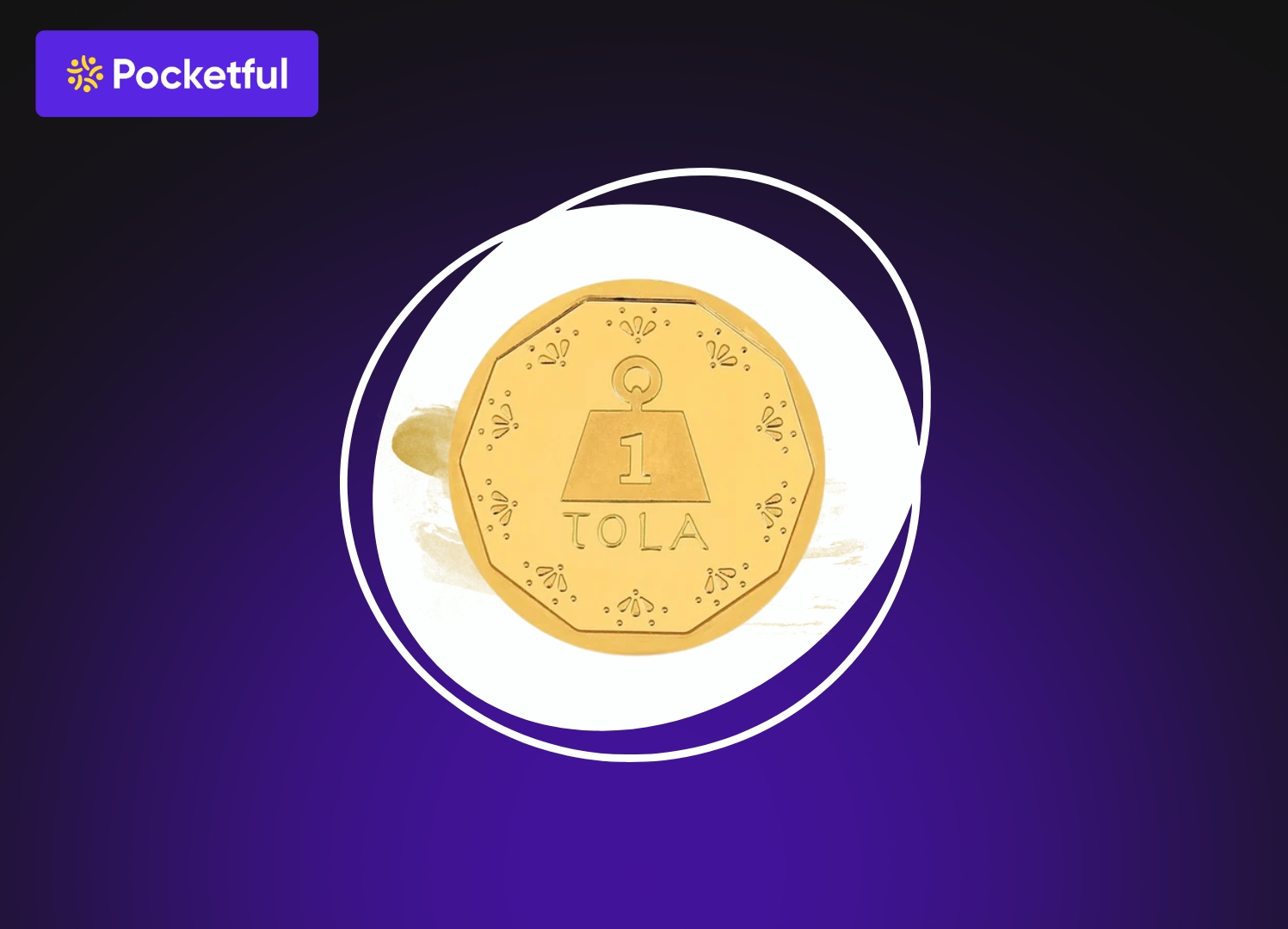
1 Tola Gold is equal to How Many Grams?
1 Tola = 11.66 grams of gold
This is the official and historically standard conversion.
Examples
- 2 Tolas = 23.32 grams
- 5 Tolas = 58.32 grams
- 10 Tolas = 116.64 grams
Imagine your grandmother says her necklace weighs “5 tolas.” Without converting it properly, you might underestimate its value if you assume it is only 50 grams. That 8 grams of difference can translate into thousands today.
Why do some jewellers say 1 Tola is 10 grams?
This is where confusion usually begins. In many local markets, jewellers casually consider 1 tola as 10 grams.
History
- Ancient Roots: The concept of a tola goes back to ancient India, where weights were often based on natural objects. Traditionally, one tola was equal to 100 ratti seeds, which were commonly available and uniform in weight.
- British-Era Standardisation: During British rule, the tola was officially standardised to 180 troy grains, which was later translated into 11.6638 grams under the metric system.
Even after India officially adopted the metric system, the tola did not disappear. Jewellery, tradition, and habit kept it alive, especially in household gold conversations.
Importance of Tola
- Jewellery Buying – Gold jewellery to many Indian families is not only an ornament; it is a combination of emotional and financial security.
- Gold Investment and Coins – Tola denominations of gold bars and gold coins still exist, particularly in the traditional bullion markets. When you invest in gold in the form of physical gold, knowing how to convert it correctly will assist you: Compare prices, do not overpay, and better know the resale value.
- Gold Loans – Banks and NBFCs always calculate gold value in grams, not tolas. If your gold is described in tolas but evaluated in grams, knowing the actual weight ensures: Fair loan value, better transparency, no unpleasant surprises during valuation.
Gold Prices: Tola vs Gram
Gold prices in India move daily, sometimes hourly. While financial websites usually quote prices per gram, many local markets still discuss prices per tola.
So when someone says, one Tola gold is expensive, they are usually referring to the gram price multiplied by 11.66.
Investment Insights
1. Small Weight Gaps Can Mean Big Rupee Differences
The difference between 10 grams and 11.66 grams may not seem significant on paper. But when gold prices are high, that gap starts to matter.
Think of it this way, If gold is priced at ₹6,500 per gram, that extra 1.66 grams adds up to more than ₹10,000 per tola. Now imagine buying five or ten tolas. This is why investors should always work with exact gram weights, and not approximate figures.
2. Physical Gold Investors Should Always Think in Grams
Gold bars and coins may still be sold in tola denominations in some markets, but their value is always calculated in grams. International prices, purity checks, resale rates, everything runs on the metric system.
If you are investing for the long term, thinking in grams helps you compare prices across sellers more accurately, avoid emotional or traditional pricing bias, and track your investment in line with global gold rates.
3. Jewellery Is Emotional, but the Investment in Gold is not
For many families, gold is an emotion and that emotional value is real. But when jewellery doubles as an investment, numbers matter just as much as sentiment.
Before making a big jewellery purchase, ask for the exact gram weight of the gold, separate the gold value from the making charges, and confirm the purity (22K vs 24K)
Conclusion
The tola is not only a measure of value. It is a practice that has been passed down through generations. When you know that the weight of 1 tola is 11.66 grams, you become an even smarter buyer, a more confident investor, and can easily negotiate at the jewellery counter. Gold may shine emotionally, but the math behind it should always be crystal clear.
Investors looking to add gold to their portfolio can do so digitally using Gold ETFs and Gold Funds, easily accessible through Pocketful’s free demat account facility and zero brokerage on delivery trades.
Frequently Asked Questions (FAQs)
Is 1 tola always 11.66 grams?
Yes. Any other number is just a rounded convenience.
Should I buy gold in tola or grams?
Think in grams when paying. Understand tolas when talking.
Do jewellers still use tola?
Very much, especially in local and traditional markets.
Does gold purity change with tola or gram measurement?
No, purity depends on karats, i.e., 22k or 24k and not on whether gold is measured in tolas or grams.
Why is it important to know the tola-to-gram conversion?
It is important to know because even a small weight difference can mean thousands of rupees when gold prices are high.