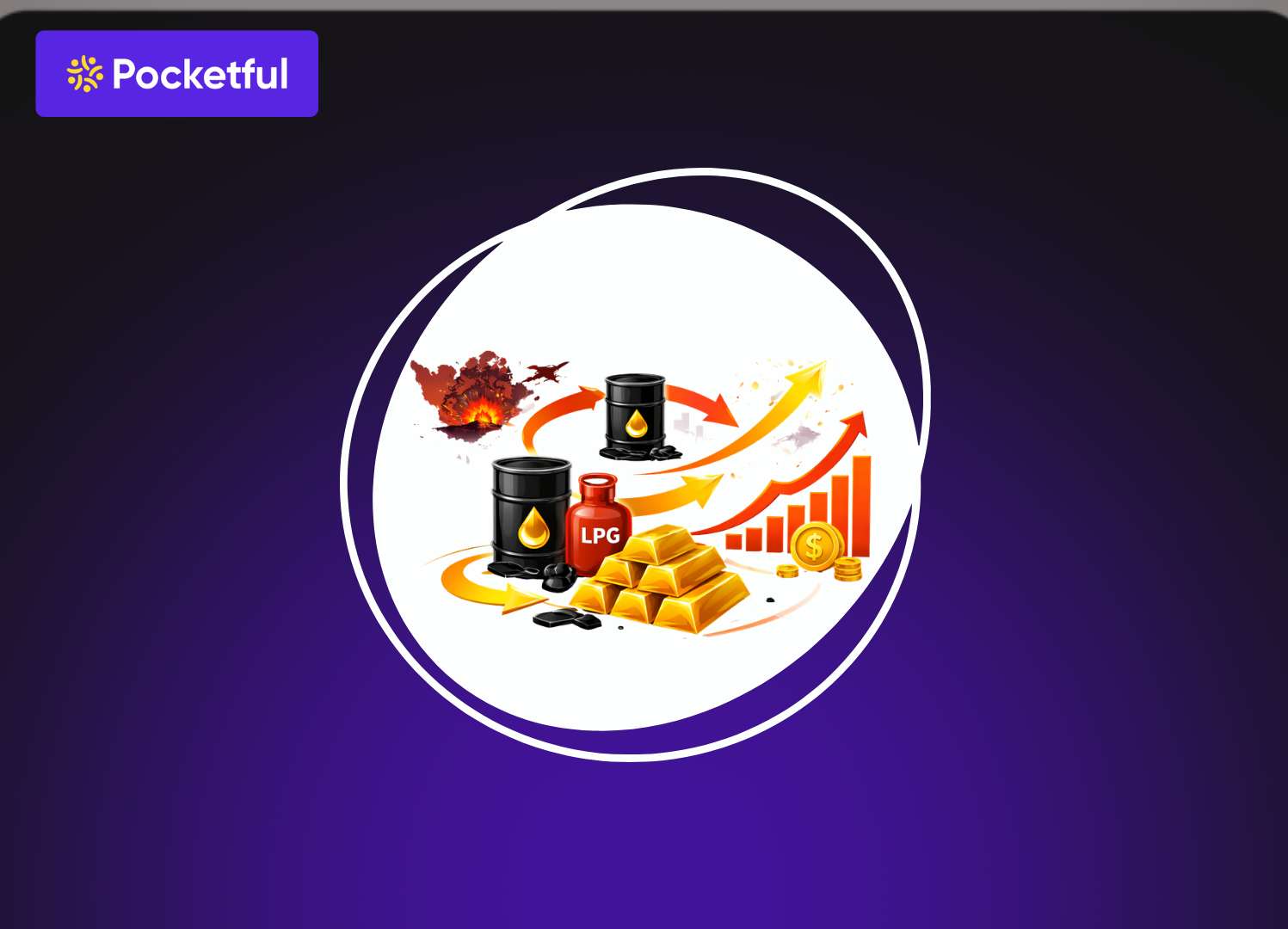
Geopolitical conflicts rarely stay confined to politics. They tend to move quickly into energy markets, commodity prices, and financial systems. The ongoing Iran war is already showing these economic ripple effects.
The closure or the restriction of the Strait of Hormuz has impacted the transport of the oil and gas shipments that normally pass through this narrow route. This has directly impacted industries and households globally, leading to shortages or even the closure of certain businesses.
The rising tension has inflated the prices of oil, LPG, and other energy inputs, which are not being shifted from a global dispute to household concerns. But the question is: on a large scale, what kinds of reactions can people expect?
So, let us explore the details in the guide here to understand how the Iran war is shaping the global markets for Oil, LPG, gold, and others.
Impact on the Global Oil Markets
Global Oil markets reacted immediately to the escalation of the conflict. The start saw a rise in crude prices, as traders factored in the risk of disrupted supply from the Middle East. However, the market has also remained highly volatile. The actual value of the change is hard to determine.
The Reuters report suggested that Brent crude was at $102.22 per barrel and WTI at $95.26 per barrel. This shows that the key story is not just the headline price but the intensity of the volatility triggered by the war.
The conflict has impacted the oil prices beyond this as well. There has been a significant impact on the physical oil trade, affecting roughly 20% of global oil and LNG flows. These disruptions have raised freight, insurance, and supply risks across the region.
Some of the key impacts of the current situation that you should know are:
- The rising price of crude oil is impacting global demand and supply confidence.
- The cost of insurance and transport is rising for oil tankers moving through the Gulf region.
- Rising fuel prices for petrol, diesel, and other energy products in importing countries.
- Increased pressure on oil-importing economies such as India, Japan, and South Korea.
- The need to develop strategic oil reserves is now more than ever.
- Volatility in trading is impacting oil companies and traders.
- Higher transportation and logistics costs across industries.
- Increased inflationary pressure due to rising energy input costs.
Status of LPG in the Global Market
LPG markets have also been affected by the conflict. This is again for the same reason that the majority of global LPG exports originate in the Middle East. Supply chain issues are significantly impacting end-user supply.
The changes in the LPG market can be seen through the following developments:
- Reduced availability of LPG shipments from Middle Eastern exporters.
- Delay in delivery due to transport can impact the domestic conditions.
- Higher freight and insurance costs for LPG transportation.
- Increased pressure on LPG prices in major importing markets across Asia.
- Potential supply concerns for countries where LPG is widely used for household cooking.
- Greater volatility in the global LPG trade due to shifting supply patterns.
Impact on Gold Markets
Gold has traditionally acted as a safe-haven asset during geopolitical conflicts. The Iran war initially pushed investors toward the metal. The increasing tension made gold a perfect option to combat the volatility.
Gold prices briefly rose to near $5,400 per ounce in early March 2026. However, the rally did not continue in a straight line. The prices started to decline sharply. This was mainly due to disruptions to dispatch routes, especially from Dubai. Flight suspensions and supply chain delays are now increasing concerns as prices are expected to fall low below the past rate trends.
As a result, gold is now attracting global attention, with the safe-haven tag under pressure.
Impact on Global Inflation
When the price of energy and manufacturing rise, there is an increase expected in prices of other sectors, causing inflation. Economists estimate that the conflict could add roughly 0.3 to 0.9% points to global inflation
This rise is more linked to the changes in the energy prices and the supply conditions, which are expected to stay for long. The further rise in transport and manufacturing costs will also affect food and household expenses.
In the United States, inflation had been moderating earlier in 2026. But the current situation is expected to push the inflation to around 3.3% by late 2026. This is valid if the war situation continues. Also, it is estimated that the Eurozone will experience around 0.5% rise in this case.
Overall, the Iran war has increased the risk that inflation will stay higher for longer, forcing central banks to remain cautious about cutting interest rates.
Conclusion
The Iran war has already begun reshaping global markets. The rise in oil and energy prices, combined with a fall in gold, is among the major global concerns. The manufacturing and household sectors are both equally impacted.
This is one of the reasons for the inflation as well. Infact, currently the volatility in the stock market is unpredictable as well.
So, if you are an investor, keeping an eye on the market, these details are key. Also, you can explore more detailed insights like these on Pocketful. Use the right information and tools to ensure that you are moving in the right direction.
| S.NO. | Check Out These Interesting Posts You Might Enjoy! |
|---|---|
| 1 | Best stocks to buy in wartime as Iran-US clash intensifies |
| 2 | Stocks Most Positively and Negatively Affected by the Iran–US War: Daily Market Analysis |
| 3 | Will LPG Cylinder Prices Increase Due to the Iran War? |
Frequently Asked Questions (FAQs)
Will the Iran war affect energy prices?
Yes. The ongoing US-Iran war has a great impact on the energy prices. The restriction on the movement of fuel and oil is the key reason behind this rise. This will, in turn, increase the cost of other necessities, impacting consumers greatly.
How does war affect the airline industry?
The major impact of the war on the transport industry is the price increases and disruptions. While travel may be impacted, rising fuel prices increase ticket prices. This can add to overall inflation and can make linked services expensive.
Why do oil prices rise during geopolitical conflicts?
Oil prices often increase during conflicts because markets fear supply disruptions. In other words, when production or supply routes are disrupted, prices tend to increase naturally.
Will the Iran war increase global inflation?
Yes. Rising oil and energy prices increase transportation and production costs. So, when the basic costs of production increase for industries, they raise prices to consumers, leading to inflation.
Why do investors buy gold during wars?
The main reason why people buy more gold during wars is to have liquidity and safety. This is an asset that can be sold anywhere, which helps with better finances.
