In today’s world, professional fund management plays a crucial role in creating wealth. There are various professionals available in the investment world who manage investors’ funds. Among them, portfolio managers and hedge fund managers are commonly chosen by the investors.
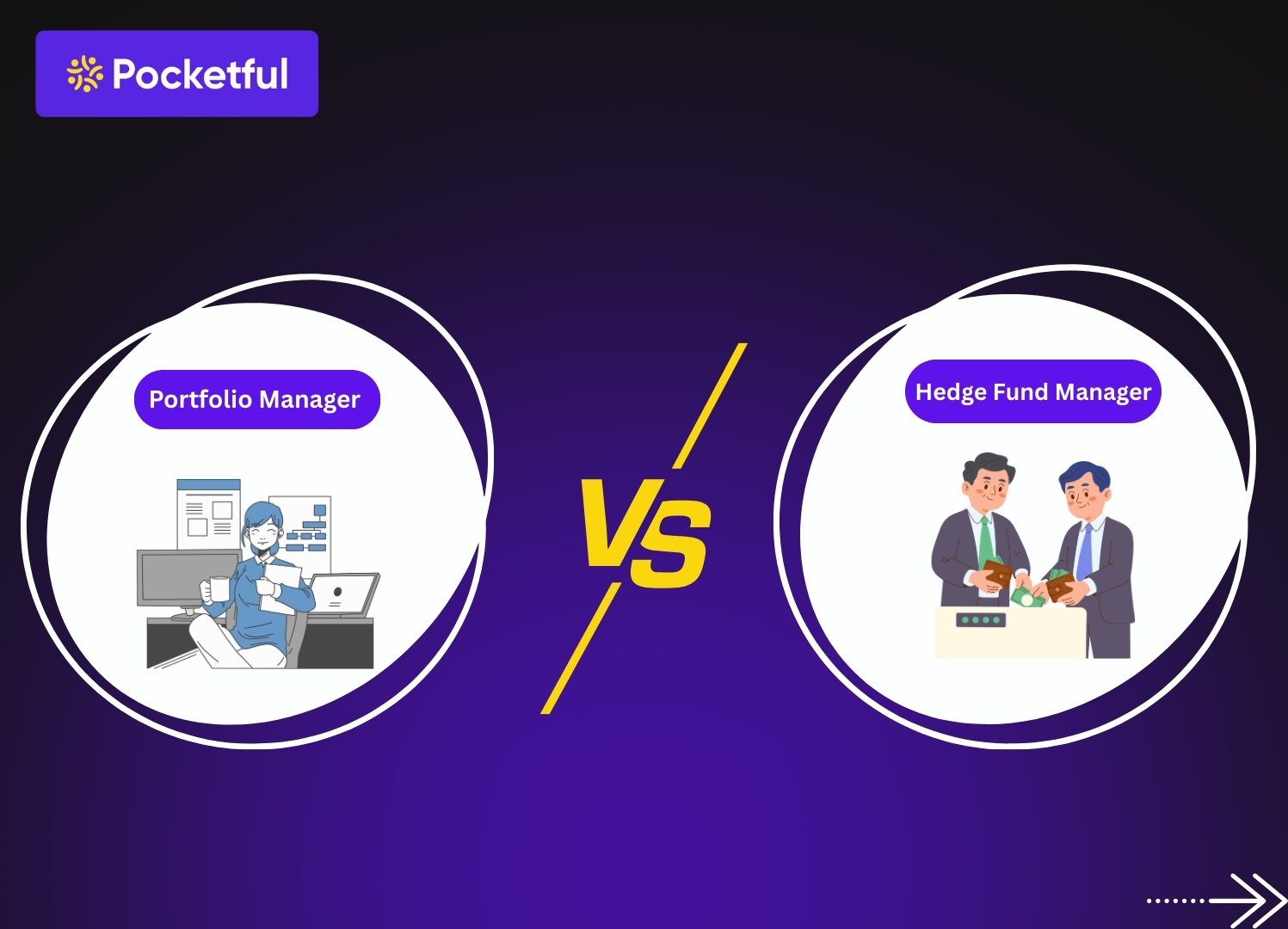
In today’s blog post, we will give you an overview of portfolio managers and hedge fund managers, along with the key differences between them.
What is a Portfolio Manager?
A portfolio manager refers to a person whose main job is to manage portfolios either on behalf of individuals or institutions. The portfolio of the portfolio manager comprises various types of assets such as equities, bonds, mutual funds, ETFs, etc. A portfolio manager usually works with mutual fund companies, pension funds, insurance companies, etc.
Features of a Portfolio Manager
The key features of a portfolio manager are as follows:
- Diversify Portfolio: Their primary objective is to manage the portfolio and diversify it according to the investment objective.
- Company Fundamentals: They must analyse the company’s fundamentals so that the correct investment can be made.
- Risk and Return: A Portfolio manager should balance the risk and return of a portfolio. They try to generate maximum return by taking minimum risk.
- Compliance: They must maintain compliance with the regulatory guidelines laid down by the agencies.
What is a hedge fund manager?
A hedge fund manager is a person who manages the pooled fund of different high-net-worth individuals. They primarily use advanced trading strategies which carry high risk to generate profit on investment. They do not worry about the market trend and change their strategies according to it.
Read Also: Difference Mutual Funds and Hedge Funds?
Features of a Hedge Fund Manager
The key features of a hedge fund manager are as follows;
- Complex Strategies: They develop complex investment strategies to generate returns.
- Leverage: A Hedge fund manager uses leverage to enhance the return of the portfolio.
- Short-Selling: They also use short-selling strategies to manage risk and market exposure actively.
- Absolute Return: They do deliver absolute returns rather than benchmark-based returns.
Difference between Portfolio Manager and Hedge Fund Manager
The key differences between a portfolio manager and a hedge fund manager are as follows:
| Particular | Portfolio Manager | Hedge Fund Manager |
|---|---|---|
| Investment | A portfolio manager primarily invests in different vehicles such as mutual funds, PMS, ETFs, etc. | A hedge fund manager invests in a hedge fund and an alternative investment fund. |
| Target Investors | Portfolio managers primarily target retail and institutional investors. | Hedge funds focus on high-net-worth and accredited investors. |
| Objective | Their objective is to generate long-term risk-adjusted return. | The objective of a hedge fund manager is to generate an absolute return irrespective of market conditions. |
| Strategy | A conservative investment strategy is used by portfolio managers. | Hedge fund managers use aggressive investment strategies. |
| Leverage | They do not use leverage. | Hedge fund managers use extensive leverage to enhance returns. |
| Transparency | Portfolio managers offer high transparency. | They offer comparatively lower transparency. |
| Fees | They charge a fixed fee. | Hedge fund managers charge performance-based fees. |
| Short Selling | Portfolio managers rarely use short-selling. | Short-selling is commonly used by hedge fund managers. |
| Risk | Investing with portfolio managers carries low to moderate risk. | Investing with a hedge fund manager carries high risk. |
Who should invest with a portfolio manager?
Investment with a portfolio manager will be beneficial to the types of investors listed below:
- Goal-Oriented: Investors who have long-term goals and want to create wealth over time can invest with the portfolio managers.
- Conservative Investor: Portfolio managers work towards the preservation of capital; hence, they are best suited to investors who tend to have reduced volatility and predictable returns.
- Liquidity: Most of the portfolio managers allow easy entry and exit, which makes them suitable for investors looking for liquidity in their portfolio.
Read Also: Index Funds vs Mutual Funds: Key Differences
Who should invest with a hedge fund manager?
The following are the types of investors who can invest with a hedge fund manager:
- High-Net-Worth Investor: Hedge funds typically require a large ticket size or investment level; thus, they are only available to high-net-worth individuals.
- Risk-Taking Investor: Because of complex trading strategies, hedge funds generally carry high risk. Therefore, investors with high risk tolerance can invest with a hedge fund manager.
- Experienced: Investors who understand the market and are well-versed in the market dynamics and complex trading strategies can invest with a hedge fund manager.
Conclusion
To conclude, portfolio managers, as well as hedge fund managers, are important in investment and increasing wealth. They have different approaches to generating returns. On one hand, a portfolio manager is targeting long-term wealth generation and capital retention; on the other hand, a hedge fund manager is targeting absolute return through a wide range of aggressive trading and investments. The selection between them, however, is based on the risk profile of an investor and their investment purpose.
Frequently Asked Questions (FAQs)
Who regulates the portfolio manager and hedge fund manager in India?
Securities and Exchange Board of India (SEBI) regulates portfolio managers and hedge fund managers.
What are the most common investment strategies used by the hedge fund manager?
Arbitrage, short-selling, derivatives, leverage, etc, are the most common investment strategies employed by a hedge fund manager.
Investing with a portfolio manager or a hedge fund manager, which is riskier?
The investment with hedge fund managers is usually regarded as risky due to leverage and complicated trading strategies, and the portfolio manager focuses on capital protection and stable returns.
Who charges more fees, a hedge fund manager or a portfolio manager?
Hedge fund managers charge higher fees because they use more complicated strategies of trading strategies; their fees are fixed fees and performance-based fees; the portfolio managers have a fee that is fixed fee only.
Can a hedge fund manager guarantee profit?
No, a hedge fund manager does not guarantee profit, as all the investments are market-linked.