Blog

  • Delisting Of ICICI Securities : Reasons and Brief Explanation

    Delisting Of ICICI Securities : Reasons and Brief Explanation

    Ever heard of a company delisting itself from the stock market on purpose? That is precisely what is happening to the ICICI Securities. In March 2024, the minority shareholders showed their support by voting in favour of ICICI Securities’ delisting, and to merge with its parent company, ICICI Bank. But before you jump to conclusions, this was not bad news. It was a strategic move by ICICI Bank to simplify its structure and create a more robust financial force.

    In this blog, we will explore the reasons behind the proposed delisting of ICICI Securities, the process, and how this decision could benefit both ICICI Bank and its shareholders.

    ICICI Securities – Brief

    ICICI Securities is a listed company founded in 1995 as ICICI Brokerage Services Limited and is a subsidiary of ICICI Bank. The company embraced technology and launched a revolutionary online brokerage platform, ICICIdirect.com, in 2000 and pioneered online investment opportunities in mutual funds and government bonds. It expanded its reach through physical ICICI direct branches across India in 2005 and diversified services by offering health and life insurance products by 2006. The company name was officially changed to ICICI Securities in 2007.

    On November 9, 2023, the Reserve Bank of India approved ICICI Bank’s request to establish full ownership of ICICI securities. About 71.9% of the brokerage’s minority shareholders approved the delisting, which is higher than the regulatory requirement of a two-thirds majority.

    The ICICI Bank is offering 67 shares of ICICI Bank for every 100 shares of ICICI Securities held by the shareholders. However, there was some disagreement among investor groups. Institutional shareholders, who have a more significant stake, supported the delisting, while some retail investors opposed it.

    Additionally, the Quantum Asset Management Company (QAM), with a 0.21% stake in ICICI Securities, voted against the deal. According to QAM, ICICI’s offer for the stake is undervalued. It should be priced at approximately INR 940 per share, considering the lowest multiple among its comparable peers in the market. This valuation is significantly higher than the current offer on the table by the ICICI Bank.

    Why Retail Investors are not in favour of Delisting

    Why Retail Investors Not in favour of ICICI Delisting

    A few Retail Investors are opposing the delisting of ICICI Securities because of the Swap Ratio concern:

    Swap Ratio Concern – Retail investors felt that the exchange rate offered by ICICI Bank (67 shares of ICICI Bank for every 100 shares of ICICI Securities) undervalued the ICICI Securities. They believe that their holdings are worth more than the offered price, and the swap ratio would not translate to the same potential growth as holding separate stocks.

    If you’re not familiar with Swap Ratio, it refers to the exchange rate at which shares of the acquiring company (ICICI Bank in this case) are offered for shares of the target company (ICICI Securities). It establishes the percentage of ownership a target company shareholder will receive in the new or surviving company.

    Read Also: Delisting Of ICICI Securities : Reasons and Brief Explanation

    Reasons for Delisting of ICICI Securities

    Reasons for Delisting of ICICI Securities

    ICICI Securities is proposed to become a wholly-owned subsidiary of ICICI Bank, which would give ICICI Bank complete ownership and control over ICICI Securities.

    The Bank believed that merging the two entities would improve efficiency and allow it to offer a broader range of financial products and services under one roof. The Delisting would also allow for streamlining operations and decision-making processes within the bank.

    Delisting – An Overview

    The Delisting refers to removing a company’s stock from a stock exchange, i.e., NSE and BSE in India. This means the stock can no longer be traded on an exchange. The companies might delist their shares for several reasons, such as mergers and acquisitions, non-compliance with listing requirements, financial distress, etc. Generally, the delisting can be classified as voluntarily or involuntarily.

    • Voluntary Delisting
      A company might choose to go private or get acquired by another company. In this case, the company will generally offer shareholders a way to sell their shares before the delisting happens. ICICI securities is a case of voluntary delisting.
    • Involuntary Delisting
      This happens when a company does not follow the stock exchange listing requirements. There are different requirements a company needs to meet to stay listed, such as maintaining a specific price or filing several reports on time. The exchange can delist, if a company does not meet the listing requirements.

    You must wonder what happens to the shares after the company is delisted, particularly in case of Involuntary delisting. Even though delisting makes things trickier, you still own a stake in the company, as indicated by your shares. Let’s have a quick overview:

    • Once the company is delisted, you can no longer trade it on the stock exchange. This significantly reduces liquidity, meaning finding a buyer for your shares might be challenging.
    • You might be able to sell your shares on the Over the counter (OTC) market, which is essentially a network of dealers who trade securities outside of exchanges. However, OTC markets are less regulated and generally have wider bid-ask spreads than the stock exchange.
    • Shareholders might find it challenging to sell their shares as there may be limited buyers in the OTC market.
    • In case of voluntary delisting, the acquirer provides the buyback window. The shareholders can sell their holdings to the promoters before delisting.

    Read Also: ICICI Bank Case Study: Financials, KPIs, Growth Strategies, and SWOT Analysis

    Conclusion

    The delisting of ICICI Securities will mark a turning point for the company and ICICI Bank. While some retail investors expressed concerns, the goal is to create a more efficient financial institution. Only time will tell the impact of this strategic move. The company may be delisted, but the decision positions them for future growth as a part of a stronger financial entity.

    Additionally, the delisting will pave the way for a more streamlined and competitive financial giant. This could be a positive development for ICICI Bank and the Indian financial landscape. Also, SEBI is currently reviewing multiple complaints regarding the delisting. Upon the collection of substantiated evidence, the SEBI will initiate an investigation. The actions that SEBI may take remain uncertain.

    Frequently Asked Questions (FAQs)

    1. Why ICICI Securities is getting delisted?

      The purpose of delisting is to simplify ICICI Bank’s structure, and achieve better integration between the two entities.

    2. Did ICICI Bank take this decision because of the poor performance of ICICI Securities?

      No, it was a strategic decision to delist ICIC Securities, and not due to negative performance of the company.

    3. Did everyone agree with the delisting?

      The institutional investors favoured the delisting; however, a few retail investors opposed it.

    4. What will happen to the shareholders of ICICI Securities?

      The shareholders of ICICI securities will receive the ICICI Bank shares in exchange for their holdings.

    5. Will this delisting affect the stock price of ICICI Bank?

      The long-term impact remains to be seen, but the move overall aims to strengthen the banking operations.

  • Jio Financial Services: Business Model And SWOT Analysis

    Jio Financial Services: Business Model And SWOT Analysis

    Did you know there is a recently listed company that is the country’s third biggest NBFC after the Bajaj twins, i.e., Bajaj Finance and Bajaj Finserve? It is the new kid on the block with the backing of Reliance Industries Limited (RIL), as it is RIL’s newly carved out Entity. We are talking about Jio Financial Services Limited (JFSL).
    In this blog, we will talk about its Jio business model and SWOT analysis.

    Jio Financial Services – Introduction

    Reliance Industries Limited (RIL) demerged its financial services company, Reliance Strategic Investments Ltd (incorporated in 1999), and renamed it as Jio Financial Services Limited (JFSL). The Jio Financial Services aims to provide simple, affordable, and innovative digital-first solutions.

    JFSL is positioned uniquely to play a crucial role in transforming the landscape of digital finance in India.  It is a non-banking financial company. As of 13 May 2024, the market capitalization of Jio Financial is almost INR 2.2 lakh crores. It is one of the top 40 Indian companies by market capitalization, in a list headed by Reliance at INR 19 lakh crores. The company debuted on the stock exchanges on August 21, 2023. The company’s initial listing price was INR 265 per share on the BSE and INR 262 per share on the NSE, and currently trading at INR 341 (as of 13 May 24)..

    Jio Financial Services Business Model

    The company is a holding company that operates its Jio financial services business model through its consumer-facing subsidiaries, Jio Finance Limited (JFL), Jio Insurance Broking Limited (JIBL), and Jio Payment Solutions Limited (JPSL), and joint venture namely Jio Payments Bank Limited (JPBL).

    Products

    Lending: The company offers personal loans for salaried and self-employed individuals through MyJio app. Further, the company has also launched consumer durable loans across 300 stores in India.

    Insurance Broking: Established partnership with 24 insurance companies (Life – 5, General – 15, Health – 4) offering a wide range of products such as General, Life, Auto Insurance, Health Insurance, Embedded insurance, corporate solutions & employer-employee benefits.

    Payments Bank: It provides services such as bill payments, money transfers, etc. It has an on-ground network of over 2,400 business correspondents.

    Products in the pipeline: There are several products in the pipeline such as Business and merchant loans for self-employed individuals, sole proprietors, and small business entities; Auto loans, Home loans, and loans against shares.

    Competitive Landscape

    Non-Banking Financial Companies (NBFCs) in India are characterized by oligopoly competition. An oligopoly is an industry where a small group of large companies have a dominant position, giving them more market control and pricing power than the other companies.

    Read Also: Reliance Industries Case Study: Marketing Strategy and SWOT Analysis

    Jio Financial Services SWOT Analysis

    Strengths

    Jio Financial Services Limited (JFSL) has the potential to be a game changer in the Indian market for several reasons. It is a part of Reliance, which has a well-established brand presence that drives trust and recognition.
    1) JFSL has the backing of Reliance Industries, one of the largest conglomerates in India. This gives JFSL access to a vast pool of resources, including capital, talent, and technology.
    2) JFSL is focused on providing financial services to underserved segments of the population, such as small businesses and low-income households. This is a large and growing market that is ripe for disruption.
    3) A 50:50 joint venture between Jio and Blackrock will combine BlackRock’s scale and investment expertise with Jio Financial Services’ knowledge and resources to deliver affordable, innovative investment solutions to millions of investors in India.

    Weakness

    1. The company is relatively new; although they are backed by Reliance Industries Limited, it is still in the financial industry, so building trust can be challenging for them.
    2. Due to its extensive product portfolio, it may encounter difficulties in effectively managing and allocating resources to it.

    Opportunities

    Today’s India is adopting digital finance at a fast pace and the digitalization has penetrated every corner of the nation through Jan Dhan accounts, digital payments, usage of smartphones, and low-cost data. The growth opportunities presented by financial services are remarkable and provide strong directional support to the economy.

    1. Favorable demographics: 450 million working people and the 12th largest population of high-net-worth individuals (HNIs).
    2. Increasing user activity: Higher consumption and digitalization will fuel the growth. As per several estimates, India to become a USD 10 trillion economy by 2035.

    Threats

    1. The business operates in an Oligopoly market where few big players have the controlling power to dictate price and the competition.
    2. Their margins may be impacted by regulatory changes made by the Indian government as it is highly regulated.
    3. Economic growth may affect consumers’ spending and saving patterns, which in turn will affect the company’s profitability.

    Jio Financial Services Financials

    Let’s have a look at the financials of Jio Financial Services Limited.

    Profit and Loss Statement (INR crore)

    ParticularsMar-23Mar-24
    Sales 451,854
    Expenses 6296
    Operating Profit391,558
    OPM %88%84%
    Other Income 10429
    Interest10
    Depreciation22
    Profit before tax491,956
    Tax %37%18%
    Net Profit 311,605
    Jio Finance Services P&L Statement


    Balance Sheet.

    ParticularsMar-23Mar-24
    Equity Capital26,353
    Reserves114,118132,794
    Borrowings 743
    Other Liabilities 665,715
    Total Liabilities114,930144,863
    Fixed Assets 158175
    CWIP38
    Investments108,141133,292
    Other Assets 6,59311,396
    Total Assets114,930144,863
    Balance Sheet of Jio Financial Services

    Shareholding pattern

    ParticularsSep-23Dec-23Mar-24
    Promoters 46.77%47.12%47.12%
    FIIs 21.58%19.83%19.45%
    DIIs 13.64%12.99%12.50%
    Government 0.13%0.14%0.14%
    Public 17.86%19.92%20.77%

    From the above table, we can observe that FIIs and DIIs have reduced their shareholding over the last three quarters. In contrast, retailers have increased their shareholding.

    Read Also: Reliance Power Case Study: Business Model, Financial Statements, And SWOT Analysis

    Conclusion

    In summary, JFSL’s stock price performance has been impressive and has shown an upward trajectory in recent months, reaching new record highs. The stock hit INR 394.70 in April 2024, an all-time high. Further, the company also reported stellar performance in FY 2024.

    But it is important to note that the market and most of the stocks are at all-time highs, and there are major events lined up like Indian Elections, Budgets, and then US Elections. So, always consider your risk tolerance and time horizon before making any investing decision.

    S.NO.Check Out These Interesting Posts You Might Enjoy!
    1TCS Case Study: Business Model, Financial Statement, SWOT Analysis
    2Vedanta Case Study: Business Model, Financial Statement, SWOT Analysis
    3Nestle India Case Study: Business Model, Financial Statement, SWOT Analysis
    4BPCL Case Study: Business Model, Product Portfolio and SWOT Analysis
    5Apollo Hospitals Case Study : Business Model, Financial Statements, And SWOT Analysis

    Frequently Asked Questions (FAQs)

    1. What is the old name of Jio Financial Services Limited (JFSL)?

      JFSL was initially incorporated as Reliance Strategic Investments Private Limited in 1999.

    2. What products do Jio Financial Services offer?

      The company is a holding company that operates its financial services business through its consumer-facing subsidiaries, Jio Finance Limited (JFL), Jio Insurance Broking Limited (JIBL), and Jio Payment Solutions Limited (JPSL), and joint venture namely Jio Payments Bank Limited (JPBL). These subsidiaries offer services such as lending, insurance broking, payments bank, etc. Further, JFSL has multiple products in the pipeline.

    3. What are the challenges for Jio Financial Services in the coming future?

      JFS operates in a highly regulated sector; along with that, it will be affected by economic, interest rate fluctuations, repo rates, inflation rates, etc.

    4. Is Jio Financial Services (JFS) a NBFC?

      Yes, the JFS is a Non-Banking Financial Company (NBFC). NBFCs in India are highly regulated by the Reserve Bank of India (RBI). 

    5. Is Jio Financial Services a good investment?

      The company’s future looks promising, but it is crucial to do thorough research before investing.

  • Breakdown of CTC: A Detailed Analysis

    Breakdown of CTC: A Detailed Analysis

    Did you know your take-home pay is only part of the picture? In India, CTC can be up to 30% more than your net salary. In this blog, we will explain why CTC is important and what it entails.

    CTC – An Overview

    CTC stands for Cost to Company. It refers to the total amount a company spends on an employee in a year, which includes the employee’s salary and all the benefits they receive. Benefits can include health insurance, housing allowances, and more.

    To calculate CTC, you add the employee’s salary and benefits. For example, if an employee has a salary of INR 50,000 per month and the company pays INR 5,000 per month for his health insurance and other perks, then, the employee’s CTC would be INR 55,000 per month or INR 660,000 per year.

    CTC differs from an employee’s net salary (the amount they take home). Taxes and other deductions are reduced from salary.

    Breakdown of CTC

    Breakdown of  CTC

    Basic Salary

    This is the fixed amount of money an employee receives before any allowances or deductions. It forms the core of your take-home pay and is subject to income tax.

    Allowances

    These are monetary benefits provided by the company to help cover employee expenses. There are numerous allowances; some of the key allowances are:

    1. House Rent Allowance (HRA)

    HRA is a part of your CTC that helps offset the cost of renting a house. It is a monetary benefit, and under certain conditions, it is partially exempt from income tax.

    Here is an explanation of HRA:

    • HRA helps employees manage their rental accommodation expenses. The lowest of the following is the tax-exempt amount-
      • HRA received from the employer.
      • 50% of your base salary if you live in a metro city or 40% if you live in a non-metro city.
      • Actual rent paid less than 10% of your base salary.
    • However, there are certain conditions for exemption, which are as follows-
      • You are required to be lodging in a rented space.
      • You must have rent receipts as evidence of the payment.
      • The landlord’s PAN card details might be needed (if rent exceeds INR 1 lakh annually).

    Furthermore, HRA is unavailable if you live in your own house or company-provided accommodation.

    2. Leave Travel Allowance (LTA)

    LTA is another component of your CTC that falls under the allowance category. It is designed to partially reimburse your travel expenses incurred during your leave from work. Let us take a closer look at LTA:

    • It aims to provide financial assistance for domestic travel during your vacation or leave period.
    • LTA is exempt from income tax under certain conditions, allowing you to save on taxes.
    • The exemption is available for two journeys in a block of four years. The lower of the following amount is exempted-
      • Actual travel expenses incurred.
      • LTA amount offered by your employer.
      • Deemed travel expenses, which are calculated based on your salary and travel class.
    • LTA covers your travel expenses for immediate family (spouse, dependent children, and sometimes dependent parents and siblings). The mode of travel can be bus, train, or economy airfare.

    Generally, you must submit bills and travel documents to your employer to claim the LTA exemption.

    Furthermore, LTA is meant for domestic travel within India. International travel expenses are not covered.

    3. Conveyance Allowance

    Conveyance Allowance, also known as transport allowance, is a part of your CTC that helps you cover the daily commuting expenses between your home and workplace and is partially exempt from income tax.

    Let us take a closer look at the Conveyance Allowance:

    • The main objective of conveyance allowance is to offset the cost of commuting to and from work.
    • The amount of conveyance allowance that is exempt from income tax is limited. In India, the exempt amount is INR 1,600 per month or INR 19,200 per year.
    • You do not need to submit any bills or receipts to claim the exemption for conveyance allowance.

    4. Dearness Allowance (DA)

    DA is a component of your CTC designed to address inflation. It is a monetary benefit provided by the government or some private sector employers to adjust your salary for rising living costs.

    Let us have a quick overview of the dearness allowance:

    • The purpose of DA is to compensate for inflation and help maintain purchasing power over time. As the cost of essential goods and services rises, DA helps bridge the gap and ensure your salary retains its value.
    • The calculation of DA can vary depending on the entity providing it.
    • In India, for government employees, DA is a percentage of their basic salary and is reviewed twice a year – January and July, depending on the Consumer Price Index (CPI).
    • Also, private companies might calculate DA using their internal procedures or guidelines.

    Read Also: Budget 2024: F&O Trading Gets More Expensive?

    Employer Contribution

    These are indirect benefits where the company pays on the employee’s behalf, which include:

    1. Provident Fund (PF)

    Provident Fund (PF) is a type of retirement savings plan that can be either optional or mandatory, depending on the structure and particular work circumstances. The purpose of PF is to provide financial security for employees after retirement.
    Both employers and employees contribute a fixed percentage of the employee’s salary towards the provident fund. The contribution rates can differ by country and employment type.
    An authorized financial institution or a government agency invests the contributions, and the employee can withdraw the collected funds under certain circumstances, such as medical emergencies. Additionally, the employee can withdraw the entire accumulated amount and the interest received upon retirement.

    There are two types of provident funds.

    • Employee Provident Fund (EPF) – A Provident Fund scheme for salaried individuals in India.
    • Public Provident Fund (PPF) – A voluntary PF scheme provided by the Government of India and is open to all citizens.

    2. Gratuity

    An employer makes a one-time payment to an employee as a token of appreciation for their service, specifically after completing a long tenure with the company. It is a compulsory benefit under India’s Payment of Gratuity Act, 1972.

    Individuals are eligible for gratuity if they have completed five or more years of continuous service with the same company.

    The gratuity amount is calculated using the following formula:

    Gratuity = Last drawn salary * (15/26) * number of completed years of service.

    • The last drawn salary is your basic salary and dearness allowance.
    • 15/26 is the factor that represents 15 days’ wages for each completed year of service.
    • Number of completed years of service include any portion of the year over six months, regarded as a full year.

    Additionally, there is a maximum limit on the gratuity payable. The cap is INR 20 lakh, which means you will earn a maximum of INR 20 Lakh even if the calculated gratuity amount is higher, and a part of the gratuity amount is taxable.

    3. Employee State Insurance (ESI)

    ESI is a social security program offered by the Indian government to a few employees and is managed by the ESIC (Employees’ State Insurance Corporation).

    The main objective of ESI is to provide medical and financial assistance to employees and their dependents in case of sickness, temporary, or permanent disability because of employment, maternity, or death due to employment injury.

    ESI applies to employees working in factories and other businesses registered under the ESI Act.
    There is a minimum salary threshold for coverage. As of April 2024, employees earning up to INR 21,000 per month are generally covered under ESI.

    Employers contribute 4.75%, and employees contribute 1.75% (for wages below INR 137 per day, employee contribution is nil.)

    Also, employers must register their company with ESIC if they meet the eligibility criteria.

    Read Also: Top Indicators Used By Intraday Traders In Scalping

    Conclusion

    To wrap up, a deep understanding of CTC is essential for anyone negotiating a job offer or evaluating a compensation package. Once you familiarise yourself with various components like allowances and employer contributions, you can get a clearer picture of the total value that you receive from your employer.

    Frequently Asked Questions (FAQs)

    1. What is a CTC?

      CTC stands for the cost to the company. It is the total amount a company spends on an employee annually.

    2. Why is understanding CTC important?

      Knowing your CTC helps you understand the total value of your compensation package, which ultimately allows you to compare job offers more efficiently and negotiate your salary confidently.

    3. What is the difference between CTC and take-home salary?

      CTC is the total cost to the company, while your take-home salary is what you receive after taxes and other deductions from your CTC.

    4. Does a higher CTC always mean a better job offer?

      Not necessarily. A high base salary with fewer benefits might be better for some, while a lower base salary with great benefits might suit others.

    5. Are there any taxes on CTC?

      Taxes are levied on your take-home salary- a portion of your CTC after deductions.

  • Old Regime Vs New Tax Regime: Which Is Right For You?

    Old Regime Vs New Tax Regime: Which Is Right For You?

    You have put in a lot of effort and made money, but you’re not sure which tax regime to choose, the new or the old one.

    Don’t worry; we’ve got you covered. Read the blog to get all the answers to your old and new regime related questions.

    Overview of Income Tax Slab

    A taxation system that applies to an individual based on their income and taxes them based on different slabs is referred to as an income tax slab. An individual’s tax slab rises in tandem with their income. This taxation system is regarded as fair and progressive because an individual’s tax liability rises with their income, and lower income groups are exempt from taxes.

    The Ministry of Finance modify / update the tax slabs annually, and they are announced at each budget speech.

    Tax Regimes in India

    In India currently, there are two types of tax regimes, i.e., Old Regime and New Regime.

    Old Tax Regime – Before 2020, India had just one tax system. Under the Old tax system, you could deduct a variety of expenses from your income, such as house rent, travel expenses, medical expenses, tuition fees for children, etc. This would help you minimize your income and lower your tax obligation.

    In the Old regime, the slab was determined by an individual’s age. Have a look at the below table:

    Income SlabTax Rate
    Individuals aged <60 yearsSenior Citizens aged above 60 but below 80 yearsSuper Senior Citizens aged >80 years
    Up to INR 250,000NilNilNil
    INR 250,001 to 300,0005%NilNil
    INR 300,001 to 500,0005%5%Nil
    INR 500,001 to 1,000,00020%20%20%
    Above INR 1,000,00030%30%30%

    New Tax Regime – The Ministry of Finance announced a new taxation system (optional) for individuals and Hindu Undivided Families (HUFs) in the budget of the financial year 2020–21. However, if a person chooses to use the new tax regime, they will not be eligible to deduct things like HRA, LTA, Section 80C deductions, and so on. In fact, no deductions are available in the new tax regime apart from the standard deduction of INR 50,000 for salaried individuals and pensioners. Because there aren’t many deductions available under the new regime, many don’t like it, and not many have chosen it after its implementation.

    Income Tax Slab as per new regime

    Income SlabTax Rate
    Up to 300,000 INRNil
    300,001 to 600,000 INR5%
    600,001 to 900,001 INR10%
    900,001 to 1,200,001 INR15%
    1,200,001 to 1,500,001 INR20%
    Above 1,500,000 INR30%

    Old Tax Regime Vs New Tax Regime

    There are a few major differences between the old and new tax regimes. Let’s analyze each one of them:

    Tax Rates

    1. Under the old tax regime, tax rates are higher, but an individual can avail of various tax deductions in sections such as 80C, 80D, 80TTA, etc.
    2. While the new tax system has reduced tax rates, it does not permit the use of the Income Tax Act’s deductions.

    Simplicity

    1. Although there are many ways to save taxes under the previous tax system, it could be challenging to engage in tax planning. Further, sometimes people end up spending / investing their savings only to avail certain deductions.
    2. The new tax system offers a simpler tax calculation; however, individuals may lose out on deductions offered in the old tax regime.

    Tax Implications

    1. The previous tax system levied taxes based on an individual’s income and allowed deductions, which favored higher-income earners.
      2.The new tax system mainly benefits those with lower incomes and those who don’t want to claim any deductions.

    Read Also: What Is The Difference Between TDS and TCS?

    Example of Calculation under different Tax Regime

    Let us clarify the differences between tax regimes using examples to help you better understand the difference.

    Suppose Mr. A is a salaried individual who is earning an annual income of INR 800,000 (salary). Let’s calculate the tax liabilities of Mr. A under different tax regimes:

    Old Tax Regime

    ParticularsTax under Old Regime (INR)
    Salary800,000
    Less: Standard Deduction-50,000
    Taxable Income750,000
    Tax up to 250,000Nil
    Tax from 250,001 to 500,000 @5%12,500
    Tax from 500,001 to 750,000 @20%50,000
    Total Tax62,500
    Cess @4% on Total Tax2,500
    Total Tax including cess65,000

    New Tax Regime

    ParticularsTax Under Old Tax Regime (INR)
    Salary800,000
    Less: Standard Deduction-50,000
    Taxable Income750,000
    Tax up to 300,000Nil
    Tax from 300,001 to 600,000 @5%15,000
    Tax from 600,001 to 750,000 @10%15,000
    Total Tax30,000
    Cess @4% on Total Tax1,200
    Total Tax including applicable cess31,200

    From the above tables, we can conclude that if Mr. A opts for the old tax regime, his tax liability will come to INR 65,000; while he opts for the new tax regime, he will save INR 33,800.

    Read Also: Types Of Taxes In India: Direct Tax And Indirect Tax

    Conclusion

    In summation, it depends on individual-to-individual which tax system is better as each person’s net taxable income and amount of deductions is different. Both the new and old taxation system has advantages and disadvantages of its own. Choosing between the two will necessitate professional guidance from a tax adviser or a Chartered Accountant.

    Further, if you want to calculate your taxable amount, explore our calculator: Income
    Tax Calculator

    Frequently Asked Questions (FAQs)

    1. Is the section 80C deduction still relevant under the new tax regime?

      No, deduction under Section 80C (up to INR 150,000) is not allowed when you opt for a new tax regime. It is only available in the old tax regime.

    2. Can a salaried individual change the new regime to the old regime?

      Yes, any individual who has opted for a new tax regime can opt for an old tax regime in the next financial year.

    3. Is deduction u/a 80D applicable in the new tax regime?

      No, an individual cannot claim a deduction under section 80D as the insurance premium paid towards health insurance is not applicable in the new tax regime.

    4. When was the new tax regime introduced?

      The Finance Minister, Nirmala Sitharaman, announced a new tax regime (optional) for individuals and Hindu Undivided Families (HUFs) in the budget of 2020-21.

    5. Which tax regime is better for me if I have a home loan?

      If you have a home loan or are looking to take one, then you should opt for the old tax regime. However, it still depends on the interest amount of the loan and your taxable income.

  • BSE Case Study: Business Model And SWOT Analysis

    BSE Case Study: Business Model And SWOT Analysis

    The Bombay Stock Exchange is a titan of Indian Finance. With a history stretching back to the 1800s, it is not just the oldest stock exchange in Asia, but a vital part of the country’s economic story. But how does the BSE stack up in today’s fast-paced financial world?

    In this blog, we will explore the exchange’s rich past and analyse the risks and opportunities.

    The Bombay Stock Exchange, or BSE, is a stock exchange located in Mumbai, India. Established in 1875, it is the oldest stock exchange in Asia and the tenth oldest in the world. It is one of the India’s leading exchange groups and is known as the ‘Dalal Street’ which is often regarded as the Wall Street of India.

    It provides a platform for trading in equities, currencies, debt instruments, derivatives, and mutual funds.

    BSE History

    The story starts under a banyan tree near Mumbai Town Hall, where a handful of stockbrokers would gather to trade in the 1850s.

    Premchand Roychand, a cotton merchant, is credited with formalising these informal gatherings by establishing the ‘Native Share and Stock Brokers Association in 1875. This is the official founding year of the BSE.

    Owning to the rapid increase of brokers, the trading venue relocated multiple times in Mumbai before eventually establishing its permanent residence on Dalal Street.

    By 1950, the BSE had grown significantly. In 1957, the Indian Government officially recognised it as the country’s first stock exchange, granting it official trading rights. Since then, BSE has continuously evolved to keep pace with the times.

    BSE Business Model

    The BSE operates on a transaction-based fee model, generating revenue from various activities. Below is an analysis of the fundamental components of the business model of the BSE:

    Trading Platform

    The BSE offers a platform for investors to buy and sell stocks, currencies, derivatives, and other financial instruments. This platform connects buyers and sellers efficiently and charge a fee for the same.

    Price discovery

    It facilitates price discovery and determines the fair market value of securities traded on the exchange through buy and sell orders.

    Market Information

    The BSE effectively disseminates real-time market data and information to investors, thereby facilitating their ability to make informed investment decisions. Furthermore, customer segments of the BSE include Retail & Institutional investors, brokers, and issuers.

    It generates its revenue from the following:

    Listing Fees – The Companies pay a fee to list their shares on the BSE. Further, many other parties, such as Asset Management Companies, Brokerage houses, etc. pay a fee for the membership.
    Trading Fees – The exchange charges a fee for every buy and sell order executed on the platform. This can be a fixed amount or a percentage of the transaction value (turnover).

    Read Also: CAMS Case Study: Business Model, KPIs, and SWOT Analysis

    BSE Financial Statements

    Let’s have a look at the financial statements of the exchange:

    Balance Sheet

    Key MetricsFY 2023 (INR crore)FY 2022 (INR crore)
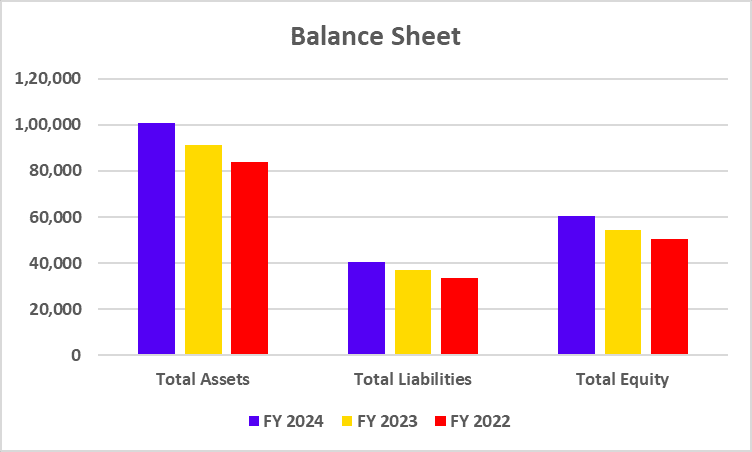
    Total current Assets3,857.104,953.54
    Total non-current Assets2,136.711,231.86
    Total Equity2,828.992,789.71
    Total Non-current Liabilities14.4910.87
    Total Current Liabilities2,392.692,743.93
    Balance Sheet of BSE

    Income Statement

    Key MetricsFY 2023 (INR crore)FY 2022 (INR crore)
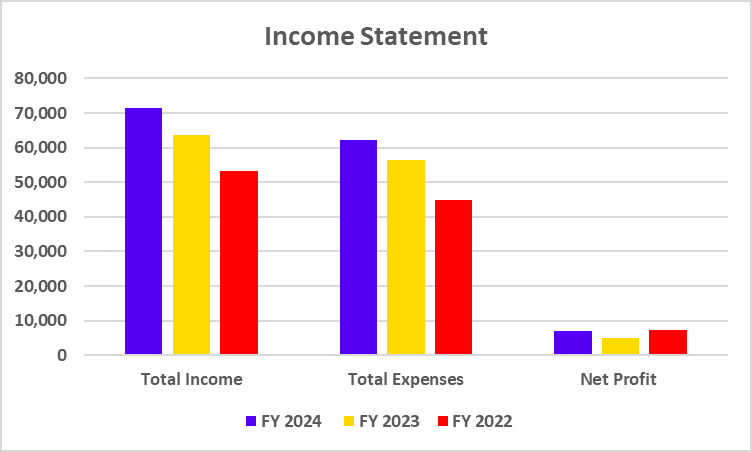
    Total Income953.94863.53
    Total expenses705.91600.45
    Net profit for the year205.65244.93

    Cash flow Statement

    Key MetricsFY 2023 (INR crore)FY 2022 (INR crore)
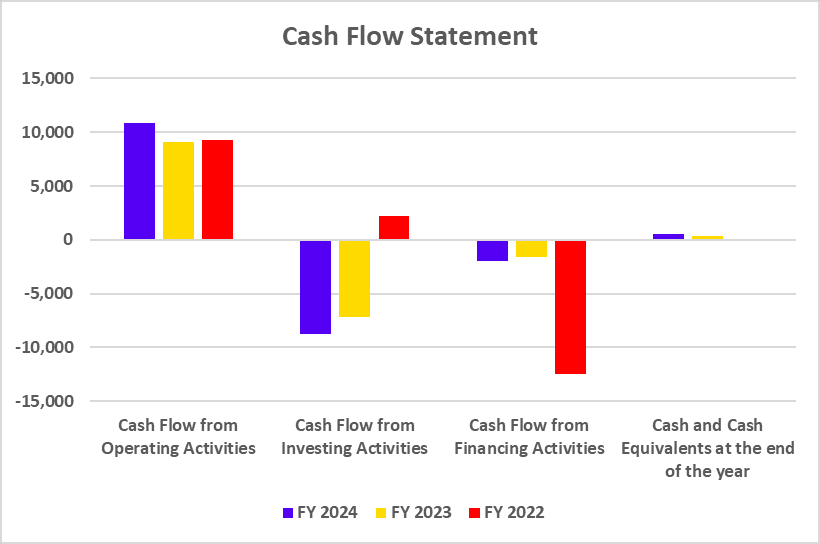
    Cash Flow from Operating Activities137.111,441.75
    Cash Flow from Investing Activities111.33979.9
    Cash Flow from Financing Activities185.518.94
    Cash and cash equivalents at the end of the year452.99886.94

    Read Also: TCS Case Study: Business Model, Financial Statement, SWOT Analysis

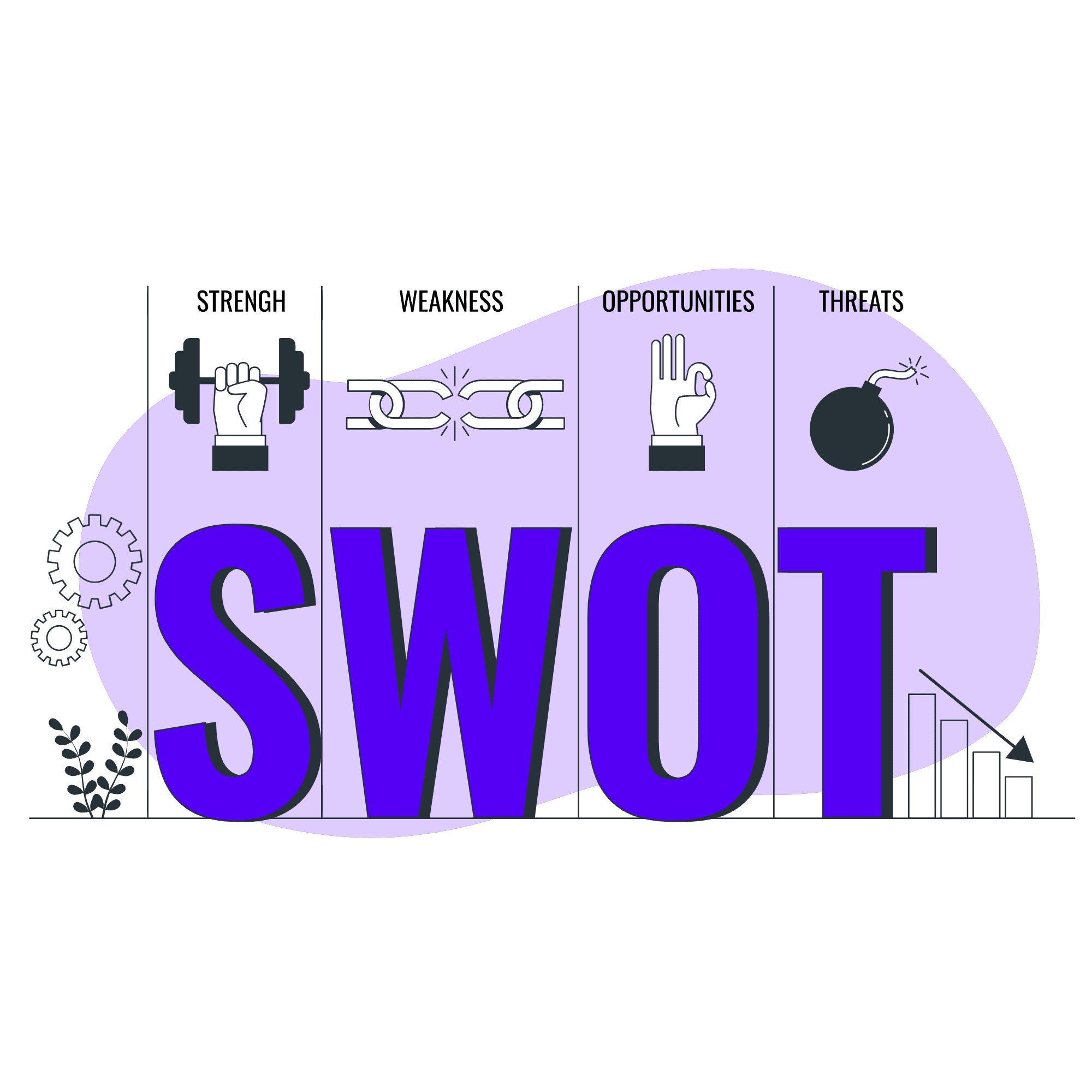
    BSE SWOT Analysis

    Strengths

    ⦁ The BSE is Asia’s oldest stock exchange and commands high recognition among investors, intermediaries, and the public in India.
    ⦁ The company has made strategic decisions regarding the careful selection of open-source technologies and their applicability, which has helped it save money and allow for more investment in other strategic areas of the business. As a result, the company has been able to stay competitive and innovative in the market.
    ⦁ It has also improved its position as a market leader in using AI and ML for surveillance and monitoring in Big Data initiatives.

    Weakness

    ⦁ The BSE encounters robust competition from other stock exchanges, notably the National Stock Exchange (NSE) in India, the BSE needs to consistently enhance the efficiency of its platform in order to remain competitive.
    ⦁ There is a prevailing notion that the BSE exhibits a perceptibly bureaucratic organisational framework in comparison to recently emerged exchanges. This may result in slower decision making and impede the company’s capacity to promptly adjust to evolving market conditions.
    ⦁ The BSE may have a relatively smaller proportion of retail investors in comparison to the NSE, which could significantly impact its reach and overall trading volume.

    Opportunities

    ⦁ Recently, BSE has launched trading in SENSEX and BANKEX derivative contracts. The exchange can launch more contracts for trading, which will increase its revenue potential.
    ⦁ The BSE expresses confidence in playing a transformative role in developing a vibrant gold spot exchange through the trading of Electronic Gold Receipts (EGR), with the aim of ensuring maximum participation from across the country.
    ⦁ BSE Ebix (Insurance broking platform) plans to expand its distribution network by partnering with more wealth management advisors and Point of Sales Persons (PoSPs) to sell both life and non-life insurance products.

    Threats

    ⦁ Adverse macro-economic developments and political uncertainty have the potential to diminish the sentiments of the capital markets and exert a negative impact on the exchange business.
    ⦁ The current competitive landscape for the securities transactions business in India remains increasingly formidable. Companies’ ability to compete and ensure fair regulations will be crucial for sustained growth and profitability.
    ⦁ Capital markets are a prime target for cybercriminals due to the large sums of money involved. Such attacks are more destructible as compared to other industries, which can have a huge impact on business, affecting brand, customer trust, and investors’ interest.

    Read Also: LIC Case Study: Business Model and SWOT Analysis

    Conclusion

    The BSE’s story is one of the remarkable resilience and adaptation. From its humble beginnings under a banyan tree to its current position as a leading stock exchange, it has consistently played a key role in India’s financial growth. India’s growing economy makes BSE a thrilling platform for wealth creation and an intriguing entity to monitor in the future.

    FAQs (Frequently Asked Questions)

    1. What is the BSE?

      The Bombay Stock Exchange, or BSE, is a stock exchange located in Mumbai, India. It is the oldest exchange in Asia.

    2. What is the BSE’s benchmark index?

      The BSE Sensex is a vital stock market index that tracks the performance of the top 30 companies listed on the exchange by market capitalisation.

    3. Is BSE a listed company?

      Yes, BSE is a listed company and currently trades at a market price of INR 2,850 (as of 6 May 2024) on the National Stock Exchange (NSE).

    4. Does the BSE offer electronic trading?

      Yes, as of May 2024, the BSE operates on a fully electronic trading platform for efficient and secure transactions.

    5. Does the BSE offer trading in equity index derivatives?

      Yes, as of May 2024, the BSE offers trading in three derivative contracts, i.e., SENSEX, SENSEX 50, and BANKEX.

  • Voltas Case Study: Business Model And Key Insights

    Voltas Case Study: Business Model And Key Insights

    Have you noticed the buzz around Voltas lately? Their share price has increased by almost 30% in the April 2024! But what is driving this impressive growth?

    In this blog, we will explore the reasons behind Voltas’ success, from strong sales to a recent upgrade by research firms. We will also explore the company’s prospects and what investors must consider before jumping on the bandwagon.

    Voltas Company Overview & History

    Voltas is a leading Indian multinational home appliances company headquartered in Mumbai, India. Established in 1954, the company designs, develops, manufactures, and sells various products, including air conditioners, refrigerators, washing machines, and microwaves. The company’s major revenue comes from the sale of air conditioners.

    The company is a part of the Tata Group, one of India’s largest conglomerates, and has a strong presence in India.

    Voltas has a rich history. It was founded as a collaboration between Tata Sons and Volkart Brothers in Mumbai. It partnered with Theckersey Mooljee Group in the early years to market the Ruti Hot Air Sizing Machine. The company has also augmented its portfolio by providing robust mining equipment and establishing a licensing agreement with Carrier Corporation to produce air conditioners.

    Voltas’s story is characterized by a persistent trajectory of growth and progression, driven by a strong commitment to meeting customers’ evolving demands and making significant contributions to the landscape of India’s infrastructure and appliance industry.

    Did You Know?

    Voltas supplied air-conditioning for India’s first fully air-conditioned Ashoka Hotel.

    Voltas Business Model

    Voltas’s success can be credited to a well-diversified Voltas business model that fulfills to several segments and revenue streams.
    The company is divided into three business clusters:

    • Electro-Mechanical Projects and Services – This segment undertakes engineering, procurement, and construction projects for domestic and international clients.
    • Unitary Cooling Products – Under this segment, the company offers a wide range of products, which includes air conditioners for residential, commercial, and industrial use, air coolers, water coolers, etc.
    • Engineering Agency & Services – The company acts as a distributor and service provider for leading equipment manufacturers in various sectors such as textile, construction, etc.

    Read Also: Bajaj Auto Case Study: Business Model, Product Portfolio, and SWOT Analysis

    Voltas Financial Statements

    Voltas Balance Sheet

    Have a look at the key metrics of the Voltas balance sheet:

    Key MetricsFY 2023 (INR crore)FY 2022 (INR crore)
    Non-current Assets3,832.523,867.11
    Current Assets6,446.495,879.22
    Total Equity5,493.725,537.64
    Non-current Liabilities165.75152.78
    Current Liabilities4,619.544,055.91
    Balance Sheet of Voltas

    Income Statement

    Key MetricsFY 2023 (INR crores)FY 2022 (INR crores)
    Total Income9,667.228,123.64
    Total Expenses8,995.617,316.03
    Sales2,9572,667
    Net Profit for the year136.22506
    Income Statement of voltas

    Key Insights of Financial Statements

    The company’s recent financial performance has been mixed. The consolidated net profit significantly declined by 73% in FY 2023. Overall, the revenue growth over the past year has been modest, but signs of improvement were seen in FY 2023.

    Voltas sold a staggering 2 million AC units during the fiscal year 2023-24, a record-breaking sales performance that solidified the company’s position as the top-selling AC brand in India for a single financial year.

    In a recent business update, the company stated that sales in the AC segment have shown a volume growth of 35%.

    The Indian residential AC market is estimated to reach approximately 10 million units by FY 2024, with a projected growth of 11.5 million units.

    During the March quarter, when sales of compressor-based cooling products generally increased due to favourable temperatures, Voltas reported substantial volume growth of 72% in sale of air conditioners during Q4 of FY 23-24.

    Additionally, UBS’s (a global brokerage firm) published a buy report on Voltas in April 2024, which has been a major contributor to the 30% surge in the company’s share price.

    Key highlights from the UBS Report:

    • UBS has upgraded the recommendation of Voltas share from neutral to buy, stating the growth prospects of sales in the coming quarters because of heat waves and rising temperatures.
    • Voltas’s target price was raised from INR 885 to INR 1800, which signifies the anticipation of a substantially elevated share price in the near future.
    • The revised price target suggests a potential upside of 20% in Voltas’s share from current levels (Current Price – INR 1480 as of 30 April 2024) and values the cooling segment at 55 times the earnings for the next 12 months, compared to the previous multiple of 35 times and the five-year average of 45 times.

    The report highlights certain factors contributing to their optimistic perspective on Voltas. UBS contends that the company is witnessing robust sales growth, especially in its air conditioner segment.

    The brokerage firm also emphasizes the advantages of Voltas’ joint venture with Arcelik, a prominent Turkish appliance manufacturer, and that it is expected to boost the market share and profitability.

    However, remember that UBS previously downgraded Voltas in June 2023, citing concerns about their declining market share and margins. Further, Brokerage firms have the option to change their current stance later on if they find any anomalies.

    Voltas Growth Prospects

    Voltas, a prominent air conditioner company in India, is strategically positioned to exploit the increasing need for cooling solutions in a warm climate. The rising disposable incomes and increasing urbanization in India are expected to contribute to a further increase in this demand.

    In addition to air conditioners, Voltas presents a wide array of household appliances, encompassing refrigerators, washing machines, and water purifiers. This diversification of products mitigates risks and offers prospects for expansion in previously untapped market segments.

    Read Also: Bandhan Bank Case Study: Business Model, Financial Statement, SWOT Analysis

    Conclusion

    In summation, Voltas’ recent performance has been impressive. With a 30% surge in share price in April 2024 and strong sales figures, the company appears to be on a strong growth trajectory. The company’s prospects are promising, but investors should know about the competitive landscape and economic challenges. Further, it is suggested that you do a thorough analysis and consult with your financial advisor before investing in the company.

    S.NO.Check Out These Interesting Posts You Might Enjoy!
    1Yes Bank Case Study: Business Model, Financial Statement, SWOT Analysis
    2Asian Paints Case Study: Business Segments, KPIs, Financials, and SWOT Analysis
    3Bikaji Foods Case Study – Product Portfolio, Financial Statements, & Swot Analysis
    4Bajaj Housing Finance IPO Case Study: Products, Financials, And SWOT Analysis
    5D Mart Case Study: Business Model and Marketing Strategy

    FAQs

    1. What is voltas?

      Voltas is an Indian multinational company, part of the Tata Group, known for air conditioners, home appliances, and engineering services.

    2. Voltas business is divided in how many segments?

      Voltas’ business is divided into three segments: Electro-Mechanical Projects and Services, Unitary Cooling Products, and Engineering Agency & Services.

    3. What products do Voltas sell?

      Voltas offers AC, refrigerators, washing machines, water purifiers, and other home appliances

    4. Is Voltas a good investment?

      The company’s future looks promising, but it is crucial to do thorough research before investing.

    5. What are some critical challenges for Voltas in the coming future?

      Voltas face tough competition from other appliance brands such as Lloyd, Blue Star, etc. and is susceptible to economic fluctuations.

    6. Is Voltas a part of the Tata Group?

      Yes, Voltas is a part of the Tata Group. As of March 2024, approximately 30% of the company is owned by Tata Sons, the parent Company of the TATA Group.

  • Vodafone Idea Case Study: Business Model And SWOT Analysis

    Vodafone Idea Case Study: Business Model And SWOT Analysis

    If you follow the financial world closely, you have probably heard that Elon Musk is about to acquire Vodafone Idea, the largest telecom business in India. You’ve even heard that the company’s debt is causing problems!

    Don’t worry; continue reading the blog, you will get all the answers to your questions.

    Vodafone Idea Overview

    Vodafone Idea is one of the top telecom service providers in India. The company was established in August 2018 through the merger of Vodafone and Idea, two distinct businesses in the same industry. Of these, Idea Cellular is an Indian telecom provider, and Vodafone India is a division of the British global telecommunications behemoth Vodafone Group.

    With 21.98 crore subscribers as of September 2023, the firm ranks third in India for telecom services. The business provides 2G, 3G, and 4G mobile phone and data services.

    Business Model of Vodafone Idea

    Vodafone Idea provides a broader range of customers with cost-free basic services like incoming calls and broadband connectivity. Additionally, it offers SMS programs that need a membership fee, as well as postpaid and prepaid options.

    The business also makes money from value-added services like caller tunes, mobile games, etc., as well as from the cloud data storage services and communication tools they provide to organizations.

    Financial Highlights of Vodafone Idea

    Let’s have a look at the financials of Voda Idea:

    Balance Sheet (INR crore)

    Particulars31st March 202331st March 202231st March 2021
    Non-Current Asset193,339.80177,193.60189,381.10
    Current Asset13,902.9016,835.5014,099.50
    Total Asset207,242.70194,029.10203,480.60
    Equity-74,359.10-61,964.80-38,228.00
    Long Term Liability221,579.10194,860.00175,306.10
    Current Liability60,022.7061,133.9066,402.50
    Balance Sheet of Vodafone Idea

    Income Statement (INR crore)

    Particulars31st March 202331st March 202231st March 2021
    Particulars31st March 202331st March 202231st March 2021
    Revenue from operations42,177.2038,515.5041,952.20
    Total Income42,488.5038,644.9042,126.40
    Total Expenses71,764.2067,044.5066,643.10
    Profit before tax-29,297.60-28,234.10-44,253.40
    Profit after tax-29,301.10-28,245.40-44,233.10
    Income Statement of Vodafone Idea

    The company’s operating revenue has increased somewhat, but profit after taxes has been negative during the last three years.

    Cash Flow Statement (INR crore)

    Particulars31st March 202331st March 202231st March 2021
    Net Cash flow from operating activities18,868.7017,387.0015,639.70
    Cash flow from investing activities-5,413.60-5,730.301,075.10
    Cash flow from financing activities-14,679.50-10,553.80-16,731.40
    Cash flow Statement of Vodafone Idea

    Key Performance Indicators (KPIs)

    Particulars31st March 202331st March 202231st March 2021
    Operating Profit Margin (%)-15-20-16
    Net Profit Margin (%)-69-73-106
    Return on Capital Employed (%)-4.02-5.58-4.75
    Current Ratio0.230.280.21
    Debt to Equity Ratio-0.18-3.08-4.12

    Read Also: Bharti Airtel Case Study: Services, Financials, Shareholding Pattern, and SWOT Analysis

    Follow On Public Offer

    Vodafone Idea raised INR 18,000 crores in April 2024 through a follow-on public offering (FPO). The corporation is deeply in debt, and the majority of the amount is due to the government of India.

    Telecom businesses must pay license fees to the Department of Telecom for the spectrum they own. Vodafone Idea is under financial strain due to its large debt load and the costs associated with spectrum licenses. Up until October 2023, Vodafone Idea had paid INR 7,854 crores of its INR 58,254 crores in outstanding debt.

    So, in February 2024, the board accepted a request to raise INR 20,000 crores. Before the FPO, the company had already raised INR 2,000 crore through preferred shares granted to its promoters.

    In FPO, the company allocated 35% of the issuance to retail investors, 15% to non-institutional investors (NIIs), and 50% to qualified institutional buyers (QIBs).

    The issue’s pricing range was set at INR 11 on the upper end and INR 10 on the lower end. The issue’s application lot size was fixed at 1,298 shares.

    On April 25, 2024, the FPO shares went live on the stock exchanges, i.e., NSE and BSE.

    The company intended to set up additional 5G sites and grow their 4G network, therefore, the money raised from the issue will be used to buy equipment to expand their network infrastructure.

    Did you know

    The FPO launched by Vodafone Idea is the largest FPO so far in India, earlier the biggest FPO was launched by Yes Bank in 2020, which was around INR 15,000 crores.

    SWOT Analysis of Vodafone Idea

    The Vodafone Idea SWOT Analysis highlights its strengths, weaknesses, opportunities, and threats, showcasing its market position and growth potential.

    Strength

    1. The company has a large subscriber base of 21.98 crore people, which makes them one of the largest mobile operators in India.
    2. Vodafone Idea provides its services across the nation, reaching the rural and urban areas.
    3. The merger of two entities, Vodafone and Idea, increased the strength and customer base, which may assist in tackling the competition.

    Weakness

    1. The company owes a very high debt, which is why they are not able to expand their operations and invest in network upgradation to 5G.
    2. The Indian telecom industry is highly competitive, and other players like Jio, and Airtel offer aggressive pricing and innovative services.

    Opportunities

    1. With the penetration of data services and smartphones, Vodafone Idea can utilize the opportunity by offering innovative services and data plans.
    2. The rollout of 5G services acts as a significant opportunity for the company to offer high-speed data connectivity.
    3. The Indian rural market holds immense potential, and Vodafone Idea can expand its network to increase revenue growth.

    Threat

    1. The debt burden on the company is a major threat as it is not allowing it to expand its current network.
    2. The Indian telecom industry has intense competition, and various players are offering services in the market; any non-competency by the company will make them lose their market share.
    3. The regulatory changes made by the government and policies related to spectrum allocation is a major threat to the business model and profit margins.

    Conclusion

    To sum up, Vodafone Idea is a well-known player in the Indian telecom sector. The company has a creative business plan and is committed to enhancing customer happiness, network performance, and service quality. However, the company’s financial status and other issues are impeding its progress, and to overcome these obstacles, it is concentrating more on network enhancement, customer service, and business alliances.

    S.NO.Check Out These Interesting Posts You Might Enjoy!
    1HDFC Bank Case Study: Business Model, Financial Highlights, and SWOT Analysis
    2Vedanta Case Study: Business Model, Financial Statement, SWOT Analysis
    3Nestle India Case Study: Business Model, Financial Statement, SWOT Analysis
    4BPCL Case Study: Business Model, Product Portfolio and SWOT Analysis
    5Apollo Hospitals Case Study : Business Model, Financial Statements, And SWOT Analysis
    6Kalyan Jewellers Case Study: Business Model, Marketing Strategy & SWOT

    Frequently Asked Questions (FAQs)

    1. What was the reason behind the merger of Vodafone and Idea?

      When Reliance entered the telecom industry with Jio Telecom, Vodafone and Idea strategically merged to counter the challenges of Jio’s entry.

    2. Is Elon Musk buying Vodafone idea?

      No, the company has denied the rumours about Elon Musk buying the Vodafone Idea.

    3. Is Vodafone Idea a profit-making company?

      No, Vodafone Idea is not a profit-making company. The company has posted losses for the last 3 consecutive years, and the loss for FY 2023 was INR 29,301 crore.

    4. Who is the largest shareholder in Vodafone Idea?

      The government of India is the largest shareholder in Vodafone Idea, as they hold about 32.19% of total equity as of March 2024.

    5. What was the issue size of Vodafone Idea’s follow-on public offer?

      The issue size of the offer was INR 18,000 crores.

  • Sun Pharma Case Study: Business Model And SWOT Analysis

    Sun Pharma Case Study: Business Model And SWOT Analysis

    Have you ever thought of investing in the pharmaceutical companies whose products you generally purchase when you’re sick? Do you know where pharma companies get their revenue from and how they operate? What limitations do the regulatory bodies have placed on them?

    We’ll uncover all such questions in this blog.

    Company Overview

    Dilip Shanghvi founded Sun Pharmaceutical Industries Limited in 1983 to make medicines accessible and affordable to the general public. Over time, the company has expanded to become one of the biggest pharmaceutical companies in India and the fourth-largest generic pharmaceutical company globally. The corporation operates forty-three manufacturing sites.

    The company employs about 41,000 people worldwide and complies with regulations set forth by several regulatory bodies, including the Pharmaceutical and Medical Devices Agency (PMDA) in Japan, the European Medicines Agency (EMA), and the US Food and Drug Administration (FDA).

    Business Model

    Business Model of Sun Pharma

    Sun Pharma’s business model is supported by two key pillars: a wide product range and an emphasis on research and development.

    Product Portfolio

    The company provides a wider spectrum of ailments with competitively priced, high-quality generic medications. In addition, the business sells specialty medications that are used to treat serious and chronic disorders.

    Research and Development

    About 6 to 8% of Sun Pharma’s total income is allocated to research and development, which expands the company’s current product line and creates new medications. They maintain their competitive advantage by extensively spending on research and development.

    Financial Highlights

    Let’s have a look at the financials of the Sun Pharma:

    Balance Sheet (In INR crore)

    Particulars31st March 202331st March 202231st March 2021
    Non-Current Asset40,860.2534,943.1737,224.65
    Current Asset39,861.9434,864.6030,442.08
    Total Asset80,743.5969,807.7767,666.73
    Equity59,315.4751,066.1149,479.83
    Long Term Liability1,521.121,533.212,041.27
    Current Liability19,906.3817,208.4516,145.63
    Balance sheet of Sun pharma

    Income Statement (In INR crore)

    Particulars31st March 202331st March 202231st March 2021
    Revenue from operations43,885.6838,654.4932837.5
    Total Income44,520.2039,576.0033,473.48
    Total Expenses34,940.3230,527.8627,228.15
    Profit before tax9,408.434,481.322,799.37
    Profit after tax8,512.943,389.282,272.35

    Cash Flow Statement (In INR crore)

    Particulars31st March 202331st March 202231st March 2021
    Net Cash flow from operating activities4,959.338,984.546,170.37
    Cash flow from investing activities-7,943.68-5,724.74536.22
    Cash flow from financing activities2,376.07-5,193.46-5,980.48
    Cash flow Statement of Sun Pharma

    Key Performance Indicators (KPIs)

    Particulars31st March 202331st March 202231st March 2021
    Operating Profit Margin (%)24.7516.1319.52
    Net Profit Margin (%)8.12-0.6416.71
    Return on Capital Employed (%)15.798.28.15
    Current Ratio22.041.89
    Return on Net Worth (%)15.136.816.24
    Debt to Equity Ratio0.110.020.07

    Sun Pharma’s operating profit margins have improved year over year, rising from 16.13% in 2022 to 24.75% in the financial year 2023. The company’s return on net worth ratio has also improved over time.

    SWOT Analysis

    Strength

    1. The company is a market leader and is among India’s top 5 pharma companies, having a solid brand presence for a long period.
    2. The product portfolio of the company is well diversified which includes products from generic to specialty pharmaceuticals.
    3. The company’s investment in the research and development department allows it to improve its product continuously.
    4. The company’s financial performance has improved over the period, their profit and revenue both have increased in the past 3 years.

    Weakness

    1. The regulations in the pharma industry are stringent, and the company has faced various challenges issued by the USFDA.
    2. A major portion of the company’s revenue comes from generic medicines; any price change would lead to a decrease in their revenue.
    3. The company faces stiff competition from various national and international players.

    Opportunity

    1. The company can expand its business overseas in emerging markets such as Southeast Asia, Africa, and other European Nations.
    2. Along with generic medicines, the company can focus more on specialty pharmaceuticals, which typically have higher margins.
    3. The company spends a higher percentage of its revenue on product research and development, however, there’s still room to work with biotech companies and other research institutions to expand its product line.

    Threat

    1. Pharma is a highly competitive market; there are many well established players in the pharmaceutical sector, and any change in the product’s price will result in a significant reduction in the company’s profit.
    2. Any kind of disruption in the supply chain of the company would directly affect its sales and profit.
    3. The Sun Pharma owns several patents, and their expiration would result in increased competition from generic drug makers. It can significantly reduce the margins of the company.

    Awards & Recognitions

    1. According to patient groups, the company is the best generic pharmaceutical company in the “Corporate Reputation of Pharma” study conducted in 2021.
    2. The Best New Product Introduction award is given to Sun Pharma by DIANA (Distribution Industry Award for Notable Achievements in Healthcare) at the 2021 Annual Healthcare Distribution Alliance Conference.
    3. In 2020, the business was given the Global Peacock Award for Corporate Social Responsibility.

    Conclusion

    The healthcare market is constantly changing, and Sun Pharma is a pioneer in this field since it prioritizes drug development and research while leading the way for a healthier and more promising future for everybody. The company manages to conquer its many rivals, despite the challenges it faces, with effectiveness. The business is growing exponentially and is in excellent financial standing. Annually, their operational revenue is likewise rising in tandem with this.

    However, if you want to invest in this company, you should analyze the risks of the company in detail as activities of Pharma companies are closely observed by the USFDA and other regulatory bodies. Further, it is suggested to consult with your advisor before making any investment decision.

    Frequently Asked Questions (FAQs)

    1. Who is the founder of Sun Pharma?

      Mr. Dilip Shanghvi is the founder and managing director of Sun Pharma Industries Ltd.

    2. What is the total promotor pledging in Sun Pharma Industries?

      As of December 2023, the promoters have pledged a total of 1.33% of total equity.

    3. Who are the main competitors of Sun Pharma Industries Ltd?

      Sun Pharma faces major competition from its listed peers, which include Cipla, Dr. Reddy, Zydus Life Sciences, Divis Labs, etc.

    4. Is Sun Pharma Industries Ltd a profitable company?

      Yes, Sun Pharma Industries is a profitable company, it has posted a profit of INR 8,512.94 crores for the financial year ended 2023 and has been continuously posting profits for the last 10 years.

    5. How big is Sun Pharma Company?

      Sun Pharma is India’s largest pharmaceutical company and the 4th largest generic drug company in the world.

  • Aadhar Housing Finance: IPO And Key Insights

    Aadhar Housing Finance: IPO And Key Insights

    If you want to buy a house but don’t have enough money, you’ll go to a bank and ask for a loan. But what if they say no? Is there another way to secure a loan and buy the house of your dreams? Indeed, some businesses offer housing loans to individuals and are governed by the Reserve Bank of India.

    In this blog, we will introduce you to Aadhar Housing Finance, a company that plans to go public this May 2024.

    Company Overview

    India’s largest housing finance company is Aadhar Housing Finance Limited, founded in 2010 by the Dewan Housing Finance Corporation Limited (DHFL). The company targets consumers with monthly incomes of INR 5,000 to INR 50,000 and higher. Its primary goal is to provide inexpensive solutions to the lower and middle classes. It offers house loans for various purposes, including home improvements, purchases, and extensions.

    The company joined forces with DHFL Vysya in 2017, and on 4 December 2017, the combined entity was rebranded as Aadhar Housing Finance. This merger expanded the company’s reach throughout India.

    A prominent investment business with an AUM of $991 billion, Blackstone, also known as BCP Topco VII Pte. Ltd., promotes Adhar Housing Finance Limited. They own around 98.72% of the company’s stock, and ICICI Bank holds 1.18%.

    Aadhar Housing in Numbers (As per Prospectus)

    1. Total loan disbursement by the company is nearly INR 5,903 crores, with a total AUM of INR 17,233 crores.
    2. The company is present across 20 states and union territories and has more than 479 offices and branches.
    3. It has more than 2,33,000 active loan accounts.
    4. The company has 4700+ channel partners and 11600+ Aadhar Mitras, to whom they offer referral fees for sourcing customers.
    5. As of September 2023, the company had 3,695 employees, and its subsidiary, Aadhar Sales and Services Private Limited (ASSPL), had 1,851 employees.

    Details of IPO

    An initial public offering (IPO) of Aadhar Housing Finance will comprise an INR 2,000 crore offer for sale and an INR 1,000 crore new issue. The IPO price range is INR 300 to 315 per share, with a minimum lot size of 47 shares. The proceeds from the IPO issue will be used for general corporate purposes, lending, and future capital requirements.

    Key Details

    Face Value of ShareINR 10
    Price BandINR 300 to INR 315 per share
    Employee DiscountINR 23 per share
    Market Lot47 Shares
    Total Fresh Issue Size (INR)1,000 crores
    Total offer for sale (INR)2,000 crores

    Timeline

    IPO Open Date8th May 2024
    IPO Close Date10th May 2024
    Finalization of Allotment13th May 2024
    Refund and credit of shares14th May 2024
    Listing Date15th May 2024

    Reservation

    Investor CategoryShares Offered
    QIB Shares OfferedNot more than 50% of the issue
    NII SharesNot less than 15% of the issue
    Retail Shares OfferedNot less than 35% of the issue
    Total Shares Offered95,238,095

    Financial Highlights

    Let’s have a look at the financials of the company:

    Balance Sheet (INR crore)

    Particulars31st March 202331st March 202231st March 2021
    Fixed Asset122.2116.76130.66
    Current Asset16,495.6714,259.0513,499.67
    Total Asset16,617.8714,375.8113,630.33
    Share Capital3,697.663,146.692,692.82
    Current Liability12,872.4211,180.7910,890.64
    Balance Sheet of Aadhar Housing Finance

    The above chart shows that while the company’s current liabilities are increasing at a rate of 15% on a year-over-year basis, its current assets are expanding. They were INR 14,259 crores in FY 2022 and climbed to INR 16,495 crores in FY 2023.

    Income Statement (INR crore)

    Particulars31st March 202331st March 202231st March 2021
    Total Income2,043.521,728.561,575.55
    Total Expenses1,322.701,161.201,143.04
    Profit before tax695.82567.36432.51
    Profit after tax544.76444.85340.13
    Income Statement of Aadhar Housing Finance

    The company’s overall income went from INR 1,728 crores in FY 2022 to INR 2,043 crores in FY 2023. In contrast, the company’s profit after taxes climbed at an average rate of 22% in FY 2023 and 30% in FY 2022 relative to their prior years.

    Cash Flow Statement (INR crore)

    Particulars31st March 202331st March 202231st March 2021
    Net Cash flow from operating activities-1,155.69-906.75-1,202.29
    Cash flow from investing activities-476.53822.57-480.48
    Cash flow from financing activities1,463.19274.85701.39
    Cash flow Statement of Aadhar Housing Finance

    Strength and Weakness of the Company

    Strength

    1. The company has a solid and comprehensive process to track the underwriting, collections, and asset quality.
    2. A vast network of branches and sales channels also helps the company increase its loan growth rate.
    3. The company’s profit after tax has been increasing for the last three years, which indicates that the company has been performing well.

    Weakness

    1. Any unfavourable change in interest rates by the regulator, i.e., RBI, can significantly impact their profit margin.
    2. If the company fails to effectively mitigate the risks associated with the loans it extends to the public, non-performing assets will rise, thus compromising the quality of its loan portfolio.
    3. The company has had negative cash flow from operating activities for the past three years. However, remember that most companies operating in the lending business have a negative operating cash flow because lending is the operational activity of such companies.

    Awards and Recognitions

    1. The company has been awarded “Pradhan Mantri Awas Yojana – Empowering India 2022” for its significant contribution towards housing for all initiatives.
    2. It has also won the “Best Data Transformation” award by Elets Technomedia for being a data-driven organization.
    3. The Economic Times recognized Aadhar Housing Finance as one of the best brands of 2022.
    4. Synex Group awarded the company “Resilient Organisation of the Year” at the India Credit Risk Management Summit 2023.

    Read Also: What is the IPO Cycle – Meaning, Processes and Different Stages

    Conclusion

    Aadhar Housing Finance, one of India’s biggest housing finance companies, is coming with an IPO. Along with its income, the company’s profitability is rising yearly, even though its net interest margin decreased in FY 2023 compared to FY 2022. If you are planning to apply for the IPO of this company, then you must go through all the risk factors and consult your investment advisor before making any investment decision.

    Frequently Asked Questions (FAQs)

    1. When will the Aadhar Housing Finance IPO open?

      Aadhar Housing Finance IPO will open from May 8th, 2024, to May 10th, 2024, and an investor within these three days can apply for it.

    2. When was Aadhar Housing Finance established?

      The company was founded in 2010 by the Dewan Housing Finance Corporation Limited (DHFL).

    3. Is Aadhar Housing Finance a profit-making company?

      Indeed, the company has reported a profit for the previous three years. In FY 2023, it reported a profit of INR 544.76 crores, a 22% YoY increase.

    4. What is the minimum lot size that retail investors can subscribe to?

      A retail investor is required to subscribe to a minimum of 1 lot of 47 shares amounting to INR 14,805.

    5. What is the tagline of Aadhar Housing Finance?

      The tagline of the company is “Ghar Banega, Toh Desh Banega”.

  • What are Treasury Bills: Meaning, Benefits and How to Buy?

    What are Treasury Bills: Meaning, Benefits and How to Buy?

    What are T-bills? What are the benefits, risks, and investment strategies of T-bills? How are T-bills risk-free? We’ll uncover all such questions in this blog.

    What are T-bills?

    Treasury bills, also known as T-bills, are short-term instruments (maturity less than a year) issued by the government.

    It is one of the safest investments as it is backed by the financial stability of the government.

    T-bills don’t give any interest. So, how do investors make profits? These are zero coupon investments that are issued at a discount to fair value and have a maturity of a year or less.

    Example: Let’s consider a T-bill with a face value of INR 1,00,000 of maturity 3 months. The investor buys the T-bills at INR 99,000 (at a discount) and receives INR 1,00,000 after 3 months. In this case, the investors earn INR 1,000

    Issuers of T-bills

    T-bills are issued by the government to meet short-term needs and manage the liquidity. In India, T-bills are issued by the RBI (Reserve Bank of India) on behalf of the government. As of April 2024, we have three different types of T-bills based on the maturity: 91 days, 182 days, and 364 days.

    Did you know?

    In India, the Reserve Bank of India issued the first T-bills in 1917.

    How do T-bills work?

    How do T-bills Work
    • Issuance – T-bills are issued through auctions, including competitive and non-competitive auctions on behalf of the respective treasury departments or central bank, i.e. the RBI.
    • Competitive Auctions – Investors place bids for yield rates they are willing to accept. Until the authorities issue the required securities, the top bids are accepted first.
    • Non-competitive Auctions – Investors accept the yield that has been previously decided. Small institutions and individual investors usually prefer this kind of auction.
    • Maturity Period – T-bills are generally issued for 3 months, 6 months, and a year. Currently, in India, we have T-bills for 91 days, 182 days, and 364 days. Investors may choose the maturity according to their investment time horizon and liquidity needs.
    • Discount / Interest – Unlike other coupon-bearing bonds, T-bills don’t pay coupons or interest. Instead, the investor earns at the time of maturity when the government repays the face value of the T-bill.
    • Secondary Market Trading – T-bills can be traded in the secondary market before maturity, offering liquidity and flexibility to investors. Secondary market trading refers to the buying and selling T-bills between investors before the maturity date, which generally happens on exchanges, i.e., NSE and BSE in India. In the secondary market, the market price of T-bills fluctuates according to the market demand of the securities. Transacting in the secondary markets may incur fees or charges, including brokerage or commissions.

    A T-bill is said to be at a premium if its market price is greater than the face value. This means that there is more demand than supply in the secondary market. Conversely, if the T-bill has a market price lower than the face value that means it is trading at a discount.

    Benefits of Investing in T-bills

    • Safety – T-bills are safe havens for investors because they are backed by the government. They are preferred by investors who don’t want to take much risk and secure their capital.
    • Liquidity – T-bills are highly liquid investments offering flexibility to investors to rebalance or adjust portfolio easily.
    • Short-term Horizon – T-bills allow investors to invest for a short-term. They can park their funds temporarily in T-bills while awaiting other investment opportunities.
    • Predictable – T-bills offer a fixed rate structure, allowing investors to predict the rate of return with certainty, unlike other securities like equity, hedge funds, and many others.
    • Diversification – T-bills have a low correlation with other securities like equity and real estate. Including T-bills in the portfolio helps the investors to reduce overall portfolio risk and enhance risk-adjusted returns.

    Read Also: Why Debt Funds Are Better Than Fixed Deposits of Banks?

    Risks associated with T-bills

    • Interest Rate Risk: The market price of T-bills fluctuates in the secondary market according to the interest rate. When interest rates rise, T-bills are discounted at a high rate, leading to lower prices and capital loss for investors.
    • Inflation Risk: The real rate of return earned on a T-bill may be negative in case inflation exceeds the rate of return earned. This deteriorates the purchasing power of investors.
    • Call Risk – These risks are associated with only special types of T-bills that are callable T-bills. In callable T-bills, the government has the option to redeem them before their maturity date.
    • Regulatory or political risk: Political instability or any other regulatory changes may affect the returns.

    Investing in T-bills

    Investing in T-bills

    Investors can invest in T-bills through direct purchase from the treasury or from brokers or dealers. A Primary Dealer (PD) or a Scheduled Commercial Bank is authorized to deal in government securities, including T-bills, in India. Some of the major PDs in India include the State Bank of India (SBI), ICICI Bank, HDFC Bank and Axis Bank and many others.

    One can also buy T-bills via the RBI Retail Direct Platform. If you’re unaware of this platform, then checkout our blog on the same: Reserve Bank of India : Retail Direct Platform

    Further, T-bills trade on an exchange post issuance, which means you can also buy/sell them in the secondary market, i.e., the NSE and BSE.

    Read Also: What is TREPS & Why Mutual Funds Invest in it?

    Conclusion

    In today’s dynamic financial landscape, understanding the characteristics, benefits and risks of investing in T-Bills can allow investors to make informed decisions aligned with their investment objectives and financial goals. T-Bills offer straightforward and transparent investment opportunities, and their simplicity, safety and short-term nature make them a preferred choice for investors seeking liquidity, capital preservation, and predictable returns. But it also comes with risks that the investors should consider before making any decisions.

    Frequently Asked Questions (FAQs)

    1. What is the minimum investment amount for T-Bills?

      The minimum investment amount for T-Bills depends on the country and the specific auction. In India, it is INR 10,000 and multiples of INR 10,000 thereafter.

    2. Are T-bills adjusted for inflation?

      No, T-Bills are not inflation-adjusted securities. The interest earned on T-Bills is fixed and does not change with inflation.

    3. Can the investors reinvest the proceeds from T-Bills automatically after maturity?

      Some platforms or financial institutions offer automatic reinvestment options for matured T-bills, which allow investors to reinvest the amount in new T-bills without manual intervention.

    4. Are T-bills and T-bonds different?

      T-Bills are short-term securities with maturity periods of up to one year or less, while T-Bonds and T-Notes refer to longer-term securities with maturity periods ranging from 2 to 30 years.

    5. How does a change in credit rating affect returns on T-bills?

      T-Bills are backed by the government’s creditworthiness, making them less sensitive to credit rating changes than corporate bonds or other debt securities. However, significant changes in a country’s economic or fiscal health may impact investor confidence and T-Bill prices.

    Disclaimer: The securities, funds, and strategies mentioned in this blog are purely for informational purposes and are not recommendations.

  • Open Free Demat Account

    Join Pocketful Now

    You have successfully subscribed to the newsletter

    There was an error while trying to send your request. Please try again.

    Pocketful blog will use the information you provide on this form to be in touch with you and to provide updates and marketing.