MCX is essentially India’s principal commodities trading exchange in terms of volume and efficiency. The MCX full form is Multi Commodity Exchange. It is the largest commodity exchange in the country, offering futures and options contracts for a wide variety of commodities.
MCX serves as a crucial bridge between buyers and sellers of a commodity, enabling market participants to capitalize on market fluctuations and hedge against adverse price movements. In this blog, we will discuss the process of trading on MCX through a registered broker and its features and advantages.
What is MCX?
Multi Commodity Exchange, or MCX, is the leading commodity exchange in India. It was established in 2003 and is regulated by the Securities and Exchange Board of India (SEBI). MCX offers a platform for trading futures and options contracts of metals, energy, etc.
Derivative contracts available on MCX let traders speculate on price swings and hedge against the risks associated with commodity price fluctuations. For companies reliant on commodities as raw materials—such as manufacturing or an FMCG company—hedging using futures contracts can help them fix the costs of raw materials.
Features Of MCX Trading
The features of trading on MCX are:
1. Wide Range Of Commodities
MCX offers derivative contracts on industrial metals, precious metals, energy, etc., helping traders capture more trading opportunities in multiple commodities simultaneously and reducing the risk associated with a specific commodity.
2. Futures Trading
Futures contracts are standardized contracts with underlying assets of a specified quality and quantity. Individuals involved in commodity trading don’t need to worry about the quality of assets getting delivered at expiration as the underlying asset is stored at authorized storage facilities.
3. Regulated By SEBI
MCX is regulated by the Securities Exchange Board of India (SEBI) to ensure security and transparency. Strict laws boost the trust of market participants and help protect market integrity. It also ensures that every transaction is under observation, therefore establishing a fair trading environment.
4. Electronic Trading Platform
Effective price discovery and quick order execution are features of the electronic trading system, helping traders focus on developing their strategies and other aspects instead of order execution.
5. High Liquidity
High liquidity lets traders create and exit positions quickly, helping them modify their positions in response to changing market conditions. It also reduces the bid-ask spread, therefore enhancing cost-effectiveness.
6. Leverage
Leverage enables traders to create a much larger position using much capital. It raises profit potential but also increases risks. When used judiciously, this feature lets traders increase their returns even with limited capital.
Popular Commodities Traded On MCX
The table below shows the most traded commodities on the exchange:
Category
Commodities
Metals
Gold, Silver, Copper, Zinc, Lead
Energy
Crude Oil, Natural Gas
Agriculture
Cotton, Mentha Oil
Given their cultural significance, gold and silver remain amongst the most traded commodities. Natural gas and crude oil are crucial for the energy industry, and their prices are based on world supply and demand. Derivative contracts on agricultural goods like cotton and mentha oil give traders an opportunity to speculate based on future price movements.
Hedging: Futures contracts can be used for hedging, allowing businesses to reduce their input costs and producers to fix the selling price of their commodities. This helps businesses to maintain their profit margins against unanticipated market price fluctuations.
Leverage Trading: Leverage allows traders to take larger positions with a smaller initial capital outlay. Leverage has advantages as well as risks, as both your returns and losses will increase.
High Liquidity: High liquidity reduces price volatility, enabling smooth and quick trade execution. Liquidity reduces the bid-ask spread, therefore lowering transaction costs.
Price Discovery Mechanism: The price discovery mechanism helps businesses determine the prices of raw materials based on market supply and demand. With a centralized exchange, every market participant knows the fair price at which the commodity is traded, helping them avoid overpaying for a commodity in the spot market.
How To Start MCX Trading?
Follow the below steps for MCX trading:
Open up a trading and demat account with a SEBI-registered broker, offering the facility to trade on MCX.
Do thorough market research related to the demand and supply factors of a specific commodity.
Analyze market trends using charts, indicators, and other technical analysis tools.
Transfer funds to your trading account and place orders using the mobile application provided by your broker.
Track your position and exit once the target or stop-loss is hit.
Success in MCX trading calls for both a focused strategy and knowledge of market trends. Staying updated about market trends and continuous education is essential to long-term success.
Risks Of MCX Trading
Trading on Multi Commodity Exchange also has risks. Some of the prominent risks involved in trading commodities are mentioned below:
Price volatility: The commodity prices are significantly influenced by geopolitical tensions, supply-demand imbalances, and world economic events. Market risks develop when unexpected events alter the cost of goods, therefore generating probable losses for companies using commodities as raw materials.
Leverage: Leverage allows traders to create a much larger position with limited capital, raising the possibility of both gains and losses. To avoid high risks, traders should use leverage carefully.
Conclusion
Using SEBI-registered brokers allowing trading on MCX gives traders a great opportunity to participate in the commodities market. Making smart trading decisions requires a well-defined trading strategy and awareness of the features and risks associated with MCX trading.
The wide selection of commodities helps market participants hedge and speculate on future price movements. However, it is important to consult a financial advisor before trading in commodities.
Frequently Asked Questions (FAQs)
What is MCX trading?
MCX trading involves buying and selling standardized commodity derivatives like futures and options on the Multi Commodity Exchange, enabling traders to speculate or hedge against price fluctuations.
How can I start trading on MCX?
To begin MCX trading, open a trading and demat account with a SEBI-registered broker, fund your account, analyze markets, and place orders via the broker’s platform.
What commodities are traded on MCX?
MCX offers derivative contracts on metals like gold and copper, energy commodities like crude oil and natural gas, and agricultural products such as cotton and mentha oil.
Is MCX regulated and safe to trade on?
Yes, MCX is regulated by SEBI, ensuring a transparent, secure trading environment with strict compliance to protect investors and maintain market integrity.
What are the risks of MCX trading?
Risks include price volatility due to global events and leverage-related losses. Traders must use risk management and stay informed to exit risky trading positions and avoid significant losses.
Commodity exchanges in India allow people to trade commodities such as gold, oil, and agricultural products conveniently and in an organized manner. These exchanges ensure transparency in commodity prices and promote fair trade practices.
Among the major commodity exchanges of India, the Multi Commodity Exchange (MCX) is the largest one as it deals with the majority of trades in the commodity segment. But did you know there are other exchanges that facilitate trading in commodities as well? In this blog, we will discuss the major commodity exchanges in India and the factors to consider before trading in commodities.
What is a Commodity Exchange?
A commodity exchange is a marketplace where standardized derivative contracts of various commodities are traded. These include oil, gold, and agricultural products, etc. These derivative contracts enable manufacturers, farmers, etc., to hedge their exposure, and speculative traders to take advantage of future price movements.
Physical delivery of the commodity occurs only after the contract has expired, and trading primarily involves commodity derivative contracts. The market value of global commodities is enormous and is projected to grow at a CAGR of 2.70%, reaching $163.21 billion by 2030.
Traders trade futures and options contracts on major commodity exchanges instead of physical commodities. Futures contracts are legally binding agreements between two parties to buy and sell the underlying at a predetermined date and price. Futures contracts for crude oil, natural gas, gold, etc., account for most transactions.
Major Commodity Exchanges in India
Some of the most common major commodity exchanges in India include:
1. Multi Commodity Exchange of India (MCX)
MCX is one of India’s largest commodity exchanges with a huge trading volume. It came into existence in 2003. Metals such as gold, silver, and copper can be traded as futures and options contracts. They can also be used to trade crude oil and natural gas, as well as agricultural commodities like cotton.
Its high-tech trading platform enables price discovery with full transparency, enabling effective risk management. Traders can access the MCX platform through a huge network of brokers associated with it.
2. National Commodity and Derivatives Exchange (NCDEX)
NCDEX was established in 2003, and it primarily deals with agricultural commodities. It enables farmers and traders to hedge items such as wheat, barley, spices, and oilseeds.
This commodity exchange enables stakeholders such as farmers and FMCG companies to hedge against price variations and obtain a stable income or control the costs of raw materials. Moreover, NCDEX also offers traders an opportunity to speculate on the price movement of commodities to generate profits.
3. National Multi Commodity Exchange (NMCE)
NMCE began as the first online commodities exchange in India in 2002. It offered trading in coffee, rubber, oil seeds, and spices through futures contracts. It merged with ICEX in 2017, and as a result, it became the third-largest commodities exchange in India. The merger enhanced market liquidity, ensuring seamless and transparent transactions.
Did you know?
Some of the other commodity exchanges in India in the past were:
Indian Commodity Exchange Ltd. (ICEX): In 2024, SEBI revoked ICEX recognition, allowing it to exit the commodity markets.
ACE Derivatives and Commodity Exchange Ltd.: In 2019, SEBI allowed ACE Derivatives and Commodity Exchange to shut operations after the exchange failed to come up with a strategy to increase trading volumes. This decision was made after there was nearly a two-year trading suspension on the exchange.
Universal Commodity Exchange (UCX): The exchange came into existence in 2012, but due to low trading volumes, SEBI allowed it to shut operations in 2014.
Different Types of Commodity Trading
Commodity trading can be done using futures, options, spot, spread, and derivative trading. Usually, such trades are conducted through commodity trading platforms. An overview of the different types of commodity trading are:
Futures Trading: Futures trading features futures contracts of a commodity. The buyer of the futures contract agrees to purchase the underlying commodity at a specific date for a pre-determined price. Futures contracts are used by traders to generate profits by predicting price changes and by farmers and manufacturers to manage risks associated with changing commodities prices.
Spot Trading: Spot trading involves purchasing or selling physical commodities immediately. Here, delivery takes place immediately after the purchase; without having to wait for future delivery dates, traders can swiftly close deals. This way, they can obtain commodities at a faster pace.
Options Trading: Options trading involves options contracts, i.e. calls and puts. An option grants the holder the right but not an obligation to buy or sell the underlying commodity at a predetermined price on a specific date. These contracts allow traders to manage risks and profit from market changes.
Other Derivative Contracts: Other derivative contracts include financial instruments such as swaps and forward contracts. These derivative instruments are different from other derivative instruments as these can be customized according to the specific requirements of the parties involved. The payoff structure can be modified after mutual agreement between the parties.
An individual should consider the below-mentioned factors before trading in commodities:
Regulation: Ensure that the commodity exchange you use is SEBI-regulated for a secure and transparent trading experience. This safeguards your assets and allows you to trade in a well-regulated environment with strict regulations in place.
Broker Selection: Choose a reliable broker with low brokerage fees, excellent customer service, and a strong track record in commodity trading. A trustworthy broker streamlines the trading process, provides insightful analysis, and assists you in making wise judgments.
Liquidity: When trading, choose commodities with high liquidity to facilitate quick buying and selling. Good liquidity facilitates quick transactions and lowers price impact, enabling you to initiate or exit trades with minimal delays or losses.
Costs: Before you begin trading, be aware of the brokerage costs. Being aware of these costs upfront helps in efficient budgeting, profit maximization, and the avoidance of unforeseen charges that may affect your total returns.
Major commodity exchanges, like MCX and NCDEX, support trading in a wide range of commodities. These primarily include metals, energy, agriculture, etc. These commodity trading platforms allow farmers, manufacturers, and FMCG companies to protect themselves from price fluctuations and contribute to India’s economic growth. These commodity exchanges have high trading volumes along with strict risk management systems in place, ensuring market stability. However, it is important to consult a financial advisor before trading in commodities.
A commodity exchange is a marketplace where traders buy and sell commodity derivative contracts, such as futures and options, for hedging and speculation.
Which are the major commodity exchanges in India?
The major commodity exchanges in India include the Multi Commodity Exchange (MCX), National Commodity and Derivatives Exchange (NCDEX), and National Multi Commodity Exchange (NMCE).
What is the role of commodity exchanges in India?
Commodity exchanges facilitate transparent and organized trading of commodity derivative contracts, providing platforms for price discovery, risk management, and hedging for manufacturers, farmers, and traders.
What are futures contracts in commodity trading?
Futures contracts are legally binding agreements between two parties to purchase or sell the underlying asset at a predetermined price and date. These are used for risk management and speculation.
What factors should be considered before trading in commodities?
Before trading in commodities, consider factors like regulation, broker reliability, liquidity, and costs. These ensure a secure and efficient trading experience.
Roads and highways are an integral part of a country’s infrastructure, connecting cities, towns, and businesses. This sector has good opportunities for investors who want to capitalize on infrastructure development as governments worldwide continue to invest heavily into both road and highway network expansion, as well as their maintenance. Companies in this sector are vital for economic growth, and investing in their road and highway stocks can be a great way to diversify your investment portfolio.
In this blog, we will discuss the best road and highway stocks in India, along with the benefits and risks of investing in them.
What are Road & Highway Stocks?
Road & highway stocks are shares of companies that build, maintain, and operate roads and related infrastructure. These companies usually manage large infrastructure projects funded by the governments or through public-private partnerships. Road and highway companies generate revenue mainly through toll fees, long-term lease agreements, and government contracts. Investors who select road and highway stocks can enter the infrastructure market because its stable growth results from rising urban development and transportation needs.
An overview of the top 5 Road & Highway companies is given below:
1. Larsen & Toubro Ltd.
Larsen & Toubro (L&T) operates as a prominent Indian multinational corporation that demonstrates excellence across engineering, construction, manufacturing, and technology domains. L&T began operations in 1938 and has developed an established brand identity across infrastructure, power generation, defense operations, hydrocarbon exploration and production, and financial services areas. The company has experienced significant growth since its establishment in 1938, and it continues to develop multiple industries while boosting national development. L&T undertakes challenging highway projects and develops metro systems and power plants, establishing its reputation for creating advanced world-class infrastructure solutions. The organization operates in over 50 countries, supporting both infrastructure expansion and industrial progress.
Know the Returns:
1Y Return (%)
3Y Return (%)
5Y Return (%)
6.52%
66.84%
178.16%
(Data as of 20 January 2026)
2. GMR Airports Ltd.
GMR Airports Limited operates as a global airport developer and operator that belongs to the GMR Group. The company operates essential Indian airports, including Indira Gandhi International Airport in Delhi and Rajiv Gandhi International Airport in Hyderabad. GMR Airports Limited maintains its operations across international markets, which include the Philippines, Indonesia, and Greece. The company constructs airport infrastructure equipped with world-class facilities and delivers exceptional maintenance services while maintaining superior operational standards. GMR Highways Ltd. is a subsidiary of GMR Airports, which has completed 3 highway projects featuring 888 km of road infrastructure.
Know the Returns:
1Y Return (%)
3Y Return (%)
5Y Return (%)
-26.92%
138.14%
253.48%
(Data as of 20 January 2026)
3. IRB Infrastructure Developers Ltd.
IRB Infrastructure Developers Limited operates as a leading infrastructure development company throughout India, specializing in road and highway development and management. IRB Infra was established in 1998 to enhance the country’s transportation system through public-private partnerships (PPP). IRB Infrastructure Developers Limited operates on the Build-Operate-Transfer (BOT) business model. The company focuses on innovation and sustainability alongside infrastructure expansion throughout India. The infrastructure sector recognizes the company for its strong capabilities in project execution, along with financial management and operational excellence.
Know the Returns:
1Y Return (%)
3Y Return (%)
5Y Return (%)
-26.91%
31.38%
241.82%
(Data as of 20 January 2026)
4. Engineers India Ltd.
EIL is India’s leading public sector engineering company, providing engineering procurement construction (EPC) services across oil, gas, petrochemicals and infrastructure segments. EIL was established in 1965 to provide complete project-related services from initial idea through commissioning and execution. The company has been involved in the design and supervision of two and four-lane road projects and bridges. Moreover, the company has been responsible for quality audits of 71 projects of NHAI. Through its commitment to innovation along with sustainability and quality, EIL boosts Indian economic development through infrastructure growth.
Know the Returns:
1Y Return (%)
3Y Return (%)
5Y Return (%)
0.61%
113.50%
129.83%
(Data as of 20 January 2026)
5. H.G. Infra Engineering Ltd.
H.G. Infra Engineering operates as a major Indian construction and infrastructure development enterprise that specializes in civil engineering services. The company was established in 1989 as a developer of highway networks, road and bridge systems and other urban development projects. Quick and smooth delivery of high-quality construction along with project management excellence represent the competitive advantage for H.G. Infra Engineering. The company operates in India’s leading market by carrying out projects for the National Highways Authority of India (NHAI), Delhi Metro Rail Corporation (DMRC), Adani Group, Tata Group, etc. The company’s corporate office is in Jaipur.
Know the Returns:
1Y Return (%)
3Y Return (%)
5Y Return (%)
-52.08%
-4.35%
191.32%
(Data as of 20 January 2026)
Key Performance Indicators
Company
Operating Margin (%)
Net Profit Margin (%)
ROE (in %)
ROCE (in %)
Debt-to-Equity
Larsen & Toubro Ltd.
10.84
7.04
15.12
14.7
1.32
GMR Airports Ltd.
22.30
-12.02
0
4.74
-16.3
IRB Infrastructure Developers Ltd.
42.24
12.42
4.4
7.63
1.36
Engineers India Ltd.
14.66
10.97
19.74
20.91
0
H.G. Infra Engineering Ltd.
17.45
10
21.93
25.55
0.61
Benefits of Investing in Roads & Highways Stocks
Investing in road & highway stocks offers several benefits, including:
Stable Revenue: Toll-operated roads and highways can be an effective mechanism for generating consistent revenue streams, effectively ensuring a cash flow for the companies involved in their operation and maintenance.
Government Support: Infrastructure development has become a top priority for governments, which eventually results in beneficial policies and subsidies along with increased funding.
Public-Private Partnerships: The government works together with private companies through Public-Private Partnerships to obtain funding and decrease project risks for large-scale ventures.
Dividend Income: Investors who seek passive income through dividend payments should consider investing in infrastructure companies since these companies frequently offer dividends. Investors who receive these dividends often use them to reinvest for additional returns over time.
Portfolio Diversification: Portfolio diversification is an essential investment strategy, especially in today’s fluctuating market conditions. Infrastructure stocks play an important role in this approach as they provide a degree of stability that can reduce overall portfolio volatility, which can ultimately
help create a more resilient portfolio in the long term.
Investing in road & highway stocks can give high returns but pose some risks that investors should take into consideration before making any investment decision. Some of these risks are:
Regulatory Changes: The profits and timeline of the projects can be impacted by unexpected events, such as changes in government policies, toll regulations, and legal disputes. Therefore, it is suggested that the investors must carefully analyze the company’s ability to adjust to evolving conditions.
High Capital Expenditure: Road & highway projects require large initial capital spending, which can lead to significant debt and financial strain on the company.
Traffic Volume Uncertainty: This impacts the income from the toll road, as the number of vehicles using the road on a daily basis can fluctuate because of economic downturns, rises in fuel prices, or alternate routes.
Construction Delays: Construction delays triggered by bad weather, together with the shortage of labor and supply chain problems, lead to unnecessary increases in project costs.
Maintenance and Operational Costs: Timely renovation is essential to ensure that the road remains safe and functional. Additionally, highway projects take years to become operational and give returns, which makes them unsuitable for short-term investors.
Conclusion
Road and highway stock investments can give investors decent returns because of favorable government policies. These companies have stable revenues from toll operations and public-private partnerships. Investing in Road and Highway stocks can also be risky, even though they offer profitable opportunities. The investors must examine the project timelines, financial health, and operational history of the company before making any investment decision. Highway stocks provide capital appreciation in the long term and diversification to investment portfolios. However, it is essential to consult your financial advisor before investing.
S.NO.
Check Out These Interesting Posts You Might Enjoy!
Investing in these stocks can help you diversify your investment portfolio and deliver significant returns over the long run.
Do road stocks offer long-term growth?
Yes, road stocks can give long-term growth, especially in developing countries with expanding infrastructure needs.
What is the Build-Operate-transfer (BOT) model?
It is a model where a company builds an infrastructure project, operates it for some time, and then transfers it to the government.
Do road and highway companies pay dividends?
Some companies pay dividends, but they can vary depending on the company’s profitability and cash flow.
How can I invest in road and highway stocks?
You can invest in road and highway stocks by opening a free Demat account with Pocketful.
Selection Methodology and Important Disclaimer
The stocks included in this list are selected primarily on the basis of their market capitalisation, which represents the total market value of a company’s outstanding shares. The companies are arranged in descending order of market capitalisation, with larger companies appearing first, followed by relatively smaller companies. This methodology is intended to provide a structured approach for identifying companies based on their market size and overall presence within a sector.
However, market capitalisation should not be considered the sole factor while evaluating investment opportunities, as it does not guarantee future performance, profitability, or returns. Investors should also assess other important factors such as financial health, business fundamentals, management quality, valuation metrics, industry outlook, and market conditions before making investment decisions.
The information provided is for educational and informational purposes only and should not be construed as investment advice, recommendation, solicitation, or an offer to buy or sell any securities by Pocketful Fintech Capital Private Limited.
India is dependent on rice and wheat and they make a huge business environment. Investors can get exposure to this vital food market through a number of listed companies, from rice exporters to packaged atta brands.
India started 2026 with record rice stocks and a healthy inventory position in wheat, also putting the sector under focus. Government data showed rice stocks at record levels while wheat inventories were at five-year highs, providing the government more freedom to regulate domestic supplies, prices and exports. This has brought rice stocks in India, as well as companies with exposure to wheat and food staples, into focus.
In this blog, we look at what wheat and rice stocks are, the major listed companies in the segment, factors that can influence their performance and how investors can identify them through Pocketful.
What Are Wheat & Rice Stocks?
Wheat and rice stocks are stocks of listed companies involved in processing, packaging, branding, selling or exporting wheat, rice and related food products. Regarding rice stocks, many companies have a direct exposure to rice milling, basmati and non-basmati rice, packaged rice and exports in India.
Wheat stocks are less in India as wheat is usually part of a larger food or FMCG business through products such as atta and flour. Investors looking for rice stocks India will need to consider commodity prices, government policies, export demand, margins and consumer demand, which can impact company performance.
Why Are Rice & Wheat Stocks in Focus?
India’s grain inventory position has become an important development for the agricultural and food-processing industry.
According to data reported in June 2026, India’s government-held rice stocks reached a record high, while wheat inventories reached their highest level in five years. Rice and wheat production for the 2025/26 crop year also reached record levels of 154.02 million tonnes and 120.66 million tonnes, respectively.
The strong stock position gives the government greater flexibility to manage domestic food supplies.
For rice, higher inventories can support exports because India has sufficient domestic supplies. India accounts for around 40% of global rice exports, making its inventory and export policies important for the global rice market.
For wheat, higher government stocks can help authorities release additional supplies into the market if prices rise sharply.
This creates both opportunities and challenges for companies operating in the segment.
List of Wheat & Rice Stocks in India
Here are some leading listed companies investors can research:
Company
Major Exposure
KRBL Ltd
Basmati & non-basmati rice
LT Foods Ltd
Basmati rice & packaged foods
Chaman Lal Setia Exports Ltd
Basmati rice
GRM Overseas Ltd
Rice processing & exports
Kohinoor Foods Ltd
Rice & food products
Sarveshwar Foods Ltd
Rice & food products
AWL Agri Business Ltd
Rice, atta, edible oils & food products
ITC Ltd
Atta, wheat-based foods & FMCG
The first group gives relatively direct exposure to rice, while Adani Wilmar and ITC are diversified businesses with indirect exposure to wheat and rice.
Overview of Wheat & Rice Stocks in India
1. KRBL Ltd.
KRBL is one of the most prominent names among rice stocks in India. The company is best known for its India Gate brand and operates across rice processing, milling, branding and exports. Its exposure to both basmati and non-basmati rice gives it a presence across different segments of the rice market.
For investors researching its Performance, KRBL made a 5.59% YoY revenue decline to ₹1,495.86 crore in Q1 FY27, while net profit jumped 73.16% to ₹260.74 crore. Its EBITDA grew 65% YoY, supported by strong domestic demand, lower costs and significant margin expansion.
Its branded business is also important because branded products can potentially offer better pricing power than purely commodity-focused businesses.
2. LT Foods Ltd
LT Foods is another major name in the Indian rice industry and is known for brands such as Daawat.
The company has a strong exposure in basmati rice and works across branded and non-branded food products. Its international availability also gives it exposure to overseas consumer demand and export markets.
For investors looking at rice stocks India, LT Foods is Valuable research because its reported 27.92% YoY revenue growth to ₹3,151.83 crore in Q1 FY27, while net profit rose 8.87% to ₹183.45 crore. Growth was driven by strong demand across its Basmati and Specialty Rice segments, particularly in North America.
The company’s diversified food portfolio also means that its performance does not depend entirely on the price of rice.
3. Chaman Lal Setia Exports Ltd
Chaman Lal Setia Exports is focused on the processing and export of basmati rice. The company provides relatively direct exposure to the rice-export market and is therefore relevant for investors searching for rice stocks.
Chaman Lal Setia is small compared to other listed peers, reporting 12.58% YoY revenue growth to ₹345.92 crore in Q1 FY27, while net profit jumped 47.78% to ₹31.99 crore. EBITDA grew 48% YoY, supported by stronger export realisations and significant margin expansion.
Investors should also evaluate its profitability, debt, working capital and cash flows before considering the stock.
4. GRM Overseas Ltd
GRM Overseas operates in rice processing and exports and is another listed name investors may consider when researching rice stocks in India. The company has exposure to basmati rice and packaged food products.
GRM Overseas reported 30.5% YoY revenue growth to ₹426.51 crore in Q1 FY27, while net profit rose 10.2% to ₹21.04 crore. EBITDA increased to ₹35.5 crore, with margins expanding to 8.33%, supported by strong growth in its core Food segment.
Because it is smaller than some of the major companies in the sector, investors should pay close attention to financial stability, working capital and earnings volatility.
5. Kohinoor Foods Ltd
Kohinoor Foods is associated with the Kohinoor brand and has exposure to rice and food products. Kohinoor Foods Ltd reported a net profit of ₹2.10 crore in Q1 FY27, supported by total revenue of ₹29.60 crore for the quarter ended June 2026.
However, investors should not select a stock only because it operates in an attractive industry. The company’s latest financial performance, debt position, cash flows, valuation and business outlook should also be examined.
6. Sarveshwar Foods Ltd
Sarveshwar Foods operates in the food-processing business and has exposure to rice and related food products.
The company is another smaller listed option for investors researching rice stock in India.
Its performance can be affected by raw-material prices, domestic and export demand, working capital and government policies.
7. AWL Agri Business Ltd
AWL Agri Business Ltd is a diversified food and FMCG company with a presence across several food categories. Its portfolio includes products such as basmati rice, atta, edible oils and other packaged food staples, giving investors indirect exposure to the rice and wheat value chains.
However, it should not be viewed as a pure-play wheat stock in India, as its business is across multiple food and consumer segments. Its performance can therefore be influenced by commodity prices, consumer demand, input costs and broader FMCG trends.
AWL Agri Business reported 18% YoY sales growth to ₹20,048 crore, while net profit jumped 48% to ₹350 crore in Q1 FY27. Its rice business delivered double-digit volume growth, supported by stronger demand and improved operating performance.
8. ITC Ltd
ITC is one of the largest diversified consumer businesses in India and provides indirect exposure to wheat through products such as Aashirvaad atta and other packaged foods.
So, for investors looking for wheat stocks in India, ITC can be looked at as a broader FMCG and food play rather than a pure wheat company.
The upside of this business model is it diversifies. Fluctuations in the price of wheat are only one component that influences the company’s total earnings.
Impact of India’s Record Rice & Wheat Stocks on Investors
India’s high grain inventories are an important factor for investors to understand.
The latest data showed government rice stocks at a record level and wheat inventories at a five-year high. Higher procurement and record production have contributed to the comfortable supply position.
1. Positive for Rice Exports
High rice inventories can allow India to maintain strong export availability without compromising domestic food security.
This can potentially benefit companies involved in rice exports if international demand remains strong.
2. Potential Pressure on Commodity Prices
At the same time, abundant supply can put pressure on commodity prices.
For processors and exporters, lower raw-material prices can sometimes support margins, but the benefit depends on how quickly selling prices adjust and how effectively companies manage inventory.
3. Stronger Wheat Availability
Higher wheat inventories provide the government with greater flexibility to release stocks into the market and control potential price increases.
This can benefit food processors by improving raw-material availability, although the effect on individual companies will depend on their procurement and pricing structures.
4. El Niño Risk
Weather remains an important factor for the agricultural sector. India’s large inventory provides a cushion against potential weather-related disruptions, but investors should continue to monitor monsoon conditions, crop acreage and production forecasts.
Factors That Affect Rice & Wheat Stocks
Before investing in rice stocks or wheat-related companies, investors should monitor several factors.
Commodity Prices: Changes in paddy and wheat prices directly influence the cost structure of processors.
Government Policies: Export restrictions, procurement policies, minimum support prices and open-market sales can significantly affect the sector.
Export Demand: For rice exporters, international demand is a major earnings driver. India is one of the world’s largest rice exporters, making global trade conditions particularly important.
Weather Conditions: Monsoon rainfall, droughts and other weather events can affect crop production and raw-material availability.
Currency Movements: Export-oriented companies can be affected by movements in the Indian rupee against global currencies.
Branding: Companies with strong consumer brands may have greater pricing power than businesses operating only in commodity markets.
Working Capital: Rice businesses can require substantial inventory and working capital. Investors should therefore examine cash flows and inventory levels alongside reported profits.
How to Invest in Rice & Wheat Stocks with Pocketful?
After researching rice stocks in India or companies with wheat exposure, investors need a demat and trading account to purchase listed shares.
Rice and wheat are essential food commodities, giving companies operating in the segment exposure to long-term consumption demand. India’s strong production and inventory position can also support food security and provide flexibility for exports.
However, rice stocks are not automatically good investments simply because rice demand is strong.
Investors should evaluate the individual company’s financial health, valuation, competitive position, export exposure, margins, debt and cash flows.
The impact of high grain inventories can also differ from company to company. A rice exporter could benefit from greater export availability, while excessive supply could put pressure on commodity prices and selling prices.
Therefore, investors should focus on company fundamentals rather than only the commodity story.
Conclusion
India’s wheat and rice sector continues to be a backbone of the food economy, underpinned by strong production and high inventories. If you are an investor looking at rice stocks in India, you might want to study names like KRBL, LT Foods, Chaman Lal Setia Exports, GRM Overseas, Kohinoor Foods and Sarveshwar Foods. In India, where wheat stock is less and available mostly through diversified food companies like AWL Agri Business and ITC. However, before investing, investors should watch commodity prices and exports, government policies, weather and company fundamentals.
S.NO.
Check Out These Interesting Posts You Might Enjoy!
Leading among the rice-related companies in India are KRBL, LT Foods, Chaman Lal Setia Exports, GRM Overseas, Kohinoor Foods and Sarveshwar Foods. In the case of wheat, however, the number of listed companies is more restricted, the only ones being AWL Agri Business and ITC, which provide exposure via their wider food portfolios.
What are some of the top rice and wheat stocks in India?
The top rice and wheat stocks in India are Adani Wilmar Limited, LT Foods Limited, Kaveri Seeds Limited, KRBL Limited, etc., according to market capitalization.
What are the major factors which can affect the performance of rice and wheat stocks?
The significant factors that can affect the performance of companies engaged in the production and distribution of rice and wheat are the policies of the government, weather conditions, demand and supply, cost of production, etc.
Are wheat and rice stocks defensive investments?
Yes, investment in wheat and rice stocks is considered a defensive investment because the demand for these products remains constant even during the phases of economic downturn.
How does Monsoon effect Rice & Wheat Stocks
Weather change can have all sorts of impacts on agriculture, whether it be crop production, availability of raw materials, or commodity prices. Crop yields can be increased, thereby promoting development of rural areas thanks to rainfall, but when rainfall levels are low, crops may either produce little output or even fail, in which case costs of inputs go up.
How to Invest in rice & wheat Stocks
It is just like investing in other listed companies to invest in stocks of rice and wheat. Using Pocketful, investors are able to open a demat and trading account, carry out research into a company’s financial position, understand the company’s exposure to commodities and exports, and then purchase shares in accordance with their own goals and level of risk tolerance.
Selection Methodology and Important Disclaimer
The stocks included in this list are selected primarily on the basis of their market capitalisation, which represents the total market value of a company’s outstanding shares. The companies are arranged in descending order of market capitalisation, with larger companies appearing first, followed by relatively smaller companies. This methodology is intended to provide a structured approach for identifying companies based on their market size and overall presence within a sector.
However, market capitalisation should not be considered the sole factor while evaluating investment opportunities, as it does not guarantee future performance, profitability, or returns. Investors should also assess other important factors such as financial health, business fundamentals, management quality, valuation metrics, industry outlook, and market conditions before making investment decisions.
The information provided is for educational and informational purposes only and should not be construed as investment advice, recommendation, solicitation, or an offer to buy or sell any securities by Pocketful Fintech Capital Private Limited.
Lithium has become a precious resource in today’s world due to its crucial role in powering electric vehicles, smartphones, and renewable energy storage systems. The demand for clean energy solutions is increasing, thereby increasing the demand for lithium. This is when the lithium mining stocks come into the picture. As the world shifts toward cleaner energy and electric vehicles, these stocks have become an attractive option for investors looking to capitalize on the growing lithium market. However, like any other investment, it carries its risks and rewards.
In this blog, we will discuss some of the top lithium mining stocks and why they have become a fascinating investment option these days.
What are Lithium Mining Stocks?
Lithium mining stocks are companies involved in exploring, extracting, and processing lithium and other key metals for batteries used in electric vehicles, renewable energy, storage, and consumer electronics. Investors are buying these stocks because they see a good investment opportunity in the growing need for lithium as the world shifts to clean energy and EVs. However, it is important to note that the stock performance of these companies depends on several factors, such as mining regulations, competition in the mining industry, global price fluctuations of lithium in the commodity market, etc.
List of Top Lithium Mining Stocks Based on the Market Cap
S.NO.
Company
Current Market Price (In ₹)
Market Capitalization (In ₹ Crores)
52-Week High (In ₹)
52-Week Low (In ₹)
1
Adani Enterprises
2,279
2,63,084
2,613
1,965
2
Vedanta
614
2,40,293
620
362
3
Shree Cement
27,482
99,158
32,508
24,811
4
NMDC
84.5
74,291
85.2
59.5
5
NALCO
331
60,719
334
138
6
Hindustan Copper
567
54,830
568
184
7
Amar Raja Energy & Mobility Ltd.
936
17,134
1,198
805
(Data as of 05 January 2026)
An overview of the lithium mining stocks is as follows:
1. Adani Enterprises
Adani Enterprises Limited is the main company in the Adani Group, one of India’s largest conglomerates. Established in 1988, Adani Enterprises operates in energy infrastructure, logistics, agricultural business, and aerospace. It has played an important role in expanding the group’s presence in renewable energy, airport management, data centers and mining. Currently, the company is exploring opportunities in green hydrogen, electric mobility, and lithium-ion battery production. Adani Enterprises is committed to pursuing sustainable growth and making sure that its operations align with environmentally friendly practices.
In 2022, Adani announced a $70 billion investment in clean energy by 2030, a part of which can be used by the company to set up lithium-ion battery manufacturing plants in India.
Founded by Anil Agarwal in 2003, the company is located in Mumbai, India. Vedanta is an Indian multinational company that specializes in technology and natural resources. The company’s product line is vast and includes a range of natural resources, which shows its commitment to offering various options to meet different customer needs. They specialize in semiconductors, power, metals, oil and gas, etc.
It focuses on a ‘triple bottom line approach’, which takes into account things like social impact in environmental sustainability, along with generating revenue. The Vedanta group also consists of various associated businesses and subsidiaries.
In 2024, the top management of Vedanta was exploring lithium mining opportunities in Zambia and the Democratic Republic of Congo.
Know the Returns:
1Y Return (%)
3Y Return (%)
5Y Return (%)
34.32%
98.68%
265.64%
(Data as of 05 January 2026)
3. Shree Cement
Shree Cement Limited is recognized as one of the leading cement producers in India, having established a strong reputation and a market presence that reflects its strength and reliability within the country’s highly competitive cement sector. Founded in 1979, the business has grown significantly and become an important player in the building and materials industry. The company’s products for construction and infrastructure projects include clinker and cement. It is based in Kolkata, operates multiple cement plants in India and has expanded to the Asia-Pacific region. One of the most ecologically conscious cement manufacturers in the industry, the company has established a strong reputation for its commitment to sustainability. It is well known not only for its innovative and energy-efficient manufacturing methods but also for its efforts to minimize environmental impact throughout the production process.
While Shree Cement is not currently a lithium miner, it has expressed interest in entering the sector by bidding on newly discovered lithium blocks discovered in Jammu & Kashmir.
Know the Returns:
1Y Return (%)
3Y Return (%)
5Y Return (%)
5.24%
14.11%
13.83%
(Data as of 05 January 2026)
4. NMDC
The Ministry of Steel, the Government of India, owns the National Mineral Development Corporation, the largest iron ore producer in the country, and a Navratna public sector company. NMDC, founded in 1958, focuses on exploring and producing iron ore, as well as other minerals like limestone, magnesite, and diamond. NMDC is a Hyderabad-based company that operates major iron ore mines in Karnataka and Chhattisgarh. The company uses eco-friendly technologies in its operations so that it can stay committed to its objective of sustainable mining. NMDC contributes to India’s steel production by supplying high-quality iron ore to local steel manufacturers.
As of 2024, the company is actively pursuing the strategic acquisition of lithium blocks in Australia and Africa.
Know the Returns:
1Y Return (%)
3Y Return (%)
5Y Return (%)
24.50%
106.28%
107.24%
(Data as of 05 January 2026)
5. NALCO
National Aluminium Company Limited is a major public sector company under the Ministry of Mines, Government of India. Founded in 1981, Nalco has evolved and grown to become one of Asia’s leading integrated aluminium producers, showing its commitment to innovation and excellence in the industry. Over the decades, the company has expanded its operations and capabilities. The company is involved in bauxite mining, alumina refining, aluminium smelting, and power generation. NALCO aspires to become a key player in the aluminium industry, aiming for commercial success that will make a meaningful impact on sustainable development and contribute to national growth. Its mission is to increase shareholder value through innovation, operational efficiency, and responsible resource management.
NALCO has been a key partner in India’s KABIL (Khanij Bidesh India Ltd.), a joint venture with Hindustan Copper and Mineral Exploration and Consultancy Ltd. (MECL). KABIL recently signed a landmark deal with CAMYEN SE for the exploration and mining of lithium in Argentina.
Know the Returns:
1Y Return (%)
3Y Return (%)
5Y Return (%)
59.93%
306.64%
606.08%
(Data as of 05 January 2026)
6. Hindustan Copper
Hindustan Copper Limited is a public sector company owned by the government of India. Its main office is in Kolkata, and its five major facilities are located in Jharkhand, Madhya Pradesh, Rajasthan, and Maharashtra. Founded in 1967, Hindustan Copper Ltd is India’s only fully integrated copper producer, which handles everything from mining and processing to smelting, refining and casting copper products. The company is doing important work in India by providing copper for defence, phones, and power infrastructure, helping Indian industries grow and perform well.
Hindustan Copper is a member of the KABIL, a joint venture with NALCO and MECL, which recently signed a historic agreement with an Argentine company for the exploration and mining of lithium.
Know the Returns:
1Y Return (%)
3Y Return (%)
5Y Return (%)
127.48%
393.30%
821.80%
(Data as of 05 January 2026)
7. Amar Raja Energy & Mobility
Amar Raja Energy & Mobility Ltd. is a leading manufacturer of lead acid batteries in India, fulfilling the means of automotive, industrial, and energy storage sectors.
Founded in 1985 and initially based in Andhra Pradesh, the company has grown significantly over the years, earning a strong reputation in the market. It is well-known for its brand, Amaron, which has become synonymous with quality and reliability in the battery market. The company is venturing into lithium-ion battery production and exploring renewable energy storage solutions. The company invests in research and development to promote sustainability and innovation, aiding India’s transition to clean energy and electric mobility.
Recently, the company signed a strategic agreement with Ather Energy to develop LFP (Lithium Iron Phosphate), Lithium Ion, and other advanced batteries for Ather’s gigafactory in Telangana.
Investing in lithium mining stocks is beneficial due to the rising global demand for lithium. Some of the important benefits are mentioned below;
Growing demand for Lithium: Lithium is crucial for vehicle batteries, renewable energy storage, and consumer electronics. The increasing shift towards clean energy is driving up the demand for lithium.
Long-term Growth Potential: Government policies supporting EV adoption and sustainable energy will boost growth for lithium mining companies in the long run. This push towards renewable energy sources will not only help in the evolution of the lithium market but also encourage further investments in the mining industry and technology innovations.
Diversification: Investing in lithium stocks can add variety to your portfolio, especially if you want to benefit from the clean energy shift.
Possibility for High Returns: Investing early in companies looking to diversify their operations into lithium mining can give significant returns in the future.
Investing in lithium mining stocks carries risks that investors should keep in mind beforehand. Some of the major risks are mentioned below;
Price Volatility: Supply & demand, inflation, currency fluctuations, and overall market trends play an important role in determining the price of lithium in the global market.
Operational & Production Risks: Mining operations frequently experience delays due to strict regulations. Companies often face issues like resource depletion, geological challenges, and bad weather.
Demand for EVs and Electronics: Lithium demand is generally linked to electric vehicles and battery storage markets. Any sort of slowdown in the adoption of EVs can impact the profitability of the company.
Conclusion
To sum up, lithium mining stocks would be a good investment because of the move towards green energy. However, investors should do their research before investing. Reduce risk by analyzing the company’s financial performance and market position. Diversifying investments across various sectors can help reduce risks that are generally associated with fluctuations in lithium prices and demand. It is advised to consult a financial advisor before investing.
S.NO.
Check Out These Interesting Posts You Might Enjoy!
How do government regulations impact lithium mining?
Yes, strict environmental laws and difficulty in getting mining licences can delay or pause ongoing projects.
What role do geopolitical factors play in lithium mining?
Lithium reserves are concentrated in politically sensitive regions, which increases supply chain risks.
Are small lithium mining companies riskier than large ones?
Yes, small companies often face funding challenges and operational difficulties, which makes them riskier investment options.
Why are lithium stocks closely linked to the EV market?
The majority of lithium companies’ demand comes from electric vehicle batteries, making stocks vulnerable to EV market trends.
Why are lithium mining stocks considered risky?
Lithium prices are volatile, and mining operations face environmental, regulatory, and geopolitical risks.
Selection Methodology and Important Disclaimer
The stocks included in this list are selected primarily on the basis of their market capitalisation, which represents the total market value of a company’s outstanding shares. The companies are arranged in descending order of market capitalisation, with larger companies appearing first, followed by relatively smaller companies. This methodology is intended to provide a structured approach for identifying companies based on their market size and overall presence within a sector.
However, market capitalisation should not be considered the sole factor while evaluating investment opportunities, as it does not guarantee future performance, profitability, or returns. Investors should also assess other important factors such as financial health, business fundamentals, management quality, valuation metrics, industry outlook, and market conditions before making investment decisions.
The information provided is for educational and informational purposes only and should not be construed as investment advice, recommendation, solicitation, or an offer to buy or sell any securities by Pocketful Fintech Capital Private Limited.
Healthcare is one of the key and growing sectors of the Indian economy, as it significantly contributes to the country’s GDP. The diagnostic industry plays an important role in shaping this sector. With the rise of chronic disease and increasing health awareness, the diagnostic sector has witnessed a significant growth in the past few years.
In today’s blog post, we will give you an overview of the top diagnostic companies in India, along with the benefits and factors to be considered before investing in them.
What are Diagnostic Stocks?
Diagnostics stocks are the shares of companies that operate diagnostics and medical testing centers. They generally provide services such as preventive healthcare checkups, pathology, radiology, genetic testing, etc. These medical tests play a major role in diagnosing and monitoring diseases.
Top Diagnostic Stocks Based on Market Capitalization
Global Health Limited
Dr. Lal Path Labs Limited
Rainbow Children Medicare Limited
Vijaya Diagnostic Center Limited
Metropolis Healthcare Limited
Thyrocare Technologies Limited
Krsnaa Diagnostics Limited
Market Information of Top Diagnostic Stocks in India
Best Diagnostics Stocks in India Based on Market Capitalization – An Overview
A brief overview of the best diagnostic stocks in India is given below:
1. Global Health Limited
Global Health Limited operates a private multi-specialty hospital in India under the brand Medanta. The company was incorporated in 2004 and was initially named Global Health Pvt Ltd. It was founded by Dr Naresh Trehan, a renowned cardiovascular surgeon. In 2022, the company converted itself into a public limited company and changed its name to Global Health Limited. The company’s headquarters is located in New Delhi. Know the Returns:
1Y Return (%)
3Y Return (%)
5Y Return (%)
12.79%
160.34%
192.99%
(As of 14 January 2026)
2. Dr. Lal Pathlabs Limited
Dr. Lal Pathlabs is a leader in diagnostic services in India. The company was founded in 1949 by Dr Major S.K. Lal. The company began its journey as a pathology service provider and a blood bank. In 1995, the company was incorporated as Dr Lal PathLabs Pvt Ltd. The company started expanding rapidly in the early 2000s. To expand operations, it raised capital through an initial public offering in 2015 and got itself listed on the Indian Stock Exchange. The company’s headquarters is situated in Gurgaon. Know the Returns:
1Y Return (%)
3Y Return (%)
5Y Return (%)
-0.72%
30.88%
18.39%
(As of 14 January 2026)
3. Rainbow Children Medicare Limited
Rainbow Children Medicare Limited was founded in 1999 by Dr Ramesh Kancharla. Earlier, the company established a pediatric specialty hospital in Hyderabad that focused on providing maternal and pediatric services. To establish more hospitals across the country, the company raised capital and launched its IPO in 2022. The company’s headquarters is situated in Telangana. Know the Returns:
1Y Return (%)
3Y Return (%)
5Y Return (%)
-16.29%
69.74%
148.10%
(As of 14 January 2026)
4. Vijaya Diagnostic Center Limited
Vijaya Diagnostics is a leading diagnostic service provider in India. It was established in 1981 by Dr Surendranath Reddy in Hyderabad. The company focuses on establishing diagnostic centres, especially in South India. The company issued an offer for sale in 2021 and got itself listed on the Indian stock exchange. The headquarters of the company is situated in Telangana Hyderabad.
Know the Returns:
1Y Return (%)
3Y Return (%)
5Y Return (%)
16.91%
144.85%
85.43%
(As of 14 January 2026)
5. Metropolis Healthcare Limited
Metropolis Healthcare Limited was founded by Dr Sushil Kanubhai Shah in 1980. The company established its first pathology in Mumbai and with time it has expanded globally. From 2001 onwards, Amira Shah, daughter of the founder Sushil Kanubhai Shah, played a major role in the expansion of the company. It launched its IPO in 2019 and became a publicly listed company. The company’s headquarters is situated in Mumbai.
Know the Returns:
1Y Return (%)
3Y Return (%)
5Y Return (%)
0.88%
37.88%
12.70%
(As of 14 January 2026)
6. Thyrocare Technologies Limited
Thyrocare Technologies was founded by Dr. A. Velumani in 1996 to provide affordable diagnostic services. As the name suggests, the company initially focuses on providing thyroid testing services. In 2014, in collaboration with Siemens Healthcare Diagnostics, it established the world’s largest laboratory automation track in Mumbai. The company launched its IPO in 2016 and got itself listed on the Indian Stock Exchange. In 2021, API Holding acquired a controlling stake in Thyrocare. The company’s headquarters is situated in Mumbai.
Know the Returns:
1Y Return (%)
3Y Return (%)
5Y Return (%)
65.91%
-144.04%
44.00%
(As of 14 January 2026)
7. Krsnaa Diagnostics Limited
Krsnaa Diagnostics was established in 2010 and offers various diagnostic services such as radiology, pathology, and tele-radiology. The company has a presence across India and has collaborated with various private hospitals to provide its services. The company launched its IPO in 2021, which was an offer for sale. The company’s headquarters is situated in Pune.
Know the Returns:
1Y Return (%)
3Y Return (%)
5Y Return (%)
-19.71%
67.04%
-28.48%
(As of 14 January 2026)
Key Performance Indicators (KPIs)
The key performance metrics of diagnostics companies are mentioned below:
The major benefits of investing in Diagnostic stocks are as follows:
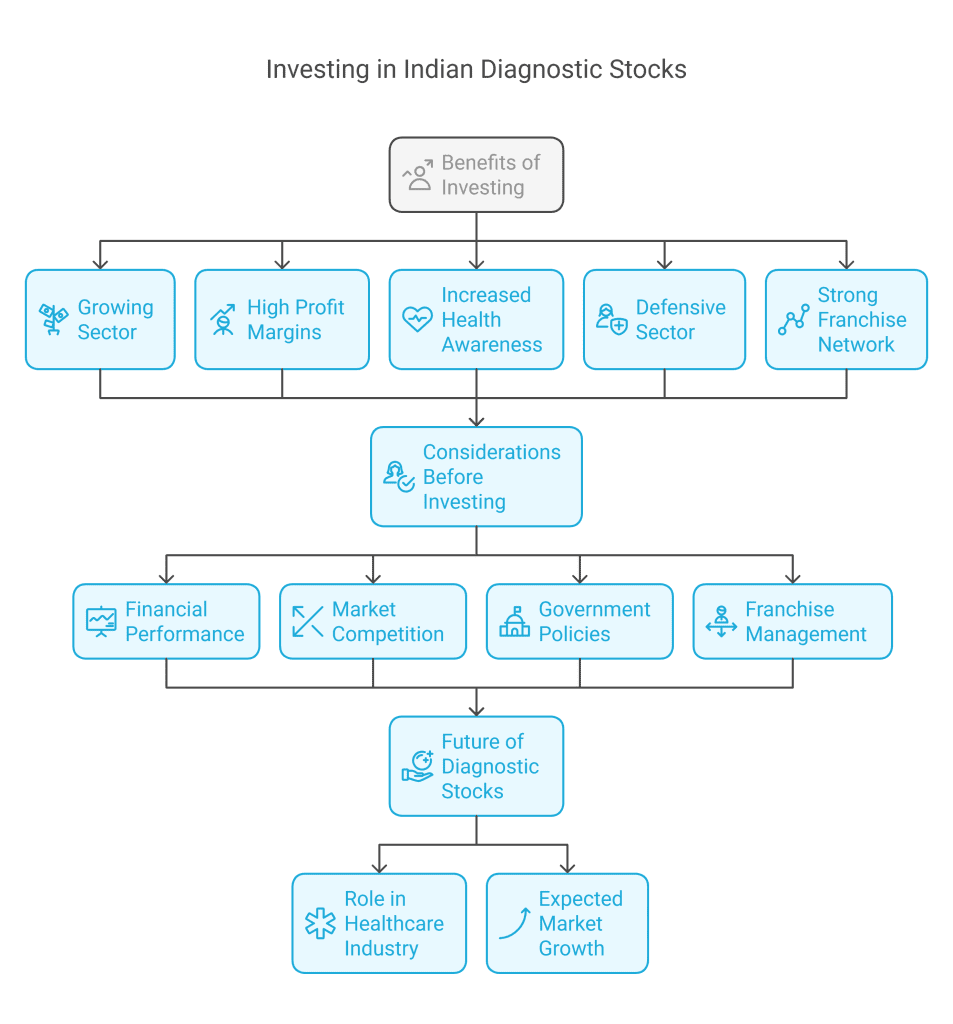
Growing Sector: The Indian healthcare sector is growing at an annualized growth rate of 15-17%. Hence, this growth will also benefit the diagnostics companies.
Profit Margins: Companies operating in the diagnostic sector generally have high profit margins because of low operating costs.
Health Awareness: People are becoming more and more health-conscious; hence, they opt for regular preventive checkups, which could increase the revenue of diagnostic companies.
Defensive Sector: Investment in diagnostic companies is considered a defensive bet, as the demand for health checkups will increase with time, and it will not be impacted by any economic downturn.
Business Model: Diagnostic companies operate in various cities through their strong franchisee network, helping the company earn stable revenues.
Factors to be Considered Before Investing in Diagnostic Stocks
The key factors that one should consider before investing in diagnostic stocks are as follows:
Financial Performance: Before choosing any diagnostic company for investment, one should check the financial performance of the companies, which includes revenue, profit margins, etc.
Market Competition: The new companies are competing with the established companies like Dr. Lal Pathlabs, Thyrocare, etc. Hence, one should opt for a company that has a competitive advantage over others.
Government Policies: There are various initiatives taken by the government or healthcare policies such as Ayushman Bharat, etc., as well as public-private partnerships that can help diagnostics companies get consistent revenue.
Franchisees: The company’s ability to manage its franchise network and sample collection centres will impact the company’s performance.
Future of Diagnostic Stocks In India
The Indian Diagnostic sector plays an important role in shaping the Indian healthcare industry. Various government initiatives, such as the National Health Mission (NHM), have allocated a budget of approximately ₹290 billion, which will be used to improve the infrastructure and services of the healthcare industry. The Indian diagnostic industry consists of 60% pathology and 40% radiology, and this industry is expected to reach a total market value of ₹1,360 billion by the end of FY 2026 and will have an expected CAGR of 14%. Hence, the diagnostic sector will have a bright and promising future.
Conclusion
On a concluding note, the Indian diagnostic industry is on a growth trajectory. The increasing cases of chronic diseases require continuous monitoring, which can be done through regular health checkups. This trend can support revenue growth for diagnostic sector stocks. However, there are certain factors that need to be considered by the investor before investing in diagnostic stocks, such as market competition, regulatory changes, etc. Therefore, it is advisable to consult your investment advisor before making any investment decision.
S.NO.
Check Out These Interesting Posts You Might Enjoy!
Which companies are associated with the diagnostics sector in India?
Some of the major companies in India’s diagnostic sector are Thyrocare Technologies Limited, Metropolis Healthcare Limited, Dr Lal Pathlabs Limited, Rainbow Children Medicare Limited, etc.
Is it a good time to invest in the stocks of diagnostics companies?
Yes, it is a good time to invest in the stocks of diagnostics companies because the rise in chronic diseases and awareness about preventive health checkups will drive the growth of this sector. However, one should consider their risk profile and consult their financial advisor before investing in these stocks.
What are the major factors that need to be considered before investing in diagnostic companies?
The key factors that one should consider before investing in the diagnostic sector are competition, market trends, technologies used by diagnostic companies, etc.
How to select the best diagnostic company for investment?
One can select the best diagnostic company by analyzing its financial performance and key metrics, its business model, regulatory risks, competition in the industry, promoter holdings, etc.
Selection Methodology and Important Disclaimer
The stocks included in this list are selected primarily on the basis of their market capitalisation, which represents the total market value of a company’s outstanding shares. The companies are arranged in descending order of market capitalisation, with larger companies appearing first, followed by relatively smaller companies. This methodology is intended to provide a structured approach for identifying companies based on their market size and overall presence within a sector.
However, market capitalisation should not be considered the sole factor while evaluating investment opportunities, as it does not guarantee future performance, profitability, or returns. Investors should also assess other important factors such as financial health, business fundamentals, management quality, valuation metrics, industry outlook, and market conditions before making investment decisions.
The information provided is for educational and informational purposes only and should not be construed as investment advice, recommendation, solicitation, or an offer to buy or sell any securities by Pocketful Fintech Capital Private Limited.
Picking a suitable stock for investment is an art. Long-term investors prefer to invest in undervalued stocks to create wealth in the long run. But is it worth investing in undervalued stocks, given the considerable time and research it takes to find one?
In this blog, we will explore the most promising undervalued stocks in India and the significant advantages of investing in them.
Meaning of Undervalued Stocks
Undervalued stocks are those stocks that are currently priced lower than their true, fair, or intrinsic value based on several reasons like panic selling, bad news, market mood, etc. This usually occurs when the prevailing market price of any share does not represent its actual earnings, assets, and growth opportunity.
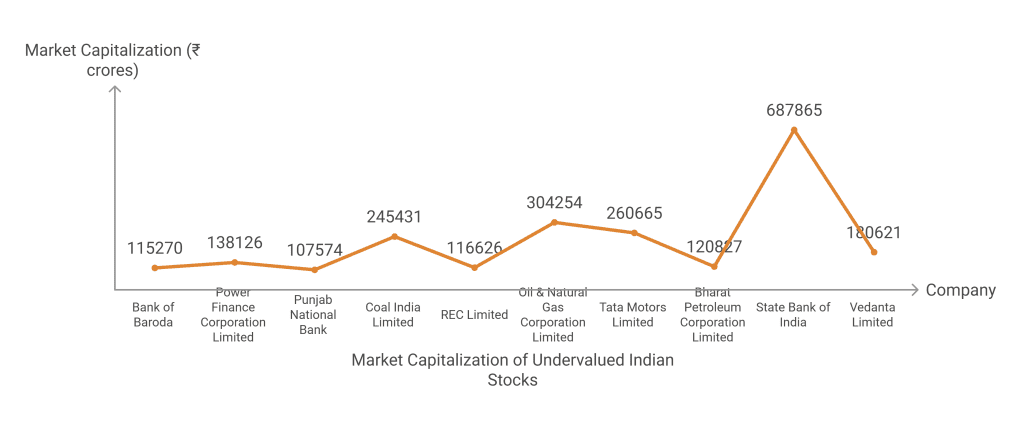
List of Top 10 Undervalued Stocks in India
Bank of Baroda
Power Finance Corporation Limited
Punjab National Bank
Coal India Limited
REC Limited
Oil & Natural Gas Corporation Limited
Tata Motors Limited
Bharat Petroleum Corporation Limited
State Bank of India
Vedanta Limited
Note: The above list is in ascending order based on their PE ratio. These can be considered as fundamentally strong but undervalued stocks as of 25 March 2025.
Market Information of Most Undervalued Stocks in India
The bank was established in 1908 by the Baroda ruler, Maharaja Sayajirao Gaekwad. He established the bank to support the growth of the local economy. Later, in 1969, the Indian government nationalized the bank and other commercial banks. After combining with Dena Bank and Vijaya Bank in 2019, the Bank of Baroda became the third-largest public sector bank in India to improve its operational efficacy in terms of assets and customers. The bank’s headquarters is situated in Vadodara, Gujarat.
Know the Returns:
1Y Return (%)
3Y Return (%)
5Y Return (%)
30.15%
64.09%
296.92%
(Data as of 23 January 2026)
2. Power Finance Corporation Limited
Power Finance Corporation Limited, or PFC, is one of the leading PSUs in India and was established in 1986. The company provides funding for initiatives related to transmission and distribution as well as power generation. The business also expresses interest in renewable energy projects and works to support the execution of several government programs. The company’s headquarters is situated in New Delhi.
Know the Returns:
1Y Return (%)
3Y Return (%)
5Y Return (%)
-14.37%
197.07%
285.82%
(Data as of 23 January 2026)
3. Punjab National Bank
The bank was founded in Lahore, Pakistan, in 1894 by Indian freedom hero Lala Lajpat Rai. It was established in the capital and is recognized as the country’s first bank. After obtaining independence, the bank moved its headquarters to New Delhi. Later, in 1969, it was nationalized along with thirteen other banks. In 2003, it acquired Nedungadi Bank, and in 2020, it amalgamated with the United Bank of India and Oriental Bank of Commerce.
Know the Returns:
1Y Return (%)
3Y Return (%)
5Y Return (%)
22.73%
109.85%
243.26%
(Data as of 23 January 2026)
4. Coal India Limited
Founded in 1975, Coal India is the largest coal mining enterprise in the world, with its headquarters located in Kolkata, West Bengal. In 2011, the company received the “Maharatna” status from the Indian government. In 2010, the company went public on the stock exchange and now operates several coal mines. Coal India Limited is responsible for over 82% of India’s total coal production as of 2024.
Know the Returns:
1Y Return (%)
3Y Return (%)
5Y Return (%)
10.74%
82.95%
82.95%
(Data as of 23 January 2026)
5. REC Limited
REC, or Rural Electrification Corporation Limited, was incorporated in 1969 to construct rural electrification infrastructure. The company came out with its IPO in 2008 and became a listed company. Later, in 2010, it was given the status of “Navratna” by the Government of India. PFC, or Power Finance Corporation Limited, bought a majority stake in it, and it became a subsidiary company of PFC. The company’s corporate office is situated in New Delhi.
Know the Returns:
1Y Return (%)
3Y Return (%)
5Y Return (%)
-21.55%
190.12%
240.14%
(Data as of 23 January 2026)
6. Oil & Natural Gas Corporation Limited
One of India’s largest producers of natural gas and oil, ONGC Ltd was founded in 1956 as a result of a suggestion by the Planning Commission Committee. The company discovered significant oil reserves, notably those in Gujarat’s Ankleshwar and Assam. The headquarters of the company is situated in New Delhi.
Know the Returns:
1Y Return (%)
3Y Return (%)
5Y Return (%)
-6.54%
61.12%
164.15%
(Data as of 23 January 2026)
7. Tata Motors Limited
The Tata Engineering and Locomotive Company, or TELCO for short, was the original name of Tata Motors Limited when it was founded in 1945. After establishing a joint venture with the German company Daimler Benz, the company began producing trucks. It was a smart strategic move for the corporation to purchase the luxury British automaker Jaguar Land Rover in 2008. The Tata Nexon EV has established a reputation for itself in the EV sector since its launch. The company’s headquarters are in Mumbai.
Know the Returns:
1Y Return (%)
3Y Return (%)
5Y Return (%)
-53.57%
-15.27%
16.15%
(Data as of 23 January 2026)
8. Bharat Petroleum Corporation Limited
BPCL Ltd was founded in 1952 as a joint venture between the Indian government and Burmah Shell, and after the government of India acquired Burmah Shell in 1976, it became a fully owned government corporation. The Ministry of Petroleum and Natural Gas of the Indian government oversees the exploration, refinement, distribution, marketing, and retailing of petroleum and petroleum-related products. The company’s headquarters are located in Mumbai.
Know the Returns:
1Y Return (%)
3Y Return (%)
5Y Return (%)
23.57%
101.56%
74.85%
(Data as of 23 January 2026)
9. State Bank of India
With the biggest market share, SBI is the biggest public sector bank in India and a giant in the country’s banking industry. With its headquarters located in Mumbai, SBI has a long history spanning more than 200 years. The first joint stock bank in British India, the Bank of Calcutta, was founded in 1806. Throughout British India, three distinct presidential banks – the Bank of Bengal, the Bank of Bombay, and the Bank of Madras. The Imperial Bank of India was created in 1921 by the merger of the three Presidency Banks. The Indian government nationalized the Imperial Bank of India in 1955 and changed its name to the State Bank of India.
Know the Returns:
1Y Return (%)
3Y Return (%)
5Y Return (%)
37.12%
71.83%
261.48%
(Data as of 23 January 2026)
10. Vedanta Limited
Vedanta is an Indian company that was founded in 1976 and operates in the mining, oil, and gas sectors. Initially called Sterlite Industries Limited, the company’s main activity was manufacturing telecom cables and other products. They purchased a copper mine in Australia and began producing copper in the early 1990s. In 2001, the company went public on the New York Stock Exchange. By purchasing Cairn India, Vedanta Limited increased the scope of its oil and gas holdings.
The following are the main advantages of investing in undervalued stocks in India:
High Returns: As these stocks trade below their actual intrinsic value, they have the potential to generate high returns as their share prices converge with their true value. Therefore, investing in undervalued stocks provides an opportunity to earn profit.
Cheap Buying: As the stocks are undervalued, there is no risk of overpaying when purchasing them. Hence, it provides a margin of safety and reduces the risk associated with investing.
Less Volatile: Undervalued stocks are already trading at a discount; therefore, they are not affected by market fluctuations much.
Dividends: Even though the stocks are undervalued, the underlying business continues to earn stable profits and pay regular dividends, which can be a passive source of income for investors.
Patience: Investing in undervalued stocks requires lots of patience and discipline as the prices increase over a while.
Disadvantages of Investing in Undervalued Stocks
The various disadvantages to investing in undervalued stocks are mentioned below:
False Signals: It is not necessary that every undervalued stock can recover and regain its value. There might be some cases when the stock might look undervalued, but it might be due to the inefficient business model, poor financial performance, etc. If these are the reasons behind undervaluation, then it might never regain its original value.
Short-Term Gains: Traders looking for short-term gains should avoid undervalued stocks as these stocks tend to perform in the long run.
How to Invest in Undervalued Stocks in India?
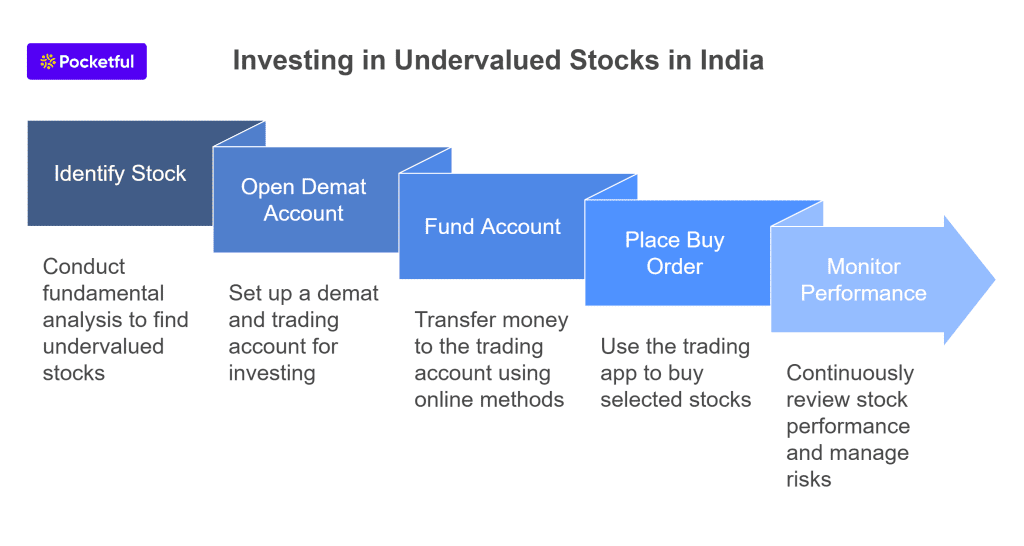
To invest in undervalued stocks in India, one can follow the below-mentioned steps:
Identify the Stock: The first step is to identify the undervalued stock. Fundamental analysis helps an investor in identifying undervalued stock.
Demat Account: To invest in undervalued stock, one is required to have a demat and trading account. Pocketful also offers you an opportunity to open a free demat account so that you can easily invest in undervalued stocks using their advanced trading platform.
Funding: Once the Demat account is opened successfully, you can easily transfer funds to your trading account to purchase the stock. Nowadays, there are various online options through which one can transfer funds, such as UPI, RTGS, and NEFT.
Investing: You can place a buy order for the selected undervalued stock. The order can be placed using the trading application provided by your broker.
Reviewing: As the stock is purchased, an investor is required to continuously monitor its performance to realize the profit accordingly. It is advisable to place a proper stop-loss to reduce the potential loss.
On a concluding note, investing in undervalued stocks can help an investor in creating wealth in the long run. However, finding such an opportunity is rare, and not every undervalued stock has growth potential. Therefore, investors are required to conduct a thorough fundamental analysis. Along with this, it is necessary to consult your investment advisor before making any investment decision.
S.NO.
Check Out These Interesting Posts You Might Enjoy!
When the stock price of any company is trading below its actual or intrinsic value, it is known as an undervalued stock.
Why do the stock prices fall below their intrinsic values?
The stock prices fall below their intrinsic value because of negative investor sentiments, economic downturns, poor performance, or any negative news.
How to identify the undervalued stocks?
Undervalued stocks can be identified using various fundamental tools such as PE (Price to Earning), PB (Price to Book Value) Ratio, Discounted Cash Flow Analysis, etc.
What is the meaning of “ValueTrap”?
A value trap is a condition when a stock is undervalued not because of any event but remains cheap due to poor fundamentals, such as excessive debt, decreasing profits, revenue, inefficient management, etc. These stocks generally do not recover and trap the investors.
What are some undervalued stocks?
Some undervalued large-cap stocks are SBI, Punjab National Bank, Tata Motors, etc.
Selection Methodology and Important Disclaimer
The stocks included in this list are selected primarily on the basis of their market capitalisation, which represents the total market value of a company’s outstanding shares. The companies are arranged in descending order of market capitalisation, with larger companies appearing first, followed by relatively smaller companies. This methodology is intended to provide a structured approach for identifying companies based on their market size and overall presence within a sector.
However, market capitalisation should not be considered the sole factor while evaluating investment opportunities, as it does not guarantee future performance, profitability, or returns. Investors should also assess other important factors such as financial health, business fundamentals, management quality, valuation metrics, industry outlook, and market conditions before making investment decisions.
The information provided is for educational and informational purposes only and should not be construed as investment advice, recommendation, solicitation, or an offer to buy or sell any securities by Pocketful Fintech Capital Private Limited.
Have you ever wondered about investing in the housing finance stocks in India, considering the burgeoning real estate and home loan sector? Housing Finance stocks capture the essence of the smooth functioning of the economy as the term housing finance is integral to the overall development of the nation.
This blog explains the top five housing finance stocks in India, including their performance metrics, fundamentals, and pros/cons of investing in them.
Understanding Housing Finance Stocks
Housing finance stocks are companies that issue home loans and offer other financial services pertaining to housing. These companies are engaged in assisting individual or business clients in acquiring residential or commercial properties. Their revenue comes from interest earned on loans, servicing fees, and financial transactions.
Top Housing Finance Stocks in India (2026)
Below is a list of the top housing finance companies in India based on their market capitalization:
Company
Current Market Price (₹)
Market Capitalization (₹ Crores)
52 Week high (₹)
52 Week Low (₹)
1 Year Returns (%)
Bajaj Housing Finance Ltd.
91.3
76,041
137
87.1
-21.84%
Housing & Urban Development Corporation Ltd.
195
38,977
254
159
-1.37%
LIC Housing Finance Ltd.
515
28,348
647
484
-11.10%
PNB Housing Finance Ltd.
845
22,016
1,142
746
-2.88%
Aadhar Housing Finance Ltd.
472
20,475
548
340
20.03%
(Data as of 05 February 2026)
An Overview of Top 5 Housing Finance Stocks
1. Bajaj Housing Finance Limited (BHFL)
Bajaj Housing Finance Limited, a subsidiary of Bajaj Finance Limited, is an upper-layer NBFC as categorized by Scale Based Regulations of the Reserve Bank of India.
It is one of the most diversified NBFCs in the Indian economy, serving over 97.12 million clients in India. BHFL issues loans to individuals and corporate bodies for the purchase and renovation of residential and commercial properties. Moreover, the company also provides loans against property for business expansion purposes, working capital, etc. BHFL headquarters is situated in Pune, India.
2. HUDCO (Housing and Urban Development Corporation)
The Housing and Urban Development Corporation Limited (HUDCO), founded in 1970, is a Navratna CPSE under the Ministry of Housing and Urban Affairs. Guided by the motto “Profitability with Social Justice,” it balances financial viability with social responsibility, focusing on housing for low-income people. It plays a key role in sustainable infrastructure development, aligning with the vision of a ‘Viksit Bharat.’
The company operates from its New Delhi headquarters, supported by 21 regional and 11 development offices across India. It also runs the Human Settlement Management Institute (HSMI) for training and research.
3. LIC Housing Finance
Founded in 1989, LIC Housing Finance Ltd. (LICHFL) is one of the largest companies in India when it comes to mortgage loans and long-term loans for the purchase of houses, construction, and property-based financing.
Moreover, LICHFL also provides loans to professionals for offices and equipment and provides funding to builders and developers in the country. Due to its strong base and wider distribution network, LICHFL has served more than 25 lakh homeowners in the country. The company became a public company in 1994, and the stock is actively traded at NSE and BSE, the two prominent stock exchanges in India.
4. PNB Housing Finance
Founded in 1988, PNB Housing Finance is one of the well-known players in the Indian home loan market and boasts more than three decades of experience.
It has customized housing finance plans for individuals and enterprises, and it is further aided by a branch network across the entire country. Further, the company is well-known for offering reliable services and has an average customer rating of 4 out of 5, which makes it a preferred choice among homebuyers for loan services across the country.
5. Aadhar Housing Finance
Aadhar Housing Finance was founded in 2010 and merged with DHFL Vysya in 2017 to create one of the major housing finance companies in India. As of today, they have more than 500 branches across the country.
Over time, the company has developed an extensive customer-focused loan book that has grown to approximately one billion rupees. With operations in 20 states, the company serves about 90% of the population in India.
Key Performance Indicators (KPIs)
Company
Dividend Yield (%)
ROE (%)
P/E
TTM EPS (in ₹)
Bajaj Housing Finance Ltd.
0.00%
15.2%
49.5
2.51
Housing & Urban Development Corporation Ltd.
2.29%
13.2%
13.6
13.40
LIC Housing Finance Ltd.
1.70%
16.2%
5.72
93.65
PNB Housing Finance Ltd.
0.00%
11.8%
11.6
70.27
Aadhar Housing Finance Ltd.
0.00%
18.4%
21.3
20.65
(Data as of March 2025)
Advantages of Investing in Housing Finance Stocks
The housing finance sector in India is known for its resilience and potential for appreciation. Furthermore, the favorable government policies for the construction of mass housing projects coupled with the high demand for home loans make this sector a lucrative investment option. Here are the key benefits of investing in Housing Finance Stocks:
1. Home Loans are in High Demand
Increased urbanization and population growth coupled with government initiatives such as the Pradhan Mantri Awas Yojana creates a favourable environment for finance companies.
2. High Returns through Dividends
Housing finance companies provide low-risk and stable revenue generation via interest payments on long-term loans. Such companies have proven to be at a lower risk for long term investments.
3. Government Help and Supportive Policies
Subsidies, tax perks, and grants make the industry of Housing Finance safer, mitigating risks for investors.
4. Less Risk than other BFSI Sector Stocks
The risk of default relative to outstanding home loans is lower due to the collateral backing each individual loan. In addition, this sector tends to be less volatile than payment banks and other fintech companies.
5. Established Players with High Demand
There are multiple top notch companies in this sector that have strong market presence and a continuously growing customer base. Companies such as LIC Housing Finance, Bajaj Housing Finance, PNB Housing Finance, etc.
6. Digital Innovation and Transformation
With the advancements in technology and artificial intelligence, the time required to process online loan applications and online documentation decrease, causing the efficiency and profitability of such companies to increase, resulting in potential future growth.
Disadvantages of Investing in Housing Finance Stocks
Some of the disadvantages of investing in Housing Finance Stocks are:
1. Interest Rate Fluctuations
Changes in the Interest rates can impact the desired profitability of the housing finance companies. So, investors are advised to carefully assess this risk before investing.
2. Government Intervention
Intervention by the government is a double edged sword; negative changes in government policies and regulations can affect the operations of the housing finance companies, eventually disrupting their profitability.
3. Market Uncertainties
Stock prices can be affected by economic conditions, global financial market changes and geographical tensions such as war. However, this risk is generally common for all kinds of companies.
4. High Market Competition
In India, there are multiple players in the housing finance sector, which is leading to pricing pressures and reduced margins.
How to Invest in Housing Finance Stocks?
You can invest in Housing Finance Stocks using Pocketful by following a few simple steps:
1. Open a Demat & Trading Account – Go to the Pocketful website and open an account with us. Within the same day, you are ready to invest via Pocketful.
2. Select the Housing Finance stock you want to invest in. Analyze metrics such as market capitalization, net interest margin (NIM), P/E ratio, etc., to check the financial health of the company.
3. Add money to the trading account and place your buy order by specifying the stock name, quantity, and order type (market or limit order).
4. Monitor and review the stock performance, market shifts, and economic changes for making your portfolio adjustments.
Conclusion
Since our country’s housing sector is growing, the best housing finance stocks in India provides good investment opportunities. Best Housing Finance stocks include Bajaj Housing Finance, HUDCO, LIC Housing Finance, PNB Housing Finance and Aadhar Housing Finance, all of which have an established customer base.
However, before making an investment in this sector, conduct a thorough analysis of market trends, key indicators, and risks. Also, don’t hesitate to consult your financial advisor before investing in equities.
S.NO.
Check Out These Interesting Posts You Might Enjoy!
Housing finance stocks belong to companies that offer home loans and other housing-related financial services. Their revenue is primarily generated through interest earnings, servicing fees, and financial transactions.
Why should I invest in housing finance stocks?
Investing in housing finance stocks offers stability and long-term growth potential due to increasing urbanization, demand for home loans, favorable government policies, and digital innovations in the sector.
What are the risks of investing in housing finance stocks?
Risks include interest rate fluctuations, government policy changes, economic uncertainties, and high competition, which may affect profitability and stock performance.
Which are the top housing finance stocks in India for 2025?
The top housing finance stocks include Bajaj Housing Finance, HUDCO, LIC Housing Finance, PNB Housing Finance, and Aadhar Housing Finance, based on market capitalization.
How can I invest in housing finance stocks?
To invest, open a Demat account, analyze key metrics like market cap and P/E ratio, fund your trading account, place a buy order, and monitor your investments regularly.
Selection Methodology and Important Disclaimer
The stocks included in this list are selected primarily on the basis of their market capitalisation, which represents the total market value of a company’s outstanding shares. The companies are arranged in descending order of market capitalisation, with larger companies appearing first, followed by relatively smaller companies. This methodology is intended to provide a structured approach for identifying companies based on their market size and overall presence within a sector.
However, market capitalisation should not be considered the sole factor while evaluating investment opportunities, as it does not guarantee future performance, profitability, or returns. Investors should also assess other important factors such as financial health, business fundamentals, management quality, valuation metrics, industry outlook, and market conditions before making investment decisions.
The information provided is for educational and informational purposes only and should not be construed as investment advice, recommendation, solicitation, or an offer to buy or sell any securities by Pocketful Fintech Capital Private Limited.
Indian households have had a special place for gold from ancient times. May it be lavish weddings or festivities, the gleam of gold never goes out of fashion. Beyond its cultural significance, gold is also a reliable investment option.
Gold is always a safe choice for seasoned investors as it can protect your capital during market volatility. But do we understand the game of “gold investments” well enough? Is it just like investing in stocks?
In this blog, we will give you information about the reasons individuals invest in gold and the different ways to invest in gold.
Getting the “Why” of Gold Investment Clear
Needless to say, gold has a timeless appeal. It has always been regarded as a safe haven, unlike stocks, which can cause significant losses during volatile market conditions. Gold is not affected by quarterly earnings or other adverse events such as war, political struggles, unlike stocks; rather it usually increases in value as during such unsure times, investors look for safety of their investment capital.
Here are some key benefits of investing in gold:
Gold hedges against inflation: Rising inflation causes the value of the fiat or paper currency to decline significantly. On the other hand, gold, due to its limited supply and popularity, often increases in value during uncertain times.
Value of Diversification: Adding gold to your investment portfolio helps reduce the overall risk. Investment in gold can yield gains when your equity portfolio underperforms, thereby balancing the overall portfolio performance.
Liquidity: Gold is a highly liquid asset as it can be easily converted into cash. This allows investors to invest in gold without worrying about the price impact that is often associated with illiquid assets.
How to Invest in Gold? A Comprehensive Guide
An individual can begin investing in gold through the following ways:
1. Taking the Traditional Route: Physical Gold
Investing in gold coins, bars, and jewelry is the most traditional and trusted form of gold investment. You can visit prominent gold retailers and purchase gold in the form of coins, bars, jewelry, etc.
2. Gold Derivative Contracts
Digital gold is a better alternative than buying physical gold as it saves you from the hassle of storing gold. For example, futures contracts can be used to protect your portfolio from adverse market conditions. You can buy and sell derivative contracts of gold on trusted and the best commodity trading apps.
3. Gold Exchange Traded Funds
Gold exchange-traded funds are suitable for those who wish to invest in gold without having to deal with the problems associated with storing physical gold. Moreover, you don’t need to worry about the liquidity and purity of the gold. They can be easily bought and sold on stock exchange platforms, making gold ETFs the preferred investment option for new investors.
Building a Gold Investment Plan
Here are the ways to build a gold investment plan :
1. Set and Define your Investment Goals.
Determine your financial goals and then evaluate the amount you wish to invest in gold. It can be retirement planning, short-term gains, children’s wedding, etc. Based on your needs, select between physical, derivative contracts and gold ETFs for investment. For example, if you are concerned about short-term volatility and wish to safeguard your portfolio, then derivative contracts are best for you. On the other hand, if you wish to invest for your retirement, then investing in gold ETFs would be the best.
2. Normalize Diversification
Always keep a portion of your investment portfolio invested in gold because its returns are not directly correlated with equity returns, thereby providing you with diversification benefits.
3. Stay Alert and Updated
Gold is a globally traded asset and thus can be impacted by international events. Keeping an eye on market trends and global news can help you to take action promptly and avoid risks.
Here are some common mistakes to avoid while investing in gold :
1. Consider Investing Costs
Always consider charges, brokerage fees, and storage costs when investing in gold. Careful analysis of storage costs, brokerage fees, and other factors is essential when considering investment in gold.
2. Over-investment in Gold
Gold is often regarded as a safe investment by many investors and thus has historically underperformed as compared to equity returns. Over-investing in gold can result in missing out on higher returns.
3. Skipping Research
One needs to conduct a thorough fundamental and technical analysis of gold before investing. After careful analysis, you must select the financial instrument to invest in gold. For example, derivative contracts are an excellent asset class that investors and traders can use to take advantage of short-term price fluctuations, but trading without proper knowledge of futures and options can result in substantial losses.
Conclusion
In the world of investments, gold shines as a timeless and resilient asset. Whether you’re seeking to protect your wealth during market volatility, build a diversified portfolio, or secure your financial future, gold offers unmatched reliability. From the allure of physical gold to the convenience of digital gold and ETFs, there are various asset classes to suit your unique investment goals. However, like any investment, it requires careful planning and a clear strategy. By staying informed and making smart, well-researched decisions, you can harness the power of gold to build a more secure and prosperous financial future.
Frequently Asked Questions (FAQs)
Why should I invest in gold?
Gold is a safe-haven asset that hedges against inflation, market volatility, and economic downturns. It adds diversification to your portfolio and ensures capital protection.
What are the best ways to invest in gold?
You can invest in gold through physical gold (coins, jewelry), gold ETFs, or gold derivative contracts based on your investment goals and preferences.
Are gold ETFs better than physical gold?
Gold ETFs offer high liquidity, lower storage costs, and no concern for purity. They are a more convenient choice than physical gold for modern investors.
How much of my portfolio should be in gold?
Portfolio allocation to gold can vary depending on the type of investor. For investors looking for safety, it is advised to allocate a higher share of the portfolio to gold and vice-versa.
What are the risks of investing in gold?
Gold prices can fluctuate, and over-investing can lead to missed higher returns from equities. Storage and transaction fees can also affect investment returns.
One of the most popular entities in the Indian fintech space is One MobiKwik Systems Limited or rather MobiKwik. Since its inception in 2008, the firm has grown from a provider of closed wallet facilities to offering a full suite of digital financial services products, such as loans, peer to peer lending, mutual funds, etc.
In thisblog, we will provide the case study of One Mobikwik Systems, its business model and services provided by this company. We will also provide the financial performance, and SWOT analysis of the company.
MobiKwik Company Overview
Bipin Preet Singh and Upasana Taku co-founded MobiKwik, which was an initially mobile wallet service that streamlined the payment process for users. The business over time has included mutual fund investing, loans, peer to peer lending and personal finance features in its product offerings. The company has been focusing on expansion due to which it launched an IPO in 2024 and raised ₹572 crores. It has its head office in Gurgaon, Haryana.
Business Model of MobiKwik
MobiKwik operates a fintech platform offering digital payments, digital credit (Buy Now Pay Later or BNPL), and financial services. Revenue sources include transaction fees, lending commissions, merchant services, and financial product distribution. Key offerings include MobiKwik ZIP (BNPL), Zaakpay (payment gateway), and UPI transactions. The company focuses on scaling digital credit and expanding merchant solutions to drive growth.
Services Offered
Digital Wallet: Enables users to store money digitally and make payments across a wide network of merchants.
Buy Now, Pay Later (BNPL): Provides users with a line of credit for purchases, allowing deferred payments.
Insurance Products: Offers various insurance options, including life, health, and accident coverage.
Mutual Fund Investments: Facilitates investment in mutual funds directly through the platform.
Payment Gateway (Zaakpay): Provides merchants with solutions to accept payments seamlessly.
Market Details of MobiKwik
Current Market Price
₹272
Market Capitalization (in ₹ Crores)
2,116
52 Week High
₹698
52 Week Low
₹261
Book Value
₹20.3
P/E Ratio
151
(Data as of 17 March 2025)
Financial Statements
Income Statement
Particulars
FY2024
FY2023
FY2022
Total Income
8,903
5,611
5,432
Total Expenses
8,531
6,170
6,586
EBITDA
372
-559
-1,154
Net Profit
141
-838
-1,282
(Above mentioned figures are in ₹ million unless stated otherwise)
Balance Sheet
Particulars
FY2024
FY2023
FY2022
Total Non-Current Assets
1,645
1,636
1,767
Total Current Assets
6,901
5,507
6,594
Total Equity
1,626
1,427
2,165
Total Non-Current Liabilities
541
361
80
Total Current Liabilities
6,380
5,355
6,116
(Above mentioned figures are in ₹ million unless stated otherwise)
Cash Flow Statement
Particulars
FY2024
FY2023
FY2022
Cash flow from operating activities
-221
270
-3,206
Cash flow from investing activities
271
-7
-848
Cash flow from financing activities
35
180
3,294
(Above mentioned figures are in ₹ million unless stated otherwise)
The SWOT analysis of One MobiKwik Systems is given below:
Strengths
1. Diverse Service Portfolio
The marketing strategy of One MobiKwik Systems stands out with its wide range of offerings catering to multiple consumer and merchant needs. It offers a digital wallet for smooth payments, Buy Now Pay Later (BNPL) facilities for flexible financing, insurance solutions, and investment opportunities in mutual funds. By combining financial products and payment solutions, MobiKwik creates a holistic ecosystem that attracts diverse user groups and enhances customer retention.
2. Large User Base
With more than 161 million registered users and about 4.26 million merchants, MobiKwik has a strong foothold in the Indian fintech ecosystem. A large user base, aside from generating high volumes of transactions, also gives the company a competitive advantage that allows cross-selling of its other products and services.
Weaknesses
1. Profitability Challenges
MobiKwik, despite reporting substantial revenue growth, has reported operating losses for several years and recently began reporting profits. It remains to be seen if the business model is sustainable, particularly in an extremely competitive environment. The company’s profitability would need to be further strengthened with long-term financial stability through cost optimization and high-margin services.
2. Market Competition
MobiKwik operates in a competitive industry. It competes with key players such as Paytm, Google Pay, and PhonePe, which also provide similar products and services and have a bigger market share in specific segments. Additionally, global players with enormous financial resources could further intensify the competition, which may be a challenge for MobiKwik to continue its growth momentum.
Opportunities
1. Digital Payment Adoption
India’s market for digital payments is growing rapidly with the government’s initiatives in this direction, including the Digital India program and the Unified Payments Interface (UPI). Increased penetration of smartphones and the affordability of data plans have contributed to the increased adoption of digital payments. The company can effectively leverage this trend to grow its user base, especially in semi-urban and rural areas where cashless transactions are still in their infancy.
2. Financial Inclusion Initiatives
One MobiKwik has a tremendous opportunity to cater to the underserved Indian population through customized microloans, low-cost insurance, and making investment in mutual funds or peer to peer lending more accessible. By fulfilling the needs of these sub-urban or rural areas, it can capitalize on a largely untapped vast market.
Threats
One Mobikwik operates in the Indian fintech sector due to which it must adapt quickly as new regulations emerge. Regulations related to data privacy, consumer protection, and digital lending may necessitate changes in its business model. Non-compliance or delay in getting adjusted to these regulatory compliances may attract penalty or loss of customer trust.
One Mobikwik’s transformation from a small provider of mobile wallet into a platform that has numerous digital financial services has been exceptional and speaks of the innovation and ability of the company to adapt to changing regulations and rising competition.
Despite facing competition from larger fintech players, MobiKwik’s focus on BNPL services, digital lending, and financial inclusion positions it as a strong fintech contender in India’s evolving digital economy. Moreover, the company consistently pushes forward the boundaries of financial inclusion and is making valuable contributions to the fast-growing digital economy in India.
S.NO.
Check Out These Interesting Posts You Might Enjoy!
MobiKwik operates a fintech platform offering digital payments, BNPL (MobiKwik ZIP), and financial services. It earns revenue through transaction fees, lending commissions, merchant services, etc.
How did MobiKwik perform financially in FY2024?
MobiKwik reported total income of ₹8,903 million in FY2024, with a net profit of ₹141 million, marking a turnaround from previous losses in FY2023 and FY2022.
What are MobiKwik’s key strengths?
MobiKwik benefits from a large user base (161 million users, 4.26 million merchants) and a diverse service portfolio, including digital wallets, BNPL, insurance, mutual funds, and merchant payment solutions.
What challenges does MobiKwik face?
MobiKwik faces intense competition from Paytm, PhonePe, and Google Pay, along with regulatory challenges in digital lending, data privacy, and consumer protection laws.
How is MobiKwik leveraging India’s digital payment growth?
MobiKwik is capitalizing on India’s growing UPI adoption and financial inclusion initiatives by expanding its BNPL services, microloans, and digital financial products in underserved markets.
Open Free Demat Account
Join Pocketful Now
You have successfully subscribed to the newsletter
There was an error while trying to send your request. Please try again.