Blog

  • Anti-Takeover Mechanisms: Defenses Against Hostile Takeovers

    Anti-Takeover Mechanisms: Defenses Against Hostile Takeovers

    In the high-stakes world of corporations, companies often face the threat of hostile takeovers—unwanted bids to seize control. To protect themselves, they use clever strategies known as anti-takeover mechanisms. 

    This blog will explore these tactics and how they help companies stay independent.

    Hostile Takeover – An Overview

    A hostile takeover is when a company acquires more than 50% of another company’s voting shares without the management’s consent or knowledge of the target company.

    In India, hostile takeovers are primarily governed by the Companies Act 2013 and SEBI.

    Anti-takeover mechanisms work like building a moat and castle around a company to defend it from an unwelcome takeover attempt.

    Examples in India

    While hostile takeovers are uncommon in India, compared to other countries, there have been instances that serve as interesting examples.

    1. Adani Group’s takeover of NDV.
    2. India Cements acquisition of Raasi Cements.
    3. Larsen & Toubro’s acquisition of Mindtree Limited.

    Types of Anti-Takeover Mechanisms

    Dual Class Shares

    Companies use it to give founders or controlling investors more power over the company, even if they do not own a majority of the total shares.

    How does it work?

    Under this mechanism, the company issues two classes of shares,

    Class A shares have multiple votes per share, and Class B shares only have one vote per share.

    Founders and early investors often hold Class A shares, which gives them disproportionate control over the company relative to other investors, who hold Class B shares with limited voting power.

    Dual Class Shares

    Staggered Board

    A staggered board mechanism makes it more difficult for a hostile bidder to gain control of a company by acquiring a majority of shares.

    How does it work?

    The Board of Directors is segmented into distinct classes, commonly consisting of three, although occasionally five or more classes. Each class generally lasts two or three years. Elections are conducted periodically to fill the vacancies of expiring seats on the board.  

    Staggered Boards can function as a defensive measure to discourage hostile takeovers because it takes several election cycles to replace most of the board, so buyers cannot quickly take control.

    Poison Pill

    How does it work?

    A poison pill is an inactive anti-takeover strategy where a company issues new shares to existing shareholders at a discount, except for the hostile bidder. The activation of this mechanism is prompted by a specific occurrence, such as an acquisition of a defined proportion of the company’s shares by a hostile bidder, commonly around 15-20%. Once triggered, it allows the current shareholders to buy more company shares at a low price when there is a hostile takeover bid. This practice dilutes the value of the shares held by the acquirer, making the takeover more expensive and thus less attractive.

    White Knight

    The ‘white knight’ can be another company in the same industry or a private equity firm willing to make a more favorable offer to the target company than the hostile bidder. 

    How does it work?

    The target company, facing a hostile takeover bid, identifies a white knight. This could be a competitor, a financial institution, or any other company interested in acquiring the target company. The white knight offers to acquire the target company at a fair or even premium price, generally higher than the hostile bidder’s offer. This approach enables the target company to effectively retain a certain degree of authority over its future by deliberately selecting a buyer who exhibits a greater correlation with its core value, objectives, or strategic direction.

    White Knight

    Crown Jewel Defense

    This mechanism is used by companies facing a hostile takeover to make themselves less attractive to the acquirer. It is like selling off your most prized possessions (the crown jewels) before a thief breaks in.

    before a thief breaks in.

    How does it work?

    The target company identifies its most valuable assets, often called ‘crown jewels.’ These assets can be tangible, such as factories or property, or intangible, such as intellectual property, patents, or trade secrets. In response to a hostile takeover threat, the company initiates measures to divest itself of these precious assets to a third party, often characterized as a friendly buyer. An alternative option is to spin off the crown jewels into a separate, independent entity. The loss of these ‘crown jewels’ makes the target much less suitable.

    Greenmail

    Greenmail involves a target company buying back its shares at a premium from an acquirer who has garnered a significant ownership percentage, intending to obtain control, and the company pays the acquirer to leave.

    How does it work?

    A ‘greenmailer’ has a high ownership in the company. Instead of implementing other defensive measures, the target company offers to re-purchase the greenmailer’s shares at a high price. This allows the greenmailer to make a quick gain by selling his shares back to the company at an inflated price, and the company avoids the risk and uncertainty of a hostile takeover.  

    Pac-Man Defense

    The Pac-Man defense involves the target company turning the tables on the hostile bidder by attempting to acquire the bidder instead. Named after the video game character that eats its enemies, this tactic involves the target company using its own resources to purchase shares of the acquirer, effectively making a counteroffer.

    How does it work?

    Instead of assuming a passive defense stance, the target company actively assumes the role of a predator by attempting to acquire the company that is trying to take over, similar to Pac-Man gobbling up the ghosts in the iconic video game.

    Read Also: What is Securitization? Methodology, Types, Advantages, and Disadvantages

    Conclusion

    The world of mergers and acquisitions can sometimes feel like a battleground, especially when it comes to hostile takeovers. It can be quite intense! But do not fear; companies have a wide range of defenses available to them. Remember, the best defense is to have multiple layers. Before selecting anti-takeover measures, companies should analyze their specific circumstances and the risks they may encounter. It is important to consult legal and financial professionals to ensure that the defenses are implemented correctly and comply with regulations. So, the next time you hear about a hostile takeover, keep in mind that it is more than just a fight; it is about the strategic defense companies implement to protect their future.

    Frequently Asked Questions (FAQs)

    1. Why do companies try hostile takeovers?

      There can be several reasons for hostile takeovers. Acquirers might see the target as undervalued, a good fit, or a source of valuable assets.

    2. How common are hostile takeovers in India?

      Hostile takeovers in India are less frequent than in other countries because of strong promoter ownership and strict regulations.

    3. What is a white knight?

      A white knight is a friendly company that acquires the target company at a premium price, hindering the hostile bid.

    4. How do companies defend against hostile takeovers?

      Companies implement anti-takeover mechanisms like dual-class shares, staggered boards, poison pills, etc.

    5. How can a hostile takeover be unfavorable for employees?

      Hostile takeovers can lead to layoffs, re-organizations, and changes to the workplace that may negatively impact the morale and mental health of the employees.

  • Types Of Taxes In India: Direct Tax And Indirect Tax

    Types Of Taxes In India: Direct Tax And Indirect Tax

    Taxes are an inevitable part of our daily lives. No matter how hard you try, nobody can escape them. Hence, we should all at least understand their nuances to navigate our lives without any hurdles. 

    This blog will explain the complexities of the different types of taxes in India by breaking them down into easy-to-understand concepts.

    Taxation in India

    Taxes are obligatory charges or levies that the government imposes on individuals, businesses, and other entities to fund government expenditures.

    The Indian taxation system has a three-tier structure, with taxes imposed by the central, state, and local municipal governments. Below is an outline of the two primary categories of taxes in India.

    Read Also: What is Capital Gains Tax in India?

    Direct Taxes

    These are levied directly on an individual’s or company’s income. The person or entity on whom the tax is levied bears the burden of paying it. Some common types of direct taxes are explained below. 

    1. Income Tax

    Income Tax is a tax levied by governments on the income generated by businesses and individuals. The imposition of income tax applies to a wide range of income sources, such as wages, salaries, investments, business profits, and even capital gains.

    India has a progressive income tax system, which means people with higher incomes pay more of their income in taxes. Income is divided into slabs, each with a specific tax rate.

    Additionally, India offers two tax regimes. The Old Tax Regime and the New Tax Regime. The new regime offers a lower tax rate but comes with fewer deductions. An individual can choose the regime that best suits his situation.

    Income Tax in India

    2. Capital Gains Tax

    Capital Gains Tax is a levy imposed on the profit you earn from selling capital assets like stocks, real estate, or other investments.

    When you sell a capital asset for more than its purchase price, you realise a capital gain, which the government taxes.

    There are two types of Capital Gains Tax in India,

    • Short-term Capital Gains (STCG) – The STCG applies to assets held for less than one year. The short-term Tax rate for equity and equity-oriented mutual funds is subject to 15%.
    • Long-term Capital Gains (LTCG) – The LTCG generally applies to assets held for one year or more, although the holding period can vary depending on the asset. The LTCG tax rate is typically 20% on most assets. For LTCG on equity and units of equity-oriented mutual funds exceeding INR 1 lakh in a financial year, a concessional tax rate of 10% applies without the indexation benefit.

    3. Corporate Tax

    A Corporate Tax is imposed on a company’s profits. It is a substantial source of income for the government and is used to fund public projects and social programs. India provides a tiered corporate tax structure with varying rates based on the type of company and specific conditions. The corporate tax rate generally varies between 20% and 40% in India, depending on the company’s particulars. 

    4. Property Tax

    Property tax is a levy imposed by the municipal corporation or local government real estate property. It is a revenue stream utilised to finance civic services and facilitate infrastructure development.

    Property Tax in India

    Indirect Taxes

    Indirect taxes are levied on the consumption of goods and services. These taxes are usually hidden in the price we pay for a good or service. The burden of indirect taxes falls on the final consumer buying goods and services. Some types of indirect taxes are explained below: 

    1. Goods & Services Tax (GST)

    GST is a comprehensive indirect tax levied on the supply of most goods and services in India. It replaced a variety of taxes that both the central and state governments previously imposed.

    Introduced in July 2017, GST aims to streamline the indirect tax system in India by bringing several taxes under one umbrella. It also fosters transparency since it is imposed at the point of sale and displayed on the invoice. GST has multiple tax slabs ranging from 0% (exempt goods) to 28% (luxury goods).

    2. Customs Duty

    Custom duty is a tax levied by the Indian government on goods imported into the country. It is a fee that an individual pays to bring goods from overseas.

    The individual or entity acting as the importer of goods brought into India bears the responsibility of paying the customs duty. The importer, in certain instances, may choose to transfer this cost to the consumer by incorporating it into the ultimate price of the product.

    Customs Duty

    3. Excise Duty

    Before the implementation of the GST in July 2017, excise duty held significant prominence as a historical tax in India. However, following the introduction of GST, the excise duty levy for most goods has been discontinued.

    However, some products still attract excise duty. These include cigarettes, LPG, Beer, Electricity, Petrol, and Kerosene.  

    Uses of Taxes

    We know that the government allocates the tax revenue it collects to finance a multitude of public services and programs that provide substantial benefits to the nation as a whole. However, the details of these expenditures still remain largely unknown. Here is a quick overview of the government’s spending.

    Public Services 

    • Education – government schools, colleges and universities.
    • Healthcare – public hospitals and clinics that offer subsidized medical care.
    • Law and Order – police forces, courts, fire departments, and emergency services.

    Social Welfare Programs

    • Subsidies – essential goods and services like food, fuel, and fertilisers are subsidised to make them more affordable for low-income families.
    • Social Security Programs – schemes like pensions for the elderly and disabled provide a safety net.
    • Essential Services – a significant portion goes towards funding essential services like Defence and Infrastructure development. 

    Read Also: Why Do We Pay Taxes to the Government?

    Conclusion

    Understanding the intricacies of Indian tax allows individuals to make well-informed financial choices. Whether you are a salaried professional trying to navigate through tax brackets, a business owner in the process of exploring deductions, or simply someone who wants to be more tax-savvy, having a solid understanding of these concepts will greatly benefit you in the long run.

    Frequently Asked Questions (FAQs)

    1. What are the two main types of taxes in India?

      India has two major types of taxes – direct taxes levied on your income and indirect taxes included in the price of goods and services.

    2. Are there any tax benefits or deductions available?

      Yes, there can be exemptions and deductions to reduce your tax liability. You can explore options for investments, medical expenses, etc., as defined under different sections of the Income Tax Act.

    3. What happens if I don’t pay my taxes on time in India?

      Penalties and interest can be imposed on delayed payment of taxes.

    4. Where can I get help with filing my taxes?

      Tax professionals like chartered accountants can assist you with filing your tax returns.

    5. Do I need to pay customs duty?

      Yes, if you import goods from abroad. However, the tax amount will depend on the type of good, its value, and the country of origin. 

  • What is Front-Running : Definition, Legality and Front-Running vs Insider Trading

    What is Front-Running : Definition, Legality and Front-Running vs Insider Trading

    Have you ever thought about whether your broker is getting the best deals for you or themselves? The shocking truth is that some brokers engage in a deceptive practice called front-running, using your trade details to line their pockets.

    In this blog, we will expose the world of front-running, explain how it works, and tell you how to protect yourself from becoming a victim.

    Overview of Front-Running

    Overview of front running

    Front-running is a deceitful practice in the financial markets. It generally involves a broker or an advisor using their advanced knowledge of upcoming trades to make personal profits. This is considered a form of market manipulation and illegal with non-public information.

    For instance, a broker gets wind of a client’s order to buy a massive block of shares in Company X. Knowing this will likely drive the price of Company X’s stock up; the broker quickly buys some shares for themselves beforehand. The price jumps once the client’s large order executes, and the broker sells their shares at a profit.

    Front Running is unethical because it gives the abuser an unfair advantage. They are essentially exploiting their access to privileged information unavailable to the general public. This creates an uneven playing field and undermines trust in the markets.

    Is Front Running Legal?

    Front-running’s legality depends on the type of information used.

    When done with non-public information, where a broker uses knowledge of a client’s upcoming trade or firm’s internal plan to earn profits. This violates insider trading laws and can lead to serious legal consequences.

    Front-running is not necessarily illegal when based on public information. For instance, if there is an announcement of a change in an index at the time of rebalancing (which stock will be removed or entered), traders can try to front-run the trade by buying or selling those stocks beforehand. The index rebalancing will likely affect the stock price.

    Front-running is illegal when it exploits confidential information for personal gain. Its legality becomes less clear-cut when it relies on publicly available knowledge.

    Index Front Running

    Index front-running is a strategy that exploits the predictable changes in index composition.

    Financial indices like the S&P 500 or NIFTY 50 are calculated based on free-float market capitalization method and periodically rebalance their holdings. This means they add or remove companies from the index to maintain a particular market representation.

    Index funds passively track these indexes, and when the index composition changes, the index fund managers are obligated to buy or sell the affected securities to mirror the index.

    Traders watch for signals indicating upcoming index rebalancing. This information is usually public and available through announcements or index methodology analysis.

    Before the index rebalances, these traders buy stocks likely to be added to the index (anticipating a price increase) or sell stocks expected to be removed (anticipating a price decrease).

    When the index fund initiates buy or sell activity to rebalance, it can cause the stock prices to move in the direction that the front-runner anticipated.

    Difference between Front Running and Insider Trading

    Front Running and Insider Trading are both unethical practices in the financial world, but they differ in the critical source of information used for gaining an unfair advantage.

    Front-running abuses advance knowledge of client orders or anticipated market movements. This information may not be confidential, but it is not publicly available either.

    On the other hand, Insider Trading relies on material, non-public information about a company that has yet to be disclosed. This could be upcoming mergers, acquisitions, earnings reports, or product launches. Insiders, like company executives or board members, are privy to this information.

    The brokers front-running the client’s order owes them a fiduciary duty. Brokers and advisors are required to work in the best interests of the clients.

    Front-running is like a cashier at a store who sees someone with a lot of groceries and quickly buys milk before the price increases because of high demand.

    Insider Trading is like a factory worker who knows a new, superior product is about to be released and buys company shares before the public announcement.

    How to Protect Yourself?

    • Keep up-to-date on the latest trends and discussions about front-running in the financial markets. Understanding how it works is the first step to mitigate it.
    • Consider using platforms or tools that obscure your transaction details before they are broadcast publicly. This can help reduce the window for front-runners to act. However, this option might only be available on some platforms.
    • Front-running is easier during periods of high trading volume. Try placing your trades when there is less activity or in tranches, which reduces the chance of front running.
    • Look for centralised exchanges with anti-front-running solid measures. Such exchanges employ mechanisms like transaction batching or order book shuffling to make it harder to predict specific trades.

    Read Also: Business Cycles of a Company

    Conclusion

    Front-running raises questions about the balance of information in the market and erodes trust. It harms investors by giving an unfair advantage to those with advanced knowledge. Regulatory bodies like the Securities & Exchange Board of India (SEBI) consistently work to prevent front-running through stricter rules and fines for offenders.

    By working together to combat front-running, we can create a fairer and more transparent financial environment for everyone.

    Frequently Asked Questions (FAQs)

    1. How can I tell if a broker is front-running my trades?

      It can be challenging for individual investors to detect front-running definitively. However, some red flags might exist, such as huge price movements after placing an order and orders taking an unexpectedly long time to execute.

    2. Is front-running legal?

      It completely depends. Using material non-public information is illegal.

    3. Who can front-run?

      Brokers, traders with access to order flow data, or anyone who learns about the large trade beforehand.

    4. What are the consequences of front-running?

      Fines, legal trouble and reputational damage for the perpetrator.

    5. How is Front Running different from Insider Trading?

      Front running might misuse non-public client information, while insider trading uses confidential, non-public information which is not available to the general public.

  • Active or Passive Mutual Funds: Which Is Better?

    Active or Passive Mutual Funds: Which Is Better?

    There are two kinds of people in this world: those who are content to let life take them by the reins and those willing to take charge and make decisions for themselves. The same holds for the investing world. There are two investment styles: Active and Passive. In active, investors actively manage their portfolios, whereas, in passive, they try to replicate index performance. In other words, there is less turnover, or say, less buying and selling activity.

    Continue reading the blog to learn the differences between active and passive investment strategies!

    Mutual Funds

    Mutual Funds

    Mutual funds are a class of investment vehicle that combines the money of multiple investors with similar investing aims or objectives. The pooled money is invested in various asset types, including equities, bonds, etc., by fund managers.

    If you want to learn more about the mutual funds, check out our blog on the same: What are Mutual Funds?

    Types of Mutual Funds

    Based on investment style, there are two kinds of mutual funds:

    1. Active Mutual Funds
    2. Passive Mutual Funds

    Active Mutual Funds

    Active Managed Funds

    In these mutual funds, the fund management and their research team actively select the securities and asset classes in which investments will be made. The fund manager aims to outperform the benchmark, a yardstick for evaluating a fund’s performance. The fund managers base their decisions on several variables, including the state of the economy, the market, the performance of the firm, and the industry.

    Pros of Active Mutual Funds

    1. Active fund managers can modify their investment portfolio in response to changes in the market dynamics, thereby adjusting risk and maximizing rewards.
    2. An active fund management strategy aims to outperform the benchmark index, which has the potential to generate superior returns.
    3. Under active fund management, fund managers deploy various strategies related to risk management, such as tactical asset allocation and hedging, which help investors minimize their risk during the market downturn. The fund manager and their research team thoroughly investigate the securities before making any investing decisions.

    Cons of Active Mutual Funds

    1. Active mutual funds charge higher fees than passively managed funds.
    2. These funds carry higher risk as the fund manager’s selection of securities can go wrong.
    3. The passive funds generally match the market’s return, whereas the actively managed funds do not guarantee that they will outperform the benchmark returns.
    4. Active fund managers change their portfolios very frequently according to the market dynamics; hence, the portfolio of active funds carries a higher turnover rate and can be more volatile.

    Passive Mutual Funds

    Passively Managed Mutual Funds

    Passive funds or Index Funds track the index or benchmark and try replicating its performance. These funds generally provide returns equal to the benchmark return, and investors will get the net return after deducting the expenses charged by the asset management companies. Passive funds hold securities in proportion to the index they track. There are also passively managed Exchange Traded Funds (ETFs), which track the performance of various indices. You can check out our blog on the ETFs: What are ETFs?

    Pros of Passive Mutual Funds

    1. Passive funds generally have an expense ratio (fees) than active funds.
    2. Passive funds aim to replicate the performance of a specific index, so investors do not need to worry about whether their fund will outperform the benchmark.
    3. These funds carry lower risk than actively managed funds (sectoral, thematic, etc.) because their portfolios are diversified.
    4. As they aim to mirror the performance of the benchmark, passive funds provide consistent returns. They are also easy to understand, so they are suitable for new investors as well.

    Cons of Passive Mutual Funds

    1. The passive funds have limited potential to outperform the benchmark.
    2. Because the passive fund portfolio is restricted to a certain index, it cannot select investments with a higher potential for return. In other words, Index funds’ returns are usually determined by the returns offered by the underlying; they are unable to take advantage of other market possibilities.
    3. Although index funds strive to accurately mimic the performance of the benchmark, several factors may prevent them from doing so, including fund expenditures, transaction costs, and slippage. Investors can check the tracking error of passive funds before investing.

    Active vs Passive Mutual Funds

    ParticularsActive FundsPassive Funds
    Investment ObjectiveIt focuses on outperforming the benchmark.They try to match the performance of indexes.
    Expense RatioIt ranges between 0.50% to 2.50%, depending on the debt and equity.The expense ratio under passive funds cannot exceed 1.25%
    Securities SelectionThe fund manager has the right to select the securities according to the market dynamics, investment objectives, etc.There is no such requirement as it simply tracks the index.
    ReturnsActive funds generally have the potential to provide returns on the higher side.The returns of passive funds are similar to the index they are tracking.
    RiskActively managed funds carry high risk.Passive funds tend to have lower risk as compared to active funds.

    Read Also: Multi-Cap Vs Flexi-Cap Mutual Funds? Which Is Better For You?

    Which one should you choose: Active or Passive?

    Which on should you choose?

    The decision between active and passive funds is influenced by a number of factors, such as investing objectives, risk tolerance, and expected returns. Active mutual funds may be an option for investors who are willing to take on additional risk in exchange for a higher return and can afford to bear higher expenses. Passive funds, on the other hand, are better suited for investors who prefer lower risk, are satisfied with the returns posted by the indices, and do not want to pay higher fees to manage their investments.

    Read Also: Mutual Fund vs PMS: Which is Better?

    Conclusion

    On a concluding note, there are benefits and drawbacks to both passive and active fund investing. While more conservative investors are encouraged to invest in passive funds, active fund investing delivers higher rewards at a higher risk. Another alternative that can give you maximum return, minimal risk, and diversification is to combine the two types of funds invest in Mutual Fund, it is advisable to speak with your investment advisor and consider your risk tolerance.

    S.NO.Check Out These Interesting Posts You Might Enjoy!
    1Mutual Fund vs ETF. Are They Same Or Different?
    2Shariah-Compliant Mutual Funds: Should You Invest?
    3What is Solution Oriented Mutual Funds?
    4Smart Beta Funds: Characteristics, Factors, Benefits, and Limitations
    5Mutual Fund Factsheet: Definition And Importance

    Frequently Asked Questions (FAQs)

    1. Are actively managed funds worth the risk?

      If you are willing to take risks and have a longer investment horizon, you can consider investing in actively managed funds, as they have the potential to offer higher returns than the benchmark.

    2. How do passive funds work?

      Passive funds invest in a particular index by replicating the securities in those indices and aim to post returns similar to the benchmark; they generally do not outperform the benchmark in which they invest.

    3. What are the drawbacks of investing in active mutual funds?

      Active mutual funds generally have a higher expense ratio than passively managed funds. If the fund manager is not able to perform, then the risk of the active fund underperforming its benchmark is always there.

    4. What factors should an investor consider before selecting active or passive mutual funds?

      Investors should consider their investment goal, risk tolerance, expense ratio, tracking error, and investment horizon before selecting active or passive mutual funds.

    5. Do passive funds carry lower taxation than active funds?

      No, all the equity mutual funds, whether active or passive, carry the same taxation in India. If you want to learn more, you can check out our detailed blog on Taxation of mutual funds.

  • RIAs vs MFDs: Who Is Better?

    RIAs vs MFDs: Who Is Better?

    People have many goals in life, like getting married, having children, buying a dream home, etc. However, nobody knows how to properly plan for such events. This is where investment advisors come in, helping you with thorough financial planning. The problem is, many people confuse SEBI’s Registered Investment Advisors (RIAs) with Mutual Fund Distributors (MFDs).

    Keep on reading; all your queries related to this will be cleared.

    Mutual Fund Distributors

    Mutua Funds Distributors

    Mutual fund distributors, or MFDs, are individuals or businesses registered with the Association of Mutual Funds in India (AMFI) who serve as a middleman between asset management firms and investors seeking to purchase mutual funds.

    An MFD offers an investment strategy tailored to your risk tolerance and has relationships with several asset management firms. They don’t charge their clients fees; instead, mutual fund firms pay them compensation for introducing investors to their products.

    Duties of Mutual Fund Distributors

    1. Assessment of the risk profile of the client and suggesting the best mutual funds.
    2. MFD educates the investors about the various mutual fund schemes, their investment objective, and the risk associated with the fund.
    3. They facilitate the investor’s completion of the necessary formalities to make them eligible for buying and selling mutual funds.
    4. They also provide all the required support, such as portfolio reviews, market updates, etc.

    Eligibility of a Mutual Fund Distributors

    1. The applicant must be above 18 years.
    2. To obtain the license from AMFI, the applicant must pass the NISM Series VA Mutual Fund Distributor Exam conducted by the National Institute of Securities Market (NISM).
    3. The minimum qualification must be class 10th or 12th with three years of diploma.
    4. Every corporate mutual fund distributor employee must be NISM VA certified.
    5. After obtaining the license, they are provided an ARN number.

    Registered Investment Advisors

    Registered Investment Advisors

    Read Also: ITC vs HUL: Comparison of India’s FMCG Giants

    According to the Investment Advisor Regulation of 2013, RIAs are financial advisors registered with the Securities Exchange Boards of India (SEBI) as individuals or companies. This registration enables them to provide investment advice to their clients. The only two fee models available to RIAs are fixed fees and asset under management or asset under advisory-based variable costs, as per the most recent change to the RIA Regulation by SEBI in 2020.

    Duties of RIAs

    1. The fiduciary duty of RIA is to act in clients’ best interest, which means they provide advice and recommendations that are solely aimed at benefiting the client without any conflict of interest.
    2. They also provide a detailed document in which all the details related to fees, services, etc., are mentioned before entering into a contract with the client.
    3. RIAs provide periodic reports to their client related to their investment performance.
      4.The recommendations provided by the RIAs are aligned with the client’s risk profile and financial goals.
    4. RIAs are required to follow all compliance orders issued by the relevant authorities and maintain the required filings.

    Eligibility of RIAs

    1. SEBI mandates few specific educational qualifications to become an RIA, such as a post-graduation degree from a recognized university.
    2. The applicant must have at least five years of experience in providing financial advisory services.
    3. The applicants must acquire a necessary certificate recognized by SEBI, named NISM Investment Advisor, for the Level 1 and Level 2 exams or a certified financial planner certificate.
    4. If you are registering as an individual advisor, you must have a net worth of INR 5 Lakhs; if you are registering as a corporate investment advisor, you must have a minimum net worth of INR 50 lakhs is required.
    5. After meeting all the eligibility criteria and completing the process, the SEBI issues an RIA number to the applicants, which acts as a unique identification number.

    Difference between MFD & RIA

    The significant differences between MFD & RIA are defined in the below mentioned table:

    ParticularsMFDRIA
    ServicesProvide facilities to investors relating to execution of mutual funds transactions, following the compliances related to KYC, etc.RIAs provide advice and guidance on a client’s investment portfolio, tax planning, etc.
    Tie-upMFDs collaborate with all the mutual fund companies.They do not have any particular connection with any mutual fund providers, as they provide only investment advice.
    RevenueTheir major revenue comes from commissions from the asset management company in which their clients make investment.They generate their revenue from advisory fees charged to their clients.
    RegulationsMFDs are regulated by AMFI and SEBI.RIAs are regulated only by SEBI.
    Minimum Investment / FeesMFDs do not set minimum investment criteria; these are set up by the mutual fund schemes in which they want to invest.RIA may have some minimum fees based on the value of investors’ portfolios. This varies from advisor to advisor.

    Read Also: RBI Action On Kotak Mahindra Bank: Should You Invest?

    Conclusion

    An MFD is a better alternative if you are starting to invest, have a small portfolio, and want a simple approach to mutual funds. On the other hand, if you have a larger portfolio, several intricate financial goals, and want complete financial planning, you should consider a SEBI Registered Investment Advisor.

    In summation, a mutual fund distributor is a better resource for investors seeking advice and direction specific to their mutual fund investments. However, if a person has more complicated financial needs and needs help with estate planning, tax planning, etc., they should consider consulting with a Registered Investment Advisor (RIA).

    S.NO.Check Out These Interesting Posts You Might Enjoy!
    1Mahindra & Mahindra vs Tata Motors: Which is Better?
    2Bank of Baroda vs SBI Bank: Which is Better?
    3PNB Vs Bank of Baroda: Which is Better?
    4MRF vs Apollo Tyres: Which is Better?
    5Bank of Baroda Vs Canara Bank: Which is Better?

    Frequently Asked Questions (FAQs)

    1. Can MFD charge fees from their investors?

      MFDs can earn only a commission from AMCs in which their clients invest.

    2. How does RIA make money?

      Usually, RIA charges fees based on the percentage of assets or fixed annual fees fromtheir clients for advising them on various financial aspects.

    3. For comprehensive financial planning, whom should I approach?

      If you are looking for comprehensive financial planning, you should contact a SEBI Registered Investment Advisor, who is licensed by SEBI to do such work.

    4. What are the minimum fees for taking services from a SEBI RIA?

      There is no minimum prescribed limit for taking services from a SEBI RIA as it varies from an investment advisor. However, the SEBI has two types of fees: the first one should not exceed 2.5% of assets under advice or a fee not exceeding INR 1.25 Lakhs per year.

    5. Which certification exam must you pass to become a Mutual Fund Distributor?

      NISM conducts an exam called NISM VA (Mutual Fund Distributor), which must be cleared to become an MFD.

  • AWFIS Space Solutions Limited: IPO Analysis and Case Study

    AWFIS Space Solutions Limited: IPO Analysis and Case Study

    Do you aspire to become an entrepreneur but feel frustrated searching for an office that meets your needs? Whether you are a freelancer needing a quiet corner or a startup seeking a collaborative space, finding the right fit can be difficult. This was the exact problem that led to the birth of Awfis Solutions, a company that has now transformed the Indian workspace landscape. Let us explore the inspiring journey of Awfis Space Solutions and discover their upcoming IPO details.

    AWFIS Space Overview

    Awfis Solutions is a workspace provider in India focusing on flexible solutions. The company was established in 2015 by Amit Ramani. They cater to diverse clients, from individuals and startups to small and medium businesses (SMEs), and even large corporations. If you need a permanent office setup, Awfis can also provide customised solutions. This allows you to access workspaces in different locations as needed. It aims to create a professional and collaborative work environment through its tech-enabled platforms and premium infrastructure.

    AWFIS Space Solutions Business Model

    Business Model of AWFIS Solutions Limited

    Awfis Solutions offers a variety of office solutions, from individual desks to custom offices, for different types of companies, including startups, small and medium enterprises, and large corporations. Clients can opt for these solutions for periods spanning from one hour to several years.

    As of June 30, 2023, the company had 136 centres across 16 cities in India, offering a remarkable 81,433 seats.
    Over a while, the company has successfully transformed from a mere co-working space into a highly sophisticated and comprehensive integrated workspace solutions platform.

    Moreover, Awfis Solutions has expanded its offerings to include Awfis Connect, a networking and community engagement platform, to foster collaboration and connectivity among our clients. This comprehensive suite of services positions the company as a one-stop solution provider for all flexible workspace needs.

    Additionally, the company offers a variety of ancillary services. These services include food and beverage options, IT support services, infrastructure services such as storage and customisation, and event hosting and meeting arrangements.

    Workspace Formats

    Awfis has two different workspace formats, each with its unique features, branding, target audience, and purpose. These two formats are:

    Awfis Value Offerings: It is the company’s core standard format that targets the value customer segment, delivering high-quality designs and infrastructure across key micro-markets in Tier 1 and 2 cities.

    Awfis Gold premium Offerings: It includes premium workspace solutions, designed for the company’s discerning customer segment. These workspaces are strategically located across Grade A buildings in the prime micro-markets of Tier 1 cities such as Mumbai, Bangalore, Hyderabad, Kolkata, and Chennai.

    The company has implemented two distinct models for obtaining and maintaining workspaces: the Straight Lease (SL) and the Managed Aggregation (MA) Models.

    Under the SL model, developers or space owners lease space to flexible workspace operators on traditional leases. These leases have specific market terms and conditions, such as a fixed monthly, rental, common area maintenance charges, security deposit, minimum lock-in period, lease tenure, and escalations.

    In the MA model, developers or space owners usually pay for part or all of the fit-out costs, while the operator (if there is one) covers the rest. They might also give up fixed rent for a minimum guarantee and receive a share of the revenue or profit based on pre-arranged terms.

    The MA arrangements are generally based on a profit or revenue-sharing model with the space owner and include a minimum guarantee payment, which usually starts between the 5th and 13th month of operations and continues until the end of the contract term.

    The company is currently operating in all Tier 1 cities and seven Tier 2 cities, totalling 16 cities and 48 micro markets across India.

    Read Also: Apply in IPO Through ASBA- IPO Application Method

    AWFIS Space Solutions Key IPO Details

    IPO DateMay 22, 2024 to May 27, 2024
    Price BandINR 364 to INR 383 per share
    Lot Size39 Shares
    Total Issue Size15,637,736 shares
    Fresh Issue3,342,037 shares
    Offer for Sale12,295,699 shares
    IPO TypeBook Built Issue IPO
    IPO Open DateWednesday, May 22, 2024
    IPO Close DateMonday, May 27, 2024
    Basis of AllotmentTuesday, May 28, 2024
    Initiation of RefundsWednesday, May 29, 2024
    Listing DateThursday, May 30, 2024

    Objectives of the Issue

    The Company aims to utilise the Net Proceeds towards funding capital expenditure (establishment of new centres), funding the working capital requirements, and general corporate purposes.

    Consolidated Financial Statements

    Let’s have a look at the financials of the company:

    Balance Sheet (in INR crore)

    Key MetricsFY 2023FY 2022FY 2021
    Non-current Assets791.97437.56357.7
    Current Assets138.62122.12150.87
    Total Equity169.3694.72150.75
    Non-current Liabilities480.78251.91248.82
    Current Liabilities280.45213.051,089.46
    Balance Sheet of AWFIS Space Solutions Limited

    Income Statement (In INR Crore)

    Key MetricsFY 2023FY 2022FY 2021
    Total Income565.78278.71216.02
    Total Expenses612.42335.87258.66
    Net Profit / (Loss)-46.63-57.15-42.64
    The basic EPS of the company stands at (15.48), (18.97), and (14.15) for the FY 2023, 2022, and 2021 respectively.
    Income Statement of AWFIS Space Solutions Limited

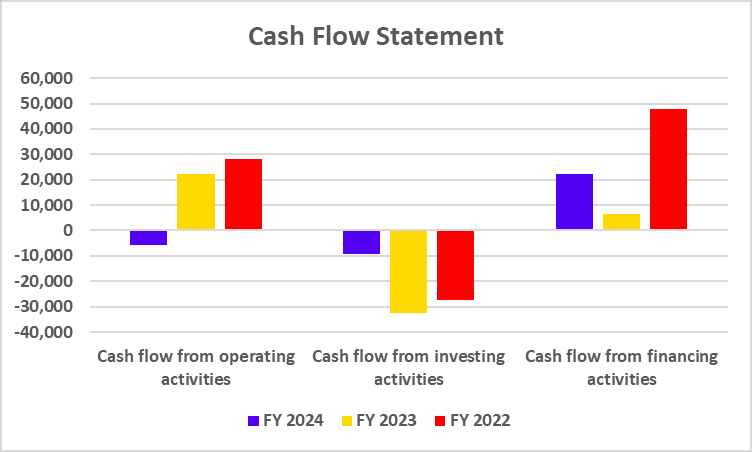
    Cash Flow Statements

    Key MetricsFY 2023FY 2022FY 2021
    Net cash flow from operating activities195.1882.6957.44
    Net cash flow used in investing activities-170.1-7.21-37.73
    Net cash flow used in financing activities-27.77-79.85-16.68
    Cash and cash equivalents at the end of the period/year2.615.39.68

    Ratio Analysis

    Key RatiosFY 2023FY 2022FY 2021
    ROCE25.26%1.75%10.88%
    EBITDA Margin42.01%32.29%31.12%
    Return on Net worth(28.29) %(60.34) %(27.54) %
    Debt to equity ratio0.060.130.02

    Real Also: What is Grey Market Premium (GMP) in IPOs?

    Financial Statements – Key Insights

    1. The company’s revenue appears to be growing. However, it has not been profitable, with negative earnings per share for the past three years.
    2. ROCE has shown a significant improvement, going from 10.88% in March 2021 to 42% in FY 2023 which suggests that the company is getting better at generating returns on the capital it uses.

    To sum it up, the company is in its growth stage, and focusing on market expansion over immediate profitability.

    Conclusion

    Awfis Solutions is committed to providing workspace solutions for all types of users through innovation and adaptation. From a single co-working space in Delhi to a nationwide network of premium offices, the company has achieved remarkable growth. The upcoming IPO and emphasis on expansion position the company to sustain its growth trajectory and play a pivotal role in shaping the future of workspaces in India.

    FAQs (Frequently Asked Questions)

    1. What are the benefits of using Awfis Space Solutions?

      Benefits include flexibility, affordability, access to a professional work environment, and various other amenities like IT support, and meeting rooms.

    2. Does the company offer anything besides workspace?

      Yes, Awfis provides additional services like food and beverage, infrastructure management, IT support, and event hosting.

    3. What is the minimum lot size for applying to the Awfis IPO?

      The minimum lot size for applying to the Awfis IPO is 39 shares.

    4. When will I know if my IPO application was successful?

      The allotment of shares is expected to be finalised by May 28th, 2024. And, the listing date of the IPO is 30 May 2024.

    5. Should I invest in Awfis Space Solutions IPO?

      It entirely depends on your risk profile and investment style. Go through the company’s financials, and market conditions, and consult a financial advisor before making the investment decision.

  • What is a Stock Broker? Meaning, Features, Types, and Commissions Explained

    What is a Stock Broker? Meaning, Features, Types, and Commissions Explained

    Stock Brokers have become the new talk of the town, but very few know about its importance and relevance in the ever-changing world of finance. They play a crucial role in helping achieve your investment goals while maintaining security and efficiency. 

    In this blog, we’ll explore the ins and outs of what brokers do, the different types, and why they’re essential for your financial success.

    Meaning of Stock Broker

    Meaning of Stock Broker

    Think of stock brokers as financial matchmakers, linking buyers and sellers in stock markets. They connect traders and investors and facilitate transactions in seconds. Stock brokers are authorized members of the stock exchange (NSE and BSE) and thus charge a commission or brokerage for providing their services. 

    Read Also: Is It Better To Buy Stocks When The Market Is Up Or Down?

    Features of Stock Broker

    1. Brokers act as an intermediary between investors and the securities market.
    2. Some brokers are authorized to provide investment advice to their clients.
    3. Brokers execute buy and sell orders on behalf of their clients.
    4. Brokers provide customer support to assist clients with managing their accounts, technical issues, and general inquiries.
    5. Brokers educate their clients regularly through webinars, training, etc. 

    Types of Stock Broker

    Types of Stock Brokers

    There are generally two types of brokers:

    1. Full-Service Broker – Also known as traditional brokers, they provide other financial services such as retirement planning, investment advice, portfolio management, tax planning, etc, along with facilitating trading in the securities market. The charges levied by them are generally high, and they are considered the most expensive type of brokers. Their offices are situated in different cities in order to provide clients with physical support as quickly as possible. Examples of full-service brokers are Motilal Oswal, Kotak Securities, and Sharekhan.
    2. Discount Broker – Discount brokers provide only a platform for executing trades and offer the cheapest brokerage. They do not provide any major type of support beyond trades to their customers; thus, investors are required to execute transactions by themselves. Examples of discount brokers are Zerodha, Upstox, Groww, etc.

    Types of Participants in Securities Market

    1. Traders – They are considered intraday traders who buy and sell shares daily; they bet on stocks for short-term profit and exit the positions daily. They are generally uninterested in the company’s fundamentals as they execute their trades based on technical parameters.
    2. Investors – Investors are generally focused a lot more on a company’s fundamentals; they tend to do comprehensive research regarding the company’s finances, management, etc. before making any investment decision. They invest for a longer period and are not interested in the short-term movement of the stock prices.

    How to Identify the Right Stock Broker?

    How to Identify the Right Stock Broker?
    1. The selection of a broker depends on your investment style. If you are an active trader, you must look for a broker who will offer you the lowest brokerage to minimize transaction costs. On the other hand, long-term investors tend to prefer brokers who offer educational training, research reports, etc., along with execution services.
    2. You must check the broker’s registration with the regulating authorities and its past record of default and fines, if any.
    3. The broker’s trading platforms must be user-friendly, have proper research tools, and have sections that allow traders to make robust decisions in their trading applications while safeguarding their data.
    4. You must also evaluate the broker’s customer support services and grievance redressal mechanism.

    How does a broker Earn Money?

    The major sources of revenue for a stock broker are as follows-

    1.  Commission/Brokerage – The brokers charge a commission/brokerage as a fee for executing trade through their platform.
    2. Account Maintenance Fees – Brokers charge their customers an annual maintenance fee in exchange for continuing to provide online services.
    3. Margin Interest – Brokers lend money to their clients and charge interest on it. 
    4. Subscription Services – Some full-time brokers charge subscription fees to their customers for the research reports they provide.

    Impact on the Stock Market without a Stock Broker

    Impact on Stock Market without Broker

    Stock brokers play a significant role in the securities exchange, and without their existence, the stock market would face catastrophic effects. A few of them are mentioned below:

    1.  Reduced Liquidity – The stock brokers provide immense liquidity to the markets with their ability to match orders from buyers and sellers in an instant. Without stock brokers, finding buyers and sellers would be nearly impossible. 
    2. Increased Volatility – Brokers stabilise the market by providing liquidity to traders. They manage large volumes of trades quickly, thus leading to reduced volatility. In their absence, the markets would face erratic price movements, therefore further increasing the bid-ask spread. 
    3.  Limited Access for Retail Investors –  Stock brokers make it easy for newbies and retail investors (with limited capital) to invest in the market. The broker’s absence would make it exceptionally difficult for retail investors to enter the stock market.  
    4.  Higher Costs – The stock brokers work on low margins while keeping the bid-ask spread narrow. Their absence would lead to increased costs due to the widening of the bid-ask spreads. 

    Read Also: What Happens When a Stock Share is Delisted?

    Conclusion

    Stock brokers play an important role in the functioning of the stock market. They allow investors to easily access the investment opportunities available in the security market. 

    However, retail investors need to choose the right broker that aligns with their investing style. Regardless of the broker you choose, you must invest your time in educating yourself about the securities market and its investment strategies.

    Frequently Asked Questions (FAQs)

    1. Do I need a stock broker to invest in the securities market?

      It is possible to open a Demat account without a broker but to invest in the stock market; you must have a broker who facilitates the transactions.

    2. What is the difference between a full-service broker and a discount broker?

      A full-service broker will provide you with additional services along with buying and selling of securities such as PMS, research, etc., while discount brokers will only provide you with a trading platform.

    3. How can I deposit funds with my broker?

      Brokers allow you to deposit and withdraw funds digitally through your demat account which is linked with your bank account.

    4. Can I open my demat account with multiple brokers?

      Yes, you can open multiple demat accounts with different brokers. However, only one account with a broker is permitted.

    5. Can I buy or sell shares online through my mobile phone?

      Yes, most brokers offer a mobile application through which you can buy and sell shares.

  • Adani Enterprises Case Study: Business Model And SWOT Analysis

    Adani Enterprises Case Study: Business Model And SWOT Analysis

    Imagine a single company controlling everything from the coal to the airport. That is the vast reach of Adani Enterprises. It has been a major force in the Indian economy, with a presence in sectors such as diverse coal mining, energy grids, and even airports. But how did this company rise to such prominence?

    In this blog, we will discover the fascinating story of Adani Enterprises, its key strengths, business model, rich history, etc.

    Adani Company Overview

    Adani Enterprises is an Indian multinational conglomerate headquartered in Ahmedabad, Gujarat. It is considered the flagship company of the Adani Group. Adani Enterprises is primarily involved in infrastructure development and management, including ports, airports, logistics, power generation, transmission, mining resources, data centres, and solar cell manufacturing.

    Adani Enterprises History

    Adani Enterprises was founded in 1988 by Gautam Adani as a partnership firm called Adani Exports, a commodity trading company focused on agricultural commodities.
    In 1990, the Adani Group established its proprietary port in Mundra to facilitate the expansion of its trading activities. Subsequently, in the same year, Adani Exports transformed into a limited company called Adani Enterprises.
    Today, Adani Enterprises is recognized as the largest business incubator in India. Its focus is on four core sectors: energy and utility, transportation and logistics, consumer goods, and primary industry.
    Since 1988, the company has successfully developed and listed six successful companies:

    1. Adani Ports and Special Economic Zone Limited
    2. Adani Power Limited
    3. Adani Transmission Limited
    4. Adani Green Energy Limited
    5. Adani Total Gas Limited
    6. Adani Wilmar Limited.

    Read Also: Tata Power Vs Adani Power: Comparison Of Two Energy Giants

    Adani Company Business Model

    Business Model of Adani Enterprises

    Adani Enterprises strategically employs a diversified business model to generate revenue across various sectors effectively. The company’s revenue majorly comes from the following selling various products and services in multiple sectors. These include Energy & Utility, Data Centres, Infra, Transport and Logistics, FMCG, Contract Mining, Resource Management, etc.

    The trading and export activities involve the earning income by purchasing goods such as coal and edible oils at competitive prices in international markets, and selling them domestically at a profit.

    Adani Enterprises generates substantial revenue through project development and efficient management of major infrastructure projects, including ports, roads, and power plants. Furthermore, the company also receives orders from the government, especially in the defence and aerospace sectors.

    The company’s revenue is divided between the product sales, which account for 86% of its total revenue, and services, which contribute 14%.

    SWOT Analysis of Adani Enterprises

    SWOT Analysis of Adani Enterprises

    Strengths

    ⦁ The company possesses a robust presence in various sectors, such as coal mining, energy generation, infrastructure, and renewables. This diversification reduces risk, and offers growth opportunities.
    ⦁ The Adani brands hold a strong brand recognition in India, symbolising trustworthiness, and expertise.
    ⦁ The company has strategically invested in cutting-edge technologies and renewable energy projects to position itself as a forward-thinking leader in sustainability.

    Weakness

    ⦁ Managing a portfolio of immense magnitude and diversity requires strong operational efficiency. Delays in project execution can impact profitability.
    ⦁ A substantial portion of revenue is generated from India, making the company vulnerable to domestic economic and political changes.
    ⦁ The company’s high debt level may constrain its capacity to pursue new business opportunities.

    Opportunities

    ⦁ The government’s emphasis on clean energy presents an opportunity for Adani Green Energy, the company’s renewable energy arm.
    ⦁ Adani’s recent entry into the airport sector can be a good opportunity to capitalise on the anticipated growth in air traffic in India.
    ⦁ By focusing more on international exposure, the company can create opportunities for growth while maintaining a strong foundation in its domestic operations.

    Threats

    ⦁ The demand for its services and products may be affected by global or domestic, economic downturns.
    ⦁ The impact on the profitability of its energy and mining businesses could be considerable due to the volatility in the prices of commodities such as coal and oil.
    ⦁ Adani operates in multiple sectors within the Indian market, many of which face tough competition from various players.

    Read Also: Reliance Power Case Study: Business Model, Financial Statements, And SWOT Analysis

    Adani Enterprises Financial Statements

    Let’s have a look at the financial statement of Adani Enterprises:

    Consolidated Balance Sheet

    Key MetricsFY 2023 (in crores)FY 2022 (in crores)
    Non-Current Assets1,04,366.0970,814.80
    Current Assets37,021.7330,945.39
    Total Equity37,890.0526,928.37
    Non-Current Liabilities58,794.7230,982.04
    Current Liabilities44,803.0543,849.78
    Consolidated Balance Sheet of Adani Enterprise

    Income Statement

    Key MetricsFY 2023 (in crores)FY 2022 (in crores)
    Total Income1,38,175.1270,432.69
    Total Expenses1,34,555.9069,480.64
    Profit for the year2,421.60787.7
    Income Statement of Adani Enterprise

    Cash Flow Statements

    Key MetricsFY 2023 (in crores)FY 2022 (in crores)
    Net Cash generated from / (used in) Operating Activities17,626.461,385.28
    Net Cash generated from / (used in) Investing Activities-16,860.09-17,487.38
    Net Cash generated from / (used in) Financing Activities-1,197.52-15,901.42
    Cash and Cash Equivalents at the end of the year1,882.33912.23

    Conclusion

    The company has a robust track record, holds a diversified portfolio, and maintains a clear vision for the future. However, high dependence on coal, elevated levels of debt, and the continuously evolving regulatory environment present considerable challenges. As India grows, Adani Enterprises is poised to play a significant role.

    Whether the company becomes a true giant or struggles under its own weight will depend on how well it handles challenges and takes advantage of future opportunities. Further, we recommend consulting with your financial advisor before making any investment decision.

    S.NO.Check Out These Interesting Posts You Might Enjoy!
    1TCS Case Study: Business Model, Financial Statement, SWOT Analysis
    2Vedanta Case Study: Business Model, Financial Statement, SWOT Analysis
    3Nestle India Case Study: Business Model, Financial Statement, SWOT Analysis
    4BPCL Case Study: Business Model, Product Portfolio and SWOT Analysis
    5Apollo Hospitals Case Study : Business Model, Financial Statements, And SWOT Analysis

    Frequently Asked Questions (FAQs)

    1. What are Adani Enterprises’ main sectors?

      Coal mining, ports and logistics, power generation (thermal and renewable), airports, and edible oils are some of the Adani Group’s main sectors.

    2. Is Adani Enterprises a good investment?

      This depends on your investment goals and risk tolerance. Adani has a strong track record but also faces challenges like higher debt, and dependence on coal.

    3. Is Adani publicly traded?

      Yes, Adani Enterprises is listed on the BSE and NSE. As of May 2024, its share price is trading at INR 3,330 and its market capitalisation is INR 3.80 lakh crores.

    4. When was Adani Enterprises established?

      The company was established in 1988 by Gautam Adani. Initially, the company started operations in commodity trading.

    5. When was the Adani Enterprise’s first stock issued?

      On September 12, 1994, Adani Enterprises launched an IPO of 1,261,900 shares which was 25x oversubscribed.

  • Buying vs Renting: Which Is The Better Choice?

    Buying vs Renting: Which Is The Better Choice?

    The majority of people in India live in rented homes, yet many aspire to own their own homes someday. They start saving early in their careers or seek home loans to make this dream a reality. However, due to the interest costs associated with these loans, they often postpone their plans and continue with renting.

    Now the question is buying your dream house worth it? In this blog, we will discuss whether you should rent or purchase a home.

    Buying a House

    Purchasing a home is like realizing a dream. It is where you raise your family, create memories, and take pride in owning it. However, nowadays, the cost of buying your dream home can burn a big hole in your wallet. In India, it is common to assume that a home is a sign of well-being and stability within the family.

    Pros of Buying a House

    Pros of Buying a house
    1. Building an Asset – The amount that you will be using for paying rent can be utilized towards paying some part of the home loan EMI and it will create an asset for life.
    2. Tax Benefit – If you have a home loan, you can claim a deduction of up to INR 2 lakhs on the interest paid under section 24 for a self-occupied house and INR 1.5 lakhs under section 80C on the principal amount.
    3. Permanent Resident – You do not need to worry about moving houses if the landlord wants you to leave, as you are the proud owner of your own home.
    4. Emotional Security – Having your own house provides you with mental peace and stability as you can keep it as you want.

    Cons of Buying a House

    1. Expensive – Buying a house can be costlier than renting a house in most of the cases, as the down payment to purchase the house is very high. Along with this, you will have to bear the cost of monthly EMI.
    2. Illiquid Asset – Real estate is often considered the most illiquid form of asset, which means if you need money, you cannot immediately sell your house.
    3. Other expenses – If you purchase a house, you will be piled up with the EMI burden along with it; you will have to pay additional costs such as house taxes, water taxes, maintenance costs, etc.
    4. Relocation – If you are looking to relocate to a newer location or you are transferred to some other location, then in that case it will get difficult for you to sell your house and shift to another house.

    Read Also: Which is Better: Fixed Deposit or Residential Property Investment

    Renting a House

    Renting a House

    It means living in a home owned by someone else and giving the landlord a monthly rent payment. The owner of the property will give you the house in exchange for rent through a formal agreement that specifies the monthly rent and the length of time he/she will rent the property to you.

    A house’s suitability for rental depends on a variety of aspects, including the number of bedrooms, preferred location, amenities, and budget.

    Pros of Renting a house

    1. Lower financial burden – Paying monthly rent will have less impact on your pocket as rent will be lower than your home EMIs.
    2. Down Payment – If you are going for a rented house, then you are not required to make any large down payments initially. In renting, you are just required to provide only a security deposit which can vary from 1 – 6 months.
    3. No additional cost – While living in a rented house, you don’t need to worry about paying property taxes, repair bills, maintenance costs, etc.
    4. Easy to relocate – In case if you are into such kind of jobs in which transfer is frequent then relocating is much easier in the case of a rented house.
    5. Flexibility of location – You can easily decide where do you want to live depending on proximity to your workplace or school, reducing your transportation costs.

    Cons of Renting a house

    1. Rise in Rent – The landlords generally increase the rent on an annual basis, but they can do so anytime in between.
    2. No Tax Benefits – Paying rent will not fetch you any tax benefits. However, one can claim an HRA deduction.
    3. Expense after retirement – If you are not able to buy a house while you are in your earning stage of life, then you might face a financial crunch after retirement as you will not have any source of income.
    4. No Modifications – Even if you love to decorate your house, then you have no choice but to make any structural change without the approval of the landlord.
    5. No emotional security – Owning your own home provides peace of mind and stability, freeing you from the worries of a landlord potentially asking you to move out. If you rent a house, you’ll miss this peace.

    Tax Benefit of Housing Loan

    Tax Benefit of Housing Loan
    1. Deduction of Principal Amount Repayment – You can deduct up to INR 1.5 lakhs from your primary amount paid each financial year under section 80C of the Income Tax Act. The highest deduction that can be made is INR 1.5 lakhs, regardless of the total principal that you pay over a year.
    2. Deduction on Interest Paid – For self-occupied property, an individual may deduct up to INR 200,000 in interest each financial year.

    Which is right for you?

    The answer to this question is very individualized and depends on a person’s unique circumstances, including their financial situation and life aspirations. Renting is a less expensive choice that allows you to move about more easily than buying, even if buying a property might be a smart investment due to its high cost. Therefore, a person must weigh all the advantages and disadvantages before choosing to buy or rent.

    Read Also: IndiGo vs SpiceJet: Which is Better?

    Conclusion

    There will always be debates about whether it is better to rent or buy a home. Some people think buying a house is a smart option since they will feel proud to own it. Some, however, will choose to rent a home as they lack the funds to buy a new one.

    In summary, if you are financially stable, buying a home can be a good option. However, if you are not, taking on loan payments and other debts might lead to financial difficulty, making renting a more suitable choice. Further, it is advisable to consult your financial advisor before making a decision, as buying a home is a long-term commitment.

    Frequently Asked Questions

    1. What are the tax implications of renting vs buying a house?

      Living in a rented house does not offer any tax benefits, although salaried individuals can claim an HRA deduction for the rent they pay.On the other hand, homeowners are eligible for deductions on their home loans.

    2. I am a 25-year-old individual who got a new job with a salary of around INR 50,000 per month. Should I buy a home or live in a rented house?

      As you have just started your career therefore, there are various other goals in your life which you are required to fulfill. Buying a house is a long-term commitment, hence you should consider all the expenses of buying a house or consider living in a rented house.

    3. What financial factors are to be considered before deciding on renting and buying?

      One must consider financial factors like upfront cost, loans, EMIs, property taxes, insurance and maintenance, and potential appreciation in the value of the property, etc.

    4. I want to customize my home, should I go for renting or buying?

      Owning a house allows you to personalize things the way you want, which you cannot do easily in a rented house as every time you need permission from the landlord.

    5. Does buying a house create wealth in the long run?

      If you are buying a piece of land, the value of it will generally appreciate over some time, but there are several other costs that comes with owning a house such as property taxes, and EMIs of the house. Therefore, one must consider all the factors before purchasing a home.

  • Liquid Funds Vs Ultra Short Fund: Which One Should You Choose?

    Liquid Funds Vs Ultra Short Fund: Which One Should You Choose?

    Looking for alternatives to park your short-term money beyond savings accounts and short-term bank FDs? If you haven’t explored Liquid funds and Ultra-short duration funds yet, you’re missing out on some excellent opportunities.

    This blog post explores the universe of these two investment vehicles, outlining their unique characteristics, returns to assist you in selecting the best option for your financial needs.

    Debt Mutual Funds – Overview

    A debt fund is a mutual fund that invests primarily in fixed-income securities such as corporate bonds, government bonds, treasury bills, etc. The debt funds generate gains via interest income from underlying debt securities and appreciation of the same in the secondary market.

    Generally speaking, they are less risky and volatile than equity funds since the fixed-income instruments in their portfolio provide predictable returns and less volatility.

    Nonetheless, interest rate volatility, liquidity risk, and the credit risk of the underlying bonds are usually the risks connected with debt funds. As per the SEBI, based on the securities’ maturity length, mutual funds in the debt category comprise 16 subcategories.

    If you want to explore all of them, check out our blog on Debt categorization of mutual funds: Debt Mutual Funds

    Ultra-short Fund

    It is a type of debt mutual fund that invests in debt instruments with maturities ranging from three to six months, such as money market instruments or fixed-income securities.

    The fund has minimal risk and a lot of liquidity. Securities of ultra-short funds have low volatility because of their short maturity. Investors wishing to invest in the debt category of mutual funds for a six-month term might choose ultrashort funds.

    Read Also: Types of Mutual Funds in India

    Features of Ultra-short duration fund

    1. The portfolio of these funds consist of securities having maturity up to 6 months.
    2. As compared to longer-duration funds, the ultra-short fund carries a low-interest rate sensitivity.
    3. The fund generally provides low returns as compared to debt funds with higher maturity, but the risk involved in this fund is also on the lower side. Further, returns of ultra-short funds generally hover around returns of fixed deposits of scheduled commercial banks.
    4. Due to the short duration of the portfolio, the fund aims to maintain a high level of liquidity, which makes it easy for investors to enter and exit this fund without any exit load.

    Performance of Ultra-short Funds

    Let’s have a look at the performance of some of the top ultra-short funds (annualized return):

    Scheme Name6 Months (%)1 Year (%)3 Years (%)
    Mirae Asset Ultra Short Duration Reg Growth3.87.385.57
    ICICI Pru Ultra Short-Term Growth3.787.245.56
    Bandhan Ultra Short-Term Reg Growth3.737.215.39
    HDFC Ultra Short-Term Growth3.727.185.44
    SBI Magnum Ultra Short Duration Reg Growth3.717.215.39
    Mahindra Manulife Ultra Short Duration Fund Reg Growth3.637.075.31
    Tata Ultra Short Term Reg Growth3.486.75.01
    DSP Ultra Short Fund Reg Growth3.476.875

    Liquid Fund

    A “liquid fund” is an open-ended debt mutual fund that invests in debt instruments having maturities of less than 91 days. The portfolio consists of high-credit-grade fixed-income securities.

    Liquid funds are regarded as the lowest-risk debt mutual funds. They offer a slightly higher return than a savings bank account.

    Features of Liquid Fund

    1. Investors can earn a bit more than a savings account by parking their excess funds in a liquid fund.
    2. It is the only fund whose NAV is calculated daily, whether it is Saturday or Sunday.
    3. Although liquid funds post higher returns than savings bank accounts, their returns can fluctuate depending on market and economic conditions.
    4. Liquid funds prioritize safety and liquidity, so their returns are lower as compared to other debt funds.

    Performance of Liquid Funds

    Let’s have a look at the performance of some of the top liquid funds (annualized return):

    Scheme Name6 Months (%)1 Year (%)3 Years (%)
    HDFC Liquid Growth3.727.245.46
    ICICI Pru Liquid Growth3.737.265.46
    Nippon India Liquid Growth3.717.245.46
    ABSL Liquid Growth3.727.275.51
    Edelweiss Liquid Ret Growth3.687.175.37
    Kotak Liquid Reg Growth3.697.225.44
    Baroda BNP Paribas Liquid Plan Growth3.687.245.52
    White Oak Capital Liquid Reg Growth3.657.135.21

    Liquid Vs Ultra-short Funds

    ParticularsUltra-short FundLiquid Fund
    Average MaturityIt invests in debt securities with a maturity from 3 to 6 months.It invests in debt securities that have a maturity of up to 91 days.
    ReturnsIt provides slightly higher returns than the liquid fund.The returns of liquid funds are on the lower side as compared to ultra-short duration funds.
    LiquidityThese are less liquid than Liquid funds.The liquid funds provide higher liquidity than the ultra-short duration funds.
    Exit LoadIt generally has a nil exit load.Liquid funds have an exit load of up to 7 days.
    RiskIt carries a slightly higher risk than liquid funds.It carries the lowest risk.
    Cut off timingsThe cut-off timing for purchasing liquid funds is 1:30 p.m., while the time for redemption is 3 p.m.The cut-off time for purchase and redemption of liquid funds is 3 p.m.

    Read Also: Debt Mutual Funds: Meaning, Types and Features

    Conclusion

    In summation, while ultrashort funds carry a more significant risk than liquid funds, they also offer marginally higher returns. Liquid funds offer high liquidity and safety and are attractive to investors who are looking for alternatives to the savings accounts. Investors with short to intermediate investment horizons and moderate risk tolerance may find ultra-short-term funds appealing.

    However, before investing in debt funds, you must weigh all the risks involved and consult with your financial advisor.

    Frequently Asked Questions (FAQs)

    1. Is there a lock-in period for ultra-short funds?

      Ultra-short funds invest in debt securities having a Macaulay duration of 3 to 6 months. The lock-in period depends on the fund to fund. Generally, there is no lock-in period in ultra-short funds as there is adequate liquidity because of the short duration of investments.

    2. What is the duration of the ultra-short funds?

      The ultra-short duration funds invest in debt securities, the maturity duration of which ranges from 3 months to 6 months.

    3. Is there any exit load in liquid funds?

      Liquid funds do carry a graded exit load of up to 7 days.

    4. Can I lose money in liquid funds?

      As liquid funds invest only in short-term debt securities, ranging up to 91 days, they do not respond much when interest rates change in the market, so they do not have significant capital gains or losses.

    5. Do liquid funds provide guaranteed returns?

      Liquid funds do not provide guaranteed returns; however, due to the nature of their portfolio, their returns are generally stable.

  • Open Free Demat Account

    Join Pocketful Now

    You have successfully subscribed to the newsletter

    There was an error while trying to send your request. Please try again.

    Pocketful blog will use the information you provide on this form to be in touch with you and to provide updates and marketing.