India’s healthcare sector is experiencing rapid growth, fueled by factors like rising disposable incomes, increasing healthcare costs, and a growing elderly population. Healthcare is crucial to human society for preventing diseases, diagnosing illnesses, treating conditions, and managing injuries.
In this blog, we will compare Apollo Hospitals and Fortis Healthcare.
Apollo Hospitals Enterprises Overview
Apollo Hospitals is India’s largest private healthcare provider and a global leader in integrated healthcare services. Dr. Prathap C. Reddy founded it in 1983, and it has led India’s healthcare revolution. The group provides a comprehensive range of services through a network of 73 hospitals across India and abroad, Apollo Pharmacy chains, primary care and diagnostic clinics, remote healthcare consultations, etc.
They introduced several groundbreaking medical procedures in India, such as coronary artery bypass surgery, organ transplantation, and telemedicine.
Fortis Healthcare Overview
Fortis Healthcare is one of the top healthcare services providers in India. It has many hospitals, clinics, and diagnostic centers in the country and abroad. The company is well-known for its wide range of medical services, advanced technology, and commitment to patient care. It was established in 1996 with the opening of the first Fortis Hospital in Mohali, Punjab. The acquisition of the healthcare division of the Escorts Group was a pivotal moment in Fortis’s growth. This move expanded its presence and strengthened its position in the healthcare market in India. The healthcare brand also has a presence in countries like UAE, Nepal, and Sri Lanka. Fortis offers various medical services like cardiology, oncology, orthopedics, neurosciences etc.
(The figures mentioned above are in INR crores unless stated otherwise)
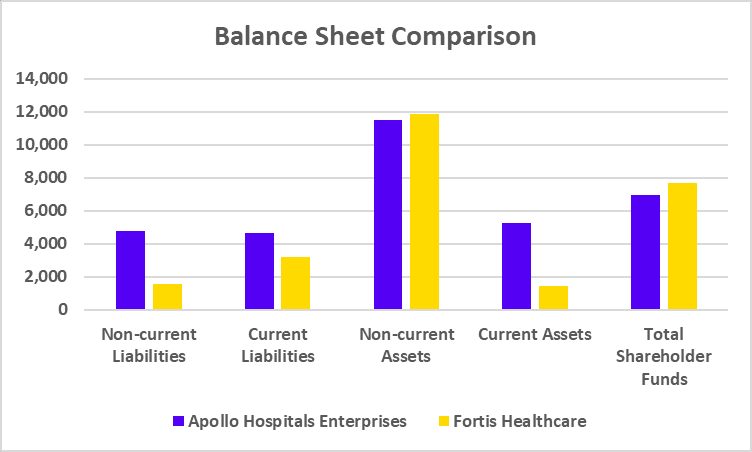
Balance Sheet Comparison (FY 2024)
Particular
Apollo Hospitals Enterprises
Fortis Healthcare
Non-current Liabilities
4,768
1,562
Current Liabilities
4,665
3,170
Non-current Assets
11,473
11,868
Current Assets
5,280
1,421
Total Shareholder Funds
6,935
7,663
(The figures mentioned above are in INR crores unless stated otherwise)
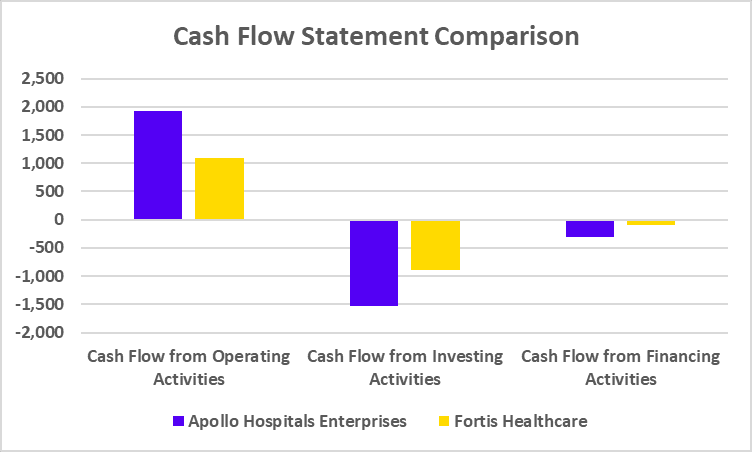
Cash Flow Statement Comparison (FY 2024)
Particular
Apollo Hospitals Enterprises
Fortis Healthcare
Cash Flow from Operating Activities
1,920
1,100
Cash Flow from Investing Activities
-1,537
-886
Cash Flow from Financing Activities
-311
-86
(The figures mentioned above are in INR crores unless stated otherwise)
Key Performance Indicators
Particular
Apollo Hospitals Enterprises
Fortis Healthcare
Net Profit Margin (%)
4.81
9.22
ROE (%)
12.95
7.81
ROCE (%)
14.97
9.52
Current Ratio
1.13
0.45
Debt to Equity Ratio
0.46
0.11
(all the above data is of the year ended March 2024)
Conclusion
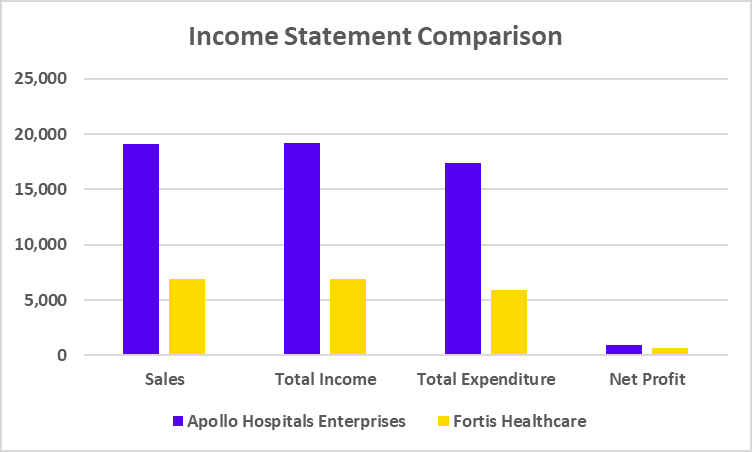
The comparison between Apollo Hospitals and Fortis Healthcare presented above leads us to conclude that while Apollo Hospitals has higher net profit, Fortis Healthcare posts higher net profit margins. Moreover, Apollo Hospitals has a higher ROE and ROCE metric than Fortis Healthcare. However, it is advised to speak with an investment expert before making investment decisions.
S.NO.
Check Out These Interesting Posts You Might Enjoy!
Every new investor entering the market has two questions, one related to the cheapest stocks to invest in and the other one about which companies have the most expensive stock in India. Some companies in India have such a high market price that may surprise you. Interested in knowing about these companies? Read on.
In this blog, we will discuss the top 10 most expensive stocks in India.
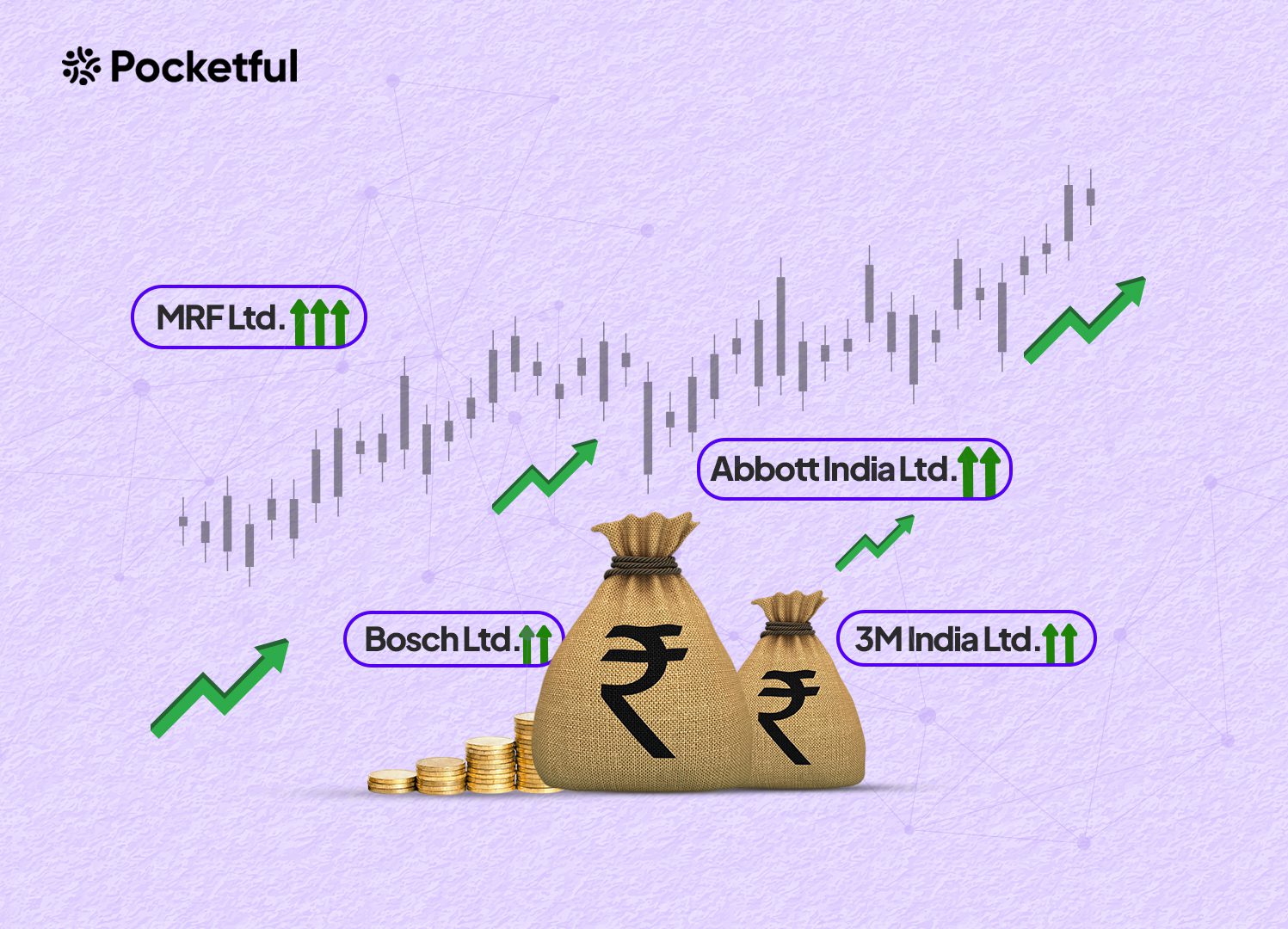
Overview of the Top 10 Most Expensive Stocks in India
The overview of India’s top 10 most expensive stocks is mentioned below-
1. Elcid Investments Ltd
Elcid Investments is a holding company registered with the Reserve Bank of India (RBI) under the category of Investment Company. The company is promoted by the Vakil Family. Arvind Vakil, head of the family, was one of the 4 partners who started Asian Paints in 1942.It also has 2 wholly owned subsidiaries viz. Murahar Investments & Trading Co Ltd and Suptaswar Investments & Trading Co Ltd which holds 0.60% and 0.68% in Asian Paints respectively.It holds ~4.2% stake in the company which has a total value of ~9,996cr crores as on December 2022.
2. MRF Ltd.
K.M. Mammen Mappillai established the Madras Rubber Factory (MRF) in 1946. Before manufacturing tyres, the company began its journey as a toy balloon manufacturing unit. The company ventured into tread rubber manufacturing in 1952 and became a market leader in just four years. In 1961, the business partnered with USA’s Mansfield Tire & Rubber Company and opened its first manufacturing facility in Chennai. The company went public on the Indian Stock Exchange in 1961. The company manufactures a wide range of products, including tyres for two-wheelers, cars, trucks, and even airplanes. The company’s headquarters is in Chennai.
3. Honeywell Automation India Ltd.
Honeywell Automation India Ltd. was established in 1984 as a joint venture between the Tata Group and Honeywell International. The business was initially known as Tata Process Control Pvt. Ltd. In 1988, the company was listed on the Indian stock exchange and was renamed Tata Honeywell Ltd. In 2004, the company was again renamed Honeywell Automation India Ltd. when Honeywell International Asia Pacific Inc. purchased the stake of the Tata Group. The company operates in many sectors, such as aerospace, energy, healthcare, IT, life sciences, utilities, etc., and provides automation and control systems for commercial, residential, and industrial use. The company’s headquarters is in Pune.
4. Page Industries Ltd.
Sunder Genomal and his family established the business in 1994. The business signed an exclusive agreement with Jockey International Incorporation for the manufacture, distribution, and sale of Jockey goods in India, Sri Lanka, Bangladesh, Nepal, UAE, Oman, and Qatar. In 2005, the company went public on the Indian Stock Exchange. The business has increased its product range by obtaining an exclusive license from Speedo International Ltd. to manufacture, market, and distribute its products in India. The company’s headquarters is in Bangalore.
5. 3M India Ltd.
In 1987, 3M India Limited was established as a subsidiary of 3M Company, an American multinational corporation. The company provides specialist products for automotive, electrical, healthcare, and other sectors. The company was publicly listed in 1991. 3M India owns popular brands such as Scotch Brite, Nexcare, and Littman. With several production facilities dispersed throughout the nation, it efficiently meets the needs of both B2B and B2C markets. The organization’s headquarters is in Bangalore.
6. Bosch Ltd.
The company was established in 1886 by Robert Bosch in Germany. By 1897, the company became a market leader in ignition systems and became a major supplier to the automotive industry. The company set up a sales office in India in 1922 and operated only through imports for the next 30 years. Motor Industries Company Limited was founded in 1951, and Bosch instantly bought 49% of its stock. Both fuel injectors and spark plugs were produced there. The business opened its first manufacturing facility in Bengaluru, and over time, it established R&D facilities in Pune, Hyderabad, and Coimbatore, as well as another manufacturing facility in Nashik. In 1993, the company was listed on the Indian Stock Exchange. In 2008, MICO was renamed as Bosch Limited. In 2014, the company launched an eye-care solution in India and has since developed equipment for affordable eye care. The company’s headquarters is in Bangalore.
7. Abbott India Ltd.
Abbott India was established in 1910 and started operations as a marketing affiliate. It was founded as a subsidiary of Abbott Laboratories. The business provides more than 400 branded generic medicines in India, and its products are available at approximately 5,00,000 pharmacies nationwide. The company also provides diagnostic solutions, medical devices, and other nutritional products. The business purchased Piramal Healthcare Solutions in 2010 to strengthen its market position in the Indian pharmaceutical sector. The company’s headquarters is in Mumbai.
8. Shree Cement Ltd.
Shree Cements Ltd. was established by Benu Gopal Bangur in 1979. The company’s first manufacturing facility was set up in Rajasthan. To meet the needs of the Indian infrastructure sector, the company increased its cement manufacturing capacity and is currently India’s third-largest cement producer. In 2012, the company established a thermal power plant with a capacity of 300 MegaWatt. The company acquired Union Cement in 2018 to further expand its manufacturing capacity. Its main office is in Kolkata.
9. Procter & Gamble Hygiene and Healthcare Ltd.
The business was established in 1964 to manufacture and market Vicks range of products in India. The company was initially known as Richardson Hindustan Limited. The company began diversifying its product line in the 1980s and introduced Whisper and other feminine hygiene products. Ariel detergent was also launched in 1991 and is a well-known brand today. The organization’s headquarters is in Mumbai.
10. LMW Ltd.
Dr. G.K. Devarajulu established the business in 1962, and its primary business was manufacturing textile machinery. Subsequently, the business installed a state-of-the-art facility to generate superior castings for both domestic and international clients. In 2010, the company established an Advanced Technology Centre (ATC) to manufacture components for the aerospace and defense sector. The company’s headquarters is in Coimbatore.
In conclusion, the majority of India’s most expensive stocks have solid fundamentals. These firms’ stock prices are so high because the majority of them have not declared a stock split or bonus share. Because these equities typically have smaller volumes than other stocks, as an investor, make sure you speak with your investment advisor before investing in such a stock.
S.NO.
Check Out These Interesting Posts You Might Enjoy!
Elcid Investments ltd is the most expensive stock in India.
What are the top 5 expensive stocks in India?
Elcid Investments ,MRF, Honeywell Automation Limited, Page Industries Limited and 3M India Limited are the top 5 most expensive stocks in India.
What is the full form of MRF Limited?
The full form of MRF is Madras Rubber Factory.
Why is the stock price of MRF so expensive?
The stock price of MRF is high because the corporation has never declared a stock split, and a bonus issue was declared way back in 1975.
Is it safe to invest in expensive stocks?
Because most expensive stocks have good fundamentals, including financial performance, they are regarded as secure investment options. However, because expensive stocks often have low liquidity, it is advisable to consult a financial advisor before investing.
Selection Methodology and Important Disclaimer
The stocks included in this list are selected primarily on the basis of their market capitalisation, which represents the total market value of a company’s outstanding shares. The companies are arranged in descending order of market capitalisation, with larger companies appearing first, followed by relatively smaller companies. This methodology is intended to provide a structured approach for identifying companies based on their market size and overall presence within a sector.
However, market capitalisation should not be considered the sole factor while evaluating investment opportunities, as it does not guarantee future performance, profitability, or returns. Investors should also assess other important factors such as financial health, business fundamentals, management quality, valuation metrics, industry outlook, and market conditions before making investment decisions.
The information provided is for educational and informational purposes only and should not be construed as investment advice, recommendation, solicitation, or an offer to buy or sell any securities by Pocketful Fintech Capital Private Limited.
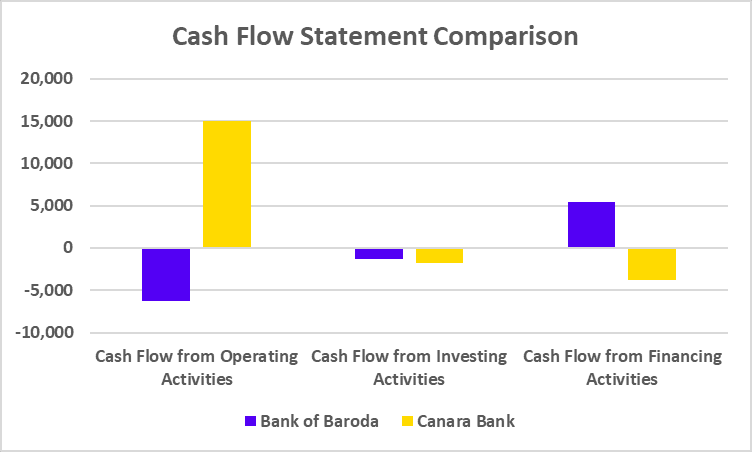
Two well-known banks with a long history of innovation and tradition stand out in India’s banking landscape: Canara Bank and Bank of Baroda. These financial institutions have survived economic shifts, political challenges, and societal changes for a long time.
Today’s blog explores the origins of these two banks, how they differ financially, and their rise to prominence.
Bank of Baroda – An Overview
The Bank of Baroda is a prominent Indian public sector bank with its headquarters in Vadodara, Gujarat. It is one of the largest banks in India and has a significant presence in both domestic and international markets.
BOB was established on 20 July 1908 in Baroda, with the support of Maharaja Sayajirao Gaekwad III of Baroda. It started its operations with INR 10 lakh and 28 staff members. In 1969, the Bank of Baroda underwent nationalization along with 13 other prominent banks in India, which was a crucial step by the government to exert control over the banking sector.
In 2018, the Bank of Baroda was merged with Vijaya Bank and Dena Bank, forming one of the largest public sector banks in India, with branches and subsidiaries spread across numerous countries, such as the UK, the US, the Middle East, and Africa.
Canara Bank – An Overview
Canara Bank is a major Indian public sector bank with its headquarters in Bangalore, Karnataka. The bank was founded in 1906 by Shri Ammembal Subba Rao Pai, a great visionary and philanthropist, making it one of India’s oldest banks.
It was initially established as a Canara Hindu Permanent Fund in Mangalore. In 1961, the bank acquired the Bank of Kerala and Seasia Midland Bank. Canara Bank was nationalized along with 13 other major banks in India as part of the government’s efforts to control the banking sector.
The bank has 13 subsidiaries or sponsored institutions in India and abroad. As of June 2024, Canara Bank services over 11.42 crore customers through a network of 9,627 branches and 12,256 ATMs/Recycler spread across all Indian states and Union Territories.
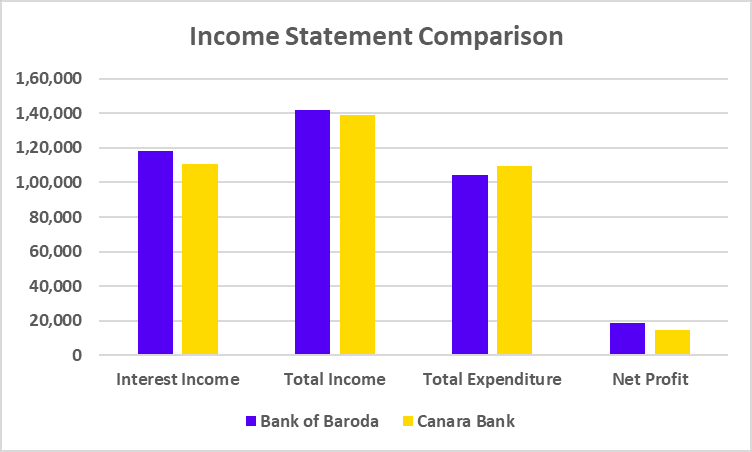
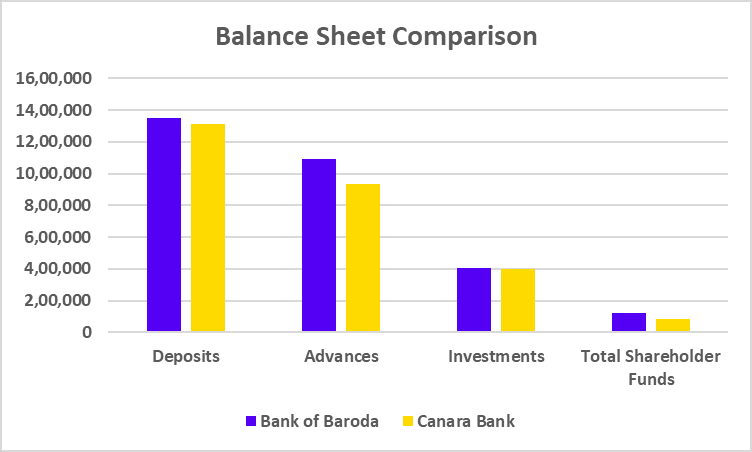
The Bank of Baroda and Canara Bank have a rich legacy and significant presence in the financial sector. Despite sharing similar characteristics, BOB and Canara Bank differ in terms of financial performance and range of services. Additionally, it is important to consider factors such as branch accessibility, digital banking capabilities, past financial performance, and the overall reputation of each bank before making an investment decision. However, it is advised to consult a financial advisor before investing.
S.NO.
Check Out These Interesting Posts You Might Enjoy!
What were the key changes experienced by banks after nationalization?
The banks experienced rapid growth, expanded their branch networks, and diversified their services.
Do the Bank of Baroda and Canara Bank have a digital presence?
Both banks have strong digital banking platforms, offering internet banking, mobile banking, etc.
Which bank is better for personal banking?
An individual needs to select a bank based on his/her specific needs and preferences. Further, it is suggested that both banks be compared on every metric before making any decision.
Has Canara Bank been involved in any mergers and acquisitions?
In 1961, Canara Bank acquired the Bank of Kerala and Seasia Midland Bank and recently underwent a merger with the Syndicate Bank in 2020.
Do the Bank of Baroda and Canara Bank have international operations?
Both banks have a global presence as they have subsidiaries, offices, and branches in various countries.
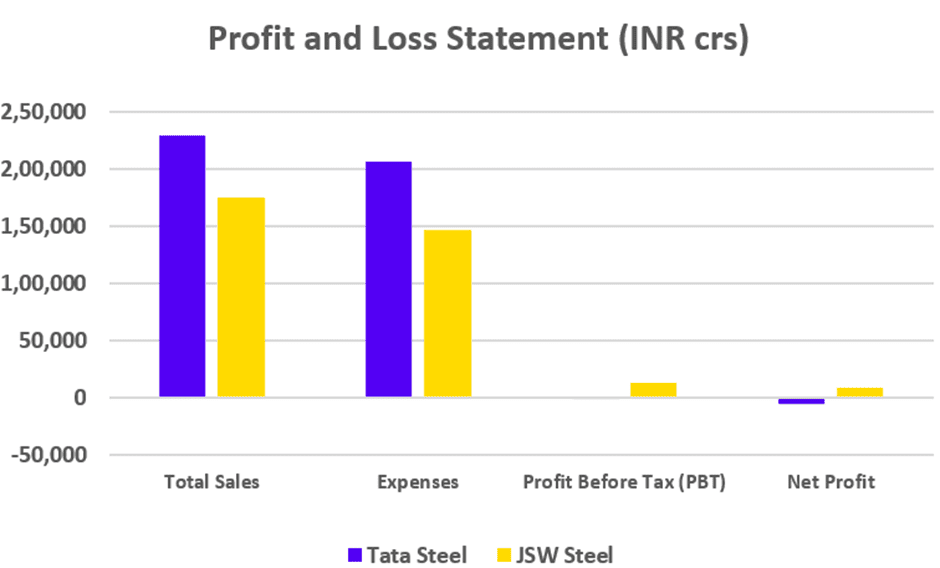
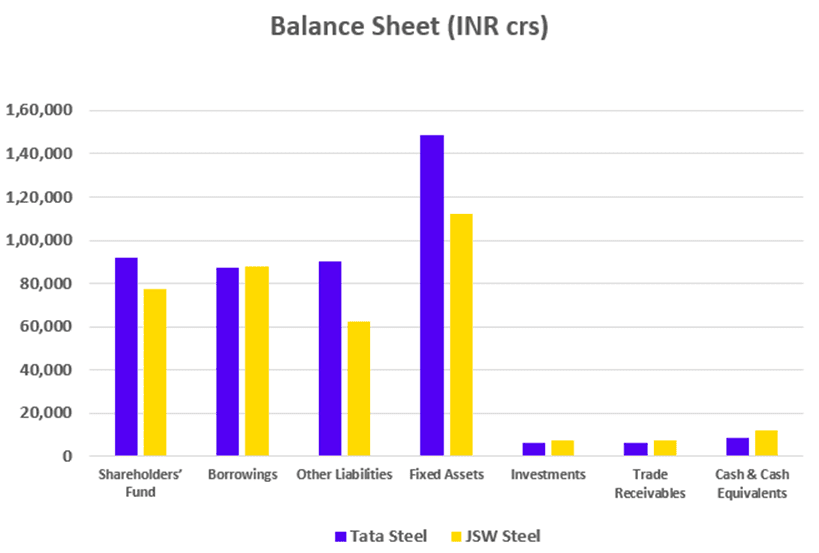
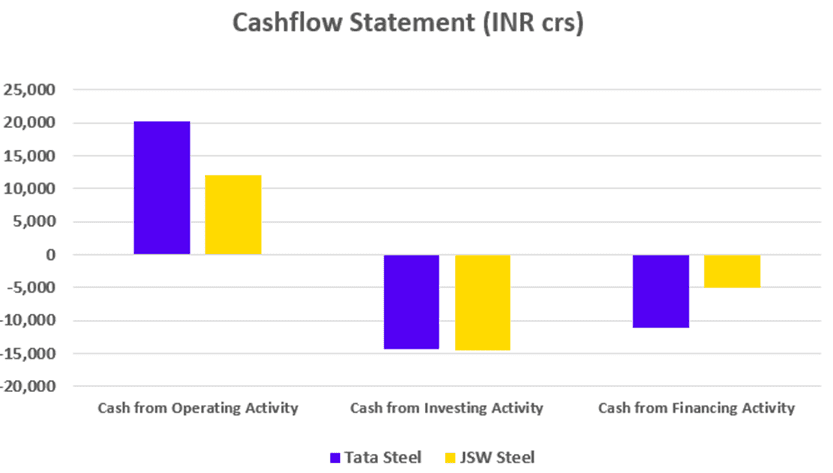
The steel industry in India is a critical sector that powers the country’s infrastructure and manufacturing capabilities. There are multiple players in this sector, however, two of the biggest players in this industry are Tata Steel and JSW Steel.
In this blog, we will compare these steel giants in detail, including their financial performance, key performance indicators, etc.
Tata Steel Overview
Tata Steel, a flagship company of the Tata Group, was established in 1907 and is one of the oldest steel companies in India. Headquartered in Mumbai, Tata Steel operates in over 26 countries and has a significant presence in Europe and Southeast Asia. The company is known for its integrated steel plants, cutting-edge technology, and sustainable practices.
The Indian product portfolio of Tata Steel is divided into multiple segments – Automotive and Special Products, Industrial Products, Projects and Exports, Branded Products, Retail, etc. The Company supplies hot-rolled, cold-rolled, galvanised, branded solution offerings and more.
As of March 2024, the company has an annual crude steel capacity of 35 million tonnes (MnTPA) and it is one of the world’s most geographically diversified steel producers. It is one of a few steel players that are fully integrated – from mining to the manufacturing and marketing of finished products. The company’s focus on innovation, quality, and sustainability has positioned it as a leader in the global steel market.
Did You Know? In 1907, Tata Steel was established in India as Asia’s first integrated private steel company.
JSW Steel Overview
JSW Steel, is the flagship business of the diversified US$ 24 billion JSW Group. The group has a presence in various sectors including Steel, Energy, Infrastructure, Cement, Paints, Venture Capital, Sports, etc. The group also boasts a diverse workforce across India, USA, Europe, etc. and directly employs nearly 40,000 people.
Coming to JSW Steel, it was founded in 1982 and has rapidly grown to become one of India’s leading steel manufacturers. It has a diverse range of steel products that serve industries such as automotive, infrastructure, and energy.
The company’s strategic focus on expanding capacity and improving operational efficiencies has allowed it to scale its production to over 28 million tons per annum. Not only that, it has consistently led in research and innovation, maintaining a strategic collaboration with the global leaders such as JFE Steel of Japan.
In summation, the comparison between Tata Steel and JSW Steel highlights the strengths and market positions of both companies in the Indian steel industry. While Tata Steel enjoys a legacy of over a century, JSW Steel’s aggressive growth strategies have made it a formidable competitor.
Investors can find value in both companies based on their preferences and risk tolerance. It’s advisable to consult with a financial advisor before making any investment decision.
S.NO.
Check Out These Interesting Posts You Might Enjoy!
Which company has a larger market capitalization: Tata Steel or JSW Steel?
As of August 2024, Tata Steel has a market capitalization of INR 1.92 lakh crore and JSW Steel has a market capitalization of INR 2.32 lakh crore.
What are the main products offered by Tata Steel and JSW Steel?
Tata Steel offers a wide range of products including flat and long steel products, automotive steel, and other specialty products. JSW Steel offers hot rolled coils, cold rolled coils, galvanised products, TMT bars, etc.
Which company is more profitable: Tata Steel or JSW Steel?
As of March 2024, Tata Steel reported a net loss of INR 4,910 crore, however, JSW steel reported a net profit of INR 8,973 crore.
Which company has a stronger international presence?
Tata Steel has a stronger international presence with significant operations in Europe and Southeast Asia, whereas JSW Steel is primarily focused on the Indian market and has some presence in the US and Europe.
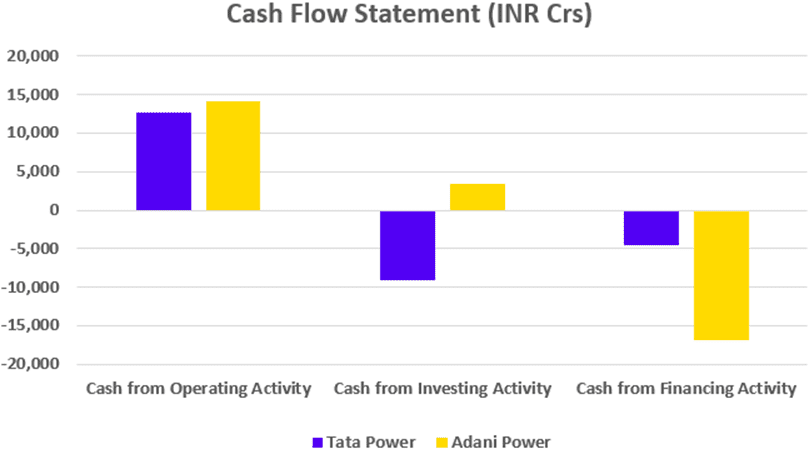
Did you know that the energy sector plays a crucial role in supporting not just the India’s industrial growth but also the overall economy? If we put aside two PSUs, i.e., NTPC and Power Grid, two major players leading in this sector are Tata Power and Adani Power.
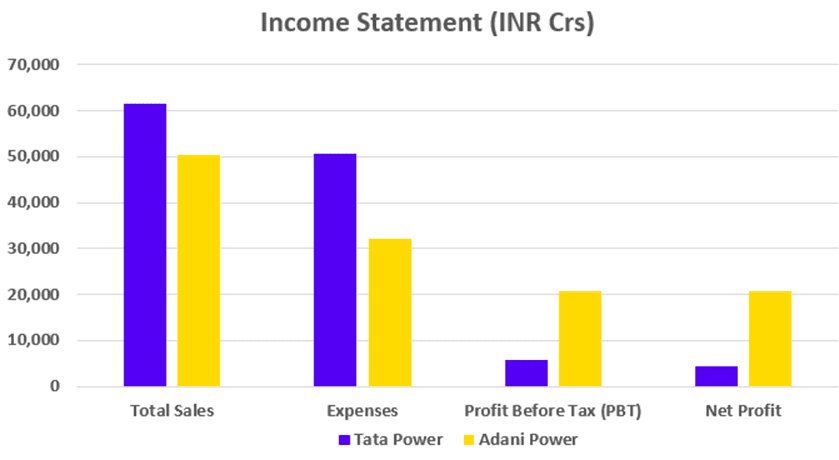
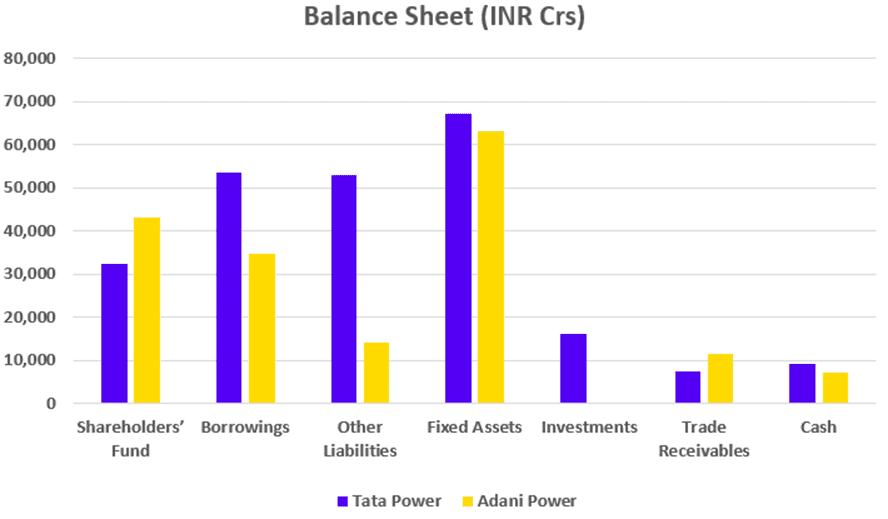
In this blog, we will delve into a detailed comparison of these energy giants, their financial performance, and key performance indicators.
Tata Power Overview
Tata Power Limited, a flagship company of the Tata Group, was established in 1915 and has been a pioneer in the Indian power sector. It is headquartered in Mumbai and operates across the entire power value chain – generation, transmission, distribution, and renewable energy. It also offers next-generation solutions including solar rooftop and EV charging stations.
As of August 2024, the company has a diversified portfolio of 14,707 MW, spanning across renewable and conventional energy generation. The company is known for its focus on clean and sustainable energy solutions, boasting one of the largest portfolios of renewable energy in India.
Tata Power’s operations span across various segments including thermal power, hydroelectric power, solar power, and wind power. Further, Tata Power has also committed to achieve carbon neutrality before 2045.
Did You Know?
Tata Power established Mumbai’s electric vehicle charging stations. And it is now present in Delhi and Hyderabad as well.
Adani Power Overview
Adani Power Limited is a part of the diversified Adani Group. It was founded in 1996 and has rapidly grown to become one of the largest private sector power producers in India. The company operates in both thermal and renewable energy segments and is recognized for its large-scale power projects.
As of August 2024, the company has a power generation capacity of 15,250 MW and has thermal power plants in Gujarat, Maharashtra, Karnataka, Rajasthan, Chhattisgarh, Madhya Pradesh, and Jharkhand.
The company is known for its aggressive expansion strategies and its commitment to contributing to India’s energy security.
Did You Know?
Adani Power Limited is the largest private thermal power producer in India.
In summation, the comparison between Tata Power and Adani Power highlights the strengths and market positions of both companies in the Indian energy sector. While Tata Power enjoys a legacy of over a century with a strong focus on sustainability, Adani Power’s aggressive growth strategies have made it a formidable competitor in the industry.
Investors can find value in both companies based on their preferences and risk tolerance. It’s advisable to consult with a financial advisor before making any investment decision.
S.NO.
Check Out These Interesting Posts You Might Enjoy!
Tata Power was founded in 1915 and is one of the oldest power companies in India.
Which company has a larger market capitalization: Tata Power or Adani Power?
As of August 2024, Adani Power has a larger market capitalization of INR 2.46 lakh crore, compared to Tata Power’s INR 1.38 lakh crore.
What are the main areas of operation for Tata Power and Adani Power?
Tata Power operates across the entire power value chain, including generation, transmission, distribution, and renewable energy. On the other hand, Adani Power primarily focuses on large-scale thermal power projects but also has a significant presence in renewable energy.
Which company is more profitable: Tata Power or Adani Power?
As of FY 2024, Tata Power reported a net profit of INR 4,280 crore, while Adani Power reported a net profit of INR 20,829 crore.
What is Tata Power’s PE Ratio compared to Adani Power’s?
As of August 2024, Tata Power’s PE Ratio is 37.5, while Adani Power’s PE Ratio is higher at 15.4.
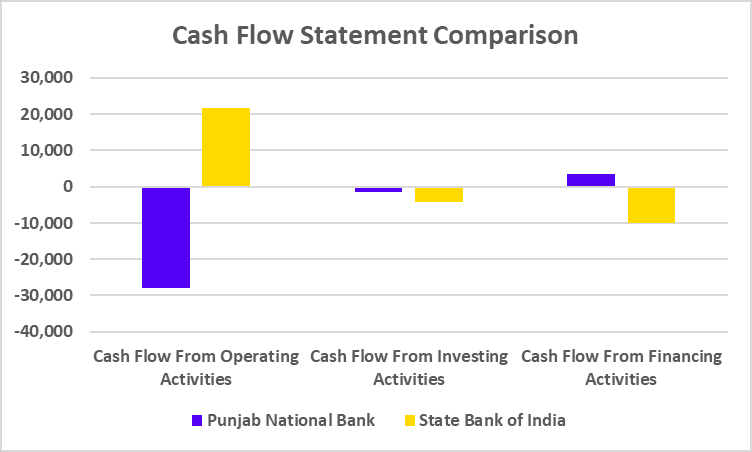
You put in a lot of effort, earned money, and decided to invest it in a public sector bank. However, you aren’t sure which bank to choose—the State Bank of India or Punjab National Bank.
In today’s blog post, we will compare the Punjab National Bank and the State Bank of India.
Punjab National Bank Overview
Lala Lajpat Rai and Dyal Singh Majithia, leaders of the Swadeshi Movement, established the bank in Lahore, Pakistan, in 1894. The bank relocated its headquarters to New Delhi after India’s independence, and it was nationalized along with thirteen other banks later in 1969. It bought Nedungadi Bank in 2003 and merged with the United Bank of India and Oriental Bank of Commerce in 2020 to become India’s second-biggest public sector bank. The bank has 12,645 ATMs, 10,092 branches in India, and two international branches as of September 2023. The Punjab National Bank offers a wide range of services, including credit cards, insurance, mutual funds, fixed deposits, home loans, personal loans, etc. The company caters to the needs of MSMEs, retail investors, and big corporations.
SBI Bank Overview
SBI is India’s largest public sector bank and a titan of the nation’s banking sector, with the largest market share. SBI is a large financial institution with almost 200 years of history. Its main office is in Mumbai. SBI was established when the Bank of Calcutta, the first joint stock bank in British India, was established in 1806. Three separate presidential banks (the Bank of Bengal, the Bank of Bombay, and the Bank of Madras) arose throughout British India. In 1921, the three presidential banks merged to form the Imperial Bank of India. The Imperial Bank of India was nationalized by the Indian government in 1955 and was renamed the State Bank of India. Later, SBI bought several commercial and state-affiliated banks. To improve efficiency, the State Bank of India merged with its five affiliated banks—State Bank of Bikaner and Jaipur, State Bank of Hyderabad, State Bank of Mysore, State Bank of Patiala, and State Bank of Travancore in 2017. Rural communities now have access to banking services due to SBI. SBI currently has a robust distribution network with 65,627 ATMs and 22,405 branches.
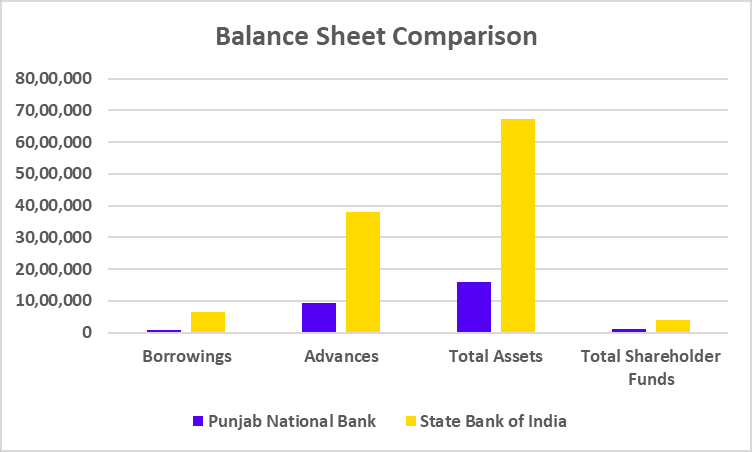
To sum up, the State Bank of India and Punjab National Bank are regarded as major players in the Indian banking sector. An investor can choose the ideal investment opportunity by being aware of the differences between the two. However, one should evaluate their risk tolerance and speak with an investment advisor before making any financial decisions.
S.NO.
Check Out These Interesting Posts You Might Enjoy!
Which bank, the State Bank of India or Punjab National Bank, has a higher market capitalization?
Compared to Punjab National Bank, the State Bank of India has a larger market capitalization.
Where is the headquarters of Punjab National Bank located?
The headquarters of Punjab National Bank is located in New Delhi.
Which bank, SBI or Punjab National Bank, is more profitable?
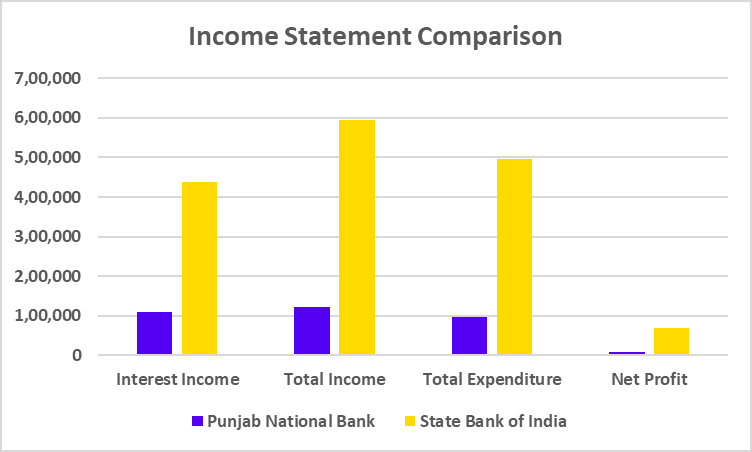
In FY 2024, SBI reported a profit of 68,224 crores, whereas Punjab National Bank reported a profit of 8,329 crores. This shows that SBI is the more profitable of the two.
How many branches does Punjab National Bank have?
Punjab National Bank has 10,092 branches throughout the country.Q5. Who is the chairman of the
State Bank of India?
As of 31 August 2024, Mr. Challa Sreenivasulu Setty is the chairman of the State Bank of India.
The IT sector in India is a global powerhouse, driven by a competitive landscape of companies that are leaders in technology and innovation.
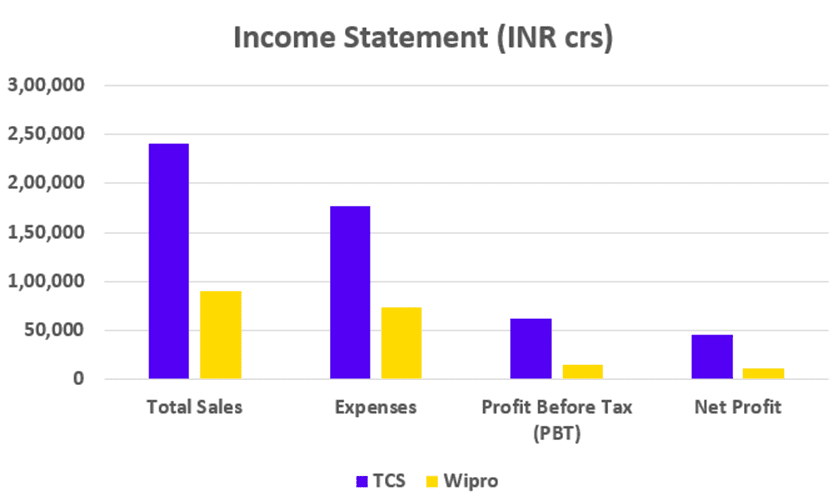
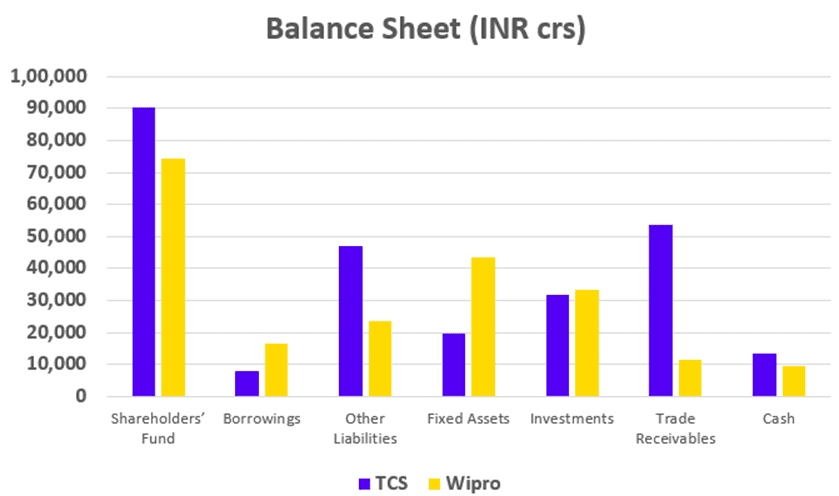
In this blog, we will compare two of India’s largest IT companies, Tata Consultancy Services (TCS) and Wipro, and discuss key insights, their financial performance, etc.
TCS Overview
Tata Consultancy Services (TCS), established in 1968, is a global IT services, consulting, and business solutions provider headquartered in Mumbai, India. The company is a division of Tata Group which is the largest multinational group in India. As of March 2024, the company employs more than 6 lakh employees, and 35% of the workforce is women.
The company offers a wide range of services, including software development, IT infrastructure services, cloud solutions, and enterprise applications. And it serves various industries, including banking, financial services, retail, telecommunications, healthcare, etc. Further, the company is known for its strong client relationships and robust service delivery models.
As of August 2024, TCS is the largest IT services company in India by market capitalization and revenue. Further, it consistently ranked among the top IT service providers globally. The company’s focus on innovation, quality, and customer satisfaction has earned it a stellar reputation in the IT industry.
Did You Know?
In 2004, TCS listed at the National Stock Exchange (NSE) and Bombay Stock Exchange with the largest IPO by a private sector company, raising an impressive USD 1 billion.
Wipro Overview
Wipro Limited, founded in 1945, is another major player in the Indian IT industry, headquartered in Bangalore, Karnataka. The company was established as a vegetable oil manufacturer and has transformed itself into a global IT services and consulting company.
It entered the IT sector in 1981 and has since diversified its offerings across various technology domains. It has a presence in over 66 countries and employs more than 2,50,000 people. Further, the company is known for its commitment to corporate social responsibility and ethical business practices.
The company provides IT services, including software development, business process outsourcing (BPO), cloud computing, digital transformation and much more. The company provide services to multiple industries such as banking, healthcare, energy, consumer goods, etc. Wipro’s global delivery model and emphasis on sustainability and innovation have positioned it as a key competitor in the global IT market.
Did You Know?
In 2000, Wipro grew to a one billion dollar company and was listed on the New York Stock Exchange.
In summation, the comparison between TCS and Wipro highlights that both companies are giants in the IT services industry, however, TCS has a clear edge in terms of profitability because of larger market capitalization.
However, Wipro is not lagging behind and remains a strong competitor with its global presence and focus on innovation. Investors can find value in both companies based on their preferences and risk tolerance. It’s advisable to consult with a financial advisor before making any investment decision.
S.NO.
Check Out These Interesting Posts You Might Enjoy!
Tata Consultancy Services (TCS) was founded in 1968.
What is the full form of TCS?
TCS stands for Tata Consultancy Services.
Who is the current CEO of Wipro?
Srini Pallia is the current CEO of Wipro. He joined the company in 1992 and previously held many leadership positions at the company, including President of Wipro’s Consumer Business Unit and Global head of Business Application Services.
Which company is more profitable: TCS or Wipro?
As of March 2024, TCS has a net profit of INR 46,099 crores compared to INR 11,112 crores of Wipro.
Which company has a larger market capitalization: TCS or Wipro?
As of August 2024, TCS has a market capitalization of around INR than 16.31 lakh crores and Wipro has a market capitalization of around INR 2.83 lakh crores.
You save a lot of money and put in a lot of work, but you need help determining where to keep it. It is only possible to retain some of your hard-earned savings at home; opening a bank account is your only option. You might be surprised to hear that banks where you have accounts allow you to invest in their business.
This blog post will compare the State Bank of India (SBI) and ICICI Bank.
SBI Overview
State Bank of India is the largest public sector bank in India and is a titan in the Indian banking landscape with a 1/4th share in the market. SBI is headquartered in Mumbai and holds a rich heritage of over 200 years.
The roots of SBI trace back to 1806 with the establishment of the Bank of Calcutta, the first joint stock bank in British India. Three separate presidency banks – Bank of Bengal, Bank of Bombay, and Bank of Madras emerged across British India. In the year 1921, the three presidential banks merged to form the Imperial Bank of India.
In the year 1955, the government of India nationalized the Imperial Bank of India and renamed it as State Bank of India. SBI later acquired various state-associated banks and commercial banks.
SBI has played an important role in bringing banking services to rural areas. Currently, SBI holds a strong distribution network of 22,405 branches and 65,627 ATMs.
ICICI Bank Overview
ICICI Bank is among the biggest banks in India’s private sector. The government of India established the Industrial Credit and Investment Corporation of India (ICICI) on 5 January 1955. As a division of ICICI Limited, ICICI Bank was founded in 1994. It made history by being the first Indian bank and firm to list on the New York Stock Exchange. ICICI and ICICI Bank combined to form a new financial organization to increase business efficiency. Following accusations against Chanda Kochhar, the managing director of ICICI Bank, in 2018 about inappropriate lending practices, Sandeep Bakhshi assumed the role of managing director. It was the first bank to provide contactless credit and debit cards.
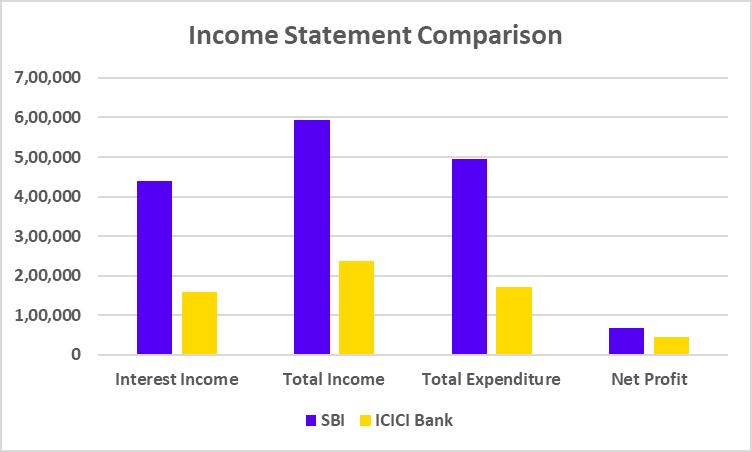
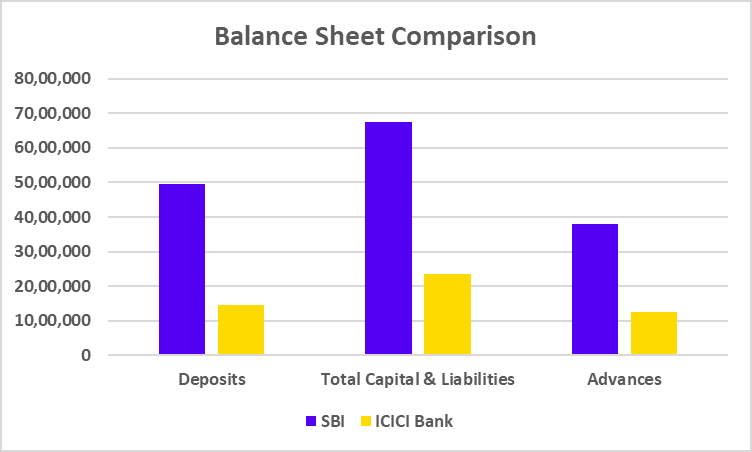
The comparison of SBI and ICICI Bank presented above leads us to conclude that while SBI has more net profit, ICICI Bank has a higher net profit margin. Although every bank has something special to offer, we always advise speaking with an investment expert before making investment decisions.
S.NO.
Check Out These Interesting Posts You Might Enjoy!
Which bank has a larger market capitalization: SBI or ICICI Bank?
ICICI Bank has a larger market capitalization than SBI as of 27 August 2024.
Which bank is more profitable: SBI or ICICI Bank?
SBI has a net profit of INR 68,244 crores compared to INR 45,007 crores for ICICI Bank for FY 2024.
Who is the CEO of ICICI Bank?
Sandeep Bakhshi is the MD and CEO of ICICI Bank.
What is the full form of ICICI Bank?
ICICI stands for Industrial Credit and Investment Corporation of India.
How was the State Bank of India formed?
State Bank of India was established in 1955 after the government of India nationalized the Imperial Bank of India and renamed it as State Bank of India.
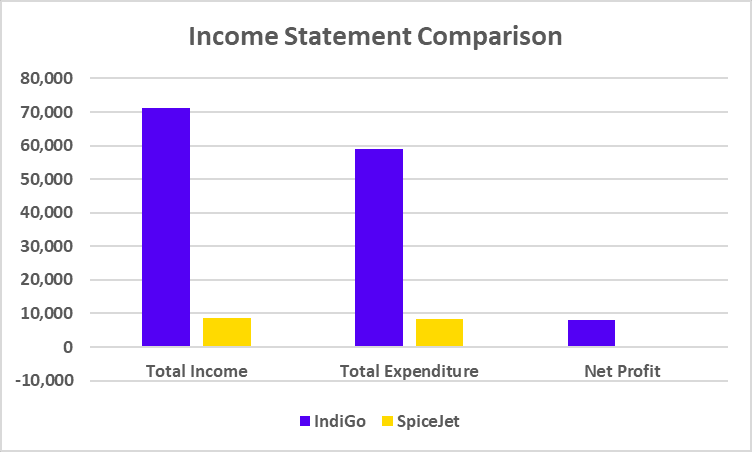
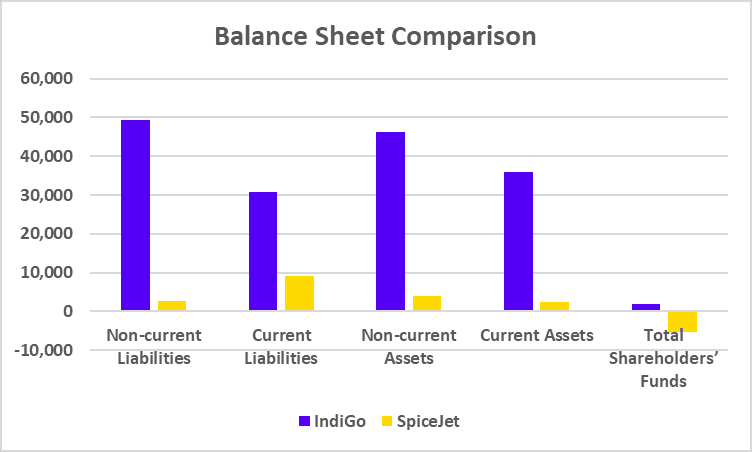
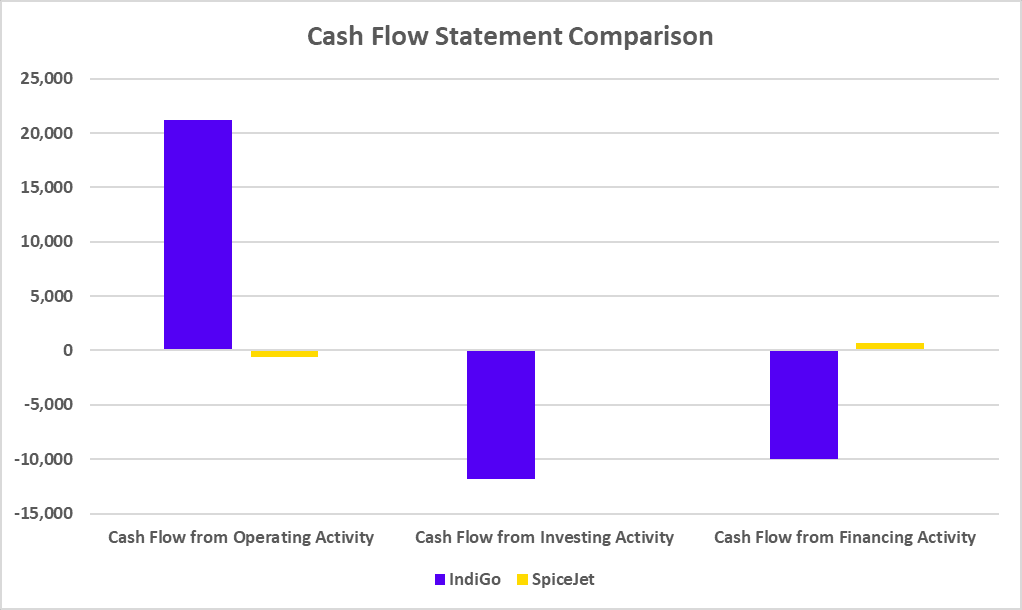
IndiGo and SpiceJet have been important in shaping India’s aviation industry with their unique business models and operational strategies.
In today’s blog, we will take a closer look at their development and growth to gain valuable insights into the financial health of these two aviation giants.
IndiGo – An Overview
The largest and most popular passenger airline in India is InterGlobe Aviation Ltd., better known as IndiGo. Rakesh Gangwal, an Indian entrepreneur living in the US, and Rahul Bhatia of InterGlobe Enterprises established the business as a private company in 2006. The company was originally incorporated in Lucknow in 2004, and in 2006, it was converted into a public limited company, and the name was changed to InterGlobe Aviation Limited. It commenced operations in August 2006 with a fleet of 100 Airbus A320-200 aircraft. IndiGo has a strong record for punctuality, ensuring reliable travel experiences.
It operates over 2000 daily flights to 122 destinations, including 88 domestic and 34 international locations. With a fleet of over 370 aircraft, IndiGo ensures excellent connectivity and convenience for its passengers. The primary source of income for IndiGo is passenger fares.
The airline has the capability to attract a decent number of passengers through its competitive pricing and extensive network and maximizes its revenue by offering ancillary services such as baggage fees, seat selection, in-flight meals, and priority boarding. It also transports cargo, which contributes to its overall revenue.
SpiceJet – An Overview
SpiceJet is a prominent low-cost airline in India that is well-known for its affordable fares and extensive network. The airline was established in 2005 and has grown rapidly, becoming a major force in the Indian aviation sector. Originally founded as an air taxi provider in 1994, the company was known as ModiLuft. The business was bought and rebranded as SpiceJet by Indian businessman Ajay Singh in 2004.
The airline formally began operations with two Boeing 737-800 aircraft in May 2005. In terms of market share, it was ranked third among low-cost carriers in India by 2008, behind IndiGo and Air Deccan. SpiceJet provides various services, including discount coupons, travel insurance, tour packages, and flight reservations.
(All the above data is of the year ended March 2024)
Conclusion
IndiGo and SpiceJet are both major players in India’s aviation industry. However, there are differences in their strategies and operations. IndiGo is recognized as the dominant airline, with a strong focus on punctuality, customer service, and an extensive network. Standardizing its fleet to increase operational efficiency has been a key factor in its success. On the other hand, SpiceJet has followed a highly aggressive expansion strategy, capitalizing on its extensive network and competitive pricing to attract a significant customer base. While both airlines share a common goal of providing affordable air travel, their distinct approaches have led to different market positions. It is advised to consult a financial advisor before investing.
S.NO.
Check Out These Interesting Posts You Might Enjoy!
India is one of the world’s fastest-growing economies and is facing substantial challenges in managing its energy requirements. With a population of over 140 crore, the Government of India is making all the necessary efforts to meet the country’s rising energy needs. Two government-owned businesses, NHPC and NTPC, are responsible for energy production in India.
In today’s blog post, we’ll compare NTPC and NHPC.
NHPC Overview
The NHPC was established in 1975 by the Government of India as a division of the Ministry of Power. The company’s primary goal is to increase the nation’s hydropower output. The company has operations in Jammu & Kashmir, Uttarakhand, Arunachal Pradesh, Sikkim, etc. The corporation uses wind energy and solar energy, among other sources, to generate electricity.
In 2008, the company went public on the Indian Stock Exchange. With a hydro share of 6971.20 MW as of March 2024, the corporation has a total capacity of 7144.20 MW or 14.85% of the nation’s hydro capacity. The organization is always concentrating on using renewable energy sources to generate electricity. It also develops several infrastructure types, including tunnels, dams, and powerhouses. The company’s main office is located in Faridabad.
NTPC Overview
In response to the country’s growing need for power, the Indian government established the firm in 1975 as a public-sector corporation. The company used coal to produce electricity and is now focusing on utilizing renewable energy sources. Due to its substantial contribution to the nation’s electricity consumption, the business became India’s largest power utility in 1990. The company launched an initial public offering (IPO) in 2004 and became listed on the Indian Stock Exchange.
The corporation is diversifying its sources of electricity generation, including nuclear, solar, wind, and hydroelectric power. The firm has 94 facilities with a combined capacity of 76,134 MW, of which 52 are owned and run by NTPC, and 43 are in joint ventures or subsidiaries. The company plans to achieve a 130 GW capacity by 2032. The business produced 400 billion units of power in 2023–2024. The organization’s headquarters is in New Delhi.
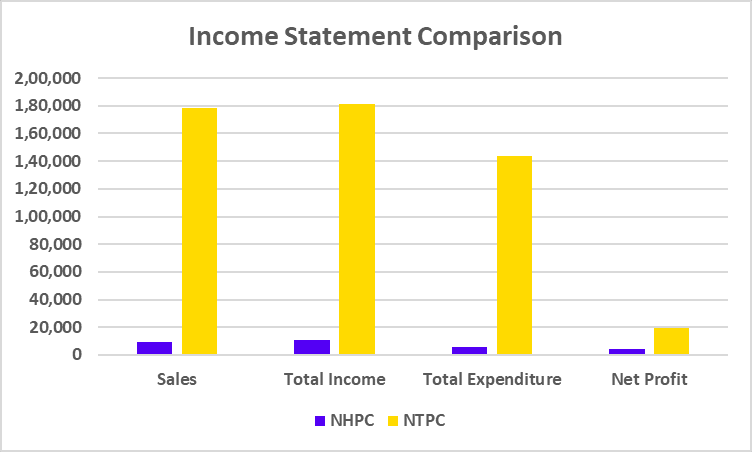
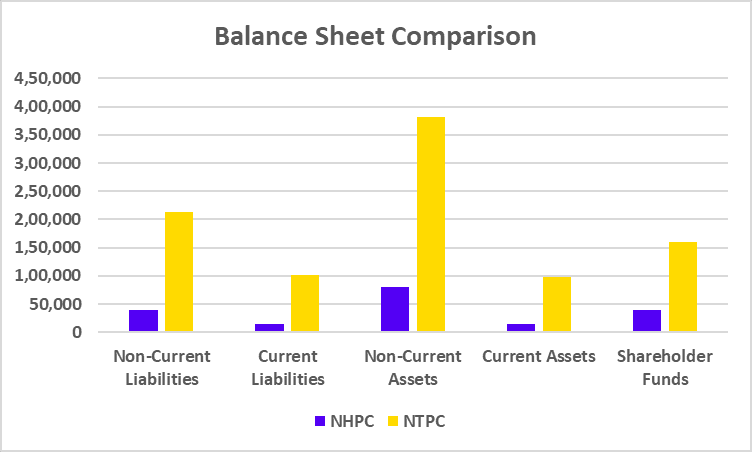
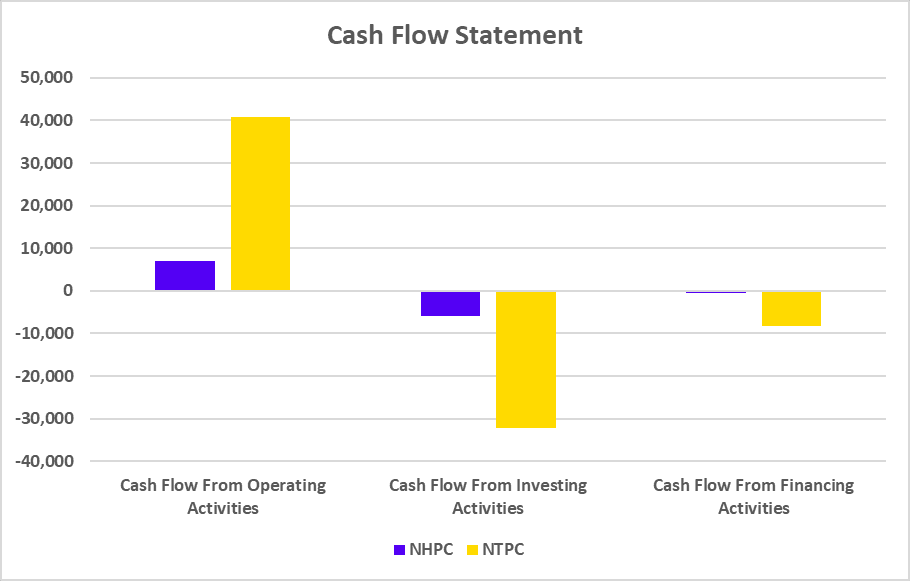
In conclusion, both businesses produce power, but their methods vary: NHPC primarily draws its energy from hydroelectric sources, while NTPC draws its energy from more traditional sources like coal, gas, etc. In the fiscal year ending in 2024, both businesses reported profits and are expanding their operations in the renewable energy market. Given their bright futures, an investor should take into account the risk profile of these companies or consult a financial advisor before making any investment decisions.
S.NO.
Check Out These Interesting Posts You Might Enjoy!
Which firm, NHPC or NTPC, has a higher market capitalization?
The market capitalization of NTPC is more than that of NHPC.
What is the full form of NTPC and NHPC?
National Hydroelectric Power Corporation is abbreviated as NHPC, and the full name of NTPC is National Thermal Power Corporation Limited.
Which company is more profitable: NTPC or NHPC?
For FY 2024, NTPC generated a net profit of 19,696 crores, while NHPC reported a net profit of 4,023 crores, demonstrating that NTPC is more profitable.
What are NTPC and NHPC’s primary business activities?
While NTPC is a well-known player in the thermal power (oil, gas, and coal) generation industry, NHPC is primarily focused on hydroelectric power generation and is regarded as a major player in this area.
Which company has a more diversified business model among NTPC and NHPC?
Compared to NHPC, which mostly concentrates on hydroelectric power, NTPC has a more diverse business strategy because it generates power from various sources, including coal, gas, hydroelectric, solar, wind, etc.
Open Free Demat Account
Join Pocketful Now
You have successfully subscribed to the newsletter
There was an error while trying to send your request. Please try again.