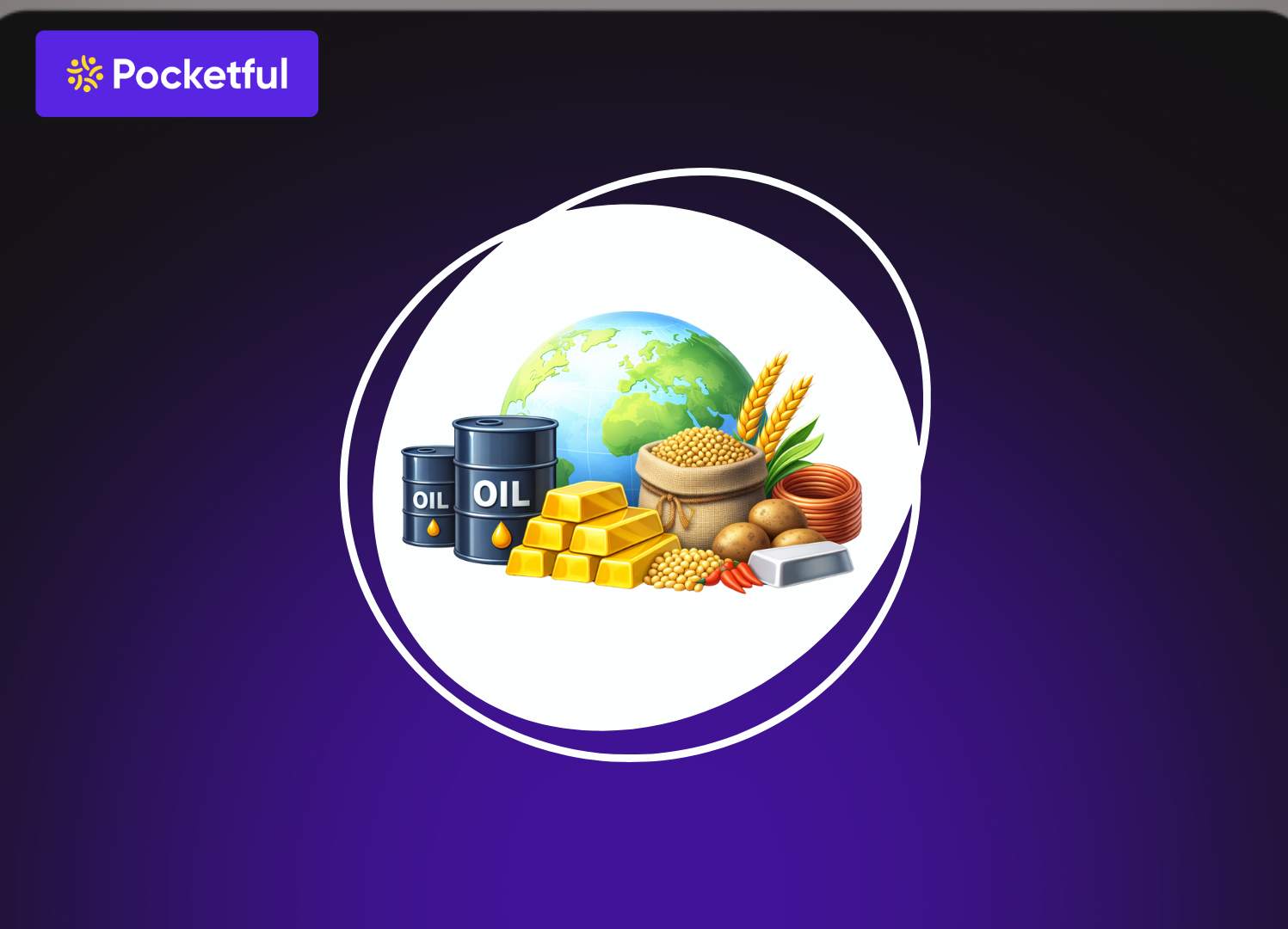
The global economy is built on the movement of raw materials. These materials, known as commodities, are the basic building blocks for everything humans consume. From the fuel that powers vehicles to the food served at the dinner table, these assets are essential.
A commodity is defined as a basic good used in commerce that is interchangeable with other goods of the same type. This quality is known as fungibility. It means that one barrel of a specific grade of oil is basically the same as another, regardless of which company produced it.
At the same time, commodity markets serve as a primary tool for price discovery. By bringing together buyers and sellers from every corner of the planet, these markets establish a fair price based on real-time supply and demand.
What Defines the Most Traded Commodities in World
1. Trading Volume versus Market Value
Trading volume refers to the total number of contracts or units exchanged during a specific time and the total price of all those units combined decides the market value. Items like diamonds, have high value but are not traded much as they are not easily standardized or traded on a central exchange.
High liquidity means there are so many buyers and sellers that a person can enter or exit a trade quickly without causing a major change in the price.
2. The Influence of Supply and Demand
The balance between how much of a commodity is produced (supply) and how much is needed (demand) is the primary driver of trade. When factories are busy and people are traveling, the demand for oil and gas rises. On the other hand a drought or a flood in a major producing region can significantly reduce the supply, causing a spike in trading as buyers want to get secured for their needs.
Key Commodity Exchanges
| Exchange Name | Primary Commodities | Global Location |
|---|---|---|
| Chicago Mercantile Exchange (CME) | Grains, Livestock, Gold | United States |
| New York Mercantile Exchange (NYMEX) | Crude Oil, Natural Gas | United States |
| London Metal Exchange (LME) | Copper, Aluminium, Zinc | United Kingdom |
| Intercontinental Exchange (ICE) | Brent Crude, Coffee, Sugar | Europe/Global |
| Multi Commodity Exchange (MCX) | Gold, Silver, Crude Oil | India |
Primary Categories of Commodities
1. Energy Commodities
This category is the most active part of the market. It includes crude oil and natural gas, which power the transport, heating, and electricity needs of the world. Because every nation needs energy, these markets have the highest trading volumes.
2. Precious Metals
Gold and silver are the leaders in this category. While they are used in jewelry and industry, they are primarily traded as “safe-haven” assets. During times of war or high inflation, investors buy these metals because they tend to hold their value better than paper money.
3. Industrial Metals
These are also known as “base metals”, in this commodities like copper, aluminium, and zinc. These materials are basic raw materials required for building infrastructure from houses, to cars, and even creating electronic gadgets. The world is moving towards clean energy and this requires metals like copper that are becoming important for building solar panels and wind turbines.
4. Agricultural Commodities
In this category products that are grown by the farmers are included, such as corn, jute, wheat, soybean, and coffee. These products are known as grains or softs. These products come under the basic necessity products for the global population and they are highly influenced by weather patterns and government policies related to trade and agriculture.
Read Also: Best Commodities to Trade in India
Top 10 Most Traded Commodities in the World
1. Crude Oil
This is one of the most important & traded commodities on the globe. It is often known as the lifeblood of the entire economy as it fuels everything related to transportation and acts as raw material for chemicals, paints, plastics and even fertilizers.
Oil is an essential need for every country but only few countries produce it, creating a global trade network. There are various factors that affect the price of crude oil and OPEC (Oil Petroleum Exporting Countries) decided the production.
| Country | Status | Share of Global Production |
|---|---|---|
| United States | Top Producer | Approx 22% |
| Saudi Arabia | Major Exported | Approx 11% |
| Russia | Major Producer | Approx 11% |
| China | Top Consumer | Approx 15% |
| India | Top Consumer | Approx 5% |
2. Gold
This is one of the most traded commodities along with highest liquidity in the exchange trading. This commodity is mainly kept as a financial asset and highly relied on by the investors and banks as it is a safe haven investment.
India and China are the largest consumers of physical gold, primarily for the jewelry market.
3. Natural Gas
Natural gas is one of the most volatile and actively traded commodities in the market. This is due to increasing use of cleaner energy and reduction in carbon emission by many countries. Also, natural gas can be seen as an alternative to coal.
The top producing countries are the United States, Russia and Iran. The globalization expanded with increase in Liquified Natural Gas (LNG) consumption making it easier to transport through sea routes and tankers.
4. Brent Crude
Brent Crude is a type of oil that is used as a standard (benchmark) to set oil prices around the world. Brent is mainly used to set oil prices in Europe, Africa, and the Middle East. Extracted in the North Sea, located between the United Kingdom and Norway.
Since it is produced in the sea, it is easier to transport by ships (tankers) to different countries. Making it flexible to trade compared to WTI oil which is produced inland in the US.
5. Silver
It is used in both jewelry and industrial metals. It is the second most traded precious metal after gold.
It is bought by the masses as an investment and half of its demand comes from industries. It is one of the best electricity conductors and used in solar panels, medical equipment, and electronics. This dual nature means its price is affected by both the general mood of the financial markets and the health of the manufacturing sector.
6. Copper
It is a highly important metal for the industries and used in construction, electrical wiring, and the pipes in our homes.
Investors have nicknamed it as “Dr. Copper” because the price of copper is an excellent indicator of the health of the global economy. When copper prices go up, it usually means that factories are producing more and building projects are increasing. Today, copper is also a key part of the “green revolution” because electric vehicles and wind turbines require much more copper than traditional cars and power plants.
| Producing Country | Global Role |
|---|---|
| Chile | Top Producer |
| Peru | Major Producer |
| China | Top Refiner and Consumer |
| United States | Significant Producer |
7. Corn
Corn is the most traded agricultural commodity in terms of volume. It is a versatile crop used for food, livestock feed, and industrial products.
A major factor in corn trading is the biofuel industry. In the United States and Brazil, a large portion of the corn harvest is turned into ethanol, which is mixed with gasoline for cars. This means corn prices are often linked to energy prices. If oil becomes more expensive, the demand for ethanol rises, which then pushes up the price of corn.
8. Wheat
Wheat is the ultimate staple of the human diet. It is used in bread, pasta, and many other foods that are consumed globally. Wheat price is a matter of global food security.
Shortages of wheat can lead to food inflation and even political unrest in developing nations. The market for wheat is highly sensitive to weather events like droughts in Russia or the United States, as well as export restrictions imposed by governments.
9. Coffee
Coffee is one of the few “soft” commodities that consistently ranks among the most traded in the world. It is produced primarily in developing nations in the “Bean Belt” and consumed mostly in developed nations.
There are two main types of coffees Arabica and Robusta. Arabica is good in quality and is used as the benchmark for traders. Brazil and Vietnam are the top exporters, and any frost or heavy rain in these regions can cause coffee prices to jump overnight.
10. Soybeans
Soybeans are becoming the main part of global agriculture. This is used in producing soybean food for animal feed, biofuels and even cooking oil.
The soybean market is highly dependent upon the trade between America and China. Brazil and the United States are the top producers, while China is the top importer as it has massive pig and poultry industries. The growing Asian population will increase the demand for soybeans to rise continuously.
Read Also: Top Major Commodity Exchanges in India
Key Factors Driving Commodity Prices
- Geopolitical Events: Wars, elections, and diplomatic tensions are the biggest drivers of short-term price moves. Even the threat of a war can cause oil and gas prices to spike as traders worry about a potential supply cut.
- Supply Chain Disruptions: Transportation is an important and complex factor consisting of ships, trucks, and trains. Global tensions have increased freight costs (longer routes) and delayed deliveries, making the commodity more expensive for end users.
- Weather and Climate Change: Weather is a major factor as a single event of drought or unexpected rain can vanish the crop. And due to climate change these events have increased resulting in high price volatility of products like coffee, wheat, and corn.
- Currency Fluctuations: Commodities are mostly traded in the U.S dollar and strengthening of the dollar makes the buying countries pay more for the same quantity. Making it more expensive for international buyers which can decrease the demand.
- Inflation and Interest Rates: Commodities can be hedged against inflation as rising inflation prices can increase the value of physical items like gold and oil. Also if the interest rates are high companies have to pay higher interest for borrowing money to stock commodities leading to decrease in prices.
How to Trade Commodities in India
- Futures Contracts: A futures contract is an agreement to buy or sell a commodity at a set price on a future date. You do not need to pay the full value of the commodity. Instead, you pay a “margin,” which is a small percentage of the total price.
- ETFs and Mutual Funds: If you are not looking for complexities you can invest in Exchange-Traded Funds (ETFs) or Mutual Funds. You can buy units of these funds through your normal Demat account, and the price of the units will move along with the price of the metal.
- Spot Trading: Spot trading is the act of buying or selling a commodity for immediate delivery, local jewelers use this often to buy. But for other commodities, spot trading is mainly used by businesses that need the physical goods for their factories.
- Commodity Stocks: Another indirect way to trade is to buy shares of companies that produce commodities. When the price of the underlying commodity rises, the profits of these companies usually go up, which can lead to a higher share price.
Risks Involved in Commodity Trading
- Price Volatility: A single news or unexpected weather can highly fluctuate the price.
- Leverage Risks: Leverage can increase your profits but it also multiplies your losses making you lose more than the initial investment.
- Political and Environmental Risks: Changes in government policies can suddenly change the price of a commodity, even natural disasters can disrupt supply creating price swings.
- Expiry Risk: Futures contracts have an expiry date and positions must be closed in time or shift to a new contract before expiry.
Read Also: Best Books on Commodity Trading
Conclusion
Understanding the 10 most traded commodities and the factors that drive them helps you to get a clear picture about the trade of commodities across the globe. Learning this information will help you in making better investment decisions.
For more market news and insights, download Pocketful – offering users zero brokerage on delivery trades and an easy to use platform designed for both beginners and experienced investors.
Frequently Asked Questions (FAQs)
Which is the most traded commodity in the world?
Crude oil is the most traded commodity in the world by both volume and value.
Can I start commodity trading with a small amount of money?
Yes, in India, you can start with relatively small amounts by trading “Mini” or “Micro” contracts on the MCX.
Do I need a Demat account for commodity trading?
If you are trading futures and options on an exchange like the MCX demat is required but investing in Gold ETFs or mutual funds a standard Demat account is required.
Why are oil and gold prices often linked?
Oil and gold are both priced in U.S. Dollars and during war or global instability, the prices of both often rise because oil supply is threatened and gold is bought as a safe-haven asset.
Is commodity trading safer than stock trading?
Commodity trading is generally considered riskier than stock trading because it is more volatile and involves higher levels of leverage.