Trading in the indian stock market can be a thrilling experience. This is where multi-leg options strategies come into the picture. Instead of buying just one option, we combine buying and selling to protect our capital. Spreads are popular because they help you manage your risk right from the start.
If you are exploring options trading, you will quickly come across two very famous strategies. We are talking about the bull call spread and the bear put spread. If you are looking to deploy a bull call spread india strategy, you are taking a smart step toward safer trading.
Let us dive deep into how they work and understand which one you should pick based on market conditions.
Meaning of Bull call spread and Bear put spread with example
A Bull Call Spread is an options strategy used when you have a moderately bullish view of the market. You expect the stock or index to go up but you do not expect a drastic jump. To build this spread, you buy a call option at a lower strike price and sell a call option at a higher strike price. Both options must have the same expiry date.
Selling the higher strike call gives you a premium.which helps you to reduce the total cost of buying. Your loss is strictly limited to the net premium you pay upfront.
Let us look at a simple example using the Nifty 50 index to make things crystal clear. Assume Nifty is currently trading at 24,400 points.
Example of a Bull Call Spread
You expect Nifty to rise slightly to 24,600. You buy a 24,400 Call for Rs. 200. At the same time, you sell a 24,600 Call for Rs. 80.
- Premium Paid: Rs. 200
- Premium Received: Rs. 80
- Net Cost (Max Loss): Rs. 120 per unit
| Scenario | Details | Value |
|---|---|---|
| Max Loss | Nifty stays below 24,400 | You lose the Rs. 120 paid. |
| Max Profit | Nifty rises above 24,600 | (200 strike gap – 120 cost) = Rs. 80 profit. |
| Breakeven | 24,400 + 120 cost | Profit starts above 24,520. |
On the other hand, a Bear Put Spread is used when you have a moderately bearish view. You expect the market to fall steadily over the coming days. Here, you buy a put option at a higher strike price and sell a put option at a lower strike price.
Just like the bullish version, both put options must expire on the same date. The premium you receive from selling the lower put reduces the cost of your purchased put. Your maximum loss is capped at the exact amount you paid to enter the trade.
Example of a Bear Put Spread
You expect Nifty to fall slightly to 24,200. You buy a 24,400 Put for Rs. 180. At the same time, you sell a 24,200 Put for Rs. 70.
- Premium Paid: Rs. 180
- Premium Received: Rs. 70
- Net Cost (Max Loss): Rs. 110 per unit
| Scenario | Details | Value |
|---|---|---|
| Max Loss | Nifty stays above 24,400 | You lose the Rs. 110 paid. |
| Max Profit | Nifty falls below 24,200 | (200 strike gap – 110 cost) = Rs. 90 profit. |
| Breakeven | 24,400 – 110 cost | Profit starts below 24,290. |
Bull call spread vs Bear put spread
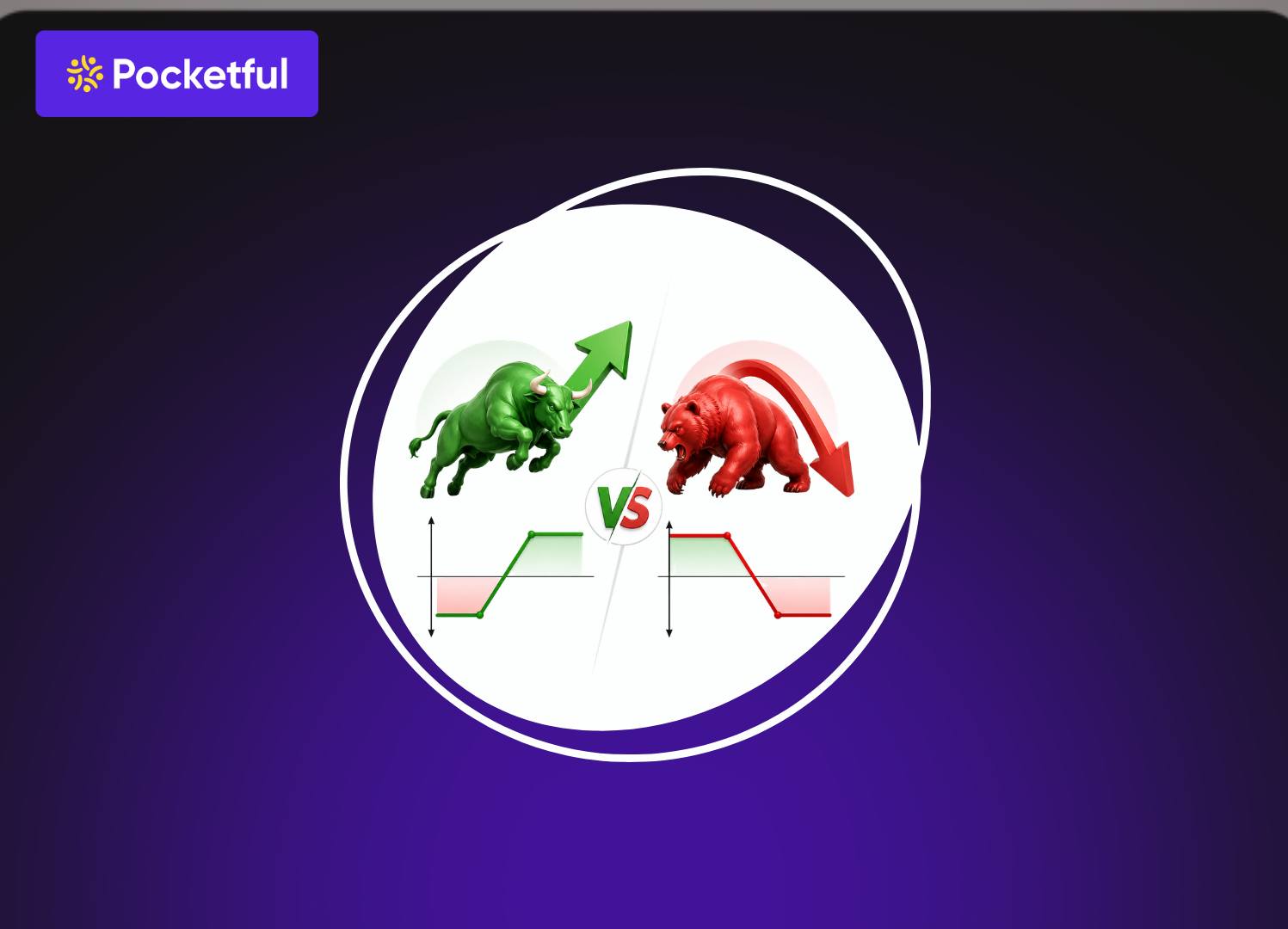
When we compare these two strategies, we find that they are actually mirror images of each other. They both limit your maximum loss and cap your maximum profit.
The biggest difference lies in your market expectation. You use a bull call spread when you want the market to go up. You use a bear put spread when you want the market to go down.
Another minor difference is how options are priced in the real market. Put options usually cost a little more than call options because big investors buy them to protect their portfolios. Because of this, the premium you collect from selling the lower put in a bear put spread is often quite attractive.
Here is a quick comparison table to help you understand the core differences clearly.
| Feature | Bull Call Spread | Bear Put Spread |
|---|---|---|
| Market View | Moderately Bullish | Moderately Bearish |
| Leg 1 (Buy) | Buy a lower strike Call | Buy a higher strike Put |
| Leg 2 (Sell) | Sell a higher strike Call | Sell a lower strike Put |
| Max Risk | Limited to net premium paid | Limited to net premium paid |
Read Also: Cash Market vs F&O: Key Differences
Which strategy to use when
Choosing the right strategy depends entirely on where you think the market is heading. Trend identification is the most important skill for an options trader. If the broader market is rising and there is positive news, the bull call spread is a great choice.
If the market is showing weakness and stock prices are falling, you should look at the bear put spread. We also need to look at something called implied volatility. This tells us how expensive options are at the moment.
If you want to trade these strategies smoothly, you need a powerful platform like Pocketful.
Advantages of Bull Call Spread vs Bear put spread
Some of the main advantages are mentioned below
- Defined Risk You know exactly what your maximum loss is right from the start. The most you can lose is just the money you paid to set up the trade even if the market suddenly drops.
- Lower Upfront Cost It is cheaper to set up. When you sell the higher strike call it pays for some of the cost of the lower strike call you bought.
- Protection Against Time Decay Time passing does not hurt you as much. The option you sold loses value over time and that makes up for the value lost on the option you bought.
- Good for Moderate Trends It works best if you think the stock will just go up a normal amount instead of having a huge sudden spike.
Disadvantages Bull Call Spread vs Bear put spread
Every strategies have a bad side the major limitation of these spreads are explained below
- Capped Profits Your profits are limited. If the stock shoots way up you will not make any extra money beyond your higher strike price.
- Requires Accurate Timing Timing is really important. The stock has to go past your breakeven point before the expiration date or you will not make a profit.
- Risk in Flat Markets If the market does nothing you lose out. If the stock stays flat both options expire worthless and you lose the money you originally paid.
- Extra Trading Costs You have to pay a bit more in fees since you are doing two trades at once.
Read Also: Straddle vs Strangle: Key Differences
Conclusion
A bull call spread and a bear put spread give you the power to benefit from market moves while keeping your hard earned capital safe.
Remember, successful trading is all about managing your risk and protecting your downside. Spreads teach you discipline because they force you to accept realistic profits. They are the perfect tools for steady and consistent growth.
Pocketful is the platform built specifically for options traders. It gives you access to an advanced option chain and lets you place customizable basket orders directly from it with a very small fee of just Rs 20 per order.
Frequently Asked Questions (FAQs)
What is the meaning of a Bull Call Spread and a Bear Put Spread?
A bull call spread is a strategy where you buy a lower strike call and sell a higher strike call to profit from a rising market. A bear put spread involves buying a higher strike put and selling a lower strike put to profit from a falling market.
What are the main benefits of using these spreads?
The biggest benefit is that your maximum loss is strictly capped at the net premium you pay. and they protect your trade from the negative effects of time decay.
How do I decide which strategy to use?
You should base your decision on your market view. Use a bull call spread if you expect the stock or index to go up steadily and vice-versa.
Can I lose more money than I invested in these strategies?
No, you cannot. Your maximum risk is known before you enter the trade, and it is strictly limited to the net amount you paid to execute the spread.
How can I easily execute these spreads in the market?
To execute these spreads smoothly, you need a platform that supports basket orders. Platforms like Pocketful allow you to execute both legs of the spread at the same time directly from the option chain.