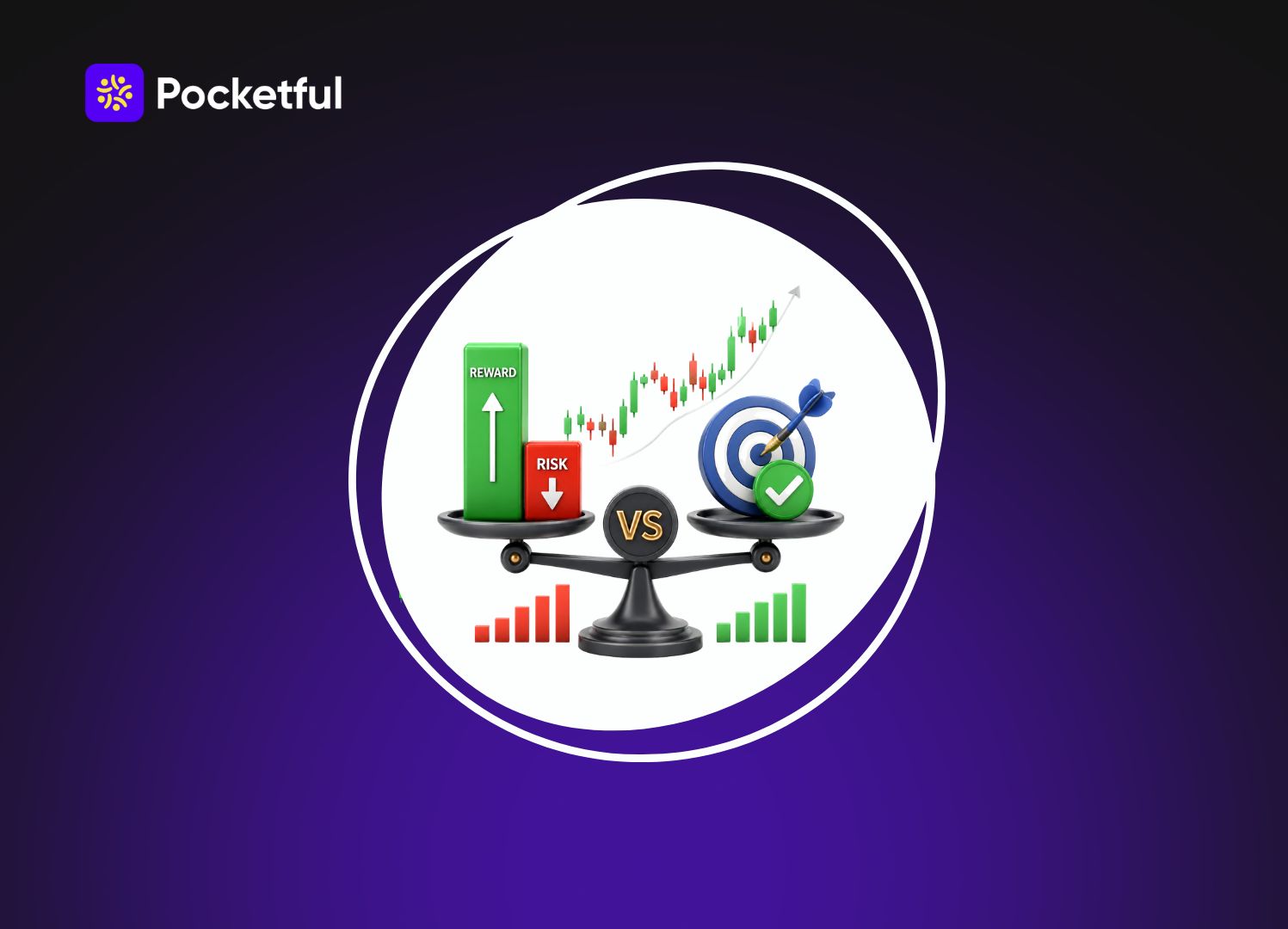
Many new guys think to win, you must predict market perfectly every time. Have you ever thought why some people make money in markets even if they are wrong half of the time.They waste hours finding a magic trick that never fails. But the truth is very different. You do not need to be right always to make a solid portfolio. In fact, running after perfection can give you big losses. What you truly need is smart balance. Today, we will see the real secret behind smart trading. We will check how managing potential losses against potential gains is way more important than guessing the right direction every single time.
What exactly is Accuracy and Risk to Reward?
Let us understand two main pillars of trading. First one is accuracy. In simple words, accuracy means your win rate. If you take ten trades and six make money, your accuracy is 60 percent. Most beginners run behind a very high accuracy rate.
The second pillar is the risk to reward concept. This simply means how much money you are ready to lose compared to how much you expect to win. For example, if you risk ₹1,000 on a trade to make a profit of ₹2,000, your risk reward ratio is 1:2.
When we compare risk to reward vs accuracy, a clear picture comes out. High accuracy feels very good for the mind. But a good setup for risk and reward is what actually saves your capital in the long run. You can be wrong more times than right and still come out in profit.
Decoding Trading Accuracy: Mathematical breakdown
Let us look at some math to understand this better. We will check two practical examples which happen daily in the markets.
High Accuracy, Poor Risk-to-Reward (The Retail Trap)
Many new traders get caught in this trap. They book small profits fast but hold on to losing trades hoping it will bounce back. Imagine a trader winning 80 percent of time. His accuracy is amazing. But, he wins ₹2,000 on a good trade and loses ₹10,000 on a bad trade.
If he does 10 trades, he wins 8 times making ₹16,000. But he loses 2 times and loses ₹20,000. Even with high accuracy, he ends up taking home a net loss of ₹4,000.
Low Accuracy, Strong Risk-to-Reward (Professional Model)
Now, let us see how professional traders do it. They are very fast to cut their losses. Imagine a pro trader who wins only 40 percent of time. He wins ₹10,000 on a good trade but loses only ₹4,000 on a bad trade.
In 10 trades, he wins 4 times making ₹40,000. He loses 6 times and loses ₹24,000. Even with low accuracy, he takes home a solid profit of ₹16,000. This proves a trader with average accuracy but strong risk control can remain profitable.
How to Get Breakeven in Risk to Reward
Before you place any trade, you should know your breakeven point. This is the minimum win rate you need so that you do not lose any money. Here are a few points on how it works:
- If you have a bigger reward for your risk, you need fewer winning trades to stay safe.
- The breakeven point drops as your reward goes up. For instance, a 1:2 ratio only needs a 33.3 percent win rate to break even.
Below is a cheat sheet table based on standard market models. It shows when you make a loss, when you break even, and when you make a profit based on different win rates.
| Risk : Reward | 20% Win Rate | 30% Win Rate | 40% Win Rate | 50% Win Rate | 60% Win Rate |
|---|---|---|---|---|---|
| 1:1 | LOSS | LOSS | LOSS | BREAK EVEN | PROFIT |
| 1:2 | LOSS | LOSS | PROFIT | PROFIT | PROFIT |
| 1:3 | LOSS | PROFIT | PROFIT | PROFIT | PROFIT |
| 1:4 | BREAK EVEN | PROFIT | PROFIT | PROFIT | PROFIT |
| 1:5 | PROFIT | PROFIT | PROFIT | PROFIT | PROFIT |
Option Buying Case Study
Let us look at a real life case study on option buying. Option buying is tricky because time acts against you. We have two traders, A and B. Both start with ₹10 lakh in capital. Both follow moderate risk practices and risk ₹20,000 per trade.
Trader A likes to book profits early. He aims for a ₹10,000 profit target, but the risk he takes is ₹20,000. His setup gives a poor ratio of 2:1. Because of this bad setup, Trader A needs a huge 67 percent win rate just to survive.
Trader B is smarter with his approach. He sets a higher profit target of ₹40,000 while keeping the same risk of ₹20,000. This gives Trader B a strong 1:2 setup, meaning his reward is double his risk. Thanks to this, Trader B only needs a 34 percent accuracy to stay viable. He also operates under much less psychological pressure.
Read Also: Risk-Reward Ratio & Position Sizing in Trading
Benefit of using risk to reward ratio
Here are the top five benefits of strictly following a good risk setup:
- Protects your capital: It shields your trading account from sudden catastrophic market drops.
- Keeps you profitable long term: You can secure long-term profitability even if your win rate is lower than 50 percent.
- Builds consistency: It creates a disciplined and consistent approach to your daily trading.
- Forces you to pick quality trades: It ensures you only focus on opportunities where the potential profit clearly outweighs the potential loss.
Why Risk to Reward Reduces Stress
Trading can be a very stressful journey if you are always afraid of being wrong. Market psychology plays a huge role in your success. Having a strong setup solves many mental problems. Here is why it reduces stress:
- Removes the pressure to be perfect: You do not have to guess right every time. You can comfortably accept losses because they are small.
- Control your emotions: When your risk is small, you don’t panic or get greedy. Soft emotions like fear and overconfidence are kept in check.
- Improves focus: You only take trades that offer a big reward. This helps you ignore bad trades and wait patiently for the right entries.
Conclusion
In the end, both things matter in their own way. Having good accuracy is great, but combining it with a smart risk setup makes you a truly peaceful investor. If you are looking for a smooth investing experience with powerful tools, you can explore Pocketful. It provides smart user interface. It has advanced feature of scalping where you can set your stop loss and target price very fast which helps investor to achieve its idol Risk to reward ratio.
| S.NO. | Check Out These Interesting Posts You Might Enjoy! |
|---|---|
| 1 | Best Option Selling Strategy in India |
| 2 | Trade Breakouts with Options Without Overpaying IV |
| 3 | Option Buying vs Option Selling: Key Differences |
| 4 | Why Option Buyers Lose Money in Trading |
| 5 | Supply and Demand Trading Strategy |
Frequently Asked Questions (FAQs)
What is the meaning of a risk to reward ratio?
It measures the potential loss compared to the potential profit of a trade. A 1:2 setup means risking ₹1 to make ₹2.
What is trading accuracy?
Accuracy is your win rate. It shows the percentage of your trades that are profitable out of the total trades taken.
What are the benefits of a strong risk setup?
It protects your capital and keeps you profitable even if your win rate is less than 50 percent. It also reduces trading stress.
How to use this concept effectively?
Decide your stop loss and profit target before taking a trade. Make sure your potential profit is always bigger than your potential loss.
Is accuracy more important than risk management?
No. A trader with average accuracy and strong risk control can stay profitable. But high accuracy with bad risk control will eventually fail.