Stock markets move at a very high speed today. Millions of price changes happen across screens every single second. Human eyes simply cannot track all this fast moving data manually. We often find ourselves overwhelmed by endless charts and news updates. This is exactly where modern technology steps in to save the day. Smart computer programs can read massive amounts of information instantly. Let us understand how it actually works.
What AI Optimized Trading Actually Means in 2026
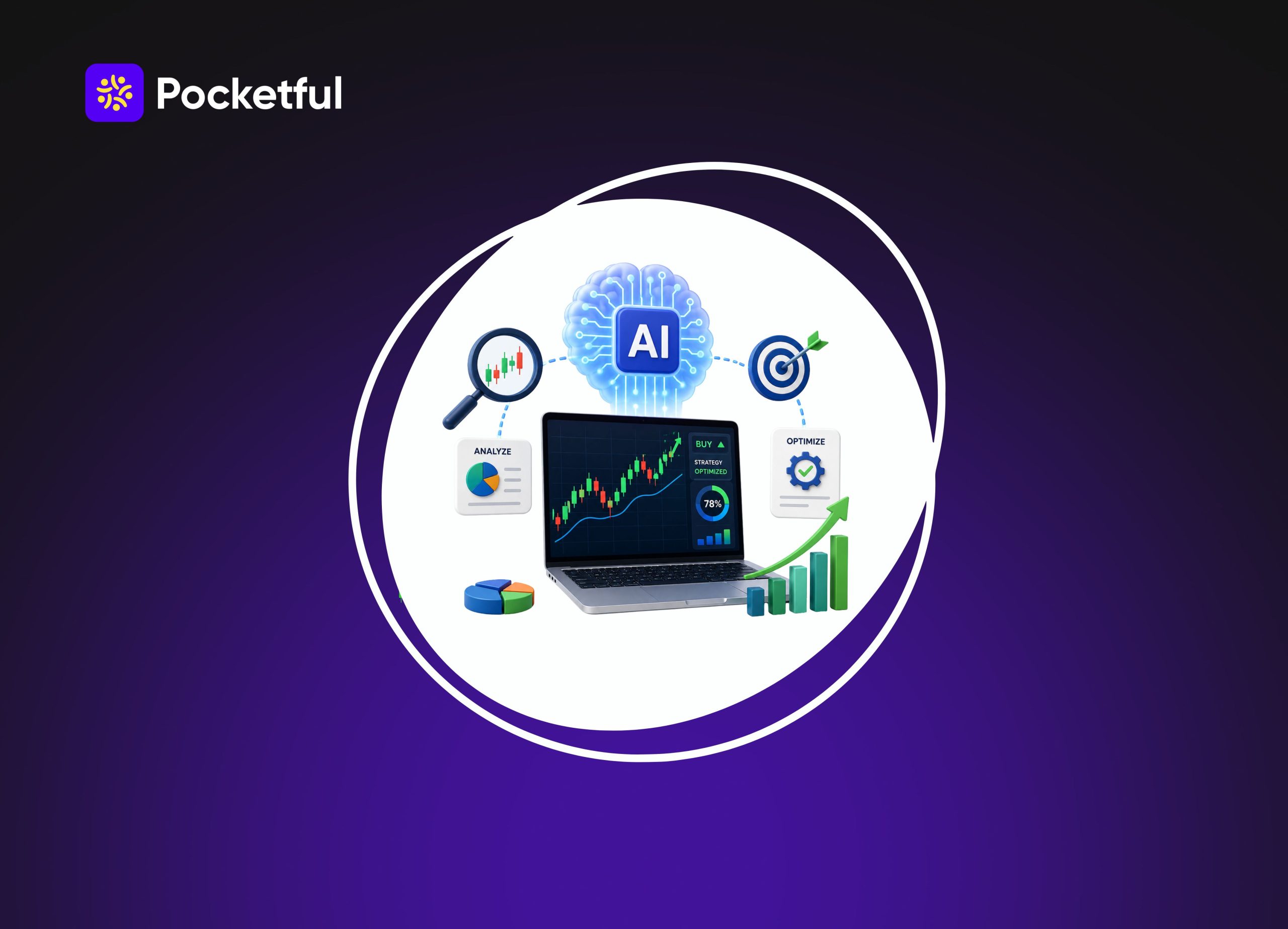
If you are wondering how to use AI for trading, it simply means moving from manual guesswork to smart logic. In 2026, artificial intelligence in the stock market involves using computer programs to read charts, news, and market mood instantly. The system uses mathematical rules to decide exactly when to buy or sell a stock.
Let us look at a practical example. A traditional trader might spend hours reading company earnings reports and checking moving averages on a screen. A modern automated system finishes this exact same task in mere milliseconds.
It spots a sudden spike in positive news and matches it with a technical breakout on the pricing charts. Learning how to use AI in trading means setting up these mechanical rules so the computer does the heavy lifting for you. You become a manager of digital systems instead of a manual clicker.
This systematic approach removes human panic and emotional errors completely. A recent SEBI study showed that over ninety percent of retail traders lose money in options trading.
Three AI Layers: LLMs, Classical ML, and Reinforcement Learning
Artificial intelligence in financial markets operates on three distinct levels. Each layer serves a unique purpose for different market participants. You will mostly interact with the first two layers, while the third remains largely used by big financial institutions.
Understanding these layers helps you pick the right tool for the right job. A text based model cannot predict stock prices accurately on its own. Similarly, a mathematical pricing model cannot read a news article or summarize earnings calls.
| AI Layer | Common Tools | Role in Trading | Key Limitations |
|---|---|---|---|
| Large Language Models (LLMs) | ChatGPT, Claude, Gemini | Idea generation, sentiment analysis, writing backtest code | Weak at price prediction, prone to guessing wrong numbers |
| Classical Machine Learning | scikit-learn, XGBoost, LightGBM | Filtering signals, identifying market trends, ranking parameters | Requires clean data, can easily memorize past data incorrectly |
| Reinforcement Learning (RL) | Stable Baselines3, RLlib | Adaptive execution, position sizing, dynamic entry timing | Highly fragile in new markets, very complex to design for retail users |
These tools work best when we combine them properly. You might use a language model to write the initial strategy code in Python. Then, classical machine learning is used to filter out bad trade signals based on historical market data.
What AI Can Do and What It Still Cannot Do
Traders often misunderstand the true power of machine learning in the stock market. It is highly capable but it is not magic. Setting realistic expectations is vital for your long term survival in the markets.
Here is what artificial intelligence can actually do for you:
- Scan thousands of stocks and technical indicators in seconds.
- Read and summarize financial news, earnings reports, and social media sentiment instantly.
- Backtest years of historical data to see if a strategy worked in the past.
- Execute trades automatically without fear, greed, or any hesitation.
Here is what artificial intelligence still cannot do:
- Predict the future with absolute certainty or guarantee zero losses.
- Anticipate sudden, unexpected real world events like geopolitical conflicts.
- Factor in real time slippage perfectly during major news spikes.
- Replace your need to manage risk and monitor the overall system.
Read Also: The Impact of AI on Stock Market Trading
How to Do AI Trading
Setting up an automated system follows a clear five step loop. This structured approach ensures that you test ideas properly before risking any real money. We will walk through these steps simply.
Step 1: Generate Strategy Ideas with LLMs
Use Large Language Models to turn vague market observations into testable ideas. You can convert subjective thoughts into mechanical rules based on strict price data. You just type what you want in plain English, and the tool helps you write the code even if you do not know Python.
Step 2: Prepare Clean Data
Collect reliable historical market data from trusted sources. Clean this data meticulously by removing duplicate timestamps and filtering out extreme news spikes. If you punch bad data to a good system, you will always get bad results and unexpected losses.
Step 3: Build an Optimizer
Search for a robust set of parameters using machine learning tools. Focus on steady risk adjusted returns rather than a single massive peak of past performance. Finding the right settings takes patience, as you do not want a system that only worked once by pure luck.
Step 4: Walk Forward Validation
Test the optimized strategy on completely unseen historical data. Think of this step as a mock exam before the real test. This ensures the system survives in new market conditions rather than just memorizing the past.
Step 5: Deploy Live Signals
Connect the logic to a broker interface or a visual alert system. Start with very small capital to monitor how the system handles real world execution. It is always best to paper trade first before trusting the system with your hard earned money.
Where AI Fails Traders
Relying entirely on algorithms without active supervision leads to significant risks. Systems fail when live market realities break historical assumptions. You must be aware of these common traps.
- Regime Shifts and Changing Markets: Markets constantly change from trending periods to ranging periods. A model trained heavily in a massive bull market will fail miserably when a sudden bear market begins. You must regularly check your systems to ensure they match current market conditions.
- News Spikes and Liquidity Gaps: Algorithms struggle to simulate real time price slippage during major scheduled news events. A stop loss might look safe on a paper test but suffer massive gaps in a live, panicked market. Hard coding restrictions to pause trading around major news events protects your capital.
- The Trap of Overfitting: A system might look flawless on historical data purely because it memorized the market noise. Such over optimized systems typically collapse immediately when trading with real money. The curve is fitted so tightly to past events that it cannot adapt to slight future variations.
Beginner Friendly AI Trading Workflow
You do not need to write complex computer code to get started today. The modern ecosystem offers simplified platforms that bring intelligence directly to your trading terminal. These platforms bridge the gap between complex technology and retail accessibility.
Using trusted platforms like Pocketful makes the entire transition smooth for Indian investors. Pocketful offers Pocketful GPT, a smart assistant designed to explain trades, simplify market concepts, and generate instant insights. You can comfortably ask the assistant about technical indicators, sector rotation, or risk management before placing a live trade.
The new SEBI rules require secure logins and approved connections to keep retail investors safe. Pocketful takes care of these technical headaches in the background so you can focus entirely on your strategy. You can also read their educational blogs and newsletters to stay updated on market trends.
The ideal workflow starts with researching via the smart assistant. Next, you test the logic on historical charts or a virtual paper account. Finally, you automate the execution through the robust API interface.
Pros and Cons of Using AI to Optimize Your Trading Strategy
Every technological advancement brings clear advantages and hidden drawbacks. Evaluating these fairly helps you build a highly balanced approach to the stock markets. You should weigh these carefully before starting.
Pros:
- Emotionless Execution: Algorithms follow programmed rules strictly. They stop you from revenge trading after a loss and prevent greed during massive market rallies.
- Unmatched Speed: Machines process news and price data in milliseconds. This allows for order execution speeds no human click can possibly match.
- Massive Data Handling: An automated system can easily track hundreds of stocks simultaneously. It never gets tired or loses focus during long trading hours.
Cons:
- Constant Maintenance Needs: Algorithms require active, ongoing monitoring. As market conditions naturally change, the underlying code and rules must be updated to stay relevant.
- False Confidence: Excellent past performance in backtests often creates a false sense of security. Historical success never promises future profitability in live markets.
Read Also: Benefits of AI in the Stock Market
Conclusion
Artificial intelligence serves as a highly powerful assistant for the modern investor. It handles repetitive analytical tasks, filters massive datasets, and executes orders with extreme precision. We can see how this levels the playing field for retail traders.
While it does not predict the future or completely eliminate all market risks, it provides a structured framework for navigating financial markets. Adopting these tools thoughtfully allows you to operate with greater efficiency, speed, and clarity.
Frequently Asked Questions (FAQs)
What is AI trading?
It is a computer based algorithms and machine learning to analyze market data, spot trends, and execute trades automatically.
Is algorithmic trading legal for retail investors in India?
Yes, it is fully legal. Retail investors can safely use approved broker connections to run their personal strategies while following regulatory guidelines.
What are the benefits of using AI for your strategy?
It offer unmatched speed and removes emotional bias.
Do you need to know coding to use AI tools?
No. Many modern platforms offer no code strategy builders and smart text assistants, making it easy for beginners to start.
How can you start using AI for trading?
Start by using smart screening tools to gather market insights. Always test your strategies on paper before connecting them to a broker