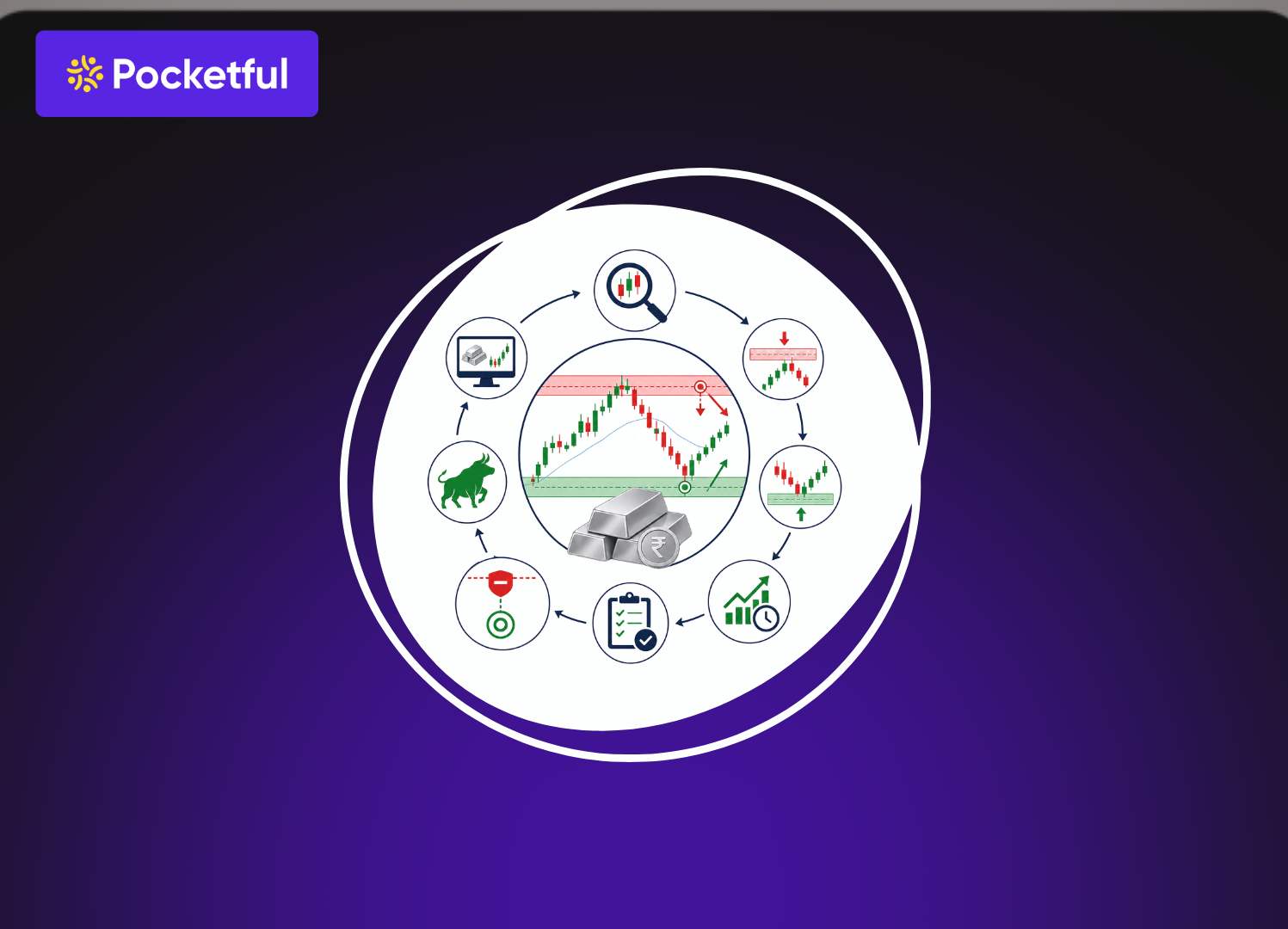
Silver has become a popular choice for intraday traders, mainly because it moves well during the day. And in trading, movement is what creates opportunity.
But intraday trading is not just about taking quick trades. It’s about understanding how the market behaves, when it is most active, and how to approach it with a clear plan.
In this blog, we will go through everything you need to know, like the best time to trade, what affects silver prices, simple strategies, and a few useful indicators.
Why you should Trade Silver Intraday?
Silver is one of those assets that moves a lot during the day. And for intraday traders, that movement is exactly what creates opportunities. But beyond just “price movement,” there are a few solid reasons why silver works well for intraday trading.
- Prices Move Fast: Silver prices do not stay still. Even small global updates, like changes in the US dollar or interest rates, can push prices up or down quickly. For a trader, this means you do not have to wait for days. Good moves can come within hours.
- You do not Need Very High Capital: With smaller contracts like Silver Mini and Silver Micro, you don’t need a huge amount of money to start. You can begin small and increase your position as you gain confidence.
- Technical Levels Work Well: Silver respects basic technical concepts like support and resistance, breakouts, and trendlines, so even simple strategies can work if you follow them with discipline.
- Global Events Create Good Opportunities: Big news events, like US inflation data or central bank decisions, often lead to strong moves in silver. These are the times when intraday traders usually find the best setups.
Factors Affecting Silver Prices
- Movement of the US Dollar: Globally, silver is traded in US dollars. So, when the dollar gets stronger, silver prices usually fall. And when the dollar weakens, silver often goes up. It is a simple but very important relationship, and it affects the price of the metal.
- Interest Rates and Inflation: Investors often consider silver as a way to protect against inflation. When inflation rises, silver can move up, and when interest rates go up, silver can slow down. This happens because higher interest rates make other investments more attractive.
- Industrial Demand: The white metal is also used in industries such as electronics, automotive, energy, etc. So when demand from these sectors increases, silver prices can move higher.
- Demand and Supply: Eventually, it still comes down to demand and supply. If more people want to buy silver and the supply is limited, prices go up. If demand is weak or supply is high, prices can fall.
- Rupee vs Dollar: If you are trading in India, the rupee also matters. Silver can become more expensive because of a weak rupee, and on the contrary, a strong rupee will cause silver prices to come down. So even if global prices stay the same, local prices can still change.
Read Also: Silver Trading on MCX
Best Time for Silver Intraday Trading
Silver is traded on MCX (Multi-Commodity Exchange).
The market opens at 9:00 AM & closes at 11:30 PM most of the year. However, these hours are extended to 11:55 PM during daylight saving time in the US.
Daylight Saving Time is a system where clocks are adjusted to make better use of daylight during the year. Clocks are moved forward by 1 hour in summer, and clocks are moved back by 1 hour in winter.
If you want to trade silver, you need to focus on the right time.
1. Morning (9:00 AM to 12:00 PM): This is when the MCX opens.
- The market is usually slow
- Price moves are limited
- Not many strong trends
This time is better for watching the market and marking key levels rather than taking big trades
2. Afternoon (12:00 PM to 5:00 PM): You can take trades here, but opportunities are usually limited.
3. Evening (5:00 PM to 11:30 PM): This is the most important time for silver trading.
- Global markets like London and the US are active
- Volume increases
- Price moves become faster and clearer
This is when most traders prefer to trade because the market gives better opportunities.
Silver Intraday Trading Strategies
1. Breakout Strategy
This is one of the easiest strategies to understand. First, mark a range or what we call as resistance and support in technical language, like the high and low of the morning. If the price breaks out of that range, it will most likely continue in the same direction.
- Buy when the price breaks above the high
- Sell when it breaks below the low
- Keep a stop-loss just inside the range
2. Moving Average Strategy
MA strategy helps you stay with the trend. You can use something simple like 9 EMA and 21 EMA.
- If the shorter average, i.e., 9 EMA, moves above the longer one, i.e., 12 EMA, it suggests an uptrend
- If it moves below, it suggests a downtrend.
3. VWAP Strategy
VWAP is a very common intraday indicator. It stands for Volume-weighted average price.
- If the price is above VWAP, the market is generally strong
- If the price is below VWAP, the market is weak
Many traders usually buy near VWAP in an uptrend and sell near VWAP in a downtrend
4. News-Based Trading
Silver reacts quickly to global news, especially from the US. During events like inflation data or interest rate decisions, prices can move fast. But you have to be careful because movement is fast and trends can change very quickly.
Read Also: Silver Price Last 10 Years in India
Indicators That Work Best for Silver
1. RSI
RSI stands for Relative Strength Index and helps you understand if the market has moved too much in one direction.
- If the RSI is above 70, it suggests the price of the commodity is in an overbought zone and is likely to correct from current levels.
- Alternatively, if the RSI is below 30, it suggests that the price may be oversold, and there can be a possible rally from the current levels.
It is mainly used to avoid entering at extreme levels or to find possible reversals
2. MACD
MACD stands for Moving Average Convergence and Divergence, which helps you understand both trend and momentum.
- When the MACD line crosses above the signal line, it suggests strength, and
- When it crosses below, it suggests weakness
It works well when the market is moving in a clear direction.
3. Bollinger Bands
Bollinger Bands show how much the market is moving. There are usually 3 types of bands: the upper band, the middle band, and the lower band.
When prices move closer to the upper band, the asset may be overbought, and when prices move closer to the lower band, the silver may be oversold.
Price often reacts near the upper and lower bands, so they can act like temporary resistance and support.
4. Volume
Volume tells you how strong a move really is. High volume indicates a move is strong, and low volume means the move may not last longer.
For example, if a breakout happens with good volume, it has a better chance of continuing the ongoing uptrend.
Conclusion
Intraday trading in silver can offer opportunities, but it’s not all about trading. It’s about knowing the market, keeping the trading process simple and being smart with risk. If you trade at the right time and you are disciplined, silver can be a good choice for intraday trading. Invest in Silver Funds & trade Silver Options with advanced tools, enjoy zero brokerage on delivery and zero lifetime AMC with Pocketful.
Frequently Asked Questions (FAQs)
Is silver good for intraday trading?
Yes, silver moves well during the day, which makes it suitable for intraday trading.
What is the best time to trade silver?
The evening session, after 5 PM, when the global markets are also active, is usually the best time to trade.
How much money do I need to start?
You can start with smaller contracts, so you don’t need a very large amount.
Does news impact silver prices?
Yes, especially global news like US data. It can cause quick price movements.
What is a common mistake that most traders make?
Overtrading and not using a stop-loss are very common mistakes.