Common Stocks refers to a kind of security that signifies a proportion of ownership of a corporation. When you purchase common stocks of Reliance, TCS, or HDFC Bank, you’re not actually placing a bet on an intangible figure rising rather you’re buying a portion of that business.
But you must be thinking about what you can get from these common stocks. You’re getting a share of the profits, and a say in how the firm will shape up in the future. This is the main driver of wealth creation in India.
This blog will break down exactly how a common stock offering (IPO) works to give life to these shares and the distinction between common stock and preferred stock, and how you can incorporate them into your portfolio.
What Is Common Stock?
Common stock, on the other hand, is equity. It is a common form of ownership in a corporation, meaning they are stocks that give equity to the investors in the company. Here the investor owns a stake by buying the company’s share. As opposed to being a loan, where you get interest, you own a stake. Instead of a loan, where you have an agreement stating “we will pay you back,” you have an agreement stating “we will give you a share of what we build.”
Here you get your share in two ways:
Dividends: If the company makes a massive profit, the Board of Directors might decide to share that cash with you. This is your reward for trusting them.
Capital Gains: If the company grows, the value of your slice grows. This is where the real wealth is made, when the stock price jumps from Rs.100 to Rs.500 over a few years.
Common Stock Offering
Common stock offering, commonly known as Initial Public Offering or IPO, where a company lists for the very first time on the stock exchange to raise funds from the public. Thereafter, the stock begins to exist in the secondary market, where you are free to trade with that stock.
Key Features of Common Stock
Ownership & Voting Rights
In India according to section 47 of the Companies Act, you have the legal right to vote on major matters through your equity share. We get to vote on whether the Board of Directors consists of the right people or whether the company should merge with its rival. With the help of e-voting, voting on these major matters using your smartphone becomes easy and convenient.
Dividends
Dividends on common stock are not guaranteed. The company’s board decides every year if they want to pay you or put that money back into building a new factory. Dividends can disappear overnight, if profits dips.
Capital Appreciation Potential
This is the most beneficial aspect and the reason why we invest. If you lend money to a bank (FD), the return is capped (say 7%). But if you own common stocks, there is no cap. Suppose they discover something revolutionary and their growth multiplies 100 times, the return multiplies 100 times.
Residual Claim on Assets
As a common shareholder, you are placed absolutely last in line because you only receive the remains of profits after everyone else has been paid off. Unfortunately, this means that after the government (taxes and dues), banks (lender/borrowers), and preferred shareholders (preference investors) have been settled, the remaining amount is for the common shareholders.
Read Also: Types of Investment in the Stock Market
What Is Preferred Stock?
Fixed Dividends
The preferred stock generally has a fixed dividend rate (for instance, 9% a year). This doesn’t matter if the company makes a rupees one billion profit or breaks even; they have to pay you this dividend prior to paying even a rupees one penny to common stock holders.
No Voting Rights
The preferred stockholders are often silent partners. They look forward to fixed returns and do not interfere in the management of the company. There is, however, a safety valve. If the company fails to pay their dividends for two years or more, the preferred stockholders surprisingly obtain the voting rights regarding all resolutions.
Liquidation Priority
If liquidation occurs, preferred stockholders reclaim their life capital prior to common stockholders. This gives preferred stock a lower risk profile compared with common stock, but higher than that for a deposit in a bank.
Common Stock vs. Preferred Stock
| Feature | Common Stock | Preferred Stock |
|---|---|---|
| Goal | You want your money to multiply over time, looking for growth. | You want a steady paycheck (dividend), meaning you get regular payments. |
| Voting | You are an active owner with a say in the business. | You are a passive investor, so you don’t have voting rights. |
| Risk | You are the last to get paid in a crisis, which means it has risk. | You have priority over common shareholders, giving you moderate risk. |
| Returns | Can be massive or zero. | Returns are Fixed, as you are capped at a specific percentage. |
| Liquidity | You can buy/sell instantly on apps, as these are highly traded. | Hard to find buyers/sellers in the Indian market. |
Advantages of Common Stocks
- Beating Inflation: Common stocks are the best asset class to beat inflation over the long term. A fixed deposit might barely keep up with rising prices, but a good business can grow much faster.
- Liquidity: Money in real estate is “stuck” for months. Money in common stocks is available in T+1 days. You can sell your shares on an app like Pocketful and have the cash in your bank account almost immediately.
- Limited Liability: Even if the company you invested in goes bankrupt with massive debts, creditors cannot come after your personal assets. You can only lose the amount you invested, nothing more.
Read Also: What are Shares – Definition, Example, and Benefits
Disadvantages of Common Stocks
- Volatility: Prices fluctuate wildly, a 20% drop in a month is normal. If you need the money next month, do not put it in common stocks. You need a strong stomach to ride out the waves.
- Uncertainty: There is no guaranteed income. You cannot plan your monthly household expenses based on common stock dividends, because the company might decide to cut them to zero.
- Capital Risk: In a worst-case scenario, the value of your investment can go to zero. There is no safety net or insurance for poor stock performance.
What’s Happening in 2026?
Foreign Institutional Investors (FIIs) have not stopped selling stocks in the Indian market. In fact, they have been selling assets to the tune of nearly Rs.152 crores every trading hour. It would have ruined our market once upon a time. But in 2025, the retail investor in the Indian market was like a wall in front of this tsunami. The SIP inflows have remained above a massive figure of Rs.29,000 crores every month.
The normalization of interest rates, adhering to a monetary policy, brought a boost in growth, which is now expected to reach a level of 6.5%. Although this is a positive development, it is likely that a change in trend is imminent. As a result of rate cuts initiated by the RBI in 2025, aiming to reach a level of 5.25% by the end of the year, the cost of doing business will decrease.
How to Invest in Common Stock With Pocketful
- Instant KYC: No more couriering paper forms. You can open an account with Pocketful in a few minutes using just your Aadhaar and PAN.
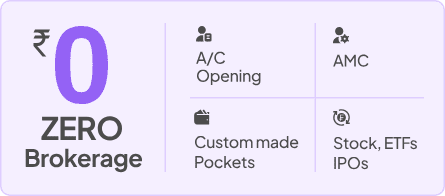
- Zero Brokerage on Delivery: If you buy shares to hold (delivery), you pay Rs.0 brokerage. This is massive for long-term investors, as fees can eat into your profits over time.
- Pockets: It is a carefully curated basket of stocks, designed around themes such as ‘Electric Vehicles’ or ‘Top IT Stocks‘. The advantage is that you get to invest in the entire thematic basket in one click.
Direct Purchase vs. Mutual Funds
- Direct Purchase: You invest in shares of particular companies like Reliance. You should do your own analysis about the particular company.
- Mutual Funds: A fund manager will charge you to manage your investment. It is safer but with a little higher cost. You can use Pocketful App to invest in both shares and mutual funds.
How to Invest in Preferred Stock
The Alternatives
- Corporate Bonds / NCDs: They offer fixed interest and are easier to trade on the market.
- Debt Mutual Funds: These funds invest in various safe, interest-paying options, giving you expert help and better trading than buying individual preferred shares.
Conclusion
The best way to make money, and owning stock is like getting on board. It lets you team up with the brightest business minds. You don’t need to create the next big thing, just be wise enough to buy a piece of it, though there are risks and the market will fluctuate. But as we’re seeing in 2026, the Indian market is growing up. Local investors aren’t just watching anymore, rather they’re leading the way.
Whether you’re starting small or going big, the rules are the same, you should know what you’re buying, think about the future, and get the right resources. Platforms like Pocketful are making it simpler and cheaper than before to get started.
Frequently Asked Questions (FAQs)
What is the main difference between common stock and preferred stock?
Common stock is for growth (voting rights, variable profit). Preferred stock is for income (fixed dividends, no voting rights, priority payment).
Can I lose all my money in common stocks?
Yes. If a company goes bankrupt, common shareholders are the last to get paid. If the company has no assets left after paying debts, your share value becomes zero. Diversification (buying multiple stocks) is your safety net.
Do I have to pay a monthly fee to keep a Demat account?
It depends on the broker. Apps like Pocketful give Zero Annual Maintenance Charges (AMC) for the first year, and hence the maintenance of your accounts is free.
What is a “Pocket” in the Pocketful app?
This is a pre-made basket of stocks. You don’t have to research different companies for a strategy, but simply invest into a “Pocket” portfolio, which will include them all for you.
How do I get dividends?
If you own common stock and the company declares a dividend, the money is directly credited to your primary bank account linked to your Demat account, nothing else is needed.