Category: Commodities

  • Stock Market vs Commodity Market

    Stock Market vs Commodity Market

    Investment is one of the most crucial routes to the creation of wealth and to financial growth. Two of the most sought-after markets in this arena are the stock market and the commodity market. While both offer attractive investing and trading opportunities, their nature of assets, workings, and objectives are quite different in essence. The differences must be understood by investors to make informed investment decisions.

    In this blog, we look at the difference between equity and commodity markets, their features, advantages, and suitability so you can decide which market is right for your financial needs.

    What is the Stock Market?

    The stock market, which is also called the equity market, is where people can buy and sell shares of listed companies. Investors buying shares make them a partial owner of that firm and give them the right to vote on issues affecting the company.

    How the Stock Market Works?

    The buying and selling of equity shares in the Indian stock market occurs on two exchanges, i.e. the National Stock Exchange and the Bombay Stock Exchange in India. It offers a structured and regulated platform for trading stocks and other securities.

    • Financial Instruments: Stocks, exchange-traded funds (ETFs), and derivatives like options and futures are common instruments.
    • Participants: Those engaging in the Indian stock market are retail investors, institutional investors, mutual funds, and hedge funds.
    • Regulatory Body: In India, the stock market is governed by the rules and regulations governed by the Securities and Exchange Board of India to ensure transparency and fairness.

    Read in Detail How Does the Stock Market Work in India?

    Types of Stock Markets

    • Primary Market: This market features a company issuing new shares to the public through an IPO process. The investors buy newly issued shares directly from the company.
    • Secondary Market: The shares issued in the primary market are traded among various investors in the secondary market.

    Key Features of the Stock Market

    • Liquidity: Shares of well-known companies can be easily bought and sold due to high liquidity.
    • Long-term Growth Potential: The returns from equity investments, when held for a long period, can be substantial.
    • Risk and Volatility: The prices of the shares fluctuate due to market trends, economic factors, and company performance.
    • Ownership Rights: Shareholders are the partial owners of the company and are entitled to dividend income or to participate through voting in any significant decisions.

    Read Aslo Best Stock Market Web Series & Movies to Watch

    What is the Commodity Market?

    The commodity market is the market for trading raw materials and natural resources. Resources which are traded here are: agricultural products, energy sources, and precious metals. This marketplace provides opportunities to producers, consumers, as well as speculators to hedge as well as profit from short term price movements.

    How the Commodity Market Works?

    Commodities are physical assets and are traded as spot contracts or futures contracts.

    • Trading Instruments: Commodities such as gold, silver, crude oil, wheat, and coffee are traded in the form of either spot contracts or derivatives.
    • Participants: Some of the key players involved in the commodity market are the producers-farmers or miners-and consumers-industries, along with speculators and traders.
    • Regulation: The commodity markets in India are regulated by SEBI and function through some of the following platforms- Multi Commodity Exchange, National Commodity and Derivatives Exchange.

    Types of Commodities

    • Hard Commodities: These include all naturally occurring resources which come directly from the earth such as crude oil, gold and silver.
    • Soft Commodities: These consist of agricultural products, which would include wheat, coffee, cotton, etc.

    Important Features of the Commodity Market

    • High Volatility: Commodity prices are greatly influenced by global supply and demand, geopolitical issues, and natural catastrophes.
    • Speculative Opportunities: High volatility attracts speculative traders looking to benefit from massive price movements.

    Read AlsoHow to Trade in the Commodity Market?

    Key Differences Between Stock Market and Commodity Market

    AspectStock Market (Equity)Commodity Market
    Nature of AssetsShares of companies (intangible assets)Physical goods like gold, oil, and wheat
    ObjectiveLong-term growth and ownershipHedging, speculation, and short-term profit
    ParticipantsRetail investors, mutual funds, institutionsProducers, consumers, speculators, traders
    Risk FactorsMarket trends, economic factors, and company performancePrice volatility due to supply-demand dynamics
    Market PlatformsNSE, BSEMCX, NCDEX
    Investment HorizonLong-term (years or decades)Short-term to medium-term (weeks or months)
    RegulationGoverned by SEBIGoverned by SEBI
    ReturnsDividends, capital appreciationProfits from price fluctuations
    (Data as of 6 January 2025)

    Check Out – Commodities Screener

    Advantages and Disadvantages of Commodity Market

    The advantages and disadvantages of the commodity market are:

    Advantages

    • Diversification: Commodities act as an inflation hedge and allow for the diversification of portfolios.
    • Hedging Opportunities: Businesses dealing in commodities as an end product or raw material can hedge risks through futures contracts.
    • High Returns: Speculators can achieve high returns during volatile market conditions if they correctly predict the market direction.

    Disadvantages

    • High Volatility: The price of commodities can be severely impacted by unexpected events such as natural disasters and geopolitical actions.
    • Complex Market Dynamics: Global trends and commodity-specific factors require expertise to understand.
    • No Recurring Income: Commodity investments do not provide a recurring income, unlike equities that offer dividends.

    Which Market is Right for You?

    It largely depends on your financial goals, risk tolerance, and expertise level for you to determine whether you should invest in equity or commodity markets.

    Which market should I invest in

    Stock Market is Right for You If:

    • You are willing to invest for long-term wealth creation.
    • You wish to invest in growing businesses.
    • You have a moderate to high-risk appetite and can tolerate market fluctuations.

    Commodity Market is Right for You If:

    • You want to hedge against inflation or adverse price movement in the commodity prices.
    • You are an expert in analyzing the global commodity market trends and supply-demand factors.
    • You are interested in short-term speculative trading opportunities.

    For instance, a person looking for steady wealth accumulation over time may prefer the stock market. A trader who wants to capitalize on price fluctuations may find the commodity market more suitable.

    Read AlsoTop 10 Sectors in the Indian Stock Market

    Conclusion

    The stock market and the commodity market represent two different avenues through which wealth can be created. The difference between equity and commodity is based on the underlying assets, the kind of market participants involved, the financial objectives of individuals, and the inherent risks. While the former features shares that represent ownership in companies and individuals investing with the goal of long-term growth, the commodity market is for people looking for short-term trading opportunities, hedging and diversification.

    The choice between the two would basically depend on your financial goals concerning investments, risk tolerance level, and knowledge of each market. It is advised to consult a financial advisor before investing.

    Gold Rate in Top Cities of IndiaSilver Rate in Top Cities of India
    Gold rate in KeralaSilver rate in Kerala
    Gold rate in KolkataSilver rate in Kolkata
    Gold rate in LucknowSilver rate in Lucknow
    Gold rate in MaduraiSilver rate in Madurai
    Gold rate in MangaloreSilver rate in Mangalore
    Gold rate in MumbaiSilver rate in Mumbai
    Gold rate in MysoreSilver rate in Mysore
    Gold rate in NagpurSilver rate in Nagpur
    Gold rate in NashikSilver rate in Nashik

    Frequently Asked Questions (FAQs)

    1. What is the difference between equity and commodity markets?

      Their underlying assets are one of the key differences between the two, as the equity market deals with company shares, whereas a commodity market focuses on raw materials and natural resources.

    2. Which is relatively riskier: equity or commodity?

      Commodity markets tend to be slightly more volatile than the equity market as they mainly feature derivative contracts and due to other factors like global tensions, natural disasters, etc.

    3. Can I invest in both equity and commodity markets at the same time?

      Yes, many investors diversify their portfolios by participating in both equity and commodity markets to balance risk and returns.

    4. Is commodity trading profitable in India?

      Commodity trading can be profitable for those who understand market dynamics and employ effective risk management strategies.

    5. How do I choose between equity and commodity investments?

      Consider your financial goals, risk, and market knowledge. An individual looking for long-term growth can participate in equity markets, whereas commodities markets are ideal for those looking for short-term trading and hedging.

  • How to Trade in the Commodity Market?

    How to Trade in the Commodity Market?

    The commodity market is a world where raw materials meet investment opportunities. Think gold, oil, and wheat. These aren’t just abstract items—they’re things you see, use, or hear about daily. Trading them? It’s about more than money; it’s about understanding how the world ticks.

    But let’s be real: getting into it can feel overwhelming. Charts, terms, margins—it’s like learning a new language. The good news? You don’t need to be a financial wizard to succeed. You just need the right guide. That’s what this is—a roadmap for how to trade in the commodity market, simplified, straightforward, and full of tips that actually work.

    What is a Commodity Market?

    Let’s start with the basics. The commodity market is where raw goods are bought, sold, and traded. The players? Farmers, manufacturers, traders, and investors like you. The products? Two main types:

    1. Hard Commodities: Think of metals like gold and silver or resources like oil.

    2. Soft Commodities: Crops like coffee, sugar, or wheat—goods that are grown, not mined.

    Unlike stocks, where you invest in a company’s future, here you’re dealing with tangible items. A barrel of oil. A sack of sugar. The value of these goods depends on real-world factors like weather, politics, and global demand. If you’ve wondered how to invest in commodities in India, this is where it starts: knowing what you’re trading and why.

    How the Commodity Market Works

    At its heart, commodity trading in India is about predicting price changes. Will crude oil cost more tomorrow than today? Is gold going up or down?

    Here’s how it plays out:

    • Spot Market: Goods are bought and sold for immediate delivery. Simple, straightforward.
    • Futures Market: You agree to buy or sell a commodity at a set price on a future date. It’s less about owning the item and more about betting on price movement.

    Let’s say you expect wheat prices to rise due to poor harvests. You buy a futures contract. If your prediction is right, you profit. If not? You lose. This constant push-and-pull makes commodity trading dynamic—and risky. Knowing the ins and outs of this system is key to mastering how to trade in commodities effectively.

    Steps to Start Trading in the Commodity Market

    You don’t need a fortune to get started. Here’s how:
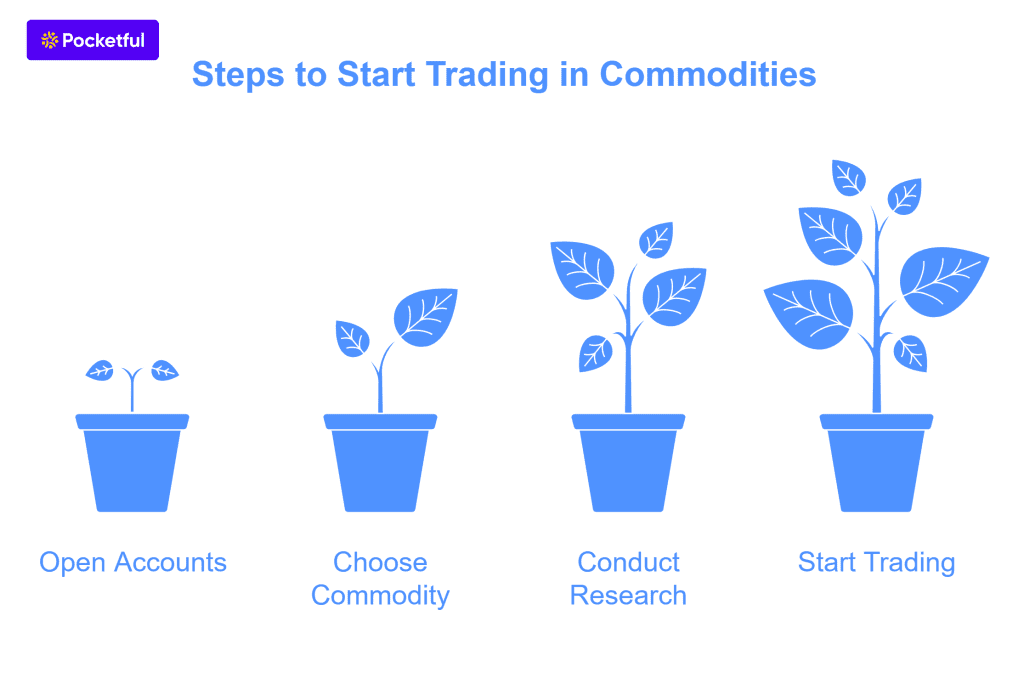
    Steps to Start Trading in Commodities

    1. Open a Demat and Trading Account

    Find a broker. They’re your entry ticket to the commodity market. You’ll need to Open a Demat and Trading Account with a reputable firm. Make sure they’re authorized for commodities and offer user-friendly platforms.

    2. Pick Your Commodity

    Start simple. Gold and crude oil are popular choices for beginners. They’re easier to track and less unpredictable than, say, soybeans or coffee.

    3. Do Your Homework

    Research is everything. Check historical price patterns, follow the news, and use trading apps to stay updated.

    4. Start Small

    Don’t throw your life savings into your first trade. Begin with an amount you’re okay losing. The goal is to learn the ropes, not strike gold on Day 1.

    With these steps, you’re not just learning how to invest in the commodity market; you’re setting a foundation for long-term success.

    Read Also: Top 10 Highest Leverage Brokers in India

    Key Strategies for Commodity Trading

    It is essential to have a robust strategy before investing in the commodity market. However, you must bear in mind that a strategy that works for one trader does not necessarily mean that it would work for all traders. So, it is crucial to have a plan depending on your risk appetite, knowledge, profit target and commodity types in the Indian market. Here are the key strategies to help you succeed in commodity trading in India

    Willing to Learn

    It is important to have a complete understanding of the trading domain before you step into it. Similarly, you must get a better knowledge of commodity trading, futures and options while understanding how they trade. It is also crucial to understand the support and resistance level as well as margins to ensure a successful trading journey. 

    Treat Leverage Cautiously

    Commodity trading, unlike stock trading, often involves high leverage. You must be wondering what is leverage. Leverage allows you to create a trading position worth much more than the funds deposited. The margin needed to place a trade ranges from 6% to 35% in India. 

    Investors looking to trade in commodity markets are often drawn to leverage and enter the market with the goal of making large gains with a small investment. However, leverage can be a double-edged sword if not used with caution. While leverage can multiply your earnings, it can also compound your losses (if the market moves in the opposite direction). 

    As a result, it is prudent to weigh the benefits and drawbacks of leverage before trading in the commodity market. 

    Choose the Best Broker

    A broker plays an important part in deciding the benefits of commodity trading. For example, if the broker’s platform is slow, order execution may be delayed. Furthermore, if the brokerage fees are too high, your actual profit may be reduced.

    Fortunately, many online brokers allow you to register a free account and trade at low fees. Furthermore, they offer an app for conducting online transactions on the go. Pocketful is one of the best commodity trading apps as it offers a fast and easy-to-use mobile application and a web platform at very low fees.

    Make Volatility Your Best Friend  

    Volatility is an inherent characteristic of traders. Perhaps the finest commodities market trading ideas are those that help you comprehend and capitalize on volatility.

    Some commodities are extremely volatile (such as copper or agricultural commodities), whereas others are less volatile (such as gold, crude oil, etc.). Low-volatile commodities tend to maintain a consistent trajectory within a larger long-term trend. For example, during the peak of the COVID-19 epidemic, oil prices fell precipitously and remained low for a long period. And, for an investor, such periods might be ideal for profiting from commodities market trading.  

    To make volatility your friend, you must first grasp the overall trend and price range of the commodity you intend to trade. In addition, while trading a commodity, you must select a lot size.

    For novices, it is best to begin with low-volatile commodities before progressing to high-volatile commodities. Once you understand price movement, the commodities market suggestions you receive from your broker will make more sense to you.

    These strategies aren’t just for experts. They’re practical tools anyone can use when learning how to trade in the commodity market.

    Check Out – Commodities Screener

    Risks in Commodity Trading

    Here’s the truth: trading commodities isn’t a walk in the park. Prices can swing wildly, and leverage (borrowing money to trade) can magnify losses.

    The Big Risks

    • Market Volatility: A geopolitical situation in the Middle East could send oil prices soaring. A bumper crop season could cause wheat prices to drop significantly.
    • Liquidity Issues: Not every commodity has enough buyers and sellers, making it hard to trade at times.
    • Emotional Decisions: Fear and greed are your worst enemies. They lead to impulsive trades and unnecessary losses.

    The key? Keep emotions in check. Set stop-loss limits. And never trade more than you can afford to lose.

    Read Also: Lowest MTF Interest Rate Brokers in India | Top 10 MTF Trading Apps

    Tips for Beginners

    Starting your journey in commodity trading can be exciting yet challenging, so here are some essential tips to help you navigate the market with confidence.
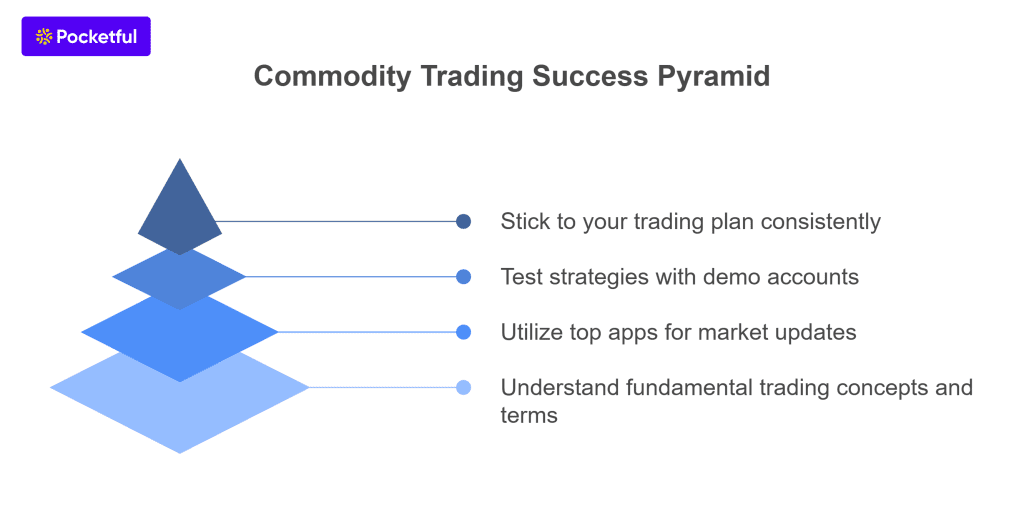
    Commodity Trading Success Pyramid
    • Learn Before You Leap: Watch videos, read articles, and join forums. Knowing the basics makes a huge difference.
    • Use the Best Commodity Trading App: A good app can provide real-time updates and analysis, making trades easier.
    • Practice First: Many platforms offer demo accounts. Use them to test strategies without risking real money.
    • Stay Disciplined: Set a plan for each trade—when to enter, when to exit, and how much to risk. Stick to it.

    Remember, it’s okay to make mistakes. Every trader has lost money at some point. What matters is that you learn and keep going.

    Read Also: Best Commodity Trading Platforms in India

    Conclusion

    Commodity trading is part art, part science. It’s about timing, strategy, and a bit of gut instinct. Whether you’re figuring out how to invest in commodities in India or anywhere else, the process is the same: start small, stay informed, and grow step by step.

    The rewards? They’re not just financial. It’s the thrill of making a call and being right. The satisfaction of understanding something most people don’t. And the sense that you’re playing a small but real role in the global economy. However, it is advised to consult a financial advisor before investing.

    Gold Rate in Top Cities of IndiaSilver Rate in Top Cities of India
    Gold rate in KeralaSilver rate in Kerala
    Gold rate in KolkataSilver rate in Kolkata
    Gold rate in LucknowSilver rate in Lucknow
    Gold rate in MaduraiSilver rate in Madurai
    Gold rate in MangaloreSilver rate in Mangalore
    Gold rate in MumbaiSilver rate in Mumbai
    Gold rate in MysoreSilver rate in Mysore
    Gold rate in NagpurSilver rate in Nagpur
    Gold rate in NashikSilver rate in Nashik

    Frequently Asked Questions (FAQs)

    1. What is the minimum amount required to start commodity trading?

      There is no fixed minimum amount required to start commodity trading. However, you can start with as little as Rs 10,000, depending on the broker. Some commodities may require higher margins.

    2. Can beginners trade in commodities successfully?

      Yes. Start with less volatile commodities, educate yourself, and focus on small, consistent wins.

    3. Are commodity markets open 24/7?

      No. In India, commodity markets do not operate 24/7. These markets allow commodity trading from Monday to Saturday. There are fixed market hours, such as 10 am to 5 pm, which is the morning session. The evening session starts from 5 pm to 11.30 pm or 11:55 pm.

    4. What is the minimum amount required to trade in commodities?

      There is no fixed amount as it varies. The margin required depends on the commodity and your broker. ₹5,000 to ₹10,000 is common for smaller trades.

    5. How do I calculate my profit or loss in commodity trading?

      Subtract your buying price from the selling price, then multiply by the lot size. Don’t forget to account for brokerage and taxes.
  • What is Commodity Market in India?

    What is Commodity Market in India?

    You might be thinking about investing in gold and silver to diversify your portfolio and lower its risk, as these tend to deliver good returns in volatile market conditions. However, you are currently clueless about which commodities are tradeable in India and how to begin trading in them. 

    In this blog, we will give you an overview of the Indian commodity market and tell you how you can start trading them to hedge your current assets or speculate on future price movements. 

    What is the Commodity Market?

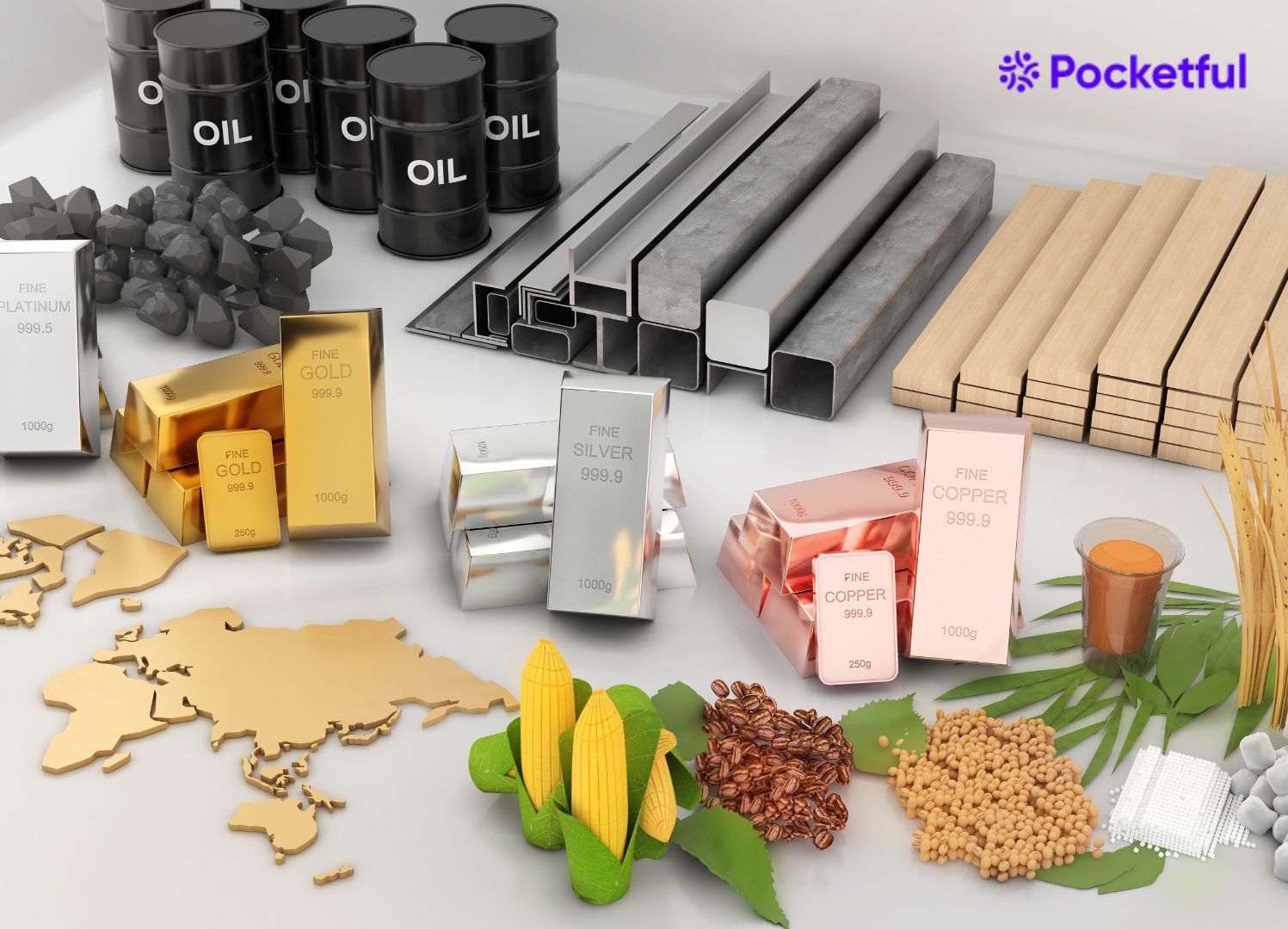
    A commodity market is regarded as a venue for the trading of various commodities, including copper, gold, silver, and natural gas. The purchasing and selling of these commodities is made easier by the commodity market. Both perishable and non-perishable goods are traded on the commodity market, which allows investors to diversify their holdings.

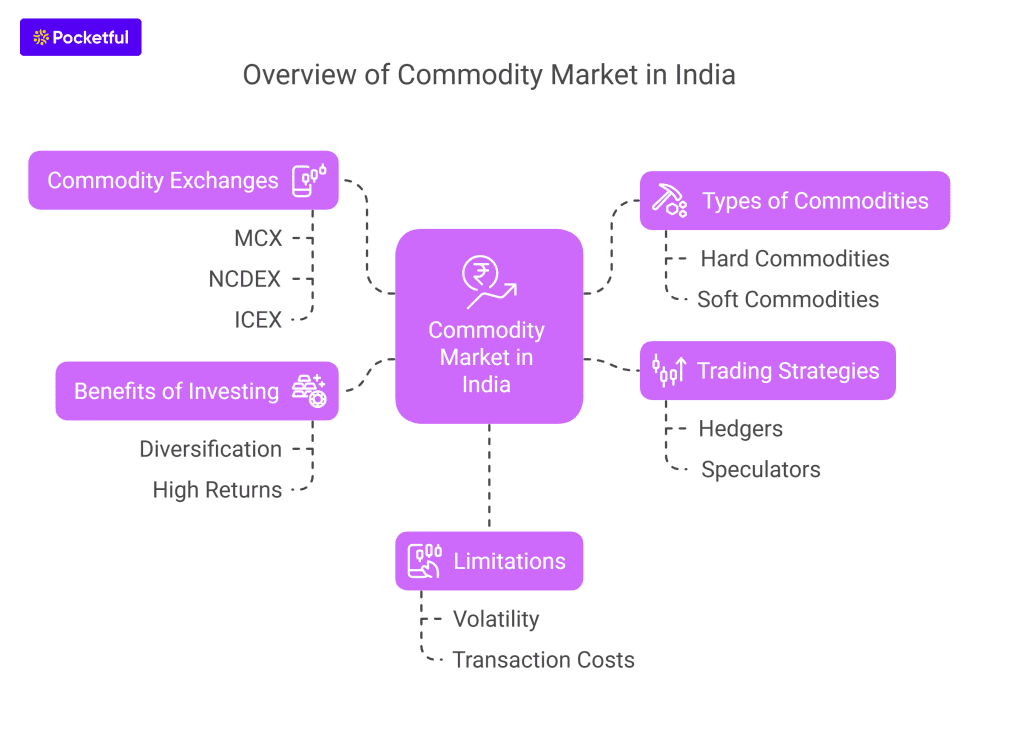
    Overview of Commodity Market in India

    How Does a Commodity Market Work?

    The dynamics of global supply and demand, including industrial demand, geopolitical events, weather, etc., influence commodity prices and commodity markets. It functions similarly to any other market in which a group of buyers and sellers get together to buy and sell a variety of commodities at any one time. 

    Types of Commodity Market

    Based on the type of commodity, the settlement mechanism, and the nature of trading, the commodities market can be divided into different categories. The following lists the main categories of commodities markets: 

    Based on Trading: Based on the type of trading, the commodity can be categorized into two types-

    1. Spot market: Commodities are purchased and sold instantly on the spot market, where prices are set by the current supply and demand. 

    2. Derivative market: Prices are established by taking the value or price of the commodity from the spot market. Participants make predictions about how the commodity’s price will move in the future, and the contracts they enter into are known as future and options contracts, and they are meant to be delivered or settled at a later time. 

    Based on Type of Commodity: The commodities can be divided into two different segments based on type of commodity-

    1. Hard Commodities – Hard commodities are those natural resources which are mined or extracted, such as gold, silver, natural gas, crude oil etc.

    2. Soft Commodities – This category of commodity includes agricultural products, like wheat, rice, sugar, etc.

    Check Out – Free Commodities Screener

    Pros of Investing in the Commodity Market

    Investing in the commodity market comes with lots of benefits, a few of such benefits are mentioned below-

    • Diversification: One can invest in a commodity market as it has a low correlation with other assets such as stocks, bonds, etc.
    • Hedge: It provides a hedge against any price fluctuations, as producers and manufacturers can use futures contracts to lock in the prices and avoid losses.
    • High Return: Investment in commodities can provide an investor with an opportunity to earn high returns.
    • Currency Fluctuation: There are various commodities which can act as a hedge against any kind of fluctuations in the currency.

    List of Commodity Exchanges in India

    There are various commodity exchanges in India which provide trading opportunities in both spot and derivative markets:

    1. MCX: MCX is known as Multi Commodity Exchange of India Limited. It has its headquarters situated in Mumbai, and offers trading in gold, silver, crude oil etc.

    2. NCDEX: It is known as National Commodity and Derivative Exchange Limited, which offers trading opportunities in agricultural commodities like wheat, barley, cotton, etc.

    3. ICEX: Indian Commodity Exchange Limited or ICEX is another exchange which provides trading opportunities in a mix of agriculture and non-agriculture commodities and includes diamond futures. It has its headquarters situated in Mumbai.

    4. NMCE: National Multi Commodity Exchange of India is another exchange which has its headquarters situated in Ahmedabad, it is the first demutualized electronic commodity exchange in India.

    5. ACE: Ace Derivatives and Commodity Exchange Limited is another commodity trading platform having its headquarters situated in Ahmedabad, it focuses on the regional market.

    Read Also: What is the Timing for Commodity Market Trading?

    How to Start Trading in the Commodity Market?

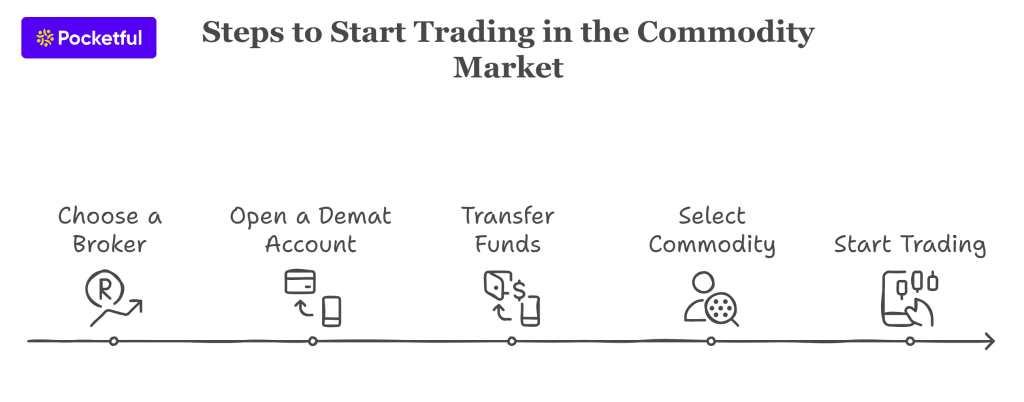
    To start trading in a demat account, one needs to have a demat and trading account, the steps of which are mentioned below:

    Steps to Start Trading in the Commodity Market

    1. Choose a Broker: The first step is to select a broker which offers services related to trading in commodities, has a good track record and offers you competitive brokerage rates.

    2. Open a Demat Account: Then you are required to open a Demat account and a trading account.

    3. Transfer Fund: Transfer funds to the demat account and begin your trading and investment in commodities.

    4. Selecting the Commodity: Then, as per your risk appetite, you can select a commodity after doing research.

    5. Start Trading: Once you develop a trading strategy, you can start investing in commodities by placing your order.

    Read in Detail – How to Trade in the Commodity Market?

    Traders in a Commodity Market

    The commodities market is home to a diverse range of traders, each of whom is classified according to their trading tactics and goals. Some of these traders are listed below:

    • Hedger: The hedgers are the persons who try to minimize the risk which arises due to volatility in prices of commodities.
    • Speculators: They try to earn short-term profit from the price movement; they are generally individual, professional traders.
    • Arbitrageurs: An arbitrageur tries to exploit the price difference between the contracts of the same commodity in two different markets.
    • Institutional Traders: This group of traders includes banks, hedge funds, and pension funds, which invest large chunks of money.
    • Retail Traders: Retail traders include an individual who earns profit from the change in the price of a commodity.

    Importance of Investing in the Commodity Market

    The major importance of investing in the commodity market are as follows:

    • Accessibility: Through advanced technologies, one can have access to commodities as an investment option.
    • Exposure: The investment in commodities reflects the trend of international economic trends.
    • Safe Haven: There are various precious metals, such as gold and silver, which can be considered a haven during any economic downturn.
    • Regulations: The commodity market in India is regulated by the Securities and Exchange Board of India, which makes investing in commodities safe.

    Relationship Between Stock Market and Commodity Market

    The stock market and commodity market have several things in common; a few highlights of the same are mentioned below:

    1. Both commodity and stock markets run on the fundamentals of supply and demand.
    2. There are certain sectors in the stock market, such as oil and gas, metal, etc. performance of which depends on the price of commodities.
    3. Due to the rise in prices of commodities, inflation increases, which can lead central banks to change their monetary policy; hence, it will impact the performance of stocks.
    4. Any rise in oil prices will impact the profit margins of the companies and lead to a fall in stock prices.

    Limitations of Commodity Market

    Along with the benefits, there are certain limitations to investing in the commodities market. A few of such limitations are mentioned below:

    • Volatility: The prices of the commodity can be very volatile as they are sensitive to numerous global economic factors.
    • Transaction Cost: The costs, such as brokerage fees, exchange charges, etc., are very high, which can reduce the overall profitability.
    • Risk: The commodity market requires a deep understanding; hence, investing without proper knowledge can result in losses.
    • No Regular Income: Unlike stocks and bonds, commodities do not generate any regular income.

    Read Also: What Is Colour Trading

    Key Things to Note About Commodity Trading in India

    The key points to note about the commodity trading in India are as follows:

    • Risk: Commodity investment involves high risk because of significant price volatility.
    • Regulations: The Securities and Exchange Board of India, whose primary duty is to uphold transparency and fair-trade standards, has enacted several regulations governing the Indian commodities market. 
    • Global Risk: The commodities which are traded are influenced by global factors such as economic events and trade wars.
    • Taxation: The gains are taxed depending on the holding period.

    How Are Prices Determined in Commodities Exchange?

    The prices in commodity exchange depend upon various factors such as market dynamics, demand and supply, etc. The key factors which determine the price are mentioned below:

    • Demand and Supply: The law of demand and supply applies in the commodities exchange, which means due to high demand and low supply the prices of the commodity will increase and vice versa.
    •  Market Trends: There are various external factors, such as prices of crude oils, currency rates, etc., which decide the market trends.
    • Geopolitical Events: Geopolitical events such as wars, trade wars, and unstable political conditions will impact the prices of commodities.
    • Currency: Commodities are generally priced in US dollars, any change in exchange rate will impact the prices of commodities.

    Conclusion

    Finally, there are several advantages to investing in commodities, such as the ability to diversify your holdings and lower risk. Nevertheless, there are also hazards associated with commodity investing, such as price volatility. It is, therefore, necessary to speak with a financial professional before investing in commodities. 

    Gold Rate in Top Cities of IndiaSilver Rate in Top Cities of India
    Gold rate in KeralaSilver rate in Kerala
    Gold rate in KolkataSilver rate in Kolkata
    Gold rate in LucknowSilver rate in Lucknow
    Gold rate in MaduraiSilver rate in Madurai
    Gold rate in MangaloreSilver rate in Mangalore
    Gold rate in MumbaiSilver rate in Mumbai
    Gold rate in MysoreSilver rate in Mysore
    Gold rate in NagpurSilver rate in Nagpur
    Gold rate in NashikSilver rate in Nashik

    Frequently Asked Questions (FAQs)

    1. Who governs the commodity market in India?

      Before September 2015, the Forward Markets Commission oversaw the commodity’s futures market. Currently, the Securities and Exchange Board of India oversees the country’s commodity derivatives market. 

    2. How can I trade in the commodity market?

      To start trading in the commodity market, an investor is required to have a demat account.

    3. Which commodities exchanges are operating in India?

      The commodities exchanges that operate in India include Multi Commodity Exchange, Indian Commodity Exchange Limited, National Commodity and Derivative Exchange Limited, and Ace Derivatives and Commodities Exchange Limited. 

    4. Does Pocketful offer commodity trading?

      Yes, Pocketful offers commodity trading, as one can open a demat account with Pocketful and begin trading in commodities.

    5. Which commodities can we trade in India?

      A variety of commodities, including gold, silver, natural gas, copper, aluminium, and various spices, can be traded in India. 

  • What Is the National Commodity and Derivatives Exchange (NCDEX)?

    What Is the National Commodity and Derivatives Exchange (NCDEX)?

    The derivative segment for equities and indices in India gets traded on the National Stock Exchange (NSE) and Bombay Stock Exchange (BSE), but what about derivative contracts on agricultural and non-agricultural commodities? NCDEX, or National Commodity and Derivatives Exchange Limited, provides an online commodity exchange exclusively for commodities and derivatives trading. 

    In today’s blog, we will explore how to create an NCDEX account, its trading process, and its benefits.

    What is NCDEX?

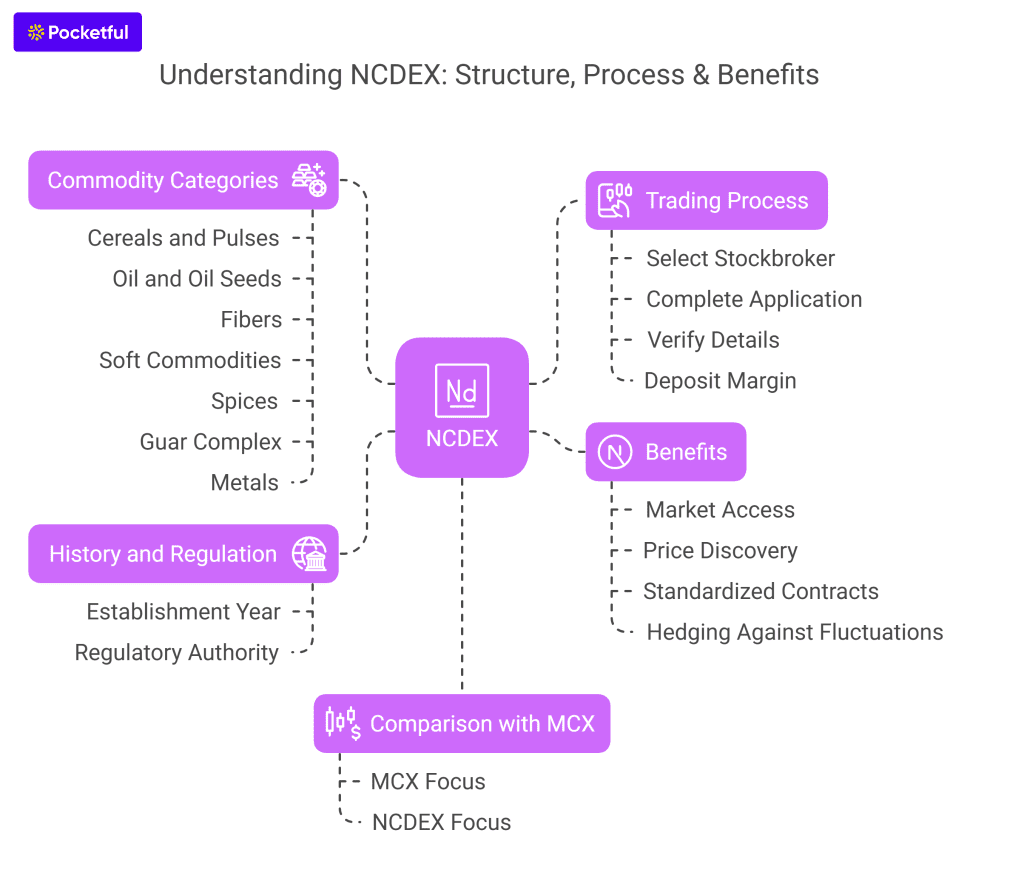
    National Commodity and Derivatives Exchange Limited is an online commodity exchange dealing primarily in agricultural commodities in India. It has a diverse range of products to fulfill the needs of different participants. NCDEX is under the regulatory authority of the Securities and Exchange Board of India (SEBI). It was established in 2003 and has its headquarters in Mumbai.

    NCDEX provides market access to those who wish to protect their commodities against price volatility. It also allows traders to speculate on the price movement of the commodities to generate profits.

    What Is the National Commodity and Derivatives Exchange (NCDEX)

    The exchange offers derivative contracts for agricultural and non-agricultural commodities across seven categories. The seven categories are listed below:

    • Cereals and Pulses: Chana, Barley, Bajra, Wheat, etc.
    • Oil and Oil Seeds: Groundnut, Crude Sunflower oil, Castor seed, Soybean, etc
    • Fibers: Kapas, 29 MM Cotton
    • Soft: Gur, Robusta Cherry AB coffee, Isabgol seed
    • Spices: Turmeric, Coriander, Jeera, Jeera Mini
    • Guar Complex: Guar seed 10 MT, Guar Gum refined splits
    • Metals: Steel Long

    How to Open and Trade in an NCDEX Demat Account?

    To start trading on the NCDEX platform, we first need to create an NCDEX account by following the steps given below:

    1. Select a stockbroker by comparing its benefits and costs with other stockbrokers.
    2. Complete the application form to open an NCDEX account and give personal and bank details. Opening an account also requires documents such as a PAN card, Aadhaar Card, etc.
    3. The stockbroker verifies all your details and approves them. 
    4. When all the details have been verified, the stockbroker will open your NCDEX account. 
    5. You can deposit a margin amount in the account and start placing orders on the exchange.
    6. Once the order is executed, you can monitor the P&L and must ensure that sufficient funds are maintained.

    Examples of NCDEX

    Suppose you are a farmer who grows wheat and expects to harvest the crop three months from now. Prices three months from now can vary from the prices offered today. These unexpected price fluctuations create a risk as the market price of wheat can decline, resulting in reduced profits or even losses for the farmer. In such a situation, the farmer can create a short position in the derivative contract of wheat. Now, there can be two scenarios:

    1. If wheat prices decrease, then the farmer incurs losses on selling the crop at lower prices, but the short position in the derivative contract offsets these losses.
    2. If wheat prices increase, then the farmer profits from selling the crop at higher prices, but the short position in the derivative contract offsets these profits.

    The derivative contract hedges your long position in wheat and thus fixes your profit. 

    Read Also : What is the Timing for Commodity Market Trading?

    What are the Benefits of NCDEX?

    What are the Benefits of NCDEX

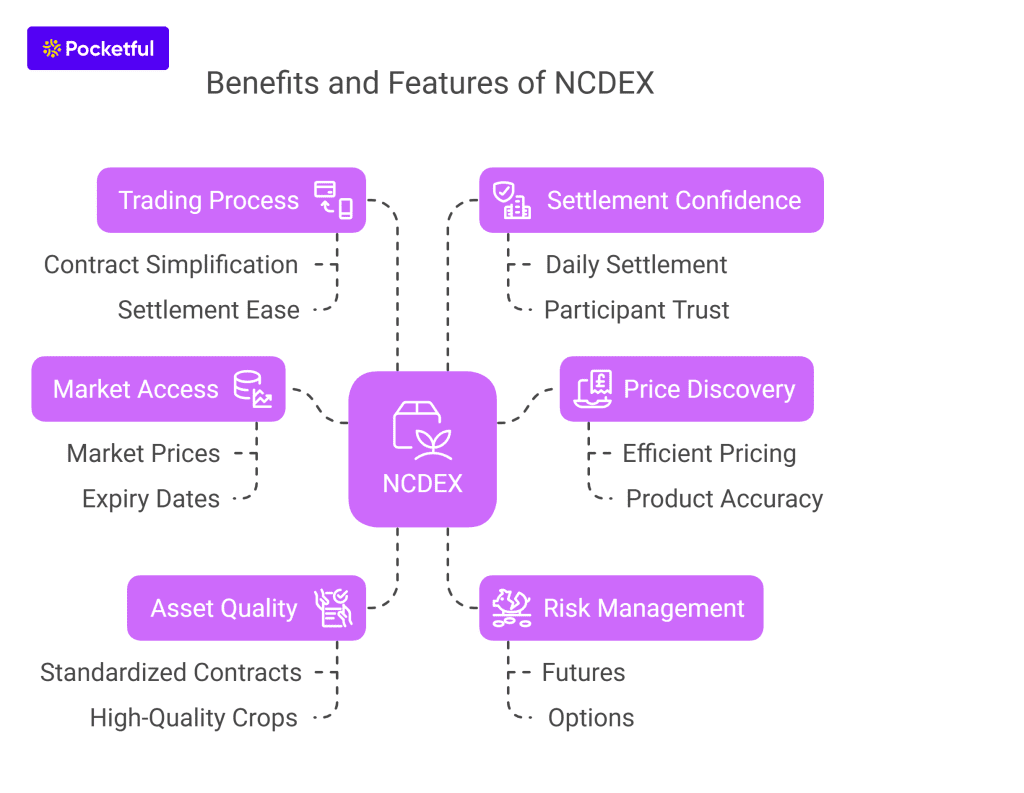
    To take advantage of the NCDEX platform, we must understand its features listed below:

    1. Participants can access market prices, expiry dates, and other important information using the NCDEX platform.
    2. Owners of the assets can use the NCDEX as an efficient price discovery platform to price their products more accurately.
    3. NCDEX has standardized underlying asset quality through contracts, which has resulted in an enhanced focus on producing high-quality crops.
    4. Agricultural commodities are prone to seasonal fluctuations, resulting in significant losses. We can hedge against these price fluctuations using commodity derivatives like futures and options available on the NCDEX. 
    5. NCDEX offers standardized contracts, which simplifies the process of trading and settlement of contracts.
    6. NCDEX follows the mark-to-market settlement cycle, in which the profits and losses are settled at the end of each trading day. This practice helps build confidence among market participants that the contract will be honored.

    Check Out – Search and Filter Commodities

    What is the Difference Between MCX and NCDEX?

    Multi Commodity Exchange (MCX) and National Commodity and Derivatives Exchange (NCDEX) are prominent commodity exchanges in India. Both platforms allow trading in commodities but are different from each other as they deal in different commodities. MCX offers contracts in silver, gold, and other metals, whereas NCDEX offers products primarily related to agricultural goods.

    Read Also : MCX Exchange Case Study

    Conclusion

    National Commodity and Derivatives Exchange Limited (NCDEX) is one of the largest commodity Trading Plateform exchanges in India. It provides market participants an opportunity to hedge against market fluctuation and trade to earn profits. 

    Trading in derivatives can be complex, often resulting in huge losses. Investors must have thorough knowledge regarding derivatives and should consult their financial advisor before making any investment decision.

    Gold Rate in Top Cities of IndiaSilver Rate in Top Cities of India
    Gold rate in KeralaSilver rate in Kerala
    Gold rate in KolkataSilver rate in Kolkata
    Gold rate in LucknowSilver rate in Lucknow
    Gold rate in MaduraiSilver rate in Madurai
    Gold rate in MangaloreSilver rate in Mangalore
    Gold rate in MumbaiSilver rate in Mumbai
    Gold rate in MysoreSilver rate in Mysore
    Gold rate in NagpurSilver rate in Nagpur
    Gold rate in NashikSilver rate in Nashik

    Frequently Asked Questions (FAQs)

    1. What is NCDEX?

       NCDEX, or National Commodity and Derivatives Exchange Limited, is a commodity exchange dealing in agricultural commodities in India.

    2. Who owns NCDEX?

      Major shareholders of NCDEX are NSE (15%), LIC (11.1%), NABARD (11.1%), etc.

    3. What is the difference between NCDEX and MCX?

      NCDEX primarily focuses on trading agricultural commodities, while MCX deals with a broader range of commodities, including metals, energy, etc.

    4. Where are the headquarters of NCDEX?

      The NCDEX headquarters is located in Mumbai.

    5. How can I trade on NCDEX?

      To trade on the NCDEX, one must have an NCDEX account with a registered broker. After registration, one needs to deposit a margin and start trading.

  • Open Free Demat Account

    Join Pocketful Now

    You have successfully subscribed to the newsletter

    There was an error while trying to send your request. Please try again.

    Pocketful blog will use the information you provide on this form to be in touch with you and to provide updates and marketing.