Category: Investing

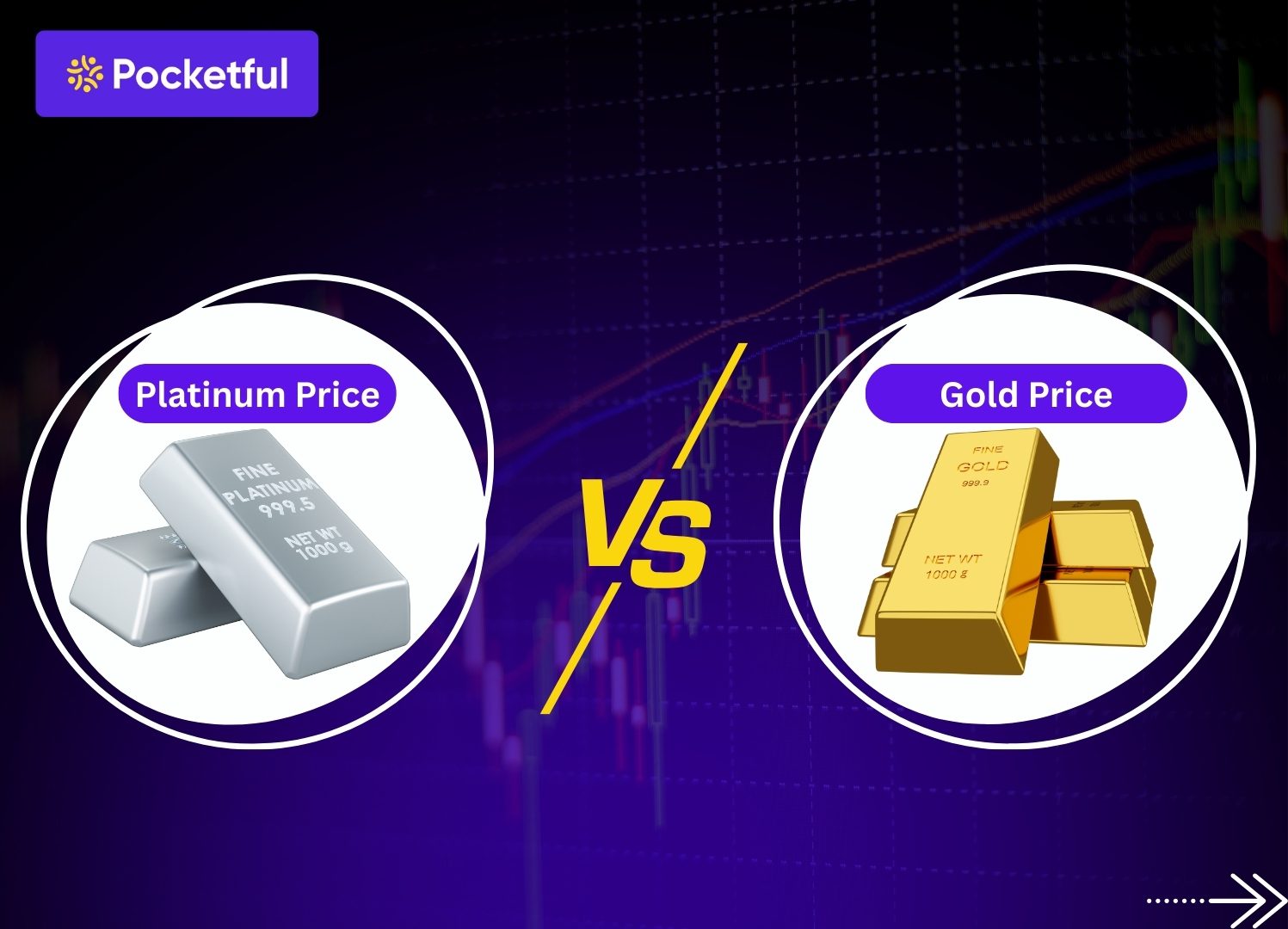
  • Platinum vs Gold: Which is Better to Buy and Invest in 2026?

    Platinum vs Gold: Which is Better to Buy and Invest in 2026?

    Gold has always been a symbol of wealth and has been used as an investment option. Every household in India prefers to have gold as jewellery. Platinum, on the other hand, is regarded as a modern status symbol, often associated with luxury and exclusivity. Many assume that platinum is always more expensive than gold because of its rarity. But is that really true? Let’s break it down.

    In this blog, we will dive into the key difference between platinum and gold and will tell you which one is more expensive and why. 

    Is Platinum More Expensive Than Gold?

    While platinum is 30 times rarer than gold and more difficult to mine, it is currently cheaper than gold in global markets. Here’s why:

    • Rarity vs. Demand: Platinum is rarer, but gold enjoys higher demand worldwide, especially in jewellery, investments, and central bank reserves.
    • Industrial Sensitivity: Platinum’s price is heavily linked to industrial demand (especially in automobiles for catalytic converters). If demand falls, prices dip quickly. Gold, however, is considered a “safe-haven asset” — investors flock to it during uncertainty, which keeps its value higher.
    • Market Dynamics: Global gold prices have consistently stayed above platinum in recent years, despite platinum being harder to extract.

    So, while platinum is more exclusive, gold is usually more expensive per gram.

    Difference Between Platinum and Gold

    The key differences between platinum and gold are as follows:

    ParticularPlatinumGold
    AvailabilityPlatinum is rarer than gold, hence, not easily available.The availability of gold is comparatively higher than that of platinum.
    ColourThe colour of platinum is white or silvery.Gold is generally yellow.
    DurabilityPlatinum is more durable than gold and is a very hard metal.Gold is comparatively softer and prone to scratches.
    PriceThe price of platinum is generally cheaper than that of gold.Gold is more expensive than platinum.
    TradabilityLimited investment options, less liquid.Gold can be easily traded among investors.

    Platinum vs Gold: Which is more durable?

    When it comes to durability, platinum clearly outperforms gold. Platinum is denser and stronger, which means it resists scratches and daily wear better than gold. Over time, platinum maintains its shape and quality, while gold, especially in higher purity forms like 24 carat, is softer and more prone to bending, scratching, and losing its finish due to friction. In short, if durability is your priority, platinum jewellery lasts longer and requires less maintenance than gold.

    Should You Invest in Platinum or Gold?

    In India, gold has always been the traditional choice of investment. It is trusted, widely accepted, and offers both liquidity and long-term appreciation in value. Platinum, on the other hand, is less common as an investment but has the potential to deliver higher returns during favorable market conditions.

    Platinum prices tend to be more volatile because they are closely tied to industrial demand, making it more suitable for investors seeking short-term opportunities. Gold is comparatively stable and continues to be the preferred option for those looking for long-term security and steady growth. Ultimately, the choice between platinum and gold depends on your financial goals and risk appetite.

    Eligibility Criteria for Platinum and Gold Loan

    The eligibility criteria for taking platinum and gold loan in India are as follows:

    1. The individual must be 18 years of age.
    2. A fixed income is not mandatory for securing a loan against gold or platinum.
    3. Having a good credit score is not mandatory for taking platinum and gold loans.

    Read Also: List Of Best Jewelry Stocks in India

    Conclusion

    Platinum is one of the rarest and most valuable metals in the world, known for its durability and density. However, despite its exclusivity, gold continues to hold stronger demand globally and is generally more expensive. Gold is widely accepted, easily available, and deeply rooted in tradition, while platinum stands out for its strength, rarity, and modern appeal. Both metals can serve as investment options, but the right choice depends on your goals and risk appetite. It is always advisable to consult a financial advisor before making an investment in gold or platinum.

    S.NO.Check Out These Interesting Posts You Might Enjoy!
    1Gold Investment: How to Invest in Gold in India?
    2Kalyan Jewellers Case Study
    3Gold ETF vs Gold Mutual Fund: Differences and Similarities
    4Gold BeES vs Gold ETF: Meaning, How It Works, Taxation
    5Top 10 Most Expensive Stocks in India
    6Top 10 Reasons to Invest in Gold

    Frequently Asked Questions (FAQs)

    1. Is platinum more expensive than gold in India?

      Sometimes platinum is more expensive than gold but gold is more expensive generally in India because of higher demand.

    2. Why is platinum cheaper than gold if it is rarer?

      Platinum is more rare than gold but it is less in demand by consumers and industries which often keeps its price relatively low.

    3. Can I take a loan against platinum?

      Yes, there are various NBFCs and financial institutions that provide loans against platinum.

    4. Which is a better investment in 2026, gold or platinum?

      Gold is always as a safe investment, while platinum has growth outlook. The better choice depends on investment goals.

    5. Will platinum prices rise in the future?

      Rising industrial demand, supply constraints and greater adoption in clean energy technologies could push up platinum prices.

    6. Is platinum jewellery a good investment?

      Platinum jewellery is durable and exclusive, however, gold is usually more liquid and has better resale value as an investment.
  • What is Dividend Policy?

    What is Dividend Policy?

    The main goal of investing in stocks is to earn a return, which investors can receive either through capital appreciation or dividends. For companies, this raises an important question: how much profit should be paid out as dividends, and how much should be retained to fund future growth?

    In this blog, we will give you a detailed overview of dividend policies along with their types and factors affecting them.

    What is a Dividend?

    A dividend is a financial reward received by the shareholders of the company. It is distributed out of the company’s profit. The decision to pay the dividend is made by the company’s board of directors. Dividends are declared per share; thus, an investor’s total dividend equals the per-share dividend multiplied by the number of shares they own.

    Meaning of Dividend Policy

    Dividend policy is a strategy or policy used by the company to distribute its profit to its shareholders in the form of dividends. The profits earned by the company are generally shared either in cash or in the form of stocks. The decision to distribute the dividend made by the company is very crucial as it has to maintain the balance between the amount to be distributed among shareholders and the amount to retain in business for further expansion.

    Example 

    Let’s understand the dividend policy of a company through an example. A company named ABC Limited earns a profit of INR 10,00,000 in a financial year, and the total number of outstanding shares is 1,00,000. And the board of directors has decided in a meeting that they want to distribute at least 30% of the total profit in the form of dividends to their shareholders. Which means the amount of profit which will be distributed as a form of dividend will be 30% of 10,00,000, which comes around 3,00,000. Now, the dividend payout according to the company policy is INR 3 per share.

    And the remaining profit amount of 7,00,000, which was not distributed as a dividend, will be used by the company in their further expansion plans.

    Read Also: What Is Dividend Yield? Definition, Formula, and Investment Insights

    Types of Dividend Policy

    The types of dividend policies used by companies are as follows:

    1. Fixed Dividend Policy

    Under this method, the company pays a fixed amount of dividend to their shareholders every year, irrespective of the profit. Which means if the company’s earnings are reduced in any year, it will still give a fixed amount of dividend. On the other hand, if the company’s profit is increased in a year, it still declares the same amount of dividend and its dividend will not increase. Generally, companies aim to maintain a fixed dividend, but extreme profit losses may lead to reductions.

    2. Constant Dividend

    In this, a fixed percentage of the company’s profit is declared as a dividend. In the constant dividend policy, the dividend will be increased with the increase in the profit of the company. Suppose the company decides that it will distribute 10% of its earnings as dividends, then the dividend earned by the investor depends on the earnings of the company.

    3. Residual Dividend

    Residual dividends depend on the company’s capital budgeting requirements, meaning dividends are paid from leftover profits after financing profitable investment opportunities.

    4. Zero Dividend

    Under a zero dividend policy, the company reinvests the entire amount of profit in the business, with an objective to fulfil its growth plans and expansion initiatives.

    Factors Affecting Dividend Policy

    The key factors that affect the dividend policy are as follows:

    1. Profitability: The company’s profit is the key factor on which the company declares its dividend. The higher the profit the higher the dividend.
    2. Earning Stability: Companies with a stable earnings track record tend to follow a stable dividend policy compared to companies with irregular earnings. 
    3. Debt Level: The companies with a higher debt level tend to declare low dividends, as a major portion of their earnings is utilised towards debt repayment.
    4. Future Plan: If the company is primarily focusing on its expansion and growth, then it might use a larger portion of its profit towards funding plans instead of distributing it as a dividend.
    5. Industry: There are various industries which are capital-intensive; they generally do not declare dividends. However, certain companies in sectors like FMCG, OMCs regularly declare dividends.
    6. Holding Pattern: The Company’s shareholding pattern is also another key factor in determining the dividend. If the promoters’ stakes are high, they generally depend on dividends as an income source.

    Importance of Dividend Policy

    The importance of dividend policy is as follows:

    1. Reputation: Companies which regularly declare dividends are considered trustworthy among investors and are preferred by investors who seek regular income.
    2. Financial Strength: Companies which have strong profitability and cash flow generally declare dividends, hence increasing investors’ confidence.
    3. Attracts Investors: Conservative and retirement investors tend to prefer dividend-oriented companies instead of growth-oriented companies, as they look for regular dividends.
    4. Capital Structure: The dividend policy of the company impacts the capital structure decisions. A higher proportion of profits declared as dividends may require the company to raise debt to fund upcoming projects. 
    5. Expectation of Shareholders: The Dividend policy of a company helps an investor in deciding whether to hold or invest in a particular share or not.

    Read Also: Top 10 Highest Dividend Paying Penny Stocks in India

    Conclusion

    On a concluding note, the dividend policy of a company plays a vital role in managing the company’s financial, capital structure, and its commitment towards its shareholders. Balancing dividend payouts with funds retained for future growth is like walking a tightrope. If a company declares a significant portion of its earnings as dividends, then it might lose future growth opportunities. However, it is advisable to consult your investment advisor before investing.

    S.NO.Check Out These Interesting Posts You Might Enjoy!
    1Reliance Penny Stocks List in India
    2Best Semiconductor Penny Stocks in India
    3Best Solar Penny Stocks in India
    4Best EV Penny Stocks India​
    5Best Pharma Penny Stocks in India
    6Top 5 Highest Dividend Paying Stocks in India

    Frequently Asked Questions (FAQs)

    1. What is a dividend policy?

      A dividend policy of a company refers to the strategy of deciding the amount to be declared as a dividend out of profit.

    2. Can a company change its dividend policy anytime?

      Yes, a company’s board of directors has the authority to change the policy related to dividend declaration at any point in time.

    3. How are dividends taxed in India?

      In India, dividends declared by the companies are taxed as per the applicable income tax slab rate of the investors.

    4. Is it mandatory for all companies to declare a dividend?

      No, it is not mandatory for the companies to declare a dividend; they can declare it based on the profit earned by them in a financial year.

    5. What is the interim dividend?

      When a company declares a dividend in the middle of a year, it is known as an interim dividend.

  • What is Indemnity Bond?

    What is Indemnity Bond?

    What if you have misplaced your original share certificates and requested the company to issue a duplicate one? The company will ask you for a bond to protect itself from potential financial losses arising from the misuse of the original share certificate, should it resurface later. This protective document is known as an “Indemnity Bond”.

    In today’s blog post, we will provide you with a detailed overview of what an indemnity bond is, its key features and importance, and the differences between an affidavit and an indemnity bond.

    Meaning of Indemnity Bond

    An indemnity bond is a legal contract in which one party agrees to bear the financial loss or liability incurred by another party. This bond can be considered as a risk-transfer mechanism which ensures that any loss will be paid by the other party. The indemnity bond clearly states the risks and liabilities.

    This bond generally includes details such as names of parties involved in the transaction, nature of indemnity, amount of liabilities, and the conditions under which the bond became applicable, and this indemnity bond needs to be properly stamped and can be used in civil and government processes. 

    Features of Indemnity Bond

    The key features of an indemnity bond are as follows:

    1. Contract: An indemnity bond is a legal written contract which indicates the terms and conditions of the indemnity.
    2. Protect Losses: The primary objective of an indemnity bond is to protect the individual against any financial losses or legal liabilities.
    3. Period: The indemnity contract defines the liability period during which it is enforceable.
    4. Signature: The indemnity bond or contract needs to be signed by the parties involved in it.
    5. Executed: The indemnity contract must be executed on non-judicial stamp paper.
    6. Notarise: Sometimes, as per the local regulations, it is required to get it notarised.

    Read Also: Straight Bond: Key Features, Benefits & Risks

    Importance of using an Indemnity Bond

    There are various important uses of an indemnity bond. A few of the important ones are as follows:

    1. Legal Assurance: An indemnity bond provides legal protection in case of any financial loss due to any specific event. 
    2. Risk Reduction: An Indemnity bond helps transfer the risk of loss from one party to another in the event of unforeseen circumstances.
    3. Customisation: The terms of the indemnity bond can be customised based on the specific needs of both parties.
    4. Enforceable: When the bond is executed on stamp paper and is notarised, then it becomes legally enforceable in court on grounds of breach of contract.

    Calculation of Stamp Duty on Indemnity Bond

    Calculation of stamp duty on an indemnity bond is governed by the Indian Stamp Act, 1899, along with state-specific stamp laws. The amount of duty varies from one state to another. The step-by-step process of how the stamp duty is calculated is mentioned below:

    1. The first step is to identify the value of the indemnity bond. The amount generally includes the maximum liability or coverage which an indemnifier agrees to cover.
    2. Then you need to refer to the stamp duty rate based on your state. These rates are generally fixed or sometimes depend on the value of the bond.
    3. After the calculation of stamp duty, you are required to purchase the non-judicial stamp paper of appropriate value.

    Read Also: What is Government Bond

    Difference between Affidavit and Indemnity Bond

    There are significant differences between an affidavit and an indemnity bond; a few of these differences are mentioned below:

    ParticularAffidavitIndemnity Bond
    MeaningIt is a written document of facts voluntarily taken as sworn and is notarised. It is a legal contract in which one party agrees to compensate the other party for the loss.
    ObjectiveThe objective of an affidavit is to declare facts truthfully.An indemnity bond is used to protect against financial or legal liabilities.
    TypeIt is declaratory.It is contractual.
    LiabilitiesIt does not involve any direct liabilities.It carries liabilities by the indemnifier.
    NotarizationNotarization of the affidavit is required.It is advisable to get an indemnity bond notarised, but it is not always mandatory.
    UsageIt is generally used for lost certificates, changes in name, address proofs, and other types of declarations etc.An indemnity bond includes the refund claims, transfer of shares, property matters, etc.

    Read Also: What is Insurance Bond?

    Types of Indemnity Bond

    The various types of indemnity bond include:

    1. Indemnity bond for property

    In this, the indemnity bond is used when there is a transfer of property ownership when original documents are missing. In such cases, municipal authorities or registrars may require an indemnity bond.

    2. Indemnity bond for banks

    The indemnity bond is also required when the fixed deposit receipts or account instruments are lost. By giving this bond, the bank will not be held liable for the loss of the instrument if it is misused. 

    3. Loss of Share Certificates

    When the share certificates are lost or misplaced, the investor must submit an indemnity bond to the company in order to obtain a duplicate share certificate.

    4. Loan Repayment

    There might be certain cases in which the loan provider asks for the indemnity bond. This generally occurs when a guarantor is unavailable or when required documents are missing. 

    Read Also: What are Social Bonds?

    Conclusion

    On a concluding note, an indemnity bond is a vital legal instrument that safeguards individuals and companies against potential financial or legal liabilities. Various types of indemnity bonds are available to suit different needs, and executing one requires payment of the applicable stamp duty. It is always advisable to consult a qualified legal advisor before entering into any indemnity bond.

    S.NO.Check Out These Interesting Posts You Might Enjoy!
    1Electoral Bonds Explained: What Are They and Why Did Supreme Court Ban It?
    2CAT Bonds: An Easy Explainer
    3Explainer on Green Bonds: History, Process, Pros, Cons, and Future Outlook
    4What Is Bowie Bond (Music Bonds) : History, Features, Advantages & Disadvantages
    6Secured and Unsecured Bonds: Understand the Difference
    7Detailed Guide on Bond Investing: Characteristics, Types, and Factors Explained
    8What is Coupon Bond?
    9Tax-Free Bonds: Their Features, Benefits, and How to Invest
    10What are Bond Yields?
    11Stocks vs Bonds: Difference Between Bonds and Stocks
    12What Are Corporate Bonds?

    Frequently Asked Questions (FAQs)

    1. Can an indemnity bond be legally enforceable?

      Yes, an indemnity bond can be legally enforceable in a court. It must be executed with proper stamp duty; while notarization adds evidentiary value, it is not mandatory for enforceability.

    2. Which party prepares the indemnity bond?

      The indemnifier prepares the indemnity bond.

    3. What is an indemnity bond?

      An indemnity bond is a legally enforceable contract in which one of the parties agrees to compensate the other for any potential loss or legal liability.

    4. When an indemnity bond is required?

      An indemnity bond is required in different situations, like loss of shares, transfer of property or assets, etc.

    5. What is the difference between an affidavit and an indemnity bond?

      An indemnity bond is a promise to compensate for the losses or damages, whereas an affidavit is a sworn statement of some facts. 

  • What are War Bonds?

    What are War Bonds?

    Governments require large amounts of funds during war, and war bonds become important in such a situation. These bonds help in funding war expenses by raising money from the common people. During the Second World War, people in countries like America and Britain invested in war bonds out of patriotism. It was not just an investment, but also a symbol of trust between the government and the citizens. 

    In this blog, we will know the purpose of war bonds, its benefits, limitations and its importance in today’s time.

    What are War Bonds?

    War bonds are bonds issued by the government to raise funds in emergency situations like war. They allow ordinary citizens to lend money directly to the government, supporting the nation’s defense efforts. Technically, it is a debt instrument, in which the government borrows money from the public for a fixed period of time and returns it later with interest.

    How do War Bonds work?

    When a country is in a war-like situation, its expenses increase drastically such as purchasing weapons, training soldiers, medical facilities, supplies, etc. To meet all these expenses, governments often issue war bonds during wartime. Citizens buy these bonds, which gives the government immediate funds, and after a few years the government repays that amount with interest.

    For example, during World War II, the US launched Series E War Bonds, which had a maturity of 10 years and relatively low interest rates. The purchase of these bonds was motivated by patriotism, not by the hope of high returns.

    Read Also: What Is a Callable Bond?

    Key Features of War Bonds

    • Government Guarantee: War bonds are fully backed by the government, which makes the risk of default very low.
    • Fixed Maturity: These bonds have a fixed tenure (such as 10, 15 or 20 years), after which the investor gets his money back with interest.
    • Low Interest Rate: They usually pay interest rates lower than the market rate because their motive is service to the nation, not profit.
    • Patriotism: During wartime, they were sold through massive publicity, movies, posters and celebrities.

    History and Role of War Bonds in India

    The concept of war bonds was used in India during the British period during World War I.

    • British War Loans : The British government raised money from the Indian public through war loans and war funds in India.
    • Large landowners, merchants and ordinary citizens were asked to contribute to the war effort.
    • Many Indian industrialists and kings purchased war bonds in large amounts.

    Although war bonds in the traditional sense were not used in independent India, the Government of India launched instruments like Defence Savings Certificates which were similar to war bonds.

    War Bonds vs. Normal Government Bonds

    PointWar BondsRegular Government Bonds
    PurposeTo fund war-related expensesFor infrastructure, development, etc.
    Interest RateRelatively lowMarket-based returns
    PromotionEmotion-driven and patriotic messagingPromoted based on financial benefits to investors
    RelevanceUsed in special/emergency situations (like wars)Used for general and long-term government plans

    History of War Bonds and Global Examples

    War Bonds began during World War I, but their greatest impact was seen in World War II. To meet the heavy expenses of the war, countries like the US, Britain, Canada, Germany and Japan issued war bonds to raise money from the public. These bonds were not only a means of financial support, but also became a means of connecting the public emotionally to the war effort.

    • America : Liberty Bonds and later Series E War Bonds were introduced in the US. The government made their sale a patriotic campaign through Hollywood stars, posters and radio.
    • Britain : In Britain, National War Bonds were linked to national service and were promoted through churches and newspapers.
    • Canada : Canada issued Victory Bonds, which were sold in schools and offices. Even children were encouraged to contribute to War Savings Stamps.
    • Germany : In Germany, these were called Kriegsanleihe and were linked to national pride.
    • Japan : Japan used religious and cultural influences to get citizens to contribute to savings schemes.

    One special thing about these bonds was the active participation of the public. From children to women, everyone bought war bonds, due to which the entire society indirectly participated in the war.

    Purpose of War Bonds

    In a situation like war, the government needs not only resources but also the cooperation of the public. War Bonds were the economic form of this cooperation. These bonds created a relationship of trust between the government and the citizens, where people invested their money in the security of the country.

    • Direct financial support for war expenses : The government needed huge funds for things like military needs, weapons, medical facilities and logistics. War bonds helped in fulfilling that need immediately.
    • Connecting the public with war efforts : Through these bonds, common people could also contribute to the war. This made the citizens feel that they were not just spectators, but a part of this battle.
    • Controlling inflation by reducing cash in the market : Investing in war bonds reduced the money in the market, which made it easier to control excessive expenditure and inflation during the war.
    • Reducing dependence on foreign borrowing : Domestic investment saved the government from having to borrow from abroad, thus maintaining economic self-sufficiency.
    • Trust between the public and the government : Bonds created a trust that the country will protect your capital and pay it back on time. This trust was the real strength of these bonds.

    Read Also: What are Social Bonds?

    Benefits of War Bonds 

    War Bonds were not just a funding tool, but a medium through which the government, the public and the economy all three got different benefits.

    Benefits for the government

    • The government got funds without any delay, which did not hinder the war operations.
    • Domestic investment reduced dependence on foreign debt.
    • This method was also politically convenient because selling bonds was more acceptable to the public than raising taxes.

    Benefits for the citizens 

    • These bonds were considered safe investments as they were government guaranteed.
    • This inculcated the habit of saving and long-term financial planning in people.
    • People also got emotional satisfaction that they were doing something for their country.

    Benefits for the economy

    • Investing money in war bonds removed cash from the market, which kept inflation under control.
    • Economic unity and stability was maintained throughout the society.

    Read Also: What is Government Bonds

    Limitations and criticisms of War Bonds

    While War Bonds helped the government to fund the war, on the other hand, they also had some limited and controversial aspects which cannot be ignored.

    • Low returns : The interest received on War Bonds was usually much lower than the market rate. These bonds were based on patriotic sentiments, not on attractive investment returns.
    • Limited liquidity : It was difficult to redeem War Bonds before the scheduled time. This investment was not suitable for short-term needs, which troubled many investors later.
    • Publicity and social pressure : Governments ran large-scale publicity campaigns to sell these bonds. Sometimes this campaign was so emotional and gilt-based that people were forced to invest.
    • Not successful in all countries : In some countries, including India, War Bonds did not reach the expected target. Sometimes the economic condition of the public or lack of trust became the reason.
    • Post-war problems : After the war, some people were not able to redeem their bonds, or they were not aware of it. Even today, many old estates yield unclaimed War Bonds, whose validity has expired with time.

    Are War Bonds Still Relevant Today?

    In today’s time, the economy and the methods of government funding have changed a lot. Earlier, where the government was given financial help through direct participation of the public like War Bonds, now it has been replaced by big banks, foreign investors and institutional funding. In such a situation, options like War Bonds are not commonly used now, but is their need completely over?

    If we look at the international level, the US had issued “Patriot Bonds” after 9/11, whose purpose was to get financial support from the common people for national security. Similarly, bonds were also introduced for defense funding on a limited scale in some European countries. These examples make it clear that schemes like War Bonds can be implemented even today if needed.

    There is currently no official structure like War Bonds in India. If a serious national crisis arises in the future such as border disputes or cyber attacks then the government can restart schemes like War Bonds in digital and transparent form. This will not only be a means of raising funds, but can also become a powerful medium to involve citizens in nation building.

    Read Also: What is Straight Bond

    Conclusion

    During wartime, War Bonds served as a bridge of trust between the government and the public. They provided financial support while also reflecting the active participation of citizens. Today, even though War Bonds are part of history, their spirit of unity and contribution to the nation remains alive. If such circumstances arise again in the future, this model could be revived, especially when public support is the greatest resource.

    S.NO.Check Out These Interesting Posts You Might Enjoy!
    1Electoral Bonds Explained: What Are They and Why Did Supreme Court Ban It?
    2CAT Bonds: An Easy Explainer
    3Explainer on Green Bonds: History, Process, Pros, Cons, and Future Outlook
    4What Is Bowie Bond (Music Bonds) : History, Features, Advantages & Disadvantages
    6Secured and Unsecured Bonds: Understand the Difference
    7Detailed Guide on Bond Investing: Characteristics, Types, and Factors Explained
    8What is Coupon Bond?
    9Tax-Free Bonds: Their Features, Benefits, and How to Invest
    10What are Bond Yields?
    11Stocks vs Bonds: Difference Between Bonds and Stocks
    12What Are Corporate Bonds?

    Frequently Asked Questions (FAQs)

    1. What are War Bonds used for?

      They are used to raise funds for the country in times of war or emergency.

    2. Are War Bonds still issued in India?

      No, War Bonds are not issued in India at present.

    3. Do War Bonds give returns like normal bonds?

      No, the returns are very low or sometimes not available.

    4. Who can invest in War Bonds?

      Any citizen or institution that wants to help the country can invest.

    5. Are War Bonds safe to invest in?

      Yes, they are government-backed, but returns are not guaranteed.

  • What is Insurance Bond?

    What is Insurance Bond?

    Securing the future along with saving has become a necessity for everyone today. In such a situation, an insurance bond is an option that maintains a balance between investment and insurance. This is a great option for those who want to save tax and also want to invest money safely for a long time. 

    In this blog, we will tell you every important thing related to insurance bonds in simple language – so that you do not have any problem in understanding and you can take the right decision.

    What is an Insurance Bond?

    An insurance bond is a long-term investment product offered by insurance companies. You invest in it by paying a lump sum premium and in return you get insurance protection along with a fixed return after a few years. You can consider it a combination of investment and life insurance.

    How is it different from Mutual Fund and traditional insurance?

    • Mutual Funds are only investment focused, there is no insurance cover in them.
    • In traditional insurance policies, the focus is mainly on death benefit, the returns are low.
    • But in an insurance bond, you get a minimum life cover along with return on investment.

    Its main elements

    • Lump sum investment: You have to pay the premium only once.
    • Lock-in period: Usually there is a lock-in of 5 to 10 years.
    • Tax benefits: Tax can be deferred on some plans or tax-free returns can also be obtained if the conditions of Section 10(10D) are met.
    • Part nomination option: It makes the process of financial planning and will easier.

    Example : Understand it like this – you have made a Fixed Deposit in which a small life insurance cover is also attached. That is, your capital is safe and security cover is also there. This balance makes the insurance bond special.

    Read Also: What Is a Callable Bond?

    Types of Insurance Bonds

    There are many types of insurance bonds, designed based on different investment needs, risk profiles and tax planning. Below are the 3 main types that are prevalent and valid today:

    1. Surety Bond

    A surety bond is an agreement in which a third party (insurance company) guarantees on behalf of a person or organization that it will complete the work or service on time and properly.

    • It has three parties: Principal (who has to do the work), Obligee (who needs the work), and Surety (who gives the guarantee).
    • It is usually used in large construction, government tenders or contract work.
    • If the contractor does not complete his work, the surety (insurance company) compensates for the loss.

    Use: Infrastructure projects, government tenders, service contracts

    2. Fidelity Bond

    The purpose of fidelity bond is to protect companies from losses caused by fraud or improper behavior of their employees.

    • It is often also called “Employee Dishonesty Bond”.
    • This bond protects employers in case an employee commits theft, fraud or misuse of funds.
    • It is also available for small businesses and is considered a strong means of risk management.

    Uses: Banking, Financial Services, Securities Firms, Startups

    3. Investment Bond

    An investment bond is a life insurance policy designed for the purpose of investment. By paying a lump sum premium, you invest for a long time and in return get life cover as well as returns.

    • It is usually used by individual investors who want to do tax planning and long-term investing.
    • These bonds are available in several forms: Guaranteed Bond, With-Profit Bond and Market-Linked ULIP Bond (all of these will be explained in detail in the next section).
    • In India, companies like HDFC Life, ICICI Prudential, and LIC offer these types of bonds.

    Uses: Long-term savings, tax deferral planning, estate planning, children’s financial preparation.

    Read Also: What are Social Bonds?

    Sub-Types of Investment Bonds You Should Know Before Investing

    1. Guaranteed Insurance Bonds

    This is the safest type of insurance bond. In this, you get a pre-determined fixed return, as well as the capital is guaranteed.

    • Best for risk-free investment
    • Usually 5 to 10 years tenure
    • Includes life insurance cover

    Example: Annuity-based bonds like LIC’s Jeevan Shanti

    Suitable for: Retired persons or NRIs who want fixed returns

    2. Unit-Linked Insurance Bonds (ULIP-type)

    In this type of bond, your investment is linked to the market, i.e. invested in equity or debt funds.

    • Possibility of high returns, but risk is also high
    • Suitable for long-term investors
    • Both insurance cover + market returns

    Example: HDFC Life Sanchay Plus ULIP option

    3. With-Profit Insurance Bonds

    These bonds give a share in the profits of the insurance company. You can get additional benefits in the form of bonus or fair revision.

    • Bonus is usually declared annually
    • Balance of risk and return
    • Possibility of good returns in the long term
    • Offered by large insurance companies

    4. Offshore or International Insurance Bonds

    These are especially for HNIs (High Net-Worth Individuals) who invest for global tax planning or currency diversification.

    • Not suitable for regular investors in India
    • Mostly used by NRIs living in UK, UAE or Singapore
    • Helpful in tax deferral and will planning

    Every investor should choose the right type of insurance bond based on his risk profile, investment period and tax planning.

    Key Features of Insurance Bonds

    • Single Premium Payment : Insurance bonds usually require the investor to invest the entire amount in one go. This makes them an easy and hassle-free option.
    • Life Insurance Coverage : These bonds include a limited life insurance protection, which provides the amount to the nominee on the death of the policyholder.
    • Lock-in period and surrender clause : These can have a lock-in period of 5 to 10 years. During this time, withdrawal of money is not possible or a penalty is levied.
    • Benefit of tax deferral : Capital gains tax on investment in insurance bonds is deferred until you redeem it. This can be beneficial for long-term tax planning.
    • Nominee facility and ease of succession : It is easy to add a nominee in these, so there is no legal hurdle in investment transfer.

    Read Also: What is Government Bond

    Who Should Consider Insurance Bonds?

    • Retired Individuals : For those who want to protect capital and save taxes after retirement, insurance bonds can be a stable option.
    • Non-Resident Indians (NRIs) : For NRI investors whose priority is estate planning and easy nominee transfer, these invest in bonds are considered ideal.
    • Salaried Professionals : For professionals looking for some tax-efficient and safe investment other than EPF, PPF or FD, these bonds are beneficial.
    • High Net Worth Individuals (HNIs) : For those who need benefits like wealth transfer and tax deferral, this long-term instrument is useful.

    Risks and limitations of insurance bonds

    • Lock-in period : Insurance bonds usually have a lock-in period of 5 to 10 years, making them unsuitable for short-term needs.
    • Limited liquidity : Premature surrender of bonds is not easy and may attract a penalty or charge in some cases.
    • Lower returns than market : ULIP-based insurance bonds are subject to market risk, while traditional plans often have fixed returns that may be lower than mutual funds.
    • Surrender charges : If you wish to withdraw your investment before maturity, some plans may have to pay surrender charges.
    • Capital not guaranteed: In bonds like ULIPs, your capital may be at risk as it is linked to equity or debt funds.

    Read Also: What is Straight Bond

    Insurance Bonds vs ULIPs vs Mutual Funds

    FeatureInsurance BondULIPMutual Fund
    Life CoverYesYesNo
    Tax DeferralYesYesNo
    Lock-in5+ years5 yearsNo
    LiquidityLowMediumHigh
    Risk ProfileLow to MediumMedium to HighVaries
    GoalEstate/tax planningInvestment + InsurancePure investment

    Tax Treatment of Insurance Bonds in India

    1. Section 10(10D) exemption

    If the annual premium in an insurance bond is ₹5 lakh or less, the maturity amount is tax-free. This exemption is applicable only if all the conditions are met.

    2. Tax on premium exceeding limit

    If the premium in a year is more than ₹5 lakh, the maturity amount of that insurance bond will be considered as “Other Income” and will be taxed as per the slab rate.

    3. TDS deduction

    If the maturity or surrender amount is more than ₹1 lakh, and is not exempt under Section 10(10D), then 5% TDS will be deducted on it (under Section 194DA).

    4. Investment period benefits

    Keeping the investment period in insurance bonds longer gives the benefit of tax deferral i.e. no tax is levied until redemption.

    Read Also: What Is Foreign Currency Convertible Bonds (FCCB)?

    Conclusion

    Insurance bonds are an option that provides insurance protection as well as an investment opportunity. If you are looking for a tool where the risk is low and the money is safe for a long time, then this can be an option worth thinking about. Yes, before taking a decision, definitely understand its rules, tax and lock-in aspects. A small step taken with the right information can give big benefits in the future.

    S.NO.Check Out These Interesting Posts You Might Enjoy!
    1Electoral Bonds Explained: What Are They and Why Did Supreme Court Ban It?
    2CAT Bonds: An Easy Explainer
    3Explainer on Green Bonds: History, Process, Pros, Cons, and Future Outlook
    4What Is Bowie Bond (Music Bonds) : History, Features, Advantages & Disadvantages
    6Secured and Unsecured Bonds: Understand the Difference
    7Detailed Guide on Bond Investing: Characteristics, Types, and Factors Explained
    8What is Coupon Bond?
    9Tax-Free Bonds: Their Features, Benefits, and How to Invest
    10What are Bond Yields?
    11Stocks vs Bonds: Difference Between Bonds and Stocks
    12What Are Corporate Bonds?

    Frequently Asked Questions (FAQs)

    1. What is an Insurance Bond?

      Insurance Bond is a long-term investment that is a combination of insurance and investment.

    2. Is Insurance Bond Safe?

      Yes, it is usually safe as it also includes insurance cover.

    3. Can I withdraw money from an Insurance Bond anytime?

      No, it has a lock-in period, usually 5 to 10 years.

    4. Are Insurance Bonds tax-free?

      There is a tax benefit in some cases, but it is not completely tax-free.

    5. Who should invest in Insurance Bonds?

      People who want long-term financial security and tax planning.

  • Government Securities (G-Secs) in India: Meaning & How to Invest

    Government Securities (G-Secs) in India: Meaning & How to Invest

    In a market filled with diverse investment options, government securities (G-Secs) stand out for their safety, stability, and the trust they carry from being backed by the government. These are bonds issued by the central or state governments to raise funds, offering investors assured returns in the form of interest over a fixed period. With the launch of platforms like RBI Retail Direct, even retail investors can now participate easily in this asset class. 

    In this blog, we’ll explore what government securities are, their different types, and the simple ways you can invest in them.

    What is Government Securities? Meaning Explained

    Government securities represent debt instruments issued by the central or state governments to raise funds. These are like debentures, in which the government borrows money from investors for a fixed period and pays regular interest on it. There is a guarantee of return of principal on completion of the investment period.

    Their main objective is –

    • To strengthen the country’s infrastructure
    • To provide financial support to government schemes
    • To balance the fiscal deficit
    • Since these securities are backed by the government, they are considered one of the safest investment options, making them especially suitable for conservative investors.

    How do government securities work?

    Their operation is quite simple:

    • You lend a fixed amount to the government.
    • The government pays you interest (coupon) every 6 months or annually.
    • After the fixed period, the government returns your entire principal.
    • If you want, you can sell it in the secondary market in between.

    Comparison with other investment options

    Investment OptionSafetyReturnsLiquidityTax Benefits
    Government SecuritiesVery HighStableHigh (Tradeable)Limited
    Corporate BondsMediumRelatively HigherMediumAvailable
    Fixed Deposits (FDs)HighLowMediumPartial

    Key Features of Government Securities

    • Government issued : Government securities are issued by the Government of India or state governments, so investments in them enjoy a high level of security. They are also considered “risk-free investments”.
    • Regular interest payments : On long-term G-Secs such as dated securities, investors get a fixed interest (coupon) every 6 months. This becomes a source of fixed income.
    • Different tenure options : Government securities are available for different time periods – like Treasury Bills (91 to 364 days), Dated Securities (5 to 40 years). This allows investors to choose the option according to their needs.
    • Liquidity : These securities can be bought and sold in the secondary market, making it easy to withdraw money when needed.
    • Tax and returns : Interest on some securities such as Sovereign Gold Bonds is taxable, while Capital Indexed Bonds reduce the impact of inflation.
    • RBI monitoring : The entire process of these securities is monitored by the Reserve Bank of India (RBI), which maintains transparency and credibility.

    Read Also: What are Social Bonds?

    Benefits of Government Securities

    • Trust in investment : Government securities are issued directly by the central or state governments, so the risk is negligible. It is ideal for investors who want to invest their money with complete safety.
    • Timely returns : These securities offer fixed interest, which is mostly paid every 6 months. That is, you keep getting regular income, which is beneficial for those who are in retirement or have fixed income.
    • Stability to portfolio : If you have risky investments like shares or mutual funds, then G-Secs help in balancing them. It can reduce losses in the long term.
    • Easy liquidity : If needed, you can sell them in the secondary market. That is, your money is not stuck anywhere.
    • Tax relief : Some government securities like Sovereign Gold Bonds are not taxed after maturity, which increases your total income.
    • Opportunity open for small investors too: Now through online platforms like RBI Retail Direct, you can start investing in G-Secs with as little as ₹10,000.

    How to Invest in Government Securities

    In today’s time, investing in government-issued securities has become easier and more transparent than ever before. Now even common investors can get safe returns by connecting directly with the government. Let’s know its major options:

    1. RBI Retail Direct Portal

    • Indian citizens can register on this portal for free with a PAN and bank account.
    • From here you can directly participate in the auction of T-Bills, G-Secs and SDLs.
    • There is no broker or commission, making it extremely favorable for new investors.

    2. NSE GoBID and BSE Direct

    • Those who already have a demat account and broker can also invest in government securities through these portals.
    • The investment process is easy as everything is linked to the demat.
    • This is a fast and efficient way for experienced investors.

    3. Secondary Market (Pocketful)

    • You can buy/sell already issued government bonds from the open market.
    • Their prices are based on market rates and interest rates.
    • This is a flexible option for active traders.

    4. Debt Mutual Funds / Target Maturity Funds (TMFs)

    • If you don’t want to buy bonds directly, you can invest indirectly in G-Secs through TMFs or Gilt Funds.
    • This method offers professional management, tax-efficiency and easy diversification.
    • Great option for long-term (3+ years) investors.

    Read Also: Types of Bonds in India

    Risks and Considerations Before You Invest

    Government securities are considered safe, but there are some risks and things associated with them which are important to understand. Only with the right planning and understanding can one get better returns.

    1. Interest Rate Risk

    If interest rates rise in the market, the value of existing bonds decreases.

    Especially long-term G-Secs are more affected by this fluctuation. If you have to sell them prematurely, you may suffer a loss.

    2. Liquidity Constraint

    There are fewer buyers in the market for some State Development Loans (SDLs) or long-term bonds. In contrast, Treasury Bills are more liquid and it is easier to sell them quickly.

    3. Tax Implications

    The interest received on G-Secs is added to your income and is taxed as per your income tax slab. Although TDS is not deducted on these, you have to show it in ITR.

    4. Mismatch of Maturity

    If you invest in a long-term bond, say a 20-year government security, but you actually need funds in just 3 years, you may face a mismatch. Selling the bond before maturity could expose you to price fluctuations and potential losses.

    5. Reinvestment Risk

    When short-term securities like T-Bills mature, you might have to reinvest at lower yields if rates fall.

    Read Also: Different Types of Government Securities

    Conclusion

    Government securities are widely regarded as a reliable investment option. They ensure capital protection while offering investors a range of choices across different time horizons. From short-term Treasury Bills to long-term Sovereign Gold Bonds, there is a suitable option for every type of investor. Backed by the government, these instruments not only provide stability to a portfolio but also maintain transparency and trust in the market.

    S.NO.Check Out These Interesting Posts You Might Enjoy!
    1Electoral Bonds Explained: What Are They and Why Did Supreme Court Ban It?
    2CAT Bonds: An Easy Explainer
    3Explainer on Green Bonds: History, Process, Pros, Cons, and Future Outlook
    4What Is Bowie Bond (Music Bonds) : History, Features, Advantages & Disadvantages
    6Secured and Unsecured Bonds: Understand the Difference
    7Detailed Guide on Bond Investing: Characteristics, Types, and Factors Explained
    8What is Coupon Bond?
    9Tax-Free Bonds: Their Features, Benefits, and How to Invest
    10What are Bond Yields?
    11Stocks vs Bonds: Difference Between Bonds and Stocks

    Frequently Asked Questions (FAQs)

    1. Are government securities risk-free?

      Yes, these are considered the safest because the government guarantees them.

    2. How can I invest in government securities?

      You can easily invest through RBI’s retail direct portal or your demat account.

    3. Do they offer fixed returns?

      Yes, many securities work on a fixed interest rate, so the return is known in advance.

    4. Can I exit before maturity?

      Yes, you can sell them in the secondary market anytime if you want.

    5. Are there any tax benefits?

      Some options offer tax exemption, like SGB is not taxed for capital gains after maturity.

  • What Is a Callable Bond?

    What Is a Callable Bond?

    When we hear the word “bond,” we usually think of a secure and reliable way to invest. You give the issuer money, they pay you interest/coupon, and then you get your invested money back at maturity. Isn’t that too simple? Perhaps not always.

    Callable bonds are a kind of bond with an embedded call option. These bonds let the company pay you back early, like paying off a loan before the due date. It might sound strange, but there is a reason for it, and it could impact your returns.

    In this blog, we will explain what callable bonds are, why companies prefer issuing them, how they work, and what you should be careful of if you want to buy them.

    Understanding Callable Bonds 

    Callable bonds, sometimes referred to as redeemable bonds, are the kinds of bonds in which the issuer may choose to repay you before the bond’s actual maturity date. For example, if a company issues a bond with a 10-year term, they may decide to return your money and stop giving you interest after five or six years. They are “calling” the bond at that point.

    Let us say you buy a bond from XYZ Ltd. It should mature in ten years and pay you 8% interest annually. However, market interest rates fall to 7% after five years. XYZ chooses to call back the bond, simply returning your money early and issuing new bonds at the lower rate, after realising it can now borrow money at a lower interest rate.

    Example 

    Assume you purchase a bond issued by ABC Ltd. This is how the transaction looks like:

    You give them a ₹1,000 loan. They guarantee to give you ₹80 a year, or 8% interest or coupon. The bond has a 10-year term. However, after five years, the company may choose to “call” the bond.

    What You anticipate: In ten years, you expect to earn ₹80 annually and receive your ₹1,000 back along with ₹800 in coupon payments. 

    However, here is the catch: Suppose that after five years, market interest rates fall to 7%. Now the issuer will think that why are they still paying 8% when they could borrow money from someone else at just 7%?” Thus, the bond is called back. In simple terms, they return your ₹1,000 and stop coupon payments after that.

    Now, How Does That Affect You? You received your ₹1,000 back. However, you must now reinvest that ₹1,000, and since interest rates are lower, your future earnings will be lower.

    Read Also: What Is Foreign Currency Convertible Bonds (FCCB)?

    Why do Companies Issue Callable Bonds

    Companies prefer issuing callable bonds because of the following reasons: 

    1. To Reduce Interest Expenses

    Suppose a business borrows funds by issuing bonds with a 9% coupon rate. Interest rates drop to 8% a few years later. The company now has the option to pay back the bonds early and issue new bonds at a lower interest rate.

    2. Adaptability Always Pays Off

    Markets fluctuate, and objectives change. Companies can control their debt with callable bonds. Instead of being stuck with the bonds for the long run, they can easily call them back if they are doing well financially or no longer need the borrowed funds.

    3. Restructuring Debt

    Companies prefer to be a few steps ahead. They would prefer the option to restructure their debt at a later time if they believe that interest rates will decrease or that their credit score will rise. They are able to keep that door open through callable bonds.

    4. Investors Continue to Express Interest

    Callable bonds do carry some risk for investors, primarily the possibility that the bond will be called early. However, issuers generally offer higher interest rates to offset this risk. Thus, a lot of investors are still happy about buying them.

    Read Also: What Are Corporate Bonds?

    Benefits of Investing in Callable Bonds 

    Adding them to your portfolio can be very helpful. Let’s find out what makes them interesting:

    1. They usually pay more interest

    Callable bonds usually have a higher interest rate than regular bonds. Why? The company might pay you back early, so they give you more to make it worth your while. If you want better returns on fixed income, this could be a good option.

    2. Early payout with a bonus

    If a bond is called before maturity, the company returns your principal along with a small extra amount known as the call premium. This means you could receive your money back plus a bonus earlier than expected.

    3. Good When Interest Rates Are High

    When interest rates are high, you can get higher payouts on callable bonds for as long as the bond is active. Even if the bond gets called, you have still made a good amount of money in the meantime.

    4. Good for Goals That Will Take a While to Reach

    Are you making plans for something that will happen in a few years, like buying a house or paying for your child’s education? Callable bonds might work well, especially since many of them get called back before they reach full maturity.

    Risks Involved in Callable Bonds 

    Some of the risks involved when investing in callable bonds is given below:

    1. They Can Lower Your Expected Returns

    One of the worst things callable bonds is that the company has the right to call the bond before its maturity . So, if you thought you would earn interest for 10 years before investing and they call it back in 5 years, then you might have to reinvest and settle for lower interest earnings or returns. 

    2. Planning for the future is not always easy.

    You know exactly for how long regular bonds will last and how much money you will make. But with callable bonds, there is always a question mark: “Will they call it back?” If yes, then when? It is a little harder to plan for the long term when things are so unpredictable.

    3. You could miss out on bigger gains.

    Let us say that interest rates go down and bond prices go up. That would be great most of the time! But if the bond is called right when prices are going up, you lose out on those possible profits, which obviously does not feel good.

    Read Also: What are Social Bonds?

    Callable Bonds vs. Puttable Bonds 

    FeatureCallable BondsPuttable Bonds
    Who exercises the option?The issuer gets to decide.You, the investor, get to decide
    The dealThe issuer can buy the bond back early, before maturityYou can sell the bond back early if you want out
    ObjectiveUsually happens when interest rates drop, they want to refinance at cheaper ratesUsually, when interest rates go up, you want to reinvest at a better rate
    Who controls the timing?The issuer calls the bonds; you have no say if they decide to call the bondsYou get to choose when to exit (within the allowed window)
    RiskYou might stop receiving the interest payments earlier than expectedNot much risk, you have the flexibility to exit if needed
    BenefitHigher interest rates, they are paying you more to take on the call riskMore control, you are not locked in if things change
    CouponGenerally higher, because of the risk you are taking onUsually lower, since you have the advantage to exit early
    Where do you find these?Common in corporate and some government bondsNot as common, found in select government or structured bonds

    Conclusion 

    Callable bonds offer a mix of pros and cons. They typically pay higher interest, which is attractive, but the issuer has the option to end the agreement early.So, are they worth it? Callable bonds can be a smart option if you are comfortable with some uncertainty in exchange for potentially better returns.

    In the end, like any investment, it depends on your financial goals, your risk tolerance, and how comfortable you are with unpredictability. It is advised to consult a financial advisor before investing in bonds.

    S.NO.Check Out These Interesting Posts You Might Enjoy!
    1Electoral Bonds Explained: What Are They and Why Did Supreme Court Ban It?
    2CAT Bonds: An Easy Explainer
    3Explainer on Green Bonds: History, Process, Pros, Cons, and Future Outlook
    4What Is Bowie Bond (Music Bonds) : History, Features, Advantages & Disadvantages
    6Secured and Unsecured Bonds: Understand the Difference
    7Detailed Guide on Bond Investing: Characteristics, Types, and Factors Explained
    8What is Coupon Bond?
    9Tax-Free Bonds: Their Features, Benefits, and How to Invest
    10What are Bond Yields?
    11Stocks vs Bonds: Difference Between Bonds and Stocks

    Frequently Asked Questions (FAQs)

    1. Do callable bonds have higher interest rates?

      Yes, most of the time. They offer a higher interest rate to make up for the risk that they could be called early.

    2. If a bond is called early, could I lose money?

      Not usually; you will get your principal back. But you will not get the interest payments you were expecting till maturity and may have to reinvest the capital at a lower interest rate.

    3. When can issuer call a bond?

      After a certain amount of time, called the “call protection period,” which is usually a few years after the bond is issued.

    4. Are callable bonds a good investment for the long term?

      They can be, especially if you want to make more money, but only if you can deal with some uncertainty.

    5. What happens if the bond never gets called?

      If the bond is not called then it is just like a regular bond, you keep getting interest payments until the bond matures.

  • Straight Bond: Key Features, Benefits & Risks

    Straight Bond: Key Features, Benefits & Risks

    In today’s volatile market, if you are looking for an investment that will give you both regular income and capital protection over a fixed period of time, then a straight bond can be an excellent option. This traditional bond type is beneficial for long-term investors, retired people and those who want stable returns while being risk averse.

    In this blog, we will tell you how a straight bond works, what are its special features, what are the benefits, and what risks need to be kept in mind – that too in simple language and from a practical perspective.

    What is a Straight Bond?

    Straight Bond is a simple fixed income security in which the investor gets a fixed coupon payment (interest) at fixed intervals and the entire principal is returned on maturity.Unlike convertible bonds, it does not offer the option to convert into equity, and the issuer cannot redeem it before maturity (non-callable). It is also called “Plain Vanilla Bond” because it does not have any complications.

    How Does It Work ?

    When you invest in a straight bond, you basically give a loan to the company or government issuing the bond for a fixed period of time. In return, you get a fixed interest every 6 months or annually. When the bond matures, your entire principal is returned to you.

    For example, if you invest ₹1 lakh in a 5-year bond at 8% coupon rate, you will earn ₹8,000 interest every year and get back ₹1 lakh after 5 years.

    Straight Bond vs Other Bonds

    FeaturesStraight BondCallable BondConvertible Bond
    Coupon RateFixedFixed/FloatingFixed/Reduced
    MaturityFixedThe issuer may call the issuer before timeFixed, but conversion option
    Risk LevelLessA little moreMore (Link to Equity)
    Conversion/Call OptionNoYesYes

    Key Features of a Straight Bond

    Straight Bond is considered a stable and transparent investment option, especially for investors who prefer regular income and capital protection. Below we explain some of its important features in a simple and professional manner:

    1. Fixed Coupon Payments

    In Straight Bond, you get a fixed interest (coupon) every year or every 6 months. These returns are pre-determined, which keeps your income stable.

    Example: If the coupon rate is 7% and you have bought a bond of ₹1 lakh, then you will get ₹7,000 interest every year.

    2. Fixed Maturity Date

    Every Straight Bond has a fixed period – like 3, 5 or 10 years. On this date your entire principal is returned. This makes it easier for the investor to plan his funds.

    3. Non-Callable Nature

    The special thing about Straight Bond is that the institution issuing it cannot withdraw it before maturity. That is, you get the guarantee of both the fixed interest and the period, due to which there is no sudden change in the return.

    4. Credit Rating Dependency

    The safety of such bonds depends largely on the credit rating of the issuer. Bonds with better ratings (such as AAA) are considered more secure. Before investing, definitely check the ratings of agencies like CRISIL, ICRA or S&P.

    5. Secondary Market Liquidity

    Although straight bonds are usually bought for hold-to-maturity, they can also be sold in NSE/BSE or over-the-counter (OTC) markets. Some bonds have good liquidity, while others have limited liquidity-so consider this aspect as well before buying.

    Read Also: What Is Foreign Currency Convertible Bonds (FCCB)?

    Benefits of Investing in Straight Bonds

    It is ideal for investors who want to add a low-volatility and tax-efficient option to their portfolio.

    • Predictable Income Stream : A straight bond pays you fixed interest at fixed times, say, a 7% coupon every year. It is ideal for those looking for passive income after retirement or while working.
    • Capital Preservation : The very nature of bonds is such that the principal amount of your investment is protected unless the issuer defaults. Hence, it is much safer than high-risk options like equities.
    • Simplicity & Transparency : A straight bond is free from any kind of complexity (such as conversion, call or derivative link). This gives the investor complete transparency about when and how much return they will get.
    • Portfolio Diversification : If you have invested all your money in the stock market or real estate, then bonds provide stability to your portfolio. This reduces your overall risk.
    • Low Correlation with Stocks : The performance of bonds is quite different from the stock market. So even when the stock market falls, bonds continue to give you a fixed return it becomes a kind of hedge.

    Real-Life Case Study:

    Sandeep is a 55-year-old retiring employee of a private company. He invested ₹10 lakh in a 5-year AAA rated straight bond with a coupon rate of 7.5%. This started giving him a steady income of ₹75,000 every year, and after 5 years he got his entire principal back safely. This became an important part of his retirement plan.

    Read Also: Benefits of Investing in Bonds

    Risks Associated with Straight Bonds

    Although straight bonds are considered a stable and safe investment option, there are some risks associated with it which must be assessed before investing. Below we are understanding these major risk factors in a simple and professional way:

    1. Interest Rate Risk

    The prices of bonds and interest rates have an inverse relationship. When interest rates rise in the market, the attractiveness of old straight bonds decreases because their coupon is fixed. This can reduce their market value.

    Example : You invested in a bond with a 7% coupon, but the new rates in the market became 8%, then your bond will trade at a discount. Floating rate bonds perform better in this situation because their coupon keeps changing according to the market rate.

    2. Credit Risk

    If the financial position of the company issuing the bond weakens or it defaults, then you may have trouble getting interest or principal. That is why you should check the credit rating (like AAA, AA) before investing.

    3. Inflation Risk

    If the inflation rate becomes very high, then the fixed coupon you get from your bond actually reduces.

    Example: Even a bond with 6% interest will seem ineffective if the inflation rate is above 7%.

    4. Liquidity Risk

    Not every straight bond can be sold easily. If you suddenly need money and the demand for the bond in the market is low, then you may have to sell it at a loss.

    5. Reinvestment Risk

    If you want to reinvest the interest you get from the coupon, and by then the market rate has decreased, then your total return may decrease. This is especially seen in long-term bonds.

    Who Should Invest in Straight Bonds?

    • Low-risk investors : For those who want to keep their capital safe and prefer to stay away from the volatility of the stock market, Straight Bond is an ideal option. It provides fixed income, which reduces uncertainty in returns.
    • Retired and senior citizens : Retired people who need stable and reliable income every year can get regular coupon income from this bond. This helps them meet their monthly needs.
    • Medium to long-term investors : If your investment period is between 3 to 10 years and you are planning without early exit, then straight bond proves to be a stable and planning-friendly option.
    • Those seeking stability in portfolio : For investors whose portfolio is predominantly in equities, the bond acts as a balancing tool and provides protection from volatility.
    • Fixed income planners : For those who want to plan their income in advance, this bond offers a reliable and easy structure.

    Read Also: What Are Corporate Bonds?

    Tips Before Investing in Straight Bonds

    • Check the credit rating : It is very important to check the credit rating of any straight bond before investing in it. Agencies like CRISIL, ICRA, S&P and Moody’s rate the credit quality of the issuer. Bonds with AAA rating are considered the safest, while low-rated bonds have a higher risk of default.
    • Understand the Yield to Maturity (YTM) : Investing just by looking at the coupon rate is not enough. YTM i.e. Yield to Maturity tells you how much total return you will get if you hold the bond till maturity. It is calculated keeping in mind both the buy price and the coupon.
    • Keep diversity in issuers : Avoid investing all the money in a single company or sector. Always spread the risk by investing in different companies and government issues.
    • Keep an eye on macroeconomic factors : Factors like repo rate, inflation rate, fiscal deficit directly affect the bond yield. Keeping an eye on these helps in making the right decision while investing.
    • Choose the right investment platform : You can buy straight bonds through the RBI Retail Direct portal, NSE/BSE bond platform, or approved brokers. If you want to avoid direct investment, you can also invest through mutual funds.

    Read Also: What are Social Bonds?

    Conclusion

    Straight bonds are a traditional investment option that offer fixed returns and capital protection. Due to their simplicity and stability, they are favored by investors who prefer low risk and long-term planning. Amid market uncertainties, these bonds serve as a source of secure income. However, investors should consider credit risk, as the issuer’s ability to meet interest and principal payments depends on their financial strength. Maximizing the benefits of straight bonds requires careful attention to factors such as maturity period, credit rating, and the credibility of the issuer.

    S.NO.Check Out These Interesting Posts You Might Enjoy!
    1Electoral Bonds Explained
    2CAT Bonds: An Easy Explainer
    3Explainer on Green Bonds
    4What Is Bowie Bond (Music Bonds)
    6Secured and Unsecured Bonds: Understand the Difference
    7Detailed Guide on Bond Investing
    8What is Coupon Bond?
    9Tax-Free Bonds: Their Features, Benefits, and How to Invest
    10What are Bond Yields?
    11Difference Between Bonds and Stocks

    Frequently Asked Questions (FAQs)

    1. What is a straight bond?

      A straight bond is a bond that pays fixed interest at a fixed time and returns the entire capital on maturity.

    2. Is straight bond a safe investment?

      Yes, if the issuer has a good credit rating, it is a safe and stable means of income.

    3. How do straight bonds generate returns?

      They provide returns through regular fixed coupon (interest) and return of principal on maturity.

    4. Can straight bonds be traded in the market?

      Yes, they can be bought or sold in the secondary market, but the prices depend on the market rate.

    5. Who should consider investing in straight bonds?

      This is a better option for investors who want stable income and capital protection.

  • What are Social Bonds?

    What are Social Bonds?

    Investing today is no longer just about chasing higher profits. Many investors are also seeking ways to create a positive impact on society. Social Bonds have become one such modern investment vehicle that offer financial returns as well as an opportunity to participate in social development. Whether it is education, health or helping the poor, investments made through these bonds directly support communities that need them the most. 

    In this blog, we will explore how social bonds work, the benefits they offer, and how they are reshaping the future of finance.

    What are Social Bonds?

    Social Bonds are a type of debt instrument used to raise capital for social welfare projects. They are issued by governments, companies or international organizations, and the money raised from them is invested only in projects that aim to generate social impact.

    Social Bonds Purpose

    The main objective of these bonds is to invest in sectors that directly benefit the weaker sections of the society. The major focus areas include:

    • Affordable Housing
    • Primary education and digital literacy
    • Public health and hygiene
    • Employment generation for the unemployed
    • Women empowerment and support to the elderly

    Comparison with Green Bonds and Sustainability Bonds

    While Green Bonds focus on environmental projects such as renewable energy, Social Bonds prioritise social development. Sustainability Bonds are a mix of the two they cover both environmental and social projects.

    Who issues Social Bonds?

    These bonds can be issued by many entities:

    • Government bodies
    • Public & Private Corporations
    • Multilateral Institutions such as the World Bank, IFC etc.

    Example : In 2020, IFC significantly expanded its social bond program, issuing $1.6 billion across 11 bonds to support businesses and vulnerable groups during COVID-19. This brought IFC’s cumulative social bond issuance to over $3.8 billion since the program began in 2017.

    Read Also: What Are Corporate Bonds?

    How Do Social Bonds Work?

    Social bonds follow a set process that focuses on transparency, purposeful funding, and social impact. Below is a simple process to explain how they work:

    • Issuers : Social bonds can be issued by a range of entities such as governments, public and private banks, large companies, and development agencies to raise funds for social welfare projects.
    • Investors : These bonds are typically funded by institutional investors such as mutual funds, pension funds, insurance companies, and ESG (Environmental, Social, Governance)-focused investors. In some cases, retail investors also have indirect access.
    • Fund Allocation & Process : Money raised through social bonds is invested in pre-determined social projects such as affordable housing, education, healthcare, women empowerment, etc. There is regular reporting and monitoring so that investors are clear that the funds are being used in the right place.
    • Certification & Guidelines : Most social bonds are issued in accordance with ICMA (International Capital Market Association) Social Bond Principles (SBP). These principles ensure that:
      • Fund utilisation is transparent
      • Monitoring and reporting is done at every stage
      • Social impact is assessed
    • Returns + Impact : Social bonds usually offer market-competitive returns, i.e. the returns are the same as any other corporate or government bond. But there is an added benefit that your money also brings about social change.

    Key Areas Where Social Bonds Make an Impact

    The aim of social bonds is not just to invest but to bring about positive change in the areas of society where it is needed the most. These bonds specifically fund projects that address the following key social needs

    • Affordable Housing Scheme: These bonds fund the redevelopment of urban slums and affordable housing projects in rural areas.
    • Education and Digital Literacy: Improvement of government schools, expansion of e-learning facilities and giving scholarships to needy students are part of them.
    • Health Services: They contribute to the preparation of rural health clinics, maternal-child health schemes and emergency facilities during epidemics.
    • Help to the weaker sections: Support schemes are started for the LGBTQ+ community, the elderly, migrant laborers and the disabled.
    • Small industries and employment: MSMEs get easy finance and skill development programs for the youth are supported.
    • Disaster Relief: Social bonds also play an important role in relief and rehabilitation operations during natural disasters.

    Read Also: Benefits of Investing in Bonds

    Why Social Bonds are Important: Benefits for everyone

    Social bonds provide financial support to social projects, but each party benefits at different levels.

    Benefits for Investors 

    • Just like traditional bonds, fixed income is accompanied by a meaningful purpose.
    • Including them in an ESG portfolio also highlights the investor’s social responsibility.
    • A strong option for diversification especially for investors with a long-term vision.

    Benefits for Issuer 

    • A reliable way to raise new capital, that too from investors who value social values.
    • Improves the brand value and public image of the institution, especially when it uses funds transparently.
    • Helps maintain investor confidence in the long term.

    Impact on society

    • Funds are directed to underserved communities in areas like education, healthcare, and housing.
    • Local employment, women empowerment, and upliftment of underprivileged communities.

    Contribution to the economy

    • Social stability and increased productivity provide long-term benefits to the economy.
    • The government gets help from private investment for social schemes, which reduces the financial burden.

    How to invest in social bonds in India?

    Investing in social bonds is slowly gaining popularity in India, especially among investors who are looking for safe returns along with social change. Here’s how:

    • Via public issue or private placement : Some government entities (like NABARD, NHAI, REC etc.) or corporates issue social bonds from time to time. You can buy them:
    • Via bonds listed on BSE/NSE (if available for retail)
    • Via private placement through SEBI registered brokers or dealers
    • Via ESG or Social-Themed Mutual Funds : As of now, direct access to social bonds for retail investors is limited, but several AMCs (like SBI MF, Axis MF, ICICI Prudential) are running mutual funds that invest in bonds with a social or ESG framework.

    Read Also: What Is Foreign Currency Convertible Bonds (FCCB)?

    Risks associated with investing in Social Bonds

    Social Bonds may serve a good social purpose, but it is important to understand some of their potential risks before investing:

    • Social Impact Risk : The purpose of these bonds is to bring positive change in the society. But many times these projects do not reach the stipulated time or impact target. If social goals are not met, it can affect investor confidence.
    • Credit Risk : Social Bonds are mostly issued by government agencies or companies. If the issuer’s credit rating is weak or the company falls into a financial crisis, there is a risk of default.
    • Transparency Risk : Reporting and tracking of social impact is necessary in every bond issue. But reporting standards are not the same in many countries, including India, which can make it difficult to get the right data.
    • Liquidity Risk : Social Bonds are not always liquid in the market. That is, if you need and want to sell the bond, it may be difficult to find an immediate buyer.
    • Regulatory Risk : SEBI and other regulatory bodies are making guidelines for social bonds, but these rules are still evolving. Regulatory changes in the future may affect your investment.

    Read Also: Government Bonds India

    Conclusion

    Social Bonds are an investment option that goes beyond just profits and connects your money to a purpose. These bonds are for those who want to be a part of social change through their investments. Their scope is gradually increasing in India, and both their demand and transparency are expected to improve in the future. If you do not want to limit your investment to just returns, then Social Bonds can be a powerful and meaningful way.

    S.NO.Check Out These Interesting Posts You Might Enjoy!
    1Electoral Bonds Explained: What Are They and Why Did Supreme Court Ban It?
    2CAT Bonds: An Easy Explainer
    3Explainer on Green Bonds: History, Process, Pros, Cons, and Future Outlook
    4What Is Bowie Bond (Music Bonds) : History, Features, Advantages & Disadvantages
    6Secured and Unsecured Bonds: Understand the Difference
    7Detailed Guide on Bond Investing: Characteristics, Types, and Factors Explained
    8What is Coupon Bond?
    9Tax-Free Bonds: Their Features, Benefits, and How to Invest
    10What are Bond Yields?
    11Stocks vs Bonds: Difference Between Bonds and Stocks

    Frequently Asked Questions (FAQs)

    1. What are Social Bonds used for?

      For social projects like education, health and housing.

    2. Are Social Bonds available in India for retail investors?

      Yes, through some mutual funds.

    3. Do Social Bonds give similar returns as other bonds?

      Yes. They generally offer returns similar to conventional bonds, though sometimes yields may be slightly lower due to high investor demand.

    4. How to check if a bond is a Social Bond?

      Check the issuer’s documents to know where the money will be used.

    5. Are Social Bonds Safe?

      Yes, but the safety depends on the issuer.

  • Different Types of Government Securities

    Different Types of Government Securities

    When it comes to safe investments, many people turn to government securities. What many investors don’t realize, however, is that there are several types of government securities, each with its own purpose, maturity period, and return profile. 

    In this blog, we will give you a complete list of the different types of government securities, explain their key features, and explain which ones may be better suited for different applicants.

    Classification of Government Securities

    Government securities issued in India can be classified on several grounds. These classifications help investors understand which security is best suited to their goals and time horizon.

    • Issuer : These securities are issued by either the Central Government (e.g. Treasury Bills, Dated G-Secs), or the State Government (e.g. State Development Loans SDLs).
    • Tenure : Some securities are short term (91 to 364 days), while some are long term (5 years to 40 years).
    • Coupon Type : These have both fixed coupon and floating rate coupon options.
    • Asset-Linked : Some government securities like Sovereign Gold Bonds are linked to the price of gold, thus providing investors the benefit of returns along with safety.

    Read Also: Types of Bonds in India

    Different Types of Government Securities in India

    An overview of the different types of government securities in India is given below:

    1. Treasury Bills (T-Bills)

    T-Bills are one of the most common types of securities issued by the government. These are short-term instruments with tenures of 91, 182 and 364 days. T-Bills do not pay any interest, rather they are issued at a discount and the full value is returned on maturity. The government uses them to meet its short-term needs. They are extremely safe for investors and most banks, mutual funds and large corporations invest in them.

    Suitable for: For investors who are looking for short-term and low-risk options, T-Bills are a good option.

    2. Dated Government Securities (Dated G-Secs)

    Dated Government Securities are long-term investment options with tenures ranging from 5 to 40 years. In these, investors get fixed or floating coupons (interest) every 6 months. These are also traded in the secondary market, due to which their liquidity remains good.Among the various types of government securities, dated G-Secs are the most widely held by both retail and institutional investors. These are fully government guaranteed, so there is no risk of default in them.

    Suitable for: Investors looking for long-term planning and regular income.

    3. State Development Loans (SDLs)

    State Development Loans (SDLs) are issued by state governments and are similar to dated G-Secs. The interest on these is slightly higher than dated G-Secs, as the risk in them is slightly higher (although they are still considered safe). RBI auctions them and these are also traded in the secondary market. States use them to fund their development work.

    Suitable for: Investors who want slightly better returns in government securities.

    4. Sovereign Gold Bonds (SGBs)

    SGBs are special types of government securities linked to the price of gold. These are issued by the RBI on behalf of the central government. Their tenure is 8 years, but there is a facility of premature withdrawal after 5 years. This type of government security offers dual returns, gold price appreciation and fixed interest. It gives 2.5% interest annually, and the gain on maturity is tax-free.

    Suitable for: Investors who want to invest in gold but do not want the hassle of physical gold.

    5. Floating Rate Bonds (FRBs)

    The interest rate in FRBs is not fixed, rather it resets every 6 months or on an annual basis. This rate is linked to a benchmark (such as NSC rate or repo rate).

    When interest rates are likely to rise, these bonds give better returns. Their value is not as much affected in the market as fixed rate bonds.

    Suitable for : Investors who want to save real returns during inflation or are expecting interest rates to rise.

    6. Capital Indexed Bonds (CIBs)

    CIBs are special types of government securities in which the principal amount invested (and sometimes interest as well) is indexed to the inflation rate. That is, the investor gets a chance to save his real purchasing power. However, these are generally issued very rarely and are mostly for institutional investors.

    Suitable for : Investors looking to protect against inflation or large institutions whose strategy is to neutralize the impact of inflation.

    Comparison Table: Different Types of Government Securities in India

    Type of SecurityMaturityReturn TypeTradable?
    Treasury Bills (T-Bills)≤ 1 yearReturn is the difference between issue price and face value.Yes
    Dated G-Secs5–40 yearsFixed / Floating interestYes
    State Development Loans (SDLs)5–10 yearsFixed interestYes
    Sovereign Gold Bonds (SGBs)8 years (exit after 5)Gold price return + 2.5% annual interestYes
    Floating Rate Bonds (FRBs)4–7 yearsVariable interest (reset periodically)Yes
    Capital Indexed Bonds (CIBs)VariesInflation-linked returnsLimited

    How You Can Buy Government Securities

    Government Securities can be bought from the following platforms:

    • Through RBI Retail Direct : If you want to buy bonds or T-bills directly from the government, then RBI’s Retail Direct portal is the easiest way. By registering online, you can invest in government securities from the comfort of your home. No middlemen, no extra fees – everything is digital and transparent.
    • Broker platforms : You can also buy government bonds using your broker’s platforms through NSE or BSE. For this, it is necessary to have a demat and trading account. Most investors who are active in the stock market invest through this route.
    • Mutual fund and ETF options : If you do not want to invest directly in bonds, then you can choose options like gilt funds or Bharat Bond ETF. These are better for those who want to keep the risk low and are investing for the long term.

    Conclusion

    If you are looking for an investment option that is safe, gives fixed returns and is useful in the long term then investing in government securities can be a wise decision. Now the process of investing is not as difficult as before. You can easily buy directly from RBI’s platform or from your broker’s platform. But, before this, you must understand your financial needs and investment timeframe well. It is advised to consult a financial advisor before investing.

    S.NO.Check Out These Interesting Posts You Might Enjoy!
    1Benefits of Investing in Bonds
    2Stocks vs Bonds: Difference Between Bonds and Stocks
    3What Is Bowie Bond (Music Bonds) : History, Features, Advantages & Disadvantages
    4CAT Bonds: An Easy Explainer
    5What is Coupon Bond?

    Frequently Asked Questions (FAQs)

    1. What are the types of government securities?

      In India, these include T-Bills, Government Bonds, SDLs and Sovereign Gold Bonds.

    2. Which is best for short-term investment?

      T-Bills, as they are less than 1 year.

    3. Can I invest in SDLs as a retail investor?

      Yes, you can do it through a Retail Direct or Demat account.

    4. How are T-Bills different from Bonds?

      T-Bills are short-term, Bonds are long-term.

    5. Are Sovereign Gold Bonds government securities?

      Yes, these are also issued by the government.

    6. What is the maturity period of government bonds?

      Can be from 5 to 40 years.

    7. Do all government securities offer the same returns?

      No, the returns for each one are different.

    8. Can I sell them before maturity?

      Yes, you can sell it in the secondary market.

  • Open Free Demat Account

    Join Pocketful Now

    You have successfully subscribed to the newsletter

    There was an error while trying to send your request. Please try again.

    Pocketful blog will use the information you provide on this form to be in touch with you and to provide updates and marketing.