Category: Investing

  • Best Semiconductor Stocks in India (2026)

    Best Semiconductor Stocks in India (2026)

    The semiconductor industry in India is growing rapidly and is set to become the backbone of the technology sector in the coming years. Growing demand, government policy support and large-scale investments have made semiconductor stocks attractive for investors. If you want to participate in the future growth of the semiconductor industry, then it is important to take a look at semiconductor companies listed on the Indian stock market. 

    In this blog, we will give you an overview of the top 10 semiconductor stocks in India , their KPIs, benefits and risks of investing in them.

    What Are Semiconductor Stocks?

    Semiconductor stocks are shares of companies engaged in different stages of the semiconductor value chain, including chip design, wafer fabrication, assembly, testing, marking and packaging. In India, this segment is evolving rapidly, with firms not only providing design services but also expanding into ATMP (assembly, testing, marking and packaging) and OSAT (outsourced semiconductor assembly and test). These developments are making semiconductor stocks an increasingly attractive option for investors.

    • Design / IP: Companies that design chips (such as MosChip)
    • Packaging and Testing (OSAT/ATMP): Units that are used to make chips ready and reliable
    • Manufacturing / Fabs and Equipment: Recent investments in the country, such as HCL-Foxconn’s OSAT unit, and Tata’s Assembly & Test factory in Assam, show the strength of this sector

    Thus, semiconductor stocks India, whether related to design or packaging/testing, are telling the story of real economic and technological change.

    India’s Semiconductor Industry: Growth, Policy & What Lies Ahead

    India’s semiconductor industry is at a pivotal inflection point rapidly evolving from a chip-consuming nation into an emerging force in global semiconductor production. The domestic market, valued at USD 52 billion in 2024–25, is projected to reach USD 103.4 billion by 2030, growing at a CAGR of 13%. Mobile handsets, IT, and industrial applications currently account for roughly 70% of revenue, with automotive and industrial electronics offering significant future headroom.

    The shift from consumer to creator is being powered by decisive policy action. The government’s India Semiconductor Mission (ISM), launched in 2021 with an investment commitment of around USD 10 billion, was set up to boost chip and display fabrication facilities across the country. The Design Linked Incentive (DLI) Scheme complements this by providing companies a 50% subsidy on design costs along with 4-5% incentives on sales making India an increasingly attractive destination for chip design and manufacturing investment.

    On the ground, momentum is building. India’s first operational semiconductor assembly and test facility, set up by CG Power in Sanand, Gujarat, went live in August 2024, with plans to scale from 0.5 million to 14.5 million units per day. The industry is also seeing rapid growth in chip design and back-end processes such as inspection and packaging, with Western companies accelerating the establishment of design hubs by leveraging India’s deep talent pool.

    Challenges remain infrastructure stability in power and water supply, raw material sourcing, and the need for a far larger pool of specialised talent are areas that need continued attention. But with 10 government-backed projects now underway across six states and global players deepening their India partnerships, the foundation for a self-reliant semiconductor ecosystem is firmly being laid.

    Top 10 Best Semiconductor Stocks in India

    CompanyMarket Capitalisation (in ₹ crore)
    HCL Technologies Ltd3,14,514
    Bharat Electronics3,07,669
    Vedanta Ltd1,08,807
    ABB India1,46,403
    Dixon Technologies81,214 
    Hitachi Energy India Ltd1,42,081 
    Tata Elxsi Ltd26,599
    ASM Technologies Ltd5,849 
    Moschip Technologies Ltd4,356
    MIC Electronics Ltd935

    Overview of the Top 10 Semiconductor Stocks in India 

    A brief overview of the best semiconductor Stocks in India is given below:

    1. HCL Technologies Ltd

    HCL Technologies was started in 1976 and today it is counted among the largest IT service companies in India. Over time, the company not only focused on software, but also strengthened its hold in engineering and technology development. In recent years, HCL has also entered the semiconductor sector. In partnership with Foxconn, it is setting up an OSAT unit in Jewar, Uttar Pradesh, which can start work by 2027. It is considered to be the country’s first major chip packaging facility. This initiative will not only connect India to the global semiconductor network, but will also prove to be important in the direction of self-reliance in electronics production.

    2. Bharat Electronics Ltd (BEL)

    Bharat Electronics Ltd was founded in 1954 and has been engaged in 

    creating electronic solutions for the defense sector since its inception. In the initial phase, BEL made basic components like semiconductors and integrated circuits, which strengthened India’s electronics industry. Today the company manufactures many important products such as radar systems, communication networks and avionics. Recently BEL has started collaboration with Tata Electronics on semiconductor and electronics manufacturing. Due to long experience and government support, BEL is counted among the organizations that will further strengthen India’s semiconductor value chain in the coming times.

    3. Vedanta Ltd

    Vedanta Ltd is one of the largest mining and metal companies in India. Formed in 1979, this company mainly deals in resources like aluminum, copper, zinc and oil-gas. Its name is in the news in the semiconductor industry because metals like copper and silver play an important role in chip manufacturing and packaging. Some time ago Vedanta had planned to set up a semiconductor fab in India, although the project faced challenges. Still, this initiative makes the company’s direction clear that it wants to be a part of this sector in the future. Direct chip production may not happen right now, but its importance in the supply chain cannot be ignored.

    Read Also: Vedanta Case Study

    4. ABB India

    ABB India is the Indian unit of the global ABB group and has been active here for several decades. It is known in power systems, automation and industrial robotics. Even though it does not manufacture semiconductor chips itself, its contribution to this sector is no less important. Any chip factory or packaging unit requires reliable power solutions and smart automation. ABB’s high-voltage equipment and control technology meet this need. This is why the company is considered an indirect but strong partner of India’s semiconductor ecosystem. It plays a role that strengthens the foundation of factories.

    5. Dixon Technologies

    Dixon Technologies was formed in the early 1990s and today it is counted among the largest electronics manufacturing companies in India. From TVs, mobile phones, washing machines to LED lights Dixon produces for many big brands. Recently, it became a manufacturing partner for the Google Pixel phone, thereby adding its name to the global electronics supply chain. Dixon does not manufacture semiconductor chips itself, but delivers chip-based products to the mass market through electronic assembly and packaging. This is why Dixon is considered an important link in India’s growth story.

    6. Hitachi Energy India Ltd

    Hitachi Energy India, part of the global Hitachi Energy group, has been operating in India for several decades. The company specializes in power transmission and grid solutions. Semiconductor manufacturing units require a very stable and reliable power supply, and that is exactly what Hitachi Energy offers. Even though the company does not manufacture chips directly, modern chip factories cannot function without high-voltage systems and power control technology. This is why Hitachi Energy is considered a key partner in India’s semiconductor ecosystem. It works at the backend to build the infrastructure that drives the industry.

    7. Tata Elxsi Ltd

    Tata Elxsi was started in 1989 and is part of the Tata Group. The company is known for design, engineering and research services. Tata Elxsi provides technology support to a wide range of industries from automobiles to electronics and healthcare. In recent years, the company has also been involved in India’s chip design programs, especially by working on chips with 28nm to 90nm technology. This initiative has helped India gain a place in global chip design. Tata Elxsi is being considered an important player in the semiconductor ecosystem due to its engineering expertise and innovation capability.

    8. ASM Technologies Ltd

    ASM Technologies has made a name for itself in the world of technical engineering. It recently signed an investment agreement of ₹510 crore with the Government of Karnataka, enhancing its capabilities in precision engineering and design-focused manufacturing for the electronics, semiconductor and solar industries. The company is now operating from two new manufacturing facilities Dabaspet (Karnataka) and Sriperumbudur (Tamil Nadu) which will provide mastery in design-led manufacturing. This initiative clearly signifies that ASM is taking confident steps towards technical depth and becoming India as a semiconductor engineering hub.

    9. MosChip Technologies Ltd

    MosChip Technologies is a Hyderabad-based company that specializes in semiconductor design and system engineering. The firm offers solutions at every stage from system-on-chip (SoC), ASIC and product engineering such as voice-to-graphics. Recently, the government’s semiconductor initiatives have boosted investor confidence, with MosChip’s stock jumping 19% to Rs 229 in a single day. The gist is clear: the company is not just a technical force, but is also gaining prominence in the eyes of the market.

    10. MIC Electronics Ltd

    MIC Electronics is an old but still strong name, manufacturing LED video displays, telecom equipment and digital signage solutions. It recently signed an MoU with Singapore-based Neo Semi SG with plans to expand into semiconductor IP, AI-driven energy logistics and circular electronics. This move, coupled with its long-standing technology experience, puts MIC at the centre of new opportunities in the Indian semiconductor theme.

    Key Performance Indicators (KPIs)

    The key performance metrics of semiconductor Stocks in India are mentioned below:

    CompanyOperating Margin (%)Net Profit Margin (%)ROE (%)ROCE (%)Debt to Equity
    HCL Technologies Ltd20.4214.8624.9630.840.03
    Bharat Electronics29.9022.2426.6433.720.00
    Vedanta Ltd22.8213.4236.3626.921.79
    ABB India20.7515.3526.4535.540.00
    Dixon Technologies3.203.1236.3929.880.07
    Hitachi Energy India Ltd8.796.019.1113.070.00
    Tata Elxsi Ltd28.0821.0427.4434.270.00
    ASM Technologies Ltd16.008.7115.8824.770.46
    MosChip Technologies Ltd8.797.1610.2011.220.00
    MIC Electronics Ltd18.6510.374.417.490.20
    (Data as of March 2025)

    Read Also: Best Small Cap Semiconductor Stocks

    Why Invest in Semiconductor Stocks in India?

    You should consider investing in semiconductor stocks due to the reasons given below:

    • Growing demand and future prospects : The demand for electric vehicles, 5G networks, artificial intelligence and smart gadgets is growing rapidly in India. The need for chips is the highest in all these sectors. This is the reason why the growth of semiconductor stocks in India will get strong support in the coming years.
    • Support from government policies : The government has announced PLI and DLI incentives of ₹76,000 crore so far under the “India Semiconductor Mission”, of which about ₹65,000 crore has been committed. In addition, semiconductor fab, OSAT, and 3D packaging projects have been approved in January–August 2025, with a total investment of about ₹1.6 trillion (US$18.2 billion).
    • Possibility of attractive returns : Since India’s semiconductor industry is still in its early stages, investors who invest for the long term by choosing the right companies can get better returns. Early investors can take full advantage of this growth.
    • Global supply chain opportunity : The world is looking for alternative suppliers to reduce excessive dependence on China and Taiwan. India is in a position to fill this void. This can help Indian semiconductor companies benefit from global orders and partnerships.
    • Backbone of the technology sector : The expansion of new technologies like AI, EV, 5G and IoT is directly linked to the semiconductor industry. That is, with the growth of these trends, the value of Indian semiconductor stocks will become even stronger.

    Read Also: Best Cloud Computing Stocks

    Factors to Consider Before Investing in Semiconductor Stocks

    Some of the factors that you should consider before investing in semiconductor stocks is given below:

    • Company position and role in the value chain : It is important to understand where the company operates in the semiconductor value chain whether it is active in design (IP), packaging and testing (OSAT/ATMP), or materials and equipment. This gives an idea of ​​its business model and growth potential.
    • Customer base and certifications : Before investing in any semiconductor stocks India, it is important to see who its customers are. If the company has certifications related to the auto or industrial sector (such as AEC-Q100, ISO) and long-term contracts, it means that its business is stable and reliable.
    • Financial strength : Pay attention to the company’s balance sheet and financial performance. Good return on capital employed (ROCE), healthy margins and low debt levels indicate that the company can earn profits over a long period of time.
    • Policy support and capex visibility : The government in India is taking steps like Production-Linked Incentive (PLI) and “India Semiconductor Mission” to promote the semiconductor industry. It is important to see whether the company is taking advantage of these schemes or not, and how clearly and planned its capex is being done.
    • Valuation and investment level : While investing in any of the best semiconductor stocks, one should see whether the current pricing is fair or too expensive. Early-stage companies are valued on the basis of EV/Sales, while EV/EBITDA and P/E ratios are more appropriate for mature companies.

    Read Also: Semiconductor Penny Stocks in India with Price List

    Risks of Investing in Semiconductor Stocks

    Risks of investing in semiconductor stocks are given below:

    • Policy delays and dependence on subsidies : The Indian government has launched large-scale PLI and incentive schemes for the semiconductor industry. But sometimes there are delays in the implementation of these schemes or obstacles in releasing funds. If a company’s business model is based only on government support, it can increase the risk for investors.
    • Cyclical nature of global demand : The semiconductor industry is completely dependent on the demand and supply cycle. When the demand for electronic devices decreases globally, it directly affects chip manufacturing and related companies. Therefore, semiconductor stocks in India are also not able to escape this fluctuation.
    • Capex-heavy business and execution risk : Semiconductor manufacturing requires billions of rupees of investment and a long time. Many times companies announce projects but are unable to complete them on time. In such cases, investors’ money can be stuck for a long time.
    • Governance and management challenges : Small and medium-sized companies often face problems such as lack of transparency, neglect of shareholder interests or misplaced management priorities. Such governance issues can pose risks for investors.
    • Liquidity and market risk : Many semiconductor companies in India are still relatively small and their shares have low trading volumes. This means that investors cannot easily convert their investments into cash, especially when the market is in a downtrend.

    Read Also: Semiconductor Industry in India

    Conclusion

    India’s semiconductor sector is still in its early stages, but its pace seems to be increasing. With strong government support, rising domestic demand, and adoption of new technologies, the industry is poised to become significant. The best way for investors is not to rely only on announcements, but to see what companies are doing on the ground. Semiconductor stocks in India selected with a little patience and proper research can help strengthen your portfolio in the coming times. It is advised to consult a financial advisor before investing in semiconductor stocks.

    S.NO.Check Out These Interesting Posts You Might Enjoy!
    1List Of Best Healthcare Stocks in India
    27 Top Food Stocks in India
    310 Best Copper Stocks in India
    4List Of Best Logistics Stocks in India
    5List of Best Liquor Stocks in India
    6Best Air Purifier Stocks in India

    Frequently Asked Questions (FAQs)

    1. Which is the best semiconductor stock in India?

      Tata Elxsi, CG Power and MosChip are some of the semiconductor related stocks in India.

    2. Can semiconductor stocks become multibaggers?

      Yes, the semiconductor industry is growing fast and the government is helping so some semiconductor stocks can give very high returns.

    3. Is it a good time to invest in semiconductor stocks in 2026?

      The year 2026 is looking good, for semiconductor stocks in India because India is making semiconductor manufacturing facilities.

    4. Which Indian company manufactures semiconductor chips?

      Tata Electronics is making semiconductor fabrication facilities. Some other companies are working on designing and packaging chips.

    5. What is the future of the semiconductor industry in India?

      The future of the semiconductor industry looks very strong because people are buying semiconductor products companies are investing money and the government is helping the semiconductor industry.

Selection Methodology and Important Disclaimer

The stocks included in this list are selected primarily on the basis of their market capitalisation, which represents the total market value of a company’s outstanding shares. The companies are arranged in descending order of market capitalisation, with larger companies appearing first, followed by relatively smaller companies. This methodology is intended to provide a structured approach for identifying companies based on their market size and overall presence within a sector.

However, market capitalisation should not be considered the sole factor while evaluating investment opportunities, as it does not guarantee future performance, profitability, or returns. Investors should also assess other important factors such as financial health, business fundamentals, management quality, valuation metrics, industry outlook, and market conditions before making investment decisions.

The information provided is for educational and informational purposes only and should not be construed as investment advice, recommendation, solicitation, or an offer to buy or sell any securities by Pocketful Fintech Capital Private Limited.

  • What Is Foreign Currency Convertible Bonds (FCCB)?

    What Is Foreign Currency Convertible Bonds (FCCB)?

    Today, when companies want to expand internationally, they need financial tools that can attract global investors. Foreign Currency Convertible Bonds is one such option, the demand for which has increased rapidly in the last few years. This bond allows companies to raise funds in foreign currency and later these can be converted into shares of the company. 

    In this blog, we will know how these FCCBs work, what their special features are and why they are becoming an important part of the funding strategy of many Indian companies.

    What Are Foreign Currency Convertible Bonds (FCCBs)?

    Foreign Currency Convertible Bonds (FCCBs) are debt securities issued in foreign currency that can be converted into the issuer’s equity shares at predetermined terms. Initially, it is a debt instrument on which the investor gets a fixed interest. But if the company performs well and the share price rises, the investor can convert this bond into a share, which also gives him the benefit of equity.

    1. In which currency are FCCBs issued?

    Foreign Currency Convertible Bonds (FCCBs) are issued in currencies that are commonly used for international transactions, aimed at foreign investors. The most common currency is the US Dollar (USD), but sometimes these bonds are also issued in other stable currencies like Euro (EUR) or Japanese Yen (JPY). The reason for this is simple—if a company has to raise funds from the foreign market, it has to issue bonds in the currency that is convenient for the investors there.

    2. Why are they attractive for investors?

    FCCBs offer investors a combination of debt and equity. On one hand, there is the security of fixed interest, while on the other hand, additional returns can be earned by converting into shares on the possibility of growth of the company. This is why they are becoming a preferred option for investing in companies with high growth potential.

    3. Use and trend of FCCBs in India

    Indian companies, especially in the IT, pharma and manufacturing sectors, have been using FCCBs for global expansion and raising capital. RBI and SEBI have made clear guidelines for this, due to which FCCBs have once again emerged as a reliable and regulated financing tool.

    Read Also: Types of Bonds in India

    Key Features of FCCBs

    • Issued in foreign currency : FCCBs are issued in foreign currency, such as the US dollar (USD), euro (EUR) or Japanese yen (JPY). This allows companies to raise capital directly from international investors, giving them an opportunity to grow beyond the boundaries of the domestic market.
    • Conversion to equity : The most important feature of these bonds is that they can be converted into shares of the company after a certain period of time. This conversion takes place at a pre-fixed price, giving the investor upside potential in equity.
    • Fixed maturity period : FCCBs have a fixed maturity period usually between 3 to 5 years. At the end of this period, the investor can convert the bond or withdraw the entire amount of principal and interest from the company.
    • Funding at low interest rate : The coupon rate on these bonds is lower than that of normal debt instruments. Since the investor also gets the option of conversion, he is willing to invest even at lower returns.
    • Delayed share dilution : Another advantage of FCCBs for companies is that there is no immediate share dilution. The conversion happens in the future, thereby protecting the company’s existing shareholding.
    • International listing : FCCBs are usually listed on international stock exchanges—such as Luxembourg, Singapore or London. This maintains their value in the global market and provides investors with trading facilities.
    • Impact of currency risk : Since FCCBs are denominated in foreign currency, companies are exposed to currency risk. If the Indian rupee depreciates against the dollar, repayment of the bond may be costly for the company.
    • Regulatory compliance : For Indian companies, strict guidelines of RBI and SEBI apply to the issuance of FCCBs. The conversion price, maturity period, and listing are all subject to regulations.
    • Double benefit to investors : Investors get fixed interest on one hand, and on the other hand, there is a possibility of additional profit from share conversion as per the growth of the company. This is why FCCBs are considered a balanced investment tool.
    • Suitable for institutional investors : FCCBs are usually purchased by large institutional investors, such as hedge funds, mutual funds and foreign portfolio investors. These investors choose this instrument considering the long-term growth and conversion potential.

    Read Also: What Are Corporate Bonds?

    Why Do Companies Issue FCCBs?

    • Easy access to global capital : When it is difficult or expensive to raise capital in the domestic market, companies raise funds from foreign investors through FCCBs. This gives them an opportunity to access capital internationally.
    • Funding at lower interest rates : The interest rate on FCCBs is usually lower than domestic loans, as investors get the option of conversion into shares later. This reduces the financing cost of companies.
    • Avoidance of immediate share dilution : Companies get capital without selling their shares initially. Conversion usually happens after a few years, which prevents immediate dilution.
    • Global presence of the brand : FCCBs are often listed on international stock exchanges (such as Luxembourg or Singapore), increasing the company’s credibility and global recognition.
    • Favourable regulatory or tax benefits : In some countries, tax or regulatory rules are more favourable, which makes companies interested in raising capital through such means.

    Benefits of Foreign Currency Convertible Bonds

    Benefits for companies

    • Low-cost funding : FCCB is a type of debt, but the interest rate is lower than traditional debt. Because the investor gets the option of conversion into shares in the future, financing is cheaper for companies.
    • No immediate share dilution : Through FCCB, a company can raise capital without issuing equity immediately. This does not reduce the share of existing shareholders immediately; the dilution is gradual.
    • Access to global investor base : FCCB is denominated in foreign currency and is often bought by international investors. This allows the company to get investments from around the world and also increases its brand value.
    • Suitable for those with foreign income : If the company’s income is in foreign currency like dollars or euros (like IT or export companies), then FCCB helps in balancing their currency risk.

    Benefits for investors

    • Safe income with low risk : Even if the company does not perform well, a fixed interest is received on FCCB. This gives a basic safety to the investors.
    • Opportunity to increase returns : If the share price of the company increases, then investors can earn profit by converting FCCB into shares. That is, low risk, high opportunity.
    • International diversification : This is a great way for foreign investors to invest in companies of emerging countries in a safe and smart way.

    Key Risks and Drawbacks of Foreign Currency Convertible Bonds

    • Currency fluctuation risk : FCCBs are issued in foreign currency (such as the US dollar or the euro). If the rupee weakens, the company has to pay more at the time of repayment, which increases its overall cost.
    • Possibility of share dilution : These bonds can be converted into shares later. If this happens, the total number of shares of the company increases, which may reduce the stake of old investors and profit per share.
    • Share price risk : If the company’s stock trades below the conversion price, investors will not convert the bonds into shares. In this case, the company has to pay in cash, which can affect its liquidity arrangements.
    • Complexity of regulatory process : There are many permissions and regulations to be followed before issuing an FCCB, which can be time consuming and complex for the company.
    • Refund pressure if conversion is not done : If investors do not exercise the conversion option, the company has to return the entire amount in foreign currency on maturity which can impact its financial position.
    • Interest rates and return calculations : Although interest on FCCBs is usually low, if conversion does not happen, the company has to pay back the entire amount just like a loan.
    • Market uncertainty : If market conditions change suddenly such as regulatory policy or a global crisis a financial plan based on FCCBs can become unstable.
    • Impact on the company’s credit rating : If the company is unable to meet the terms of FCCBs on time, it can have a negative impact on its credit rating.

    FCCBs vs Other Instruments

    FeatureForeign Currency Convertible Bonds (FCCBs)Foreign BondsGlobal Depository Receipts (GDRs)Non-Convertible Debentures (NCDs)
    Currency of IssueIssued in foreign currency (e.g., USD, EUR)Issued in foreign currencyIssued in foreign currency like equity instrumentsIssued in Indian Rupees
    Equity ConversionConvertible into company equity at a future dateCannot be converted into equityRepresent equity but not directly convertiblePurely debt, no equity conversion
    Interest PaymentOffers low interest rate for the issuerGenerally moderate interest rateUsually no interest paid (equity-like instrument)Offers fixed, higher interest to investors
    Impact on OwnershipDilution of ownership may occur upon conversionNo dilution in ownershipMay indirectly reflect ownership but no direct dilutionNo impact on company ownership
    Investor TypeForeign investors seeking low risk with equity potentialRisk-averse foreign debt investorsForeign investors interested in international equity exposureDomestic investors looking for fixed income
    Regulatory RequirementsHigh regulatory scrutiny and complianceModerate regulatory frameworkModerate regulatory requirementsLeast complex in terms of compliance
    Risk FactorsExposed to both currency and market riskHigh currency risk involvedIncludes both currency and market risksMainly interest rate and credit risk
    Use of FundsIdeal for raising global funds with future equity possibilityUsed for long-term international debt fundingUsed for equity fundraising and international listingSuitable for short- to mid-term capital requirements
    Market AcceptanceUsed by select Indian companies onlyIssued by a few well-established companiesMostly used by large listed companiesVery popular among mid-size Indian companies
    LiquidityLimited secondary market liquidityHigh liquidity in global bond marketsTraded on international stock exchangesEasily tradable in domestic markets

    Read Also: Benefits of Investing in Bonds

    Indian Context: FCCBs in India Past, Present, Future

    FCCBs became a major vehicle for Indian companies to raise foreign funds during the period 2004 to 2008. During this period, companies such as IT, infrastructure and real estate issued FCCBs on a large scale due to the availability of international capital and the strengthening of the rupee.

    • Post 2008 Crisis and Buyback Pressure : After the global recession of 2008, Indian companies faced a lot of difficulties in repaying FCCBs. Due to the sharp fall in share prices, conversion was not possible, forcing many companies to buy back these bonds at a higher price.
    • Current Regulations RBI and SEBI Strictness : Today, RBI and SEBI have set stringent norms for FCCBs such as a minimum maturity period, conditions related to conversion price, and mandatory reporting with full transparency. These regulations have reduced the possibility of misuse of FCCBs.
    • 2023–25 trend Return in select sectors : In recent years, FCCBs have been used in a limited but strategic way in sectors such as technology, pharma and green energy. Companies are now issuing these bonds with better planning.
    • Way forward (2025–30): If the rupee remains stable and global capital flows strengthen, FCCBs could once again become a profitable instrument for Indian companies. The recent regulatory framework and financial discipline will allow them to be used with greater caution and transparency.

    Read Also: Government Bonds India – Types, Advantages, and Disadvantages of Government Bonds

    Conclusion

    Foreign Currency Convertible Bonds (FCCBs) play a vital role in today’s global financing strategy. These bonds provide companies with an option to raise foreign investment that combines the benefits of both debt and equity. If used timely and wisely, they can not only reduce the cost of funding but also open the way for expansion into foreign markets. For Indian companies, this is a tool that can strengthen their presence in the international financial landscape.

    S.NO.Check Out These Interesting Posts You Might Enjoy!
    1Electoral Bonds Explained: What Are They and Why Did Supreme Court Ban It?
    2CAT Bonds: An Easy Explainer
    3Explainer on Green Bonds: History, Process, Pros, Cons, and Future Outlook
    4What Is Bowie Bond (Music Bonds) : History, Features, Advantages & Disadvantages
    6Secured and Unsecured Bonds: Understand the Difference
    7Detailed Guide on Bond Investing: Characteristics, Types, and Factors Explained
    8What is Coupon Bond?
    9Tax-Free Bonds: Their Features, Benefits, and How to Invest
    10What are Bond Yields?
    11Stocks vs Bonds: Difference Between Bonds and Stocks

    Frequently Asked Questions (FAQs)

    1. What is a Foreign Currency Convertible Bond (FCCB)?

      An FCCB is a bond that a company issues in foreign currency and can be converted into shares later.

    2. Who can issue FCCBs in India?

      In India, only listed companies can issue FCCBs, that too with the permission of the government.

    3. Why do companies issue FCCBs?

      Companies use FCCBs to bring in foreign investment and reduce the cost of debt.

    4. Can FCCBs be converted into equity shares?

      Yes, FCCBs can be converted into company shares after a certain period of time.

    5. What is the main benefit of FCCBs to investors?

      Investors can get the benefit of fixed interest as well as shares later.

  • Kalyan Jewellers Case Study: Business Model, Marketing Strategy & SWOT

    Kalyan Jewellers Case Study: Business Model, Marketing Strategy & SWOT

    This Kalyan Jewellers case study is an inspiring success story of the Indian jewellery industry where a regional brand started in Kerala in 1993 and today has expanded its network to international level. In this blog, we will explore the business model, marketing strategy, latest financials and detailed SWOT analysis of Kalyan Jewellers. This journey shows how a brand can make a strong reputation in the market with the help of innovation and right strategy.

    Kalyan Jewellers Company Overview

    Kalyan Jewellers was started in the year 1993, headquartered in Thrissur, Kerala. Initially it was a local jewellery store, which focused on selling gold jewellery in South India. At that time its business was based on trust and quality, which created a strong relationship with the customers.

    Gradually the company expanded its operations and stepped out of Kerala in states like Tamil Nadu, Karnataka and Andhra Pradesh. After this, Kalyan Jewellers made its presence felt all over India and today it is one of the leading jewellery brands in the country. The brand identity is not limited to the purity of gold, but is also based on transparency and emotional connection with customers. Kalyan Jewellers is trusted for weddings, festivals, and special occasions, making it the preferred choice of millions of families.

    Market Details of Kalyan Jewellers

    Kalyan Jewellers Current Market Price₹513
    Market Capitalization (In INR Crores)52,967
    52 Week High₹795
    52 Week Low₹399
    P/E Ratio (x)66.11
    (Data as of 3 September 2025)

    Kalyan Jewellers Business Model

    Kalyan Jewellers is one of India’s largest jewellery retail chains, whose business model is based on customer trust, product quality and wide distribution network. The company has designed its operations in a way to serve every segment of the customer. Its business model is mainly based on the following points .

    • Multi-format retail stores : Kalyan operates multi-format retail stores, with premium outlets in major cities and mid-segment stores in smaller towns, ensuring it serves customers across all budget ranges.
    • Diverse product range : Offers collections in gold, diamond, platinum, polki, and silver jewellery, catering to both traditional and modern customers.
    • Region-specific product design : Collections are designed keeping in mind the local culture and design preferences in each region, which strengthens the connection with the customer.
    • Purity and transparency : Customer trust is enhanced by providing BIS hallmarking, transparent billing and clear weight-rate information.
    • Brand Ambassadors : Brand association with regional and national celebrities to strengthen brand recognition across states.
    • Value-Added Services : Gold exchange, resale of old jewellery, installment schemes and festive offers to enhance customer retention.
    • Omni-Channel Presence : Online platform with physical stores allowing customers to browse and purchase the collection from the comfort of their homes.
    • Gold Saving Schemes : To build a long-term relationship, customers are offered Gold Saving Plans to ensure repeat purchases.

    Read Also: List Of Best Jewelry Stocks in India

    Marketing Strategy of Kalyan Jewellers

    Kalyan Jewellers has adopted a multi-pronged and thoughtful marketing strategy to strengthen its presence in the Indian jewellery market, bringing the brand credibility and closeness to consumers on a national level.

    • Celebrity Endorsements : The company has collaborated with national icons such as Amitabh Bachchan and Katrina Kaif as brand ambassadors, thereby creating an image of trust and prestige. Also, regional film stars have been associated with the brand from different states to strengthen the connection with local culture.
    • Muhurat Campaigns : The “Muhurat” series runs special campaigns during the wedding and festive seasons, connecting consumers to important moments in life through emotional stories.
    • Emotional Storytelling : The ads emphasise the importance of relationships and traditions, not just the product, thereby connecting the brand on an emotional level.
    • Digital Transformation : Kalyan Jewellers has adopted digital initiatives such as social media, influencer marketing and virtual catalogues to reach out to new and tech-savvy consumers.
    • Regional Targeting : Targeted ads are created for different states keeping in mind the local language, culture and design.
    • Brand Positioning : The company positions itself as a symbol of “Trust and Transparency” where the pricing policy is transparent and competitive.
    • Premium but Approachable : Design and quality are at a premium level but the prices are such that even the mid-tier customers can afford it.

    Financial Data of Kalyan Jewellers

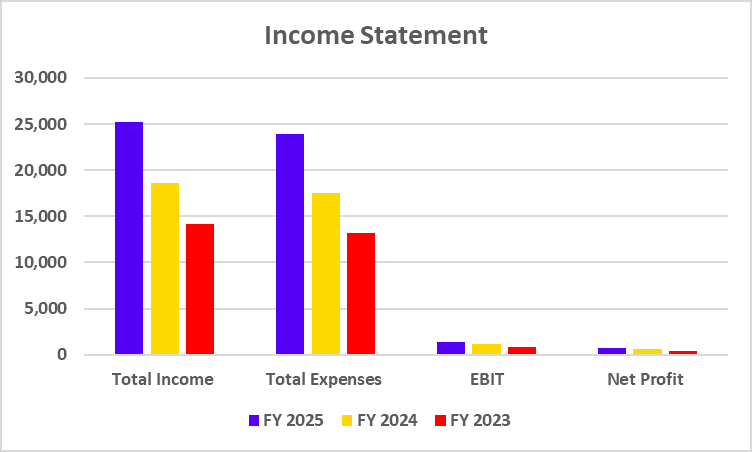
    Income Statement

    ParticularsFY 2025FY 2024FY 2023
    Total Income25,18918,62114,109
    Total Expenses23,87017,50913,235
    EBIT1,3191,112874
    Net Profit714596431
    (The figures mentioned above are in INR crores unless mentioned otherwise)

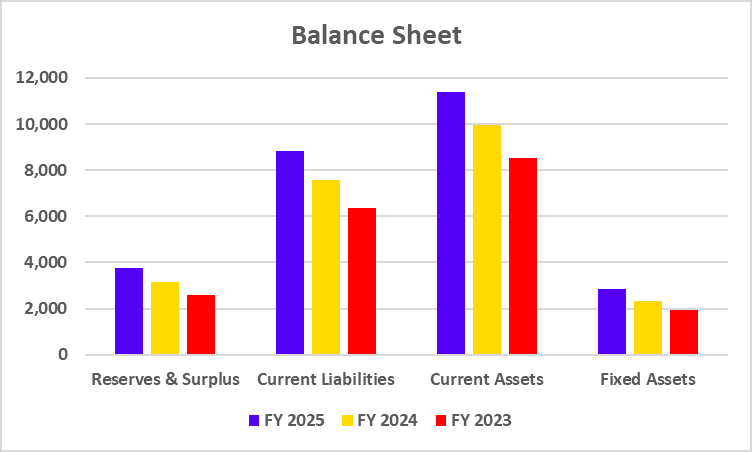
    Balance Sheet

    ParticularsFY 2025FY 2024FY 2023
    Reserves & Surplus3,7723,1592,604
    Current Liabilities8,8107,5826,368
    Current Assets11,3999,9498,515
    Fixed Assets2,8482,3421,918
    (The figures mentioned above are in INR crores unless mentioned otherwise)

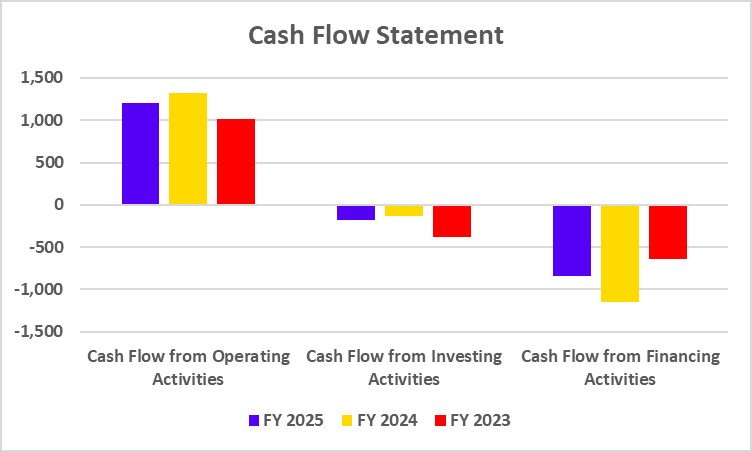
    Cash Flow Statement

    ParticularsFY 2025FY 2024FY 2023
    Cash Flow from Operating Activities1,2091,3211,013
    Cash Flow from Investing Activities-176-136-383
    Cash Flow from Financing Activities-840-1,148-637
    (The figures mentioned above are in INR crores unless mentioned otherwise)

    Key Performance Indicators

    ParticularsFY 2025FY 2024FY 2023
    Operating Profit Margin (%)5.265.996.44
    Net Profit Margin (%)2.853.213.06
    ROE (%)14.8814.2511.91
    ROCE (%)20.8821.2420.88
    Debt to Equity (x)0.690.790.97

    Read Also: Best Gold Stocks in India

    SWOT Analysis of Kalyan Jewellers

    Strengths

    • Strong brand identity : Kalyan Jewellers is a trusted name in India and abroad. It has a strong presence especially in South India as it has maintained a special place in the hearts of people for decades.
    • Wide store network : They have stores in almost every big and small city of India, as well as in countries like the Middle East. This makes it easy to reach every type of customer.
    • Diverse design collection : From traditional to modern and bridal jewellery for weddings, every type of jewellery is available here which attracts people of different age groups and tastes.
    • Celebrity endorsement: By associating with big names like Amitabh Bachchan, Aishwarya Rai, Nagarjuna, the brand has increased both its credibility and popularity.

    Weaknesses

    • High cost : It costs a lot to run such large stores and get celebrity endorsements, which can affect the company’s profits.
    • Premium price tag : Many times middle-income customers find Kalyan’s prices a bit high, due to which they hesitate to buy.
    • Weak online presence : More effort is needed on digital marketing and e-commerce platforms, especially keeping the youth in mind.

    Opportunities

    • Expansion of online market : Due to increasing online shopping, there is an opportunity for the company to increase customers on a large scale.
    • Keeping the young generation in mind : Bringing new and cool designs for millennials and generation Z can increase the company’s sales.
    • Expansion in foreign markets : Strengthening its hold especially among the NRIs is a golden opportunity.

    Threats

    • Tough competition : Competition from big names like Tanishq, Malabar Gold and local jewelers is always challenging.
    • Fluctuation in gold prices : When the price of gold increases or decreases too much, the customer’s purchase is affected.
    • Competition from counterfeit and unbranded jewellery : The presence of fake and copy products in the market can harm the credibility of the brand.

    Read Also: Intel Case Study: Marketing Strategy and Pricing Strategy

    Conclusion

    The story of Kalyan Jewellers shows how a brand can make a place in the hearts of people with constant hard work and smart business decisions. Their strength lies in understanding the changing trends and customer expectations with time. Like every business, they too had to face many difficulties, but they did not give up. This journey shows how with patience and right decisions a company can make its name in the industry.

    S.NO.Check Out These Interesting Posts You Might Enjoy!
    1Zara Case Study
    2Reliance Power Case Study
    3McDonald’s Marketing Strategy – Case Study
    4Zepto Case Study
    5Meesho Case Study

    Frequently Asked Questions (FAQs)

    1. What is the business model of Kalyan Jewellers?

      The company has many stores across the country and the world and is known for its honesty and quality.

    2. How does Kalyan Jewellers market itself?

      It makes extensive use of big stars and social media so that more people can know about it.

    3. What is the biggest strength of Kalyan Jewellers?

      Strong name, more stores and a good collection of different designs.

    4. What are the weaknesses of Kalyan Jewellers?

      Expenses are high and it is a little behind in terms of online shopping.

    5. What are the good opportunities for the company?

      Increasing online sales and attracting the new generation youth.

  • Best Oil Marketing Companies (OMCs) in India

    Best Oil Marketing Companies (OMCs) in India

    India is a developing economy and is also known as a consumption-oriented country. To fulfil the rising energy demand, OMCs play a vital role. They ensure the availability of fuel for both urban and rural sectors. Investment in OMCs provides you with an opportunity to participate in the country’s growth.

    In this blog, we will give you an overview of the best OMC companies in India, along with the benefits of investing in this sector.

    What are Oil Marketing Companies?

    Oil Marketing Companies (OMCs) are companies that are primarily engaged in the refining, distribution, and marketing of petroleum products such as petrol, diesel, kerosene, LPG (cooking gas), aviation turbine fuel (ATF), lubricants, and other petroleum derivatives.

    Their key activities include:

    • Refining crude oil into usable fuels and products.
    • Storing and transporting petroleum products across the country through pipelines, depots, and terminals.
    • Retail distribution via petrol pumps, LPG cylinders, aviation fuel stations, and bulk sales to industries.
    • Marketing and branding petroleum products to end consumers.

    In India, OMCs are a critical link between crude oil imports/refining and the final consumer. They ensure the availability of fuel for households, vehicles, industries, and airlines.

    S.No.Best Oil Marketing Companies in India
    1Bharat Petroleum Corporation Limited
    2Hindustan Petroleum Corporation Limited
    3Indian Oil Corporation Limited
    4Reliance Industries Limited

    Market Information of Oil Marketing Companies

    CompanyCurrent Market Price (in ₹)Market Capitalisation (in ₹ crore)52-Week High (in ₹)52-Week Low (in ₹)
    Reliance Industries Limited1,36818,51,106 1,551 1,115
    Indian Oil Corporation Limited1411,98,686 184111
    Bharat Petroleum Corporation Limited3181,37,813 376234
    Hindustan Petroleum Corporation Limited38782,411 457288
    (As of 3 September 2025)

    Read Also: List Of Best Oil and Gas Stocks in India

    Best Oil Marketing Companies in India – An Overview

    An overview of the best oil marketing companies in India is given below:

    1. Bharat Petroleum Corporation Limited

    BPCL was founded in 1952 as a joint venture between the Indian government and Burmah Shell. In 1976, the Indian government acquired Burmah Shell, converting BPCL into a fully owned government company. The company explores, refines, distributes, markets, and retails petroleum and petroleum-related products. The Ministry of Petroleum and Natural Gas of the Indian government is overseeing it. The headquarters of the company are situated in Mumbai.

    Know the Returns: 

    1Y Return (%)3Y Return (%)5Y Return (%)
    -11.34%97.98%53.25%
    (As of 3 September 2025)

    2. Hindustan Petroleum Corporation Limited

    HPCL was established in 1974 as a result of the merger of Esso Standard and Lube India Limited. The company became the first public sector enterprise to list on the Bombay Stock Exchange in 1992. The company achieved its profit of 10644 crore, and earned the title of Maharatna status. It operates through a network of more than 17,000 petrol pumps in India, out of which 40% are in urban areas and the remaining are located on highways and in rural areas. The company has its headquarters situated in Mumbai.

    Know the Returns: 

    1Y Return (%)3Y Return (%)5Y Return (%)
    -9.62%143.93%187.26%
    (As of 3 September 2025)

    3. Indian Oil Corporation Limited

    The Indian Oil Company was incorporated in 1959 in order to market petroleum products. Later in 1964, it merged with Indian Regiments Limited and formed Indian Oil Corporation Limited. During the 1970s and 80s, it was considered the largest refinery and marketing company in India. Later, the company diversified its business into petrochemicals, pipelines and started its overseas operations. It works under the Ministry of Petroleum and Natural Gas, and it was awarded the status of Maharatna Company. The company has its headquarters situated in New Delhi.

    Know the Returns: 

    1Y Return (%)3Y Return (%)5Y Return (%)
    -21.16%96.92%146.44%
    (As of 3 September 2025)

    4. Reliance Industries Limited

    Mr. Dhirubhai Ambani founded the company in 1966, and it became a publicly listed company in 1977. It began its expansion into the petrochemical industry later in 1980. After the death of founder Dhirubhai Ambani in 2002, Reliance was divided between his two sons. Mukesh Ambani continues to lead Reliance Industries Limited, which remains focused on petrochemicals, refining, retail, and telecom. However, the company’s core business is petrochemicals. The company is also making significant investments in the renewable energy sector. The company has its headquarters situated in Mumbai.

    Know the Returns: 

    1Y Return (%)3Y Return (%)5Y Return (%)
    -10.17%8.06%28.51%
    (As of 3 September 2025)

    Key Performance Indicators (KPIs)

    CompanyOperating Profit Margin (%)Net Profit Margin (%)ROE (%)ROCE (%)Debt to Equity
    Reliance Industries Limited13.508.378.258.700.41
    Indian Oil Corporation Limited2.991.587.298.220.76
    Bharat Petroleum Corporation Limited4.732.7216.3816.300.63
    Hindustan Petroleum Corporation Limited2.871.5713.1612.671.30
    (As of March 2025)

    Read Also: Indian Oil Case Study

    Benefits of Investing in Oil Marketing Companies

    The significant benefits of investing in oil marketing companies are as follows:

    • Consistent Demand: OMCs deal with important fuels such as petrol, diesel, etc., which are always in demand, no matter what the condition of the economy. Regular earning is made possible due to constant demand.
    • Government Incentives: OMC companies receive financial and policy support from the government, due to which their operational risk is reduced.
    • Dividend: Public sector oil marketing companies generally distribute their profit in the form of dividends, which can be a regular source of income for a conservative investor.

    Factors to be considered before investing in Oil Marketing Companies

    The following are the factors which need to be considered before investing in oil marketing companies:

    1. Volatility in Crude Oil Price: The raw material for OMCs is crude oil prices of which fluctuate due to various factors, including global economic factors, etc. A sudden rise in crude oil prices may impact the profit margin of these companies.
    2. Exchange Rate: Crude Oil is imported from different countries, the prices of which are to be paid in USD. A weak rupee can increase the input cost and reduce the profit margin of the company.
    3. Geopolitical Risk: The conflict among the countries of the Middle East and the decision by OPEC can affect the demand and supply of crude oil globally.

    Future of Oil Marketing Companies in India

    The government of India is importing more oil and gas to meet the country’s expanding energy needs. Due to the industry’s dependence on imports, a number of companies were looking into possibilities for investment. Since the demand for petroleum products has increased by 6.1% year over year, the demand for natural gas has increased by 6.4%. The government aims to raise the refining capacity to 450 million metric tonnes annually (MMTPA) by 2030. Therefore, India’s oil and gas industry has a bright future.

    Read Also: Best Cloud Computing Stocks in India

    Conclusion

    Investing in oil and gas companies offers an opportunity to participate in India’s economic growth, as energy demand continues to rise. However, the increasing adoption of electric vehicles worldwide presents a long-term challenge to the sector. To adapt, many OMCs are expanding into EV charging infrastructure and renewable energy. At the same time, investors should remain mindful of risks such as crude oil price volatility, currency fluctuations, and policy changes. Hence, it is always advisable to consult a qualified financial advisor before making any investment decision.

    S.NO.Check Out These Interesting Posts You Might Enjoy!
    1List Of Best Healthcare Stocks in India
    2List of Best Telecom Stocks in India
    3List Of Best Footwear Stocks in India
    4List Of Best Logistics Stocks in India
    5List of Best Liquor Stocks in India

    Frequently Asked Questions (FAQs)

    1. What are some OMC stocks listed in the Indian stock market?

      The companies like Reliance Industries Limited, Bharat Petroleum Corporation Limited, Hindustan Petroleum Corporation Limited, and Indian Oil Corporation Limited are engaged in the distribution and sale of oil and related products.

    2. What does the OMC sector refer to in the Stock Market?

      OMC or Oil Marketing Companies are known as those companies which are involved in refining, distributing, and marketing of petroleum products such as petrol, diesel, etc.

    3. What are the key risks included while investing in OMCs?

      The key risks while investing in OMCs are volatility in the crude oil price, exchange rate fluctuations, government policy changes, and shift toward electric vehicles.
      Q4. Does the government of India own all

    4. Does the government of India own all OMCs?

      Yes, except for Reliance Industries Limited, all the other OMCs, such as BPCL, HPCL, and IOCL, are owned by the government of India.

    5. Do public sector OMCs pay dividends?

      Yes, public sector OMCs like BPCL, IOC, and HPCL pay regular dividends to their investors. Hence, they are suitable for investors who are looking for regular income.

  • What is Nominal Yield?

    What is Nominal Yield?

    If you’ve ever explored the bond market, you’ve likely come across the term nominal yield. While it might sound technical at first, the concept is actually quite straightforward.

    In this blog, we’ll break down what nominal yield means, how to calculate it step by step, when it’s useful, etc. Whether you’re new to bonds or simply refreshing your knowledge, this guide will help you understand nominal yield with ease.

    Understand the Nominal Yield 

    The interest amount a bond pays you annually expressed as a percentage of its face value is known as the nominal yield, or coupon yield. It is calculated by dividing the annual coupon payment by the bond’s face value. Nominal yield does not take into account the bond’s market price, purchase price, or holding period.

    Some Points to Remember: 

    • The nominal yield remains constant regardless of the bond’s market price.
    • Buying the bond for more or less than its face value has nothing to do with your nominal yield.
    • Additionally, you should consider factors like the yield to maturity (YTM) and current yield if you want a better idea of your actual earnings.

    Nominal Yield Formula 

    Nominal Yield = (Annual Coupon Payment / Face Value of the bond) * 100

    where, 

    1. Annual coupon payment is the fixed interest amount the bond pays you every year. 
    2. Face Value is the original value of the bond 

    Step-by-Step Calculation 

    Suppose you have a bond that is worth ₹1,000 and every year it pays you ₹80 as interest or coupon payments, which is called the annual coupon.

    Step 1: Find out the annual coupon payment

    This is the interest amount the bond pays you every year. In this case, it’s ₹80.

    Step 2: Find out bond’s face value 

    The face value (also called par value) is the original value of the bond, i.e., the amount the issuer agrees to repay the bondholder at maturity. In most cases, bonds are issued with a face value of ₹1,000 (sometimes ₹100 for smaller bonds). In this example, it is ₹1,000.

    Step 3: Apply the Formula 

    So here:

    Nominal Yield = (80 /1000) × 100 = 8%

    Step 4: What does that mean?

    It means that your bond will pay you 8% of its face value of ₹1,000 each year. As long as you keep the bond, you will receive ₹80 every year.

    Uses of Nominal Yield 

    1. Immediate Bond Comparisons

    Are you having trouble choosing between several bonds? You can quickly figure out which one pays higher interest based on face value by looking at nominal yield.

    For instance, you already know that Bond B pays you more annually, without using a calculator if Bond A has a nominal yield of 7% and Bond B has 9%.

    2. A Simple Method to View Your Interest Income

    Simply put, nominal yield indicates how much money you will receive annually from the bond. It is helpful when all you want to know is, “How much will I earn?

    3. Effective, If the Bond Is Up to Par

    Nominal yield actually provides you with a fairly accurate picture of your return if the bond is selling for the same price as its face value.

    4. Ideal for New Investors

    Nominal yield is a simple way for beginners to understand bond returns. It shows the fixed annual interest as a percentage of the bond’s face value, without involving complex calculations or market price fluctuations.

    5. Useful for Financial Planning

    Nominal yield makes financial planning easier if you are looking for a steady income by estimating how much you will receive annually.

    Read Also: What are Bond Yields?

    Difference between Nominal Yield & Current Yield 

    FeatureNominal YieldCurrent Yield
    DefinitionThe bond’s fixed yearly interest based on face valueThe return you’re getting right now based on the market price of the bond
    Formula(Annual Coupon ÷ Face Value) × 100(Annual Coupon ÷ Market Price) × 100
    What’s it based on?The original value of the bond (face value)The actual market price of the bond
    Does it change?No, it stays the sameYes, it moves as the bond’s market price changes
    Good for beginners?Absolutely. very simple to understandYes, but you need to know the bond’s market price
    Consider Market Price?NoYes

    Limitations of Nominal Yield

    1. It overlooks the true cost you incurred

    Nominal yield doesn’t consider the bond’s purchase price; it only considers its initial (face) value. Therefore, the return on investment isn’t as high or low as it might appear if you purchase a bond for more or less than its face value.

    2. Ignores the Bond’s Remaining Time

    The nominal yield remains constant whether a bond matures in two years or twenty.

    3. Ignores the Wider Picture

    Nominal yield solely considers the annual interest you receive. It doesn’t account for things like;

    • Variations in the market value of the bond
    • If you decide to reinvest the interest
    • Any increase or decrease in capital
    • Or even inflation

    4. It is Not Very Helpful If the Bond Isn’t Real

    Particularly in the secondary market, most bonds are not traded at their exact face value. The nominal yield may provide a completely inaccurate picture of the true return if a bond is being sold at a premium or discount.

    5. It is Not the Best Option for Long-Term Planning

    It is not the most reliable figure if you plan on investing long-term because it leaves out a lot of information, such as future interest rate changes or how long you will hold the bond.

    Read Also: What is Coupon Bond?

    Conclusion 

    If you want to quickly gauge how much interest a bond pays annually, nominal yield is good. It is simple, easy to understand, and ideal for situations in which a bond is trading at face value.

    But remember, it just gives you an overview. The expected total return, the number of years you will hold the bond, and the actual price you paid are not considered. For a more complete picture, you should also consider other metrics like yield to maturity (YTM) and current yield.

    The bottom line? Nominal yield is a useful starting point, but it should not be the only factor in your decision-making. Think of it as the starting point for smarter, more informed bond investing.

    S.NO.Check Out These Interesting Posts You Might Enjoy!
    1What Is Bowie Bond (Music Bonds)
    2Detailed Guide on Bond Investing
    3What Are Corporate Bonds?
    4CAT Bonds: An Easy Explainer
    5Electoral Bonds Explained

    Frequently Asked Questions(FAQs)

    1. Is the nominal yield just another word for the interest rate?

      Yes! The coupon rate is also known as the rate the bond promises to pay each year.

    2. Is it possible for nominal yield to change over time?

      No! Even if the market price goes up or down, it stays the same for the life of the bond.

    3. What sets apart current yield from nominal yield?

      Current yield is based on the bond’s current market price, which is generally more accurate than nominal yield, and is based on the bond’s face value.

    4. Is nominal yield useful if I did not pay full price for the bond?

      Not really. If you bought the bond for less or more than its face value, the nominal yield does not reflect how much money you actually made.

    5. Do zero-coupon bonds have a yield?

      No! They do not have a nominal yield because they don’t pay interest every year.

  • Gold Price History in India (1964-2026)

    Gold Price History in India (1964-2026)

    Gold has always held a significant place in Indian households, whether for weddings or investments. Over time, its prices have risen sharply due to factors like geopolitical events, economic changes, and growing demand. 

    In this blog, we will explore the historical trend of gold prices in India, along with the key factors affecting its prices and why the prices of gold have risen exponentially in the last few years.

    Evolution of Gold Prices in India

    The changes in gold prices in India reflect global events, economic policies, and evolving demand. Let’s explore how prices have moved from the 1960s to the present day.

    The Early Days (1960s-1970s)

    • In 1960, the price of gold was around ₹60-₹100 per 10 grams.
    • Unlike today, people generally didn’t own gold, and imports were restricted.
    • Around 1970, the gold prices saw a sharp jump because of rising global oil crises, inflation, and instability in global economic conditions.

    Liberalization Phase (1990s)

    • During the liberalization phase, restrictions on gold imports were lifted.
    • This increases the demand for gold. Hence, pushing the prices above 4000 INR per gram.

    Golden Era (2000-2010)

    • From 2000 to 2010, this period can be called the Golden Period of Gold.
    • The major financial crises, like the dot-com crash and the global financial crisis of 2008, increased the price of gold to around 18000 INR by the end of 2010.

    Covid Period (2019-2021)

    • In the year 2020, the COVID-19 pandemic hit the world and made gold a haven for investors. 
    • Due to COVID, the prices of gold touched around 50,000 INR per 10 grams.

    Current Scenario (2021-2026)

    1. Gold prices in India were around ₹48,000 per 10 grams in 2021 and witnessed a strong rally in the following years.

      2. The precious metal crossed the ₹1 lakh per 10 grams milestone for the first time in 2025, setting new record highs.

      3. Several factors contributed to this rise, including:

        • Russia–Ukraine conflict
        • Rising global inflation
        • Interest rate decisions by major central banks
        • Increased gold purchases by central banks
        • Israel–Iran and other geopolitical tensions
        • Global economic uncertainty

        4. In 2026, gold prices remained highly volatile and touched all-time highs of over ₹1.83 lakh per 10 grams amid strong safe-haven demand and ongoing global uncertainties.

        5. While short-term price swings continued, gold remained a popular choice among Indian investors for preserving wealth and diversifying investment portfolios.

          Historical Gold Rates in India

          The table below shows the historical gold rates in the country since 1964:

          YearPrice (₹ per 10g of 24K)
          196463.25
          196571.75
          196683.75
          1967102.50
          1968162.00
          1969176.00
          1970184.00
          1971193.00
          1972202.00
          1973278.50
          1974506.00
          1975540.00
          1976432.00
          1977486.00
          1978685.00
          1979937.00
          19801,330.00
          19811,670.00
          19821,645.00
          19831,800.00
          19841,970.00
          19852,130.00
          19862,140.00
          19872,570.00
          19883,130.00
          19893,140.00
          19903,200.00
          19913,466.00
          19924,334.00
          19934,140.00
          19944,598.00
          19954,680.00
          19965,160.00
          19974,725.00
          19984,045.00
          19994,234.00
          20004,400.00
          20014,300.00
          20024,990.00
          20035,600.00
          20045,850.00
          20057,000.00
          20068,490.00
          200710,800.00
          200812,500.00
          200914,500.00
          201018,500.00
          201126,400.00
          201231,050.00
          201329,600.00
          201428,006.50
          201526,343.50
          201628,623.50
          201729,667.50
          201831,438.00
          201935,220.00
          202048,651.00
          202148,720.00
          202252,670.00
          202365,330.00
          202477,913
          20251,01,660
          20261,54,625

          Factors Affecting Gold Rates in India

          The key factors affecting gold rates in India are as follows:

          1. Rising Interest Rate: With the rise in the interest rate, fixed-income securities became more attractive, and investors prefer to invest in fixed-income securities. Due to this, the demand for gold may drop, hence reducing the prices of gold.
          2. Demand: During the festive and wedding season, the demand for gold will increase, and because of limited supply, the price of gold will increase.
          3. Geopolitical Conditions: During geopolitical tensions, wars, trade disputes, or economic crises, gold is considered a safe haven, which increases demand and pushes up its price.
          4. Government Policies: Import duties implemented by the government on gold can directly affect the domestic gold prices. The higher the import duty, the higher the gold price.

          Why are Gold Prices Rising?

          The key factors why the prices of gold are rising are as follows:

          1. Global Tension: Geopolitical tension across the globe, such as the Israel-Iran conflict, the Russia-Ukraine War. The fear of economic slowdown led to an increase in gold prices.
          2. Weakening of Indian Currency: Over the past few months, the rupee has weakened against the dollar, and the import of gold has become more expensive.
          3. Central Bank Purchasing: The central banks of developing countries are purchasing gold in order to reduce their dependency on the US dollar, which increases the demand and price of gold.

          Conclusion

          On a concluding note, historically, gold has always found a way to shine. Indians have always considered gold not only as an investment option but also as a status symbol. In the short run, prices of gold might see some volatility; however, in the long run, the trend has been steadily upward. However, in the past year, because of geopolitical events, the prices of gold have increased exponentially. Therefore, it is advisable to consult your investment advisor before making any investment in gold.

          Gold Rate in Top Cities of IndiaSilver Rate in Top Cities of India
          Gold rate in AhmedabadSilver rate in Ahmedabad
          Gold rate in AyodhyaSilver rate in Ayodhya
          Gold rate in BangaloreSilver rate in Bangalore
          Gold rate in BhubaneswarSilver rate in Bhubaneswar
          Gold rate in ChandigarhSilver rate in Chandigarh
          Gold rate in ChennaiSilver rate in Chennai
          Gold rate in CoimbatoreSilver rate in Coimbatore
          Gold rate in DelhiSilver rate in Delhi
          Gold rate in HyderabadSilver rate in Hyderabad
          Gold rate in JaipurSilver rate in Jaipur

          Frequently Asked Questions (FAQs)

          1. What was the highest gold price in India?

            In 2026, gold prices in India hit record highs, crossing the ₹1.8+ lakh per 10 grams mark.

          2. What was the gold rate in 2010?

            In 2010, the average price of gold in India was between ₹18,500 and ₹20,000 for 10 grams.

          3. Has gold always increased in value?

            No. Gold prices move around in the short term but have tended to increase over time.

          4. How to invest in digital gold?

            There are various modes through which one can invest in gold digitally; the options include Gold ETF, Gold Mutual Fund, SGBs, etc.

          5. What is the average return from gold in India?

            Historically, gold has delivered average annual returns of approximately 8-12% over the long term.

          6. Can historical gold prices predict future performance?

            Looking at historical gold prices can show trends, but it does not guarantee future returns.


        1. How AI and Machine Learning Are Changing Investment Strategies

          How AI and Machine Learning Are Changing Investment Strategies

          Making informed decisions based on available information has always been at the core of investing. Traditionally, investors relied on charts, financial statements, and intuition to guide their choices. However, with advancements in artificial intelligence (AI) and machine learning (ML), investors now have tools that can process massive volumes of data, uncover hidden patterns, and support faster, more precise decision-making.

          AI is no longer a distant concept. From robo-advisors that build personalized portfolios to algorithms capable of forecasting market trends in real time, these technologies are already transforming how both institutions and individual investors approach the market.

          In this blog, we will take a closer look at how AI and ML are reshaping investment strategies and examine whether these technologies have the potential to outperform human judgment.

          AI & Machine Learning in Finance – An Overview 

          In finance, artificial intelligence (AI) refers to computers that have the ability to “think” just like people. AI is faster than humans at analyzing huge volumes of financial data, and identifying patterns that humans might overlook.

          Machine learning (ML) is a key subset of AI. It is the mechanism through which these systems learn and improve. By evaluating historical data, machine learning (ML) teaches computers to get more accurate on their own without needing to stick to strict guidelines. Their ability to make predictions and provide useful insight improves with the amount of data they see.

          Example 

          • Robo-advisors that make investment portfolio recommendations according to your objectives.
          • Smart algorithms that try to predict changes in stock prices.
          • Systems that identify fraudulent activity on your account.

          Read Also: How AI and Machine Learning Are Transforming Trading Strategies?

          How AI Changes Investment Strategies 

          Investing has changed over time. The majority of strategies were based largely on human judgment, hours of research, and a little intuition. AI has emerged as a powerful assistant in the modern era, helping investors make quicker, wiser, and more sensible choices.

          This is how it is having an impact:

          1. Using Big Data for Better Understanding

          These days, markets are more than just numbers. AI is able to identify signals that humans might miss by filtering through content such as news headlines, social media buzz, and even satellite photos. It is comparable to having a super-analyst who is constantly alert.

          2. High-frequency trading

          Trades can be completed in a matter of seconds because of AI-driven algorithms that can identify patterns and respond immediately. Real-time, automated processes that once required whole teams of analysts are now possible.

          3. Tailored Portfolios

          AI is now able to create an investment plan that truly fits your objectives, risk tolerance, and time horizon by using robo-advisors. What is the best part? Without you having to do anything, it continuously adjusts and rebalances.

          4. Intelligent Risk Control

          Although markets can be unpredictable, artificial intelligence (AI) can help by identifying early indicators of volatility or unusual activity. This allows investors more time to respond and safeguard their capital.

          5. Removing Emotion from Investing

          As we all know, emotions can cause us to follow the herd, panic sell, or chase after short-term gains. AI is emotionless. Analyzing investor behavior keeps strategies grounded and logical.

          Identifying market trends before they become evident is one of the most intriguing ways that AI is transforming investing. AI is capable of looking into huge amounts of data, making connections, and pointing out potential directions rather than merely examining charts and historical performance.

          This is how it operates:

          1. Examining Past Information: AI examines years, even decades, of changes in interest rates, prices, and business performance. It can make predictions about how markets might act in similar scenarios by identifying trends.
          2. Evaluation of the Market’s Attitude: To determine investor sentiment, AI tools look at analyst reports, news headlines, and even posts on social media. AI is able to detect excessive optimism or fear before it manifests itself in stock prices.
          3. Identifying Unobserved Signals: Stock charts sometimes miss the most crucial signals. This “alternative data” is gathered by AI, which then uses it to make predictions.
          4. Adjustments in Real Time: Like markets, AI is subject to sudden shifts. AI can adapt in real time, responding immediately to fresh data, in contrast to traditional models that may update monthly or quarterly.

          Why Human Oversight Still Matters 

          Although AI is intelligent, it is not perfect. No machine is capable of accurately capturing the human, emotional, and unforeseen factors that drive markets. This explains why investing still largely depends on human expertise.

          We cannot yet give everything to the machines for the following reasons:

          1. AI Is Not Always Correct: Predictions will not be accurate if the incoming data isn’t. Humans can help by verifying, challenging, and adding common sense in this situation.
          2. Markets Are More Than Just Data: Numbers do matter. However, events like sudden political decisions, international conflicts, or even a change in public sentiment can influence markets in ways that artificial intelligence may not be able to comprehend. Investors with experience are able to see beyond what is apparent.
          3. Morality Is Important: AI follows patterns without considering accountability. Human oversight ensures decisions remain not only profitable but also ethical and compliant with regulations.
          4. Experience Is Worth It: Although AI is faster than humans at scanning data, it does not have an idea about human sense and life lessons from previous market ups and downs. It is difficult to replace the human standpoint.

          Read Also: How AI is Transforming Stock Market Predictions

          The Future of AI in Investments 

          Although AI has already begun to alter how we invest, the most captivating part is yet to come. The technology will become more involved into daily financial decisions as it becomes advanced and widely available.

          Here is a glance at what the future may hold,

          1. Portfolios that are genuinely personal: No more formulaic approaches. AI has the potential to build portfolios that feel customized, taking into account not only your objectives and income but also your spending patterns and risk tolerance.
          2. Constant Financial Planning: AI could instantly modify your investments in response to market movements, removing the need for a quarterly review. Consider it a dynamic plan that changes in real time to fit into the surroundings.
          3. Smart Ethical Investing: AI may be able to analyse vast datasets, such as labour practices or climate reports, to assist investors in businesses that align with their values and have positive social impacts.
          4. Consultants powered by AI: Giving financial advisors superpowers is the goal, not replacing them. Advisors can spend more time advising and establishing human connections with clients while AI handles the data processing.
          5. AI That Goes Beyond Analysis: Beyond just crunching numbers, generative AI may be able to write readable reports, run “what-if” scenarios, and even make simple strategy recommendations.

          Conclusion 

          While AI and machine learning cannot guarantee flawless results, they provide powerful tools that enhance the speed, depth, and intelligence of investment decisions. The key lies in finding the right balance, i.e. leveraging AI’s ability to process vast datasets while still relying on human judgment, experience, and strategic thinking.

          Looking ahead, the future of investing will likely be defined by collaboration between machine intelligence and human insight. For investors who are open to adapting, this synergy has the potential to unlock new opportunities and shape more resilient strategies.

          S.NO.Check Out These Interesting Posts You Might Enjoy!
          1How to Use AI for Smarter Investing in India
          2Best AI-Based Trading Strategies Explained
          3Stock Market Prediction Using Machine Learning
          4Top 10 AI Tools for Stock Market Analysis
          5Can AI Predict the Stock Market?
          6Best AI-Based Trading Strategies Explained

          Frequently Asked Questions (FAQs)

          1. Is it possible for AI to correctly predict the stock market?

            Nobody can do it perfectly. However, AI can identify patterns and trends more quickly than humans.

          2. What distinguishes machine learning from artificial intelligence in the financial industry?

            While machine learning (ML) is the process by which machines “learn” from data to get better over time, artificial intelligence (AI) is the general concept of machines acting logically.

          3. Is it safe to use robo-advisors?

            Yes, the majority are subject to strict regulations. However, it is a good idea to look into their fees and history.

          4. Will AI take the place of human financial advisors?

            Not completely. While AI manages the data, humans continue to contribute their expertise, knowledge, and compassion.

          5. How does AI lower the risk of investments?

            Investors can take less time by using it to identify early indicators of fraud, volatility, or unusual market activity.

        2. Best Multibagger PSU Stocks in India for 2026

          Best Multibagger PSU Stocks in India for 2026

          Historically, PSU stocks, or shares of government-owned companies, were largely overlooked by investors due to slow growth, political interference, and modest returns. However, these stocks have made remarkable comebacks in recent times. Several multibagger PSU stocks even delivered returns exceeding 200%, restoring the confidence of long-term investors.

          In this article, we will highlight 10 such PSU stocks that have generated impressive profits and are expected to continue performing well in the coming years.

          What Makes a PSU Stock a Multibagger ?

          A PSU stock qualifies as a multibagger when its robust financial fundamentals, consistent profitability, and strategic market opportunities result in its stock price appreciating several times over the initial investment. Such growth is typically influenced by factors like strong earnings growth, government support, sectoral tailwinds, and operational efficiency. Lets look at these factors in detail.

          • Government reforms and policies : The government is now providing professional management to private-like PSUs. Disinvestment, delisting and better governance are increasing the growth and profitability of companies.
          • Sector support : There is huge government spending in sectors like defense, railways, energy and infrastructure. Stocks like HAL, BEL, IRFC are benefiting from this.
          • Strong balance sheet and high dividend : Most PSU companies are debt-free and give large dividends as returns – like Coal India or NTPC. This gives investors a double benefit in returns.
          • Growth hidden in valuations : Many PSU stocks are available at cheap valuations due to being ignored for a long time. As soon as the company shows improvement, investors’ confidence returns and the share price rises rapidly.
          • Long-term perspective : It takes time to become a multibagger. Investors who have been patient have earned multifold returns even in PSUs.

          10 Multibagger PSU Stocks Based on Market Capitalisation

          CompanyCurrent Market Price (in ₹)Market Capitalisation (in ₹ crore)52-Week High (in ₹)52-Week Low (in ₹)
          Hindustan Aeronautics Ltd (HAL)4,3532,91,060 5,1663,046
          Bharat Electronics Ltd (BEL)4173,05,151 436240
          Coal India Ltd4232,60,714 442 349
          Indian Railway Finance Corp (IRFC)1171,52,914 156 108
          Power Finance Corporation (PFC)3651,20,456 444 330
          Mazagon Dock Shipbuilders2,36995,565 3,7781,918
          NHPC Ltd77.577,737 92.3 71
          BEML Ltd1,69114,090 2,437 1,173
          Engineers India Ltd (EIL)1779,940 255142
          Shipping Corporation of India2079,648 280 138
          (Data as of 22 January 2026)

          Read Also: Multibagger Penny Stocks

          Overview of the 10 Multibagger PSU Stocks in India 

          A brief overview of the Multibagger PSU Stocks in India is given below:

          1. Hindustan Aeronautics Ltd (HAL)

          Hindustan Aeronautics Ltd i.e. HAL is the name of India’s air power which has been the backbone of our fighter planes and helicopters for decades. This company not only manufactures modern fighter jets like Tejas, but also specializes in aircraft maintenance, upgrades and support systems. HAL’s network is spread across the country and it is also continuously promoting defense exports. Under ‘Make in India’, HAL has emphasized on indigenous aircrafts and technologies, which has strengthened both India’s strategic power and self-reliance.

          Know the Returns: 

          1Y Return (%)3Y Return (%)5Y Return (%)
          7.08245.47800.37
          (Data as of 22 January 2026)

          2.  Bharat Electronics Ltd (BEL)

          Bharat Electronics Ltd i.e. BEL is a strong name in the country’s defense technology. This company manufactures radar systems, missile guidance, and communication devices for the army. The special thing is that BEL is no longer limited to just the defense sector – it is also working on civil projects such as smart city solutions, medical devices and election systems (such as EVM). The company is constantly researching new technologies and strengthening ‘Make in India’. Today BEL has become an important link in the direction of India’s technological self-reliance.

          Know the Returns: 

          1Y Return (%)3Y Return (%)5Y Return (%)
          49.75308.21838.88
          (Data as of 22 January 2026)

          3. Coal India

          Coal India is not just a company, it is the backbone of the country’s energy needs. This is the same name that has been continuously supplying coal to thermal power plants and large industries in India for years. It has many units spread across the country which handle work from mining to transportation. Today, when the country talks about energy security, Coal India is at the forefront. The company has improved mining methods in the last few years, has also taken care of the environment and has made the work better by adopting technology.

          Know the Returns: 

          1Y Return (%)3Y Return (%)5Y Return (%)
          10.8885.12207.97
          (Data as of 22 January 2026)

          4. Indian Railway Finance Corporation (IRFC)

          IRFC is the financial backbone of Indian Railways. This company works to raise and manage funds for railway projects. Whether it is the purchase of new trains, expansion of infrastructure or financing of mega projects IRFC is engaged in strengthening the railways silently. It comes under the Ministry of Railways and is a fully government-owned company. In 2025, when the modernization of railways is gaining momentum, the role of IRFC has become even more important as it is making this growth possible economically.

          Know the Returns: 

          1Y Return (%)3Y Return (%)5Y Return (%)
          -17.51251.95372.09
          (Data as of 22 January 2026)

          5. Power Finance Corporation (PFC)

          Power Finance Corporation is an important financing company for India’s power sector. This company provides long-term loans and financial assistance to power projects, increasing the capacity of power distribution and generation across the country. PFC is playing an active role in turning the government’s ’24×7 electricity’ mission into ground reality. The company’s network is spread across the country and it has access to large power developers. By 2025, PFC is also increasing investment in areas like green energy, renewable sources and grid upgrades.

          Know the Returns: 

          1Y Return (%)3Y Return (%)5Y Return (%)
          -14.34203.07285.65
          (Data as of 22 January 2026)

          6. Mazagon Dock Shipbuilders

          Mazagon Dock Shipbuilders is India’s leading government shipbuilding company, which builds warships and submarines especially for the Navy. Many state-of-the-art ships are built in this yard located in Mumbai, which increases the strength of the Indian Navy. Mazagon Dock is not limited to just construction, but is also fully capable of design, testing and maintenance. In recent years, the company has focused on indigenous technology and self-reliant defense projects. By 2025, Mazagon Dock has established itself as a strategic and futuristic PSU.

          Know the Returns: 

          1Y Return (%)3Y Return (%)5Y Return (%)
          1.02515.922,146.46
          (Data as of 22 January 2026)

          7.  NHPC Ltd

          NHPC i.e. National Hydroelectric Power Corporation is India’s largest hydro power company. This company is running large hydroelectric projects in the hilly and river-dominated areas of the country. NHPC’s work is not limited to power generation only, but it also focuses on sustainable use of water sources and environmental balance. In 2025, NHPC has emerged as a leading PSU in clean energy and environment-sensitive power generation, a strong partner towards making India energy self-reliant.

          Know the Returns: 

          1Y Return (%)3Y Return (%)5Y Return (%)
          -1.8180.70212.94
          (Data as of 22 January 2026)

          8. BEML Ltd

          BEML i.e. Bharat Earth Movers Limited, is a multi-sector PSU that manufactures heavy machinery for defense, mining and railway sectors. From tanks to railway coaches and metros BEML’s products are being used in every corner of the country. The company is headquartered in Bengaluru and focuses on indigenous manufacturing and technological self-reliance. In 2025, BEML has proven itself as a fast-growing PSU with new contracts and export orders in the defense and infrastructure sectors.

          Know the Returns: 

          1Y Return (%)3Y Return (%)5Y Return (%)
          -8.63121.46249.56
          (Data as of 22 January 2026)

          9. Engineers India Ltd (EIL)

          Engineers India Ltd is a government company that provides engineering, design and consultancy services for oil-gas and infrastructure projects. Be it a refinery or a petrochemical plant, a pipeline project or a city gas network — EIL’s expertise is visible everywhere. The company is taking up projects not only domestically but also internationally. By 2025, EIL has also started working on green energy and climate-sensitive projects, further strengthening its identity as a modern, responsible and technology-enabled PSU.

          Know the Returns: 

          1Y Return (%)3Y Return (%)5Y Return (%)
          0.0998.71133.66
          (Data as of 22 January 2026)

          10. Shipping Corporation of India (SCI)

          Shipping Corporation of India i.e. SCI is India’s leading merchant navy company providing marine freight, tanker service and offshore support services. Its services are spread across the country as well as internationally. SCI is playing an important role in increasing India’s maritime trade capacity. In recent years, the company has upgraded its fleet and adopted digital technology. By 2025, SCI is taking itself in a new direction by moving from public to private transition and better management.

          Know the Returns: 

          1Y Return (%)3Y Return (%)5Y Return (%)
          4.3946.76142.72
          (Data as of 22 January 2026)

          Key Performance Indicators (KPIs)

          The key performance metrics of Multibagger PSU Stocks are mentioned below:

          CompanyOperating Margin (%)Net Profit Margin (%)ROE (%)ROCE (%)Debt to Equity
          Hindustan Aeronautics Ltd (HAL)34.9526.8623.9117.410.00
          Bharat Electronics Ltd (BEL)29.9022.2426.6433.720.00
          Coal India Ltd33.0524.3035.6724.240.09
          Indian Railway Finance Corp (IRFC)99.4223.9412.3449.987.83
          Power Finance Corporation (PFC)96.9928.6519.5265.868.25
          Mazagon Dock Shipbuilders26.8219.9230.3934.50.00
          NHPC Ltd54.6832.847.576.210.99
          BEML Ltd11.387.2710.1311.430.08
          Engineers India Ltd (EIL)20.4915.2821.7223.440.00
          Shipping Corporation of India17.9714.5010.1410.000.23
          (Data as of March, 2025)

          Read Also: List Of Best PSU Stocks in India

          Factors to be Considered Before Investing in PSU stocks

          The opportunity to invest in Multibagger PSU stocks is definitely big, but every opportunity also comes with some risk and requires prudence. Paying attention to the points given below is the mark of a smart investor:

          • Understand the role of the company and the situation of the sector : Every PSU works in a different sector – like energy, defense, infrastructure or finance. Before investing, it is important to understand what is the policy support of that sector and what is the growth potential in it in the coming years.
          • Do not take a decision just by looking at past returns : PSU stocks have performed well in recent years, but investing just by looking at old charts can be wrong. It is important that you see whether the company has a solid basis to move forward or not – like new order book, project pipeline and policy support.
          • Government involvement and disinvestment policy : PSU companies have a government stake, which can sometimes lead to political decisions rather than commercial ones. While the disinvestment policy has proved beneficial for many companies — it is important to be clear about its timing and impact.
          • Check valuations properly : PSU stocks may look cheap, but their valuations may also be down due to poor business outlook or fundamentals. Invest keeping in mind the PE ratio, book value and future earnings.
          • Policy and regulatory risks : Public companies are often affected quickly by policy changes — such as tax policies, licensing or environmental regulations. Therefore, it is important that you also evaluate the company’s business model from the perspective of these risks.
          • Understand the dividend and return structure : PSU stocks often pay high dividends, which is good for long-term income. But sometimes companies only pay dividend-based income and growth is low. Understand this balance of returns before investing.
          • Have a long-term perspective : Multibagger PSU stocks are not created overnight. They take time — sometimes up to 2–4 years. So if you are expecting quick returns, this strategy is not for you. Only patience and understanding can yield true profits.

          Read Also: Top 5 PSU Penny Stocks List in India

          Conclusion

          Investing in PSU stocks can be rewarding if approached with thorough research and a disciplined, long-term strategy. Public sector companies are becoming increasingly attractive due to strong order books, improved corporate governance, and government policy support. However, each stock should be evaluated carefully based on its sector performance, valuation metrics, and growth potential. For investors with a long-term perspective, PSU stocks have the potential to generate substantial returns. It is advised to consult a financial advisor before investing.

          S.NO.Check Out These Interesting Posts You Might Enjoy!
          1List Of Best Battery Stocks in India
          210 Best Penny Stocks with High FII Holding
          3Why Are PSU Stocks Falling?
          4Best Pharma Penny Stocks List Under ₹50
          55 Top EV Penny Stocks in India

          Frequently Asked Questions (FAQs)

          1. What are multibagger PSU stocks?

            These are the stocks of government companies that have the potential to give multifold returns over time.

          2. Are PSU stocks safe for beginners?

            Yes, but it is important to understand the company’s position and sector well before investing.

          3. How long should I hold a multibagger PSU stock?

            It is better to have a 3 to 5 year perspective in such stocks.

          4. Do PSU stocks give good dividends?

            Yes, most PSU companies pay regular and high dividends.

          5. What risks are involved in PSU stock investment?

            Risks may include policy changes, political interference and disinvestment.

          Selection Methodology and Important Disclaimer

          The stocks included in this list are selected primarily on the basis of their market capitalisation, which represents the total market value of a company’s outstanding shares. The companies are arranged in descending order of market capitalisation, with larger companies appearing first, followed by relatively smaller companies. This methodology is intended to provide a structured approach for identifying companies based on their market size and overall presence within a sector.

          However, market capitalisation should not be considered the sole factor while evaluating investment opportunities, as it does not guarantee future performance, profitability, or returns. Investors should also assess other important factors such as financial health, business fundamentals, management quality, valuation metrics, industry outlook, and market conditions before making investment decisions.

          The information provided is for educational and informational purposes only and should not be construed as investment advice, recommendation, solicitation, or an offer to buy or sell any securities by Pocketful Fintech Capital Private Limited.
        3. Small-Cap ETFs to Invest in India

          Small-Cap ETFs to Invest in India

          Do you know that the biggest investment opportunities often hide in plain sight. We all hear about the big companies like Reliance or TCS, but a lot of rapid growth actually takes place in smaller, lesser-known companies that are just beginning to establish themselves. These are the small-cap companies, which have the potential to grow much faster than the giants.

          The challenge, however, is that finding these hidden gems can be tough. Not every small-cap company turns into a success story, and betting on just one can be risky. To manage this, investors often need exposure to multiple small-cap stocks in order to diversify and spread their risk. This is where Small-Cap ETFs (Exchange-Traded Funds) come in. An ETF acts like a smart basket of stocks, bundling together dozens of promising small companies in one place, making investing simpler and more efficient.

          In this blog, we’ll dive into why so many smart investors are looking to invest in Small-Cap ETFs in 2026 and walk you through some of the best options in the Indian market. 

          What is a Small-Cap Company?

          These are the listed companies that are ranked by SEBI based on their total value or market capitalization.

          • Large Cap : The top 100 biggest companies in the Indian financial markets based on market capitalization are known as large cap companies. These companies are generally stable with strong fundamentals.
          • Mid Cap : These are the next 150 companies ranked between 101 to 250. They are relatively well-established businesses that demonstrate steady growth and have significant potential for further expansion.
          • Small Cap : These include all companies ranked below 251 by market capitalization. They are typically smaller in size, carry higher risk, but also offer greater growth potential compared to large-cap and mid-cap companies. 

          These small-cap companies are often young, dynamic, and have massive room to grow. They could become the big names of tomorrow. But, just like small companies, they are also more sensitive to economic changes and can be very risky.   

          What is an ETF?

          An ETF (Exchange-Traded Fund) is an investment product that holds a collection of securities, such as stocks or bonds, and trades on the stock exchange just like a regular stock. Instead of investing in one company at a time, an ETF allows you to invest in a whole group of companies in a single purchase.

          Think of it like buying fruits: if you wanted apples, bananas, and oranges, you could buy each separately or simply pick up a pre-packed fruit basket that already has a mix of them. An ETF is that fruit basket, but filled with company shares instead of fruits.

          A Small-Cap ETF is a basket that contains shares of many small-cap companies. By investing in it, you get exposure to the growth potential of these smaller firms while spreading your risk across a wide range of them, rather than betting on just one.

          Read Also: Best ETFs in India to Invest

          Small-Cap ETFs for 2026

          Now that we know the basics, let’s look at three interesting small-cap ETFs available in India. Think of them as three different types of shopping baskets.

          1. HDFC NIFTY Smallcap 250 ETF 

          This ETF’s goal is to perfectly copy the performance of an index called the Nifty Smallcap 250. This index is a list of the largest 250 small-cap companies in India. The ETF buys shares of all 250 companies in the same proportion as the index. 

          • AUM (Assets Under Management) : Around ₹1,319 crore, this is the total money people have invested in this ETF. A large AUM is a good sign as it shows investor confidence and usually means the ETF is easy to buy and sell.   
          • Expense Ratio : This is the small annual fee you pay, 0.20% for HDFC. For every ₹10,000 you invest, you only pay ₹20 per year. This is very low and doesn’t reduce returns that much.   
          • Tracking Error : It is around 0.16%, this number tells you how well the ETF is copying its index. A lower number is better, and 0.16% is excellent. It means the fund manager is doing a great job.   
          • Liquidity : Very high liquidity, as  millions of units are traded every day, so you can buy or sell it easily without any issues.   

          2. Motilal Oswal Nifty Smallcap 250 ETF  

          This ETF also tracks the Nifty Smallcap 250 Index, aiming to deliver returns that closely correspond to the performance of the broader small-cap market. Its investment strategy is identical to HDFC’s, as it replicates the index by holding all constituent stocks in the same proportion.

          • AUM : Its assets under management is around ₹125 crore, this is smaller than HDFC’s, which is understood for a newer fund.   
          • Expense Ratio : This is a bit higher than HDFC’s, approx 0.31%. For a product that does the same thing, you are paying a little more in fees.   
          • Tracking Error : Around 0.22%. This is also very low and shows good management, but it’s slightly higher than HDFC’s number.   
          • Liquidity : It has good trading volumes, so buying and selling are generally not a problem.   

          3. Mirae Asset Nifty Smallcap 250 Momentum Quality 100 ETF  

          The Mirae ETF starts with the same 250 small-cap companies but then applies a filter. It picks the top 100 stocks that show momentum, which means companies whose share prices have been rising strongly recently and companies with strong fundamentals, like good profits and low debt. This is called a “smart-beta” or “factor-based” strategy. The idea is to own not just the whole market, but a smarter, potentially better-performing slice of it.   

          • AUM : It has an asset under management of around ₹658 crore. This shows that many investors are interested in investing in an ETF with a smart investment strategy.   
          • Expense Ratio : This is double as compared to HDFC’s fee around 0.47%. This higher cost is what you pay for the extra research and filtering process.   
          • Tracking Error : Around 0.25%, this shows that the ETF is good at following its own special Momentum Quality 100 index.
          • Liquidity : Very liquid, with high trading volumes, making it easy to trade.   

          Advantages and Disadvantages of small cap ETF to Invest 

          Advantages 

          • High Growth Potential : Small companies can grow much faster than large, established ones, potentially giving you very high returns.   
          • Instant Diversification : With one click, you own a piece of hundreds of companies, if one company does poorly, it doesn’t sink your entire investment.   
          • Low Cost : ETFs are much cheaper to own than most mutual funds. Most of your funds stay invested and work for you.   
          • Easy to Trade : You can buy and sell them anytime during the market hours, just like a stock.   

          Disadvantages 

          • High Volatility : The prices of small-cap ETFs can swing up and down instantly, they are not suitable for investors who get affected easily.   
          • Economic downturn : During a market downturn or recession, small-cap stocks tend to fall much harder and faster as compared to a large-cap stocks.   
          • Long-Term View : To get good returns, you must be prepared to stay invested for a long time, ideally 5 to 7 years or more. 

          How to Choose the Right ETF?

          Some of the key factors to consider before choosing the right ETF for your financial needs are given below:

          1. Expense Ratio : Always check the expense ratio as a lower fee means higher returns for you over the long run.   
          2. Tracking Error : A low tracking error means the fund is doing well in the market, showing its efficiency.   
          3. AUM and Trading Volume : Look for ETFs with a large AUM and high daily trading volume, this ensures you can buy and sell it easily in the market. 
          4. Understand the Index : Know what you are buying. Are you investing in ETFs that completely copies the whole index (like with HDFC and Motilal) or uses a special strategy (like with Mirae).   

          Read Also: Types of ETFs in India: Find the Best for Your Investment

          How to Invest in ETFs?

          You can invest in ETFs by following the steps mentioned below:

          1. Open a Demat and Trading Account : This is your account for holding and trading shares and ETFs. You can open one online with brokers like Pocketful in a few minutes.   
          2. Complete Your KYC : You will need to submit your PAN card, address proof, and other documents for a one-time verification process.
          3. Add Funds : Transfer money from your bank account to your trading account.
          4. Search and Buy : Open your broker’s app, search for the ETF’s name or ticker, enter the quantity you want to buy, and click ‘Buy’.
          5. Monitor Your Investment : The ETF units will appear in your Demat account. You can track their performance on your app. 

          Conclusion

          Small-cap ETFs can be a powerful tool to build wealth over the long term. They offer an exciting mix of high growth potential and diversification at a low cost. However, they come with high risk and are not suitable for everyone. The right choice for you depends entirely on your personal financial goals, how much risk you are comfortable with, and your investment philosophy. Take your time, do your research, and choose the ETF that feels right for you. Furthermore, it is advised to consult a financial advisor before investing in any stock or ETF.

          S.NO.Check Out These Interesting Posts You Might Enjoy!
          1Mutual Fund vs ETF. Are They Same Or Different?
          2What are ETFs? Are ETFs good for beginner investors?
          3ETF vs Index Fund: Key Differences You Must Know
          4How to Invest in ETFs in India – A Beginner’s Guide
          5What is Nifty BeES ETF? Features, Benefits & How to Invest?
          6What is Gold ETF? Meaning & How to Invest Guide
          7List of 10 Top Smallcap Stocks in India on NSE
          8List of Best Commodity ETFs in India

          Frequently Asked Questions (FAQs)

          1. Are small-cap ETFs better than investing in individual small-cap stocks?

            Individual small-cap stocks can give high returns but carry high risk. Small-cap ETFs spread your money across many companies, reducing risk while still giving exposure to growth potential.  

          2. Can beginners invest in small-cap ETFs considering the risk? 

            They are considered high-risk because their prices can be very volatile. However, because an ETF holds many stocks, the risk is spread out. If you have a long-term investment plan (5+ years) and can handle the price swings, then even beginners can invest in small cap ETFs.   

          3. When can a small-cap ETF give good returns? 

            To see meaningful returns and ride out the market’s ups and downs, it is generally recommended to stay invested for at least 5 to 7 years. They are not suitable for short-term goals.   

          4. Why is ‘expense ratio’ important?

            The expense ratio is a small annual fee charged by the fund company to manage the ETF. It’s important because it directly reduces returns of an investor.   

          5. How are my profits from these ETFs taxed in India?

            If you sell equity ETF units within 12 months, gains are taxed at 20%. For holdings over 12 months, the first ₹1.25 lakh of gains per year is exempt; amounts above are taxed at 12.5%.

        4. Difference Between Shares and Stocks

          Difference Between Shares and Stocks

          Stock market investments are a great way of building wealth over time. This is, however, true only if a person understands the concept, meaning, and essential terminologies associated with stock investments, as it requires considerable research. In the financial world, two terms that are widely confused are “shares” and “stocks.” While they are often used interchangeably, they have distinct meanings in the context of investing.

          In this blog, we will explain the difference between stocks and shares, their types, benefits, and risks so you can invest with clarity and confidence.

          What is a Stock?

          A stock is a blanket term that represents a person’s ownership stake in one or several companies. Having a stock means that you gain some part of a company’s assets, earnings, or production; this means you partially own the company, hence you are one of its many shareholders. At this point, stocks are considered financial instruments that can be bought and sold on the stock market.

          Investors are granted certain rights assuming they own the required stocks of a certain company:

          • Voting rights in company decisions, such as in the case of common stock
          • Dividends
          • Capital appreciation, which comes when the price of a stock increases

          All stocks are held electronically in a Demat (dematerialized) account, which acts as your digital storage of securities. The stocks do not have to be from the same company, as they can be from different companies. That prime reason is what makes the term stocks wider in scope as compared to shares.

          What is a Share?

           A share is the smallest unit of ownership in a company. Simply shares are the individual parts that constitute a stock. If a corporation issues 10,000 shares and you hold 100 of them, then you own 1% of the company.

          For example : Imagine that Adani Green Energy Limited (AGEL) has 10,000 total shares. By buying one share, you hold 0.01% of the company. When the value of the share increases, that in turn increases the value of your investment.

          In other words, “stock” is a company’s investment as a whole, while “shares” are the components of that investment in a single corporation.

          Read Also: Difference Between Bonds and Stocks

          Stocks and Shares: What Are the Differences? 

          Comparison Attribute StockShare
          MeaningStocks represent part of ownership in a single or multiple companies.Share represents a single unit of ownership in a company.
          Paid up value Stocks are generally considered fully paid.Shares can be partly or fully paid-up
          ValueThe market price of stocks varies across companies and stock categories.Shares of a specific company have the same or equal value.
          CategoriesStocks are of two types, common and preferred, which can be further divided into growth stocks, blue-chip stocks, etc. Shares are categorised into common shares and preference shares

          Types of Stocks 

          Depending on the level of risk, goals for capital, and investments, stocks differ from other investments. Below are a few of the most common stock types: 

          1. Common Stock

          They have voting rights attached to it, investors can vote in crucial company decisions. Dividends are not guaranteed in common stocks even talking about the liquidation situation, the common stockholder comes last in line for compensation.  

          2. Preferred Stock

          Preferred stocks are shared by few companies. In this type of stock the stockholder gets a guarantee to get dividend payments. If the company gets into a situation where it gets liquidated the preferred stockholder gets compensation but voting rights are not given in this stock.

          3. Large-cap Stocks

          These stocks are of the companies that are well established and financially strong with huge market capitalization (Top 100 companies by market cap in India). These stocks are known for their strong brand value, stability, continuous growth and earning, even regular dividend payments. Due to their strong foothold they are less risky and less volatile to global changes. For eg : Reliance Industries, TCS, HDFC Bank etc.  

          4. Mid-cap Stocks

          Mid cap stocks, or mid cap equities, are stocks of companies ranked from 101 to 250 by market capitalization. These companies typically show solid growth potential plus demonstrate qualities like well established blue-chip companies. Investment in mid-caps provides a balanced-risk and return, these stocks are less volatile compared to small caps and mid cap stocks provide more growth than large cap stocks.

          5. Small-cap Stocks

          Small-cap stocks are companies ranked below 251 by market capitalization in India.  These represent newer businesses with the potential of achieving great returns but come with a lot of risks. These companies are characterized by high volatility, limited resources, small market shares, and sensitivity to volatile market conditions.

          6. Growth Stocks

          Growth stocks are those that will be able to grow at a greater rate than the rest of the market, usually these stocks are from the healthcare and technology sector. These firms use their profits to reinvest instead of giving out high dividends which leads to a higher price to earnings ratio. These also tend to appreciate in value dramatically which results in capital appreciation for investors. 

          7. Blue-chip Stocks

          Often tagged to large-cap stocks, ‘blue-chip’ describes the stocks of well-known companies that are financially stable and have a history of consistent earnings, dependable dividends, and a good reputation. They are considered safe investments relative to other stocks.

          Types of Shares 

          Shares can be classified into different categories, based on their rights, returns, or other priorities. 

          1. Equity or Common Shares

          Equity shares signify the fundamental ownership of a company and gives the shareholder voting rights in making important decisions for the company. A significant capital appreciation and wealth growth can be received from this type of share, but these shares are at highest risk and getting dividends are not certain, and the shareholder will be last to liquidate the assets after preferred shareholders and creditors.

           2. Preference Shares

          Preference shares indicate ownership of the company but with priority over equity shares. Holders also receive dividends prior to common stockholders and have a greater claim on the company’s assets if liquidation occurs, however they lack voting rights and preference shares are less risky than equity shares but they offer less capital appreciation.

          Read Also: Difference Between Trading and Investing

          Benefits of Investing in Stocks 

          Investing in stocks has several financial advantages: 

          • Wealth Creation: Stocks generally appreciate over time and increase in value, as the company grows for its economical expansion. As compared to bonds and saving accounts interest, stocks have outperformed if invested for a long period of time, making them a good option to increase wealth.    
          • Diversification: Investing in different industries and companies reduces overall portfolio risk. Diversification helps in mitigation of sector based global challenges thus investing in multiple sectors helps in securing your invested capital. 
          • Liquidity: Stocks can be easily bought or sold with ease on exchanges as digital mode is evolving, this helps investors to access the stock anytime anywhere . 
          • Dividend Income: Some stocks provide periodic dividend payments, which can give investors a regular income. This investment can also be helpful for reinvestment purposes.  
          • Control and Ownership: Important decisions can be influenced, as equity shareholders have voting power according to their stock holdings. 

          Risks Involved in Stock Market Investments 

          • Volatility: Stock markets witness frequent price changes due to global market news, economic conditions, or company performance leading to risking investors capital. 
          • Market Risk: A downturn in the market conditions will most likely drag even strong stocks down, regardless of their original value.
          • Liquidity Risk: Some stocks basically that have less trading volume or small growing companies stocks, might be difficult to sell when required. This can impact the investor that is looking for instant cash out from their shares. 
          • Emotional Investing: A vast majority of investors tend to buy and sell based on personal emotions like fear of losing capital or greed to gain high profits, this can cause avoidable losses. Rumours or news may sometimes lead the investor to such a situation. 

          Conclusion

          In the world of financial markets, understanding the distinction between stocks and shares is a fundamental step for every investor. Stocks represent overall ownership in one or more companies, while shares are the specific units that define this ownership within a single company. Grasping these concepts not only strengthens financial knowledge but also enables smarter and more confident investment decisions, whether the goal is long-term wealth creation or short-term trading opportunities. It is advised to consult a financial advisor before investing.

          S.NO.Check Out These Interesting Posts You Might Enjoy!
          1Difference Between Intraday Trading and Delivery Trading
          2ETF vs Stock – Which One is the Better Investment Option?
          3Stock Market vs Commodity Market
          4Difference Between Options and Futures
          5Difference Between Trading and Profit & Loss Account

          Frequently Asked Questions (FAQs)

          1. Are stocks and shares the same thing?

            No, stocks and shares are not the same. The term ‘stocks’ refers to a larger concept which includes the ownership of more than one company while ‘shares’ are specific quantifiable pieces of ownership in a singular company. 

          2. How do I start investing in shares or stocks?

            To start stock investing, you need a registered broker providing a trading account and a Demat account for example, Pocketful that provides free account registration and demat account opening or any SEBI registered platform.

          3. What is the safest way to invest in the stock market for beginners?

            For starters, the lowest risk methods are investing in professionally managed and diversified financial instruments like Mutual Funds or ETFs. ETFs and Mutual Funds require less skill and knowledge or blue-chip stocks of renowned companies that have shown consistent growth over the years can also be used.

          4. Can I lose money while investing in shares?

            Absolutely, while the stock market is filled with opportunities for trying to make money, it always comes with serious risks attached to it.

          5. What do I actually own if I buy a company’s stock?

            You own a certain amount of shares of that company, which makes you a partial owner of that specific business.

          Selection Methodology and Important Disclaimer

          The stocks included in this list are selected primarily on the basis of their market capitalisation, which represents the total market value of a company’s outstanding shares. The companies are arranged in descending order of market capitalisation, with larger companies appearing first, followed by relatively smaller companies. This methodology is intended to provide a structured approach for identifying companies based on their market size and overall presence within a sector.

          However, market capitalisation should not be considered the sole factor while evaluating investment opportunities, as it does not guarantee future performance, profitability, or returns. Investors should also assess other important factors such as financial health, business fundamentals, management quality, valuation metrics, industry outlook, and market conditions before making investment decisions.

          The information provided is for educational and informational purposes only and should not be construed as investment advice, recommendation, solicitation, or an offer to buy or sell any securities by Pocketful Fintech Capital Private Limited.
        5. Open Free Demat Account

          Join Pocketful Now

          You have successfully subscribed to the newsletter

          There was an error while trying to send your request. Please try again.

          Pocketful blog will use the information you provide on this form to be in touch with you and to provide updates and marketing.