Category: Investing

  • Gopal Snacks IPO: Segments, Financials, Key Details, Strengths, and Weaknesses

    Gopal Snacks IPO: Segments, Financials, Key Details, Strengths, and Weaknesses

    Craving a crispy treat that speaks to your Indian taste buds? This Gujarat-based company has been a leader in the snacking game for over a decade. From the ever-popular ‘gathiya’, a fried gram flour snack, to a diverse range of delicious offerings, the company caters to every craving.

    So, settle in and grab your favourite snack while we dive deep into the company’s financials, strengths, key risks, and upcoming IPO details.

    Gopal Snacks IPO Overview

    Gopal Snacks is an Indian fast-moving consumer goods (FMCG) company based in Rajkot, Gujarat. The company sells and manufactures a variety of snacks and other products. They are the fourth largest brand in the organised sector of ethnic savouries in India in terms of market share and the largest manufacturer of ‘gathiya’ and snack pellets in terms of volume. They sell their products in 10 states and 2 Union Territories of India.

    The company was established in 1999 by Bipin Hadvani as a partnership firm with Gopal Gruh Udhyog and was converted into a corporate entity in 2009.

    The company’s manufacturing plants are located in Rajkot, Nagpur, and Modasa, Gujarat. The installed manufacturing capacity of the plants cumulatively (as of September 30, 2023) is 4,04,729 tons per annum, whereas the primary facility holds a manufacturing capacity of 3,03,669 tons (for finished products).

    Gopal Snacks IPO Segments

    Gopal Snacks manufactures ‘ready-to-eat’ packaged snacks, which include:

    1. Ethnic snacks – Over 65% of Gopal’s revenue in FY 2023 came from their namkeen segment and ethnic namkeen achieved a sales volume of approximately 27,630 tons.

    2. Western Snacks – wafers, nachos, extruder snacks, and snack pellets constitute the western snacks category. This category offers flexibility to meet a variety of tastes. Since the product is semi-finished and unexpanded, it allows for customisation during the final preparation stage. By adding different spices and ingredients, manufacturers can create products that cater to the specific demand of the end users.

    3. Other products – The category includes gram flour or besan, papad, powdered spices, noodles, washing bars, and packaged sweets such as soan papdi, rusk, and chikki.

    The company has also introduced its product line offering premium wafers under the brand name ‘Cristos Gopal’ and extruder snacks under ‘Cornigo’.

    Additionally, Gopal Snacks holds 276 Stock Holding Units (SKU) in its portfolio and is the first company to launch gram flour in INR 10 SKU.

    The varieties offered in the Gathiya segment by Gopal Snacks create a strong competitive advantage over other established players in the segment. Gopal’s Gathiya offerings include Vanela Gathiya, Fulvadi Gathiya, Tikha Gathiya, Papdi Gathiya, Tikha Papdi Gathiya, Bhavnagari Gathiya, Champakali Gathiya, and Nylon Gathiya.

    Gopal Snacks IPO Presence

    In addition to Gujarat, the company holds a strong presence in the states of Maharashtra, Uttar Pradesh, Madhya Pradesh, and Rajasthan with a distribution network of 617 distributors.

    The company is strategically increasing its pan-India presence, by focusing on states of Northern India like Uttar Pradesh, Rajasthan, Haryana, and Delhi and Southern India states like Karnataka and Telangana. Gopal Snacks Owner also plans on selling their products to countries like Australia, Kuwait, Saudi Arabia, UAE, and the USA through both direct exports and merchant exporters.

    To sum it up, the company’s product portfolio includes 84 products which include 8 types of gathiya, 31 types of namkeen, 12 types of snack pellets, 8 flavours of Wafers, 4 types of Papad, 6 types of spices, 5 types of extruded snacks, and 9 other products.

    Presence in India

    Did You Know?

    Gopal Snacks reigns supreme as India’s Gathiya king, holding a whopping 31% market share in FY 2023.

    Read Also: Pune E-Stock Broking Limited IPO: Key Details, Business Model, Financials, Strengths, and Weaknesses

    Key IPO Details

    IPO DateMarch 6, 2024 to March 11, 2024
    Price BandINR 381 to INR 401 per share
    Lot size37 Shares
    Total Issue Size16,209,476 shares
    IPO TypeMain-board IPO 
    Issue TypeBook Built Issue IPO
    Listing DateThursday, March 14, 2024
    Initiation of RefundsWednesday, March 13, 2024
    Employee DiscountRs 38 per share

    Objectives of the Issue

    The company will not receive any proceeds from the Offer (the “Offer Proceeds”), and the Selling Shareholders will receive all the Offer Proceeds in proportion to the Offered Shares sold by the respective Selling Shareholders.

    The company’s promoters are Bipinbhai Vithalbhai Hadvani, Dakshaben Bipinbhai Hadvani and Gopal Agriproducts, and the pre-issue promoter shareholding stands at 93.50%.

    Financial Statements Analysis

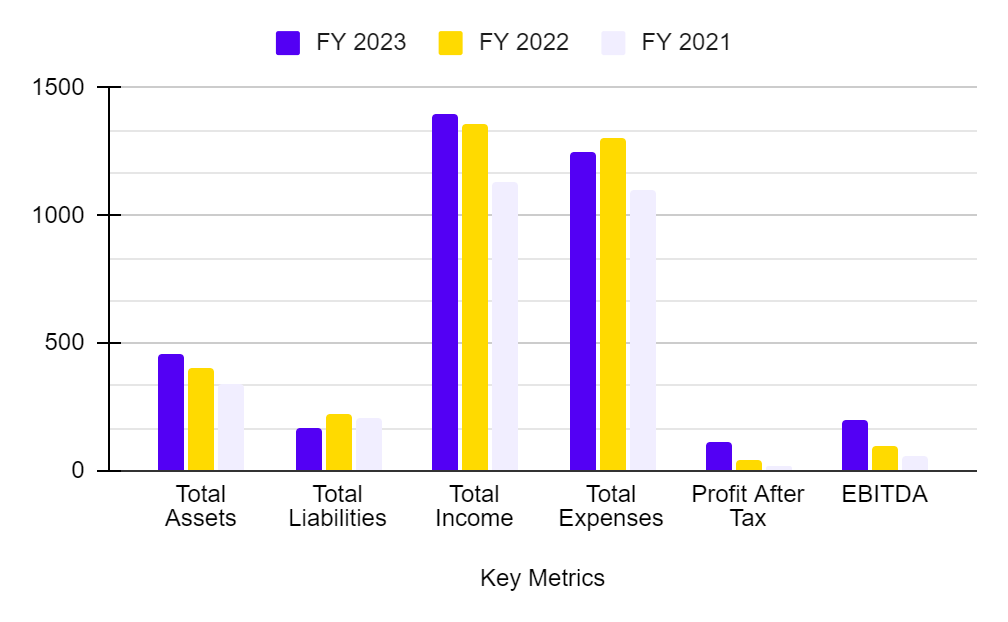
    Key Metrics

    Key MetricsFY 2023FY 2022FY 2021
    Total Assets461.28399.72341.89
    Total Liabilities170.40222.06206.15
    Total Income1,398.531,356.471,129.84
    Total Expenses1,246.691,302.411,103.34
    Profit After Tax112.3641.5321.12
    EBITDA196.2294.7960.35
    *(the figures mentioned above are in INR Crore)
    Key metrics of Gopal Snacks

    Key Margins and Ratios Analysis

    Key RatiosFY 2023FY 2022FY 2021
    Gross Margin28.38%20.61%18.13%
    EBITDA Margin14.07%7.01%5.35%
    PAT Margin8.06%3.07%1.87%
    ROE38.63%23.38%15.56%
    ROCE43.08%18.69%13.48%
    Debt-to-Equity ratio0.370.921.02
    Net Fixed Asset Turnover Ratio6.276.867.14

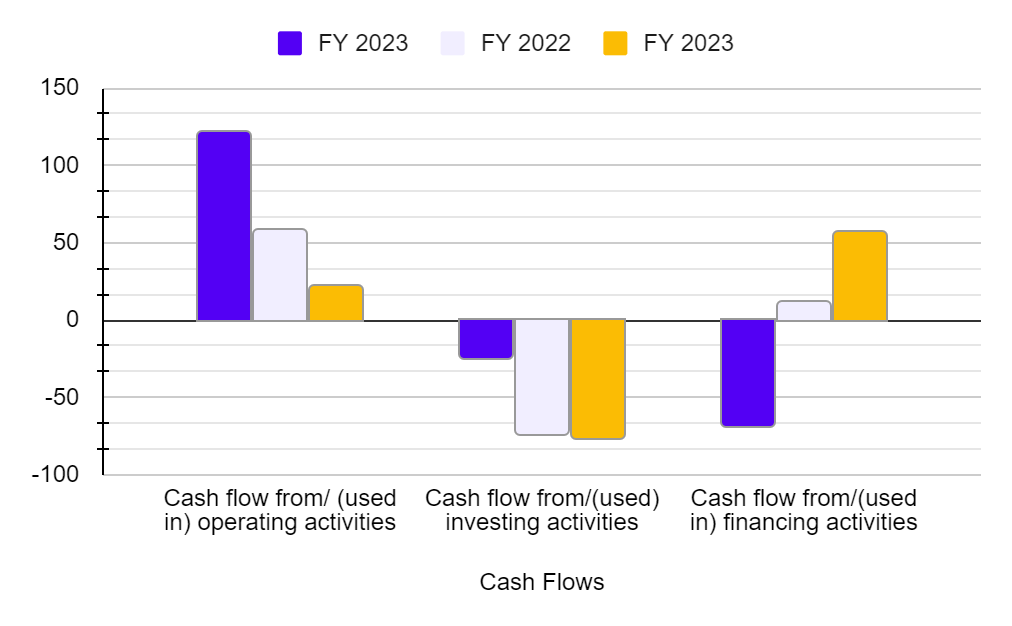
    Cash Flow Statements

    Cash FlowsFY 2023FY 2022FY 2023
    Cash flow from/ (used in) operating activities121.5258.5922.43
    Cash flow from/(used) investing activities(25.12)(74.03)(75.67)
    Cash flow from/(used in) financing activities(68.83)11.7557.50
    *(the figures mentioned above are in INR Crore)
    CFS Of Gopal Snacks

    Gopal Snacks IPO Strengths

    1. Gopal Snacks is a national leader in ethnic savouries, ranking India’s fourth-largest brand and offering quality and affordable products. Also, the company has a strong brand image, which allows it to stand out in a competitive market.
    2. The company boasts a diverse product portfolio, perfectly positioned to capitalize on the booming Indian snack market.
    3. The company owns six manufacturing facilities, comprising three primary and three ancillary manufacturing facilities. These manufacturing facilities are focused on processing, manufacturing, and packaging the products.
    4. Gopal Snacks’ comprehensive distribution network ensures their products are conveniently located near you, making it easy for customers to satisfy their snack cravings.
    5. The company is guided by a team of experienced promoters and managers bringing knowledge and expertise.

    Gopal Snacks IPO Weaknesses

    1. The Indian FMCG market, especially the snack segment, is highly competitive. Gopal Snacks faces tough competition from established players and new entrants, both domestic and international.
    2. The company’s dependence on raw materials and packaging can be risky. Any shortages, disruptions, or price swings could affect the profits and cash flows.
    3. An inefficient management of the distribution network could severely impact the business.
    4. Food safety is paramount. Any contamination issues or product recalls could damage the brand image and lead to a decline in sales.
    5. The food industry is subject to several regulations. Changes in regulations or difficulty complying with existing regulations could pose challenges for Gopal Snacks.

    Read Also: Bikaji Foods Case Study – Product Portfolio, Financial Statements, & Swot Analysis

    Conclusion

    On a parting note, Gopal Snacks Limited is a rising company. With solid market positioning, experienced leadership and a diversified product portfolio, the company holds a strong foundation for future growth. The IPO could be a springboard for further expansion and innovation. However, it is crucial to know the risks involved before making any investment decisions.

    S.NO.Check Out These Interesting Posts You Might Enjoy!
    1HDFC Bank Case Study: Business Model, Financial Highlights, and SWOT Analysis
    2Vedanta Case Study: Business Model, Financial Statement, SWOT Analysis
    3Nestle India Case Study: Business Model, Financial Statement, SWOT Analysis
    4BPCL Case Study: Business Model, Product Portfolio and SWOT Analysis
    5Apollo Hospitals Case Study : Business Model, Financial Statements, And SWOT Analysis

    Frequently Asked Questions (FAQs)

    1. What are Gopal Snacks famous for?

      The company is known for their wide range of delicious snacks, specifically gathiya and ethnic namkeens.

    2. How has Gopal Snacks adapted to changing consumer trends?

      The company has consistently evolved its offerings, incorporated healthier ingredients, and stayed updated on changing consumer needs for a wholesome snacking experience.

    3. Who are Gopal Snacks’ competitors?

      The company faces tough competition from Bikaji, Haldiram’s, Britannia, etc.

    4. How can I benefit from Gopal Snacks IPO?

      Investors can join the growing snack industry and reap the rewards as Gopal Snacks expands its market presence.

    5. Beyond ‘gathiya’, what else does the company offer?

      Gopal Snacks offers a diverse range of ethnic namkeens, from spicy to mild.

  • Pune E-Stock Broking Limited IPO: Key Details, Business Model, Financials, Strengths, and Weaknesses

    Pune E-Stock Broking Limited IPO: Key Details, Business Model, Financials, Strengths, and Weaknesses

    Are you considering venturing into the world of a stock that manages your portfolio but unsure where to begin? Look no further than PESB.

    Today’s blog will uncover the critical IPO details, strengths and risks, and PESB’s financial statements.

    Overview of Pune E-Stock Broking Limited IPO

    Pune E-Stock Broking Limited (PESB) is a corporate broking house founded in 2007 and is headquartered in Pune, Maharashtra. The company offers several investment services, like broking, mutual funds, currency trading, depository services, and IPOs. The company was registered with SEBI as a stock broker in 2008 and expanded its business into the commodity segment by becoming a member of MCX in 2019.

    With a network of over 150 authorised persons and a trading client base exceeding 50,000, PESB’s influence expanded in the post-Covid era.

    PESB’s success is attributed to the leadership of its founding team, which includes Mr Vrajesh Krishnakumar Shah, Mr Devendra Ramchandra Ghodnadikar, Mr Sandip Sunderlal Shah, and Mr Paresh Sunderlal Shah.

    Business Model of Pune E-Stock Broking Limited IPO

    PESB offers the following services to its clients:

    1. Client Broking

    Clients can access real-time quotes, execute trades through the mobile app and website and stay informed with the latest market news and updates while enjoying customer service.

    1. Depository Participant

    PESB offers a seamless trading experience by integrating demat services through CDSL, where they are a registered depository participant. This allows clients to hold and manage their investments conveniently in one place. The company has over 23,155 active clients with depository services.

    1. Mutual Funds

    The company makes mutual fund investing convenient and comprehensive by offering a wide range of equity, debt, and hybrid funds from multiple AMCs. This variety helps investors create a diversified portfolio that aligns with their financial goals. Customers also receive regular portfolio updates and follow-ups.

    1. Corporate Deposits

    PESB offers corporate deposits as an alternative investment option to traditional bank fixed deposits. With fixed interest rates often exceeding those of traditional options, these deposits cater to individuals of diverse risk appetites while aligning with the practice of secure fixed-income investing.

    1. Currency Trading

    Customers can trade currency flexibly through multiple channels, and forex derivatives services offered by the company fulfil the various investment goals through hedging, speculation, and portfolio diversification.

    PESB’s user-friendly Trading App further showcases its dedication to technological innovation. With the app’s help, clients can manage their investments, stay updated on market trends, and execute trades on the go.

    PESB Business Model

    Key IPO Details

    IPO DateMarch 7, 2024 to March 12, 2024
    Price BandINR 78 to INR 83 per share
    Lot Size (Retail/HNI)1600 Shares/3200 Shares
    Total Issue Size4,606,400 shares
    IPO TypeBSE SME IPO
    Basis of AllotmentMarch 13, 2024
    Initiation of RefundsMarch 14, 2024
    Listing DateMarch 15, 2024
    Issue TypeBook-Built Issue
    Issue Size38 Crores
    • Objectives of the issue are to meet the working capital requirements for general corporate expenses and public issue expenses.
    • Pre-Issue Shareholding of Promoters is 72.75%, and promoters collectively hold 80,34,858 equity shares of the company.

    Read Also: Rashi Peripherals Limited: IPO Analysis

    Financial Statements Analysis

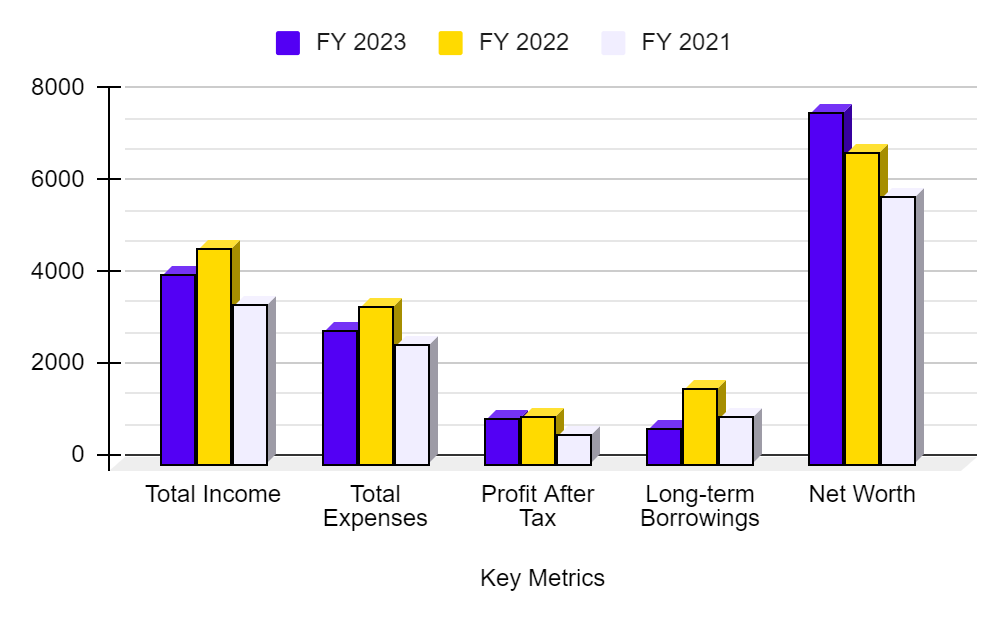
    Key Metrics 

    Key MetricsFY 2023FY 2022FY 2021
    Total Income4103.104665.703474.64
    Total Expenses2884.373404.642603.12
    Profit After Tax964.521012.03650.48
    Long-term Borrowings77616401015
    Net Worth7654.666754.555806.65
    (Figures mentioned in the table are in Lakhs)
    Key metrics of PESB

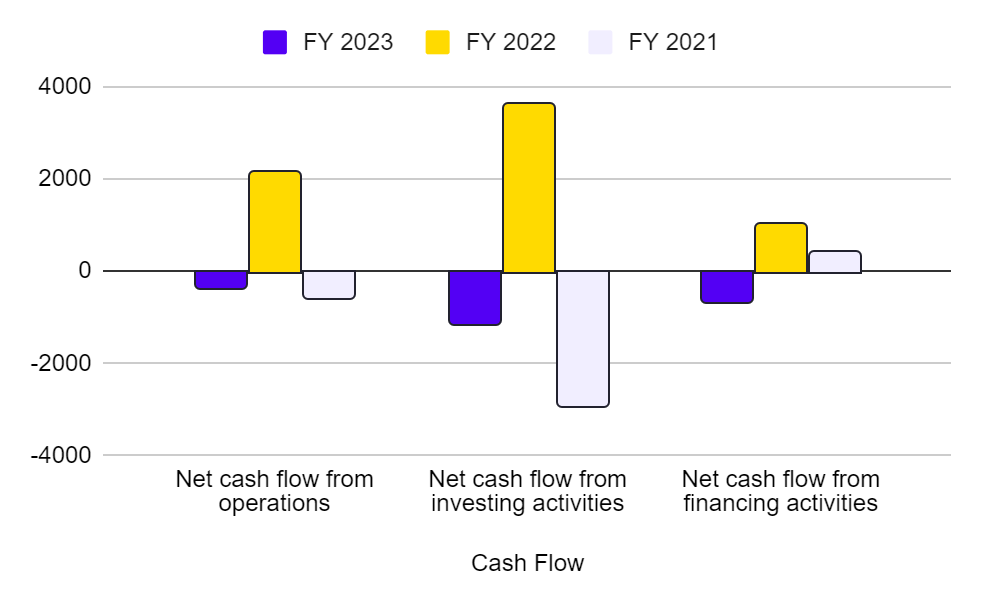
    Cash Flow Statement

    Cash FlowFY 2023FY 2022FY 2021
    Net cash flow from operations-358.672168.62-594.74
    Net cash flow from investing activities-1163.603631.28-2921.99
    Net cash flow from financing activities-690.091035.23408.01
    (Figures mentioned in the table are in Lakhs)
    CFS of PESB

    Strengths

    1. The company is led by a team of experienced professionals with deep knowledge of the core aspects of the business and holds long-term relations with customers.
    2. PESB simplifies investing by offering a wide range of brokerage services under one roof and caters to diverse investor needs with equity and currency derivatives trading. The recent addition of Mutual Fund and Margin Trading Facility (MTF) in business operations is an icing on the cake.
    3. The electronic brokerage platform enables the company to prioritize real-time risk management through its system that closely monitors the exposure by taking into consideration factors like client margins, exchange margins, and credit lines.

    Read Also: KP Green Engineering: IPO, Business Model, And SWOT Analysis

    Weaknesses

    1. The company’s restated summary information for FY 2023 shows negative cash and cash equivalents, and the company may likely experience similar negative cash flows in the future.
    2. The company has previously faced regulatory actions from stock exchanges and SEBI. The possibility of similar future actions cannot be entirely ruled out, which could impact the company’s financial health, operations, and profitability.
    3. The company’s directors, promoters, subsidiaries and group companies are involved in several legal proceedings at different stages. While the outcome of these proceedings is uncertain, any adverse judgements could affect the business operations.
    4. PESB operations rely heavily on IT and are exposed to cyber security risks and any kind of failure or security breach could adversely affect the business.

    Conclusion

    PESB empowers you to navigate the financial landscape with confidence and offers a comprehensive suite of investment products and services, all designed to fulfil the unique financial goals and risk tolerance of the customers. However, it is necessary to conduct your research before making any investment decisions.

    S.NO.Check Out These Interesting Posts You Might Enjoy!
    1Gopal Snacks IPO: Segments, Financials, Key Details, Strengths, and Weaknesses
    2JG Chemicals IPO: Overview, Key Details, Financials, KPIs, Strengths, and Weaknesses
    3RK Swamy IPO: Business Model, Key Details, Financials, KPIs, Strengths, and Weaknesses
    4Krystal Integrated Services: IPO, Business Model and SWOT Analysis
    5Popular Vehicle and Services IPO: Key Details, Financials, Strengths, and Weaknesses

    Frequently Asked Questions (FAQs)

    1. When was the company founded?

      PESB was founded in 2007.

    2. What is the price band of the PESB IPO?

      The price band of the IPO is INR 78 to INR 83 per share.

    3. When will the PESB IPO open?

      The PESB IPO will open on March 7, 2024.

    4. What does the company do?

      PESB is a stockbroking firm that offers equity, mutual fund, currency, commodities, and depository services.

    5. Where can I find more information about the PESB IPO?

      You can read the IPO prospectus on the website of BSE SME and other IPO managing brokerage firms.

  • Introduction to Gift Nifty: A Cross-border Initiative

    Introduction to Gift Nifty: A Cross-border Initiative

    If you’re a trader who follows news about stocks, economic developments, and other factors that could affect the volatility of the Indian stock market. In that case, you’ve probably heard of the Gift Nifty, formerly known as the SGX Nifty, and you probably check it before Indian markets open. But you may be wondering why Gift Nifty is called that.
    Therefore, we will explain in today’s blog why the SGX Nifty was renamed Gift Nifty.

    Capital Market

    The capital market is a place where financial instruments with long-term maturity are bought and sold. It provides a place where business houses and the government raise funds for different purposes.
    The capital market is divided into 2 parts

    1.  Primary Market – The place where securities are issued for the first time to the investors.

    2.  Secondary Market – The place where the investors buy and sell issued securities.

    Types of Secondary Market

    1.  Cash Market – It is a place where investors get the delivery of shares after purchasing them.

    2.  Derivative Market – The contract is traded in this market, and its value is derived from an underlying asset. A fixed and predetermined date is set for a derivative contract.

    Gift Nifty

    Stock Market Index

    A stock market index shows how a certain set of stocks has performed. An index is made up of stocks that represent a specific industry or pool of securities. Utilizing the free float market capitalization weighting approach, the index is calculated. 

    A few examples of indices are the Bank Nifty, which consists of stocks from the banking industry, and the Nifty IT, which consists of stocks from the technology sector. 

    Did You Know?

    Free float shares refer to publicly traded shares and are less than the total number of shares issued.

    Nifty

    The National Stock Exchange (NSE) launched the Indian market index, known as Nifty50, in 1996. Based on market capitalization, it shows the performance of the top 50 listed Indian firms. An investor can use this index to comprehend the overall market trend, which aids in the development of their trading strategy. 

    SGX Nifty

    Singapore Nifty is another name for SGX Nifty. It was formerly traded in Singapore dollars. Based on SGX Nifty patterns, it helps Indian traders forecast market direction. Foreign investors trade in the derivative contract, giving them access to Indian markets and enabling them to trade the Indian stock market at their local time. Trading in the SGX Nifty usually takes place ahead of Indian market hours, allowing investors to respond to worldwide sentiments that may impact Indian markets. 

    Did you know? 

    Gift Nifty has been traded on the Gift City, Gujarat, India-based NSE International Exchange since July 2023. It was traded on the Singapore Stock Exchange before this.

    Gift Nifty

    Effective July 3, 2023, the SGX Nifty contract has been rebranded as Gift Nifty. About 7.5 billion dollars worth of derivative contracts were transferred from the Singapore Exchange to the NSE International Exchange, which is based in Gandhinagar, Gujarat’s Gift City.

    Gift Nifty 50, Gift Nifty Bank, Gift Nifty Financial Services, and Gift Nifty IT derivative contracts are the four products that fall under the umbrella of the Gift Nifty.

    Timing of Gift Nifty

    Nearly 21 hours a day are spent trading on the Gift Nifty. It has two sessions for trading timing. The hours of the first session are 6:30 a.m. to 3:40 p.m. and the second session is 4:35 p.m. to 2:45 a.m. Trade sessions for Asia, Europe, and the United States occur simultaneously with Gift Nifty trading. 

    Gift City

    Gujarat International Finance Tec-city, sometimes called Gift City, is an International Financial Service Center (IFSC) that was founded to establish a financial hub by providing top-notch infrastructure. It was founded by the Gujarat government, with backing from the Indian government, and it started operations in April 2015 after being granted permission by the Reserve Bank of India to function as an IFSC.

    IFSCs operate in London, Singapore, Hong Kong, Dubai, and Frankfurt.

    Read Also: NIFTY Next 50 – Meaning, Types & Features

    Significance of Shifting of SGX Nifty to Gift Nifty

    According to the CEO of NSE, India is seeing a “watershed moment” with this trend. According to him, the rebranding will enhance India’s reputation abroad, leading to the purchase of foreign contracts that were previously transacted outside the nation. The financial sector in India has achieved a significant milestone as a result of SGX Nifty’s activity since traders now have wider access to the market and more liquidity. Other foreign organizations will be able to establish themselves in the city as a result of this change.

    SGX Nifty

    How does Gift Nifty impact the Indian Market?

    The Gift Nifty is a leading indicator of how the Indian stock market will open because the Gift Nifty opens 2.5 hours ahead of the Indian market. The movement of the Gift Nifty helps traders decide whether to enter the market with a long position or short position. When comparing Gift Nifty to Nifty 50, it is more volatile.  

    If investors are uncertain about the direction of the market, they may employ Gift Nifty as a tactic to hedge their position and lower potential risk in the Indian market. Any developments in the world economy that take place after the Indian market closes and before it reopens the next day would affect the price of Gift Nifty.  

    Difference between Gift Nifty and Nifty

    1.  While the Gift Nifty is a futures contract based on Nifty, the Indian Nifty is made up of 50 shares. 

    2.  While Indian retail investors are not allowed to trade in Gift Nifty, they can easily trade in Nifty.

    3.  Global market sentiments have a significant impact on Gift Nifty, but Indian economic conditions, policies, and corporate profits have a greater impact on Nifty’s movement. 

    4.  Nifty trades in real-time, while Gift Nifty only gives the Indian market’s direction.

    5.  While Gift Nifty investments are made in dollars through NSE IX, investments on Indian markets can be made in Indian rupees.

    6.  The Indian market is open for trading from 9:15 to 3:30, but Gift Nifty is open for trading from 6:30 a.m. to 3:40 p.m. and from 4:35 p.m. to 2:45 a.m.

    Read Also: Gift City Case Study: Timeline, Management, and Development

    Conclusion

    The move of the SGX Nifty from Singapore to Gift City, India, is a significant milestone. It gives any outside investor a chance to enter the Indian market. Since only foreign investors or non-resident Indians can invest in Gift Nifty, Indian investors are limited in learning how the market will go.

    You must also consider your risk tolerance if you are investing in the Indian market and witnessing directional momentum from Gift Nifty.

    Frequently Asked Questions (FAQs)

    1. Can I trade in Gift Nifty in India?

      Indian retail investors are not allowed to trade in Gift Nifty as only foreign portfolio investors and non-resident individuals are allowed to trade in it.

    2. What is the new name of SGX Nifty?

      The name of SGX Nifty changed to Gift Nifty on 3rd July 2023.0

    3. What is the time of Gift Nifty opening?

      The Gift Nifty will open around 6:30 a.m. to 3:40 p.m. and reopen from 4:35 p.m. to 2:45 a.m.

    4. How can I track the price of Gift Nifty?

      You can search Gift Nifty in your trading platform’s search section and track the price there.

    5. Can I purchase Gift Nifty in the cash segment?

      No, only future derivative contracts are traded in Gift Nifty.

  • Explainer on Liquidity Ratios: Types, Importance, and Formulas

    Explainer on Liquidity Ratios: Types, Importance, and Formulas

    Before investing, a long-term investor considers a company based on several factors, including its business model and plans for future growth. One of the most significant parameters is a company’s financial situation. 

    Various types of ratios contribute to assessing a company’s financial health, with the liquidity ratio being one of them.

    Ratio Analysis

    This technique evaluates a company’s financial situation by extracting information from multiple financial statements and comparing it over time. It aids in identifying growth opportunities and detecting potential issues.

    Importance of Ratio Analysis

    1. Ratios provide insights into the company’s historical performance, enabling predictions about its future performance.

    2.  It serves as a language for informing stakeholders, including creditors, stakeholders, financial analysts, and management, about financial situations.

    3.  Ratios play a crucial role in identifying weaknesses within the organization and areas requiring additional attention.

    4.  The management can formulate policies by analyzing the ratios.

    Types of Ratios

    1. Liquidity Ratio – This assesses the company’s capacity to settle its short-term obligations.

    2. Solvency Ratio – Also referred to as leverage ratio, these evaluate the company’s capability to repay its long-term debts.

    3. Profitability Ratio – Used to gauge the company’s profit generation from its operational activities.

    4. Activity Ratio – It measures how efficiently a company utilizes its assets to generate revenue, also known as efficiency or turnover ratio.

    5. Earning Ratios – Investors typically utilize these ratios to get a wide definition of the company’s earnings based on many financial parameters and gain insight into the returns on their investments. 

    Ratios

    Read Also: Explainer on Imitation Investing: Psychology, Advantages, Limitations, and Strategies

    Liquidity Ratios – Overview

    The liquidity ratios aid in assessing the company’s capacity to fulfill short-term obligations. It gives us a better picture of how well the corporation can turn its assets into cash. 

    Before granting a loan, creditors of the company typically analyze this ratio to ensure that the recipient company has the financial capacity to repay the loan. An company’s creditworthiness in the market suffers if it is unable to make its financial obligations on schedule. 

    Types of Liquidity Ratios

    There are four types of liquidity ratios.

    Current Ratio

    This ratio is computed to assess the company’s capacity to sell its short-term assets to pay off its short-term liabilities. 

    Formula – Current Ratio = Current Asset/Current Liability

    A company’s current assets are all it owns and can turn into cash in less than a year. Conversely, the current liability category includes all short-term debt that must be paid back within a year.

    Inference – A ratio of more than 1 indicates that the company has more current assets than its current liability, thus making it easier to pay off the current liabilities.

    Quick Ratio 

    Since inventory cannot be quickly converted into cash, it is not included in the calculation of the company’s ability to satisfy its short-term liquidity needs under this ratio. Another name for it is the Acid Test Ratio. 

    Formula – Quick Ratio = (Current Asset – Inventory)/Current Liabilities

    Inference – When the quick ratio is larger than 1, it means that the company does not need to consider inventory to pay its short-term liabilities. 

    Cash Ratio

    Although it evaluates a company’s capacity to pay down short-term debt with just liquid assets, this ratio is also used to gauge a company’s liquidity. Only cash and cash equivalents are considered liquid assets in this context. This percentage is typically employed by the people or entity providing the loan. 

    Formula – Cash Ratio = Cash and cash equivalent/current liabilities.

    Inference – The ideal cash ratio is considered to be 1.

    Net Working Capital Ratio

    This ratio is used to assess if a business has enough cash on hand to fund its working capital activities. The difference between current assets and current liabilities is defined as working capital. 

    Formula – Net Working Capital Ratio = Net Working Capital/Total Assets

    Inference – A higher ratio suggests that the major portion of the company’s assets are acquired by short-term resources which suggests a better liquidity position in the short-term.

    Liquidity ratios

    Importance of Liquidity Ratios

    1.  The company’s creditors verify the company’s liquidity to determine whether or not the borrower will be able to repay the loan on schedule before extending credit to the firm. 

    2.  It is important for the management to monitor the company’s cash flow and make arrangements for more funds if necessary. 

    3.  An informed financial decision can be taken after performing a proper analysis of the company’s liquidity ratio.

    4.  Different liquidity ratios assist the company’s management in creating fresh plans for the business, which ultimately aids in its growth.

    Read Also: Explainer on Cigar Butt Investing: Features, Advantages, Limitations, and Suitability Explained

    Conclusion

    One crucial metric for assessing a company’s liquidity is its liquidity ratio. It illustrates a company’s ability to handle debt payments. Moreover, creditors utilize these ratios to determine a company’s creditworthiness. Consequently, long-term investors should analyze the business’s liquidity ratios before making investment decisions. Additionally, it’s essential to consider risk factors.

    Frequently Asked Questions (FAQs)

    1. Which of the liquidity ratios are most commonly used?

      The quick and current ratios stand out as the most frequently used liquidity ratios.

    2. What is the ideal current ratio?

      The quick and current ratios stand out as the most frequently used liquidity ratios.

    3. Among quick ratio and current ratio, which one is better?

      While both ratios serve their purposes, the quick ratio outshines the current ratio due to its exclusion of inventory, which can be challenging to convert into cash.

    4. What is the other name of quick ratio?

      The quick ratio, alternatively referred to as the acid test ratio, offers insight into liquidity.

    5. How can we calculate the current ratio?

      The formula to compute the current ratio is current asset/current liability.

  • Mutual Funds vs Direct Investing: Differences, Pros, Cons, and Suitability

    Mutual Funds vs Direct Investing: Differences, Pros, Cons, and Suitability

    Investing in stocks is gaining more and more popularity as people wish to take advantage of the rising indices. There are two stock investing methods: investing directly in equities and investing through an asset management business.

    We will now explain the differences between the two methods and help you make an informed choice.

    Mutual Funds – Overview

    Mutual funds are a type of investment product that pools the capital of several investors who share a common investment objective or goal. The fund managers, who are experts in this area, use the pooled capital to invest it in various asset classes, such as stocks, bonds, and commodities. The investor receives the return on their investment after their costs and fees are subtracted; the company responsible for this process is called an asset management company, or AMC.

    Did you know?

    As of January 2024, the mutual fund sector in India managed 52.74 lakh crores worth of assets. 

    Types of Mutual Funds Based on Asset Class

    There are different types of Mutual Funds based on the asset class.

    1. Equity Mutual Fund – This mutual fund category invests predominantly in equity or shares; this category has more risk than other categories as they are sensitive to market fluctuations.

    2. Debt Mutual Fund – The investors who invest in this category of mutual funds are relatively risk averse. Thus, their money is invested in fixed-income securities such as treasury bills, bonds, commercial papers, etc.

    3. Hybrid Fund – This fund category is the combination of both equity and debt mutual funds. The portfolio of hybrid funds will have a specific allocation of equity to provide growth in your portfolio return and debt to provide stability and consistency.

    Note – Mutual funds can be segregated into regular and direct funds, click here to check out our blog.

    Pros of Investing in Mutual Funds

    Diversification – The principal advantage of investing in mutual funds is their ability to diversify your investment portfolio, thus lowering the chance of loss over time. 

    Liquidity – Because you can take your money out at any time, investing in mutual funds gives you the benefit of liquidity

    Affordability – With just INR 100 at minimum, you can begin investing in mutual funds. Any investor can afford it. 

    Professional Management – Your investment amount will be managed by professional fund managers who have a team of research analysts to identify investment opportunities.

    Transparency – You can easily track your investment where your money will be invested and monitor the performance of it.

    Fund manager in Mutual funds

    Cons of Investing in Mutual Funds

    Expense Ratio – Mutual funds charge various costs for managing your investments, including administration and management fees, which will lower your return over time. 

    Selection of funds – Numerous funds are available for market investment. Selecting the right fund is a task for the investor; sometimes, an investor gets confused among the funds and chooses the wrong fund.

    Note – If you wish to know more about analysing mutual funds, check out our blog by clicking here.

    Exit Load – This fee is charged by asset management companies from an investor when they redeem their fund before a stipulated period. If an investor wants to redeem their fund before the stated time, they will have to pay this fee to the fund management company.

    Fund Manager – Performance may be impacted if investors place their savings in a mutual fund based on the fund management’s performance reports. Still, the fund manager is not skilled in picking stocks, which leads to reduced returns.

    Read Also: Mutual Fund vs PMS: Which is Better?

    Direct Investing – Overview

    When you invest directly into stocks through your demat account, it is known as direct investing. In this, you don’t have to go through any intermediary, such as an asset management company, and investors buy the company’s stocks independently after performing their due diligence.

    A share or equity represents the ownership in a company, and by investing in this, the investor can participate in the company’s growth.

    Did you know?

    As per the data released from Central Depository Services and National Security Depository, the total demat accounts in India stands at 14.39 crore as of Jan 2024.

    Pros of Direct Investing

    Decision making – The investor has the full authority to decide in which stock they want to invest their money, and they can buy or sell the securities any time they want.

    Cost-effective – Direct investment into stocks can save various costs that an investor will have to pay while investing through different intermediaries.

    Higher returns – Investing directly in equities might yield a potentially large return for an investor in exchange for increased risk. 

    Liquidity – A direct stock investment gives investors complete control over when and how much they can take from their investment without worrying about exit costs. 

    Diversification – When making direct investments, an investor can effortlessly diversify their portfolio across several asset classes or sectors based on their requirements and risk tolerance. 

    Cons of Direct Investing

    Market Risk – Your portfolio valuations will suffer greatly from any market decline. Several factors, including adjustments to interest rates or corrections in the global market, can bring this about.

    Concentrated Risk – Your risk will rise if you directly invest in individual securities because your portfolio will be concentrated into a limited number of stocks. 

    Investor Bias – Multiple biases could cloud your thinking since you pick stocks independently. Multiple irrational biases come into play when we select stocks; all of them can dramatically affect your portfolio.  

    Risks of direct investing

    Difference between Direct and Mutual Fund Investing

    Risk – Since equities is among the riskiest asset classes, direct investing carries a higher risk than investing in mutual funds. 

    Volatility – Compared to mutual funds, which include a diverse portfolio of equities to offset market volatility, investments in individual stocks possess more volatility.

    Minimum Investment – Any group of investors can afford to invest in mutual funds, with a minimum amount of 100 INR. Conversely, investing directly in stocks requires a larger capital contribution because many stocks have higher pricing, making them unaffordable for most investors. 

    Cost of investment – Investing in stocks directly incurs several fees, including brokerage from the broking company and various taxes (such as GST and security transaction taxes). Mutual funds also charge fees for services rendered, but are more than the fees charged while investing in stocks. 

    Convenience – Mutual funds offer hassle-free investment. Once you are done with your investment, an asset management company will do the rest of the work, such as identifying the asset class, investing in securities, and monitoring the same. On the other hand, direct investment requires continuous monitoring by the investor.

    Professional Management – To invest directly, one needs to have a strong skill set to identify the correct stock. However, while investing in a mutual fund, there is no such need to do it as these all will be done by the asset management company’s fund managers.

    Suitability

    The investor’s risk tolerance and desire will choose whether to choose mutual funds or make one of the direct investments. Mutual funds are the ideal investment product if you are just starting in the world of finance. However, if you are comfortable taking risks and are knowledgeable about financial concepts, direct investing is the better choice. 

    Read Also: Active or Passive Mutual Funds: Which Is Better?

    Conclusion

    In a nutshell, direct investments are best suited for individuals who possess knowledge about stock investing and want complete control over their investments, while mutual funds are best suited for those who lack the time to regularly monitor their portfolios. In conclusion, there is no right or wrong way to invest; the ultimate goal is to generate wealth and earn returns.

    Choosing the best alternative among them is entirely dependent on your risk tolerance and investment objectives.

    S.NO.Check Out These Interesting Posts You Might Enjoy!
    1What Is An IPO Mutual Fund? Should You Invest?
    2Mutual Fund Taxation – How Mutual Funds Are Taxed?
    3Is Your Mutual Fund Investment Safe?
    4What is an Open-Ended Mutual Fund & How to Invest in it?
    5How to Cancel Mutual Fund SIP?
    6How Interest Rates Impact Mutual Funds in India

    Frequently Asked Questions (FAQs)

    1. How can I invest in stocks directly?

      To invest in stocks directly you are required to open a demat account with a stockbroker who will facilitate you to transact on the National Stock Exchange and Bombay Stock Exchange.

    2. How to analyze mutual funds?

      Mutual funds can be analyzed through both qualitative and quantitative factors. To learn about mutual fund analysis, check out our blog.

    3. Which provides better return direct investment into stocks or mutual funds?

      While investing in stocks directly yields better returns but carries a larger risk. In contrast, mutual funds diversify your portfolio to lower risk.

    4. Why should I periodically check my stock portfolio?

      The stock market is very volatile since a number of factors affect its daily movement. If you miss out on these fluctuations, your portfolio’s return will be impacted thus you must regularly monitor your stock portfolio. 

    5. What is the minimum amount required to invest in the stock market?

      Direct stock investments have no minimum amount requirement; you may begin with any amount you feel comfortable with and buy as little as one share of a firm. However, several stocks are trading at extremely high prices, making them unaffordable for investors with less capital.

  • Explainer on ESG Investing: Overview, Pros, Cons, Background, and Mutual Funds

    Explainer on ESG Investing: Overview, Pros, Cons, Background, and Mutual Funds

    Imagine investing in companies that prioritize not just profit, but also the planet and its people. That is the core motive of ESG investing, a concept gaining traction as investors seek to make a positive impact alongside financial returns.

    Captivated, right? Let us delve deeper into the blog to discover more about ESG investing and how it can shape your investment journey.

    What is ESG Investing?

    ESG investing, also known as sustainable investing, is an approach that considers environmental, social, and governance factors alongside traditional financial metrics when making investment decisions.

    Here is a breakdown of the three areas,

    Environmental

    This aspect focuses on the company’s environmental impact, including its climate change policies, carbon emission, pollution, resource usage and waste management. Investors might evaluate a company’s commitment to renewable energy, sustainable practices and environmental responsibility.

    Social

    This aspect examines how a company interacts with its stakeholders, including its employees, customers and communities. Investors may consider several factors, such as diversity and inclusion, level of community engagement, gender equality, and supply chain ethics, before investing in a company.

    Governance

    This aspect analyses a company’s internal structure and leadership practices, including board composition, executive compensation, transparency in decision-making, risk management and rights of the shareholders. Investors are generally interested in how well a company is governed and its commitment to ethical and responsible business practices.

    By incorporating ESG factors, investors aim to align their values with their investments, identify long-term opportunities and mitigate risks. However, you must remember that ESG investing is a complex and evolving field with varying methodologies and ongoing debate about its effectiveness in predicting financial performance.

    ESG report

    Is ESG Investing worth the effort?

    Whether ESG investing is “worth the effort” depends on your individual investment preferences and goals as an investor. 

    Let us have an overview of the pros and cons of ESG investing. 

    Pros of ESG Investing 

    1. Invest in companies that share your environmental and social concerns, fostering a sense of purpose and positive impact.
    2. ESG investing might help you avoid companies with environmental or social controversies or negative publicity that could impact their financial performance.

    Cons of ESG Investing 

    1. Evaluating ESG factors can be complex and requires thorough research and analysis. Be wary of ‘greenwashing’ where companies may overstate their ESG commitment to attract investors.
    2. Depending on your goal, finding suitable ESG investment options might be more limited than traditional investments. Additionally, some ESG-focused funds might have slightly higher fees.
    3. Studies on the relationship between ESG and financial returns are inconclusive. While some research shows equal or even better returns with ESG integration, others show no significant difference or underperformance.

    Read Also: A Comprehensive Guide on Mutual Fund Analysis

    Background of ESG Investing in India

    Investors are focusing on ESG considerations, and driving the growth of ESG funds in India over the past three years. This trend has led to regulatory pressure on companies to increase transparency with ESG disclosures, which leads to greater utilisation of ESG ratings for decision-making.

    In this regard, the Securities and Exchange Board of India (SEBI) has introduced a regulatory framework for ESG disclosures by top-listed companies. The framework also includes ESG ratings in the securities market and ESG investing by mutual funds. SEBI has also made ESG disclosures mandatory for the top 1000 listed companies by market capitalisation.

    Additionally, recognising the growing importance of ESG factors in the financial landscape of India, SEBI established the ESG Advisory Committee in May 2022 to review and recommend improvements to the regulations for ESG disclosures, ratings and investing. The committee had representatives from corporations, investors, rating providers, mutual funds, technical experts and other stakeholders.

    To ensure a reliable assessment of key ESG factors, the BRSR (Business Responsibility and Sustainability Reporting) core framework was proposed. As per the regulations, an ESG scheme should invest at least 65% of its assets under management (AUM) in companies reporting on BRSR.

    This framework focuses on 9 important ESG attributes and their linked Key Performance Indicators (KPIs) for ESG-labelled mutual funds.

    Attributes and KPIs within the BRSR Core framework 

    1. Greenhouse Gas emission.
    2. R&D and capex investment in specific technologies to improve the environmental and social impact of products
    3. Total waste generated, waste recycled and waste disposed.
    4. The cost incurred on measures towards the well-being of employees and workers, as a percentage of total revenue.
    5. Gross wages paid to females as a percentage of total wages paid.
    6. Input material taken from MSMEs as a percentage of total purchases and wages paid to people employed in smaller areas.
    7. Open-ness of business i.e., level of buying and selling with trading houses, dealers and related parties.
    ESG company

    ESG Ratings

    ESG ratings assess a company’s environmental, social and governance performance. These ratings measure a company’s exposure to ESG risks and opportunities and how they manage them. Investors use ESG ratings to analyse the company’s long-term sustainability based on its ESG practices. ESG Ratings will be provided based on the compliance with the following criteria

    1. Environmental parameters such as energy, water, waste management and company operations in or around environmentally sensitive areas.
    2. Socio-environmental parameters such as the amount spent on Corporate Social Responsibility.
    3. Social parameters such as job creation in small towns or job creation for differently abled people.
    4. Governance parameters such as compliance, royalty payments, and related party transactions

    MSCI and S&P Global CRISIL offer ESG ratings based on their methodology and criteria.

    ESG Funds – An Overview

    ESG funds have shown that they can perform just as well, if not better, than traditional funds. Studies have found that companies with strong ESG practices can be more resilient and tend to give better long-term performance. So, you can invest in a way that aligns with your values without sacrificing the returns. It is a win-win.

    Additionally, below are some top-performing funds and their returns over the past three years relative to their benchmark. 

    Fund name1M3M6M1Y3Y
    Invesco India ESG Equity Reg3.6210.515.229.7
    SBI Magnum Equity ESG Reg3.4810.214.12814.8
    Quant ESG Equity Reg13.825.330.65436
    S&P BSE 100 TRI*5.5313.916.832.317.4
    Equity: Thematic-ESG5.413.517.932.816.4

    *(S&P BSE 100 is a benchmark index for the above-mentioned funds and EQUITY THEMATIC is the category). 

    Read Also: Mutual Fund Factsheet: Definition And Importance

    Conclusion

    Deciding whether ESG investing is right for you requires careful consideration of your financial goals, risk tolerance and depth of research you are willing to undertake. Try to understand the specific ESG criteria used by different investment products and their alignment with your values. Discuss your investment goals with a qualified professional who can advise you on incorporating ESG considerations into your portfolio.

    Frequently Asked Questions (FAQs)

    1. Why is ESG investing gaining so much traction?

      People are increasingly concerned about the planet, social issues and responsible business practices and ESG investing offers a way to address these concerns.

    2. Does ESG investing mean sacrificing returns?

      Some studies show that ESG funds offer better returns while others show no significant difference or underperformance. So, it is tough to say if returns must be sacrificed in ESG investing, but the risk of lower returns looms large. 

    3. Is ESG investing complicated?

      It can be complex since evaluating ESG factors requires research and greenwashing companies can mislead you.

    4. Should I choose ESG investing?

      It completely depends on your goals and willingness to research schemes that best align with your ethical values.

    5. What are the challenges of ESG investing?

      The link between ESG and financial returns is still debated and evaluating ESG factors can be tedious.

  • Explainer on Portfolio Management Services (PMS): Features, Types, Charges, Taxation, and Risks

    Explainer on Portfolio Management Services (PMS): Features, Types, Charges, Taxation, and Risks

    If you have accumulated significant wealth during your career and wish to seek professional help in managing the funds, then Portfolio Management Services (PMS) can prove helpful to you. 

    Today’s blog will focus on individuals who wish to gain more profound knowledge of Portfolio Management Services (PMS).

    Portfolio Management Services Overview

    Portfolio management services, or PMS, is a financial service offered by financial institutions. This service primarily focuses on investing investors’ funds with a larger portfolio than the average individual. Such investors can invest their money in this service, and a team of qualified fund managers will allocate it to various asset classes based on their investment goals. 

    Typically, investors allocate a portion of their portfolio to equity but cannot manage it effectively due to a lack of professional knowledge. This is where PMS comes in; with a minimum investment of 50 Lakhs, your entire investment amount will be given to a portfolio management company, and their team of seasoned professionals will allocate it among various asset classes based on market and economic conditions. In exchange, they will charge a fee for their services. 

    The first announcement of the SEBI regulation for PMS dates back to 1993. All Portfolio Management Companies are required to adhere to the compliance standards established by SEBI.

    HNI involvement in PMS

    Minimum Investment Amount

    Over time, PMS’s minimum investment amount has undergone modifications. The PMS legislation was first established in 1993, with a minimum investment value of 5 lakh. In 2012, the minimum investment amount was raised to 25 lakh; in November 2019, it was further increased to 50 lakh. 

    Features of PMS

    1. Investment in PMS provides customized solutions as per investors’ objectives.

    2. The fund managers have vast experience in managing funds

    3. PMS fund managers generally diversify the investment across different asset classes, ultimately lowering the risk.  

    4. Reports like transactions, profit and loss, etc., will be sent periodically to investors, and they can also check the same on the online platform provided by PMS companies.

    5. PMS is a product with a minimum ticket value of 50 lakhs, which is generally suitable for HNI investors.

    Read Also: Explainer on Cigar Butt Investing: Features, Advantages, Limitations, and Suitability Explained

    Types of PMS

    A financial institution offers a variety of portfolio management services, including 

    1. Discretionary Portfolio Management– The portfolio managers make all investment-related decisions under this category of portfolio management services on the client’s behalf. Before making any investments, the fund management is at liberty and is not required to confer with the investor. The majority of the clients choose this type of service. 

    2. Non-discretionary Portfolio Management– The fund manager must obtain the client’s confirmation before investing in this kind of service. The client receives financial advice from PMS’s investment team but ultimately decides whether or not to act on the advice. 

    3. Advisory Services – In this arrangement, a fund manager will merely offer advice to investors on various asset classes; the investor will decide whether to follow the fund manager’s recommendation. 

    4. Active Portfolio Management – The ultimate goal of active portfolio management is to maximize investor return, which is accomplished by actively allocating funds to various asset classes. The fund management actively chooses the allocation of funds and where to invest them. 

    5. Passive Portfolio Management – The fund manager uses this investment management technique to allocate the funds to stocks that track indexes and increase steadily over time.   

    Charges of PMS

    The charges of PMS can be classified into 3 different categories-

    Fixed Charges

    This is what every PMS charges as its main fee. This is an ongoing charge that depends on the average value of your investment and varies from 1% to 3%. The fee is due regardless of the fund manager’s performance ratings. This is the minimum amount that must be paid to the PMS firm regardless of the fund’s performance.

    Below is the illustrative table of the same. 

    Fees2%
    Investment Amount50,00,000
    Return on Portfolio20%
    Profit10,00,000
    Portfolio Value at the year-end60,00,000
    Fixed Charges 2%1,20,000
    Net Value of Portfolio after Fees Adjustment58,80,000

    Performance Based

    The fund’s returns are used to determine these fees. The fund management will charge a fee based on the percentage of profit made above the minimum rate, also referred to as the hurdle rate.

    We can better understand this by using an example. For example, if the hurdle rate is 8% the profit sharing ratio is 20% above the hurdle rate, and your investment of Rs. 50 lakh yields a 20% return on your portfolio, your total profit will be Rs. 10 lakh, of which Rs. 4 lakh is the minimum profit that needs to be delivered. The company will then charge a fee of 20% of the remaining profit of 6 lakhs.

    Below is the illustrative table for the same.

    FeesProfit Sharing – 20% above 8% Hurdle Rate
    Investment Amount50,00,000
    Return on Portfolio20%
    Profit10,00,000
    Value of Portfolio at the end of the year60,00,000
    Hurdle Rate 8%4,00,000
    Profit over hurdle rate6,00,000
    Profit Sharing 20% of 6,00,0001,20,000
    Net Value of Portfolio after Adjustment58,80,000

    Hybrid Fee Structure

    This fee schedule combines a profit-sharing concept with a fixed fee. In this instance, the hurdle rate is typically higher than in a performance fee-based approach, and the fixed charge rate will be lower than in a fixed charge model. This is intended for PMS managers who wish to profit from both fee structures. 

    Taxation

    Equity Taxation – If a portfolio is heavily weighted toward the equities asset class, the tax rate on the profit amount will be 15% if the holdings are sold within a year, and the appropriate rate will be 10% above 1 lakh if the holdings are sold after the year. 

    Non-Equity Taxation – The portfolio will be considered a short-term gain and included in the investor’s income at their slab rate if it is sold within three years and does not concentrate in the equity asset class. If the units are sold after three years, they will be considered a long-term gain and subject to a 20% tax with indexation benefit. 

    Dividend Income –All dividend income earned on the investment will be included in the investor’s income and taxable as per their tax slab.

    Exit Load – If you withdraw your money before a predetermined amount of time, PMS firms typically charge an exit load, ranging between 1 to 3%.

    Asset selection in PMS

    Risks

    The risks investors should consider before investing in PMS are listed below. 

    1.  Performance of Fund Manager – Evaluating the fund manager’s performance before investing is essential. Looking for a fund manager with a stable track record is usually advisable. 

    2.  Market Risk – Due to the investment’s significant exposure to the equities asset class, there is a greater chance of losses and a rise in portfolio volatility. 

    3.  Liquidity Risk – Because certain illiquid securities are difficult to sell, investing in them may affect your portfolio liquidity. 

    4.  Regulatory Risk – As previously stated, the minimum ticket size for investing in PMS has increased from 25 lakhs to 50 lakhs in 2019. Future legislative changes of this nature could affect PMS’s investment strategies and tax consequences.

    Read Also: Explainer on Imitation Investing: Psychology, Advantages, Limitations, and Strategies

    Conclusion

    We’ve gone over the benefits and risks of investing in PMS with you; this service is for high-net-worth individuals (HNIs) who understand the risks involved in this kind of investing. Suppose an investor is willing to assume the risk of this product and is seeking a better return. In that case, they should consider all the important characteristics before making a decision. 

    Before making any investing decisions, we advise you to speak with your financial advisor to better understand your ability to accept risk. 

    Frequently Asked Questions (FAQs)

    1. Is PMS investment permissible for NRIs?

      Yes, You can invest in PMS as an NRI.

    2. How do I access my PMS portfolio valuation?

      In addition to sending clients statements regularly, PMS businesses offer their clients an online portal through which they can monitor their assets, transaction statements, and profit and loss statements. 

    3. How can you evaluate PMS performance before purchasing?

      Before purchasing PMS, you can evaluate its performance by comparing its returns to the appropriate benchmark and examining the consistency of its returns over an extended duration.

    4. Does PMS have a lock-in period?

      PMS offers the flexibility of no lock-in period. However, redeeming your investment before the allotted time will incur an exit load.

    5. Is there a guaranteed return in PMS?

      No, PMS company cannot provide investors with a guaranteed rate of return.

  • A Comparative Study on Top 5 Solar Stocks in India

    A Comparative Study on Top 5 Solar Stocks in India

    Renewable energy has seen a massive uptrend in the past few years, majorly due to the overwhelming support of international entities. Fortunately, our country, India, has access to abundant solar energy, and a few companies can tap this resource’s full potential. 

    Today we’ll briefly overview solar firms and a performance comparison in today’s blog. 

    What are Solar companies?

    Solar energy firms engage in various business activities that involve harvesting and converting solar radiation into electrical energy. Typically, solar companies offer a complete solution, including system design, equipment procurement, and plant installation. The businesses in this industry specialize in various areas, including solar panel manufacturing,  solar inverter manufacturing, solar financing, battery manufacturing, and solar software preparation.

    Solar energy plant

    Reasons for choosing Solar stocks

    1. The government regularly provides incentives to the solar energy industry, which is why investors find them enticing investment opportunities.
    2. With the rising demand for solar energy in the upcoming years, this industry has seen substantial growth in recent years and has excellent long-term performance potential.
    3. Many solar stock companies offer high dividend yields. Hence, investors seeking steady income find them appealing.
    4. Investing money into solar companies gives you the mental comfort of knowing that you are positively impacting the environment.

    Risks involved with Solar stocks

    • The solar sector is subject to significant influence from governmental policies, incentives, and regulations. Any modifications to these factors may impact the company’s growth prospects.
    • The solar industry is very young compared to other well-established market sectors; thus, any major shift in the market could impact its performance.
    • Large players are interested in this industry, so the corporation may eventually have to contend with fierce competition.
    • Small solar companies’ stock may be less liquid, and newly established businesses may have some financial insecurity.

    Read Also:7 Best Solar Energy Penny Stocks

    Overview of Best Solar Companies in India.

    Urja Global

    The business was established in 1992 and initially concentrated on financial services until entering the renewable energy market in 2009. They started a project named “Urja Rath” in 2013 to promote environmentally friendly transportation.

    The organization has partnered with several foreign businesses to grow their business, in addition to working on numerous solar projects throughout India.

    Products and Services

    They develop solar power projects after considering their client’s needs and budgets. They offer every piece of equipment needed for solar power plants. By giving their clients appropriate equipment maintenance, they offer excellent after-sale support.

    Suzlon Energy 

    Established in 1995, Tulsi Tanti launched this worldwide provider of renewable energy solutions, with presence in over 17 countries. Pune is home to the company’s headquarters. Through its creative solutions, the company is dedicated to promoting sustainable energy solutions that lower carbon emissions. Since their entry into the solar energy industry, they have successfully installed and commissioned 340 MegaWatt of solar power across several states. In Rajasthan, the business also built a 1500 MW wind-solar hybrid park. 

    Products and services

    They provide a large selection of wind turbines, as well as installation, upkeep, and replacement parts. Additionally, they also provide a customized selection of products to meet the needs of their customers in any climate—hot, dry, desert, humid, etc.

    Suzlon Solar panel

    Sterling & Wilson  

    It is a multinational engineering, procurement, and construction (EPC) firm with a focus on sustainable energy initiatives. Willison Electric Works and Sterling Investment, a consortium of Shapoorji Pallonji consortium companies, merged to form the corporation in 1927. The company’s headquarters are located in Mumbai. In order to capitalize on the expanding energy industry, Sterling and Wilson Private Limited established a solar business in 2011 and started operations there. The business is present in more than 25 countries worldwide. The organization optimizes renewable energy projects’ performance, efficiency, and reliability by utilizing state-of-the-art technologies and creative ideas. 

    Products and services

    They offer complete EPC services for energy projects, and solar power solutions, including roof-top solar installation solar parks, among other things, and their products are mostly concentrated on renewable energy. It also offers energy storage and wind power solutions to its customers. 

    Gita Renewable

    The company was established in 2008, and its head office is in Chennai, Tamil Nadu. Gita renewable energy is firmly committed to sustainable practices and clean energy production. 2014 saw the company’s first 2 MegaWatt solar power plant successfully come online. It also won many accolades, including the state government’s “Outstanding SME Awards”. 

    Products and services

    Using its own power plants, the company produces and distributes renewable energy. Their 2 MW power plant in Tamilnadu is currently their main source of energy. 

    Borosil Renewables

    Borosil Renewables Limited started off its operations in 2009 to reflect a strategic move toward renewable energy. The company was granted approval in 2010 to establish the first commercial facility for producing tempered solar glass. The business introduced the first fully tempered 2 mm thick solar glass in the world in 2017; it offers exceptional strength and resilience to hail. With its current capacity, the company can produce 450 tons of solar glass per day or 2.8 gigawatts of solar modules.

    The business is India’s first and only producer of solar glass.

    Products and services

    Tempered solar glass, the company’s main product, comes in a range of thicknesses from 2 mm to 4 mm. The company offers a diverse range of products. Additionally, the coating is self-cleaning, anti-soiling, and anti-reflective. 

    Comparative Study of Solar Companies

    Market Capitalization

    CompanyMarket Capitalization
    Urja Global1,388
    Suzlon Energy62,693
    Sterling & Wilson Renewable Energy13,678
    Gita Renewable Energy80.4
    Borosil Renewable Energy7,101
    (In crores)

    The table mentioned above makes it clear that Gita Renewable has the least market capitalization and Suzlon Energy has the greatest among the companies listed.  

    52 Week High and Low Prices

    Company52 Week High Date52 Week High Price52 Week Low Date52-Week Low Price
    Urja Global5-Feb-202441.6528-Mar-20236
    Suzlon Energy2-Feb-202450.628-Mar-20236.95
    Sterling & Wilson Renewable Energy9-Feb-202464719-Oct-2023253
    Gita Renewable Energy3-May-20237010-1-2024310.3
    Borosil Renewable Energy01-Feb-202466928-Mar-2023380
    (As on 17 February 2024)

    Income Statement (FY23)

    ParticularsUrja GlobalSuzlon EnergySterling & WilsonGita RenewableBorosil Renewable Energy
    Total Income41.415,9902,1258.87707.08
    Total Expenses39.435,8193,3041.01587.9
    Net Profit1.972,887.29(1,174)7.8588.54
    (In crores)

    Balance Sheet (FY23)

    ParticularsUrja GlobalSuzlon EnergySterling & WilsonGita RenewableBorosil Renewable Energy
    Total Asset2856,047.93,19014.191,391
    Inventory207601.57174
    Trade Payables (Non-current)65.61,0616500.4143.73
    (In crores)

    Cash Flow Statement (FY23)

    ParticularsUrja GlobalSuzlon EnergySterling & WilsonGita RenewableBorosil Renewable Energy
    Cash flow from Operating Activities0.91(31.15)(1829)15.225.64
    Cash flow from Investing Activities0.64407(11.78)6.85(220)
    Cash flow from Financing Activities(1.09)(495.51)1,431.26(26.44)184.64
    (In crores)

    Key Ratios (FY23)

    ParticularsUrja GlobalSuzlon EnergySterling & WilsonGita RenewableBorosil Renewable Energy
    Basic EPS0.032.64-61.6519.116.79
    ROCE (%)1.1520.69-210.9757.1510.73
    3 Year CAGR Sale(%)-50.8147.72-39.87-23.6259.31
    P/E (x)228.332.99-4.734.6960.51
    P/B (x)2.148.82-24.622.686.13

    It is clear from the previously described comparative study of the company’s financials that some businesses are currently profitable while others are losing money and the growth in sales of the businesses is uneven.

    Read Also: Top Power Companies in India

    Conclusion 

    Investment in the solar energy business carries a high level of risk, but it also has the potential to be very profitable. As with any investment, you must exercise patience and perform due diligence. 

    This is the industry to choose if you are a long-term investor who has funds for long term investments. 

    However, before making any investing decisions take your investment horizon and risk tolerance into account.  

    S.NO.Check Out These Interesting Posts You Might Enjoy!
    110 Most Undervalued Stocks in India
    2List of Best Monopoly Stocks in India
    3Top 10 Best Summer Stocks in India
    4List of Top 10 Blue Chip Stocks in India with Price
    5List Of Best Logistics Stocks in India
    6Best Copper Stocks in India
    7Best Jewelry Stocks in India
    8Best Metal Stocks in India
    9Best Semiconductor Stocks in India
    10Best Chemical Stocks in India

    Frequently Asked Questions (FAQs)

    1. What potential obstacles can solar companies encounter in the present market? 

      People need to be made aware of the significance of solar energy in order for them to begin leaning toward it, as they are not well-informed about the future of solar companies. 

    2. What are some possible avenues for expansion in the solar sector in the future? 

      The industry might grow significantly as a result of favorable legislation, market expansion, business model improvements, and technological advancements and with the government’s incentive support for the promotion of renewable energy, this all would pave the way for a more sustainable and energy-secure future.

    3. What role do solar companies play in maintaining a sustainable environment? 

      Solar businesses are important for preserving a sustainable environment because they lower emissions, enhance the quality of the air and water, conserve resources, create green jobs, and advance technology.

    4. Which solar company is the best place to put money?

      Every solar firm aims to succeed in its market, but all businesses have strengths and weaknesses. For this reason, before making any investment decisions, it is advised to thoroughly review the business strategy and financial statements of each company. 

    5. Are solar companies profitable?

      While some solar companies are profitable, many are not. The market for solar energy is still quite small, so many companies have yet to grow to the point where they can profit. Nonetheless, businesses in the market longer are making good profits.

    Disclaimer: The securities, funds, and strategies mentioned in this blog are purely for informational purposes and are not recommendations.

  • Bharat Highways InvIT IPO: Business Model, Financials, Key Details, and SWOT Analysis

    Bharat Highways InvIT IPO: Business Model, Financials, Key Details, and SWOT Analysis

    The Indian infrastructure sector, particularly the road network, is rapidly growing. Bharat Highways InvIT, a novel investment opportunity in the Indian infrastructure sector is new to the scene but carries an ability to generate stable income and offers a chance to invest in a portfolio of operational toll roads across India.

    Today’s blog aims to provide a comprehensive overview of the Bharat Highways InvIT IPO, including its strengths, risks, and key considerations. 

    Business Model

    Bharat Highways InvIT is an infrastructure investment trust established in India to acquire, manage, and invest in a portfolio of infrastructure assets, majorly focusing on roads across the country. It operates under a Hybrid Annuity Model (HAM), where it receives fixed and variable payments depending on the performance of the project it holds.

    The HAM model is used by the Government of India to finance and execute infrastructure projects. It was introduced in January 2016 to encourage investment in road infrastructure projects.

    It combines elements of two other models.

    • EPC Model – The Engineering, Procurement, and Construction Model is the model in which the government pays the private developer for constructing the road but then owns and maintains it themselves.
    • BOT Model – The Build, Operate, and Transfer model is the model in which a private developer builds, operates and collects tolls on the road for a fixed period before transferring the ownership back to the government.

    Under the HAM Model, the government provides 40% of the project cost as construction spend in equidistant instalments, and the private developer arranges for 60% of the funding through a combination of equity and debt. 

    The company was registered with SEBI on August 3, 2022, and was settled through the Original Trust Deed by GRIL.

    GRIL or GR Infraprojects Limited is a private company and a flagship entity of GR group. It is involved in integrated road engineering, procurement, and construction with an experience over 25 years of in the design of several road/highway projects across 16 states in India.

    Did You Know?

    GRIL has executed more than 100 road construction projects since 2006.

    The portfolio assets consist of seven road assets, all operating on the HAM model, in the states of Punjab, Gujarat, Andhra Pradesh, Maharashtra, and Uttar Pradesh. These roads are maintained as per the rights granted by NHAI and are owned and operated by the Project SPVs, which GRIL wholly owns.

    The seven projects are as follows:

    1. GR Phagwara Expressway Limited
    2. Porbandar Dwarka Expressway Private Limited
    3. GR Gundugolanu Devarapalli Highway Private Limited
    4. GR Akkalkot Solapur Highway Private Limited
    5. Varanasi Sangam Expressway Private Limited
    6. GR Sangli Solapur Highway Private Limited
    7. GR Dwarka Devariya Highway Private Limited

    Additionally, the InvIT has also proposed to enter into a Right Of First Offer (ROFO) agreement with GRIL, which means that GRIL will grant a right of first offer to the InvIT to acquire certain assets owned and developed by GRIL.

    Highways

    Key IPO Details

    1. Bharat Highways InvIT is a book-built issue of INR 2500 crore. The issue is entirely a fresh issue of 25 crore shares.
    2. The IPO will open for subscription on February 28, 2024, and will close on March 1, 2024.
    3. The allotment for the same is expected to be finalised on March 4, 2024.
    4. The temporary listing date is fixed as Wednesday, March 6, 2024.
    5. The price band for the IPO is set at INR 98 to INR 100 per share.
    6. ICICI Securities Limited, Axis Bank Limited, HDFC Bank Limited and IIFL Securities are the book-running lead managers, while K-fin Technologies is the registrar for the IPO issue.

    Objectives of the Issue

    Providing loans to the Project SPVs for repayment/ prepayment, in part or in full, of their respective outstanding loans (including any accrued interest and prepayment penalty); and other general purposes.  

    IPO DateFebruary 28, 2024 to March 1, 2024
    Listing DateWednesday, March 6, 2024
    Price BandINR 98 to INR 100 per share
    Lot Size150 Shares
    Fresh Issue250,000,000 shares
    Issue TypeBook Built Issue InvIT
    IPO TypeMain-board InvIT
    Initiation of RefundTuesday, March 5, 2024
    Basis of AllotmentMonday, March 4, 2024

    Read Also: IPO Alert: Entero Healthcare Solutions Limited (EHSL)

    Financial Highlights

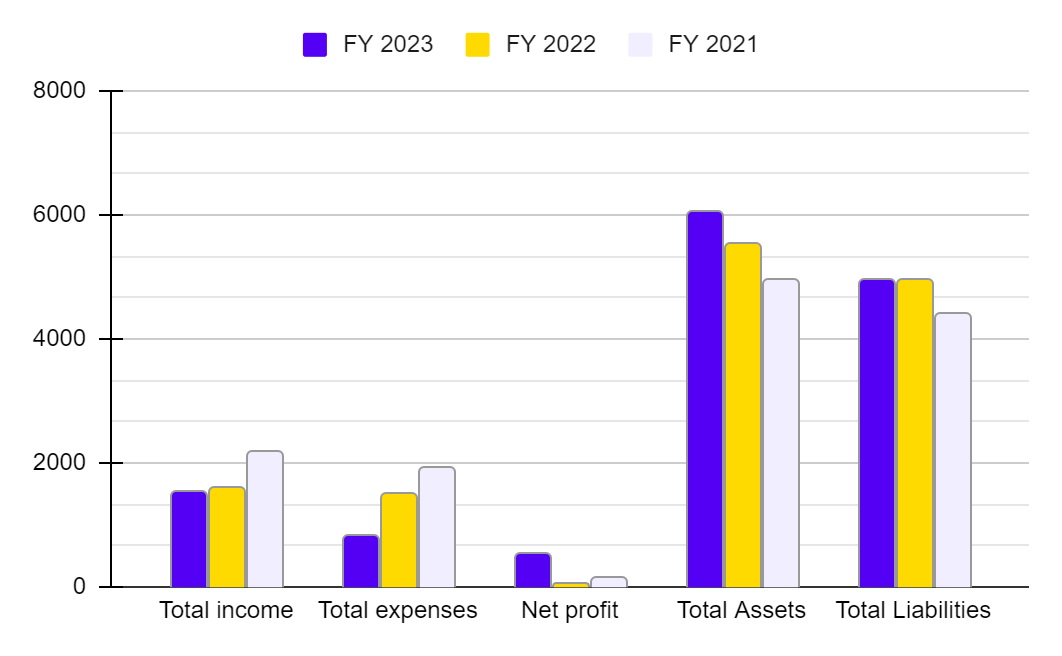
    Key MetricsFY 2023FY 2022FY 2021
    Total income1,537.471,600.182170.39
    Total expenses816.481,515.681,936.07
    Net profit527.0462.76139.44
    Total Assets6,056.275,536.394,943.94
    Total Liabilities4,939.024,946.194,416.61
    *(The figures above are in INR crore)

    Strengths

    1. Bharat Highways InvIT owns a portfolio of seven operational toll roads located across five states in India. These roads generate regular revenue in the form of toll collections, providing a stable income stream for the InvIT.
    2. The Indian government is committed to developing and expanding its highway network, which is expected to benefit toll road operators like Bharat Highways InvIT. The growing demand for road transportation in India is also a positive factor for the industry.
    3. Diversification of assets across different regions in India helps mitigate the risk of dependence on any single geographic location.

    Risks

    1. Due to the InvIT’s recent establishment, its future growth potential remains unclear, hindering accurate assessment and analysis.
    2. The success of the InvIT relies on finding new infrastructure assets that deliver similar financial performance. Failure to do so could harm the business, finances and ability to distribute returns.
    3. Early termination of InvIT assets could significantly impact the financial health due to non-receipt of payments.
    4. Failure to meet contractual road maintenance standards could lead to penalties, contract termination and harm the reputation, finances and business operations.

    Read Also: Popular Vehicle and Services IPO: Key Details, Financials, Strengths, and Weaknesses

    Conclusion

    Bharat Highways InvIT presents a new investment opportunity in the Indian infrastructure sector and is backed by India’s growing road network and government support. However, investors should carefully consider the challenges linked with its business before making any investment decision.

    Frequently Asked Questions (FAQs)

    1. What is the price band of the Bharat Highways InvIT IPO?

      The price band for the IPO is fixed at INR 98 to INR 100 per share.

    2. When will the allotment and listing of shares occur?

      Allotment of shares is expected to be finalised on March 4, 2024, and shares are expected to be listed on BSE and NSE on March 6, 2024

    3. What is the objective of the IPO?

      The objective of the IPO is to raise funds for further expansion.

    4. What risk can I face while investing in this IPO?

      The InvIT is new with a limited track record, uncertain future growth and contractual risks.

    5. Should I prefer investing in Bharat Highways InvIt IPO?

      We suggest you conduct thorough research and consider your risk tolerance before making any investment decision.

  • Mukka Protein IPO: Business Model, Key Details, Financial Statements, and SWOT Analysis

    Mukka Protein IPO: Business Model, Key Details, Financial Statements, and SWOT Analysis

    Embark on an exciting journey into the aqua-culture sector with the initial public offering (IPO) of Mukka Protein Limited, a leading player in the sustainable seafood industry. 

    In today’s blog, we’ll cover the company’s business model, key details, financial statements, and SWOT analysis. 

    Company Overview

    Established in 2003 as a partnership firm by K. Abdul Razak, the company was renamed Mukka Protein Limited and became a private limited company in 2010. 

    The company’s corporate headquarters is located in Mangalore, Karnataka, India.

    The company mainly focuses on producing fish meal, fish oil, and fish soluble paste, which are used to make aqua food for fish and shrimp, pet foods for dogs and cats, and poultry feed for broilers and layers.

    The company has established production facilities around India’s prominent coastlines, with ten global fishmeal factories — four in Karnataka, four in Gujarat, and two in Oman. Each of their units has a technician for quality control management and dedicated in-house laboratories.

    fish meal

    Awards and Accreditations

    1.  India’s growth champion award by Economic Times.

    2.  Star exporter awards, by Federation of Karnataka Chamber of Commerce and Industry.

    3.  State export excellence award by the commissioner for industrial development and director of industries and commerce.

    4.  Certificate of FT High–Growth Companies Asia Pacific 2023 by financial times and statista.

    Promoters

    The company’s promoters are Kalandan Mohammed Arif, Kalandan Mohammed Haris, and Kalandan Mohammed Althaf; they own 100% of the shares.

    Details of the Issue

    The company wants to issue 8 crore new shares to raise a total of 224 crore. With a market lot of 535 shares, the IPO’s lower price band is set at 26 INR, while the higher price band is set at 28 INR per share. 

    Major details

    Face Value of Share1 INR
    Price Band26 – 28 INR
    Market Lot535 Shares
    Total Fresh Issue Size224 Crore
    Total Number of Shares8 Crore

    Timeline of IPO

    IPO Open Date29th Feb 2024
    IPO Close Date4th March 2024
    Finalization of Allotment5th March 2024
    Initiation of Refund & Credit of shares into demat account6th March 2024
    Listing Date on NSE & BSE7th March

    IPO Allotment Size

    ApplicantMarket LotShareAmount (INR)
    Retailer (Min)153514980
    Retailer (Max)136955194740
    Small High Net Worth Individual (Min)147490209720
    Small High Net Worth Individual (Max)6635130988680
    Big High Net Worth Individual (Min)67358451003660

    Objective of the Issue

    The IPO proceeds will cover the working capital requirements of the company’s associate, Ento Protein Private Limited.

    Read Also: IXIGO IPO Case Study: Business Model, Key Details, and Financials

    Key Financials of the Company

    Balance Sheet

    Particulars31st March 202331st March 202231st March 2021
    Non-Current Asset111.122105.91197.415
    Current Asset464.042286.385256.513
    Total Asset575.164392.296353.928
    Equity155.845103.07869.058
    Long Term Liability16.52012.80617.737
    Current Liability402.800276.412267.134
    (All the above-mentioned figures are in crores, unless stated otherwise) 

    Income Statement

    Particulars31st March 202331st March 202231st March 2021
    Revenue from operations1177.122770.503603.834
    Total Revenue1183.804776.145609.952
    Total Expenses1119.322741.177598.317
    Profit after tax47.52525.81911.010
    (All the above-mentioned figures are in crores, unless stated otherwise) 

    Cash Flow Statement

    Particulars31st March 202331st March 202231st March 2021
    Net Cash flow from operating activities(54.395)4.8085.949
    Cash flow from investing activities(5.258)(12.284)(13.611)
    Cash flow from financing activities74.66415.8589.324
    (All the above-mentioned figures are in crores, unless stated otherwise) 

    KPIs

    Particulars31st March 202331st March 202231st March 2021
    EBITDA Margin8.01%7.04%5.27%
    Return on Equity36.71%30%17.37%
    Debt Equity Ratio1.641.682.31
    Profit after Tax Margin4.04%3.35%1.82%
    Return on Capital Employed17.62%13.86%5.86%

    Based on the company’s EPS, the PE ratio on the lower price band will be approximately 13x, and on the upper price band, it will be 14x.

    SWOT Analysis

    Strengths

    1.  The industry in which the company works has a high barrier to entry; no new businesses can easily establish themselves in this market.

    2.  The company has a long history with many of its customers.

    3.   The business is one of India’s top producers of fish protein products.

    4.   The company’s management team has extensive business operations expertise.

    Risks

    1.  In FY23, the company’s cash flow from operations was negative. This might come across as a red flag to many investors.

    2.  The company offers a non-diversified range of products. This exposes the company to the possibility of decreased profitability during unforeseen events. 

    3.  Since the corporation sells goods to multiple nations, it may be exposed to the risk of volatility in exchange rates.

    4.  Top 10 customers provide the company with 72% of the revenue. Thus, any changes in their contracts could significantly affect their profitability.

    Read Also: Rashi Peripherals Limited: IPO Analysis

    Conclusion

    We have covered nearly every pertinent aspect regarding Mukka Protein in this IPO blog, including its background and corporate finances. The corporation may see an increase in its market share in the upcoming years due to its expansion ambitions.

    If you intend to invest in this firm, please ensure that you have carefully reviewed all of the company’s parameters and considered your risk profile.

    S.NO.Check Out These Interesting Posts You Might Enjoy!
    1IPO Alert: Vibhor Steel Tubes Limited
    2Platinum Industries IPO: Business Model, Key Details, KPIs, and SWOT Analysis
    3IPO Alert: Entero Healthcare Solutions Limited (EHSL)
    4Bharat Highways InvIT IPO: Business Model, Financials, Key Details, and SWOT Analysis
    5Pune E-Stock Broking Limited IPO: Key Details, Business Model, Financials, Strengths, and Weaknesses

    Frequently Asked Questions (FAQs)

    1. When will the Mukka Proteins IPO be listed?

      The listing date of the IPO is March 7, 2024.

    2. Is Mukka Proteins a profitable company?

      Mukka Protein Ltd. is a profitable business that has consistently reported profits.

    3. Is revenue concentration a major risk for Mukka Protein?

      Yes, 72% of the revenue is derived from the top 10 customers. This exposes the company to the possibility of incurring losses if these customers alter their contracts. 

    4. How much did the revenue from operations grow for Mukka Proteins?

      Mukka Protein’s revenue from operations grew 95% in 2 years. This massive jump in top line figures indicates the company’s strive for growth. 

  • Open Free Demat Account

    Join Pocketful Now

    You have successfully subscribed to the newsletter

    There was an error while trying to send your request. Please try again.

    Pocketful blog will use the information you provide on this form to be in touch with you and to provide updates and marketing.