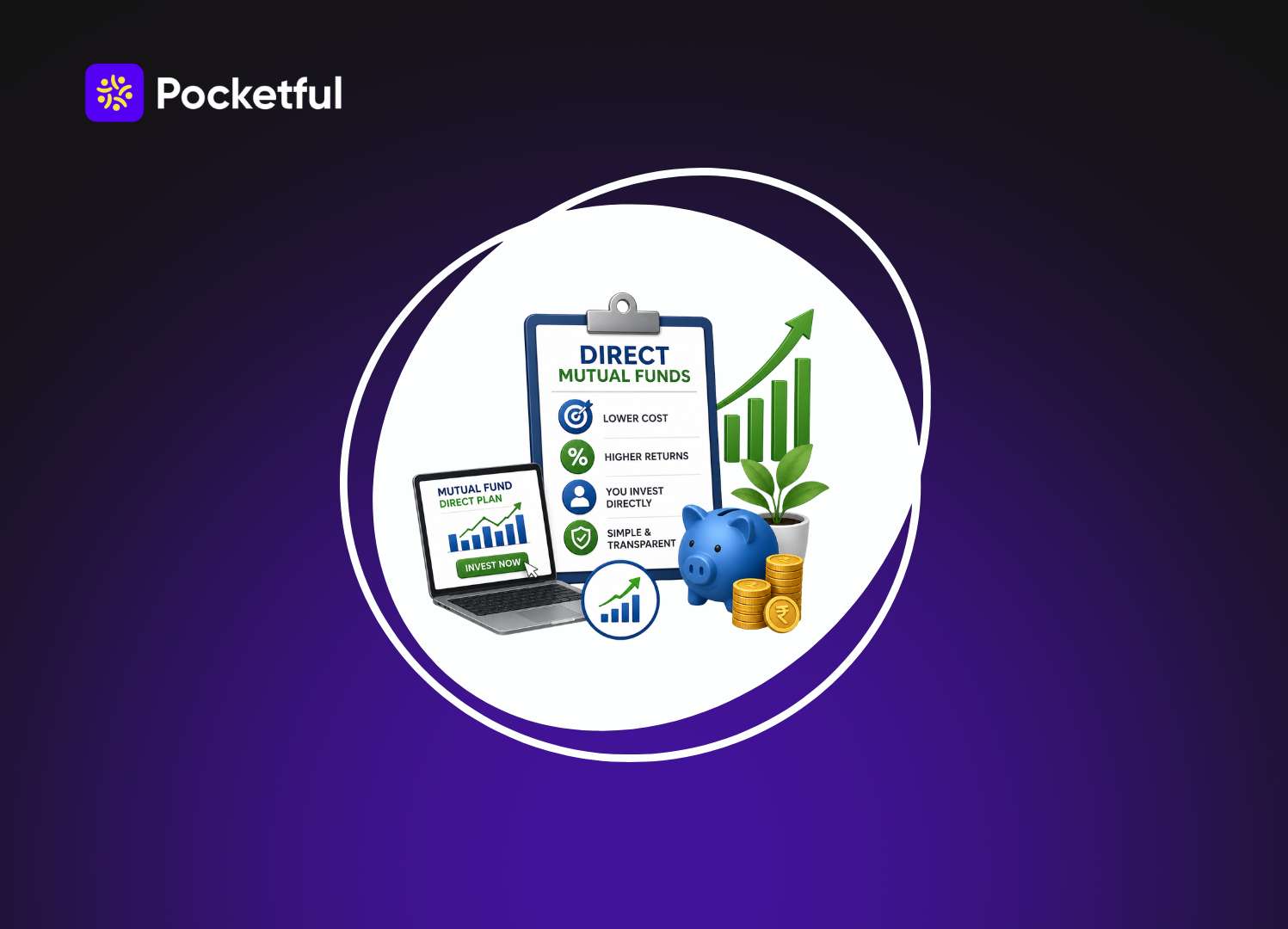
You must have noticed people making different profits from the exact same mutual fund. But how is it possible? The answer is simple, they choose direct plans. Direct mutual funds are simply mutual fund schemes that you buy straight from the fund house. There is no middleman involved in this process. This means you do not pay any hidden commission fees to anyone. Because of this missing fee, your money grows faster over time. This is exactly why more and more smart investors are picking direct plans today. They want full control of their money and better returns for their future.
Understanding Direct Mutual Funds
When you decide to invest in direct mutual funds online, you take a big step towards better savings. Direct mutual funds are plans that you buy directly from the Asset Management Company. There is no broker or agent standing between you and the fund.
Because there is no agent, you do not have to pay any distribution fees. This is exactly how direct plans work to save you money. The role of Asset Management Companies here is to create the fund, manage your money, and let you buy units directly from their website or apps.
Now, let us talk about the expense ratio, it is simply the small fee the fund house charges to manage your money. In a direct plan, this fee is much lower because the fund house does not have to pay a cut to any agent.
Direct vs Regular Mutual Funds
In a regular plan, you invest through a broker or a bank. In a direct plan, you invest by yourself. The commission structure is the biggest difference here. Regular plans pay a trail commission to your broker every year from your investment amount. Direct plans have zero commission, meaning all your money goes strictly into the market.
When we do a return comparison over long-term investing, direct plans usually win. A small saving of one percent every year adds up to a huge amount over ten or twenty years.
| Feature | Direct Mutual Funds | Regular Mutual Funds |
|---|---|---|
| Buying Method | Directly from the AMC or platforms | Through a broker or an agent |
| Commission Fee | Zero commission | High trail commission paid to the agent |
| Expense Ratio | Lower | Higher |
| Long-Term Returns | Higher due to compounded savings | Lower due to agent fees |
| Best Suited For | Do-It-Yourself investors | Beginners who need an advisor |
Different Ways to Invest in Mutual Funds
There are multiple ways by which you can invest in mutual funds, here are some of the most common ways to invest in mutual funds:
1. Through AMC Websites
In this you can directly visit the official website of the Asset Management Company (the “fund house”) whose scheme you’ve chosen. It’s a great option if you have already decided on a specific fund and prefer dealing directly with the company managing your money. You’ll create an account on their portal, complete your KYC, and start your investment.
2. Via Mutual Fund Apps
If you prefer managing your money on the go, dedicated mutual fund apps are incredibly convenient. Most of these apps are designed to be user-friendly, allowing you to track your portfolio, start a SIP, or make a one-time lump sum payment with just a few taps. Just make sure you select the “Direct Plan” option within the app to avoid any distributor commissions.
3. Using Registrar Platforms
Registrars and Transfer Agents (RTAs) like CAMS or KFintech, and their joint platform MFCentral, are the “back office” of the mutual fund world. They act as a centralized hub where you can view and manage all your investments across different fund houses in one place. It’s an excellent way to handle your portfolio if you hold funds from multiple AMCs.
4. Through a Demat Account
If you are already active in the stock market, you might find it easiest to buy mutual funds through your existing Demat account. It lets you hold your mutual fund units in an electronic, “dematerialized” format alongside your shares. This is perfect if you want to keep all your financial assets in a single, consolidated view, though it’s worth noting that some prefer keeping them separate to avoid certain account maintenance charges.
5. Using Online Investment Platforms
You can find many SEBI registered fintech platforms that work as aggregators. Also platforms like these offer a simple user interface and give a good user experience making it easier for the investors to track their financial goals, analyse their performance and compare different investing schemes. Although these apps make it very easy for new investors to invest, one should always check if Direct plans are allowed and you are getting lower expense ratios or not.
Read Also: How to Invest in Mutual Funds With a Small Budget in India
Step-by-Step Guide to Invest in Mutual Funds
Learning how to invest in direct mutual funds is much easier than you might think. The entire process is completely digital today. If you want to know how to buy direct mutual funds online in India, just follow these simple steps.
- Step 1: Before you start, you must complete your Know Your Customer process.This is a one-time rule where you verify your identity with your basic documents.
- Step 2: Decide Your Investment Goal as knowing your goal helps you plan better.
- Step 3: Choose the Right Mutual Fund Category, equity funds are for the long term, while debt funds are for short-term safety.
- Step 4: Take your time to compare fund performance against others in the same group, don’t pick the first fund you see.
- Step 5: Decide if you want to put in money every month using a Systematic Investment Plan or make a one-time lump sum investment.
- Step 6: Invest Through AMC Website or Trusted Platforms, you can either go to the fund house website directly or you can use trusted online platforms and apps to start your investment safely.
- Step 7: Track and Review Your Portfolio at least once a year to ensure it is growing nicely.
Documents Required for Investing
To make your investment account active, you need a few basic documents. Keep these ready before you start the online process:
- PAN Card: Your Permanent Account Number is compulsory for all mutual fund investments in India.
- Aadhaar Card: This helps in quick online verification and links your details very smoothly.
- Bank Account Details: You need to link an active bank account. You will use this account to send money and receive your profits.
- Mobile Number and Email ID: These are important for receiving your account statements and secret login codes.
- KYC Verification Documents: You will need basic address proof and a clear photograph to complete the KYC steps online.
Taxation on Direct Mutual Funds
Profits that you earn are attached with tax that needs to be submitted to the government. The tax rules have changed recently in the budget of 2024 – 2025. Let’s look at the new tax norms:
- Tax on Equity Mutual Funds: If equities are sold after you are taxed as per long-term gain and the tax rate is 12.5%, but your first Rs.1.25 lakh of profit in a year is completely tax-free. If you sell before one year, you pay a short-term tax of 20%.
- Tax on Debt Mutual Funds: Any profit you make from a debt fund bought after April 2023 is simply added to your normal income. It is taxed according to your normal income tax slab rate.
- Capital Gains Tax Explained: Here the government only taxes the profit part (capital gained) and not your original investment amount.
- Tax Saving Through ELSS Funds: If you want to save tax, you can buy Equity Linked Savings Schemes. These funds have a strict three-year lock-in period. After three years, your profits are taxed at 12.5 percent, with the same Rs.1.25 lakh yearly exemption.
| Fund Type | Short-Term Holding Period | Short-Term Tax Rate | Long-Term Holding Period | Long-Term Tax Rate |
|---|---|---|---|---|
| Equity Funds | Up to 12 months | 20% | More than 12 months | 12.5% (Above Rs.1.25 lakh) |
| Debt Funds | Any period | Slab Rate | Not Applicable | Slab Rate |
| ELSS Funds | Locked for 3 years | Not Applicable | More than 3 years | 12.5% (Above Rs.1.25 lakh) |
Common Mistakes to Avoid
Before starting your investment journey you should know about the mistakes that needs to be avoided:
- Chasing High Returns: Don’t just invest in a fund because it is giving high returns in the past year. Do proper research and then invest.
- Ignoring Risk Appetite: Pick funds that match your risk appetite and you should not put all your money in high-risk funds.
- Investing Without Goals: Always have clear goals before investing, as this helps you in making better decisions.
- Not Reviewing Portfolio Regularly: Over the years, your fund might stop performing well, so you must review your portfolio regularly.
- Panic Selling During Market Corrections: Markets will always go up and down. Panic selling during market corrections is the worst mistake, as it turns your paper losses into real losses.
Read Also: 10 Best Brokers for Mutual Funds
Benefits of Investing in Direct Mutual Funds
There are many great reasons to choose this path for your savings. Here are the top benefits you will enjoy:
- Lower Expense Ratio: There are no middleman fees giving you a lower expense ratio right from day one.
- Higher Long-Term Returns: Your saved fees get compounded, giving you higher long-term returns.
- Greater Transparency: You clearly know where the money is being invested, with no extra charges or commissions that you have to pay.
- Suitable for DIY Investors: It is highly suitable for Do-It-Yourself investors, who want to be in charge of their own money.
- Easy Online Access: You have easy online access to buy, sell, and track your funds with just a few clicks.
Limitations and Risks of Direct Mutual Funds
While a direct plan has benefits, it also has some challenges. Here are the main risks involved:
- No Personal Financial Advisor: You have to act on your own as there is no one to guide you for your investments.
- Requires Research and Self-Decision Making: It requires research and self-decision making to pick the best funds for your personal goals.
- Risk of Choosing the Wrong Fund: Since you have no expert help, there is a real risk of choosing the wrong fund. Picking a very risky fund for a short-term goal can lead to unexpected losses.
- Market Risks Still Apply: Direct plans do not protect you from a bad market. If the stock market drops, the value of your direct mutual fund will also drop just like any regular fund.
Conclusion
Taking control of your own money might not be a good decision at first, but it is a very rewarding habit. Direct mutual funds give you transparency with taking less fees which helps in your wealth steadily. Always remember to do a little research, pick the right funds, and stay patient for the best results.
Even a 0.5%–1% lower expense ratio can create a significant difference in wealth over 10–20 years. Investors who are comfortable researching funds can benefit from choosing direct mutual funds and keeping more of their returns.
Frequently Asked Questions (FAQs)
What is the difference between direct and regular mutual funds?
Direct mutual funds are acquired straight from the fund house, leading to reduced expense ratios. Another hand, regular mutual funds are accessed through an intermediary like a distributor or advisor, and thus incorporate commission fees.
Which is better: direct mutual funds or regular mutual funds?
Direct investment funds might give higher profits because of their reduced expense ratio, while regular mutual funds can offer expert advice and financial backing.
How can I invest in direct mutual funds online?
You have the option to invest in direct mutual funds via the fund houses’s website, their mobile application, or an investment platform that provides direct plans.
Can I switch from a regular mutual fund to a direct mutual fund?
You can begin just Rs.500 by putting your money in a Systematic Investment Plan.
How much extra return can direct mutual funds generate?
Direct mutual funds may offer the possibility of earning 0.5% to 1.5% more per year compared to regular plans, because of reduced expense ratios.
Which App Is Best for Direct Mutual Fund Investment?
Popular options for investing in direct mutual funds include Pocketful, Groww, Zerodha Coin, ET Money, MFCentral, and AMC websites. The best platform depends on what matters most to you, whether it’s ease of use, portfolio tracking, research tools, or a smooth investing experience.