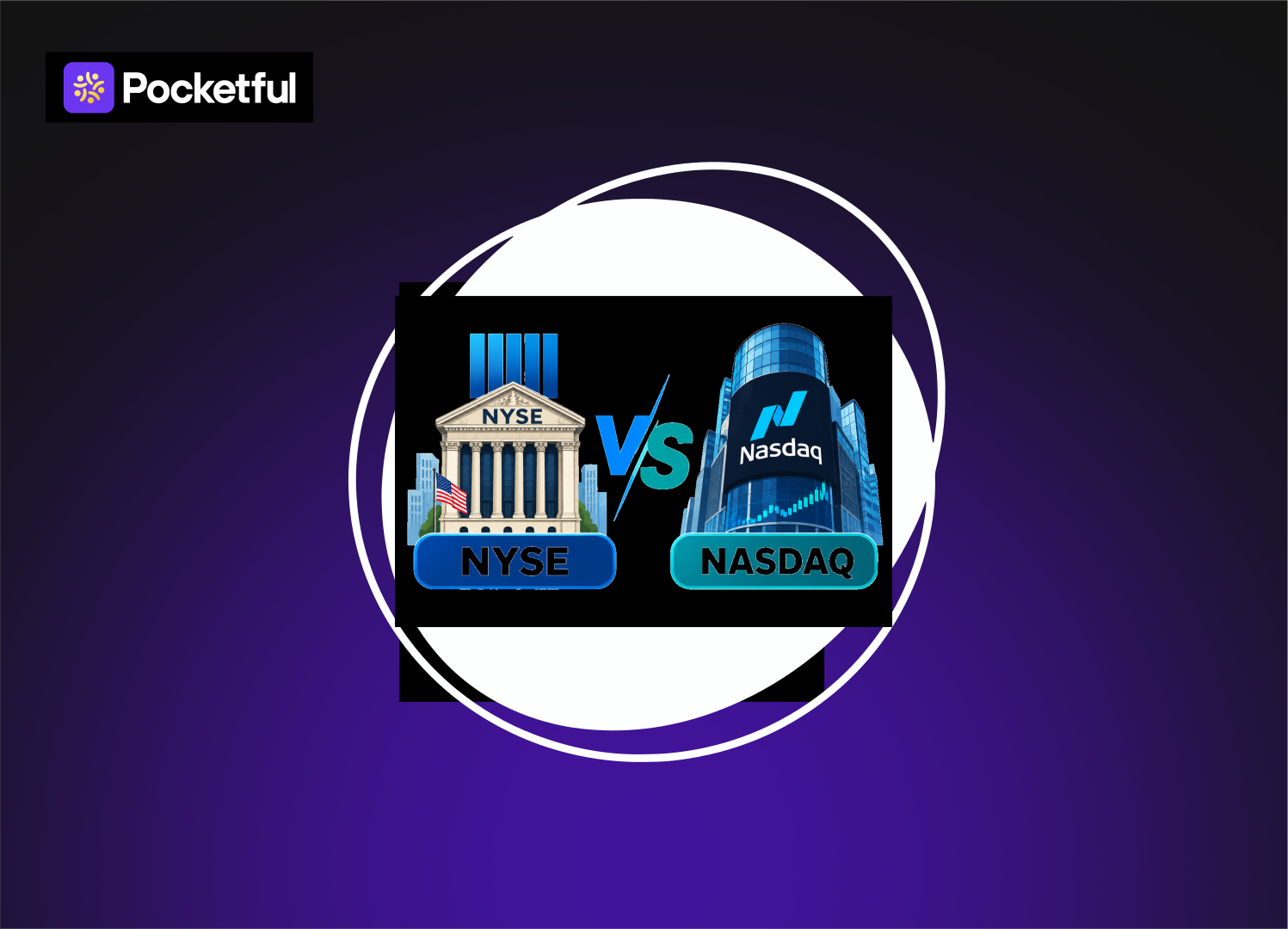
Have you ever looked at big tech giants like Apple or Tesla and wondered how people in India can own their shares? When you start exploring US markets, you run into two massive names: NYSE vs NASDAQ.
Let us clear up the NASDAQ meaning, it stands for the National Association of Securities Dealers Automated Quotations. Simply put it is a stock market that works entirely through computers. On the other side you have the NYSE, which is the famous Stock Exchange New York Stock Exchange located on Wall Street.
Many people wonder how the NYSE and NASDAQ work. They also ask which one is better. Investors look at both the NYSE and NASDAQ carefully before investing their money.
NYSE vs NASDAQ: Key Differences
The biggest difference lies in how trades happen. The NYSE uses an auction market structure. Think of people coming together to bid on items in person. The NASDAQ is a fully electronic dealer market. Computers handle everything instantly without any physical trading floor.
Listing rules and company types also vary a lot between the two.
- The NYSE has very tough entry rules. It mostly hosts older, stable blue-chip companies with massive physical assets.
- The NASDAQ welcomes fast growing tech firms with flexible listing tiers.
This is why tech lovers live on NASDAQ while legacy banks and factories list on the NYSE. Understanding both exchanges makes US investing much simpler. You stop guessing and start picking businesses that fit your style.
| Factor | NYSE | NASDAQ |
|---|---|---|
| Market Structure | Auction market | Dealer market |
| Trading System | Hybrid: electronic + physical floor | Fully electronic |
| Market Makers | Designated Market Makers (DMMs) | Multiple competing Market Makers |
| Listed Companies | 2,000+ companies | 3,000+ companies |
| Major Index | NYSE Composite | Nasdaq Composite |
| Known For | Large, established companies | Technology and growth companies |
| Examples | Walmart, Coca-Cola, Berkshire Hathaway | Apple, Microsoft, Amazon |
Why the NYSE vs NASDAQ Comparison Matters for Investors
Market structure affects how fast your orders get filled and how far the prices are. Let us break down the setup.
- Auction Market Structure: The NYSE uses designated market makers. These are specialized firms that keep trading smooth and prevent wild price swings during market openings.
- Electronic Dealer Market: The NASDAQ operates via competing dealers. Multiple market makers quote prices electronically and compete to give you the best deal.
- Hybrid Trading Features: Today, both systems overlap. Even the NYSE executes most orders through high-speed computer servers in data centres.
How NYSE and NASDAQ Work
Buying a US stock from India feels just like buying shares on the NSE or BSE through your broker.
The process follows three main steps:
- Order Placement: You log into your app and place a buy order during US trading hours.
- Order Matching Mechanism: Your broker sends the order to the exchange. Computers match your price with a seller in milliseconds.
- Trade Settlement: The shares move to your account within one business day and trade takes place.
Read Also: High-Priced vs Low-Priced Stocks: Key Differences
How to Evaluate Which Exchange Suits Your Investment
- Step-by-Step Evaluation Process: Step-by-Step Evaluation Process is about checking risk appetite, checking time horizon and deciding if you want dividend or rapid growth.
- Sector and Company Impact: Tech companies usually land on the NASDAQ Exchange. Traditional businesses, such as energy producers and auto giants lean toward the NYSE Exchange.
- Real-World Example: Coca‑Cola trades on the NYSE Exchange offering dividend payouts. Microsoft trades on the NASDAQ Exchange driving returns through cloud computing and software growth.
- Interpretation of the Final Choice: You do not need to choose one Exchange.
Types of Stocks Listed on NYSE and NASDAQ
There are thousands of companies trading in the United States. Understanding where each type of stock is listed helps you build a more balanced portfolio.
- Large-Cap Value Stocks (NYSE): These are stocks of companies that have good financials and are established famous companies like Procter & Gamble and Walmart. They are known for earnings and reliable cash flow.
- Technology and Growth Stocks (NASDAQ): These are stocks from companies that focus on innovation and expansion such as Amazon and Meta Platforms. They often have growth potential but may carry more risk.
- Dual- Listed Stocks: These are types of stocks that are sold on more than one stock exchange at the same time.
- American Depositary Receipts (ADRs): It is a certification that allows foreign companies to trade on US stock exchanges. Indian giants such as Infosys use this route.
Risks to Know Before Investing in NYSE or NASDAQ Stocks
Investing in different stock markets comes up with unique challenges. Keep these risks in mind.
- Currency Risk: US stocks are priced in dollars. If the rupee strengthens against the dollar your returns in India will drop.
- Sector Concentration Risk: The NASDAQ is heavy on technology. A bad quarter for technology stocks can drag down the index.
- Liquidity Risk: Smaller stocks, on these exchanges may have trading volumes making it hard to sell quickly.
- Market Timing Risk: US markets open late in the evening from this perspective.
- Brokerage and Conversion Cost Impact: Moving money abroad via LRS involves bank charges, forex markups, and taxes.
Advantages of Investing Across NYSE and NASDAQ
There are solid reasons to look beyond Indian shores.
- Diversification Beyond Indian Markets: Holding dollar assets protects your wealth against domestic economic downturns.
- Access to Global Technology Leaders: Access to Global Technology Leaders gives you ownership in the world’s leading companies. Ownership in those companies means you help create intelligence and software.
- Exposure to Different Company Life Stages: You can combine companies that have been paying dividends for centuries with new companies that are growing fast and changing the market.
- Regulatory Oversight: The US SEC has strict rules that make sure everything is fair and clear. This helps keep fraud low and makes sure companies are open and honest.
Limitations of Investing in NYSE or NASDAQ Stocks
Be realistic about the downsides before you transfer funds.
- Currency Conversion and Taxation Complexity: Managing foreign tax credits and IRS paperwork can get messy.
- Performance Depends Heavily on US Market Cycles: US Federal Reserve interest rate decisions sway stock prices instantly.
- Higher Brokerage and Remittance Costs: High fixed wire fees make small monthly investments expensive.
- Not Ideal, for Very Short-Term Goals: Investing abroad takes time and a long-term view. You need to be ready to hold your investments for years.
- Returns Are Never Guaranteed: Even the strongest global companies can fall sharply. Market changes can hurt your portfolio unexpectedly.
Common Mistakes Investors Make
Stay away from these typical errors when you begin investing in the US market.
- Assuming One Exchange Is Always Better: Neither exchange guarantees superior returns. Company fundamentals matter more than the trading venue.
- Ignoring Currency Conversion Costs: Forgetting bank fees can wipe out a chunk of your profits.
- Chasing Popular US Stocks Blindly: Buying hype stocks without checking valuations leads to heavy losses.
- Not Checking the Company’s Fundamentals: Skipping balance sheet checks is a recipe for disaster.
Read Also: Stock PE vs Industry PE: Key Differences
Conclusion
Both the NYSE and NASDAQ are notch financial centers. The NYSE gives a sense of stability and history while the NASDAQ focuses on modern technology. Think about the company behind the stock by just looking at the ticker symbol. To manage and watch your investments in one place download Pocketful. Providing users with no charges, on delivery trades and a simple to use platform that works for both new and experienced investors.
Frequently Asked Questions (FAQs)
Can an Indian retail investor buy US stocks legally?
Yes. Indian retail investors can legally invest in eligible US stocks through the RBI’s Liberalised Remittance Scheme (LRS), subject to applicable limits, rules, taxes and reporting requirements.
What is NASDAQ and what does it stand for?
NASDAQ means National Association of Securities Dealers Automated Quotations. It is a stock market that operates online. All the buying and selling is done through computers and electronic systems making it fast and efficient. Many technology companies trade on NASDAQ.
Which Companies Are Listed on the NYSE and NASDAQ?
Both exchanges host -trillion-dollar giants. Walmart and Berkshire Hathaway trade on the NYSE while Apple and Microsoft trade on the NASDAQ.
Are US stock dividends taxed in India?
Yes. Dividends are taxed according to your income tax slab in India and US withholding taxes also apply, which you can claim credits for.
Do I need a Demat account, for US stocks?
No. International brokers use special custodial accounts to hold your US shares securely.