Blog

  • Falling Wedge Pattern: Meaning & Trading Features

    Falling Wedge Pattern: Meaning & Trading Features

    The decision to start trading can be daunting because of the complexity of identifying chart patterns. One needs to master the chart patterns to identify trading opportunities. What if I were to tell you that a single chart pattern exists with an extremely high success rate?

    In this blog, we will discuss one such pattern, the falling wedge, its features and types, and how to trade the falling wedge pattern.

    What is a Falling Wedge?

    A falling wedge pattern features two trend lines drawn across the stock price’s lower highs and lower lows to form a “wedge” shape, as shown in the image below. A falling wedge is used to predict a potential reversal in a downtrend. This pattern indicates that stock prices are about to increase after the breakout.

    Falling Wedge

    Features of Falling Wedge Pattern

    5 key features of the falling wedge pattern are listed below:

    • Downward sloping trend lines: There must be two downward trending lines with the upper line steeper than the below trend line, touching consecutive lower high levels and lower low levels, converging towards each other.
    • The Angle of convergence: The highs of candlesticks decline faster than the lows of the candlesticks, making a downward convergence angle of two trend lines.
    • Volume: As the wedge tightens or the two trend lines converge, the volume decreases, which indicates sellers are getting weak.
    • Timeframe: This pattern can be formed over various timeframes, for instance, hourly, weekly, monthly, etc. A falling wedge’s time frame doesn’t affect its validity; however, it’s observed that it is more reliable in a more extended time frame.
    • Breakout: The breakout occurs above the upper trend line. If the volume increases along with the breakout, we get a confirmation of a bullish trend.
    Falling Wedge Pattern

    How to identify and Trade Falling Wedge Pattern

    Now that we have understood the basics of falling wedge patterns, we will discuss the steps listed below used to identify and trade the falling wedge pattern.

    Step 1: First, the trader needs to identify the downtrend in the chart. Look for a pattern of lower highs and lower lows in the chart. Now, you can plot two lines connecting these lower highs and lower lows.

    Step 2: The second thing you need to see is if these two lines converge as the stock prices continue to move. This is the initial structure of a falling wedge.

    Step 3: Analyze the volume date as the pattern forms. You will observe that the volume slowly decreases.

    Step 4: Once the pattern is confirmed, wait for the price to break out of the upper trend line. After the breakout, the volume increases, confirming this as a bullish signal.

    Step 5: You can enter the trade at the breakout point and place a stop-loss order just below the low price of a recent candle or according to your risk-taking ability.

    Step 6: The height of the widest part of the wedge should be added to the breakout point to get your target price for exiting a trade. A trader can also consider the next resistance level as the target price.

    Falling Wedge Pattern Example

    Let’s understand how to take a trade using a falling wedge with the help of a practical example. In this example, we will discuss placing a stop-loss order and exit trade if you are trading using a falling wedge pattern.

    Below is the chart of Bharat Electronics for a 1-hour time frame. The chart below shows the upper and lower trend lines in the falling wedge, which can also be viewed as resistance and support lines.

    Falling Wedge Chart Example

    In this example, we observe that the stock prices formed a falling wedge pattern, which was followed by a breakout above the upper trendline and hit the target price.

    Key areas to focus on are:

    1. Trading Strategy

    • Price Action: Traders must only take positions after the formation of the pattern. Entering a trade without volume confirmation can result in false breakouts.
    • Risk Management: Risk management lies in being careful when placing your stop loss and setting real targets; this way, you would have mastered risk management while trading using the falling wedge and increasing the chances of making profitable trades.

    2. Stop Loss

    • Below the candle: Stop-loss can be below the previous candle’s low made before the breakout.
    • Trailing Stop Loss: It is advised to modify stop-loss levels upwards using the trailing stop-loss technique. As the price breaks new resistance levels, trailing stop-loss orders can be used to lock in profits.
    • Support zone: The alternative way to place your stop-loss is at the support levels from where the prices bounced back.

    3. Target Price

    • Height of the Wedge: In the above example, the target price was the width of the wedge added to the breakout point.
    • Resistance Level: These are levels a stock price reaches but fails to exceed. These levels can be potential targets.
    • Breakout Confirmation: If the price breaks through a level of resistance, it indicates an up-trend continuation, making the next level of resistance the next target.

    Types of Falling Wedge Patterns

      Bullish Reversal  Bullish Continuation
      When we have a downtrend before the actual pattern, we call it a reversal pattern.
      When we have an uptrend before the actual pattern, we call it a continuation pattern.

    Read Also: Rising Wedge Chart Pattern

    Benefits of Falling Wedge Pattern

    The falling wedge pattern has the following benefits:

    • Easy to use: This pattern has a unique shape featuring two downward converging trend lines and a price breakout, which makes it easy to identify and create a trading strategy.
    • Applicability: Falling wedges are versatile because the chart pattern can be identified in several time frames. This allows flexibility for traders to apply the pattern effectively with various trading styles.
    • High Reward-to-risk ratio: A falling wedge presents a high reward-to-risk if a trader takes a trade with a well-defined entry and exit strategy.
    • Confirmation: A breakout of the upper trend line and the volume increase together confirms a bullish signal.
    • High success rate: The falling wedge has a very high success rate in predicting bullish reversal compared to other chart patterns. That is what makes this indicator unique and popular among traders.

    Read Also: Best Options Trading Chart Patterns

    Conclusion

    The falling wedge chart pattern is one of the most accurate chart patterns that a trader can use to predict a bullish trend. This chart pattern is easy to understand, with a high potential for the identification of trend reversal.

    We discussed its features and benefits, as well as how to identify and trade to enhance your trading strategy and increase your chances of success. But remember, no trading strategy is 100% accurate. It is always advisable to consult your financial advisor before making trading decisions.

    Frequently Asked Questions (FAQs)

    1. How long does the falling wedge pattern typically last?

      The falling wedge may span across several weeks to even months. Duration depends on various market conditions and the financial asset for which it is used.

    2. How is a falling wedge different from a rising wedge pattern?

      The falling wedge pattern trends downside and is a probable indication of a bullish reversal. In contrast, the rising wedge patterns trend upside and is a probable sign of a bearish reversal.

    3. How accurate is the falling wedge?

      The falling wedge pattern is considered relatively reliable and has a high success rate when it comes to the prediction of bullish reversals. Like all technical patterns, it’s not 100 % accurate and should be combined with other indicators for confirmation.

    4. How do you identify or differentiate a falling wedge from a channel pattern?

      The falling wedge pattern is where these trend lines converge and point downwards. In the case of a channel pattern, the trend lines are parallel and can point up, down, or sideways.

    5. How to calculate the target price of the falling wedge pattern?

      The target price can be calculated by adding the height of the wedge to the breakout point. Resistance levels can also be used as a target price.

  • Types of Mutual Funds in India

    Types of Mutual Funds in India

    After putting in much effort to earn money, you may wonder where to invest. One option that crosses your mind is a mutual fund. However, if you decide to invest in mutual funds, you might need to know which kind is best for you.

    In this blog post, we will discuss the different types of mutual funds offered in India.

    Overview of Mutual Fund

    An investment product known as a mutual fund pools the capital of several investors who share a common investment objective or goal. The fund managers use the pooled capital to invest it in various asset classes, such as stocks, bonds, commodities, etc. The investor receives the return on their investment after the costs and fees of mutual funds are subtracted. The company responsible for this process is called an asset management company. 

    Types of Mutual Funds in India

    The mutual funds in India have 4 major categories, some of which are mentioned below:

    • Equity Mutual Fund
    • Debt Mutual Fund
    • Hybrid Fund
    • Money Market Fund
    • Open-Ended Fund
    • Closed-Ended Fund
    • Interval Funds
    • Growth Fund
    • Income Fund
    • Tax Saving Funds
    • Liquid Funds
    • Very Low-Risk Funds
    • Low-Risk Funds
    • Medium Risk Funds
    • High-Risk Funds

    Types of Mutual Funds Based on Asset Class

    There are 4 types of mutual funds in India based on asset class-

    • Equity Mutual Fund: This particular mutual fund category primarily invests in stocks or equities, making it riskier than other categories due to its sensitivity to changes in the market. 
    • Debt Mutual Fund: Fund managers of these mutual funds invest money in fixed-income instruments like bonds, treasury bills, commercial papers, etc. Investors in this category of mutual funds are risk-averse. 
    • Hybrid Fund: This fund combines debt and equity investments since the portfolio of hybrid funds will have a specific allocation of debt to give stability and predictable returns, along with some equity to support portfolio growth. 
    • Money Market Fund: This mutual fund allocates to low-risk money market instruments, including commercial paper and treasury bills that mature in less than a year. 

    Read Also: Mutual Fund Factsheet: Definition And Importance

    Types of Mutual Funds Based on Organization Structure

    Types of Mutual Funds Based on Organization Structure

    There are 3 types of mutual funds in India based on organization structure-

    • Open-Ended Fund: This type of mutual fund has no limit on the number of units that can be traded, and the capital under management continuously changes with new entries and exits. Depending on the fund’s net asset value (NAV), an investor is fully entitled to make investments or withdraw money at any moment in this type of mutual fund. 
    • Closed-Ended Fund: Mutual funds in this category can only offer a specified number of units. When a mutual fund falls into the close-ended category, the investor can only redeem their units on the maturity date, which is issued at the time of the original offer. Nonetheless, SEBI has given close-ended fund investors a way out via the stock exchange. 
    • Interval Funds: Under this plan, mutual fund units may be bought and redeemed only during specific intervals designated by the asset management business. By designating specific intervals, fund managers can focus on developing an investment strategy without worrying about redemptions.

    Types of Mutual Funds Based on Investment Objectives

    There are 4 types of mutual funds in India based on investment objectives-

    • Growth Fund: These funds primarily invest in growth-oriented asset classes like equity. These funds are suitable for investors looking for capital appreciation. An extended investment horizon is necessary, though, for the investor. 
    • Income Fund:  The managers of these funds allocate the capital to fixed-income instruments like corporate bonds, debentures, etc. Investors of this fund receive a consistent and predictable income. 
    • Tax Saving Funds: Mutual funds in this category invest primarily in equities, also known as equity-linked saving schemes (ELSS). The funds offer tax benefits under section 80C. 
    • Liquid Funds: Mutual funds in this category invest in money market instruments that provide liquidity to investors. Still, they give you a higher return than conservative liquid investing options like fixed deposits and bank savings accounts. 

    Read Also: What is the 15*15*15 Rule of Mutual Fund Investing?

    Types of Mutual Funds Based on Risk

    Types of Mutual Funds Based on Risk

    There are 4 types of mutual funds in India based on risk-

    • Very Low-Risk Funds: Investment in money market funds, such as liquid funds and ultrashort duration funds, are considered the safest option among all categories of mutual funds.
    • Low-Risk Funds: Your money is invested in low-risk fixed-income assets like corporate and government bonds in a low-risk fund since these products are deemed to be marginally riskier than money market funds. 
    • Medium Risk Funds: These funds combine various asset classes, such as debt and equities, to provide a blend of stability and return. 
    • High-Risk Funds: These funds are considered the riskiest because their allocation is concentrated in the equities asset class. Only investors who can handle portfolio volatility should consider these types of funds.  

    Conclusion

    Investing in mutual funds can help you grow your capital over time. However, many different types of mutual funds are available for investors to select from based on their preferences. Before making investment decisions, you must speak with your financial advisor, as each mutual fund category has a distinct risk-return profile.

    Read Also: SIP in Stocks vs SIP in Mutual funds?

    Plan your finances with ease using our advanced Financial calculators.

    Financial Calculators
    Lumpsum CalculatorMutual Fund Returns CalculatorETF Return Calculator
    EMI CalculatorSIP CalculatorIncome Tax Calculator
    S.NO.Check Out These Interesting Posts You Might Enjoy!
    1What Is An IPO Mutual Fund? Should You Invest?
    2Mutual Fund Taxation – How Mutual Funds Are Taxed?
    3Is Your Mutual Fund Investment Safe?
    4What is an Open-Ended Mutual Fund & How to Invest in it?
    5How to Cancel Mutual Fund SIP?

    Frequently Asked Questions (FAQs)

    1. What are hybrid mutual funds?

      In a hybrid mutual fund, your money is invested by the fund manager across various debt and equity asset classes, giving you the advantage of both portfolio stability from the debt allocation and a better return from the equity allocation. 

    2. Which type of mutual fund is considered the safest among all available options?

      Debt mutual funds are considered the safest among all available mutual fund types as they only invest in fixed-income securities, which are safer than equities.

    3. Which type of mutual fund gives the highest return?

      Equity mutual funds often generate the highest return of all the mutual fund types.

    4. What is the NAV of a mutual fund?

      NAV, or the Net Asset Value, is the market price of all the securities currently held by the mutual fund. 

    5. Do mutual funds offer tax benefits?

      Tax-saving mutual funds offer tax benefits under Section 80C.

  • Business Cycles of a Company

    Business Cycles of a Company

    Businesses operate in a dynamic economic environment, with various economic factors impacting their operations simultaneously. Each company experiences many fluctuations in economic activity over its operational time. 

    Every equity investor in a company is a partial owner of the company due to which investors should understand the business’s current phase and its characteristics to make better investment decisions. In today’s blog, we will discuss various phases of the business cycle and their impact on the company, along with an example.

    What is the Business Cycle?

    A business cycle refers to the fluctuations in a country’s economic activities that a company experiences over time. These fluctuations are part of a cycle of expansion and contraction and are influenced by various external economic factors. Significant factors include market demand and supply, government policies, and global economic conditions. Every company’s business cycle has five phases, which are explained below.

    Read Also: Different Types of Companies in India

    Five Phases of a Company’s Business Cycle

    The five phases of a company’s business cycle are influenced by different factors impacting the business environment in which they operate. Understanding each of these phases can help investors decode the reason behind the company’s performance in a specific year. The five phases of  the company’s business cycle are:

    1. Expansion Phase

    The expansion phase is the initial phase where a company grows in terms of revenues and profits. During this phase, a company experiences growing demand for its products or services, leading to increased sales and revenues. It is a phase of upward economic trends, with high consumer confidence and a favorable market environment. 

    During this phase, companies invest in new projects, increase their workforce, and expand their operations. For example, a tech company might launch new products or expand into new markets as demand for the latest technology grows.

    2. Peak Phase

    The peak phase represents the height of economic activity in a company’s business cycle. During this stage, a company’s growth reaches its maximum limit, where the production, sales, and revenue growth rates are at their peak. However, this phase is generally short-lived as the market becomes saturated. 

    At this point, a company must prepare to transition into the contraction phase. A common example of a company in the peak phase is a retailer selling gifts and sweets during the festival season. The demand for gifts and sweets is at its peak during the festive season.

    3. Contraction or Recession Phase

    Following the peak phase, the economy contracts in the third phase, and two consecutive quarters of contraction are generally considered a recession. It is known as a period where economic activity begins to decline. During this phase, sales decrease, production slows, and the overall economic climate worsens. The decrease in production activities reduces the demand for raw materials and impacts other businesses. This decline can be triggered by market saturation, decreased consumer spending, or broader economic downturns. An extremely severe recession is known as a depression, which generally occurs when the GDP declines more than 10%.

    Companies generally reduce their workforce, cut costs, or halt expansion plans during this period. For example, in this phase, a retailer reduces the number of employees and focuses on high-margin products to maintain cash flow when the number of customers declines.

    4. Trough Phase

    The trough phase represents the lowest point in the business cycle. The economic activities are minimal at this stage, and the growth rate becomes negative. Also, the situations within and around the company are generally negative. However, it is also a crucial time for making critical decisions that affect a company’s future trajectory. Companies often streamline operations to improve efficiency, which includes automating certain processes or consolidating operations to reduce operational costs. 

    The trough phase is a time for reevaluating and possibly overhauling business strategies. Companies might explore new markets or different customer segments to serve. An example of a company in the trough stage is a manufacturing firm optimizing its production lines for efficiency during low-demand periods to reduce operational costs.

    5. Recovery Phase

    The recovery phase signifies the beginning of an upward trend in the company’s business cycle. It shows a gradual increase in consumer confidence, spending, and overall economic activity. During this time, companies start reinvesting in areas scaled back during the contraction and trough stages. These include marketing, new product development, and workforce expansion. As the market recovers, companies expand their operations or enter new markets to capitalize on growing demand. 

    Now, businesses must monitor the market and adapt their strategies as needed. Timely decisions help them capitalize on early recovery-stage opportunities. An example of a company in the recovery stage is an automobile company that begins to increase its production as the market demand grows and the economy recovers.

    Illustration of Different Stages of Business Cycle

    Illustration of Different Stages of Business Cycle

    Decoding the Business Cycle of Reliance JIO Industries

    Reliance Industries can be used as an example to understand the different phases of a company’s business cycle over the years. During the expansion phase, the launch of Reliance Jio in 2016 led to rapid growth and significant market capture in the telecom sector. The peak phase was evident around 2018-2019 when Jio became India’s largest telecom operator, and other business segments thrived. 

    The contraction phase occurred during the COVID-19 pandemic, with reduced demand and operational challenges. In the trough phase, Reliance focused on strategic adjustments and raised capital from major investors like Facebook and Google. Post-pandemic, the company entered a recovery phase, emphasizing digital expansion and retail growth, demonstrating resilience and adaptability.

    Conclusion

    The business cycle of a company conveys the economic environment in which it is operating. Several factors affect the company’s business cycle, including the demand and supply of its products and services, capital availability, inflation, and consumer spending. Understanding these factors helps investors better forecast the phases in the near future and ultimately predict the company’s future performance, but always consult your financial advisor before making any investment decisions.

    S.NO.Check Out These Interesting Posts You Might Enjoy!
    1What is a Bonus Issue? Meaning, Process, Key Dates, and Impact Explained
    2What are Stock Splits? Meaning, Reason, Types, and Impact Explained
    3What is Right Issue of Shares: Meaning, Examples, Features
    4What is Front-Running : Definition, Legality and Front-Running vs Insider Trading
    5What is a Stock Broker? Meaning, Features, Types, and Commissions Explained

    Frequently Asked Questions (FAQs)

    1. Why is it important for equity investors to understand the business cycle?

      Equity investors must understand the business cycle as it helps them anticipate changes in the company’s performance, manage risks, and make informed decisions about buying or selling shares.

    2. How does the expansion phase affect a company’s strategy?

      A company typically experiences increased demand for its products during expansion. It leads to higher sales and revenue. Higher demand prompts the company to invest in new projects, expand operations, and hire more staff to capitalize on favorable market conditions.

    3. What signals the transition from the peak phase to the contraction phase?

      The transition from the peak to the contraction phase is often signalled by market saturation, where the rate of production and sales reaches its maximum and begins to decline. This phase may also start as consumer demand decreases or external economic conditions worsen.

    4. What strategic decisions are critical during the trough stage?

      During the trough stage, companies must make strategic decisions regarding operational efficiency, cost management, and potential market repositioning. This stage is also suitable for reevaluating and possibly overhauling business strategies to prepare for the next growth cycle.

    5. How do companies prepare for the recovery stage?

      Companies prepare for recovery by gradually reinvesting in key areas such as marketing, new product development, and workforce expansion. It is also important for businesses to stay agile, closely monitoring the market and adapting strategies to capitalize on early signs of recovery.

  • Recent Telecom Tariff Hike and its Impact 

    Recent Telecom Tariff Hike and its Impact 

    India is one of the biggest consumers of data, spending approximately 5 hours daily on smartphones. Recently, a tariff hike was announced by the major telecom companies in India. 

    Reliance Jio, Bharti Airtel, and Vodafone Idea have increased their mobile plan prices by up to 25%. Airtel and Jio’s new rates are effective from July 3, while Vodafone Idea’s (VI) new pricing was implemented on July 4.

    In today’s blog, we will discuss the reason behind tariff hikes and the impact of hikes on their stocks. 

    Overview of the Telecommunications Industry

    The Telecommunications industry is divided into sub-sectors like Infrastructure, Equipment, Mobile Virtual Network Operators, White Space Spectrum, 5G, Telephone service providers, and Broadband.  The 5G network has been rolled out in all 28 states and 8 UTs. 

    India is close to becoming the second-largest smartphone market in the world, with around 850 million smartphone users by 2026. This will create a giant customer base using 5G technology and will contribute approximately USD 450 billion to the Indian economy. India ranks 60th as per the Network Readiness Index 2023, signifying the industry’s investment potential.

    Sensing this opportunity, telecom companies have increased their tariffs to increase their average revenue per user (ARPU) and invest in the latest technologies. Other factors resulting in a positive outlook for the telecom industry include:

    • Robust Demand: India is one of the biggest consumers of data worldwide. As per TRAI, the average wireless data usage per wireless data subscriber was 19.47 GB per month in March 2024 compared to 61.66 MB in March 2014. The total volume of wireless data usage increased by more than 10 folds from 4,206 petabytes in Q1, FY18, to 47,629 petabytes in Q2, FY24. In India, the teledensity of rural subscribers reached 59.19% in March 2024. Growing consumption and increasing teledensity together result in a robust demand for telecom services.
    • Attractive Opportunities: 5G subscriptions in India will grow to 350 million by 2026, accounting for 27% of all mobile subscriptions. An increasing number of 5G users will be a huge customer base, which requires companies to invest in 5G technology.
    • Government Support: The Union Cabinet approved a Rs. 12,195 crore production-linked incentive (PLI) scheme for telecom & networking products under the Department of Telecom. As of December 2022, 42 companies have committed an investment of Rs. 4,115 crore (US$ 502.95 million) comprising 28 MSMEs and 14 Non-MSMEs (eight domestic and seven global companies) approved under the PLI Scheme to develop 6G technology.
    • Increased Investments: In the Union Budget 2023-24, the Department of Telecommunications was allocated Rs. 97,579.05 crore. FDI inflow in the telecom sector stood at US$ 39.32 billion between April 2000 and March 2024.

    Reason Behind Tariff Hike

    The telcos have reasoned the price hike to improve the Average Revenue per User (ARPU). The new rates reflect a substantial increase of up to 25 percent, affecting both prepaid and postpaid plans. According to Bharti Airtel, the mobile ARPU was considerably low and needs to be upwards of Rs 300. In terms of ARPU (average revenue per user), Airtel leads the industry with Rs 208, against Jio’s Rs 181.7 and Vodafone Idea’s Rs 145. 

    The March 2024 quarter ARPUs (Average Revenue Per User) for the telecom operators varied between a low Rs.145 for Vodafone Idea and Rs. 208 at the higher end for Bharti Airtel, which is far from the required level and need efforts from telecom companies to improve return on investment.

    Impact on Major Telecom Companies 

    The tariff hike will improve the profits and cash flows that telecom companies will utilize to invest in high-margin fiber broadband and enterprise or data-center offerings and thus would increase their margins going forward.

    The telecom company’s revenues are expected to rise by approximately 15%, resulting in increased profits. The telecom industry has suffered from price wars in the past, but with a positive industry outlook, the market expects a future price hike. Tariff hikes will have a positive impact on the stock prices of telecom companies due to increased revenues and profits. The positive impact has also been confirmed by the brokerage houses that have raised targets for telecom stocks.

    Indus Towers, the country’s largest mobile tower installation company, has been reporting strong results. For the March 2024 quarter, the number of towers increased by 3.8% sequentially and 13.9% year-on-year to nearly 220,000. Indus added nearly 27,000 towers in FY24 compared with 24,000 between FY21 and FY23. Any improvement in the cash flow of telcos will support this trend.

    So, the latest increase in tariffs by Reliance Jio, Bharti Airtel, and Vodafone Idea can be considered a step in the right direction. However, whether these companies will be able to commence another price hike and their timing isn’t known yet. The latest increase was after a gap of almost 2.5 to 3 years. Any adverse effect of such tariff revisions on the subscriber’s data usage pattern will be crucial.  

    Government Intervention

    The government and the telecom regulator have no intention of intervening in the telecom sector’s decision to increase prices, as the tariffs in India are still among the cheapest in the world. However, the government wants the companies to focus on quality of services. There is healthy competition in the telecom sector that may not require the intervention of government authorities. 

    Read Also: List of Best Telecom Stocks in India 2025

    Conclusion

    Tariffs were hiked in the Indian telecom sector recently, resulting in a rise in revenues by nearly 15%. The tariff hike is likely to be absorbed by the market, and the impact will become visible in their Q3 2025, i.e., December quarter financials. The effect may take longer for Reliance Jio since it has a higher percentage of customers on longer-duration packs. 

    The need to invest in the latest technology has forced telecom companies to raise tariffs to increase their ARPU. Revenue and profit increases will have a positive impact on telecom stocks. However, you should consult your financial advisor before investing.

    Frequently Asked Questions (FAQs)

    1. Why are telecom operators increasing tariffs?

      The telecom companies are increasing tariffs to boost the average revenue per user (ARPU) after significant investments in 5G services.

    2. What are the advantages of investing in the Telecom sector?

      The advantage of investing in the telecom sector is that investors can benefit from price appreciation in telecom company stocks due to the constantly increasing consumer base and data consumption.

    3. How much Foreign Direct Investment is allowed in the Telecom Sector?

      100% FDI is allowed in the telecom sector under the automatic rule.

    4. Is the recent Tariff hike good for the industry?

      Yes, as the profitability of the individual companies increases, it will be good for the telecom industry.

    5. Which key players will benefit from the tariff hike?

      Reliance Jio, Bharti Airtel, Vodafone Idea, and other related businesses, like Indus Towers and Tejas Networks, will benefit from the tariff hike.

  • What is Carry Trade? Definition, Example, Benefits, and Risks

    What is Carry Trade? Definition, Example, Benefits, and Risks

    Finance offers a variety of investment strategies, each of which comes with its own set of rewards and risks. Imagine borrowing money at a very low interest rate and using it to invest in an asset that offers higher returns. That is the basic idea behind the carry trade. It helps investors to pocket the difference between the borrowing rate and the investment return.

    Today’s blog explores the concept of carry trade, its benefits, the risks involved and how to manage them. 

    What Is a Carry Trade?

    A carry trade is an investment strategy that involves borrowing a low-yield currency to invest in a high-yield currency or asset to generate gains from the difference between the interest rates of two different currencies or assets.

    Let us understand how to carry trade works.

    Suppose you borrow money denominated in currency A and convert it into currency B, which has a higher interest rate than currency A. The proceeds are used to invest in currency B to earn a higher interest rate. The proceeds could also be invested in other assets denominated in currency B.

    The objective of carry trade is to earn a higher interest rate on the investment (currency B) than the interest rate paid on the borrowed money (currency A).

    Carry Trade Example

    An investor borrows 1000 Japanese Yen at 1% interest to be paid yearly. He then converts the Japanese Yen (JPY) to Australian Dollars (AUD) and invests it in an Australian bond for a year with a 5% rate of return. Assume JPY/AUD = 10. 

    Amount in AUD = 1000 * (1/10) =  AUD 100

    The investor invests AUD 100 in an Australian bond at 5%.

    After one year, the investor gets AUD 105. The proceeds in AUD need to be converted to JPY.

    Amount in JPY =  105 * 10 = JPY 1050 

    Interest owed = 1% of JPY 1000 = JPY 10

    Effectively, the investor earns JPY 50 on an investment of JPY 1000 and owes JPY 10 as interest on the JPY loan.

    Net Return = JPY 50 – JPY 10 = JPY 40

    The net return of JPY 40 is 4% of the total amount borrowed. 4% is also equal to the interest rate differential.

    Benefits of Carry Trades

    Carry trade is used by many investors around the globe due to the various benefits it offers. Some of the benefits are listed below:

    • Higher Returns: These trades offer the opportunity to earn high returns by taking advantage of differences in currency interest rates. An individual can make money by borrowing at a low interest rate and investing at a high interest rate.
    • Increased Portfolio Diversification: Carry trades can add a layer of diversification to your portfolio. Assets denominated in different currencies reduce the risk of a particular currency losing its value.
    • Profit without Price Appreciation: Carry trades let an individual make a profit without needing the exchange rate to change, unlike the traditional ‘buy low, sell high’ approach. If the interest rate difference is in favour, an individual will make money.

    Read Also: What is Trading? History, Trading Styles, and Trading vs Investing

    Risks Involved in Carry Trades

    Carry trades come with some inherent and unavoidable risks. Below mentioned are some of the key risks:

    • Currency Fluctuations: This is the biggest risk. The complete idea of carry trade depends upon the difference in interest rate between two currencies. If the exchange rate moves against you, you could lose money.
    • Interest Rate Changes: Central banks can increase or lower interest rates to control inflation or other economic conditions. In extreme cases, it can wipe off your profits or even cause losses.
    • Herd Mentality: When numerous investors enter into the carry trade involving the same pair of currencies, the market can become crowded. When sentiment changes and investors sell their holdings, it can cause sudden and sharp price reversals, leading to big losses.
    • Market Volatility: Economic and political events can cause market volatility, impacting interest rates and currency exchange rates.

    How to Manage the Risks

    Carry trades must be managed with caution, and the following measures can be taken to manage the risks:

    1. Select a pair of currencies that has a comparatively stable exchange rate.
    2. Use hedging instruments like currency forwards or options to lessen the risk of adverse currency movements.  
    3. Keep yourself updated about economic and political developments that could affect interest rates and currency exchange rates.
    4. Reduce the size of your carry trade compared to your overall portfolio to minimise the risk of losses.

    Furthermore, the carry trade strategy needs a certain level of risk tolerance, a decent understanding of global economic dynamics, and the ability to analyse trade positions actively. 

    Conclusion

    On a parting note, a carry trade strategy can offer high returns but comes with extensive risks concerning currency and interest rate fluctuations. Successful carry trading needs careful risk management; only then can an individual harness carry trade strategy to enhance their portfolio returns. Carry trades can result in substantial losses, so it is better to consult a financial advisor before investing in a carry trade.

    Frequently Asked Questions (FAQs)

    1. What is carry trade?

      A carry trade is borrowing money in a low-interest-rate currency and using it to invest in an asset or currency that offers a higher rate. The difference in interest rates is the profit.

    2. What are some alternatives to carry trades?

      Apart from carry trades, an individual can invest directly in high-interest-rate bonds or other fixed-income instruments.

    3. What are common funding currencies for carry trades?

      Common funding currencies include the Japanese Yen (JPY) and the Swiss franc (CHF) because of their low interest rates.

    4. Can carry trades affect currency markets?

      Yes, large-scale carry trades can affect currency valuations and market volatility, especially if many investors unwind their positions simultaneously.

    5. Are carry trades suitable for all investors?

      Carry trades are best-suited for experienced investors who understand the risks and can monitor their positions effectively.

  • Descending Triangle Pattern in Stock Trading

    Descending Triangle Pattern in Stock Trading

    Technical chart patterns are of significant importance in the trading world because they help traders forecast a specific stock’s expected future price movement. The descending triangle pattern is one of the many chart patterns that can be used for earning profits.

    In today’s blog, we will discuss how to identify the descending triangle pattern, its features, advantages, and disadvantages.

    What is a Descending Triangle?

    A descending triangle pattern is characterized by an upper trend line that descends and a second, flatter horizontal trend line that emerges beneath the first line. The upper trendline connects a series of lower highs, and the lower trendline connects a series of lows. It is usually referred to as a continuation pattern with a downtrend. However, a descending triangle pattern can also give a bullish breakout, referred to as a reversal pattern.

    Features of Descending Triangle Pattern

    Descending triangle pattern has the following features:

    1. There must be an ongoing downtrend before the formation of this triangle pattern.
    2. The lower horizontal lines act as a support zone.
    3. A further downtrend can be expected when the breakdown is below the lower trendline.
    4. This pattern shows that stock demand is weakening or buyers are exiting their positions.
    5. An investor must be cautious before entering any trade based on this chart pattern, as a bullish reversal can be seen due to unexpected events.

    Read Also: Symmetrical Triangle Chart Pattern

    Identification of Descending Triangle Pattern

    There will be five stages in which the whole identification process is divided.

    • Downtrend: There must be an existing price downtrend before the formation of the pattern.
    • Consolidation Phase: Under this phase, the stock prices will remain range-bound.
    • Flat Lower Trend Line: This trend line is considered to be a support, and the prices often approach the level until the breakout occurs.
    • Descending Upper Trend Line: When sellers try to push the price down, downward-sloping lines can be drawn by connecting the highs of the candlesticks.
    • Continuation of Downtrend: If the breakout is given by the stock price below the lower trend line, then a bearish pattern will continue in the stock prices.

    Interpretation of Descending Triangle Pattern

    This pattern, seen as a bearish continuation pattern, shows that sellers are attempting to drive prices below the support level. The market’s attempt to recover from the support lines indicates that buyers are trying to gain control and push the prices up. The pattern indicates that selling pressure will intensify after the price breaches the horizontal support line in a downward direction.

    Duration of Descending Triangle Pattern

    The descending triangle pattern typically takes 28 days to become established and lasts no longer than 90 days. The trader primarily uses these patterns on the daily chart, which are usually analyzed over several months. A preceding trend, or downtrend, takes several months to build and frequently starts to take shape several months before the breakout. 

    Effectiveness of Descending Triangle Pattern

    Traders regard it as one of the most reliable and successful trading patterns. It has an accuracy of 79% in predicting a downtrend with an average price decline of 16%. Tom Bulkowski’s study over 20 years shows that price moves by an average of more than 38% following the confirmation of a descending triangle pattern on the break of either side of the support or resistance line on the larger volume.

    Read Also: Lowest MTF Interest Rate Brokers in India | Top 10 MTF Trading Apps

    Advantages of Descending Triangle Pattern

    Advantages of Descending Triangle Pattern

    Descending a triangle pattern has the following advantages:

    • Traders use this pattern to create short positions once the price breaks below the lower trendline.
    • When this pattern is used with other technical tools, it creates confidence among the investor.
    • Risk can be managed using a proper stop loss when trading based on this chart pattern.
    • The triangle’s widest part can be considered as the target after the breakdown is shown on the candlestick pattern.

    Disadvantages of Descending Triangle Pattern

    Descending triangle pattern has the following disadvantages:

    • This pattern sometimes produces a false breakdown signal and creates a new support zone.
    • This pattern is not very reliable in case of a bullish breakout.
    • Low volumes after breakout can be an indication of a weak downtrend.

    Read Also: Descending Channel Pattern

    Conclusion

    In conclusion, traders view the descending triangle pattern as a valuable tool that aids in determining the bearish momentum of a given asset. Investors are advised to combine this pattern with other accessible technical tools to reduce the probability of a false breakout. Traders can select their entry point based on the breakdown provided by the chart pattern and their stop loss and goal based on their risk profile.

    Investors must consider position sizing and risk management while using a descending triangle pattern. Moreover, investors must consult a financial advisor before making investment decisions.

    Frequently Asked Questions (FAQs)

    1. Are descending triangles a reliable trading pattern?

      A descending triangle pattern is considered reliable when it appears after an existing downtrend and is used with other technical patterns.

    2. What will be the target of the descending triangle pattern?

      The target price of the descending triangle pattern is calculated by subtracting the triangle’s height from the breakout point to determine the target price. The formula can be described as Target Price (TP) = Breakout Point (BP) – Height (H).

    3. Is the descending triangle a continuation pattern?

      The descending triangle is a bearish continuation pattern, typically appearing after an initial downtrend. It is followed by a consolidation phase and a downside breakdown.

    4. How long does a descending triangle pattern take to form?

      Formation of a descending triangle pattern generally takes several weeks to several months. The longer the pattern duration, the higher the probability of significant movement in price once breakdown occurs.

    5. Is the descending triangle pattern considered reliable?

      It is considered a reliable pattern as it has an accuracy of 79% in predicting a downtrend with an average price decline of 16%.

  • What is Capital Gains Tax in India?

    What is Capital Gains Tax in India?

    As a taxpayer and an investor, if you also feel frustrated understanding the tax implications on your investment and feel lost when understanding terms like long-term capital gains, short-term capital gains, tax calculations, exemptions on your profits, etc., then this blog is for you. 

    Before we delve into capital gain taxes in India, we need to understand capital gains, the different types of capital gains, how these gains are calculated, the exemptions you can claim on these gains, and the applicable tax rates. We’ll also discuss the key data points about the history of capital gain taxes and provide a detailed example to help you understand the concept better.

    What is Capital Gains?

    Capital gain is the gain or profit made by selling a capital asset. Capital assets include investment properties, stocks, bonds, homes, vehicles, jewellery, etc. The profits realized from selling these types of assets are called capital gains, and the taxes to be paid on these capital gains are called capital gains taxes.

    Types of Capital Gains

    Types of Capital Gains

    Capital gains are of two types and their classification depends upon the time period the investor held the capital assets. We can classify capital gains into two categories based on holding periods of the capital asset:

    • Long Term Capital Gains (LTCG)
    • Short Term Capital Gains (STCG)

    Classifying any capital gain into LTCG or STCG depends on the capital asset you are holding. The applicable tax rates are listed below:

    Capital Gains Tax rates on different assets in India

    In the table below, you can see the various financial asset classes and their respective tax structure:

    Type of securityHolding Period for LTCGLTCG Tax RateSTCG Tax Rate
    Listed equity shares>1 year 10% of gains (Exemption amount is ₹1,00,000)15% of gains orNormal slab rate if STT not paid
    Unlisted Equity Shares>2 years20% with inflation indexationIncome Tax slab rate of individual
    Equity-oriented mutual funds>1 year10% of gains (Exemption amount is ₹1,00,000)15% of gains
    Debt mutual funds>3 yearsIncome Tax slab rate of individualIncome Tax slab rate of individual
    Government and Corporate Bonds>3 years20% with inflation indexationIncome Tax slab rate of individual
    Immovable Property>2 years20% with inflation indexationIncome Tax slab rate of individual
    Movable Property>3 years20% with inflation indexationIncome Tax slab rate of individual

    Read Also: Mutual Fund Taxation – How Mutual Funds Are Taxed?

    Capital Gains Tax Calculation 

    In this example, an investor bought 1000 shares of Tata Motors at Rs. 440 on 14 February 2023 for a total investment of Rs. 4,40,000. The share prices of Tata Motors have increased and are now trading at Rs. 994.

    Now, we will consider two scenarios

    1. Shares held for long term (More than a year)

    Suppose the investor wishes to sell the shares of Tata Motors on 11 March 2024 at Rs. 1028. In this case, the investor has held the shares for more than a year and would be liable to pay long-term capital gains tax. The law states that the first Rs. 1,00,000 of the profit will be tax-exempt, and the rest of the capital gains will be taxed at 10%.

    Long term capital gains = (1028 – 440 ) * 1000 = Rs. 5,88,000

    Exemption = Rs. 1,00,000

    Taxable capital gains = Rs. 5,88,000 – Rs. 1,00,000 = Rs. 4,88,000

    Long term capital gains tax amount = 10% * 4,88,000 = Rs. 48,800

    2. Shares held for short term (Less than a year)

    Suppose the investor wishes to sell the shares of Tata Motors on 10 January 2024 at Rs. 808. In this case, the investor has held the share for less than a year and would be liable to pay short-term capital gains tax. The law states that short-term capital gains will be taxed at 15%.

    Short term capital gains = (880 – 440) * 1000 = Rs. 4,40,000

    Taxable capital gains = Rs. 4,40,000

    Short term capital gains tax amount = 15% * 4,40,000 = Rs. 66,000

    Exemptions Under Capital Gains

    Exemptions Under Capital Gains

    Various sections of the Income Tax Act give exemptions on their taxable gain to reduce their tax liability significantly. These exemptions with their respective sections are listed below:

    • Exemption under Section 54 E, 54 EA, 54 EB

    Capital gains are exempt from taxes only if the following conditions are met:

    1. Capital gains are tax-exempt if capital gains are reinvested in specific securities such as UTI units, government securities, government bonds, etc. 
    2. Proceeds must be reinvested within 6 months from the day when capital gains were realized.
    3. If an individual decides to sell new securities before 36 months, the exemption previously offered is deducted from the cost of new securities to calculate the capital gains.
    • Exemption under Section 54EC

    Capital gains are exempt from taxes only if the following conditions are met:

    1. Investment of proceeds in specific assets of Rural Electrification Corporation or NHAI
    2. Proceeds must be reinvested within 6 months from the day when capital gains were realized.
    3. Capital gains cannot exceed the investment amount. If only a portion is reinvested, then only that amount is eligible for exemption.
    4. Assets must be held for at least 36 months.
    • Exemption under Section 54EE

    Capital gains earned on the transfer of long-term capital assets are exempted under this section if the following conditions are met:

    1. Proceeds must be reinvested within 6 months from the day when capital gains were realized.
    2. If an individual decides to sell new securities before 36 months, the exemption previously offered is deducted from the cost of new securities to calculate the capital gains.
    3. If an individual takes out a loan against new securities before 36 months, it would be considered capital gains.
    4. Investments should not exceed Rs. 50 Lakh in both the current and the following financial year.

    Read Also: Long-Term Capital Gain (LTCG) Tax on Mutual Funds

    Conclusion

    Capital gains tax is a crucial source of tax revenue for the Government of India. These taxes may dramatically impact the investment decisions of the investor or capital asset owners. Understanding the concept of LTCG and STCG, along with the exemptions provided and tax rates imposed on various types of capital gains, can help an investor manage their investment more effectively. Whether you are a long-time investor or just starting your investment journey, keeping yourself informed about these taxes will ensure you make the most of your financial decisions. However, it is always advisable to consult your investment advisor before investing.

    Frequently Asked Questions (FAQs)

    1. Are capital gains taxable in India?

      Yes, capital gains are taxable in India and are imposed on the sale of capital assets.

    2. What are the two types of capital gains taxes?

      Short-term capital gains (SCTG) tax and long-term capital gains (LTCG) tax are the two types of capital gains taxes.

    3. Is it better to hold the asset for the long term rather than the short term?

      It is better to hold the asset for the long term, as long-term capital gains are generally taxed at lower rates than gains earned in the short term.

    4. How to avoid taxes on LTCG?

      The Government of India grants various exemptions to avoid paying taxes on LTCG. The investor must fulfil certain conditions in order to take advantage of these exemptions.

    5. What is the exemption amount for profits earned on selling listed shares?

      An amount of Rs. 1,00,000 is exempt from LTCG tax on the sale of listed shares.

  • What is Future Trading and How Does It Work?

    What is Future Trading and How Does It Work?

    Ever wondered how farmers secure profits despite fluctuating crop prices? Or how do investors make money from rising oil prices? The solution lies within a formidable financial tool: Futures contracts and the ability to trade them.

    Now, let’s explore futures trading and learn how futures contracts work.

    What is Futures Trading?

    Before discussing futures trading, let us first understand a futures contract. A futures contract is an agreement to buy or sell an asset (such as a commodity, currency, or security) at a set price on a future date. Both the price and maturity dates are mentioned in the contract.

    What is Futures Trading

    Futures contracts are different from stock options. While stock options give you the choice to buy or sell, futures contracts are binding agreements. Furthermore, you buy a futures contract when you expect the asset price to increase, and you sell a futures contract expecting the asset’s price to fall.

    Before proceeding further, let us briefly summarize the terms used in the futures market. 

    Terminologies Used in a Futures Contract

    • Underlying Asset: The asset upon which the futures contract is based.
    • Expiry Date: The date on which the future contract will mature and delivery or cash settlement takes place.
    • Delivery Month: It is the month in which the underlying asset is scheduled for delivery upon contract expiry.
    • Spot Price: It is the current market price of the underlying asset.
    • Future Price: The price agreed upon by the parties to satisfy the futures contract at expiration.
    • Margin: It is a sum of money that the broker requires to allow an individual to start trading futures. It is a proportion of the contract value, serves as a good faith deposit, and lowers counterparty risk.
    • Open Interest: It denotes the total number of futures contracts that are outstanding and not yet settled.

    How Does Futures Trading Work?

    How Futures Trading Works?

    Trades are executed on specific exchanges, such as the Multi Commodity Exchange (MCX) for commodities and the National Stock Exchange & Bombay Stock Exchange for equities.

    Each futures contract has three main specifications:

    • The underlying asset (such as commodity or stock),
    • The standard quantity (for example, 100 shares or 1 kg of Gold) and,
    • The expiry date (also known as the settlement date).

    These contracts are standardized to ensure that trading runs smoothly.

    Indian exchanges require traders to deposit a margin before they can start trading. This margin is essential to ensure the settlement of the contract.

    Essential things to keep in mind before you start trading in futures are listed below,

    • The Securities and Exchange Board of India governs futures trading and is responsible for maintaining market integrity and fairness.
    • In India, futures contracts are settled in cash. It means that the difference between the contract price and the market price is paid in cash upon expiration.
    • Profits from futures trading in India are taxed as capital gains.

    Trading futures has two main purposes:

    Hedging

    Hedging refers to using futures contracts to shield yourself from price changes in an asset you already have. For example, Suppose you are concerned about the future price of mustard because you are about to harvest your crop in approximately three months. One can achieve this through hedging.

    Example

    You decided to hedge your risk using futures contracts on the MCX and entered into a contract to sell 100 quintals of mustard at a pre-determined price, say INR 4,000 per quintal, with a delivery date of November (expiry date). The futures contract will lock in a selling price for your harvest in November, irrespective of the market price.

    Imagine that the price of mustard drops to INR 3,500 per quintal in November because of a surplus harvest. The short position in the futures contract yields a profit of INR 500 per quintal, which offsets the loss due to the lower market price of the crop, thereby hedging away risk.

    Speculation

    Speculation means trying to make money from asset price changes.

    For example, suppose you have a view regarding the price of mustard in the future and want to profit through futures trading. Traders accomplish this through speculation.

    Example

    Consider yourself a trader who does not produce mustard but predicts its price will increase in the next few months because of a possible shortage.

    With a November expiry date, you can enter into a contract to buy 100 quintals of mustard at the current price of INR 4,000 per quintal.

    If the market price of mustard increases to INR 4,500 per quintal by November, you can buy mustard at the pre-agreed price of INR 4,000 and sell it immediately in the market for INR 4,500, making a profit of INR 500 per quintal.

    • Gold Futures
    • Crude Oil Futures
    • NIFTY 50 Futures
    • Currency Futures (NSE & BSE)

    Read Also: Synthetic Futures – Definition, Risk, Advantages, Example

    Conclusion

    Futures trading is a complex financial practice that lets traders speculate on asset prices, protect against risks, and use their positions to increase potential gains. If you get involved in this market, it is crucial to understand how future contracts work. Successful futures trading needs to know the market well and manage the risk with discipline. Traders can achieve various financial goals, such as speculative gains and reliable hedging using futures contracts.

    Frequently Asked Questions (FAQ’s)

    1. Why do people use future contracts?

      People use them for hedging and speculation.

    2. Isn’t trading futures risky?

      Yes, leverage magnifies both gains and losses.

    3. How do I get started with futures trading?

      Educate yourself first. Understand the risks and start small before investing substantial money.

    4. Who regulates futures trading in India?

      The SEBI oversees the futures trading in India.

    5. Is futures trading a good fit for everyone?

      Futures trading is not a good fit for everyone because it’s highly risky.

  • Index Derivatives in India

    Index Derivatives in India

    Various asset classes are available in the financial industry, some of which are less dangerous than others. Derivatives are regarded as one of the most risky financial instruments. When you are unsure which stock to invest in, an index derivative can help you achieve a diversified portfolio of multiple shares.

    In today’s blog, we shall describe various index derivatives available for trading in India and discuss their features, types, advantages and disadvantages. 

    Overview of Index Derivative

    A derivative is a financial instrument whose value is determined by an underlying asset, usually a market index like the Nifty 50, Bank Nifty, etc. Index derivatives are special types of derivatives which only have indices as their underlying asset. These derivatives are traded on the stock exchange. An investor can invest in a group of assets that the index reflects at a time with the help of index derivatives, eliminating the need to purchase each security separately. Futures and options contracts are two types of index derivatives available for trading in India. Both are explained below:

    1. Options Contract: On a specific day, known as the contract’s expiration date, option buyers are granted the choice, but not the obligation, to purchase or sell the underlying securities under this agreement. An investor must pay a premium to the contract seller in order to buy the contract. 

    2. Future Contract: It is an agreement to purchase or sell the underlying index at the agreed-upon price on the contract expiration date. These are binding agreements. Usually, cash settlements are used to fulfil these contracts rather than actual share deliveries. 

    Index Derivatives in India

    Index Derivatives in India

    In India, the following market indices offer index derivatives:

    • Nifty 50: It represents the weighted average of the top 50 businesses listed on the National Stock Exchange. It has both futures and options available for trading. It has a lot size of 25.
    • Nifty Bank: It comprises the most liquid and large Indian Banking stocks. It consists of 12 companies listed on the National Stock Exchange. Both futures and option contracts are available for investors to trade. The derivatives have a lot size of 15.
    • Nifty Financial Service: This index contains the top 20 companies from the financial sector. It has both futures and options available for trading. It has a lot size of 40. Its lot size will be revised to 25, with the first monthly expiry of July 2024 and the first weekly expiry of 6 August 2024.
    • Nifty Midcap Select: It aims to track the performance of a focused portfolio of 25 stocks within the Nifty Midcap 150 index. It has a lot size of 75. Its lot size will be revised to 50, with the first monthly expiry of July 2024 and the first weekly expiry of 5 August 2024.
    • Nifty Next 50: It represents the 50 companies from Nifty 100 after excluding the Nifty 50 companies. It has a lot size of 10.

    Features of Index Derivative

    Index derivatives are complex; therefore, let us understand their features in detail.

    1. The returns of index derivatives are based on the performance of underlying assets.
    2. The contracts are in standard format, making it convenient for investors to buy and sell them.
    3. These contracts provide high liquidity to investors; hence, they can buy and sell at any time during trading hours.
    4. Various brokers offer margin facilities to investors trading in index derivatives, typically buying these contracts by paying up a small portion of the contract value.
    5. Investors can protect their portfolios from unexpected volatility through hedging with the help of these contracts.

    Advantages of Index Derivative

    Index derivatives offer various benefits given below:

    • An investor can hedge their cash market position by using index derivatives.
    • Index derivative allows you to reduce the risk by diversifying the portfolio, as the underlying asset has several stocks.
    • You can earn huge profits by paying a small margin amount upfront.
    • The transaction cost for trading in index derivatives is lower than that of individual stocks.

    Disadvantage of Index Derivative

    Index derivatives are risky financial instruments and have the following disadvantages:

    • As the value of derivatives is derived from underlying market-linked securities, they can sometimes be volatile.
    • Derivatives provide leverage, which can magnify losses.
    • Almost all major index derivative contracts possess high liquidity, but some strike prices have less liquidity, making it difficult for an investor to take or exit their positions.
    • Trading in index derivatives is a complex process as the prices of the contract are also affected by factors like gamma, beta, delta, time value of money, etc.

    Participants in the Derivative Market

    Participants in the Derivative Market

    Market participants use index derivatives for various purposes. Different types of market participants are listed below based on the purpose for which they use derivatives.

    • Hedgers: Some traders use index derivatives to hedge their portfolios against unexpected changes in the price level of the underlying asset.
    • Speculators: These types of traders aim to earn profit from the change in the price level of the index; they typically make long or short positions to earn profits.
    • Arbitrageurs: These are conservative traders who typically try to exploit the opportunity to earn profit from the difference in price between derivative contracts and indexes.
    • Investors: They invest in the index using leveraged positions without buying the underlying asset directly to earn profit.

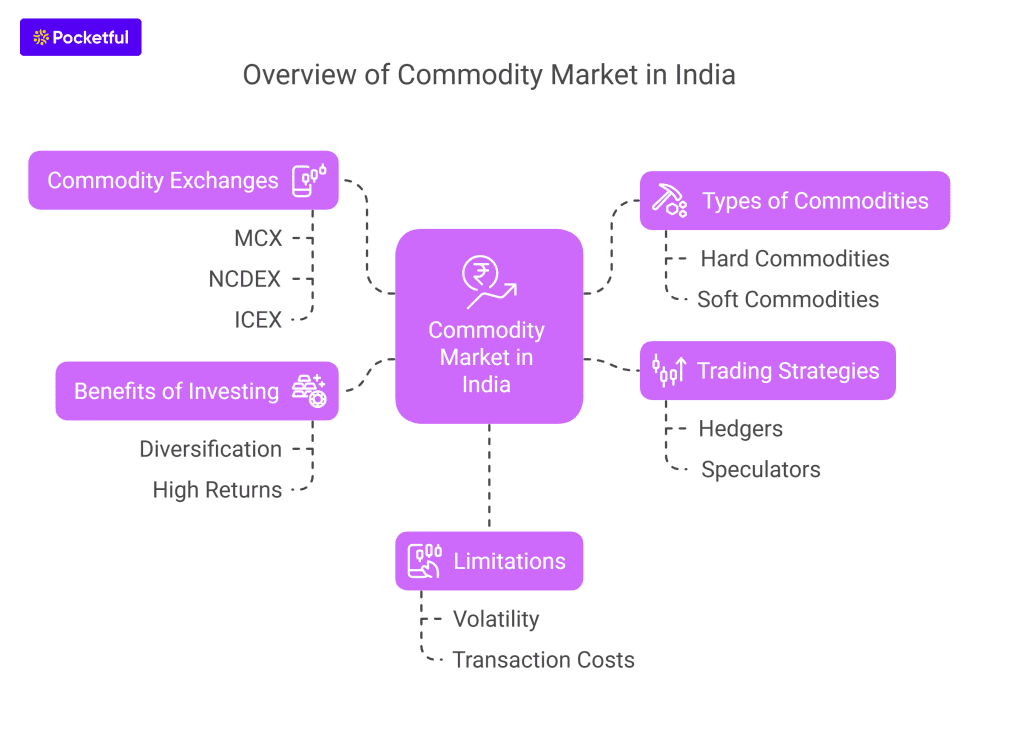
    Read Also: What is Commodity Market in India?

    Conclusion

    To sum up, investing in index derivatives gives you a chance to diversify your holdings and shield them from market risk, but using derivative instruments also necessitates having a solid awareness of risk and the complexities that surround it. Additionally, whenever you are making an investment, be careful to discuss your risk tolerance with your investment advisor. 

    Frequently Asked Questions (FAQs)

    1. What are the risks associated with investing in index derivatives?

      Market risk, margin calls due to leveraged positions, time decay for option traders, and other risks are associated with index derivatives. 

    2. Name the index derivative in which we can trade.

      Nifty 50, Nifty Bank, Nifty Financial Services, Nifty Mid Cap Select and Nifty Next 50 offer index derivatives we can trade in India. 

    3. What do you mean by margin call in the case of index derivative trading?

      A margin call occurs when the broker requests additional funds or securities because the margin value in your account is less than the minimum amount required by the broker. 

    4. Can a beginner invest in index derivatives?

      Yes, you can begin investing in index derivatives, but you should ensure that you understand concepts such as the time value of money, delta, gamma, etc. 

    5. What are the two types of derivative contracts we can trade online?

      Futures contracts and options contracts are the two categories of derivative contracts we can trade-in. 

  • What Is the National Commodity and Derivatives Exchange (NCDEX)?

    What Is the National Commodity and Derivatives Exchange (NCDEX)?

    The derivative segment for equities and indices in India gets traded on the National Stock Exchange (NSE) and Bombay Stock Exchange (BSE), but what about derivative contracts on agricultural and non-agricultural commodities? NCDEX, or National Commodity and Derivatives Exchange Limited, provides an online commodity exchange exclusively for commodities and derivatives trading. 

    In today’s blog, we will explore how to create an NCDEX account, its trading process, and its benefits.

    What is NCDEX?

    National Commodity and Derivatives Exchange Limited is an online commodity exchange dealing primarily in agricultural commodities in India. It has a diverse range of products to fulfill the needs of different participants. NCDEX is under the regulatory authority of the Securities and Exchange Board of India (SEBI). It was established in 2003 and has its headquarters in Mumbai.

    NCDEX provides market access to those who wish to protect their commodities against price volatility. It also allows traders to speculate on the price movement of the commodities to generate profits.

    What Is the National Commodity and Derivatives Exchange (NCDEX)

    The exchange offers derivative contracts for agricultural and non-agricultural commodities across seven categories. The seven categories are listed below:

    • Cereals and Pulses: Chana, Barley, Bajra, Wheat, etc.
    • Oil and Oil Seeds: Groundnut, Crude Sunflower oil, Castor seed, Soybean, etc
    • Fibers: Kapas, 29 MM Cotton
    • Soft: Gur, Robusta Cherry AB coffee, Isabgol seed
    • Spices: Turmeric, Coriander, Jeera, Jeera Mini
    • Guar Complex: Guar seed 10 MT, Guar Gum refined splits
    • Metals: Steel Long

    How to Open and Trade in an NCDEX Demat Account?

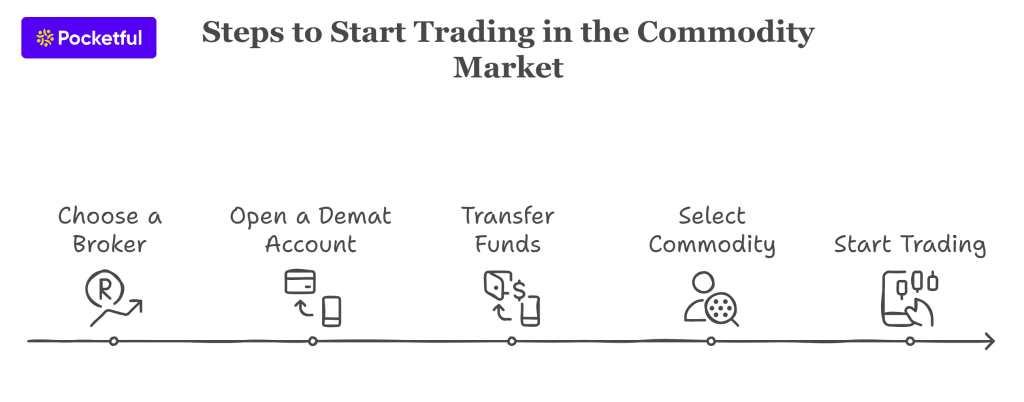
    To start trading on the NCDEX platform, we first need to create an NCDEX account by following the steps given below:

    1. Select a stockbroker by comparing its benefits and costs with other stockbrokers.
    2. Complete the application form to open an NCDEX account and give personal and bank details. Opening an account also requires documents such as a PAN card, Aadhaar Card, etc.
    3. The stockbroker verifies all your details and approves them. 
    4. When all the details have been verified, the stockbroker will open your NCDEX account. 
    5. You can deposit a margin amount in the account and start placing orders on the exchange.
    6. Once the order is executed, you can monitor the P&L and must ensure that sufficient funds are maintained.

    Examples of NCDEX

    Suppose you are a farmer who grows wheat and expects to harvest the crop three months from now. Prices three months from now can vary from the prices offered today. These unexpected price fluctuations create a risk as the market price of wheat can decline, resulting in reduced profits or even losses for the farmer. In such a situation, the farmer can create a short position in the derivative contract of wheat. Now, there can be two scenarios:

    1. If wheat prices decrease, then the farmer incurs losses on selling the crop at lower prices, but the short position in the derivative contract offsets these losses.
    2. If wheat prices increase, then the farmer profits from selling the crop at higher prices, but the short position in the derivative contract offsets these profits.

    The derivative contract hedges your long position in wheat and thus fixes your profit. 

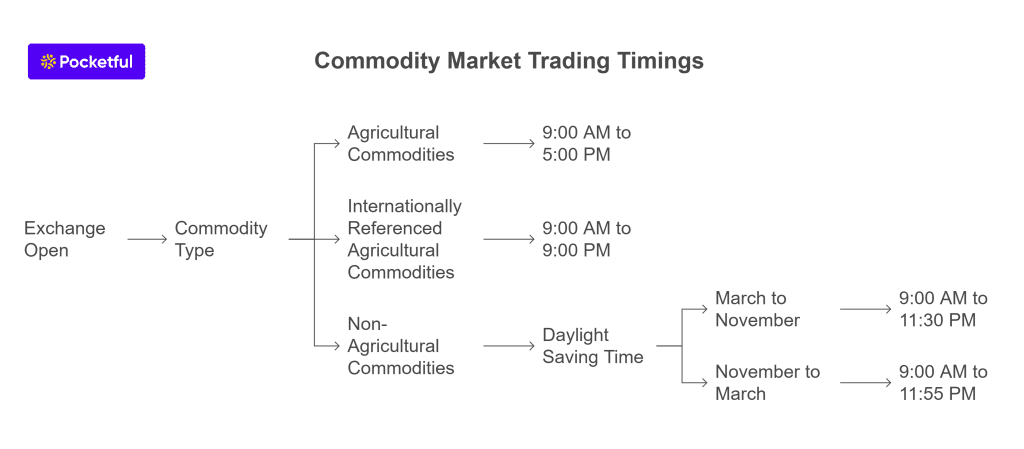
    Read Also : What is the Timing for Commodity Market Trading?

    What are the Benefits of NCDEX?

    What are the Benefits of NCDEX

    To take advantage of the NCDEX platform, we must understand its features listed below:

    1. Participants can access market prices, expiry dates, and other important information using the NCDEX platform.
    2. Owners of the assets can use the NCDEX as an efficient price discovery platform to price their products more accurately.
    3. NCDEX has standardized underlying asset quality through contracts, which has resulted in an enhanced focus on producing high-quality crops.
    4. Agricultural commodities are prone to seasonal fluctuations, resulting in significant losses. We can hedge against these price fluctuations using commodity derivatives like futures and options available on the NCDEX. 
    5. NCDEX offers standardized contracts, which simplifies the process of trading and settlement of contracts.
    6. NCDEX follows the mark-to-market settlement cycle, in which the profits and losses are settled at the end of each trading day. This practice helps build confidence among market participants that the contract will be honored.

    Check Out – Search and Filter Commodities

    What is the Difference Between MCX and NCDEX?

    Multi Commodity Exchange (MCX) and National Commodity and Derivatives Exchange (NCDEX) are prominent commodity exchanges in India. Both platforms allow trading in commodities but are different from each other as they deal in different commodities. MCX offers contracts in silver, gold, and other metals, whereas NCDEX offers products primarily related to agricultural goods.

    Read Also : MCX Exchange Case Study

    Conclusion

    National Commodity and Derivatives Exchange Limited (NCDEX) is one of the largest commodity Trading Plateform exchanges in India. It provides market participants an opportunity to hedge against market fluctuation and trade to earn profits. 

    Trading in derivatives can be complex, often resulting in huge losses. Investors must have thorough knowledge regarding derivatives and should consult their financial advisor before making any investment decision.

    Gold Rate in Top Cities of IndiaSilver Rate in Top Cities of India
    Gold rate in KeralaSilver rate in Kerala
    Gold rate in KolkataSilver rate in Kolkata
    Gold rate in LucknowSilver rate in Lucknow
    Gold rate in MaduraiSilver rate in Madurai
    Gold rate in MangaloreSilver rate in Mangalore
    Gold rate in MumbaiSilver rate in Mumbai
    Gold rate in MysoreSilver rate in Mysore
    Gold rate in NagpurSilver rate in Nagpur
    Gold rate in NashikSilver rate in Nashik

    Frequently Asked Questions (FAQs)

    1. What is NCDEX?

       NCDEX, or National Commodity and Derivatives Exchange Limited, is a commodity exchange dealing in agricultural commodities in India.

    2. Who owns NCDEX?

      Major shareholders of NCDEX are NSE (15%), LIC (11.1%), NABARD (11.1%), etc.

    3. What is the difference between NCDEX and MCX?

      NCDEX primarily focuses on trading agricultural commodities, while MCX deals with a broader range of commodities, including metals, energy, etc.

    4. Where are the headquarters of NCDEX?

      The NCDEX headquarters is located in Mumbai.

    5. How can I trade on NCDEX?

      To trade on the NCDEX, one must have an NCDEX account with a registered broker. After registration, one needs to deposit a margin and start trading.

  • Open Free Demat Account

    Join Pocketful Now

    You have successfully subscribed to the newsletter

    There was an error while trying to send your request. Please try again.

    Pocketful blog will use the information you provide on this form to be in touch with you and to provide updates and marketing.