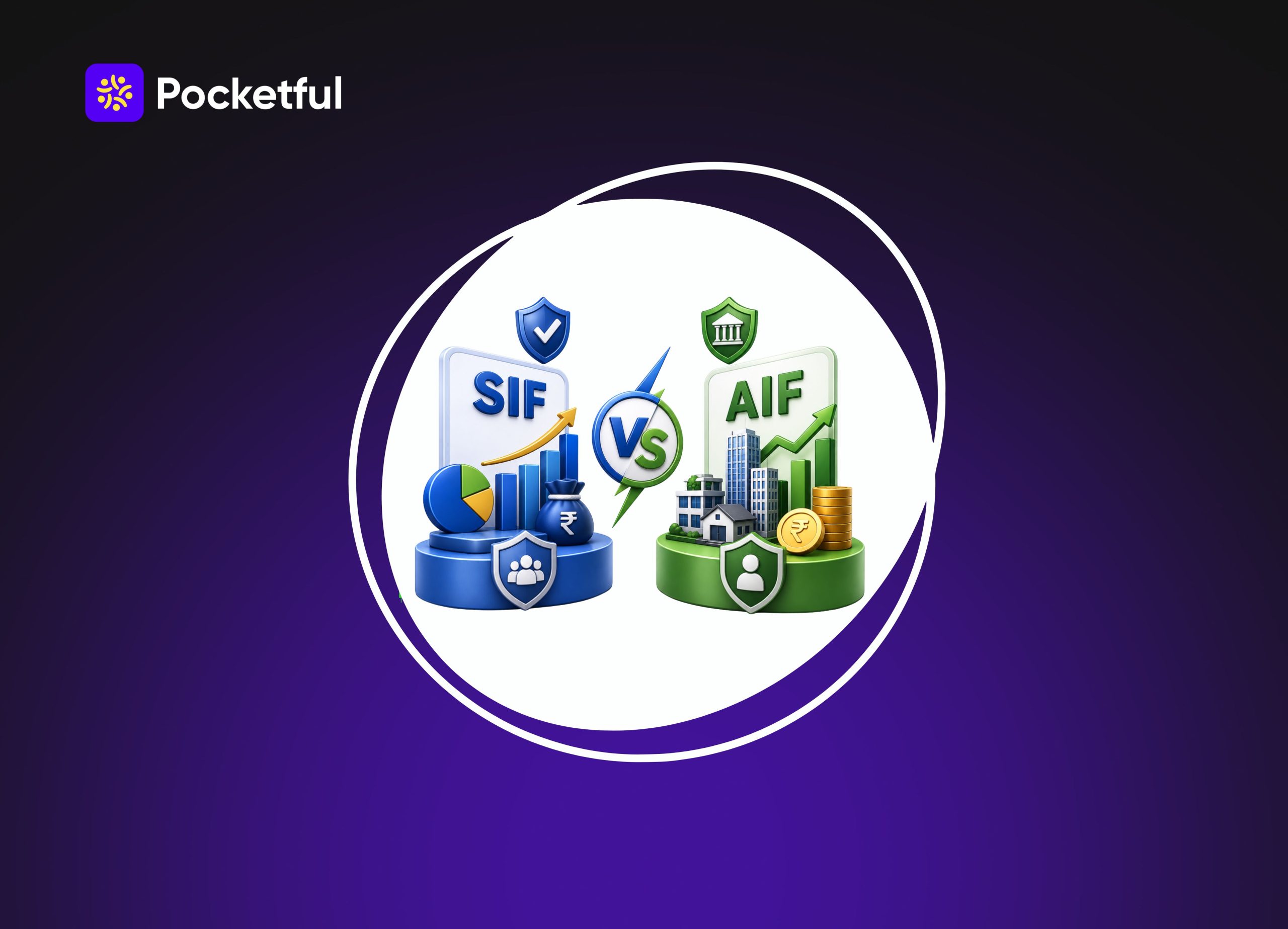
The financial world presents many exciting paths for wealth creation. Moving beyond standard mutual funds opens up entirely new opportunities for growth. Two popular terms making headlines today are Alternative Investment Funds and Specialised Investment Funds.
This guide breaks down the core concepts in very simple language. The objective is to help retail investors understand these tools without getting confused by heavy financial jargon.By keeping things completely straightforward, anyone can learn how these funds operate. The following sections will highlight exactly what makes them different from each other. Building wealth becomes much easier when the basic tools are clear.
What is a SIF
A Specialised Investment Fund is a newer investment option introduced by the market regulator in the year 2025. It serves as a helpful bridge between normal mutual funds and highly customized services. These funds allow managers to use advanced strategies that regular mutual funds are simply not allowed to use.
The starting investment amount for this fund is ten lakh rupees. This makes it much easier for regular investors to join compared to the massive one crore requirement of an alternative fund. It sits perfectly in the middle for people who want better strategies without spending a fortune.
For example, imagine a normal mutual fund that can only buy shares and hope the price goes up. A Specialised Investment Fund manager has a lot more freedom. If the manager believes a certain stock will fall in price, they can use a strategy called shorting to try and make a profit from that drop.
They can also shift money quickly between different sectors like banking and technology based on what is doing well. They might also use special financial contracts called derivatives to protect the investment. On top of this flexibility, SIFs have higher limits for certain unique assets. They can invest up to 20 percent of their total money in Infrastructure Investment Trusts, also known as InvITs, and Real Estate Investment Trusts, or REITs. These trusts are basically large pools of money used to manage big real estate or infrastructure projects.
What is an AIF
An Alternative Investment Fund is a special type of private investment pool. It collects money from sophisticated and wealthy investors from India and abroad. The fund manager uses this gathered money to invest in non traditional assets.
These assets include startups, real estate, and private companies rather than just regular stock market shares. These funds are heavily regulated by the Securities and Exchange Board of India. They require a very large amount of money to get started.
The minimum requirement for an investor is usually one crore rupees. Because of this high entry cost, they are mostly designed for wealthy individuals, family offices, or large institutions. The regulator divides these funds into three main categories based on their investment style.
- Category I: These funds invest in early stage startups, small and medium enterprises, and social ventures. The government often encourages these investments because they help the economy grow and create new jobs. Popular examples include angel funds and venture capital funds. They are great for backing fresh business ideas.
- Category II: These represent the most common type found in the current market. They invest mostly in private equity and debt funds without using complex borrowing techniques to boost returns. These funds help established private companies get the money they need to expand their business.
- Category III: These funds use very complex trading strategies to generate profits. They might use leverage, which simply means borrowing money to invest more than the fund actually has. Hedge funds fall into this group and use aggressive methods to try and beat normal market returns.
SIF vs AIF: Key Differences
There are many important differences between these two financial options. Below is a simple table to compare them side by side.
| Key Aspect | Specialised Investment Fund (SIF) | Alternative Investment Fund (AIF) |
|---|---|---|
| Minimum Investment | 10 lakh rupees | 1 crore rupees |
| Main Investor Type | Experienced retail investors | Very wealthy individuals and institutions |
| Types of Assets | Mostly public markets, stocks, and derivatives | Public and private markets, startups, and real estate |
| Lock-in Period | Usually very short or none | Mostly 3 to 10 years |
| Transparency | High, with regular reports | Lower, with less frequent updates |
| Taxation | Taxed like regular mutual funds | Depends on the specific category |
Here is a deeper look at these points to make things even clearer.
- Minimum Investment Size: The entry barrier is a major difference between the two. A Specialised Investment Fund requires ten lakh rupees, making it accessible to many people. The alternative option needs a massive one crore rupees to start, which shuts out most normal investors. This huge gap in pricing decides who can actually participate in these funds.
- Investment Structure and Strategy: The Specialised Investment Fund mostly buys listed stocks and uses safe derivatives. It focuses entirely on the public stock market and has strict limits on risk. The managers cannot take wild bets with the investors’ money. The Alternative Investment Fund can buy unlisted private companies, real estate, and distressed assets. Alternative funds have total freedom to take big risks and borrow heavily. They operate in a completely different risk zone.
- Liquidity and Withdrawals: Liquidity means how easily an investor can take their money out. Specialised funds allow investors to withdraw their money much more easily. They offer periodic withdrawal options just like a normal mutual fund. Alternative funds lock the money away for many years, making it almost impossible to get cash out early. If an emergency strikes, taking money out of an alternative fund is very tough.
- Transparency and Reporting: Because Specialised funds act like mutual funds, they provide regular updates every month or quarter. Investors know exactly what is happening with their hard earned money. This builds a lot of trust and confidence. Alternative funds do not have to share day to day updates, so they offer lower transparency overall. Wealthy investors in these funds just wait for long term results instead of checking daily.
- Taxation Rules: Taxes play a huge role in actual profits. Specialised funds are taxed just like regular mutual funds. Investors only pay capital gains tax when they finally sell or redeem their units. Alternative funds face different tax rules depending on their category, and some are taxed heavily every single year. This annual tax can slowly eat into the overall profits of the alternative fund.
Read Also: Top Specialized Investment Funds (SIFs) in India
Who is better AIF or SIF
Saying one is strictly better than the other is not very accurate. The right choice depends entirely on the financial goals and total capital of the specific investor. Each option serves a completely different purpose in the modern financial world.
SIF is a better option if:
- The available investment capital is around ten lakh rupees.
- The investor wants clear rules, regular updates, and high transparency.
- The investor needs the ability to withdraw money without a multi year wait.
- The goal is to access advanced market strategies without taking extreme private market risks.
AIF is a better option if:
- There is a very large amount of wealth available, exceeding one crore rupees.
- The investor wants to own pieces of private startups or massive real estate projects.
- The investor is perfectly fine with not seeing their money again for the next five to ten years.
- The goal is to chase extremely high returns that do not depend on the daily public stock market.
Common Risk Element in AIF and SIF
Every single investment carries some level of risk. Both of these funds are riskier than a basic bank fixed deposit or a simple index fund. Investors must know these risks before starting their journey.
- Market Risk: Both funds can lose money if the overall stock market or the global economy performs poorly. Economic downturns affect all types of businesses heavily.
- Strategy Risk: Since both use complex strategies, a wrong guess by the fund manager can lead to big losses. For instance, if they bet a stock will fall and it actually rises, the fund loses money.
- Complexity Risk: These funds use financial tools like derivatives which are hard to understand. This makes it difficult for a normal person to track exactly how the money is being managed daily.
- Liquidity Risk: While Specialised funds are easier to exit, they can still have small notice periods. Alternative funds have massive liquidity risk because the money is locked away for several years.
- Concentration Risk: Alternative funds often put a lot of money into just a few private companies. If one of those private companies fails, it hurts the whole fund deeply.
Conclusion
Investing is a highly personal journey, and having more choices is always a positive step. Both of these funds offer excellent ways to build wealth over time. While one offers advanced strategies to the common investor, the other opens doors to the private market for the ultra wealthy.
It is always wise to research carefully and talk to a financial advisor before making big money decisions. For those looking to manage their investments and trading smoothly, platforms like Pocketful offer great tools. They provide zero account opening fees and zero brokerage on equity delivery trades to help build a strong portfolio. Ultimately, a well planned investment brings peace of mind and long term financial growth to any smart investor.
| S.NO. | Check Out These Interesting Posts You Might Enjoy! |
|---|---|
| 1 | SIP in Stocks vs SIP in Mutual funds? |
| 2 | XIRR Vs CAGR: Investment Return Metrics |
| 3 | Liquid Funds Vs Ultra Short Fund |
| 4 | Active or Passive Mutual Funds: Which Is Better? |
| 5 | ICICI Vs HDFC Bank: Which Has Larger Market Capitalization? |
Frequently Asked Questions (FAQs)
What is the meaning of SIF and AIF?
SIF is a regulated pool requiring ten lakh rupees for advanced stock strategies. AIF is a private pool requiring one crore rupees for non traditional assets.
What are the key benefits of an SIF?
It provides a lower entry barrier, tax friendly rules, high transparency, and advanced market strategies without locking up money for long years.
What are the main benefits of an AIF?
It gives access to exclusive private markets, real estate, and startups. It offers high potential returns independent of the daily stock market.
How to use an SIF in a portfolio?
Investors use it as a secondary investment to boost overall returns. It works best alongside safe, core mutual fund investments.
How to use an AIF in a portfolio?
Wealthy individuals use it to diversify huge portfolios. It acts as a long term hold to capture massive growth from private companies.