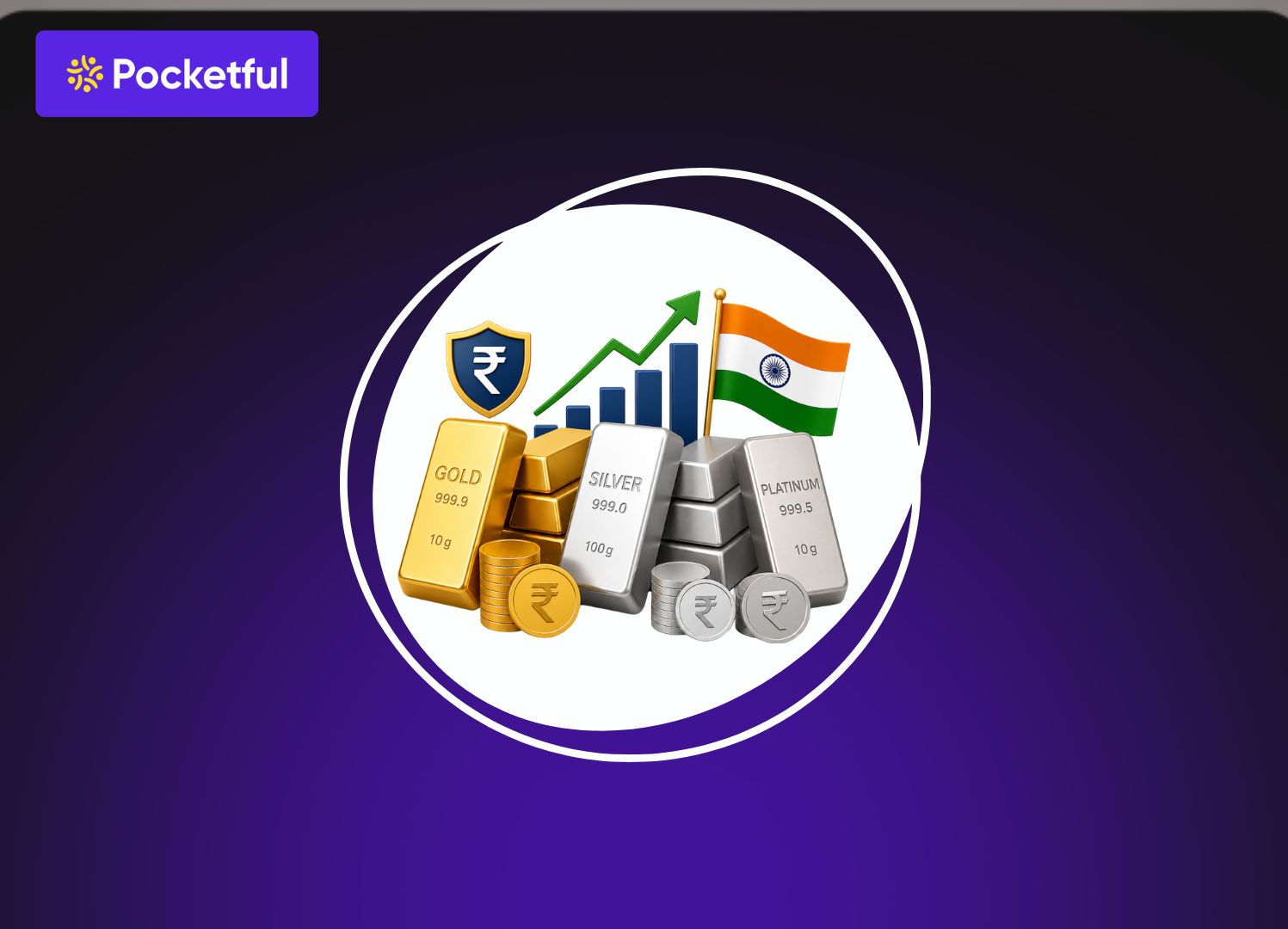
Precious metals are no longer limited to jewellery shops or central bank reserves. In 2026, these are now used in the industries and at various places. This has added to the demand and value of these metals greatly.
But at the same time, there has been a change in the way people invest. The preference for digital investing is growing rapidly. People are now looking for options that allow them to easily manage their investments.
Also, gold and silver are no longer just the precious metals to consider. There are various others as well. So, read this guide to know all the details.
What Are Precious Metals – Overview and Market Trends
Precious metals are rare and naturally occurring metallic elements. These are prized for their economic value, beauty, durability, and resistance to corrosion. These metals serve as “safe haven” assets for the investors.
Investors have focused on gold and silver in this category for a long time but, with time, there are new additions as well. These include platinum, palladium, and various other options. Their industry use has added to the growth of the market rapidly.
For those who are looking to invest in the precious metals, here are some of the trends and insights that one should know:
Price Trends
The price of these metals changes quite frequently. This is one of the reasons why you need to keep an eye on the market well. For instance, in early May 2026, 24-carat gold traded around ₹1,52,670-1,52,950 per 10 grams. Also, silver was around ₹2,75,100 per kg.
Demand Shifts
There are demand shifts that you must consider. There are metals that are high in demand during festive season while others are ones that are required in industries, ensuring consistency in demand. Like the Q1 2026 gold demand rose 10% YoY which was led by a 54% surge in investment. This was also the time when the jewellery demand fell due to high prices.
Industrial Drivers
Silver demand grows via solar (29% global industrial use), EVs, and electronics (68% industrial share). Now, this is supported by India’s renewable push and Budget 2026 incentives. Automotive silver demand is expected to rise 3.4% CAGR to 2031, EVs overtaking ICE by 2027.
Likewise, other metals also see spike and fall based on the market conditions.
Top 10 Precious Metals at a Glance
For investors who are planning to invest in precious metals, here are the options to go for:
| Metal | Symbol | Primary Use | Investment Grade |
|---|---|---|---|
| Gold | Au | Jewellery (festivals/weddings), RBI reserves, ETFs | High |
| Silver | Ag | Solar panels, electronics, jewellery | High |
| Platinum | Pt | Catalytic converters, jewellery, hydrogen fuel | High |
| Palladium | Pd | Automotive catalysts, electronics | High |
| Rhodium | Rh | Autocatalysts, industrial alloys | Speculative |
| Iridium | Ir | Spark plugs, aerospace components | Speculative |
| Ruthenium | Ru | Electronics, chemical catalysts | Niche |
| Osmium | Os | Scientific instruments | Niche |
| Rhenium | Re | Jet engines (aviation/defense) | Industrial |
| Indium | In | LCD/solar cells, semiconductors | Industrial |
1. Gold (Au)
This is a metal that has stayed relevant for centuries. People trust it when markets become uncertain. From central banks to retail investors, gold is an asset invested by all and is considered a safety net during economic downfall. In India, it is also deeply linked with weddings and festivals. This is the first precious metal that people consider while investing.
2. Silver (Ag)
Silver is interesting because it works both as an investment metal and an industrial metal. It is heavily used in solar panels, electronics, and electric vehicles, which keeps demand active beyond jewellery or investing. Compared to gold, silver prices move faster in both directions. That volatility is high which is one of the reasons why many people invest in it.
3. Platinum (Pt)
Platinum is used in industries like automobiles and clean energy. It is a metal that is growing right now and is being widely used in catalytic converters. It is also gaining relevance in hydrogen fuel technology as well. The point to note is that platinum is rarer than gold. Yet many investors believe it still has long-term value potential.
4. Palladium (Pd)
Palladium became extremely popular after prices surged sharply a few years ago. Its biggest use comes from petrol vehicle emission systems, which means automotive demand drives most of its price movement. However, the rise of electric vehicles has created uncertainty around future demand. Supply issues in Russia and South Africa also impact the prices greatly.
5. Rhodium (Rh)
Rhodium is one of those metals that you will hear about only when prices suddenly spike. It is mainly used in vehicle emission control systems. It has a very small global supply. Because the market is thin, prices can move dramatically within weeks. This makes rhodium highly speculative and unsuitable for conservative investors.
6. Iridium (Ir)
Iridium is valued for surviving extreme conditions. This is a metal that works when most metals fail. It is commonly used in aerospace equipment, spark plugs, and specialised industrial machinery. But it is produced in very small quantities. This makes its market highly illiquid. For most retail investors, iridium is more of a specialist metal than a mainstream investment option.
7. Ruthenium (Ru)
Ruthenium has quietly become an important metal in the industrial sector. It is used in electronics and semiconductor manufacturing. It is a key metal that is used in the advanced technologies which are growing today. It is relatively affordable. But the market itself is still small and less accessible for regular investors.
8. Osmium (Os)
Osmium is one of the rarest metals in the world. It is known for its density and durability. Earlier, it was mostly used in scientific tools and specialised equipment. But with time this has changed. Now, crystalline osmium is like a collectible investment. Still, the market is extremely niche. This makes liquidity a major concern for investors.
9. Rhenium (Re)
Rhenium is closely connected to the aerospace and defence industries. This is mainly because it can handle extremely high temperatures. It is mainly used in jet engine turbine blades and specialised superalloys. But there are no direct rhenium mines. This makes the supply limited. This makes it more important from an industrial demand perspective.
10. Indium (In)
Indium is not a traditional precious metal. But if you see the market today, it is becoming important. This is due to its use in modern technology. It is widely used in LCD screens, semiconductors, and solar panels. The global production is heavily concentrated in China. This makes supply a high risk. Growing demand from electronics and renewable energy keeps indium strategically important.
Read Also: Best Precious Metal Mutual Funds to Invest in India
Why Precious Metals are Important for India
Precious metals, particularly Gold and Silver, are crucial for a growing economy like ours. Key reasons for importance include:
- Cultural & Social Significance: Precious metals like Gold & Silver are considered sacred in our culture and are an indispensable component of an Indian wedding. Historically, Stri-dhan (wealth passed directly to a bride), in the form of gold jewelry, has served as an independent financial net for women. Gold is vital for weddings, rituals, festivals and religious occasions, with South India being a major consumption hub.
- Financial Security & Savings: Millions of households in India trust Gold as a safe-haven asset and a store of wealth. It is seen as one of the most trusted and liquid investments, and a safeguard in times of financial instability,
- Industrial Application: Many of the precious metals mentioned above are used in the automobile, semiconductor and electronics industries, and support India’s developing economy, contributing directly to GDP and growth. For example: Silver is a critical raw material for photovoltaic cells in solar panels, while other precious metals are vital for high-end electronics, semiconductors, and automotive emission control systems as India modernizes its manufacturing base.
- Massive Macroeconomic Driver: As the world’s second-largest consumer of gold, India’s massive bullion import bill (over $70 billion annually) heavily influences the country’s trade balance, Current Account Deficit (CAD), and the strength of the Rupee.
How To Invest In Precious Metals
For the investors who are planning to invest in precious metals, there are broadly two ways. These are as follows:
1. Physical Precious Metals
This is the traditional method. You usually buy bars, coins, bullion, or jewelry when you plan to invest using this method.
Many investors prefer physical ownership. This is because it offers direct control over the asset. However, storage, insurance, purity verification, and making charges are important considerations. Physical metals are generally viewed as long-term holdings rather than active trading assets.
2. Digital And Market-Linked Investments
Digital investing has made precious metals far more accessible for modern investors. Instead of storing metals physically, investors can participate through financial products linked to metal prices.
These include:
- Gold ETFs and Silver ETFs.
- Precious metals mutual funds.
- Digital gold platforms.
- Mining and metal company stocks.
- Commodity futures and options.
Through Pocketful, investors can access Gold ETFs, Silver ETFs, and others easily with the help of a demat account. There is no issue with storage or management at all. This helps with tracking and easy sale of the asset as well.
Read Also: Best Performing Precious Metals ETFs
Conclusion
Precious metals continue to play an important role in global markets, but their demand drivers are changing rapidly. Where gold and silver were only considered as key players, today the choices have increased.
Investors need to evaluate and check all the options before they finalise any of these. Also, it is important to check the demand and supply conditions as well. Instead of going for physical metals, digital methods are better.
This will allow the investors to track and keep an eye on the investment well. So, if you are looking for the same, start with Pocketful and create a portfolio for a longer duration.
Frequently Asked Questions (FAQs)
Which Is The Best Precious Metal To Invest In?
Gold is usually considered the best starting point. This is because of its stability, liquidity, and long-term trust among investors. However, silver and platinum are also good choices.
Are Precious Metals A Good Hedge Against Inflation?
Yes. Precious metals, especially gold, are often used as a hedge against inflation and currency depreciation. These metals can be a great support during uncertain markets.
Can Beginners Invest In Precious Metals?
Yes, beginners can start investing easily through the digital modes. You can go for Gold ETFs, Silver ETFs, or digital gold platforms. These options are more convenient and require smaller investment amounts.
What Is The Difference Between Gold ETFs And Physical Gold?
Physical gold involves direct ownership in the form of jewellery, coins, or bars. Gold ETFs, on the other hand, are market-linked investment products traded on exchanges. They do not require physical storage.
Is Investing In Rare Metals Like Rhodium Or Osmium Risky?
Yes, rare metals such as rhodium, osmium, and iridium are highly volatile and less liquid. Their markets are smaller and more speculative. This makes them riskier options.