Smart investors usually look for simple ways to grow their wealth over time without stress. They want a proven method that avoids the need to track daily financial news constantly. A passive investment strategy offers exactly this kind of peace of mind. Instead of guessing which individual company will perform well, buyers can just purchase a small piece of the entire market. This approach lowers the overall risk while offering good returns. Let us explore an easy way to achieve this balance.
What is Nifty 50 ETF?
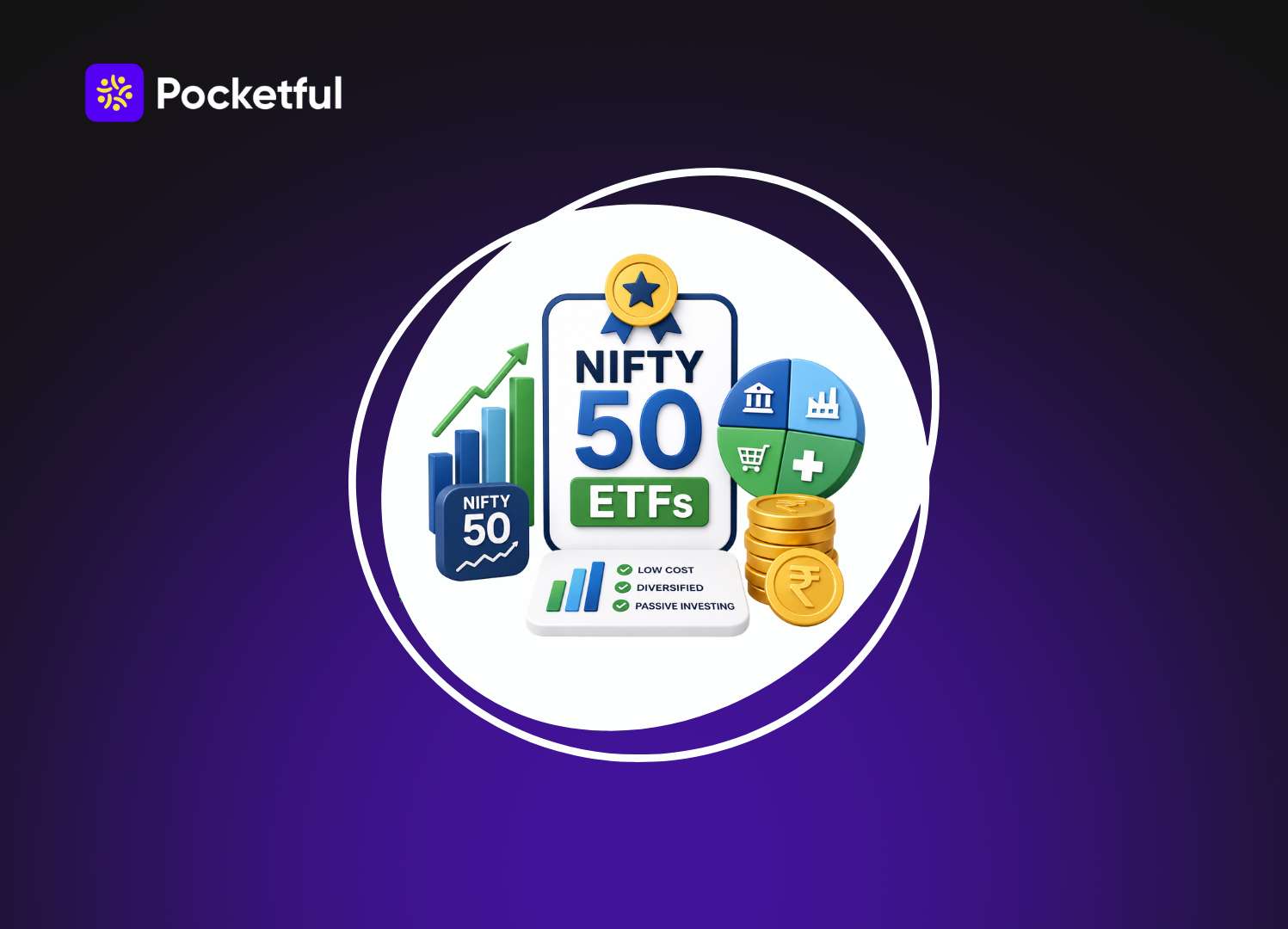
The question often arises among new market participants what is nifty etf exactly? In simple terms, it is a mutual fund that trades on the stock exchange and acts as a large basket of stocks. A nifty etf tracks the top 50 companies listed on the National Stock Exchange. These companies are proven leaders in their respective industries. They represent the biggest and most successful businesses operating in India today.
When a person buys a nifty 50 etf, their money goes directly into these 50 large companies. The investment is spread out in the exact same proportion as the main index. This ensures the fund performance will closely mirror the broader market performance.
These funds trade on the stock market just like regular company shares. Buyers can easily purchase and sell them during normal market hours without any hassle. If someone wants to see all available options, they can easily check an nse etf list on their chosen trading platform.
Looking at a nifty 50 etf list is an excellent starting point for new market participants. It displays various funds managed by different asset management companies. Even though different financial institutions manage them, they all track the exact same 50 big stocks.
List of 10 Nifty 50 ETFs in India as per AUM
Here is a table showing ten popular funds, including their 1-year, 3-year, and 5-year returns. The data includes the total money managed by the fund, known as Assets Under Management. It also shows the expense ratio, which is the fee charged to manage the fund.
| ETF Name | Ticker Symbol | Expense Ratio (%) | AUM (in Crores) | Price (₹) |
|---|---|---|---|---|
| UTI Nifty 50 ETF | NIFTYBETA | 0.04 | 70,931 | 267.58 |
| Nippon India ETF Nifty 50 BeES | NIFTYBEES | 0.03 | 64,785 | 275.40 |
| ICICI Prudential Nifty 50 ETF | NIFTYIETF | 0.02 | 42,100 | 273.72 |
| Kotak Nifty 50 ETF | NIFTY1 | 0.03 | 3,436 | 267.89 |
| Aditya Birla Sun Life Nifty 50 ETF | BSLNIFTY | 0.04 | 3,219 | 28.30 |
| SBI Nifty 50 ETF | SETFNIF50 | 0.04 | 2,10,090 | 260.32 |
| LIC MF Nifty 50 ETF | LICNETFN50 | 0.06 | 867 | 269.43 |
| Tata Nifty 50 ETF | NETF | 0.06 | 709 | 261.44 |
| Invesco India Nifty 50 ETF | IVZINNIFTY | 0.08 | 91 | 2744.17 |
| Motilal Oswal Nifty M50 ETF | MOM50 | 0.05 | 78 | 252.77 |
Overview of Best 10 Nifty 50 ETFs in India
1. SBI Nifty 50 ETF
This highly popular fund is managed by Raviprakah Sharma. A fact not known to everyone is that this fund handles massive investments directly from government bodies like the Employees Provident Fund Organisation, which gives the fund incredible stability
This fund comes from the reputable SBI Mutual Fund and was launched in 2015. It holds a giant asset base of more than 2,10,090 crore Rupees. The expense ratio is kept very low at 0.04 percent.
| ETF Name | 1-Year Return (%) | 3-Year Return (%) | 5-Year Return (%) | AUM (in Crores) |
|---|---|---|---|---|
| SBI Nifty 50 ETF | -3.02 | 8.33 | 9.90 | 2,10,090 |
2. UTI Nifty 50 ETF
This large fund is efficiently managed by Sharwan Kumar Goyal, Ayush Jain, and Lokesh Kulthia. Similar to the SBI fund, a lesser known fact is that it also receives huge investments from various government pension bodies, making it a highly reliable and stable choice.
This fund was launched in August 2015 by UTI Mutual Fund. It manages a huge total asset base of 70,931 crore Rupees.
| ETF Name | 1-Year Return (%) | 3-Year Return (%) | 5-Year Return (%) | AUM (in Crores) |
|---|---|---|---|---|
| UTI Nifty 50 ETF | -3.02 | 8.34 | 9.91 | 70,931 |
3. Nippon India ETF Nifty 50 BeES
This massive fund is currently managed by Himanshu Mange. While many know it is big, a lesser known fact is that it is one of the oldest funds of its kind in India, starting all the way back in December 2001
Managed by Nippon India Mutual Fund, it is one of the oldest funds in this category, starting in 2001. It is a massive fund with an AUM of over 64,785 crore Rupees. Fund returns over the years are mentioned below.
| ETF Name | 1-Year Return (%) | 3-Year Return (%) | 5-Year Return (%) | AUM (in Crores) |
|---|---|---|---|---|
| Nippon India ETF Nifty 50 BeES | -3.03 | 8.34 | 9.92 | 64,785 |
4. ICICI Prudential Nifty 50 ETF
This fund is managed by a large team including Nishit Patel, Ajay Kumar Solanki, Ashwini Jemin Bharucha, and Venus Ahuja. An interesting fact is that despite being a growth focused fund, it has occasionally paid cash dividends to its investors, with a notable payout happening in 2016
It has AUM of 42,100 crore Rupees.The fund shows a 1-year return of -3.02 percent and a 3-year return of 8.35 percent. It is known for high efficiency and tight tracking of the main index.
| ETF Name | 1-Year Return (%) | 3-Year Return (%) | 5-Year Return (%) | AUM (in Crores) |
|---|---|---|---|---|
| ICICI Prudential Nifty 50 ETF | -3.02 | 8.35 | 9.93 | 42,100 |
5. Kotak Nifty 50 ETF
This established fund is actively managed by Satish Dondapati and Jeetu Valechha Sonar. A fact that many beginners miss is that this fund has a history of paying out cash dividends, with past payouts recorded in years like 2014 and 2017
Launched in February 2010 by Kotak Mahindra Mutual Fund, it is a very established fund. The fund handles an asset base of 3,436 crore Rupees.
The fund provided 1-year return of -3.01 percent and a 3-year return of 8.35 percent. The price per unit is about 267 Rupees. It is an excellent vehicle for securing broad market exposure.
| ETF Name | 1-Year Return (%) | 3-Year Return (%) | 5-Year Return (%) | AUM (in Crores) |
|---|---|---|---|---|
| Kotak Nifty 50 ETF | -3.01 | 8.35 | 9.87 | 3,436 |
6. Aditya Birla Sun Life Nifty 50 ETF
This fund is carefully managed by Mehul Dama and Priya Sridhar. An interesting fact not known to everyone is that the fund tries to keep its cash holdings to an absolute minimum and actively avoids investing in debt or money market securities to stay fully invested in stocks
This fund stands out primarily due to its very low management cost. It also holds a massive asset base of over 3219 crore Rupees. The fund structure is carefully designed to guarantee high tracking accuracy.
A massive asset base usually means better liquidity for both buyers and sellers. The fund has given a 1-year return of -2.99 percent, with a 3-year return of 8.35 percent. It trades at a very affordable price of around 28 Rupees per unit.
| ETF Name | 1-Year Return (%) | 3-Year Return (%) | 5-Year Return (%) | AUM (in Crores) |
|---|---|---|---|---|
| Aditya Birla Sun Life Nifty 50 ETF | -2.99 | 8.35 | 9.93 | 3,219 |
7. LIC MF Nifty 50 ETF
This fund is expertly managed by Nikhil Kapoor and Sasikant Aravamuthan. A very surprising fact about this specific fund is that regular investors can start investing in it with a minimum lump sum amount of just one single Rupee
Launched in November 2015, this fund comes from the trusted house of LIC Mutual Fund. The 1-year return currently stands at -3.09 percent, while its 3-year and 5-year returns are 8.24 percent and 9.85 percent, respectively.
| ETF Name | 1-Year Return (%) | 3-Year Return (%) | 5-Year Return (%) | AUM (in Crores) |
|---|---|---|---|---|
| LIC MF Nifty 50 ETF | -3.09 | 8.24 | 9.85 | 867 |
8. Tata Nifty 50 ETF
This passive investment fund is managed by Rakesh Prajapati and Nitin Bharat Sharma. This passive investment fund was officially launched in January 2019. It aims to keep tracking errors to an absolute minimum while accurately matching index returns. Currently, it shows a 1-year return of -3.09 percent and a 3-year return of 8.27 percent.
The fund currently manages a healthy 709 crore Rupees in total assets. The portfolio is widely diversified across different vital sectors of the economy.
| ETF Name | 1-Year Return (%) | 3-Year Return (%) | 5-Year Return (%) | AUM (in Crores) |
|---|---|---|---|---|
| Tata Nifty 50 ETF | -3.09 | 8.27 | 9.86 | 709 |
9. Invesco India Nifty 50 ETF
This fund is managed by Abhisek Bahinipati at Invesco Mutual Fund. A lesser known fact is that this fund was previously called Invesco India Nifty ETF before it was recently renamed to include the number 50.
It carries an expense ratio of 0.08 percent. However, it does a very good job of mirroring the main index returns. This fund is a highly suitable option for passive investors wanting a strong large-cap focus.
| ETF Name | 1-Year Return (%) | 3-Year Return (%) | 5-Year Return (%) | AUM (in Crores) |
|---|---|---|---|---|
| Invesco India Nifty 50 ETF | -3.08 | 8.27 | 9.95 | 91 |
10. Motilal Oswal Nifty M50 ETF
This fund is currently managed by a team consisting of Swapnil P Mayekar, Rakesh Shetty, and Dishant Mehta. A unique historical fact about this fund is that when it was originally launched, it was actually India’s very first fundamentally weighted exchange traded fund based on the Nifty index.
Managed by Motilal Oswal, this fund offers a highly transparent way to invest in large-cap stocks. It has recorded a 1-year return of -3.02 percent and a 3-year return of 8.33 percent. The expense ratio is kept very low at 0.05 percent.
| ETF Name | 1-Year Return (%) | 3-Year Return (%) | 5-Year Return (%) | AUM (in Crores) |
|---|---|---|---|---|
| Motilal Oswal Nifty M50 ETF | -3.02 | 8.33 | 9.91 | 78 |
Things to Consider Before Investing in ETF
Before you put your hard-earned money into these funds, we suggest looking at a few important factors.
- Tracking Error: This measures how perfectly the fund matches the actual Nifty 50 index. A lower tracking error is much better as it shows the fund is doing its job accurately.
- Fund Liquidity: It is very important to check the trading volume of the fund. High liquidity means many people are trading it, making it very easy for you to buy and sell without any price problems.
- Past Performance: Even though these funds follow the same 50 companies, you should still check their past records. A consistent history shows that the fund is managed properly and is a reliable choice for your goals.
Read Also: Best Index ETFs in India
How to invest in IT ETF
- Step 1: Open a Demat Account. An investor needs a valid demat and trading account to buy these funds such as Pocketful.
- Step 2: Complete the KYC Process. The user must submit basic identity documents online. This includes providing a PAN card, an Aadhaar card, and linked bank account details for smooth verification.
- Step 3: Search for the ETF. Once the trading account is fully active, the investor can log into the app or website. Searching for the desired ticker symbol, like ITBEES or ITAXIS, will instantly bring up the fund details.
- Step 4: Place the Buy Order. The investor simply needs to enter the number of units they wish to purchase. Clicking the buy button will execute the trade immediately, and the units will appear in the demat account shortly.
Conclusion
Participating in the stock market does not have to be a highly complicated task. Index-based funds offer a highly practical and simple route for long-term wealth creation. They bring required discipline and proper structure to a personal financial portfolio.
By investing in the top 50 companies of India, individuals can easily become part of the national economic growth story. This method removes the daily stress of analyzing and selecting individual stocks. It is a slow, steady, and highly transparent way to build financial security. Invest smarter in IT ETFs with Pocketful. Get Zero brokerage on ETF investments and grow your portfolio with ease.
| S.NO. | Check Out These Interesting Posts You Might Enjoy! |
|---|---|
| 1 | Small-Cap ETFs to Invest in India |
| 2 | Best Energy ETFs in India |
| 3 | Best Silver ETFs in India |
| 4 | List of Best Gold ETFs in India |
| 5 | Best Debt ETFs to Invest in India |
| 6 | Best Commodity ETFs in India |
| 7 | Top Nifty Metal ETFs |
| 8 | Best Nifty50 Index Funds in India |
Frequently Asked Questions (FAQs)
What is the meaning of this fund?
It is a passive investment fund that directly holds shares of the top 50 companies listed on the National Stock Exchange.
What are the main benefits?
It offers low management fees, high transparency, and the simple ability to trade during normal market hours.
How to use a trading platform to invest?
Investors simply need an active Demat account. They can search for the specific fund ticker symbol and place a buy order.
Are these funds safe for beginners?
They are generally considered safer than picking single stocks. The financial risk is spread across 50 large, well-established companies.
Do these funds pay regular dividends?
Some funds automatically reinvest the dividends to increase the unit price. Other funds pay out cash dividends directly into bank accounts