Silver is suddenly the talk of the town in India. For a long time Indian audiences mainly focused on gold. But in 2025, silver prices went up by a massive 167 percent. This growth was much higher than gold and even many stocks. Because of this, many Indian families are looking for ways to invest in silver.
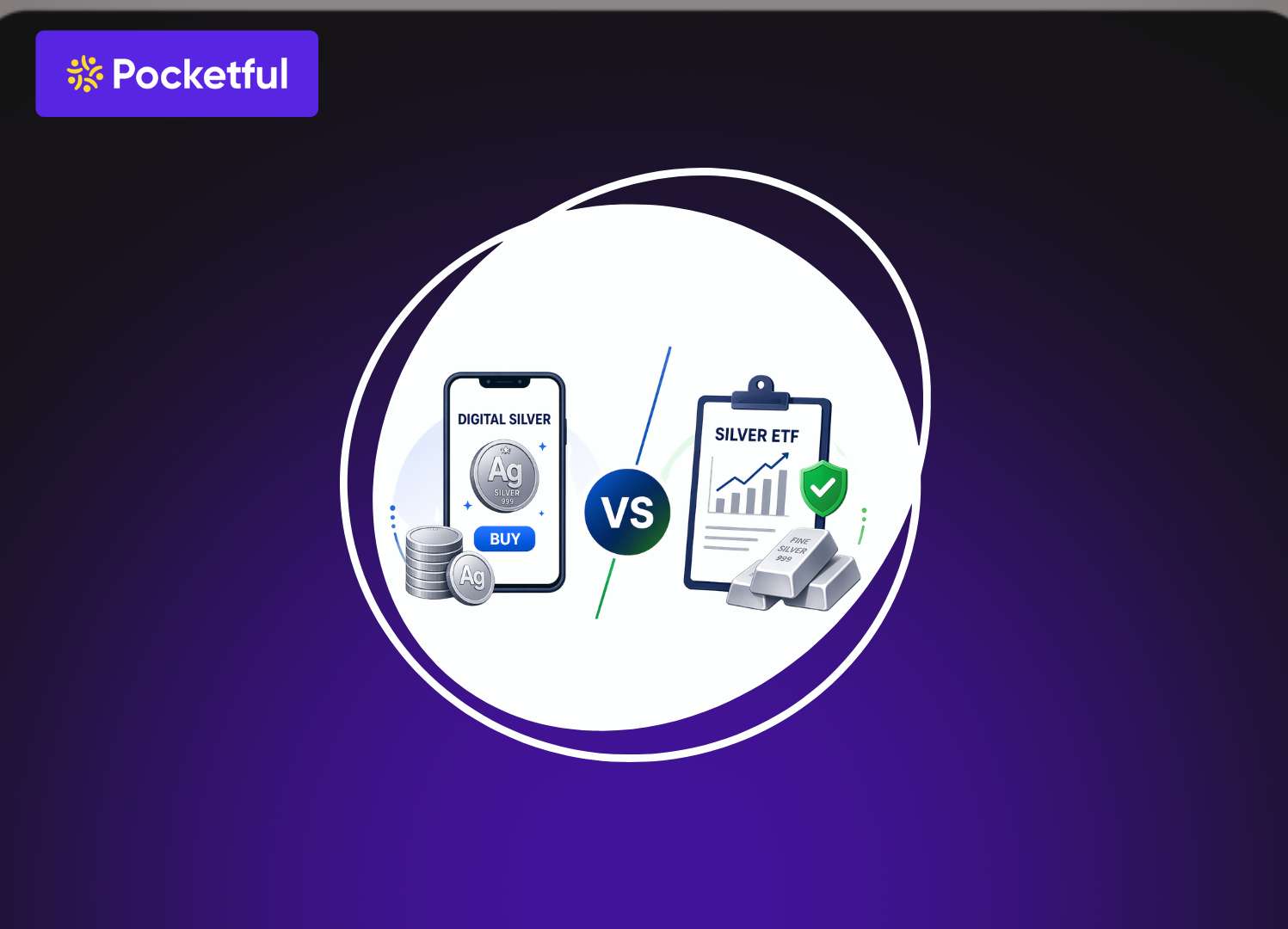
You do not need to buy heavy silver bars and hide them at home anymore. Today, you have two modern choices. You can buy Digital Silver through apps or invest in a Silver ETF through the stock market. In this guide, we will look at the digital silver vs silver ETF comparison to help you choose the best one for your savings.
What is Digital Silver?
Digital silver is a very simple way to own 99.9 percent pure silver. It works just like a digital wallet. When you buy it, you do not get the metal in your hand. Instead, a trusted company buys real silver and keeps it for you in a very safe vault.
You can start with very little money. Most apps allow you to buy silver for just 1 rupee or 10 rupees. It is perfect for people who want to save small amounts regularly. Since the silver is stored in professional vaults, you do not have to worry about theft or lockers.
How Digital Silver Works
For investing in silver you have to open an app and enter the amount you want to spend. The app shows you how much silver you get based on live market prices. Once you pay, that silver is added to your account. This silver is 100 percent backed by real physical metal stored in insured vaults.
Where you can buy Digital Silver
Investors looking to buy digital silver can easily buy it from digital silver apps like Paytm, PhonePe and Google Pay. These platforms have a direct tie up with big companies like SafeGold or MMTC-PAMP. You can also buy directly from platforms like Augmont or InCred Money.
Storage and security mechanism
Your silver is kept in bank-grade vaults giving you a high safety and these vaults are managed by experts. These vaults are fully insured. Most providers also have an independent trustee to watch over your investment. This means your metal is safe even if the app faces any issues.
Key features of Digital Silver
- Low Entry: Easy entry with investment as low as Rs.1.
- High Purity: You get 99.9% of pure silver against your money.
- 24/7 Trading: You can buy or sell any time of the day or night.
- Physical Delivery: You can ask for real coins or bars to be delivered to your home.
What is a Silver ETF?
A Silver ETF is an Exchange Traded Fund which acts like a mutual fund that only invests in physical silver. These funds are listed on the stock exchange like the NSE or BSE. When you buy a Silver ETF unit, you are owning a small part of a large pool of silver held by a fund house.
How Silver ETFs Work in the Stock Market
Silver ETFs track the live price of silver in India. From April 1, 2026, SEBI has made a new rule. Now, all ETFs must use Indian market prices instead of international rates. This makes the pricing more accurate for the investors. You can buy and sell these units through your Demat account during market hours.
Popular Silver ETFs in India
There are many good options in the market today. Nippon India Silver ETF is one of the largest and easiest to trade. ICICI Prudential Silver ETF is known for having a low fee. Other popular ones include HDFC, SBI, and Kotak Silver ETFs.
Key Features of Silver ETFs
- Regulated: High security as these are strictly monitored by SEBI.
- No GST: You do not have to pay 3% GST when you buy units.
- Liquid: You can sell them instantly on the stock market during trading hours.
- Safe Purity: SEBI ensures the silver held by the fund is 99.9 percent pure.
Read Also: Silver ETF vs Physical Silver: Which Is Better?
Key Differences Between Digital Silver & Silver ETF
1. Ownership (Physical vs Paper Silver)
With digital silver, you have a direct claim on the metal. You can even choose to get it delivered as physical coins. A Silver ETF is more like “paper” silver. You own units in a fund. You cannot easily get physical silver delivered unless you are a very large investor holding 30 kg or more.
2. Liquidity and Ease of Selling
Digital silver is better for emergencies because it works 24/7. You can sell it on a Sunday night if you need cash. Silver ETFs can only be sold when the stock market is open (9:15 AM to 3:30 PM on weekdays).
3. Pricing and Transparency
In digital silver, each app has its own “spread.” This means the price to buy is higher than the price to sell. Silver ETFs are more transparent with the investors. In this the price is determined by the whole market on the stock exchange.
4. Storage and Associated Costs
For digital silver, you must pay a 3% GST every time you buy. This is a cost you never get back. Silver ETFs do not have GST. Instead, they charge a small yearly fee called an Expense Ratio, which is usually around 0.40 to 0.60 percent.
5. Regulation and Safety
Silver ETFs are very safe because SEBI monitors them closely. Digital silver is offered by private companies. While companies like MMTC-PAMP are very trusted, they do not have a dedicated regulator like SEBI watching them every day.
6. Minimum Investment Requirement
Digital silver can turn out to be profitable for small investors. You can start with 1 rupee. For a Silver ETF, you must buy at least one unit. One unit can cost anywhere between 70 to 250 rupees depending on the fund.
7. Taxation Differences
The tax rules changed recently in 2024 and 2025. Both are taxed at 12.5 percent for long term gains. However, Silver ETFs become “long term” after 36 months. Digital silver takes 24 months to become long term. This makes ETFs more tax efficient if you want to sell after a year.
Advantages Digital Silver
- You can buy with very small amounts like 10 rupees.
- It is available 24/7 on your favorite payment apps.
- You can get physical delivery of silver coins at home.
Disadvantages of Digital Silver
- You pay 3% GST upfront, which reduces your profit.
- The buy-sell price gap can be high.
- Storage is often free for only 5 years.
Advantages of Silver ETF
- There is no 3 percent GST when you buy.
- They are highly regulated and safe under SEBI rules.
- Better tax benefits after holding for just one year.
Disadvantages of Silver ETF
- You must have a Demat and trading account.
- You can only trade during stock market hours.
- You cannot get physical delivery of coins for small amounts.
Read Also: Is Silver a Good Investment in 2026?
Cost Comparison: Digital Silver vs Silver ETF
We need to look at the “hidden” costs to see which one is cheaper.
Hidden Charges to Watch Out For
In digital silver, the spread is the main hidden cost. If an app sells silver at 100 rupees and buys it back at 95 rupees, you lose 5 percent instantly. In Silver ETFs, the hidden cost is the “tracking error.” This is when the ETF price does not move exactly like the real silver price. You also pay small brokerage fees to your stockbroker.
Expense Ratios vs Storage Fees
Silver ETFs charge a small fee every year (about 0.5 percent). Digital silver usually has no storage fee for the first 5 years. But remember, you pay 3 % GST on digital silver at the start. If you plan to hold silver for a long time, the ETF is usually cheaper because the small yearly fee adds up to less than the 3% GST you pay on day one.
Which is Better for Different Investors?
If you are new to investing and do not have a Demat account, digital silver is great. It helps you to build a good habit of savingIt is easy to use and helps you build a saving habit with small amounts. But if you want to keep your silver for more than a year, Silver ETFs are better. You save on GST and get better tax rates after 12 months.
If you want to buy and sell often to make a profit, Silver ETFs are the best choice. The gap between buying and selling prices is much smaller on the stock exchange. If you only have 50 or 100 rupees to save every month, digital silver is the only way to go. It allows you to buy tiny fractions of silver easily.
Read Also: Difference Between Gold ETF and Silver ETF
Conclusion
In 2025, we saw a massive “silver squeeze” where physical silver was hard to find in India. This pushed prices to record highs. Whether you choose digital silver or an ETF, you are choosing a metal that is now very important for the future of solar energy and electric vehicles.
For more market news and insights, download Pocketful – Zero brokerage on delivery trades, simple access to Silver ETFs, and a smooth platform experience for beginners as well as seasoned investors.
Frequently Asked Questions (FAQs)
Is digital silver the same as a Silver ETF?
No. Digital silver is direct ownership of metal stored in a vault for you. A Silver ETF is a fund that you trade on the stock market like a stock.
Can I buy digital silver without a Demat account?
Yes. You can buy digital silver on apps like PhonePe or Paytm using just your bank account or UPI.
Which one has better tax benefits?
Silver ETFs are better for tax. They become long-term after 12 months, while digital silver takes 24 months.
Can I get my silver delivered from an ETF?
You can only get physical delivery from an ETF if you own a very large amount, like 30 kg. Digital silver apps allow delivery for small amounts.
How long is storage free for digital silver?
Most platforms offer free storage for up to 5 years. After that, you may have to pay a small fee or take delivery of your silver.