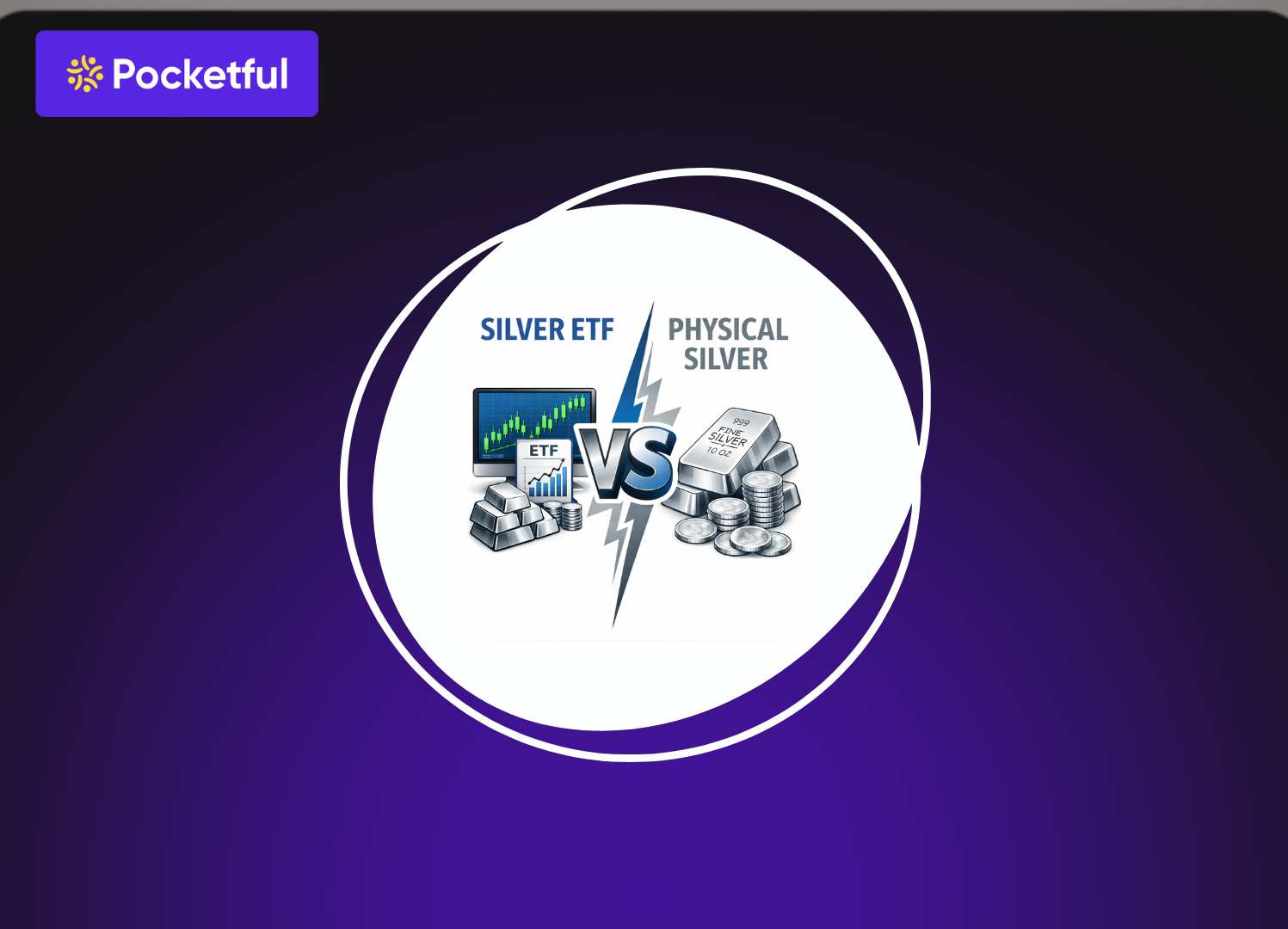
In India, silver is considered very sacred. We call it Chaandi and use it for everything from small coins to heavy jewelry. For a long time, buying silver meant going to a shop and bringing a heavy bar or ornaments to home. Today, you can buy silver on your phone in just a few clicks. This has started a new debate, Silver ETF vs Physical silver. In early 2026, silver prices reached record highs near Rs.2,40,000 per kilogram . This jump has made many young Indians and students want to start saving in silver.
What is a Silver ETF?
ETF stands for Exchange Traded Fund. Think of a Silver ETF like a digital bucket. This bucket holds real, high-quality silver for you. When you buy one unit of an ETF, you are not getting a coin delivered to your house. Instead, you get a digital record in your Demat account. The real silver is kept in very safe, professional vaults .
What is Physical Silver?
Physical silver means silver coins, bars, and ornaments. Once you pay for it, the silver is yours to keep. You take it home and find a safe place for it.
Most Indians like physical silver because it feels like “real” wealth. Mostly it is used in festivals like Diwali or as a wedding gift. But you are responsible for its safety. If you lose it or it gets stolen, there is no digital backup to help you.
Silver ETF vs Physical Silver
- Silver ETFs are like digital gold, one can buy them on the stock market. They are very easy to sell and you don’t have to worry about theft or keeping them safe at home. However, it is intangible you don’t actually hold the metal, and there are small yearly fees.
- Physical Silver means owning real coins or bars. people feel safer because it is in your hands. But, you must find a safe place to hide it, and it can be harder to sell quickly for a fair price. Some of the differences are tabulated below
| Feature | Silver ETF | Physical Silver |
|---|---|---|
| Form | Digital units | Real coins/bars |
| Purity | Always 99.9% pure | You must check |
| Safety | Very high (in vaults) | Risk of theft at home |
| Buying Cost | No GST or making fees | 3% GST + making fees |
| Selling | Instant on your app | Need to visit a shop |
Read Also: Gold BeES vs Silver BeES: Which is the Better Investment?
Advantage and Disadvantage of Silver ETF
Advantages
- Very Cheap to Buy: You do not pay any GST or making charges. On a ₹1 lakh investment, you save almost ₹8,000 compared to physical silver .
- Always Pure: Every unit is backed by 99.9% pure silver. You never have to worry about getting “fake” silver.
- Sell Instantly: If you need money urgently, you can sell your units on your app. The money comes to your bank account very quickly.
- No Storage Stress: You do not need a bank locker. The fund house takes care of keeping the silver safe for you .
Disadvantages
- No Physical Touch: You cannot wear it or use it for puja. It is just a number on your screen .
- Demat Needed: You must have a Demat and trading account. Platforms like Pocketful make this easy, but you still need to finish your KYC.
- Small Fees: The fund house charges a small yearly fee called an “expense ratio.” This is usually around 0.4% to 0.6% .
- Market Hours: You can only sell when the stock market is open. You cannot sell on a Sunday or late at night .
Advantage and Disadvantage of Physical silver
Advantages
- Tangible Wealth: There is a special feeling in holding a heavy silver bar. It gives you peace of mind that your wealth is right there with you .
- Cultural Use: You can gift a silver coin to a friend or relative. You can also turn your silver into beautiful jewelry.
- Direct buy from shop: You can buy silver coins, ornaments and bars from any jewelry shop, No apps or KYC required in physical procuremnet.
- No Middleman: The silver is in your custody, not on a computer server therefore you are not depending on any digital platform or company.
Disadvantages
- High Hidden Costs: You pay 3% GST when you buy. You also pay “making charges” to the jeweler, which can be 5% to 15%.
- Theft Risk: Keeping silver at home is risky. If you use a bank locker, you have to pay a yearly rent of ₹1,000 to ₹5,000 .
- Resale Trouble: When you sell, the jeweler will test the purity. You almost never get the full market price back.
- Storage Space: Silver is heavy. Storing 5kg or 10kg of silver takes up a lot of space compared to gold.
Read Also: Difference Between Gold ETF and Silver ETF
How Taxes Work
In India, selling silver attracts capital gain and the government charges a tax on the gain you made. The rules are a bit different for both.
- For Physical Silver: If you sold your physical silver after 2 years (24 months), you need to pay 12.5% of Long term capital gain (LTCG) tax on the gain If you sell before that, the profit is added to your income and taxed at your regular rate .
- For Silver ETF: If you sold your silver ETF after 1 year (12 months) you need to pay 12.5% tax. If you sell before 1 year, you pay tax as per your regular rate.
Making Investing Easy with Pocketful
If you want to start with digital silver, Pocketful is a great place to begin. It is a modern app that keeps everything simple.
- Zero AMC: You do not have to pay any yearly fees to keep your account open .
- Pockets: You can find “Pockets” which are ready-made groups of investments. This helps you save in silver along with other smart choices.
Simple Research: You can see how silver is performing and what expert investors are doing. The app is very easy to use, even for students.
Factors affecting silver growth
Silver is not just for jewelry anymore. It is used in many new technologies.
- Solar Panels: Silver is needed to make electricity from the sun.
- Electric Cars: Every new electric car uses more silver than a normal car.
- 5G Internet: The towers and phones for 5G use silver to work better.
- Medical Equipment: It is used in surgical tools, and water purification systems to prevent infection
Conclusion
So, which path should you choose? There is no single “best” answer, but here is a simple way to decide. If you are saving money to buy a house or pay for your future, the Silver ETF is usually better. It costs less to buy, is easier to sell, and has better tax rules. You don’t have to worry about thieves or purity. It is the smartest way to grow your money over time .
However, if you are buying silver for a festival, a wedding gift, or just because you like the feel of it, Physical Silver is the way to go. It has a cultural value that a digital unit can never have.
Many people do both. They keep most of their savings in a Silver ETF for profit. But they also keep a few coins at home for tradition. This way, you get the safety of the new world and the comfort of the old world. Always remember to invest only what you can afford to keep for a long time. Silver ETF investing made affordable with Pocketful – zero account opening, zero AMC, zero brokerage.
Frequently Asked Questions (FAQs)
What precisely is Silver ETF and how can it be utilised?
It is a digital way to own silver. You buy “units” of the fund on a stock market app like Pocketful. Each unit represents high-purity silver. To use it, simply open a Demat account, search for a Silver ETF, and buy it.
What are the biggest perks of going digital?
By this you can skip the making charges and the GST that is levied on physical silver. And you don’t need to worry about home security or paying for a bank locker.
Is physical silver better than digital silver?
It depends on your goal. Physical silver is better if you want something for a gift, a wedding, or a puja. It is also good for people who do not want to use apps. But for making a profit and saving money on fees, digital silver (ETF) is usually the better choice.
How much money do I need to start investing in silver?
With a Silver ETF, you can start with as little as Rs.100 or Rs.500 . This is much easier than buying physical bars or coins, which often require a few thousand rupees to start. This makes ETFs perfect for students and young savers.
Which one has less tax to pay?
Silver ETFs are slightly better for tax because they become “Long-Term” in just 12 months. Physical silver takes 24 months to reach that stage. Both are taxed at 12.5% for long-term profits, but the ETF gets you to that lower rate much faster .