While investing in mutual funds, many investors are drawn to the amount of return they receive, and how much risk is involved. However, it is also very important to understand the fund expenses. This is a small leakage from a bucket.
What is Total Expense Ratio (TER)?
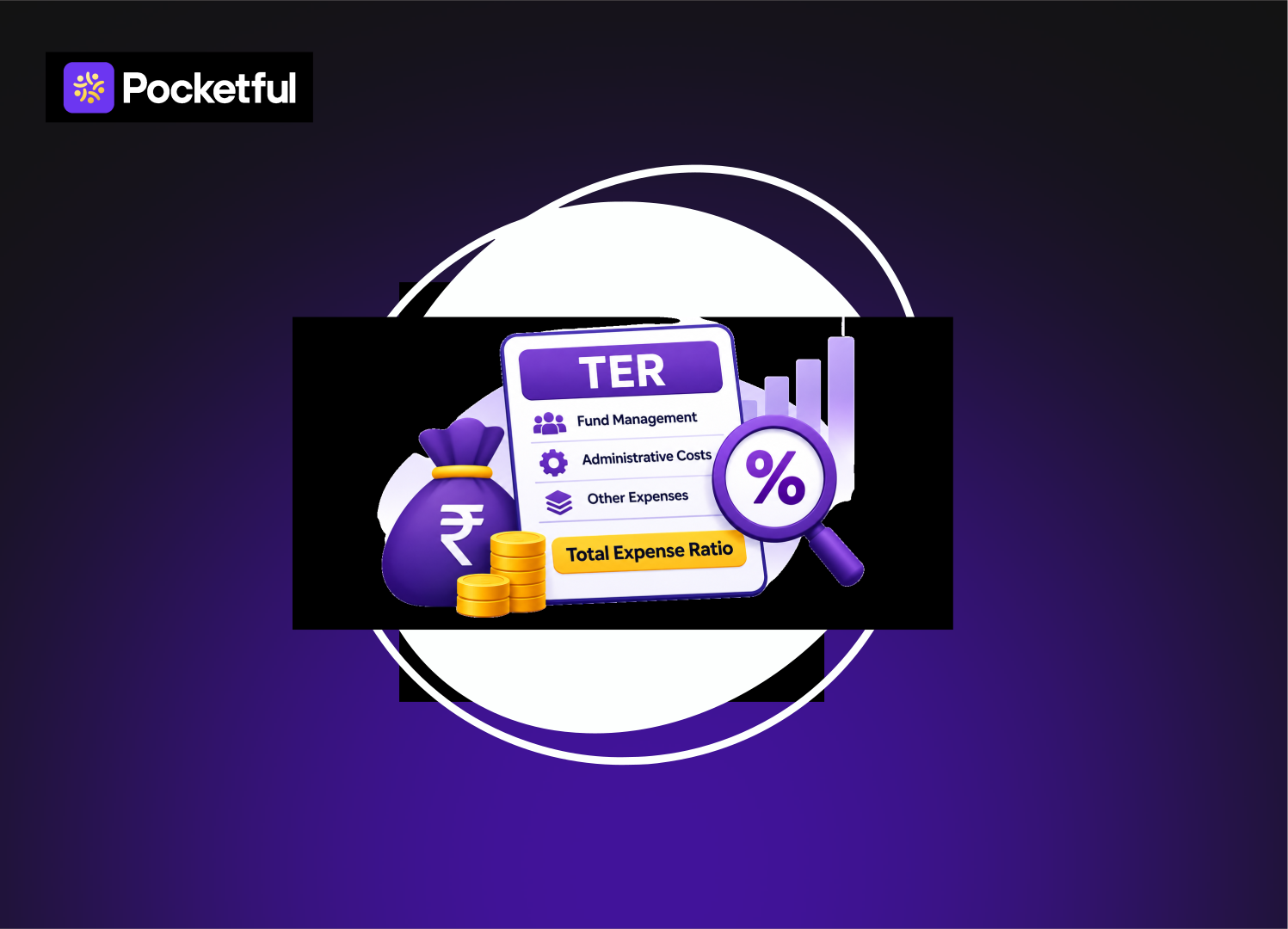
The Total Expense Ratio (TER) helps to understand all the costs involved in running a mutual fund scheme. This percentage is applied to the total value of the scheme and considers various expenses related to the fund including expenses, commissions, buying/selling costs, and any government taxes.
An example of a scheme with a 1% TER would be a small fee of 1 Rupee charged for every 100 Rupees the fund manages. You would not be charged any additional amount by your bank. The costs are paid by the fund scheme and therefore will be reflected in the Net Asset Value (NAV). You will see how much the fund earned; however, the expenses will have been subtracted.
What is TER in Mutual Funds?
TER stands for the total expense of running and managing a mutual fund scheme. The TER is a percentage of the schemes total assets and considers:
- Basic fund expenses
- Brokerage costs
- Buying/selling costs
- Government taxes
If a scheme has a 1% TER this means that for every 100 Rupees the fund manages, they are paying around a Rupee in costs. As discussed above, you will not be charged extra from your bank. The fund will pay the costs and they will be reflected in the scheme’s Net Asset Value (NAV). Therefore you will not see these expenses in the fund’s returns.
What are the costs included in TER?
Many costs are incurred when a mutual fund is managing its investments and scheme. Including:
- Investment Management & Advisory Fees – Cost of managing the portfolio.
- Operational Costs – Includes auditing fees, registration & administration costs.
- Distribution Costs – Costs of distributing the scheme.
- Brokerage & Transaction Costs – Cost of buying/selling shares.
- Statutory Costs – Taxes.
The components of TER are regulated by current SEBI regulations. Investors should refer to the scheme disclosure document for up to date information.
What is Base Total Expense Ratio (BER)?
The Base Expense Ratio (BER) considers the main costs incurred by managing a mutual fund scheme. This includes investment management and administration costs.
The BER is part of the TER. It does not take into account all costs incurred during trading of stocks and shares.
New expense regulations mean that from 1st April 2026, the TER will include the BER, relevant brokerage costs and transaction costs and any other statutory costs.
To summarise, the BER shows how much the fund costs to operate, whereas the TER provides a more detailed breakdown.
What Is the Difference Between TER and BER?
| Feature | Base Expense Ratio (BER) | Total Expense Ratio (TER) |
|---|---|---|
| Meaning | Core management and operating expenses | Overall expenses charged to the scheme |
| Includes | Base operating and management costs | BER plus applicable trading-related costs and statutory levies |
| Can it change? | May change when the fund revises its base expenses | May also vary with trading activity and applicable charges |
| Use | Helps compare the fund’s base cost | Helps understand the broader cost of investing |
How to Calculate TER?
The TER is calculated by dividing the schemes total annualised expenses with its average assets under management. The result is then multiplied by 100.
TER = (Total Annualised Expenses ÷ Average Assets under Management) x 100
For example,
If a mutual fund has an average of ₹1,000 crore in assets under management and total annualised costs of ₹10 crore.
TER = (₹10 crore ÷ ₹1,000 crore) x 100
TER 1% (Annual)
This means that the scheme has an annualised expense of around ₹1 for every ₹100 in assets. This is just an example of how to calculate TER and actual costs will depend on the scheme expenses and disclosure.
Read Also: What is Trail Commission in Mutual Funds?
How does TER Affect Mutual Fund Returns?
Having a high expense rate can impact your potential return. Even a small difference may have a large impact.
If you had two funds, both with similar portfolios and returns before expenses, however one has a lower TER, you are likely to receive a greater proportion of the profits. This will depend on all other factors remaining the same.
However, having a low TER does not necessarily mean you will receive a higher return. This will depend on market performance, fund manager strategy, risk and many other factors.
What is a good TER in Mutual Funds?
There is no set ‘good’ TER for all mutual funds. It will depend on the type of fund, what it invests in and what type of plan you have.
- Index funds & ETFs – You can compare different funds. If they are tracking the same index, you can compare how they perform. However you should also take into account other costs.
- Actively Managed Equity Funds – These will often have a higher expense due to the research fund managers do and the active stock picking. ComparingTER between funds of the same class can be useful.
- Debt Funds – Costs will vary depending on the scheme and strategy. Try compare within the same category.
- Fund of Funds (FoFs) – These are funds that invest in other funds. You should take a close look at the TER and TER of the underlying funds.
Having a low TER could be useful when comparing funds that aim to do the same thing. However it does not guarantee the best result.
Direct Plan vs Regular Plan – Difference in TER
Mutual funds will often have a couple of options to invest in. Whether you invest in the direct or regular plan, you will be investing in the same portfolio however the costs will differ.
- Direct Plan – This is investing directly with the fund house and will not incur any middlemen. You are likely to have a better deal with a lower expense ratio.
- Regular Plan – This is investing through a distributor. This often means you will pay a little more as a commission will be paid to the distributor.
Ultimately it will depend on your level of investment knowledge. However ensure you are comparing like for like.
How to Find a Mutual Fund’s TER
You can often find the information you need on:
- Fund House Website – You can find all the usual information including factsheet and expense ratio.
- AMFI TER Disclosure Page – This is a useful tool to gain more detailed information on the expense.
- Investment Platform – Ensure you are viewing the correct information. Is it showing TER?
Ensure you are using up to date information.
How to Invest in Mutual Funds via Pocketful
Use Pocketful to look at the mutual funds and invest. The steps below may vary depending on the version of the app and options available.
- Open Pocketful – Login or register.
- Verify – Complete any verification processes including KYC and account verification.
- Look at Mutual Funds – Search or browse for a scheme that fits your goals and risk profile.
- Check – Ensure you are happy with the scheme category, investment objective, risk profile, plan type and expense. Ensure it is showing BER or TER.
- Invest – Choose whether you want to invest a lump sum or SIP (if available).
- Enter Amount – Double check the amount.
- Submit – Confirm your investment.
Before investing in mutual fund read through the scheme documents. Ensure it fits your financial goals, time frame and risk profile.
Read Also: What is Expense Ratio in Mutual Funds?
Conclusion
The Total Expense Ratio (TER) is an important factor in any investor’s portfolio who uses mutual funds. It shows how much money is taken as fees by the mutual fund. These fees include management and running costs. This will have a direct impact on how much you gain from your investment.
It is important that you are aware of the Total Expense Ratio. This is because the BER is part of these fees and the TER is the total. A good TER would be lower within funds especially if they have a high performance. This will mean you gain more.
Looking at other aspects of the fund is advisable. You should ensure that the fund is in line with your investments and that it has the right objective, risk profile and performance. Having a fund with a TER could be a profitable option as they have a good performance.
| S.NO. | Check Out These Interesting Posts You Might Enjoy! |
|---|---|
| 1 | Best Thematic Mutual Funds in India |
| 2 | Types of Mutual Funds in India |
| 3 | Best Long-Term Mutual Funds to Invest in India |
| 4 | Best SIP Mutual Funds in India |
| 5 | Debt Mutual Funds: Meaning, Types and Features |
Frequently Asked Questions (FAQs)
Is a lower TER better?
This depends. If you are looking at similar funds then having a lower TER can be a good option. However you should look at the strategy, risk profile and if it suits you.
Is the cost taken out of your bank account?
No. Usually there will not be any additional costs taken out of your bank account. The costs will be deducted from the scheme and this will be shown through the NAV.
Can the TER change?
Yes. If the underlying costs are updated within the fund or if there are any trading or statutory costs then the expense ratio can change.
Can you compare TER between mutual funds?
It can be more useful to compare TER between funds with similar objectives and strategies. Different categories may have different requirements.