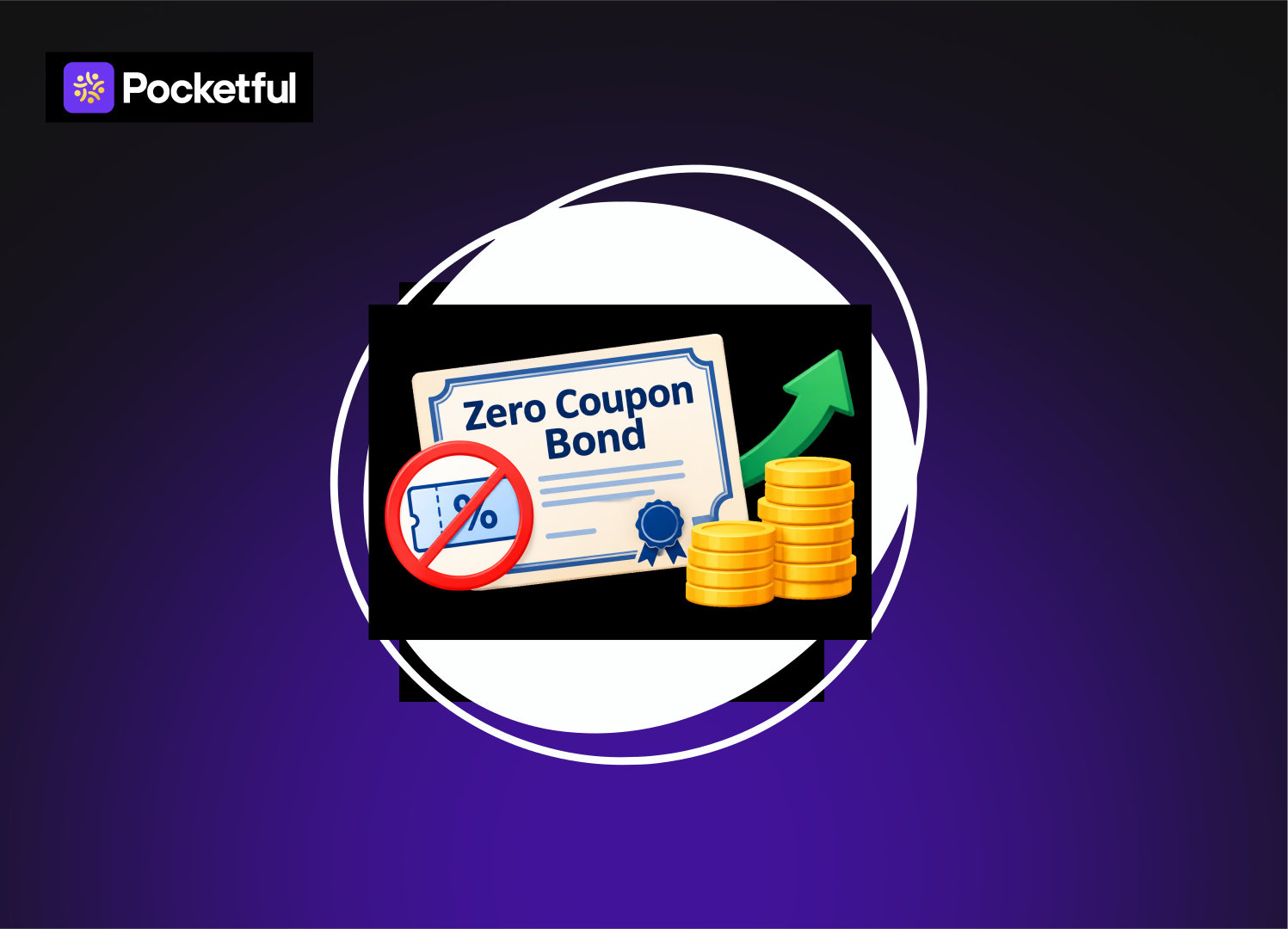
A zero coupon bond is a debt instrument that is issued at a discount. Investors will receive the nominal value of the bond back at maturity. The profits will be the difference between the purchase price and the maturity value.
For example, you may purchase a bond with a value of ₹10,000 for ₹7,000. When the bond reaches maturity, you will receive ₹10,000, giving you a pre-tax profit of ₹3,000. But there is more to what is zero coupon bond. So, read this guide for details.
What Is a Zero Coupon Bond?
A zero coupon bond is a type of bond that allows investors to make profits without receiving any periodic interest. They are also known as discount bonds or deep discount bonds.
With normal bonds, the bond issuer will pay interest to the investor in return.
This can be done on a monthly, quarterly, half-yearly, or annual basis.
With zero coupon bonds, however, the investor will pay less to purchase the bond and receive the nominal value of the bond when it reaches maturity.
When looking for zero coupon bond meaning, it can be broken down into 3 key terms:
- Face Value: The amount the issuer will pay back at maturity.
- Issue Price: The discounted amount the investor will pay to purchase the bond.
- Maturity Period: How long until the investor receives the nominal value.
Zero coupon bonds can be issued by the government and other eligible institutions. Depending on who issues the bond, it can pose a risk.
How Does a Zero Coupon Bond Work?
Zero coupon bonds are very simple. You invest an amount of money, and when the bond reaches maturity, you receive a larger amount. As long as the issuer performs as expected. This is how it works:
1. Discounted Issue
The bond will be issued for less than the nominal value. For example, the bond may have a nominal value of ₹20,000 but can be purchased for ₹15,000. You pay ₹15,000 for the bond. This means you will gain a profit of ₹5,000.
2. No Periodic Interest
There are no coupon payments for these bonds. You will not receive any interest monthly or annually. The money stays invested till the end. But you can sell it even before the maturity.
3. Maturity
The issuer pays nominal value at maturity. This means in our example you will receive ₹20,000 instead of the original ₹15,000 you paid. You will have made a total profit of ₹5,000. This is your profit overall and not an annual return.
How to Calculate the Price of a Zero Coupon Bond
The price of a zero-coupon bond will depend on multiple factors. These include the following:
- Nominal value
- Maturity
- Expected return
The formula used is:
P = FV / (1+r)^n
Where:
- P = The current price of the bond.
- FV = The nominal value received at maturity.
- r = The required rate of return annually.
- n = The number of years until maturity.
Example of a Zero Coupon Bond Calculation
Say you wanted to invest in a bond with the following information:
| Particulars | Value |
|---|---|
| Nominal Value | ₹10,000 |
| Maturity | 5 Years |
| Required Return | 8% Annually |
| Interest Payments | No Interest Payments |
Using the above formula:
P = FV / (1+r)^n = 10000 / (1+0.08)^5 = ₹6,806 (Approx)
This means you would pay approximately ₹6,806 today. After 5 years you will receive ₹10,000.
Your total profit will be around ₹3,194. Assuming the issuer pays you back the full amount.
This calculation shows how the maturity can affect the price. If you want a certain return, the longer the maturity the less you will pay currently.
Read Also: How to Buy and Sell Bonds in India?
Types of Zero Coupon Bonds
Zero coupon bonds can be categorised by who issues them. There are two main types:
1. Government Zero Coupon Bonds
Government bonds will not pay periodical interest. They are seen as less risky in terms of credit risk than corporate bonds issued in the same currency. However, they can still fluctuate in the market. Before investing ensure you check the maturity date, yield and availability.
2. Corporate Zero Coupon Bonds
Corporate zero coupon bonds are issued by companies to raise money for their business. The company will receive the money from the investors and agree to pay back the nominated amount. However, this depends on the financial strength of the issuer. They may have a higher yield but will also have higher credit risk.
Zero Coupon Bonds vs Normal Bonds
Zero coupon bonds and normal bonds are both debt instruments but differ in how profits are made.
| Particulars | Zero Coupon Bonds | Normal Bonds |
|---|---|---|
| Periodical Interest | No | Yes |
| Price | Generally issued at a discount | Can be issued at par/discount/premium |
| Profit | Difference in price | Coupon payments & price gains |
| Cashflow | Mainly at maturity | During investment |
| Reinvestment | No coupons to reinvest | Coupon payments may need to be reinvested |
| Interest Rate Sensitivity | Generally higher | Generally lower |
| Ideal For | Investors looking for maturity amount | Investors who need periodic income |
Advantages of Zero Coupon Bonds
The main advantages of zero coupon bonds come from the fact that they are discounted and there is no periodic interest. The other are:
- Lower Investment: You will pay less as you are paying less than the nominal value.
- Known Maturity Amount: You know how much you will be paid back, as it is set ahead of time. As long as the issuer performs.
- No Reinvestment of Coupons: No periodic interest to reinvest.
- Long-Term Planning: Investors can select a maturity date that suits them for expenses such as education or other future needs.
- Diversify Your Portfolio: These bonds can be used as another form of fixed income.
One advantage of these bonds is you do not have to worry about managing the interest. However, there is still some risk involved depending on the financial situation of the issuer.
Disadvantages of Zero Coupon Bonds
There are several disadvantages to investing in zero coupon bonds.
- No Periodic Income: There will be no periodic interest. This may not be ideal for investors relying on their investments for monthly costs.
- Interest Rate Risk: Generally bonds will decrease in price if interest rates in the market increase. This can be especially true with longer maturity zero coupon bonds.
- Credit Risk: The issuer may experience financial difficulties and be unable to repay you the full amount.
- Liquidity Risk: Some bonds may not have many buyers in the secondary market, making it difficult to sell early.
- Inflation Risk: The maturity amount is fixed but may lose value.
- Risk of Loss/Gain if Sold Early: You may make a profit or loss if you sell early.
Taxation of Zero Coupon Bonds in India
Depending on the type of bond and if it falls under the correct income tax criteria. Certain bonds issued by specific entities can be recognised as zero coupon bonds under section 2(48) of the Income-tax Act, 1961. This will be notified by the Central Government.
There are specific criteria for these bonds. If the bond is a notified bond, capital gains tax may be applied to the profit. Other discount bonds/zero coupon debentures will vary depending on the structure.
Before investing, ensure:
- The bond is notified by the government.
- Whether the profit will be taxed as interest or capital gains.
- If the bond was sold early.
- What the holding period is and what the tax criteria is.
It is best to check what the tax criteria are for your specific security.
What to Look Out for When Investing in Zero Coupon Bonds
When choosing a zero coupon bond, there are a few things you should look out for. These are as follows:
- Creditworthiness: Ensure you know who has issued the bond and if they can pay you back the maturity amount. If it is a corporate bond, ensure you look at their credit rating, debt, and financial statements. If they are offering a higher yield, this may indicate higher risk.
- Maturity: Ensure you pick a bond with a maturity that matches when you need the money. If your financial goal is in 5 years but you purchase a bond with a much longer maturity, this could cause issues.
- Yield To Maturity: This shows how much you will earn at the time of maturity. A higher yield to maturity is a better prospect for investing. So, check all the details while you decide to invest.
- Liquidity: It is important to check if the bonds are traded in the market. If there are buyers, there will be a good level of liquidity. This is important when you plan to sell it early..
- Tax: Understand how the value will be taxed. Even when two bonds have similar returns, the taxation can be different. So, keep a check on all the points for better analysis.
Reac Also: Junk Bonds: Meaning, Types, Risks & Ratings in India
Conclusion
A zero coupon bond allows investors to purchase a bond at a discount. Then it receives the nominal value when it reaches maturity. While you may not gte any interest, yet the value added to the portfolio is great. But you must know all the details like risk and tax when applying. This is where Pocketful can help you research and invest better. So, build a portfolio that stays strong.
| S.NO. | Check Out These Interesting Posts You Might Enjoy! |
|---|---|
| 1 | What are War Bonds? |
| 2 | What is Sovereign Gold Bonds? |
| 3 | What is Coupon Bond? |
| 4 | What is Insurance Bond? |
| 5 | What are Social Bonds? |
Frequently Asked Questions (FAQs)
What Is a Zero Coupon Bond?
A zero coupon bond is a debt instrument that is issued at a discount. There is no interest. The investor will receive the nominal value at maturity.
Are Zero Coupon Bonds Risk Free?
No. They can have credit risk, interest rate risk, liquidity risk and inflation risk depending on who issues them and their maturity.
What is the Difference Between Zero Coupon Bonds and Debentures?
Zero coupon debentures are debt instruments that have no periodical interest. Debentures can have coupon payments.
Can Zero Coupon Bonds be Sold Early?
Yes, if they are traded in the secondary market. However, you may receive more or less than you originally paid.
Are Zero Coupon Bonds Good for Long-term Investment?
They may be a good option for long-term goals if the maturity matches your needs. However, you should also take into account the risk of the issuer, yield, and inflation.