Have you ever come across headlines saying “ RBI Cuts Repo Rate” and “ RBI Increases Repo Rate”? You must be thinking how a small change in interest rate can impact your monthly budget and investment portfolio.
In today’s blog post, we will give you a detailed overview of what the repo rate is, its meaning and how it works.
What is Repo Rate?
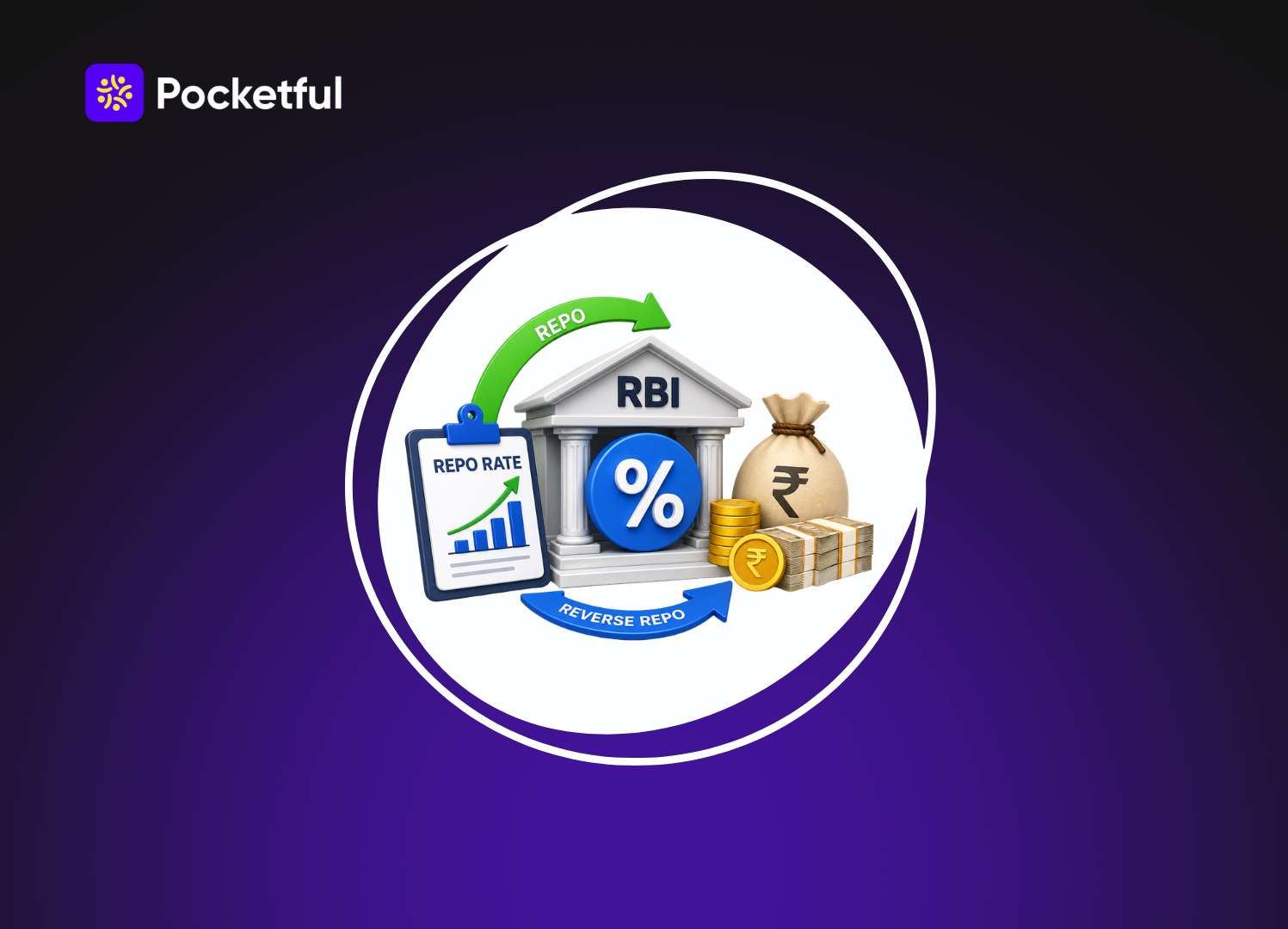
Repo rate is an interest rate that is decided by the Central Bank of a country. In India, it is decided by the Reserve Bank of India. It is a rate at which the RBI lends money to any commercial banks for their short-term needs against government securities. To simplify it, we can say that when a bank needs money, they go to the RBI and borrows from it, and the rate which they pay to the RBI is known as the Repo Rate.
Why is it called “Repo”?
The term comes from “Repurchase Agreement” because banks borrow money; in return, they provide government securities as collateral, and banks repurchase those securities at a later stage at a predetermined price. The difference between the purchase and selling price is the interest paid by the bank.
Current Repo Rate
In India, as of June 2026 the Repo Rate stood at 5.25% that was decided by RBI and maintained a neutral policy stance.
How Does Repo Rate Work?
Let’s understand how Repo Rate works:
- Requirement of Short-term Funds: There are various commercial banks that need short-term funds to manage their day-to-day operations. For such funds, they approach the RBI.
- Government Securities: Banks have to provide government securities as collateral to the RBI to borrow funds.
- Receive Money: Once the securities are received, the RBI lends money to the bank and charges an interest rate on it; the interest is known as the Repo Rate.
- Repurchasing Securities: After the bank’s requirement is completed, it repurchases the security at a pre-determined price.
- Interest Cost: The difference between the sale price and repurchase price is the interest that the bank pays to the RBI.
Factors Affecting Repo Rate
The key factors that affect the repo rate are as follows:
- Inflation: The inflation in the economy is the key factor that affects the repo rate of the country. If the inflation in the economy rises, the RBI can increase the repo rate to keep it in control.
- GDP Growth: The key role of the RBI is to maintain the GDP growth rate in the economy. If the growth rate slows down, the RBI cuts the repo rate to accelerate the growth rate.
- Liquidity: The availability of funds in the banking system defines the liquidity in the economy. If banks face a liquidity shortage, the RBI changes policy to improve liquidity conditions.
- Global Economic Condition: The economy of every country is interrelated; hence, any global impact can directly impact India’s inflation, capital flow, and financial conditions. Then the RBI can change the repo rate to manage economic conditions.
Why the RBI Changes Repo Rate
The key reasons why the RBI changes repo rates are as follows:
- Control Inflation: The key reason why the RBI changes the repo rate is to control inflation. When the prices of goods and services rise in the economy, the RBI intervenes and increases the Repo Rate to control inflation.
- Economic Growth: When economic growth slows down, the RBI reduces the Repo Rate, which encourages borrowing at lower cost, which encourages individuals to spend more, which boosts economic growth.
- Financial Stability: The key role of the RBI is to maintain financial stability in the system. At times of financial crises, economic uncertainty, market volatility, etc. RBI changes the repo rate to provide stability in the economy.
- Stability in Currency: The RBI regularly keeps an eye on the movement of Indian currency. A significant fall in currency can impact import costs. In this situation, the RBI may increase repo rates to attract investors.
Read Also: Bank Rate vs Repo Rate: Key Differences
Impact of Repo Rate on the Economy
The key impact of repo rate changes on the economy is as follows:
- Inflation Check: The key role of the repo rate is to keep a check on inflation. In case of rising inflation, the RBI increases the repo rate and vice-versa.
- Loan Interest Rate: Any change in the repo rate can directly impact the EMI of your loan. When the repo rate increases, the banks increase interest rates on home loans, personal loans, car loans, etc.
- Consumer Spending: When the interest rate in the economy increases, the disposable income decreases in the hands of consumers. This eventually decreases consumer spending.
Impact of Repo Rate on Individuals
Let’s see how a change in the repo rate can impact an individual:
- Home Loan EMI: A slight change in the repo rate can drastically change your EMI for individuals with floating interest rates.
- Change in FD Rate: A higher repo rate may encourage banks to offer higher interest rates on fixed deposits, and a lower repo rate may result in lower FD rates.
- Monthly Budget: Changes in interest rates can significantly impact the monthly budget of an individual. Due to higher interest rates, a significant portion of monthly income will be utilised toward repayment of loans.
Read Also: Types of Interest Rates Explained
Impact of Repo Rate on Business
The key impact of repo rate changes on the business is as follows:
- Expansion Plan: Most businesses are dependent on bank loans to expand their business; a lower interest rate reduces financing cost.
- Profitability: When the interest rate increases, companies utilise a significant portion to repay their debts, which can impact their profitability.
- Job Creation: With the rise in interest rates, companies may be forced to delay their expansion plan and reduce hiring costs.
Why an Investor Should Track Repo Rate
The key reasons why an investor must track the repo rate are as follows:
- Performance of Stock Market: In case the RBI reduces the repo rate, borrowing becomes cheaper, which can encourage expansion of business, higher spending by individuals, etc. It can lead positively impact on the performance of the stock market.
- Debt Market: Changes in the repo rate can directly impact the performance of the debt market. When the interest rates in the economy decline, the existing bonds having higher coupon rates become more valuable for investors, increasing their prices.
- Economic Growth: The repo rate can decide the future growth prospects of the Indian economy. If the repo rates are increased by the RBI, that means it is taking steps to control inflation, which can slow down economic growth.
Conclusion
On a concluding note, the repo rate is a common financial term that sounds complicated but can directly impact your investment portfolio and monthly budget. An increase in the repo rate by the RBI can make your EMI more expensive, which can increase your monthly expenses; borrowing may also be more expensive, etc. Along with this, it can slow down economic growth. But on the other hand, if the rates are lowered by the RBI, it can accelerate economic growth. Therefore, one is required to regularly monitor the RBI monetary policies and review their portfolio regularly. Stay informed with the latest market updates, financial terms, and investing insights. Download the Pocketful app to make smarter investment decisions and enhance your trading journey.
Frequently Asked Questions (FAQs)
Which organisation decides the Repo Rate in India?
The repo rate of any country is decided by the central bank of the country. In India, the RBI, or Reserve Bank of India, decides the repo rate in their monetary policy.
How often RBI change the Repo Rate?
There is no fixed duration at which the RBI changes the repo rate. It generally reviews the monetary policy during its monetary policy review, that holds in every two months.
Why change in the RBI repo rate affect the stock market?
The key reason why changes in the repo rate affect the stock market is that when the RBI increases the repo rate, it increases the borrowing cost for businesses and individuals, which decreases their spending and reduces liquidity in the market, which can negatively impact the performance of the stock market and vice versa.
What is Repo Rate?
Repo rate is the rate at which the Reserve Bank of India lends money to commercial banks against government securities for their short-term needs.
What is the current Repo Rate in India?
The repo rate decided by the Reserve Bank of India as of June 2026 in India stood at 5.25%.