Category: Case Study

  • GMR Airports Infrastructure Case Study

    GMR Airports Infrastructure Case Study

    There is an organization that has airports, energy, transportation, and urban infrastructure all under one roof. We are talking about GMR Group, a company that has undertaken world-class projects both domestically and Internationally. 

    Let’s explore GMR Airports Infrastructure Limited’s rigorous and committed path while scrutinizing its finances, SWOT analysis, vision, and many other aspects.

    GMR Airports Overview

    GMR is an Indian multinational conglomerate headquartered in New Delhi. It comprises several companies, including GMR Infrastructure, GMR Energy, GMR Enterprises, and GMR Airports. The Group has implemented several infrastructure projects in India and is the only Indian airport developer to own and develop airports outside India. 

    GMR Airports History

    GMR Airports Infrastructure Ltd. was established in Andhra Pradesh on May 10, 1996, as Varalakshmi Vasavi Power Projects Limited. They later rebranded themselves as GMR Infrastructure Limited on July 24, 2000. 

    GMR Airports Infra develops, constructs, maintains, and manages highways and airports. The company entered the airport business in the early 2000s and is currently among the top five airport developers in the world. It oversees multiple airports, including Delhi International Airport, Hyderabad International Airport, and Manohar International Airport in Goa. 

    Airport Construction

    Business Model of GMR Airports

    GMR Airports Infrastructure operates on a focussed business model, which revolves heavily around the airline industry. The company generates 26% of its revenue from aeronautical services. This comprises airlines’ fees for landing, taking off, and using airport facilities. The majority of revenue, 57%, is generated from non-aeronautical services. These services include retail and concession leasing within airport terminals, parking fees, ground transportation services, and advertising. Additionally, 16% of the revenue comes from other operating income. 

    Read Also: Gillette India Case Study

    GMR Airports Financial Highlights

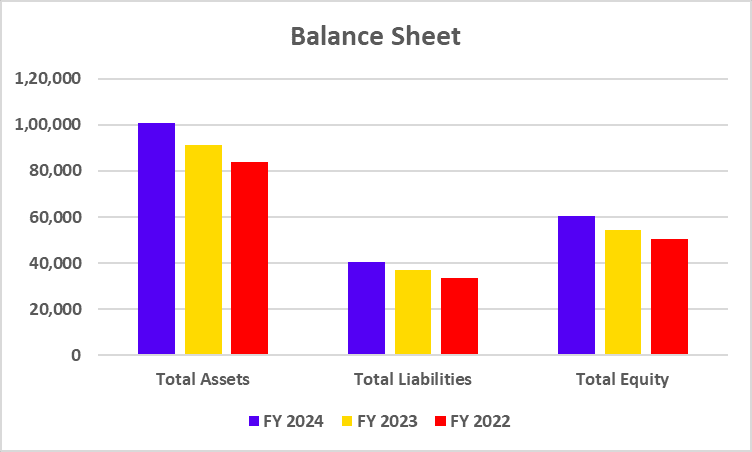
    Balance Sheet

    ParticularsMarch 31, 2024March 31, 2023
    Non-current assets40,642.2235,233.37
    Current assets8,041.848,878.06
    Non-current liabilities41,990.7934,063.85
    Current liabilities7,561.939,078.73
    (In INR crores)

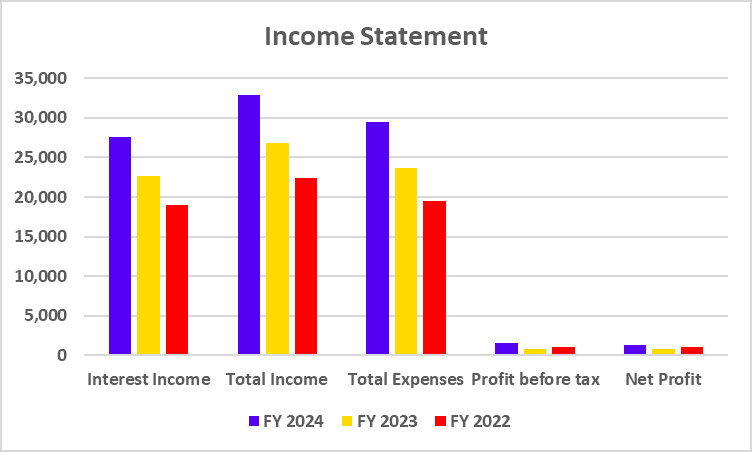
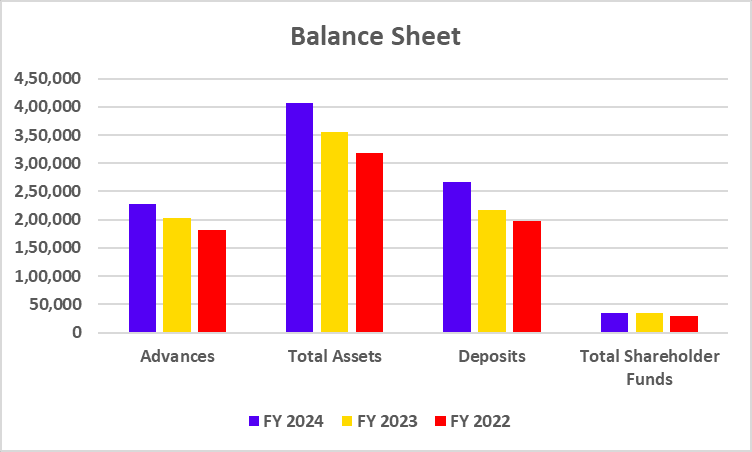
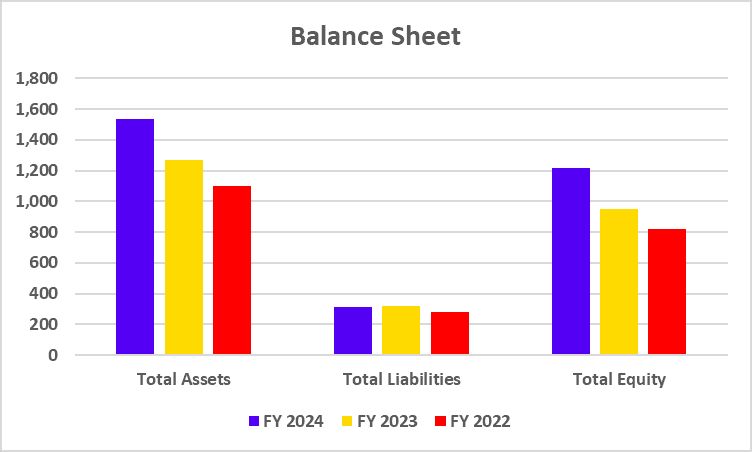
    The graph indicates a consistent growth in non-current liabilities and assets. This showcases a consistent financial position of the company.

    Income Statement 

    ParticularsMarch 31, 2024March 31, 2023
    Revenue from Operations8,7556,674
    Total Expenses5,7894,968
    Operating Profit2,9661,745
    Profit before tax-635-726

    The income statement reveals a growing revenue base that led to an increase in operating profit. However, the organization still faces a loss. This could indicate towards the company’s inability to pull through a profit. 

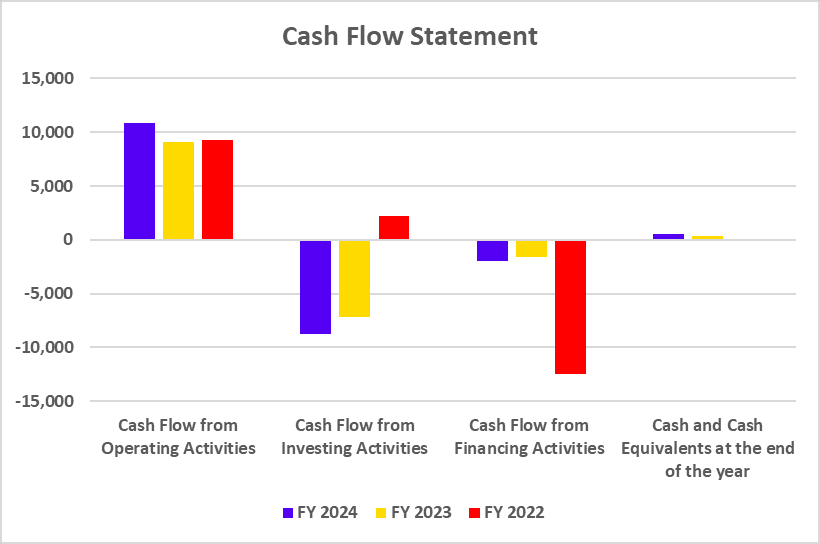
    Cash Flow Statement

    ParticularsMarch 31, 2024March 31, 2023
    Cash Flow from Operating Activities3,880.102,199.23
    Cash Flow from Investing Activities-5,788.40-2,322.35
    Cash Flow from Financing Activities466.541,731.25
    (In INR crores)

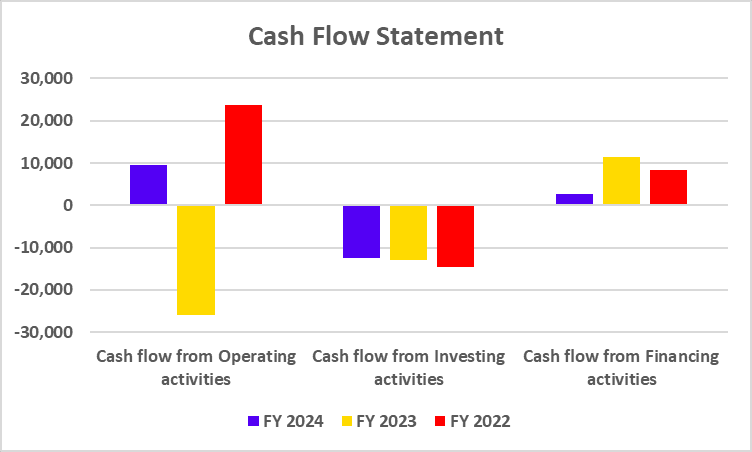
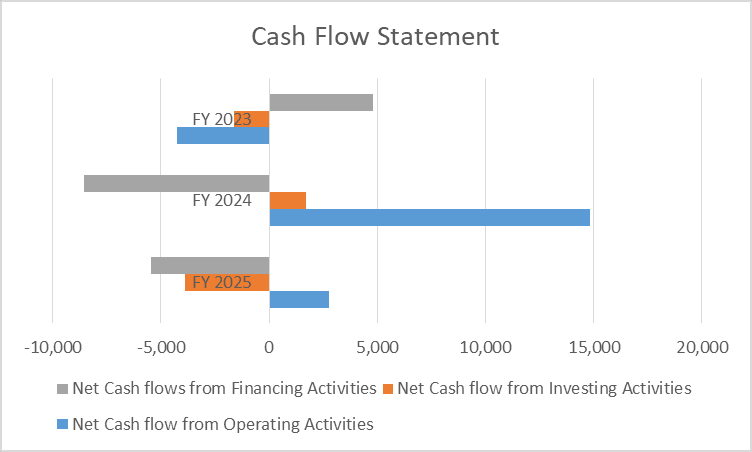
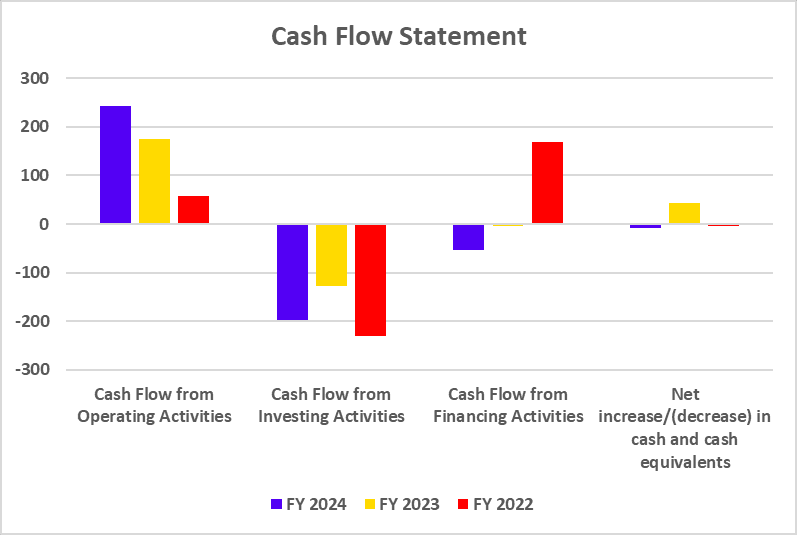
    The graph showcases a growing CFO, which indicates that the company operations are stable. A decrease in CFI is also visible, which shows the company’s heaving outflows in investments.

    GMR Airports SWOT Analysis

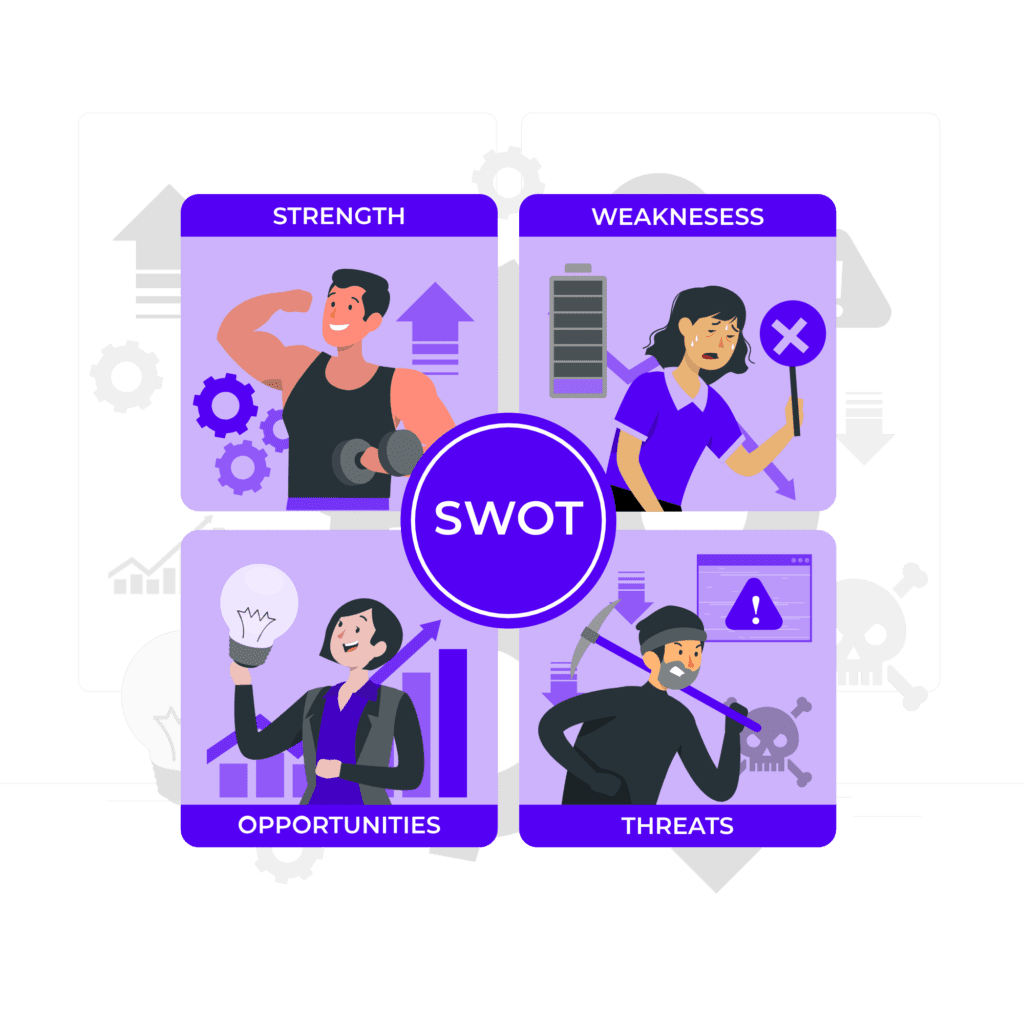
    SWOT of GMR Infra

    Strengths

    • GMR Airports Infrastructure Limited operates in diverse industries like energy, transportation, and urban infrastructure. This diversity offers chances for success in several industries while reducing the risks of reliance on a single one.
    • The company has achieved global recognition due its large-scale projects in India. This recognition has proved to bring in many projects across the globe. 
    • A solid balance sheet reflects the company’s ability to take on even more projects. 

    Weaknesses

    • As seen from the negative net income in the income statement, GMR Infra has been losing money lately. Potential difficulties in controlling costs and producing long-term profitability are highlighted by this trend. 
    • Its large non-current liabilities indicate heavy reliance on debt finance to fund its operations and expansion plans. High debt levels may impact creditworthiness and raise financial risk.
    Opportunities

    • With the need for infrastructure and aviation expanding, GMR Airports Infra Limited might investigate growth prospects in new markets.
    • By taking advantage of the global demand for modern airport facilities, GMR Airports can increase its chances of winning contracts for these projects and solidify its place as an industry leader.

    Threats

    • The airport infrastructure industry is highly competitive, with established players and new entrants. Intense competition can exert pressure on pricing, margins, and project acquisition.
    • Due to the recent rapid technological advancement, continuous investment in new technologies is necessary; however, this can be risky and financially taxing if not handled carefully.
    • Airport infrastructure companies, especially those with global operations, may face operational challenges due to recent geopolitical tensions, trade disputes, and regulatory changes about immigration and security measures. 

    Read Also: Waaree Energies Case Study

    Conclusion

    GMR Airports Infrastructure Limited is a prime example of a dynamic, multifunctional company that works in various industries, such as energy, transportation, urban infrastructure, and airports. Its unique business strategy and robust global presence establish it as a prominent participant in the infrastructure sector. 

    However, to stay competitive, GMR Airports Infrastructure Limited must constantly invest in new technologies, which presents difficulties given its high debt load and recent financial setbacks. The company’s sustained growth depends on its ability to navigate fierce competition and manage regulatory dependencies.

    Frequently Asked Questions (FAQs)

    1. In the infrastructure sector, what sets GMR Airports Infrastructure Limited apart? 

      GMR Airports Infrastructure Limited is notable for its cutting-edge methods of managing airports and building infrastructure. The Company guarantees excellent service and efficiency by fusing cutting-edge technology and sustainable practices, which positions it as a global leader in the sector.

    2. Where is GMR Airports Infrastructure Limited’s headquarters?

      GMR Airports Infrastructure Limited’s headquarters are situated in New Delhi, India.

    3. Which airports are some of GMR Airports Infrastructure Limited’s flagships? 

      The Company manages some of India’s most renowned airports, including Hyderabad International Airport and Delhi International Airport. Its oversight of operations at Kualanamu International Airport in Indonesia and Mactan Cebu International Airport in the Philippines demonstrates its worldwide reach.

    4. Is GMR Airports Infrastructure Limited publicly listed?

      GMR Airports Infrastructure is listed on BSE and NSE.

    5. What does GMR Airports Infrastructure Limited do?

      GMR Airports Infrastructure Limited develops and manages airports. It is part of the larger GMR Group, which also works in energy, transportation, and urban infrastructure.

  • Bluestar Case Study: Products, Financials, and SWOT Analysis

    Bluestar Case Study: Products, Financials, and SWOT Analysis

    The summer season is quickly approaching, and to cool off, you might be sitting in a corner with a drink from the refrigerator or have turned on the air conditioner. There’s a high probability that one of these two products at your home was manufactured by Bluestar.

    In this blog, we shall explore the Bluestar Company, a leader in the Indian Air Conditioner space.

    Blue Star Overview

    Mohan T. Advani established the Bluestar company in 1943. Headquartered in Mumbai, the company is a leader in the category of Heating, Ventilation, Air conditioning and Commercial Refrigeration (HVAC&R). They manufacture commercial freezers, air conditioners, mechanical and electric plumbing, and firefighting solutions. 

    In 1960, the company opened its first manufacturing plant in Thane, Mumbai. Later, in 1970, the business took over as HP’s exclusive distributor in India. The company still works with several foreign companies, including Worthington and Mitsubishi. Their manufacturing plants are located in Ahmedabad, Wada, Himachal Pradesh, and Dadra. 

    Product Portfolio

    Bluestar Company Limited offers its customers a wide range of products as mentioned below.

    1. Air conditioner – The company offers a wide range of air conditioners for residential and commercial purposes.
    2. Water purifiers – The company produces different varieties of Water purifiers, such as mineral, RO, UV etc.
    3. Air Purifiers – The business is engaged in the production of air purifiers, catering to the increase in consumer demand for them.
    4. Air coolers – The company also produces coolers in order to cater to the surge in consumer demand in the summer season. 
    5. Refrigerator – The company manufactures refrigerators of different ranges such as deep freezers, water coolers, etc.
    6. Electro-Mechanical Projects – The company acts as a single point of contact for the design, execution, and maintenance of electrical, plumbing, and firefighting systems to be installed in a building. 

    Distribution Channel

    Distribution Channel

    The business uses a variety of distribution channels to reach customers all around the nation. Bluestar has partnered with numerous national and international retailers, electronics chains, and specialty shops in the retail space. In addition, they oversee a vast network of sales representatives who deal directly with consumers to offer them customized sales and support services. Additionally, the business has a website and also sells its products online through a network of distribution channels, reaching customers all over the country to take advantage of e-commerce platforms.   

    Read Also: Bikaji Foods Case Study – Product Portfolio, Financial Statements, & Swot Analysis

    Market Details

    Current Market PriceINR 1386
    Book ValueINR 127
    52 Week HighINR 1514
    52 Week High Date02-May-2024
    52 Week Low692.5
    52 Week Low Date23-May-2023
    Face Value of ShareINR 2
    PE Ratio68.9
    Market Capitalization28529 Crores
    (As of 10th May 2024)

    Financial Highlights

    Balance Sheet

    Particulars31st March 202431st March 202331st March 2022
    Non-Current Asset1578.221148.45829.21
    Current Asset5040.034250.613483.43
    Total Asset6618.255399.064312.64
    Equity2612.631333.841020.54
    Long Term Liability126.01281.47322.90
    Current Liability3879.613783.752969.20
     (In Crores)
    Balance Sheet of Blue Star

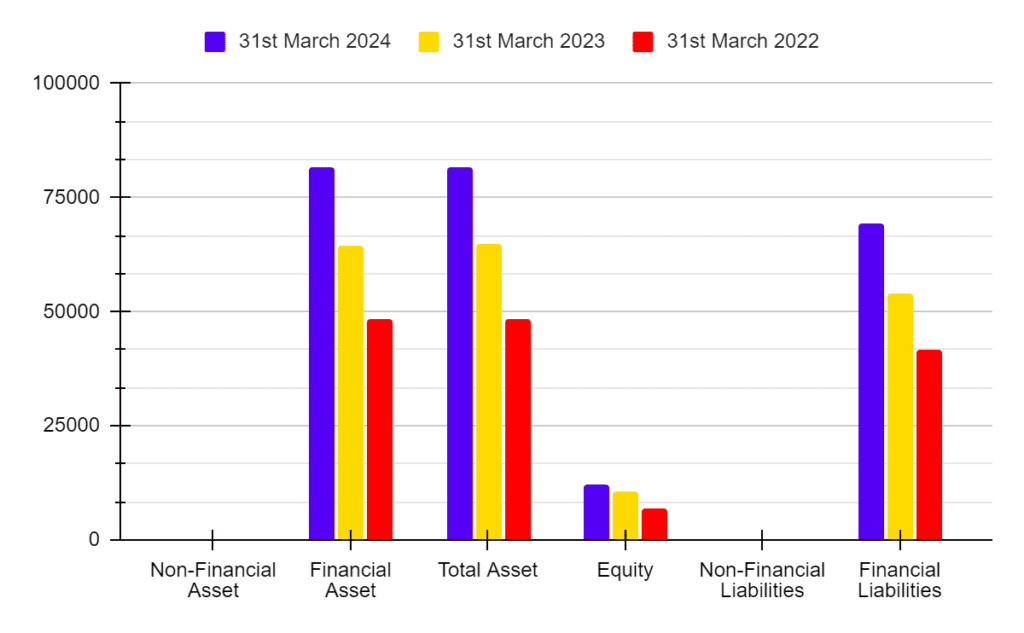
    According to the above chart, we can say that the company’s long-term liabilities have declined over time, while its current liabilities and total assets have increased on a YoY basis.

    Income Statement

    Particulars31st March 202431st March 202331st March 2022
    Revenue from operations9685.367977.326064.08
    Total Income9732.788008.196099.80
    Total Expenses9176.117624.025849.99
    Profit before tax556.67555.17249.81
    Profit after tax414.31400.69168
     (In Crores)
    Income Statement of Blue Star

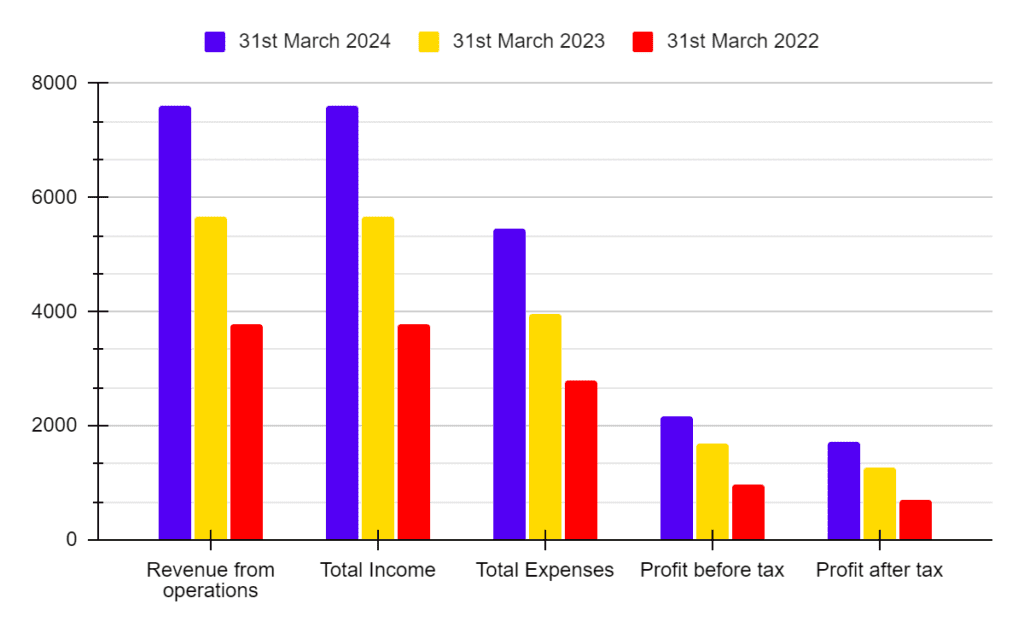
    The above chart concludes that the company’s total income has shown a growth of 21% on a YoY basis whereas their profit after tax has increased by just 3.5% in FY 2024 when compared with FY 2023.

    Cash Flow Statement

    Particulars31st March 202431st March 202331st March 2022
    Net Cash flow from operating activities289.22247.3887.40
    Cash flow from investing activities(624.62)(181.66)(69.01)
    Cash flow from financing activities364.83(91.08)(82.37)
    (In Crores)
    Cash Flow Statement of Blue Star

    Based on the chart above, we can conclude that although the company has reported negative cash flow from investment activities for the previous three years in a row, it has demonstrated positive cash flow from financing activities in FY 2024 after publishing negative figures in FY 2022 and 2023. 

    KPIs

    Particulars31st March 202431st March 202331st March 2022
    Operating Profit Margin (%)6.345.54.89
    Net Profit Margin (%)4.275.012.76
    Return on Capital Employed (%)22.4427.1622.04
    Inventory Turnover4.333.893.36
    Current Ratio1.31.121.17
    Return on Net Worth (%)15.8730.0916.48
    Debt to Equity Ratio0.060.430.47

    The business’s operating profit margin has slightly improved, but its net profit margin has declined when compared to FY 2023. The management of the company may be concerned about this decline in return on net worth. 

    Read Also: Dabur Case Study: Business Model and Swot Analysis

    SWOT Analysis

    SWOT Analysis of Bluestar

    Strengths

    1. The company diversifies its risk by offering a wide range of products, such as MEP solutions, commercial refrigerators, and air conditioners. 
    2. In addition to the metro areas, Bluestar’s extensive distribution network also reaches tier 1, tier 2, and tier 3 cities. It’s also present throughout the world. 
    3. The corporation consistently innovates its product by devoting a sizeable amount of its revenue to research and development. 
    4. The company has four manufacturing units, allowing it to produce its products efficiently.

    Weaknesses

    1. Since the Indian market accounts for a sizable amount of the company’s revenue, any disruption in demand in the Indian economy would have a substantial effect on that revenue. 
    2. Since the company sources its essential components from several different regions, any disruption in the supply chain will affect its output. 
    3. The company’s return on net worth and return on capital employed has decreased in FY 2024 as compared to FY 2023.

    Opportunities

    1. Increasing disposable income and urbanization will create a growth opportunity for the company.
    2. The company can achieve new heights through strategic partnerships or acquisitions which allows them to access new technologies and better diversification of products.
    3. The company needs to promote eco-friendly solutions related to air conditions and refrigeration in order to navigate growing environmental concerns.

    Threats

    1. The company faces tough competition from domestic and international players. Non-competence with them will lead to a fall in market share and profitability.
    2. If the government implements changes related to environmental standards, trade policies can negatively impact the company’s profitability.

    Read Also: Ola Electric Case Study: Business Model, Financials, and SWOT Analysis

    Conclusion

    Bluestar constantly invests in product innovation and client pleasure to achieve new levels of success. The company’s operating profit margins have also improved, as seen by the financial reports that show an increase in margin over the last three years. However, there are risks that are connected to the company. Therefore, an individual must research and consult with an investment professional before making any investment decisions. 

    Frequently Asked Questions (FAQs)

    1. Is Bluestar an Indian company?

      Bluestar is India’s leading Heating, Ventilation, Air conditioning, and Commercial Refrigeration (HVAC&R) Company, with its headquarters in Mumbai.

    2. Who is the head of Bluestar?

      Mr. Vir S. Advani heads Bluestar as the Chairman and Managing Director.

    3. Is Bluestar a profit-making company?

      Bluestar is a profitable corporation, as seen by its net profit reports for the financial years 2024 and 2023, which came in at 414.31 and 400.69 crore, respectively.

    4. Does Bluestar operate in the international market?

      In addition to having operations in India, the company also conducts business internationally via joint ventures in several nations, such as the Middle East and SAARC countries.

    5. What products does Bluestar manufacture?

      Bluestar manufactures Air conditioners, Refrigerators, Air coolers, Air Purifiers, and Water purifiers.

  • Top Power Companies in India

    Top Power Companies in India

    India’s power sector is undergoing rapid transformation. By 2026, the country’s total power capacity is projected to exceed 500 gigawatts, with a significant contribution from solar and wind energy. Electricity demand is increasing every year, particularly in cities and industries. In this context, India’s major power companies are playing a crucial role in providing a continuous and reliable power supply to the nation. In this blog, we will explore India’s top power companies in simple terms.

    Top Power Companies in India

    S.NoCompanyCurrent Market Price (INR)Market Capitalisation (in INR crore)52-Week High52-Week Low
    1NTPC Ltd3563,45,201371293
    2Adani Power Limited1352,61,07618392.4
    3Power Grid Corporation of India Ltd2562,38,560322247
    4Adani Green Energy Ltd8521,40,3891,179758
    5Tata Power Company Ltd3661,17,045417326
    6JSW Energy Ltd46080,800579419
    7NHPC Ltd78.278,55292.371.0
    8Torrent Power Ltd1,38869,9221,6401,188
    9SJVN LtdSJVN Ltd28,49110869.8
    10CESC Ltd15019,905185119
    (Data as of 31 Jan 2026)

    A brief overview of the best REIT Stocks Companies in India is given below:

    1. NTPC Limited 

    NTPC Limited was established in 1975 with the objective of providing reliable and consistent power to the nation. It is one of India’s leading government-owned power companies. NTPC operates power generation projects across various states and supplies electricity to millions of homes. Initially, the company focused on thermal power, but it is now rapidly expanding into clean energy sources such as solar, wind, and hydropower.

    Know the Returns: 

    1Y Return (%)3Y Return (%)5Y Return (%)
    13.28%115.041%173.35%
    (Data as of 31 Jan 2026)

    2. Adani Power Limited

    Adani Power Limited was founded in 1996.  The company entered the power generation sector at a time when private sector participation in the industry was increasing in India. It established power projects in various states, providing a reliable supply of electricity to numerous cities and industrial areas. Over time, the company modernized its plants and improved its operational processes to ensure greater supply stability. Today, Adani Power is recognized as a major private power producer.

    Know the Returns: 

    1Y Return (%)3Y Return (%)5Y Return (%)
    34.97%59.17%1,196.18%
    (Data as of 31 Jan 2026)

    3. Power Grid Corporation of India Limited

    Power Grid Corporation of India Limited was established in 1989.  This company’s role is not to generate electricity, but to transmit it reliably from one place to another. If villages, towns, and cities have a consistent power supply, Power Grid plays a crucial role in making that happen. Over time, the company has improved its transmission lines and systems to minimize power outages. Today, it has quietly become a vital link in managing the country’s power infrastructure.

    Know the Returns: 

    1Y Return (%)3Y Return (%)5Y Return (%)
    -8.07%123.97%
    (Data as of 31 Jan 2026)

    4. Adani Green Energy Limited

    Adani Green Energy Limited was founded in 2015. This company specializes in generating electricity solely from solar and wind energy. Its projects are located in several Indian states, where clean energy is produced. The company focuses not on outdated technologies like coal or diesel, but on generating electricity without harming the environment. Today, Adani Green is considered one of the leading renewable energy companies in India.

    Know the Returns: 

    1Y Return (%)3Y Return (%)5Y Return (%)
    -11.67%252.64%-20.45%
    (Data as of 31 Jan 2026)

    5. Tata Power Company Limited

    Tata Power Company Limited was founded in 1915 and is one of India’s oldest private power companies. The company is involved in both power generation and distribution. Over time, Tata Power has shifted its focus to clean energy sources such as solar and wind power. Today, the company continues to play a significant role in meeting the electricity needs of homes, industries, and cities.

    Know the Returns: 

    1Y Return (%)3Y Return (%)5Y Return (%)
    4.18%78.42%322.81%
    (Data as of 31 Jan 2026)

    6. JSW Energy Limited

    JSW Energy Limited was founded in 1994.  The company operates in the power generation sector and has diversified over time to include various sources such as thermal, hydro, and renewable energy. JSW Energy aims to provide reliable electricity to people and industries. The company has improved its power projects by adopting new technologies and is continuously moving towards clean energy.

    Know the Returns: 

    1Y Return (%)3Y Return (%)5Y Return (%)
    2.49%108.38%545.13%
    (Data as of 31 Jan 2026)

    7. NHPC Limited

    NHPC Limited was established in 1975. This company focuses on generating electricity from river water. Its power projects are mostly located in mountainous regions, where hydropower generation is more feasible. NHPC has gradually expanded its operations and is now also working on solar energy projects. The company’s focus is on developing sustainable and clean energy sources.

    Know the Returns: 

    1Y Return (%)3Y Return (%)5Y Return (%)
    3.00%90.77%222.57%
    (Data as of 31 Jan 2026)

    8. Torrent Power Limited

    Torrent Power Limited was founded in 2004.  The company is involved in both electricity generation and distribution. It has established itself as a reliable power supplier, particularly in urban areas. Torrent Power has steadily improved its network and adopted new technologies to minimize power outages. Over time, the company has also ventured into solar and other renewable energy projects.

    Know the Returns: 

    1Y Return (%)3Y Return (%)5Y Return (%)
    2.80%206.15%333.88%
    (Data as of 31 Jan 2026)

    9. SJVN Limited

    SJVN Limited was established in 1988.  The company primarily works on hydroelectric projects, generating electricity from river water. Its projects are mostly located in mountainous regions, where hydropower generation is more feasible. Over time, SJVN has also ventured into the solar and wind energy sectors. The company focuses on developing clean and sustainable energy sources.

    Know the Returns: 

    1Y Return (%)3Y Return (%)5Y Return (%)
    -21.39%124.81%181.49%
    (Data as of 31 Jan 2026)

    10. CESC Limited

    CESC Limited was founded in 1899 and is one of India’s oldest power companies. The company primarily supplies electricity to Kolkata and the surrounding areas. CESC is responsible for both electricity generation and its distribution directly to consumers. Over time, the company has upgraded its network and adopted modern systems to ensure a continuous and reliable power supply to its customers.

    Know the Returns: 

    1Y Return (%)3Y Return (%)5Y Return (%)
    10.88%97.58%146.11%
    (Data as of 31 Jan 2026)

    Key Performance Indicators (KPIs)

    The key performance metrics of the Best Power Companies Stocks in India are mentioned below:

    CompanyOperating Margin (%)Net Profit Margin (%)ROE (%)ROCE (%)P/E (x)
    NTPC Ltd20.9611.5512.729.4017.58
    Adani Power Limited35.0522.6824.2720.413.15
    Power Grid Corporation of India Ltd60.7734.1316.7512.3217.40
    Adani Green Energy Ltd67.6813.8813.478.02113.34
    Tata Power Company Ltd17.296.0811.076.0830.23
    JSW Energy Ltd37.9716.687.135.7048.07
    NHPC Ltd66.1754.687.576.2130.22
    Torrent Power Ltd14.7310.4816.5614.8224.28
    SJVN Ltd60.2026.445.784.4544.03
    CESC Ltd10.938.3911.395.7114.91
    (Data as of March 2025)

    Read Also: Best Hydropower Stocks in India

    Risks & Challenges in Power Companies

    1. Fuel Price Volatility : Fluctuations in coal and gas prices affect the cost of electricity generation, putting pressure on companies’ planning and operations.
    2. Regulatory & Tariff Uncertainty : Changes in government regulations and electricity tariffs can impact companies’ earnings and investment decisions.
    3. Project Execution Delays : Land acquisition, local approvals, and technical issues often lead to delays in project completion.
    4. Environmental Clearances : Obtaining environmental permits for new projects is a lengthy and complex process.
    5. Debt & Interest Rate Risk : Rising interest rates on loans taken for large projects can increase companies’ expenses.

    Future of the Indian Power Sector

    1. Renewable Energy will grow rapidly : India’s total power capacity has now exceeded 500 GW, with renewable energy accounting for nearly 50%. The government aims to further strengthen non-fossil fuel capacity by 2030, so solar and wind projects will see the most significant growth in the coming years.
    2. Batteries and Pumped Storage will be crucial : Solar and wind power do not provide electricity continuously, hence the need for storage is increasing. It is estimated that India’s pumped storage capacity could reach 90–100 GW by 2035, making the power supply more stable.
    3. The Grid System will become smarter : The transmission network is being upgraded to handle renewable energy. Smart grids and digital systems will reduce power outages and allow for better control of the power supply.
    4. Dependence on Coal will gradually decrease : Even today, a large portion of electricity comes from coal, but this proportion is expected to decrease by 2035 as the share of solar, wind, and hydro power continues to grow.
    5. Green Hydrogen will become a new alternative : The government aims to produce 5 million tons of green hydrogen by 2030, which could become a new energy source for both industry and power generation in the future.

    Read Also: Top 10 Wind Energy Stocks in India

    Conclusion

    Today, electricity is integrated into every aspect of our lives, so its future cannot remain the same. The path forward is clear – clean energy, robust systems, and new technologies. Gradually, old ways of thinking will be left behind, and new approaches will emerge. If this pace continues, in the coming years, there will be fewer problems and greater reliability when it comes to electricity. Download Pocketful for a seamless investing experience with zero brokerage on delivery, an easy-to-use platform, and smart tools designed for both new and experienced investors.

    S.NO.Check Out These Interesting Posts You Might Enjoy!
    1Top Pre-Engineered Building (PEB) Stocks in India
    2Top Aerospace Stocks in India
    3Best Chemical Stocks in India
    4Best Shipping Stocks in India
    5Best Growth Stocks in India
    6Best Material Stocks in India
    7List of Best Cement Stocks in India
    8Best Low-Risk Stocks in India
    9Best Cyclical Stocks in India
    10Top Green Hydrogen Stocks in India
    11Best Battery Stocks in India
    12Best Packaging Stocks in India

    Frequently Asked Questions (FAQs)

    1. What is India’s power sector?

      This sector is involved in generating and distributing electricity to people.

    2. Why is renewable energy growing in India?

      Because it is clean energy and a better option for the future.

    3. Which companies are called power companies?

      Those that work in electricity generation, transmission, or renewable energy.

    4. Is coal still used for electricity?

      Yes, but its use is gradually being reduced.

    5. What will drive the future of the power sector?

      Solar, wind, storage, and smart grid systems.

  • Anti-Takeover Mechanisms: Defenses Against Hostile Takeovers

    Anti-Takeover Mechanisms: Defenses Against Hostile Takeovers

    In the high-stakes world of corporations, companies often face the threat of hostile takeovers—unwanted bids to seize control. To protect themselves, they use clever strategies known as anti-takeover mechanisms. 

    This blog will explore these tactics and how they help companies stay independent.

    Hostile Takeover – An Overview

    A hostile takeover is when a company acquires more than 50% of another company’s voting shares without the management’s consent or knowledge of the target company.

    In India, hostile takeovers are primarily governed by the Companies Act 2013 and SEBI.

    Anti-takeover mechanisms work like building a moat and castle around a company to defend it from an unwelcome takeover attempt.

    Examples in India

    While hostile takeovers are uncommon in India, compared to other countries, there have been instances that serve as interesting examples.

    1. Adani Group’s takeover of NDV.
    2. India Cements acquisition of Raasi Cements.
    3. Larsen & Toubro’s acquisition of Mindtree Limited.

    Types of Anti-Takeover Mechanisms

    Dual Class Shares

    Companies use it to give founders or controlling investors more power over the company, even if they do not own a majority of the total shares.

    How does it work?

    Under this mechanism, the company issues two classes of shares,

    Class A shares have multiple votes per share, and Class B shares only have one vote per share.

    Founders and early investors often hold Class A shares, which gives them disproportionate control over the company relative to other investors, who hold Class B shares with limited voting power.

    Dual Class Shares

    Staggered Board

    A staggered board mechanism makes it more difficult for a hostile bidder to gain control of a company by acquiring a majority of shares.

    How does it work?

    The Board of Directors is segmented into distinct classes, commonly consisting of three, although occasionally five or more classes. Each class generally lasts two or three years. Elections are conducted periodically to fill the vacancies of expiring seats on the board.  

    Staggered Boards can function as a defensive measure to discourage hostile takeovers because it takes several election cycles to replace most of the board, so buyers cannot quickly take control.

    Poison Pill

    How does it work?

    A poison pill is an inactive anti-takeover strategy where a company issues new shares to existing shareholders at a discount, except for the hostile bidder. The activation of this mechanism is prompted by a specific occurrence, such as an acquisition of a defined proportion of the company’s shares by a hostile bidder, commonly around 15-20%. Once triggered, it allows the current shareholders to buy more company shares at a low price when there is a hostile takeover bid. This practice dilutes the value of the shares held by the acquirer, making the takeover more expensive and thus less attractive.

    White Knight

    The ‘white knight’ can be another company in the same industry or a private equity firm willing to make a more favorable offer to the target company than the hostile bidder. 

    How does it work?

    The target company, facing a hostile takeover bid, identifies a white knight. This could be a competitor, a financial institution, or any other company interested in acquiring the target company. The white knight offers to acquire the target company at a fair or even premium price, generally higher than the hostile bidder’s offer. This approach enables the target company to effectively retain a certain degree of authority over its future by deliberately selecting a buyer who exhibits a greater correlation with its core value, objectives, or strategic direction.

    White Knight

    Crown Jewel Defense

    This mechanism is used by companies facing a hostile takeover to make themselves less attractive to the acquirer. It is like selling off your most prized possessions (the crown jewels) before a thief breaks in.

    before a thief breaks in.

    How does it work?

    The target company identifies its most valuable assets, often called ‘crown jewels.’ These assets can be tangible, such as factories or property, or intangible, such as intellectual property, patents, or trade secrets. In response to a hostile takeover threat, the company initiates measures to divest itself of these precious assets to a third party, often characterized as a friendly buyer. An alternative option is to spin off the crown jewels into a separate, independent entity. The loss of these ‘crown jewels’ makes the target much less suitable.

    Greenmail

    Greenmail involves a target company buying back its shares at a premium from an acquirer who has garnered a significant ownership percentage, intending to obtain control, and the company pays the acquirer to leave.

    How does it work?

    A ‘greenmailer’ has a high ownership in the company. Instead of implementing other defensive measures, the target company offers to re-purchase the greenmailer’s shares at a high price. This allows the greenmailer to make a quick gain by selling his shares back to the company at an inflated price, and the company avoids the risk and uncertainty of a hostile takeover.  

    Pac-Man Defense

    The Pac-Man defense involves the target company turning the tables on the hostile bidder by attempting to acquire the bidder instead. Named after the video game character that eats its enemies, this tactic involves the target company using its own resources to purchase shares of the acquirer, effectively making a counteroffer.

    How does it work?

    Instead of assuming a passive defense stance, the target company actively assumes the role of a predator by attempting to acquire the company that is trying to take over, similar to Pac-Man gobbling up the ghosts in the iconic video game.

    Read Also: What is Securitization? Methodology, Types, Advantages, and Disadvantages

    Conclusion

    The world of mergers and acquisitions can sometimes feel like a battleground, especially when it comes to hostile takeovers. It can be quite intense! But do not fear; companies have a wide range of defenses available to them. Remember, the best defense is to have multiple layers. Before selecting anti-takeover measures, companies should analyze their specific circumstances and the risks they may encounter. It is important to consult legal and financial professionals to ensure that the defenses are implemented correctly and comply with regulations. So, the next time you hear about a hostile takeover, keep in mind that it is more than just a fight; it is about the strategic defense companies implement to protect their future.

    Frequently Asked Questions (FAQs)

    1. Why do companies try hostile takeovers?

      There can be several reasons for hostile takeovers. Acquirers might see the target as undervalued, a good fit, or a source of valuable assets.

    2. How common are hostile takeovers in India?

      Hostile takeovers in India are less frequent than in other countries because of strong promoter ownership and strict regulations.

    3. What is a white knight?

      A white knight is a friendly company that acquires the target company at a premium price, hindering the hostile bid.

    4. How do companies defend against hostile takeovers?

      Companies implement anti-takeover mechanisms like dual-class shares, staggered boards, poison pills, etc.

    5. How can a hostile takeover be unfavorable for employees?

      Hostile takeovers can lead to layoffs, re-organizations, and changes to the workplace that may negatively impact the morale and mental health of the employees.

  • Adani Enterprises Case Study: Business Model And SWOT Analysis

    Adani Enterprises Case Study: Business Model And SWOT Analysis

    Imagine a single company controlling everything from the coal to the airport. That is the vast reach of Adani Enterprises. It has been a major force in the Indian economy, with a presence in sectors such as diverse coal mining, energy grids, and even airports. But how did this company rise to such prominence?

    In this blog, we will discover the fascinating story of Adani Enterprises, its key strengths, business model, rich history, etc.

    Adani Company Overview

    Adani Enterprises is an Indian multinational conglomerate headquartered in Ahmedabad, Gujarat. It is considered the flagship company of the Adani Group. Adani Enterprises is primarily involved in infrastructure development and management, including ports, airports, logistics, power generation, transmission, mining resources, data centres, and solar cell manufacturing.

    Adani Enterprises History

    Adani Enterprises was founded in 1988 by Gautam Adani as a partnership firm called Adani Exports, a commodity trading company focused on agricultural commodities.
    In 1990, the Adani Group established its proprietary port in Mundra to facilitate the expansion of its trading activities. Subsequently, in the same year, Adani Exports transformed into a limited company called Adani Enterprises.
    Today, Adani Enterprises is recognized as the largest business incubator in India. Its focus is on four core sectors: energy and utility, transportation and logistics, consumer goods, and primary industry.
    Since 1988, the company has successfully developed and listed six successful companies:

    1. Adani Ports and Special Economic Zone Limited
    2. Adani Power Limited
    3. Adani Transmission Limited
    4. Adani Green Energy Limited
    5. Adani Total Gas Limited
    6. Adani Wilmar Limited.

    Read Also: Tata Power Vs Adani Power: Comparison Of Two Energy Giants

    Adani Company Business Model

    Business Model of Adani Enterprises

    Adani Enterprises strategically employs a diversified business model to generate revenue across various sectors effectively. The company’s revenue majorly comes from the following selling various products and services in multiple sectors. These include Energy & Utility, Data Centres, Infra, Transport and Logistics, FMCG, Contract Mining, Resource Management, etc.

    The trading and export activities involve the earning income by purchasing goods such as coal and edible oils at competitive prices in international markets, and selling them domestically at a profit.

    Adani Enterprises generates substantial revenue through project development and efficient management of major infrastructure projects, including ports, roads, and power plants. Furthermore, the company also receives orders from the government, especially in the defence and aerospace sectors.

    The company’s revenue is divided between the product sales, which account for 86% of its total revenue, and services, which contribute 14%.

    SWOT Analysis of Adani Enterprises

    SWOT Analysis of Adani Enterprises

    Strengths

    ⦁ The company possesses a robust presence in various sectors, such as coal mining, energy generation, infrastructure, and renewables. This diversification reduces risk, and offers growth opportunities.
    ⦁ The Adani brands hold a strong brand recognition in India, symbolising trustworthiness, and expertise.
    ⦁ The company has strategically invested in cutting-edge technologies and renewable energy projects to position itself as a forward-thinking leader in sustainability.

    Weakness

    ⦁ Managing a portfolio of immense magnitude and diversity requires strong operational efficiency. Delays in project execution can impact profitability.
    ⦁ A substantial portion of revenue is generated from India, making the company vulnerable to domestic economic and political changes.
    ⦁ The company’s high debt level may constrain its capacity to pursue new business opportunities.

    Opportunities

    ⦁ The government’s emphasis on clean energy presents an opportunity for Adani Green Energy, the company’s renewable energy arm.
    ⦁ Adani’s recent entry into the airport sector can be a good opportunity to capitalise on the anticipated growth in air traffic in India.
    ⦁ By focusing more on international exposure, the company can create opportunities for growth while maintaining a strong foundation in its domestic operations.

    Threats

    ⦁ The demand for its services and products may be affected by global or domestic, economic downturns.
    ⦁ The impact on the profitability of its energy and mining businesses could be considerable due to the volatility in the prices of commodities such as coal and oil.
    ⦁ Adani operates in multiple sectors within the Indian market, many of which face tough competition from various players.

    Read Also: Reliance Power Case Study: Business Model, Financial Statements, And SWOT Analysis

    Adani Enterprises Financial Statements

    Let’s have a look at the financial statement of Adani Enterprises:

    Consolidated Balance Sheet

    Key MetricsFY 2023 (in crores)FY 2022 (in crores)
    Non-Current Assets1,04,366.0970,814.80
    Current Assets37,021.7330,945.39
    Total Equity37,890.0526,928.37
    Non-Current Liabilities58,794.7230,982.04
    Current Liabilities44,803.0543,849.78
    Consolidated Balance Sheet of Adani Enterprise

    Income Statement

    Key MetricsFY 2023 (in crores)FY 2022 (in crores)
    Total Income1,38,175.1270,432.69
    Total Expenses1,34,555.9069,480.64
    Profit for the year2,421.60787.7
    Income Statement of Adani Enterprise

    Cash Flow Statements

    Key MetricsFY 2023 (in crores)FY 2022 (in crores)
    Net Cash generated from / (used in) Operating Activities17,626.461,385.28
    Net Cash generated from / (used in) Investing Activities-16,860.09-17,487.38
    Net Cash generated from / (used in) Financing Activities-1,197.52-15,901.42
    Cash and Cash Equivalents at the end of the year1,882.33912.23

    Conclusion

    The company has a robust track record, holds a diversified portfolio, and maintains a clear vision for the future. However, high dependence on coal, elevated levels of debt, and the continuously evolving regulatory environment present considerable challenges. As India grows, Adani Enterprises is poised to play a significant role.

    Whether the company becomes a true giant or struggles under its own weight will depend on how well it handles challenges and takes advantage of future opportunities. Further, we recommend consulting with your financial advisor before making any investment decision.

    S.NO.Check Out These Interesting Posts You Might Enjoy!
    1TCS Case Study: Business Model, Financial Statement, SWOT Analysis
    2Vedanta Case Study: Business Model, Financial Statement, SWOT Analysis
    3Nestle India Case Study: Business Model, Financial Statement, SWOT Analysis
    4BPCL Case Study: Business Model, Product Portfolio and SWOT Analysis
    5Apollo Hospitals Case Study : Business Model, Financial Statements, And SWOT Analysis

    Frequently Asked Questions (FAQs)

    1. What are Adani Enterprises’ main sectors?

      Coal mining, ports and logistics, power generation (thermal and renewable), airports, and edible oils are some of the Adani Group’s main sectors.

    2. Is Adani Enterprises a good investment?

      This depends on your investment goals and risk tolerance. Adani has a strong track record but also faces challenges like higher debt, and dependence on coal.

    3. Is Adani publicly traded?

      Yes, Adani Enterprises is listed on the BSE and NSE. As of May 2024, its share price is trading at INR 3,330 and its market capitalisation is INR 3.80 lakh crores.

    4. When was Adani Enterprises established?

      The company was established in 1988 by Gautam Adani. Initially, the company started operations in commodity trading.

    5. When was the Adani Enterprise’s first stock issued?

      On September 12, 1994, Adani Enterprises launched an IPO of 1,261,900 shares which was 25x oversubscribed.

  • MCX Exchange Case Study: Evolution, Products, And Financials

    MCX Exchange Case Study: Evolution, Products, And Financials

    Did you know an Indian exchange known as Multi Commodity Exchange, or MCX, allows you to trade in commodities such as gold, silver, crude, etc?

    Read the blog to learn about the company’s history and evolution, as well as the products currently trading on it.

    Company Overview

    Multi Commodity Exchange, or MCX, is India’s first and largest commodity derivative exchange, allowing online commodity trading. The company’s headquarters are located in Mumbai, Maharashtra. It was founded in 2002 and began operations in November 2003. Gradually, the company expanded its product portfolio to encompass various commodities, such as metals, energy, and agriculture. Throughout its journey, the company has spent time in its research department, ensuring technological advancements in its trading platform.

    The Securities Exchange Board of India regulates the MCX’s operations.

    MCX in Numbers

    1. MCX is the 5th largest commodity option exchange in the world.
    2. It is also the world’s 7th largest commodity future exchange.
    3. They account for about 96.7% of India’s market share in commodity trading.
    4. In 2022-23, the average daily turnover in options was about INR 33,998 crores, whereas the average daily turnover of futures contracts was INR 23,514 crores.
    5. As of 15 May 2024, the company has a market capitalization of app. INR 19,900 crores.
    6. As of June 2023, the MCX has 556 members and 47,573 authorized persons in 706 cities of India.

    Evolution of MCX Exchange

    1. 2002 – 2005 – The company began its operations and signed a licensing agreement with London Metal Exchange.
    2. 2006 – 2008 – The company established a product licensing agreement with New York Mercantile Exchange (NYMEX), and became a member of the International Organization of Securities Commissions (IOSCO).
    3. 2012 – 2015 – The company signed an MOU with Chicago Mercantile Exchange (CME) Group, and became India’s Listed exchange.
    4. 2017 – 2019 – MCXs launched its first-ever options on gold futures in India and launched a new series of iComdex commodities indices.
    5. 2020 – 2023 — The company launched its new trading software version, enabling investors to trade at hostile prices.

    Read Also : What is Commodity Market in India?

    Products Offered

    The company has positioned its products according to the growing demand for commodity trading in India and abroad. The products offered by MCX are as follows:

    1. Metals

      a) Gold – One can trade in gold futures and option contracts based on the price movement of gold.

      b) Silver – Through silver contracts, investors can take a position on the silver price.
    2. Energy Metals

      a) Crude Oil – MCX provides crude oil derivative contracts, available in different variants that track the price of Brent crude oil.

      b) Natural Gas – It allows investors to speculate on the price movement of natural gas.

      c) Base Metals – MCX also allows investors to trade in commodities like copper, nickel, aluminium, zinc, lead, steel rebar, etc.
    3. Agricultural Commodities

      a) Agri Futures – It offers contracts of various agricultural commodities such as palm oil, cotton, menthe oil, kapas, etc.

    Financial Highlights

    Let’s have a look at the financials of the MCX Exchange:

    Balance Sheet (INR crore)

    Particulars31st March 202331st March 202231st March 2021
    Non-Current Asset1,396.81978.061,374.18
    Current Asset1,625.941,822.481,128.33
    Total Asset3,022.752,800.542,502.51
    Equity1,479.301,418.111,418.23
    Long Term Liability56.0965.7857.27
    Current Liability897.6791.06557.78
    Balance Sheet of MCX Exchange

    Income Statement (INR crore)

    Particulars31st March 202331st March 202231st March 2021
    Revenue from operations513.51366.81390.56
    Total Income581.17433.31494.34
    Total Expenses385.62227.57227.68
    Profit before tax190.57184.05266.75
    Profit after tax148.97143.45225.22
    Profit and loss statement of MCX Exchange

    The company’s income for FY 2023 climbed by 34% compared to FY 2022, although its profit after tax increased by only 3% in FY 2023.

    Cash Flow Statement (INR crore)

    Particulars31st March 202331st March 202231st March 2021
    Net Cash flow from operating activities141.42391.3-184.43
    Cash flow from investing activities-8.08-142.22-38.78
    Cash flow from financing activities-89.48-141.65-153.89
    Cash flow statement of MCX Exchange

    The above graph illustrates that the company’s cash flow from operating operations has declined compared to FY 2022, but its cash flow from investment activities has improved in FY 2023, albeit with a negative value.

    Ratio Analysis

    Particulars31st March 202331st March 202231st March 2021
    Operating Profit Margin (%)38.1256.1568.32
    Net Profit Margin (%)29.9739.4557.64
    Return on Capital Employed (%)9.2110.2513.71
    Current Ratio1.812.32.02
    Return on Net Worth (%)10.0710.1115.88

    SWOT Analysis

    Strengths

    1. MCX is the largest commodity exchange in India and has a strong market presence across the industry.
    2. The company has a wide product portfolio consisting of metal, energy, agriculture commodities, currencies, etc.

    Weakness

    1. The performance of the company depends on various factors such as geopolitical situations, supply and demand, market sentiments, commodity prices, etc.
    2. MCX faces competition from various other players in the industry (NCDEX, IEX, etc.) which can limit its market share.

    Opportunities

    1. The company can collaborate with international exchanges, to help them with technical expertise and increase brand visibility.
    2. MCX can introduce more innovative products to attract a new set of traders.

    Threats

    1. Any changes made by the regulatory body, i.e., SEBI, could impact their operation and profit margins.
    2. Any economic turndown in the economy can decrease the trading activities, which significantly hampers the revenue of the company.

    Read Also : List of Stock Exchanges in India

    Conclusion

    In summation, the Multi Commodity Exchange provides investors with a diverse product range; as the population of traders grows, so will the trading volume and profit. The company nearly has a monopoly in the market when it comes to commodity trading. However, you need to examine your risk tolerance and undertake a thorough investigation of the company if you’re looking to invest in it.

    Frequently Asked Questions (FAQs)

    1. Can we trade currencies on MCX?

      No, as of May 2024, currency derivative contracts are not available on MCX.

    2. Who are the competitors of MCX?

      There are multiple competitors of MCX who facilitate trading in commodity derivatives, such as the National Commodity and Derivates Exchange (NCDEX), Indian Commodity Exchange (ICEX), etc.

    3. Who is the founder of Multi Commodity Exchange?

      The MCX was incorporated in the year 2002 and began its operation in 2003 under the leadership of Mr. Jignesh Shah.

    4. What is the trading time of MCX?

      Investors can trade in the commodities derivatives segment at MCX in two parts:⦁ Morning Session: 9:00 a.m. – 5:00 p.m.⦁ Evening Session: 5:00 p.m. – 11:30/11:55 p.m.Further, except for Saturdays and Sundays, trading occurs every day of the week.

    5. What is the difference between MCX, NSE, and BSE?

      The National Stock Exchange (NSE) or Bombay Stock Exchange (BSE) allows participants to trade primarily in stocks of the publicly listed companies, whereas the Multi Commodity Exchange allows trading in commodities such as Gold, Silver, Copper, etc.

  • Jio Financial Services: Business Model And SWOT Analysis

    Jio Financial Services: Business Model And SWOT Analysis

    Did you know there is a recently listed company that is the country’s third biggest NBFC after the Bajaj twins, i.e., Bajaj Finance and Bajaj Finserve? It is the new kid on the block with the backing of Reliance Industries Limited (RIL), as it is RIL’s newly carved out Entity. We are talking about Jio Financial Services Limited (JFSL).
    In this blog, we will talk about its Jio business model and SWOT analysis.

    Jio Financial Services – Introduction

    Reliance Industries Limited (RIL) demerged its financial services company, Reliance Strategic Investments Ltd (incorporated in 1999), and renamed it as Jio Financial Services Limited (JFSL). The Jio Financial Services aims to provide simple, affordable, and innovative digital-first solutions.

    JFSL is positioned uniquely to play a crucial role in transforming the landscape of digital finance in India.  It is a non-banking financial company. As of 13 May 2024, the market capitalization of Jio Financial is almost INR 2.2 lakh crores. It is one of the top 40 Indian companies by market capitalization, in a list headed by Reliance at INR 19 lakh crores. The company debuted on the stock exchanges on August 21, 2023. The company’s initial listing price was INR 265 per share on the BSE and INR 262 per share on the NSE, and currently trading at INR 341 (as of 13 May 24)..

    Jio Financial Services Business Model

    The company is a holding company that operates its Jio financial services business model through its consumer-facing subsidiaries, Jio Finance Limited (JFL), Jio Insurance Broking Limited (JIBL), and Jio Payment Solutions Limited (JPSL), and joint venture namely Jio Payments Bank Limited (JPBL).

    Products

    Lending: The company offers personal loans for salaried and self-employed individuals through MyJio app. Further, the company has also launched consumer durable loans across 300 stores in India.

    Insurance Broking: Established partnership with 24 insurance companies (Life – 5, General – 15, Health – 4) offering a wide range of products such as General, Life, Auto Insurance, Health Insurance, Embedded insurance, corporate solutions & employer-employee benefits.

    Payments Bank: It provides services such as bill payments, money transfers, etc. It has an on-ground network of over 2,400 business correspondents.

    Products in the pipeline: There are several products in the pipeline such as Business and merchant loans for self-employed individuals, sole proprietors, and small business entities; Auto loans, Home loans, and loans against shares.

    Competitive Landscape

    Non-Banking Financial Companies (NBFCs) in India are characterized by oligopoly competition. An oligopoly is an industry where a small group of large companies have a dominant position, giving them more market control and pricing power than the other companies.

    Read Also: Reliance Industries Case Study: Marketing Strategy and SWOT Analysis

    Jio Financial Services SWOT Analysis

    Strengths

    Jio Financial Services Limited (JFSL) has the potential to be a game changer in the Indian market for several reasons. It is a part of Reliance, which has a well-established brand presence that drives trust and recognition.
    1) JFSL has the backing of Reliance Industries, one of the largest conglomerates in India. This gives JFSL access to a vast pool of resources, including capital, talent, and technology.
    2) JFSL is focused on providing financial services to underserved segments of the population, such as small businesses and low-income households. This is a large and growing market that is ripe for disruption.
    3) A 50:50 joint venture between Jio and Blackrock will combine BlackRock’s scale and investment expertise with Jio Financial Services’ knowledge and resources to deliver affordable, innovative investment solutions to millions of investors in India.

    Weakness

    1. The company is relatively new; although they are backed by Reliance Industries Limited, it is still in the financial industry, so building trust can be challenging for them.
    2. Due to its extensive product portfolio, it may encounter difficulties in effectively managing and allocating resources to it.

    Opportunities

    Today’s India is adopting digital finance at a fast pace and the digitalization has penetrated every corner of the nation through Jan Dhan accounts, digital payments, usage of smartphones, and low-cost data. The growth opportunities presented by financial services are remarkable and provide strong directional support to the economy.

    1. Favorable demographics: 450 million working people and the 12th largest population of high-net-worth individuals (HNIs).
    2. Increasing user activity: Higher consumption and digitalization will fuel the growth. As per several estimates, India to become a USD 10 trillion economy by 2035.

    Threats

    1. The business operates in an Oligopoly market where few big players have the controlling power to dictate price and the competition.
    2. Their margins may be impacted by regulatory changes made by the Indian government as it is highly regulated.
    3. Economic growth may affect consumers’ spending and saving patterns, which in turn will affect the company’s profitability.

    Jio Financial Services Financials

    Let’s have a look at the financials of Jio Financial Services Limited.

    Profit and Loss Statement (INR crore)

    ParticularsMar-23Mar-24
    Sales 451,854
    Expenses 6296
    Operating Profit391,558
    OPM %88%84%
    Other Income 10429
    Interest10
    Depreciation22
    Profit before tax491,956
    Tax %37%18%
    Net Profit 311,605
    Jio Finance Services P&L Statement


    Balance Sheet.

    ParticularsMar-23Mar-24
    Equity Capital26,353
    Reserves114,118132,794
    Borrowings 743
    Other Liabilities 665,715
    Total Liabilities114,930144,863
    Fixed Assets 158175
    CWIP38
    Investments108,141133,292
    Other Assets 6,59311,396
    Total Assets114,930144,863
    Balance Sheet of Jio Financial Services

    Shareholding pattern

    ParticularsSep-23Dec-23Mar-24
    Promoters 46.77%47.12%47.12%
    FIIs 21.58%19.83%19.45%
    DIIs 13.64%12.99%12.50%
    Government 0.13%0.14%0.14%
    Public 17.86%19.92%20.77%

    From the above table, we can observe that FIIs and DIIs have reduced their shareholding over the last three quarters. In contrast, retailers have increased their shareholding.

    Read Also: Reliance Power Case Study: Business Model, Financial Statements, And SWOT Analysis

    Conclusion

    In summary, JFSL’s stock price performance has been impressive and has shown an upward trajectory in recent months, reaching new record highs. The stock hit INR 394.70 in April 2024, an all-time high. Further, the company also reported stellar performance in FY 2024.

    But it is important to note that the market and most of the stocks are at all-time highs, and there are major events lined up like Indian Elections, Budgets, and then US Elections. So, always consider your risk tolerance and time horizon before making any investing decision.

    S.NO.Check Out These Interesting Posts You Might Enjoy!
    1TCS Case Study: Business Model, Financial Statement, SWOT Analysis
    2Vedanta Case Study: Business Model, Financial Statement, SWOT Analysis
    3Nestle India Case Study: Business Model, Financial Statement, SWOT Analysis
    4BPCL Case Study: Business Model, Product Portfolio and SWOT Analysis
    5Apollo Hospitals Case Study : Business Model, Financial Statements, And SWOT Analysis

    Frequently Asked Questions (FAQs)

    1. What is the old name of Jio Financial Services Limited (JFSL)?

      JFSL was initially incorporated as Reliance Strategic Investments Private Limited in 1999.

    2. What products do Jio Financial Services offer?

      The company is a holding company that operates its financial services business through its consumer-facing subsidiaries, Jio Finance Limited (JFL), Jio Insurance Broking Limited (JIBL), and Jio Payment Solutions Limited (JPSL), and joint venture namely Jio Payments Bank Limited (JPBL). These subsidiaries offer services such as lending, insurance broking, payments bank, etc. Further, JFSL has multiple products in the pipeline.

    3. What are the challenges for Jio Financial Services in the coming future?

      JFS operates in a highly regulated sector; along with that, it will be affected by economic, interest rate fluctuations, repo rates, inflation rates, etc.

    4. Is Jio Financial Services (JFS) a NBFC?

      Yes, the JFS is a Non-Banking Financial Company (NBFC). NBFCs in India are highly regulated by the Reserve Bank of India (RBI). 

    5. Is Jio Financial Services a good investment?

      The company’s future looks promising, but it is crucial to do thorough research before investing.

  • BSE Case Study: Business Model And SWOT Analysis

    BSE Case Study: Business Model And SWOT Analysis

    The Bombay Stock Exchange is a titan of Indian Finance. With a history stretching back to the 1800s, it is not just the oldest stock exchange in Asia, but a vital part of the country’s economic story. But how does the BSE stack up in today’s fast-paced financial world?

    In this blog, we will explore the exchange’s rich past and analyse the risks and opportunities.

    The Bombay Stock Exchange, or BSE, is a stock exchange located in Mumbai, India. Established in 1875, it is the oldest stock exchange in Asia and the tenth oldest in the world. It is one of the India’s leading exchange groups and is known as the ‘Dalal Street’ which is often regarded as the Wall Street of India.

    It provides a platform for trading in equities, currencies, debt instruments, derivatives, and mutual funds.

    BSE History

    The story starts under a banyan tree near Mumbai Town Hall, where a handful of stockbrokers would gather to trade in the 1850s.

    Premchand Roychand, a cotton merchant, is credited with formalising these informal gatherings by establishing the ‘Native Share and Stock Brokers Association in 1875. This is the official founding year of the BSE.

    Owning to the rapid increase of brokers, the trading venue relocated multiple times in Mumbai before eventually establishing its permanent residence on Dalal Street.

    By 1950, the BSE had grown significantly. In 1957, the Indian Government officially recognised it as the country’s first stock exchange, granting it official trading rights. Since then, BSE has continuously evolved to keep pace with the times.

    BSE Business Model

    The BSE operates on a transaction-based fee model, generating revenue from various activities. Below is an analysis of the fundamental components of the business model of the BSE:

    Trading Platform

    The BSE offers a platform for investors to buy and sell stocks, currencies, derivatives, and other financial instruments. This platform connects buyers and sellers efficiently and charge a fee for the same.

    Price discovery

    It facilitates price discovery and determines the fair market value of securities traded on the exchange through buy and sell orders.

    Market Information

    The BSE effectively disseminates real-time market data and information to investors, thereby facilitating their ability to make informed investment decisions. Furthermore, customer segments of the BSE include Retail & Institutional investors, brokers, and issuers.

    It generates its revenue from the following:

    Listing Fees – The Companies pay a fee to list their shares on the BSE. Further, many other parties, such as Asset Management Companies, Brokerage houses, etc. pay a fee for the membership.
    Trading Fees – The exchange charges a fee for every buy and sell order executed on the platform. This can be a fixed amount or a percentage of the transaction value (turnover).

    Read Also: CAMS Case Study: Business Model, KPIs, and SWOT Analysis

    BSE Financial Statements

    Let’s have a look at the financial statements of the exchange:

    Balance Sheet

    Key MetricsFY 2023 (INR crore)FY 2022 (INR crore)
    Total current Assets3,857.104,953.54
    Total non-current Assets2,136.711,231.86
    Total Equity2,828.992,789.71
    Total Non-current Liabilities14.4910.87
    Total Current Liabilities2,392.692,743.93
    Balance Sheet of BSE

    Income Statement

    Key MetricsFY 2023 (INR crore)FY 2022 (INR crore)
    Total Income953.94863.53
    Total expenses705.91600.45
    Net profit for the year205.65244.93

    Cash flow Statement

    Key MetricsFY 2023 (INR crore)FY 2022 (INR crore)
    Cash Flow from Operating Activities137.111,441.75
    Cash Flow from Investing Activities111.33979.9
    Cash Flow from Financing Activities185.518.94
    Cash and cash equivalents at the end of the year452.99886.94

    Read Also: TCS Case Study: Business Model, Financial Statement, SWOT Analysis

    BSE SWOT Analysis

    Strengths

    ⦁ The BSE is Asia’s oldest stock exchange and commands high recognition among investors, intermediaries, and the public in India.
    ⦁ The company has made strategic decisions regarding the careful selection of open-source technologies and their applicability, which has helped it save money and allow for more investment in other strategic areas of the business. As a result, the company has been able to stay competitive and innovative in the market.
    ⦁ It has also improved its position as a market leader in using AI and ML for surveillance and monitoring in Big Data initiatives.

    Weakness

    ⦁ The BSE encounters robust competition from other stock exchanges, notably the National Stock Exchange (NSE) in India, the BSE needs to consistently enhance the efficiency of its platform in order to remain competitive.
    ⦁ There is a prevailing notion that the BSE exhibits a perceptibly bureaucratic organisational framework in comparison to recently emerged exchanges. This may result in slower decision making and impede the company’s capacity to promptly adjust to evolving market conditions.
    ⦁ The BSE may have a relatively smaller proportion of retail investors in comparison to the NSE, which could significantly impact its reach and overall trading volume.

    Opportunities

    ⦁ Recently, BSE has launched trading in SENSEX and BANKEX derivative contracts. The exchange can launch more contracts for trading, which will increase its revenue potential.
    ⦁ The BSE expresses confidence in playing a transformative role in developing a vibrant gold spot exchange through the trading of Electronic Gold Receipts (EGR), with the aim of ensuring maximum participation from across the country.
    ⦁ BSE Ebix (Insurance broking platform) plans to expand its distribution network by partnering with more wealth management advisors and Point of Sales Persons (PoSPs) to sell both life and non-life insurance products.

    Threats

    ⦁ Adverse macro-economic developments and political uncertainty have the potential to diminish the sentiments of the capital markets and exert a negative impact on the exchange business.
    ⦁ The current competitive landscape for the securities transactions business in India remains increasingly formidable. Companies’ ability to compete and ensure fair regulations will be crucial for sustained growth and profitability.
    ⦁ Capital markets are a prime target for cybercriminals due to the large sums of money involved. Such attacks are more destructible as compared to other industries, which can have a huge impact on business, affecting brand, customer trust, and investors’ interest.

    Read Also: LIC Case Study: Business Model and SWOT Analysis

    Conclusion

    The BSE’s story is one of the remarkable resilience and adaptation. From its humble beginnings under a banyan tree to its current position as a leading stock exchange, it has consistently played a key role in India’s financial growth. India’s growing economy makes BSE a thrilling platform for wealth creation and an intriguing entity to monitor in the future.

    FAQs (Frequently Asked Questions)

    1. What is the BSE?

      The Bombay Stock Exchange, or BSE, is a stock exchange located in Mumbai, India. It is the oldest exchange in Asia.

    2. What is the BSE’s benchmark index?

      The BSE Sensex is a vital stock market index that tracks the performance of the top 30 companies listed on the exchange by market capitalisation.

    3. Is BSE a listed company?

      Yes, BSE is a listed company and currently trades at a market price of INR 2,850 (as of 6 May 2024) on the National Stock Exchange (NSE).

    4. Does the BSE offer electronic trading?

      Yes, as of May 2024, the BSE operates on a fully electronic trading platform for efficient and secure transactions.

    5. Does the BSE offer trading in equity index derivatives?

      Yes, as of May 2024, the BSE offers trading in three derivative contracts, i.e., SENSEX, SENSEX 50, and BANKEX.

  • Voltas Case Study: Business Model And Key Insights

    Voltas Case Study: Business Model And Key Insights

    Have you noticed the buzz around Voltas lately? Their share price has increased by almost 30% in the April 2024! But what is driving this impressive growth?

    In this blog, we will explore the reasons behind Voltas’ success, from strong sales to a recent upgrade by research firms. We will also explore the company’s prospects and what investors must consider before jumping on the bandwagon.

    Voltas Company Overview & History

    Voltas is a leading Indian multinational home appliances company headquartered in Mumbai, India. Established in 1954, the company designs, develops, manufactures, and sells various products, including air conditioners, refrigerators, washing machines, and microwaves. The company’s major revenue comes from the sale of air conditioners.

    The company is a part of the Tata Group, one of India’s largest conglomerates, and has a strong presence in India.

    Voltas has a rich history. It was founded as a collaboration between Tata Sons and Volkart Brothers in Mumbai. It partnered with Theckersey Mooljee Group in the early years to market the Ruti Hot Air Sizing Machine. The company has also augmented its portfolio by providing robust mining equipment and establishing a licensing agreement with Carrier Corporation to produce air conditioners.

    Voltas’s story is characterized by a persistent trajectory of growth and progression, driven by a strong commitment to meeting customers’ evolving demands and making significant contributions to the landscape of India’s infrastructure and appliance industry.

    Did You Know?

    Voltas supplied air-conditioning for India’s first fully air-conditioned Ashoka Hotel.

    Voltas Business Model

    Voltas’s success can be credited to a well-diversified Voltas business model that fulfills to several segments and revenue streams.
    The company is divided into three business clusters:

    • Electro-Mechanical Projects and Services – This segment undertakes engineering, procurement, and construction projects for domestic and international clients.
    • Unitary Cooling Products – Under this segment, the company offers a wide range of products, which includes air conditioners for residential, commercial, and industrial use, air coolers, water coolers, etc.
    • Engineering Agency & Services – The company acts as a distributor and service provider for leading equipment manufacturers in various sectors such as textile, construction, etc.

    Read Also: Bajaj Auto Case Study: Business Model, Product Portfolio, and SWOT Analysis

    Voltas Financial Statements

    Voltas Balance Sheet

    Have a look at the key metrics of the Voltas balance sheet:

    Key MetricsFY 2023 (INR crore)FY 2022 (INR crore)
    Non-current Assets3,832.523,867.11
    Current Assets6,446.495,879.22
    Total Equity5,493.725,537.64
    Non-current Liabilities165.75152.78
    Current Liabilities4,619.544,055.91
    Balance Sheet of Voltas

    Income Statement

    Key MetricsFY 2023 (INR crores)FY 2022 (INR crores)
    Total Income9,667.228,123.64
    Total Expenses8,995.617,316.03
    Sales2,9572,667
    Net Profit for the year136.22506
    Income Statement of voltas

    Key Insights of Financial Statements

    The company’s recent financial performance has been mixed. The consolidated net profit significantly declined by 73% in FY 2023. Overall, the revenue growth over the past year has been modest, but signs of improvement were seen in FY 2023.

    Voltas sold a staggering 2 million AC units during the fiscal year 2023-24, a record-breaking sales performance that solidified the company’s position as the top-selling AC brand in India for a single financial year.

    In a recent business update, the company stated that sales in the AC segment have shown a volume growth of 35%.

    The Indian residential AC market is estimated to reach approximately 10 million units by FY 2024, with a projected growth of 11.5 million units.

    During the March quarter, when sales of compressor-based cooling products generally increased due to favourable temperatures, Voltas reported substantial volume growth of 72% in sale of air conditioners during Q4 of FY 23-24.

    Additionally, UBS’s (a global brokerage firm) published a buy report on Voltas in April 2024, which has been a major contributor to the 30% surge in the company’s share price.

    Key highlights from the UBS Report:

    • UBS has upgraded the recommendation of Voltas share from neutral to buy, stating the growth prospects of sales in the coming quarters because of heat waves and rising temperatures.
    • Voltas’s target price was raised from INR 885 to INR 1800, which signifies the anticipation of a substantially elevated share price in the near future.
    • The revised price target suggests a potential upside of 20% in Voltas’s share from current levels (Current Price – INR 1480 as of 30 April 2024) and values the cooling segment at 55 times the earnings for the next 12 months, compared to the previous multiple of 35 times and the five-year average of 45 times.

    The report highlights certain factors contributing to their optimistic perspective on Voltas. UBS contends that the company is witnessing robust sales growth, especially in its air conditioner segment.

    The brokerage firm also emphasizes the advantages of Voltas’ joint venture with Arcelik, a prominent Turkish appliance manufacturer, and that it is expected to boost the market share and profitability.

    However, remember that UBS previously downgraded Voltas in June 2023, citing concerns about their declining market share and margins. Further, Brokerage firms have the option to change their current stance later on if they find any anomalies.

    Voltas Growth Prospects

    Voltas, a prominent air conditioner company in India, is strategically positioned to exploit the increasing need for cooling solutions in a warm climate. The rising disposable incomes and increasing urbanization in India are expected to contribute to a further increase in this demand.

    In addition to air conditioners, Voltas presents a wide array of household appliances, encompassing refrigerators, washing machines, and water purifiers. This diversification of products mitigates risks and offers prospects for expansion in previously untapped market segments.

    Read Also: Bandhan Bank Case Study: Business Model, Financial Statement, SWOT Analysis

    Conclusion

    In summation, Voltas’ recent performance has been impressive. With a 30% surge in share price in April 2024 and strong sales figures, the company appears to be on a strong growth trajectory. The company’s prospects are promising, but investors should know about the competitive landscape and economic challenges. Further, it is suggested that you do a thorough analysis and consult with your financial advisor before investing in the company.

    S.NO.Check Out These Interesting Posts You Might Enjoy!
    1Yes Bank Case Study: Business Model, Financial Statement, SWOT Analysis
    2Asian Paints Case Study: Business Segments, KPIs, Financials, and SWOT Analysis
    3Bikaji Foods Case Study – Product Portfolio, Financial Statements, & Swot Analysis
    4Bajaj Housing Finance IPO Case Study: Products, Financials, And SWOT Analysis
    5D Mart Case Study: Business Model and Marketing Strategy

    FAQs

    1. What is voltas?

      Voltas is an Indian multinational company, part of the Tata Group, known for air conditioners, home appliances, and engineering services.

    2. Voltas business is divided in how many segments?

      Voltas’ business is divided into three segments: Electro-Mechanical Projects and Services, Unitary Cooling Products, and Engineering Agency & Services.

    3. What products do Voltas sell?

      Voltas offers AC, refrigerators, washing machines, water purifiers, and other home appliances

    4. Is Voltas a good investment?

      The company’s future looks promising, but it is crucial to do thorough research before investing.

    5. What are some critical challenges for Voltas in the coming future?

      Voltas face tough competition from other appliance brands such as Lloyd, Blue Star, etc. and is susceptible to economic fluctuations.

    6. Is Voltas a part of the Tata Group?

      Yes, Voltas is a part of the Tata Group. As of March 2024, approximately 30% of the company is owned by Tata Sons, the parent Company of the TATA Group.

  • Vodafone Idea Case Study: Business Model And SWOT Analysis

    Vodafone Idea Case Study: Business Model And SWOT Analysis

    If you follow the financial world closely, you have probably heard that Elon Musk is about to acquire Vodafone Idea, the largest telecom business in India. You’ve even heard that the company’s debt is causing problems!

    Don’t worry; continue reading the blog, you will get all the answers to your questions.

    Vodafone Idea Overview

    Vodafone Idea is one of the top telecom service providers in India. The company was established in August 2018 through the merger of Vodafone and Idea, two distinct businesses in the same industry. Of these, Idea Cellular is an Indian telecom provider, and Vodafone India is a division of the British global telecommunications behemoth Vodafone Group.

    With 21.98 crore subscribers as of September 2023, the firm ranks third in India for telecom services. The business provides 2G, 3G, and 4G mobile phone and data services.

    Business Model of Vodafone Idea

    Vodafone Idea provides a broader range of customers with cost-free basic services like incoming calls and broadband connectivity. Additionally, it offers SMS programs that need a membership fee, as well as postpaid and prepaid options.

    The business also makes money from value-added services like caller tunes, mobile games, etc., as well as from the cloud data storage services and communication tools they provide to organizations.

    Financial Highlights of Vodafone Idea

    Let’s have a look at the financials of Voda Idea:

    Balance Sheet (INR crore)

    Particulars31st March 202331st March 202231st March 2021
    Non-Current Asset193,339.80177,193.60189,381.10
    Current Asset13,902.9016,835.5014,099.50
    Total Asset207,242.70194,029.10203,480.60
    Equity-74,359.10-61,964.80-38,228.00
    Long Term Liability221,579.10194,860.00175,306.10
    Current Liability60,022.7061,133.9066,402.50
    Balance Sheet of Vodafone Idea

    Income Statement (INR crore)

    Particulars31st March 202331st March 202231st March 2021
    Particulars31st March 202331st March 202231st March 2021
    Revenue from operations42,177.2038,515.5041,952.20
    Total Income42,488.5038,644.9042,126.40
    Total Expenses71,764.2067,044.5066,643.10
    Profit before tax-29,297.60-28,234.10-44,253.40
    Profit after tax-29,301.10-28,245.40-44,233.10
    Income Statement of Vodafone Idea

    The company’s operating revenue has increased somewhat, but profit after taxes has been negative during the last three years.

    Cash Flow Statement (INR crore)

    Particulars31st March 202331st March 202231st March 2021
    Net Cash flow from operating activities18,868.7017,387.0015,639.70
    Cash flow from investing activities-5,413.60-5,730.301,075.10
    Cash flow from financing activities-14,679.50-10,553.80-16,731.40
    Cash flow Statement of Vodafone Idea

    Key Performance Indicators (KPIs)

    Particulars31st March 202331st March 202231st March 2021
    Operating Profit Margin (%)-15-20-16
    Net Profit Margin (%)-69-73-106
    Return on Capital Employed (%)-4.02-5.58-4.75
    Current Ratio0.230.280.21
    Debt to Equity Ratio-0.18-3.08-4.12

    Read Also: Bharti Airtel Case Study: Services, Financials, Shareholding Pattern, and SWOT Analysis

    Follow On Public Offer

    Vodafone Idea raised INR 18,000 crores in April 2024 through a follow-on public offering (FPO). The corporation is deeply in debt, and the majority of the amount is due to the government of India.

    Telecom businesses must pay license fees to the Department of Telecom for the spectrum they own. Vodafone Idea is under financial strain due to its large debt load and the costs associated with spectrum licenses. Up until October 2023, Vodafone Idea had paid INR 7,854 crores of its INR 58,254 crores in outstanding debt.

    So, in February 2024, the board accepted a request to raise INR 20,000 crores. Before the FPO, the company had already raised INR 2,000 crore through preferred shares granted to its promoters.

    In FPO, the company allocated 35% of the issuance to retail investors, 15% to non-institutional investors (NIIs), and 50% to qualified institutional buyers (QIBs).

    The issue’s pricing range was set at INR 11 on the upper end and INR 10 on the lower end. The issue’s application lot size was fixed at 1,298 shares.

    On April 25, 2024, the FPO shares went live on the stock exchanges, i.e., NSE and BSE.

    The company intended to set up additional 5G sites and grow their 4G network, therefore, the money raised from the issue will be used to buy equipment to expand their network infrastructure.

    Did you know

    The FPO launched by Vodafone Idea is the largest FPO so far in India, earlier the biggest FPO was launched by Yes Bank in 2020, which was around INR 15,000 crores.

    SWOT Analysis of Vodafone Idea

    The Vodafone Idea SWOT Analysis highlights its strengths, weaknesses, opportunities, and threats, showcasing its market position and growth potential.

    Strength

    1. The company has a large subscriber base of 21.98 crore people, which makes them one of the largest mobile operators in India.
    2. Vodafone Idea provides its services across the nation, reaching the rural and urban areas.
    3. The merger of two entities, Vodafone and Idea, increased the strength and customer base, which may assist in tackling the competition.

    Weakness

    1. The company owes a very high debt, which is why they are not able to expand their operations and invest in network upgradation to 5G.
    2. The Indian telecom industry is highly competitive, and other players like Jio, and Airtel offer aggressive pricing and innovative services.

    Opportunities

    1. With the penetration of data services and smartphones, Vodafone Idea can utilize the opportunity by offering innovative services and data plans.
    2. The rollout of 5G services acts as a significant opportunity for the company to offer high-speed data connectivity.
    3. The Indian rural market holds immense potential, and Vodafone Idea can expand its network to increase revenue growth.

    Threat

    1. The debt burden on the company is a major threat as it is not allowing it to expand its current network.
    2. The Indian telecom industry has intense competition, and various players are offering services in the market; any non-competency by the company will make them lose their market share.
    3. The regulatory changes made by the government and policies related to spectrum allocation is a major threat to the business model and profit margins.

    Conclusion

    To sum up, Vodafone Idea is a well-known player in the Indian telecom sector. The company has a creative business plan and is committed to enhancing customer happiness, network performance, and service quality. However, the company’s financial status and other issues are impeding its progress, and to overcome these obstacles, it is concentrating more on network enhancement, customer service, and business alliances.

    S.NO.Check Out These Interesting Posts You Might Enjoy!
    1HDFC Bank Case Study: Business Model, Financial Highlights, and SWOT Analysis
    2Vedanta Case Study: Business Model, Financial Statement, SWOT Analysis
    3Nestle India Case Study: Business Model, Financial Statement, SWOT Analysis
    4BPCL Case Study: Business Model, Product Portfolio and SWOT Analysis
    5Apollo Hospitals Case Study : Business Model, Financial Statements, And SWOT Analysis
    6Kalyan Jewellers Case Study: Business Model, Marketing Strategy & SWOT

    Frequently Asked Questions (FAQs)

    1. What was the reason behind the merger of Vodafone and Idea?

      When Reliance entered the telecom industry with Jio Telecom, Vodafone and Idea strategically merged to counter the challenges of Jio’s entry.

    2. Is Elon Musk buying Vodafone idea?

      No, the company has denied the rumours about Elon Musk buying the Vodafone Idea.

    3. Is Vodafone Idea a profit-making company?

      No, Vodafone Idea is not a profit-making company. The company has posted losses for the last 3 consecutive years, and the loss for FY 2023 was INR 29,301 crore.

    4. Who is the largest shareholder in Vodafone Idea?

      The government of India is the largest shareholder in Vodafone Idea, as they hold about 32.19% of total equity as of March 2024.

    5. What was the issue size of Vodafone Idea’s follow-on public offer?

      The issue size of the offer was INR 18,000 crores.

  • Open Free Demat Account

    Join Pocketful Now

    You have successfully subscribed to the newsletter

    There was an error while trying to send your request. Please try again.

    Pocketful blog will use the information you provide on this form to be in touch with you and to provide updates and marketing.