Category: Case Study

  • Sun Pharma Case Study: Business Model And SWOT Analysis

    Sun Pharma Case Study: Business Model And SWOT Analysis

    Have you ever thought of investing in the pharmaceutical companies whose products you generally purchase when you’re sick? Do you know where pharma companies get their revenue from and how they operate? What limitations do the regulatory bodies have placed on them?

    We’ll uncover all such questions in this blog.

    Company Overview

    Dilip Shanghvi founded Sun Pharmaceutical Industries Limited in 1983 to make medicines accessible and affordable to the general public. Over time, the company has expanded to become one of the biggest pharmaceutical companies in India and the fourth-largest generic pharmaceutical company globally. The corporation operates forty-three manufacturing sites.

    The company employs about 41,000 people worldwide and complies with regulations set forth by several regulatory bodies, including the Pharmaceutical and Medical Devices Agency (PMDA) in Japan, the European Medicines Agency (EMA), and the US Food and Drug Administration (FDA).

    Business Model

    Business Model of Sun Pharma

    Sun Pharma’s business model is supported by two key pillars: a wide product range and an emphasis on research and development.

    Product Portfolio

    The company provides a wider spectrum of ailments with competitively priced, high-quality generic medications. In addition, the business sells specialty medications that are used to treat serious and chronic disorders.

    Research and Development

    About 6 to 8% of Sun Pharma’s total income is allocated to research and development, which expands the company’s current product line and creates new medications. They maintain their competitive advantage by extensively spending on research and development.

    Financial Highlights

    Let’s have a look at the financials of the Sun Pharma:

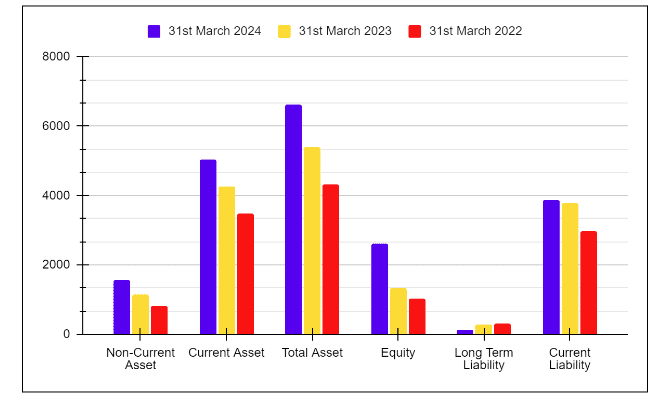
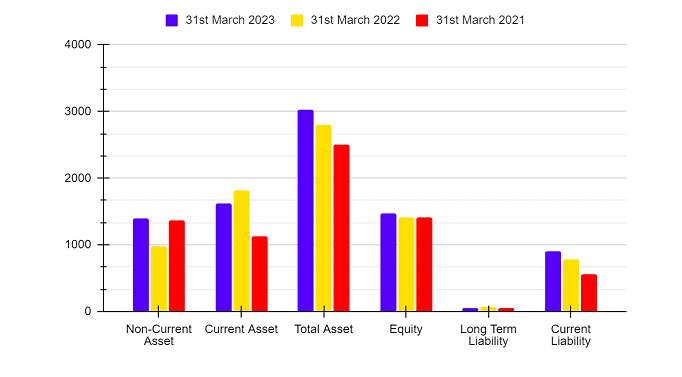
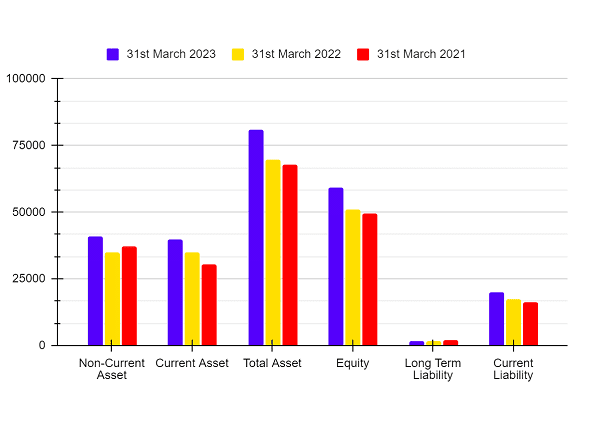
    Balance Sheet (In INR crore)

    Particulars31st March 202331st March 202231st March 2021
    Non-Current Asset40,860.2534,943.1737,224.65
    Current Asset39,861.9434,864.6030,442.08
    Total Asset80,743.5969,807.7767,666.73
    Equity59,315.4751,066.1149,479.83
    Long Term Liability1,521.121,533.212,041.27
    Current Liability19,906.3817,208.4516,145.63
    Balance sheet of Sun pharma

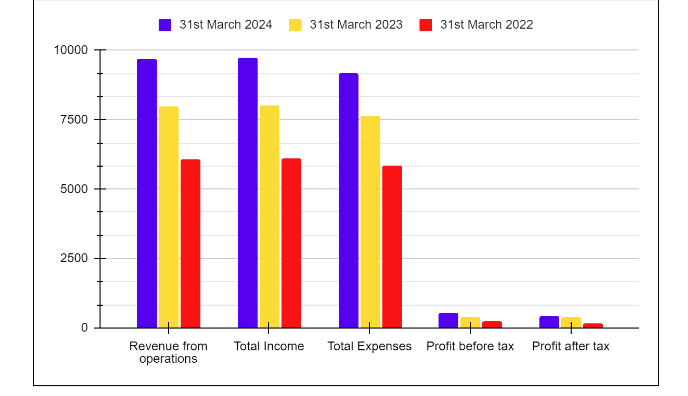
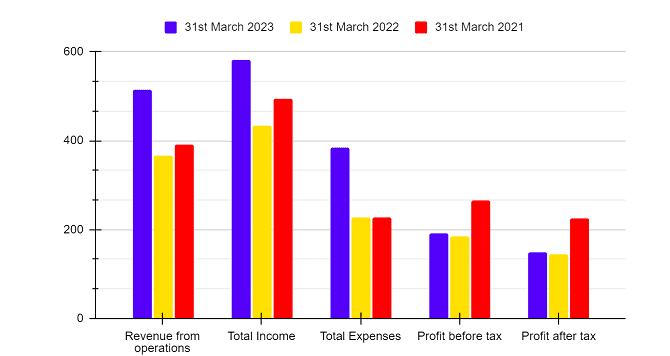
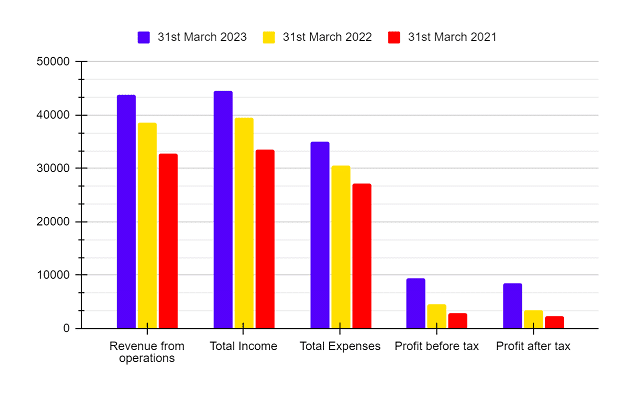
    Income Statement (In INR crore)

    Particulars31st March 202331st March 202231st March 2021
    Revenue from operations43,885.6838,654.4932837.5
    Total Income44,520.2039,576.0033,473.48
    Total Expenses34,940.3230,527.8627,228.15
    Profit before tax9,408.434,481.322,799.37
    Profit after tax8,512.943,389.282,272.35

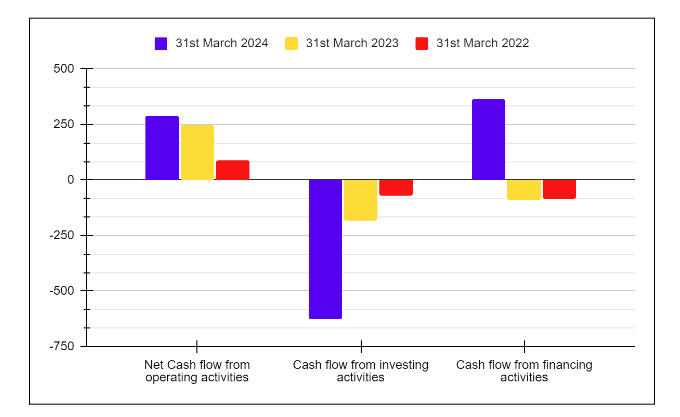
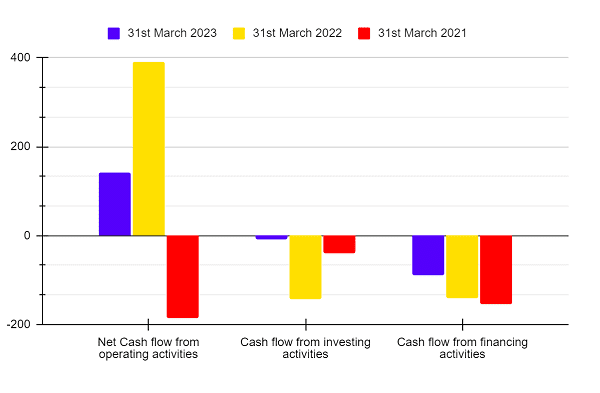
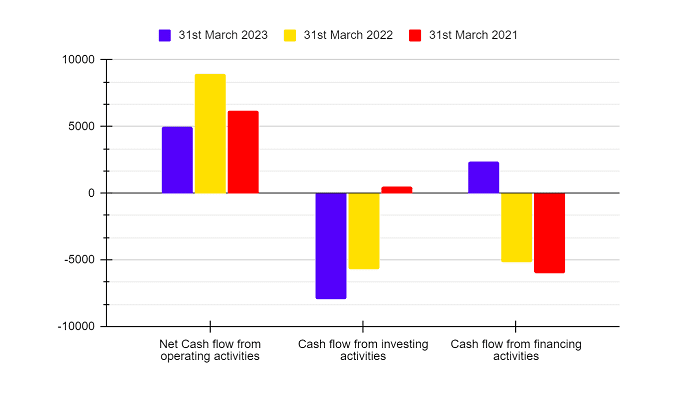
    Cash Flow Statement (In INR crore)

    Particulars31st March 202331st March 202231st March 2021
    Net Cash flow from operating activities4,959.338,984.546,170.37
    Cash flow from investing activities-7,943.68-5,724.74536.22
    Cash flow from financing activities2,376.07-5,193.46-5,980.48
    Cash flow Statement of Sun Pharma

    Key Performance Indicators (KPIs)

    Particulars31st March 202331st March 202231st March 2021
    Operating Profit Margin (%)24.7516.1319.52
    Net Profit Margin (%)8.12-0.6416.71
    Return on Capital Employed (%)15.798.28.15
    Current Ratio22.041.89
    Return on Net Worth (%)15.136.816.24
    Debt to Equity Ratio0.110.020.07

    Sun Pharma’s operating profit margins have improved year over year, rising from 16.13% in 2022 to 24.75% in the financial year 2023. The company’s return on net worth ratio has also improved over time.

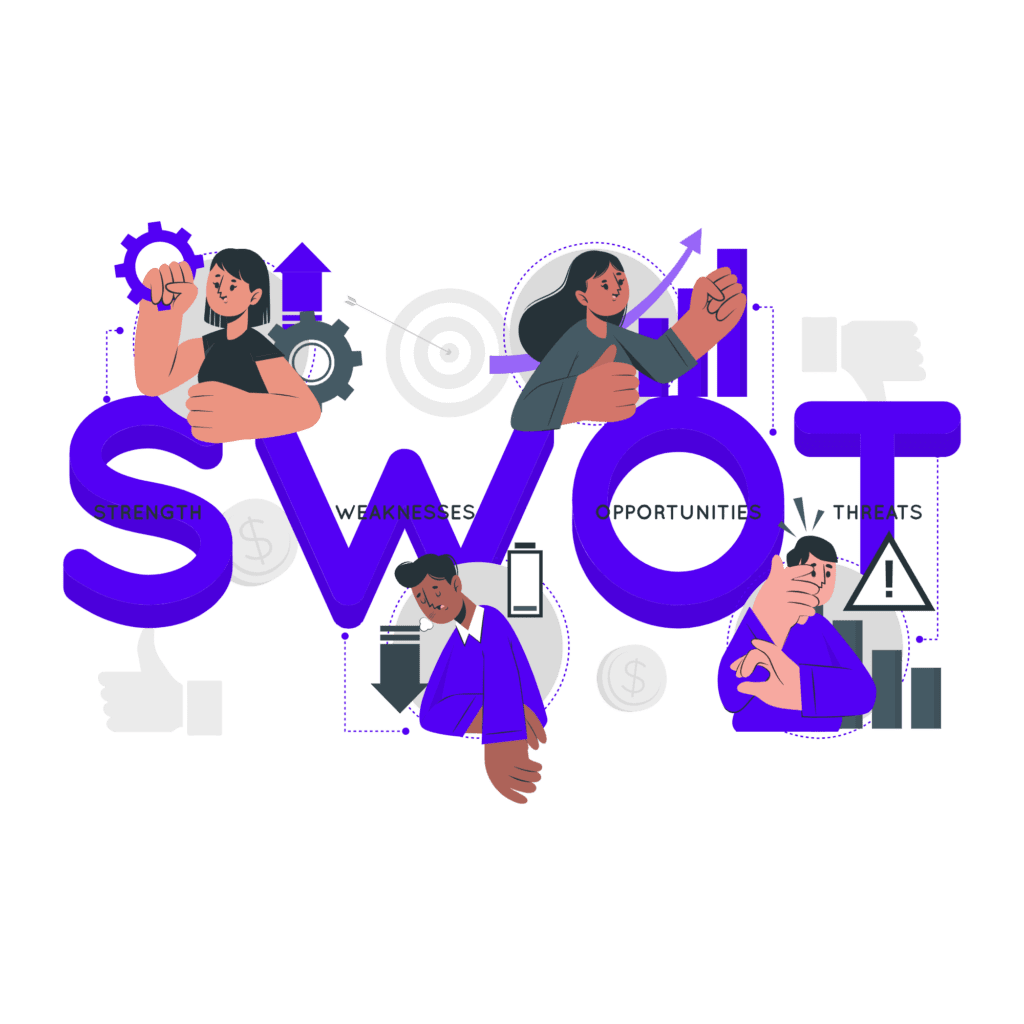
    SWOT Analysis

    Strength

    1. The company is a market leader and is among India’s top 5 pharma companies, having a solid brand presence for a long period.
    2. The product portfolio of the company is well diversified which includes products from generic to specialty pharmaceuticals.
    3. The company’s investment in the research and development department allows it to improve its product continuously.
    4. The company’s financial performance has improved over the period, their profit and revenue both have increased in the past 3 years.

    Weakness

    1. The regulations in the pharma industry are stringent, and the company has faced various challenges issued by the USFDA.
    2. A major portion of the company’s revenue comes from generic medicines; any price change would lead to a decrease in their revenue.
    3. The company faces stiff competition from various national and international players.

    Opportunity

    1. The company can expand its business overseas in emerging markets such as Southeast Asia, Africa, and other European Nations.
    2. Along with generic medicines, the company can focus more on specialty pharmaceuticals, which typically have higher margins.
    3. The company spends a higher percentage of its revenue on product research and development, however, there’s still room to work with biotech companies and other research institutions to expand its product line.

    Threat

    1. Pharma is a highly competitive market; there are many well established players in the pharmaceutical sector, and any change in the product’s price will result in a significant reduction in the company’s profit.
    2. Any kind of disruption in the supply chain of the company would directly affect its sales and profit.
    3. The Sun Pharma owns several patents, and their expiration would result in increased competition from generic drug makers. It can significantly reduce the margins of the company.

    Awards & Recognitions

    1. According to patient groups, the company is the best generic pharmaceutical company in the “Corporate Reputation of Pharma” study conducted in 2021.
    2. The Best New Product Introduction award is given to Sun Pharma by DIANA (Distribution Industry Award for Notable Achievements in Healthcare) at the 2021 Annual Healthcare Distribution Alliance Conference.
    3. In 2020, the business was given the Global Peacock Award for Corporate Social Responsibility.

    Conclusion

    The healthcare market is constantly changing, and Sun Pharma is a pioneer in this field since it prioritizes drug development and research while leading the way for a healthier and more promising future for everybody. The company manages to conquer its many rivals, despite the challenges it faces, with effectiveness. The business is growing exponentially and is in excellent financial standing. Annually, their operational revenue is likewise rising in tandem with this.

    However, if you want to invest in this company, you should analyze the risks of the company in detail as activities of Pharma companies are closely observed by the USFDA and other regulatory bodies. Further, it is suggested to consult with your advisor before making any investment decision.

    Frequently Asked Questions (FAQs)

    1. Who is the founder of Sun Pharma?

      Mr. Dilip Shanghvi is the founder and managing director of Sun Pharma Industries Ltd.

    2. What is the total promotor pledging in Sun Pharma Industries?

      As of December 2023, the promoters have pledged a total of 1.33% of total equity.

    3. Who are the main competitors of Sun Pharma Industries Ltd?

      Sun Pharma faces major competition from its listed peers, which include Cipla, Dr. Reddy, Zydus Life Sciences, Divis Labs, etc.

    4. Is Sun Pharma Industries Ltd a profitable company?

      Yes, Sun Pharma Industries is a profitable company, it has posted a profit of INR 8,512.94 crores for the financial year ended 2023 and has been continuously posting profits for the last 10 years.

    5. How big is Sun Pharma Company?

      Sun Pharma is India’s largest pharmaceutical company and the 4th largest generic drug company in the world.

  • What Was the Great Depression? Impact & Causes

    What Was the Great Depression? Impact & Causes

    The Great Depression – A phrase that conjures images of bread lines, dust storms, and despair. But what exactly caused this economic catastrophe? And what can we learn from it today?

    In this blog, we will deep dive into the Great Depression, exploring the factors that led to its outbreak.

    The Great Depression – An Overview

    Great Depression

    The Great Depression was a severe global economic downturn that lasted from 1929 to roughly the late 1930s. It was the longest and most severe depression ever experienced by the industrialised Western world, sparking fundamental changes in economic institutions, macroeconomic policy, and economic theory.

    It began in the United States with the stock market crash of 1929. The crash triggered the unemployment rates. By 1993, one-quarter of all workers in the United States were unemployed.

    The effects were felt around the world. International trade declined and agricultural prices collapsed, leading to social unrest and political instability in many countries.

    Before we proceed further, let us have a quick review of what Depression means in economics.

    Depression is a severe downturn in economic activity that is marked by a sharp decline in economic growth (GDP falls significantly), high unemployment as businesses cut back production, leading to job losses, and deflation because prices may fall or stagnate due to weak demand and reduced investment and trade.

    Causes of the Great Depression

    The Great Depression was not caused by a single factor, but rather a confluence of issues. Below mentioned are some of the key contributing factors that economists generally agree upon:

    • Stock Market Crash of 1929 – The Roaring twenties saw a massive stock market bubble fuelled by speculation and easy credit. When the bubble burst in October 1929, it wiped out billions of dollars in wealth and triggered a wave of panic selling. This loss of confidence led to a sharp decline in consumer spending and investment.
    • Banking Panics and Deflation – The stock market crash caused many people to rush to banks and withdraw their savings, fearing bank failure. This led to the collapse of thousands of banks. The money supply shrank with fewer banks’ lending money, leading to deflation. Deflation discourages spending as people wait for even lower prices, further weakening the economy.
    • Unequal Income Distribution – During the 1920s, much of the economic gains went to the wealthy, while wages for average workers stagnated. This meant that a large portion of the population had little disposable income to spend, limiting overall consumer demand.
    • Government Policies – The government’s response to the crisis was also debated. Some argue that the Federal Reserve’s tight monetary policies worsened the situation by limiting the money supply. Additionally, the Smoot-Hawley Tariff Act of 1930 raised import taxes, sparking a trade war that further hampered international trade.
    • Global Conditions – The international economy was interconnected, and the problems in the United States quickly spread to other countries. The gold standard, which fixed exchange rates between currencies, made it difficult for countries to respond to the crisis with independent monetary policies.

    Effects of the Great Depression

    Effects of the Great Depression

    The impact of the Great Depression was devastating, leaving deep scars on the global economy and society.

    • With unemployment and economic collapse, many people lost their homes and faced hunger. Breadlines became a grim symbol of the era, with millions relying on soup kitchens and charities for basic needs.
    • The event also marked a turning point in government intervention in the economy. The era saw the rise of programs like social security and unemployment insurance aimed at providing a safety net for citizens.
    • Businesses failed at an alarming rate, leading to mass unemployment. In the US, unemployment peaked at a staggering 25% in 1993, meaning one in four workers was not able to find a job, which ultimately translated to widespread poverty and hardship.
    • The economic downturn, coupled with severe drought conditions, led to an ecological disaster in the Great Plains of the United States. Millions of acres of fertile land were ravaged by dust storms, displacing farmers, and further crippling the agricultural sector.
    • International Trade declined as countries turned inward, protecting their economies with tariffs and restrictions. This strangled global commerce and hampered economic recovery.
    • The desperation caused by economic hardship led to social unrest and labour strikes. People demanded government action and reforms to alleviate their suffering.
    • The depression took a severe psychological toll. The loss of livelihood, homes and sense of security led to widespread despair and hopelessness.
    • The failure of existing economic systems led to a rise in new ideologies, including communism and fascism. These ideologies promised solutions to the economic crisis and gained popularity among people.

    How did the Great Depression end?

    There is no single answer to how the economic downturn ended. Gradual recovery and World War 2 suggest that the Great Depression gradually improved in the late 1930s, when US President Franklin D. Roosevelt aimed to create jobs, stimulate the economy, and provide relief to the unemployed.

    However, full recovery remained elusive until World War 2 began in 1939. The massive mobilisation of resources and wartime spending boosted production and employment.

    Regardless of the exact cause of its end, it left a lasting impact and fundamentally changed the role of the government in the economy.

    Conclusion

    The Great Depression left a profound mark on the world, shaping economies, societies, and governments. It serves as a stark reminder of the fragility of economic systems and the importance of sound economic policies and regulations. The Great Depression is a historical event that helps us understand the economy better and prevent future economic crises.

    Frequently Asked Questions (FAQs)

    1. When did the Great Depression happen?
      Ans. It generally lasted from 1929 to the late 1930s.
    2. What was the Dust Bowl?
      Ans. A severe ecological disaster caused by drought and economic hardship that destroyed the Great Plains.
    3. What was the role of the government during the depression?
      Ans. The era saw a rise in government intervention to provide some relief to the general public.
    4. Which countries were affected by the Great Depression?
      Ans. As the economies of many countries are linked together, the effects of the Great Depression were felt in almost the entire world. However, the countries such as the USA, the UK, and many European countries were severely affected by the Great Depression.
    5. How did the Great Depression impact people’s lives?
      Ans. Millions of people lost their homes, faced hunger, and suffered immense trauma because of the Great Depression.

      Disclaimer: The securities, funds, and strategies mentioned in this blog are purely for informational purposes and are not recommendations.

    Also give this a ReadTop Economic Indicators

  • LTIMindtree Case Study: Products, Services, Financials, KPIs, and SWOT Analysis

    LTIMindtree Case Study: Products, Services, Financials, KPIs, and SWOT Analysis

    LTIMindtree stands out as a major player in the Indian landscape. It provides exceptional services and is known for its critical contributions to India’s people and economy. Today’s blog will provide the company overview, business segment, financials, KPIs, and SWOT Analysis.

    LTIMindtree Case Study Overview

    In the fast-evolving world of technology, LTIMindtree Ltd. has made its name in the game. But that’s not how the company began its operations. LTIMindtree is a merged entity of LTI and Mindtree. The merger happened in 2022 and had its record date as 24th November 2022. As part of the merger, all shareholders of Mindtree were issued shares of LTI in the ratio of 73 shares of LTI for every 100 shares of Mindtree.

    Currently, the company holds an important position in the competitive IT services industry. This company specializes in data analytics, cloud computing, and Artificial Intelligence, and also helps its clients overcome complex business challenges and achieve faster growth. The company assists its clients with customized end-to-end solutions tailored to meet specific requirements.  

    Company TypePublic
    IndustryInformation technology
    Founded1997 
    HeadquartersMumbai, Maharashtra, India
    Area servedWorldwide

    LTIMindtree Case Study Products and Services

    LTIMindtree has a diverse portfolio of products and services. Let’s have a look at some of them:

     LTIMindtree

    Data Analytics

    The company emphasizes innovation and contemporary technology stacks. It helps accelerate growth and achieve remarkable business results on a large scale. LTIMindtree Products enhances the client’s capabilities and delivers cutting-edge data and analytics services to its clients by utilizing accelerators and platforms to navigate their digital transformation journeys.  

    Cybersecurity

    Cybersecurity helps clients protect their computer servers, networks, and data from malicious attacks. LTIMindtree cybersecurity service is a well-defined cybersecurity model powered by technology-enabled progression towards intelligent and autonomous cyber defense.

    Digital Engineering

    This service helps customers design and conceive cutting-edge digital

    products that offer a seamless customer experience. It helps to gain insights and stores customer data. 

    Quality Engineering Testing

    It helps to improve the client’s software by implementing manual and automated testing processes throughout the entire SDLC (Software Development Lifecycle). The company uses DevOps, Performance, Cloud, and Automation enabling firms in their digital transformation journey.

    Canvas

    It helps to provide a hassle-free and modern interface platform designed to meet the needs of the remote and hybrid workforce. 

    Market Data

    Market Cap ₹ 139,829 Cr. 
    TTM P/E 30.42
    ROCE 37.7 % 
    ROE 29.2 % 
    (As on 24th April)

    Read Also: Larsen & Toubro Ltd Case Study: Business Model, Financials, KPIs, and SWOT Analysis

    LTIMindtree Case Study Financial Highlights

    Income Statement

    ParticularsMar-23Mar-22Mar-21Mar-20
    Operating Revenue 33,183.0026,108.7012,369.8010,878.60
    Total Income 33,752.9026,894.6012,657.3011,216.70
    Total Expenditure 27,088.3020,880.209,657.808,858.30
    Profit before Tax 5,791.505,293.902,588.202,002.90
    Consolidated Profit 4,408.303,948.301,936.101,520.10
    (All Values are in Crores)
    Income Statement of LTIMindtree

    The income statement shows trending levels of growth at all major lines. Though expenditure increased substantially in the past 3 years, the revenue surge helped continue profit growth. 

    Balance Sheet

    ParticularsMar-23Mar-22Mar-21Mar-20
    Non-Current Liabilities 1,033.401,158.50715.10866.40
    Current Liabilities 5,482.605,092.302,632.302,331.20
    Non-Current Assets 5,929.405,605.102,523.202,273.70
    Current Assets 17,185.8014,938.608,131.306,329.00
    (All Values are in Crores)
     Balance sheet of LTIMindtree

    The company showcases a healthy state of balance sheet as non-current liabilities have been kept at a minimum in the past 4 years while showing a consistent trend in increasing assets. 

    Cash Flow Statement

    ParticularsMar-23Mar-22Mar-21Mar-20
    Cash From Operating Activities 3,094.603,250.702,399.601,643.50
    Cash Flow from Investing Activities -330.90-1,645.30-1,656.00-652.00
    Cash from Financing Activities -1,931.70-1,680.40-508.80-890.00
    (All Values are in Crores)
     Cash flow statement of LTIMindtree

    The cash flow statement indicates a healthy state due to a consistent level of cash from operations. The financing and investing activities show potential as continuous outflow in these fields will yield returns in the long term.  

    Profitability Ratios

    ParticularsMar-23Mar-22Mar-21Mar-20
    ROCE (%) 38.2749.9741.7340.38
    ROE (%) 29.2037.0530.8629.92
    ROA (%) 20.2025.3220.1320.12
    EBIT Margin (%)16.1917.7419.2416.06
    Net Margin (%) 13.0714.6915.3113.56

    The business enjoys a consistent margin of profits at both net income level and operating income level.

    LTIMindtree Case Study SWOT Analysis

    This case study analysis highlights LTIMindtree Ltd’s strengths in brand recall and market diversification, weaknesses like FX risk, opportunities in untapped markets and Generative AI, and threats such as high attrition rates:

    SWOT Analysis of LTIMindtree

    Strengths

    • LTIMindtree Ltd enjoys the position of 5th largest IT service provider in the country. 
    • LTI has a strong brand recall because of its affiliation with the L&T group. 
    • Due to the company’s broad network, it is not heavily dependent on just 1 geography.
    • The company has a history of providing client satisfaction and creating a culture shift that is guided by the management.

    Weaknesses

    • The company majorly operates in foreign markets. This opens the company to FX risk. 
    • The client base of the company is concentrated in the BFSI market. 
    • The company faces tough competition from larger established companies. 

    Opportunities

    • Due to globalization, newer markets are emerging, which opens the possibility of operating in untapped European markets. 
    • The company enjoys a competitive advantage while participating in large deals because it is scaling up cross-sell and up-sell opportunities in the market.   
    • The company made significant investments in R&D and has made significant progress in the segment of Generative AI. This could open up new doors for the company.

    Threats

    • The company currently faces high attrition rates. This can cause long term issues in the company. 
    • Further increase in interest rates can put additional pressure on the clients, thus leading to reduced revenues. 

    Read Also: Varun Beverages Case Study: Business Model, Financials, and SWOT Analysis

    Conclusion

    LTIMindtree Ltd., a technology consulting and digital solutions company, has shown steady growth and profitability over the years. With a diverse range of services and a strong client base, the company focuses on innovation and client satisfaction while positioning itself well in the competitive landscape. 

    However, it is important to perform extensive analysis before investing your hard-earned money. 

    Also, give this a read – HCL Technologies Case Study

    S.NO.Check Out These Interesting Posts You Might Enjoy!
    1Sun Pharma Case Study: Business Model And SWOT Analysis
    2Asian Paints Case Study: Business Segments, KPIs, Financials, and SWOT Analysis
    3Grasim Industries Case Study: Subsidiaries, Products, Financials, and SWOT Analysis
    4Ola Electric Case Study: Business Model, Financials, and SWOT Analysis
    5Hero MotoCorp Case Study: Business Model and SWOT Analysis
    6Kalyan Jewellers Case Study: Business Model, Marketing Strategy & SWOT

    Frequently Asked Questions (FAQs)

    1. What type of company is LTIMindtree?

      LTIMindtree is a global company that has expertise in information technology services and consulting.

    2. Where is the headquarters of LTIMindtree?

      The headquarters of LTIMindtree is based in Mumbai, Maharashtra, India.

    3. Who is the CEO of LTI Mindtree?

      Mr. Deabshis Chatterjee is the CEO of LTIMindtree.

    4. What are the types of products and services LTIMindtree offers?

      The products and services offered are: consulting, cybersecurity, data analytics, cloud computing, iNXT, canvas, and many more.

    5. What is the biggest weakness of LTIMindtree?

      The company receives a significant portion of its revenue from global companies. This opens the company to FX risks. 

  • Shriram Finance Case Study: Business Model, Financials, and SWOT Analysis

    Shriram Finance Case Study: Business Model, Financials, and SWOT Analysis

    How would you go about approaching a bank for funding if you wanted to grow your company and needed some extra cash? Is there any option to obtain financing if the bank rejects your application? Indeed, some businesses are registered with the RBI as non-banking financial companies. 

    In today’s blog, we will be introducing you to a company known as “Shriram Finance Limited”. 

    Overview of Shriram Finance

    The Shriram group, parent company of Shriram Finance, is well-known for its diverse industry expansion, which includes consumer goods, infrastructure, and financial services. Since its founding in 1974, the business has expanded rapidly and made a name for itself as a major force in the non-banking financial institution market. The organization caters to a broad clientele of individuals and businesses by providing tailored financial solutions. R. Thyagarajan, T. Jayaraman, and V.S. Sudarshan started the company’s operations and currently has the headquarters in Chennai. The company has expanded tremendously from a modest loan company to commercial vehicle financing and has emerged as one of India’s top non-banking financial companies (NBFCs). 

    Shriram finance NBFC

    Business Model of Shriram Finance

    The Shriram Finance business model revolves around 3 segments.

    1. Retail Financing – The company provides loans for commercial, passenger, and construction equipment as well as other assets to individuals and corporations, ranging from small business owners to major fleet operators. 

    2. SME Financing – To meet clientele’s operating and working capital requirements, small and medium-sized businesses also look to this corporation for loans. 

    3. Customized Financial Products – Additionally, the business creates tailored financial solutions to meet the needs of individual clients. 

    Competitive Edge

    1. This organization combines innovation and technology through its digital platform, including an online loan application and a digital payment system. 

    2. The organization serves customers from both urban and rural areas with its extensive nationwide network of branches. 

    3. The business is doing its best to manage risk and compliance. It uses a strong risk assessment procedure and an assessment system for credit.

    4. The company’s customer-centric strategy, which emphasizes establishing long-term relationships with clients, is the key to its success.

    Market Details

    52 Week HighINR 2605
    52 Week LowINR 1306
    Face ValueINR 10
    TTM PE Ratio13.8
    Market Capitalization91,697 Crores
    (As on 23rd April 2024)

    Read Also: TCS Case Study: Business Model, Financial Statement, SWOT Analysis

    Financial Highlight of Shriram Finance

    Balance Sheet

    Particulars31st March 202331st March 202231st March 2021
    Current Assets203615140442128368
    Non Current Assets698418261459
    Non Current Liabilities867516811961258
    Current Liabilities805354805446851
    (In Crores)
    BS of Shriram Finance

    From the above table, we can say that the company’s current assets have shown a growth on YoY basis while the non-current assets have stayed consistently low. Correspondingly, the current liabilities witnessed a growth of almost 67%, on a YoY basis.

    Income Statement

    Particulars31st March 202331st March 202231st March 2021
    Total Income305081927417436
    Total Expenses936359905104
    Profit before tax211441328312332
    Profit after tax601127072487
    (In Crores)
    IS of Shriram finance

    The company’s income has increased by almost 58% in the year FY 2023 as compared to FY 2022, although its expenses have increased in the same proportion, leading to a relatively smaller jump in net profit.

    Cash Flow Statement

    Particulars31st March 202331st March 202231st March 2021
    Cash flow from operating activities-17625-8859-4239
    Cash flow from investing activities-193-34-24
    Cash flow from financing activities11819850412225
    (In Crores)
    CFS of Shriram Finance

    The company’s cash flow from operating activities has been negative for the last three fiscal years. This is a major reason of concern regarding the company’s performance. 

    KPIs of Shriram Finance

    Particulars31st March 202331st March 202231st March 2021
    Operating Profit Margin (%)69.3868.9870.79
    Net Profit Margin (%)19.7214.0614.27
    Return on Capital Employed (%)16.2514.0914.86
    Debt to Equity Ratio3.774.394.89
    Current Ratio2.532.922.74

    Read Also: Titan Case Study: Business Model, Financials, and SWOT Analysis

    SWOT Analysis of Shriram Finance

    SWOT Analysis of Shriram Finance

    Strengths

    1. The company has a strong brand presence in the country and utilises this strength to its full potential.  

    2. A wide range of services are available from Shriram Finance, such as building loans, auto loans, and financial support for a range of client needs. 

    3. The business combines creativity and technology to ensure that its operational activities function smoothly.

    Weaknesses

    1. The business is heavily exposed to a few distinct industries, such as automotive, real estate, etc. so any downturn in these industries will affect their bottom line.

    2. Strict regulatory requirements apply to the banking industry, and any tightening of RBI banking policies will make the business more difficult and risky. 

    3. The corporation is concentrating heavily on underbanked areas of the country, which may lead to a reduced NPA in the future. 

    Opportunities

    1. They would be able to reach more people in rural India thanks to the government’s financial inclusion plans. 

    2. Strategic partnerships and acquisitions can help them expand their product offerings even further.

    3. By incorporating cutting-edge technology into its online digital products, the corporation may expand its customer base even further. 

    Threats

    1. The financial sector in India is highly competitive, and various companies are offering their services to retailers, hence intense competition could be a major threat for the company.

    2. Any major modification to regulatory requirements will result in higher operating costs and lower profit margins for the business. 

    Conclusion

    Shriram Finance Company is an important player in the Indian financial sector and advances the nation’s economy by giving different societal segments access to financing.

    To promote growth and profitability, the company has made use of its strong brand, a large range of products, a national presence, and a customer-focused philosophy.

    However, before making any investment decisions it is advised that you analyse your risk tolerance. 

    S.NO.Check Out These Interesting Posts You Might Enjoy!
    1Hindustan Unilever Case Study
    2Elcid Investments – India’s Costliest Stock
    3Reliance Power Case Study
    4Burger King Case Study
    5Zara Case Study

    Frequently Asked Questions (FAQs)

    1. How old is Shriram Finance Company?

      Shriram Finance has been in business for more than 50 years and is one of the top NBFCs in India. 

    2. What does Shriram finance do?

      A variety of financial services are offered by the firm, including auto and truck financing.

    3. Who is the owner of Shriram Finance?

      R. Thyagarajan is the founder of the Shriram Group, while Y S Chakravarti serves as the CEO of the business. 

    4. Is Shriram Finance approved by RBI?

      Shriram Finance is an NBFC (Non-Banking Financial Company) established under the Company’s Act 2013 and is registered with RBI.

    5. Which companies merged with Shriram Finance?

      In 2022, Shriram Finance merged with Shriram Transport Finance and Shriram City.

  • Grasim Industries Case Study: Subsidiaries, Products, Financials, and SWOT Analysis

    Grasim Industries Case Study: Subsidiaries, Products, Financials, and SWOT Analysis

    Grasim Industries Limited is a flagship company of the global conglomerate Aditya Birla Group. The company started as a textiles manufacturer in India in 1947 and evolved into a leading diversified player with a strong presence across many sectors. Grasim Industries products include viscose staple fiber, filament yarn, cement (via UltraTech), chemicals like caustic soda and epoxy, textiles, insulators, fertilizers, and financial services. Today’s blog will dive into the company overview, business segments, market data, financial highlights, and SWOT analysis.

    Grasim Industries Overview

    Recognised as ET Sustainable Organization 2023, Grasim Industries has evolved into the true essence of the phrase “World first.” The company draws revenue from its three broad segments: Viscose Fibre and Yarn, Chemicals, and Others. 

    Of the 3 segments, Grasim Industries generates most of the revenue from the Viscose Fiber and Yarn segment. 

    Company Public
    Founded at1947
    HeadquartersMumbai, Maharashtra
    Area servedWorldwide
    Parent Aditya Birla Group

    Recognition & Achievements

    • 2018 – Forbes ranks Grasim Industries as a Growth Champion 2018.
    • 2021 – Attains the 7th position on the Responsible Business Ranking.
    • 2023 – Work Institute certified Grasim’s Domestic Textile Business.

    Subsidiaries

    • UltraTech Cement

    UltraTech Cement holds an iconic position as a major cement manufacturer with an annual production capacity exceeding 100 million tonnes. It has expertise in ready-to-mix concrete, grey cement, and white cement. The business extended its geographical boundaries and expanded its operations to UAE, Bahrain, Bangladesh, and Sri Lanka, making it a global cement manufacturer. 

    • Aditya Birla Capital

    Aditya Birla Capital is a financing and advisory solutions provider and has served more than 3.8 million customers. It provides the services of home loans, personal loans, securities against stocks, and much more. It has become an essential player as over 60% of its lending portfolio caters to SME customers and retailers. Aditya Birla ranks among the nation’s top five private life insurance providers.

    Major Products

    • Linen Yarn and Fabrics

    The company has a strong brand reputation in linen yarn and fabrics for its elegance, quality, and comfort. The business is renowned for its sophisticated standards of clothing.

    • Paints

    The company is aiming to become the biggest player in the fast-growing decorative paints industry. It provides a variety of decorative and industrial paints known for their durability, quality, and eco-friendly attributes.

    • Chlor-alkali and Epoxy Products

    The company has created a strong footprint and brand reputation in the industry. In addition to offering caustic soda, it also produces chlorine derivatives and epoxy products and has become a market leader in the chlor-alkali industry. These products are essential in different sectors, meeting quality standards and demonstrating versatility.

    • Birla Pivot

    Birla Pivot is a thriving e-commerce platform that penetrates the country’s building materials segment. It is a B2B platform and is Grasim’s flagship. The business is expected to undergo rapid growth in the coming years and aims to overcome hurdles while providing seamless integration with other projects. This platform boasts consumer-friendly features and a complete track-and-trace system for every order.

    • Viscose Staple Fiber (VSF)

    VSF is a biodegradable and versatile fiber and is used for home textiles, dress materials, manufacturing apparel, knitted wear, and non-woven applications. Grasim has become the global leader in this industry by providing quality and sustainability.

    Read Also: Ultratech Cement Case Study – Financials Statements, & Swot Analysis

    Market Data

    Market Cap ₹ 1,50,936 Cr.
    TTM P/E 26.84
    ROCE 12.63 % 
    Book Value per share₹ 1,267.63
    ROE 8.67 % 
    Dividend Yield 0.44 % 
    Face Value ₹ 2.00
    (As on 19th April 2024)

    Grasim Industries Financial Highlights

    Income Statement

    ParticularsMar-23Mar-22Mar-21Mar-20
    Operating Revenue 1,17,627.0895,701.1376,404.2975,269.48
    Total Income 1,21,239.1396,522.4777,462.0976,238.29
    Total Expenditure 96,038.0375,269.7657,768.9558,008.38
    Profit before Tax 14,726.7112,626.869,771.436,491.54
    Profit after Tax 11,078.2010,690.556,749.246,575.86
    Consolidated Profit 6,827.267,549.784,304.824,411.74
    (All values are in Crores)
    IS of Grasim

    Operating revenue has seen massive growth over the past years, fueled by a corresponding increase in total expenditure. The income jump, however, did not translate to a similar increase in net profit. 

    Balance Sheet

    ParticularsMar-23Mar-22Mar-21Mar-20
    Non-Current Liabilities 1,44,376.961,15,089.611,12,279.371,06,625.41
    Current Liabilities 69,532.9957,884.4751,921.8446,379.50
    Non-Current Assets 2,69,300.412,32,381.102,07,073.531,92,128.52
    Current Assets 67,504.3456,758.1657,956.4351,445.38
    (All values are in Crores)
    BS of Grasim

    The Balance Sheet saw a massive but continuous increase in non-current assets while maintaining a much lower level of non-current liabilities. Such a consistent increase shows a positive trend for the company. 

    Cash Flow Statement

    ParticularsMar-23Mar-22Mar-21Mar-20
    Cash From Operating Activities-12,685.147,037.6515,075.0816,803.43
    Cash Flow from Investing Activities -13,686.71-3,543.18-9,229.49-11,547.64
    Cash from Financing Activities 26,469.13-6,733.13-8,003.45-3,417.93
    CFS of Grasim

    The Cash Flow Statement signifies a grim state. Operations have consistently declined inflows, with the latest FY witnessing a drastic dive. The investing and financing activities also show a lot of turbulence.  

    Profitability Ratios

    ParticularsMar-23Mar-22Mar-21Mar-20
    ROCE (%)12.6311.9310.979.48
    ROE (%)14.4115.2111.1011.52
    ROA (%) 3.543.842.642.71
    EBIT Margin (%)14.4817.0019.1117.61
    Net Margin (%) 9.1411.088.718.63
    Cash Profit Margin (%) 12.3514.3512.9312.87

    The company’s profitability signifies a healthy state with ROCE seeing a consistent but slow increase in the past 4 years. The company has consistently been able to net a margin of around 9%. 

    Grasim Industries SWOT Analysis

    SWOT of Grasim

    Strengths

    • Grasim enjoys an extensive dealer network that helps the company grow globally and deliver efficient services to its customers. 
    • The company enjoys the benefits of a stable brand value in the construction segment as it has a history of 75 years.
    • The company is currently the largest producer of VSF in the country and is thus able to command significant control over the pricing. 

    Weaknesses

    • Grasim industries operates in a cyclical industry and thus experiences volatility in downturns. 
    • The capex heavy business model can lead to increased leverage in the coming years. 

    Opportunities

    • Grasim industries has forayed into the paints segment and plans to make a foothold in the industry.  
    • The Indian textile industry is estimated to continue growing in the coming years, and the Grasim industries can benefit heavily from this development. 

    Threats

    • The VSF segment generates the majority of the revenue, and demand for this segment is expected to decline in the future. 
    • There is a growing number of global players interested in entering the Indian subcontinent and failure to keep them at bay can result in decreased margins.

    Read Also: Asian Paints Case Study: Business Segments, KPIs, Financials, and SWOT Analysis

    Conclusion

    In the past few decades, Grasim Industries has become a major player in the Indian market. In addition to extensive dealer networks, the company has skilled employees, contributing to its growth and efficiency. Despite this, seasonality in the industry presents challenges.

    S.NO.Check Out These Interesting Posts You Might Enjoy!
    1Sun Pharma Case Study: Business Model And SWOT Analysis
    2LTIMindtree Case Study: Products, Services, Financials, KPIs, and SWOT Analysis
    3Ola Electric Case Study: Business Model, Financials, and SWOT Analysis
    4Varun Beverages Case Study: Business Model, Financials, and SWOT Analysis
    5Hero MotoCorp Case Study: Business Model and SWOT Analysis

    FAQs

    1. What is the full form of GRASIM?

      The full form of GRASIM is Gwalior Rayon Silk Manufacturing (Weaving) Company Limited.

    2. What does Grasim Industries Ltd do?

      The company started as a textile manufacturer in 1947 but is now involved in various business segments, such as the production of Fabrics, Viscose, Diversified Chemicals, and Linen Yarn.

    3. What are the Grasim industry’s products?

      They offer a wide variety of products, such as viscose staple fiber, yarn, pulp, grey cement, white cement, caustic soda, allied chemicals, epoxy, linen, and wool.

    4. What are the major risks faced by Grasim industries?

      The company faces issues due to the capex heavy business and high level of seasonality.

    5. When was the Grasim Industries established?

      The company was established in 1947, in Mumbai, Maharashtra.

    6. What are the products of GRASIM?

      Grasim Industries produces viscose staple fiber, filament yarn, chemicals (caustic soda, epoxy), cement (via UltraTech), and textiles. It also operates in financial services, fertilizers, and power insulators.

  • HCL Technologies Case Study: Financials, KPIs, And SWOT Analysis

    HCL Technologies Case Study: Financials, KPIs, And SWOT Analysis

    Did you know there is an Indian listed company which is in the list of 2025 World’s Most Ethical Companies?

    We are talking about HCL Technologies Limited, an Indian multinational technology company headquartered in Noida, India, and established by Shiv Nadar in 1991. In this blog, we will cover the company’s overview, market data, financials, balance sheet, and SWOT analysis.

    Overview of HCL Tech

    HCL Technologies is a pioneer company in IT services, powered by a global and diverse team of 224,700+ employees across the globe, providing services in 60+ countries. This company comes under the HCL Enterprise.

    Further, as of April 2024, HCL Tech has 210+ delivery centres and 60+ innovation labs. The company has cumulatively served more than 10,000 clients.

    There are three main business units:

    1. Products & Platforms (P&P)

    2. IT and Business Services (ITBS)

    3. Engineering and R&D Services (ER&D)

    FormerlyHindustan Computers Private Limited
    CompanyPublic
    FounderShiv Nadar
    HeadquartersNoida, Uttar Pradesh, India
    Area servedWorldwide
    Parent CompanyHCL Group

    Did you know?

    As of January 2024, Shiv Nadar, the founder of HCL Tech, is the 9th richest person in Asia.

    HCL Technologies Business Model

    HCL provides a broad array of business lines, products, and services. The company engages in different segments:

    Application Services

    The company provides the services industrialized delivery model sets and brings exceptional value to its customers. It includes:

    •  Oracle Services
    •  Quality Assurance & Testing Services
    •  SAP Services
    •  Microsoft Services.

    Business Process Services

    HCL understands the business priorities and is helping organizations transition from operational excellence.

    • Automated Product Support
    • Cognitive Automation
    • Finance & Accounting
    • Supply Chain Management
    • Digital and Content

    Engineering & R&D Services

    HCL partners with a majority of the global top research and development corporations. The services offered in this segment are:

    •  Mechanical Engineering
    •  Experience in Design and Engineering (EDGE)
    •  VLSI Design Services
    •  Product Lifecycle Management
    •  Product Testing and Verification
    •  DevOps
    • Systems & Hardware Engineering
    •  Embedded Engineering
    •  Digital Engineering
    •  Software Engineering

    IT Infrastructure Management Services

    •  Cloud-Native Services
    •  Cyber Security Services & GRC Services
    •  Service Integration & Management
    •  Application Operations
    • Next-Generation Data Center Services
    •  Digital Workplace services
    •  Next Generation Network Services

    DRYiCE

    HCL Technologies is also focusing on establishing AI-powered products and platforms for the digital world. It is simplifying and transforming enterprise IT and business operations. The company enables enterprises to operate in a faster, and cost-efficient manner while ensuring superior business outcomes.

    Key Performance Indicators (As of April 2024)

    Market Cap₹ 4,00,890 Cr.
    Stock P/E25.7
    ROCE28.3 %
    Current Price₹ 1,477
    Book Value  ₹ 242
    ROE23.0 %
    Dividend Yield3.52 %

    Financial Statement Analysis

    Let’s analyse the financial statement, key ratios and peer analysis of HCL Tech.

    Income Statement

    Particulars (INR Cr)Mar-23Mar-22Mar-21Mar-20
    Operating Revenue1,01,45685,65175,37970,676
    Operating Expenditure78,83265,12555,35453,390
    Profit before Tax19,48816,95115,85313,980
    Net Profit14,85113,49911,14511,057

    Balance Sheet

    Particulars (INR Cr)Mar-23Mar-22Mar-21Mar-20
    Non-Current Liabilities5,3307,0767,5485,438
    Current Liabilities21,43118,77517,38323,730
    Non-Current Assets38,58239,81641,96242,169
    Current Assets53,57748,04143,05138,420

    Cash Flow

    Particulars (INR Cr)Mar-23Mar-22Mar-21Mar-20
    Cash From Operating Activities18,00916,90019,61813,359
    Cash Flow from Investing Activities-3,9311,477-5,730-12,374
    Cash from Financing Activities-15,881-14,508-11,192-3,168

    Financials Ratios

    ParticularsMar-23Mar-22Mar-21Mar-20
    ROCE (%)29.7126.6327.2328.42
    ROE (%)23.4122.2220.0923.87
    ROA (%)16.4915.6513.4916.18
    EBIT Margin (%)18.2118.9120.4519.62
    Net Margin (%)14.4415.5914.6315.51
    Cash Profit Margin (%)18.7220.8420.9320.48

    Peer Comparison (As of March 2023)

    ParticularsHCL TechnologiesTata Consultancy ServicesInfosysWiproLTIMindtree
    Market Cap (As of April 24 in ₹ Cr)4,14,67514,04,7596,15,6572,51,4341,45,139
    Revenue (₹ Cr)1,08,0202,38,8181,53,18990,74235,315
    Net Profit (₹ Cr)15,69645,03324,40711,3504,598
    Net Margin (%)14.3318.5115.6612.1612.82
    RoE (%)23.9547.7031.2415.3426.52

    Read Also: Mahindra & Mahindra Case Study: Products, Financials, KPIs, and SWOT Analysis

    HCL Technologies SWOT Analysis

    SWOT analysis of HCL Tech

    Strengths

    • HCL Technologies enjoys a high-grade research team to understand the market and create innovative products.
    • The company is the third-largest listed Indian technology service provider in terms of revenue.
    • The company has a global presence and offers a diverse set of IT services.

    Weakness

    • The multinational corporation in IT space such as Wipro, Infosys, and Tata Consultancy have direct competition with HCL Tech, and the company has to maintain the brand value for the upcoming stakes in the future.
    • HCL is facing issues in retaining customers because the company is unable to assist in providing cross services to the customers.

    Opportunities

    • The company can focus on eliminating the overutilization of subcontractors, which will improve the cutting out expenses and eventually improving the profitability.
    • The company has a great Research & Development department that can take the business to the next level.
    • The company develops end-to-end customer segment strategies, further development in this area will improve in revenue generation.

    Threats

    • HCL Technology has a global presence and generates a healthy part of the revenue outside India. Any kind of depreciation in domestic currency, i.e., INR can significantly affect the revenue of the company.
    • The company engages with high-risk investments and intense competition from its peers such as Wipro, Infosys, TCS, and global players such as Accenture, IBM, and many more.

    Read Also: LTIMindtree Case Study: Products, Services, Financials, KPIs, and SWOT Analysis

    Conclusion

    In summation, HCL Technologies, with its robust research & development capabilities, is a leading IT services company with a global presence and a diverse range of products and services.

    The company’s recent growth and cost optimization contribute to its market success, which may further help the company to experience momentum in revenue and market growth in the coming years.

    Frequently Asked Questions

    1. Who is the founder of HCL Technologies?

      Shiv Nadar laid the foundation of the HCL Tech in 1991.

    2. Who is the CEO of HCL?

      As of April 2024, Mr. C Vijay Kumar holds the CEO position in HCL.

    3. What is the business operation of HCL Technologies?

      HCL Technologies with clients across multiple verticals, offers solutions for Technology and Services, Telecom and Media, Retail and CPG, Public Services, Financial Services, etc.

    4. Where is the headquarters of HCL?

      HCL has its headquarters in Noida, Uttar Pradesh.

    5. What is the full form of HCL?

      The full form of HCL is Hindustan Computers Limited.

  • Varun Beverages Case Study: Business Model, Financials, and SWOT Analysis

    Varun Beverages Case Study: Business Model, Financials, and SWOT Analysis

    Summer is knocking on the door, and the scorching heat is followed by the never-ending craving for soft drinks like Mountain Dew, 7up, Tropicana, etc.

    While these brands belong to Pepsi, only some know their manufacturer, Varun Beverages. Today, we will explore VBL’s case study and analyze its business model and SWOT analysis.

    Varun Beverages Company Overview

    Varun Beverages Limited was established in 1995 by Ravi Jaipuria, the chairman of RJ Corp. The company primarily makes and distributes beverage bottles. The corporation was the first to set up bottling facilities in India for PepsiCo products. Outside of the United States, VBL is the second-biggest PepsiCo beverage bottling company globally. In 2016, the company conducted its initial public offering (IPO).

    Business Model of Varun Beverages

    The company’s primary activities include bottle manufacture and distribution of PepsiCo’s product line, which includes bottled water, juices, and other non-carbonated drinks in addition to carbonated soft drinks like Pepsi and Mountain Dew. The company and PepsiCo have a franchisee agreement that grants them the authority to manufacture and market PepsiCo beverages within their designated regions.

    Based on PepsiCo’s stated framework, the company has limited flexibility in terms of marketing techniques and product advancements.

    Revenue Model

    VBL’s revenue strategy is pretty concentrated because it primarily makes money through a franchisee relationship with PepsiCo, for which it pays royalties and franchise fees. They supply wholesalers, distributors, and retailers with their final goods. In addition, it provides distribution services to PepsiCo and other beverage businesses, charging fees for shipping, warehousing, and logistics. 

    The company also earns a small portion of revenue from sponsorships, promotions, and advertisements. 

    Business Model of Varun Beverages

    Market Details of Varun Beverages

    Book ValueINR 49.94
    52 Week HighINR 1561.95
    52 Week LowINR 687.5
    Face ValueINR 5
    TTM PE 88.75
    Market Capitalization182,429 Crores
    (As of 16th April 2024)

    Read Also: Amul Case Study, Business Model, And Marketing Strategy

    Financial Highlights of Varun Beverages

    Balance Sheet

    Particulars31st Dec 202331st Dec 202231st Dec 2021
    Non-Current Asset10951.5538214.2137035.777
    Current Asset4235.6303404.0302546.113
    Total Asset15187.18311618.2439581.890
    Equity7084.6535215.4874196.697
    Long Term Liability3949.3182434.0022364.947
    Current Liability4153.2123968.7543020.246
    (In INR Crores)

    According to the data in the above table, the company’s long-term and short-term assets are growing year over year, but its long-term liabilities have also risen from 2,434 Crores in FY2022 to 3,949.32 Crores in FY2023.

    Income Statement

    Particulars31st Dec 202331st Dec 202231st Dec 2021
    Revenue from operations16321.06313390.5588958.291
    Total Income16400.42213429.4079026.216
    Total Expenses13660.58311405.7648019.608
    Profit before tax2739.3602023.6371006.68
    Profit after tax2101.8131550.114746.052
    (In INR Crores)

    The preceding table clearly shows that the company’s earnings and revenue are growing steadily. The company’s net profit has also increased by 35% year over year.

    Cash Flow Statement

    Particulars31st Dec 202331st Dec 202231st Dec 2021
    Cash flow from operating activities2390.7781790.0291231.422
    Cash flow from investing activities(3289.867)(1704.598)(1010.639)
    Cash flow from financing activities984.9(17.942)(177.682)
    (In INR Crores)

    The cash flow from financing activities exhibits massive growth, with inflows posting a positive figure of 984.9 Crores for FY 2023, whereas the cash flow from operating activities shows a steady rise.

    KPIs

    Particulars31st March 202331st March 202231st March 2021
    Operating Profit Margin (%)18.7416.7713.5
    Net Profit Margin (%)13.1011.768.45
    Return on Capital Employed (%)27.2628.8818.15
    Inventory Turnover3.393.733.09
    Current Ratio1.020.860.84
    Debt to Equity Ratio0.750.720.60

    We can infer from the aforementioned KPIs that the company’s operational profit margins are increasing year over year, while their ROCE indicates steady growth. Additionally, their current ratio, a liquidity indicator, indicates a significant jump in liquidity when compared to FY 2022.  

    Read Also: Coca-Cola Case Study and Marketing Strategy

    SWOT Analysis of Varun Beverages

    SWOT Analysis of Varun Beverages

    Strengths

    • They have an advantage over other market competitors because they are licensed to manufacture, distribute, and market well-known brands of PepsiCo.
    • Due to its extensive geographic reach, they are less vulnerable to the economic fluctuations of any one region.
    • They offer cost-effective products and have competitive pricing strategies because their management properly manages the production costs.

    Weaknesses

    • Since the business depends on PepsiCo for its products, any modifications to the agreement between the two will raise concerns for the business. 
    • PepsiCo’s product portfolio is restricted to carbonated drinks, which will raise their business risk. As a result, they must diversify their offerings.
    • VBL’s beverages are a seasonal product, with summertime demand being the peak, which causes uneven revenue for the business in winters.

    Opportunities

    • The company can expand its business internationally by asking for new geographical licenses.
    • The business must attract new customers by asking PepsiCo to change or modify their packaging of products.
    • Companies can use the faster-growing e-commerce market to expand their online sales channel.

    Threats

    • The beverage industry is extremely competitive, with several well-known competitors like Coca-Cola and others.
    • The organization must adapt to the changing consumer preference for healthy products and adjust its business strategies accordingly.
    • The cost of raw materials, including sugar and plastics, is highly variable, and any change in pricing could have a detrimental effect on their profit margins.
    • VBL’s product sales are entirely dependent on its supply chain and distribution network; any interruptions to these will result in a decline in sales.

    Read Also: Zepto Case Study: Business Model, Financials, and SWOT Analysis

    Conclusion

    With its stronghold in the beverage business, Varun Beverages has made a name for itself. The company is positioned for long-term success thanks to its dedication to innovation, strategic growth, and customer satisfaction. Our never-ending desire for refreshing beverages will continue to be satiated because Varun Beverages regularly explores new product categories.

    In addition, the business has increased its profits year over year and reported profits for the previous three years in a row. However, it is advisable to check your risk profile with your investment advisor and seek advice before making any investment decisions.

    S.NO.Check Out These Interesting Posts You Might Enjoy!
    1Sun Pharma Case Study: Business Model And SWOT Analysis
    2LTIMindtree Case Study: Products, Services, Financials, KPIs, and SWOT Analysis
    3Grasim Industries Case Study: Subsidiaries, Products, Financials, and SWOT Analysis
    4Ola Electric Case Study: Business Model, Financials, and SWOT Analysis
    5Hero MotoCorp Case Study: Business Model and SWOT Analysis
    6Kalyan Jewellers Case Study: Business Model, Marketing Strategy & SWOT

    Frequently Asked Questions (FAQs)

    1. How is Varun Beverages affiliated with PepsiCo?

      PepsiCo has partnered with Varun Beverages to sell and distribute its products in the Indian Market.

    2. How many Varun Beverages plants are there in India?

      VBL has 31 manufacturing plants in India and 6 within international boundaries.

    3. What famous products do Varun Beverages include?

      VBL produces brands like Pepsi, Pepsi Black, Mountain Dew, Sting, 7-Up, Mirinda, etc.

    4. Who owns Varun Beverages?

      RJ Corp Limited owns Varun Beverages.

    5. Who is Varun Beverages’ CEO?

      Kapil Agarwal is the current CEO of Varun Beverages.

  • Explainer on Private Equity vs Venture Capital: Differences, Process, and Famous Firms

    Explainer on Private Equity vs Venture Capital: Differences, Process, and Famous Firms

    Did you ever wonder what the terms ‘venture capital’ and ‘private equity’ meant? This blog will explain these two investment powerhouses and their key differences.

    So, whether you are a curious entrepreneur or an aspiring investor, this guide will shed light on the fascinating worlds of venture capital and private equity.

    Overview of Private Equity vs Venture Capital

    Private Equity 

    Private Equity refers to investments made in companies that are not publicly traded on stock exchanges. These firms raise capital from investors like pension funds, insurance companies, and high-net-worth individuals. The capital is then used to buy stakes in private companies, to improve their operations and profitability before selling them at a profit.

    Process

    The investment process of private equity firms is as follows,

    1. PE firms raise money from investors by creating a private equity fund. This fund has a specific investment strategy and a finite lifespan, generally 6-7 years.
    2. Once the fund is capitalised, the PE firm starts looking for investment opportunities. They look for companies with strong growth potential, sustainable competitive strength and a good management team.
    3. If a business is thought to be worth investing in, the PE firm will conduct thorough due diligence to analyse the company’s financial health, business model and market position.
    4. If the due diligence is satisfactory, the PE firm will negotiate the terms of investment with the company’s owners which involves acquiring a controlling stake in the company and providing growth capital.
    5. Once the investment is made, the PE firm will work with the company’s management team to improve its operations and profitability. This may involve implementing new strategies, restructuring the business, or making acquisitions.
    6. The PE firm’s ultimate goal is to exit the investment within the firm’s lifespan, which can be done through an IPO, a sale to another private equity firm, or a strategic sale to a trade buyer.
    Venture Capital Firms Investing

    Venture Capital

    Venture capital is a type of AIF (Alternative Investment Fund) that provides funding for startups and young companies with high growth potential. Unlike private equity, which focuses on established businesses, VC Firms essentially bet on ideas and innovation.

    VC firms invest in startups at several stages, 

    1. Seed Stage – The earliest stage of funding, often providing capital to help develop a prototype or test a new concept.
    2. Early stage – VCs fund startups that are validating their product-market fit and starting to gain traction.
    3. Growth Stage – Investing in companies that are looking to expand their operations.

    Process

    The investment process of Venture capital is as follows

    – VC Funds raise money from limited partners (LPs) such as pension funds, insurance companies, and HNIs. These funds are used to invest in multiple startups while spreading out the risk.

    – VC investments are generally smaller than PE deals. These firms receive equity ownership in the startup. This means that they share the profits of the company if successful.

    – VC firms have a long investment horizon, i.e. 5 to 10 years, and look for an exit through either acquisition or IPO.

    Private Equity vs Venture Capital

    1. Private Equity targets established, mid-stage or mature companies with existing revenue and profits and looks for businesses with turnaround potential. At the same time, venture capital often backs early-stage startups with high growth potential before they even have a proven product or market.
    2. Private Equity invests in more considerable sums and takes the majority stake in the companies they target. On the contrary, VC makes smaller investments spread across multiple startups to diversify risk. Since they are funding unproven ventures, these investments carry a higher risk of failure but are also eligible for high returns.
    3. While VC provides guidance and mentorship to young companies but generally does not take an operational role, PE firms are actively involved in managing the companies and bring in operational expertise to help restructure, streamline operations and improve the bottom line.
    VC Investing after analysis

    Read Also: SIP in Stocks vs SIP in Mutual funds?

    Famous Firms 

    Below is a list of some of the famous Venture Capital and Private Equity firms in India.

    Venture Capital Firms

    1. Sequoia Capital  – is one of the most prominent VC firms globally. It has been instrumental in funding over 400 Indian startups, including Zomato, Ola, Oyo Rooms, BYJU’s, etc.
    2. Accel Partners – is another leading VC firm that has backed Indian startups like Flipkart, Myntra, and Swiggy at the seed, early, and growth stages. It has offices in California and San Francisco, and it has additional operating funds in London, India, and China. Accel was founded in 1983 by Arthur Patterson and James R. Swartz.
    3. Matrix Partners – is focused on early-growth stage companies. Matrix Partners has funded successful startups like Delhivery, Ola, etc. The firm was established in 2006.
    4. Kalaari Capital – it is an early-stage venture capital firm established in the year 2006 by Vani Kola and has been behind the success stories of several Indian startups like Snapdeal.

    Private Equity Firms

    1. Blackstone India – A global PE giant, Blackstone invests across multiple sectors in India, including real estate, healthcare and consumer goods. In 1985, Peter G. Peterson and Stephen A. Schwarzman established Blackstone.
    2. Warburg Pincus – a private equity firm that has been investing in India since the 1990s. Some of Warburg’s investments include Ecom Express, Havells, Bharti Airtel, etc.
    3. Bain Capital – another private equity giant that has been investing in companies since 1984. It provides capital solutions to entrepreneurs, companies, and asset owners. It supports innovative businesses and accelerates growth.
    4. Carlyle Group – is a global PE major. The group focuses on mid-market and buyout investments in India. The firm was founded in Washington DC in 1987 by Bill Conway and David Rubenstein and has 28 offices across four continents.

    Read Also: XIRR Vs CAGR: Investment Return Metrics

    Conclusion

    Private Equity and Venture Capital are both essential parts of the financial ecosystem. However, they serve distinct purposes. PE firms help existing businesses thrive, while VC firms nurture the next generation of industry leaders. PE firms act like business doctors, stepping in to improve and unlock the growth potential of established companies, while VC firms are startup champions, fuelling innovation by investing in companies at a nascent stage with disruptive ideas.

    Frequently Asked Questions (FAQs)

    1. What is the difference between Private Equity and Venture Capital?

      PE invests in established firms for operational improvement, while VC backs early-stage startups.

    2. Which is riskier, private equity or venture capital?

      Venture capital is generally riskier as startups have fewer track records. Private Equity targets companies with a proven track record that is less risky.

    3. How involved are PE and VC firms in the businesses they invest in?

      PE firms are actively involved in managing the companies they own. VC firms provide guidance but do not participate in operational roles.

    4. How long do VC and PE investments generally last?

      Venture Capital investments last 5-10 years, and private equity investments last 3-5 years.

    5. How can my startup become eligible for VC funding?

      A strong team, a scalable business model, and a massive market opportunity are all vital in raising funds from VC firms.

  • Hero MotoCorp Case Study: Business Model and SWOT Analysis

    Hero MotoCorp Case Study: Business Model and SWOT Analysis

    You must have driven a Hero motorcycle if you hail from India. But did you know this powerhouse of the two-wheeler industry started as a joint venture?

    Let us dive into the fascinating history of Hero MotoCorp, a company that rose from collaboration to become one of the world’s largest motorcycle companies.

    Overview of Hero MotoCorp

    Overview of Hero Moto

    Hero MotoCorp is a leading Indian multinational motorcycle and scooter manufacturer based in Delhi, India. It is the world’s largest two-wheeler manufacturer by volume and holds a significant market in India of around 46%.

    The company’s history can be traced back to1984. Hero Moto was founded as a joint venture between Hero Cycles, an Indian bicycle manufacturer, and Honda Motor Company of Japan. This collaboration aimed to leverage Hero’s market knowledge and Honda’s technological expertise.

    The joint venture proved successful, and Hero Honda became a dominant player in the Indian two-wheeler market. They were known for introducing fuel-efficient and reliable motorcycles to the Indian audience.

    A major turning point came in the year 2010 when the joint venture between Hero and Honda came to an end. Hero MotoCorp then emerged as an independent entity. Since then, they have moved beyond just being linked with Honda and established themselves as a strong independent brand entering markets like Bangladesh, Sri Lanka, and Nepal.

    Business Model of Hero MotoCorp

    Hero MotoCorp is a public company that uses a business-to-consumer (B2C) model to manufacture motorcycles, scooters and parts. The company’s business model includes designing, developing, and manufacturing a wide range of fuel-efficient and affordable motorcycles that caters to the needs of the Indian and global markets.

    The primary revenue comes from the direct sale of two-wheelers to consumers. The company generates additional revenue through service centres that provide maintenance, repairs, and spare parts for their vehicles.

    Their extensive dealership network plays an important role in reaching customers across the country.

    Product Portfolio of Hero MotoCorp

    Company hails numerous vehicles in its portfolio ranging from standard to premium motorcycles. Further, with the recent introduction of an electric vehicle (EV), the company can provide customers with an unmatched segment of two-wheelers that are skilfully designed to meet customers’ demands and preferences in terms of features, styles, and price ranges.

    Some of the company’s products are listed below:

    1. Scooters – Pleasure+, Maestro Edge, Duet, HF Dawn, HF Deluxe, Splendor+, Passion Pro, Ignitor, Achiever, Destini 125 XTEC, etc.
    2. Premium Motorcycles – Xtreme 200S, XPulse 200T, Xtreme 160R, XPulse 200, Hunk 160R, Thriller 160R, Harley Davidson X440, etc.

    With the introduction of Vida, an electric scooter, the company ventured into a new area of electric mobility during the FY 2022-23. Intending to provide clean mobility solutions to consumers worldwide, Vida boasts features that set the industry standard and promise a fantastic driving experience, simplicity, and performance.

    Furthermore, the Hero Tech Centre Germany (HTCG) and Centre for Innovation & Technology (CIT), Jaipur campuses offer top-notch, integrated facilities for the design, development, testing, and validation of innovative products.

    Did you Know

    In the year 2020, Harley Davidson and Hero MotoCorp announced a strategic partnership to cater to the Indian market. And Hero produces the first motorcycle for Harley Davidson named X440 in July 2023.

    Financial Statement Analysis of Hero MotoCorp

    Key Highlights (FY 2022-23)

    1. 47% domestic motorcycle market share.
    2. 57,000+ two-wheelers sold to state governments.
    3. 9.50 million+ annual production capacity (units) across 8 manufacturing facilities.
    4. Worldwide presence in 47 countries.

    Read Also: Punjab National Bank (PNB) Case Study: Overview, Financials, and SWOT Analysis

    Balance Sheet

    Key MetricsFY 2023FY 2022FY 2021
    Key MetricsFY 2023FY 2022FY 2021
    Non-Current Assets14,226.3511,599.0611,208.26
    Current Assets9,036.7910,114.9610,952.79
    Total Equity16,705.0915,782.9215,198.43
    Non-current Liabilities934.07858.72852.4
    Current Liabilities5,623.985,072.386,110.22

    Income Statement

    Key MetricsFY 2023FY 2022FY 2021
    Revenue from Operations33,805.6529,802.3830,800.62
    Total Income34,370.8129,802.3831,380.47
    Total Expenses30,496.2526,552.2527,480.09
    Profit After Tax2,910.582,473.022,964.20

    Statement of Cash Flows

    Cash FlowsFY 2023FY 2022FY 2021
    Net cash from Operating activities2,579.082,020.274,172.70
    Net cash used in investing activities-468.81-151.94-2,209.90
    Net cash used in financing activities-2,040.58-1,938.87-1,941.49

    Read Also: Boat Case Study: Business Model, Product Portfolio, Financials, and SWOT Analysis

    Key Performance Indicators

    ParticularsFY 2023FY 2022FY 2021
    Sales Volumes (In lakhs)534958
    Earnings Per Share (in INR)146124148
    EBITDA (INR cr)3,9863,3694,019
    Return on Average Equity17.9215.9620.21

    SWOT Analysis of Hero MotoCorp

    SWOT analysis of Hero

    Strengths

    1. The company enjoys a long-standing reputation and goodwill for fuel efficiency and affordability in the two-wheeler market.
    2. Company’s vast network of over 6,000 dealerships and service centres across India ensures convenience after-sales support for customers.
    3. With years of experience, company established strong manufacturing capabilities to produce vehicles on large scale while maintaining top notch quality standards.

    Weakness

    1. Compared to its competitors, Hero MotoCorp’s product range might be seen as less diverse, particularly outside of commuter motorcycles.
    2. Their current focus on traditional fuel-powered vehicles might make them vulnerable in luxury vehicle segment.
    3. While a leader in India, Hero MotoCorp’s presence in developed markets is minimal compared to global competitors.

    Opportunities

    1. The rising demand for two-wheelers in India presents a significant growth opportunity for the company.
    2. Hero MotoCorp’s venture into the e-vehicles can attract new customers and potentially increase profit margins.
    3. Increasing their presence in established and emerging markets can lead to significant growth.

    Threats

    1. Company relies on several suppliers for its components used in manufacturing including domestic and international suppliers; any change in govt. policy such as change in GST rates or hike in import duty can be a potential threat for the company.
    2. Production shortfalls caused by supply chain disruptions may cause fall in sales and eventually shrink profit margins.
    3. Cyberattacks may cause important data loss, unauthorized access to data systems, and other intrusion-related incidents.

    Conclusion

    Hero MotoCorp’s journey from a joint venture to one of the world’s largest two-wheeler manufacturer is a testament to its focus on affordability and reliability. The company enjoys a brand reputation and an extensive dealership network, giving it a competitive edge in the market.

    Furthermore, the Indian two-wheeler market is expected to grow consistently, driven by rising disposable income of Indians. This will act as a catalyst for Hero MotoCorp’s domestic sales.

    Company’s expansion inato the premium segment and development of EVs will position them well for future market trends. However, their ability to navigate competition and rising component costs will be crucial for their long-term success.

    S.NO.Check Out These Interesting Posts You Might Enjoy!
    1SBI Cards and Payment Services Case Study: Products, Financials, and SWOT Analysis
    2Swiggy Case Study: Fundings, Business Model, Financials, and SWOT Analysis
    3Rupay Case Study: Features, Timeline, Types, Growth, and Comparison
    4Gift City Case Study: Timeline, Management, and Development
    5IRCTC Case Study: Business Model, Financials, and SWOT Analysis

    Frequently Asked Questions (FAQs)

    1. When was Hero MotoCorp founded?

      It was founded in the year 1984 as a joint venture between Hero Cycles and Honda, becoming independent in 2010.

    2. Is Hero Moto a good investment option?

      The answer to this question completely depends on your investment style and risk profile.

    3. What are some popular Hero MotoCorp models?

      Splendor, Passion, and Honda-era models like the CD series are some popular motorcycles manufactured by Hero MotoCorp.

    4. Is Hero MotoCorp a listed company?

      Yes, Hero MotoCorp is a listed company and is traded on stock exchanges, i.e., NSE and BSE.

    5. In how many countries Hero MotoCorp has presence in?

      As of April 2024, Hero MotoCorp has presence in 47+ countries.

  • Swiggy Vs Zomato: Business Model, Marketing Strategies, Strengths, and Financials Compared

    Swiggy Vs Zomato: Business Model, Marketing Strategies, Strengths, and Financials Compared

    Craving a delicious meal but stuck in the office? Your hunger solution is just a few taps away, courtesy of food delivery giants Zomato and Swiggy. However, when it comes to the Zomato vs Swiggy debate, choosing between the two can be quite a challenge.

    This blog will explore the ‘bitter-and-sweet’ battle between Swiggy and Zomato, their strengths, unique features, financial comparison, and company overview.

    Swiggy Vs Zomato Overview

    Swiggy

    Swiggy is an Indian online food ordering and delivery company. In 2010, Sriharsha Majety and Nandan Reddy founded Bundl, an e-commerce website for courier services within India, but it failed. Majety and Reddy then teamed up with Rahul Jaimini and launched Swiggy, a company focusing on online food delivery. 

    Back then, several startups struggled in the food delivery market in India. In 2015, Swiggy started operations in Bengaluru and quickly gained traction. They secured their first round of funding in May 2015 and launched their app around this time. It currently operates in over 500 Indian cities and provides on-demand grocery deliveries under the name Instamart and a same-day package delivery service called Swiggy Genie.

    Zomato

    Similar to Swiggy, Zomato is an Indian food delivery company and restaurant aggregator. It offers food delivery options from partner restaurants in over 1,000 Indian cities and towns. Zomato was founded in 2008 by Deepinder Goyal and Pankaj Chaddah and was originally known as “Foodiebay.” It has now grown to employ more than 1,000 people and has a presence in 19 countries. It has become India’s first food-tech unicorn and the first food-tech brand to go public.

    Swiggy Vs Zomato Business Model

    Swiggy

    Swiggy’s business model is based on hyper-local, on-demand food delivery and operates on the following models,

    1. Dual Partnership Model: Swiggy works with restaurant partners, who prepare the food for customers, and with delivery partners, who pick up restaurant orders and deliver them to customers.

    2. Commission: Swiggy charges a 15-25% commission on the total order bill. The commission depends on the number of orders and the restaurant’s location, among other factors. Depending on distance and order value, customers are charged a delivery fee on top of the restaurant bill.

    Swiggy Food

    Zomato

    Zomato, on the contrary, has two core B2C (Business-to-customer) offerings, food delivery and dining out, along with the business-to-business (B2B) offering, Hyperpure, which connects restaurants in India directly with fresh produce sourced from local farms to ensure the highest quality ingredients.

    Other parts of the business include Zomato Pro, a customer loyalty program that includes both food delivery and dining out.

    The company generates most of its revenue from food delivery and the related commissions from restaurant partners for using the platform. Restaurant partners also spend on advertisements on the platform.

    The food delivery business thrives on a three-way partnership.

    1. Customers – who conveniently order meals from their favourite restaurants.
    2. Delivery Partners – who ensure that the food gets delivered promptly and safely to the customers.
    3. Restaurant Partners – who offer their menus on the platform while trying to reach a wider audience and increase sales.

    Furthermore, the restaurant receives the total order value and packaging charges after deducting the commission and discounts it offers. The delivery partner receives 100% of tips and delivery fees from customers, and the company also provides them with an additional incentive payment.

    From browsing menus and reading reviews to booking a table and paying the bill, Zomato streamlines your entire dining-out experience.

    Read Also: Blinkit Case Study: Business Model, Financials, and SWOT Analysis

    Swiggy Vs Zomato Marketing Strategy

    Swiggy

    Swiggy cleverly targets the young and tech-savvy demographic in India, typically aged 18-35. These individuals use smartphones extensively and rely on online platforms for convenience. This includes students, working professionals, and families who might want to skip cooking for multiple reasons.

    The company tries to reach its target audience through social media platforms like Instagram. It uses these platforms to share mouthwatering food pictures, create interactive content and giveaways to boost engagement, and partner with social media influencers. 

    Zomato

    Zomato focuses on paid marketing to keep the platform buzzing. The company collaborates with restaurant partners to create engaging campaigns across online and offline channels, including search engines, social media, TV & Radio ads, and eye-catching outdoor displays. This comprehensive approach attracts new customers and keeps the existing ones happy and satisfied. Zomato is also known for its engaging and witty social media presence.

    Read Also: Blinkit vs Zepto: Which is Better?

    Swiggy Vs Zomato Strengths

    Strengths of Swiggy vs Zomato

    Swiggy

    Swiggy boasts a larger delivery fleet, resulting in faster deliveries. They have a wider reach in tier-2 and tier-3 cities, focusing on its core food delivery service and integrating other services like grocery delivery within the same app.

    Swiggy has recently ventured into the instant delivery business with its brand, Swiggy Instamart. This is an in-grown brand, and thus, it has a smaller network than Zomato’s Blinkit. 

    Zomato

    Zomato offers a more comprehensive user experience, including user reviews and ratings that can help you decide where to order from. They also have a wider selection of restaurants as partners. Zomato goes beyond just food delivery with its recent acquisition of Blinkit, an instant delivery app. 

    Read Also: Zomato Case Study: Business Model, SWOT Analysis, and Financials Explained

    Swiggy Vs Zomato Financial Highlights

    Balance Sheet and Income Statement

    SWIGGYZOMATO
    Key MetricsFY 2023FY 2022FY 2023FY 2022
    Total Liabilities1667.71606.22144.5828.1
    Total Assets11477.614205.721598.717327
    Revenue from Operations4653.33557.17079.44192.4
    Total Expenses8886.06740.98775.36200.5
    Profit After Tax -3757.63768.1-971-1222.5
    (In INR Crores)

    Even though revenue from operations increased, both companies are currently unprofitable, with losses widening. However, Zomato’s losses have decreased compared to previous years, with a loss of 971 crores in 2023, and the company seems to be on track to profitability. 

    IS and BS of Swiggy vs Zomato

    Cash Flow Statement

     SWIGGYZOMATO
    Cash FlowsFY 2023FY 2022FY 2023FY 2022
    Net Cash Flow from operating activities(347.67)(229.39)(844)(693)
    Net Cash Flows from investing activities333.95(1072.76)457.3(7937.8)
    Net Cash Flows from financing activities(6.04)1367.03(127.4)8749.8
    (In INR Crores)
    CFS of Swiggy vs Zomato

    The graph reveals the cash-burning phase of the two businesses. While both companies burn cash heavily, Swiggy is in a much better position than Zomato due to its better cash flow from the operations state. 

    Read Also: Swiggy Case Study: Fundings, Business Model, Financials, and SWOT Analysis

    Conclusion

    Swiggy excels in core delivery services with a user-friendly app and a focus on speed. They’ve expanded into related areas for additional revenue streams. Zomato takes a multi-faceted approach, offering features like restaurant discovery and instant delivery, aiming to be a one-stop shop for all your dining needs. Both Swiggy and Zomato constantly adopt new strategies to stay ahead in the competitive Indian food delivery market. Ultimately, both Swiggy and Zomato offer excellent services, and their constant innovation ensures a dynamic and competitive food delivery landscape in India.

    S.NO.Check Out These Interesting Posts You Might Enjoy!
    1Zepto Case Study: Business Model, Financials, and SWOT Analysis
    2Apollo Hospitals vs Fortis Healthcare:
    3ITC vs HUL
    4IndiGo vs SpiceJet
    5Tata Steel vs. JSW Steel

    Frequently Asked Questions (FAQs)

    1. Are Swiggy and Zomato listed companies?

      While Swiggy is not listed, Zomato is.

    2. Which delivery company offers the fastest food delivery?

      Both Swiggy and Zomato offer standard delivery times. However, Swiggy boasts that it delivers within 30 minutes of placing an order.

    3. Which delivery company should I choose?

      It completely depends on your priorities. Before deciding, consider factors like delivery speed, restaurant selection, ongoing deals, and other features.

    4. Why is zomato better than swiggy?

      Zomato is often considered better than Swiggy because of its wider restaurant network, more attractive subscription benefits with Zomato Gold, and a strong presence in international markets, which enhances its brand reputation and user trust.

    5. How to increase sales on zomato?

      To increase sales on Zomato, focus on optimizing your restaurant’s profile with high-quality photos, detailed menus, and competitive pricing. Encourage positive reviews from satisfied customers, run targeted promotions, and leverage Zomato Ads to improve visibility. Providing quick delivery and exceptional service can also boost customer loyalty and repeat orders.

  • Open Free Demat Account

    Join Pocketful Now

    You have successfully subscribed to the newsletter

    There was an error while trying to send your request. Please try again.

    Pocketful blog will use the information you provide on this form to be in touch with you and to provide updates and marketing.