Category: Investing

  • Benefits of Investing in Bonds

    Benefits of Investing in Bonds

    One of the most important advantages investing in bonds offers, especially in today’s volatile economy, is portfolio diversification. While most investment news is covered up by stocks, bonds offer unique benefits that provide solace and predictable returns aiding in the diversification of the portfolio. 

    In this blog, we will further understand the benefits of investing in bonds and see how it can improve and protect your investment portfolio.

    Reasons to Invest in Bonds

    Bonds are said to be one of the safest investment avenues for people who are seeking stability and consistency in their portfolio performance. Bonds are debt instruments where the investor (bond buyer) lends money to the bond issuing entity that can either be a government or corporation in exchange of interest payments at regular intervals and the return of principal amount at maturity.

    When you buy a bond you become a creditor to the issuer as you get the principal amount at the time of maturity along with regular interest payments or coupon payments. Coupons are generally distributed annually or semi-annually providing you a risk-free stable income. 

    Top Benefits of Investing in Bonds

    A list of top benefits of investing in bonds are:

    1. Stable and Predictable Income

    People who invest in bonds enjoy the benefits of steady income. Like clockwork, bonds pay fixed interest at pre-defined intervals and this makes them suitable for retirees or anyone looking for a passive income source. Most of the government and corporate bonds in India offer interest rates between 8% to 11% per annum.

    2. Capital Preservation

    Bonds are excellent for preserving capital given that they repay your principal at the set maturity date. These are particularly suitable for those wanting to avoid the ups and downs of equity markets or nearing retirement. While you may face wild fluctuations in investment value when it comes to stocks, bonds are less volatile and provide more security.

    3. Portfolio Diversification

    Bonds mitigate risk and adding them to your portfolio can prove beneficial. Since bonds are not correlated to equity returns, they lower overall portfolio risk, providing protection during stock market slumps. You can invest in bonds issued by different types of issuers such as government, corporate, or municipal to further diversify your portfolio. 

    4.Tax Benefits 

    In India, some bonds provide tax-free returns. For instance, certain government-issued bonds offer tax-free interest income, making them popular among investors. 

    5. Aids in Nation-Building and Development of Businesses 

    Purchasing government bonds helps you contribute to the funding of infrastructure projects like building roads, schools, and bridges. Corporate bonds contribute to business growth, rise in employment opportunities and economic development.

    6. Shield Against Inflation 

    Certain types of bonds, such as inflation-indexed bonds adjust the maturity amount according to inflation, which protects investors against inflation. This maintains the buying power of the returns earned. 

    Read Also: What are Bond Yields?

    Things to Consider Prior to Making Investments in Bonds

    Like many other forms of investments, bonds also come with risks that have to be considered beforehand. While their reputation may suggest safety, there is a lot more under the surface. The most prominent risks to consider are :

    1. Interest Rate Risk

    Interest rates and bond prices have an inverse relationship, meaning that when interest rates increase, prices of existing bonds tend to decrease. This happens due to new bonds offering better yields, thus lowering the value of older bonds in the market.

    2. Credit Risk (Default Risk)

    This is the risk describing a scenario in which the bond issuer might fail to give interest payments or repay the principal amount at maturity. Bonds issued by famous companies and governments are safer, while corporate or junk bonds carry a higher credit risk. 

    Tip: Use the bonds credit rating from CRISIL, ICRA, etc to analyse the credit risk of the bond. They all provide reliable ratings and can help you make a better investment decision.

    3. Inflation Risk

    Inflation is referred to as a general price rise in an economy, this means that with time the price of goods and services increase leading to a decline in the purchasing power of money. In other terms, each rupee will buy less amount of goods and services today than in the past. 

    In case inflation rate shoots up sharply, then the bond returns will be lower in real sense. Example : If a bond pays 5% interest every year but inflation is 6%, then your real return is negative. 

    4. Liquidity Risk

    The bonds may have been listed on the exchange but there may be no liquidity, which means that there may be no buyers at the time when you wish to sell and vice-versa. If you value liquidity, stick with government bonds or high-rated corporate bonds. 

    5. Call Risk

    Certain bonds have a call option, which allows the issuer to retire a bond before its maturity date, usually if interest rates decrease. This is a plus for the issuer, but a disadvantage for investors who lose potential interest earnings and now may want to reinvest the amount at reduced interest rates.

    Read Also: Stocks vs Bonds: Difference Between Bonds and Stocks

    Some popular bonds that Indian investors can invest in are as follows :

    1. Government Bonds (G-Sec) – These are low-risk bonds that are issued by the Central Government and are considered the safest investment option. 

    2. Corporate Bonds – These bonds are issued by the private companies to raise funds/capital and these bonds typically offer high yields due to credit risk associated with them. 

    3. Tax Free Bonds – The interest earned by the bondholder is exempt from taxation in these bonds.

    Conclusion

    All investors can enhance their investment portfolios by investing in bonds. These securities provide numerous benefits, such as stable income, protecting capital, and portfolio diversification. Even though their returns are often lower than equities, bonds are less risky and provide steady income to conservative investors. Understanding the various benefits and factors affecting bond investments allows investors to align their investment decisions with their financial aspirations. It is advised to consult a financial advisor before investing.

    S.NO.Check Out These Interesting Posts You Might Enjoy!
    1Electoral Bonds Explained: What Are They and Why Did Supreme Court Ban It?
    2CAT Bonds: An Easy Explainer
    3Explainer on Green Bonds: History, Process, Pros, Cons, and Future Outlook
    4What Is Bowie Bond (Music Bonds) : History, Features, Advantages & Disadvantages
    5Types of Investment in the Stock Market

    Frequently Asked Questions (FAQs)

    1. What is the primary purpose of investing in bonds?

      The main goal is earning consistent income through interest payments and safeguarding capital by getting the principal amount back upon maturity.

    2. What is the difference between bonds and stocks?

      Bonds are a form of debt instrument offering investors fixed interest payments and return of principal on maturity. Whereas, stocks signify ownership in a company and may provide dividends and capital gains.

    3. Is it a good idea to invest in bonds for the short term?

      Bonds with shorter maturities do exist, which could be a good idea for risk averse investors that are looking for stable returns and high liquidity. However, compared to long term bonds their returns will be lower. 

    4. Is it possible for bond investments to decrease in value?

      Yes, bond investments can decrease in value as a result of shifts in interest rates, credit risk, and other market forces. These factors can result in potential capital losses if a bond is sold prior to its maturity date.

    5. What is your recommended course of action for someone interested in starting to invest in bonds?

      Bonds can be purchased through online platforms in individual bonds and debt mutual funds that invest in a variety of bonds. 
  • ETF vs Index Fund: Key Differences You Must Know

    ETF vs Index Fund: Key Differences You Must Know

    The trend of passive investing is growing rapidly in India, where people are investing in funds that follow indexes like Nifty 50 or Sensex. The AUM of passive funds in India is expected to reach ₹11.13 lakh crore in 2025, which includes both ETFs and index funds.

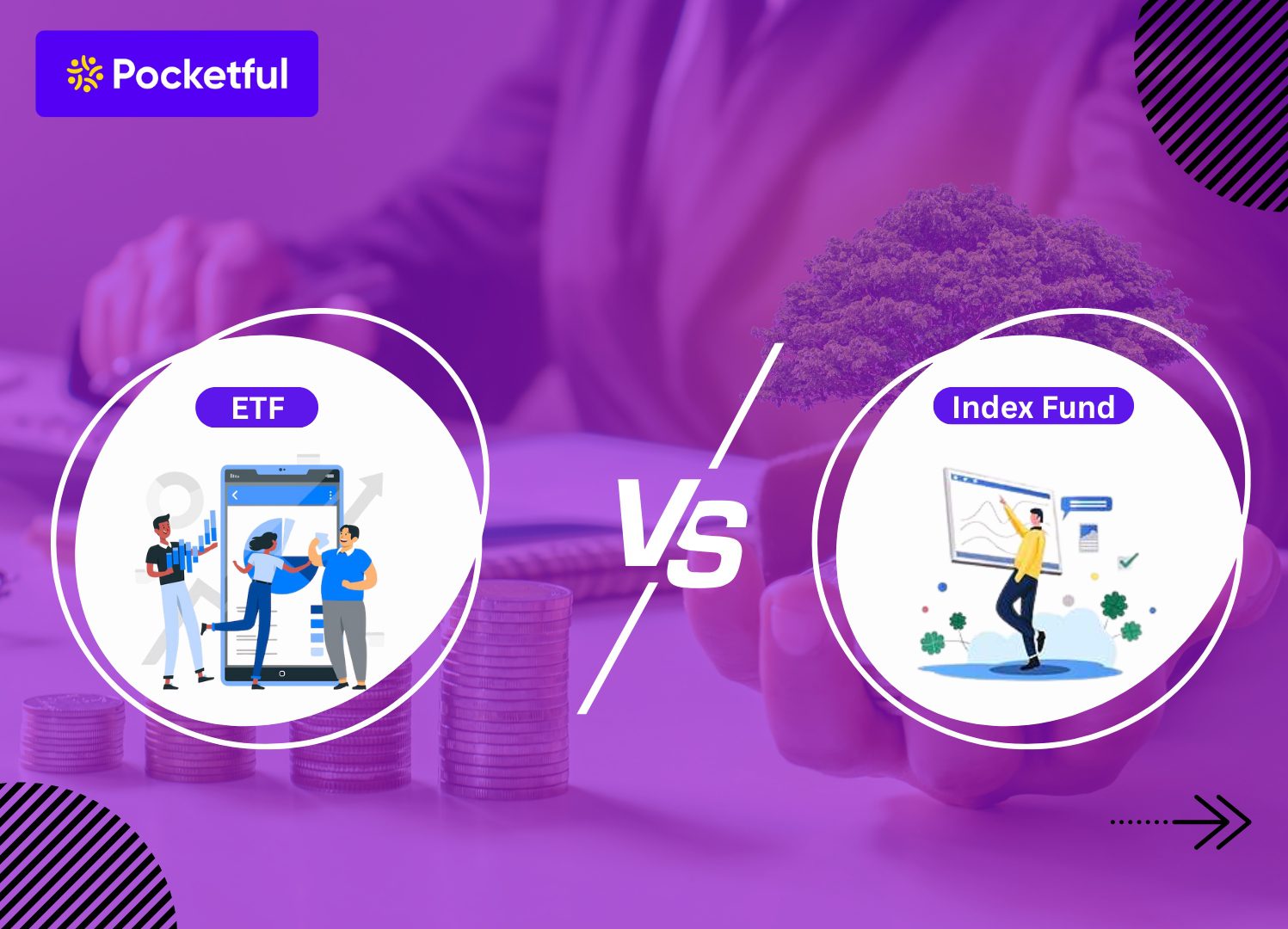
    Both these options provide low-cost investment, but there are some important differences between them. In this blog, we will understand the difference between Index Funds and ETFs in simple language and know which one is better for you.

    What is an Index Fund?

    An index fund is a type of mutual fund that tracks a certain market index (such as Nifty 50 or Sensex). Its objective is to replicate the performance of that index. This fund invests in shares of only those companies that are part of that index, and investment is made in the same proportion as that of index.

    • Passive Investment Strategy : In an index fund, stocks are not selected by an active fund manager. Instead, investment is only made in shares that are index constituents. This is why it is called a passive investment strategy. Its expense ratio is also low due to less analysis required.
    • Transaction Process : Index funds are bought and sold at the NAV (Net Asset Value) declared at the end of the day. That is, there is no continuous buying and selling during the day, as is the case with ETFs.
    • Not Expensive : It is possible to invest small amounts at regular intervals in this fund through SIP (Systematic Investment Plan) and build your investment portfolio over time. 

    Key features in brief:

    • Invests in index-based stocks
    • Not actively managed
    • Low cost and low risk
    • SIP facility available

    Read Also:What is Nifty BeES ETF? Features, Benefits & How to Invest?

    What is an Exchange-traded fund?

    An ETF, i.e., an exchange-traded fund, is a fund that tracks a particular stock market index, such as the Nifty 50 or Sensex, gold, silver, etc. The main difference between an index fund and an ETF is that it can be bought and sold in real time in the stock market, like shares of a company.

    • Intraday trading facility : ETF is traded on the stock exchange, so its price keeps changing throughout the day depending on demand and supply. Investors can do intraday trading in it; that is, buying and selling is possible on the same day.
    • Investment process and requirements: Demat and trading accounts are mandatory for investing in an ETF because its units trade like stocks. This fund is suitable for those who want to manage their investments a little more actively.
    • Low cost and transparency : The expense ratio of ETFs is very low, and they follow the index in a transparent manner due to low tracking error. Apart from this, ETFs also have high liquidity, as they can be sold anytime during market hours.

    Key features in brief:

    • Can be bought and sold in real-time in the stock market
    • Tracks a specific index, gold, silver, etc.
    • Demat and trading account mandatory
    • Low expense ratio
    • Facility for intraday trading

    Read Also: How to Invest in ETFs in India – A Beginner’s Guide

    Difference Between ETF and Index Fund

    The table below presents the key differences between ETFs and index funds. The comparison is based on important aspects such as investing method, cost, tax, investment process, and liquidity. This table is useful for both professional investors and beginners to make the right decision.

    ParameterETF (Exchange Traded Fund)Index Fund
    Investment ProcessTrades on stock exchanges like individual stocks.Bought or sold only at the end-of-day NAV.
    LiquidityHigh liquidity – can be bought/sold any time during market hours.Relatively Lower liquidity – transactions occur only once a day based on NAV.
    Expense RatioExchange-traded funds have a lower expense ratio than index funds.Index Funds have a higher expense ratio than exchange-traded funds.
    SIP AvailabilitySIP cannot be done.SIP can be done.
    Demat Account RequirementMandatory requirement of both demat and trading accounts for investing.Not required, if you prefer to hold the mutual fund units in physical form.
    Minimum InvestmentCan start with the price of one unit Minimum SIP amount usually starts at ₹500 or ₹1000.
    Pricing MechanismReal-time market price fluctuates based on demand and supply throughout the day.NAV-based pricing calculated and declared once daily.
    Investment ExperienceRequires technical understanding of trading, pricing, and brokerage.Simple and user-friendly; ideal for beginners.

    Both ETFs and index funds are great options for passive investment. ETFs offer more flexibility, liquidity and trading experience but require a Demat account. On the other hand, index funds are simple, safe, and ideal for long-term investing with features like SIP.

    Pros and Cons of Index Funds and ETFs

    Pros and Cons of Index Funds

    Pros :

    • It is easy to start investing as a Demat account is not required for investing in Index funds mutual funds.
    • It is possible to make regular and systematic investments through SIP.
    • The most suitable and simple option for new investors.

    Cons :

    • There is no real-time trading; transactions are done only at the end of the day on NAV.
    • Tax efficiency is less than ETFs.
    • There is not much flexibility in trading.

    Pros and Cons of ETFs

    Pros :

    • Can be traded on the stock exchange during market hours.
    • The expense ratio is low, which reduces the cost.
    • Transparency and liquidity are high.

    Cons :

    • Demat and trading accounts are required for investing in ETFs.
    • SIP facility is not generally available, so regular investment can be a bit difficult as investors have to invest manually.
    • There may be additional expenses incurred during trading, such as brokerage and bid-ask spread.

    Both options have their own advantages and disadvantages, so the choice of investment depends on the individual’s needs and investment style.

    Which Should You Choose?

    Deciding between index funds and ETFs can be tough. You can refer to the points mentioned below to make a smart investment decision: 

    • Investment goals and period : If you want to make stable and regular investments for a long period, then an index fund is better. It has the facility of SIP, through which small investments can be made at regular intervals without much effort. It is also an easy and suitable option for new investors.
    • Active vs Passive Investment : If the risk-taking capacity is high and you want to take advantage of the ups and downs of the market, then an ETF is a better option as the investor can actively trade it on the stock market. On the other hand, if the investor prefers a passive investment, then an index fund should be the priority.
    • Investment platform and requirements: Demat and trading accounts are mandatory for investing in an ETF, along with market understanding. In contrast, an index fund can be purchased directly from the fund house, in which a Demat account is not required.

    One should choose between an ETF or index fund keeping in mind the investment goal, risk capacity, and available resources. The right choice ensures maximum profit and security of investment.

    Know More: Calculate returns on ETF investments.

    Conclusion 

    Both ETFs and index funds are great and low-cost options for passive investing. The main difference between the two is in the trading process, liquidity, tax efficiency, and investment method. ETFs can be traded on stock exchange and are more transparent, while index funds are simpler to invest in and suitable for SIPs. To make the right choice, it is important to evaluate your investment goals, risk tolerance, and available resources. It may also be wise to consult a financial advisor before starting to invest.

    S.NO.Check Out These Interesting Posts You Might Enjoy!
    1Mutual Fund vs ETF. Are They Same Or Different?
    2Best ETFs in India to Invest
    3ETF vs Stock – Which One is the Better Investment Option?
    4Gold ETF vs Gold Mutual Fund: Differences and Similarities
    5ETF vs FOF: Key Differences

    Frequently Asked Questions (FAQs)

    1. What is the main difference between an ETF and an Index Fund?

      ETFs can be traded on the stock exchange, while Index Funds are bought or sold at the end of the day NAV.

    2. Can I start SIP in ETFs?

      Direct SIP is not possible and the investor must manually buy ETF units at regular intervals.

    3. Is Demat account necessary for Index Funds?

      No, a Demat account is not required to invest in an Index Fund.

    4. Which is better for beginners: ETF or Index Fund?

      Index Fund is easier and more convenient for beginners.

    5. Are ETFs more tax-efficient than Index Funds?

      Yes, ETFs are slightly more tax efficient, especially in the long term.

  • What is Gold ETF? Meaning & How to Invest Guide

    What is Gold ETF? Meaning & How to Invest Guide

    Gold has been important in India for centuries from an investment and cultural point of view. Traditionally, people used to buy gold in the form of jewellery, coins or biscuits. However, buying physical gold comes with challenges such as storage, insurance, and making charges. 

    Currently, investors are turning to digital options, among which Gold Exchange Traded Funds (Gold ETFs) are prominent. These funds trade on the stock exchange and track gold prices, allowing investors to invest in it without buying physical gold.

    What is a Gold ETF? 

    Gold ETF or Gold Exchange Traded Fund can be considered as a type of mutual fund that tracks the prices of gold and can be bought and sold in the stock market. It is a digital medium of investment, which is free from the problems of storing physical gold. 

    It eliminates hassles of owning physical gold such as storage, insurance or making charges. It is a safe, transparent and convenient way to invest in gold. The purpose of investing in Gold ETF is to diversify the investment portfolio, protect against inflation and market decline. 

    This investment instrument has the potential to give stable and reliable returns over the long term. For this reason, Gold ETF can be considered a smart investment option in today’s time.

    Key features of Gold ETF 

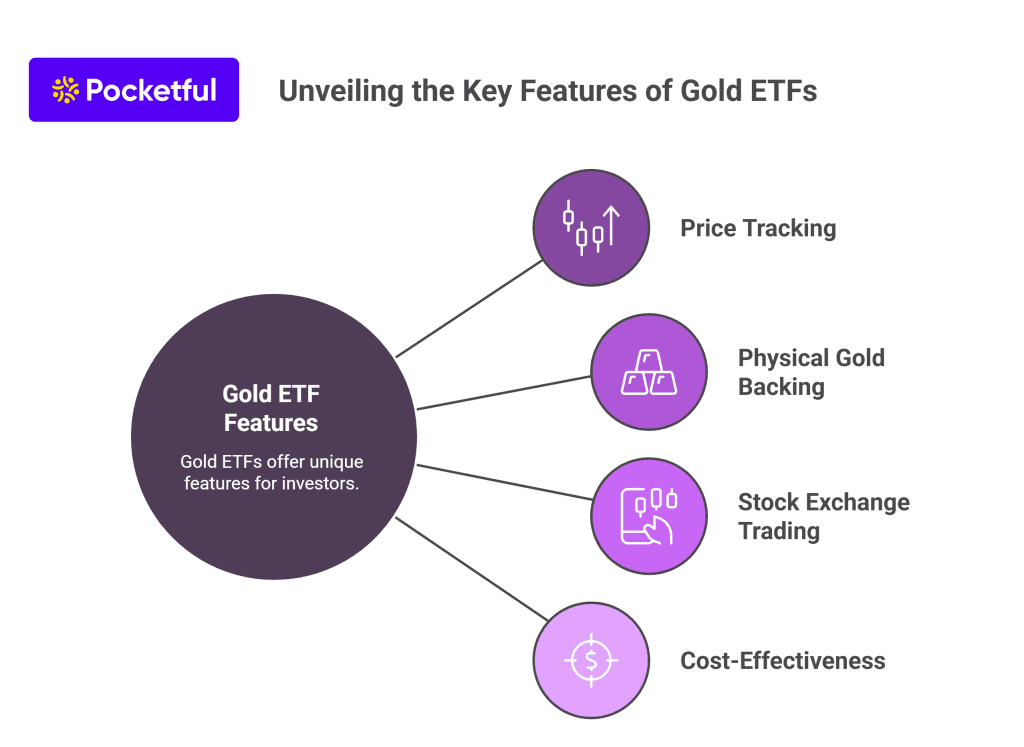
    Gold ETFs are traded in the stock market, just like stocks of a company are bought or sold. Its key features are:

    • Linked to the price of gold: The mechanism of a gold ETF fund is very simple. The ETF tracks the price of gold and its price fluctuations, which are closely linked with the price changes of physical gold.
    • Backed by real gold: Gold ETFs are backed by real (physical) gold. This means that every unit has some quantity of actual gold behind it either in the form of physical gold or in the form of ETCDs (Exchange Traded commodity Derivatives) that have physical gold as underlying asset.
    • Traded on stock exchanges: The biggest feature of these ETFs is that they can be bought or sold anytime during market hours. This makes them a liquid and flexible investment option.
    • Low cost and hassle-free investment: Investing in gold ETFs involves neither making charges nor storage fees. It is a less expensive and easier investment option than physical gold.

    How to Invest in Gold ETFs in India?

    Investing in Gold ETFs is an easy process. It is similar to buying stocks in the stock market.

    Step-by-step process:

    1. Open Demat and Trading Account: To buy Gold ETF, first of all you need a Demat and trading account. Pocketful is a SEBI-registered brokerage platform with an easy to use mobile application and web platform, offering advanced technical tools and market insights.

    2. Choose the appropriate Gold ETF Fund: Compare Gold ETF Funds offered by different issuers, such as GOLDBEES, SETFGOLD, etc. Make sure to check the following:

    • AUM (Assets Under Management) of the fund
    • Expense Ratio
    • Tracking Error

    3. Buy from Trading app: One can also invest directly in Gold ETF from Pocketful’s mobile application.

    Note: For a profitable investment journey, remember the following points:

    • Decide your financial goals
    • Start with small investments
    • Keep an eye on tracking error and trends in gold prices
    • Invest with a long-term view

    Read Also: How to Invest in ETFs in India – A Beginner’s Guide

    Taxation on Gold ETF Investment

    Gold ETFs have now been placed in a separate category and are taxed based on the information in the table below:

    Holding PeriodType of Capital GainsTax Rate
    12 months or lessShort-Term Capital Gains (STCG)As per individual income tax slab
    More than 12 monthsLong-Term Capital Gains (LTCG)12.5% flat rate

    Tips for Investors 

    • Tax Planning: It is important to plan before investing keeping in mind the tax implications.
    • Professional Advice: It may be beneficial to consult a tax advisor to understand tax-related complexities.

    Advantages of Gold ETFs

    Various advantages of Gold ETFs are:

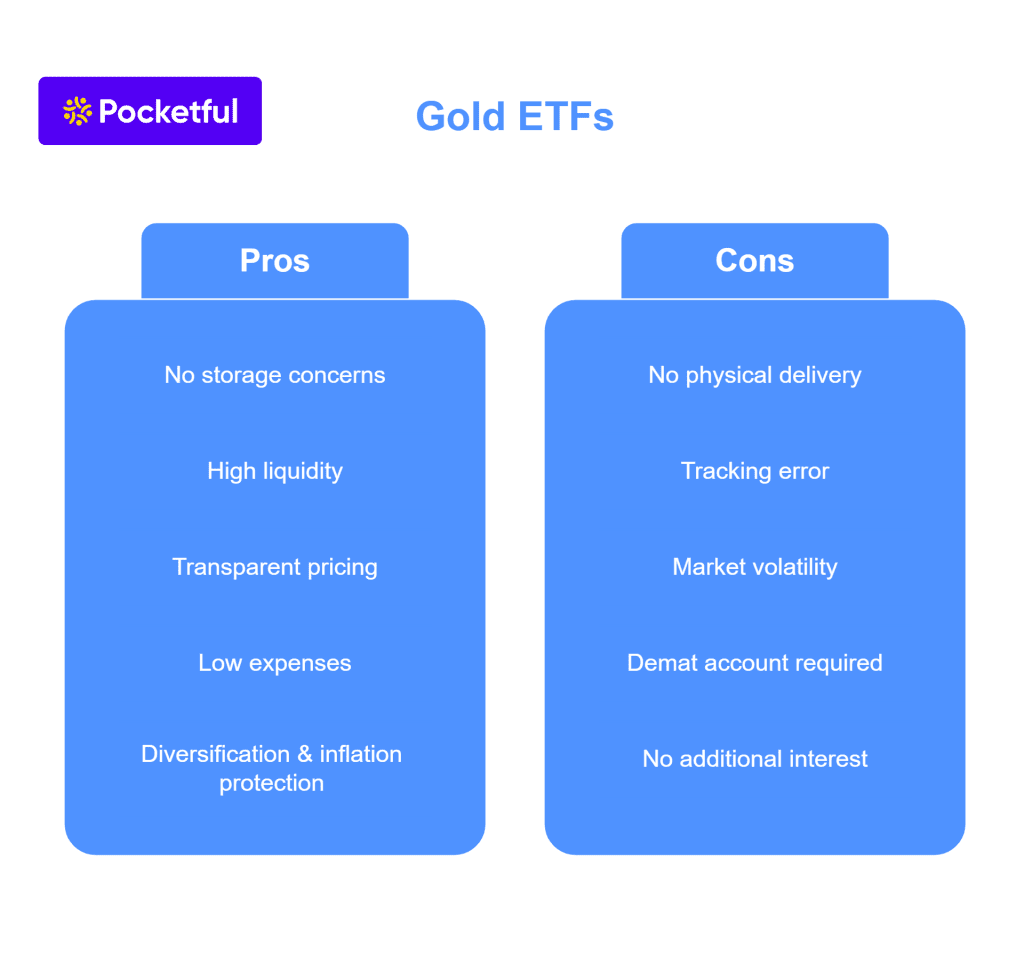
    • No storage concerns: Unlike investing in physical gold, gold ETFs investors do not have to worry about safe storage or theft.
    • High liquidity: Gold ETFs are traded on the stock market, so they can be easily bought or sold anytime during market hours.
    • Transparent pricing: Gold ETF prices are directly linked to gold prices, which keeps ETF pricing transparent and unbiased.
    • Low expenses: Compared to gold mutual funds, gold ETFs have lower management expenses (Expense Ratio), which reduces the overall cost of investment.
    • Portfolio diversification and inflation protection: Gold ETFs help you diversify investments and also provide protection against inflation.

    Overall, gold ETFs combine the benefits of investing in gold with the ease of equity investing, making it a simple, affordable and effective investment option.

    Disadvantages of Gold ETFs

    Disadvantages or risks associated with investing in Gold ETFs are listed below:

    • No physical delivery: Gold ETFs cannot be redeemed for actual gold due to which some investors may prefer owning physical gold relative to investing in gold ETF.
    • Possibility of tracking error: Sometimes the price of gold ETFs may differ slightly from the price of physical gold.
    • Market volatility: The price of gold ETFs may fluctuate due to trading in the stock market.
    • Demat account required: A Demat and trading account is required for investment, which some investors may not have.
    • No additional interest: Unlike sovereign gold bonds, gold ETFs do not offer any additional interest or dividend.

    For these reasons, it is important to understand all the risks and limitations before investing.

    Should You Invest in Gold ETFs?

    Below are the reasons behind why you should invest in Gold ETFs:

    • Risk control: Gold ETFs are a good choice for investors who want to minimise risk and diversify their portfolio.
    • Convenient digital exposure: Gold ETFs offer a seamless and transparent way to invest in gold through digital medium as compared to physical gold.
    • Suitable for medium to long term investments: Gold ETFs are effective instruments for inflation protection and capital preservation during economic volatility.
    • Begin Small: Some of the Gold ETFs trade below ₹100, making them accessible to small investors. Whereas, investing in physical gold requires substantial amounts of capital.

    However, it is important to take expert advice regarding individual financial situations and investment goals before investing to make the right decision.

    Read Also: How to Invest in Silver in India?

    Conclusion

    Gold ETFs are a smart, convenient and modern way to invest in gold. It is not only tax efficient but also safe and ideal for diversifying your investment portfolio. While avoiding the hassles of physical gold, Gold ETFs offer the simplicity of digital investing. To balance your portfolio, consider investing in Gold ETFs today with Pocketful.

    Gold Rate in Top Cities of IndiaSilver Rate in Top Cities of India
    Gold rate in AhmedabadSilver rate in Ahmedabad
    Gold rate in AyodhyaSilver rate in Ayodhya
    Gold rate in BangaloreSilver rate in Bangalore
    Gold rate in BhubaneswarSilver rate in Bhubaneswar
    Gold rate in ChandigarhSilver rate in Chandigarh
    Gold rate in ChennaiSilver rate in Chennai
    Gold rate in CoimbatoreSilver rate in Coimbatore
    Gold rate in DelhiSilver rate in Delhi
    Gold rate in HyderabadSilver rate in Hyderabad
    Gold rate in JaipurSilver rate in Jaipur

    Frequently Asked Questions (FAQs)

    1. How to invest in Gold ETF?

      To invest in Gold ETF, it is necessary to have a Demat and trading account. You can easily open an account with Pocketful, transfer funds, search for Gold ETFs and begin investing.

    2. What are the tax implications of Gold ETF?

      Holding for less than 12 months is taxed as per the income tax slab, and holding for more than 12 months is taxed at 12.5% ​​LTCG.

    3. Can Gold ETF be exchanged for physical gold?

      No, Gold ETFs do not provide delivery of physical gold as they are only digital units.

    4. Is Gold ETF better than physical gold?

      Gold ETFs have several benefits over physical gold, such as no storage fees, more secure and highly liquid, making them a better option for many investors.

  • How to Invest in Silver in India?

    How to Invest in Silver in India?

    The process of building a diversified portfolio is incomplete until you invest in assets like gold and silver. Where gold has been a pioneer in the field of investing yielding consistent returns, silver has recently received much attention due to its increasing demand in the industrial sector. This is one of the reasons for the rising value of silver as an investment. 

    But the question is, how can you invest in silver? Well, there are innumerable options that you can select from. Here’s a simple guide to help you invest in silver with ease. Starting from the physical silver to how to buy Silver ETF, we will cover every single point in the guide here. 

    Ways to Invest in Silver

    There are various ways you can invest in silver. From the traditional method of buying physical silver to SIP in Silver ETF, the options are many. So, to start with, let us briefly understand the investment choices that you have:

    1. Physical Silver

    This is the most traditional method of investing in silver. You can buy coins, bars, and jewelry. Bars and coins are preferred due to their purity and high resale value. Jewelry is usually selected for adornment and value. 

    This physical silver is tangible in nature and needs proper storage. Usually, people store them in lockers at home or banks. This can add to the overall cost as well. Also, one important thing to know here is that physical silver offers you liquidity. In case of need, you can sell and raise funds in no time.

    2. Silver ETFs (Exchange-Traded Funds)

    Silver ETFs are a new form of investment. Here, you invest in the funds that are traded on stock exchanges and track the silver price. When an investor buys a Silver ETF, they gain the benefit of silver’s price movement without actually owning it physically.

    These are highly liquid and offer ease of trading. There is no issue with the safekeeping or storage, which makes them a better investment choice than the rest. Since the trading happens on exchanges, ETFs offer you better transparency. One important thing to note here is that you would need a demat and trading account to invest in Silver ETFs.

    3. Silver Futures 

    These are the standardized contracts that are traded on the commodity exchange, such as the MCX. Traders use these contracts to benefit from silver’s price movements. So, the primary aim of this is to realize short-term gains and not invest for the long run.

    Futures trading requires margin payments (fraction of the contract value) due to which volatile price movement can result in significant losses. Make sure to square off existing positions to avoid the contracts getting exercised and physical settlement. 

    4. Digital Silver or E-Silver

    Digital silver allows investors to buy and own silver in fractional quantities through online platforms. The purchased silver is backed by physical metal stored securely by the scheme provider. This investment option offers convenience.

    Through this, investors can buy or sell even small amounts without the hassle of storage. So, if you are looking for a flexible and secure investment in silver, this is a great choice. 

    5. Silver Mutual Funds

    Instead of going for the physical silver, you can invest in silver MFs as well. This involves investing in silver ETFs and other Exchange-Traded Commodity Derivatives (ETCDs). It can be viewed as an indirect form of investing in silver ETFs with an advantage of fixing monthly SIPs.

    6. Silver Mining Equities

    It is when you directly invest in companies that work in the field of extraction, exploration, or production of silver. This allows you to benefit from an increase in silver prices and the company’s growth at the same time. Hindustan Zinc Ltd and Vedanta Ltd are a few companies in this sector.

    So, when it comes to how to buy silver in India, these are some of the prominent options available. Of these, Silver ETFs stand out. So, let us now explore the Silver ETF in detail over here. 

    Why Choose Silver ETFs Over Other Silver Investment Options?

    Modern investors usually look for safe and low-maintenance investment options. Silver ETFs are a better choice because they are traded on the exchange, and no physical storage is needed. 

    But there are other reasons as well that make Silver ETFs a better choice. So, here are the top ones that you should be aware of:

    1. High Purity Standards

    Silver ETFs in India invest only in silver with 99.99% purity. This ensures that your investment is backed by top-grade metal, which reduces quality risks. This makes the investment more reliable compared to buying silver physically from unverified sources.

    2. Direct Correlation with Silver Prices

    When you invest in Silver EFT, you can track its prices easily as it follows the price of the silver, which makes it a transparent investment. Also, you can observe the price movements in real-time, which allows you to adjust your investment strategies and avoid losses.

    3. Elimination of Physical Storage Concerns

    Unlike physical silver, ETFs don’t need lockers or safes. The fund houses store the metal securely in accredited vaults, reducing the hassle and cost associated with personal storage, theft risk, or insurance for the investor.

    4. Regulated by SEBI

    Investors usually seek investments that are regulated. This is where Silver ETFs stand out as the rules of SEBI govern these financial instruments. This ensures authenticity and trust and further ensures that the interest of the investors is safeguarded throughout the investing journey.

    5. Liquidity and Ease of Trading

    Silver ETFs are listed on stock exchanges, which allows the investors to buy and sell them online during trading hours easily. This allows you to make an entry or exit quickly as needed. This way, you can quickly liquidate your investment by selling due to high transaction volume. Hence, this is a good choice for both short-term traders and long-term investors.

    6. Cost-Effective Investment

    There are no making charges, storage fees, or hidden premiums like with jewelry or coins. Apart from a nominal management fee, Silver ETFs are economical, offering better value for money when compared to physical silver purchases.

    7. Accessibility for Small Investors

    Silver ETFs allow you to start investing with a small capital, making them ideal for beginners or those wanting to build exposure gradually. Some of the silver ETFs are priced below ₹100, unlike physical silver, which often requires substantial capital to invest.

    8. Diversification Benefits

    Various global factors impact your portfolio such as geopolitical events, interest rates, etc. So, when you add the Silver ETFs to your portfolio, you are not just buying silver, but you are also reducing the overall risk of your investment portfolio. There are chances that silver might outperform other asset classes during certain market phases, which will work in your favor too. 

    How to Invest in a Silver ETF?

    There is no doubt that Silver ETFs are a great choice for investment. But the question that arises over here is how can you invest in Silver ETF. Well, here is the stepwise guide to help you invest. 

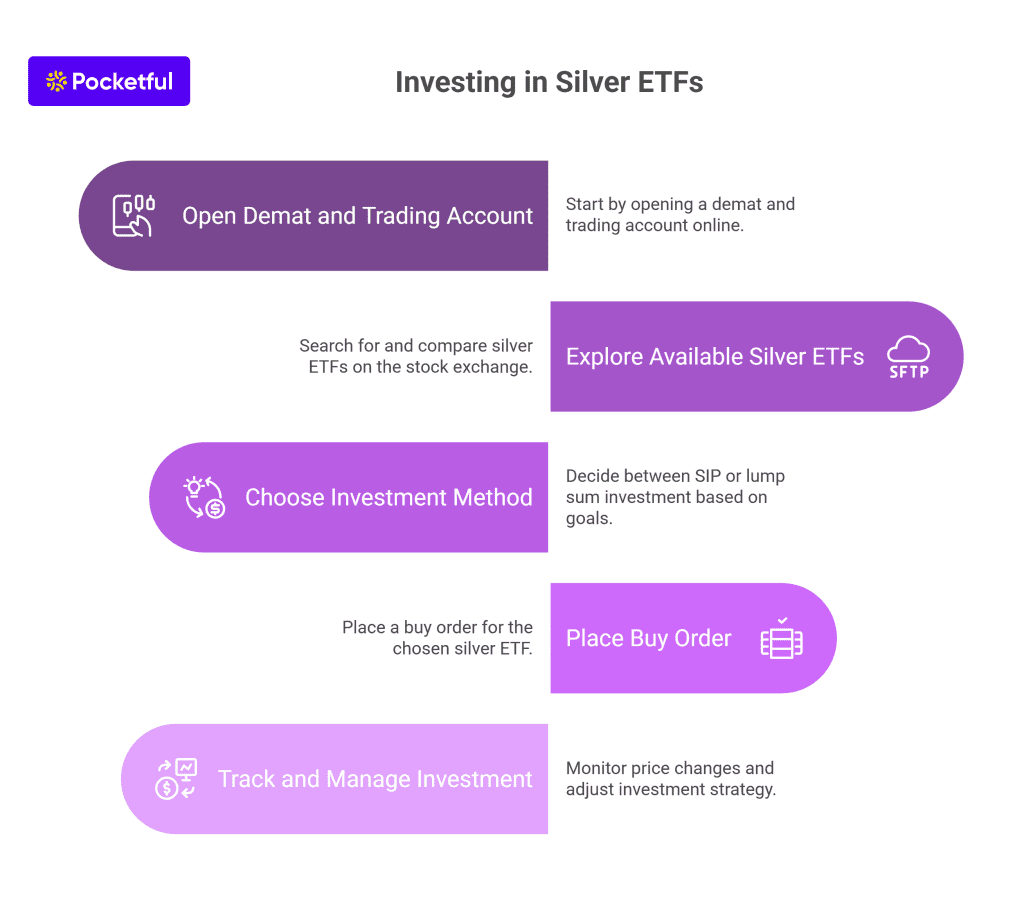
    1. Open a Demat and Trading Account

    Start by opening a demat and trading account. You can open this for free on a platform like Pocketful, which offers a hassle-free online process. Just submit the basic KYC requirements along with documents, and your account will be created shortly after verification.

    2. Explore Available Silver ETFs

    Once your account is opened, search for the silver ETF listed on the stock exchange. There are many issuers that offer silver ETFs and it is necessary to compare them on the basis of tracking error, expense ratio, etc. to select the best one among them.

    3. Invest via SIP or Lump Sum

    You have the option to invest in a lump sum or SIP in the Silver ETF. The choice is based on your investment goals and disposable income. For beginners, SIP is a great choice that offers the benefit of rupee-cost averaging and builds discipline.

    4. Place Your Buy Order

    Once you’ve chosen your silver ETF, place a buy order. You can either use a market order or limit order, enter the quantity, and click on buy.

    5. Track and Manage Your Investment

    One of the most important aspects of investing in Silver ETF is to keep track of price changes and adjust your investment strategy as needed. You can track it directly online through Pocketul’s user-friendly mobile app. 

    While investing, ensure to keep an eye on economic trends and stay updated with market events. This will help you make the right investment decision.

    SEBI Rules for Silver ETFs

    SEBI regulates Silver ETFs to ensure investor safety, price accuracy, and fund transparency. The rules to know are:

    • Minimum Asset Allocation: At least 95% of the ETF’s net assets must be invested in physical silver or silver-linked exchange-traded commodity derivatives (ETCDs).
    • Tracking Error Limit: The tracking error must not exceed 2%, ensuring the ETF closely mirrors actual silver price movements.
    • Expense Ratio Cap: The total expense ratio is capped at 1%. This keeps the fund management costs low for investors.
    • Purity Standards: All silver held must comply with London Bullion Market Association (LBMA) standards, ensuring a purity of 99.9%.

    Taxation on Silver ETF in India

    When you invest in a Silver ETF, it is important that you are aware of the taxation part as well. So, here is a brief overview of the taxation that you should be aware of when investing in silver:

    Holding PeriodType of GainTax Rate
    Less than or equal to 1 yearShort-Term Capital Gains (STCG)As per the tax slab with 4% cess and surcharge, if any
    More than 1 year (before 1/April/2025)Long-Term Capital Gains (LTCG)As per the tax slab with 4% cess and surcharge, if any
    More than 1 year (starting 1/April/2025)Long-Term Capital Gains (LTCG)Taxed at 12.5% with applicable surcharge and 4% cess

    Things to Consider Before Investing in Silver

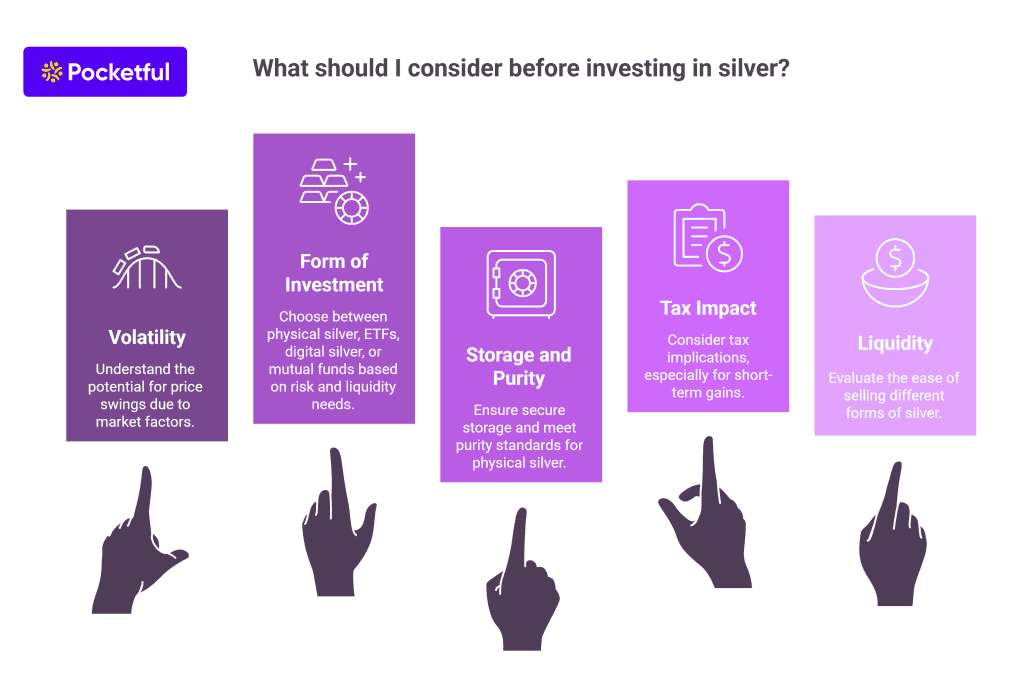
    Once you have decided to invest, there are certain things that you must consider. So, here are the key points to know:

    • Volatility: Silver prices can fluctuate sharply due to changing industrial demand and global economic conditions. Be prepared for short-term price swings.
    • Form of Investment: Choose between physical silver, ETFs, digital silver, or mutual funds based on your risk appetite, liquidity needs, and investment goal.
    • Storage and Purity: Physical silver needs secure storage and may not fulfill purity standards. ETFs and digital silver address these concerns.
    • Tax Impact: Short-term gains can attract higher taxes; holding silver for a longer duration is more tax-efficient and offers you the benefit of appreciation in silver prices, too.
    • Liquidity: While ETFs and digital silver offer easy exit, selling physical silver might need a bit more time.

    Conclusion

    Investing in silver is a great way to diversify a portfolio and gain a hedge against inflation. Also, with options like Silver ETFs, you can invest in silver without the worry of storage. This way, you can benefit from the appreciation in silver prices easily. This is where platforms like Pocketful can help. They make investing simple, secure, and beginner-friendly. 

    Gold Rate in Top Cities of IndiaSilver Rate in Top Cities of India
    Gold rate in AhmedabadSilver rate in Ahmedabad
    Gold rate in AyodhyaSilver rate in Ayodhya
    Gold rate in BangaloreSilver rate in Bangalore
    Gold rate in BhubaneswarSilver rate in Bhubaneswar
    Gold rate in ChandigarhSilver rate in Chandigarh
    Gold rate in ChennaiSilver rate in Chennai
    Gold rate in CoimbatoreSilver rate in Coimbatore
    Gold rate in DelhiSilver rate in Delhi
    Gold rate in HyderabadSilver rate in Hyderabad
    Gold rate in JaipurSilver rate in Jaipur
    S.NO.Check Out These Interesting Posts You Might Enjoy!
    1Mutual Fund vs PMS: Which is Better?
    210+ Best Investment Plan for Monthly Income in India
    3Hybrid Mutual Funds – Definition, Types and Taxation
    4What is an Open-Ended Mutual Fund & How to Invest in it?
    5Mutual Fund vs ETF. Are They Same Or Different?
    6Mutual Funds vs Direct Investing: Differences, Pros, Cons, and Suitability
    7Debt Mutual Funds: Meaning, Types and Features
    8How to Check Mutual Fund Status with Folio Number?
    9Mutual Funds vs Direct Investing: Differences, Pros, Cons, and Suitability
    10What is Solution Oriented Mutual Funds?
    11Mutual Fund Fees & Charges in India
    12What is TREPS & Why Mutual Funds Invest in it?
    13History of Mutual Funds in India
    14What is Asset Under Management (AUM) in Mutual Funds
    15How to Compare Mutual Funds in India?
    16Top Gold Mutual Funds in India
    17Best Pharma Mutual Funds in India
    18Best Books on Mutual Funds for Beginners in India
    19Brokerage Charges in India: Explained
    20Best Silver Mutual Funds to invest in India

    Frequently Asked Questions (FAQs)

    1. Is Silver ETF a good investment option?

      Yes, these are good investment options as they offer exposure to silver without worrying about storing it physically. Moreover, these are regulated by SEBI, ensuring safety and transparency.

    2. Can I invest in a Silver ETF without a demat account?

      No, you need both a demat and a trading account to invest in Silver ETFs.

    3. What is the benefit of using Pocketful for silver investments?

      Pocketful offers an easy-to-use mobile application and lets you track, invest, and manage Silver ETFs all in one place.

    4. Can I start investing in Silver ETFs with a small amount?

      Yes, you can start investing in Silver ETFs with a small amount as most of them trade below ₹100.

    5. What is the tax on silver investments?

      Gains from Silver ETFs held for more than 1 year are treated as LTCG and taxed at 12.5%. If sold within a year, gains are treated as short-term capital gains and taxed as per your income tax slab.

  • How to Invest in ETFs in India – A Beginner’s Guide

    How to Invest in ETFs in India – A Beginner’s Guide

    Today, an excellent way to invest smartly and easily is through ETFs (exchange-traded funds). ETFs can be considered as mutual funds that trade like stocks and track indices, gold, or bonds. ETFs are becoming increasingly popular in India as they offer low expense ratios, more transparency, and good liquidity. If you want to know how to invest in ETFs or buy ETFs in India, then this blog is for you. In this guide, we will tell you what an ETF is, how to choose one, and where to buy one in simple terms.
    What is an ETF? 

    An ETF, or exchange-traded fund, is an investment instrument that tracks a particular index, such as the Nifty 50, Sensex, or an asset such as gold. Its purpose is to replicate the performance of that index as accurately as possible. ETFs can be bought and sold on the exchange like stocks, meaning trading is possible throughout the trading session. It helps you diversify your portfolio like a mutual fund, but instead of a fund manager actively investing in stocks on your behalf, it follows the index—that is, it is an example of passive investing. 

    Investing in ETFs costs less because there is no active management fee. Also, there is more transparency in ETFs because information about holdings is readily available. Many types of ETFs, like equity, gold, international, and bond, are now available in India, which are considered easy and smart investment options.

    Why invest in ETFs?

    Investors today are looking for investment options that are low cost, low risk, and offer good returns in the long term, and this is why ETFs are becoming increasingly popular in India.

    • Low cost : The management fees and other expenses in ETFs are very low, which reduces the total expenses of the investors. Due to low expenses, the returns are better in the long term.
    • Transparent investment : In ETFs, it is clear in which index or asset the investment has been made. This gives the investor a correct idea of ​​his investment and makes it easier to track investment performance.
    • Best for new investors : ETFs are an easy and safe way for new investors to begin their investing journey. Through ETFs, one can invest in the wider market without selecting specific stocks. It reduces the risk and is suitable for beginner investors.
    • Opportunity to diversify the portfolio : ETF investment can diversify the portfolio well. This reduces the risk, as the investment is spread across many sectors and companies.
    • Open the doors to International Markets: Through ETFs, one can easily invest in markets outside India, like America, China, and other global markets.
    • Growing popularity of index investing : In India, especially young and new investors are now preferring index-based ETFs over investing in individual stocks. This trend has increased due to ETF’s transparency, simplicity, and diversity.

    Moreover, ETFs are fully regulated under SEBI rules, making them safe and reliable. The total assets under management (AUM) of ETFs in India is constantly growing, which reflects the growing confidence of investors.

    Know More: Calculate returns on ETF investments.

    How to Select the Right ETF?

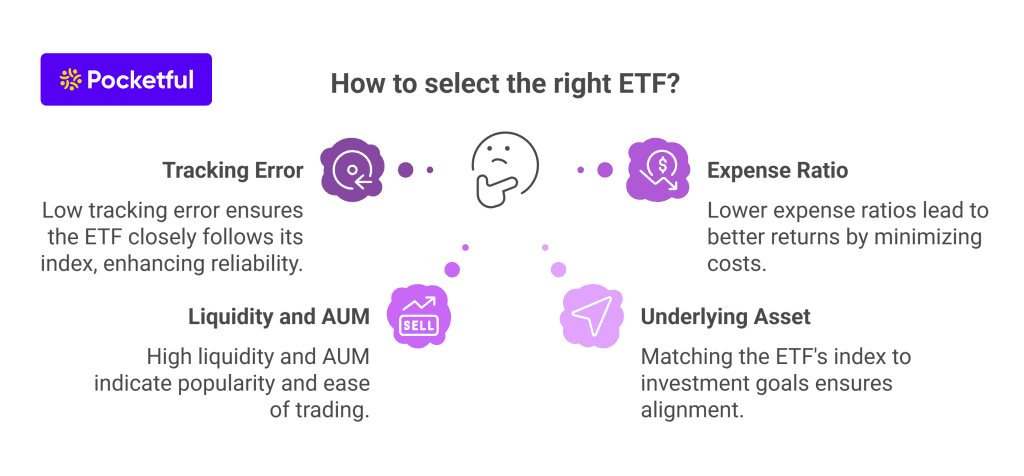
    Before investing in ETFs, it is very important to pay attention to some important factors so that the investment is safe and profitable.

    • Tracking Error: This shows how much the performance of the ETF differs from its index. ETFs with low tracking error are considered better. Example: Nippon India ETF Nifty BeES is known for low tracking error.
    • Expense Ratio: There is an annual fee charged on ETFs. The lower the expense ratio, the better the returns. Example: ICICI Prudential Nifty 50 ETF has a very low expense ratio.
    • Liquidity and AUM: The trading volume and total AUM (assets under management) of the ETF indicate how popular and liquid it is.
    • Underlying Asset or Index: The index the ETF is tracking, such as Nifty 50, Sensex, or Gold, should match the investment objective.

    Choosing an ETF is not a difficult task, but it is very important to be cautious of how a specific ETF affects your overall investment portfolio. Invest, keeping in mind tracking error, expenses, liquidity, and index, so that you get better returns and stability in the future.

    How to Buy an ETF in India – Step-by-Step Guide

    Buying an ETF is as easy as buying a stock. If you are investing for the first time, then you can start investing in ETFs without any hassle by following the steps given below:

    • Open a Demat Account: To buy an ETF, first of all, it is necessary to have a Demat account. It can be opened with any brokerage platform like Pocketful.
    • Login using Credentials: Log in to your trading app or web platform and enter the name or ticker symbol of the ETF you want to buy (e.g., “NIFTY BEES” or “GOLD BEES”) in the search bar.
    • Place the order : Check the price of that ETF on NSE or BSE, enter the quantity and click on the ‘Buy’ option.
    • Delivery will be in Demat Account: Just like the shares are stored in the Demat account, ETF units will also start appearing in the Demat account after the settlement process.

    Benefits of Investing in ETFs with Pocketful

    If you want to easily invest in ETFs, Pocketful is a great choice. Its modern and user-friendly mobile app is designed specifically for beginner investors.

    • ₹0 Brokerage and ₹0 AMC : There is no brokerage fee charged on delivery of ETFs on Pocketful, and there is also no annual maintenance fee (AMC). This provides investors an opportunity to earn more returns at a lower cost.
    • Simple interface, easy start : Pocketful is a user-friendly app designed especially for new investors. No complicated process, just sign up and start investing.
    • Smart Analytics and Data-Driven Recommendations : Pocketful provides investors with market insights, making decisions easier.

    Read Also: Read Also: What is Nifty BeES ETF? Features, Benefits & How to Invest?

    Track, Review & Rebalance

    Investing in ETFs is not limited to just buying at regular intervals. You should monitor your portfolio regularly so that it remains in line with your financial goals. You should follow the below measures to be more profitable:

    • Active monitoring : You should actively monitor your portfolio to ensure timely booking of profits and check whether the ETF’s performance is equivalent to underlying asset’s performance or not.
    • Compare Performance : It is important to periodically compare the performance of different ETFs and invest in ETFs with the lowest cost for better returns.
    • Importance of Rebalancing : Maintaining a balanced portfolio is crucial to protect against market fluctuations. Moreover, an individual should evaluate his financial position and make the required changes to his investment portfolio.
    • Use of digital tools : Platforms like Pocketful simplify portfolio tracking and rebalancing, allowing for smart and informed investing.

    Know the Risks Before Investing in ETFs

    ETF investing has many advantages, but it is equally important to understand the risks.

    • Market Risk: ETF prices change according to market movements. If the price of the underlying asset falls, the value of the ETF may also fall.
    • Sectoral Concentration: Some ETFs invest only in specific sectors or industries, which can reduce portfolio diversification and increase the risk.
    • Tracking Error: The purpose of an ETF is to track an index, but sometimes there may be a difference between the ETF performance and the index performance, which is called tracking error.
    • Liquidity Risk: Less traded ETFs may be difficult to sell, which may cause losses to investors.

    Investing in ETFs should be done only after understanding these risks so that better and safer investment decisions can be made.

    Taxation on ETFs in India

    Type of ETFLong-Term Capital Gains (LTCG)Short-Term Capital Gains (STCG)
    Equity ETFs12.5% (Exempt up to ₹1.25 lakh per year)20%
    Gold ETFs12.5%Taxed as per income tax slab
    Debt ETFsTaxed as per income tax slabTaxed as per income tax slab
    Other Non-Equity ETFs12.5%Taxed as per income tax slab

    Conclusion

    ETF investing is an easy, affordable and smart way to enter the markets. Be it equity, debt, gold or international ETFs each brings its own benefits. With the right information, research and portfolio monitoring, ETFs can become an effective investment instrument for investors. Nowadays, with the help of platforms like Pocketful, it is even easier to start investing as you can invest in ETFs without paying any brokerage. Now is the time to take the first step towards your financial goals, choose wisely, review regularly and invest for the long term. It is advised to consult a financial advisor before investing.

    Frequently Asked Questions (FAQs)

    1. What is an ETF?

      An ETF (Exchange Traded Fund) is an investment instrument that tracks the performance of an index, sector, commodity or asset and trades on an exchange like a stock.

    2. Is ETF investment safe for beginners?

      Yes, investment in ETFs is considered safe as they usually track diversified indices or precious metals, making them a low-risk investment option for beginners.

    3. Do I need a Demat account to invest in ETFs?

      Yes, one needs to have a demat and trading account to invest in ETFs.

    4. Are ETFs better than mutual funds?

      Both ETFs and mutual funds have their own advantages. However, ETFs have lower fees and can be easily traded.

    5. What is the minimum amount required to buy an ETF?

      Some of the ETFs tracking gold and silver can be bought for as little as ₹100.

  • 15 बेस्ट शेयर मार्केट बुक्स हिंदी में | Stock Market Books Hindi 2026

    15 बेस्ट शेयर मार्केट बुक्स हिंदी में | Stock Market Books Hindi 2026

    शेयर मार्केट एक ऐसा फील्ड है जहाँ सही नॉलेज और स्ट्रेटेजी से ही सक्सेस मिलती है। यहां हर दिन कुछ नया होता है, इसलिए अपडेटेड रहना और समझदारी से फैसले लेना बेहद जरूरी है। किताबें न सिर्फ बेसिक कॉन्सेप्ट्स क्लियर करती हैं, बल्कि लॉन्ग टर्म थिंकिंग, रिस्क मैनेजमेंट और इन्वेस्टर माइंड सेट भी बिल्ड करती हैं। खासकर बिगिनर्स के लिए बुक्स एक ठोस आधार देती हैं। इंग्लिश में तो बहुत किताबें है, लेकिन हिंदी में अच्छी क्वालिटी के रिसोर्सेज कम हैं। इसलिए ये किताबों की लिस्ट उन लोगों के लिए है जो हिंदी में शेयर मार्केट को समझना चाहते हैं ।

    टॉप 15 शेयर मार्केट बुक्स की लिस्ट – Best Stock Market Book in Hindi

    क्रम किताब का नामलेखककिसके लिए उपयोगीटॉपिक
    1द इंटेलिजेंट इन्वेस्टरबेंजामिन ग्राहमएडवांसवैल्यू इन्वेस्टिंग
    2वन अप ऑन वॉल स्ट्रीटपीटर लिंचइंटरमीडिएटस्टॉक पिकिंग
    3कॉफी कैन इन्वेस्टिंगसौरभ मुखर्जीबिगिनरलॉन्ग टर्म इन्वेस्टिंग
    4इनवेस्टोनॉमीप्रांजल कामराबिगिनरभारतीय मार्केट की बेसिक जानकारी
    5द साइकोलॉजी ऑफ मनी (Hindi)मॉर्गन हॉसलआल लेवल्सफाइनेंस बिहेवियर
    6रिच डैड पुअर डैडरॉबर्ट कियोसाकीबिगिनरफाइनेंशियल एजुकेशन
    7द वॉरेन बफेट वेरॉबर्ट जी. हैगस्ट्रॉमएडवांसइन्वेस्टमेंट फिलॉसफी
    8रेमिनिसेंसेस ऑफ़ स्टॉक ऑपरेटरएडविन लेफ़ेवरइंटरमीडिएटट्रेडिंग साइकोलॉजी
    9बेसिक्स ऑफ़ स्टॉक मार्किट। कम्पलीट गाइड फॉर स्टॉक बिगिनर्स  अरविन्द अरोड़ा  बिगिनरस्टॉक मार्किट बेसिक्स
    10ऑप्शन ट्रेडिंग से पैसे का पेड़ कैसे लगाएंएम.सी. कौशिकइंटरमीडिएटऑप्शन ट्रेडिंग
    11ट्रेडनितीयुवराज कलशेट्टीइंटरमीडिएटट्रेडिंग स्ट्रैटेजी
    12कैसे स्टॉक मार्केट में निवेश करेंसीएनबीसी आवाज़बिगिनररिटेल इन्वेस्टमेंट
    13बुल्स, बेयर्स और अदर बीस्ट्ससंतोष नायरइंटरमीडिएटइंडियन मार्किट स्टोरीज
    14स्टॉक्स टू रिचेसपराग पारिखआल लेवल्सबिहेवियरल  इन्वेस्टिंग
    15द धंधो इन्वेस्टरमोहनीश पब्बराईइंटरमीडिएटलो रिस्क वैल्यू  इन्वेस्टिंग

    यह भी पढ़ें: 10 भारत के सबसे महंगे शेयर– प्राइस और रिटर्न

    यह लिस्ट हर उस रीडर के लिए है जो हिंदी में सीखना चाहता है लेकिन कॉन्सेप्ट्स को डीप और सही तरीके से समझना भी चाहता है।

    1. द इंटेलिजेंट इन्वेस्टर

    वैल्यू इन्वेस्टिंग को समझने के लिए इसे सबसे ऑथेंटिक और इम्पैक्टफुल किताब माना जाता है। Benjamin Graham ने समझाया है कि कैसे एक इन्वेस्टर को स्टॉक मार्केट में इमोशनल डिसीजन लेने से बचना चाहिए और हमेशा इंट्रिंसिक वैल्यू पर फोकस करना चाहिए। लॉन्ग-टर्म वेल्थ क्रिएट करने के लिए डिसिप्लिन, पेशंस और सही समय पर एक्शन लेना सबसे ज़रूरी है। मार्केट के शॉर्ट-टर्म अप्स एंड डाउन्स से डिस्ट्रैक्ट हुए बिना कन्सिस्टेंट इन्वेस्टिंग ही सफलता की कुंजी है।

    The Intelligent Investor

    मुख्य सीखें :

    • इंट्रिंसिक वैल्यू से कम पर स्टॉक्स खरीदना चाहिए।
    • मार्केट के इमोशनल स्विंग्स से दूर रहना चाहिए।
    • इन्वेस्टिंग में डिसिप्लिन और पेशंस ज़रूरी है।

    2. वन अप ऑन वॉल स्ट्रीट

    पीटर लिंच की ये किताब बताती है कि आम लोग भी मार्केट में अच्छा परफॉर्म कर सकते हैं अगर वो खुद की रिसर्च करें और अपने आसपास के प्रोडक्ट्स, सर्विसेज़ और ट्रेंड्स पर ध्यान दें। Lynch का फोकस बॉटम-अप अप्रोच और सिंपल बिज़नेस पर रहता है। उन्होंने एक्सप्लेन किया है कि रीटेल इन्वेस्टर्स कैसे अर्ली-स्टेज में मल्टीबैगर स्टॉक्स पकड़ सकते हैं। यह किताब स्टॉक सिलेक्शन में एक प्रैक्टिकल और रिलेटेबल अप्रोच देती है।

    मुख्य सीखें :

    • रोज़मर्रा की ज़िंदगी से इन्वेस्टमेंट आइडियाज़ मिल सकते हैं।
    • कॉम्प्लेक्स बिज़नेस से ज़्यादा फायदा सिंपल बिज़नेस में होता है।
    • रिसर्च और ऑब्ज़र्वेशन से अच्छी अपॉर्च्युनिटीज़ मिलती हैं।

    3. कॉफी कैन इन्वेस्टिंग

    लॉन्ग-टर्म इन्वेस्टिंग को सिंपल और इफेक्टिव तरीके से समझाने वाली ये बुक बताती है कि कैसे हाई-क्वालिटी स्टॉक्स में इन्वेस्ट करके वेल्थ क्रिएट की जा सकती है। Saurabh Mukherjea ने 10 साल से ज़्यादा कन्सिस्टेंट परफॉर्मेंस देने वाली कंपनीज़ को फिल्टर करने की मेथड एक्सप्लेन की है। इस अप्रोच में लो चर्न, पेशंस और डेटा-ड्रिवन सिलेक्शन पर फोकस होता है। बिगिनर से लेकर सीरियस इन्वेस्टर्स तक सभी के लिए ये एक लॉन्ग-टर्म माइंडसेट बिल्ड करने वाली किताब है। मार्केट के अप्स एंड डाउन्स को इग्नोर करके कम्पाउंडिंग कैप्चर करना इसका मेन मैसेज है।

    Coffee Can Investing

    मुख्य सीखें :

    • क्वालिटी बिज़नेस में लॉन्ग-टर्म होल्ड करो।
    • फ्रिक्वेंट ट्रेडिंग से रिटर्न्स कम होते हैं।
    • कन्सिस्टेंसी, परफॉर्मेंस और डेटा एनालिसिस ज़रूरी है।

    4. इनवेस्टोनॉमी

    इन्वेस्टोनॉमी खासकर बिगिनर्स के लिए है जो इन्वेस्टिंग की जर्नी शुरू करना चाहते हैं। प्रांजल कामरा ने इस किताब में स्टॉक्स, म्यूचुअल फंड्स, रिस्क मैनेजमेंट और इन्वेस्टर साइकोलॉजी जैसे टॉपिक्स को रिलेलेटेबल एग्जाम्पल्स से एक्सप्लेन किया है। हिंदी भाषा में लिखी गई ये किताब कॉम्प्लेक्स फाइनेंशियल कॉन्सेप्ट्स को भी आसान तरीके से समझाने में सफल है। स्टेप-बाय-स्टेप गाइड की तरह स्ट्रक्चर्ड ये बुक लॉन्ग-टर्म इन्वेस्टिंग में डिसिप्लिन और क्लैरिटी लाती है।

    मुख्य सीखें :

    • इन्वेस्टमेंट से पहले नॉलेज ज़रूरी है।
    • स्टॉक मार्केट में पेशंस और कन्सिस्टेंसी से सफलता मिलती है।
    • रिस्क और रिटर्न को समझकर प्लान करना चाहिए।

    5. द साइकोलॉजी ऑफ मनी

    यह किताब बताती है कि पैसा सिर्फ नंबर्स का गेम नहीं, बल्कि बिहेवियर का सब्जेक्ट है। मॉर्गन हॉसल ने बताया कि कैसे इंसान का एटीट्यूड, डिसीजन और माइंडसेट उसकी फाइनेंशियल सक्सेस को डिफाइन करता है। सिंपल लैंग्वेज में एक्सप्लेन किए गए कॉन्सेप्ट्स जैसे ग्रीड, फीयर, कम्पाउंडिंग और सेविंग हैबिट्स, हर इन्वेस्टर को प्रैक्टिकल नजरिया देती हैं। साइकोलॉजी को समझे बिना इन्वेस्टिंग अधूरी है – यही इस किताब का कोर मैसेज है।

    मुख्य सीखें :

    • मनी डिसीजन लॉजिक से नहीं, बिहेवियर से इन्फ्लुएंस होते हैं।
    • वेल्थ बनाना और वेल्थ बनाए रखना अलग स्किल्स हैं।
    • कन्सिस्टेंट सेविंग्स और लॉन्ग-टर्म सोच ज़रूरी है।

    6. रिच डैड पुअर डैड

    फाइनेंशियल लिटरेसी की इम्पोर्टेंस को समझाने वाली ये बुक सिर्फ पैसे कमाने के तरीके नहीं बताती, बल्कि पैसे को सही तरीके से समझने, उसे ग्रो और मैनेज करने की सोच विकसित करती है। रोबर्ट कियोसाकि ने दो विषम सोच – एक रिच डैड (उनके मेंटर) और एक पुअर डैड (उनके असली पिता) के ज़रिए बताया है कि क्यों औपचारिक शिक्षा से ज़्यादा ज़रूरी होती है फाइनेंशियल एजुकेशन। किताब में एसेट्स vs. लाइबिलिटीज, पैसिव इनकम, और फाइनेंशियल फ्रीडम जैसे कॉन्सेप्ट्स को बड़े ही सिंपल और प्रैक्टिकल अंदाज़ में समझाया गया है।

    मुख्य सीखें :

    • एसेट्स खरीदो, जो पैसे बनाएं – सिर्फ इंप्रेसिव चीज़ें नहीं।
    • फाइनेंशियल एजुकेशन से ही असली ग्रोथ होती है।
    • पैसिव इनकम बनाना फाइनेंशियल फ्रीडम की कुंजी है।

    7. द वॉरेन बफेट वे

    यह किताब वॉरेन बफेट के इन्वेस्टमेंट फिलॉसफी को डिकोड करती है। बफेट के फोकस एरियाज़ जैसे – इकोनॉमिक मोट, मार्जिन ऑफ सेफ्टी, और कंपाउंडिंग को डिटेल में एक्सप्लेन किया गया है। रॉबर्ट हैगस्ट्रॉम ने बफेट की स्ट्रैटेजीज़ को केस स्टडीज के जरिए प्रेज़ेंट किया है जिससे एक रीडर आसानी से इनको रियल लाइफ में अप्लाई कर सके। ये किताब बफेट के लॉन्ग-टर्म, वैल्यू ओरिएंटेड एप्रोच को फॉलो करने वालों के लिए एक परफेक्ट गाइड है।

    मुख्य सीखें:

    • कंपाउंडिंग को पकड़ने के लिए टाइम और पेशंस चाहिए।
    • क्वालिटी बिज़नेस ही लॉन्ग-टर्म में रिटर्न देते हैं।
    • मार्जिन ऑफ सेफ्टी एक प्राइमरी रूल है।

    यह भी पढ़ें: पेनी स्टॉक्स क्या हैं? निवेश के लाभ, जोखिम, और सर्वश्रेष्ठ स्टॉक सूची

    8. रेमिनिसेंसेस ऑफ़ स्टॉक ऑपरेटर

    रेमिनिसेंसेस ऑफ़ स्टॉक ऑपरेटर एक क्लासिक किताब है जो जेसी लिवरमोर की लाइफ और ट्रेडिंग साइकोलॉजी को दर्शाती है। ये बुक दिखाती है कि कैसे एक आम ट्रेडर अपने अनुभव, गलतियों और सीख से मार्केट मास्टर बनता है। इसमें स्पेक्युलेशन, मार्केट टाइमिंग, और ह्यूमन बिहेवियर के रियल इंसाइट्स मिलते हैं। ये सिर्फ एक कहानी नहीं, बल्कि हर उस ट्रेडर के लिए एक मिरर है जो फास्ट प्रॉफिट के पीछे भागते हैं और इमोशंस में बह जाते हैं। मार्केट में डिसिप्लिन, पेशंस, और साइकॉलॉजिकल कंट्रोल कितना ज़रूरी है, यही इस किताब का मेन मैसेज है।

    मुख्य सीखें:

    • इमोशंस कंट्रोल करना ट्रेडिंग में सबसे ज़रूरी है।
    • हर लॉस एक नई सीख का मौका होता है।
    • मार्केट साइकोलॉजी को समझना टेक्निकल एनालिसिस जितना ही जरूरी है।

    9. बेसिक्स ऑफ़ स्टॉक मार्किट। कम्पलीट गाइड फॉर स्टॉक बिगिनर्स

    स्टॉक मार्केट गाइड फॉर बिगिनर्स एक प्रैक्टिकल और सिंपल किताब है जो खासतौर पर उन लोगों के लिए लिखी गई है जो स्टॉक मार्केट में पहली बार कदम रख रहे हैं। अरविन्द अरोड़ा ने इसमें शेयर मार्केट की बेसिक टर्म्स, ट्रेडिंग और इन्वेस्टिंग के डिफरेंस, डिमैट अकाउंट खोलना, और स्टॉक्स का सिलेक्शन कैसे करें, ये सब आसान भाषा में समझाया है। यह किताब न केवल थ्योरी बताती है बल्कि प्रैक्टिकल नॉलेज और मार्केट बिहेवियर का भी अच्छा गाइड देती है। बिगिनर्स के लिए ये एक बेस्ट स्टार्टिंग पॉइंट है।

    मुख्य सीखें:

    • स्टॉक मार्केट की बेसिक समझ बहुत ज़रूरी है।
    • ट्रेडिंग और इन्वेस्टिंग में फर्क जानना जरूरी है।
    • सही नॉलेज से ही रिस्क को कम किया जा सकता है।

    10. ऑप्शन ट्रेडिंग से पैसे का पेड़ कैसे लगाएं

    ऑप्शन ट्रेडिंग एक एडवांस लेवल की ट्रेडिंग है, और ये किताब इसे बड़े ही आसान और प्रैक्टिकल अंदाज़ में समझाती है। एम.सी. कौशिक ने बताया है कि कैसे सही स्ट्रैटेजीज़, मार्केट मूवमेंट्स की समझ, और रिस्क मैनेजमेंट के साथ ऑप्शन ट्रेडिंग से रेगुलर इनकम और ग्रोथ संभव है। किताब में कॉल ऑप्शन, पुट ऑप्शन, स्टाइकल प्राइस, और टाइम डिके जैसे कॉन्सेप्ट्स को रियल लाइफ एग्ज़ाम्पल्स के साथ समझाया गया है। ये किताब उन ट्रेडर्स के लिए है जो डेरिवेटिव मार्केट को समझना और उसमें प्रॉफिट कमाना चाहते हैं।

    मुख्य सीखें :

    • ऑप्शन ट्रेडिंग में स्ट्रैटेजी और टाइमिंग सबसे ज़रूरी है।
    • सही रिस्क मैनेजमेंट से लॉस को कंट्रोल किया जा सकता है।
    • मार्केट ट्रेंड की समझ के बिना ऑप्शन ट्रेडिंग रिस्की हो सकती है।

    11. ट्रेडनिती

    ट्रेडनिती एक ऐसी किताब है जो ट्रेडिंग की दुनिया को एकदम बेसिक से लेकर एडवांस तक कवर करती है। युवराज कलशेट्टी ने इसमें टेक्निकल एनालिसिस, चार्ट पैटर्न्स, सपोर्ट-रेजिस्टेंस, और इंडिकेटर्स को बहुत ही आसान भाषा में समझाया है। ये किताब खासकर उन लोगों के लिए है जो शॉर्ट-टर्म ट्रेडिंग, इंट्राडे या स्विंग ट्रेडिंग करना चाहते हैं। इसमें मार्केट साइकोलॉजी, रिस्क मैनेजमेंट, और ट्रेडिंग डिसिप्लिन जैसे जरूरी टॉपिक्स को भी बखूबी कवर किया गया है। प्रैक्टिकल एप्रोच और स्टेप-बाय-स्टेप गाइड इसे एक परफेक्ट ट्रेडिंग मैन्युअल बनाते हैं।

    मुख्य सीखें:

    • टेक्निकल एनालिसिस से सही एंट्री और एग्ज़िट डिसाइड की जा सकती है।
    • ट्रेडिंग डिसिप्लिन और रिस्क कंट्रोल से ही प्रॉफिट पॉसिबल है।
    • मार्केट साइकॉलॉजी समझना हर ट्रेडर के लिए जरूरी है।

    12.कैसे स्टॉक मार्केट में निवेश करें

    कैसे स्टॉक मार्केट में निवेश करें एक बेहद उपयोगी और सरल भाषा में लिखी गई किताब है जो बिगिनर्स के लिए एक परफेक्ट गाइड है। इसमें बताया है कि कैसे एक आम इंसान भी बिना किसी फाइनेंस बैकग्राउंड के स्टॉक मार्केट में समझदारी से निवेश शुरू कर सकता है। किताब में फंडामेंटल एनालिसिस, डायवर्सिफिकेशन, रिस्क कंट्रोल, और लॉन्ग टर्म इन्वेस्टिंग की स्ट्रॉन्ग बेसिक जानकारी दी गई है। ये किताब पढ़कर रीडर्स को एक क्लियर माइंडसेट और स्टेप-बाय-स्टेप अप्रोच मिलती है कि कहां और कैसे इन्वेस्ट करें।

    मुख्य सीखें:

    • स्टॉक मार्केट में शुरुआत सोच-समझकर और जानकारी के साथ करनी चाहिए।
    • फंडामेंटल एनालिसिस से अच्छे स्टॉक्स चुने जा सकते हैं।
    • लॉन्ग टर्म अप्रोच और डायवर्सिफिकेशन से रिस्क कम होता है।

    13. बुल्स, बेयर्स और अदर बीस्ट्स

    बुल्स, बेयर्स और अदर बीस्ट्स एक फाइनेंशियल थ्रिलर जैसी किताब है जो भारतीय स्टॉक मार्केट की इनसाइड स्टोरी को मजेदार अंदाज़ में पेश करती है। संतोष नायर ने इसमें 1990s से लेकर 2000s तक के बुल रन, क्रैश, और स्कैम्स को रियल कैरेक्टर्स के ज़रिए बताया है। किताब में बताया गया है कि कैसे ट्रेडर्स, इन्वेस्टर्स, ब्रोकर, और रेगुलेटर्स की दुनिया आपस में जुड़ी होती है। 

    मुख्य सीखें:

    • मार्केट सिर्फ नंबर्स नहीं, इंसानों की सोच और लालच से चलता है।
    • हिस्टॉरिकल घटनाओं से बहुत कुछ सीखा जा सकता है।
    • मार्केट बिहेवियर को समझना बहुत जरूरी है।

    14. स्टॉक्स टू रिचेस

    पराग पारिख ने इस किताब में इंडियन स्टॉक मार्केट इन्वेस्टर्स की कॉमन गलतियों को उजागर किया है और बताया है कि कैसे बिहेवियरल फाइनेंस का सही इस्तेमाल करके इन्वेस्टिंग में ग्रोथ पाई जा सकती है। इसमें बताया गया है कि हर्ड मेंटालिटी, ओवर ट्रेडिंग, और शॉर्ट टर्म ग्रेटिफिकेशन कैसे आपके रिटर्न्स को नुकसान पहुंचाते हैं। यह किताब आपको सोचने पर मजबूर करती है कि इन्वेस्टमेंट सिर्फ एनालिसिस नहीं, सेल्फ-कंट्रोल और साइकॉलजी का भी गेम है।

    मुख्य सीखें :

    • बिहेवियरल बायसेस इन्वेस्टिंग में नुकसान कराते हैं।
    • हाइप से दूर रहकर लॉन्ग-टर्म थिंकिंग ज़रूरी है।
    • डिसिप्लिन और ऑब्जेक्टिविटी से ही सक्सेस मिलती है।

    15. द धंधो इन्वेस्टर

    यह किताब कम रिस्क और ज़्यादा रिटर्न वाली इन्वेस्टिंग स्ट्रेटेजीज़ को बेहद आसान भाषा में समझाती है। मोनिश पब्बराई ने वैल्यू इन्वेस्टिंग को रियल-लाइफ बिज़नेस के उदाहरणों और इंडियन इन्वेस्टर्स के पर्सपेक्टिव से समझाया है। इनका मेन फोकस होता है – “Heads I win, tails I don’t lose much”, यानी ऐसा इन्वेस्टमेंट जहाँ घाटे की संभावना बेहद कम हो और फायदा ज्यादा मिले। यह किताब उन लोगों के लिए परफेक्ट है जो सिंपल अप्रोच के साथ लॉन्ग-टर्म वेल्थ बनाना चाहते हैं।

    The Dhandho Investor hindi

    मुख्य सीखें:

    • कम रिस्क वाले बिजनेस में इन्वेस्ट करके भी अच्छा रिटर्न पाया जा सकता है।
    • किसी बिजनेस को पूरी तरह समझकर ही पैसा लगाना चाहिए।
    • सिंपल और टेस्टेड इन्वेस्टिंग मॉडल्स सबसे ज्यादा इफेक्टिव होते हैं।

    यह भी पढ़ें: भारत में टॉप 10 सबसे अधिक देने वाले डिविडेंड यील्ड स्टॉक

    निष्कर्ष

    शेयर मार्केट में सक्सेस पाने के लिए सिर्फ थ्योरी या इनफार्मेशन ही काफी नहीं होती, बल्कि प्रैक्टिकल नॉलेज भी महत्वपूर्ण है। ये बुक्स सिर्फ मार्किट के बेसिक्स ही नहीं समझातीं, बल्कि लॉन्ग-टर्म विज़न, रिस्क मैनेजमेंट और सही साइकोलॉजिकल एप्रोच अपनाना भी सिखाती हैं। खासकर हिंदी में क्वालिटी और रिलाएबल कंटेंट की कमी को देखते हुए, ये टॉप 15 बुक्स की लिस्ट इन्वेस्टर्स के लिए एक बहुमूल्य रिसोर्स साबित होगी। इन किताबों से मिली इनसाइट्स से निवेशकों को बेहतर डिसिशन-मेकिंग में मदद मिलेगी और मार्किट के उतार चढ़ाव में भी वे स्थिर रह पाएंगे।

    S.NO.Check Out These Interesting Posts You Might Enjoy!
    110 Best Algorithmic Trading Books
    2Top 10 Option Trading Books in India
    310 Best Chart Pattern Books for Traders
    4Top 10 Books for Beginners in Trading & Investing
    5Top 10 personal finance lessons for self-learning
    610 Best Price Action Trading Books
    75 Must-Read Best Swing Trading Books for Trader
    8Best Books for Stock Market Technical Analysis
    9Best Books on Commodity Trading
    10Best Books on Mutual Funds for Beginners in India
    11Best Personal Finance Books

    अक्सर पूछे जाने वाले प्रश्न

    1. शेयर मार्केट सीखने के लिए सबसे अच्छी किताब कौन सी है?

      “कॉफी कैन इन्वेस्टिंग” और “इनवेस्टोनॉमी” बिगिनर्स के लिए बहुत अच्छी हैं क्योंकि ये बेसिक्स और इन्वेस्टिंग मानसिकता अच्छे से समझाती हैं।

    2. क्या हिंदी में शेयर मार्केट की अच्छी किताबें मिलती हैं?

      हाँ, कई अच्छी किताबें हिंदी में हैं जो सरल भाषा में कॉम्प्लेक्स फाइनेंसियल कन्सेप्टस समझाती हैं।

    3. शेयर मार्केट की किताबें पढ़ने से निवेश में फायदा होगा?

      बिलकुल, सही किताबें इन्वेस्टिंग नॉलेज बढ़ाती हैं और बेहतर निर्णय लेने में मदद करती हैं।

    4. क्या इन बुक्स से ट्रेडिंग भी सीखी जा सकती है?

      हां, ऑप्शन ट्रेडिंग से पैसे का पेड़ कैसे लगाएं, ट्रेडनिती जैसी बुक्स ट्रेडिंग के लिए प्रैक्टिकल गाइडेंस देती हैं।

    5. क्या इन बुक्स को पढ़ने के लिए फाइनेंस की बैकग्राउंड ज़रूरी है?

      नहीं, इन बुक्स को इस तरह लिखा गया है कि नॉन-फाइनेंस बैकग्राउंड वाले लोग भी आसानी से समझ सकें।

  • 10 भारत के सबसे महंगे शेयर 2026 – प्राइस और रिटर्न

    10 भारत के सबसे महंगे शेयर 2026 – प्राइस और रिटर्न

    शेयर बाजार में कुछ ऐसे स्टॉक्स हैं जिनकी प्राइस ₹1 लाख से भी ऊपर है, ऐसे शेयरों को देखकर अक्सर यह सवाल उठता है – क्या महंगा मतलब बेहतर? या उसके फंडामेंटल्स स्ट्रांग हैं। कई बार ये सिर्फ सीमित उपलब्धता और कम लिक्विडिटी की वजह से होता है। इस ब्लॉग में जानेंगे भारत के 10 सबसे महंगे शेयरों की पूरी लिस्ट, उनका पिछले एक साल का रिटर्न, और क्या ये इन्वेस्टमेंट के लिए सही हैं या सिर्फ दिखावे के लिए महंगे हैं।

    टॉप 10 सबसे महंगे स्टॉक्स की लिस्ट (2026 में)

    भारत में कुछ स्टॉक्स इतने महंगे हैं कि उन्हें लक्ज़री इन्वेस्टमेंट कहा जा सकता है। ये कंपनियां स्ट्रांग बिज़नेस और भरोसेमंद परफॉरमेंस के लिए जानी जाती हैं।

    नीचे दिए गए टेबल में टॉप 10 सबसे महंगे शेयरों को उनके शेयर प्राइस के हिसाब से डेस्केन्डिंग आर्डर में लिस्ट किया गया है:

    कंपनी कीमत मार्किट  कैपिटलाइजेशन52-वीक  हाई52-वीक लो
    एमआरएफ लिमिटेड₹ 1,41,014₹ 59,815 Cr.₹ 1,43,850₹ 1,00,500
    एल्सिड इन्वेस्टमेंट्स लिमिटेड₹ 1,32,198₹ 2,644 Cr.₹ 3,32,400₹ 3.53
    पेज इंडस्ट्रीज़ लिमिटेड₹ 46,438₹ 51,776 Cr.₹ 49,933₹ 34,525
    हनीवेल ऑटोमेशन इंडिया लिमिटेड₹ 36,150₹ 31,895 Cr.₹ 59,994₹ 31,025
    3एम इंडिया लिमिटेड₹ 29,201₹ 32,971 Cr.₹ 41,000₹ 25,714
    बॉश लिमिटेड₹ 31,433₹ 92,708 Cr.₹ 39,089₹ 25,922
    श्री सीमेंट लिमिटेड₹ 30,620₹ 1,10,479 Cr.₹ 31,865₹ 23,500
    एबॉट इंडिया लिमिटेड₹ 30,348₹ 64,490 Cr.₹ 31,900₹ 25,260
    लक्ष्मी मशीन वर्क्स लिमिटेड₹ 18,108₹ 19,345 Cr.₹ 19,200₹ 13,450
    डिक्सन टेक्नोलॉजीज (India) Ltd₹ 16,123₹ 97,120 Cr.₹ 19,150₹ 7,933
    (As of 14th May 2025)

    अधिक जानें – भारत में टॉप 10 सबसे अधिक देने वाले डिविडेंड यील्ड स्टॉक

    1-ईयर रिटर्न: किसने दिया सबसे अच्छा फायदा ?

    कई बार स्टॉक की प्राइस बहुत हाई होती है, लेकिन उसका वास्तविक प्रदर्शन उतना मज़बूत नहीं होता। पिछले 1 साल में इन टॉप 10 महंगे शेयरों में से कुछ ने अच्छा रिटर्न दिया, तो कुछ ने उम्मीद से कम परफॉर्म किया।

    नीचे दिए गए टेबल में भारत के टॉप 10 सबसे महंगे शेयरों को उनके 1-ईयर रिटर्न के हिसाब से डेस्केन्डिंग  आर्डर में लिस्ट किया गया है:

    कंपनी 1-ईयर रिटर्न
    एल्सिड इन्वेस्टमेंट्स लिमिटेड36,98,341.93%  
    डिक्सन टेक्नोलॉजीज (India) Ltd82.15 %
    पेज इंडस्ट्रीज़ लिमिटेड35.78 %
    श्री सीमेंट लिमिटेड22.44 %
    एबॉट इंडिया लिमिटेड15.46 %
    एमआरएफ लिमिटेड8.12 %
    लक्ष्मी मशीन वर्क्स लिमिटेड3.78 %
    बॉश लिमिटेड2.55 %
    3एम इंडिया लिमिटेड-5.88 %
    हनीवेल ऑटोमेशन इंडिया लिमिटेड-27.34 %
    (As of 14th May 2025)

    टॉप 10 भारत के सबसे महंगा शेयर का शार्ट ओवरव्यू

    1. एमआरएफ लिमिटेड

    एमआरएफ लिमिटेड की स्थापना के.एम. मैममेन मपिल्लई ने 1946 में की थी। कंपनी ने अपनी यात्रा टॉय बैलून बनाने से शुरू की थी, लेकिन 1952 में यह ट्रेड रबर के निर्माण में कदम रख चुकी थी और चार साल में ही यह बाजार का लीडर बन गई। 1961 में, एमआरएफ ने यूएसए की मैन्सफील्ड टायर एंड रबर कंपनी के साथ साझेदारी की और चेन्नई में अपनी पहली मैन्युफैक्चरिंग फैसिलिटी स्थापित की। उसी साल कंपनी ने भारतीय स्टॉक एक्सचेंज में अपनी सूचीबद्धता प्राप्त की। एमआरएफ दोपहिया वाहनों, कारों, ट्रकों, और यहां तक कि एयरप्लेन के लिए टायर बनाने वाली प्रमुख कंपनी है। कंपनी का मुख्यालय चेन्नई में स्थित है।

    2. एल्सिड इन्वेस्टमेंट्स लिमिटेड

    एल्सिड इन्वेस्टमेंट्स लिमिटेड, एक नॉन -बैंकिंग फाइनेंसियल  कंपनी (NBFC), भारत के महंगे शेयर में एक है । यह कंपनी मुख्य रूप से निवेश गतिविधियों में शामिल है, जैसे कि इक्विटी  शेयर्स , डिबेंचर्स , म्यूच्यूअल फंड्स, और अन्य वित्तीय उपकरणों में निवेश करना। दिसंबर 2024 के तिमाही में, कंपनी का एक महत्वपूर्ण निवेश एशियन पेंट्स लिमिटेड में 2.95% की हिस्सेदारी शामिल है। एल्सिड अपने निवेश से लाभांश, ब्याज, और निवेश लाभ के रूप में आय प्राप्त करता है।

    पहले एल्सिड के शेयर एकल अंकों में ट्रेड कर रहे थे, लेकिन स्पेशल कॉल ऑक्शन्स के बाद, जो आम तौर पर प्राइस डिस्कवरी के लिए उपयोग किए जाते हैं, कंपनी ने अक्टूबर 2017 से 44.53 लाख प्रतिशत की अभूतपूर्व वृद्धि देखी। इसने एल्सिड इन्वेस्टमेंट्स को एक प्रमुख निवेश कंपनी बना दिया है।

    3. पेज इंडस्ट्रीज़ लिमिटेड

    पेज इंडस्ट्रीज़ लिमिटेड की स्थापना सुंदर जेनोमल और उनके परिवार ने 1994 में की थी। इस कंपनी ने जॉकी इंटरनेशनल इनकॉर्पोरेशन के साथ एक विशेष समझौता किया, जिसके तहत जॉकी उत्पादों के निर्माण, वितरण और बिक्री का अधिकार भारत, श्रीलंका, बांगलादेश, नेपाल, UAE, ओमान और कतर में प्राप्त किया। 2005 में, कंपनी ने भारतीय स्टॉक एक्सचेंज पर अपनी लिस्टिंग की। इसके बाद, कंपनी ने स्पीडो इंटरनेशनल लिमिटेड से एक विशेष लाइसेंस प्राप्त किया, जिसके तहत भारत में स्पीडो के उत्पादों का निर्माण, विपणन और वितरण करने का अधिकार मिला। कंपनी का मुख्यालय बेंगलुरू में स्थित है।

    4. हनीवेल ऑटोमेशन इंडिया लिमिटेड

    हनीवेल ऑटोमेशन इंडिया लिमिटेड की स्थापना 1987 में हनीवेल इंटरनेशनल द्वारा भारत में की गई थी। शुरूआत में इसे टाटा प्रोसेस कंट्रोल प्रा. लिमिटेड के नाम से जाना जाता था। 1988 में कंपनी भारतीय स्टॉक एक्सचेंज पर सूचीबद्ध हुई और इसका नाम बदलकर टाटा हनीवेल लिमिटेड कर दिया गया। 2004 में, जब हनीवेल इंटरनेशनल Asia Pacific Inc. ने टाटा ग्रुप की हिस्सेदारी खरीदी, तो कंपनी का नाम फिर से हनीवेल ऑटोमेशन इंडिया लिमिटेड रखा गया। कंपनी आज कई क्षेत्रों में काम करती है, जैसे कि एयरोस्पेस, ऊर्जा, स्वास्थ्य देखभाल, IT, जीवन विज्ञान, और उपयोगिता सेवाएं। इसके उत्पादों का उपयोग वाणिज्यिक, आवासीय और औद्योगिक क्षेत्रों में स्वचालन और नियंत्रण प्रणालियों के लिए किया जाता है। कंपनी का मुख्यालय पुणे में स्थित है।

    5. 3एम इंडिया लिमिटेड

    3एम इंडिया लिमिटेड की स्थापना 1987 में 3एम कंपनी के एक सब्सिडियरी के रूप में की गई थी, जो एक अमेरिकी मल्टीनेशनल कॉर्पोरेशन है। कंपनी ऑटोमोटिव, इलेक्ट्रिकल, स्वास्थ्य देखभाल, और अन्य उद्योगों के लिए विशेष उत्पाद प्रदान करती है। 3एम इंडिया ने 1991 में भारतीय स्टॉक एक्सचेंज पर अपनी लिस्टिंग की। कंपनी के कुछ प्रमुख ब्रांड्स में स्कॉच ब्राइट, नेक्सकेयर और लिटमैन शामिल हैं। इसके उत्पादन संयंत्र पूरे देश में फैले हुए हैं, जो इसे B2B और B2C दोनों बाजारों की आवश्यकताओं को प्रभावी तरीके से पूरा करने में सक्षम बनाते हैं। कंपनी का मुख्यालय बंगलुरू में स्थित है।  

    6. बॉश लिमिटेड

    बॉश लिमिटेड की स्थापना 1886 में रॉबर्ट बॉश ने जर्मनी में की थी। 1897 तक, कंपनी ने इग्निशन सिस्टम्स में अपनी पकड़ बना ली थी और ऑटोमोटिव इंडस्ट्री के प्रमुख सप्लायर के रूप में उभरी थी। 1922 में कंपनी ने भारत में अपनी एक बिक्री कार्यालय खोला और अगले 30 सालों तक केवल इम्पोर्ट्स के जरिए काम किया। 1951 में मोटर इंडस्ट्रीज कंपनी लिमिटेड की स्थापना हुई, और बॉश ने तुरंत उसकी 49% हिस्सेदारी खरीदी। वहां ईंधन इंजेक्टर और स्पार्क प्लग का उत्पादन शुरू हुआ।

    कंपनी ने अपनी पहली मैन्युफैक्चरिंग फैसिलिटी बेंगलुरु में खोली और समय के साथ पुणे, हैदराबाद, कोयंबटूर में R&D फैसिलिटीज और नासिक में एक और मैन्युफैक्चरिंग फैसिलिटी स्थापित की। 1993 में, कंपनी ने भारतीय स्टॉक एक्सचेंज में लिस्टिंग की और 2008 में MICO का नाम बदलकर बॉश लिमिटेड रखा। 2014 में, कंपनी ने भारत में एक आई-केयर समाधान लॉन्च किया और तब से सस्ती आई-केयर के लिए उपकरण विकसित करने में लगी हुई है। कंपनी का मुख्यालय बेंगलुरु में स्थित है।

    7. श्री सीमेंट लिमिटेड

    श्री सीमेंट लिमिटेड की स्थापना बेनू गोपाल बांगड़ ने 1979 में की थी। कंपनी ने अपनी पहली मैन्युफैक्चरिंग फैसिलिटी राजस्थान में स्थापित की थी। भारतीय इन्फ्रास्ट्रक्चर सेक्टर की बढ़ती जरूरतों को पूरा करने के लिए, कंपनी ने अपनी सीमेंट निर्माण क्षमता को बढ़ाया और वर्तमान में यह भारत का तीसरा सबसे बड़ा सीमेंट निर्माता है। 2012 में, कंपनी ने 300 मेगावॉट क्षमता का एक थर्मल पावर प्लांट स्थापित किया। 2018 में, कंपनी ने यूनियन सीमेंट का अधिग्रहण किया ताकि अपनी उत्पादन क्षमता को और बढ़ा सके। कंपनी का मुख्यालय कोलकाता में स्थित है।

    8. एबॉट इंडिया लिमिटेड

    एबॉट इंडिया लिमिटेड की स्थापना 1910 में हुई थी और यह एबॉट लेबोरेटरीज की एक सहायक कंपनी के रूप में काम करना शुरू किया था। कंपनी भारत में 400 से ज्यादा ब्रांडेड जनरिक दवाइयों की आपूर्ति करती है, और इसके उत्पाद लगभग 5,00,000 फार्मेसियों में उपलब्ध हैं। इसके अलावा, एबॉट इंडिया डायग्नोस्टिक सॉल्यूशन्स, मेडिकल डिवाइसेस और अन्य न्यूट्रिशनल प्रोडक्ट्स भी प्रदान करती है। 2010 में, कंपनी ने पीरामल हेल्थकेयर सॉल्यूशंस का अधिग्रहण किया, जिससे भारतीय फार्मास्युटिकल सेक्टर में अपनी बाजार स्थिति को मजबूत किया। कंपनी का मुख्यालय मुंबई में स्थित है।

    9. लक्ष्मी मशीन वर्क्स लिमिटेड

    लक्ष्मी मशीन वर्क्स लिमिटेड की स्थापना डॉ. जी.के. देवराजुलु ने 1962 में की थी, और इसकी मुख्य गतिविधि कपड़ा मशीनरी का निर्माण करना था। इसके बाद, कंपनी ने एक अत्याधुनिक सुविधा स्थापित की, जहां घरेलू और अंतरराष्ट्रीय ग्राहकों के लिए उच्च गुणवत्ता वाली कास्टिंग्स का उत्पादन किया जाता था। 2010 में, कंपनी ने एडवांस्ड टेक्नोलॉजी सेंटर (ATC) की स्थापना की, जिसका उद्देश्य एयरोस्पेस और रक्षा क्षेत्र के लिए आवश्यक घटकों का निर्माण करना था। कंपनी का मुख्यालय कोयंबटूर में स्थित है।

    10. डिक्सन टेक्नोलॉजीज (इंडिया) लिमिटेड

    डिक्सन टेक्नोलॉजीज (इंडिया) लिमिटेड की स्थापना 1993 में हुई थी और यह इलेक्ट्रॉनिक मैन्युफैक्चरिंग सर्विसेज (EMS) प्रदान करने वाली एक प्रमुख कंपनी है। कंपनी विभिन्न क्षेत्रों में मैन्युफैक्चरिंग करती है, जैसे कि टेलीविजन, मोबाइल फोन, उपभोक्ता इलेक्ट्रॉनिक्स, और घरेलू उपकरण। Dixon ने अपनी मैन्युफैक्चरिंग क्षमता को बढ़ाने के लिए कई आधुनिक फैसिलिटीज स्थापित की हैं और यह भारत में प्रमुख इलेक्ट्रॉनिक्स ब्रांड्स के लिए OEM (Original Equipment Manufacturer) के रूप में काम करती है। 2017 में, कंपनी ने भारतीय स्टॉक एक्सचेंज में लिस्टिंग की और तब से कंपनी ने अपनी बाजार स्थिति को मजबूत किया है। कंपनी का मुख्यालय नई दिल्ली में स्थित है।

    महत्वपूर्ण वित्तीय संकेतक – KPI’s जो हर इन्वेस्टर को देखने चाहिए

    कंपनीनेट प्रॉफिट  मार्जिन (%)ROE (%)ROCE (%)P/E RatioP/B Ratio
    एमआरएफ लिमिटेड6.63 %10.11 %13.77 %32.03.36
    एल्सिड इन्वेस्टमेंट्स लिमिटेड74.69 %1.50 %1.85 %14.00.19
    पेज इंडस्ट्रीज़ लिमिटेड14.77 %51.81 %62.78 %65.3133.9
    हनीवेल ऑटोमेशन इंडिया लिमिटेड12.49 %12.96 %17.17 %56.887.33
    3एम इंडिया लिमिटेड13.92 %27.17 %35.83 %60.3120.11
    बॉश लिमिटेड14.88 %20.66 %19.48 %46.047.35
    श्री सीमेंट लिमिटेड5.82 %5.21 %6.67 %98.025.11
    एबॉट इंडिया लिमिटेड22.06 %33.41 %42.09 %46.1515.43
    लक्ष्मी मशीन वर्क्स लिमिटेड3.40 %3.69 %5.03 %166.436.15
    डिक्सन टेक्नोलॉजीज (India)लिमिटेड2.06 %21.69 %24.70 %126.8444.97
    (उपर्युक्त सभी डेटा मार्च 2025 को समाप्त वर्ष के हैं, सिवाय 3एम इंडिया, बॉश, and डिक्सन टेक्नोलॉजीज (India)लिमिटेड)

    हाई प्राइस  vs हाई  वैल्यू : क्या दोनों एक ही बात है?

    हाई प्राइस पर शेयर का मतलब सिर्फ ये होता है कि उस कंपनी के एक शेयर की कीमत ज्यादा है लेकिन इससे यह तय नहीं होता कि वह स्टॉक भविष्य में अच्छा रिटर्न देगा।

    वहीं, वैल्युएबल स्टॉक वह होता है जिसका बिज़नेस मॉडल मजबूत हो, जिसकी कमाई स्टेबल हो और जो लंबे समय में कंसिस्टेंट रिटर्न्स दे सके। जरूरी नहीं कि ऐसा स्टॉक बहुत महंगे दाम पर ट्रेड हो।

    उदाहरण के तौर पर, ₹1 लाख का कोई स्टॉक सालों तक गिर सकता है, जबकि ₹200 का कोई स्टॉक स्टेबल प्रॉफिट दे सकता है। इसलिए किसी स्टॉक को सिर्फ उसकी कीमत देखकर अंडर वैल्यू या ओवर वैल्यू मानना सही तरीका नहीं है। निवेश से पहले कंपनी की फंडामेंटल्स जरूर चेक करनी चाहिए।

    अधिक जानें – पेनी स्टॉक्स क्या हैं? निवेश के लाभ, जोखिम, और सर्वश्रेष्ठ स्टॉक सूची

    निष्कर्ष

    सिर्फ किसी स्टॉक का हाई प्राइस देखकर उसमें इन्वेस्टमेंट करना समझदारी नहीं होती। जरूरी है कि निवेश से पहले उसकी वैल्यूएशन ,कंपनी की ग्रोथ पोटेंशियल, और पास्ट रिटर्न परफॉरमेंस को अच्छे से समझा जाए। कई बार महंगे दिखने वाले स्टॉक्स फ्यूचर में अच्छा रिटर्न नहीं दे पाते, जबकि कुछ अपेक्षाकृत सस्ते स्टॉक्स स्ट्रांग  फंडामेंटल्स के साथ बेहतर प्रदर्शन करते हैं। हमेशा पोर्टफोलियो विविधीकरण बनाए रखें और बिना प्रोपर रिसर्च या सिर्फ नाम देखकर निवेश करने से बचें। स्मार्ट फैसले ही लंबे समय में बेहतर रिटर्न दिला सकते हैं। हालाँकि, निवेश करने से पहले किसी वित्तीय सलाहकार से परामर्श अवश्य लें।

    अक्सर पूछे जाने वाले प्रश्न

    1. भारत का सबसे महंगा शेयर कौन सा है?

      MRF भारत का सबसे महंगा शेयर है।

    2. क्या महंगे शेयर में निवेश करना सही होता है?

      अगर कंपनी के फंडामेंटल्स मजबूत हैं तो हां, ये लंबे समय में अच्छा रिटर्न दे सकते हैं।

    3. महंगे शेयर और वैल्युएबल शेयर में क्या फर्क है?

      महंगे शेयर का मतलब हाई प्राइस होता है, जबकि वैल्युएबल शेयर का मतलब स्ट्रांग बिज़नेस और ग्रोथ  पोटेंशियल होता है।

    4. क्या महंगे शेयर हमेशा ज्यादा रिटर्न देते हैं?

      नहीं, रिटर्न कंपनी की परफॉरमेंस पर निर्भर करता है, सिर्फ प्राइस पर नहीं।

    5. क्या ये शेयर लॉन्ग-टर्म इन्वेस्टमेंट के लिए सही हैं?

      अगर कंपनी की ग्रोथ और फंडामेंटल्स मजबूत हों, तो हां ये लॉन्ग-टर्म के लिए बेहतर हो सकते हैं।

    Selection Methodology and Important Disclaimer

    The stocks included in this list are selected primarily on the basis of their market capitalisation, which represents the total market value of a company’s outstanding shares. The companies are arranged in descending order of market capitalisation, with larger companies appearing first, followed by relatively smaller companies. This methodology is intended to provide a structured approach for identifying companies based on their market size and overall presence within a sector.

    However, market capitalisation should not be considered the sole factor while evaluating investment opportunities, as it does not guarantee future performance, profitability, or returns. Investors should also assess other important factors such as financial health, business fundamentals, management quality, valuation metrics, industry outlook, and market conditions before making investment decisions.

    The information provided is for educational and informational purposes only and should not be construed as investment advice, recommendation, solicitation, or an offer to buy or sell any securities by Pocketful Fintech Capital Private Limited.
  • Top Food Stocks in India 2026

    Top Food Stocks in India 2026

    The food industry is the backbone of the Indian economy as it is responsible for bringing food to our table from the farmfields. With the increasing population of the country and the changing consumption habits of the people, the industry provides a lucrative investment opportunity. The food stocks are also considered a defensive investment opportunity, as they do not belong to the cyclical industry. 

    In this blog, we will give you an overview of the food industry, the benefits and factors that can directly impact its performance, and the top stocks related to this sector.

    What are Food Stocks?

    Food stocks are publicly traded companies that are primarily engaged in the production, processing, distribution, marketing, and selling of food and beverage items. Investing in such companies provides you with an opportunity to be a part of the growing food industry. These companies specialize in beverages, packaged foods, restaurant chains, processing, etc.

    7 Best Food Stocks in India Based on Market Capitalisation

     Here’s a curated list of the top 10 Food stocks in India for 2026 based on market capitalization:​

    SO.N.CompanyCurrent Market Price (INR)Market Capitalisation (in INR crore)52-Week High52-Week Low
    1Nestle India Limited1,3122,53,014 1,340 1,055
    2Britannia Industries Limited5,9021,42,153 6,337 4,506
    3Hatsun Agro Product Limited89920,030 1,179 817
    4Bikaji Foods International Limited65816,489 821 520
    5Godrej Agrovet Limited55510,674 876 506
    6The Bombay Burmah Trading Corporation Ltd1,74612,181 2,174 1,521
    7Avanti Feeds Limited1,07814,688 1,130 582
     (As of 4 February 2026)

    A brief overview of the best food stocks in India is given below:

    1. Nestle India Limited

    Nestle is the world’s largest food and beverage company. Its success is driven by a diverse portfolio including dairy products, health and nutrition products, sweets, and processed foods, catering to both urban and rural consumers. Nestle India operates 9 factories across states like Punjab, Haryana, Himachal Pradesh, Goa, Karnataka, and Gujarat. Its headquarters are situated in Gurugram.

    Know the Returns:

    1Y Return (%)3Y Return (%)5Y Return (%)
    13.08%38.32%52.66%
     (As of 4 February 2026)

    2. Britannia Industries Limited

    Britannia Industries is one of the oldest bakery product companies, founded in 1892. It is part of the Wadia Group. The company’s products include biscuits, dairy products, cakes, breads, croissants, etc. The company has more than 15 plants across India, and exports to more than 80 countries in Asia, Africa, and the Middle East. The company’s headquarters are situated in Kolkata.

    Know the Returns:

    1Y Return (%)3Y Return (%)5Y Return (%)
    15.34%28.18%67.59%
     (As of 4 February 2026)

    3. Hatsun Agro Products Limited

    Hatsun Agro Products Limited was founded in 1970, and soon it became one of India’s largest private dairy companies. The company primarily operates in the southern region of India. The products of the company include milk, curd, ice cream, dairy products, beverages, etc. The company operates 20+ plants across the country, and has more than 10,000 outlets across the nation. The headquarters of the company are situated in Chennai, Tamil Nadu.

    Know the Returns:

    1Y Return (%)3Y Return (%)5Y Return (%)
    -12.45%3.47%28.36%
     (As of 4 February 2026)

    4. Bikaji Foods International Limited

    Bikaji Foods International Ltd was founded in the year 1987 by Shiv Ratan Agarwal, who was a member of the Agarwal family behind the Haldiram’s. The company is known for Indian snacks and sweets. The company was established in Bikaner, which is the birthplace of bhujia. The products of the company include namkeen, bhujia, sweets, papad, frozen foods, etc. It has more than 6 lakh retail outlets across the country and operates in the USA, UK, and other countries.

    Know the Returns:

    1Y Return (%)3Y Return (%)5Y Return (%)
    -10.37%74.89%103.66
     (As of 4 February 2026)

    5. Godrej Agrovet Limited

    Godrej Agrovet Limited was incorporated in 1991 and is a part of Godrej Group’s venture into agribusiness. The company entered the food processing industry in 2000 and started an oil palm plantation in 2010. To expand their business, the company launched its IPO in 2017 and became a publicly listed company. It is one of the largest oil palm producers in India. The headquarters of the company are situated in Mumbai.

    Know the Returns:

    1Y Return (%)3Y Return (%)5Y Return (%)
    27.06%24.22%4.25%
     (As of 4 February 2026)

    6. Bombay Burmah Trading Company Limited

    Bombay Burmah Trading Corporation Ltd was founded in 1863 and is one of India’s oldest publicly traded companies. The group operates in various sectors, including plantation, dental products, healthcare, etc. It also made several significant investments in Wadia Group companies such as Britannia, as it holds around 51% stakes in Britannia Industries, which is a major contributor of revenue. The company’s headquarters is situated in Mumbai.

    Know the Returns:

    1Y Return (%)3Y Return (%)5Y Return (%)
    -17.42%89.97%38.89%
     (As of 4 February 2026)

    7. Avanti Feeds Limited

    Avanti Feeds Ltd was incorporated in 1993 by the Alluri family as a shrimp feed manufacturing company. Later in 2011, it entered into shrimp processing and exported it to various other countries through Avanti Frozen Foods. The company launched its IPO in 2015 and became a publicly listed company. The company faced financial difficulty during the COVID-19 outbreak. It is the largest shrimp feed producer in India. The company’s headquarters is situated in Hyderabad. 

    Know the Returns:

    1Y Return (%)3Y Return (%)5Y Return (%)
    49.89%175.86%104.93%
     (As of 4 February 2026)

    Read Also: Best Battery Stocks in India

    Key Performance Indicators (KPIs)

    The key performance metrics of food companies are mentioned below:

    CompanyOperating Margin (%)Net Profit Margin (%)ROE (%)ROCE (%)Debt to Equity
    Nestle India Limited21.2415.9979.9857.170.19
    Britannia Industries Limited17.2812.1950.0159.400.28
    Hatsun Agro Product Limited6.423.2016.2318.251.22
    Bikaji Foods International Limited16.8311.4121.8127.370.10
    Godrej Agrovet Limited6.753.7218.0419.120.54
    Bombay Burmah Trading Limited18.6111.2414.6341.370.46
    Avanti Feeds Limited8.556.6515.1019.630.01
    (As of March 2025 except Bikaji Foods and Avanti Feeds results are yet to be announced. Data of March 2024 is mentioned for these companies)

    Benefits of Investing in Food Stocks

    The significant benefits of investing in food stocks are as follows:

    • Growing Demand: With the rise in urbanisation and changing consumption patterns of people, the demand for packaged foods and beverages is increasing very rapidly. This will directly benefit the food-related companies. 
    • Dividends: There are various food companies which regularly pay dividends to their investors. Hence, investors who are looking to invest in companies which declare dividends and wish to have a passive source of income can invest in food companies.
    • Export-Oriented Business: The food companies are also engaged in export activities. Hence, they are not only dependent on the domestic market for revenue.
    • Defensive Sector: The food industry is not cyclical in nature, like any other industry such as IT, Metal, etc. Therefore, having food stocks in your portfolio reduces the overall risk.

    Factors to be Considered Before Investing in Food Stocks

    The key factors which one should consider before investing in food stocks are as follows:

    • Market Positioning: The market share of the company plays an important role while choosing a food stock for investing. The company with a higher market share and serving the mass market will be beneficial for investment.
    • Prices of Raw Materials: The change in prices of raw materials used by the food companies such as wheat, sugar, etc. will impact their profit margins. 
    • Food Standards: The food companies are required to maintain strict quality standards, which are issued by FSSAI or Food Safety and Standard Authority of India. If any company fails to maintain such standards, penalties will be levied on them.
    • Distribution Network: The companies which have a strong distribution network or retail outlets will be suitable for investment. Hence, before investing in food stocks, one should consider this as a key factor for the same.
    • Financial Performance: Checking the financial health is an important parameter that one should take into account. Companies with higher profit margins and revenue can be considered for investment.

    Read Also: Best Construction Stocks in India

    Future of Food Stocks

    The growth of the Indian Food Industry is very promising because of increasing per capita income and disposable income in both rural and urban areas. The demand for packaged and processed food items has increased significantly in recent years. The food processing industry in India is expected to reach $535 billion by the end of the current financial year and $1,100 billion by FY35. Hence, investing in food stocks provides a good growth opportunity.

    Conclusion

    On a concluding note, the dynamics of the Indian food industry are changing very rapidly. With the rise of per capita income and urbanisation, this sector has shown exponential growth in recent years. Due to this, various national and international companies are entering into this sector. From packaged food to beverages, this sector has immense growth potential. However, the food industry is highly competitive. Therefore, one is required to conduct due diligence about the company’s financial, brand value, market share, and management before investing in it, and also consult their investment advisor regarding the same.

    One can invest in food sector stocks very easily by opening a free demat account with Pocketful. It allows you to invest without paying any brokerage on equity delivery, and its advanced trading platform is equipped with various technical tools.

    S.NO.Check Out These Interesting Posts You Might Enjoy!
    1Top Pre-Engineered Building (PEB) Stocks in India
    2Top Aerospace Stocks in India
    3Best Chemical Stocks in India
    4Best Shipping Stocks in India
    5Best Growth Stocks in India
    6Best Material Stocks in India
    7List of Best Cement Stocks in India
    8Best Low-Risk Stocks in India
    9Best Cyclical Stocks in India
    10Top Green Hydrogen Stocks in India
    11Top 10 Wind Energy Stocks in India
    12Best Packaging Stocks in India

    Frequently Asked Questions (FAQS)

    1. How can I invest in food stocks?

      You can easily invest in food stocks by opening a demat account with Pocketful as it offers you an opportunity to invest without paying any brokerage on equity delivery.

    2. Which companies are the top food stocks in India?

      The top food stocks based on the market capitalisation are Nestle India Limited, Britannia Industries Limited, Hatsun Agro Products Limited, Bikaji Foods Limited, Godrej Agrovet Limited, Bombay Burmah Trading Company Limited and Avanti Feeds Limited.

    3. What are the major factors which can affect the performance of food stocks?

      The major factors which can affect the performance of food stocks are the prices of raw materials, the financial performance of the company, product quality, the distribution network of the company, etc.

    4. Are food stocks a defensive investment?

      Yes, investment in food stocks is a defensive investment as the demand for food products is not directly influenced by changes in economic activities, and the demand remains stable even during economic downturns.

    5. Do food stocks pay dividends?

      Yes, various food companies, such as Nestle India and Britannia Industries Limited, regularly pay dividends to their investors.

    Selection Methodology and Important Disclaimer

    The stocks included in this list are selected primarily on the basis of their market capitalisation, which represents the total market value of a company’s outstanding shares. The companies are arranged in descending order of market capitalisation, with larger companies appearing first, followed by relatively smaller companies. This methodology is intended to provide a structured approach for identifying companies based on their market size and overall presence within a sector.

    However, market capitalisation should not be considered the sole factor while evaluating investment opportunities, as it does not guarantee future performance, profitability, or returns. Investors should also assess other important factors such as financial health, business fundamentals, management quality, valuation metrics, industry outlook, and market conditions before making investment decisions.

    The information provided is for educational and informational purposes only and should not be construed as investment advice, recommendation, solicitation, or an offer to buy or sell any securities by Pocketful Fintech Capital Private Limited.
  • भारत में टॉप 10 सबसे अधिक डिविडेंड देने वाले स्टॉक

    भारत में टॉप 10 सबसे अधिक डिविडेंड देने वाले स्टॉक

    जब कोई कंपनी अच्छा Profit कमाती है, तो वह अक्सर अपने उस मुनाफे का एक हिस्सा Shareholders के साथ बाँटती है। इसे ही dividend कहा जाता है। आसान भाषा में कहें तो अगर किसी Investors ने कंपनी के शेयर खरीदे हैं, तो कंपनी समय-समय पर उन्हें उनके Investment पर Cash या कभी-कभी Additional Shares के रूप में Dividend देती है।

    इस तरह के Stocks Investors के लिए एक तरह का Passive Income Source बन जाते हैं और समय के साथ wealth creation में भी मदद करते हैं। ऐसे स्टॉक्स में निवेश करते समय केवल Dividend ही नहीं, बल्कि कंपनी की Financial Stability और Performance को भी ध्यान में रखना ज़रूरी होता है।

    डिविडेंड यील्ड क्या होता है?

    डिविडेंड यील्ड एक ऐसा अनुपात (Ratio) होता है जो यह दिखाता है कि किसी शेयर की मौजूदा कीमत (current share price) के मुकाबले कंपनी अपने निवेशकों को कितना रिटर्न (as dividend) दे रही है। इसे हम एक तरह से percentage return के रूप में समझ सकते हैं।

    डिविडेंड यील्ड  निकालने का फॉर्मूला होता है:
    डिविडेंड यील्ड = (प्रति शेयर डिविडेंड ÷ वर्तमान शेयर मूल्य) × 100

    उदाहरण : अगर किसी कंपनी का शेयर ₹200 में मिल रहा है और वह हर साल ₹10 का dividend देती है ।

    डिविडेंड यील्ड=  (10 ÷ 200) × 100 = 5%

    इसका मतलब है कि कंपनी ₹200 के शेयर पर हर साल ₹10 यानी 5% का रिटर्न Dividend के रूप में दे रही है।

    नोट: Dividend कैलकुलेटर – ऑनलाइन प्रति शेयर Dividend की गणना करें

    डिविडेंड के प्रकार 

    • Dividend कई तरह के हो सकते हैं। हर कंपनी अपनी Earnings और Policy के हिसाब से अलग-अलग type का dividend देती है। एक investor के लिए यह जानना ज़रूरी है कि कौन-सा Dividend क्या होता है और कैसे काम करता है।
    • Cash Dividend यह सबसे common type होता है, जिसमें company सीधे shareholders के bank account में cash transfer करती है। ज़्यादातर listed companies इसी format को follow करती हैं।
    • Stock Dividend: इस case में company cash देने की बजाय अपने ही additional shares issue करती है। इससे shareholders की total shareholding बढ़ जाती है, लेकिन कंपनी का cash balance unaffected रहता है। 
    • Interim Dividend: यह dividend financial year के पूरा होने से पहले declare किया जाता है। यह दर्शाता है कि company ने उस specific period में अच्छा performance किया है और वो profit का एक हिस्सा early distribute कर रही है।
    • Final Dividend: Year-end के बाद, जब company की full-year financials finalize हो जाती हैं, तब Final Dividend declare किया जाता है। इसे Annual General Meeting (AGM) में board और shareholders की approval के बाद distribute किया जाता है।
    • Special Dividend: जब किसी company को एक-time exceptional profit होता है जैसे किसी asset की बिक्री या बड़ी deal से तब वो एक बार का Special Dividend declare कर सकती है। यह regular नहीं होता और specific situations में ही दिया जाता है।

    Top 10 सबसे ज़्यादा Dividend देने वाले Stocks

    इस लिस्ट में शामिल ज्यादातर कंपनियों का मार्केट कैप ₹1 लाख करोड़ से ज़्यादा है और ये फाइनेंशियली मज़बूत स्थिति में हैं।

    कंपनी का नामDiv. Yieldशेयर मूल्यMarket Capitalization (₹ करोड़ में)
    वेदांता लिमिटेड9.76 %₹ 4461,74,423
    चेन्नई पेट्रोलियम कॉर्पोरेशन लिमिटेड8.48 %₹ 6469,627
    इंडियन ऑयल कॉर्पोरेशन लिमिटेड8.28 %₹ 1452,04,476
    कोल इंडिया लिमिटेड6.34 %₹ 4022,47,526
    भारत पेट्रोलियम कॉर्पोरेशन लिमिटेड6.70 %₹ 3161,36,902
    हिंदुस्तान पेट्रोलियम कॉर्पोरेशन लिमिटेड5.27 %₹ 40085,166
    गुजरात पिपावाव पोर्ट लिमिटेड5.02 %₹ 1456,988
    ऑयल एंड नेचुरल गैस कॉर्पोरेशन लिमिटेड4.97 %₹ 2453,08,091
    कैस्ट्रोल इंडिया लिमिटेड4.08 %₹ 20820,584
    ग्रेट ईस्टर्न शिपिंग कंपनी लिमिटेड3.26 %₹ 91413,045
    (डेटा: 15 मई 2025 तक)

    अधिक जानें – पेनी स्टॉक्स क्या हैं? निवेश के लाभ, जोखिम, और सर्वश्रेष्ठ स्टॉक सूची

    1. वेदांता लिमिटेड

    वेदांता लिमिटेड की स्थापना 1979 में हुई थी और इसका मुख्यालय मुंबई में स्थित है। यह एक विविधीकृत प्राकृतिक संसाधन कंपनी है, जो जिंक, सीसा, चांदी, तेल और गैस, लौह अयस्क, स्टील और एल्युमिनियम में संलग्न है। वित्तीय वर्ष 2024-25 में, वेदांता ने ₹1,52,968 करोड़ की अब तक की सबसे अधिक समेकित राजस्व दर्ज की, जो पिछले वर्ष की तुलना में 10% अधिक है। कंपनी का EBIT ₹36,790 करोड़ रहा, जो 23% की वार्षिक वृद्धि को दर्शाता है। शुद्ध लाभ ₹20,534 करोड़ रहा, जिसमें 172% की वृद्धि हुई।

    2. चेन्नई पेट्रोलियम कॉर्पोरेशन लिमिटेड

    Chennai Petroleum Corporation Ltd (CPCL) की स्थापना 1965 में हुई थी और इसका मुख्यालय चेन्नई, तमिलनाडु में स्थित है। यह कंपनी इंडियन ऑयल कॉर्पोरेशन की सहायक कंपनी है और दो प्रमुख रिफाइनरियों का संचालन करती है: मैनाली रिफाइनरी (10.5 मिलियन मीट्रिक टन प्रति वर्ष) और नागपट्टिनम रिफाइनरी (1 मिलियन मीट्रिक टन प्रति वर्ष)। मार्च 2025 को समाप्त तिमाही में, CPCL ने ₹17,249.12 करोड़ की शुद्ध बिक्री दर्ज की, जो पिछले वर्ष की तुलना में 2.66% कम है।

    3. इंडियन ऑयल कॉर्पोरेशन लिमिटेड

    इंडियन ऑयल कॉर्पोरेशन लिमिटेड (IOC) की स्थापना 1959 में हुई थी और इसका मुख्यालय नई दिल्ली में स्थित है। यह भारत की सबसे बड़ी राज्य-स्वामित्व वाली तेल और गैस कंपनी है, जो रिफाइनिंग, पाइपलाइन ट्रांसपोर्टेशन और पेट्रोलियम उत्पादों के विपणन में संलग्न है। वित्तीय वर्ष 2024-25 में, IOC ने ₹12,028 करोड़ का समेकित शुद्ध लाभ दर्ज किया, जो पिछले वर्ष की तुलना में 71% कम है। कंपनी की समेकित संचालन से आय ₹7,61,621 करोड़ रही, जो पिछले वर्ष की तुलना में 2.4% कम है।

    4. कोल इंडिया लिमिटेड

    कोल इंडिया लिमिटेड (CIL) की स्थापना 1975 में हुई थी और इसका मुख्यालय कोलकाता, पश्चिम बंगाल में स्थित है। यह दुनिया की सबसे बड़ी कोयला उत्पादक कंपनी है और भारत की कुल कोयला उत्पादन का लगभग 82% योगदान देती है। वित्तीय वर्ष 2024-25 में, CIL ने ₹34,839 करोड़ का शुद्ध लाभ दर्ज किया, जो पिछले वर्ष की तुलना में 5.70% कम है।

    5. भारत पेट्रोलियम कॉर्पोरेशन लिमिटेड

    भारत पेट्रोलियम कॉर्पोरेशन लिमिटेड (BPCL) की स्थापना 1976 में हुई थी और इसका मुख्यालय मुंबई में स्थित है। यह भारत की दूसरी सबसे बड़ी राज्य-स्वामित्व वाली तेल रिफाइनिंग और विपणन कंपनी है। मार्च 2025 को समाप्त तिमाही में, BPCL का समेकित शुद्ध लाभ ₹4,034 करोड़ रहा, जो पिछले वर्ष की तुलना में 20% कम है। कंपनी की संचालन से आय ₹1.11 लाख करोड़ रही, जो 4.6% की गिरावट को दर्शाती है। 

    6. हिंदुस्तान पेट्रोलियम कॉर्पोरेशन लिमिटेड

    हिंदुस्तान पेट्रोलियम कॉर्पोरेशन लिमिटेड (HPCL) की स्थापना 1952 में हुई थी और इसका मुख्यालय मुंबई में स्थित है। यह भारत की तीसरी सबसे बड़ी तेल विपणन कंपनी है, जो मुंबई और विशाखापत्तनम में दो प्रमुख रिफाइनरियों का संचालन करती है। मार्च 2025 को समाप्त तिमाही में, HPCL की शुद्ध बिक्री ₹1,10,206 करोड़ रही, जो पिछले वर्ष की तुलना में 4.3% कम है।

    7. गुजरात पिपावाव पोर्ट लिमिटेड

    गुजरात पिपावाव पोर्ट लिमिटेड (GPPL) की स्थापना 1992 में हुई थी और यह गुजरात में स्थित पिपावाव पोर्ट का संचालन करती है। यह भारत का पहला निजी क्षेत्र का बंदरगाह है, जो कंटेनर, बल्क और लिक्विड कार्गो को संभालता है। दिसंबर 2024 को समाप्त तिमाही में, GPPL की समेकित शुद्ध बिक्री ₹262.89 करोड़ रही, जो पिछले वर्ष की तुलना में 2.5% कम है।

    8. ऑयल एंड नेचुरल गैस कॉर्पोरेशन लिमिटेड

    ऑयल एंड नेचुरल गैस कॉर्पोरेशन लिमिटेड (ONGC) की स्थापना 1956 में हुई थी और इसका मुख्यालय नई दिल्ली में स्थित है। यह भारत की सबसे बड़ी सरकारी तेल और गैस अन्वेषण और उत्पादन कंपनी है, जो देश की लगभग 70% कच्चे तेल और 84% प्राकृतिक गैस का उत्पादन करती है। दिसंबर 2024 को समाप्त तिमाही में, ONGC की समेकित शुद्ध बिक्री ₹1,66,096 करोड़ रही, जो पिछले वर्ष की तुलना में 0.32% अधिक है।

    9. कैस्ट्रोल इंडिया लिमिटेड

    कैस्ट्रोल इंडिया लिमिटेड की स्थापना 1910 में हुई थी और इसका मुख्यालय मुंबई में स्थित है। यह कंपनी ऑटोमोटिव और इंडस्ट्रियल लुब्रिकेंट्स के निर्माण में अग्रणी है और BP की सहायक कंपनी है। वित्तीय वर्ष 2024 में, कैस्ट्रोल इंडिया ने ₹5,453 करोड़ की कुल संचालन से आय दर्ज की, जो पिछले वर्ष की तुलना में 5.7% अधिक है। कंपनी का शुद्ध लाभ ₹927 करोड़ रहा, जिसमें 7% की वृद्धि हुई। कंपनी ने पिछले एक साल में ₹13 प्रति शेयर का कुल लाभांश घोषित किया, जिसमें ₹4.5 का विशेष लाभांश शामिल है।

    10. ग्रेट ईस्टर्न शिपिंग कंपनी लिमिटेड

    ग्रेट ईस्टर्न शिपिंग कंपनी लिमिटेड की स्थापना 1948 में हुई थी और इसका मुख्यालय मुंबई में स्थित है। यह भारत की सबसे बड़ी निजी क्षेत्र की शिपिंग कंपनी है, जो कच्चे तेल, पेट्रोलियम उत्पादों, गैस और ड्राई बल्क कमोडिटीज के लिए शिपिंग सेवाएं प्रदान करती है। मार्च 2025 को समाप्त तिमाही में, कंपनी की समेकित शुद्ध बिक्री ₹1,373 करोड़ रही, जो पिछले वर्ष की तुलना में 20% कम है।

    Key Performance Indicators

    किसी भी कंपनी की परफॉर्मेंस को समझने के लिए कुछ अहम Key Performance Indicators (KPI) होते हैं। ये indicators निवेशकों को यह समझने में मदद करते हैं कि कंपनी का व्यवसाय कितना मजबूत है और उसका रिटर्न कितना स्थिर रह सकता है।

    Stock NameOperating Profit Margin (%)Net Profit Margin (%)ROCE (%)Current Ratio (x)Debt to Equity Ratio (x)
    Vedanta Ltd22.8213.4226.920.701.79
    Chennai Petroleum Corporation Ltd0.730.264.571.170.38
    Indian Oil Corporation Ltd2.991.588.220.680.76
    Coal India Ltd33.0524.3024.241.490.09
    Bharat Petroleum Corporation Ltd4.732.7216.300.800.63
    Hindustan Petroleum Corp Ltd2.871.5712.670.601.30
    Gujarat Pipavav Port Ltd53.8533.6420.753.040
    Oil & Natural Gas Corpn Ltd14.599.2415.430.880.36
    Castrol India Ltd 23.6117.2853.572.020
    Great Eastern Shipping Company Ltd50.6944.0416.606.460.15
    (All of the above data is of the year ended March 2025)

    High Dividend Stocks में Invest करने से पहले किन बातों का ध्यान रखें?

    ऐसे शेयर जो ज़्यादा dividend देते हैं, अक्सर निवेशकों को आकर्षित करते हैं। लेकिन केवल डिविडेंड यील्ड देखकर स्टॉक चुनना हमेशा सही फैसला नहीं होता। निवेश से पहले कुछ ज़रूरी बातों को समझना बहुत जरूरी होता है।

    1. डिविडेंड यील्ड देखकर स्टॉक न चुनें

    कई बार कंपनियां अधिक dividend देकर investors को attract करने की कोशिश करती हैं , लेकिन उसका असली बिज़नेस कमजोर हो सकता है। अगर कंपनी का बिज़नेस strong नहीं है, तो वह future में dividend देना बंद भी कर सकती है। इसलिए किसी भी शेयर में निवेश करने से पहले उसके fundamentals जैसे – उसका मुनाफा (profit), कमाई (revenue), और कर्ज़ (debt) को ज़रूर देखें।

    2. डिविडेंड Payout Ratio को समझें show

    Dividend payout ratio यह show करता है कि कंपनी अपने कुल Profits का कितना हिस्सा dividend के रूप में दे रही है। यदि कोई कंपनी अपनी पूरी या अधिकांश earnings dividend में खर्च कर रही है, तो इसका मतलब हो सकता है कि वह Future Growth में कम Invest कर रही है। कभी-कभी High Dividend Payout Ratio कंपनी के लिए Risky भी हो सकता है ।

    3. Earning Stability और Cash Flow की जांच करें

    Dividend sustainability को समझने के लिए कंपनी की Earning Stability और Free cash flow की स्थिति को भी परखना ज़रूरी है। क्या कंपनी हर साल consistent तरीके से लाभ अर्जित कर रही है? क्या उसके पास future में भी dividend देने की क्षमता है? ये सवाल long-term निवेशकों के लिए अहम हैं।

    4. Dividend पर लगने वाला टैक्स (TDS)

    Dividend पर कुछ प्रतिशत Tax पहले से ही कट जाता है जिसे TDS (Tax Deducted at Source) कहते हैं। इसलिए जो Amount आपको मिलता है, वो Declared Amount से कम हो सकता है। Invest करते समय इस बात को ध्यान में रखना चाहिए।

    5. किन सेक्टर में dividend stocks ज़्यादा भरोसेमंद होते हैं

    कुछ सेक्टर जैसे PSU (Public Sector Undertaking), Energy, और FMCG में काम करने वाली कंपनियाँ आमतौर पर Regular Dividend देती हैं। इनका Cash Flow Stable होता है और Performance भी consistent होती है। ऐसे सेक्टर्स को ज्यादा सुरक्षित माना जाता है, लेकिन फिर भी हर कंपनी का Individual Performance देखना जरूरी होता है।

    निष्कर्ष

    भारत में कई ऐसी कंपनियाँ हैं जो लगातार Dividend देती हैं और जिनका डिविडेंड यील्ड काफ़ी मजबूत होता है। ये कंपनियाँ आमतौर पर Mature बिज़नेस मॉडल और Stable Earnings वाली होती हैं, जो Regular Cash Flow जनरेट करती हैं। ऐसे Stocks उन Investors के लिए ज़्यादा उपयुक्त माने जाते हैं जो Consistent Returns की तलाश में रहते हैं। डिविडेंड यील्ड एक महत्वपूर्ण Indicator होता है, लेकिन इसके साथ-साथ कंपनी की Financial Health, Earning Consistency और Long-Term Performance को भी समझना जरूरी होता है। हर Stock का अपना Risk Level और Sector-Specific Background होता है, जो yield को प्रभावित कर सकता है।

    अक्सर पूछे जाने वाले प्रश्नों

    1. क्या सिर्फ डिविडेंड के आधार पर किसी कंपनी में निवेश करना सही है?

      नहीं, केवल डिविडेंड के आधार पर निवेश करना उचित नहीं होता। कंपनी की overall financial health, growth potential और market conditions को भी ध्यान में रखना चाहिए।

    2. Dividend और Bonus में क्या फर्क होता है?

      Dividend: कंपनी का मुनाफे का हिस्सा जो शेयरधारकों को नकद या अतिरिक्त शेयर के रूप में दिया जाता है।
      Bonus Share: कंपनी मौजूदा शेयरहोल्डर्स को फ्री में अतिरिक्त शेयर देती है, कैश नहीं ।

    3. Dividend Payout Ratio क्या होता है?

      यह ratio बताता है कि कंपनी अपने कुल profit का कितना हिस्सा dividend में बांटती है।
      Formula: (Dividend per Share ÷ Earnings per Share) × 100

    4. Dividend मिलने के लिए शेयर कब खरीदना होता है?

      Dividend प्राप्त करने के लिए निवेशक को कंपनी के Ex-Dividend Date से पहले शेयर खरीदना होता है। 

    5. Dividend और Fixed Deposit में क्या अंतर है?

      FD में आपको एक fix interest मिलता है और risk कम होता है, जबकि dividend shares के साथ जुड़ा होता है और market performance पर निर्भर करता है, इसलिए इसमें risk भी होता है।

    Selection Methodology and Important Disclaimer

    The stocks included in this list are selected primarily on the basis of their market capitalisation, which represents the total market value of a company’s outstanding shares. The companies are arranged in descending order of market capitalisation, with larger companies appearing first, followed by relatively smaller companies. This methodology is intended to provide a structured approach for identifying companies based on their market size and overall presence within a sector.

    However, market capitalisation should not be considered the sole factor while evaluating investment opportunities, as it does not guarantee future performance, profitability, or returns. Investors should also assess other important factors such as financial health, business fundamentals, management quality, valuation metrics, industry outlook, and market conditions before making investment decisions.

    The information provided is for educational and informational purposes only and should not be construed as investment advice, recommendation, solicitation, or an offer to buy or sell any securities by Pocketful Fintech Capital Private Limited.
  • Top Defence Stocks to Watch After Operation Sindoor

    Top Defence Stocks to Watch After Operation Sindoor

    A nation’s strength lies in its shield—its defense sector, guarding against threats and ensuring peace. India’s resolute “Operation Sindoor” on May 7, 2025, showcased this might, turning investor eyes towards the defense sector stocks. As the defense needs of the country increase, investors actively search for defense companies for investment. 

    After the Balakot airstrike in 2019, share prices of numerous defense companies increased considerably in the following days. Could a similar surge in defense stock prices follow Operation Sindoor? In this blog, we will discover which Indian defense companies are offering an opportunity to invest.

    What is Operation Sindoor? 

    Operation Sindoor is the codename of missile strikes carried out by the Indian Armed Forces on 7 May 2025, targeting terrorist bases in Pakistan and Pakistan-Occupied Kashmir (PoK). The operation was carried out in response to the terrorist attack in Pahalgam, Jammu and Kashmir on 22 April, in which 26 tourists were killed. It not only had an impact from a strategic point of view, but also renewed investors’ interest in the Indian defense industry.

    Operation Sindoor

    History has shown us time and again that whenever India has taken a tough stand on the military front, defense stocks have surged. For instance, after the 2016 surgical strike and the 2019 Balakot airstrike, stocks of companies like Bharat Electronics (BEL), HAL, and BDL saw a good surge after both the incidents.

    At a time when national security becomes a priority, the government increases the defense budget and approves new deals. This leads to new orders for defense sector companies and improves their profitability.

    The Indian Defence Sector: 2026 Outlook

    Currently, India’s defence sector is undergoing a significant transformation, driven by the ‘Make in India‘ initiative and the goal of self-reliance.

    • Budget Allocation: The Defence Ministry has been allocated a record budget of ₹6.81 lakh crore for FY 2025-26, an increase of 9.53% over the previous year. It constitutes 13.45% of the total Union Budget, which is the highest among all ministries.
    • Local production and exports: Under the ‘Make in India‘ initiative, India’s defence production has reached ₹1.27 lakh crore in FY 2023-24, while defence exports have reached an all-time high of ₹23,622 crore.
    • Private sector participation: The government has encouraged private companies to participate in defence production, leading to increased participation from companies such as Larsen & Toubro, Adani Group and Tata Sons.

    Through these initiatives, India is not only moving towards meeting its own defence requirements but also becoming a significant player in the global defence market.

    Read Also: 10 Essential Financial Planning Tips for Military Members

    Top Defence Stocks to Watch After Operation Sindoor

    Some of the Indian Defense stocks to watch out for after Operation Sindoor are mentioned below:

    • Hindustan Aeronautics Limited (HAL): India’s leading aerospace and defense manufacturer, HAL has recently received an order worth ₹13,500 crore for 12 Sukhoi fighter jets. Moreover, on 1 April, HAL bagged a ₹62,700 crore order for the manufacturing of 156 light combat helicopters.
    • Bharat Electronics Limited (BEL): A leader in manufacturing of defence electronics systems, BEL recently won a ₹2,200 crore contract from the Indian Air Force for supplying advanced Electronic Warfare (EW) suite for their helicopters.
    • Bharat Dynamics Limited (BDL): Headquartered in Hyderabad, Bharat Dynamics Limited (BDL) is a Public Sector Undertaking under India’s Ministry of Defence, established on July 16, 1970. BDL manufactures guided missile systems and allied equipment for the Indian Armed Forces, collaborating with DRDO and foreign OEMs.
    • Mazagon Dock Shipbuilders Limited (Mazagon Dock): A global leader in the construction of submarines and warships, the company has a market capitalisation of ₹1.20 lakh crore. Taken over by the Government in 1960, The company has built 805 vessels, including 30 warships and 8 submarines, serving both the Indian Navy and global clients with advanced shipbuilding expertise.
    • Data Patterns: Specialist in manufacturing of defence electronic systems such as radars, avionic systems and other electronic warfare systems, the company plays a key role in enhancing India’s defense capabilities. According to experts, this company is a rising star in the defence sector.

    Top Defence Stocks

    Company NameKey Highlights1 Month Performance
    HAL (Hindustan Aeronautics Ltd.)Sukhoi jet order worth ₹13,500 crore, strong Q3 results11.06%
    BEL (Bharat Electronics Ltd.)60% market share, key electronics supplier10.66%
    BDL (Bharat Dynamics Ltd.)Missile systems manufacturer, strong order book14.74%
    Mazagon DockSubmarines and warships manufacturer22.09%
    Data PatternsDefence tech and software, emerging company35.30%
    (Data as of 8 May 2025)

    Risks & Volatility in Defence Investing

    While investing in the defence sector, it is important to understand some key risks and fluctuations. 

    • Market volatility : Defence stocks experience volatility due to global events and political tensions. There was volatility in the Indian stock market after Operation Sindoor, which led to a decline in the shares of defence companies. The market may fall during war or conflict, while there may also be gains during peace. At such times, investors should remain cautious and pay attention to the market conditions.
    • Political risk and delay in supply : The defence sector is affected by government policies and political decisions. Issues such as delay in supply of defence equipment, quality issues also pose risks to investors. Sometimes disputes in defence contracts or not completing production within the deadline lead to supply disruptions, causing uncertainty.
    • Cyclicality in budget allocation : The defence budget fluctuates every year. Sometimes there is an underallocation, which can hinder the growth of defence companies. The defense budget has been increased for 2025-26, but despite this, further increase in capital expenditure may be required for this sector. 
    • Global politics and regional tensions : Geopolitical issues and regional tensions can also increase risks associated with investment in the defense sector. If tensions with neighboring countries increase, it will affect India’s defense sector as important supply chains of raw materials required by these companies may be hampered. Moreover, the global security situation may change after incidents like Operation Sindoor, resulting in losses to investors.
    • Investment awareness : Before investing in the defense sector, investors need to understand its policies, budget, and global defense industry. Investing with a long-term perspective and taking decisions based on the right information can reduce risks.
    • Suitable time to invest : After a fall in defense stocks, investing at the right time can yield benefits. Investors should plan their investments carefully, understanding the recent developments and constantly monitor their investments.

    Keeping these risks in mind, investors should take a long-term view. The Indian defense sector has good growth potential, making it an attractive investment option.

    Is It the Right Time to Invest? 

    The Indian defense sector has undergone significant changes, which have impacted investment in the sector. Favorable government policies and increased defense spending are expected to benefit the sector, but at the same time the market remains volatile.

    • Long-term outlook : Defense production in India is getting a boost under the “Make in India” initiative. 193 defense contracts were signed in FY24-25, with a total value of over ₹2.1 trillion, the largest figure ever. 
    • Risks and volatility : While the long-term outlook for the defense sector is positive, the market witnessed volatility after Operation Sindoor. On May 7, the Sensex fell by 704 points, while the Nifty 50 fell by 169 points. This reflects market volatility, which poses risks for investors.

    The defence sector has long-term growth potential, but given market volatility and external events, it is important to assess risks before investing in this sector.

    Read Also: Best Small Cap Defence Stocks in India

    Conclusion 

    Investing in the defense sector can be an attractive opportunity given India’s growing global presence. The government’s “Make in India” initiative and rising defense budgets have strengthened the long-term growth prospects for the sector. Events like Operation Sindoor give a new twist to the sector, but investors should also understand the risks involved, such as market volatility and political uncertainties.

    The sector certainly has growth potential, but it is important to understand government policies, defense contracts and the global security situation before investing. Adopting a balanced approach, where both opportunities and risks are properly evaluated, will be key to succeeding in the stock market. Moreover, it is advised to consult a financial advisor before investing.

    Frequently Asked Questions (FAQs)

    1. What is Operation Sindoor?

      Operation Sindoor was a strategic attack launched by India on 7 May 2025, aimed at taking quick and effective action against terrorists.

    2. Which are the top defence stocks to consider after Operation Sindoor?

      Key defense stocks include BEL (Bharat Electronics Ltd.), HAL (Hindustan Aeronautics Ltd.), and BDL (Bharat Dynamics Ltd.). These companies have long-term growth potential.

    3. Is it a good time to invest in defence stocks?

      The defence sector has good growth potential due to record number of defence contracts in the past one year, but due to market volatility and external events, it is important for investors to assess the risk or consult a financial advisor before investing.

    4. What factors should be considered before investing in defence stocks?

      Before investing you should understand the company’s financial position, government policies, defense budget, and global security scenario.

    5. Can defence stocks outperform other sectors in India?

      The defense sector has growth potential, but it may be riskier than other sectors, especially during unstable global conditions.

    6. What is the role of “Make in India” in the growth of defence stocks?

      The “Make in India” initiative is promoting domestic defence production, which supports long-term growth for Indian defence companies.

    Selection Methodology and Important Disclaimer

    The stocks included in this list are selected primarily on the basis of their market capitalisation, which represents the total market value of a company’s outstanding shares. The companies are arranged in descending order of market capitalisation, with larger companies appearing first, followed by relatively smaller companies. This methodology is intended to provide a structured approach for identifying companies based on their market size and overall presence within a sector.

    However, market capitalisation should not be considered the sole factor while evaluating investment opportunities, as it does not guarantee future performance, profitability, or returns. Investors should also assess other important factors such as financial health, business fundamentals, management quality, valuation metrics, industry outlook, and market conditions before making investment decisions.

    The information provided is for educational and informational purposes only and should not be construed as investment advice, recommendation, solicitation, or an offer to buy or sell any securities by Pocketful Fintech Capital Private Limited.
  • Open Free Demat Account

    Join Pocketful Now

    You have successfully subscribed to the newsletter

    There was an error while trying to send your request. Please try again.

    Pocketful blog will use the information you provide on this form to be in touch with you and to provide updates and marketing.